
Matador Network's Blog, page 2090
July 4, 2015
What you won't think about this 4th
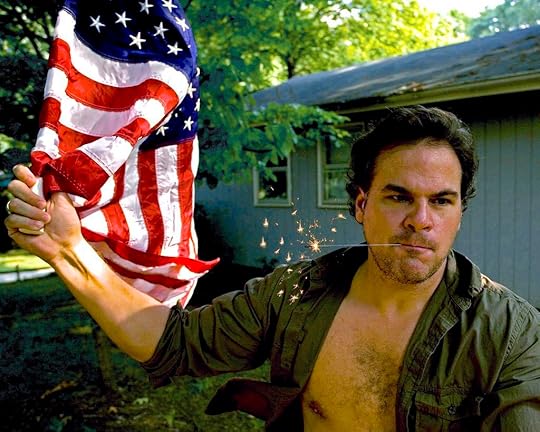
Photo: Bondseye
EVERY FOURTH OF JULY, A LOT OF LIP service is paid to the United States, it’s Constitution, it’s ideology, it’s citizens, it’s history, and it’s flag. There usually isn’t much nuance to this talk — America is a complicated, strange place, and it’s identity is built on shifting myths. So when you sit at your barbecue and watch the fireworks with a beer in hand, try and remember this: America is a complicated place, and a lot of the stories we tell ourselves are exaggerated, incomplete, or untrue. Here are some of the ways how.
July 4th isn’t really Independence Day.
The colonies actually declared their independence on July 2nd, 1776. The 4th is recognized because it was generally believed to be the day the actual document of the Declaration of Independence was adopted and signed, but now, historians believe that most of the Founder’s did not sign the document until August.
America’s borders have never been definite.
Alaska and Hawaii were only added to the Union in 1959, easily in the memory of large chunks of our population, and Puerto Rico’s statehood is a constant possibility. On the other hand, the US has changed significantly over time — California, New Mexico, Utah, Nevada, Arizona, and Texas once belonged to Mexico, much of the Great Plains belonged to France, and the states of Washington and Oregon were originally imagined by Thomas Jefferson as being not part of the United States, but rather as being separate, allied states. At the same time, there are many secessionist movements in the United States, from Vermont to Texas to Hawaii to the Conch Republic.
We were never meant to be thought of as a single country.
It’s in the title of our country: The United States of America. Elsewhere in the world, “state” is synonymous with “country,” and even in America, we refer to the national government as the “state.” Before there was the U.S. Constitution, there was the Articles of Confederation, which created a much looser alliances between the states. Since then, this argument — about just how independent states should be — has been at the center of our only Civil War and is still at the core of some of our most contentious political arguments. Is it “One Nation, Under God”? Or is it many?
”Yankee Doodle” was originally written as an insult to Americans.
You will hear the ubiquitous “Yankee Doodle” about 500 times this weekend, and mostly on commercials for Fourth of July sales. But what most Americans do not know is that this song, which is synonymous with the revolution, was actually created by British soldiers to mock American colonists. The character Yankee Doodle was supposed to be a classic American yokel who thought that putting a feather in his cap would make him fancy (a “macaroni” was a British slang term for a cultured man at the time). American colonists thought it was catchy and reappropriated the song for themselves.
While Americans have been involved in a lot of wars, we’ve actually had relatively few military deaths compared to many other countries.
The United States has had no shortages of wars and conflicts, but unlike many other countries, we’ve managed to avoid the worst bloodshed: from 1775 till now, a little under 1,355,000 Americans have died as a result of wars or conflicts. The bulk of that — around 750,000 — was during the Civil War, with the next runner up being World War II, where over 405,000 Americans died.
While these numbers are still terribly high, they’re actually low compared to many other developed countries: in World War II alone, eight countries (the Soviet Union, Germany, Japan, Poland, Yugoslavia, India, the Dutch East Indies, China, and French Indochina) had more deaths than we have had in our entire history as a country. The United Kingdom, Italy, and France had more war deaths in the two World Wars combined than we’ve ever had. So while you’re singing the song “God Bless America,” keep in mind that, if there is a god, he most certainly already has.
We owe our Independence to France.
While today, France is the butt of jokes of many American jokes about surrender and socialism the superpower actually was instrumental in helping the colonies gain their freedom. Britain was France’s primary rival, and when the colonies declared Independence, the French declared war on Britain and provided the Americans with arms and financial support, as well as lending the strength of their military.
On top of this military help, a few decades later, Napoleon sold his entire American territory in the U.S. to Thomas Jefferson for incredibly cheap in the Louisiana Purchase, doubling the size of the country. Even the most iconic American symbol — the Statue of Liberty — was a centennial present from France. So before you sneer at our French counterparts, remember: we owe them a lot.
It has been less than a century since women weren’t allowed to vote.
The Women’s Suffrage Movement did not actually succeed until 1920. That means that this country has been a true democracy for only 95 years — less if you consider how difficult it was to vote as a black person in the south before the 1960’s. 


The most American thing there is
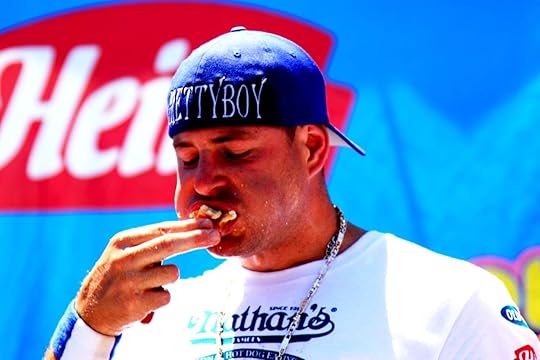
Photo: Michael
WHAT, YOU ASK, IS THE MOST AMERICAN THING you can do on a Fourth of July? Is it drink copious amounts of beer while eating life-threatening amounts of red meat? Is it watching fireworks? Is it waving a flag while firing a gun into the air? No. The single most patriotic, American thing you can do this Fourth of July is watch Nathan’s Hot Dog Eating Contest.
Don’t believe me? Here’s the proof: First off, hot dogs — processed parts of otherwise unwanted meat jammed into a sausage made of you-don’t-want-to-know — are the most American food there is. Nathan’s Hot Dogs, the Coney Island institution that runs the contest, was founded by immigrant Nathan Handwerker (which is a solid, American name if I’ve ever heard one), who was living out his own American dream by building a hot dog fortune.
The contest started in 1916 when four immigrants got into an argument of who was the most patriotic. As a measuring stick for their patriotism, did they discuss feats of service they had done for their adopted county? No. Did they make bold declarations of how they would lay down their life for their country? No. Did they recite facts about the Founding Fathers and sing the National Anthem? No. They measured their patriotism in a true American manner. They saw who could eat the most hot dogs.
An Irish immigrant named James Mullen won by eating 13 hot dogs in 12 minutes. Now, 99 years later, the champion regularly breaks 60 hot dogs — we’re waiting for the day that someone (probably reigning champ Joey Chestnut, the most American man in America right now) will hit 70 — but that’s the story of the American can-do spirit: only a true American would watch a man eat dozens of hot dogs and think, “I can eat more than that.”
So if you want to be an honest-to-God, mama’s-apple-pie, stars-and-stripes, Hulk-Hogan-real-American, you’ll watch the Nathan’s Hot Dog Eating Contest, you’ll see someone with a name like Patrick “Deep Dish” Bertoletti or Joey “Jaws” Chestnut eat 70 hot dogs in 10 minutes, and you’ll think, “I can eat more than that.” Happy Fourth of July, America. Start eating. 
July 3, 2015
14 reasons you should never go to Kansas
Stop asking how I afford to travel

Photo: Photo: Gloria Atamno
Whenever someone asks me how I afford to travel, I have to force myself not to respond with “selling Nutella by the spoonful and procrastinating Sallie Mae payments.” It’s just so funny because people think there’s this magic formula out there. This one-size-fits-all-encompassing route that gives everyone an equal chance of seeing the world.
But our equal chances don’t mean we have an equal will or stubbornness to pursue traveling further than just a wish.
What if I told you a small puppy died every time you asked someone how they afforded to travel How would you feel about the graveyard of dog souls you’ve single-handedly dug, out of curiosity for someone else’s wallet?
For shame, I say. For shame.
Ask anybody who travels, or travel bloggers in particular, how they feel about this question and I guarantee 99 percent of them will say the same as I’m about to.
And let me just preface by saying best friends and strangers have asked this question and I hold it against no one. I’ve happily answered this question time and time again, but here’s the thing you guys might not realize when you ask someone how they can afford to travel. I’ve broken it down in three points.
1. It insinuates that traveling is expensive to begin with.
I’ve said this before and I’ll say it again. Traveling is only expensive when it’s as convenient as possible. You’re paying for convenience when you book a flight on a specific day, non-stop, first-class, and with a beverage included. All that sounds great, but if a commercial ticket on the cheapest flying date of the week (Tuesday) could manage its way on your schedule, choose that instead!
Traveling is only expensive when it’s as convenient as possibleI don’t get it.
But I do understand when the average working American has a two-week space in a year that they could use for travel, it really limits the flexibility.
I’m also very transparent about the fact that living and working abroad for an extended amount of time is by far the best and cheapest way to travel more and further, and I’ve blogged about that before here.
With Europe for example, if you’re already based on this continent, you have budget airlines, cross-country rail systems, international buses, and so much more that all give you multiple options and very affordable ways to travel. Like how it only cost me $100 for a roundtrip journey from Barcelona through the French Riviera with stops in Montpellier, Marseille, Saint-Tropez, Nice, and Monaco. I kid you not. Less than $100 with the help of my favorite travel, money-saving apps.
2. It suggests that you’re too lazy to do your own research.
A simple Google search of “How can you afford to travel?” will yield approximately 174 million results. And somehow I turn into a search box and get questions like, “What countries are close to Spain?” to my inbox. Ha. Does my Google work faster than yours? I don’t get it.
Does my Google work faster than yours? I don’t get it.
I really do love to help people find ways to travel, but when you’re able to do basic and fundamental research first, and then come to me with more specific questions, everybody’s happy.
I didn’t get where I am today by emailing every travel blogger and entrepreneur asking them broad and general things like “How can I get exactly where you are in life?” That’s a really vague question and everybody’s circumstances in life are so different, that my path won’t be identical to theirs or yours.
I get that you want a personal anecdote from someone you know or follow, but snooping around beforehand does volumes. The person on the receiving end is not only more likely to respond quicker, but they can also target your response in a way that most benefits you and your current situation. From garnering a general idea of opportunities and paths people take that allow them to travel, it could lead to more substantial questions like, “Do you recommend a specific teaching program?” or “What’s the biggest expense you cut back on?” or even “What was the first step you took to begin traveling?” These questions are so much easier, simpler, and honestly, more fun to answer!
And even though I still consider myself a newbie in the travel blogging game, and especially having met others who’ve been to 3x the amount of countries I have, I may downplay how easy and affordable it is to travel. And I still have to remind myself that not everybody knows that I could fly to Switzerland for $30 next week from Barcelona if I wanted. Not everyone is aware of European budget airlines. And not everyone takes into consideration that if you take the size of the U.S. and put it next to Europe, they’d realize that country-hopping in Europe, is no different than state-hopping in North America. It’s all about perspective.
EasyJet has this amazing feature where you can set your budget, and it’ll show you all the places you can fly to for under that price. So for £25 (pounds), €34 (euros), or $38 (dollars), I could fly to over 15 cities in France, Italy, Germany, Switzerland, and the United Kingdom. That is chump change. That’s dinner at a restaurant. That’s a week of Starbucks. That’s half a tank of gas on a regular basis. Perspective, guys!
3. It belittles the idea that you can actually manage your funds, start a savings account, and allocate money accordingly.
Think about the things you love and things you decide to allocate a good chunk of your money to. When I say a good chunk, I’m going to take an average flight out of Barcelona during peak tourist season, so anywhere between $35 and $75.
Imagine if I flipped the script and started asking people about the things they were passionate about or spent money on in the manner that they asked me?
– “Wow, Britney! How can you afford to get your nails done every week? I wish I could do that too!”
– “Yo, Duncan! How do you afford season tickets for the Kansas City Chiefs? Livin’ the dream, bruh!”
– “Hey, Julia! So tell me again how you can afford that Michael Kors watch? Please teach me your ways! You must be soooooooo lucky! I wish I had your life!”
– “OMG, Parker! How can you afford to eat out at restaurants every day? How long did it take you to save up for this?”
– “Hey, Kaci! Just wondering how you could afford all of your Starbucks coffees everyday? Do your parents help pay for all of this?”
These are standard costs that you spend on a regular basis, yet nobody questions it. It’s just a way you’ve chosen to spend your money. So why is spending money on travel any different?
There is no magic. There is no formula. Just research, will and determination.
The point of this post was to help you guys understand that there are so many ways and resources to fund your travels if you really want to. I get that our generation is all about that instant-gratification life, and we want to just send a two-minute email to a blogger in hopes for a response on how to start jet-setting by next week, but I’m afraid it’s not that simple.
I have several resources, tips, and hacks on how I’ve funded travels spread throughout my blog at TheBlogAbroad.com. Use the find tool on the home page, browse other sites, and do a little bit of research, the same way I did to help create a path that worked for my specific circumstances! And then feel free to ask questions from there! I want to help you guys, I really do! But you gotta meet me halfway. I’ll put the gas in your car, but eventually you gotta put the pedal to the metal and start driving on your own! 
Where can you get the most drunk?
ACCORDING TO AN AMPILOT STUDY carried out to find where to organize the best bachelor party in Europe, the price of beer — an essential element of every stag night in the western world — varies greatly, even between neighbouring countries.
So, with $15 in your wallet, you might only get tipsy in Barcelona, but you won’t even remember entering the bar if you decide to go drinking in Prague.
At Matador Network, what we’re taking away from this infographic is: when in Amsterdam, stick to the coffee shop, but when in Bratislava, definitely hit the pub. 
Source: Ampilot

18 signs you were born and raised in Portugal
And the cat did not die… Atirei o pau ao gato was probably one of the first songs you ever sang, and you know the small rhyme by heart as you have sang it more often than the national anthem. And despite what others may think, you never went around searching for cats to beat up.
Next
Prev
2. Nestum com mel still to this day rocks your world.
The shopkeepers brought Estrelitas, Chocapic, and Corn Flakes, but none of those cereals ever stood a chance. You ate Nestum com mel as a toddler and you happily exchanged any bedtime story for a plateful of Nestum as a child. When you go to the supermarket you still head to the baby food shelf, look around to make sure no one is looking, and you show Cerelac who is the boss.
Next
Prev
3. You built (and destroyed) your own toys.
From a cardboard box you made a computer screen, from an egg box you created a keyboard. When you pressed the green button you traveled to the speed of sound, but the real fun only started when you pressed the red button and took supersonic jumps into outer space. Monopoly notes always went missing after your 8-year-old sister decided to be a shopkeeper. Clothes pegs? They could be anything. Once you organised them by color, Carthaginian armies fought Romans in your bedroom, and European football teams endured months of football games in the attic while mum kept going to the shop to buy some more replacements.
Next
Prev
4. For you, Cabra cega (blindman’s buff) is not a blind goat.
It is a game you’ve played on your school break before or after you threw your caricas (bottle caps) and berlindes (marbles) to the floor and ran after your friends playing apanhada or hid from them in the escondidas (hide and seek). Sometimes one of your friends would hold a handkerchief and scream a number, then a member of your team would run to grab it as fast as possible and bring it back during the jogo do lenço. During those breaks the girls brought an long think elastic to saltar ao elástico, and the boys dragged their school packs using them as goal posts until the teacher came down to take the ball away reminding you it was time to come back to class.
Next
Prev
5. You played in the street until the sun went down.
That’s how you knew it was time to go home. Mum would not call you on your phone to let you know it was time to have dinner. She would expect you to be back and remind you she would take the colher de pau (wooden spoon) out of the drawer if you dared to be late.
Next
Prev
6. At least once you fell down from a tree.
More often than not you had one or several bruises on your arms and legs, and no one would consider it a sign of domestic violence. You would go up trees to pick up an orange, a pomegranate, and loquats and throw them down to your friends. Or you’d simply climb up a tree because it made sense… at the time. You fell more than once, and it never stopped you to climb back again. And the bruises? They were medals of pride from your last mischief.
Next
Prev
7. You helped your dad with domestic work.
Dad got up on the roof and as he moved the antenna slowly, he screamed “Is it working yet?” While you replied “There, there! Oh no. Dad, there is rain in the TV again!” (Aí, aí! Oh não. Pai está com chuva outra vez!”)
Next
Prev
8. Your first job was during the férias grandes.
Either you helped your dad or one of your uncles in a workshop, or maybe you’ve worked at the local supermarket, at the restaurant around the corner or headed to the fields during the vindima (grape harvest) or na apanha da fruta (fruit harvest) picking up apples, pears, etc. At the end of the month, you gave your wages to your parents who bought something to put your enxoval (trousseau) together. But if you were really lucky, you bought a bicycle, a mega drive or half a motorcycle.
Next
Prev
9. You have asked “Onde estavas no 25 de Abril?” (Where were you on the 25th of April?)
And even though there is a 25th of April every year, everyone knows you are talking about the day Grândola Vila Morena played in Radio Renascença to confirm the revolution was on. Most likely you were not alive at the time. But you have asked your parents, extended family, and whoever crossed your path about their whereabouts. You know some were in Portugal barricading the roads to catch the PIDE — International and State Defence Police — members, others were in the ultramar (the colonies overseas) running for their lives. However, there are still surprising stories to be told about the day red carnations were placed in the rifles of the Capitães de Abril (April Captains) and their men.
Next
Prev
10. You were brought up among other languages.
You grew up assuming that everyone in the world did as well. In addition to Delfins and Sétima Legião, your mum sang La vie en Rose along with Edit Piaf in the radio and your brother knew the words to L’italiano by Toto Cotugno. You’ve rocked out to the sound of American bands from Bon Jovi to Metallica, danced Lambada with your friends, dad occasionally watched TVE — Televisíon Española — and mum watched Brazilian soaps in the evenings. At school it was compulsory to choose one or two foreign languages to study.
Next
Prev
11. You had the pleasure of going on an “excursão de velhos.”
Grandmother was always so pleased to introduce you to the other nice old ladies with their hair carefully tied in a bun, and they were so eager to pitch your cheeks until they were numb. And you still feed a rush of blood in your face when you remember the moment their skirts were flying up in the air at the feet of Cristo Rei in Almada.
Next
Prev
12. Patinhos will never match Vitinho.
And no we are not talking about the Brazilian footballer. It was that little toddler with a cowboy hat that told you it was time to brush your teeth and go to bed. Now the little ducks still try… but they are no Vitinho.
Next
Prev
13. “Numa casa onde comem dois comem três” (In a house where two eat, three eat)
And then in a house where three ate, four ate, and the same for five, six and seven, always adding another number as you counted up. There was always that extra plate on the table when one of your friends showed up unannounced, and you still work hard on keeping the family’s motto.
Next
Prev
14. Your favourite summer memories include sardines and pine trees.
The smell of a beautiful sardinhada (eating barbecued sardines with others) between pine trees near a beach always draws a smile on your face. Even that time your family chose a spot by a little pond and you learned water snakes are colourful and real.

This story was produced through the travel journalism programs at MatadorU. Learn More
Next
Prev
15. Your uncle always cheated at games.
In the evenings stories were told, card games were played, chess boards, checkers, backgammon, dominoes were out of the cupboards, your uncle always cheated and you always dreamt of beating your dad.
Next
Prev
16. You’ve had an affair with food from the cradle.
You were taught you need to have breakfast, a half-morning snack, lunch, a snack in the afternoon, then a food break and dinner to grow strong and healthy. So it is not surprising you know where the best fish markers, butchers, fruit shops, and Sunday Markets are. Not to mention the best seafood restaurants and roasted chicken spots. But your favourite personal Michelin restaurant is still at your mum’s.
Next
Prev
17. You don’t remember when exactly you fell in love with the sea.
You don’t remember when it started. It might have been when your mother tried to change your nappy and you ran naked around the beach for the first time. It might have been because someone once told your ancestors sailed in caravelas around the world and you’ve climbed the kitchen table and rocked with Da Vinci to the sound of Conquistador, or because your national anthem starts with “Heróis do Mar, nobre povo…” (Heroes of the sea, noble people). There is just something about those rugged cliffs, fishermen, and sunsets over the Atlantic, either in summer or winter, you just cannot get over.
Next
Prev
18. When you travel you have to hear CR’s name before your own
Right after a casual “Where are you from?” to which you reply “Portugal,” you hear a satisfied “Ah! Cristiano Ronaldo.” Then you say, “My name is…, I am one of the other 10 million Portuguese. Nice to meet you.”
Next
Prev

18 things every self-respecting Clevelander has to do before they die
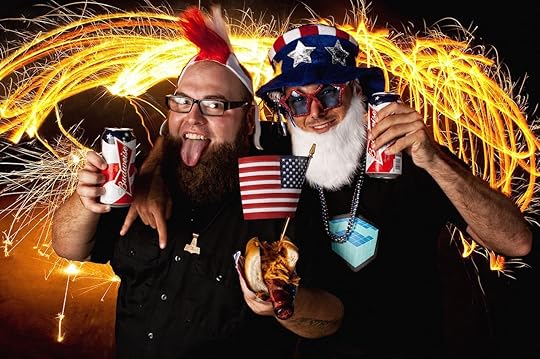
Photo: Robert Bejil
1. Eat a meatball the size of a softball at The Feast of the Assumption.
Little Italy in Cleveland is one of those cultural neighborhoods everyone can picture themselves living in, and it’s the only place where the constant crooning of Dean Martin amplified onto the streets is acceptable. The neighborhood’s most famous celebration is The Feast of the Assumption in August with meatballs the size of a softball ready to be consumed.
2. Tailgate at the Muni lot before a Browns game.
Crushed beer cans carpet the parking lots that stretch along the Lake Erie shore. Orange and brown flags cover the sky like at a Civil War army camp. Grills are fired up, the smoke inevitably sneaking into your nostrils. The chant of, “Here we go Brownies, HERE WE GO! WOOF! WOOF!” builds as kickoff inches closer.
This is the happiest fans will be all day if the past 15 years are of any indication.
3. Shop and eat at the West Side Market.
The West Side Market is a cultural and culinary institution every city wishes it had. The coffees, the meats, the cheeses — the place is just Heaven for the nostrils and grumbling stomachs.
4. Catch a flick (or ten) at the Cleveland International Film Festival.
What’s Cannes? Oh, you mean, “Cannes we go to the Cleveland International Film Festival?” Every March film lovers pour into Tower City for hours of American and international flicks.
5. Rock out at the Beachland Ballroom.
Anywhere that got the Black Keys their start is worth visiting. This remains doubly true for Beachland Ballroom in Cleveland’s gritty and rebounding Collinwood neighborhood, because it’s a legitimately awesome venue for an intimate show.
6. Take part in the disaster known as St. Patrick’s Day.
City streets are wall-to-wall with people like a popular nightclub. Mixed with obscene amounts of alcohol, there’s simply no other way to describe this than a disaster.
7. Eat a Polish Boy at Hot Sauce Williams.
You’ve probably heard of Michael Symon, Cleveland’s most celebrated chef with a couple bestsellers and all kinds of television appearances. Naturally you’ve probably found your way to one of his restaurants. After all, it must be worthwhile given the fame. But you know where Michael Symon goes? To Hot Sauce Williams on the east side for a polish boy — a kielbasa that looks like it exploded inside a bun with french fries, hot or barbecue sauce, and coleslaw layered on top.
8. Freeze your ass off at the Public Square Christmas Tree Lighting.
Winter is not gentle to Cleveland with its bone-chilling lake effect winds. But no amount of frostbite will keep us from the annual tree lighting at Public Square with food trucks joining in on the festivities in recent years. Have you seen the opening to A Christmas Story? That’s basically it. Literally, because it was filmed here.
9. Ride with Cleveland Critical Mass.
Cars are stupid death machines. Clevelanders wake up almost every morning to read about another accident on I-77 or I-90. You know what doesn’t kill people? Cycling. And cycling your city gives you a better appreciation for each and every neighborhood, while at the same time asserting your right to the road. That’s Cleveland Critical Mass.
10. Squirt and/or get hit by a pussy willow at Dyngus Day.
This bizarre Polish holiday the Monday after Easter is primarily popular in Buffalo, Chicago, and Cleveland’s Detroit-Shoreway neighborhood. One of the main traditions associated with the holiday is the men squirting women they fancy with water or the women hitting the men they want with pussy willows. Yes, pussy willows. For others, it’s just another cultural excuse to drink excessive amounts of alcohol whilst eating delicious meats. Only this time, there’s a polka soundtrack. Happy Dyngus Day!
11. Come out for the Cleveland Pride March.
We all know that the LGBT community knows how to throw a good party. You know there will be plenty of alcohol and brightly colored tee-shirts — unless of course it’s warm enough to go as naked as possible. And with the SCOTUS ruling making marriage equality the law of the land, there will be no better place to celebrate than with Cleveland Pride on June 27th at Voinovich Park in Downtown Cleveland.
12. Hike and bike the Emerald Necklace.
Cleveland is surrounded by a horseshoe-shape of parks that stretch from the west to east, ending at their respective ends of Lake Erie. To cycle the roads from one point to the opposite is a gorgeous 100-mile ride that would rival many routes in the country. Otherwise, head onto the trails in Cleveland Metroparks and nearby Cuyahoga Valley National Park is fantastic. There’s even a book about it by some obscure author.
13. Neighborhood-hop across the city by train.
Train travel is an abomination in a majority of the United States. By that measure, Cleveland is incredibly fortunate for its mixture of light and heavy rail that stretches the width of the city. Start in the European-modeled plaza of Shaker Square; stop over in Little Italy before switching trains downtown for a trip into Ohio City, Detroit-Shoreway, and West Park.
14. Listen to one of the world’s greatest orchestras at Severance Hall.
Nobody rocks the strings, brass and percussion like the world-renowned Cleveland Orchestra. Besides, the architectural marvel that is Severance Hall in the heart of University Circle is worth the trip in of itself.
15. Shake your hips at the Latino Arts & Culture Festival.
Cleveland is the cultural equivalent of a Jackson Pollock painting. There’s just a little bit of everything going on. But the Puerto Rican community rivals any other in their pride, best displayed during the Latino Arts & Cultural Festival. Anyone visiting or who happens to be downtown will no doubt see a number of Puerto Rican flags flying by in an impromptu procession of vehicles.
16. Celebrate the longest day of the year at Cleveland Summer Solstice.
Art and music collide at The Cleveland Museum of Art in celebration of the longest day of the year. Tickets always sell out.
17. Squeeze into Great Lakes Brewing Company for the Christmas Ale Launch Party.
Christmas seems to come earlier every year, so the release of Great Lakes Brewing Company’s most famous (infamous?) concoction follows suit. Every late October, throngs of eager beer drinkers squeeze their way into the old brewery for the first batch of Christmas Ale. Some even take the day off to get a good spot with a waiter or waitress who will make sure their glass never stays empty for long.
18. Partake in the Fourth of July mayhem in Detroit-Shoreway.
Who needs laws or safety regulations? That’s essentially the mindset when it comes to the Detroit-Shoreway neighborhood’s annual Fourth of July festivities. If it can explode into bursts of light or into a thunderous crack, you’re damn certain to find it somewhere in the neighborhood long after the sun goes down. 
18 things every self-respecting Clevelander has to to before they die
Photo: Robert Bejil
1. Eat a meatball the size of a softball at The Feast of the Assumption.
Little Italy in Cleveland is one of those cultural neighborhoods everyone can picture themselves living in, and it’s the only place where the constant crooning of Dean Martin amplified onto the streets is acceptable. The neighborhood’s most famous celebration is The Feast of the Assumption in August with meatballs the size of a softball ready to be consumed.
2. Tailgate at the Muni lot before a Browns game.
Crushed beer cans carpet the parking lots that stretch along the Lake Erie shore. Orange and brown flags cover the sky like at a Civil War army camp. Grills are fired up, the smoke inevitably sneaking into your nostrils. The chant of, “Here we go Brownies, HERE WE GO! WOOF! WOOF!” builds as kickoff inches closer.
This is the happiest fans will be all day if the past 15 years are of any indication.
3. Shop and eat at the West Side Market.
The West Side Market is a cultural and culinary institution every city wishes it had. The coffees, the meats, the cheeses — the place is just Heaven for the nostrils and grumbling stomachs.
4. Catch a flick (or ten) at the Cleveland International Film Festival.
What’s Cannes? Oh, you mean, “Cannes we go to the Cleveland International Film Festival?” Every March film lovers pour into Tower City for hours of American and international flicks.
5. Rock out at the Beachland Ballroom.
Anywhere that got the Black Keys their start is worth visiting. This remains doubly true for Beachland Ballroom in Cleveland’s gritty and rebounding Collinwood neighborhood, because it’s a legitimately awesome venue for an intimate show.
6. Take part in the disaster known as St. Patrick’s Day.
City streets are wall-to-wall with people like a popular nightclub. Mixed with obscene amounts of alcohol, there’s simply no other way to describe this than a disaster.
7. Eat a Polish Boy at Hot Sauce Williams.
You’ve probably heard of Michael Symon, Cleveland’s most celebrated chef with a couple bestsellers and all kinds of television appearances. Naturally you’ve probably found your way to one of his restaurants. After all, it must be worthwhile given the fame. But you know where Michael Symon goes? To Hot Sauce Williams on the east side for a polish boy — a kielbasa that looks like it exploded inside a bun with french fries, hot or barbecue sauce, and coleslaw layered on top.
8. Freeze your ass off at the Public Square Christmas Tree Lighting.
Winter is not gentle to Cleveland with its bone-chilling lake effect winds. But no amount of frostbite will keep us from the annual tree lighting at Public Square with food trucks joining in on the festivities in recent years. Have you seen the opening to A Christmas Story? That’s basically it. Literally, because it was filmed here.
9. Ride with Cleveland Critical Mass.
Cars are stupid death machines. Clevelanders wake up almost every morning to read about another accident on I-77 or I-90. You know what doesn’t kill people? Cycling. And cycling your city gives you a better appreciation for each and every neighborhood, while at the same time asserting your right to the road. That’s Cleveland Critical Mass.
10. Squirt and/or get hit by a pussy willow at Dyngus Day.
This bizarre Polish holiday the Monday after Easter is primarily popular in Buffalo, Chicago, and Cleveland’s Detroit-Shoreway neighborhood. One of the main traditions associated with the holiday is the men squirting women they fancy with water or the women hitting the men they want with pussy willows. Yes, pussy willows. For others, it’s just another cultural excuse to drink excessive amounts of alcohol whilst eating delicious meats. Only this time, there’s a polka soundtrack. Happy Dyngus Day!
11. Come out for the Cleveland Pride March.
We all know that the LGBT community knows how to throw a good party. You know there will be plenty of alcohol and brightly colored tee-shirts — unless of course it’s warm enough to go as naked as possible. And with the SCOTUS ruling making marriage equality the law of the land, there will be no better place to celebrate than with Cleveland Pride on June 27th at Voinovich Park in Downtown Cleveland.
12. Hike and bike the Emerald Necklace.
Cleveland is surrounded by a horseshoe-shape of parks that stretch from the west to east, ending at their respective ends of Lake Erie. To cycle the roads from one point to the opposite is a gorgeous 100-mile ride that would rival many routes in the country. Otherwise, head onto the trails in Cleveland Metroparks and nearby Cuyahoga Valley National Park is fantastic. There’s even a book about it by some obscure author.
13. Neighborhood-hop across the city by train.
Train travel is an abomination in a majority of the United States. By that measure, Cleveland is incredibly fortunate for its mixture of light and heavy rail that stretches the width of the city. Start in the European-modeled plaza of Shaker Square; stop over in Little Italy before switching trains downtown for a trip into Ohio City, Detroit-Shoreway, and West Park.
14. Listen to one of the world’s greatest orchestras at Severance Hall.
Nobody rocks the strings, brass and percussion like the world-renowned Cleveland Orchestra. Besides, the architectural marvel that is Severance Hall in the heart of University Circle is worth the trip in of itself.
15. Shake your hips at the Latino Arts & Culture Festival.
Cleveland is the cultural equivalent of a Jackson Pollock painting. There’s just a little bit of everything going on. But the Puerto Rican community rivals any other in their pride, best displayed during the Latino Arts & Cultural Festival. Anyone visiting or who happens to be downtown will no doubt see a number of Puerto Rican flags flying by in an impromptu procession of vehicles.
16. Celebrate the longest day of the year at Cleveland Summer Solstice.
Art and music collide at The Cleveland Museum of Art in celebration of the longest day of the year. Tickets always sell out.
17. Squeeze into Great Lakes Brewing Company for the Christmas Ale Launch Party.
Christmas seems to come earlier every year, so the release of Great Lakes Brewing Company’s most famous (infamous?) concoction follows suit. Every late October, throngs of eager beer drinkers squeeze their way into the old brewery for the first batch of Christmas Ale. Some even take the day off to get a good spot with a waiter or waitress who will make sure their glass never stays empty for long.
18. Partake in the Fourth of July mayhem in Detroit-Shoreway.
Who needs laws or safety regulations? That’s essentially the mindset when it comes to the Detroit-Shoreway neighborhood’s annual Fourth of July festivities. If it can explode into bursts of light or into a thunderous crack, you’re damn certain to find it somewhere in the neighborhood long after the sun goes down.
6 Things Southerners Refuse to Acknowledge About the Confederate Flag

Photo: David Mello
1. The flag as it’s seen today was rarely even used in the Civil War or beforehand.
During the Civil War, the Confederate states went through three different official flags. None of them are the flag currently debated today. The original confederacy began with the “Stars and Bars” flag that had a blue field in the upper left corner, three red and white stripes, and seven white stars in a circle. After complaints that the flag resembled the Union’s flag too closely, the Confederacy changed and revised the flag twice more. The version Dylan Roof and others now proudly wave is the third and last version of the flag that was flown by Robert E. Lee’s army for only a short time before the South surrendered.
This begs the question of why a barely used battle flag is now defended as the symbol of southern heritage. In fact, the modern-day Confederate flag only really started gaining popularity around the South during a different historical period a century later: the civil rights movement.
2. The flag resurfaced in the fifties to specifically combat civil rights and promote white supremacy.
The flag’s popularity exploded again in the 1960’s as a symbol specifically showing support for white supremacy during the Civil Rights Movement. An article in The Week described how in 1956, Georgia adopted its version of the Confederate flag in protest to Brown v. Board of Education, the Supreme Court ruling that made segregation illegal. Strom Thurmond- the South Carolina senator who launched a 24-hour filibuster of the Civil Rights Act in 1957- originally adopted the flag for his “State’s Rights Party” or the “Dixiecrats” as a symbol of defiance against the growing emphasis on civil rights platforms of the Democratic Party.
The Sons of Confederate Veterans, an organization that still adamantly supports the Confederate Flag, still promoted the “great battle for white supremacy and southern ideals” for over fifty years after the Civil War ended. Ku Klux Klan rallies still hoist the confederate flag on a daily basis, as do organizations that still oppose segregation and mixed-race marriage.
3. The Confederacy openly declared that their secession was about slavery, not “state’s rights.” The flag represents that distinction.
Mississippi declaration’s: “Our position is thoroughly identified with the institution of slavery — the greatest material interest of the world.”
South Carolina’s declaration: “… A geographical line has been drawn across the Union, and all the States north of that line have united in the election of a man to the high office of President of the United States, whose opinions and purposes are hostile to slavery.”
An article in Politico quoted the Confederacy’s vice president, Alexander Stephens, saying that the arguments about “the proper status of the negro in our form of civilization” between North and South constituted “the immediate cause” of secession, and mentioning that “Our new Government,” was created “upon the great truth that the negro is not equal to the white man; that slavery, subordination to the superior race, is his natural and normal condition.” The article argued that the Confederate constitution was almost identical to the U.S. Constitution except for its guarantee that “no law denying or impairing the right of property in negro slaves” would ever be approved by a Confederate government.
The South was not simply “going with the times” in its racist ideologies. The Confederate declarations, and the flag that represents their ideals, were in fact way behind the rest of the world: France had already abolished slavery in 1794, Mexico in 1810, and England in 1833.
4. In other countries, like Germany, the idea of keeping symbols associated with previous supremacist movements is unheard of.
Even though the Third Reich survived almost three times longer than the Confederacy, Germany’s approach to Nazi symbolism entirely contrasts the policies of the Southern states. In Germany, Nazi insignia and flags are banned and the idea of keeping Nazi memorabilia out of nostalgia or heritage is not supported by German politicians. The symbol was removed from the facades of buildings, and the act of naming streets or building monuments for former Nazi leaders simply doesn’t exist.
5. Even Robert E. Lee didn’t want anything to do with this flag after his army lost.
According to a CNN article, Lee declined invitations to the Gettysburg Battlefield Memorial Association by saying that “I think it wiser moreover not to keep open the sores of war.” At his funeral, not one Confederate flag was flown.
6. The majority of Americans already understand that the flag needs to go.
According to NPR, The University of Mississippi banned the waving Confederate flags at football games in 1997. In 2003, they retired their confederate soldier mascot “Colonel Reb” and dropped the song “From Dixie With Love” from their marching band set list. Republican candidate Jeb Bush endorsed the removal of the flag after he decided to remove it from the Florida statehouse grounds during his time as governor. Mitt Romney has agreed that confederate flags should be removed as well.
Surveys are showing that across the United States, Americans are increasingly disagreeing with the flag’s continuous presence: in 1992, only 40% of American disapproved of the flag. In 2015, that number has jumped to 64%, with only a quarter of American approving and 15% unsure.
I’m Mexican, and I say: you can’t do this to guacamole!
MELISSA CLARK, FROM THE NEW YORK TIMES, RECEIVED AN OVERWHELMING AMOUNT OF HATE from the internet last Wednesday when she decided to modify one of Mexico’s most iconic dishes: guacamole!
Add green peas to your guacamole. Trust us. http://t.co/7imMY9c2ph pic.twitter.com/oeOMt2qgmh
— The New York Times (@nytimes) July 1, 2015
“Add green peas to your guacamole. Trust us.” Mrs. Clark had to see this one coming. One does not simply claim improvement on a foreign dish as culturally important — and delicious — as guacamole, without expecting an avalanche of hatred from Mexico, the Mexican community and every single guacamole lover around the world. Even Barack Obama and Jeb Bush were on the same side, agreeing the idea was ludicrous.
respect the nyt, but not buying peas in guac. onions, garlic, hot peppers. classic. https://t.co/MEEI8QHH1V
— President Obama (@POTUS) July 1, 2015
You don't put peas in guacamole https://t.co/kG3ewrVv6f
— Jeb Bush (@JebBush) July 1, 2015
I remember being introduced to the green pea guacamole back in a New Zealand supermarket, where a dry paste was sold as a substitute for the original Mexican salsa. It wasn’t gross… it just wasn’t guacamole. Also, let me tell you that guacamole is the only food which is exactly the same in its Mexican and Tex Mex versions… it’s that good.
Mexican food is all about little variations and guacamole is no exception. So, what’s the big deal with the New York Times proposal? Well, green peas are quite a flavor changer… they’re sweet, for guacamole’s sake! It doesn’t matter how crazy we Mexicans go, adding tomatoes, extra garlic or lime to our salsas, because they’re gonna end up tasting more or less the same… that kind of subtle differences we enjoy.
We love how guacamole tastes and we want to keep it that way. So, the answer is no NYT, I’m not gonna trust you, or Melissa Clark, or anyone else who claims to have re-invented one of my favorite dishes in the whole world. Here’s the original recipe, published today on the New York Times, just in case you were wondering.

Matador Network's Blog

- Matador Network's profile
- 6 followers

