
Matador Network's Blog, page 1405
February 13, 2018
Kansan abilities
Kansas may be middle America and an example of what not to do when it comes to politics and education. And we know we’re not much to look at with our lack of oceans, trees, and mountains. But Kansans will be the first to defend our home because know that this place holds a special secret: it’s people.
Here are 14 abilities people from Kansas have over everyone else.
1. Giving impeccable directions.
We don’t give you the standard “20 miles away,” we get specific with how long it will take you and what you will see along the way to know you’re going in the right direction.
2. Feeding a nation.
We are known as the “Wheat State” for a reason.
3. Curing boredom in the most imaginative ways possible.
Speeding down empty roads and stealing traffic signs and cones are a great time, but have you tried building a Christmas tree out of empty liquor bottles?
4. Excelling at food and beer.
Our world-class barbecue and craft beer scene have exploded in the past decade putting our little state on everyone’s radar. Nothing quite goes together like burnt ends and a Tallgrass Buffalo Sweat.
5. Getting creative with our university mascots.
Big Jay and WuShock are two of the most recognizable university mascots in the world. And we love the fact that no one else has anything close to them.
6. Relaxing.
We love a good three-day weekend where we can go down to the lake or river for a float trip.
7. Playing Corn Hole.
See above.
8. Sensing changes in the weather.
There are the obvious signs of the wind picking up and the skies changing colors, however, Kansans have a sixth sense when it comes to Mother Nature and her fickleness in our state.
9. Mapping the ultimate road trip.
It’s eight to 10 hours to the mountains and 10 plus hours to the Gulf, we’ve perfected the road trip. Complete with sunflower seeds, of course.
10. Fixing quite literally anything.
Chances are someone you know is a handyman/woman and will have the tool or part you need for your home renovation or car repair. If not, we are resourceful as hell and can fix most things with duct tape.
11. Making fun of ourselves.
We often reference our cities as Wichitawful and Topeka. But only Kansans can say these kinds of things. Outsiders, you’ve been warned.
12. Defending our state.
As mentioned above, Kansans are ride or die, and we don’t take kindly to outsiders coming in and disrespecting our home. Sure, we know we are far from perfect, but damn it, John Brown would be so proud of our unwavering loyalty.
13. Turning off our sense of smell.
Yes, that is cow manure you smell, and yes, you do get used to it.
14. Knowing how to rally and overcome our obstacles.
Kansans are resilient, even though we are often portrayed as the underdog. Our state motto is “to the stars, through the difficulties” for a reason. Not much can keep us down, not even being down three points with 2.1 seconds left in the national championship. 

More like this: 11 things Kansans have to explain to outsiders


February 12, 2018
Jeremy Jones interview
In the snowboarding world, Jeremy Jones is as well-traveled as any. He’s known for riding steep, big-mountain lines deep in the backcountry — the type of riding that has dominated ski and snowboard films in recent years and in turn produced a sort of cult following of modern-day backcountry enthusiasts. His film trilogy Deeper, Further, and Higher took him around the globe multiple times in pursuit of first descents on gut-wrenchingly tough mountains. They stand not only as perhaps the sport’s truest display of mountaineering, but as a collection of how far snowboarding has come since its neon-clad days, back when only a handful of resorts saw it even as a legitimate activity.
Snowboarding grew from the underground and exploded very much like punk rock did in the nineties, with big names continuing to draw attention to its progression. What separates Jeremy Jones is that while he’s built star power on the mountain, what he does off the hill may stand as an equally important part of his legacy. He’s eschewed the glitz and glamour of snowboarding’s wild side for the role of ambassador for global good. I’ve been a fan for years and don’t recall ever seeing a photo of Jeremy standing on top of a podium spraying champagne over a crowd of screaming teenagers. He’s always embodied that DIY, pursuit-of-passion ethic that snowboarding was built on.
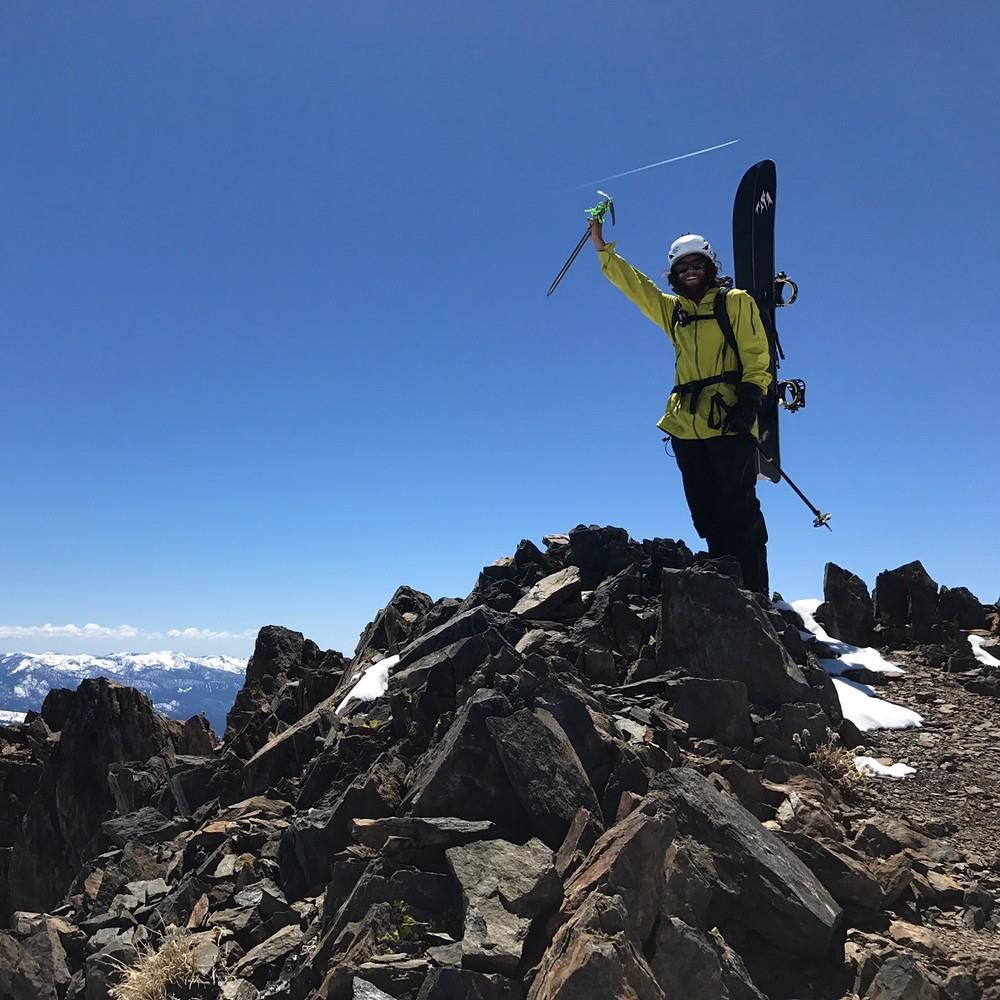
Photo: Jeremy Jones
For him, it’s been about taking care of the mountains he loves so dearly. In his travels, Jeremy has seen favorite spots show devastating impacts of climate change. He formed Protect Our Winters, a non-profit focused on educating and engaging those passionate about winter sports, in an effort to mobilize the community he’s inspired through his riding. Along with the team at the organization and a collection of top riders, Jeremy has turned this initiative into a force to be reckoned with — lobbying politicians, hosting community-driven events, and speaking directly to students in schools across the country.
He also speaks to journalists at trade shows, some trying as hard as they can to keep it together and not have a ‘fan-boy’ moment. Here’s our conversation from the Outdoor Retailer and Snow Show in Denver.
How has travel shaped your vision of the world, and of your place in it?
Chamonix, there’s this whole deal where they have this run off the main tram that’s down the glacier. Where the glacier ends, they built the train. As the glacier continued to recede, they built a chairlift from the end of the glacier to the train. I was going there, and obviously, glaciers recede. What was alarming is that they have a line in the dirt of where the glacier was the year before, and the year before that.
The first time I went there was in ’96 and it was a forty-minute hike to get to the chairlift. Now it’s an hour and a half hike. It’s a very in-your-face scenario.
When did you decide to start Protect Our Winters?
Over ten years ago, I was in northern Canada at an old ski area where I’m friends with some locals. We were walking around, it was offseason, and they were telling me about how they grew up there, showing me where their jumps used to be, the restaurants on the hill, and their favorite spots.
I asked why none of it is open anymore and they told me that it’s because it doesn’t snow there anymore. These people weren’t that old. It’s crazy, they lost their ski area in a very short period of time. The climate is changing at an accelerated rate.
This was in 2004 or 2005 and I remember thinking, ‘Good thing I don’t have these issues where I live.’ Fast forward to today. I live in Truckee and Squaw Valley is my home mountain, and there we call (the chairlift) KT-22 ‘The Mothership.’ People plan their migration (to Squaw Valley) on when that lift is open. Three out of the last four years, that lift has either not been open or barely been open for short periods of time. The fact is that before, even on a below-average winter, the lift opened. Now, we get super excited when KT opens, that means it’s a good winter.
You’ve talked in your films about your love of Alaska, and how you decided at a young age that you would be there to ride every spring. What was it that hooked you?
I remember my first run ever in Alaska, going over a blind roll and the mountain stretches out below me. It was the best snow I’ve ever ridden — not the deepest but the best. I made the biggest turns of my life, in total control and faster than I’d ever gone in powder. I thought, ‘Holy shit, this is a different sport here.’
As that trip evolved, it became apparent that you can do things here that you can’t do anywhere else due to how perfect the mountains are and how perfect the snow is.
Is travel different for you now than it was 20 years ago?
I built my life around Alaska. Over the years, I’d have a travel budget, and I’d spend all the money and go to Alaska and spend six or eight weeks there. I’ve never been a ‘chase the snow’ person. I like to get in tune with a spot. If a spot has the right snowpack, I’ll go and spend a bunch of time there. I continue to be of the mindset that if I’m going to travel, make it count.
For business, snowboarding and photo shoots and stuff, the films pulled me at times and had me traveling more than I wanted to. Ten years ago, I did one or two trips a year and they were a month long each. For the last four years, it’s been almost no travel for snowboarding because I’ve been hyper-focused on my home range. Although my wife would tell you I’m gone all the time because the Sierras are 400 miles long.
These days I have more control and am able to say no to trips. I have to do sales meetings and trade shows, but I defend February-May on my calendar.
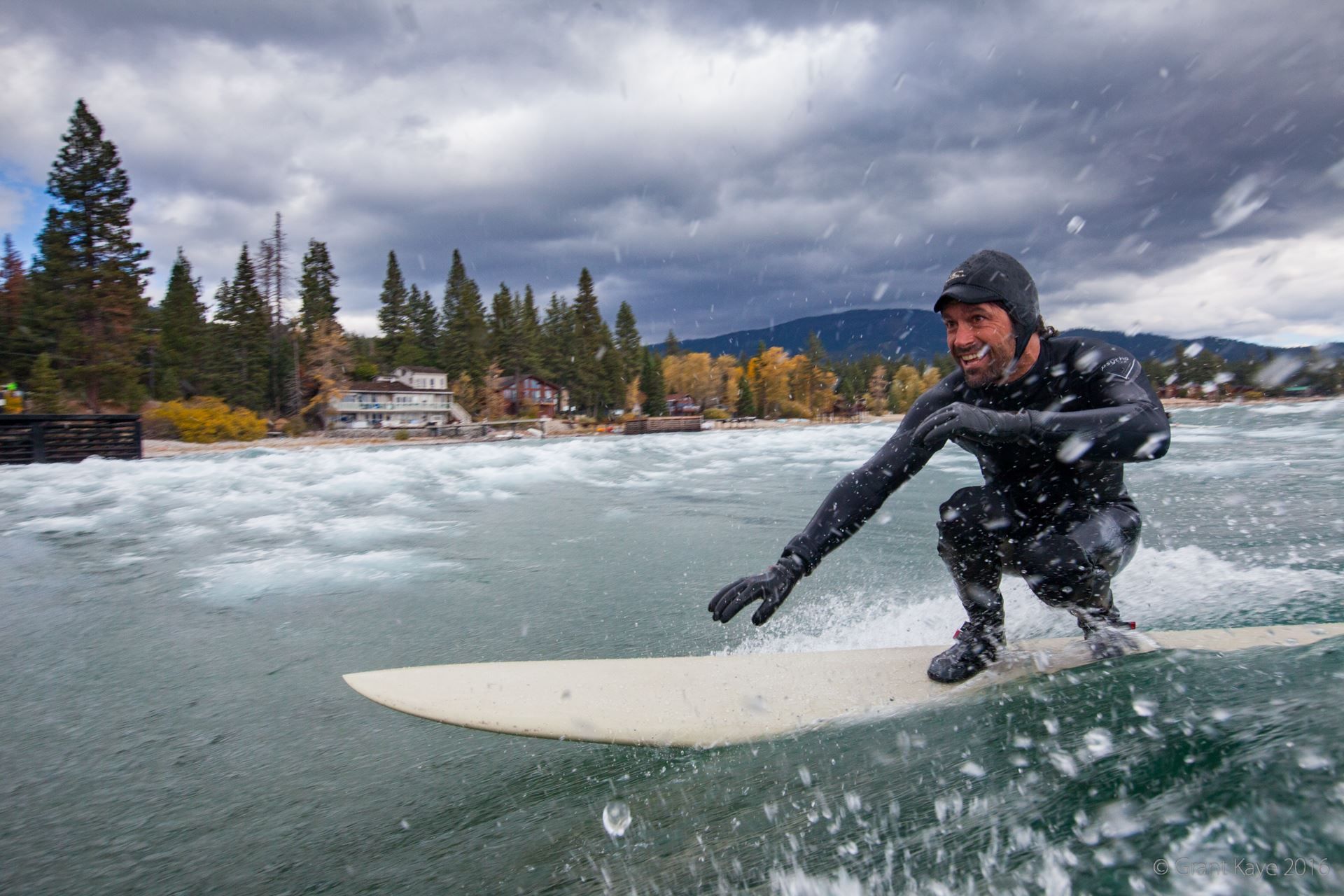
Photo: Jeremy Jones
Who do you look up to these days, and who are you stoked on?
I’ve always looked to people older than me who are doing it right, with the work-life balance, the healthy lifestyle, who get out in the mountains all the time. What are they eating? What’s their morning routine? Just asking questions. Along those lines, Jim Zellers has played a mentor role in and out of the mountains for me. Doug Koombs early on, we just studied Doug and how he went about everything.
As far as younger guys, it’s funny because I’ve realized that since I snowboard five or six days a week, I always have to be in with the latest crop of 25-year-olds whose lives are set up to go snowboard every day. Conrad Anker is someone I’ve become friends with, and I was talking with him and saying how I always seem to be riding with these 25 to 30-year olds, because once 30 comes, they move on with their life. Nick Russel, Ryland Bell, these are guys that I naturally end up spending a bunch of time with.
To steal a question from Tim Ferris, what are you better at saying ‘no’ to these days? Or is there anything you just don’t want to deal with anymore?
For one, I’m just way better at saying ‘no.’ I know that if it’s a ‘maybe,’ that means it’s going to be a ‘no’ when it gets closer. So, instead of having five emails and this soft deal, if you ask me to do something I’ll think about it and then come back and say ‘no.’ If it’s not a screaming ‘YES,’ it’s a ‘no’ for me now.
Any last words?
Yeah. One thing on travel in general. It’s easy to point at the footprint of travel and say it’s bad for the environment. But I think we’re in this mess right now in the US because we have people that haven’t left their hometown. I am a student of the world, it’s shaped me as a human being. You start understanding that we are all connected.
Politicians don’t like losing their jobs. It’s sad that climate change is a political issue but it is. Us polluting hurts people around the world, and vice versa. It’s very tough to gain that perspective from your hometown, and we need that one-world perspective more than ever. It’s all hands on deck right now. Responsible travel is important. Go see the world!
More like this: Why would I learn to snowboard?
How to stay safe
You’ve heard it before. You’re thinking about a trip to a destination with a recent (or even long) history of conflict, violence, or criminal activity. You express your concerns on social media and many others who have been there trouble-free respond with, “You’ll be fine! Just be aware of your surroundings.” But do you know what that really means, or what to do if the situation in your surroundings goes sideways? The answer to these questions is often no, which is why it can be really bad advice for traveling safely in high-risk areas.
Fortunately, there are many steps you can take to really develop good situational awareness of your surroundings and prepare yourself for a potentially dangerous situation. Before discussing those, please understand this is not about giving certain destinations a bad name or perpetuating negative stereotypes. This is about risk assessment. For eight years I worked as a military security specialist, and for the last 12 years, I’ve worked as a drug war analyst focusing on violence in Mexico. I’d like to use my background and expertise to help travelers — especially the more vulnerable segment, like women traveling alone and travelers in wheelchairs like me — stay safe while abroad.
Before you can determine if something or someone is out of place, you need to know what “normal” is for your destination. Some of this you can find out through official websites like the US State Department travel page, blog posts, or just talking with other people who have been to your destination. However, the best way to determine patterns of normalcy in a new place is to spend some time there and just observe. This is obviously harder to do if you’re only going to be in a city or other location for a day or two. Yet, you can still observe certain patterns. How do people move about? Are they rushed or walking slowly? Try to pick out the tourists from the locals. Are people talking loudly, or behaving in a more reserved manner?
Once you’ve gotten a feel for the normal pace of things in your surroundings, you’re more likely to be able to pick out what’s not right. Is someone dressed noticeably differently than everyone else, or moving at a very different pace? Has a person been waiting in one place much longer than someone normally would? Is someone acting very agitated, particularly when engaged with a police officer or business owner? Is a delivery truck in an area where such vehicles are prohibited or stopped in a No Parking area for a long time? Remember, you’re looking for people or things (like certain types of vehicles) that don’t fit or belong in a particular place.
If you do find yourself in a situation where your “spidey sense” is tingling and your instincts are telling you something is off, you need to have a plan for what to do. In the security industry, we call this “getting off the X,” or removing yourself from the target area. Are you in a small café or shop with no easy exit? Do you have to navigate through heavy crowds to get to safety? Do you know what the local police look like if you want to report suspicious activity, and is it safe to do so? That sounds like a strange question, but sadly there are many countries in the world where the police are corrupt and working with local criminal groups. You need to do your homework and find out if the local cops at your destination are reliable.
The most important tip of all is to trust your instincts. Often, we underestimate our ability to sense danger, and we ignore all sorts of alarm bells in our heads. As a female wheelchair user who usually travels alone, I’m probably the most vulnerable kind of traveler on the planet! However, I know what my personal limits are, and I’m okay with possibly missing out on something or cutting an activity short if I start to feel uncomfortable. If you’re at a beautiful tourist site or busy shopping area — both huge targets for terrorists and pickpockets alike — it’s easy to get distracted and forget to have that critical situational awareness. If your gut tells you something is wrong, trust it! Be prepared to walk away and head to safety immediately.
The world is a pretty big place, and unfortunately, some of the most beautiful travel destinations are also some of the most dangerous. This shouldn’t automatically deter you from going there, but never accept the advice of “just be aware of your surroundings” as a guarantee of safety. Know what it means to truly be aware of what’s going on around you, and have a plan in place for getting out of a potentially dangerous situation when your instincts kick in. Now you’ll actually be prepared for safer travel!
More like this: Female travelers’ safety is also men’s responsibility
Enjoy South Korean winter
Before leaving the U.S. to teach English in South Korea, I packed the warmest clothing I had hidden in the spider webs of my closet: university hoodies, a few long-sleeved shirts, a faux wool coat, and a beanie.
Oh, bless my heart.
Little did I know that, during winter in South Korea, I would be layering as much “Heattech” as science allowed until I looked like the Michelin Man.
But winter is also one of the best times to visit South Korea. If you’re lucky enough to see snow blanket Seoul’s skyscrapers and Jeollanam-do’s mountains, you might sell off your ticket home to the first bidder.
Looking to explore South Korea during the winter? Check off these five tips to stay toasty.
1. Seek out steamy street food.
There’s nothing better on an icy day in Korea than tucking into warm hoppang, a bun filled with red bean paste, or occasionally sweet potato, cheese, vegetables, or meat. These hearty buns aren’t just warm; they’re cheap. Usually less than 1000 won, the buns are available from most convenience stores and some street vendors.
For more Korean street food that warms you up from the inside out, try gunbam, or roasted chestnuts; tteokbokki, a spicy, sweet ricecake dish served with a red chili-paste sauce; bungeoppang, the uber-popular fish-shaped cakes filled with sweet red bean paste; or hotteok, fried pancakes usually with a sugar, peanut, and cinnamon filling.
2. Load up on hand warmers at convenience stores.
In Korea, convenience stores aren’t just at every corner — they’re every few feet! And during the winter, all convenience stores sell hand warmers for about 1,000 won. Some even sell sticker-type body warmers and foot warmers, too, though they’re slightly more expensive.
If you can’t read Korean, look for the square packs near the checkout counter. Hand warmers always feel thick in their packages, whereas the wearable warm stickers feel thin. Local knowledge has it the “military-grade” hand warmers with cartoons of army men on the front are the warmest, and I agree.
For a cuter Korean souvenir, find an Artbox for a variety of reusable hot packs in the shape of characters. You need a microwave to warm these ones up, but don’t fret — there are plenty of free-use microwaves, too, at convenience stores.
3. Invest in warm layers.
Uniqlo — what fibers are in your Heattech clothing? Silk spun from the sun? I’ve tried other brands for layering warmth, such as Under Armour or Top Ten, but nothing compares. While there are Uniqlo stores scattered across the globe, there are 181 Uniqlo stores in South Korea worth checking out. Before paying full-price for your layerables, search the discount sections full of “Heattech” shirts and leggings in colors that didn’t sell so well.
If you aren’t a Uniqlo fan like I am, any layering is better than none. Men and women alike can check out one of the Vin Prime thrift stores for a larger selection of lightly worn winter wear. Lucky for you, thrifting is still a bit taboo to the younger generation in Korea, so there’s often a large selection of lightly worn winter wear available. I found a Uniqlo “Puffer Down” originally over 150,000 for 20,000 that’s become my staple winter jacket.
Scarves, fuzzy socks, cloth face masks, and gloves, all of which can be found at convenience stores, market stalls, and malls are also a must for optimal warmth.
4. Harness the power of the ondol.
The Korean heated-floor system, or ondol, might seem strange at first, but there’s nothing more snug than laying on the warm wooden floor after escaping the cold. The ondol is also useful for staying toasty at night because many Korean beds are directly on the floor.
Unfortunately, the ondol is usually expensive to use. Fortunately, if you’re just visiting Korea and staying in a guest house or Airbnb, you can usually crank the ondol during your stay with little consequence. (But don’t say this advice came from me!)
Do note that an ondol can take a while to warm up the room, so it’s better to leave it on “외출” or the “away” setting while you’re gone, rather than turn it off when you leave and on again when you’re home.
5. When all else has failed, don’t think about the cold.
This is tongue-in-cheek, but there’s also some truth to it. In South Korea in the winter, you’ll spot many school girls walking to and from subway stations or buses, and you might be shocked at what they’re wearing.
While many school girls stay warm up top with puffer jackets, they often wear their short school skirts bare-legged or with thin, skin-colored tights. The weirdest part? They look absolutely comfortable. They aren’t shivering, chattering their teeth, or power-walking to their destinations; they’re strolling and laughing with friends.
How can you, too, secure this superpower? Don’t think about the cold. While it might be easier said than done, heated subway cars, buses, and taxis are plentiful in South Korea, and chances are you won’t have to endure the cold for long. Plus, once the temperatures dip below 12 degrees Celsius, the cold just feels… cold. The less you think about the snot in your nose freezing, the less it will bother you.
More like this: 6 ways to drink with style in South Korea
Alaskan hard truths
Life in Alaska provides an education on everything from small-town etiquette to survivalist skills. Of course, some lessons are easier to swallow than others, since the unique difficulties we face up north can make for harrowing material. Here are 8 hard truths living in Alaska will teach you to accept.
1. Failing to prepare is preparing to fail.
…And in the land of cold and darkness, failure can have dire consequences. We’ve all heard horror stories about people who meet a terrible end in the dead of winter or the backcountry, so we prepare accordingly. Why else do you think we’ve always got a flashlight, extra batteries, drinking water, several months’ supply of food, and a well-stocked emergency kit at home, or arm ourselves with disaster-preparedness kits, bear spray, and firearms anytime we travel?
2. Sometimes pain is inevitable.
We are no strangers to discomfort since life here can be rough around the edges. We quickly learned from a young age that no amount of layering will keep you warm in certain kinds of cold — and then there’s the pain of having to pay and arm and a leg for gasoline and groceries, and the social isolation. We know that sometimes, pain is inescapable, and there’s little one can do but grin and bear it.
3. Life holds no guarantees.
With our oil-dependent boom and bust economy, swings in the fishing and tourism seasons, and the looming possibility that we’ll be swallowed up by some natural disaster, we Alaskans understand better than anyone that there’s no certainty in life, and sometimes you have to roll with the punches. We have our backup plans, of course, but we know at the end of the day some things are out of our control, so we set our expectations accordingly.
4. All good things come to an end.
Maybe this message is so well-ingrained because we live at the mercy the seasons. Either way, we know that eventually, all good things must come to an end — from the summer daylight to when they stopped manufacturing Xtratufs in the USA.
5. What goes around comes around.
Community being the lifeblood of Alaska’s small towns, people who live out in the middle of nowhere together, stay together. We’re a surrogate family who looks out for each other, which can be a double-edged sword. Reputation is everything, and nowhere will karma smack you harder in the face than when your wrongdoing or bad intentions come to light here.
6. Manual labor builds character.
Whether cutting and stacking firewood, helping with a house remodel or commercial fishing with our parents, most of us grow up doing some kind of manual labor on the regular. As much as we might complain about working with our hands, deep down we know some of our most important life lessons were acquired in the hours spent doing physical work.
7. Life on the frontier isn’t all romance.
Jack London and Christopher McCandless may have romanticized the rugged north, but real Alaskans know life up here can be far from poetic. In fact, sometimes it feels more “brutish, nasty, and short” — like when your hair freezes and breaks off during extreme cold snaps. Or the smell of manure fills the air during springtime. Or when you kill a salmon by smashing its head against a rock.
8. There’s no such thing as a free lunch.
Make that free shipping. There’s no such thing as free shipping.
More like this: 18 commandments for living in Alaska
Which states get their flu shots
The 2018 flu season is expected to become the worst in nearly a decade. With children dying and adults over the age of 54 checking into the ER at unusually high rates in 48 states, now is the time to remind your friends and family to get their flu shot. (No, it’s not too late). How can you know if they haven’t already? A new study from InsuranceQuotes on the hospital check-in behaviors of Americans will give you an idea. Even though the flu shot is weaker against this year’s H3N2 strain, getting it can still serve as extra defense.
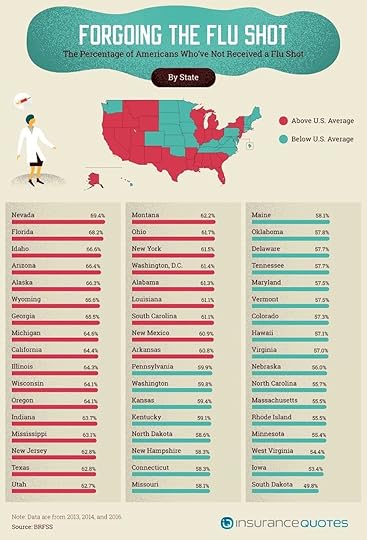
Photo: InsuranceQuotes
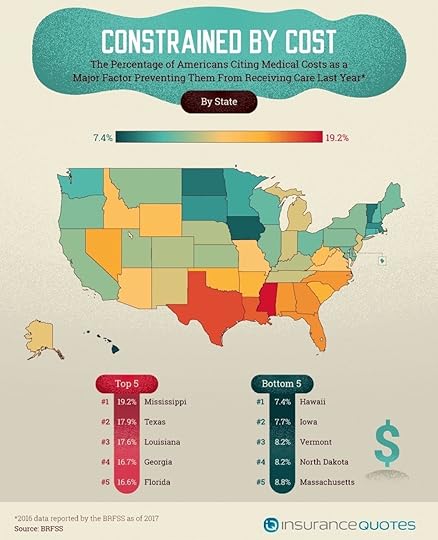
Photo: InsuranceQuotes
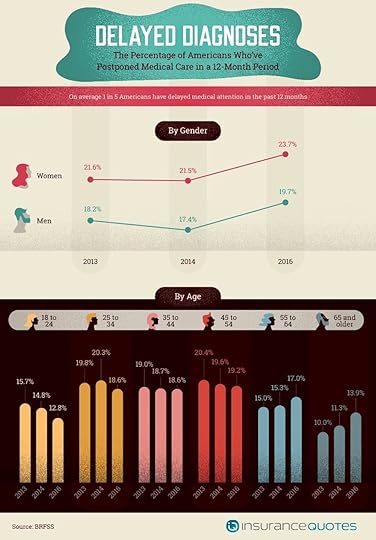
Photo: InsuranceQuotes
More like this: Infographic: Where in the world will you spend too much on healthcare?

Never date a New Mexican girl
New Mexican girls are tough as nails. We know what we’re worth and we don’t settle for less. We were born and raised in the heat and grit, so don’t mess with us. That being said, once you’ve earned our trust and have come into our lives as a special person, you can’t get us out of your head because we give our all. We’re supportive, compassionate, and funny as hell. We’ll go on wonderful drives through the mountains, shack up in a little casita, get fat together eating tamales and burritos, and watch beautiful sunsets. We love our desert life, and you will too.
1. Say goodbye to lazy weekends.
What can we say? We like to get out! One weekend, it’ll be hiking. The next, skiing. Then, white water rafting. We’re sporty, adventurous types and we love to take advantage of New Mexico’s great outdoors so there will be no lazing on the couch, we’ve got places to be! We roll out at 8 am!
2. Your music knowledge will grow exponentially.
We have very eclectic playlists. Country, mariachi, rock and roll, punk, pop, blues, folk, even opera from those times we drag you to SFO. Get ready for some very interesting road trip playlists.
3. She can really handle her booze.
We’re not pussyfoots when it comes to drinking. We earned our stripes with margaritas and 4 Lokos, so we can drink you under the table no problem.
4. You’ll never get anywhere on time.
It’s called the Land of Mañana for a reason. We move at our own pace, and you’ll have to as well. We had dinner reservations at 8? HA!
5. Prepare to get fat.
Whether we’re cooking for you, you’re over for a family dinner, or we’re out to eat, we’ve grown up on a steady diet of enchiladas, tamales, burritos, tortillas, and sopaipillas, which will find their way into your diet and broaden that waistband. Just let it happen.
6. You’ve got to step up your game.
We don’t need you, we’re strong, badass women in our own right, with a whole support system of friends and family all over town. You wrong us, they will ALL know about it and won’t forgive you. We’ve learned early on to never put up with jerks, so we won’t take sh*t from you. We’re not intimidated, we’re not desperate. We have bigger cars than you, we drive faster than you, we eat more than you, we drink more than you, we work harder than you, we kick way more ass than you. So rise to the challenge and be a good partner to us.
7. If you didn’t like spicy food before, you will now.
It’s kind of a prerequisite to being with us.
8. You’d better get along with her family.
When you come over for family events, it’s not just Mom, Dad, and siblings. We’re talking uncles, aunts, cousins, great cousins, relatives of dubious linkage. And they will all want to know all about YOU, so you’d better be able to get along with them because family is everything to us.
9. You’ll have to fight tooth and nail if you want her to move.
We love our land of entrapment for all it gives us — chiles, margaritas, beautiful countryside, New Mexican food, clear night skies — and if you want us to leave, maybe we’ll consider it but only if we can come back as often as possible. And we can get green chile delivered to our new home.
More like this: 36 things you’ll never hear someone from New Mexico say

18 images of the Peak District
The Peak District National Park is to England as Yellowstone is to the United States — that is, each is the first national park in its respective country, the first landscape deemed beautiful enough for official protection. In the case of the Peak District, national park status was granted in 1951, and it’s been attracting millions of visitors a year ever since to its rocky outcrops, rolling hillsides, and ancient stone villages.
Fly into Birmingham Airport — your gateway to England’s Heartland, with direct flights from the US — and you’re practically there (the park’s southern boundary is about an hour’s drive north of the city). Not yet convinced to book the trip? Scroll down and you will be.
1
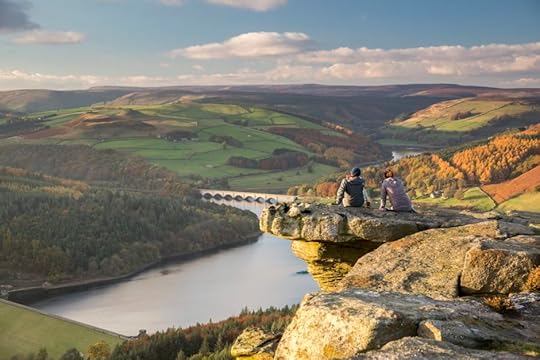
The views are what it's all about...
The Peak District spans a whopping 555 square miles of England's Heartland. Fortunately, the area is home to plenty of viewpoints that let you take in dozens of those square miles at once. Bamford Edge is one of them—and one of the best. Several trails lead to the top of this panoramic spot over the Hope Valley, near the center of the park.
Photo: Visit Peak District
2
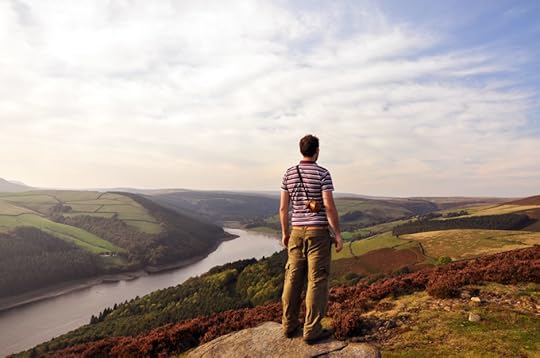
...and they come in all different shades.
Not surprisingly, all that gorgeous terrain is crisscrossed by tons of walking trails and hikes. To get to the view above, follow the road towards Derwent Dam, which will take you up past Ladybower Reservoir. After crossing open fields and moorlands, you'll climb above it all, taking in the best of the Derwent Valley. Instagram, get ready.
Photo: Adam Wyles
3
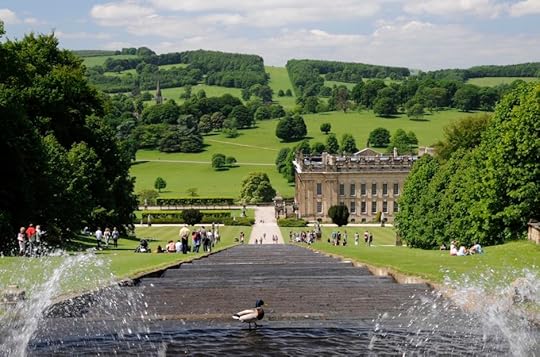
Here, you can tour monuments centuries in age...
The Peak District is home to a number of impressive homes and buildings, including one of the UK's "favorite country homes." Chatsworth House has been in the Cavendish family—the lineage of the Duke of Devonshire—since the 1500s. Rest assured it's as stately on the inside as you'd think. And the gardens? One hundred and five acres, and that includes a maze.
Photo: VisitEngland / Chatsworth House / Matthew Bullen
Uncover more surprises: 9 unexpected travel experiences you can have in England’s Heartland
4
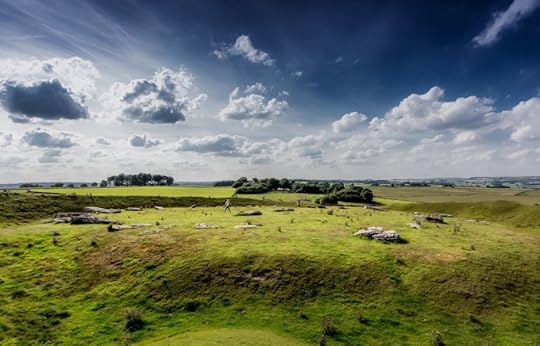
...or ones that stretch back millennia.
Nope, Stonehenge isn't as unique as you may think. Check out Tidza," as the locals call it, has been around the block a time or two. Located near the park's midpoint, parts of this hamlet are old, with history that can be traced back to the 1200s. Stop by the village for a pint or a coffee, and take a moment to get acquainted with the "Cathedral of the Peak," the church of St. John the Baptist. It's been around since the 14th century.
Photo: VisitEngland / Visit Peak District / Linda Bussey
11
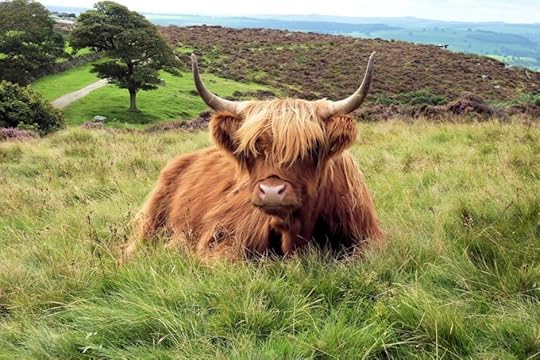
...and it's not all sheep!
On any walk through the Peak District, you may run into a few unexpected inhabitants. Yes, Highland cattle are perfectly at home here, which should tell you something!
Photo: Chris Morriss

12
The Peak District brings your favorite stories to life...
If this Middle Ages setting looks familiar to you, you're not wrong—you've seen it in Jane Eyre, Pride & Prejudice, The Princess Bride, and a handful of other period films. With sections dating back to the 12th century, Haddon Hall is widely regarded as one of the most "romantic" homes in all of Britain. Yes, a home. Apparently, life in the Middle Ages wasn't so rough for everyone.
Photo: VisitEngland / Ian Daisley / Visit Peak District
13
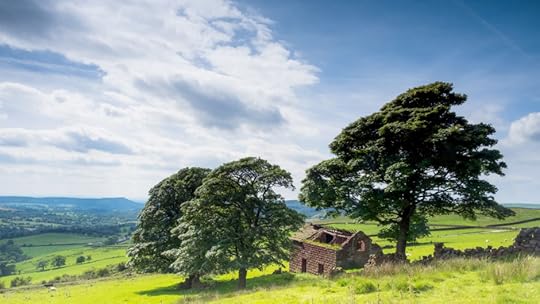
...while inspiring you to invent your own.
Humans have been roaming these hills for thousands of years. On any of your treks through the park, you're bound to run into artifacts—some ancient, some not so ancient—that will evoke the spirit of the Peak District.
Photo: Reflected Serendipity
14
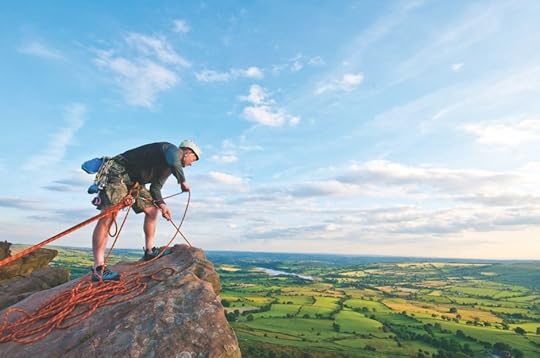
You can scramble on the Roaches...
You've always wanted to "weasel" your way through a natural obstacle course, right?
That's the kind of environment the Roaches provide. The Staffordshire Moorlands are full of awesome climbing opportunities for all levels, the terrain being mostly limestone or gritstone. Free climbing is popular, too.
Photo: VisitEngland / Peak Pursuits
15
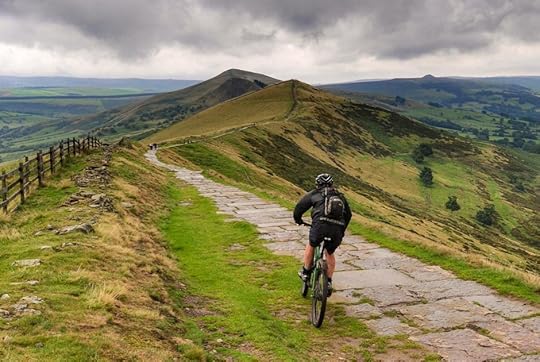
...and bike along Mam Tor.
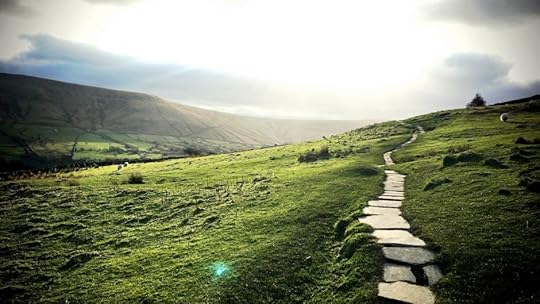
The views from Mam Tor are certainly spectacular, but the draw runs much, much deeper. For starters, the summit was the site of a Bronze Age fort from the 1200s BC. And the base is equally remarkable, home to four caves open to the public—and, yes, you're welcome to go spelunking.
Photo: Paul Stevenson
16
You can follow in the footsteps of pioneers...
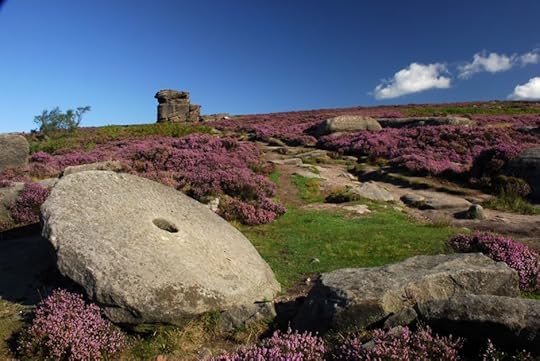
The Pennine Way, a national trail, stretches for 268 miles across England. One awesome section is Kinder Scout in the Peak District. It was here that outdoors enthusiasts staged a peaceful protest in 1932 to demand access to what was at that time privately held land in England, an action that led to the creation of the park itself.
Photo: Mathew Phillips
17
...or walk in the tracks of glaciers.
Climb Higger Tor from Longshaw and circle back along the distinctive rocks of Burbage Edge—a quick 4.5-mile walk, but one of the park's most rewarding. And in spring? Everything will be cloaked in purple.
Photo: Visit Peak District
18
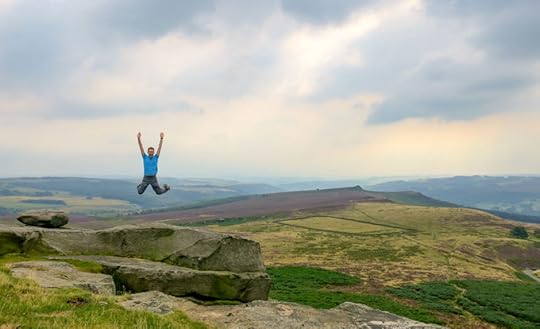
Bring your hiking boots, and this is you in the Peak District.
England's first national park is built for walking and hiking. There are dozens and dozens of miles to explore here, and your only limitation is time. For a Sunday stroll, check out Dovedale or Mam Tor. If your boots are of the sturdier type, go for Kinder Scout or Eyam. Or, better yet—come and see where the wind takes you.
Photo: Kyle
Taylor


February 11, 2018
How to decipher your boarding pass
You wake up at 4am on the morning of your flight and your plane takes off at 5. You jump into your clothes, chuck your luggage into the passenger seat of the cab, struggle to finish buttoning your shirt with your passport in your mouth, hop out, get your boarding pass and… are forced to pause as you decipher the only piece of paper that will get you on your plane.
Like passports, boarding passes have been symbols of industrialized world travel for decades. While much of what is printed on them has stayed the same since the days of the DC-3, modern boarding passes come with a slew of other information that can tell you more about your ticket and your flight. Globehunters has put together the infographic that reveals these secrets. It might not change the overall experience for a well-traveled flyer, but it could serve as a pretty cool party trick (fuselage trick?).
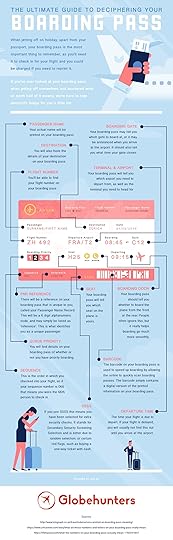
Photo: Globehunters
More like this: How to ensure you won’t get bumped off a plane

Matador Network's Blog

- Matador Network's profile
- 6 followers

