
Matador Network's Blog, page 1409
February 6, 2018
new cheap rail from Madrid-Barcelona
The national railway company of Spain has announced that a new low-cost line connecting Barcelona and Madrid will launch in 2019. The Alta Velocidad Española (or AVE) service has plans to drop its current €98 Euro ($121 USD) ticket price by up to 25% for its new service in a move intended to draw younger travelers.
How will AVE’s new service be able to afford the cheaper tickets? Relying on a keyword that has come to define the era, Minister of Public Works Íñigo de la Serna promises that it will use “smart” trains that reduce labor costs. This means that there will be almost zero human interaction in purchasing and using a ticket, which will be reserved online and scanned by the ticket holder at the station.
Photo: Maria Michelle
Eventually, biometric scanning will replace e-tickets, because you can’t have “smart technology” without unnerving overtones of an Orwellian future in which our bodies are watched and recorded at every moment and there is no escape.
But there is free wi-fi! At least that is what the new service promises on the line that will offer five daily trains between a station near Barcelona’s airport and Madrid’s central station. Other smart technologies include an app that will allow passengers to book taxis and connecting trains while buying their ticket.
In keeping with their name, these high-speed trains will travel at around 200mph, transporting passengers between the two iconic destinations in the same 3-hour timeframe as before. 

More like this: 13 reasons you need to see Europe by train


Iceland's natural landscapes
In the past 5 years, the number of foreign visitors in Iceland has increased by over 300%. There’s a reason why this country of just over 300,000 inhabitants attracts more than 2,000,000 annual tourists.
Here are 12 photos taken by Marta Kulesza and Jack Bolshaw from In A Faraway Land that showcase Iceland’s phenomenal natural beauty and will hopefully convince you to visit.
1
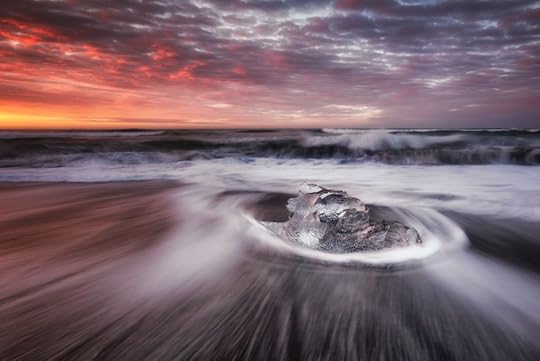
The Diamond Beach
Iceland is famous for black-sand beaches and glacial ice but who knew they could both be seen at the same time.
2
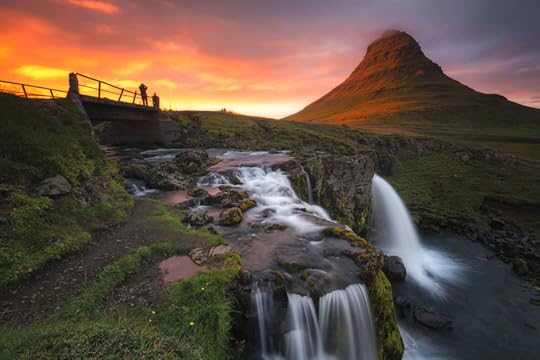
Kirkjufell and Kirkjufellfoss
On the Snæfellsnes Peninsula in the west of Iceland, Kirkjufell, which translates to Church Mountain, has been shown in many movies including The Secret Life of Walter Mitty.
3
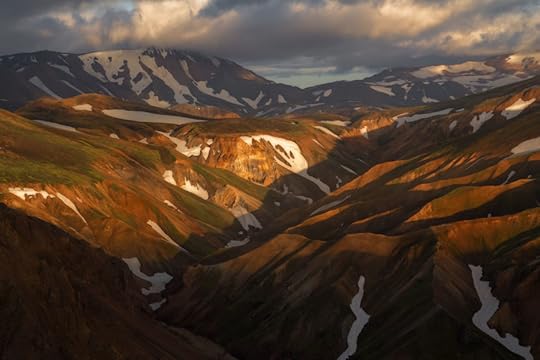
Landmannalaugar
Located in the Icelandic Highlands, Landmannalaugar is a great place to see the colorful rhyolite mountains, as well as enjoy many natural hot springs.
Intermission
Culture Guides
13 memories you have if you grew up in Michigan
Cathy Brown
Jan 31, 2018
Road Trip Guides
The 10 road trips you have to experience before you die
Katie Scott Aiton
Aug 8, 2017
Galleries
18 reasons to visit Cappadocia in the dead of winter
Steve Brock
Jan 9, 2018
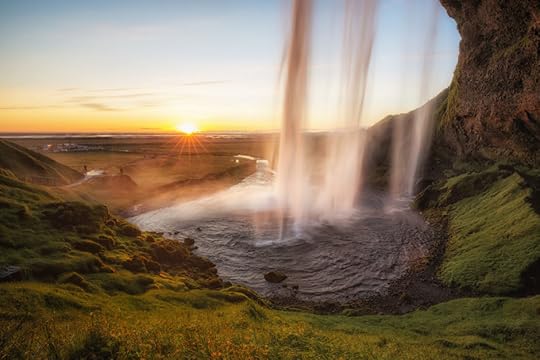
4
Seljalandsfoss
At over 200ft high, this waterfall is only a short drive from Iceland’s capital city, Reykjavik.
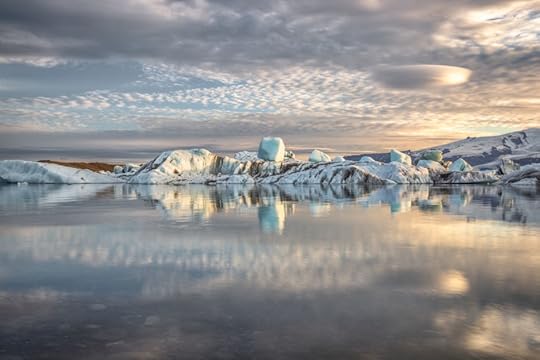
5
Jökursárlón
This glacial lagoon has been formed as the Breiðamerkurjökull glacier started to retreat away from the Atlantic Ocean. Glaciers are retreating here (and everywhere else, it seems) at an unprecedented rate.
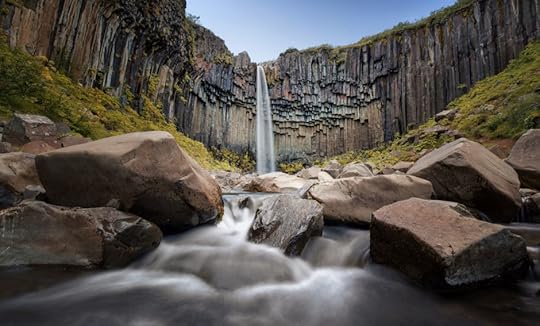
6
Svartifoss
Adorned with an amphitheatre of hexagonal basalt columns, Svartifoss is incredibly impressive.
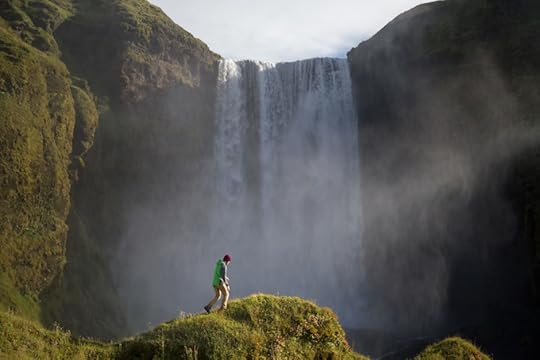
7
Skógafoss
Almost 15-meter wide at the top, Skogafoss is famous for creating rainbows on sunny days from the mist produced when the water crashes into the rocks below.
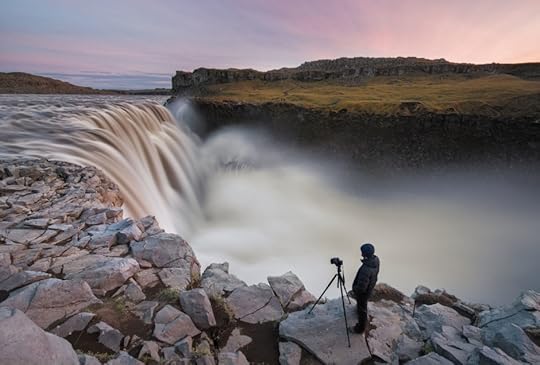
8
Dettifoss
The most powerful waterfall in Europe, Dettifoss has an average flow rate of 193m3 per second.
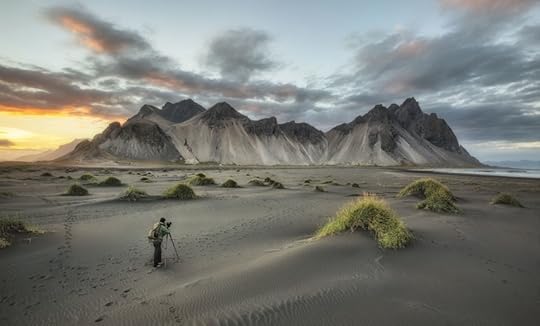
9
Vestrahorn
A mountain range in the southeast corner of Iceland, The Vestrahorn is otherworldly.
Intermission
Infographics
Mapped: The most distinctive causes of death in each state
Henry Miller
Jan 17, 2018
Video + Vlogs
Couch surf with a local in Reykjavik
juli
Oct 8, 2009
Galleries
Think Seattle is grey in the winter? Think again.
Sigma Sreedharan
Dec 6, 2017
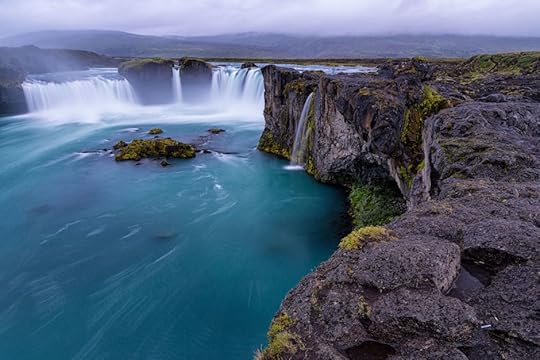
10
Goðafoss
It is said that when Iceland changed from following the Norse Ideology to the Christian Ideology in 1000 AD, the head of legislative assembly decided to destroy all their Norse statues by throwing them in this waterfall. It was then renamed “Waterfall of the Gods”.

11
Puffins
Although Puffin is a delicacy in Iceland, it’s much nicer to watch them in their natural habitats than on a plate.
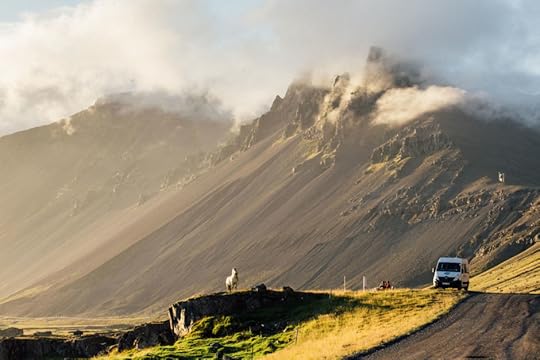
12
Wild Icelandic Horses
Although mostly only pony-sized, these beautiful creatures have developed thick coats to survive the harsh Icelandic winter.
More like this: 10 things I wish I knew before traveling to Iceland

How to serve food to a refugee
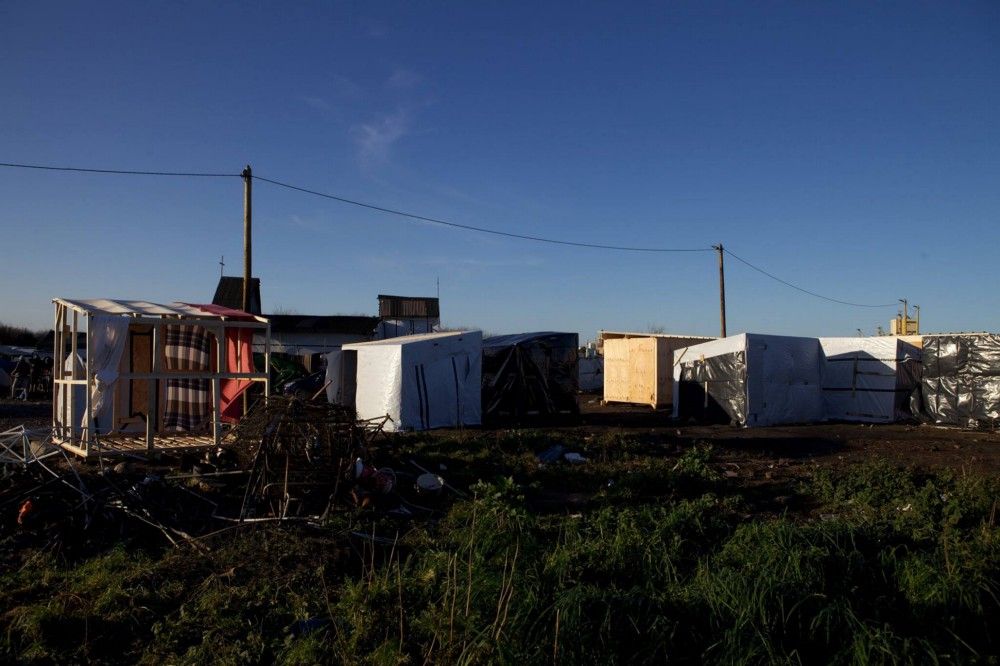
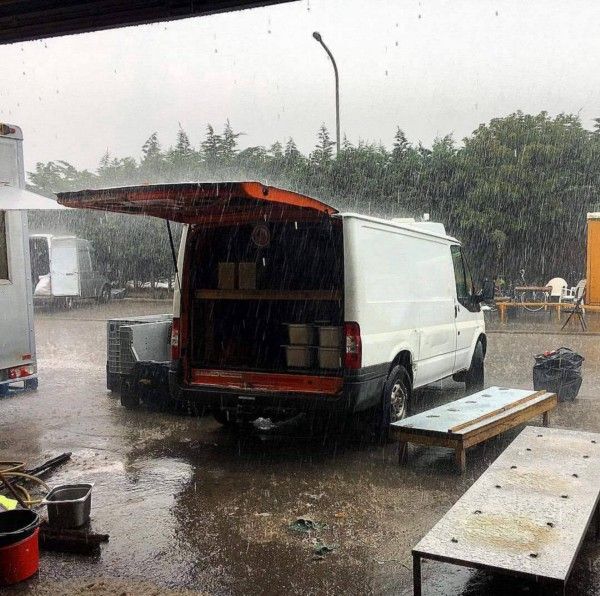
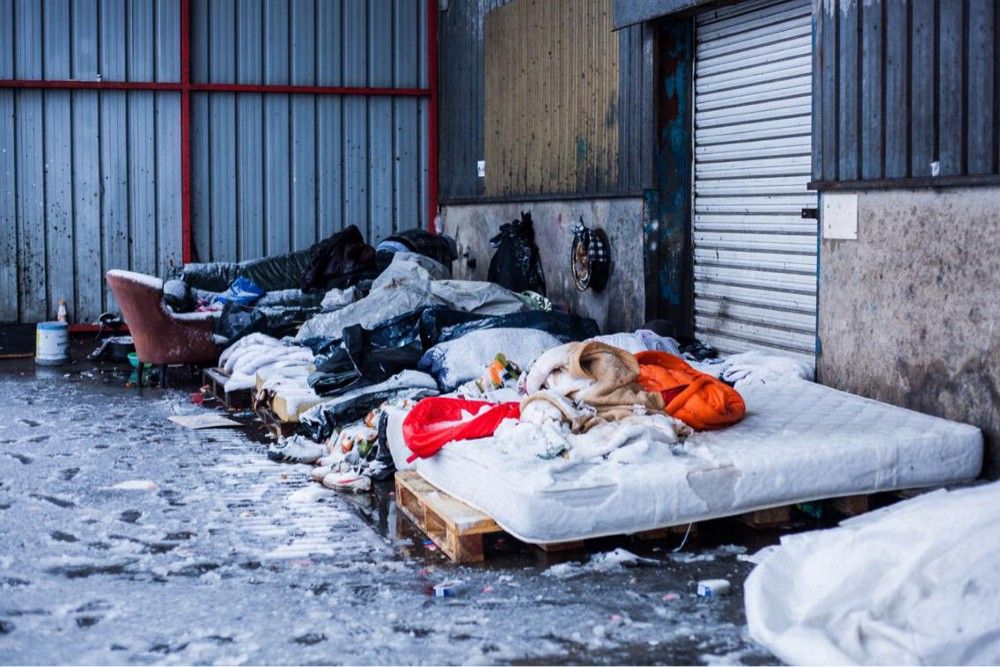
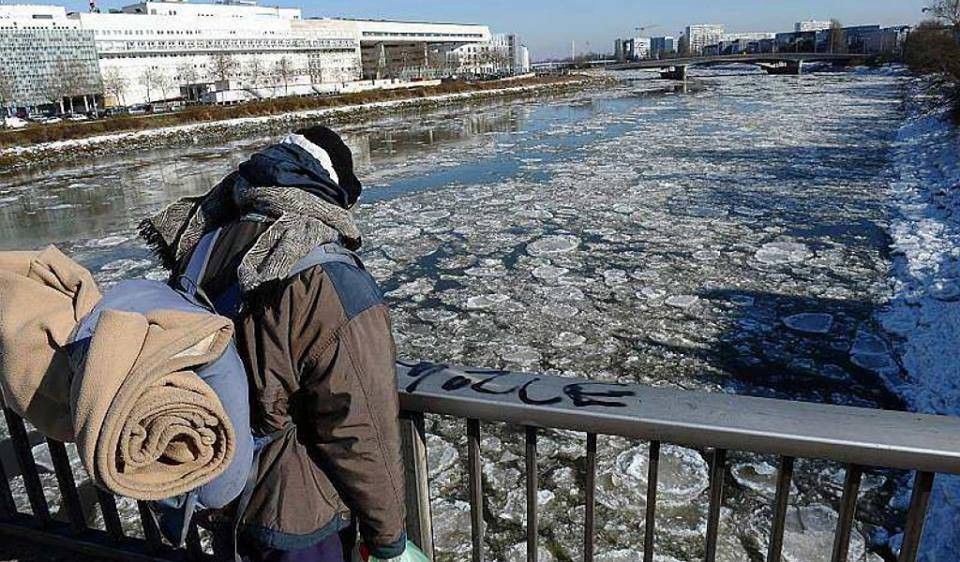
The van of volunteers from the organization Help Refugees/L’Auberge des Migrants pulls up between two transmission towers in an empty lot not far from the previously destroyed encampment referred to as “The Jungle” in Calais, France. This is one of the places in and around town where refugees are toughing it out (“living hard” is the what we see written in the memos posted on the walls in the warehouse where we volunteer). It’s winter now, and the weather vacillates between mildly horrible and truly abysmal. On a good day, the sun peeks through the low, fast-moving clouds coming off the English Channel, and in December the temperature reaches 45 or 50 F (7 or 10 C). On a bad day, biting rain sheets in horizontally, the temperature is 35–40F (4–7C), or colder, and with snow and ice. There are many more bad days than good.
Courtesy of Help Refugees/L’Auberge des Migrants
I had volunteered in a warmer time, June of 2016, when the real Jungle was in existence, with estimates of 6500 to 7500 people living there, and over 100 new arrivals every day. I had helped with daily clothing distribution as well as the evening “welcome” caravan, a chance to give out tents, sleeping bags, and hygiene kits. As horrible as the conditions were in the Jungle, what is occurring now in Calais makes one yearn for the good old days. Although the level of potential physical comfort was minimal, it was at least minimal – instead of completely non-existent. There were “streets,” there were actual businesses, there were mosques, there was an Eritrean church. There was a little school “Jungle Books,” and – most important – a youth center for unaccompanied minors to have some downtime from daily struggles, with food, games, some teachers. Doctors Without Borders came once a week, there was a medical caravan always with staff. There was an information bus where the refugees could recharge their phones, receive donated sim cards, and get legal help with their applications for asylum or attempts to get to the UK. There was a special caravan for women to have “spa day” and do their hair and nails, be away from the hordes of single men in the camp. The Jungle was horrible – but in retrospect, it was like a resort in comparison to the conditions you find in Calais today, in January 2018.

Today, out past the muddy lot to the left are bushes, then leafless woods. When the van pulls, in figures emerge in the rain and approach us; mostly young, single men – two or three women, a few young boys — dressed in all manner of donated clothing, all dark colored, which they prefer so as not be spotted at night if they try to hide inside a lorry — or riskier, try clinging like a bug underneath. They want to cross on the ferry and enter the UK, the magical land they are so certain will take them in, where they have been told there is the possibility of jobs, and most of all, certain safety. While I was in Calais this time, one young Afghan man was hit and killed on the highway that leads to the ferry across the Channel, and 4 days later another was hospitalized in critical condition. The trucks did not stop after hitting them.
Today, the shelters in Calais are only open if the temperature is 32F or below. This new policy is called “le grand froid” – the big chill. The refugees must arrive via local police van, they can’t walk in, they can’t be driven by volunteers, or by anyone else. This requirement causes so much fear of possible deception and deportation that many forego the assurance of warmth for the night. If they do go, they are provided with a number which corresponds to a tent space on the floor, with sleeping bags already laid out inside. Every morning they must leave and then re-enter once it has been ascertained that the temperature will be low again the next day and evening. They are then re-assigned another number, another tent and sleeping bag. This is not the most sanitary way to warehouse people, as illnesses, bedbugs, scabies, etc. can be easily transmitted. Sometimes when it seems there will be a stretch of cold weather they are told they will be able to stay, and they leave for the day intending to return in the afternoon. While they are gone, sometimes the decision is made to close the shelter that night and their meager belongings are thrown out without the possibility of reclaiming them. Yes, here in France, home of Liberty, Equality, Fraternity. (If you would like to voice your displeasure with this situation, you can address comments to Monsieur le Prefet, at pref-communication@pas-de-calais.gouv.fr )
Courtesy of Help Refugees/L’Auberge des Migrants
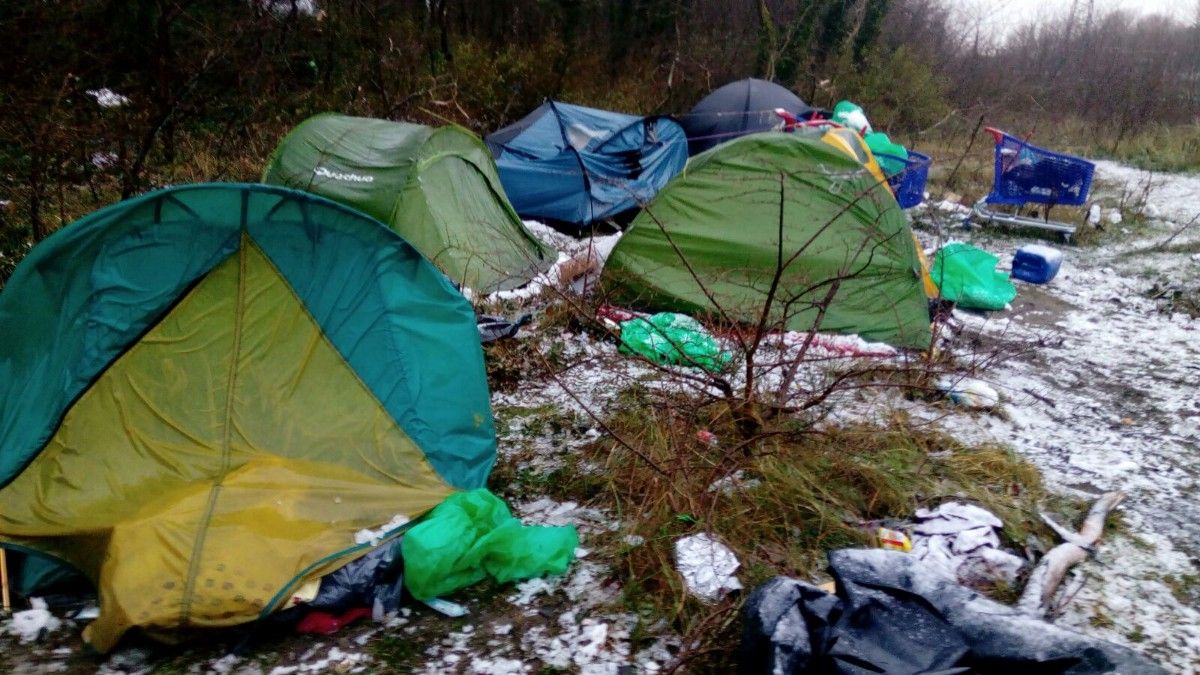
There are sometimes tents back there in the bushes. Tents are considered “permanent structures” and are disallowed by the local government. When the French police find them, they are confiscated and destroyed. Sometimes the local gendarmes have a bit of fun and slash the sleeping bags too, rendering them useless against the cold. Sometimes they pepper-spray migrants for no reason. While I was volunteering, one of the other distribution crew told me that the night before while she was setting up at another location near the ocean, several men showed up shivering, in wet clothes and barefoot. They had been herded like sheep to the water’s edge and told that their choice was to jump into the freezing water or be deported immediately. They jumped. The van went back to the L’Auberge de Migrants warehouse to gather more clothing, thus depleting the amount saved for the regularly scheduled clothing distribution another day, but this was an emergency. Every time the tents and sleeping bags are taken or ruined, they are replaced from whatever donations have been culled and deemed useful.
Courtesy of Help Refugees/L’Auberge des Migrants
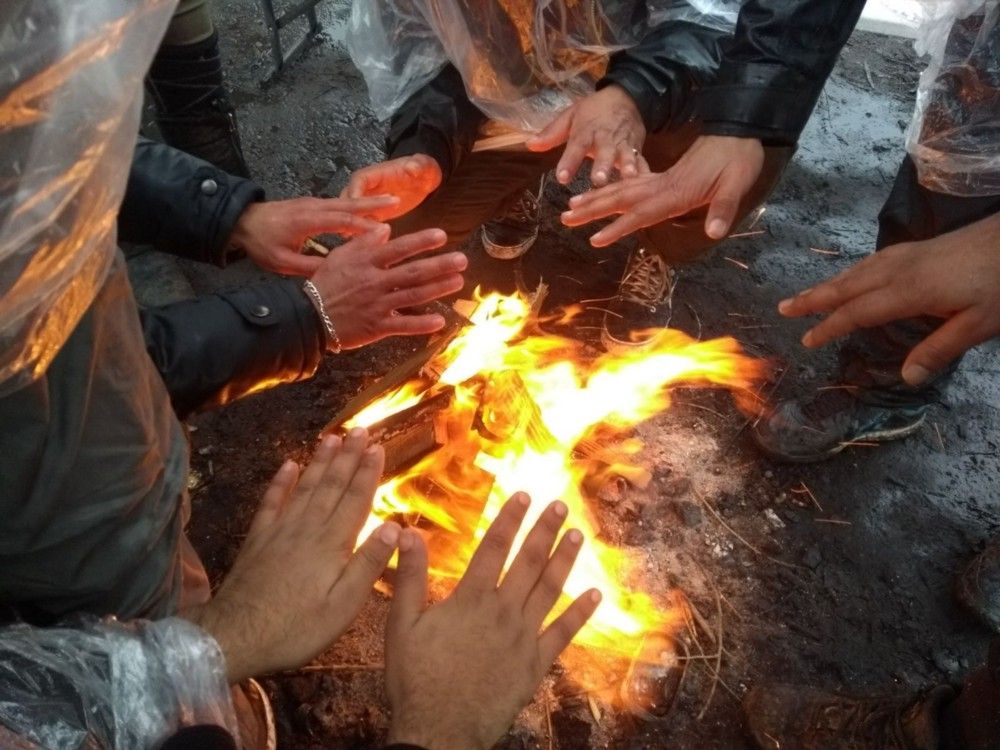
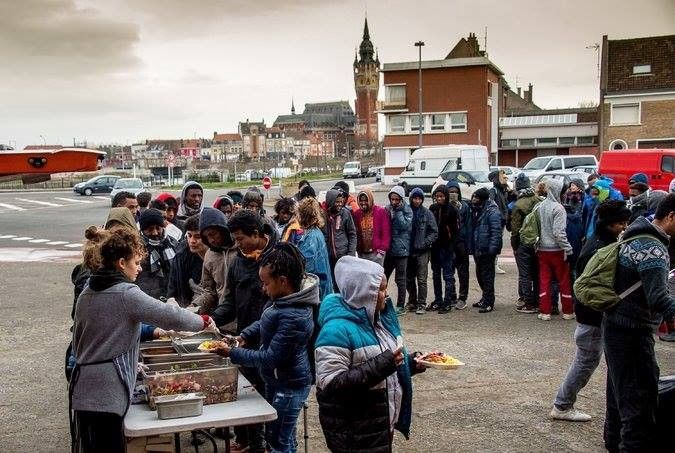
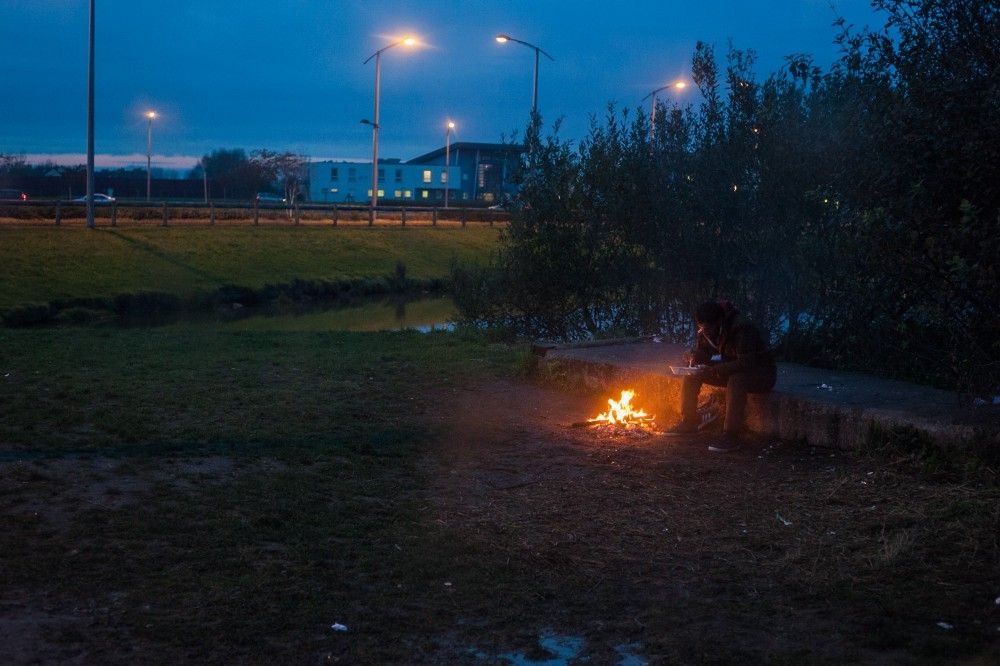
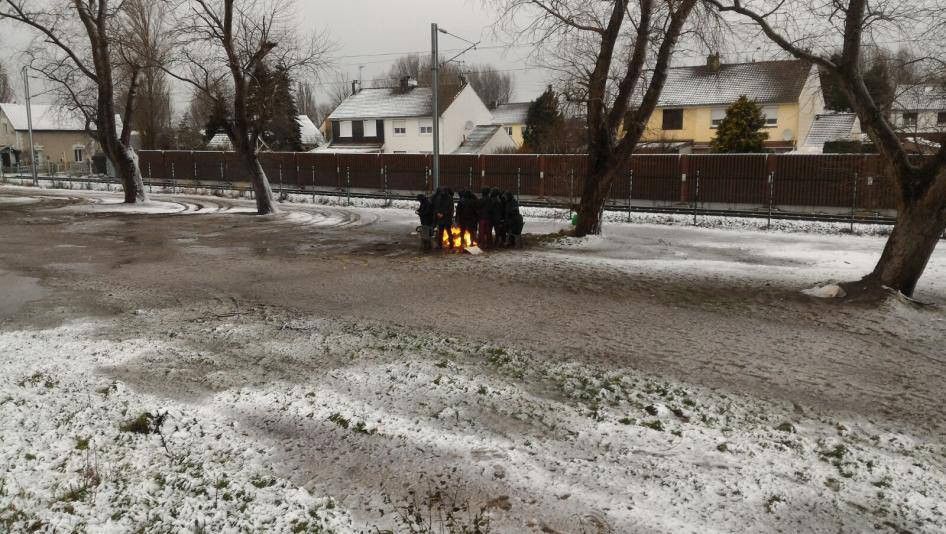
The men usually have a fire going near the small van that sometimes comes from another volunteer organization, so they can charge their cell phones and call home, wherever home may be. Sudan, Eritrea, Afghanistan, Syria, Iraq, Iran, Bangladesh. They burn anything they can get their hands on; cardboard, food containers, green branches from the bushes, old clothing. Often the fumes of flaming plastic fill the air. Gusts of wind blow showers of sparks everywhere, and rain extinguishes the flames.
Courtesy of Help Refugees/L’Auberge des Migrants
Food distribution teams from the Refugee Community Kitchen are comprised of seven volunteers. Two people for each of the two food tables. One person serves at the tea table. A team leader is a “runner” to replace the deep rectangular metal warming pans as they empty. Another leader is responsible for crowd control to keep the lines moving while simultaneously handing out the small cardboard food trays. Lunch is a soup or thick porridge, plain bread and/or garlic or cheese bread. Tea is hot, strong, sweet, and plentiful. Sometimes there are oranges or bananas if any were donated that week. Dinner consists of rice, a hearty curry of beans or lentils, salad, and bread. They like bread – it fills them up, it sops up the gravy, they need calories and warmth to make it until the next meal or the next day. There is a lot for them to manage in two hands – a container of tea, a plate heaped with food and bread balanced on top. If they indicate a free pocket, I put in the orange.
Food distribution usually proceeds smoothly. Occasionally scuffles break out, someone jumping line, or perhaps some animosity from before we arrived boils over into shoving or yelling. Other times, volunteers come back with joyful stories of everyone dancing together around the fire (the van cranks up the music really loud to attempt some air of festivity.) After we clean up the trash we are encouraged to mingle if the men want to talk to us.
Before leaving the warehouse, we are advised not to ask certain questions which might trigger more sadness and despair about their plight. “Don’t ask where they are from, don’t ask how they got there, don’t ask how long they have been there, don’t ask about their families, don’t ask where they hope to go, don’t ask what their work used to be, unless they ask you first, then you can turn the question back to them.” Upon learning that I am 60 years old, one African man asked if these were my original teeth, and complimented me when I answered in the affirmative. Another man asked me my name and found that it’s the same as his mother’s. “Then you are like my mother here with me!” he said, and hugged me.
Courtesy of L’Auberge des Migrants
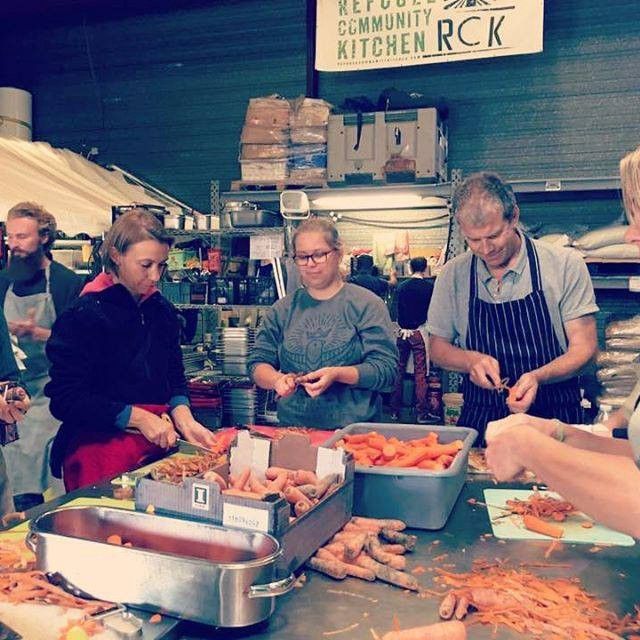
L’Auberge des Migrants operates out of a huge warehouse in an industrial area east of old Pas de Calais. The location is mostly secret. Not completely, though, as it’s been performing the impossible for too many years now to be invisible or unknown to the residents of Calais. Volunteers come from all over Europe, and some from the US and Canada, to chop vegetables, mix salad, sort clothing, repair tents, check blankets, wash pots and pans… Some are in college, some are those citizens-of-the-world types who bloom no matter where they’re planted, some hop over from England, Ireland, Scotland, etc., whenever they feel called, for a weekend, or some for longer weeks during a holiday from work. Some are traveling in Europe already and make it a stop during their global galavanting, some come from even farther because it seems that chopping carrots may be all they can do to help. It’s astounding.
Courtesy of Help Refugees/L’Auberge des Migrants/Refugee Community Kitchen
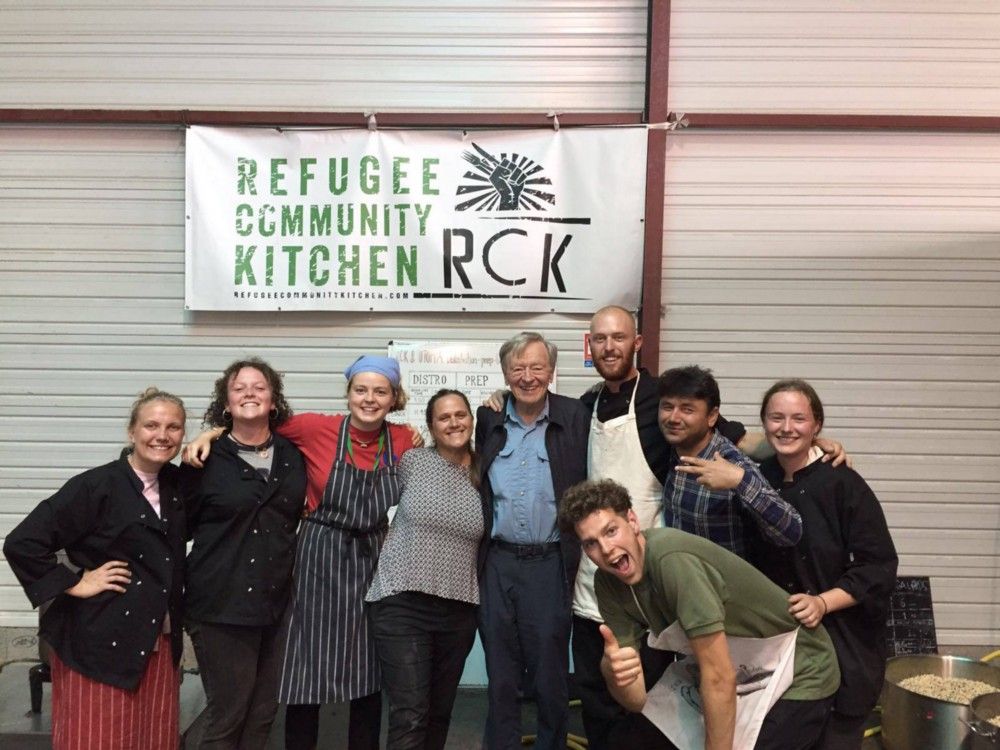
The volunteers’ average age is probably around 24 years old, and this includes the long-term folks who stay from one or two months to a year. Kitchen supervisors who dole out tasks, organize distribution teams, convene meetings and debriefings, are incredibly mature, compassionate, and worldly young people. My last shift, the night before I headed back to the States, a woman led us through what felt like a war as we served dinner in 35-mph winds and driving rain at the Grande-Synthe preserve in Dunkirk, then drove us all soaking wet and freezing to the shelter in town that houses 200 men, women, and children. The physical discomfort at Grande-Synthe and then the emotional drama of a mob scene around the tea table in the shelter was a hard combination to comprehend. Our leader calmly handled the weather, the order of tasks, and every decision needed, including checking in on her crew to make sure we were alright. Her birthday had been the day before. She was barely 20 years old.
I had already been in the rain and cold earlier that day during lunch at the abandoned lot location. After loading up the leftovers and doing a trash pick-up, we were ready to return to the van. A man was leaning against the side door, his head against the cold metal, crying. The head of our team, an Irish girl with long blonde hair and a swipe of mascara on her pretty eyes put her arm on his shoulder. “Be strong, my friend,” she said. (“My friend” is the universal equalizer, the refugees say it when they shake your hand, no matter what country they are from, we use it to show respect, and sometimes to defuse mounting tension or frustration.) “Be strong for just another day.” She is 22, and precociously kind. They all are.
Courtesy of Help Refugees/L’Auberge des Migrants
I walked back and forth to the warehouse from the home of a local woman who rents beds on her floor to volunteers, 14 at a time. I slept in a room with 5 others, and the whole household shared one bathroom and one kitchen for 10E/ night. It was glorious. Mostly younger, a few older, but all friendly, all there for the same reason. As I walked my route twice a day, I wondered where I would hunker down if I was seeking refuge. That looks like a good hedge, you could definitely burrow in and not be seen if you were careful. Sure enough, peering closely, I would see a piece of corrugated metal woven between branches to provide some shelter from the rain. There were remnants of a small fire. I scanned fields for low depressions to make a nest. I looked under highway bridges for pillars broad enough to hide behind. I walked by a tall fence topped by barbed wire surrounding the perimeter of an abandoned building. Set far back from the road, there was an overhanging roof jutting out. It was open air on three sides, but the roof would hold back the rain and snow. The next night I saw a flickering flame back there and silhouettes of people sitting around it.
Courtesy of Help Refugees/L’Auberge des Migrants
Every night in the hedges across from the warehouse there were two separated groups of African men sitting around small fires. I started going over to say hello, to shake hands and let them know I knew they were there. I did this deliberately in attempt to atone for what I had done after my second work day. A man had approached me and two of my housemates. He was trying to ask me something, and I defaulted to the usual response to street people who accost me in the States. I said, “I’m sorry, I can’t help you,” and walked on, still gabbing with my new young friends. We got back to the house and one of them said, “I don’t mean to criticize, but I just want to ask you if that’s the protocol here. I mean, aren’t we here working every moment to help them in general, and then one individual came up and you blew him off. Is that what we’re SUPPOSED to do?”
Courtesy of Help Refugees/L’Auberge des Migrants
I realized that I had gone on automatic pilot and not bothered to listen. Maybe he wanted to give me some money to buy something at the store which doesn’t want the refugees to enter. Maybe he was asking to borrow a lighter for his cigarette. Maybe he truly wanted something I couldn’t provide. I didn’t try to find out. The next day I asked administrator personnel how we were supposed to be interacting with folks on the street. Is there a “right” and “wrong” way to be here? I started crying, ashamed at how obtuse I had been. A sweet, 25-year-old organizer from Italy hugged me and told me it was ok, that chances are there wasn’t anything I could have provided this guy, but that they are people in a shitty situation. “Remember, this is not like back home. Just listen, find out, if you want to give a cigarette or water, or whatever, you can do whatever you think feels right. Don’t give things from the warehouse, we can only distribute at certain locations and can’t have anyone assume they can come to the gates and ask for things, but it’s up to you any place else.” From then on I talked on the street to anyone who wanted to say hello, I looked them in the eyes, I made sure they knew that I knew they were there. I realized there’s no reason for me to behave any differently at home as well.
Courtesy of Help Refugees/L’Auberge des Migrants
How to serve food to a refugee. You make eye contact, and say, “Hello! How are you? It’s so good to see you again. Would you like some rice? More? Some curry? Is this enough? Salad? Careful for your hands, the tea is hot! What a beautiful smile you have.
You are welcome.
I am with you.
Stay warm tonight, my friend.”
This article originally appeared on Medium and is republished here with permission.
More like this: This refugee changed my mind forever about immigration

A love letter to Nevada
By Sarah Feldberg
Photo: Sydney Martinez/TravelNevada
#wedge-0 { background-image: url('https://d36tnp772eyphs.cloudfront.net...') }@media(min-width:560px){ #wedge-0 { background-image: url('https://d36tnp772eyphs.cloudfront.net...') } }@media(min-width:1200px){ #wedge-0 { background-image: url('https://d36tnp772eyphs.cloudfront.net...') } }

This post is proudly produced in partnership with TravelNevada.
I remember the first time I saw a tumbleweed. I was just outside Las Vegas, picking up my Toyota Corolla from the back of a moving truck, all of my earthly possessions wedged inside its compact interior. A tumbleweed rolled down the shoulder of the road as I gaped at this everyday marvel. Huh, I thought. They really do tumble.
I was new in town back then and still getting my bearings, still slathering my hands in lotion and waking up parched in the middle of the night; still learning the I-15 from the 215, shortcuts around the Strip, and how to pronounce Nevada like a local, with a short “a” in the middle: Nev-AD-duh, not Nev-AHH-duh.
All I knew about the state I’d learned from magazine articles, TV shows, and bad movies. Some 110,000 square miles reduced to a tiny patch of neon swimming in the desert. Venture outside the glow and you might disappear altogether.
But Nevada is vast and vastly more beautiful, fascinating, and complex than The Hangover would have you believe. It’s a place of contrasts and contradictions, the domain of cowboys and card sharks, where fortunes have been made and wasted, legends born and sacrificed. “Welcome to Nevada,” the state-line signs should read as you barrel down the freeway from Utah or California or Arizona. “It’s complicated.”
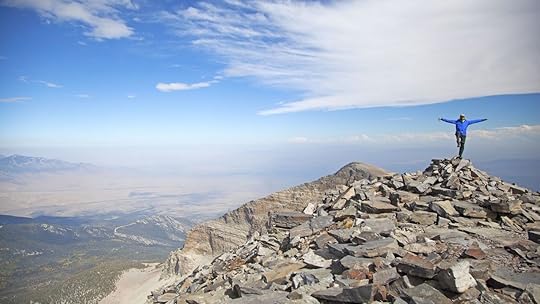
Photo: Sydney Martinez/TravelNevada
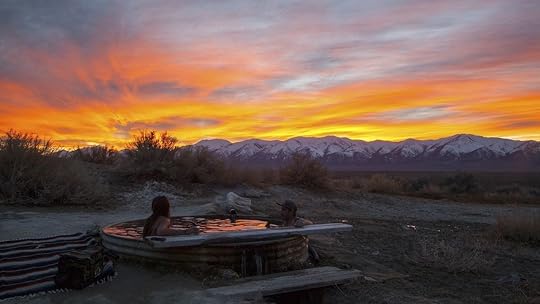
Photo: Sydney Martinez/TravelNevada
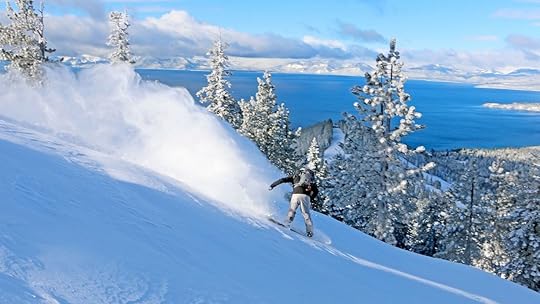
Photo courtesy of Jaclyn Ream / Diamond Peak Ski Resort
No matter where you stand in the 36th state, you’re pretty much never more than 30 minutes from undeveloped land. When I first moved from the East Coast — where suburbs sprawl for hours — Las Vegas shocked me. Here I could see the hard edge where civilization stopped, the final line of stuccoed single-family houses before the neighborhood gave way to unfiltered earth, yellow-flowered creosote, yucca, and Joshua trees.
The federal government owns 85% of the state, and wilderness in Nevada takes many forms. It’s the wooded peaks of the Humboldt-Toiyabe National Forest, the largest national forest in the continental US; the burnt-orange slot canyons of Cathedral Gorge, just wide enough for a person to squeeze through; and the silica-specked ridges of Sand Mountain, which rise 600 feet from the ground like dusty waves, beckoning off-roaders on dirt bikes and ATVs.
In Great Basin National Park, you’ll hike past gnarled bristlecone pines that have outlasted empires and gaze into night skies so dark they burst with light. At the Tule Springs Fossil Beds, you’ll explore an ice-age graveyard, where the remains of mammoths, dire wolves, ground sloths, and giant lions are preserved in the rock.
There are snow-capped summits where helicopters drop off skiers and snowboarders; hot springs that bubble from the earth in the middle of absolutely nowhere; and sun-baked valleys where plants and animals cling to life with spikes and venom and tenacious fury. Here, suburbanites hunt scorpions by blacklight and bighorn sheep hang out on the playground.
Nevada isn’t a place for softies. It’s too rugged, too remote, too damn raw.
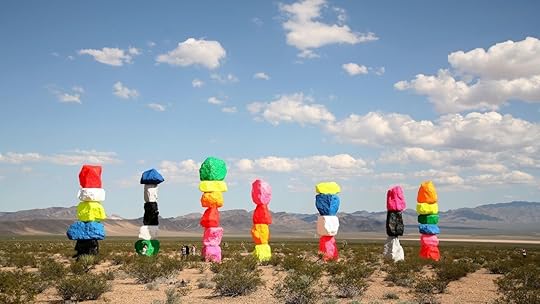
Photo: Kaitlin Godbey/TravelNevada
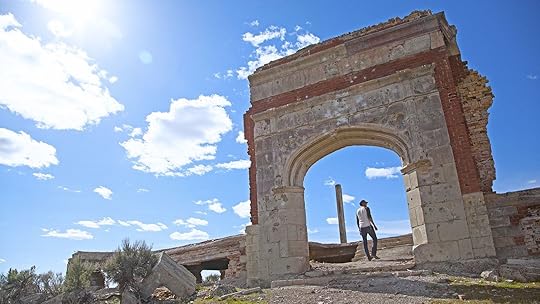
Photo: Sydney Martinez/TravelNevada
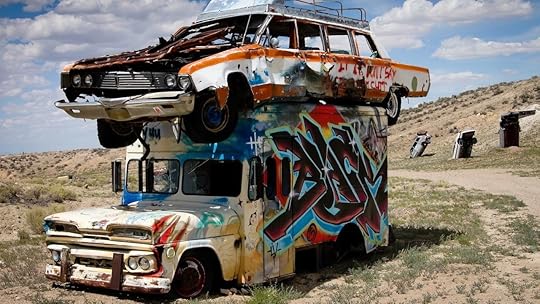
Photo: Kimberly Reinhart
In 2013, researchers in northeastern Nevada dated the local rock carvings to more than 10,000 years old — the oldest known petroglyphs in North America. The intricate patterns blanketing boulders within the Pyramid Lake Paiute Indian Reservation might mark Nevada’s original ghost town, a long-abandoned outpost for people so ancient they’re mostly a mystery.
Modern Nevada is home to numerous ghost towns, communities that sprung from the dirt during the mineral boom of the late 1800s and were left to decay when the lode ran dry. In western Nevada, miners struck gold in Rhyolite in 1905, drawing 5,000 people to the town — which soon sported spiffy concrete sidewalks, police and fire departments, a public pool, and 50 saloons. But fortunes fade as quickly as they bloom, and the mines were closing by 1911 (electricity was shut off three years later). Today, Rhyolite is a relic, a curiosity where you can ogle a home built from glass bottles and wander the 15-acre art experiment nearby.
The map of Nevada is littered with these unexpected expressions of creativity. In Goldfield, artists planted the rusted-out hulks of buses and sedans to form the International Car Forest of the Last Church, a bizarre landmark that inspires pilgrimages. Outside Las Vegas, Ugo Rondinone’s neon Seven Magic Mountains are Instagram catnip, while Michael Heizer’s massive “earthworks” use the land itself as a canvas.
Where else could a psychedelic city of 70,000 spring up every year for a week and then vanish into the dust? Nevada is the perfect mix of spectacle and void, a place of showgirls and working parents and cowboy poets — with a whole lot of empty range in between.
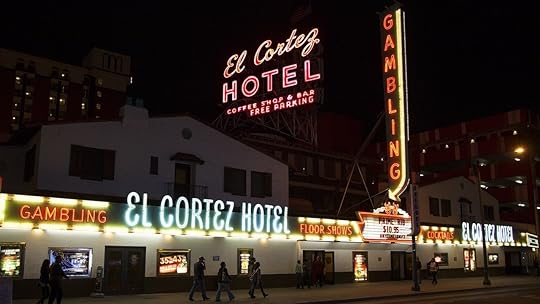
Photo: Sydney Martinez/TravelNevada
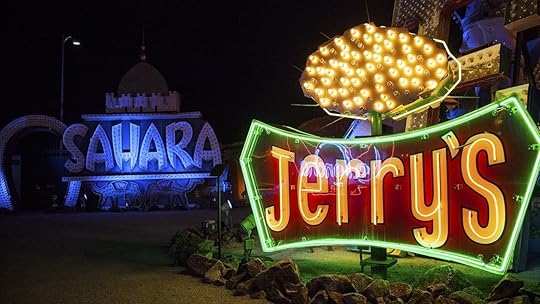
Photo: Sydney Martinez/TravelNevada
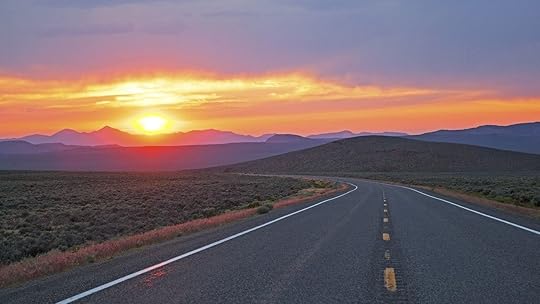
Photo: Sydney Martinez/TravelNevada
And, of course, there is Las Vegas.
Living in the city, I fell for Las Vegas slowly. First it was the dazzle, the thumping bassline energy of the Strip, where on any given night anything you can imagine might happen. Later I fell for the strip malls, the dull facades hiding treasures, the sense of being in on a grand secret. I fell for the feeling of living inside the theme park, the ridiculousness of bumping into Elvis at the grocery store, and walking the dog past drive-thru wedding chapels. I fell for every sign immortalized in the boneyard of the Neon Museum and the steakhouses that still mix salad to order table-side and light dessert on fire.
I fell for the pull-the-car-over sunsets, the interminable sunshine, and the apocalyptic thunderstorms that hit like the end of days.
I fell for the history, the tales of Nevada’s wild and woolly past when Wyatt Earp walked boomtown streets, when the Rat Pack ruled the Strip, and when the Mob reputedly ran every worthwhile joint in town. I fell for Samuel Clemens debuting the name Mark Twain in a Virginia City newspaper, Clark Gable passing three tortuous days in the Pioneer Saloon, and Howard Hughes buying the Desert Inn casino because he didn’t want to vacate the penthouse, or so the stories go.
I fell for the fierce pride of Las Vegans, who face down ridicule with passion, and of all Nevadans, who sing “Home Means Nevada” at the top of their lungs when The Killers come to town.
I fell for Nevada not in spite of its contradictions but because of them. Because this state is still untamed, unknowable, and gloriously rough around the edges. Because it’s a place where tumbleweeds really tumble, where roadrunners sprint and dealers deal cards, and all the clichés are just a tiny glimpse of the gorgeous complexity down below.
I love Nevada because there’s still so much to learn — and no matter how long I’m here, there always will be.


This post is proudly produced in partnership with TravelNevada.
Posted In
Trip Planning
Destinations
Nevada
Series
Nevada: A State Apart

12 more untranslatable idioms
Ever studied a new language and felt like some things were flying over your head? Idioms are probably the ones to blame. In case the word “idioms” isn’t ringing any bells, an idiom is a phrase with a meaning that cannot be deduced by its individual words. So, there could be a torrential downpour going on outside, but house pets aren’t literally falling out of the sky when it’s “raining cats and dogs.” Expedia has released a new infographic featuring twelve idioms from around the world that just don’t translate to outsiders. In fact, if you were to try to use any of these on your average American, it would be like playing the piano to a cow.

Photo: Expedia

Photo: Expedia

Photo: Expedia

Photo: Expedia

Photo: Expedia

Photo: Expedia

Photo: Expedia
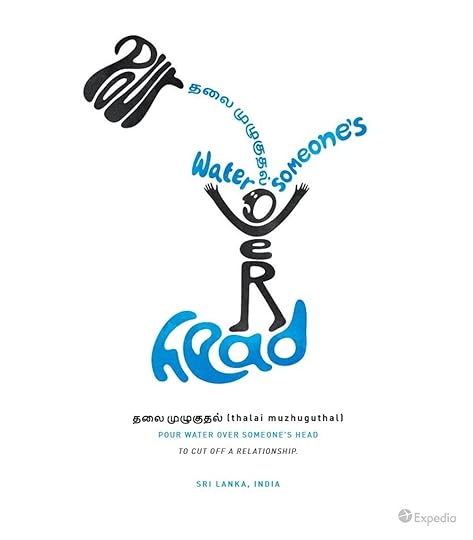
Photo: Expedia
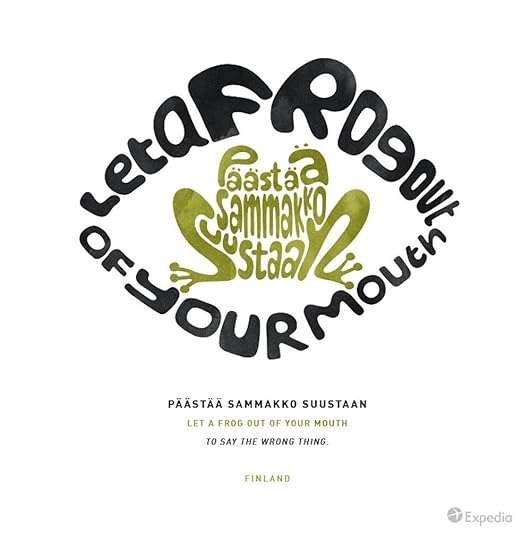
Photo: Expedia
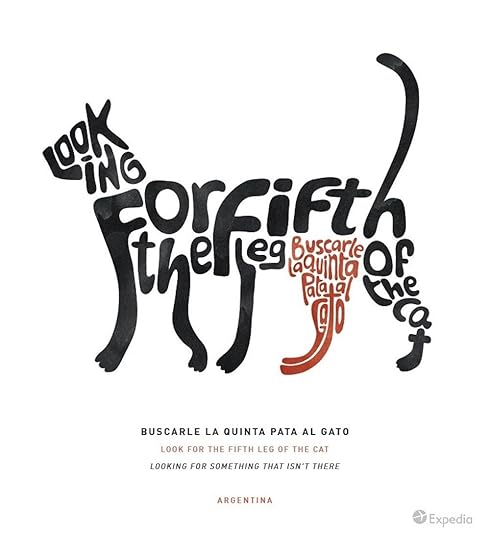
Photo: Expedia

Photo: Expedia

Photo: Expedia
More like this: 21 untranslatable idioms from around the world

Photographer who chases stars
During the darkest hours of the night, while the rest of the world is sleeping, outdoor photographer Paul Zizka ventures out into the wilderness in search of the world’s starriest skies. His journey to photograph the celestial wonders takes him from his home amongst the peaks of the Canadian Rockies to the wild, desert dunes of Namibia, and remote ice caps of Greenland. Ever the adventurer, he must balance his work and passion for photography with his equal devotion as a family man. In the Starlight is an intimate portrayal of Paul’s quest to capture the night skies, and what his time spent under the stars has taught him about life, love, adventure, and our place in the universe.
Follow Matador on
Vimeo
Follow Matador on
YouTube
More like this: 14 mind blowing images of night skies from around the world
Parent of solo female traveler
I am the mother of a solo traveler.
The first time my daughter, Jessie, traveled solo I was scared to death. She had left New York to study abroad in Australia, though that was in a more controlled environment. I also took comfort in the fact she’d be with other students, and that there was always a point of contact.
Going remote
The following year, her solo trip was less easy for me to digest. She decided to go to Thailand to teach English in a remote village. Not being a world traveler myself, I remember worrying that the destination was so out of the way that anything could happen. Worst of all, if something did happen I might not even know about it.
Before the trip, we went to buy an international cell phone so we could call and keep in touch. Like most plans in life, that did not work out so well, as Jessie was in a remote area with no Wi-Fi or cell service. We started depending on her emailing from the teaching office when she could get access to the administration’s one computer. For me, it was not often enough.
Needless to say, I could not wait for her to come home.
A paralyzing fear
In one sense, I was happy that she was independent enough to experience the chance of a lifetime; however, it worried me. The world was getting scarier and she was going farther away. I would ask myself questions: What if she gets lost? What if something happens and I cannot be there? What do I do if I don’t hear from her for a few days?
At times, the fear was almost paralyzing, especially when I would not hear from my daughter when I assumed I would. I would wake up in the middle of the night to check emails. My mind would wander and I would think the worst. This was probably the longest month of my life. It was such a relief when she finally arrived home.
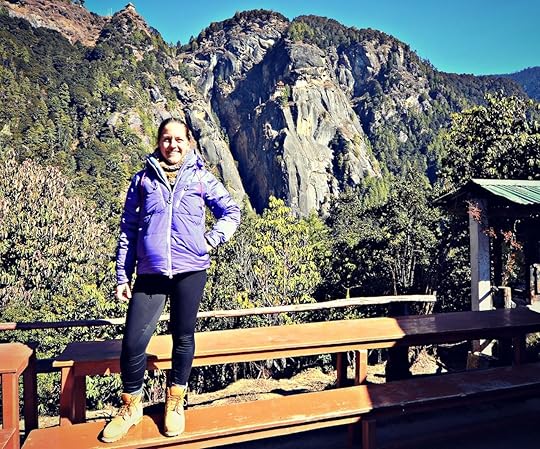
Jessie in Bhutan
Photo: Jessie Festa
Learning to cope
I was hoping that trip would be the end of her solo adventures, but no. Jessie informed me the following year she would be traveling Europe for a summer on her own. Her trip was starting in Ireland. A month or so before the trip she asked if I would like to go with her to Ireland and England, and then she would go off on her own after that. I accepted the invitation, and much to my relief I found that she was actually a very good traveler. Watching her being aware of her surroundings and navigating her way around foreign cities made me much more comfortable with her traveling solo after that trip.
She has since decided to do travel blogging for a living, and so she is gone quite often and goes to some very remote places. I am more relaxed than I was the first time; but only because of email, Wi-Fi, and the occasional Skype call. I still worry, of course, and find myself checking for late night emails and tracking the time until she comes home.
As Jessie’s mother, I will always be concerned about her safety — especially in today’s times — but I do believe she needs to live the life she wants. Traveling is her passion. Her travel experiences have helped her become the wonderful daughter and woman she is.
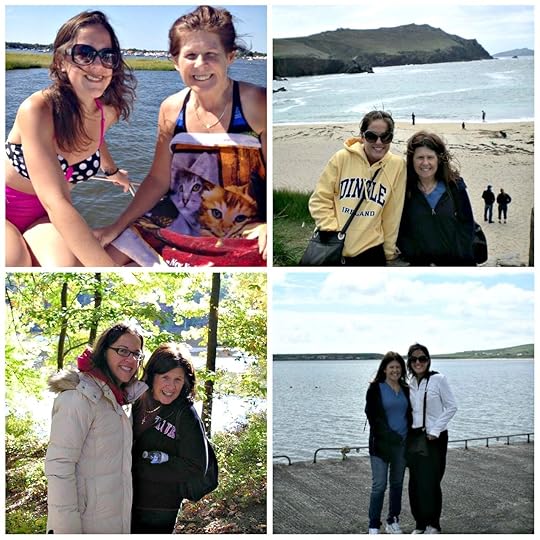
Jessie and her mother on trips around the world together
Photo: Jessie Festa
My advice to other parents of solo travelers
To parents of other solo traveling children, I offer the following advice for some peace of mind:
Have a plan for contacting your child, allowing for problems with internet. Skype is a helpful app where they can call home for cheap when in Wi-Fi areas.
Make sure to have an itinerary of where they are planning to be and when. Once I knew where Jessie would be, I would occupy myself by looking up the local attractions and things to do.
Keep yourself occupied so you have something else to do besides worry.
This article originally appeared on Jessie on a Journey and is republished here with permission.
More like this: The surprising joys of traveling with adult children

Keep costs down in Dublin
According to Expatistan, Ireland’s capital city has the 9th highest cost of living in Europe — making it more expensive than Paris or Rome and only slightly cheaper than London. So what’s a backpacker on a shoestring budget to do? Here are 6 tips to help cut costs…
1. Pick up a combination bus transfer at the airport.
When you touch down at Dublin Airport, you have two options to get into the city; taxi or bus. A one-way taxi journey will cost you €20 or more. But for an extra €7, you can get return airport transfers on the Airlink bus, which stops a stone’s throw away from all the main hotels and hostels in the city. This same ticket also includes 48 hours of unlimited travel on the hop on, hop off sightseeing tour bus, which covers all of the most popular attractions. That’s all of your transport for €27 total. Not bad, right? It’s called the Airlink Combo ticket and you can get yours here. If your stay is longer than two days, the DoDublin Travel Card offers all of the above for 72 hours, plus unlimited travel on public buses and free entry into the Little Museum of Dublin.
2. Cut transport costs and join Dublin Bikes.
Dublin Bikes is a very popular public bike sharing scheme, used by locals and visitors alike to pedal around the city. A three-day subscription costs just €5 (an annual pass is €25 for those staying longer), and that gets you unlimited bike rental for trips of 30 minutes or less. There are bike terminals all over the city centre, and you can pay at the terminals with a credit card for your subscription. 30 minutes is more than enough for any trip within the city center, but beware; any longer than half an hour and you incur extra charges.
3. Get your culture fix at free museums.
Unlike some other capital cities around the world, Dublin’s best museums are entirely free. You can get your fill of culture, from modern art to ancient history, without spending a penny. The National Gallery has works by Picasso, Vermeer, and Monet as well as all of Ireland’s most renowned artists. The National Museum has three locations in Dublin split into three categories — Natural History, Archaeology, and Decorative Arts & History. You can even get a guided tour of Aras an Uachtaran, the President’s residence, for free. Other museums well worth a look include the Chester Beatty Library, Irish Museum of Modern Art, Science Gallery, and the Gallery of Photography.
4. Sniff out some cheap eats.
Eating out in Dublin is definitely not a budget-friendly experience… but if you know where to go, it can be. For the past few years, the city has been swept up in a burrito craze, and there are multiple take-out bars across the city serving VERY generous portions of Mexican tastiness (we’re talking dinner-sized) for around €7.50. Trinity College is famous for being the home of the Book of Kells and the stunning Long Room, but it also has some little-known places to fill up your stomach at student prices. You don’t have to be enrolled to grab lunch at The Buttery, and the Pavilion Bar is the perfect place to enjoy a snack and a cold beer on a sunny day. If you’re on a seriously short shoestring budget, head to discount German supermarkets Aldi or Lidl on Parnell Street for self-catering at knockdown prices.
5. Avoid Temple Bar’s pubs.
A night in the pub is a rite of passage for every visitor to Dublin, but too many newcomers make a big rookie mistake; drinking in Temple Bar. Most of the establishments in this “cultural quarter” are avoided by locals for two reasons. They’re always crowded with tourists, and the pints are seriously overpriced. There are much better deals to be had elsewhere; The Porterhouse on Nassau Street has a different “beer of the day” every day for €4 and 2 for 1 daiquiris on Friday nights. On Wednesdays, The Workmans Club offers €4 pints and cocktails, and Dicey’s is famous for €2 pints and bottles on Mondays.
6. Avoid St. Patrick’s Day, too.
Any savvy traveler knows that traveling off-season is the key to cutting costs. If that’s your game, then you should avoid Dublin on St. Patrick’s Day. The days before, during, and after the four-day St. Patrick’s Festival are the busiest of the year. It’s common practice for hotels to hike up prices just because they can. Pubs and restaurants are jammed with people 24/7. Quality can sometimes suffer as a result, so you end up getting even less value for money. Plus, the city is filled with tourists on St. Patrick’s Day anyway; the majority of Dubliners abandon it in favor of a hike in the mountains, a family day at home, or a weekend away.
More like this: 6 awesome day trips from Dublin
Signs you're back home in Kansas
There is a sense of familiarity that comes rushing back whenever you come back to Kansas. Although returning to your tight-knit community might remind you why you got out in the first place, being a Kansan makes you damn proud. Here are 17 signs you know you’re back home in Kansas.
1. You don’t bother doing your hair because either the wind or humidity will destroy all your efforts in a matter of seconds.
2. You know not to bring up religion or politics at the dinner table because it will just piss off your mother, and you DO NOT want that to happen.
3. You forget that you can’t get your groceries and liquor in the same place.
4. Speaking of liquor, you know better than to go to a liquor store on a Sunday.
5. There is always a jacket, umbrella, and an ice scraper on hand for when the weather sporadically changes.
6. You can actually see the stars at night.
7. You’ve mastered fielding the “when are you moving back home?” questions from people you wish you hadn’t run into.
8. You have your favorite spots to watch March Madness all month long.
9. Spirit wear and sports jerseys are causally worn again.
10. Most of your high school classmates are married with families, and your mother won’t be afraid to point it out.
11. There are 50 people at the minimum at your family reunions.
12. You avoid sitting in your high school nemensis’s section at the local restaurant.
13. And you make damn sure that she can’t see you.
14. Cinnamon rolls and chili just make sense.
15. The fridge is stocked with good barbecue sauce: Joe’s, Gates and/or Jack Stack.
16. And most of your meals consist of meat and potatoes.
17. Even though you remember why you got out in the first place, you love coming home because there really is just no other place like it.
More like this: 10 dead giveaways you're from Kansas
Went to school in SoCal
Everyone has their own memories of their school days, but us SoCal kids really had it good, even if we didn’t know it. We never had to walk to school in the rain and even winter break was sunny, but we didn’t know this was odd. To us, it was normal; we were normal (at least we prayed we were) and school was normal, but we definitely had some defining quirks. You’d understand if you were there.
Here are 7 signs you went to school in Southern California.
1. Your Spanish class was basically a Maná jam session.
If Maná only knew how popular they were with SoCal Spanish teachers they might stop making music videos and save us all the pain of hearing their songs on repeat. It’s not that their music was bad; it was just that we heard it so much. Seriously, it’s more than a decade later and I can still remember the words to Mariposa Traicionera.
2. You proudly stuck a squid on your forehead in the 5th grade.
The three most anticipated days of the year in any SoCal elementary school are the days of Outdoor Ed, a truly phenomenal program that takes elementary school-aged children to the Catalina Islands for a long weekend full of snorkeling, science, and, most importantly, no parents. It was an unofficial rite of passage to stand up in your kayak, put dissected squid guts on your face, and not shower for the entire trip. I’m sure our teachers loved the last one.
3. The last few weeks of classes were unbearable.
Unless you were lucky enough to go to school in a fancy new classroom, the last few weeks before summer were one disgusting string of sweaty, heat-drenched days after another. Air conditioning just wasn’t deemed necessary when it only got hot right before summer. On a positive note, kids avoided summer school like the plague (and you would too once you’ve smelled a non-air-conditioned room populated by 30 teenagers who haven’t figured out the shower yet).
4. You’ve skipped class to surf at least once.
Bonus points if you did this in winter; you’re a true-blooded SoCal kid. January was a popular month for this coast-based habit, after all, there was no way sitting through one more AP Physics review session could compete with catching a few more morning waves.
5. If you had a car, you were the designated burrito-delivery person.
Lunch periods were a carefully crafted science. If you had 30 minutes you knew exactly how far you could go for food before you had to race back to class. Often times you’d slide into your seat with mere seconds to spare, but it was all worth it once you took a bite of that sweet, sweet al pastor goodness. Friendships were made and broken over burrito deliveries. You never wanted to disappoint on a lunchtime burrito promise.
6. Your entire school was outside.
The first time I set foot in a high school outside of SoCal I was shocked… it was all inside. Literally, one massive building housed the entire school, hallways, lockers, classrooms, and all. In hindsight, this makes sense when you live where there is actual weather, but it did not mesh with my memories of school in SoCal. Schools in SoCal are little-fenced complexes made up of individual buildings, long open corridors, grassy quads, and lockers that faced the sun. Apparently, when there’s no weather to hide from, kids get more fresh air.
7. You had fire days, not snow days.
Speaking of weather, we never missed school for anything fun like snow, no, instead we missed school for fires. When the air quality got too bad from the smoke, they would cancel school, but it took a lot to have that happen. I have a particularly vivid memory of sitting on ash dusted cement steps and watching the flames lick across the not-so-distant hills during one middle school lunch period. I was more worried about the ash in my sandwich than the flames across the way.
More like this: 10 superpowers you have growing up in Southern California
Matador Network's Blog

- Matador Network's profile
- 6 followers

