
Matador Network's Blog, page 1406
February 11, 2018
Philadelphia for cheap
Philadelphia is quickly becoming one of the nation’s top cities to visit. Trendy neighborhoods, quirky eateries, and artsy boutiques are popping up all of the time. But when a city gets more popular, it gets more expensive. If you’re planning a trip to Philadelphia, here’s how to save some money on your trip.
1. Visit the museums when they’re free.
Philly has a renowned and historic museum scene. Instead of blowing your budget on entrance fees, visit when they’re free. The Barnes Foundation, which has one of the world’s top collections of French Impressionist and Post Impressionist works, is free on the first Sunday of each month. You’ll find Picasso, Renoir, Degas, Matisse, and more.
The Philadelphia Art Museum is the third largest art museum in the country and is free after 5 PM every Wednesday. The first Sunday of the month is “pay what you wish.” And, before you enter the museum, make sure to stop by the Rocky statue, and get a photo running up the art museum steps (both are free).
If you’re still itching for more, the Rodin Art Museum is “pay what you wish” every day, and the Edgar Allan Poe Museum, the Chemical Heritage Foundation, and The Fabric Workshop and Museum never charge admission.
2. Learn about history at no cost.
is where the Declaration of Independence was signed. It was the stomping grounds of Benjamin Franklin. It is the home of the Liberty Bell.
If you’re into history, you can get quite the lesson without opening your wallet. The Liberty Bell is free to all visitors, as is Independence Hall and Congress Hall, where the Declaration of Independence and Constitution were signed. You can visit the remains of President George Washington’s first home, and throw a penny on Ben Franklin’s grave.
Take an admission-free walk down Elfreth’s Alley, the oldest continually-inhabited residential street in the country. Guests can visit Carpenter’s Hall, the meeting place of the first continental congress, and the United States Mint for free, too.
3. Find the best drink deals.
Never pay full price for drinks in Philly because chances are, they’re half price somewhere else.
Check out Franky Bradley’s on weeknights from 5-7. They have $3 drafts beers, $6 mixed drinks, and wine. Taqueria Feliz in Manayunk offers $4 sangria, $5.50 margaritas, $3 drafts and $2 off cocktails every weeknight from 4:30 to 6:30 PM. Brick and Mortar offers top notch cocktails for half price (usually $10 or more) from 4-6 PM on weeknights. Tattooed Mom offers two happy hours, one from 5-7 and another from 10-11 when you can get half-priced pints. Sundays from 7-close, guests can get $2 PBRs.
Also check out the Landmark Americana: it is a University City pub with deals that reflect the students’ budgets. Monday through Sunday they offer $3.50 sangria, $2.50 Gansett beer, and $3 SoCo and lime shots. The happy hours are from 11 PM to 1 AM on weeknights and 10 PM to midnight on weekends.
4. Find the best food deals.
There’s a buzz around Philly’s restaurant scene and it wouldn’t be hard to blow your entire budget on food. These meals are certainly worth their price tags. However, if you want to save money on your trip to Philly, there’s a way to get a memorable meal at cheap prices.
Start in the Reading Terminal Market, where there are over 40 stands of cheap eats like pork sandwiches, sushi, Amish breakfast food, and salads. Check out Loco Pez in Fishtown where the tacos run between $2-$3. On Tuesdays, you can get tacos for only $1. Era Ethiopian restaurant in Brewerytown offers hearty portions that run between $10-$13 a plate. Hardena Waroeng Surabaya Restaurant serves up authentic Indonesian food, cafeteria style. You will probably pay $8-$10 for a satisfying meal.
And, don’t forget to grab a cheesesteak at Pat’s or Geno’s. It’s part of the experience and the sandwiches are budget-friendly.
5. Visit on the first Friday of the month.
First Fridays are a prime time to be in Philadelphia. The city is full of specials on food, drink, entertainment, and activities. Each month is different, and you never know what you’ll find. Check the Facebook events in Philadelphia if you want to find out what’s going on during your First Friday visit.
Restaurants will usually have live music, special menus, discounts, and drink specials. And, for those who like to shop, you’ll find pop-up boutiques and markets all over the city. Art lovers can wander through the galleries, most of which are free to the public and offer complimentary alcohol and snacks (don’t forget to tip, though).
6. See the free attractions.
Aside from the museums and the historical center, there are a ton of free things to do in Philadelphia. Start at Spruce Street Harbor Park, which is full of food trucks and hammocks that overlook the Delaware River. You can walk the small boardwalk, play on the giant chess board, or grab a beer from the beer garden.
Move on to Franklin Square, which is an excellent place to rest while exploring the historic areas. The square is free, although the mini-golf course and food stands cost a small fee. If you want to spend more time outside, take a walk on the Schuylkill River Boardwalk, which has great views of the city. You can also explore Bartram’s Garden, the birthplace of American gardening. It’s located on the riverfront and guests can take bird walks or historic tours at no cost. 

More like this: 10 totally free things to do in Philadelphia


February 10, 2018
Visit Hong Kong for less
With a dazzling skyline, neon-lit streets and a beautiful countryside, Hong Kong is one of the world cities that you just can not miss out on. However, these experiences come at a steep price, as Hong Kong consistently ranks as one of the top 5 expensive cities in the world. Here are 15 tips to save money on your trip to Asia’s financial capital:
1. Skip the Airport Express.
Although the Airport Express gets you to the city within 20-30 minutes, it costs a bomb. If you are not in a rush, go to the bus terminal and catch an airport bus to the city. They are custom-made for travelers carrying luggage. Here is a complete list of buses to the city from the airport. If you absolutely must take the Airport Express, book the ticket online using Klook to receive a discounted price.
2. Get an Octopus card in the arrival hall, before leaving the airport.
It is the transport card that can be used in buses, MTR (metro), and also for payment in many shops like McDonald’s. It will cost you around HK$150 with HK$100 credit. The HK$50 is a refundable deposit with a HK$7 handling fee, depending on the duration of usage. The card can be reloaded in MTR stations, 7-Eleven, and Circle-K outlets.
3. When you are in Hong Kong island, consider using the ding ding tram.
The tram is one of the cheapest ways to get around the island: not to mention that you will truly experience Hong Kong like a local when you ride it.
4. Stay in Kowloon instead of Hong Kong island.
Kowloon is located midway between Hong Kong island and the New Territories and is well connected to both. Find a guesthouse in areas like Yau Ma Tei, Mong Kok, or in Chungking Mansion to save money on accommodation. It is also worthwhile to check if the guesthouse is legally operating under the Office of Licensing Authority using this tool. Remember, land prices in Hong Kong are skyrocketing and accommodation may just be your biggest expense here.
5. If you are planning to stay for a while, consider Couchsurfing.
Hong Kong has an active Couchsurfing community. Attend some events and make friends. Make sure you have a complete and verified profile with positive reviews before you send requests to potential hosts.
6. Visit the Tin Tian Buddha but skip the cable car.
The Tin Tian Buddha at Ngong Ping is a famous attraction and is well worth it. Most people choose the cable car which costs between HK$145 for a single trip and HK$210 for a round trip on a standard cabin. If you are on budget, use public transportation instead. The Number 23 bus from Tung Chung Town Centre or the Number 11 from Tai O Ferry Pier will take you there.
7. Experience the great outdoors of Hong Kong.
From the famous Dragon’s Back and Tai Mo Shan to the lesser known Hong Kong UNESCO Geopark, Hong Kong offers some of the best outdoor adventures at almost no cost. If you are looking for something less hectic but equally beautiful, then consider the To Fu Shan viewing point in Tai O.
8. Avoid eating western food and eat at a Dai Pai Dong instead.
Dai Pai Dongs are Hong Kong’s street-side kitchens serving some of the most delicious meals you will ever have. Also, look out for the Michelin Star restaurants — some of them can be surprisingly budget friendly!
9. Shop in the night markets of Yau Ma Tei (Temple Street) and Mong Kok.
These night markets feature a wide range of products from suitcases and portable chargers to cute socks and trendy scarves. Walk around, bargain a lot, and soak in the crazy vibe of Mong Kok. Be sure to check out Fa Yuen Street Market, Goldfish Market, Yuen Po Bird Garden, and the Ladies Market in Mong Kok.
10. Experience Hong Kong’s buzzing nightlife in Lan Kwai Fong.
But be sure to buy your drinks from the nearby 7-Eleven!
11. Get your heart racing at the Happy Valley racecourse every Wednesday night.
Gambling is in Hong Kong’s DNA and Happy Valley is the perfect place to witness it. For an entry fee of HK$10, you can watch the horses racing in the lush green field at the backdrop of skyscrapers and thousands of people screaming their heart out!
12. Visit at least one of the numerous temples for free.
Ten Thousand Buddhas Monastery, Chi Lin Nunnery, Po Lin Monastery, Tin Hau temple, Wong Tai Sin temple, and the list goes on.
13. Visit the outlying islands on a weekday or a Saturday.
From Cheung Chau, Peng Chau to Lamma Island and Stanley, Hong Kong’s outlying islands are heaven for every nature lover. They can be accessed by ferry from Central ferry pier. The prices are the highest on a Sunday and any public holiday. Here are the prices and schedule of the ferries.
14. Skip the Peak tram and the Sky Terrace 428 and instead opt for the Peak Circle Walk trail.
The Peak Tram and Sky Terrace together cost about HK$90. The Peak Circle Walk offers an almost equally stunning view of the skyline for free! You can either walk up all the way or catch the bus 15 from Central pier (HK$9.80) to reach the Peak Galleria. Besides the mall, find the narrow path and walk along it to find the vantage point. If you really want to take the Peak Tram, be sure to keep a few hours in hand to queue for the tickets, especially on weekends and public holidays.
15. Make your visit coincide with Chinese New Year.
You can be part of the massive celebrations and the joyous vibe that embraces the whole city. Watch the Chinese New Year parade and the spectacular fireworks along Tsim Tsa Shui harbor, all for free! Touch the dragon that goes along the parade for good luck and don’t forget to queue a few hours in advance near the streets for the best views. Download the map of the parade before you go.
More like this: 9 images that will make you want to visit Hong Kong right now
Romantic budget getaways in Europe
It’s almost Valentine’s Day and chances are you either forgot to get something for your significant other or you don’t have a significant other to give something to in the first place. Either way, it might be time to book a romantic getaway in Europe (hey, maybe you’ll meet someone). But last minute tickets will cost you, so use this infographic provided by Hoppa to find the perfect affordable European holiday destination.
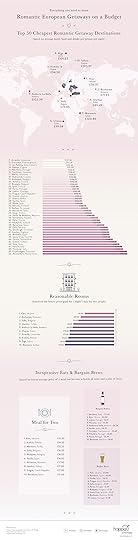
Photo: Hoppa
More like this: Eloping in the USA is epic, romantic, and wild. These images prove it.

February 9, 2018
LGBTQ-friendly red-state cities
The past 15 months have been rough on forward-thinking Americans. Journalists at Thrillist recently published a report that, despite the current state of affairs, hints at a silver lining: progress is not at a complete standstill. Even in the deep-red south, there are a number of cities that stand as a beacon of hope for the LGBTQ community. Towns including Birmingham, Alabama, and Eureka Springs, Arkansas aren’t just welcoming places for the queer community. They are proactively inclusive, even celebratory in many cases.
The trend isn’t confined to South, either. Cities in Alaska, Iowa, Arizona, and other conservative states have moved past old discriminatory policies and are opening their arms to residents and visitors of every stripe. Take a look at this list of the most gay-friendly cities in each red state.
Alabama: Birmingham
Alaska: Anchorage
Arizona: Tucson
Arkansas: Eureka Springs
Florida: Wilton Manors
Georgia: Blue Ridge
Idaho: Boise
Indiana: Indianapolis
Iowa: Iowa City
Kansas: Wichita
Kentucky: Morehead
Louisiana: New Orleans
Michigan: Saugatuck and Douglas
Mississippi: Jackson
Missouri: Kansas City
Montana: Missoula
North Carolina: Greensboro
Nebraska: Omaha
North Dakota: Fargo
Ohio: Columbus
Oklahoma: Tulsa
Pennsylvania: Philadelphia
South Carolina: Columbia
South Dakota: Brookings
Tennessee: Short Mountain Sanctuary
Texas: Houston
Utah: Salt Lake City
West Virginia: Huntington
Wisconsin: Madison
More like this: The 10 most LGBT-friendly cities in Europe

Know before Salar de Uyuni
One of the top bucket list locations for South America, here are some top tips to know before heading out on a jeep tour of the Uyuni salt flats in Bolivia.
1. You can start in different places.
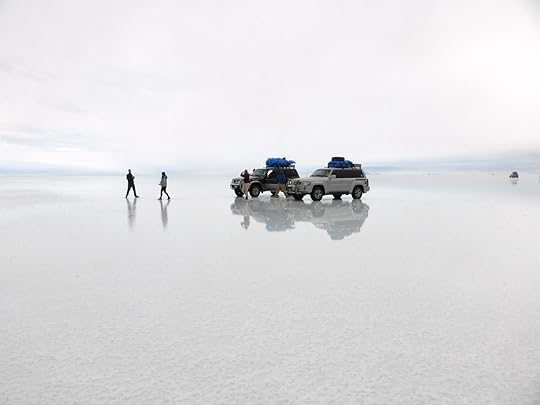
Photo: Flying Mozart
Most people rock up to the town of Uyuni, on the edge of the famous salt flats, and find a tour agency offering a quick day tour or the popular three or four-day jeep tour to explore the area. Consider all the options, including where you want to start and end, depending on your other travel plans. One great recommendation is instead of starting in Uyuni, head south to Tupiza, a quiet cowboy frontier town, and start there. By doing the jeep tour backwards, starting in the south, you’ll visit all the same sites, but avoid the hordes of tourists, as you’ll visit each place at different times of the day. Plus, you save the best for last, arriving at the salt flats on day four to watch the sun rise over Isla Pescado — an incredible climax to this special journey.
2. Not all tour operators are equal.
Wherever you start from, choose your operator wisely. Do your research and check out up-to-date reviews online. If you’re starting in Tupiza, I’d recommend Tupiza Tours, who are rated as one of the best, with a great reputation. Check the route carefully and ask what stops, entry fees and food/drink is included. Also, ask specific questions about your driver and vehicle. There are horror stories about drunk and reckless drivers and vehicles in poor condition that constantly break down.
3. And not all seats in the jeep are created equal either.
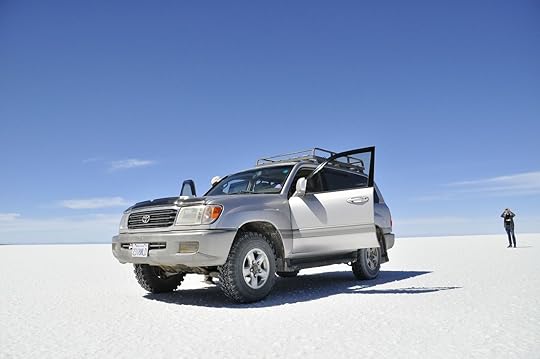
Photo: Yolanda
When you start your jeep tour, you’ll probably have a driver, cook, and four or five passengers crammed into an off-road 4WD. The two people in the very back row have the short straw, with little leg room, and limited views out of the windows. Chat with your fellow travelers, and decide in advance on a fair way to rotate seats. On my tour, we rotated every two hours, while some groups we spoke to swapped twice a day. Whatever you agree on, it will make a huge difference to the quality of your trip, and group morale.
4. You’re gonna get high.
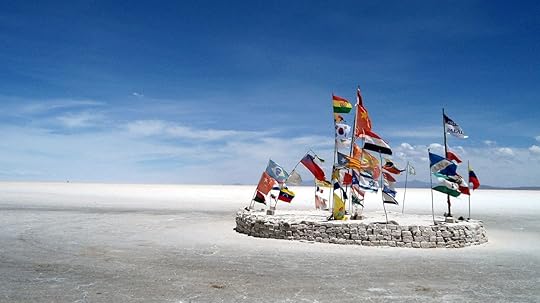
Photo: Ken Treloar
The town of Uyuni is 11,995 feet above sea level, and during the tour, you’ll climb much higher. The spectacular Laguna Colorada, in the Eduardo Avaroa National Park, is at 15,748 feet above sea level, and many of the tours spend the night at a nearby lodge. Before starting the tour I came from Sucre and Potosi, both at high altitudes, so was well acclimatized. If you arrive straight from low altitude, you’ll want to think about acclimatization, either by spending a few days in Uyuni/Tupiza before starting or by taking acclimatization medication (talk to your doctor first!). To alleviate symptoms, drink lots of water, take it easy, eat light, and drink coca tea/chew the leaves.
5. And you will freeze your ass off at night.
While it can be hot and sunny during the day, the temperatures plummet at night (unsurprising given the altitude), and you’ll be staying in very basic lodges with no heating or insulation. So make sure you pack lots of warm layers and a sleeping bag. One night I slept in my outdoor jacket, hat, gloves, and two pairs of socks, ALL inside a sleeping bag! If you don’t want to lug a sleeping bag around for your whole trip, you can rent one from your tour operator before departure, though you may want to bring your own sleeping bag liner. There was a French couple in my shared dorm who didn’t bring sleeping bags. Don’t be them — you’ll regret it.
6. There’s a nightly stampede to charge devices.
You’ll be taking hundreds of photos of the incredible scenery, and what you may not know is that cold temperatures deplete lithium batteries quicker than usual. Although you’ll be staying in lodges each night, they are all very remote and electricity is powered by solar panels and diesel generators. So they only turn the power on for a few hours each night while dinner is being served. At this point, everyone races to use the limited power outlets and some lodges will even charge guests to use them. Save yourself that hassle, and bring along an emergency charger to keep all your electric gear juiced up. Another tip is to keep your batteries in your sleeping bag at night, so they don’t run down as quickly.
7. There’s nowhere to buy anything you’ve forgotten.
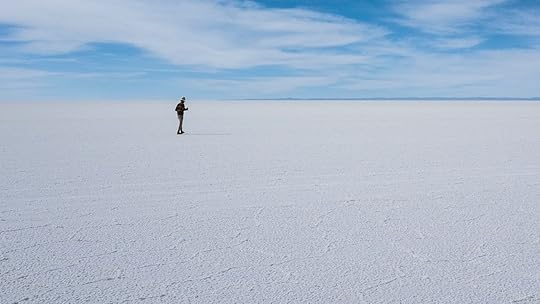
Photo: Nikita Andreev
Your tour will be “all-inclusive,” meaning they’ll give you three meals a day. The quality varies hugely, and like all things, you get what you pay for. Just remember that there aren’t any alternatives around — no shops or restaurants to grab a snack, painkillers, tampons, or anything else you’ve forgotten. So if you have any special dietary requirements, make sure you brief the staff carefully and bring back up. Either way, it’s a good idea to bring a supply of your favorite snacks. Also, check if bottled water is included — it doesn’t hurt to bring some along. And top tip — you must bring your own toilet paper!
8. And that obviously means nowhere to get cash either.
Again, while the tour is technically “all inclusive” it doesn’t include entry fees. The biggest cost is the park entry for the Eduardo Avaroa National Park (150 BOB/22 USD) but there are other small ones like Fish Island in the middle of the salt flats (30 BOB/4.35 USD). Then there are optional costs like taking a dip in some beautiful hot springs (6 BOB/0.87 USD) which are definitely worth it, and a couple of the lodges offer a 3 minute hot (interpret that as warm) shower (15 BOB/2 USD). Ask your operator for a list of costs, which will vary according to the route and stops your tour includes. You should also tip your driver and cook at the end of the trip, so make sure you have enough cash in local currency to cover you. You’ll find ATMs before you start the tour in Uyuni, Tupiza, and San Pedro de Atacama, but be warned that they are often not working, and many only accept VISA.
9. You will have no Wi-Fi or phone signal for 4 days.
Embrace this as a good thing! Enjoy the natural scenery, and take loads of photos that you can #throwback on Instagram as soon as you’re reconnected. But you may want to let loved ones know you’ll be incommunicado for a while. In my tour group, there was a medical student needing to submit an application for her hospital placement on a certain day and was frantically trying to get her local SIM card to pick up 4G signal. So you might want to make sure you time the trip to avoid any crucial days for life admin.
10. You will be blown away by the scenery.
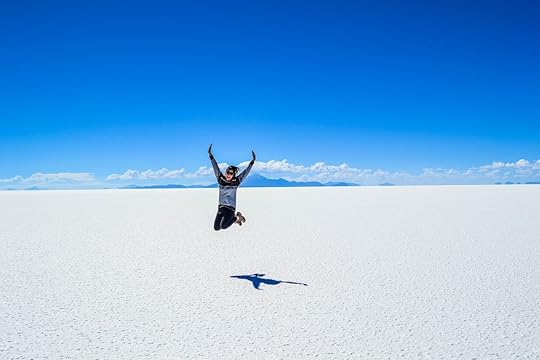
Photo: Alan Hurt Jr
The salt flats are the highlight of the trip — the reason that everyone goes, and rightly so. No matter how much you’ve read, or how many photos you’ve seen, nothing will prepare you for the incredible vastness, and how small you’ll feel standing in the middle of a never-ending sea of white. But what really surprised me was how amazing all the other scenery was. If you do the slightly longer 4-day tour, you’ll journey through the Eduardo Avaroa National Park — a pristine landscape with colored lagoons filled with flamingos, bubbling geysers, smoking volcanoes, and herds of grazing llamas.
More like this: How to visit Bolivia's Moon Valley
Elopements in Europe
According to The Knot, the average wedding in the USA is sitting at about $35k. Whether that’s the norm where you live, or absurd, there’s no denying that weddings come with some hefty price tags, even “budget” ones. There’s a loophole we all know about but most don’t consider too seriously: elope. “Couples who elope to Europe spend — even at the luxury end of the scale — half of that, and often much, much less” says Maddie Mae, an adventure elopement photographer based out of Colorado. “And,” she adds, “that includes their honeymoon.” As far as where to go, “Each country in Europe has its own rules […] and some countries lend themselves to eloping more than others,” says Mae. She points out there’s also the option to do the formal paperwork in your home country, either before or after, and then the eloping comes down to the emotional aspects of reading your vows and exchanging rings, rather than legalities. Regardless, when you look at the cost of a wedding these days, consider what you could get even if you went all out on flights, photographers, a romantic set up, dinners, and a posh hotel… it’s worth mulling over. While you do that, let me tempt you further with 17 jaw-dropping photos of elopements across Europe. Ready to run away?
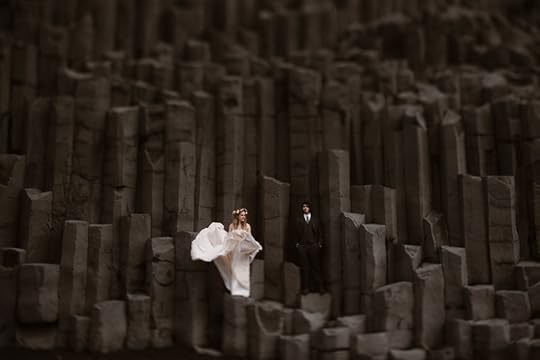
1
Iceland
Reynisfjara Beach is a black beach in Iceland. You can't get much cooler than that. Oh wait - yes you can. The basalt columns rocketing out of the beach should do the trick!
Photo: Maddie Mae
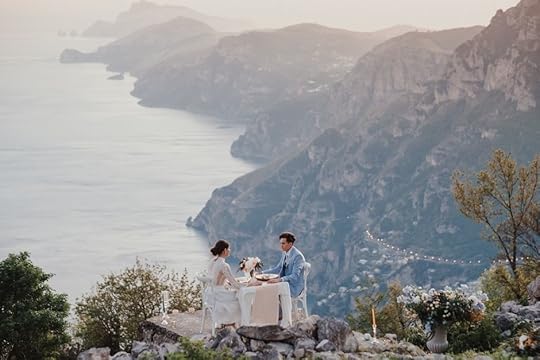
2
Italy
Ah, the Amalfi Coast! Between the vino, the cobbled streets, the candlelit dinners, and the incredible coastline, Italy is a dream for many. So, do it already!
Photo: Tara Lilly
3
Gran Canaria (Spain)
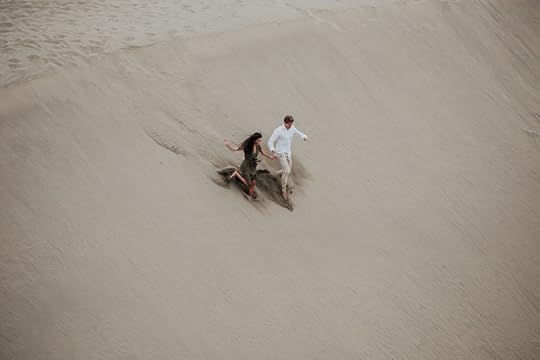
Anywhere in mainland Spain would also be epic, but this moment is brought to you by Gran Canaria. You can get there with many major (and minor) Europe airlines, like Ryan Air or Easy Jet.
Photo: Maria Kania
Intermission
Culture Guides
13 memories you have if you grew up in Michigan
Cathy Brown
Jan 31, 2018
Sponsored
11 unforgettable moments you’ll experience in Birmingham, England
Claire Sturzaker
2 days ago
Galleries
20 photos that’ll put the Canadian Rockies at the top of your bucket list
Marta Kulesza
Jan 10, 2018
4
Greece
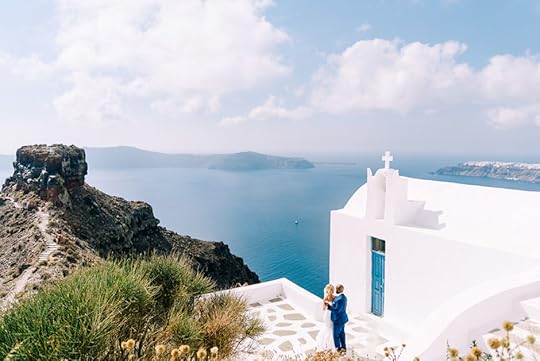
Santorini, because it would be like getting married inside a picture-perfect postcard.
Photo: Elias Kordelakos
5
Scotland
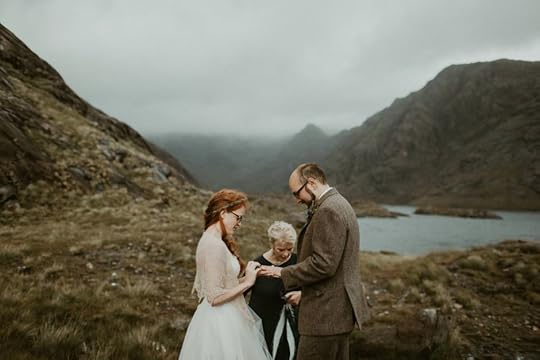
Scotland's Isle of Skye is rugged, windswept, and wild. It's also home to just 10,000 people so if you want to feel like the only two people on Earth, this could be the right place.
Photo: The Hendrys
6
Iceland (again)
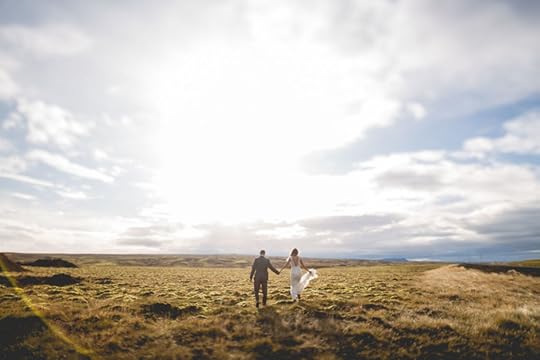
Photographer Daniela Dawson captured this New England, USA couple tying the knot in Iceland. They said "Ég geri það" ("I do") at a remote waterfall and then ran across fields under the sun. When the sun did set they were treated to the Northern Lights. Take that, sparkler send off!
Photo: Daniela Dawson
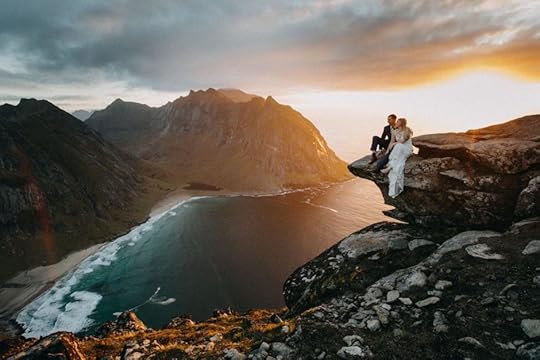
7
Norway
I mean, come on! Have you ever seen a wedding photo rival something as dramatic as this?
Photo: Christine Neide
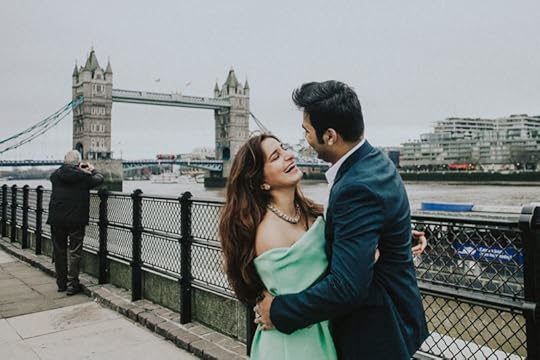
8
London
It's London; it's like the center of the universe. So, say your vows in the middle of it all.
Photo: Elianos Photography

9
Mallorca (Spain)
Yes, another one from Spain. Some countries just have that "let's run away together" vibe, what can we say.
Photo: Per Henning
Intermission
Infographics
Mapped: The most distinctive causes of death in each state
Henry Miller
Jan 17, 2018
Sponsored
9 unexpected travel experiences you can have in England’s Heartland
Richard Bruschi
Jan 22, 2018
Galleries
Fiji is the tropical paradise you’ve been searching for.
Collette Stohler
Dec 20, 2017
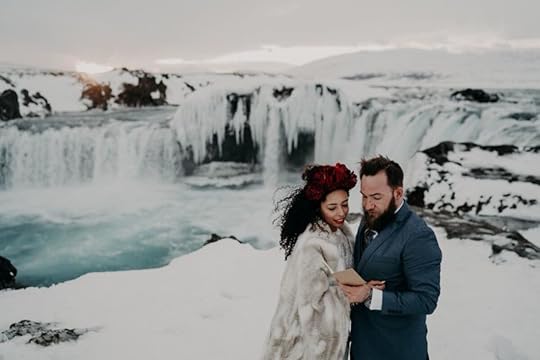
10
Iceland (Again)
Because there is just no shortage of epic places in Iceland to begin your life together.
Photo: The Quirky
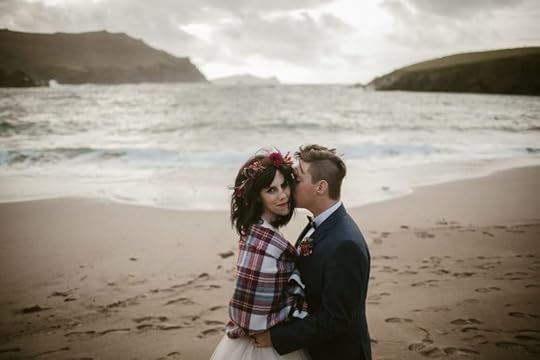
11
Ireland
This couple said their hand-written vows to each other on the slopes of Dingle.
Photo: White Cat Studio

12
Greece (Again)
Tinos, to be exact. That golden light at the end of the day is particularly hazy and glorious in Greece.
Photo: Arte Cinematica
13
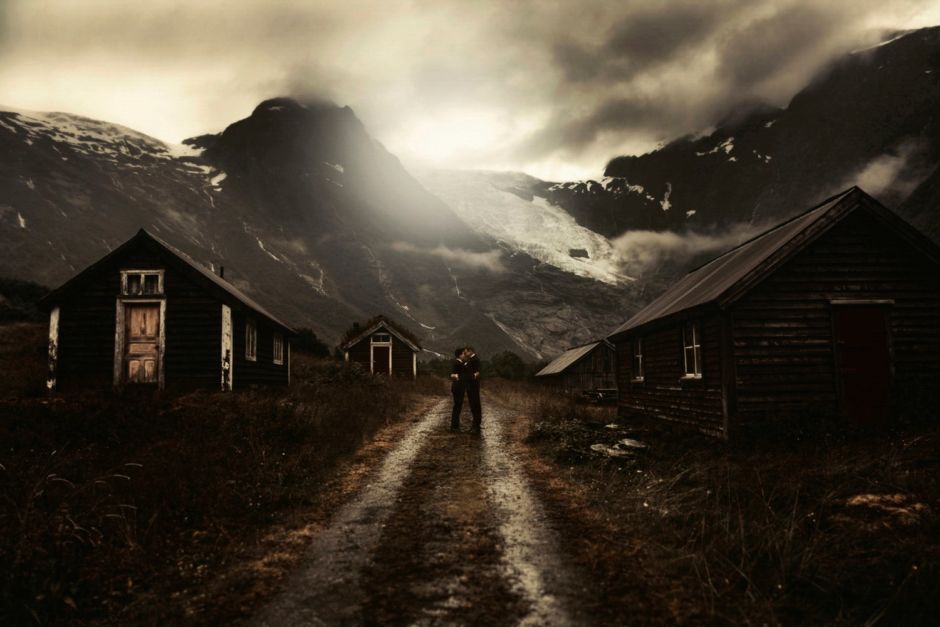
Norway (Again)
Say yes to the love of your life in Fjærland, a region of Norway carved by glaciers for all your dramatic needs.
Photo: Froydis Geuthis Photography

14
Austria
This is the part where I am required to say "The hills are alive." But really, look at those hills. They are. Austria is filled with dramatic viewpoints, soaring mountains, rolling hills, and everything else you need to make your own fairytale a reality.
Photo: You and Me Fotographie
15
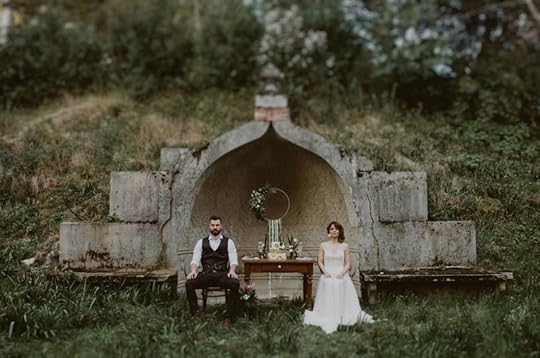
Slovenia
How about Nova Gorica in Western Slovenia? These two had a boho vibe going at Villa Rahut, an Arabic-influenced building slightly overgrown by nature.
Photo: Nejc Bole
16
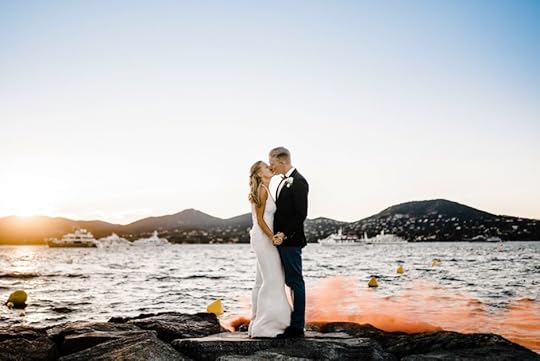
France
This couple went high-brow and eloped in Saint Tropez, in the French Riviera. A little smoke bomb for flare never hurt anyone either.
Photo: Israel Baldago
17
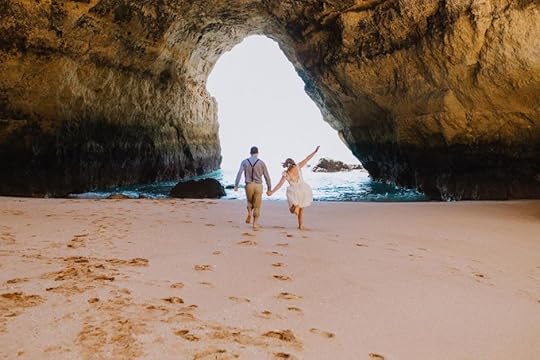
Portugal
This couple ran away to the Algarve in southern Portugal to get married among the carved out rocks and with sand between their toes. Rightly so. Did we convince you to run away yet?
Photo: Chelsea Warren
More like this: Eloping in the USA is epic, romantic, and wild. These images prove it.

2018 winter olympics infographic
The 2018 Winter Olympics have kicked off in a small town in South Korea. Folks watching NBC’s coverage will be treated with stunning feats on snow, ice, and in the air, but how will Pyeongchang, the host city, change over the next two weeks? An infographic from WalletHub provides a few answers to questions you probably didn’t think of asking, such as “how much does it cost just to screen everybody in attendance?” ($18.4 million USD, it turns out). While many cities have vied to be the world’s stage for the Olympics with hopes of making money and earning prestige, others have said “no thanks” to the endless hidden costs and the headache of organizing such an event. After looking at this infographic, would you wish this on your hometown?

Photo: Wallet Hub
More like this: How much the Olympic Games really cost


Save money in New Zealand
With all the adventure activities and fancy tours available in a country like New Zealand, you might think the costs can be insurmountable for a budget traveler. With tips like these, you can save on the small stuff to enjoy throwing away your money in one go at SkyCity Casino or a skydive over Taupo.
1. Book Nakedbus in advance.
Unless you’re in the mood to hitchhike (and this is legal in New Zealand as long as you don’t do it on the motorway), booking Nakedbus is one of the easiest and most convenient ways to get around independently, though sometimes Intercity has a good deal too. If you’re planning on traveling a lot — and who isn’t? — get one of their passes.
2. Skip an island.
It sounds heartbreaking, but really is a practical way to cut down on the cash you spend in New Zealand. If you’re planning to start your trip in Queenstown, stick with the South Island and all the nature that goes with it: Milford Sound, the pancake rocks, the glowworm caves.
Flying to the North Island isn’t exactly a big expense with Grabaseat, but an extra hundred dollars can come in handy with budget travelers. No matter how much time you have in the country, you’ll drive yourself mad trying to see it all.
3. Free attractions are everywhere.
Cathedral Cove and Hot Water Beach on the Coromandel Peninsula are within walking distance of each other and free for all. If you want to walk around Rotorua and take in the smell of sulfur, Kuirau Park is ripe for the taking. Unlike some countries, New Zealand doesn’t charge admission to tourists looking to climb mountains like Taranaki or complete the Great Walks — though admission to the mountain huts can be costly during the high season.
4. Do an Internet fast.
New Zealand has Internet and plentiful wifi, naturally, but many travelers have reported slow, trickling connections for uploading videos, watching movies, and even browsing Instagram. Internet access is based on usage in this country and not even Starbucks has unlimited service… unless you keep buying drinks.
5. Choose the right alcohol.
A lot of hostels offer drink vouchers and discounts for the bars they’re partnered with. Free drinks may not be offered at New Zealand casinos as they are in Vegas, but in general, avoiding cocktails and sticking with local wine (plenty of wineries nearby!) and beer is the way to go. Tui’s may not be my personal favorite, but there’s no denying they have some of the funniest billboards in the country:
Australian habits the US needs
Australia has a unique culture derived mainly from the fact that it is an island and because it’s a melting pot of cultures and peoples.
Here are a few habits we should adopt from the nation.
1. Pretend to be wild and free but in fact, have rules for everything.
Australians have a reputation for being beer-swilling rebels with cracked lips and khaki shorts. Easygoing and egalitarian, we do as we please. However, this is far from reality. Consider the following examples:
In Australia, smoking is illegal in most places (sometimes even outdoors) and cigarettes cost more than anywhere else in the world (excise is set to hit 70 cents per stick).
Helmets are mandatory for cyclists of all ages.
Alcohol is illegal on public land and those who serve it cannot do so without a certificate.
Vacuum cleaners and air conditions are not to be used after 10 pm (could wake the neighbors!).
Inflatable pools with a depth of more than 30 cm (the size of an actual school ruler) must be surrounded by self-latching “safety barriers”.
Drinks in NSW cannot be served past 3:30 am.
Nuts are banned at all primary schools.
It’s a good system, really. In the mirror, you see a half-naked Marlboro-red smoking cowboy who writes his own destiny. In reality, however, you’re as soft and translucent as a newborn baby, your neck and tiny body cradled from behind by a tender, loving mama state. Life is easy but you feel tough.
2. Shorten everything.
Ya name — David is Dave. Ya words — afternoon is arvo, Australia is ‘Straya. Ya pants — wear shorts instead. Ya shoes — wear thongs. Ya national anthem — don’t bother with the second verse.
Australians love to shorten things. It’s not that we’re time poor or obsessed with efficiency. Rather we’re just scared of seeming “pretentious” by doing things “properly’” like using all the phonemes in a given word. This makes us intensely loveable because we seem as wide-eyed and clueless as baby koalas (though secretly we’re a highly urbanized and developed country that performs enviably well on most favorable world rankings.)
3. Avoid Trump and take the piss.
Australians are allergic to pretension and self-importance (or even the smallest drop of self-esteem.) Being too proud of your own achievements makes you a wanker or one who blows their own horn, and there are few things more abhorrent to an Aussie than this kind of metaphorical masturbation.
Even if one is very, very famous, rich and successful, it is important not to appear proud or arrogant. The refusal to self-aggrandize keeps us sober and prevents the flourishing of personality cults. An Australian Donald Trump or Hugo Chavez is an impossible phenomenon. Anyone who takes themselves that seriously would be instantly mocked; their dreams cut down to an appropriate size.
4. Figure out how to remember everything.
If you want to remember truly copious amounts of information, look no further than Australia’s first people, the Australian Aborigines. For 50,000 years they flourished on the world’s flattest, driest continent this side of Antarctica. Their success partly owes to their prodigious memories. Aboriginals could recall extraordinary amounts of information — everything from thousands of animal and plant species to specific landscape features — yet they did so without the aid of a written culture.
The secret? A unique “memory code” called “Songlines” or “Footprints of the Ancestors.” In this structured system, memories or information were embedded in geographical features, dances, and songs. A particular bird species, for example, might have a whole song dedicated to it, encoding its name, behavior, sounds, and habitat.
According to Lynne Kelly, you too can learn this mnemonic code. Try going for a walk around the block and associating each physical feature with a piece of information. Then try “walking through” this physical space in your mind. You’ll be surprised by how much you remember.
5. Get good at swimming.
Throw an Australian in the churning waters of a tsunami and we will somehow swim right through it, collecting along the way a small army of drowning non-Australians who foolishly chose not to swim between the flags.
Life on an island-continent with a huge interior desert means swimming and going to the beach is a part of life. Participation rates are high with 1 in 2 kids and 1 in 10 adults regularly “doing laps.” And we have some of the highest rates of paid lifeguards in the world, as well as a small army of voluntary “surf-lifesavers” who patrol our golden shores with the authority of red and yellow demigods.
6. Taking it easy, mate.
Keep it simple. Skip violent revolution. Don’t bother becoming a republic. Stick with the Queen and a Constitutional Monarchy. Adopt a measured approach to most things (except alcohol consumption). Australia’s worst political crisis involved a kerfuffle over supply bills and convention-breaking (The 1975 “Dismissal”) and was neatly resolved at the next election. Don’t get too dramatic or passionate or you could have a revolution on your hands. In other words “take it easy”(notwithstanding point #1).
7. Being a bit mediocre.
Australia has been really good at embracing the right level of mediocrity. Some people might complain and say this makes us dull or stodgy but it’s surely tied to our prosperity and stability. If someone’s already created a good system then why change it? If the risk is too high then why take it? A life of violent passion is no substitute for one of stability and sausages in white bread.
And, no matter what our detractors may say, surely all of mankind is secretly striving for this — not deprivation and hustle and bustle and grand ideologies and brutish nastiness but the bland beauty and comfort of a house in the burbs, two cars, and weekends spent at the local food court?
8. Getting serious about sport.
Australians have no God, no tango or salsa, no community hall or village market, but we do have sport. We consume it (60 million hours per week), play it, and love it. We’re also really good at it. We’ve won 10 Rugby league world cups; 5 Cricket World Cups; and 10 Netball World Championships. We’ve placed first at 12 of the 19 Commonwealth Games. And, for a nation of 24 million people, we’ve performed obscenely well at the Olympics, regularly placing in the top 10.
9. Hating yourself just a bit.
Complain that Australia is boring, selfish, and mediocre. Have big public debates about the worth of your national day “Australia Day”. Fight other countries’ wars. Live overseas. Travel endlessly and avoid contact with other Australians overseas. Dream of being Italian, Brazilian, Thai. Study the French Revolution and Cuban Missile Crisis at high school as opposed to your own history.
In other words, cultivate an inferiority complex and mild feelings of self-loathing. While this attitude does lead to high levels of anxiety (which one in four Australians reports to suffer) it means we’re pretty clear-eyed about our importance on the world stage and don’t entertain delusions about being the greatest people on earth. We’re also funny and ironic and interested in your culture, which is probably better than ours.
10. Being a bit cheeky.
In Australia, we call this being a larrikin.
A larrikin is defiant, cheeky, and fiercely egalitarian. While it is arguable whether Australia is actually a nation of larrikins (see again point #1), the idea of this piss-taking prankster is at least encoded in our national ethos so we think we value equality and freedom.
A good example of larrikin behavior is the Flat White. It’s just a latte, but some Aussie larrikin managed to convince the rest of the world that it’s a unique product.
More like this: 20 Australian expressions that will make you smile
Matador Network's Blog

- Matador Network's profile
- 6 followers

