
Matador Network's Blog, page 1408
February 8, 2018
Wisconsinites don't blink at
While this fashion statement may attract a second look in many places, in Wisconsin this fresh-from-hunting look is a completely normal sight, even when the wearer was previously nowhere near a deer. In fact, they say the Green Bay Packers’ unofficial third color besides green and gold is camouflage.
2. Thick Canadian accents
Although a completely different country, and separated by Lake Superior and a chunk of Minnesota at that, the Canadian accent shares many similarities with the cheeseheads’. A friendly Canadian would surely fit right in here.
3. Driving in the snow and ice
We are pros at dealing with all the ups and downs of the season. That includes being able to get your car ready for the road in the dark with only an ice scraper for self-defense and avoiding spinning out on black ice in the worst of conditions. What paralyzes many drivers in other parts of the country is just another day for us.
4. Wearing Packer gear to church
No one should be surprised if a few extra prayers go up about the game that day either.
5. A somewhat impressive 4th of July firework display
A decent fireworks display that might make most people go “oohhh” and “awwww” in wonder will most likely only attract slightly bored looks from a Wisconsinite. We are spoiled when it comes to pyrotechnic displays of American patriotism. Milwaukee’s 3rd of July firework extravaganza is just so impressive that it has set the bar quite high.
6. Goats on a roof
A sod roof with real, live goats prancing around on it is just a normal day in Door Country.
7. Running into a Packer in Green Bay
Running into one of the local gods at Culver’s does not cause much of a stir. There is a mutual understanding in Green Bay that keeps the universe in balance. The players put up with the nasty weather and the poor entertainment scene, and the people of Green Bay respectfully give them their space. And everyone goes about eating cheese curds and shoveling their driveways in peace.
8. Smuggling special goods across state (and international) borders
We’ve all packed the car with Spotted Cow and cheese curds to bring to those in need.
9. A sky full of planes
O’Hare has got nothing on Oshkosh’s Wittman Field when the Experimental Aircraft Association’s annual convention and fly-in is in town.
10. Polka music
The lovely accordion and pulsing tuba beat of polka means one thing and one thing only: let’s dance with all the rhythm and beer-inspired courage we can possibly muster! 

More like this: 13 differences between a transplant and a local in Wisconsin


February 7, 2018

best Valentine's day cities in US
Americans will spend over $19 billion (or about $140 per-person) to make this year’s Valentine’s Day perfect for their significant other. But deciding how to spend that money isn’t an easy task, so WalletHub did some research on exactly which US cities are best for getting the most out Valentine’s Day without breaking the bank. They measured each city by looking at the cost of things like movie tickets, restaurant meals, and even the average price of a night in a 3-star hotel.
What they found might surprise you: some of America’s most expensive cities are still worth a Valentine’s Day trip. This is because places like San Francisco make up for higher prices with countless date night amenities like museums, walkable neighborhoods, and live performances. Check out the map below to see how your city stacks up (hover over the dots to zoom in to the denser regions).
Source: WalletHub
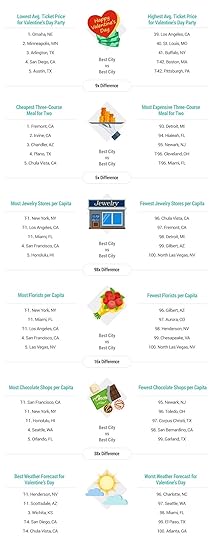
Photo: WalletHub
More like this: How people celebrate Valentine’s Day around the world

Love letter to Colorado
Dear Colorado,
I have to admit something. Sometimes, I think about leaving. Vagrant thoughts often land my mind on the other side of the world. I’ve chased them to Bali, Chiang Mai, Amsterdam, and many more. I love being gone. I love airports, beaches, and spicy noodle dishes served on street corners. I dream of far-flung nights full of green-bottled beer with labels I can’t read.
I’ve even considered a few other states. I remember an excited night lying in bed with my wife researching Fairbanks and reading crazy stories of the heroics it takes to survive winter there. Our trip to Burlington was fun — Vermont is beautiful but at the end of the day it offered nothing we want that we don’t already have.
Still, I think often about packing up and moving on. There was a pristine beauty in the old days, back when Denver was a flyover and Californians still considered beach-front living trendy enough to stay glued to the coast. I was here then, and I’ll still be here when they’ve gone.
I’m proud of every stamp in my passport. But nothing compares to the joy of watching my town, the home of John Elway and cow parades and restaurants named after Jack Kerouac, grow into a global hub of craft culture and entrepreneurial spirit. Hell, our governor made his name as a brewery owner. If that doesn’t signify the type of stamp you’re leaving on the world, nothing does. Colorado, you’ve long been a target for backcountry wanderlust, but now the world is seeing you for everything else.
No matter how many times I curse the worsened traffic or sit on a rooftop at happy hour pointing out the transplants solely by the stitching on their hat, it doesn’t quell the satisfaction of watching our state get the recognition it deserves. With all of the drawbacks of growth, of trend-followers swarming from all directions, of 5 o’clock wakeup calls on powder days, I could never love another the way I love you.
Colorado, Chuck Thompson must not have stuck around long enough to get to know you. Denver’s only bland to those who’d rather stay inside, who’d rather have a Bud Light, who can’t quite cut it as part of our composite of hipster-mountaineers. I’d have thought a cultured writer from the Pacific Northwest ought to be able to appreciate as much, but apparently, he was too busy staring east. Good riddance, I say.
Thanks to an undying hunger for the outdoors along with strong doses of local pride and grassroots action, you are inked into the history books as a place where many of the things I most cherish stand as not only readily available but as enduring pillars of our culture.
When I really think about it, when I allow honesty to overtake wanderlust, I see that my desires are met and that everything I think I’m short on is nothing more than a cut-and-paste pornographic episode of digital fakery. Photoshopped images of “perfect” sunsets over water are nothing when compared to the orange glow that pings off the Rockies each evening. Colorado, #nofilter was practically invented just for you.
I love weather forecasts promising chaos on I-70. I can’t get enough of the champagne powder, or the Mile High Salute. I’ll never be able to decide which mountain town is the perfect one, though I’ve narrowed it down to those accessed by US Highways 285 or 160. I love to hate the Rooftop at Coors Field and the facade of Colorado Springs. I love quietly mocking people overly concerned with “bagging 14ers.”
I love waking up to this:
A post shared by @TimWenger1 (@timwenger1) on Aug 21, 2017 at 7:03am PDT
And working my ass off to get up here and back down before the afternoon clouds roll in:
A post shared by @TimWenger1 (@timwenger1) on Sep 11, 2017 at 6:51am PDT
I guess what I’m trying to say is: Colorado, I’m not going anywhere.
More like this: 8 things people from Colorado are total snobs about
Traveling through Central America
A spell of insubordination at the beer bar I was working at had left me jobless. It was the busy season in Flagstaff, AZ, so my bartending gig had paid out nicely for the three or so months that I had been pouring pints. But the prospect of spending winter in a small town gave me serious anxiety, so with snow on the horizon, no desire to job hunt, and about five thousand dollars under the mattress, I bought a one-way ticket to Mexico City. I signed up for a WorkAway in a beachside hostel in Puerto Escondido, Oaxaca. A one-month commitment seemed appropriate, and the reviews and photos were encouraging. I didn’t have any semblance of a budget, nor did I have any idea of my final destination — I was determined to show up and figure out the rest. That’s what I did and it would ultimately change my life path.
Coastal vibes in Playa Carrizalillo
It was surprising how easy it was to fall into a normal day-to-day life in Puerto Escondido. The hostel that I had chosen, Vivo Escondido, turned out to be a great fit for my new fly-by-the-seat-of-my-pants lifestyle — it was not too large, not too energetic, and the guests had a tendency to extend their stay over and over again as a result of the chill atmosphere. I didn’t put on a shirt on for nearly 10 days, and alternating between the pool and the ocean kept everyone cool and clean. My poor Spanish was not much of a hindrance as the international community that came and went inevitably had some level of English. Working the desk at a beachside hostel has its perks — I was repeatedly gifted beer, food, and Oaxacan hash as I checked guests into the giant two-story house-turned-hostel. The rooftop spliff session became a daily routine amongst the long-term residents, who all gathered on the rooftop during sunset. We quickly moved past the usual conversation pieces that travelers carry, and were forced into hours of deep, drunken storytelling from which I gathered as much information as I would need for the remainder of my trip.
By this point, I was convinced that I would surely run out of money before I ran out of destinations or recommendations that had been scribbled down in my journal. A Swiss guy, two Aussie girls, and I were both traveling southward, and we all bought tickets to Envision Festival in Costa Rica as our promise to each other that we would reunite in just over four months. It would be another three weeks of friendship, warm beer, and pleasant energy of Playa Carrizalillo before we would say our goodbyes and continue our separate ways. I took the long haul over the mountains to the capital city of Oaxaca, my eyes set on the Guatemalan border.
A terrace with a volcanic view
It was about two months later on Lago Atitlán in Guatemala that the status of my bank account induced a wave of panic. After a few emails, I had another offer through WorkAway, this time tending bar at The Terrace Hostel in Antigua. Contrasting the lackadaisical receptionist that I had been in Mexico, in Antigua, I would be a high-speed, high-volume bartender for tourists and locals alike. The next morning, I hopped on the earliest chicken bus out of San Pedro de La Laguna, eager to leave the lake behind, and explore a new city.
The narrow cobblestone streets and the undisturbed ruins that populate the city of Antigua were just like the pictures that I had seen in my first Spanish language class back in Arizona. Traffic was hectic, motorcycles were abundant, and squeezing past the foot traffic on the narrow sidewalks was a measured balance between patience and assertiveness. The Terrace Hostel was a three-story, relatively small, dimly-lit hostel with a small courtyard. Its main attraction was undoubtedly the third story terrace that lent the place its name. The view of the two volcanoes imposing over Antigua was complimented by a full bar and a couple of stools, and that was surely enough. Over the next month, that bar became my temple, and I spent four or five nights a week serving Gallo beer and taking shots with the owners and guests. In the mornings and on my days off, I spent my time writing in the quaint bars or coffee shops that had been established in these largely undisturbed ruins. After months of spotty correspondence, one of the founders of Envision published my blog piece in exchange for a ticket to the festival, thereby saving me a couple hundred dollars. That cash and my bar tips supported most of my late nights at Café No Sé, a candlelit, graffiti-ridden expat bar that mirrored the divey nature of my favorite bars back home. Enamored by one of the tall, tattooed, punk rock bartenders from New York, I spent most nights there discovering my love for mezcal while being laughed at for my inability to roll cigarettes.
As the charm of Antigua dimmed over the month, I took the nuggets of travel knowledge that I had overheard behind the bar, said yet another round of goodbyes to my new friends, and jumped in a packed shuttle towards Nicaragua.
Fishing for friendship on Isla Ometepe
One of the names that kept being repeated over and over during my last four months of travel was Ometepe. The volcanic island in the middle of Lago Nicaragua came up in conversation almost weekly from backpackers who were moving northward toward Mexico. A month after leaving Antigua, I found myself just off the ferry from Rivas, both feet planted on the island that would, unbeknownst to me, change my life. A bottle of rum strapped to my pack, myself and my travel companions piled into a shuttle with three American guys headed towards a hostel called Little Morgan’s. What I had loosely scheduled to be a three-night stay on the island quickly turned into ten days. Calling Little Morgan’s a party hostel, while correct, is a seriously insufficient description of its atmosphere. In less than a week, strangers became friends, friends became family, and our collective energy nearly killed half the staff, who couldn’t resist joining in on the festivities. The open-air bar served as the reception desk and was built from locally reclaimed wood, as was the three-story treehouse filled with woven hammocks. Huge spiders and scorpions encouraged meek guests to keep moving after a day or two, but the unequivocal camaraderie trapped quite a few of us over the course of that week. With no internet at the hostel, the conversations were lengthy and the adventures were plentiful. Day after day, I filled my journal with jokes, anecdotes, and philosophical ramblings that were mostly intelligible.
Every arriving guest thought that we worked there, and we tried to act the part, eventually getting invited to stay in the staff houses that dotted the lush, jungle property. Stepping out of the time vortex was difficult, but necessary. One sunny morning, twelve of us took a knee and chugged a beer in the hostel driveway, consecrating our friendship before hitting the road. After a choppy ferry ride, filled with karaoke and limbo on the top deck, I hailed a taxi headed for the Costa Rican border. Envision was waiting and I could not have been more excited.
Cooling off in the iceberg lounge
It was pretty late when I arrived at the Envision site in Costa Rica. Coming through the production gate, I was received by one of the few staffers who was still awake. She showed me to the canvas room that I would call home for the next two weeks. Atop a couple of pallets, there was a ground pad and a pillow which I covered in thin sheets. It wasn’t much, but there were a roof and four walls, which was good enough for me.
The next morning, like most mornings thereafter, I snapped awake to the sounds of howler monkeys in the nearby trees. They did not seem to be remotely bothered by our presence and howled their guttural, bass-laden howl at the crack of dawn. I checked myself in at the administration desk and received my credentials before tracking down my team, whom I had still never met in person. There was a lot of activity on site, seeing as the event was only a week and a half away. Suntanned folks sat at picnic tables, chatting idly without looking up from whatever was on their laptop screens. Power tools screamed somewhere out of site, and every once in a while, someone would carry a large stalk of bamboo down the main thoroughfare. I found my team sitting at a square table behind four walls of stretch fabric, creating a nice private enclosure that would serve as our oasis for the remainder of our time on site. From here, we would draft contracts and press releases, manage social media channels and blogs, and chain smoke hand-rolled cigarettes while generally serving as a positive refuge for any stressed out soul who was working outside of our department. We dubbed our little cove The Iceberg Lounge, named for the rock outside our nook that inevitably took out whoever was walking by. Multiple times a day, we would hear cries of pain and curses through the wall to which our whole team would call out “Iceberg!” before laughing hysterically at whoever had stuck the obstinate little rock. Like the rest of my trip, it was these whimsical jokes that made the whole experience for me. Other staffers would swing by and dole out massages and essential oils as we hammered away at our keyboards, enjoying the peaceful nature of the lounge, before heading back out into the other production madness.
The final day of the event came quickly and the staff all found themselves dancing wildly during the last set of the weekend, reveling in the final crescendo of what had been an exhausting, yet immensely satisfying, month. Shortly thereafter, I would pack my bags and head back to Arizona to digest my trip while replenishing my now depleted savings account. Everyone kept in contact via social media, and I ended up working with several of the same crew members at festivals all along the west coast. I still work for Envision, although my role changes slightly from year to year. The tight-knit community of gypsies carved out a special corner in my heart, and for that, I’m forever grateful and inspired.
More like this: Meet the man behind Envision Festival
millennial priorities before babies
Millennials continue their savage rampage through devoutly-held American traditions into well-established baby-making years. What for? According to research by Discover, Americans born sometime between 1980 and 2000 are putting off child rearing until they have met eight priorities. While some of these are to be expected (making a desired salary, getting married), at least two will be causes of concern for certain grandmas. Both “travel the world” and “travel the country” are now important steps before popping one out. On top of that, around a fifth of Millennials desire to live abroad before parenthood. Sounds like working at a travel publication might be a dream job these days…

Photo: DISCOVER
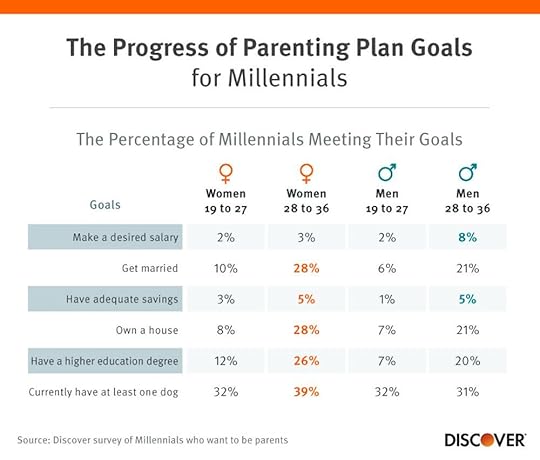
Photo: DISCOVER

Photo: DISCOVER
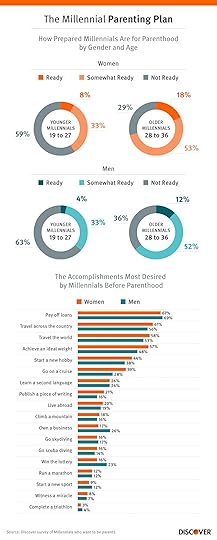
Photo: DISCOVER
More like this: The meaning of travel: a new guide for millennials

Know before going to Ha Long Bay
Ha Long Bay is a popular travel destination known for its unique natural limestone and forest formations. While it is a popular destination, here are some tips to consider before visiting the area to make your visit fit your travel plans and expectations.
Here are 8 things I wish I knew before visiting Vietnam‘s Ha Long Bay.
1. There’s more beyond Ha Long Bay.
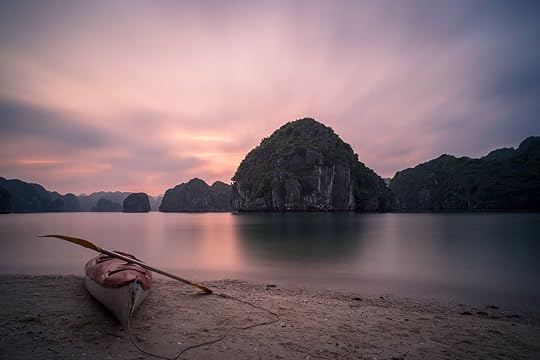
Photo: Kenz Nguyen
While Ha Long Bay is the most famous, it is overcrowded with tour boats compared to its neighboring Cat Ba region. The less crowded Cat Ba region may be a better choice to visit. The villages around the area are calmer and the beaches are clean, and trash free, opposite of the problems in the main Ha Long region. On the tour I experienced, our captain picked out a smaller island but we had the whole beach to ourselves.
2. The water in the region is extremely salty.
If you plan to take a dip in the Ha Long waters, be prepared to swim in its extremely salty water. Make sure you bring along with you a small bottle of shampoo to wash your hair on the boat and a towel. I didn’t bring either of those items along, and my hair was a tangled mess for the rest of the day.
3. Don’t rush to book a tour online.
Booking a tour online is convenient and easy, but you might not be able to get all the information about the tour that you want. All hotels in Hanoi offer a range of 1-day to 5-day tours to Ha Long Bay or its surrounding areas. If you have questions, the hotel representative will be able to help you answer them. Depending on the weather, tours sometimes will change the tour plan the day of. It is best to talk to the representative, ask as many questions as you want, tell them what you expect out of the trip, then pick a tour that suits your travel plans. Don’t worry about spaces being filled up, there are so many operators and so many tours every single day that depart from Hanoi.
4. Pick a tour in the medium price range.
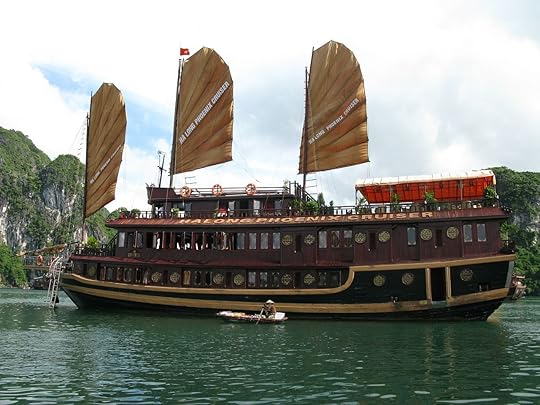
Photo: Viech Fisch
If you do some research on the tours, you will realize day tours can range from $40 USD to somewhere above $200 USD for a one-day Ha Long Bay area tour. If you are not on a tight budget, pick a tour in the medium price range. These tours can provide more comfort on the bus and the boat. These tours will also include a wide range of activities for the day. My day tour was around $90USD and the day included a relaxing cruise around the bay, lunch, kayaking into caves, and a swimming session on a remote beach. You will also meet other travelers on these trips as they try to keep the group small, and the nice thing is, you get to personally know and talk to the local tour guides.
5. Notify the tour of any allergies and if you’re a vegetarian ahead of time.
Most Ha Long tours include the lunch and dinner on the boat. The food is actually freshly prepared and cooked on the boat. Most boat tours will include at least seven to eight dishes for one meal, but few of them are vegetarian. On my tour, many of the dishes were seafood. If you have allergies to seafood or any other specific ingredients, you will want to tell the tour operator ahead of time.
6. It’s a long ride to get to Ha Long Bay.
The Ha Long region is not as close to Hanoi as you think. Be prepared for a 3 to 4-hour drive to the region from Hanoi, and again the same to drive back to the city. Also, be prepared the night before by getting plenty of sleep as you will not be able to rest and sleep in the car or the bus. The road is extremely bumpy and windy.
7. Pack everything you think you will need.
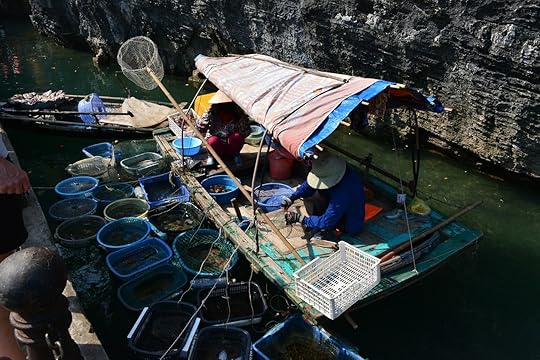
Photo: VietnamLT
Because Ha Long is located in the tropics and weather can be unpredictable at times, you’ll never know what activities you may or may not end up doing when you get there. So pack smart! If you want to go kayaking, pack an extra pair of shoes. If you want to go swimming, make sure you bring along a bathing suit and a towel. Also, if you want to buy some local goods at the floating villages, bring some cash.
8. There is no reception in the Ha Long area.
Be ready that you will not be able to use your phone for the day or for several days if you are on a multi-day tour. Don’t frantically try to connect to any social media platforms, going on Facebook or Instagram. Instead, kick back and relax and enjoy the cruise!
More like this: Magic Spot: The rice terraces of Sapa, Vietnam
Manage a fear of flying
Last year I flew 32 times and every single time the pilot announced “flight attendants, please be seated for take off,” my hands would begin to sweat. Although it’s not something that people frequently bring up in conversation, fear of flying is a common phobia. In 2017, 30% of people in the United States reported that they are nervous to fly, and I am one of them.
This wasn’t always the case. I grew up loving to fly. My dad was a pilot for 20 years and we traveled all over the world as a family. Stepping onto a plane meant that you were on your way to a new adventure, plus the snacks were pretty good.
All of that changed after September 11th, 2001. Suddenly, I was hit with a new thought that had not occurred to me previously — planes can actually go down. Once this idea settled into my head, I was terrified to fly. I tried a slew of different techniques that ranged from drinking wine before a flight (this seemed to exacerbate my anxiety) to skipping a flight if I “had a bad feeling” about it. Or if it was raining. Or if I couldn’t get a seat by the window. Simply put, my initial strategies to ease this fear of flying didn’t really work.
Here are some tips to try to manage a fear of flying.
When you love to travel and want to explore larger parts of the world, flying is unavoidable.
The first thing that you’ll hear people say when they find out you’re afraid to fly is something along the lines of “you’re a hundred times more likely to die in a car accident than in a plane crash.” While this is true, it rarely feels like helpful information. Most people with this phobia understand that it’s not logical. Phobias fixate on the worst case scenario in an unlikely situation. The fear really comes down to a lack of control and can be a difficult thing to let go of. So with the assumption that it’s tough to actually overcome a fear of flying, here are a few strategies that have helped me at least become a bit more comfortable when I want to travel beyond a reasonable driving distance.
Become educated on how a plane works.
Why does it seem like the engine is loudest at the start of a flight? What is that “ding” you hear a few minutes after take off? Is it possible for turbulence to knock a plane out of the sky? Is it more dangerous to fly over the ocean than over land? Understanding the answers to these common questions can make the prospect of flying so much easier. Next time you’re on a flight, put together a list of every single thing that makes you feel nervous. Then do the research to find out the answers. My father, the experienced pilot, equates turbulence to driving a car over a bumpy road. Remembering that analogy has helped me immensely to manage my fear on choppy flights. Knowing how the mechanics of plane works can help mitigate the fear of flying and build trust that you are traveling in a safe machine.
British Airways offers a class called “Flying with Confidence” for people who are afraid to fly. Although it might not be necessary to sign up for the entire course, reading through the material is helpful. It explains what all of the noises that you hear on a plane signify and provides great testimonials from people who choose to fly even though it scares them.
Figure out where you feel most comfortable.
I’m a window seat gal. I feel a tiny bit more in control when I can see what is happening outside. My friend Dave is an aisle guy, he just wants to stretch out and pretend he’s not even sitting in a plane.
Unless you have excellent status or are willing to pay a bit more money to select your seat, assignments are often random. Whenever I get to my gate, I ask the flight attendant if they can move me to a window seat close to the front of the plane. Why is the front of the plane important to me? Because in the television series Lost, the people sitting at the front of the plane survived a crash. It’s insane, I know, but again, this is not a rational phobia. At the end of the day, you don’t have to explain your reasoning. It’s more important to do what makes you feel comfortable.
Bring a security blanket.
I mean this literally. Bring an item that makes you happy in your carry on bag. I always pack these five items: an eye mask, my iPad, hand lotion, a warm scarf that can double as a blanket, and my computer.
Talk it out at 30,000 feet.
A good friend once saw me tightly gripping the armrest at take off and told me “the airlines are operating multi-million dollar machines, they aren’t going to risk your life. It’s just not worth the cost.” That tough-love statement was surprisingly helpful.
It feels better to know other people are afraid to fly, and you’re not alone. You can compare phobias and even laugh about the ridiculous rituals you engage in to distract your fear of flying. You might be completely surprised to find out that your fears are exactly the same as someone else’s. When you say “I hate it when the fasten seatbelt sign comes on” out loud, you might discover the fear dissipates.
Create a routine.
To make the prospect of flying feel like a normal, everyday activity, it can be helpful to create a routine. A routine helps maintain a feeling of control and will help pass the time in manageable intervals. This could mean splurging on some magazines to help take your mind off any turbulence, watching a terrible movie that you would never admit to seeing, or putting together a playlist of music that will help you stay calm.
I’ve created a special ritual for when the plane begins its final descent. For me, landing feels like a celebration of survival. It means that we have all arrived at our destination safely, and the short-lived anxiety was totally worth it. So I always listen to “Welcome to New York” as the city below becomes closer and we drop back down towards the ground. The song feels exciting, like the start of something new. That’s the point of travel, isn’t it?
More like this: 15 ways to get over your fear of flying
Save money in Seattle
Seattle is an expensive city, but there are ways to save money if you are on a budget. There are enough free and low-cost attractions to fill a vacation if you know where to go. I like to substitute expensive attractions with lower cost options for a similar experience. Public transit is a bargain and farmers’ markets are a bounty of local foods at reasonable prices.
Snag a low-cost picnic lunch at Pike’s Place Market (85 Pike Street).
Established in 1907, Pike’s Place Market is where to go for fresh food in Seattle. There are over 200 vendors and 80 restaurants. The best part is there is no cost to enter the market, and you can sometimes snag free samples from the vendors. Visit Pike’s Place Market for help planning your visit. You can download maps of the market and itineraries based on your interests. The area surrounding Pike’s Place Market also has a variety of low cost quick eats places.
Instead of a pricey trip to the Space Needle, consider the Volunteer Park Water Tower (1247 15th Ave E).
The tower is located in Volunteer Park, which was designed by the famous Olmstead Brothers and completed in 1912. It is 107 steps to the top and once there you are rewarded with a 360-degree view of Seattle. It rivals the Space Needle’s $22 view. If you have more time, consider a modest $4 entry fee to tour the Volunteer Park Conservatory and its collection of tropical plants. From the Conservatory, head into the Lake View Cemetery to view Bruce and Brandon Lees’ graves.
Tour the Fremont District on a Sunday for free artwork and low-cost food at the Fremont Sunday Market.
One of my favorite places to have an authentic Seattle experience is the Fremont District. Before your visit, go to Fremont Map and download the walking tour. Fremont is very walkable, and you can see everything within a few blocks.
Some of my favorites:
The Fremont neighborhood is known for its artwork. It is nicknamed “The Artist’s Republic of Fremont,” and there’s a lot to see out in public. Check out the infamous Lenin statue that looms over the business district, the 53-foot-tall rocket from the Cold War era that sits attached to a building, and the “Waiting for the Interurban” statue of commuters (make sure to check out the dog that has a human face). The most famous sculpture, the Fremont Troll, is frankly downright creepy. It emerges out of the dirt underneath the Aurora Bridge.
The Fremont Sunday Market is a year-round event that runs rain or shine. (Pretty much everything runs rains or shine in Seattle.) The market has both indoor and outdoor spaces and has around 200 vendors. It is a mixture of flea market junk, antiques, fashion, and world imports. Also popular are the street food vendors where you can try food from all around the world.
The Theo Chocolate factory tour (3400 Phinney Ave N) will set you back $10. For a free alternative head into the gift shop and enjoy the free samples. The company makes many interesting flavors such as Bread & Chocolate and Cinnamon Horchata.
Instead of a pricey Harbor Cruise consider the Seattle Ferry System (801 Alaskan Way Pier 52).
The Washington State Department of Transportation (WSDOT) operates a ferry system which is very economical for walk-on passengers. A Harbor Tour of Seattle will cost around $30. Instead, head down to the ferry landing and take the ferry to Bremerton or Bainbridge Island for $8.35 round trip. You can bring a bike for $1. Both options make a great cruise, but if you want to get out and explore I would suggest Bainbridge Island. It is a short walk from the ferry terminal into town and it is a fun place to tour.
Take public transit.
Public transit in Seattle is a steal! Load up an ORCA card with an $8 all-day regional transit pass. It includes Community Transit, Everett Transit, King County Metro Transit, King County Water Taxi, Kitsap Transit (bus, foot ferry), Pierce Transit (bus), Seattle Streetcar, and Sound Transit (bus, Link, Sounder). For some trips, additional fare may be required. With this many options, you can travel all over Seattle, down South to Tacoma, out to the Kitsap Peninsula and many more locations.
Get a library card.
The Seattle Public Library offers museum passes for card-holders. Sign up for a free library card online, then reserve the passes for the days you’ll need them in Seattle.
Choose lodging strategically.
There is no budget lodging in Seattle unless you go the hostel route. Even the most budget of motels will set you back around $100 or more. You can find a few under $100 a night but most tend to be on the seedy side. You can get into the Holiday Inn Express Seattle City Center, 226 Aurora Ave N, for around $101 a night. It is a good central location. Also, consider staying outside of the city — there are plenty of options and public transportation makes it easy to get in and out of town.
More like this: The ultimate guide to Seattle's best museums
11 awesome experiences in the OBX
Before my first visit, I could count the things I knew about the Outer Banks on one hand: 1) It’s a beach. 2) They have a pretty famous lighthouse. 3) Those black and white “OBX” bumper stickers are all over cars on the East Coast. Honestly, that was about it.
I was in for a surprise. The beach may be the draw, but what’ll keep you coming back isn’t as obvious. Here are 11 experiences I never expected to have in the Outer Banks — and you probably didn’t, either.
1. Learning to fly in the same place as the Wright Brothers
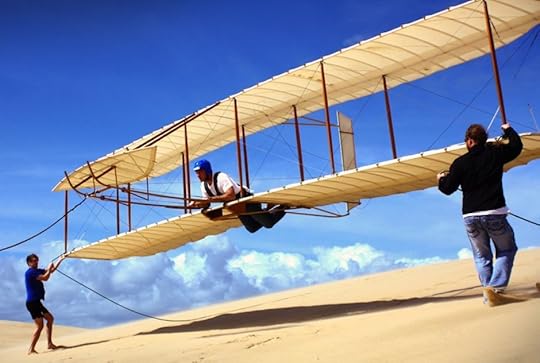
Photo: Kitty Hawk Kites
Over a century ago, Orville and Wilbur made history near Kitty Hawk, on (or, more precisely, above) the sand dunes of Kill Devil Hills. Today you can do the same — minus the history-making part, of course. With Kitty Hawk Kites, you’ll be sent to the skies in a reproduction 1902 Wright Glider, one of only a few in existence and the only one in the world accessible to the general public.
Here’s how it goes down: The sand? Hot. The wind? Strong. You’re lying down in the center of a thin wooden craft, a team of assistants holding your support lines. They begin to run down the beach, and seconds later the crashing waves of the Atlantic appear ahead of you — it’s in that moment that you’ve become airborne. Simple as that! Minus some erosion, it’s pretty much the exact same view (and adrenaline rush) the Wright brothers had the day they mastered flight.
2. Singing with wolves

Photo: Andrea Bohl
During the warmer months of the year, the banks of the Alligator River become the venue for an unusual concert. Along with your guide from the US Fish and Wildlife Service, you’ll turn down a rutty dirt road off Highway 64 and head deep into the woods, away from the lights of Manteo. And somewhere in the darkness, a red wolf howls.
This could be the opening of a strange horror movie, but it’s actually the start of one of the most memorable experiences you’ll have on your trip. You’ll stand in relative darkness in a clearing near the riverbank, and as a group you’ll all cup your hands around your mouths, turn your faces to the sky, and belt out your best wolf howls. Once you stop and wait, you’ll notice the air is full of crickets and chirping frogs…until an answering howl sends goosebumps all the way down to your toes. More and more join their kin until the woods vibrate with the thundering cries of dozens of baying wolves.
Check the Fish and Wildlife Service website for the schedule — tours usually take place about once a week.
3. Driving the Outer Banks National Scenic Byway in a 1929 Mercedes
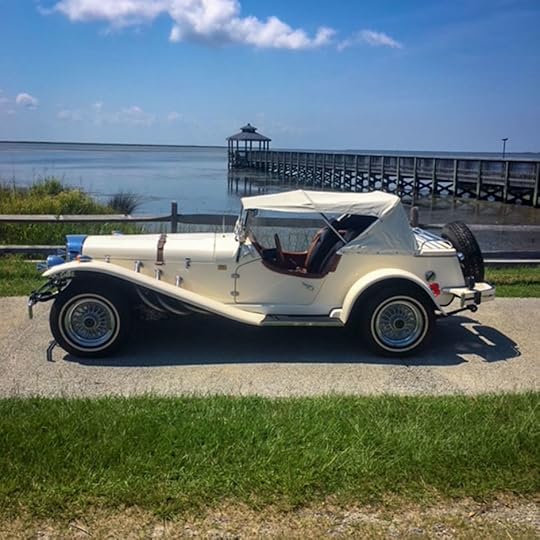
Photo: Buggin’ Out Dune Buggy Rentals
A drive along the coast on a beautiful day fits almost any itinerary, but leave the family minivan behind for this one. Elevate your next joyride with a piece of Prohibition-era history — the 1929 Mercedes from Buggin’ Out OBX — or hop in one of their dune buggies to go off-roading and on-beaching. With the convertible top down, the Atlantic Ocean on one side and Pamlico Sound on the other, your Instagram feed will make all of your friends back home hate you just a little bit.
Keep the vintage vibe going by swinging into Owens’ Restaurant for a special-occasion dinner. Bob and Clara Owens started serving fresh seafood here in 1946, and the lobster bisque just might be the highlight of your vacation.
4. Finding a lost village in Nags Head Woods
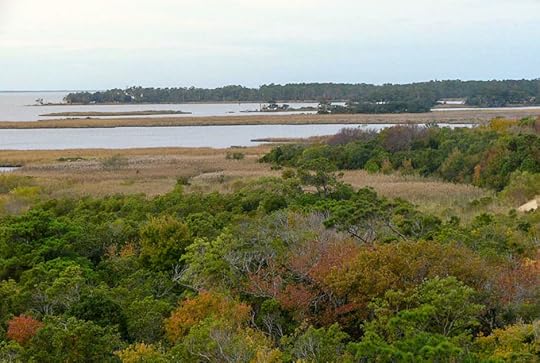
Photo: Jodie LaPoint for The Nature Conservancy North Carolina
Basically everyone knows about the Lost Colony of Roanoke, but it turns out that’s not the only mysteriously abandoned settlement in the region. Today, Nags Head Woods is an eco-preserve hiding a very old secret: the remnants of an 1800s village, which make for a fantastic hike.
More than five miles of trails branch off from the visitor center’s parking area and wind their way through the old settlement. Some trail sections are narrow, and most areas are lush, bordering on overgrown. Through breaks in the greenery, you’ll see small cemeteries memorializing the early settlers, as well as what used to be a thriving village: homes, old churches, a factory, and a store — or what remains of them.
This is not the scrubby underbrush you expect to find on a barrier island, either. Nags Head Woods is a true maritime forest (and a hilly one at that) teeming with wildlife — if you’re still, you may hear deer moving around you in the dense woodland. You might think you were somewhere in the Blue Ridge Mountains if you didn’t know you were actually on an oversized sandbar in the Atlantic.
Pro tip: Time your visit for sunset, and you’ll be in for a spectacular view over Roanoke Sound. Then head back out on the main road and make your way to Kill Devil Grill for their daily “blue plate” special. You’ll soon find out for yourself why this diner has a cult-like following among locals.
5. Taking a “spiritual journey” to a distillery…

Photo: Outer Banks Distilling
The first legal distillery in the Outer Banks — no-frills-named Outer Banks Distilling — pays homage to the area’s history of pirates, shipwrecks, and illicit booze. In the words of co-owner Scott Smith, “We’re not the first people to make liquor in the Outer Banks, we’re just the first to pay taxes on it.”
A true labor of love among four old friends, every drop of Kill Devil Rum is made entirely from raw ingredients in a custom-built copper still. Regular tours of the compact operation are offered, and they’re worthwhile as much for the knowledge you’ll gain about rum distillation as for Scott’s hilariously deadpan delivery.
6. …and to the first wind-powered brewery in the United States
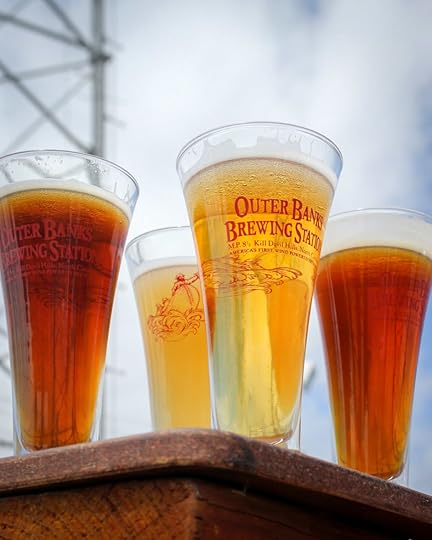
Photo: Outer Banks Brewing Station
The quirky Outer Banks Brewing Station is serious about two things: beer and the environment. Started by two former Peace Corps volunteers with the help of some passionately loyal friends and family, OBBS is as much a network for social change as it is a brewery. From being powered by wind to banning plastic straws, they’re setting the tone for environmental responsibility in the Outer Banks and happily watching as other businesses follow suit.
Sign up for a tour, and be prepared to marvel at how much they’ve managed to accomplish in their closet-sized space. When you’re done, have a seat at the boat-shaped bar for a beer-glazed burger with goat cheese. You’ll thank me later.
7. Figuring out what Michelangelo, Pope Paul III, and Queen Elizabeth I have in common

Photo: Ray Matthews. Courtesy of The Elizabethan Gardens
Spoiler alert: They all have ties to the Elizabethan Gardens in Manteo. This manicured, 10-acre oasis looks like it’s been plucked straight out of a British period drama, full of meticulously designed hedges, priceless sculptures, and gently tinkling fountains (Keira Knightley’s hanging around here somewhere, surely). The gardens are home to a rare painting of the last Tudor monarch, too.
All that being said, you don’t have to be a royal-family fanatic to appreciate a stroll through the blooming landscape on a sunny day. While you’re meandering, keep an eye out for statues imported from the art-loving pope’s Farnese Palace, where Michelangelo worked as an architect.
8. Getting down on the farm
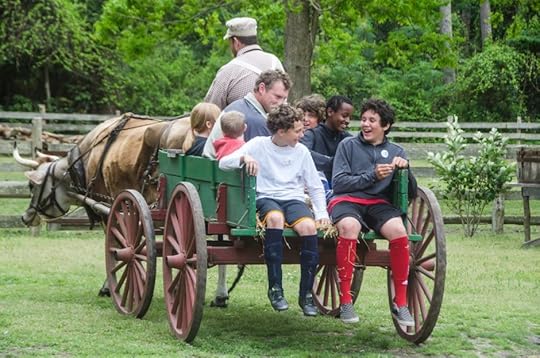
Photo: The Island Farm
Island Farm is a living history museum that has painstakingly restored an 1840s homestead to its original design (right down to the outhouse, if you’re feeling especially nostalgic). Remember, this is North Carolina we’re talking about — just because you’re on the beach doesn’t mean there aren’t centuries of history surrounding you.
It’s also a real working farm, and costumed staff will let you make your visit as hands-on as you like, from lending a hand in the garden to baking corn cakes with the cook. If you’d rather just watch all the hard work going on and ponder the peculiarities of LTE-less life 150 years ago, you can take a ride around the property in the back of an oxcart while you enjoy the sunshine.
9. Forging your own vacation souvenir

Photo: Jessie Hodges for Manteo Blacksmith
You know you don’t need another cutesy seashell magnet. Randy Hodges — the Manteo Blacksmith — has been teaching blacksmithing for 25 years, and once you catch a glimpse of the fanciful, nature-inspired pieces of upcycled art in his gallery, you’re definitely going to want to make your own. This former engineer puts on basic blacksmithing workshops by appointment, so you can go home with a new skill — and maybe a dragonfly coat hook or a new wine bottle rack — instead of just a tan.
10. Climbing to new heights at an aerial adventure park
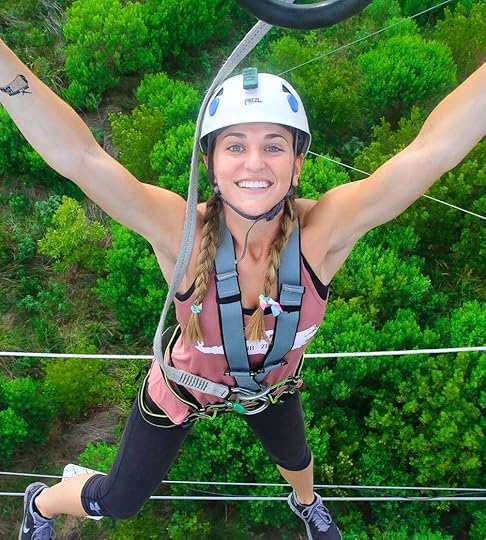
Photo: Patti Harrell for First Flight Adventure Park
Perched on the edge of Roanoke Sound, First Flight Adventure Park (in Nags Head) resembles a sandcastle made almost entirely out of ropes. You know, if a sandcastle could dangle you in midair, your heart pumping wildly for hours on end.
Here, you’ll channel your inner capuchin monkey, scrambling and swaying on the 42 obstacles and six ziplines crisscrossing each other 50 feet in the air. You’ll be strapped into a safety harness, of course, so you won’t really be in any danger of blowing away in the wind or biffing it American-Ninja-Warrior style. Ages six and up are welcome at the park, but there’s a variety of difficulty levels — some of the obstacles will make you feel like you haven’t skipped gym day. Clearly, we’re talking more than your average beach town.


Matador Network's Blog

- Matador Network's profile
- 6 followers

