
Matador Network's Blog, page 1363
April 13, 2018
Coping with depression
Depression is difficult enough to deal with at home — you don’t want it following you on your travels. And while travel may help you cope with depression, it will likely not cure it. So what should you do if you suddenly find yourself feeling depressed while away from home? Here are some tools you can use to manage your depression abroad.
Take the necessary preparations before your trip
It’s worthwhile to factor your depression into your planning. If you are worried about being alone, travel with a trusted friend or a partner. Make a plan to beat any jetlag you might have quick so you can get the amount of sleep you need and not get thrown out of your rhythm. If you find that exercise and activity help your depression at home, consider traveling to places where you’ll be able to get plenty of fresh air and participate in your favorite outdoor activities. If art is a useful coping mechanism for you, book a trip that’s filled with museum opportunities, or even opportunities to create your own art.
If you take medication to manage your depression, make sure you bring enough to last the duration of the trip, and if you’re able to, a little extra in case you end up staying longer than expected — whether that be because your flight was cancelled or you simply are having the time of your life and want to extend the experience. You might not be near a pharmacy that can replace them if you run out. If you’re traveling somewhere long-term, make plans with your doctor for how to cover yourself while abroad. The State Department’s travel page is useful for determining what’s available to you in the country you’re visiting. It is also worth checking to see how the meds interact with any unique activities you plan on participating in. For example, certain drugs can cause nausea, which could impact you more greatly on a sea voyage than at home.
Focus on self-care
Our bodies are not exactly machines, but a lot of the way you feel has to do with the way you treat your body. So taking care of yourself can play a big role in staving off the worst of depression.
Consider working meditation or some sort of mindfulness practice into your day. Headspace is a particularly good app for meditators. The Mindfulness App is great if you’re the type of person who likes to keep track of everything.
Pay attention to what you eat. All of the health fad hype aside, eating fresh food may significantly help with your overall wellness, mental health included. While you don’t have as much control over portion sizes and ingredient choice at restaurants, you can try shopping at local markets and grocery stores, which is also another fascinating way to get to know the local lifestyle and cuisine in a way many tourists do not. Just remember to get lodging that has access to a kitchen. If you’re road tripping, bring a cooler and eat fresh fruit or nuts instead of having another gas station bag of chips. This will also probably save you money, so that’s an added bonus.
Keep an eye on your alcohol intake abroad. Travel tends to involve a lot more booze than your day to day life, but alcohol is a depressant. So if you find yourself feeling a bit worse than usual, take some time off of drinking. That doesn’t mean you have to avoid social interactions or a fun night out at the bar. Just get a club soda with lime (or more likely, one of the many trendy booze-free cocktails popping up in bars around the world) and hit the dancefloor.
Lastly, stay off the screens as much as possible. This is a good practice while traveling anyway, but, while there’s still more research to be done, evidence is suggesting that screen time is associated with depression. So focus on what’s around you and stay off the phone, unless connecting with loved ones back home makes you feel more grounded.
Work in an exercise routine to your daily travels
Exercise has been shown to help ease the symptoms of both anxiety and depression, and it’s especially important not to abandon your workout routine while traveling if you find it helpful at home. Unfortunately, opportunities for routine exercise in a gym aren’t necessarily always available, but there are plenty of other options. If running around your neighborhood is part of your routine at home, try working it into your routine abroad every morning before you begin your itinerary (check out WalkJogRun, an app with safe running routes in cities around the world.) It may end up being a great way to see and experience a new place — the same goes for biking, hiking, and plenty of other exercise activities.
You can also take up a gear-free workout routine. There are tons of apps for this. Yoga is a good no-gear-required workout, as well as bodyweight exercises like planks or push-ups. Anything that gets that blood flowing.
If you’re not into the idea of actually working out (it is vacation after all) you can still do simple things to get those endorphins going. Always take the stairs if possible, and make walking a regular part of your day. Roughly speaking, walking burns the same amount of calories as running in twice the amount of time. So an hour of walking is like a 30-minute run. It won’t get your heart rate quite as high, but it’s better than nothing, as walking has been shown to be effective in improving your mental health. So look up walking tours for the city you’re visiting or forego the bus or subway and explore on foot.
Having a plan in an emergency
If you’re leaving the country for an extended period of time, it might be worth checking into the mental healthcare options in the country you’re visiting — some places are better equipped for mental health care than others. If you have a therapist, talk to him or her about it — they may be able to help you plan your strategy or set up an alternative way for you to contact them abroad in case of an emergency. It’s possible they will be able to hop on a Skype call with you if you need to, or even keep up the therapy while you’re abroad. They may also be able to recommend other professionals in the city you’re visiting. In a pinch, there are online therapy tools like BetterHelp and Talkspace that you can find help on.
If you don’t feel like you can talk with any of your travel companions, take advantage of Skype and call someone trusted back home. And if you are worried that it’ll get so bad that you’ll have to cut the trip short and fly home, try buying Cancel For Any Reason (CFAR) travel insurance. It’ll keep you from losing all of your money if you have to cut the trip short. 

More like this: 7 ways to cope with depression while traveling
The post The best tools for coping with depression while traveling abroad appeared first on Matador Network.


Bidets on airplanes
Besides being able to sleep comfortably, remaining clean and fresh while on a long flight is at the top of every traveler’s wish list. The problem is that airplane lavatories can be so revolting that many travelers prefer to hold it in than to cram themselves into that tiny, dirty place where 300 people do their business and where it’s nearly impossible to wash both your hands at once without touching anything grubby.
But all this dirty business may soon be a thing of the past thanks to Zodiac Aerospace’s idea to fit in a water spout on aircraft toilets.

Photo: Marisa Garcia
Even though we don’t like to think about it too much, we all know that toilet paper is far from being the most hygienic solution to deal with bodily functions (if you had poop on any other part of your body, would you wipe it with paper rather than thoroughly clean it with water?); therefore, a bidet may be the perfect solution for all of us to remain as clean as humanly possible when spending hours in a metal bullet 30,000 feet up in the air.
Zodiac’s water spout will have different water settings that you’ll be able to adjust thanks to a control panel on the wall. So, if you prefer a gentle water fountain rather than an intense spray, you get to choose just that.
Zodiac’s idea is not only a great way to keep us all clean and green (we cut trees down for toilet paper, remember?), it is also an important step towards making airplane lavatories more homely to travelers from countries where bidets are part of the daily routine (the Middle East, India, Japan, etc.)
According to Travel + Leisure, Zodiac’s toilet innovations presented at the 2018 Aircraft Interior Expo also includes a UV light that could fully disinfect lavatories between uses, so you may never have to squat during turbulence ever again. That’s music to our ears.
H/T: Travel + Leisure
More like this: https://matadornetwork.com/read/airbus-turned-cargo-bay-huge-sleeper-bunks/
The post Airplanes may soon have bidets so you can fly fresh appeared first on Matador Network.

Airbnb problems in Paris
Renting an Airbnb for your next Paris visit could become a tall order, at least if the city has its way in an upcoming legal challenge. The city is following the lead of others like San Francisco, aiming to remove 43,000 listings that aren’t registered with the government and do not have a Tax ID.
Paris, France’s capital and largest tourist destination, already has a number of restrictions in place governing short-term rentals. Residents cannot rent their place for more than 120 days per calendar year, for example, and renters are subject to a forcefully imposed ‘tourist tax,’ in addition to city mandates that all short-term rentals be registered with the government.
The rules follow lobbying from hotel groups claiming that the site stands as unfair competition. Homes registered on the popular short-term rental site also must register with the government — a task that the city claims many fail to do. The city says that the approximately 43,000 homes which it is hoping to have removed from the site fail to meet this requirement.
Prior to booking a reservation, travelers to Paris are encouraged to make sure that the host has a local Tax ID number issued by the Parisian government. If they do, they are registered and are doing their part to follow regulations, and you can ensure your reservation won’t be revoked. If you can’t find this 13-digit number readily available on their listing page, your best bet is to move on to the next option.
If you’re headed to Paris this summer, take extra precaution to ensure that your AirBnB reservation will not be affected by any forthcoming decision. The main thing you can do is follow up with the host prior to arrival to confirm everything is still in place, or simply avoid the drama altogether by staying elsewhere until the case is settled.
More like this: AirBnB is really great for travelers — but it might be causing huge problems for locals
The post Paris may soon remove 43,000 homes on AirBnb from the website appeared first on Matador Network.

Bucket list heli-skiing in BC
I stand at a viewpoint in Terrace, British Columbia, and understand immediately why the Tsimshian, one of the largest First Nations people in the area, have inhabited the valley for thousands of years. It’s big nature out here. I watch bald eagles soar above me, old growth forests unfold below me, and the towering Skeena peaks looming behind moss-covered cliffs before me. It’s the Skeenas I have come here for. I want to take in BC to the fullest and I, for one, am doing that by heli-skiing.
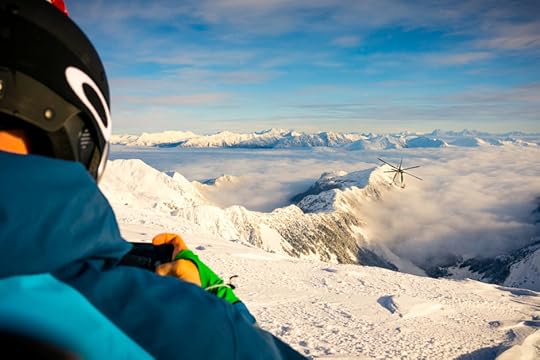
I make my way to find my guides, Owen and Ryan. There’s a group of us signed up for seven days of heli-skiing in the Skeenas, which sees an incredible amount of snow each winter and near-perfect conditions. We’re buzzing, eager to pile into a helicopter and James Bond our way into the mountains. Ryan walks into the room and doles out big Canadian hugs to each one of us. He motions with his head to the helicopter: “Get ready for the best day of your lives.”
1
The Skeena Mountains
The Skeena Mountains are a subsection of the interior mountains of Northern British Columbia. The Skeenas abruptly rise from sea level to 2,500 meters. This mountain range was pretty much built for heliskiing: the tenure includes 7,000 kilometers of skiable terrain and the peaks receive 30 meters of snow on average each year.
2
The Ride Up
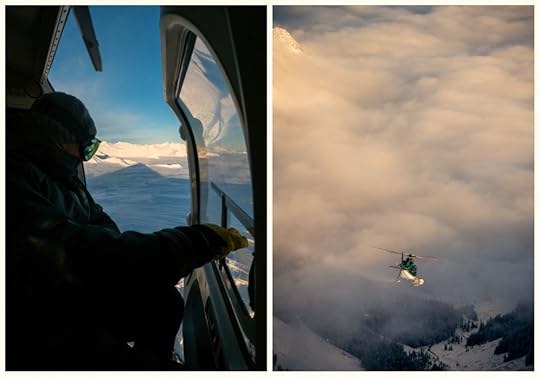
The Agusta Koala helicopter is a sleek Italian model that looks like it belongs more in a bank heist getaway than delivering skiers to alpine summits. The Koala holds six passengers and does sixty to eighty landings per day. The helicopter seems made for the high alpine environment - our pilot Gordie says the heli “climbs like a homesick angel.” I feel it’s going to be a good (and long) run when the shadow of the mountain I am heading to extends almost all the way to the opposite horizon.

3
The Arrival
Getting out of the helicopter on top of an alpine ridge is hardly serene: the echo of the blades reverberate in my chest and the “rotorwash” propels wind and snow into my face. In that loud chaos, everyone grabs their gear and the heli takes off in an intense blast of snow and wind, leaving the group looking down at 1500 meters inversion in the valley bottom.
Intermission
Activism + Politics
The year women became eligible to vote in each country
Tim Wenger
Mar 7, 2018
Budget + Backpacker
18 ways to save money on your Whistler ski trip
Noelle Alejandra Salmi
Jan 24, 2018
Sponsored
17 images of Leavenworth, WA we can’t stop looking at
Jacqueline Kehoe
Mar 26, 2018

4
The Silence
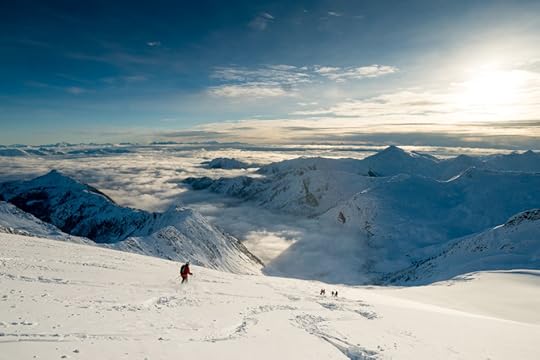
After the rush of arriving by helicopter and the chaos stepping out into the rotorwash, I was amazed to find myself in sheer and perfect silence after the Koala lifted away. It felt like big silence, filling the enormous space between the sky and the mountains. We took a few minutes to take in the view and get into our skies, but then it was go time.
5
The Drop
Heli-skiing packages try and guarantee a certain amount of “vertical” in a package. You do a run and get lifted back to the top, or to a new area, to go again and again, each run being as many as 2000 vertical meters in descent. The company I used said they average 44,000 vertical meters in a week-long package. That’s a lot of runs. With access to 5,500 square kilometers of mountains, the destinations and types of runs are almost endless.

6
The Powder
One draw for heli-skiing in general - aside from the obvious bragging rights, epic views, and the badass helicopter - is the powder, which is untouched unlike at ski resorts. And the Skeenas are famous for it. I see why: the snow in the Skeena mountains is unlike anything I’ve experienced. The storms come in warm and drop large amounts of snow, and as the storms clear the temperature cools; this pulls the moisture out of the snow, leaving low density, dry powder to swoop and swoosh through.

7
The Wait
After a 1500-meter run I only have to wait a few minutes for my next heli ride back to the top to do it again. This range is famous for heli-skiing precisely because of its options: high alpine peaks, old growth forests, powder-full bowls, and glaciers are all within reach - and lots of them. So, where to next?

8
The Descent
The aforementioned powder provides a pretty amazing descent down the mountain. Because it’s so dry, it’s almost springy. I could almost bounce into a turn with a lot of weight and feel like I was being bounced back; essentially I could “trampoline” my way along. Combine that sensation with the views of the Skeenas and the ranges beyond, lack of tourists, and the only sound being the swish of the snow under me, and it is easy to see why people get hooked on this.

9
The End
Owen, pictured here, and his team led the way. I appreciated them deeply as getting lost in high alpine mountains is actually not on my bucket list. Run after run they guided us down and back again, so familiar with the mountains despite the massive amount of space out there. On our final run of the week, Owen shouted back at me: “Told you it would be the best week of your life!” He wasn’t wrong.
Note: This author’s trip was independently sponsored by NEH Heli-Skiing.
More like this: Skiing down a glacier is just as badass as it sounds
The post 9 jaw-dropping photos that prove heli-skiing in British Columbia belongs on your bucket list. appeared first on Matador Network.

Where to see big cats
From the enormous Siberian tiger to the slight, tree-dwelling clouded leopard, the big-cat family represents some of the most majestic animals on Earth. It is the combination of their feline grace and their killer instinct that makes the big cats so irresistible.
There are seven members in the big-cat family: lion, tiger, jaguar, leopard, snow leopard, mainland clouded leopard, and Sunda clouded leopard and all of them are under threat from habitat loss, poaching, and human-wildlife conflict.
On this year’s World Wildlife Day, the UN Secretary-General António Guterres called on people around the world to “help raise awareness and to take personal action to help ensure the survival of the world’s big cats”. One way each of us can take personal action to help protect the big cats is to choose an ethical local tour operator when going on a wildlife-watching safari. After all, if the local communities benefit from wildlife protection, the conservation strategies will have a much higher chance of success.
Here are the world’s 7 big cats and where to travel to see them in the wild:
1. Jaguar

Photo: Appel2499/Shutterstock
The jaguar is the largest big cat in the Americas. Its range extends from the Southwestern United States to Argentina and sadly, the jaguar is listed as Near Threatened on the IUCN Red List across its entire range.
The jaguar is the most water-loving cat in the big cat family. It is known for hunting caimans on the river banks in the Pantanal. Its spotted coat provides the jaguar with perfect camouflage in the dappled light on the jungle floor. Black color variation is also common in jaguars and while the black cats are often referred to as the black panther, it is, in fact, the same species, just a different color morph.
Where to see the jaguar
The best place for spotting a jaguar is the Brazilian Pantanal. The jaguar tours in the Pantanal are centered on the river cruises along the Cuiaba River near the town of Porto Jofre located at the end of the Transpantaneira highway. The jaguars are typically spotted on the river banks and with the water acting as a natural barrier so the big cats are not disturbed by the boats. If you are lucky, you may even witness a hunt.
It is best to stay on the river for a few days in case of rainy weather. Jaguars are rarely seen in the rain.
To support the local community, arrange your trip with an experienced and dedicated local guide from Pantanal Trackers.
2. Tiger

Photo: Ondrej Prosicky/Shutterstock
The tiger is the world’s largest big cat, with Siberian males weighing up to 300kg. It is also the most endangered big cat. According to WWF there are approximately 3,890 wild tigers left in the world today.
While the tiger’s distribution range stretches from Siberia to Sumatra, most of the world’s remaining tigers occur in India. The Indian subspecies is known as the Bengal tiger.
Like most wild cats, the tiger is an ambush hunter. It has evolved a number of traits that allow it to avoid detection by unwary prey. The tiger’s vertical black stripes on the light-colored coat break up its shape and help it remain concealed in the forest. The tawny color of its coat helps the tiger merge with the dry grass out in the open.
Where to see the tiger
One of the best places to see tigers in the wild is the Kanha Tiger Reserve in the Indian state of Madhya Pradesh.
A wildlife safari in Kanha is a relaxing experience if you don’t mind a pre-dawn start. You spend about 4 hours driving through the lush green forest and open meadows in a comfortable open Jeep before returning to your accommodation for a midday break. In late afternoon, you return to the park for another 4 hours until sunset.
Tigers are seen in Kanha on most days and if you stay in the park for a few days, you will likely see more than one big cat.
Explore the park and stay at the eco-friendly Kanha Village Eco Resort to support the local sustainable tourism initiative.
3. Leopard
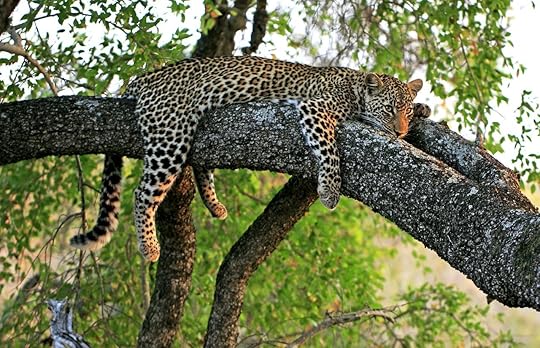
Photo: J Reineke/Shutterstock
The leopard is similar in appearance to the jaguar but has a smaller and lighter physique. The spots on its coat are smaller and more densely packed than those of the jaguar.
The leopard has the widest distribution range of all wild cats. It occurs throughout Africa and Eastern and Southern Asia. Unfortunately, like all other big cats, the leopard is under threat and listed as Vulnerable on the IUCN Red List across its range.
There are a number of leopard subspecies, and some of them teeter on the brink of extinction. The world’s most endangered wild cat is the Amur leopard, with no more than 70 of these magnificent animals remaining in the wilds of the Russian Far East.
Like the jaguar, the leopard has a black morph. Curiously, most black leopards occur on the Malay Peninsula — no one can explain why.
Where to see the leopard
Thankfully, some leopard populations are doing well. Sri Lanka’s Yala National Park is considered to be the best place in the world to see the leopard in the wild.
A safari in Yala is similar to an Indian safari — you ride in open Jeeps through a mixture of deciduous forest and dry shrubland. Only the roads in Yala are not as smooth. So be prepared for an early start and a bumpy ride. But your reward is an almost guaranteed sighting of a leopard, often at a close range.
For the best chance of spotting the leopard, book your trip with Mevan Piyasena of Wild Angles with Mevan who is recognized as the best local nature guide at Yala.
4. Clouded leopard
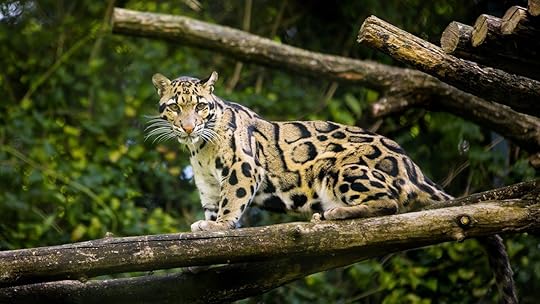
Photo: khaled azam noor/Shutterstock
The smallest member of the big-cat family, the clouded leopard is considered to be an evolutionary link between the big cats and the small cats. If you’re not sure what the difference between small cats and big cats are, here it goes: big cats roar, small cats purr.
The clouded leopard occurs through the Himalayan foothills to China and listed as Vulnerable on the IUCN Red List across its entire range.
The clouded leopard is the best climber among big cats. It is able to climb down tree trunks head first and can even hang down from branches by wrapping its hind legs and its long tails around them.
Interestingly, the clouded leopard has the largest canine teeth in proportion to its skull among all cats. This trait earned the clouded leopard the nickname of a “Modern-day saber-tooth tiger.”
The clouded leopard’s name comes from the striking black blotches on its grey or tawny-colored coat. As with other big cats, this pattern helps the animal avoid detection in the dappled light under the jungle canopy.
Where to see the clouded leopard
Unfortunately, due to their secretive habits and preference for dense forest habitat, clouded leopards are extraordinarily difficult to see in the wild. There are no reliable places to suggest, apart from noting that they are sometimes seen in India on wildlife safaris.
5. Snow leopard
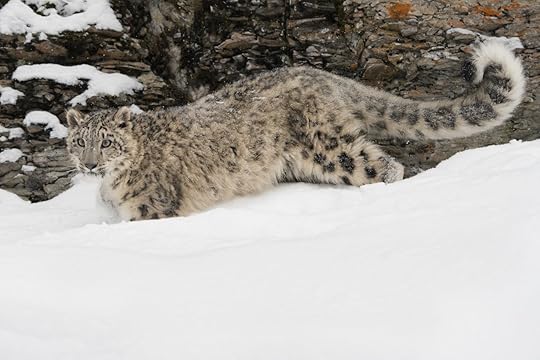
Photo: Jeannette Katzir Photog/Shutterstock
The rarest and the most mysterious of all big cats, the snow leopard occurs in the world’s most inhospitable environment — the high altitude mountain ranges of Central Asia. It is so rarely seen that it is known as the “Ghost of the mountains.”
While the status of the snow leopard was changed from Endangered to Vulnerable by the IUCN last year, this decision is hotly disputed by conservation organizations on the basis of lack of scientific data to support it. Scientists estimate that there are between 3,920 and 6,390 snow leopards left in the wild.
The snow leopard is perfectly adapted for its inhospitable snowy habitat. Its white coat with black spots allows the animal merge to with the grey environment of the rocky slopes so perfectly, that it seems to disappear in front of your eyes.
Where to see the snow leopard
Low numbers, an inhospitable habitat, and exceptional camouflage make the snow leopard one of the most difficult big cats to see in the wild. Most sightings occur in Hemis National Park in the eastern Ladakh region of Jammu and Kashmir states in India.
The snow leopard-spotting trip is not for the fainthearted. It involves camping on high-altitude mountain ranges with night temperatures as low as -20 Centigrade. Daytime activities involve long hours of scanning the slopes for the chance of spotting the leopard. But the rewards of seeing one of the most elusive big cats on the planet well outweigh the difficulties.
For the best chance of success, book your adventure with Ladakh-based Exotic Ladakh Travel.
6. Sunda clouded leopard
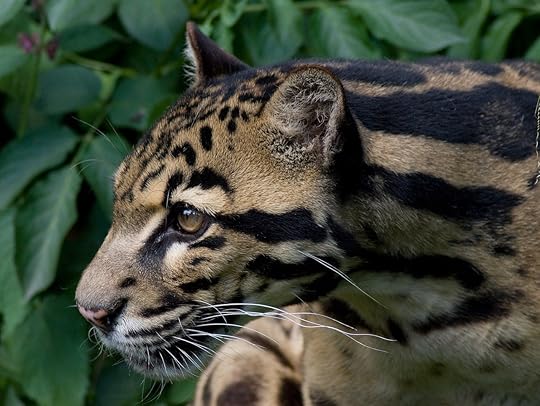
Photo: Spencer Wright
The clouded leopard is one of the least-known wild cats and it was only in 2006 that the Sunda clouded leopard, occurring on the islands of Borneo and Sumatra, was declared a separate species from the mainland clouded leopard.
The Sunda clouded leopard is also listed as Vulnerable on the IUCN Red List, with less than 10,000 individuals remaining in the wild and the population decreasing due to habitat loss and poaching.
The island species is slightly smaller and darker than the mainland clouded leopard.
Where to see the Sunda clouded leopard
Until recently, the Sunda clouded leopard was as difficult to see as its mainland cousin. In the last three years, Deramakot Forest Reserve in Borneo has been gaining a reputation as the go-to place for spotting the Sunda clouded leopard.
However, even in Deramakot, finding a Clouded leopard is no easy feat. Be prepared for long nights of driving along the forest roads, often in pouring rain. Wildlife watching in the dense tropical jungle is quite different from an African safari since your view is limited to the first row of trees on either side of the road. But the longer you search, the more rewarding the sighting will be when you finally spot the elusive cat.
Book a trip with the local Adventure Alternative Borneo for your chance to see the elusive cat.
7. Lion
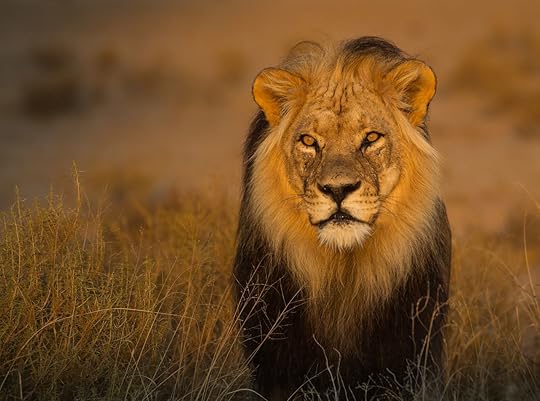
Photo: Bernie Van Der Vyver/Shutterstock
Only slightly smaller than the Siberian tiger, the lion is the second-largest big cat. There are two broad types of lions: the African lion and the endangered Asiatic lion, that occurs only in the Gir Forest National Park in the Indian state of Gujarat.
Unlike all other big cats that are solitary hunters, lions are social animals and live in groups, known as ‘prides’. Hunting as a group allows the lions to take down larger prey and share the kill among the pride.
While lions do not rely on camouflage as much as all other cats, their tawny-colored coat allows them to merge with their sandy habitat.
Where to see the lion
The African lion can be seen without much trouble in a number of National Parks in Africa, including Kruger in South Africa, Serengeti in Tanzania, and Maasai Mara in Kenya.
The words ‘African Safari’ bring to mind images of driving in a rugged safari truck across the open savannah and observing all kinds of magnificent animals along the way. The reality of a wildlife watching trip in Africa is quite similar, but keep in mind that if you are looking for a particular species, you might spend more time searching for it than observing it. Unpredictability is the name of the game in wildlife watching. Even in Africa.
To see the Asiatic lion, head to Gir Forest National Park and book your visit online directly with the park. Most accommodation providers will have a shuttle to the park’s gate.
The Asiatic lion safari is a little different. Most of Gir National Park is covered by forest. As a result, the wildlife sightings are not as frequent as on the open savannah. But the forest is beautiful, and there is always a peacock or a langur rustling in the trees to keep you entertained while you are looking for the serious stuff.
More like this: My quest is to see all species of wild cats in their natural habitat. Here’s what I saw in Tibet.
The post The world’s 7 big cats and where to see them in the wild appeared first on Matador Network.

Map of Irish ancestry in US
Got a little Irish in ye? You’re far from alone, according to this map of Irish heritage throughout the United States. With information compiled by the United States Census Bureau, this map submitted to Reddit by user AJgloe confirms our suspicions of why the States parties so hard on St. Patrick’s Day — a good chunk of the country’s population has strong Irish roots.
The Washington Post found in 2013 that according to US Census data, there are about 35 million Americans claiming majority or partial Irish ancestry. This means that there are about seven times as many Irish ancestors in the United States as there are people in the country of Ireland itself, a not too shabby statistic to toss around in conversation over a pint.
According to the map, New England easily tops the list as far as total percentage of the population being of Irish descent. Much of Massachusetts, New Hampshire, and Rhode Island have over 20 percent. If you’ve ever doubted the legitimacy of Boston’s hordes of Irish pubs, it turns out you should probably keep your mouth shut. The same WaPo piece noted 20.4 percent of Boston’s population claims Irish descent. New York holds its own as well, with much of the eastern part of the state ranking very high on the green scale.
Perhaps the biggest surprise on the map is the Butte, Montana region, which also scored in the greater-than-20 percent range. “Butte would definitely fight anyone for the title of most Irish city in America,” boasted Reddit user BZH_JJM. We’re not going to get involved in that fight.
On the opposite side of the spectrum, much of the southern ring of the country claims the lowest Irish ancestry rates, ranging from eastern Arizona all the way through North Carolina and Virginia.
More like this: 12 signs your best friend is Irish
The post This map shows the states with the most Irish ancestry appeared first on Matador Network.

Travelers who don't fly
If you actually stop to think about it, flying in an airplane is a pretty crazy thing to do. At its core, what you’re essentially doing is catapulting through the sky in a metal tube at 500 miles per hour. Not for the faint of heart, it would seem. But according to the International Air Transit Association, over 3 billion people fly each year. Statistically, a crash occurs in only one out of every 1.2 million flights.
You may be thinking, “Well that’s a one in 1.2 million chance that I’m doomed!” but that number is actually much lower. In a startling statistic of human resolve (or essential safety features built around the science of aeronautics– probably a bit of both), over 95% of those involved in a plane crash survive. Yes, you read that correctly. These aren’t the stories that make it into the news, of course, but the odds are strikingly in your favor should a minor mishap take place on your next flight.
Most people are unaware of this. Do us all a favor and pass the statistic along, especially if you happen to come across one of these high-profile world travelers who have gone to great lengths to avoid flying. Except for Blink-182 drummer Travis Barker, who experienced a plane crash firsthand. Don’t bother bringing these numbers up to him. Despite the fact that he lived to tell about it, it’s doubtful that science is going to do much to change his mind.
1. Torbjorn C. Pederson
Ambassador for the Danish Red Cross
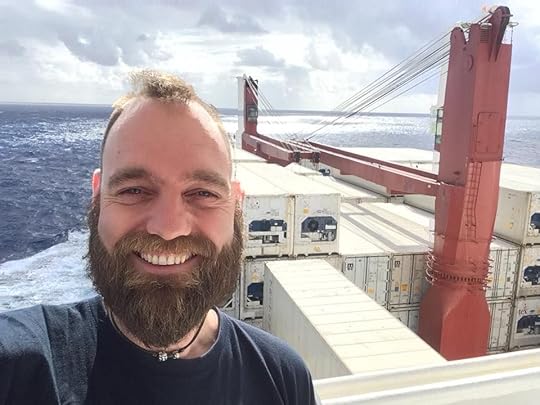
Photo: Once Upon a Saga
Torbjorn, who goes by Thor, spent three years traveling the world on cargo ships as a goodwill ambassador for the Danish Red Cross. His budget? $20 per day, with the end goal of visiting every country in the world. If successful, Thor will be the first person to accomplish this feat without taking a single flight. The journey began in 2013 and is expected to end in 2020. A big part of his expedition is illuminating that most people in the world live normal, relatable lives, despite what the news cycle leads us to believe. He told The Guardian, “There’s an enormous focus on the horrific aspects of our world: terror, disease, corruption, conflict. While those are certainly all elements of our world, it’s hardly representative of where we live, the vast majority of the planet is quite trivial and almost boring. People eat, go to work, go to school, go to visit friend[s], get stuck in traffic, dance, listen to music, date, fall in love… complain about the weather and complain in general.” Follow his blog for updates.
2. Travis Barker
Drummer, Blink-182

Photo: Wikimedia/Journalist 2nd Class Denny Lester
Rock drummer Travis Barker hated flying even before a 2008 plane crash nearly took his life. In the old days, Barker would drive from his home in Los Angeles to cities around the country where his band had one-off gigs, while the rest of the band and crew flew. Justifiably, since the crash, Barker’s fear of flying is now so bad that he absolutely will not fly. The band was forced to hire a fill-in drummer for an Australian tour in 2013, and Barker often travels by boat for international tours these days.
3. Michael Hodson
Travel blogger, Go See Write Overland Travels

Photo: Go, See, Write
In an effort to put his heart into every step of the journey and optimize the experience, Michael Hodson traveled the world over the course of sixteen months without flying even once. This journey began in 2008, and over the ensuing decade, he has traveled nearly non-stop, still without flying. He wanted to see the world without the disconnect of immediate satisfaction, and without leaving the giant carbon footprint left by air travel.
4. Aleksander Doba
70-year-old kayaker

Photo: Aleksander Doba by Fotokrawczyk.Pl
At 70 years of age, Aleksander recently completed his third — yes third — kayaking journey across the Atlantic Ocean. This trip took him from the New Jersey coast to Le Conquet, France in a rigged kayak where Doba slept in what the New York Times described as a coffin-like cabin. He touched land in Europe a few days before his 71st birthday. Doba’s previous excursions took him from Florida to Portugal and Brazil to the West African nation of Senegal.
5. Benoit Lecomte
Long-distance swimmer
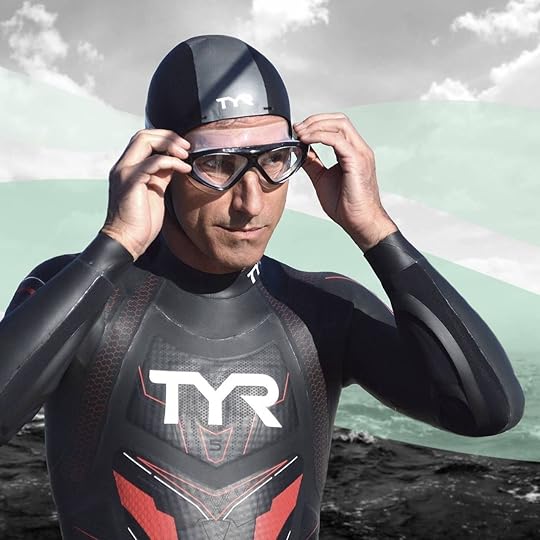
Photo: The Longest Swim
Here’s another act of flight-free trans-Atlantic craziness. In 1998, Benoit Lecomte became the first person to swim across the Atlantic without the aid of a paddle board. Already a celebrated long-distance swimmer from France, Lecomte underwent the journey to raise money for cancer research. And he’s not done yet: plans are underway for a swim across the Pacific Ocean from Japan to California to highlight sustainability issues and climate change.
6. David Bowie
Musician

Photo: Wikimedia by Adam Bielawski
While some of these travelers stayed closer to ground level for a specific reason, David Bowie was another rock star who just hated the skies. Maybe it’s a thing among musicians — spend enough years in a tour van and the thought of taking off and soaring just seems increasingly stressful. Bowie refused to fly on his world tour from 1972-1977, traveling instead by cruise ship and other water and ground-based means.
More like this: How to manage a fear of flying when you love to travel
The post 6 world travelers who went to extraordinary lengths to avoid flying appeared first on Matador Network.

Bushmen healing
I’m standing at the door of a quiet Constantia Hills residence — a suburb in Cape Town, South Africa and an unlikely venue for a healing ceremony with a Khomani Bushman. I wonder if the doorbell is working, as I’ve been standing on the stoep for a while now. There’s a late afternoon hush over the luscious neighborhood, which matches the reverence I feel one ought to bring to such an occasion. I decide the doorbell isn’t working and knock firmly but politely on the door, not wanting any overtones of impatience to taint the encounter before it’s even begun. Somewhere inside, a dog raises the alarm and shortly the door opens.
A small middle-aged woman with long, tired blonde hair greets me. I take it this is Gerri, the one who organized the Facebook event and coordinated the appointments. She gathers me into a warm embrace, suggesting a woman who abides by less formal strictures. I didn’t really expect anything from her or her house, but once I’m inside, I find it matches the average house of a white South African woman her age: dark, old fashioned, and with a housekeeper in the kitchen who greets me timidly on introduction.
“Just take a seat for a moment and I’ll check if they’re ready for you.”
I sit down and keep awkward company with the housekeeper. Among the accumulated decor of bygone days, there are a few hints of Gerri’s spiritual leanings. A large framed poster with tacky fonts outlines “The Ten Native American Commandments” and I wonder if there really is such a thing or if someone — a white someone, perhaps — took the liberty to put them together themselves. A collection of crystals sits on the same table as brass-framed photographs of what must be her children.
“You can come now!” calls Gerri and I get up to follow her lead. “I thought they might need a break. It can be a bit draining, you know, but they say they’re ready for you.”
I follow her through the living room and out into her backyard. There’s a sad-looking swimming pool and a patchy lawn struggling with Cape Town’s intense drought. The spacious and fairly empty garden is framed by a border of tall trees and there’s a large circular fire pit off to one side, framed by brickwork. Sitting on two lawn chairs around the fire are Jan Org, the man I’ve come to meet for a spiritual reading and healing, and his wife, Belinda, who will translate for me. The email I received explained that Jan speaks the three Bushman languages and Afrikaans, but no English.
I hardly notice Gerri leaving and Jan hardly seems to notice my arrival, so I shake Belinda’s hand first. She’s a slender woman with jet black hair, a gentle smile, and crooked teeth. I remember reading that she’s originally from Cape Town, but lives with Jan in Botswana now. I wonder how she came to marry him and live as close to a traditional Bushman life as is still possible. Now doesn’t feel like a time for questions, though, so I turn instead to Jan, who pulls himself away from his quiet preparations to shake my hand. He is very small. His tattooed, leathery hands hold mine in a strong embrace and I bring my free hand up to join the clasp. We hold our hands like this for a stretch of time that feels long, but not awkwardly so. He looks out from a creased face, and watches mine with seeing eyes. We share a silent recognition of what is about to take place.
Belinda checks the direction the breeze is blowing and guides me to a lawn chair she hopes will keep me from the bitter smoke of the fire. I carefully put down my backpack and take a seat. She sits down in the chair to my left and the afternoon light cuts in low through the trees around us and catches in the smoke. Jan is entirely absorbed in selecting a piece of wood to add to the fire. He seems distant. Closed off.
“Don’t worry about Jan,” says Belinda, anticipating my question before it has even fully materialized. “He’s already reading you.”
Already reading me?
Is it because I question whether or not such a thing is even possible, or is it simply the fact that Jan seems to be doing no such thing that makes me pause? I had no qualms about surrendering to Belinda’s guidance on arrival, but I suddenly see myself sitting there in some woman’s backyard in Constantia Hills, lured by a Facebook event to a spiritual healing, in the company of two people who strike me now as old hands at this dance. I fear for a brief instant that I have wandered into the tent of a pair of traveling conmen. After all, I’m just the type that would fall for it; I tend to want to see only the best in people, but, more importantly, I feel broken, and broken people are always searching for salvation.
I once picked up an issue of The National Geographic in the orthodontist’s office. It was titled The Healing Power of Faith. There were dozens of articles and captions to read, but what struck me was a piece that compared the performance involved in traditional healing ceremonies — with their beads and robes and headdresses — to the performance of western medicine – with its scrubs, and monitors and hospital paraphernalia. The one relies on herbs and spirits, the other on pharmaceuticals and science, but both depend on creating a performance in order to produce results in the patient.
I glance up at Jan and notice for the first time the black 007 cap on his head. I see the oversized tan leather jacket. I see his knobkerrie and all his necklaces; there’s one with a giant shell pendant and one with a large root pendant, and lots of colorful beads. A tasseled pouch swings from his neck, too. I see the dramatic care with which he’s selecting wood. I see the fold-out table covered in roots, herbs, and trinkets under a nearby tree. I see the performance, but when Belinda turns to me and in a firm but gentle voice asks, “What has brought you to us today?” I’m faced with a choice: either I embrace this experience or I don’t.
The magazine spoke about the importance of faith in any kind of healing. You have to believe it will work. As an atheist, faith has always struck me as a lack of curiosity, a lack of probing and questioning.
Why should I sit back and accept someone’s word for it?
But recently I’ve begun to understand faith, not as the act of accepting any one scripture unquestioningly, but as the act of accepting the present in the faith that, ultimately, one can survive it. Perhaps what led me to click “Going” and email Gerri and pay in advance and drive through bumper-to-bumper rush-hour traffic to this backyard healing is a need for faith.
I take a deep breath and begin to explain what has brought me to Jan Org.
“I’m originally from Zimbabwe. My parents are from Zimbabwe. When I was fourteen we moved as a family to France, because of the political and economic collapse of the country. I spent the whole time in Europe thinking about coming back to southern Africa. I was in an eight-year relationship, but when that ended, I moved to Cape Town. That was three years ago. I’ve come here today because I’m suffering from anxiety and fear, and it’s causing trouble in my new relationship. I’ve come here because I need to find my inner ground.”
The words are borrowed from Sue, a clinical psychologist I met with just a week before coming to Jan, who integrates Buddhist meditation and psychotherapy.
“It’s interesting,” she said — “a lot of the people who come to me have changed continents in their lifetime. Something about it deeply alters the psyche. You need to find the grounding inside of yourself. We need to get you operating from here,” she said holding a palm to her heart. On hearing her words, tears began to well up as they always do when someone speaks the truth about me.
Belinda nods, listening keenly. Jan is quietly busy at a distance, and I go on. I’ve had enough therapy to know that you have to open yourself to any kind of healer, otherwise you leave them with nothing to go on, and there’s no point in that.
“I’m in a relationship with a new partner,” I say, choosing the neutral term to avoid having to disclose that she’s a she and that I’m gay. “We have a good love, but I have so much anxiety. I’m a perfectionist. I’m trying to be perfect, and I’m trying to perfect our relationship. I’m not operating from here,” I say, holding a palm to my heart, “I’m in my partner’s head all the time, so I’m awash on someone else’s moods — anticipating, interpreting, problem-solving. I’m thinking for two. Sometimes, my partner goes away — closes off. In my anxiety, I find myself filling up the space between us, because it’s so hard to trust that my partner will come to me. I need to find my inner ground so that I can wait here confidently at the halfway mark.”
“Ah,” says Belinda, satisfied, “And so you’ve come here to connect to the African earth and find healing in the Bushmen,” she says gesturing gently towards Jan.
Her phrasing makes a part of me cringe, but essentially she’s right. Maybe it’s because the Bushmen are a symbol of deep belonging. Maybe it’s because the Bushmen are a displaced people, too. Either way, I have turned to a Khomani Bushman for help because I am desperate to find my internal anchoring. If I don’t, I fear I will continue to lose partner after partner to my own anxious patterns.
Belinda turns to Jan and begins translating slowly and quietly in Afrikaans. I catch words like wortels (roots) and kop (head). I hear enough to feel confident that my story is being accurately communicated to Jan, and I steal the opportunity to look at his shoes: a pair of black knock-off Converse.
Belinda’s translation comes to an end, and Jan sits silently. I wait, and after a long pause he lets out a sudden haggard sigh and gets up.
Is it that bad?
Jan mutters a question to Belinda. She turns to me and asks, “You’re South African, right?”
“No, I’m originally from Zimbabwe,” I reply, wondering whether more was lost in translation than I thought.
Belinda smiles and says, “Yes, but you’re here now.”
It’s more of a statement than a question, and her choice of words is striking. “South African” connotes nationality. Is being “here now” enough to make me South African? It dawns on me that she’s not asking me where I was born, or what passport I hold. She’s asking me if I’m becoming. She’s asking me if I’m making South Africa home.
“Yes.”
Belinda nods to Jan. He walks off, absorbed in thought, and hovers at a distance. In the meantime, Belinda makes casual conversation. It comes so naturally that I don’t even realize she’s buying Jan time. Her voice is barely audible and her train of thought is hard to follow, but I catch pieces of a story about how she too struggles with living in other people’s heads and how she was full of caution coming to Cape Town, unsure of people’s intentions coming into these healings.
Before I know it, Jan is holding a small piece of smoking wood. He approaches me, and Belinda, with uncharacteristic urgency, tells me that I must just sit back and let him. Her words trail off, but I understand that I must let him do whatever it is he’s going to do.
“This is a very feminine healing,” she adds in a whisper.
Jan is standing to my right. I notice he’s holding the smoking stick upright and close to his groin. It strikes me as very phallic and I wonder if this position is coincidental or intentionally symbolic. He then holds the smoking stick close to my face. Having not quite shaken the phallic image yet, the gesture feels sudden and unwelcome, but I close my eyes and try my best to relax. Jan slowly walks around me and the earthy smoke swirls and catches in my nose and hair. He walks around my left side and comes to settle in front, carefully placing the smoking stick on the ground between my feet where the white smoke rises up towards my crotch. I lose track of Jan for a moment, but then I feel him up close behind me. He reaches over my right shoulder and places a firm hand on my heart. The collar of my t-shirt is low and his palm is warm and dry on my skin. It moves searchingly, like a stethoscope. We are so close that I can smell clean sweat coming from his suede leather jacket. His palm on my heart feels like a hug I didn’t know I needed — a powerful embrace that acts like a spotlight, and I can feel my emotions rising to meet it.
His hands push and squeeze my shoulders. One travels up my neck. Suddenly, Jan tears a hand away with a small cry and flicks his wrist. The pushing and squeezing and searching starts to feel like grooming, as if he were looking for leeches. He grunts, and pulls something off — a parasitic spirit I can neither see nor knew was there. Finally, a hand returns to my heart. He slips his fingers under the collar of my t-shirt and I feel his fingertips push ever so slightly under the lip of my bra. I’m drawn out of the experience by a fleeting concern that this touch might not be entirely necessary and that in this moment of power over me he might simply be feeling me up. My gut tells me, however, that this is not what is happening, and I close my eyes and focus on the warm dry hand on my chest that can feel things I don’t know are there.
Jan releases me and walks off. He stands at a distance behind me. The smoking stick is gone. I sit and wait, still held by the energy of his searching embrace. Jan lets out a terrible hack and another jagged sigh. Slowly he returns to the fireside and sits down on a lawn chair. I watch him for a moment. He’s deep in thought and I am deep in a patient stupor. He rises again to stand above me, looking deeply into my face. I close my eyes and let him see whatever there is to be seen.
“Jy het ‘n gebroke hart,” he says finally and reaches down to plant three firm fingers on my chest.
“You have a broken heart,” says Belinda.
Tears begin to well up. The great juddering pools of salty tears threaten to flow down my cheeks at a blink.
What is this broken heart of mine?
Jan seems puzzled.
“You said you were in an eight-year relationship?” asks Belinda, inviting me to elaborate.
I can tell that they’re searching, but I know the cause of my broken heart doesn’t lie there. I have found new love in someone with whom I believe I can rewrite the script.
I steel myself and explain, “I was with my first girlfriend for eight years.”
I can see from Belinda’s body language that the word “girlfriend” has registered, but I have no way of knowing how she feels about it, nor whether she’ll censor that detail from my story to smooth things over when translating sentence by sentence to Jan.
“I made my first girlfriend my home instead of building one for myself in Europe. She left me for a guy and broke my heart. I moved to Cape Town after our break up. I took a risk and fell in love with someone new, but she broke my heart, too. I’m with a new girlfriend now and we have a good love.”
Belinda translates my final statement, and a dissatisfied silence settles over us. While I may carry the scars and bruises of past loves, it seems clear to us all that the cause of my broken heart lies elsewhere.
“And your family?”
“My parents and my sister are still in France. My brother is in Scotland.”
I feel a sudden bolt of clarity and add, “My sister has been struggling with mental illness for the last fifteen years — basically since we moved to France.”
“Ah,” says Belinda, satisfied, and she turns to relate the latest information to Jan.
What do the Bushmen think of bipolar disorder and schizophrenia?
I the story-teller, and Jan the healer both understand the powerful symbol of a sister’s mind that starts to unravel as soon as roots are severed.
A lot of the people who come to me have changed continents in their lifetime. Something about it deeply alters the psyche.
Jan moves in and presses a hand into my stomach.
“It hurts here.”
His fingers are pressing right into the tight knot of my stomach that I fear will one day develop into an ulcer. I’m startled by his discovery of my secret pain. The last time I remember really speaking about it was in high school when it first appeared, just after I found out my sister had been raped. I nod my head with tears in my eyes.
“Your broken heart,” he says tapping my chest, “Creates pain here,” he says pushing my belly, “And this pain is making your head crazy.”
90% of the happy chemical serotonin produced in the body is found in the gut.
Jan fetches a small dry root and places its tip in the fire.
“When he comes to you with it, inhale deeply,” says Belinda. “But don’t worry — It’s just to ground you. It won’t make you…” Belinda waves a hand in the air above her head, and I’m reassured that I’m not about to be given a hallucinogenic.
Jan brings the smoking tip of the root up to my nose and cups it. The harsh smoke sears the inside of my nostrils before I even breathe it in. I inhale what I can and Jan takes the root away before taking my pulse — feeling for more than just a heartbeat it seems — and he thumbs marks of charcoal on my wrists and in the crooks of my arms. Finally, Jan stands back, looks at me, and speaks for the first time at length.
“Your cry for help is good. Your anchor is that you haven’t lost who you are. Look at this journey you’ve been on. Look where it’s taken you. But you were called back home.”
Jan returns to his chair where he sinks into a pensive silence.
“When I read about what happened in Zimbabwe, it hurt me too. What happened there with the whites… It hurt me because they are people too. It is also their home.”
There is something so startling and deeply gratifying about hearing the most indigenously African person I’ve ever met validate my African identity, that I find myself struggling between revelling in this moment (in which the themes of my entire life story — themes of belonging, race, displacement, love, and longing — float about in the air between us) and wondering if I’m just indulging in my own Dances with Wolves fantasy.
“You need to let go of your guilt of Zimbabwe.”
I’m startled yet again. I’ve spoken about many things today, but I haven’t spoken about my white guilt. I haven’t spoken about the pain of knowing that no matter what kind of person I am, no matter what decisions my parents made in their lifetimes, our depth flattens out in the context of our home country and we are left with nothing but white faces.
“Be released, so you can go back to who you were, who you really are. Be released, so you can look back and just smile.”
Jan rises up once again and comes in close.
“You are attractive and soft. You’re a punching bag, aren’t you?”
I’m as taken aback by the fact that he sees this in me, as by the fact that it’s true.
Jan hands me a small cube of fire-blackened wood, like the blackened stained teeth in his mouth.
“This is Black Man Root. Keep this in your purse. As long as you have this with you, love and warmth will follow you wherever you go in Africa. But be cautious, not all attention is good. You need to be proud and private — like a lion. Silent and discerning. You’ll know how to react.”
He hands me a small stub of woody root.
“This is White Forget. It will help with this,” he says touching my stomach. “Bite a small piece and chew it. It’s very bitter. Your body will forget its ailment.”
Finally, he gives me Lion Wood — the same root he made me inhale earlier.
“Take this home with you. When you need grounding, light this and inhale the smoke. The first time you do it, after two inhalations, you’ll enter into a brief trance and you’ll have a vision.”
Belinda adds a trinket to my collection of muti and says I should keep this around the mirror in my car for protection and guidance.
“You’ve got a lot of work to do,” says Jan, “but trust and be hopeful.”
Have faith.
More like this: People of the Earth: San tribe
The post I went to see a bushman healer to salve my wounds. Here’s what happened. appeared first on Matador Network.

What Arizona does better
Arizona does not only do winter better than any other US state, it’s also one of the greatest places in the country for warm-weather outdoor adventures come summer. And that’s just scratching the surface on what makes Arizona awesome. Here are 11 things Arizona does better than anyone else that will make you want to pack up and move here.
1. Aeronautics
8 ways to see Traverse City by bike
The Iceman Cometh Challenge, a 30-mile race often undertaken in a blizzard, put Traverse City’s bike scene on the map — the insanity of a ride in gusting winds on snow-covered trails will tend to do that. But now the city is getting attention (and attracting cyclists) for more than just the extreme. Here, you’ll also find leisurely pedals past orchards and bays in one of the state’s top wine-growing regions, mountain bike trails crisscrossing forested hills, and regular ride events through a bike-friendly town and its surrounding landscapes.
Here’s how to get the most out of this city overlooking two Lake Michigan bays — on two wheels.
1. Bike to galleries and lunch, then catch the bus back.

Photo: Courtney Michalik Kent for The Little Fleet
Venture out 17 or so miles on the shady, paved Leelanau Trail to the quiet town of Suttons Bay, and your work is done. Grab lunch at Martha’s Leelanau Table, sample sorbet made from fresh local fruit at Little Bee’s Italian Ice, shop at the local boutiques and galleries, and then catch the Bike-n-Ride bus back. Pretty simple — and great — stuff. That’s how Traverse City rolls.
Need a snack sooner? The DeYoung forest garden two miles north of Traverse City lets you stop and munch as much as you like on plums, persimmons, and wild blueberries. And if you feel like lingering longer at the end of your ride, the Bike-n-Ride makes multiple stops, including at the sandy Suttons Bay Beach.
2. Talk your way through town (to tacos).

Photo: Norte
Locals call it “a ride with chit-chats” — the weekly group glide (in the summer) from pretty F&M Park down what’s curiously known as “Silk Stocking Row.” Victorian mansions built by lumber barons line these wide streets, and in the late 1800s only those with silk stockings could afford to live in them.
Things have changed a little since then. TC Rides, a side project of the local nonprofit Norte, started as a way to encourage cycling for all, and that’s exactly who shows up after work on Wednesdays to ride the row: people of all ages on bikes of all ages, from plasma and titanium beauties to leftovers from Goodwill (also beauties in their own way).
And the journey isn’t without a destination. The ride ends with a culinary feast…or at least a collective of food trucks that serve up a mean fresh-squeezed margarita. Little Fleet owners turned a former parking lot into a community gathering place, and $1 from each Korean taco or sushi roll sold here benefits local cycling initiatives.
3. Race with Mud, Sweat, and Beers…

Photo: Mud, Sweat, and Beers
That’s literally the name of this awesome Fat Tire Fest and Mountain Bike Race. It’s the local headline act for May Bike Month and the warm-weather cycling season. The race takes in trails surrounding the community-run ski hill, Mt. Holiday, and ends with the adrenaline rush of a ski-style slalom — down the ski hill — to the mud bath of a finish. There’s even a family-friendly component: a “Root Beer” class (an easy, under-half-mile trail for younger kids). Then there’s the 22-mile “Stout,” the 10-mile “Pale Ale,” and the not-quite-two-mile “Ginger Ale” route…
There are more feel-good components, too, like what’s fresh from the wood-fired stove at Right Brain Brewery, notable for their “culinary brews” such Cherry Pie Whole, which tastes something like its namesake, crust and all. Proceeds support Mt. Holiday, which offers free equipment, lessons, and rentals for kids who qualify for the local free lunch program.
4. …in more ways than one.
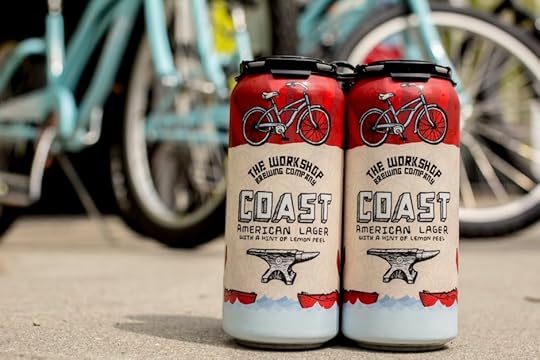
Photo: Kayak, Bike & Brew
People already know Traverse City is a great craft beer destination. Draft Magazine named it one of three emerging beer towns, and Travel Channel recognized it as one of the top seven beer destinations in the country. Then a local entrepreneur happened to notice that most of the favorite microbreweries were located on a bike and water trail, and so Kayak, Bike, and Brew was born.
Stop into the Warehouse District base to catch any of the multiple daily trips that now launch with a cycling leg. You’ll pedal toward a microbrewery also known for its wood-fired pizza and live music, then paddle on Boardman Lake and down the Boardman River.
5. Bike between the vines…
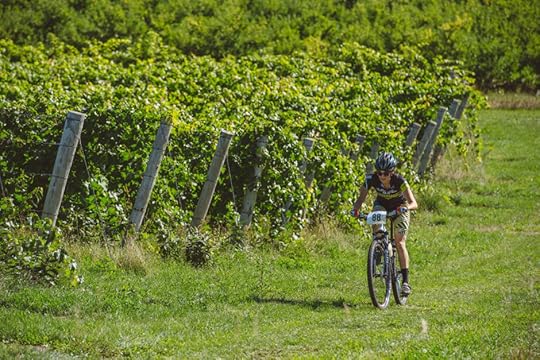
Photo: Tom Balazs
Or skip the kayaking. Grand Traverse Bike Tours offers bike-to-brewery tours with a few miles of cycling between stops. There are winery options, too, which let you choose from a mountain bike trek between grapevines and a self-guided winery tour down the Leelanau Trail. Wineries like recreation-friendly 45 North even keep bike pumps and tools on hand.
6. …and along the peninsulas of vineyards, bays, and blossoms.
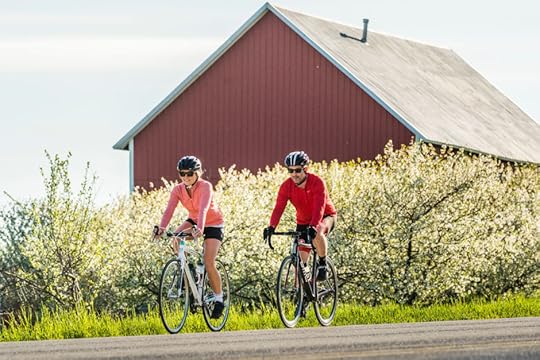
Photo: Traverse City Tourism
The Cherry Capital Cycling Club’s most popular ride is a weekly trip out on the Old Mission Peninsula. It runs some 15 or so miles from town to the peninsula’s tip and another 15 back over gradual hills that lead to views of bays in both directions. Try to be here in May — that’s when you’ll be riding alongside cherry blossoms.
It’s a relatively mellow ride, what with its wide shoulders and generally cautious drivers. At the peninsula’s end, you can explore a lighthouse that sits on the 45th Parallel, where a marker designates the spot halfway between the North Pole and the Equator.
7. Flow with the hills.
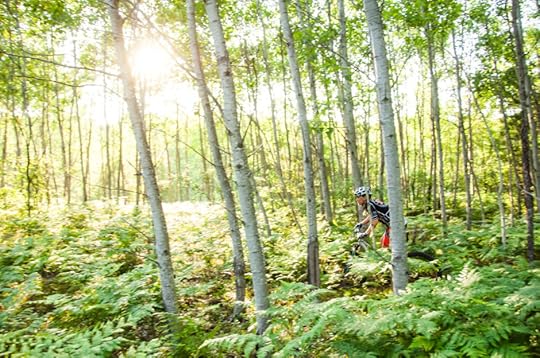
Photo: Traverse City Tourism
Nature and well-designed thrills combine in nearby Bellaire along the Glacial Hills Pathway, 30 miles of trails in a preserve of forest, wildflowers, and rare birds — and switchbacks — that’s managed by the regional land conservancy. The outside loops (with names like Never, Never Land and Holy Grain) are especially revered, but most come for the flow and the fact that the power of the brief downhills carries you into the following ups.
The VASA Pathway is another mountain biking favorite, with options for 3K, 5K, 10K, and 25K loops. It’s close to town but so forested it feels far from civilization.
Take note, though — the region’s beauty can be almost too distracting. One local cyclist, Steve Kershner, who has seen hawks, owl, deer, and even those tasty morel mushrooms while on popular pathways like Glacial Hills, found out for himself the perils of the beauty here. As he put it, he “learned the hard way that looking off the trail too much is not good!”
8. And remember: May Bike Month is the best time to celebrate it all.
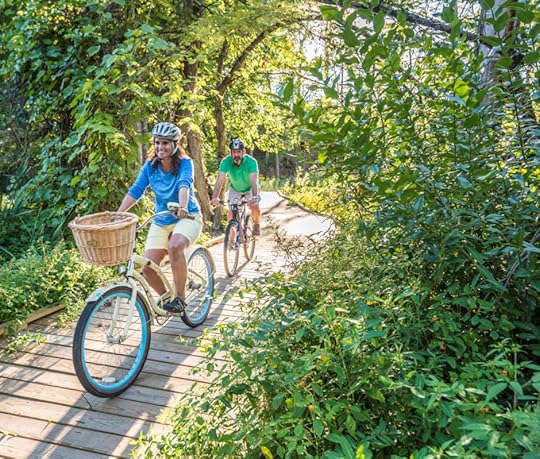
Photo: Traverse City Tourism
Visit in May and you’ll catch local programs that offer free helmets to early riders and even loaner bikes that work like a book lending library. Check one out until you outgrow it, then check it back in for another.
There’s a group ride to a popular annual barbecue at the college, a “take a mom mountain biking” day, a kickoff of neighborhood bike trains that replace drives to school, and even a farmers market valet program that runs all year. Take your bike to the market, hand it over to the valet, and shop as long as you want for produce, flowers, and treats. Just don’t forget to bring your basket.
The post 8 awesome ways to experience Traverse City, MI by bicycle appeared first on Matador Network.

Matador Network's Blog

- Matador Network's profile
- 6 followers


,_Santago.jpg)

