
Matador Network's Blog, page 1361
April 18, 2018
Affordable business class airlines
Flying business class is a luxury most of us fantasize about from the time we book our tickets to the time we debark, hurting and exhausted, from the economy cabin. Of course, perks like lounge access and legroom are tempting, but the cost of an upgrade is usually too hard for the average traveler to justify. Luckily, it doesn’t always have to be. Not only can you look out for Z-class fares, business tickets sold at discounted rates, but a number of airlines also consistently offer great prices on premium seats. If you want to take your next trip in style, put these carriers at the top of your to-fly list.
1. Turkish Airlines
Turkish Airlines flies to 120 countries, more than any other airline, and services a total of 302 destinations across Europe, Asia, Africa, and the Americas. It makes getting to dream destinations like Budapest or Bangkok a whole lot easier, and getting there in business class a lot more likely. Travelers have booked round-trip itineraries for as little as $1500, which is a bargain considering premium seats on international flights can easily cost three times that much. No matter where you’re headed next, Turkish Airlines probably flies there, so keep your eye out for killer deals.
2. Hawaiian Airlines
You can get from Los Angeles to Kauai for under $500, or NYC to Tokyo for around $1500 in the Extra Comfort cabin (a hybrid between economy and business) if you play your cards right. Naturally, you’ll get the most bang for your buck in the off-season, but Hawaiian Airlines is also competitive during summer and over the holidays when everyone jets off to get their tan on. Consider the carrier if you plan on traveling to Hawaii, Asia, or the South Pacific in the near future.
3. Jetstar Airways
There’s something contradictory about flying business class on a budget airline, but it’s probably your best bet if affordable prices are your priority. Jetstar Airways is a low-cost carrier and subsidiary of Qantas Airlines. It flies between North America, Asia, and Oceania, offering premium seating on select international routes. There’s no denying you’ll get the budget-business treatment, meaning no fully lie-flat seats, but you’ll still get way more sleep than you would in an economy cabin.
4. British Airways
Treating yourself to business class on British Airways is a great way to channel your favorite Downton Abbey aristocrat without breaking the bank. The airline is a solid choice for transatlantic flights and makes getting from US hubs to European cities in the Club World (business class) cabin for under $2000 surprisingly doable. AARP members also have access to up to $200 discounts, which can go as high as $400 during special promotions.
5. Icelandair
It’s almost worth flying business class to Reykjavik for the breakfast spread in Keflavik International Airport’s Saga Class Lounge alone. Little touches like hot towels and chilled Champagne make all the difference when you upgrade on Icelandair, especially if you’re traveling internationally. The carrier flies to most major European cities, and has done a lot to market itself to North American travelers in recent years, so you might just come across an offer you can’t refuse.
6. JetBlue
JetBlue is like the Wild Turkey bourbon of airlines: it’s cheaper than so-called top-shelf alternatives without sacrificing its quality, promising something both affordable and smooth. Travelers with high standards and low budgets can opt to fly premium (regarded as business class rather than economy plus) with JetBlue Mint, which has had coast-to-coast deals for under $500 in the past. You can also keep an eye on seasonal flights to the Caribbean from Boston or NYC.
7. Aer Lingus
You don’t need the luck of the Irish to get good business-class deals on Aer Lingus. It goes without saying that the airline is an obvious choice for flights to Ireland, but it’s also great for flights between the US or Canada and continental Europe. Business-class seats aren’t always cheap, but Aer Lingus regularly beats out its competitors on transatlantic routes, making it a great airline to get you across the pond.
8. Norwegian Air
Norwegian Air advertises itself as the best low-cost airline in the world for long-haul flights. That’s a big claim, but the carrier has a long list of awards to back it up. Norwegian Air is perfect for budget travelers looking for a little more comfort within the three-figure price range. For a bit more than you’d pay for economy, albeit still less than you would on other airlines, you can enjoy perks like armrests you don’t have to battle your neighbor for and legroom that actually lives up to its name.
9. Avianca
Avianca is huge in Latin America. There’s no escaping it when searching for flights to Bogotá or Buenos Aires, which is a good thing considering it generally has great offers on both economy and business seats. I was recently upgraded on an Avianca flight from Montevideo to Lima, and the cushy cabin and premium meal plan nearly spoiled me for my connecting flights. While you may not have the same luck that I did, the service, in general, is great and you may snag a similar deal ahead of time. 

More like this: How to get upgraded to first class like a boss
The post The 9 most affordable airlines to fly in business class appeared first on Matador Network.


Rigs to Reef: Transecting Borneo
People often start off in conservation with great intentions. They become activists. They advocate for causes. But they can quickly get bogged down and discouraged when reality hits: conservation isn’t black and white. Successful conservationists learn to view the “other side” (typically resource extraction industries) not as the enemy per se but as potential partners in solving problems long term. And to do this, everyone involved must learn to look at things from a new perspective.
Nowhere is this hypothetical more apt than with offshore oil rigs. Most people see offshore oil platforms as huge industrial blots on the ocean. And yet marine conservation scientists Amber Jackson and Emily Callahan are helping uncover a remarkable story: the thriving ecosystems formed on these structures beneath the surface.
The two co-founded Blue Latitudes, a company that landed them coveted spots on Forbes 30 Under 30 list. Their mission is to transform old offshore oil platforms into artificial reefs, avoiding the huge carbon footprint that occurs when the structures are removed, and encouraging the development of thriving marine ecosystems. These artificial reefs not only preserve new habitat but can also create public awareness around ocean conservation.
To accomplish this, Blue Latitudes conducts scientific research, including ecological value assessments through diving as well as Remotely Operated Vehicle (ROV) surveys (essentially underwater drones). They also advocate for environmental support through media campaigns and work with regulators and industry stakeholders.
Matador Originals’ new documentary Rigs to Reef: Transecting Borneo follows Amber and Emily on an epic journey across Malaysia and back to California where they attempt to gather data via “transects,” essentially monitoring all marine life that’s found in a given area. The goal is to demonstrate the ecological value of artificial reefs.
They first visit Seaventures, the world’s only decommissioned oil rig transformed into a dive resort. From there, they dive off the nearby island of Mabul, which allows them to compare data of the artificial reef with that of a human-impacted natural reef.
From here they explore Sipadan Island, one of the world’s most pristine marine ecosystems. Finally, they return to California to compare data, which leads to some surprising results.
As with all conversation stories, Rigs to Reef starts with people’s deep connections to place and from there, their desire to protect it. Amber Jackson grew up in Southern California. As a kid, she spent her days swimming through kelp forests and jumping in blowholes. On the opposite coast, Emily Callahan grew up on tiny New Castle Island off of New Hampshire. Her afternoons were filled with trips to the beach to go tide-pooling where she’d bring marine collections back to the house in sea-water filled buckets.
Ultimately, both women were able to channel their love for the sea into academic pursuits, both getting M.A.S. degrees in Marine Biodiversity and Conservation from Scripps Institution of Oceanography. Collectively, they’ve contributed to ocean floor mapping for Google Earth, helped in cleanup efforts on the BP 252 Oil Spill in the Gulf of Mexico, and represent PADI Dive Ambassadors.
More like this: Matador Originals Presents: The Body Painter
The post Matador Originals Presents, Rigs to Reef: Transecting Borneo appeared first on Matador Network.

Perfect family trip to Arlington, TX
Taking your kids to a new place can be a little stressful — will there be enough to keep them entertained? For them to see and taste and do? When it comes to Arlington, Texas, you can bet on it. Arlington sits between Dallas and Fort Worth, and you’ll find a slower vibe here than in those neighboring cities. The laid-back feel means that while your kids explore, you can take it easy and just relax.
That is, if relaxing means catching a professional sports game, chasing down your kids in laser tag, or watching them roller skate for the first time. Here’s how to spend the perfect weekend with the family in Arlington.
1. Two amusement parks, one question: water rides or roller coasters?

Photo: Six Flags Entertainment Corporation
There are two amusement parks in Arlington: Six Flags Over Texas and Six Flags Hurricane Harbor. The former is where you’ll find roller coasters, rides, and carnival games for everyone. There’s also Bugs Bunny Boomtown, a separate area designed specifically for the little ones who don’t quite make the height requirement for the New Texas Giant roller coaster or Batman: The Ride.
Save Hurricane Harbor for a sunny day (which, admittedly, is pretty much every day in Arlington). This is a 50-acre water park with slides of all sizes, a lazy river, and shallow pools for the little ones. Suntan Lagoon is where everyone can just chill, but if your kids still need to work off some energy, Hook’s Lagoon Treehouse is a wet kid-zone where they can do some climbing.
2. Introduce your kids to the greatest arcade games of all time.
Free Play Arlington is an arcade with 90+ games, and it’s the perfect place to illustrate for your children how great (read: better) the ’80s were. Parents will remember Pac-Man, Q-bert, Frogger, Tetris, and Mario Bros, and now your kids will never forget them, either.
For $10/person, you can play as many games as you like. You’ll have to supervise your kids, but you can do that with one of Free Play’s 100 different beers in hand. It’s also a great place to have lunch or a cheap dinner (think mini street tacos and pizza). Just note that after 9pm, Free Play is adults-only.
3. Explore a park together.

Photo: Arlington Parks & Recreation
You can’t throw a frisbee without hitting a kid-friendly park in Arlington. Check out these options:
Take the family fishing or kayaking at Bowman Springs Park, which has an 11-mile paddling trail.
Bad Königshofen Family Aquatic Center and Randol Mill Family Aquatic Center have pools, slides, and splash areas for families.
River Legacy Park covers 1,300 acres and has eight miles of hiking and biking trails, in addition to a science center where your family can check out aquariums and terrariums filled with animals. It also hosts events like After Dark in the Park, a nighttime festival.
And then, for the not-so-green kind of park: Arlington has two indoor trampoline parks. Urban Air Adventure Park is the newer of the pair, complete with obstacle courses, climbing walls, dodgeball, and a slam-dunk zone. Flight Deck Trampoline Park has 90 connected trampolines — yes, you read that right — and a safe zone for younger kids.
4. Get the family on skates at the largest roller rink in Texas.
Behold the beauty of Arlington Skatium, where every Wednesday is Cheap Skate Night from 6:30 to 8:30, with rentals ranging from $1 to $3. Here, old-school lives on. (And if no one in your bloodline has ever been on a pair of roller skates, there are $6 classes on Saturday mornings.)
If you’re better on the ice, take a trip out to the NHL-size rink at ICE at The Parks. There’s public skating every day for $10 and under, and skate rentals are just $3. You might even be able to see a game of “broomball” — check the schedule.
5. Catch a game with one of Arlington’s three professional sports teams.

Photo: A Vandalay
Arlington is home to the Dallas Cowboys, Texas Rangers, and the WNBA Dallas Wings, and between the three of them there will almost always be a game on, regardless of when you visit. If you can only see one, make it the Cowboys — there’s a free Albertsons Kids Zone before every game, where kids can throw around inflatable toys, play games, and have their faces painted in true superfan fashion.
Families on a budget should keep an eye on the Texas Rangers and Dallas Wings, as ticket prices can be discounted for some games.
6. Beat your kids at go-karts.
K1 Speed is an indoor go-kart racing center just across from Six Flags Hurricane Harbor. Banish your visions of the old-school two-stroke karts spewing fumes all over the place — this track is professionally designed, with lap times measured to the hundredth of a second, and the karts are all-electric, European-style. There’s also an arcade in the lobby that’s filled with motorsports history and memorabilia, including a life-size race car.
For other indoor fun, check out Alley Cats Entertainment and its laser tag, billiards, batting cages, and putt-putt golf.
7. Travel the world over dinner…

Photo: Arlington Convention & Visitors Bureau
For easy and delicious comfort food, bring your kids to Babe’s Chicken Dinner House. It’s a family-run restaurant with classic country meals like chicken and biscuits and homemade pie. Relax and have a beer while your kids dance with waitstaff to the Hokey Pokey.
When you’re ready for something completely new, take your family to Taste of Europe. Not only can you try some classic Eastern European meals — beef stroganoff, Hungarian goulash, Chicken Kiev, and pirogues — but the entire place will be an experience for your kids. Several hours can pass here easily, especially if you browse through Taste of Europe’s gift shop after lunch. It’s jam-packed with handmade toys and crafts from Russia and specialty groceries from all over Europe, plus a deli to take out from.
Next, check out the Asian Market at Ben Thanh Plaza. There are more than 50 different businesses here, including a grocery store, a deli, and a food court where your family can try Thai and Lao, Filipino, Vietnamese, and Chinese meals that are all authentically made with fresh and often local ingredients.
8. …and then nurture your sweet tooth (teeth?).
Your kids are on vacation too, so let them eat (funnel) cake. And fried Oreos. And plenty of other state-fair-reminiscent treats at Funnel Cakes & Gelato, a burger joint on North Davis Drive. Why should fair-fare be a once-a-year occasion?
For ice cream with a smorgasbord of different toppings, fruit, and candy, check out Iceland Ice Cream. Another solid option for a hot day is the Snowflake Factory, where you’ll find more flavors of thinly shaved ice than you ever thought possible.
9. Watch a blacksmith presentation in a pioneer setting.
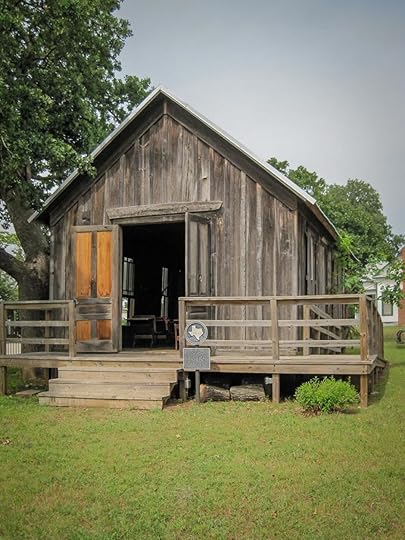
Photo: QuesterMark
There’s always time to absorb a little history. Take the fam to Knapp Heritage Park (open weekends from 1-4pm), a cultural and heritage facility with three of Arlington’s oldest buildings: two cabins that date back to the 1800s, and a schoolhouse that was built slightly after. Tours are available upon request, and on the last Sunday of the month, there’s a special blacksmith presentation your kids will love.
Though they’ll probably love everything else in Arlington, too.
The post How to have the perfect family weekend in Arlington, TX appeared first on Matador Network.

April 17, 2018
Endangered animals to see and where
In the late 1980’s, Douglas Adams, author of The Hitchhiker’s Guide to the Galaxy, began traveling around the world with zoologist Mark Carwardine in order to see animals that were likely to go extinct in the near future. The resulting radio program and book, titled Last Chance to See, was a funny, beautiful, and sad look at a natural world that has been disappearing thanks to mankind’s interventions.
Adams died in 2001, but Carwardine has continued to work as a conservationist, making a follow-up series with another famous British funnyman, Stephen Fry. And in the years since the first publication of the book, a strange trend has emerged — Last Chance Tourism.
as its biggest travel trend of the year for the past two years, as more and more people travel to places before they are fundamentally altered by man-made climate change. People want to see the Antarctic before the ice melts, see Glacier National Park before the ice floes turn to rivers, and see the Great Barrier Reef before it dies completely. And given that biologists now believe we are in the middle of a mass extinction event, more and more people are trying to catch glimpses of endangered animals in the wild before they’re gone forever. Just earlier this year, the last male Northern White Rhino died in Kenya, effectively ending that species.
So what’s left to see? And where can you see it? We’ve put together a list of some of the world’s great animals that still exist in the wild, and where you can catch a glimpse. It’s worth noting though, that especially when it comes to Last Chance trips, you should be engaging in sustainable tourism, and doing what you can to fight the destruction of these animals — hopefully saving them all together.
1. Bengal tiger — Sundarbans Tiger Reserve

Photo: Dangdumrong/Shutterstock
There are few animals more beautiful (and terrifying) than the Bengal tiger. It is the national animal of both India and Bangladesh, and this is where you’re most likely to find one of the 2,500 remaining in the wild. The Sundarbans is a massive forest around the Ganges Delta, and stretches from India to Bangladesh — this is the tiger’s natural habitat. The Indian side of the forest is home to the Sundarbans Tiger Reserve, which has 400 tigers living in it. You’re most likely to see them from November to February.
2. Orangutan — Sabah, Malaysia

Photo: Sergey Uryadnikov/Shutterstock
Orangutans are some of the most intelligent animals in the world. These great primates can be found exclusively on the islands of Sumatra and Borneo. Borneo is your best bet, though, and the Malaysian state of Sabah is home to a lot of really solid ecotourism. Give the Tabin Wildlife Reserve a try — you can see leopards and elephants here, too.
3. African elephant — Kruger National Park, South Africa

Photo: EcoPrint/Shutterstock
Elephants are known for being social, smart, beautiful, and dangerous. They’re among the least endangered animals on this list (the African Forest Elephant is most at risk, as they have low birth rates and thus take longer to recover from poaching), and you’re basically guaranteed to see them if you go to the right place. While there are hundreds of places to see an elephant in Africa, Kruger National Park in South Africa is one of the best — here, you can see dozens of other safari animals as well, including lions, cheetahs, leopards, zebras, rhinos, and hyenas.
4. Grizzly bear — Denali National Park, Alaska

Photo: NancyS/Shutterstock
Grizzly bears are not at immediate risk of being destroyed, but they are a good illustrator of how a species can be decimated; grizzlies used to range as far south as Mexico, and even into the American Midwest. Now they are mostly confined to Canada and Alaska (with a few in Yellowstone). The Californian grizzly is now extinct. But you can still see grizzlies in the wild — one of our favorite spots is in Denali National Park.
5. Amur leopard — Land of the Leopard National Park, Russia

Photo: Warren Metcalf/Shutterstock
You’re probably not going to see the Amur leopard in the wild — it is the rarest big cat on earth, with an estimated 60 remaining alive. This leopard has been driven to the brink by poaching, deforestation, and development. Now, most of the remaining species live in Russia, China, and North Korea. Most are believed to be in Russia, near Vladivostok. The Land of the Leopard National Park is where you’re most likely to see them — but you’ll be lucky if you do.
6. Mountain gorilla — Virunga National Park, Democratic Republic of Congo
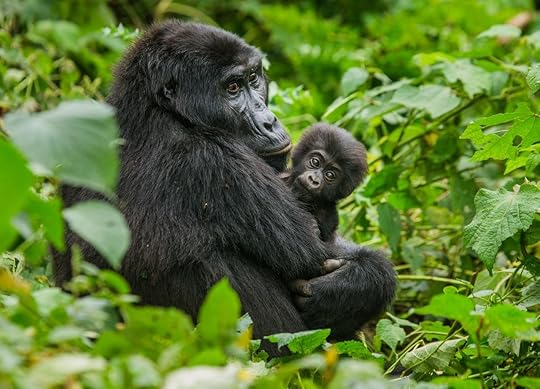
Photo: Gudkov Andrey/Shutterstock
None of the great apes are having a particularly easy time in the anthropocene, but the mountain gorillas have been particularly unlucky in that they are not only poached, but they are congregated in one of the most politically unstable regions in the world. They are situated in Uganda, Rwanda, and the Democratic Republic of Congo. You can still see them by visiting the Virunga National Park in the DRC.
7. Tasmanian devil — Tasmania, Australia

Photo: Sander Groffen/Shutterstock
The Tasmanian devil is a rare example of an animal that is not endangered because of humans. The animal (which looks nothing like the cartoon, but which can be loud, screechy, and ferocious) is endangered because of a transmissible cancer that kills them quickly and within months of contraction. Their numbers have dropped dramatically in recent years, but they can still be seen across the island of Tasmania in the Australian continent.
8. Giant panda — Chengdu, China

Photo: Niti Tangpaitoon/Shutterstock
Giant pandas are an endangered success story — their numbers have been rising in the wild in recent years, thanks in large part to global conservation efforts. They mostly reside in the Chinese state of Sichuan, and you can take safaris to see them in the wild. But maybe the best place to see them is the Giant Panda Breeding Research Base in Sichuan’s capital city of Chengdu. There they have dozens of pandas, including young cubs.
9. Polar bear — Svalbard, Norway

Photo: Ondrej Prosicky/Shutterstock
The most iconic endangered animal in the world is undoubtedly the polar bear. Polar bears are enormous, and have been traditionally feared by humans, but their numbers have been decimated by shrinking ice caps. There have been some successes in bringing polar bear populations back, though, as hunting quotas have been instituted. We suggest going to the Norwegian territory of Svalbard, where you can also visit the Global Seed Vault.
10. Blue whale — California

Photo: Chase Dekker/Shutterstock
The blue whale is one of the most spectacular animals on earth — it can stretch to up to 100 feet long, and can weigh over 200 tons — or 400,000 pounds. This makes it the largest animal to have ever existed. They span all of the planet’s oceans, but there are only an estimated 12,000 or so of the whales remaining. They were largely killed off due to whaling, but the killing of blue whales is now illegal, and they may be slowly coming back. You are fairly unlikely to see one, but take a whale tour and you may have a shot. California is reputedly the place you are most likely to catch them while they migrate.
More like this: Africa's most endangered species
The post 10 endangered animals to see (and save) before they’re gone appeared first on Matador Network.

Spend the night escaping killer
If you’ve watched every season of Midsomer Murders and deeply enjoyed The Shining, The Hollow Hotel in London is the perfect vacation spot for you.
The six-floor hotel filled with traps, labyrinths, and hidden passageways will be the set for theater group Differencengine’s immersive, interactive, psychological horror show in which you can participate as a guest whose life is on the line.
During the night, you’ll have to escape a serial killer inspired by real-life H.H. Holmes, a 19th-century murderer who is said to have killed 200 people.
It goes without saying that you won’t actually be chased around the corridors of this sinister hotel by a real serial killer, but that does not mean that you won’t get scared by the whole experience. Differencengine’s synopsis of the show is enough to give anyone the creeps:
Whoever built The Hollow Hotel built a literal death trap; designed just for you.”
You’ll need to keep your cool to “survive” and find out who the murderer is, but note that even if you are fall victim to the lunatic roaming the rooms and corridors, you’ll be dealing with new challenges and still be able to participate.
Differencengine has put together highly successful interactive immersive play in the past, including Heist, a show that led the audience to break into a building and attempt to steal a painting without getting caught. If Heist’s success is any indication, The Hollow Hotel should be a triumph of creepiness.
The show begins today. You can buy tickets here.
H/T: Metro
More like this: 9 of the coolest hotels around the world
The post Spend the night trying to escape a serial killer at London’s Hollow Hotel appeared first on Matador Network.

British tourists scam $74 million
British tourists have given new meaning to the phrase, “pulling a fast one.” Fraudulent claims of tourists contracting food poisoning while on all-inclusive holidays in Spain cost tour operators and hotels more than $74 million in 2016 — and the UK is finally cracking down on the scammers.
The scam happened in classic fashion. After returning from their holiday, British citizens would open a complaint case with legal representation. Their proof? The receipt showing purchase of anti-diarrhea medicine. Then their hotel or tour operator would receive notice of a pending case in small claims court. Conveniently, the offenders were each unable to see a doctor while in Spain, presumably due to being bedridden with food-borne illness. In order to avoid hefty court fines and additional costs, the tour operators would generally elect to settle out of court — making a bit of racketeering a lot easier for those receiving the money.
Of course, food poisoning does happen now and then, especially when eating foreign cuisines that one’s digestive system isn’t used to. Over the past five years, however, the number of Brits claiming to have gotten sick while under the guidance of Spanish hotels and tour operators increased by an astonishing 700 percent.
This rapid increase in these claims caught the attention of the British government in addition to the service providers themselves. Officials are now working to close the loophole which allowed these claims to be filed in the first place.
“The rules will fix the legal costs that can be claimed in package holiday sickness claims, closing a loophole which the travel industry believes has helped fuel a rising number of claims,” said the UK Ministry of Justice in a statement. “This claims epidemic, the industry fears, is raising the prospect of higher travel costs for British tourists.”
It wasn’t only the tourists’ bright idea. Professional scammers known as “claim farmers” would contact British citizens booking or planning to book a holiday to Spain and guide them through the process of filing the claim. As a result, the British Civil Procedure Rule Committee plans to enact rules making it easier to fight fraudulent claims like these in court.
H/T The Guardian
More like this: 22 tourist complaints that will leave you speechless
The post British tourists have scammed Spanish hotels out of $74 million claiming food poisoning appeared first on Matador Network.

DIY gap year for cheaper
When you take a gap year, you are not only giving yourself an opportunity to see the world, you are also giving yourself a gift of a lifetime. Through planning, learning, and experimenting along the way, you’ll develop and harness life skills hard to learn otherwise. The experience opens the mind to different cultural perspectives where you’ll learn to thrive with significant autonomy.
The initial idea of a gap year, where students take a year of academic sabbatical to travel, has evolved. Gap years are no longer limited to students and have grown to include those who have found a way to work remotely. The line between work and travel has since been blurred, and has ultimately spawned the creation of combining the two into a whole different work and travel experience, appealing to freelancers, entrepreneurs, and digital nomads alike. However, many companies nowadays are trying to get you to pay them to handle the back-end work, such as travel and lodging logistics, for you. But they are expensive, and outsourcing that work ultimately robs you of part of the travel experience. Planning this gap year on your own will provide you the flexibility of choosing where you want to go. Take off as fast as you want, or stay for much longer, visas permitting.
Whether you have been itching for your chance to create your own gap year before you buckle down and shackle yourself to a desk job, or have finally found a way to work remotely as a digital nomad, here are the things you need to consider in order to create a successful gap year.
Figure out your intent
This might be a never-ending question, but having a basic idea of the big WHY will help you construct a plan to create your own gap year. Sometimes it’s to explore the rich cultures of a foreign country and try unfamiliar things. Other times the goal is to explore possible careers, gain international experience, and build connections with the locals. Maybe it’s a chance to fully embrace the “work hard, play hard” motto and find a community with that same commitment, or to challenge your comfort zone and find yourself. Often it’s simply a desire to escape from the realities of life back home, even for a while.
Whatever your reason, once you have an idea of your WHY, you can move on to deciding how often you want to be on the move. Some people are more comfortable with the idea of staying in a country for at least a month, getting to truly understand the ins-and-outs of one’s surroundings before having to resettle in another city. Others prefer more spontaneity and being on the move, always seeing new things and fresh faces. The beauty of not going through a third-party service is that you are in control of everything. You decide when and where you want to be every day.
Get cost-effective plane tickets
Researching and booking plane tickets when you create your own gap year does not have to be painful. Once you have your intent figured out, you will at least have an idea on whether you want to buy a roundtrip ticket, a one-way ticket, or a round-the-world ticket. Using tools like the Matrix Airfare Search will give you a rough guide of what your options are in deciding what cities are best for you to travel to. This service allows you to explore the lowest fares around different date ranges and airports, so you can better organize the viability of the cities you are considering. Research and persistence are needed to obtain the best possible deal, which can take weeks, but you will soon see patterns in your research, like flying out midweek being more cost-effective than on a Friday.
When I first started planning my round-the-world trip, I printed a world map and highlighted all the cities I wanted to see in a set amount of time. Flying with the jet stream helps ensure less time in the air — so travel eastbound instead of westbound whenever possible. After determining the cities that you wanted to visit, make a separate list of things that you absolutely wanted to accomplish in each city and how long to stay.
The next step is to research the flight fares for each possible route and city to best determine what routes to take, and what is most plausible, based on the efficiency of cost and time. It is essential to book at least a couple months ahead to score the best flight fare, so once you have a rough outline drawn out, start filling in the blanks as you start figuring out what your best options are.
Find suitable accommodations
Once you have figured out a suitable travel route, booking housing for at least the first couple cities you’ll visit will give you a huge peace of mind. Depending on your personality, how you want to live, and how long you plan to stay in each city, there are various options in choosing the best place to stay on your travels. If you plan on staying long term, options like guesthouses, co-living arrangements, and sublets can be considered. For short-term, depending on your budget, CouchSurfing, hostels, motels, guesthouses and hotels can be ideal. In many countries, Airbnbs offer an exceptional value that beats a hotel any day, because of that interaction or point of contact you will have with a local. They also tend to have strong WiFi along with peace and quiet.
How to meet people on the road
Meeting locals and like-minded adventurers on the road is all a part of how you optimize your gap year experience. It is important to have a sense of community and support to keep that drive in you while you are on the road. As a solo traveler, you must be completely comfortable with being alone and doing your own thing, but making a point to reach out to locals for a simple culture exchange, or to get a local insight on their own city, is a great way to better your experience. There is an incredible value in sharing a conversation or even a meal with a local, which can make a trip more meaningful, and sometimes result in lifelong friends all across the globe. Their experiences and thoughts on everything can vary so much that it is often worth the time spent to connect with them.
CouchSurfing is a great resource for this; the people in the CouchSurfing community are so willing to help. Their knowledge of their own city or country is invaluable and often times, not information you can easily obtain. Once you have formed a direct point of contact with a local, you will have access to their resources and knowledge of the city. They might be able to point you to the cheapest laundromat or the best cafe in town, or even the recommended bus route to the next city over.
If you don’t want to use CouchSurfing, you can still use the internet as a tool for connecting with travelers near you, or on the same path as you. Try using MeetUp, Reddit and Matador’s own travel app Travelstoke. Whether you decide to meet someone at a cafe or go to a group meet-up, there is no shortage of people to socialize with, even if you are taking a gap year alone. There will always be something going on in the area around you.
Find the ideal workspace
If you plan to work during your gap year, finding a strong wifi signal everywhere you go is critical. Depending on how you like to work, your Airbnb, ideally equipped with solid internet access, might already be a great place to work. Look for places that have a desk, and any other necessities that you prefer to surround yourself with as you work.
If you are the type of person that likes to work outside the comfort of your own bed, search for a local library or internet cafe to work out of. If you’re looking for a like-minded community, a Google search will also bring you to coworking spaces nearby. Some places do require you to reserve a place in advance since their spaces fill up quickly. You can choose to be more involved with the community with shared tables, or work in a quiet place to focus.
With co-working spaces, you have the opportunity to surround yourself with people as goal-oriented as you, and develop relationships that would otherwise have never formed. These people may very well become an integral part of your social life in that particular city, since most of the people there have more autonomy with their work schedule. Being active in a coworking community cultivates a form of structure and discipline that becomes vital in sustaining motivation. Your level of socialization is entirely up to you, but having the option to interact and network with other travelers is priceless.
Remember that safety is first
When you create your own gap year, it is crucial to be aware of the surroundings of where you will be traveling to. Consider any political unrest or recent natural disasters in your destinations, and remember that staying aware is vital to your safety. Joining the Smart Traveler Enrollment Program ensures you will receive travel advisories relevant to your destination so that you can better plan your stay in each city. Letting family members or people know where you are, and checking in when possible, are also good practices. Keeping people in the know will also help you feel more connected to the people back home.
Once you get to a new city, set up numbers to call in case of an emergency, so you aren’t scrambling to find them in the event one happens. If the local language is different than your own, make an effort to learn a few phrases that will be useful to get you out of a bind. Also, be sure to identify where your local embassy is, along with local pharmacies, clinics, and hospitals. Getting any travel shots from your local clinic prior to departure is also highly recommended. Also be sure you check visa requirements for the countries you plan to visit and make any necessary arrangements in advance.
More like this: 5 hacks for digital nomads to handle the stress of remote work
The post Don’t pay a company to set up a gap year for you. Do it yourself for way cheaper. appeared first on Matador Network.

Kickass meals at US airports
The only thing more tedious than slogging through the airport is doing so on an empty stomach. Long security lines and longer layovers are enough to put anyone in a funk, which will only get worse when hunger pangs strike. One of the best ways to kill time and keep your energy high on travel days is to stop for a nice meal before your flight, but depending on your departure and destination cities, good food can be hard to come by in transit. Here is a list of US airports with dining options so delicious you’ll be tempted to plan your flight routes around them.
1. Hartsfield-Jackson Atlanta International Airport (ATL)

Photo: Varasano’s Pizzeria
ATL sees more traffic than any other airport in the world. Thankfully, it’s more than prepared for its high volume of hungry travelers. One Flew South in Concourse E is often said to be the best airport restaurant in the US, earning the title by making everything from spicy tuna rolls to pork belly sliders, and nailing it all. Another standout is Varasano’s Pizzeria, which pairs thin-crust pizza with an extensive wine list and sets the mood with live piano. At the rate ATL is going, you’ll have an easier time finding a nice place to eat than locating your gate.
2. Portland International Airport (PDX)

Photo: Blue Star Donuts
PDX is a perfect microcosm of the Portland dining scene. Some of the best meals come from food carts, which are just airport-sized versions of trendy food trucks. You can get fusion fare at Korean Twist or Mexican food at Poblano Pepper, all while supporting local businesses. PDX also accommodates travelers on either end of the dietary spectrum, providing gluten-free and vegan options at Flying Elephants and tasty sweet treats at Blue Star Donuts. Like any self-respecting Portland venue, the airport also serves locally-brewed craft beer at Henry’s Tavern, so you can take the edge off before takeoff. When you’re done eating, don’t forget to snap a picture of that famous carpet.
3. Los Angeles International Airport (LAX)

Photo: Shake Shack
LAX has Shake Shack. If for some inexplicable reason that isn’t convincing enough, you might be more impressed with the caviar and bubbly at Petrossian or healthy quick bites at Lemonade. But really, go straight to Shake Shack in Terminal 3 and thank me later.
4. Austin-Bergstrom International Airport (AUS)

Photo: The Salt Lick
The airport smells deliciously smoky thanks to BBQ joints like The Salt Lick. The restaurant has been a Hill Country staple for more than 50 years, and its airport outposts — yes, plural — are equally adored. You can get all the fixings near Gate 10 of the Barbara Jordan Terminal or hit up the taco bar near Gate 12, which serves breakfast tacos that will make you forget just how early you woke up to catch your flight. There’s also Annie’s Cafe & Bar if you’re looking for something lighter, like yogurt topped with homemade granola, fresh berries, and locally-sourced honey.
5. Denver International Airport (DIA)

Photo: The Root Down
The proof is in the pudding at DIA that airport food doesn’t have to disappoint. Rather, the proof is in the cowboy-approved filets at Elway’s and vegan share plates at Root Down. Concourse C is the culinary heavy hitter, but you’ll find decent grub in every DIA terminal. And you can wash down any meal with a Haagen-Dazs shake from Smashburger, guaranteeing a food coma that will make your flight go by really, really quickly.
6. San Francisco International Airport (SFO)

Photo: Cat Cora
Raw oysters are an undeniably risky airport order. Then again, few airports service cities as crazy about food as San Francisco. Fresh shellfish from Iron Chef Cat Cora’s restaurant in Terminal 2 is just the beginning at SFO. You can also find better Mexican food than you would in several states and dim sum as good as you’d get in Chinatown. You can also put together a gourmet picnic complete with fine wine compliments of Napa Farms Market, leaving enough time before takeoff to swing by one of SFO’s yoga rooms in true Bay Area fashion.
7. Philadelphia International Airport (PHL)

Photo: La Colombe Coffee Roasters
PHL got a culinary makeover in recent years. It now has more than just fast food, housing a few sleek eateries. Just be warned: most are more expensive than they’re worth. Where PHL really shines is its affordable, on-the-go options. You can get a genuinely good slice at Aldo Lamberti Trattoria or avocado toast and homegrown coffee at La Colombe without needing to dip into your souvenir fund.
8. Dallas/Fort Worth International Airport (DFW)

Photo: Cousin’s Bar-B-Q
BBQ, Tex-Mex, and USDA Prime beef might explain what you’re doing in Texas in the first place. They’re also the reason DFW is one of the tastiest airports in the US. Local chains like Cousins Bar-B-Q and Pappasito’s Cantina have outposts at DFW, whose classier establishments include Pappadeaux Seafood Kitchen and Whitetail Bistro. But the most fun eatery has to be Cereality, which carries 14 of the sugary cereal brands you went crazy for as a kid and 23 toppings, most of which your mom would never have allowed for breakfast.
9. Sky Harbor International Airport (PHX)

Photo: Blanco Tacos + Tequila
Phoenix doesn’t always make the list of top US foodie cities, but PHX definitely has a few restaurants worth trying. Chelsea’s Kitchen is more delicious and affordable than any airport restaurant deserves to be and even manages a bit of ambiance with its brick walls and funky lighting fixture. Blanco Tacos & Tequila is another popular option, as is Olive & Ivy, particularly given its quality grab-and-go market. As for breakfast, Wildflower Bread Company in Terminal 4 is the perfect pit stop. In fact, you should probably stop by and stock up on baked goods for your flight no matter where you go for your main course.
More like this: Mapped: Wireless passwords from airports and lounges around the world
The post 9 US airports where you can still get a kickass meal appeared first on Matador Network.

2 days in Zion National Park
Early morning light blankets Zion National Park in Utah as my friends and I pull into a surprisingly full parking lot. It’s quite early and we’re left wondering what time everyone else got up to make it here before us. We hop in a long line for the free shuttle service that was put into place to cut down on traffic in the canyon, vowing to get there earlier the following day as we loosely plan our two days in Zion. As the shuttle slowly moves us closer to the Angel’s Landing hike, we start getting some of our first views of the 229-square-mile park. Walls of orange and red tower above as the shuttle pulls us further into the 270 million-year-old rock layers. We have no idea what is in store for us, but based on just the shuttle ride, we know it’s going to be an unforgettable trip.

1
After finding out that there are over 4 million visitors to Zion National Park a year, the huge lines for the shuttle start making sense. Operating April through October, the shuttle system helps keep parking and traffic issues low while maintaining a serene canyon for visitors and wildlife.

2
Wanting to beat the crowds and heat, we first decide to take on Angel’s Landing. This 5-mile round trip is rated as strenuous due to its steep nature as well as jaw-dropping exposure and drop-offs.

3
We turn around to see fellow hikers slowly making their way up the rapid elevation gain. The canyon walls tower above as the trail leads us to the brim.
Intermission
Pop Culture
You can now visit an entire museum dedicated to weiner dogs
Katie Scott Aiton
Apr 5, 2018
Parks + Wilderness
22+ spots that prove that our National Parks are the ultimate outdoor playground
Katie Scott Aiton
Apr 21, 2017
Sponsored
Photo guide to Nevada’s incredible wildlife
Jacqueline Kehoe
Apr 3, 2018

4
These narrow trails lead to a few bottlenecks that eventually open up to the breathtaking last stretch of Angel’s Landing. Cliffs flank our path as we carefully place each step and use the bolted chain railing to move us past seemingly precarious sections.

5
We finally reach the top and are received with this panoramic view. We find a place near the tip of the cliff and bask in the sun as we snack and take in the incredible display of nature around us.
6
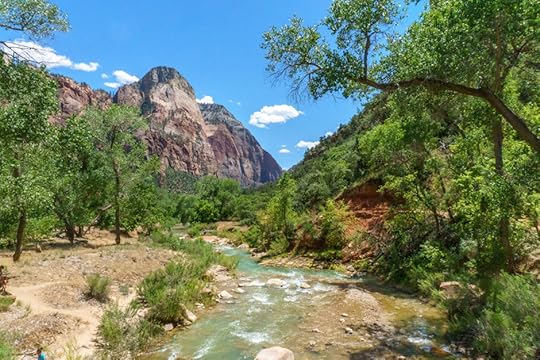
As the day goes on, the air turns heavy with heat. We finish the Angel’s Landing trail, and a small bridge crowded with people leads us to the shade of what feels like an oasis in the desert. Turquoise water glows below us as we watch people wadding and taking cover under the leafy trees.
7
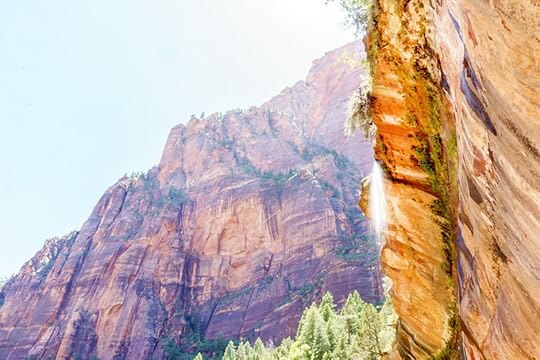
Not wanting to head out of the park yet, we stumble upon the Emerald Pools Trail, opting for the full round trip route to see all 3 pools. The falls are more of a trickle at this time of year, but still a good spot to relieve you from the heat.

8
After a day of adventuring, we retreat to a piece of BLM land to find a cozy campsite with a spectacular view. After talking with a ranger and learning about fire restrictions in the area, we found a small patch of land and cooked a warm spaghetti dinner as the sun set over a seemingly endless desert.
9
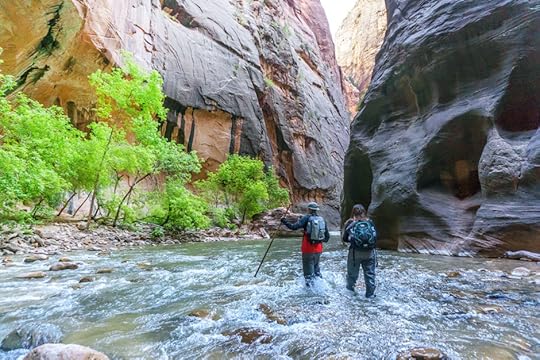
It’s still dark when we wake up. We pack up our frozen tent and drive to find a mostly empty parking lot. It’s cold in the early morning, and after renting neoprene socks, sturdy water shoes, and a hiking pole, we are ready to dive into The Narrows. This hike follows the bottom of a canyon, and without proper gear, you’ll surely end up wet and cold.
10
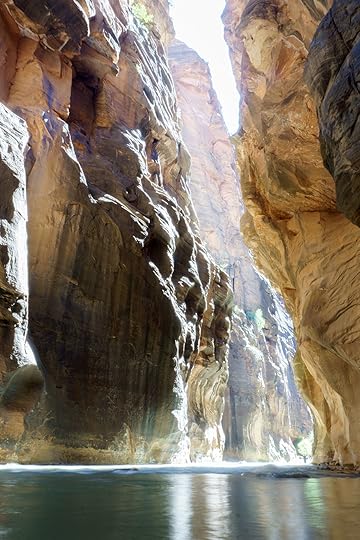
Soaring canyon walls leave no mystery as to why this area was named The Narrows. As we move further into the canyon, the undulating walls make it clear why it is important to research possible rain and the chance for flash floods before venturing on this adventure. If we pause for too long, the cold begins to take over, but the chill is worth it as we stand tiny in the rushing water, unaware of where the next turn will take us.
11
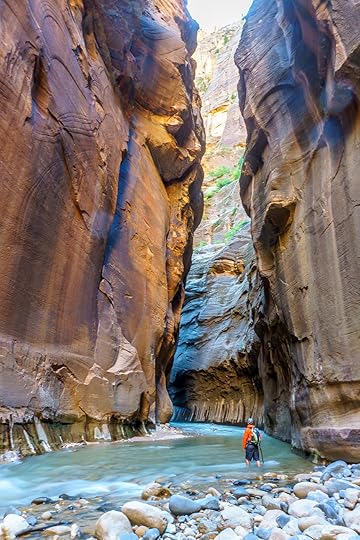
There’s something captivating about Zion. It feels ancient, like a time machine has taken us to the time dinosaurs roamed the earth. We decide to turn around after needing to swim through portions of the canyon and realize how lucky we are to have seen Zion National Park, a living timeline spanning millions of years.
More like this: Travel guide to Zion National Park, Utah
The post 48 hours in Zion National Park appeared first on Matador Network.

Tools bartenders need
Bartending isn’t just about having fun with a bunch of intoxicated people for money. It is a craft that requires a lot of social skills and abilities, and like any craftsman, bartenders need their tools to do a good job. Here are seven tools bartenders could never live without.
1. A hand towel
Have you ever shaken hands with a bartender while they were working? Odds are it was one damp handshake. From making drinks to hand washing glassware, our hands are covered in liquid all shift long. We need to constantly dry our hands so we don’t fling liquor bottles every time we make a drink. While our hand towel is usually just a terry cloth rag, it is essential.
2. A paring knife (and Band-Aids)
You haven’t lived until you’ve tried cutting lemons with a steak knife. It’s just so wrong. I’ve seen bartenders have full-blown breakdowns over missing paring knives. It seems like such a small thing, but what good is a cocktail without its garnish? And remember to always keep a supply of Band-Aids with your knives. No matter how careful you are, you will eventually sustain fruit-cutting related injuries on the job — and cuts and lemons don’t mix.
3. A strainer
Because no one wants ice chunks in their Martini.
4. A juicer
Not every bar uses fresh juices, but if yours does, you know the importance of a juicer. I once spent an hour of my life squeezing tiny bits of juice out of blended ginger pulp in order to make a specialty ginger syrup. With a juicer, I could have gotten at least 58 minutes of my life back.
5. Attractive garnish jars, preferably with latches
Those plastic trays just don’t cut it. A bar looks so much nicer with a lovely array of glass garnish jars next to pretty glass bottles for bitters, tinctures, and syrups. It is the bartender’s very own chemistry station. Plus, jars with latches make it more difficult for drunk guests to reach over and help themselves to your olive supply.
6. Matchbooks
People love matches. Always have a jar of matchbooks at your bar. Yes, it’s a little like that house at Halloween that leaves the bowl of candy with the sign, “only take one piece”, some jerk is inevitably going to take the whole bowl. But it doesn’t matter, you will refill that bowl because it is the right thing to do!
7. Loud music
While not a literal tool, when it comes to music, the louder the better. Something about the pounding beat actually helps to clear the mind and focus attention on the matter at hand — getting people drunk.
More like this: 7 superpowers every bartender has
The post 7 tools bartenders could not live without appeared first on Matador Network.

Matador Network's Blog

- Matador Network's profile
- 6 followers

