
Matador Network's Blog, page 1357
April 24, 2018
Underrated backpacking trips
This summer, think beyond your local trails and turn backpacking into your main vehicle for adventure. Few things are better than the overwhelming sense of accomplishment after completing a multi-day backpacking trip and hitching a ride into a new town, clothes covered in trail, to find a guesthouse to shower in, or even just arriving back at the trailhead to a cooler stocked with canned beer floating in melted ice and an old pair of flip-flops. Here are seven backpacking trips that offer not only that feeling, but the perfect chance to get away from the crowds and enjoy some solace on the trail. Before heading out on any of these treks, get yourself prepared by checking out our ultimate summer backpacking gear guide to be sure you have the gear situation under control.
1. Great Baikal Trail, Russia
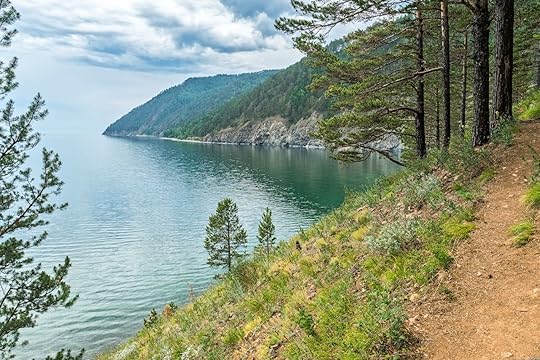
Photo: Tilpunov Mikhail/Shutterstock
Length: 31 miles (50 km)
Time: 3 days
Siberia might not be the first place that comes to mind when thinking of trekking. That’s a good thing in this case, as your experience on the Great Baikal Trail will be devoid of touristy day hikers, and there’s a solid chance that once get a few miles out you won’t run into anyone at all. Southern Siberia has a remoteness that is all but lost in the world’s popular trekking regions, and no, it isn’t a freezing, snow-covered tundra.
The biggest draw to the area is Lake Baikal itself, but getting out on the trail provides views and adventure that those staying down at the lake miss out on. The trail takes trekkers up to 2,500 ft in elevation and moves right along the lakefront at other points in the journey. Lake Baikal is the world’s largest freshwater lake by volume, surpassing even the Great Lakes in the northern US. This 3-day trek takes you and your crew to the summit of Mount Listvyanka.
2. Angelus Circuit, New Zealand
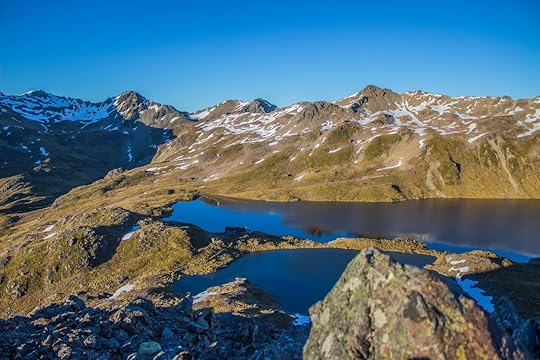
Photo: Viktor Hejna/Shutterstock
Length: 24 miles (39 km)
Time: 2-3 days
Trekking in New Zealand is nothing new, but while so many backpackers head to places like the Abel Tasman Coast Track or the Mueller Hut Route, Angelus Circuit is largely skipped over. At least, by those who don’t do their research. This trek starts just off Lake Rotoiti in Saint Arnaud Village, passes through beech forests like you’ve never seen, and works its way up and over high-altitude ridges offering dramatic valley views as you pass some of New Zealand’s most pristine mountain lakes.
The three days of hiking are relatively free-flowing. There’s ground to be covered but not a huge rush; the second day is typically the biggest haul while the first and final days allow time for preparation or unpacking and getting to and from the trailhead. There are a number of huts along the way for sleeping, but you can also bring your own camping gear and set up a rig.
3. Spider Gap-Buck Creek Pass Loop, Washington, US
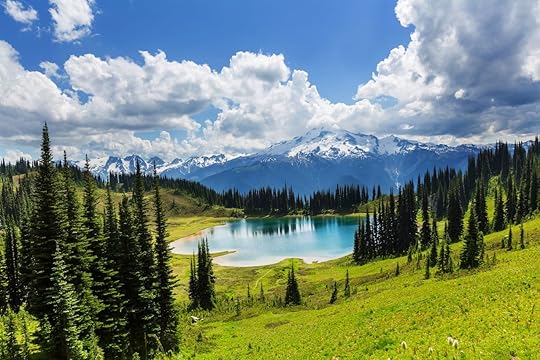
Photo: Galyna Andrushko/Shutterstock
Length: 44 miles (71 km)
Time: 5 days
This one keeps you stateside, making it easier to round up your crew without having to plan and book months in advance. Washington’s Glacier Peak Wilderness is home to some of North America’s most rugged backpacking terrain. You’ll cross steep ridges, craggy inclines, and fields of wildflowers. Start from the Phelps Creek Trailhead, where you can park and get yourself ready to hit the trail. The first day is long but rather mellow. Steep inclines don’t happen until day two after you’ve passed through Spider Meadow. The trail eventually meets the Pacific Crest Trail before heading back down on the final section of the loop.
If you want to trim a few miles off this trek, park a second car at the Trinity trailhead, which is just over three miles from Phelps Creek Trailhead, and shuttle yourself back to the original starting point. The Spider Gap-Buck Creek Pass Loop is challenging and at times lightly technical, particularly on the second and third days, but waking up and zipping open your tent anywhere on the trail in the early morning hours is one of those experiences that makes you feel like you’re inside Instagram.
4. Overland Track, Tasmania, Australia
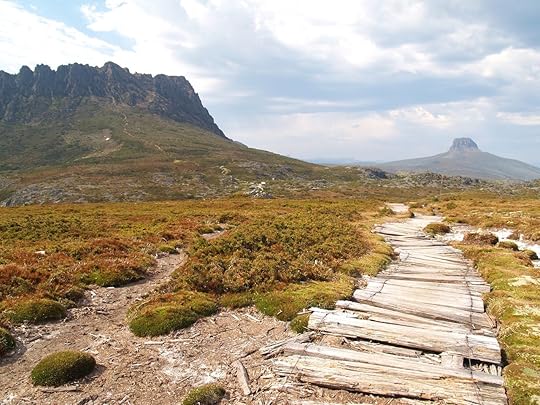
Photo: totajla/Shutterstock
Length: 40 miles (65 km)
Time: 5-6 days
Located in a National Park, this is one of the more popular treks on this list. Still, the fact that it’s in Tasmania and more than a 2-3 day trek means that only dedicated backpackers make the journey, and those that do almost always complete it. You’ll head north to south from Cradle Mountain towards Australia’s deepest all-natural freshwater lake, Lake St. Clair, and head up Cradle Mountain. This trek requires you to book online at least 24 hours in advance, which can be done here, and possess an Australian National Parks Pass.
5. Tiger Leaping Gorge, Yunnan Province, China
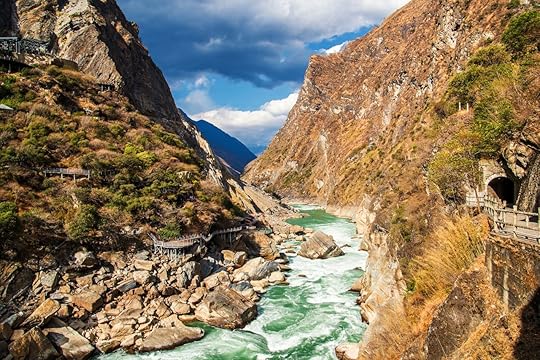
Photo: Martinho Smart/Shutterstock
Length: 10.5 miles (17 km)
Time: 2-3 days
The name stands for exactly what it suggests. Legend has it that a tiger leapt across the Jinsha River, which flows through the gorge, in order to make his escape from a hunter. We don’t encourage trying this yourself, but the trek is a gorgeous journey through the high country of Yunnan Province, not too far from Shangri-La. You’ll have to pay about 65 RMP (just over $10 USD) to enter the park. You might be thinking, “I could hike 10.5 miles in one day!” But, that’s not the case here, thanks to its super steep ascent and descent. The most notorious part of the hike, 28 Bends, is a series of sharp switchbacks up a mountain that can be exhausting even for experienced trekkers. Anyone in your party who can’t hang should be able to hire a donkey to help them with the climb. Spend the nights in gorgeous high-altitude guesthouses.
Prior to departing on the main trek, an optional add-on of about 2.5 miles (4 km) on the Upper Gorge takes you to the Jinsha River and the views are more than worth the extra effort in addition to the traditional trek itself. This portion is located in the same park and the trailhead is easily accessible by car — hitchhike or hire a driver in town.
The gorge wasn’t open to foreign tourists until 1993, meaning you can still be among the first couple generations of visitors to complete the trek. To start the trek, get yourself to the town of Qiaotou. The easiest way to do this is to fly into Lijian and then head to the bus station and take the number 13 bus to Qiaotou. If you can, secure your bus ticket the day before. The trailhead is accessible from town, not from the gorge itself.
6. Mount Rinjani, Indonesia
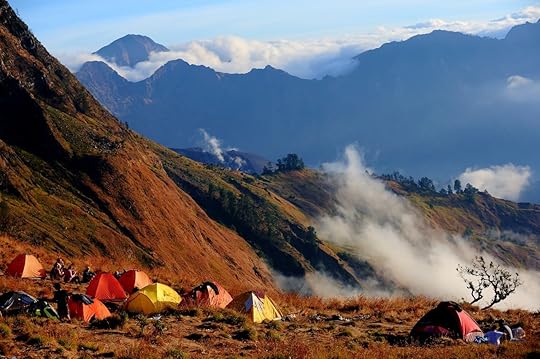
Photo: Jamoo/Shutterstock
Length: 17 miles (27.5 km)
Time: 3 days
Indonesia’s second-highest volcano, Mount Rinjani, is the highest on the island of Lombok at over 1,200 feet. It’s located in Rinjani National Park and accessed either from the village of Sembalun or Senaru. What makes this three-day trek unique is that the second day of hiking begins in the middle of the night and sees trekkers reaching the summit of the volcano shortly before sunrise. This also allows you to start in one town and end in another, instead of climbing down the same way you went up.
The best way to go about this trek is to start in Sembalun and finish on the other side, in Senaru. This direction works best with the layout of the trails and general traffic flow of other trekkers. The hike can be done in two days, with only one night of camping, but for the best experience (and to not rush yourself) allow three days. Syam Trekker is among the top guides for the trek, though many options are available.
7. The Beara Way, Ireland
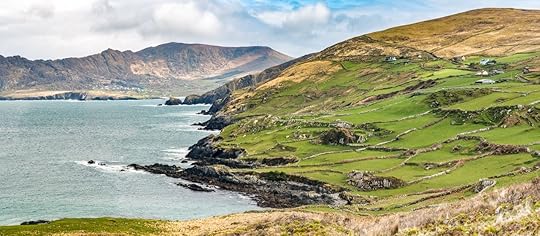
Length: 122 miles (196 km)
Time: 9 days
The Caha Mountains of Ireland are lush, green, and strikingly beautiful — with the added bonus of being far less crowded than the Appalachians or Rocky Mountains in North America or much of the Alps further east in Europe. This long trek is certainly not for the faint of heart. You’ll loop around the entire Beara Peninsula on this long trek, soaking in the views of both Bantry Bay and Kenmare Bay. Along the way, you’ll pass a number of historic archaeological sites and walk the same escape route used by the last chieftain of Beara in the early 1600s as he was raided by the Elizabethans.
The route passes through towns where you can replenish supplies and restock calories with a few pints. If your group is feeling particularly adventurous and has the extra time, the Beara Way is part of the larger Beara-Breifne Way, Ireland’s longest trail. This adds about another 190 miles to the trek — and more than doubles the amount of time needed to complete it. Perfect for the ultimate escapist. 

More like this: 12 awesome backpacking hacks for your next trip
The post The 7 most underrated backpacking trips you should do this summer appeared first on Matador Network.


Inflight snack fine at US border
The forbidden fruit strikes again. After getting Adam and Eve in trouble a couple of years back, it now got Crystal Tadlock in a serious predicament with US customs.
On a flight from Paris to the US, Tadlock was given an apple to snack on by Delta Air Lines’ inflight crew. Because she was not hungry, the traveler put the fruit in her carry-on bag thinking she would snack on it on her connecting flight from Minneapolis to Denver.
Although you’re usually allowed to transport food in an airplane, you are not always authorized to leave the airplane with it. Indeed, some countries (US included) have very strict laws about bringing food across their borders for fear that they may spread plant pests and foreign animal diseases.
Apples, unfortunately for Tadlock who was allegedly unaware of this rule, is one of the food items that are forbidden to cross the US border.
False. I did not enjoy the apple. Instead I received a $500 violation, had my global entry revoked (first time I’ve used it) AND I will be searched on every flight for the rest of my life
Rocky Mountaineer train in Canada
Canada is an extremely large country, making trains one of the most efficient and low-impact ways to access all that land. But the Rocky Mountaineer is not your usual train; it’s a grand and unforgettable way to travel. It’s not something that can be done on a backpacker’s budget — the GoldLeaf service averages out to around $400-$500 a day (including food and hotel) — but you can cut costs by booking early, keeping an eye out for their special offers, or choosing the SilverLeaf service instead.
If you’re hankering for an exploration of Canada’s western provinces and the Canadian Rockies, here are seven reasons why you should splurge and ride the rails with the Rocky Mountaineer.
1. You’ll see places you wouldn’t otherwise reach.
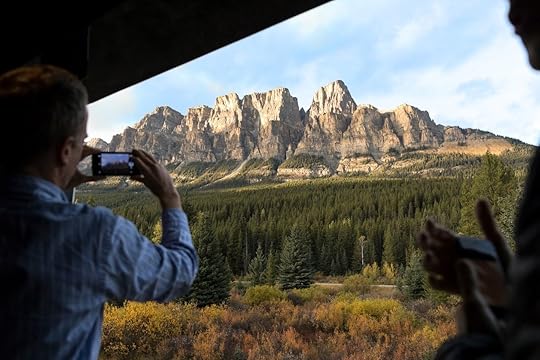
Photo: Ali Wunderman
Mountain ranges aren’t known for being easy to traverse; however, they are known to be gorgeous, and the Rocky Mountaineer brings you right to them without all the fuss of hiking switchbacks, camping in the cold, and deciding which of your group will be eaten first. The train twists and turns through the Canadian Rockies, skirting the edges of icy blue rivers, climbing over cliffs, and passing through serene forests. And you never even have to stand up to see it all. On this train, you don’t have to choose between experiencing deep wilderness and casually sipping wine.
2. The booze flows freely.
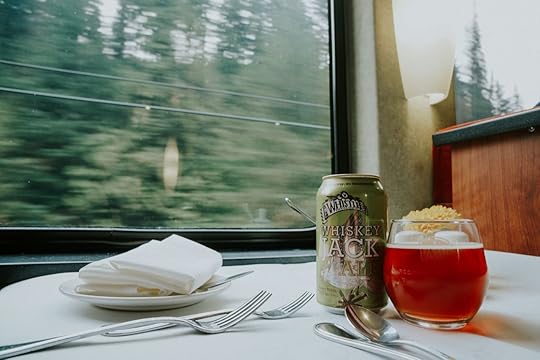
Photo: Kate Siobhan Mulligan
If you are of the alcohol-drinking variety, the Rocky Mountaineer has what you need to relax on a Canadian Rockies trip. Breakfast drinks, lunch drinks, etc. Whether you’re a beer drinker, a wine aficionado, or even the cocktail type, they’ve got you covered with complimentary drink service. The very first thing you’re greeted with is a morning toast, and the afternoon wine service includes cheese pairings.
3. Wildlife viewing is as easy as can be.
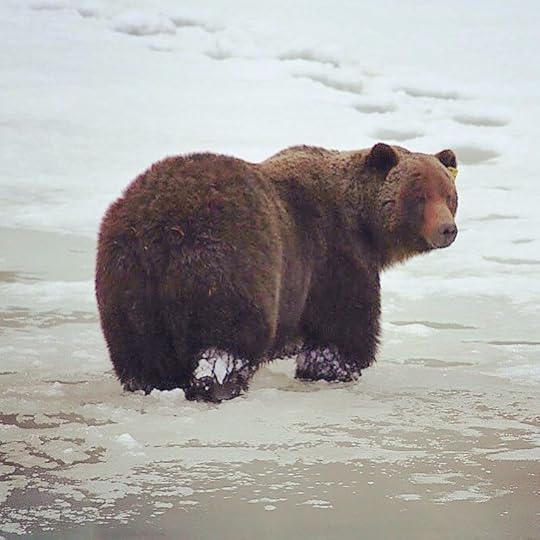
Photo: Ali Wunderman
Few travel experiences combine luxury and wildlife so fluidly. Because the Rocky Mountaineer winds through wilderness, animals pop up all the time. Seeking wildlife can be a full-time job, so the train staff make it easy by pointing out when the train is about to pass by a critter, be it an osprey putting together its ramshackle nest, a bald eagle dipping by the windows, or a grizzly bear searching for a snack. This leaves you the most amount of time to focus on enjoying your heated seat while not missing out on the wild sights outside.
4. Glass ceilings are the bee’s knees.
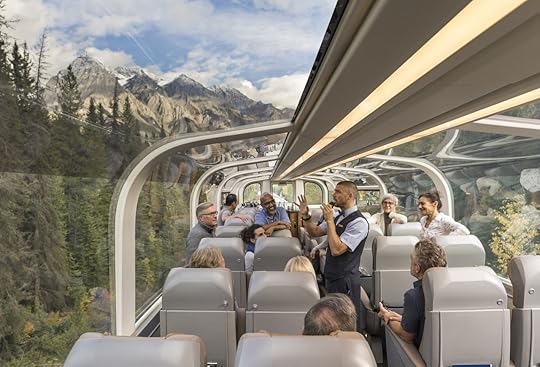
Photo: Ali Wunderman
Trains are designed to get cargo (in this case people) from point A to point B in a fluid manner, but there’s no rule that says they have to prohibit you from seeing the outside. Rocky Mountaineer’s trains allow passengers to see out either side and above the train (GoldLeaf has more visibility than SilverLeaf), which makes you feel much closer to the surrounding environment. There is also an outdoor-viewing platform if you want to take in the view with some fresh air.
5. The food is delish.
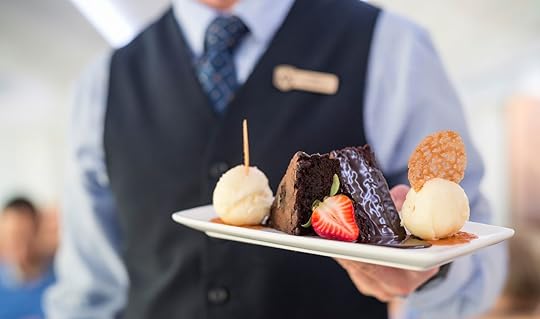
Photo: Ali Wunderman
White linen and five-star service greet passengers in the dining section of the car, which is on the first floor (seats are one level up). Elegant breakfasts and lunches are cooked up and served by award-winning chefs during the ride, with menus that change daily. It’s hard to believe such exceptional food is being prepared in a rocking train car, but maybe that’s the secret to next-level flavor.
6. It never feels like a tourist hotspot.

Photo: Ali Wunderman
Rocky Mountaineer has all the hipster appeal of avocado toast without the crowds that come with it. Don’t get me wrong, this is a popular train ride, but it hasn’t been overdone by people trying to copy photos they saw on Instagram. And even if that changes, the train’s design is such that it never feels crowded.
7. You can explore 24 hours a day.
Photo: Kate Siobhan Mulligan
A lot of train-based travel moves passengers along 24 hours a day, with sleeper cars as the alternative to hotels. Rocky Mountaineer guests travel by day, getting to see much of the Canadian Rockies, but at night, they hop off to explore the towns and sleep in hotels. Stops like Kamloops and Banff have a lot to offer beyond their train stations, and it would be a shame to pass them by. Plus, the Rocky Mountaineer brings your luggage to your hotel room for you, so you don’t waste prime exploring time hauling bags around.
More like this: This luxe panoramic train in Peru will make you rethink hiking to Machu Picchu
The post 7 reasons why the Rocky Mountaineer is the best way to see Western Canada appeared first on Matador Network.

Side effects of being a bartender
Bartending, just like any other job, comes with its share of positive and negative aspects. From having to learn a new lingo to brushing up on your social skills, this job requires a lot from you. And if you’ve been a bartender for long enough, you know that there are some serious side effects to deal with.
1. Loss of the ability to enjoy crowded bars and restaurants
When you spend several nights a week working in the eye of the hurricane, the last thing you want to do on your day off is to be back in the storm.
2. Difficulty maintaining a regular sleep schedule
Irregular work schedules coupled with late nights make it hard to have a set bedtime. While one of the perks of bartending is having the freedom to sleep in, the inconsistency is still hard on your body.
3. Difficulty dating anyone with a traditional schedule
For some reason, 2 AM date nights aren’t so appealing when your partner has to get up at 7 AM. Opposite schedules can work if both parties prize their independence, but, in general, it is a tough situation to manage.
4. Lack of difficulty meeting people to hook up with
It’s great, if that’s what you’re looking for. But if you are a bartender who is looking for a more serious relationship, this can be challenging.
5. Development of a mild drinking habit
In any industry, it is important to know your product. Our product just happens to be delicious alcohol. Whether it is tastings with liquor reps or guests buying you shots, it is difficult to get through a shift without a drop of alcohol.
6. Development of a “bartender body”
Strong arms, broad shoulders, skinny legs, and a bit of a belly is a classic bartender body. Earned thanks to long shifts spent on your feet, lifting kegs, shaking drinks, and, perhaps, drinking more than you ought to.
7. The loss of all friends who do not work in the service industry
An unfortunate by-product of working nights and weekends is that it makes it difficult to coordinate plans with friends who have different schedules. The plus side is that you make a lot of bartender friends, ensuring you will drink for free any night of the week if you so choose.
8. A newfound love for Mondays
Mondays are usually our day off, so it’s our Friday.
9. An increase in judginess
Tending to the boozy needs of people for a living makes you quick to label them. It isn’t always intentional, but after serving enough customers, it becomes tempting to make snap judgments, especially about their drink orders.
More like this: 7 tools bartenders could not live without
The post 9 side effects of being a bartender appeared first on Matador Network.

UK breaks record foregoing coal
The UK just reached an impressive mark. Last week, the country of over 65 million people went 55 consecutive hours without using any power generated from coal. The push started at 10:25 pm on Monday, April 16 and lasted until 5:10 am on Thursday, April 19. Bloomberg tracked the data and made the claim, which as reported by The Independent stood as the first time since 1882 that the country used no coal power at all for that length of time.
The primary source of power during the two-plus day stretch was wind turbines. Solar power pitched in, along with nuclear, biomass, and hydropower. While 55 hours may not seem like much of an accomplishment in itself, the mark is impressive because it stands as a mark of success in an increasing push around the world to power humanity with fossil-fuel-free technology.
Coal is still widely used throughout the world, and we’re years away from reaching many of the major shifts in energy outlined in the Paris Climate Accord of 2015. But positive thinking isn’t too far-fetched when one looks at sweeping technological changes of the past. One example is provided by former US Vice President Al Gore, founder of environmental non-profit The Climate Reality Project, who compared the rise of renewable energy to that of cell phones. In 1980, Gore noted in his presentation The Climate Crisis and Its Solutions, AT&T commissioned a study to predict how many people would own a cell phone by the year 2000. The prediction? 900,000 cell phone users by 2000. There were in fact 109 million cell phone users by that time, driven by a combination of consistently improving technology and dropping prices. Today, there are over 8 billion cell phone connections globally. According to Gore’s research, the growth of renewable energy is on track to see similar results, with increased awareness, investment, and technology driving down prices worldwide.
Global change happens in small steps. Here’s to the UK for taking a big one.
More like this: The 10+ greenest cities in the world
The post The UK just went a record-breaking 55 hours without using coal for power appeared first on Matador Network.

Get paid to move to Iceland
If you don’t have any travel plan for this summer, Wow Air has a brilliant gig for you. The Icelandic budget airline is looking for two motivated people to move to Iceland and use the paid-for Reykjavik apartment (which they will provide) as a base to travel the world. Better yet, you’ll get paid to do it.
According to Insider, the two travelers selected will receive monthly salaries of about $4,000 USD on top of having their travel and living expenses covered by the airline. They’ll also be able to take tours of Iceland for free.
The best summer job in the world starts on June 1st and end on August 15th. During this time the lucky pair will need to travel to some of Wow Air’s 38 destinations and documents their trips with vlogs, Instagram stories, photographs, etc. to create digital guides that will cover topics such as food, culture, nature, transportation, and budget options.
According to Insider, the successful applicants will be free to take their picks of Wow Air’s destinations which include Dublin, Montreal, Berlin, and San Francisco.
To apply, you will need to create and upload a 2-minute, guide-like video of your hometown in which you’ll provide expert travel tips. Once you’ve got this ready to go, apply here. The deadline to submit your application is May 14th. The two winners will be announced on May 18th.
H/T: Insider
More like this: How to find a job and move to Iceland
The post This airline will pay you to move to Iceland and use it as a base to travel the world appeared first on Matador Network.

East Coast Voodoo Doughnuts
The owners of Voodoo Doughnut, the notorious Portland-based doughnut chain, are apparently addicted to the long lines that followed them to their expansion locations in Denver and Austin. Now, for this first time ever, Voodoo Doughnut is coming to the east of the Mississippi. This newest incarnation is opening inside Universal Studios in Orlando, Florida, meaning that you can now have a Viscous Hibiscus on your way to the Hogwarts Express.
One of the west coast’s most popular culinary exports, potentially second only to In-N-Out, is officially hawking Grape Apes and Old Dirty Bastards on Universal Citywalk in Orlando, Florida. Despite being located in an amusement park, the new location retains the chain’s signature late night hours. You can swing by Sunday-Thursday from 7 AM to midnight, and Friday/Saturday until 1 AM. Universal City Walk is a shopping center surrounding the two theme parks, not restricting businesses to the parks’ standard operating hours.
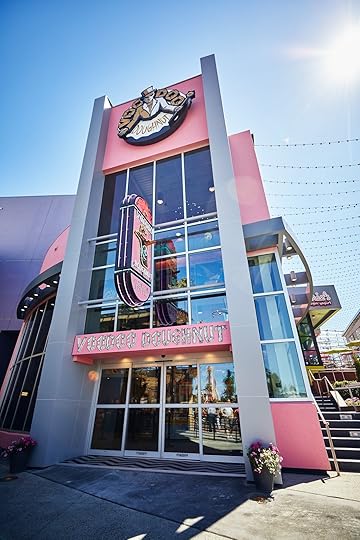
Photo: Voodoo Doughnut
Voodoo Doughnuts opened its first location in Portland way back in 2004, and has since become something of a cult phenomenon across the United States. Whereas a customer may be able to walk up to the counter and be out the door in less than two minutes at a doughnut shop up the street, Voodoo’s loyalists are accustomed to waiting a half hour or more for their guilty pleasure.
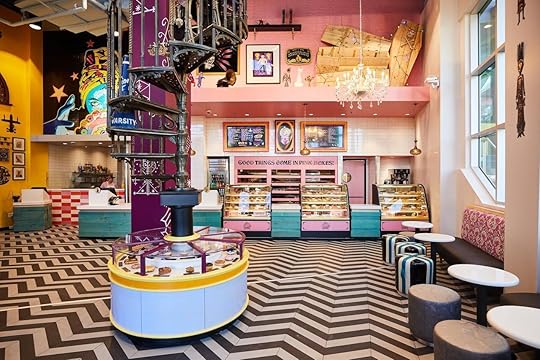
Photo: Voodoo Doughnut
This latest expansion follows the prior openings in Eugene, about two hours south of Portland, along with Denver, Colorado and Austin, Texas. Voodoo Doughnut co-founder Tres Shannon said to Delish, “We used to joke that we dreamed of opening a donut palace, and we’d say things like, ‘wouldn’t it be cool to have a water slide in it?’ Now there’s one right nearby!”
More like this: The most calorific desserts around the world
The post You can finally eat Voodoo Doughnuts on the East Coast now appeared first on Matador Network.

Australian slang phrases
Australians love slang. You’re probably already familiar with our work “barbarising” the English tongue. We gave the world the word of a decade — “selfie” — after a drunken night out.
Here is a rich variety of local slang and corresponding definitions to help you brush up your vocabulary before touching down in Australia.
1. How’s it going, mate?
This is the classic Australian greeting, is delivered with a nasal slur and a little half-smile. Note that “mate” is gender neutral and can be peppered into all conversations. It is pronounced “Howzitgooooaaan, mayyyyyte?”
2. Yeahnah
In this small phrase, we have the Australian language in full throttle, conveying almost no meaning but sounding very pleasant and agreeable nonetheless.
“Yeahnah,” pronounced with the mouth in an almost stationary position, is a fairly meaningless word comprised of a yes and a no, so it basically cancels itself out. It’s also useful if you want to disagree with someone in a very polite way. Note that the “yeahs” and the “nahs” can be combined together with endless creativity: “yeahyeahyeahyeahnahhh” or “yeahyeahnah” is also entirely appropriate.
3. Good onya, mate
As in, “good on you”, mate. This is also a pretty meaningless pleasantry used to fill the conversation with noncommittal good vibes. You could also use it to congratulate somebody for something. Or sarcastically when somebody fails at something or does something you don’t like.
4. Screama
Perhaps originating in the idea of someone producing screams of amazement, surprise or laughter, a “screama” (screamer) describes something that is impressive or impactful. For example: “Mate, that was a screama of a match last night.”
5. Yeah, real rip snorta
The term “rip snorta” means fantastic; really, really good; intensely excellent. It is said that this word came to us via the Americans, who had a penchant for inventing outrageous sounding words in the 19th century (humdinger is another one and it means more or less the opposite of ripsnorter). Ripping and snorting certainly convey a sense of violent amazement — ripsnorting even more so.
6. Yeah, Damo was loose as but
There’s quite a bit to pull apart in this phrase.
Let’s start with Damo. Damo is short for Damien. We use it here to illustrate that Australians love nicknames and will shorten even the shortest name. Emma for example, become Em, Emsy, Emsa, Emmy, or even something as absurd as “Face” or “Maccas”, if the friends are particularly creative.
Moving on to “loose as”, this refers to behavior that is very wild or reckless. A versatile word, “loose” might also refer to being very drunk. “As” is functioning here as a kind of posterior emphasizing adjective.
Placing “but” at the end of sentences is also very common, it means the same as it does if it were placed at the beginning. You’ll hear this a lot.
7. Piece of piss
If something is a “piece of piss”, it’s something easy to achieve. For example:
“I ran 5k this morning, piece of piss mate!”
8. Had to call the ambos.
We’re using “ambos” here to illustrate that Australians are very fond of shortening profession titles. “Ambo” is a shortening of ambulance workers. We also have tradie for tradesperson; brickie for bricklayer; firie for fireman; polly for politician; journo for journalist; greenie for environmentalist; gyno for gynecologist…
9. He’s a good bloke but, hey?
A “bloke” is a male. Linguists postulate that the word bloke comes either from the language of the gypsies or from Shelta, the secret language of Irish and Welsh travelers. Whatever its origin, it found its way to Australia, where it has come to be associated with the archetypal (and now largely mythological) Australian male, a beer-guzzling, egalitarian fella (fellow), loyal and a little bit cheeky. The female equivalent of a bloke is a sheila, though you would only use this word if you wanted to be self-consciously Austrayan (Australian).
“Hey” is very commonly heard at the end of statements in South Australia. Delivered with a rising intonation, it doesn’t mean anything but invites the interlocutor to agree with the speaker.
9. Bevvos
Bevvos are beers, but they can also be referred to as frothies, grog, longnecks, or cold ones. The important thing is to convey great affection for the substance.
Meanwhile, indulging in the activity of drinking beer is referred to as “having a sesh”, which comes from “drinking session”, as though consuming alcohol required all the concentration and strength of a weights session at the gym.
10. Rock up
To “rock up” somewhere is to arrive someplace, sometimes in an unexpected or casual manner.
11. Fair enough
This is a very versatile phrase that can be used in almost any situation to express agreement or understanding, or even to concede a point in an argument.
12. Spit the dummy
Spit the dummy refers to “having a tanty” (tantrum). Clearly, the phrase originates from the idea of a baby spitting out its dummy and wailing inconsolably.
13. Spewin’
If you are “spewin’”, you’re really pissed off.
14. No wukkas mate
“No wukkas” means no worries or no problem. No wukkas is a shortening of no wuckin furries, which is a spoonerism for a phrase you can probably guess at… Note that no worries/no wukkas can also be used to say “you’re welcome” or “anytime,” as in:
“Thanks heaps! Thank you very much.”
“No wukkas. You’re welcome.”
More like this: 20 Australian expressions that will make you smile
The post 14 essential slang phrases you need to know before traveling to Australia appeared first on Matador Network.

New Mexico...like a celebrity
Celebrities lead pretty enviable lives. Constant parties, trips all over the world, red-carpet galas in the latest fashions, private spa retreats…who wouldn’t want to live like that, at least for a while?
Riiiight. Few of us have celebrity-sized budgets, and photo shoots and galas tend to interrupt our 9-5. But there’s still a way we can taste that jet-setting, glamorous lifestyle: by getting to New Mexico. The state’s long been a favorite haunt of celebrities for its art, unique culture, and wild landscapes, while the film industry has turned the Land of Enchantment into the next Hollywood (aka Tamalewood). Here are just a few ways you can be a part of it all.
Celebrity sighting #1: Brad Pitt at White Sands
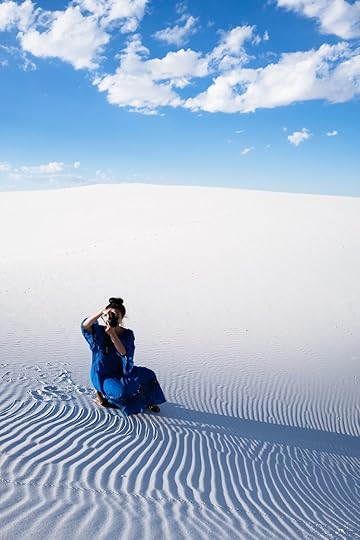
Photo: Michael Saechang
Google “Brad Pitt White Sands Photoshoot,” and let the recreation commence. One of the first results will show you that he visited the area wearing a sweater and pants, which — guess what? — you totally have in your closet, too. Watch out, GQ.
Frolicking (and apparently shoulder stands) complete, know that White Sands National Monument is way more than just a photo shoot location for film stars (Kendall Jenner, Solange Knowles…the list goes on!). Sixteen miles from the city of Alamogordo, in southern New Mexico, White Sands is exactly what it sounds like: 275 square miles of undulating dunes of pure white, white-white sand. Composed of gypsum crystals, the dune field is the biggest of its kind in the world, and it’s also a great spot for hiking, camping, and most definitely dune sledding. It’s also really popular with photographers and Instagrammers, because day or night, rain or shine, these lunar-like dunes are truly a sight to behold.
Celebrity sighting #2: Hugh Jackman at Sandia Crest
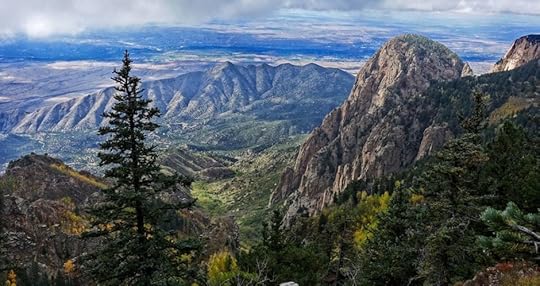
Photo: John Fowler
New Mexico is Wolverine-approved. While filming in Albuquerque, Hugh Jackman decided to do as the locals do, taking in the desert and city views from the top of Sandia Crest. It’s a ridge running along the top of the Sandia Mountains at an altitude of more than 10,000 feet, looming over the city. Yeah, the views are pretty decent.
To get there, take the 2.7-mile Sandia Peak Tram up the side of the mountain to the crest, where you can look out over Albuquerque and into the Rio Grande Valley. The area is also rife with hiking trails, like the popular La Luz Trail, and the 26-mile Crest Trail that runs along the top of the mountains. Technically, you can also get there via road, which has become a favorite of motorcyclists and the convertible-owning. And when the snow hits, get ready — the Sandia Mountains also have a ski center (and restaurant and gift shop).
Celebrity sighting #3: Tavi Gevinson at Tent Rocks
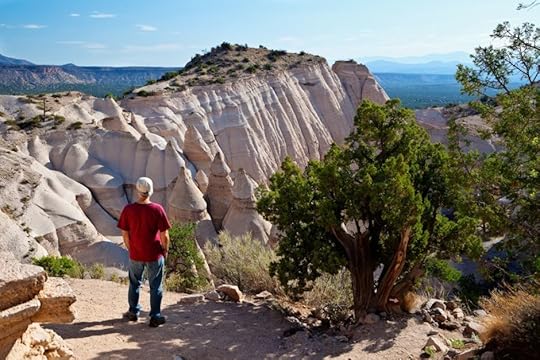
Photo: Bureau of Land Management
If you need a break from gallivanting around Santa Fe, one go-to trip is to Kasha-Katuwe Tent Rocks National Monument, à la writer/editor/blogger Tavi Gevinson. (If you don’t know her, all you need to know is that she became famous in the fashion world at age 12. Twelve.) The monument’s located about 40 miles from the capital city, meaning you go from urban hotspot to the wild outdoors in what feels like no time at all.
“Tent Rocks” gets its name from the red-and-white-striped volcanic rocks that have — thanks to time and erosion — formed into towering, sci-fi-esque cones that pierce the desert sky. The best way to see these formations is by following the Canyon Trail, winding through a narrow gap in the rocks and eventually cresting an elevated mesa. Here you’ll overlook just about everything.
Celebrity sighting #4: George R. R. Martin at the Jean Cocteau Cinema

Photo: Linda Carfagno for the Jean Cocteau Cinema
Game of Thrones fans may be annoyed at the fantasy author’s time-consuming side projects (he’s still writing, don’t worry!), but Santa Feans sure are pleased at the time and attention that Martin has paid to lovingly restoring the Jean Cocteau Cinema, a classic 132-seater in downtown Santa Fe. It was first opened in 1976, but closed in 2006. Martin snatched up this treasure and reopened it in 2013, expanding its artistic offerings and jazzing it up with a digital projector, better movie snacks (even celebrities need good snacking options), and a bar.
Now, the theater has screenings of everything from obscure arthouse films to cult favorites, readings and signings by writers both local and international (come back soon, Neil Gaiman!), art exhibits, performances, and the weekly game night or occasional free Game of Thrones screening. It’s also a great jumping-off point for exploring the refurbished Railyard area with its parks and markets, art galleries like SITE Santa Fe, bars and restaurants, and historic plaza.
Celebrity sighting #5: Simon Pegg in Madrid, New Mexico

Photo: Amber Avalona
Madrid is a quirky, fun, offbeat kind of town — just like actor and writer Simon Pegg, who saw it firsthand when the 2011 movie Paul featured its Mine Shaft Tavern bar. Not far from Santa Fe along the Highway 14 Turquoise Trail National Scenic Byway, Madrid (pronounced MAD-rid, not like Madrid, Spain) used to be a coal mining town, but it’s now an artist community frequently used as a filming location. Places like the Mine Shaft Tavern and the Old Coal Town Museum still offer a glimpse into the town’s history, giving it a movie-set feel.
The best way to get to know this tiny community is by strolling down the main drag (still Hwy 14, because that’s how small we’re talking). Pop into a few historic buildings, galleries, and cafes, and definitely grab a drink from Jezebel Soda Fountain, the real deal dating back to the 1920s.
Celebrity sighting #6: Ruth Bader Ginsburg at the Santa Fe Opera
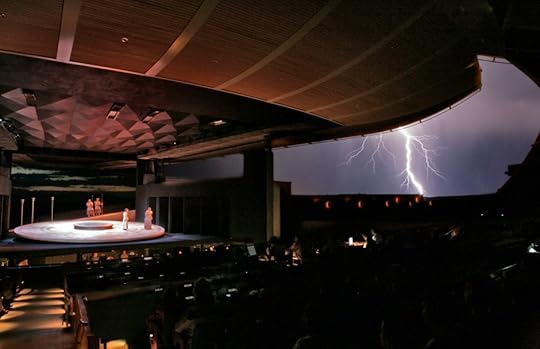
Photo courtesy of New Mexico Tourism
The only person who could make a night at the opera even classier is Ruth Bader Ginsburg. The Santa Fe Opera, open only during the summer months because of its sweeping, open-air design that looks out on the O’Keeffe-esque mountains and plains of central New Mexico, is the cultural event of Santa Fe’s summer season. SFO puts on five operas each year, usually an eclectic mix of established classics — like Bizet’s Carmen or anything by Mozart — alongside brand new pieces like last year’s The (R)evolution of Steve Jobs. English and Spanish subtitles are on your seatback, because SFO is 21st-century, too.
Before the show, you can take in the sunset on the outdoor terraces while sipping champagne, or do as the locals and have a fancy tailgate in the parking lot with drinks and hors d’oeuvres, while dressed to the nines in an evening gown and opera gloves. Or, if you’re lucky, judicial robes.
Celebrity sighting #7: The Obamas at Carlsbad Caverns
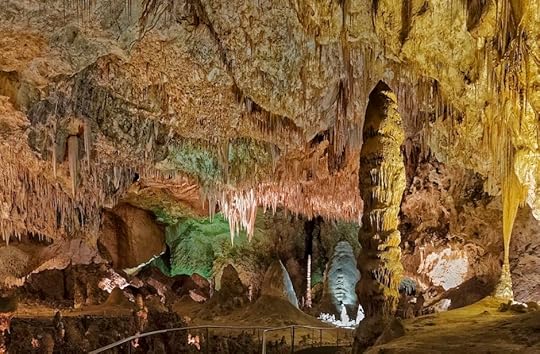
Photo: John Fowler
We know the Obamas have a penchant for jealousy-inducing tropical island vacations, but they also use their family time to explore America’s national parks, like their 2016 trip to Carlsbad Caverns. Located less than two hours from the alien-centric town of Roswell in southern New Mexico, the park contains a system of 119 limestone caves that started forming millions of years ago when this part of New Mexico was an inland sea. Three of the multi-roomed caves are open to the public, with most visitors opting for a tour of the namesake Carlsbad Cavern.
The main attraction is the Big Room, a massive chamber nearly 4,000 feet long and 255 feet high, filled with columns, stalactites, stalagmites, and other formations. It’s accessible by following the main walkway that leads into the mouth of the cave. Carlsbad is also home to a large bat colony, which you can watch leave the cavern in a giant swarm at sunset. Thanks for the travel recommendation, Obama.

The post 7 ways to experience New Mexico like a celebrity appeared first on Matador Network.

April 23, 2018
World's weirdest fruits
If you love roaming the aisle of foreign supermarkets in search for odd-looking items or spend hours tasting unknown food samples in markets abroad, you know that there is an awful lot of weird, but delicious, food out there that deserve to be much better known. Fruits, in particular, seem to come in unusual shapes, colors, tastes, and odors that may be off-putting at first but that are worth trying. So, if you like peeling lychees and love a good persimmon, these 9 weird fruits deserve to be on your foodie bucket list.
1. Rollinia
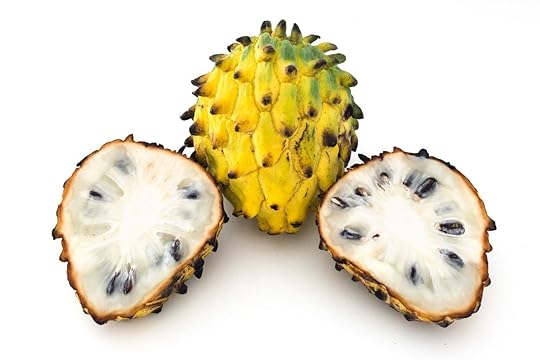
Photo: Wagner Okasaki/Shutterstock
Rollinias are not the most appetizing looking of fruits. When not ripe, its soft spikes are green and look a bit like an artichoke gone wrong; as it ripens, they turn yellow and eventually brown. But the inside is filled with a creamy, sweet, white pulp that tastes like caramel and lemon meringue pie. Rollinias can be found in many tropical locations around the world (Tahiti, Hawaii, Mexico, Peru, etc.), but they originate from the Brazilian Amazon. Rollinias can be eaten raw with a spoon or in fruit salad; they can be juiced, blended into milkshakes, or made into wine; and they can be cooked into deserts.
2. Ice Cream bean or Inga bean
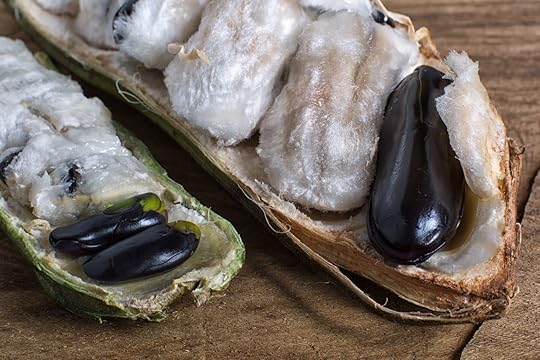
Photo: Barna Tanko/Shutterstock
If all beans tasted like the Ice Cream beans we would all be eating our daily five fruits and vegetables without making a fuss. The Ice Cream bean is a foot-long, green pod packed with large, black seeds that wrapped in a white, cotton candy-like pulp — hence their tasty-sounding moniker. Although Ice Cream beans are really legumes, they are eaten as fruits. They grow in Central and South America — in the Amazon, they can be 3-foot long — where they are very popular snacks. Ice Cream bean trees (also called Inga trees) are often used for shading coffee and cacao plantations rather than for their fruit, but if you can kill two birds with one stone and have a stash of guilt-free “cotton candy” on hand, why wouldn’t you?
3. Finger lime

Photo: Bonchan/Shutterstock
Finger limes are some of the coolest fruit out there. On the outside, they look like elongated limes (hence their name) or odd-looking pickles, but on the inside, they look like caviar — the pulp of the fruit is made of small beads filled with a sweet and sour juice that pop into your mouth. Their colors vary from green to yellow, purple, pink, or even bright red. Finger limes are endemic to the rainforests of Australia’s southeastern Queensland and northern New South Wales areas. According to The Guardian, finger limes are “believed to be up to 18 million years old” and have miraculously survived the clearing of the area’s rainforest by settlers.
4. Miracle berry
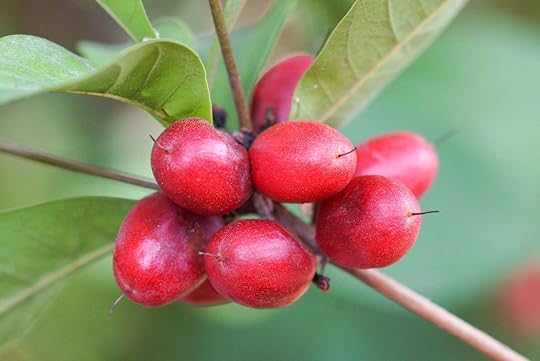
Photo: wk1003mike/Shutterstock
The miracle berry, found and brought back from Cameroon to the US at the start of the 20th century by David Fairchild (who introduced over 20,000 varieties to North America, including the mango, the cherry, and the date) is an incredible fruit. It looks like an ordinary berry (it is red and olive-shaped), but it has amazing properties. One bite of this berry makes sour food tastes super sweet by coating your taste buds with a protein called miraculin that makes lemons taste like lemonade and pickles taste like honey. The efficacy of the berry can last from thirty minutes to two hours. Although weird-fruit aficionados allegedly grow the berry in greenhouses all over the world, it is indigenous to West Africa and is not easy to find.
5. Asam Paya
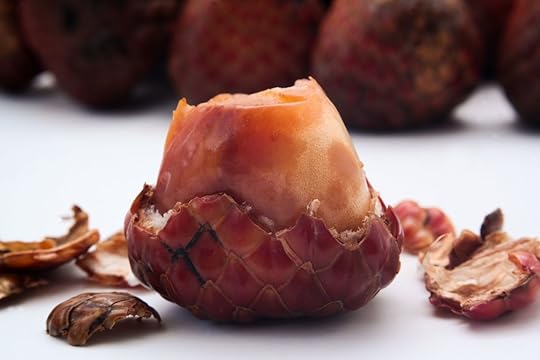
Photo: syahrulkhalid/Shutterstock
Indigenous to the tropical forests of Thailand, Malaysia, Sumatra, and Borneo, Asam Payas are super-sour fruits that are often used in relishes, but you can eat them raw (it might be a little tastier if you pop in a miracle berry beforehand). They come in red, yellow, or brown varieties, in a pear shape, and in a scaly skin that looks a bit like a nut shell. Depending on where you find them, this fruit bears a different name (Kuwai-Kuwai in Sumatra, Kelubi in Malaysia, Lumphi in Thailand, etc.). According to Edible Medicinal and Non-Medicinal Plants, their stems and husks are used in Malaysia for coughs and hoarseness.
6. Durian
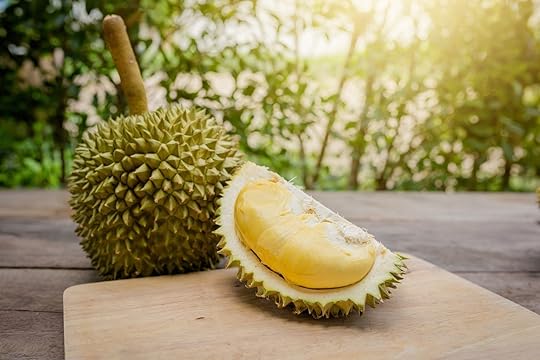
Photo: Eddy Tor Channarong/Shutterstock
Travelers to Southeast Asia are now familiar with this large, spiky fruit that reeks of sewage. According to Fruit Hunters, it is strongest-smelling fruit in the world, but has a creamy flavour and a texture that resembles pudding. Although its smell can be a deterrent (it is so strong that it is even forbidden in public places in certain Asian countries), it is so ubiquitous in South-East Asia that it’s worth pinching your nose and giving it a try. According to The Smithsonian, locals even describe it as “hell on the outside and heaven on the inside.”
7. Mangosteen
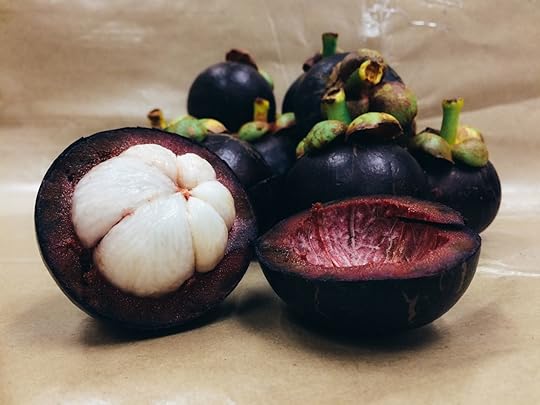
Photo: metita ungsumeth/Shutterstock
Mangosteens look cool and taste amazing. They are about the same size as apples but they have a purple outside that acts as a natural jewelry box for The Queen of Fruit. The colorful rind hides a juicy, white, segmented flesh that is so delicious that Queen Victoria was a self-proclaimed mangosteen addict. Mangosteens are believed to originate from Malaysia and Indonesia, but can now be found in tropical locations such as southern India, the Caribbean, and northeastern Australia. I have personally been able to find them in Granville Island in Vancouver, but they were quite pricey, so you may want to take a trip to Asia to try it out.
8. Water apple or Java apple

Photo: photo one/Shutterstock
Water apples look like shiny pears and belong to the same fruit family as guava, so they are nothing like the apples your nanna makes pies out of. Water apples can be pink, light green, or white. The fruit’s skin is thin and protects a white, spongy, and juicy flesh, as well as two small seeds. Water apples are mildly sweet and tart, but more often described as bland; however they are very refreshing, hence their name. According to Purdue University’s Center for New Crops and Plant Products, they are found Southeast and Eastern Asia (mostly Taiwan), India, South America, the Caribbean and on some African islands such as Zanzibar and Pemba.
9. Buddha’s hand
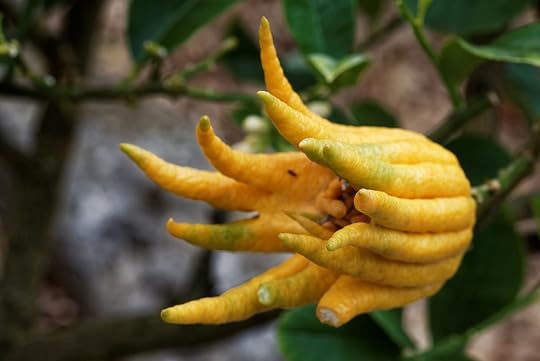
Photo: Heiti Paves/Shutterstock
The creepiest-looking fruit in this list, Buddha’s hand is becoming more and more popular in North America — mostly because it’s often found in Chopped baskets on The Food Network. Unlike all the other fruit in this list, this creepy lemon hand (it’s a citrus) has no flesh or seed, so the only way to eat it is by zesting it; letting a few slices infuse to make tea or cocktails; or candying it. Buddha’s hands are originally from India, but have been growing in China for a long time. Fun fact: California has been growing them since the mid-’80s.
More like this: 10 of the weirdest things you can eat in Latin America
The post The 9 weirdest fruits in the world and where to try them appeared first on Matador Network.

Matador Network's Blog

- Matador Network's profile
- 6 followers

