
Matador Network's Blog, page 1355
April 27, 2018
Venice banning tourists
As Venice braces itself for the long weekend in Europe, officials are taking extreme measures to stop tourists from entering core landmarks.
The World Heritage city will restrict visitors from places such as the Piazzale Roma and the Santiago Calatrava-designed Constitution Bridge. The restriction also includes passenger traffic on the Strada Nuova, one of Venice’s most popular streets. The only people who can access these areas will be locals who will be required to show a residential or commuter Venezia Unica pass at guarded check-points.
This measure has been taken due to overcrowding of the cities narrow streets and waterways during the summer months. Venice hosts around 30 million tourists that visit each year and the stain of visitors on the city has long been an issue for the local authorities and the local people who need get to work and live their everyday lives. Visitor numbers are expected to soar this weekend, which is a four-day long holiday in Europe.
The mayor of the city, Luigi Brugnaro, signed a decree which included this statement calling for “urgent measures to guarantee public safety, security, and livability in the historic city of Venice.” He continued on Thursday to state: “We cannot prevent access to the city, and we do not want [to], but we must regulate the flow of tourists.”
There is also a restriction on cars that can enter the city. This step will mean that people coming via car from the Italian mainland might be stopped from crossing the bridge over the lagoon, the Ponte della Libertà.
Although these measures might seem extreme, the Mayor is suggesting that they may be implemented again in the future if they are successful in controlling the crowds.
Venice is, of course, not the only popular tourist destination in Europe putting such restrictions in place. The Greek island of Santorini and Dubrovnik in Croatia have recently capped the number of people who can visit the islands. Authorities and local people from Corfu and Rhodes have also expressed an interest in controlling tourism. 

More like this: The backlash against tourism: what travelers can do
The post Venice is banning tourists from parts of its city appeared first on Matador Network.


30 countries within 500miles Vienna
Grab a map and take a good look at how compact Europe is as a continent. It’s worth doing as a reminder that within this small continent there are 48 countries. Within a few hours, you can jump borders, hear a variety of different languages, and experience diversity of cultures. We got a reminder of how interconnected the continent is geographical via a thread on Reddit this week when a user created a map to illustrate that you can reach 29 countries within 500 miles (around 800 km) from the city of Vienna — though we counted 30, plus Austria itself of course.
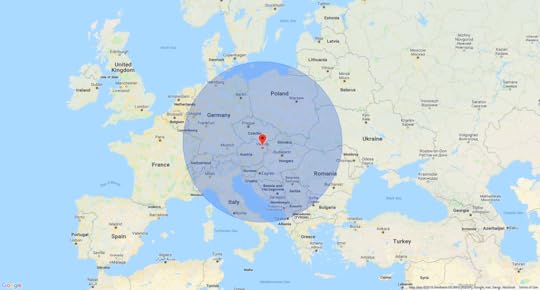
Photo: Reddit
It seems a little hard to believe, so we dug into the comments and did some math. Here are some of the results. Reddit users found this map super interesting and it sparked some debate as to the geographical boundaries of Vienna. Here is the list of countries that we have included in our final count.
1. Denmark
2. Russia
3. Poland
4. Germany
5. Belarus
6. The Netherlands
7. Belgium
8. Luxembourg
9. Czechia
10. Slovakia
11. Ukraine
12. Moldova
13. Romania
14. Hungary
15. Switzerland
16. France
17. Italy
18. San Marino
19. Holy See
20. Slovenia
21. Croatia
22. Bosnia and Herzegovina
23. Serbia
24. Montenegro
25. Macedonia
26. Albania
27. Bulgaria
28. Kosovo
29. Liechtenstein
30. Monaco
Further down the thread, a user has kindly listed 20 world capitals ordered by the number of countries within 500 miles, which is worth checking out.
Dialog concerning the separatist movement in various countries was also an interesting read and a reminder of how much borders and nations have changed and might change in the near future.
Commenters from Australia and the US seemed to be the most surprised by the data, one user from California stated: “Yeah, I could drive 500 miles and still be in California. It’s wild to think that trip would take me through multiple countries.”
If you are interested in geography, it’s worth checking out this commentary for yourself. And of course, this thread wouldn’t be complete without some joker asking this: “What if I walk 500 more?” with the reply “Then you’d be in Scotland.”
More like this: Mapped: the optimal road trip across Europe
The post If you walk 500 miles from Vienna, you could visit 30 different countries appeared first on Matador Network.

Woman delivers own baby in hotel
Tia Freeman’s delivery is certainly one of the craziest travel stories out there.
In a viral Twitter thread that went live a couple of days ago, Tia Freeman details the incredible story of the unexpected birth of her son, Xavier, while she was on a trip to Turkey.
Freeman only realized she was expecting a child while in the third trimester of her pregnancy, i.e. six months in. Although this may seem unbelievable, it is not uncommon for women whose contraception creates irregularity in menstrual cycles. Freeman also mentions that because she used contraception and never gained any weight, there was no indicator of her pregnancy.
Oblivious to her soon-to-come baby, Freeman had booked a vacation in Germany. When she learned that she was pregnant, however, she completely ignored the fact that she may not be fit enough to travel and hopped on a plane for a 14-hour flight. In a tweet she explains:
So I had already purchased tickets for a vacay in Germany and ya girl was not about to waste international flight money. So I was like if the boy comes on time I should be all good in the hood.
An hour before landing in Istanbul for a 17-hour layover, Freeman started going into labor, but she attributed the severe cramping in her abdomen to the in-flight meal.
She explained that, while waiting in line to go through customs, she was in serious pain, sweating, wanting to vomit, and feeling like she was going to faint. At this point, she understood that she was in labor, but she did not inform anyone of her condition.
Freeman went through customs, traveled to her hotel, and checked into her room. At that point, she could barely stand up, but instead of telling hotel employees about the situation, she decided to deliver her own baby in the hotel bath with the help of Youtube.
On Twitter, she explained that she remained calm and focused throughout the whole process:
[…] at no point ever did I freak out […] I strip down and climb in the tub. The internet said there were a couple positions that people find the most comfortable. I picked the one that worked for me and I was like okay BOOM let’s birthed this baby.
By the time she got into the tub, she realizes that her contractions were only one minute apart. Her baby was about to arrive very, very soon.
Indeed, after a few pushes, baby Xavier arrived into this world, healthy and floating in the tub.
[…] Let me tell you babies are buoyant. That little joker said bloop and floated right on up to the top of the water.
After taking care of the placenta and the umbilical cord (still thanks to Youtube), she cleaned the bathroom, breastfed her baby, and went to sleep.
The next day, she wrapped Xavier in a shirt and made her way to the airport. But, because she came to Turkey from the US the day before on her own and attempted to leave the country the next day with a newborn that does not have any official documents, the airport workers got unsurprisingly suspicious.
[…] they thought I was a human trafficker trying to smuggle out a baby.
After a thorough questioning from customs, the police, and medical professionals, she was cleared of all suspicions and driven to the US consulate in Istanbul to apply for a birth certificate and a passport.
So the translator is like like miss maybe later. The reporter was like okay I’ll wait. So I’m in the consulates for like 2/3 hours (it has been a superrrrrrrr long day). So as I’m inside I have to answer a bunch of the same questions & apply for his birth certificate & passport pic.twitter.com/X3JptPMaJi
— Tia Freeman (@TheWittleDemon) 25 avril 2018
After a trip to the hospital to make sure everyone was healthy, the little family returned to the US safely where journalists waited for them at the airport.
Although we are happy that the pair is in good health and wish Xavier and his mama all the best, we urge everyone not to try to replicate this risky behavior. You need to make sure you are fit to travel before you board an airplane for a long international flight while pregnant. Also, don’t try to deliver your own baby without any assistance — it’s unlikely to end up as positively as Tia and Xavier’s story.
More like this: 9 expat moms share their stories of giving birth abroad
The post This woman delivered her own baby while traveling in Turkey in her hotel room using a YouTube tutorial appeared first on Matador Network.

World's biggest airplane
If you’ve flown in an A380, the world’s largest and most spacious passenger aircraft, you know it’s gigantic. Well, it’s peanuts compared to Stratolaunch.
Stratolaunch has 28 wheels, six 747 jet engines, two flight decks, and a wingspan of 385 feet (longer than a football field). It’s the world’s largest aircraft.
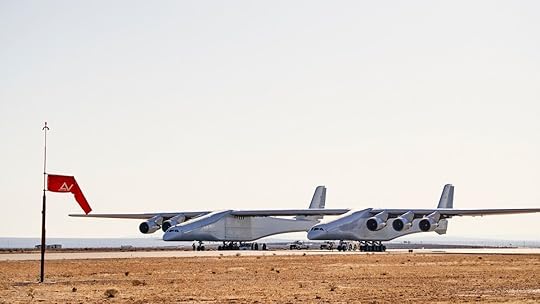
Photo: Stratolaunch
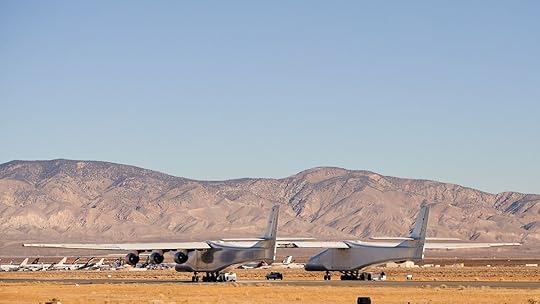
Photo: Stratolaunch
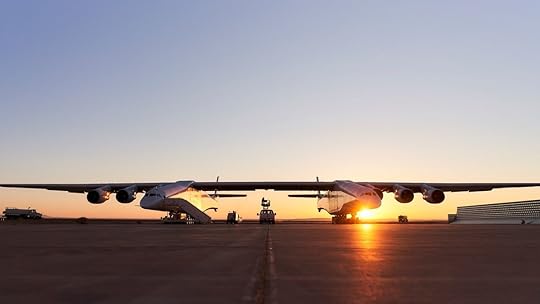
Photo: Stratolaunch
Built by Paul J. Allen, Microsoft co-founder, Stratolaunch is not meant to carry passengers (yet), but rockets that will deliver satellites into low Earth orbit. According to The Washington Post, the ultimate goal of this massive aircraft is to become a reusable platform able to launch space shuttles (with astronauts) from any airport with a large-enough runaway.
Earlier this year, Stratolaunch took its first taxi test at the Mojave Air & Space Port in Mojave, California where it is being built. It reached the speed of 46mph.
More tests are planned to make sure the aircraft is capable of meeting the take-off speed of 138mph. If Stratolaunch reaches the necessary speed without any problem, the aircraft could take its first flight in the next few months.
H/T: Travel + Leisure
More like this: Around the world in the first solar-powered airplane able to fly through the night
The post The world’s biggest airplane is about to take flight appeared first on Matador Network.

April 26, 2018
Seoul is most underrated Asian city
When it comes to penning bucket lists, Seoul doesn’t receive nearly as much wanderlust as more popular Asian destinations like Tokyo, Beijing or Bangkok. But in the wake of the 2018 Winter Olympics, more attention is finally being paid to South Korea, and in turn, it’s capital city. Which means the secret that many savvy travelers already knew is getting out: Seoul is the most underrated city in Asia for travelers.
Seoul has a huge expat population (many people move there to teach English overseas), an innovative food scene, 24-hour everything, traditional Korean architecture, efficient public transit, K-pop, and a fashion scene that is so far ahead, their style only trickles down to the west years later. On top of that, Seoul is actually affordable. Compared to similar cities like Tokyo and Hong Kong, Seoul’s cheap food, lodging, transportation, and shopping make visiting way more accessible for the average traveler.
Here are a few more reasons why Seoul is totally underrated.
1. Each neighborhood is like a tiny city. 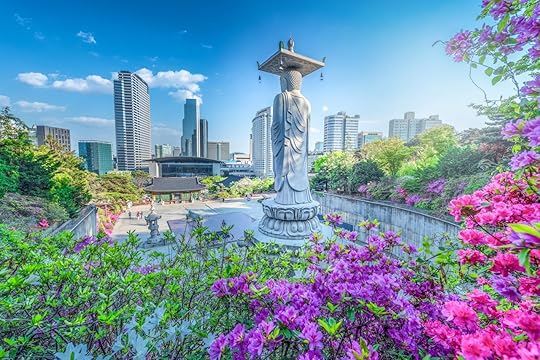
Photo: Travel Take Photos/Shutterstock
First, there’s Hongdae: the trendy student neighborhood. If you’re up for some lively nights out, design stores, dozens of coffee shops, and artisanal food, Hongdae is ideal. If you’re more of a historian, Insadong is perfect for appreciating the Seoul art scene and exploring the traditional parts of the city. Alternatively, Itaewon is basically the expat neighborhood of Seoul and the most multicultural part of the city. Then there’s the notorious Gangnam. You’ve probably heard the song “Gangnam Style” by Psy. Gangnam is a wealthy, science-fiction-esque metropolis.
2. There are diverse options for accommodation.
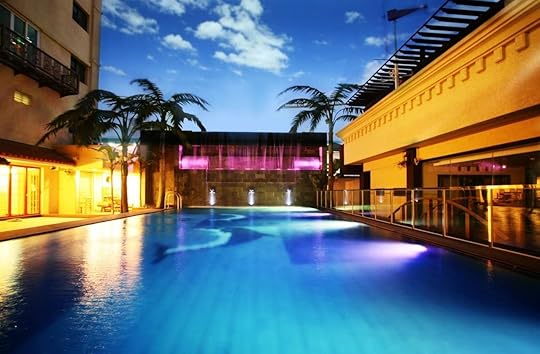
Photo: Dragon Hill Spa
If you are short on money or don’t have a reservation for a place to crash in Seoul, you can always sleep in a bathhouse, jjimjilbang, in Korean. Seoul is well-known for its extravagant bathhouses such as the notorious Dragon Hill Spa. The sleeping arrangements are likely to be a tatami floor with a hard pillow, but the baths, mineral rooms, saunas, and steam rooms should relax you enough to fall asleep anywhere. Even the most expensive ones are under $20 US for an overnight stay. You don’t even have to leave to eat as most bathhouses in Seoul have restaurants on-site. If you are uncomfortable with nudity among strangers, then a jjimjilbang might not be your best bet, but if you can get over the initial awkwardness, you’ll have an unforgettable cultural experience.
3. Traditional culture is found alongside modern entertainment.

Photo: CJ Nattanai/Shutterstock
Start at Bukchon — a hanok (traditional Korean house) village. The village has been really well preserved over the past six centuries. There are hundreds of traditional houses in this village. Here you can wander around all the narrow, historic streets and feel as if you’ve traveled back in time.

Photo: Prasit Rodphan/Shutterstock
Next, venture up to Gyeongbokgung. Translating to Gyeongbok Palace in English, the palace draws some of the most tourists in all of Seoul, for good reason. Built in the 14th century, this is another well preserved, restored historic site for those who really want a taste of traditional Korean culture.
Lastly, grab a ticket to NANTA: South Korea’s over-the-top cooking theatrical performance. It’s a comedy show that’s been around for over 20 years. There are even two theaters in Seoul dedicated to it. Ticket prices start around $30 US.
4. Seoul has a “bang” for every occasion.

Photo: Dragon Images/Shutterstock
You’ll see the word “bang” (meaning “room” in Korean) attached to words plastered all over the city. I’m a big fan of norae bang (karaoke rooms). They’re inexpensive and your crew can have a whole room to yourselves to privately impress your friends or embarrass yourself with your vocal abilities. They have microphones, television screens, and a booth. Multi-bang are also fun because they usually have movies, video games, snacks, and karaoke in a cozy room that you can rent by the hour. Noreabangs and multi-bangs can usually accommodate groups up to a dozen people, but you can go with three or four people and still have an amazing time.
5. Food is inexpensive and markets are abundant.

Photo: Norikko/Shutterstock
One benefit of traveling to South Korea is that tipping is not an expected custom. Between Seoul’s old school markets, themed cafes and the modern bistros, you can find something to suit your most obscure cravings for a very affordable price tag. Some popular markets in Seoul include Namdaemun Market, Myeongdong Street Market, and Gwangjang Market.
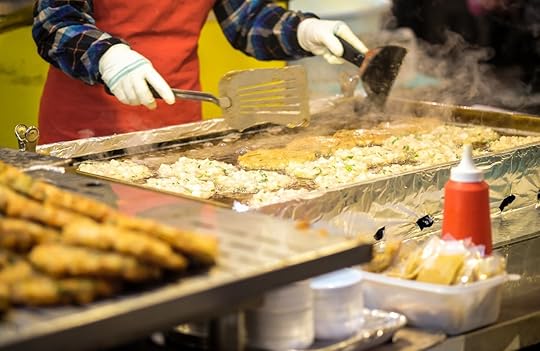
Photo: Lalitop/Shutterstock
For those who are low on funds, you can eat these small meals for less than $5 US: kimbap (similar to casual sushi), bibimbap (mixed rice bowl), ramen, and mandu (dumplings). The family-style meals in Seoul are even more exciting and remain affordable. Samgyupsal (grilled pork belly), dakgalbi (spicy stir-fried chicken), bulgogi (Korean barbecued beef), and chimaek a.k.a. fried chicken and beer are to die for. The ultimate perk of Korean food is endless free side dishes that come with meals such as samgyupsal or Korean barbeque. For example, there are spicy side dishes, fermented veggies like kimchi, soupy eggs (my favorite), and sprouts. Depending on the establishment, the sides can vary dramatically and that is a core part of the eating experience in the city.
6. There’s a sheep cafe.

Photo: Thanks Nature Cafe
If you love animals you can sip a smoothie or eat a waffle while playing with puppies, kitties, or even sheep. There are cat and dog cafes scattered around Seoul, but one that sticks out among the animal cafes is Thanks Nature Cafe, a cafe specifically dedicated to sheep. Located in Hongdae near Hongik University, Thanks Nature Cafe serves a variety of popular Korean desserts, some, comically, in the shape of sheep.

Photo: Thanks Nature Cafe
The sheep are bred on a farm in Gangwon Province to be petting animals and switched out annually to avoid becoming overly stressed from all of the attention. The animals generally well taken care of at animal cafes in Seoul, but always scope out reviews online before you visit to make a responsible choice.
7. A national park lies just beyond downtown Seoul.

Photo: Mongkol Chai/Shutterstock
Bukhansan National Park is full of hiking trails, and it’s under an hour from the heart of downtown Seoul. Bukhansanseong Trail is the most popular trail at the park. There is no cost for hiking the mountain. You can reach the trailhead via public transit. From the trailhead, the hike takes two hours or so to reach the summit of Baegundae Peak (the highest at the park) depending on your fitness level. The trail is a moderately difficult, ramping up quite a bit at the end. If the weather is prime for hiking, queues for the bus can leave you waiting for hours. In this case, taking a taxi is better and avoid going on a weekend. From the summit, you get a bird’s eye view of Seoul and the surrounding mountains. Plan on dedicating at least five hours to complete this hike and stock up on snacks beforehand.
More like this: How to save money on your trip to Seoul
The post Why Seoul is the most underrated city in Asia appeared first on Matador Network.

The 9 coolest things airlines are doing this year to improve flying
It’s easy to complain about air travel. These days, the likelihood of finding overhead space for your carry-on is as slim as the average economy seat, and freebies like roasted peanuts seem like a thing of the past. Sometimes, it feels like airlines are doing everything they can to make flying a downright hassle, but most are actually actively making improvements to bring air travel into the Digital Age and help passengers fly more comfortably. Here are nine ways innovation and technology are changing the way we travel in 2018.
1. Airline menus are getting the Michelin-star treatment.
Airplane food has been the butt of flying jokes for as long as we can remember. In an effort to mend their culinary reputations, airlines have started teaming up with some of the world’s best chefs to create meals that travelers will actually enjoy eating. Carriers like Air France and American Airlines already offer menus designed by Michelin-star chefs in first and business class, but in 2018, even an economy ticket will score you some good grub. Japan Airlines is now upgrading its meal service to give everyone first-crate dining, joining carriers like Qantas and Singapore Airlines in the effort to make high-quality plane food the new normal.
2. Cathay Pacific is hosting yoga class at 36,000 feet.airlines hopped on the wellness bandwagon. Hong Kong flag carrier Cathay Pacific recently partnered with Pure Yoga to create instructional videos for exercises that can be done on the plane, as well as before or after a flight. Passengers will also find tips about meditation, mindfulness, and healthy living. So far, the service has received positive feedback, meaning there’s a chance we’ll see wheatgrass smoothies on the drinks trolley one day.
3. Etihad is giving parents a break with onboard babysitters.
Etihad’s Flying Nannies have been around for a few years, but the mile-high childcare service is better than ever before. The airline recently graduated its 2000th Flying Nanny and introduced a new Flying Nanny Kit loaded with fun activities like face paint, Origami, and magic-trick materials. The onboard babysitters are flight attendants with childcare training from the UK’s esteemed Norland College, so you can trust that your little ones are in good hands. Better still, the Flying Nanny service is complimentary for all passengers on long-haul flights.
4. Virtual reality is coming to the United Arab Emirates’ airports.
UAE-based airlines Emirates and Etihad want to see virtual reality headsets become the new standard for in-flight entertainment. Both carriers are currently running trials in select business- and first-class lounges to gauge interest in VR tech. Right now, anyone with access to the premier lounges in the Abu Dhabi and Dubai airports can test out SkyLights Aero Virtual Reality headsets, which are programmed with 2D and 3D movies, as well as a handful of VR experiences. The headsets are designed to be comfortably wearable for several hours at a time and have an approximate battery life of six hours, so it’s pretty clear they’re headed for the cabin if all goes well with the trials.
5. Qatar Airways is bringing sliding doors to business class.
Qsuite is the latest in luxury seating from Qatar Airways. It features a “quad configuration” made up of two front-facing and two rear-facing seats, each of which comes with a sliding door for optimum privacy. The four-seat units are separated by adjustable in-flight entertainment panels that can also be pushed to the side to create an open space, so it’s especially great for families or business colleagues traveling together. Qsuite seats also recline into fully lie-flat beds, and privacy dividers can be lowered to convert adjacent seats into a double bed. If you’ve got the funds, it’ll make you feel like you’re flying from the comfort of a hotel room.
6. Virgin Atlantic is making in-flight entertainment more inclusive.
Partnering with Bluebox Aviation Systems and Guide Dogs for the Blind, Virgin Atlantic is making in-flight entertainment more accessible for visually-impaired passengers. Blind travelers, as well as those with partial sight loss or sensitivity to brightness, now have access to an iPad-based user interface customized with larger print, easy-to-use controls, audio descriptions, and more. Virgin Atlantic is the first airline to offer a platform designed with visually-impaired passengers in mind, but it isn’t the first time the airline revolutionized in-flight entertainment. In 1991, Virgin Atlantic outfitted every seat back with a TV screen, redefining how we consume media while flying. Let’s just hope this trend takes off too.
7. KLM is doing on-demand dining.
KLM is bringing restaurant-style dining to the skies. World Business Class passengers can enjoy the “Anytime For You” dining service on select flights, making it possible to order food pretty much anytime during daylight hours in addition to the regular three-course meal service. “Anytime For You” dishes are served by hand to make the business-class cabin feel more like a sit-down restaurant, adding a touch of class to your onboard dining experience.
8. Virgin Australia is helping infants (and everyone else) get some shut-eye.
There is one fear all fliers share: being seated in the vicinity of a fussy baby. Thankfully, Virgin Australia is here to help. In December 2017, Virgin Australia became the first major Australian carrier to approve sleeping devices like inflatable beds onboard its aircrafts. Plane Pal, BedBox, and Fly Tot have all been given the go-ahead, so it’s time to put in your Amazon order and start planning that family vacation you’ve been putting off.
9. Biometric technology is being tested to replace boarding passes and bag tags.
Delta and JetBlue are testing facial recognition and fingerprint scans as alternatives to print boarding passes and luggage tags. Security is a big motivation behind changing the way we get through the airport, but the use of biometrics is also expected to make boarding faster and more efficient. It’s still too early to say just what impact the technology will have on flying, but it’s shaping up to be one of the biggest travel trends this year. All we know is that once our faces become our travel documents, we’ll never have to worry about misplacing our passports again.
More like this: The 9 most affordable airlines to fly in business class
The post The 9 coolest things airlines are doing this year to improve flying appeared first on Matador Network.

Record-breaking solar farm
Solar panel fields forever, or so it might seem to anyone flying over northern Mexico these days. A nearly 3,000-acre solar farm now covers a wide swath of desert inside the Mexican state of Coahuila, just south of the Texas border. Passengers flying south from the United States witness the landscape fading from bright orange desert into the cool blue of reflective solar panels, in a field so large it nearly resembles a massive lake. The installation of 2.3 million solar panels is part of the country’s plan to become a bold leader in the global push for renewable energy.
With this development, known as the Villanueva power plant, Mexico now boasts the largest solar farm anywhere in Latin America. It also stands as the largest solar project anywhere on Earth outside of China and India. SBS News reported that the solar panels will produce 1,700 gigawatt-hours of power, or enough to light 1.3 million homes.
The panels, designed by Italian firm Enelare, are designed to follow the arc of the sun from east to west as it passes over the desert, optimizing their energy storage and allowing for increased power absorption on days with periods of cloud cover or inclement weather.
According to energy blog Renewables Now, the country’s Secretary of Energy Pedro Joaquin Coldwell aims for the country to generate 43 percent of its power through renewables by 2024. Mexico also hopes to cut their total carbon emissions in half by 2050. A program making it possible for private companies to produce, buy, and sell solar power on an open market is a big part of the plan to make this goal a reality, along with further development of solar farms across the sun-drenched country.
More like this: 20 gorgeous landscapes you’ll only find in Mexico
The post Mexico’s new record-breaking solar farm will power 1.3 million homes appeared first on Matador Network.

Sail from Sweden to France in line
Looking for a smooth sail? Redditor patrlars just pointed out something that would most likely elude the naked eye of even the savvy sailor: you can sail a perfectly straight line from Sweden to France. The route leaves Sweden north of Gothenburg, just south of the Norwegian border, and passes through the North Sea and the English Channel before arriving near the small coastal town of Etretat, France.
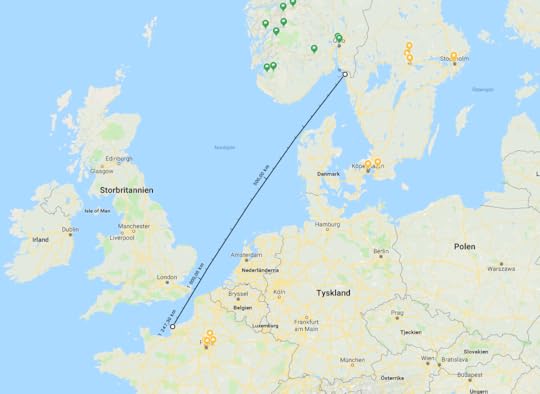
Photo: patrlars/Reddit
When looking at this map, you may find yourself wondering why you’ve never heard of the country Tyskland. In all likelihood, you have. Think sauerkraut, the Autobahn, and large Autumn beer festivals. The text on the map is written in Swedish, a language clearly featuring striking differences from English, and Tyskland means Germany. Conversation in the comments section of this post centered around these language differences and people’s fascination with them much more so than it did around sailing, however, Redditor colcrispy, apparently a very literal thinker, did note that “You haven’t ever sailed if you think you can sail straight anywhere.”
“You cannot sail in a straight line for long regardless of how you’re calculating that straight line. Sailing relies on wind and current, and wind changes,” Redditor chilari clarified. “Even if it doesn’t, if it’s not coming from the right direction for where you want to go (which is generally not from directly behind you), you’ve got to tack or wear to zigzag your way against the wind.” The concept of the map remains true in the planning stages, however, assuming the sailor prefers the fastest route from point A to point B.
If, after your sail, you feel inclined to keep up the fitness-driven adventuring, but want to give those upper-body muscles a break, try this straight line walk from eastern China to West Africa. If you complete both, Matador Network will crown you as the ultimate badass in our “Badass Travelers” series.
More like this: This is the longest straight-line walk you could do without ever hitting the ocean
The post This map shows you can sail a perfectly straight line from Sweden to France. appeared first on Matador Network.

Cabin on a ledge in Slovenia
Forget the old, rustic log cabins. Mountain shelters are now designed by ambitious architects who push the limit of what is possible with stunning, modern creations. Iceland is getting geometric tent-like shelters and glass northern lights viewing platforms, Idaho is using cozy yurts, and Slovenia has this thin-looking, modern cabin perched on a ledge.
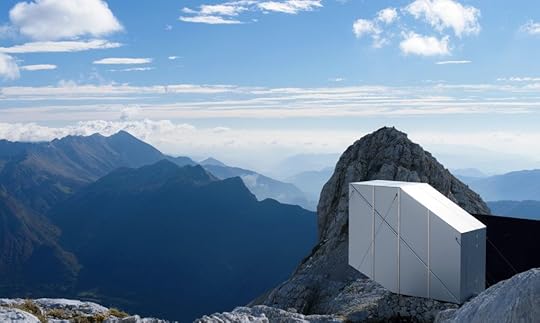
Photo: Janez Martincic, Ales Gregoric
Designed by Slovenia-based architecture firm OFIS arhitekti, the Kanin Winter Cabin is made of wood and was designed to withstand the very harsh weather conditions (snow, heavy rainfalls, strong winds, and possible earthquakes) of the Western Julian Alps.
The cabin was not directly built in the Kanin Mountains as it would have been much too challenging. Instead, it was prefabricated and the Slovene Armed Forces helicopter crew transported it to the summit.
The location was chosen for its remoteness; its incredible views of Triglav, Soca Valley, and the Adriatic Sea; as well as ist popularity with hikers, climbers, cavers, mountaineers, etc.
Nine people can fit in this narrow cabin that seems to be hanging in the void. Thanks to a large window facing the valley below, those who reach this shelter will enjoy sweeping views of the valley below and the surrounding mountains.
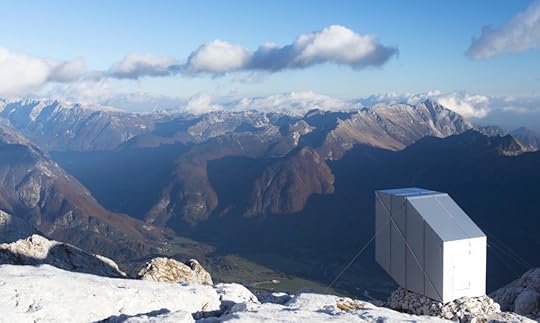
Photo: Janez Martincic, Ales Gregoric
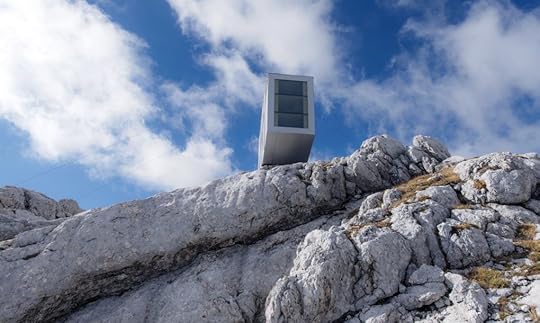
Photo: Janez Martincic, Ales Gregoric
Although it may not seem like it at first, the Kanin Winter Cabin is very stable. That said, those with a fear of heights should probably find a more suitable spot to spend the night.
H/T: inhabitat
More like this: These geometric tent-like cabins in Iceland are insane
The post This crazy cabin perched on a ledge in Slovenia will induce serious vertigo appeared first on Matador Network.

Internet safety while traveling
“Don’t put all your eggs in one basket,” Grandma said. In the digital world, travelers ignore this advice at their own peril, leaving all of their precious data on one device, and taking that holy grail out of the relative safety of their homes and onto the uncertainty of the road. Insurance may help replace lost hardware, but the data may be gone forever, and that’s often more valuable than the collection of plastic, gold, copper, and silica. Safeguarding your digital data is one of the most important parts of being a responsible, well-prepared traveler.
Today, nearly everything is on a laptop or cell phone. If access is lost, life shuts down until we can piece together the directories and files. Insurance doesn’t protect against data loss — it’s up to you, and you need to take action before you lose travel docs and itineraries, valuable contacts, or worst yet, your trip photos.
Office workers and remote workers have protections not ordinarily available to full-on freelancers. Your data may be protected by your company’s virtual private network, a safe WiFi connection, corporate firewalls, and antivirus software. Independent travelers, though, are probably leaving themselves open for attacks. Whether you’re earning a livelihood overseas or heading out on a trip abroad, here are some tips for fundamental online security — no matter where in the world you wake up.
How to keep your data safe when using public WiFi
The threat of WiFi hacks is not imminent if you are working from the sofa at home. But when traveling, or even when working from your favorite cafe, beach bar, or poolside, the risk of a security breach is much higher. The solution? A Virtual Private Network, or VPN as its commonly known.
A VPN is kind of like cloak for web browsers. It makes your network connection much more private than your browser’s ‘Incognito’ mode, going so far as to hide your location and even make websites and service providers think you are somewhere where you’re not. Both paid and free VPNs allow for the creation of a secure connection to a public network using the internet.
VPNs may be used to access location-limited sites, such as using Facebook when in China, but also serve to shield browsing activity and data transmissions so that if you participate in activities like shopping online, your credit card information won’t be stolen. A VPN is easy to setup and most operating systems come packaged with integrated VPN support.
For travel, use a paid VPN service. Being able to access the entire internet without fear of firewalls or tracking is a peace of mind worth shelling out a few bucks for. VPN service such as ExpressVPN or Buffered are built exactly for this. Plan to pay between $5-$9 per month for services like this. You will even be able to download their app to your phone and browse via mobile.
On the free side, browsers such as Opera make the process incredibly easy. All you need to do is turn on HTTPS for browsing after downloading and installing their browser. Next, turn on its ad blocker option in the “Preferences” section, and turn ON its VPN, which is also located in the “Preferences” section. You can set the VPN to another country in the settings, which will make websites think you are in that country — this is how users access sites like Facebook in China, for example. You can also buy VPNs from monthly-based services, if you don’t want to use the Opera browser. A quick Google search will turn up plenty of options.
Once you’ve done this, your data will be encrypted before it leaves the computer. Still, avoid signing into sensitive accounts at internet cafes and coffee shops, such as your online banking. Save that for the hotel.
Protecting your data from software or hardware error
Your data lives on the computer, and any individual file can succumb at any level: the file could get ruined (you accidentally deleted a file, destroyed a valuable earlier version of a file, or got hacked and either had the files corrupted or your data held for ransom) or your computer itself could be physically lost, destroyed or stolen.
Recent versions of Windows and Mac ship with integrated backup utilities which simplify making a local backup. The only cost is the price of an external hard drive — options start at about $50 and go up into the thousands, depending on how much you’re looking to store.
Other options for backing up your files
Time Machine (Mac) and Backup and Restore (PC) only manage the first two levels of loss should your computer crash or something else go wrong. Therefore, backing up regularly doesn’t help much if your computer is destroyed entirely. If your accommodation burns down or gets swamped in a flood, the data may be salvageable by recovery services, but it is a time-consuming, expensive, and seldom complete process.
Off-site backup options are going to cost money, so your best bet is to use a thorough, comprehensive backup plan. Consider the expense as a sort of “data insurance” policy. To safely and thoroughly backup your data, make use of either A/B drives or the cloud. A/B drives simply means having two external drives on which backups are alternated. The more often you backup data and swap files, the less data is lost in an accident.
With a mobile-intense lifestyle, a cloud backup is also a great solution if you have a solid internet connection. Files can be updated or retrieved from anywhere you can access the internet. If all of those trip photos are especially important to you, backup your files to the cloud as often as possible (you can set it up for automatic backups) while you’re on your trip — not just when you return home.
There are a number of ways to go about setting up cloud data backup. The easiest for most Google users is Google Drive, a free file storage service which gives each user 15 GB of storage space, more than enough for most people to backup their basic files and documents. You can buy more space if needed. Smartphone users can purchase cloud backup plans for the data on their phones as well. iPhone users can enjoy 200GB — far more than most ever need — for $2.99 per month.
For those worried about data safety overseas, cloud storage is the best way to ease your anxieties. Once your files are on the cloud, you have the added benefit of being able to access them from any device as long as you can log in. This means that even if something awful happens and you lose your phone or computer, you can still access your travel docs, photos, and everything else necessary for your trip. Whether you’re an experienced traveler or heading abroad for the first time, that’s a nice assurance to have.
The post How to stay safe online when traveling appeared first on Matador Network.

Matador Network's Blog

- Matador Network's profile
- 6 followers

