Michael Hyatt's Blog, page 41
August 14, 2018
Breakthrough Results in Operations
Applying 4DX in Production and Operations Environments

Is execution more difficult than strategy? Nine out of ten business leaders say “yes.” If you are a leader with operational or production responsibility, you may feel an even higher sense of frustration when it comes to execution.
In the early 2000s, a group of us at Franklin Covey began working on the methodology known as The 4 Disciplines of Execution (4DX). Currently, the book by the same name is the most read book in the world on the topic of strategy execution and over 3,000 organizations and 200,000 teams are formally running 4DX.
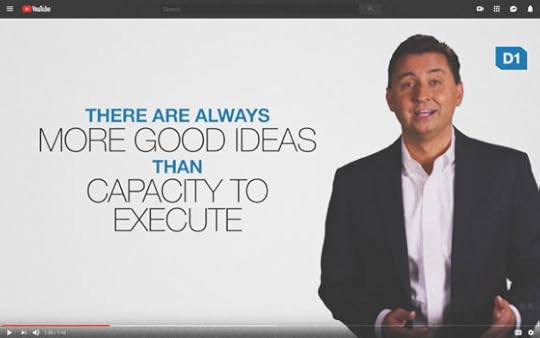
Recently, we made an interesting finding. In our case studies, we kept seeing the biggest financial gains from implementing 4DX in the areas that could best be described as operations and production environments. The 4DX methodology has been successfully used in every type of industry, but it was these operational leaders who were having the greatest success.
We didn’t have a good explanation for this. Were these leaders using the 4DX approach in a different way than leaders in other industries? Did prior experience in continuous improvement efforts like Lean or 6 Sigma make them better implementers of the approach? Where there just bigger gains to be had? There was some evidence to support all these possibilities, but the more we talked to these operational leaders the more we noticed a pattern. It seemed all their stories and insights kept revolving around the same three challenges. These challenges were in producing results that required:
the effort of many people
process adoption
alignment across different functions
Regardless of whether these leaders were trying to improve cost, quality, production, or safety, they had to overcome these same three challenges. While these challenges are not unique to operational leaders, they are extraordinarily significant in the operational environment. In this article, we will share the stories and advice from top operational leaders who have utilized 4DX to address these challenges and produce results measured in millions and even billions of dollars. The specific names of the companies and their leaders that utilized 4DX are not disclosed to protect confidentiality.
1. Produce a result that requires the effort of many people
Getting a small team to focus and work on a new strategy is difficult. Moving a large team, a division, or even an entire organization to work on a new strategy can seem impossible. Almost without exception, the leaders we interviewed discussed this issue and applied 4DX to those results that required the efforts of a large number of people.
When Steve, vice president of manufacturing operations at a leading manufacturer of railroad equipment, improved cycle-count accuracy from 80% to 98%, it required the work of hundreds of people across multiple sites—each making and keeping small commitments. These commitments included activities like cycle-counting different items every week, creating new storage areas, and making signage where none had existed. The accumulation of these small activities by hundreds of people had an impact measured in millions of dollars in inventory and cost savings.
The idea of big results from small activities is a recurring theme. Casey, vice president of production at the North American oil producer that saved over a billion dollars by increasing plant availability from 72% to 100% while cutting costs by over 22%, says,
“In our results, you don’t see these big elephant projects to save costs. It’s these small things that the operators and maintenance teams come up with. That’s what’s driven our costs down. Everybody on the team found those one or two little things that they could do to reduce costs. It’s just that one little thing every week.”
Steve, plant manager at a large agricultural-equipment manufacturing facility, said, “One of the most powerful things was the $50,000 to $100,000 projects that just kept popping out of the woodwork, and the next thing you know—all of these small projects add up to $2 million, $5 million, $10 million. It became more about a bunch of small projects—generating people’s ideas—getting their engagement. It ended up saving us millions and millions of dollars.”
2. Produce a result that requires improved process adoption
Although, we never suggested that our clients apply 4DX to their critical work processes—that is what they continue to do. According to Steve, plant manager, “Entropy is in every process. Every process you have, if you aren’t paying attention to it, is decaying. If you don’t pay attention to it long enough, it decays to the point where it completely breaks down.”
Mike, a global director of process improvement at a Fortune 500 supplier of paint products that improved first run compliance on complex paint formulas by 75%, pointed out that they had the processes in place, but as the pressure of daily, urgent activities intensified, process adherence slipped. Mike explained, “When people are stretched, they tend to take shortcuts, and they don’t follow process. What 4DX gave us was a mechanism to say we’re going to make sure we get these people to find the time to focus on the important stuff. It wasn’t lack of know-how. It’s that we weren’t able to allocate a significant amount of resources and time to get it done.”
In the case above, Mike and his organization were clear on a strategic path (they had the formal process right). The challenge was executing the process. 4DX gave them a method for maintaining focus on the most critical parts of their process and resulted in some of their largest gains.
“
4DX gave them a method for maintaining focus on the most critical parts of their process and resulted in some of their largest gains.
—CHRIS MCCHESNEY

3. Produce a result that requires alignment across different functions
Almost all operations and production outcomes require coordinated efforts across different teams. This is even more difficult when those outcomes are strategic (outside the normal, day-to-day operation). Again, although folks at Franklin Covey don’t spend a lot of time talking about cross-functional cooperation with our clients implementing 4DX, it is almost always cited as one of the biggest benefits of running the process.
Colin, shift team lead at the North American oil producer, said, “4DX has really aligned our teams. We had trouble at times with just one crew alone getting on the same page. One thing that 4DX has done is actually align four crews together. I think it’s the first time we’ve actually got the four crews to agree on something.”
Trevor, a director responsible for production at the same North American oil producer, said, “The biggest effect that 4DX has had on us is that everybody understands the end goal. Everybody is paddling the canoe the same way. Everybody understands what the goal is and what their attachment is to that goal.”
One of the challenges of cross-functional alignment is keeping everyone tethered to the same outcome. The other equally daunting challenge is managing the handoff as work moves from group to group and tends to fall through the cracks. This issue was raised by almost every manufacturing leader we spoke with.
One leader of a large Midwestern manufacturing plant discussed the gray (or undefined) area between teams, such as between the manufacturing teams and the quality engineering teams. “Everyone has done what they think they should do, but if it doesn’t include the gray area, then you end up with a chasm between manufacturing engineering and quality engineering. If the handoff does not go right, whatever you’ve done falls into the chasm,” this leader explained.
We first observed that “work falling through the cracks” working with the top 50 developers of one of the largest military contracts in US history. We taught these developers the concepts behind 4DX and they immediately began building lead measures around critical handoff points between groups in their processes. We were shocked at the improvement in productivity.

One additional by-product
We had always known that 4DX was rooted in accountability, but the impact 4DX has on engagement snuck up on us. When working with Lean Six Sigma teams at large carpet manufacturer we noticed a big jump in employee engagement. This jump in engagement happened when the teams recognized they were winning.
Two months later, we saw the same jump in engagement at a bottling plant in Michigan, where union employees were skipping their lunch breaks because they were competing to accomplish team goals with the other shifts. We started to see it everywhere, but it is important to note that the jump in engagement didn’t happen immediately after we launched the process. This is a big idea: The jump in engagement came when the teams began making progress towards their wildly important goals.
Of all of the insights that came from interviewing production, and operations leaders, this quote from Steve, vice president of manufacturing operations at a leading manufacturer of railroad freight equipment, was our favorite: “Before 4DX, employees came to work, did their jobs, and then they went home. They could care less about anything else. They were walking by trash on the floor, they were walking by broken machines leaking oil, and they went home. Now, they really care! They are passionate about it—they own it. They took ownership through the 4DX process, and you see it in all of our team members. That’s what’s been really rewarding. We see that people care about it now.”






Engineering Success
How to Create with the End in Mind
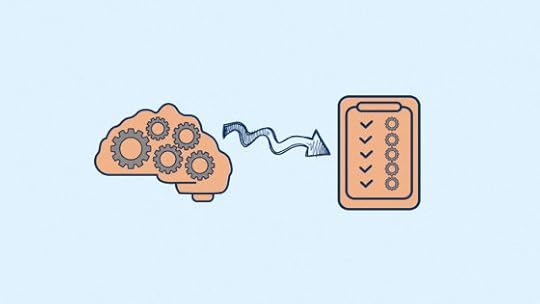
Leaders are responsible for getting results. Yet it seems like we’re constantly reinventing the wheel, trying to solve the same old problems. In this episode, Michael and Megan show you how to get exactly the result you’re looking for in any business process.


August 7, 2018
4 Rituals That Make You Super Productive
Leverage the Power of Daily Habits to Supercharge Your Day

All of us want to be fully engaged and highly productive, but every day brings a fresh round of small obstacles. In this episode, we’ll show you the four daily routines guaranteed to launch you into a productive day. When we’re finished, you’ll avoid that feeling that you are never quite caught up and enter each day calm, collected, and fully prepared to reach your goals.


The Science of Rituals
Learn Why They're So Darn Good for You

What do you do when you wake up in the morning? Do you brush your teeth, take a shower, and eat a bowl of oatmeal? Maybe you go for a run before the rest of the house is up or maybe you press the snooze and lie in bed, going over your day’s goals. Whatever you do, if you do it relatively consistently, it is a ritual.
There are too many rituals to count. There are rituals for mourning, healing, fertility, and war. Though interesting in their own right, these are not the rituals of productivity. Unlike rituals performed in response to particular events, it is routine rituals that feed our daily lives.
Ritual and peak performance
The very act of ritual helps people achieve peak performance. Sports players are a case in point. Many of their rituals are superstitious and seemingly superfluous, and yet studies find that even poorly-designed rituals positively influence performance.
“
The very act of ritual helps people achieve peak performance.
—ERIN WILDERMUTH
The rituals of great innovators and leaders, however, tend to be less random.
George Orwell swam the English channel every morning. Charles Dickens took a three-hour walk every afternoon. Ben Franklin woke up at 5 AM each morning and asked himself: “What good shall I do today?” Before turning in at 10 PM, he returned to this simple ritual, asking “What good have I done today?”
Modern research has pointed to the value of specific practices. The benefits of napping, meditation, and exercise are extensively mapped and documented. Leaders of the past instinctively turned to these activities, and today leaders are choosing them consciously. They not only harness the power of ritual, they harness the power of the right rituals.

The evolved brain
Research psychologist Nick Hobson knows about ritual. He began looking into social and organizational psychology as a graduate student in 2012. Six years later, his work and ideas have been featured in Time, Discovery Magazine, and NPR’s Hidden Brain. The driving force of his ritual theory is simple: predictability breeds happiness.
Our brains evolved to help us survive in a world full of danger and uncertainty. The brain’s primary job is to assess the horizon, identifying aberrations and ensuring that we are ready to roll with whatever punches come our way. The more certain the future, the fewer the perceived dangers, and the less anxious our brains. Ritual is a way of signaling to the brain that everything is as it should be. It has all been done before, and it is going to be okay.
“
Ritual is a way of signaling to the brain that everything is as it should be.
—ERIN WILDERMUTH
Unlike prehistoric times when people arguably needed a nervous brain to protect us from predators and other threats, modern life is easier without anxiety. As has been tested many times over, the Yerkes-Dodson Law predicts optimal performance at a moderate level of arousal. There is no reason to see threats behind every closed door and unturned corner.
As a research scientist, Hobson is all about empirical data. After all, what good is a theory that hasn’t been tested?
The neurology of ritual
Luckily, tools to study the impact of ritual had already been developed by the time Hobson set out to test his theory. In 1991, a team of scientists discovered a peculiar electroencephalogram (EEG) reading. It was a reading specific to errors, present even when a subject was not consciously aware of the error they had made. Today, prevailing theories paint error-related negativity (ERN) as an early detection conflict identification response, with greater amplitudes associated with higher levels of avoidance learning.
If ERN is the subconscious spidey sense that primes our nervous brains for conflict, understanding how ritual impacts this signal could help support Hobson’s theory. He set to work, assembling a team of 46 volunteers and dividing them into a ritual group of 22 and a control group of 26. The ritual group was asked to memorize and perform a repetitive movement-based ritual daily for a week. The result? Hobson’s ritual group exhibited reduced ERN signals when compared to their signals before engaging in ritual behavior. The control did not.
According to the study: “the findings are consistent with the longstanding view that ritual buffers against uncertainty and anxiety. Our results indicate that ritual guides goal-directed performance by regulating the brain’s response to personal failure.”
Choosing your rituals
One of my favorite things about scientific discovery is how it can drive effective decision-making. Ritual is one more tool at our disposal. It relieves anxiety, helping people to be their most confident selves. When used in conjunction with other science-based life hacks, modern leaders can craft super-rituals, scientifically designed to increase productivity, creativity, and happiness.


How a Structured Evening Ritual Can Help You Stay Sharp and Rested

Nearly everyone knows how important sleep is to the body, mind, and spirit. Countless studies have found that a good night’s rest is important for keeping you mentally and physically healthy. And yet, most of us still don’t make good sleep a real priority.
While you may not want to admit that lack of sleep really affects your work, it is simply not true. A recent study concluded that the US economy loses $411 billion due to tired workers—who are less productive and focused.
“
The US economy loses $411 billion due to tired workers—who are less productive and focused.
—MANISH DUDHAREJIA
Of course, you may not be able to guarantee that you get a full eight hours every single night for the rest of your life. But establishing a set routine to quiet your mind and relax your body before you fall asleep can help you get a deeper, better rest. This is something that is especially important to entrepreneurs who need to stay sharp and focused all day long.
Multiple scientific studies have concluded a link between a consistent nighttime routine and better rest for children, so it is safe to say that a nightly ritual can have the same effect on adults as well. An evening routine can certainly vary from person-to-person, but here are some tips on how you can find what works best for you.
Read and write
Sitting down with a good book is a pleasure for many people. But did you know it can almost guarantee a better night’s sleep? A study done at the University of Sussex concluded that reading for just six minutes before going to bed can reduce your stress levels and help you fall asleep faster. Of course, there are lots of other mental benefits to reading as well, so incorporating some reading time into your nightly schedule is an excellent daily habit to make.
Doing some writing of your own can also help you to calm your mind and clear your head before you hit the hay. Studies have found that writing for about eight minutes a day can make a huge impact on your mental health and happiness. If writing isn’t usually your thing, ease into it with some bullet journaling or just create lists, such as things you are grateful for, dreams and goals for yourself, or simply a to-do list for the day ahead.

Quality and connection
Take the quiet time right before bed to reconnect with things that are important to you. Whether it is your family, your pet, friends, a hobby you enjoy, or yourself. Do something that builds a stronger bond with those things. Give an old friend a call for a few minutes, spend some technology-free time with your family by putting the phones away. Take your dog for a walk, spend some time perfecting a skill or participating in a favorite hobby.
There is no set list here. This is totally based on your priorities and whatever keeps you inspired and motivated.
Prepare and plan
Planning out your day ahead of time can help you be more productive and prepared for tomorrow. Again, nothing complicated here. It can be as simple as laying out your clothes the night before, ironing your shirt at night instead of rushing to do it in the morning, or packing up your lunch.
Many entrepreneurs also recommend the Ivy Lee Method for prepping at night for the next day. At the end of each day, write out the five or six most important things on your to-do list for tomorrow and make sure you list them in order of importance. Then, arrange your day around those tasks. Start with the first thing on the list and move your way down.
This sounds super simple, but many successful business owners, including Charles Schwab himself, swear by this method for staying productive and on task.
Relax and disconnect
Finally, before you fall asleep, it is important to put yourself in the right mindset for rest and relaxation. Quieting the mind is a struggle for lots of entrepreneurs who are used to sticking to a go-go-go mindset all day long. But, this is exactly why mental relaxation is so very important.
Meditation may seem like it’s just a trendy phase right now, but the truth is there are numerous scientifically-proven benefits to this practice. It can significantly reduce anxiety and help with depression—two mental health issues that 72% of stressed-out entrepreneurs suffer from. Furthermore, just a few minutes of meditation a day can impact your mind’s ability to stay focused, provide more mental clarity, and help you fall into a deeper sleep.

If you’ve never tried to meditate before, there are plenty of apps and guided videos for beginners that can be an excellent starting point. Even doing a short yoga routine that is focused on steady breathing can be a form of meditation.
Your mind is the most important asset you will ever have. Taking care of your mental and physical well-being should be a priority, and getting good rest is a huge part of this.
Your before-bedtime ritual should be something that is sacred and unique to you; it may take some trial and error to find your perfect routine. Start out by trying these tips on the list or make your own schedule. The key is to find that special something that works for you and helps you quiet your mind, find peace, and prepare your body for a night of rejuvenating rest.


How a Morning Ritual Changed My Life
Wake Up on the Winning Side of the Bed

The decision to go freelance and break free from the typical nine to five workday was an exciting change. But without the office workday giving me boundaries and keeping me on track, it was easy to get lost in a schedule-less chaos. As my productivity dipped, it became apparent that something needed to change if this new situation was going to work. Contractors, after all, do not get paid unless they produce work.
When researching how successful entrepreneurs stay motivated without a supervisor keeping them in check, there was a recurring theme: Each person had nailed down a morning routine that helped lay the groundwork for a productive day. While mornings had never been my strong suit, it seemed like it was worth a shot.

No time for snoozing
Three decades on this planet have taught me that waking up before 7:30 am is never going to happen unless my life depends on it. This knowledge has allowed me to be practical in planning a routine. So some of my morning prep is done the night before, as part of my evening routine. This includes showering, outfit selection, and making a to-do list for the next day.
These choices allow me to savor a few extra minutes of precious sleep before getting up and conquering the day. Making my to-do list ahead of time also enables me to get right to work the following day without having to frantically throw together an agenda.
At 7:30, the alarm sounds. And after a few minutes of denial, I finally roll out of bed. Making the bed each morning is a must for me. It may not sound like a huge deal, but it sets the pace for the entire day. If you cannot control and manage your own bed, how on earth can you expect to tackle the challenges of the day? This small gesture provides a sense of accomplishment and sets the day up for success.
Meditation duration
With the bed made, it’s time to meditate. Meditation in the morning helps to bring a sense of calm and focus and also helps mentally prepare me for the day. No matter what sector you work in, stress and annoyance are always lurking. Meditation trains the brain to create space so that stress is easier to handle.
Using the Headspace app on my phone, my morning routine involves meditating from 5-10 minutes. Since this is a practice also incorporated into my nighttime routine, my morning session is shorter.

And just as meditation helps to prepare the mind for the day ahead, yoga is also essential to making sure my body is ready by getting the blood flowing and loosening my muscles after laying in bed for eight or so hours. Each morning for about 20 minutes, I practice yoga. One need not seek out an expensive class to practice yoga. All you really need is access to YouTube. My personal favorite yogi is Rodney Yee, who has a variety of different videos available for free online, including one for mornings.
Send in the coffee
After yoga comes the real highlight of my day: caffeine. Experience has taught me that too much coffee means a day full of jitters and anxiety. Since this delicious beverage is a primary source of energy for me, my one cup a day is as potent as is possible.
Mixing two tablespoons of grass-fed butter with two tablespoons of MCT oil—an extra-potent form of coconut oil—my coffee is packed with everything needed to get the creative juices flowing. I often do not eat breakfast or lunch, but my coffee is packed with so many healthy fats and nutrients, my appetite is satisfied until returning home in the evening.
For thirst, coffee will not suffice. Getting enough water is absolutely important and all too easy to forget as the day gets going. It’s best to pair morning coffee with 24 ounces of water.
“
Since incorporating a morning routine into my daily life, my productivity has skyrocketed.
—BRITTANY HUNTER
Time to listen
As a writer, much of my work relies on my consuming information. Without accessing new concepts and ideas, my writing simply wouldn’t be interesting. However, dealing with such a busy schedule also means limited time for absorbing information.
Therefore, each morning an hour is dedicated to listening to an audiobook or podcast while getting ready. Doing this each day allows me to finish one book every one-to-two weeks and inspires new content ideas.
Walking to work
My work is not done in an office. Instead, coffee shops are where much of the writing happens. Rather than drive or take an Uber, I choose to walk to my destination in order to squeeze in some exercise. Tight deadlines do not always leave time for rigorous workouts, but walking to and from Starbucks or WeWork at gives me some form of physical activity.
Since incorporating this routine into my daily life, my productivity has skyrocketed. Serving six different clients means six different deadlines each week. My morning routine has helped lay the foundation for a productive day even before leaving my house. By following these steps every day without fail, my mind is focused, my body is loose and has the nutrients it needs, and listening to an audiobook pumps my mind full of ideas. In fact, I am anxious to put pen to paper.
With a little effort and some trial-and-error, you could design the right morning routine to rev up your day as well.


July 31, 2018
What Busy Leaders Really Need from Their Spouses
3 Factors Can Make-or-Break Marriages, and Businesses

With divorce rates hovering between 40 and 50 percent, experts spend countless hours discussing the reasons why so many Americans can’t make their marriages work. Arguments over money, sex, and kids are perennial fire starters. But there’s another issue that is critically important—especially for husbands and wives with demanding careers.
Courtney Barbee credits the success of her company, The Bookkeeper, to her husband’s rock solid support. He does most of the cooking and vacation planning and picks kids up from school—all the while allowing her to thrive in her growing business. “I can’t imagine how much more difficult and stressful my life would be with a spouse who doesn’t do these things,” Barbee says. “What’s best is that I never have to ask him to do these things; he just does them. This lets me focus on the company without the stresses of home becoming a distraction.”
Kristen Schmidt wasn’t so fortunate. After working her way to the top of a small financial investment firm, the mother of two realized that she’d built a success framework for the owner of the company, yet had nothing to show for it. She also discovered that shifting her career desires and priorities would ultimately impact her marriage.

“I pushed away feelings and awareness of my slow change as a person, all so that I could hold the family together with the expectations we’d [previously] created together,” Schmidt, now the owner of consulting firm RIA Oasis, says. “When I got very honest and vulnerable with myself, I began to realize that the expectations we had built were not necessarily the goals I wanted for our future, and I needed to be honest with myself and my husband about who I was and what I wanted. That changed everything.”
Certainly, the needs of every spouse are different. But a common sentiment is this: Husbands and wives with demanding careers need the support of their spouses. A lack of spousal support may not automatically trigger divorce, but it will make it very difficult for those leaders to excel in their careers—whether they’re launching a new business, working in a Fortune 500 C-suite, or leading a team at a tech startup.
“
A lack of spousal support may not automatically trigger divorce, but it will make it very difficult for those leaders to excel in their careers.
—ANDREA WILLIAMS
Not sure whether you’re giving or receiving the proper support in your marriage? Let’s take a look at what it looks like from a practical perspective:
1. Purposeful alignment
Christian Muntean, President of Vantage Consulting, has been married for nine years—and he’s been an entrepreneur for even longer. Muntean acknowledges that the late nights, frequent travel, and financial investments can take a toll on the marriage. The couple’s saving grace, he notes, is a consistent alignment on shared goals.
“Spouses are more supportive and successful when they are aligned in the purpose behind their busy-ness,” Muntean says. “If they are working towards a shared vision—particularly one that supports the overall success of their marriage and family—it is more natural and much easier to support each other. Support is harder to offer or expect when the vision or efforts of either spouse is focused on their own, individual goals, without a common purpose or benefit in mind.”
Muntean believes this is true when only one spouse works, as well as when both spouses have demanding careers. “[My wife] recently has started her own business, which has been exciting for me,” he explains. “I feel like her being in business for herself gives us an opportunity to connect in ways we couldn’t before. Additionally, she needs a level of support from me that wasn’t previously necessary. In many ways, the traits of a good leader are harmonious of those of a supportive spouse. As I grow in one area, I find that I also grow in the other.”
2. Willingness to take initiative
For many leaders, learning to delegate and trust team members at work is one of the most difficult lessons, and failing to master this skill can lead to failure. The notion that one can’t do everything himself is no different at home, and in some cases, busy leaders would prefer that their spouses take the initiative to assume the responsibilities that they simply don’t have time for—no delegation necessary.
“
Learning to delegate and trust team members at work is one of the most difficult lessons, and failing to master this skill can lead to failure.
—ANDREA WILLIAMS
“I don’t work a typical 9-5 schedule, so my wife makes plans for our household without taking me into consideration,” says Vladimir Gendelman, Founder and CEO of
Company Folders. “This way, plans aren’t changed or canceled based on whether or not I am done with work. In addition, if a service or repair is needed at our house, she understands it might not always be my first priority, so she’ll either handle the situation herself or wait for me to do it, but she doesn’t get mad if it takes me longer to get to it. These actions show her support for me and my job.”
That’s not to say that Gendelman is MIA, leaving all tasks related to maintaining their home and raising their two children to his wife. He leverages his non-traditional schedule to support his wife in her career as a high school teacher whenever possible.
“My schedule is unpredictable a lot of times, but it is not always like that,” Gendelman explains. “My work condition also comes with benefits, as I have the ability to take kids to doctor and run other errands during the day while she is teaching.”

3. Mutual understanding
The idea that leaders are best supported by their spouses when they show similar support in return is not a novel one. Whether dealing with overseas travel or the stress of a looming deadline, busy leaders need an understanding spouse. This is an easier proposition when both spouses work.
“As a leader, I find it extremely helpful to have a wife who is willing and able to consider my business questions with significant expertise,” says Adam Cole, Co-Director of Atlanta’s Grant Park Academy of the Arts and husband of the Founder and Director of the Willow School of Georgia. “She does not mince words or attempt to spare my ego. And as the spouse of a leader, I find that if I am able to take care of my wife when she gets home, she is able to take care of everybody else by creating a thriving business.”
In addition to good communication skills, Cole notes that the history of mutual respect between he and his wife allow them to support the individual career paths of one another, even as they work together to raise a family. “With five kids, we are reliant upon the successes of our respective businesses, so we have an incentive to support one another clearly and avoid mind-games,” he says. “Each of us is an essential support system for the other.”


Encore Episode: How to Achieve Big Goals with Your Spouse
The 5 Most Common Questions We Get About Couples and Their Goals

When we pair historical examples with the findings of social science, it’s clear a good marriage is an optimal environment for personal achievement. In this episode, we’re going to explore how couples can work together to achieve their most important goals.
While Michael and Megan are on a July sabbatical, we’ve hand-picked a few of the most popular episodes of the podcast for you to enjoy. We’ll be back with more great content in August.


July 24, 2018
Encore Episode: The High Cost of Overwork

Most people try to get more done by working more hours. Despite working longer days, we get less done. As our level of investment rises, productivity plummets. Until finally, we experience burnout. In this episode, we’re going to talk about productivity, and we’ll expose the fallacy that you can accomplish more by simply working harder. I’ll show you exactly what this approach is costing you and what to do about it.
While Michael and Megan are on a July sabbatical, we’ve hand-picked a few of the most popular episodes of the podcast for you to enjoy. We’ll be back with more great content in August.


Patience Is Not a Virtue
When You Shouldn't Let It Hold You Back

The patience of Job; the patience of a saint; a “fruit of the Holy Spirit”; a virtue. “He that have Patience, can have what he will,” predicted Poor Richard’s Almanack way back in 1736.
As you might expect from that august build up, a lack of patience has also been associated with societal rot and slippage by people from a truly wide variety of perspectives. Comedian Louis CK mocked people who are upset when their cellphones—which make use of satellite technology—don’t work by asking, “It’s going to space! Can you give it a few seconds to get back from space?!”

The missing word
The appropriate answer to the comedian’s rhetorical question is, “Why should they?” Impatience with poorly functioning technology is one of the things that creates intense market pressures for companies to deliver ever better service at affordable prices. Patience in that case is actually the friend of mediocrity and stagnation and frustration.
There’s a reason for this seemingly incongruous result, and it’s that patience is not a virtue. You may have heard it called that, but here’s the actual list of the 7 virtues. First the three theological or heavenly virtues:
Faith
Hope
Charity
Then the four cardinal or moral virtues:
Prudence
Justice
Temperance
Courage
Check them again, if you like. One word that is strikingly absent from the list is “patience.” Patience is not a virtue by definition, because virtues are supposed to be always good, and patience is not always good.
Patience isn’t all bad
That doesn’t make patience a bad thing. As a discipline, patience can calm our nerves down. As a strategy for conflict, patience often pays off, with celebrated results.
“Old Hickory said we could take ‘em by surprise / if we didn’t fire our muskets till we looked ‘em in the eyes,” sang Johnny Horton in “The Battle of New Orleans.” The mid-20th Century ballad commemorated America’s most decisive victory in the War of 1812.
Whether or not “Old Hickory” (General and, later, President Andrew Jackson) ever said those words, that’s the general sense of his leadership in that battle and it was reflected in the actions of his troops.
The patient, almost laserlike marksmanship of backcountry Americans with long rifles proved decisive in that battle. The British had superior numbers and greater firepower but that just made for more targets and a whole lot of battlefield salvage.
Yet as the song also hints, waiting patiently was only part of what won Americans the battle and might better be viewed in this case as a subcategory of prudence. It made sense not to waste scarce ammo until it could be used to really count. It also took another bona fide virtue, courage, to hold the line in the face of a superior force and drive them back.
“
Don’t let the minor virtue of patience stop you from insisting on the best.
—JEREMY LOTT
When to be impatient
Because of many good effects of patience, it’s sometimes called a “minor virtue,” meaning something that is generally but not always a good thing. That’s not a bad designation, but if we don’t understand what minor virtues are, it’s easy to get confused.
And it’s a huge mistake for leaders to think that they really ought to be more patient if that patience is not serving the right ends. If your workers are consistently bungling customer service and not improving; if contractors drag out projects for months and months and don’t respond to your requests to fix obvious problems; if technical projects get bogged down in development hell; in all of these cases, the correct response is likely to be not patience but righteous impatience.
That’s when you, as a leader, need to let your people know that there are and will be consequences for a job poorly done, for lackluster effort, for dodging and passing the buck and offering excuses instead of learning lessons and working toward solutions.
Please, don’t let the minor virtue of patience stop you from insisting on the best.