Michael Hyatt's Blog, page 39
September 11, 2018
Don’t Choose Your Lunch
Fewer Decisions Will Leave a Great Taste
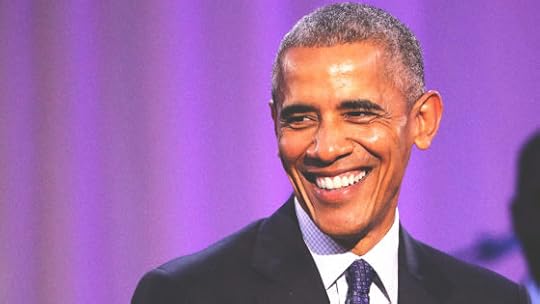
Back in 2014, Barack Obama declared that he only focused on making the most-important decisions. “I don’t want to make decisions about what I’m eating or wearing. Because I have too many other decisions to make,” he explained.
This is understandable. Sometimes we find ourselves beset by the decisions, big and small, that we think have to make on a daily basis. But there is only so much time for making choices – and many of them are too small and unimportant to spend significant time on in the first place.
Unlike the rest of us, of course, Obama has a staff who know him so well that they can guess his food and clothing preferences. But with two steps, we can all let go of many mundane decisions and simplify our lives for the better.
Automate it
Just admit it: For most of us, lunch is just lunch. Sure, you may take an occasional meeting over soup and salad or meet up with your spouse at noon for some time away from the children. But most of the time, you are eating some kind of sandwich with water at your desk while answering another drive-by.
Yet you spend precious minutes deciding what sandwich to eat or even where to go to pick it up, even when you know full well that you will either end up at the same place or pack the same meal into your bag. Why waste time on it?
Lunch isn’t the only area of your life in which the best decision is no new decision at all. From the kind of outfits you wear during the work week, to the style the report must be written in, to the temperature of the bedroom while you are sleeping at night, there are plenty of mundane tasks that don’t require much in the way of rethinking. You should automate those tasks and get them off your mind.
“
Just admit it: For most of us, lunch is just lunch.
—RISHAWN BIDDLE

One way to automate your life is to turn things into habits or routines. If you typically eat, say, a chicken salad, stick with it. At the same time, you should take advantage of the many technologies that make it easier for you to just forget it. Programming your thermometer, for example, will save you precious time as well as keep you from waking up at night all sweaty to turn up the air conditioning.
Even a little bit of outsourcing can make your life easier. Paying someone to occasionally deep clean your house, for example, can keep you sane, especially when you consider all of the major (and often, hard-to-tackle) challenges that face you in the long run.
Let others decide for you
Not every mundane task can be automated or made a routine. You still have to decide what to eat for dinner, how to organize your monthly progress report, even figure out where to hold the annual Christmas party. Or do you?
Consider dinnertime in my house. Save for the weekend (when we either go out or cook a simple meal), my wife never has to think about what to cook for dinner because I’ve already made that decision for her. The converse happens for me when it comes to what my son wears to school each and every day.
What about the progress report? Sure, you have to jot down your list of accomplishments. But chances are that you are submitting it to your boss’s secretary, who then changes the format to her specifications. You’re better off sending a quick list with key points and moving on.
As for Christmas party? There is someone on your staff who cares enough about where to eat – and what food to be served – who can make that decision for you. In fact, you can rotate the decision-making every year, allowing the intern or the new hire to prove themselves ready to take on more-important tasks.
Of course, you’re not used to letting other people make decisions for you. Our culture, after all, tells you every day to make your own decisions, and you definitely shouldn’t let anyone else make the important ones. But as Inc. columnist Suzanne Lucas points out, letting others make decisions for you can, in fact, “make your life much better”.
Besides the fact that others can make decisions without getting too emotionally involved in them, letting others sweat the small stuff in your life allows you to reduce the fatigue that comes from making decisions about every single thing. When you also consider that the person doing the deciding for you is often better or more-expert at it than you are, letting go of the reins just makes sense.






Best Tools for Decision Making
Why Leaders Don't Have to Go It Alone

Decision making is a big part of leadership. As a leader, one is expected to take decisions all the time. Some of these are of a routine nature, while others have the power to change the course of a business.
A lot rides on a leader’s decisions. They can impact the livelihood of the staff, the experience of the customers, and the future of the company. A leader’s own credibility and career could be at stake, too.
More often than not, decision making is tricky business. “I always make the right decision,” said no one ever.
No matter the level of your competence, the degree of your success, or the earnestness of your efforts, you must have a few spectacular fails in your resume. No need to be ashamed of them but they can surely teach you a lot.
“
“I always make the right decision,” said no one ever.
—PRATIK DHOLAKIYA
We are blessed to be living in an era where there is tremendous help to aid our decisions. With the help of the right technology, the right techniques, and the right approach, leaders can take much of the guesswork out of decision making.
Use methods that help bring critical information together
A leader may make the final call but often a number of people are involved in business decisions. While their input ought to be considered, it can get messy with numerous factors and points of views weighing in.
This process can be streamlined with the help of appropriate methods that help with decision making. SWOT analysis, cost-benefit analysis, Pareto analysis, and decision matrix are some of the many tools available to decision makers.
Analytics are a God-send. Depending on how you interpret the numbers, you can glean invaluable information from data that informs practical decision making.
When vital information is laid out in the open, along with the possible outcomes of each decision, it becomes much easier to choose a profitable course of action that most (if not everyone) agree with.
Implement processes that aid sound decision making
While decision-making is a time-consuming process, not making timely decisions can prove to be a costly affair. But you also do not want to waste an inordinate amount of time and other resources on a decision.
To move ahead organically, lay the groundwork that enables pertinent information to rise to the surface and take incremental decisions. These will add up to make a considerable difference.
Create processes that allow better communication among team leaders and managers. This will save pointless back-and-forth as well as bring to fore problems that need to be addressed.
Regardless of the size of the business, invest in team communication/collaboration tools such as Slack, Asana, Trello, or ClickUp. There’s a tool to suit every budget. This will enable various departments to work together and lead to problems being addressed. Or at least flagged as they arise.
It’s important to encourage an open environment in the company so that even junior staffers can speak their mind. It is often people working first-hand on a project, and not their managers, who best understand the challenges involved. Their input may prove invaluable, and timely, accurate information is indispensable to making the right decisions.
Take a customer-centric approach
When faced with big business decisions, such as launching a new product or service, monetizing free services, or cutting back on features of popular services, always focus on the resultant experience of the end customer.
Are you going to make that experience better or worse?
The aim of a business is to make profit. But it cannot do so if it alienates the existing customer base in the process. Often that which is in the best interests of the customers is also the best course of action for a business. Use surveys, focus groups, and social media feedback to gather customer intelligence to guide decision making.
If likely-to-be unpopular measures must be taken, introduce them at a gradual pace and after adequate research.
Get familiar with industry dynamics and market trends
As a leader you are expected to be an expert on your industry. An in-depth knowledge of your field and intelligence on your competitors will give you priceless insights.
While market research is important, the ability to understand the larger picture and tease out the undercurrents in the market gives a leader additional competitive advantage and may lead to prescient decisions.
Gut decisions: trust but verify?
And now we come to the perennial question: Gut over evidence?
Short answer, no. Long answer follows.
Of course Steve Jobs famously said, “You can’t connect the dots looking forward; you can only connect them looking backwards. So you have to trust that the dots will somehow connect in your future. You have to trust in something — your gut, destiny, life, karma, whatever. This approach has never let me down, and it has made all the difference in my life.”
But Jobs was extraordinary. There are so many variables involved in decision making that one cannot rely on tools and techniques alone. Your gut feeling may be the biggest component of it all. Many business leaders swear by their instincts.
But I should caution that listening to the gut is an art that not everyone has mastered. A decision taken on the basis of gut feelings alone can backfire. To do an important gut-check, do these things:
Pay heed to the doubts as they arise and address them.
If your instincts are at odds with the evidence, inspect why that is. Often this variance comes down to the kind of information one is relying upon.
Back up your gut call with considerable evidence, when at all possible.
You are, after all, answerable to stockholders, co-founders, and employees.
Everyone has their own style of decision making, just as they have a unique style of leading and managing people. This style is intricately tied with who they are as a person. It’s what has worked for them over the years. Self- awareness, therefore, is an often-overlooked part of the process.
Combine self-awareness with a keen awareness of the world, particularly your niche, excellent tools, and a willing workforce, and there you have it. You have all the components needed to make the right decisions time after time.


How to Make High Leverage Decisions
4 Simple Strategies for Making Fewer, Faster, Better Decisions

Good leaders thrive on making high-leverage decisions. But facing too many daily choices can be overwhelming. Eventually, we’re tempted to overthink every choice—or abdicate choosing altogether. In this episode, we show you four simple strategies to streamline your decision making. When we’re done, you’ll say goodbye to mental exhaustion. And you’ll gain the confidence and clarity to make fewer, faster, better decisions.


Check Baby, Checklist
4 Lists to Aid Your Decision Making

We are a society of list-makers. We gather groups of to-dos and to-don’ts, would-bes and should-bes, and we slap them down on legal pads and post-it notes, fancy journal pages and stained napkins. But far too often those lists fail to translate to measurable success.
It doesn’t have to be this way. When making lists, a little strategy and intentionality can go a long way. It’s a discipline that far too many of us—especially those of us who the Wall Street Journal says are drowning in lists—are unaware of.
“
You can actually get better at making lists and those lists can help you become a better leader.
—ANDREA WILLIAMS
The truth is, you can actually get better at making lists and those lists can help you become a better leader. It starts with making the right lists. Here are 4 kinds of lists that can greatly aid the decisions you make for your business.
Checklists
As the broadest of all list categories, “checklists” can be populated with any data imaginable. Spencer Smith, a former VP of Sales at two Fortune 100 companies and recent founder of social media marketing firm Ampliphi, recommends a three-step checklist approach to stay on track:
Create a daily checklist that determines what success looks like. “Small business owners can work 24/7 since there’s no longer a definition of a proper work day,” he says. “Without checklists, small business owners have a very, very hard time of knowing when they’re on-the-clock and when they’re not. Create a realistic daily checklist, and once you’re done, you can allow yourself to leave work feeling great.”
Create a not-doing list: “It forces you to reconcile the best use of your time right now, and by knowing what you’re not doing, you’re telling yourself that the things you are doing are the most important and high-value items. A ‘not doing’ list also helps assuage that gnawing feeling of ‘what am I forgetting?'”
Use the first two checklists to create systems for other team members. “Think to yourself, ‘If I was a brand-new person working in my business, what would I need to do, step-by-step, to complete this task/project?’ These step-by-step systems will prevent employee/contractor issues in the future since they’ll know what’s expected of them,” Smith says.
Like Smith, Helena Escalante, founder of Entregurus, also uses checklists on a daily basis. They are especially important when she is engaging in a repetitive process.
“Anything that I have to repeat more than twice merits a checklist to ensure uniformity in the outcome and quality,” she explains. “The more familiar you are with any process, the more you tend to become complacent and leave it to memory, but that’s when you are more prone to making mistakes. Checklists are wonderful to avoid mistakes because there is no decision-making. You simply follow and check every step, and at the end you will have the result that you set out to achieve initially.”
Pros and cons
In the hierarchy of lists, pros and cons may be just below to-dos in both popularity and ease of use. Most of us have probably been using them all our lives—from making dinner plans to deciding who to play with at recess—even if they were never written down. These lists are just as valuable in the business world.
Lazhar Ichir, founder of the AI-powered content marketing platform Topicseed, says that lists of pros and cons are like “fictional partners” that lend necessary reason and data to his decision-making process.
“You need to be at peace with criticizing your own ‘genius ideas’ and tearing them apart after thinking them through,” Ichir says. “Having cons does not mean the initial thought is not worth pursuing. Instead, cons allow you to be prepared once you start working on whatever it is that you have in mind.”
While relatively straightforward in design, Nate Masterson, CEO of Maple Holistics, argues that the most effective pros and cons lists don’t just reflect the obvious positive and negative aspects of a project or decision. They should also reflect the values and future vision of the company.
“Longevity is probably the most important factor to consider when you face a decision—tough or otherwise,” says Masterson. “When you make your pros and cons list, every factor of the decision should be filtered through longevity and values; if represented this way you can only make the best possible decisions.”
Workflows
If the goal of most businesses is to be as efficient as possible—to work smarter, not harder—it stands to reason that those businesses should be tracking how their work is actually done.
“Mapping workflows are critical in finding choke points and areas of inefficiency,” says business consultant Aaron Pfeifer. “When I work with organizations to optimize their operations, I insist on sitting with a person from each position within a workflow to understand not just the overall process, but the minutiae that can derail a process.”
Members of a team generally have a verbal understanding of their related workflows, whether their role is to publish blog content or process retail orders. But, says Pfeifer, writing them down often uncovers inefficiencies that can significantly impact operations.
“Often, we’ll find out that people are using workarounds for a broken system, duplicating data input, or waiting on a single person to approve work before it can continue,” he says. “Any delay in workflows results not only in delayed billing, but it increases employee frustration, mistakes, and upset customers—risking future opportunities.”
Louisiana-based business consultant Connelly Hayward is also a staunch advocate for developing workflows, noting that they “open up and enhance big picture thinking.”
“It allows everyone to see everything and prepare for seasonality, specifically the busy season,” Hayward explains. “When things get busy, where are problems likely to happen? What will be the nature of those problems? What can we do now to prevent those problems? If we can’t prevent them, what can we do to be best prepared to solve them when they do happen?”
Hayward also offers guidance on how to develop worfklow lists, suggesting that starting from the beginning may not be the best strategy.
“My advice, pick something and work backwards and forwards from there,” he says. “The process is basic and straightforward: We are at X, what does having X create/cause? Once we are at X, what is the very next thing that happens? What had to have happened for X to happen? What is the very last event/task before we have X? Many clients are surprised to discover that what they thought was the beginning point actually wasn’t.”
Prioritized vendors
As the founder and CEO of IndustryStar Solutions, a supply chain services and software company that helps organizations launch new products, Williams Crane helps his customers develop lists of vendors who can provide various capabilities or materials. His company also develops an internal Tracked Suppliers list that rates vendors on their performance across several metrics (cost, quality, service, and delivery) and assigns each supplier a status of “preferred” or “no source.”
“It is important to develop a scoring system for your vendors that will allow you and your team to communicate ratings and rankings,” Crane explains. “For example, if an organization’s goal is to optimize buffer stock levels to reduce inventory costs, it should track suppliers with quality or delivery issues and long lead times to reduce the impact of delayed and missed shipments.”
Developing a list of prioritized vendors is a nuanced, multi-step process. For Crane, it’s also one that ensures his company is able to best meet its own needs and those of its clients. He says the list is always in flux—growing, shrinking, and otherwise evolving based on the most current information available.
“Established companies with [prioritized vendor] lists often find that continuous maintenance—removing under-performing suppliers and adding new ones—is a key enabler for maintaining their supply bases,” Crane says. “Modern cloud software tools enable professionals to automate the process of identifying and qualifying suppliers and free up time to focus on engaging suppliers.”


September 4, 2018
How to Think Straight
Avoiding Fake News, Group Think, and Other Decision Making Pitfalls

Leaders make tough decisions nearly every day. Too often, they feel rushed or pressured into choices they don’t like and later regret. In this episode, we’ll show you the bad thinking that underlies nearly every bad decision.


New Coke: Anatomy of a Terrible Decision
5 Lessons from One of the Worst Product Rollouts of All Time
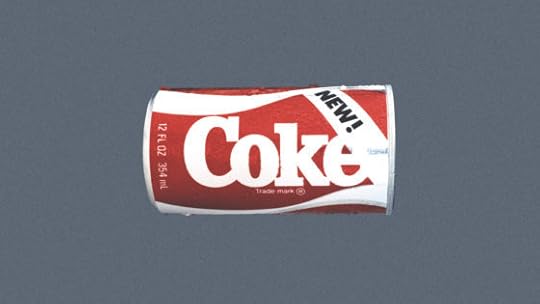
The Coca-Cola Company’s own website admits that it was probably “a day that will live in marketing infamy.”
On April 23, 1985, Coke Chairman and CEO Roberto Goizueta announced to 200 reporters that the company would be changing its formula. It would be still be called Coca-Cola, but this “New Coke” would taste better and people would love it.
Goizueta explained why the decision to change Coke’s 99-year-old formula was by no means a hasty one. The company had commissioned nearly 200,000 taste tests of the new recipe. The tasters mostly loved it. “To market research experts, to our bottlers, and to the retail trade, these numbers represent a staggering superiority,” he beamed.
Science itself, it seemed, had blessed New Coke. Full speed ahead and damn the fizzy bottles.
Boston Coke party
And yet, American customers didn’t love this New Coke as expected. In fact, quite the opposite thing happened.
There was mass hoarding of the Old Coke that was going away, popular protest songs, petitions, tens of thousands of angry letters to Coca-Cola along with thousands of angry phone calls every single day. People staged their own quick-and-dirty versions of a modern Boston Tea Party, with soda pop patriots pouring out bottles of New Coke in the streets.
“You have to be ever vigilant in our democracy,” one particularly worked up protestor told Newsweek. “When they took old Coke off the market, they violated my freedom of choice. It’s as basic as the Magna Carta and the Declaration of Independence. We went to war with Japan over that freedom.”
Sales of New Coke started to go soft and in pockets of the country completely cratered. Even managers within the company who had been enthusiastic about the newer, sweeter Coke started to urge the leadership to bring back the Coke that people knew and loved.
After several internal meetings, Goizueta and company decided in July that they needed to bring old Coke back as Coca-Cola Classic. News of this got out fast. “Peter Jennings of ABC News interrupted the daytime soap opera General Hospital to report that old Coke was returning,” writes Thomas Oliver in the great book The Real Coke, The Real Story.
Shortly after, in a press conference with a mood “entirely different from the press conference just three months before,” writes Oliver, Coca-Cola execs kept things short and contrite. To those who supported New Coke, Goizueta offered thanks. For those who didn’t, he promised, “our message to this group is simple: We have heard you.”
5 lessons from the New Coke fiasco
With that concession, and with Coca-Cola Classic back on shelves, Coke came roaring back, more popular than ever. At first New Coke was sold alongside Classic. Over time, given a choice, consumers clearly preferred Coke the way that it had been. New Coke’s name was changed to Coke 2 and is no longer sold in the United States.
The Coca-Cola Company argues that the New Coke fiasco “stands today as testimony to the power of taking intelligent risks, even when they don’t quite work as intended.” Which is a funny way of putting it when you turn the replacement of your core product into a mass, persistent protest movement.
Here are 5 takeaways that might help leaders today as you try to balance introducing new products with promoting old favorites:
1. Don’t let the competition distract you
It’s good to know your competition, but it’s not good to let them live rent free in your head.
One reason the Coca-Cola Company thought they had to mess with Coke’s formula was the Pepsi Challenge. It was a highly publicized, blind taste test that Pepsi created to show people preferred their product over Coke.
This bothered Coke executives to distraction and they tried to come up with a way to do better in taste tests. And thus New Coke was born. Critics said that it tasted more like Pepsi, and they were right.
“
It’s good to know your competition, but it’s not good to let them live rent free in your head.
—JEREMY LOTT
2. Don’t bet the farm on big data
When the Coca-Cola Company launched New Coke, they fervently believed that consumers would prefer it based on previous, copious research. But that didn’t happen. Why?
“The simple fact is that all the time and money and skill poured into consumer research on the new Coca-Cola could not measure or reveal the deep and abiding emotional attachment to original Coca-Cola felt by so many people,” Coca-Cola President Donald Keough said at the time.
A later explanation has been kinder to all the researchers, but only on the surface. People’s individual desire for sweetness – known as their “sweet tooth” – varies greatly, but a large number of us can stand only so much sweet. So while Pepsi and New Coke tasted better to people at first swig, that didn’t really capture the whole experience. You see, as people kept drinking, they liked Coke Classic better precisely because it didn’t taste too sweet.
However, just because we can explain it well after the fact doesn’t let the “market research experts” that Coke’s CEO praised off the hook. They introduced misplaced certainty into what should have been a very tough decision. Coke had a huge customer base that had been happy with the product for many decades. Experts said don’t worry about it, they’ll love it, because they missed something very important.
3. Don’t make everything either/or
When they were announcing the reintroduction of Coke Classic, Coke execs admitted that while the sampling data had favored New Coke, there was a substantial minority that didn’t like it, even on first taste.
If they were running for office, that might not have been a problem. The job there is to get to 50 percent plus 1. Business doesn’t work that way. Every customer matters and substantial minorities of those customers are better thought of as “revenue streams.”
If New Coke had been offered right alongside Coke Classic, it’s hard to imagine so many people getting worked up over it. Sure, they might have been annoyed at the ads, but they wouldn’t have been deprived of a product that they cared about deeply. Too many SKUs can be a logistical problem, yet if they’re wildly profitable maybe suck it up.
4. Don’t be arrogant
“The saying ‘If it ain’t broke, don’t fix it’ is a motto for losers” said Coke bottling exec Marvin Griffin in the middle of the New Coke crisis.
That insult betrays something about how Coke’s c-suite was thinking about this issue. Bolstered by marketing data, they were saying, “We know better than the customers what they want.” That attitude, as much as anything else, is what led to all the outcry.
5. Don’t persist in error
The most obvious lesson the New Coke story highlights is not the “power of taking intelligent risks” but rather the value of learning from your mistakes, as soon as possible.
The Coca-Cola Company was able to put this behind them and move on to better things because they listened to their customers and gave them what they actually wanted, as opposed to what Coke had thought they wanted. When they did, their flagship beverage sailed on to greater acclaim than ever before.


Apples, Oranges, and Arguments
Better Comparisons for Better Thinking

One of the bigger problems when it comes to rational discussion today is that we don’t quite know what we are comparing.
Everybody has heard the cliché that “you cannot compare apples and oranges.” But guess what: We do compare apple and oranges all the time. This usually happens when we go grocery shopping. We may compare them based upon price per ounce, Vitamin C per ounce, or our own flavor preferences and the perceived quality of the fruit that day.
Of course, if we are buying ingredients to make an apple pie it would be “fruitless” to compare apples and oranges.
The important point here is to be very clear what we are comparing so as to evaluate whether the comparison is appropriate or not. I present below a number of common “comparison fallacies” in everyday discussion that often trip up individuals and lead them to poor conclusions. Learning to spot and avoid these fallacies can greatly help your decision-making process.
Facts don’t always lie at the center
Opinion-slingers often like to cite specific points of aggregated data to make their case. These usually can be the mean (average) or median. Sometimes it may be another particular benchmark such as a percentile. The question becomes, how indicative is this specific point of the other points in the distribution that they are comparing?
The Oregonian recently headlined an article “Minimum wage workers can’t afford a typical 1- bedroom apartment in 31 Oregon counties.” Outrage ensued. How could our nation be so cruel as to not provide affordable housing to those with low incomes?
This news article relied upon a report by the National Low Income Housing Coalition that tried to calculate the affordability of “modest” housing, which is defined by the Department of Housing and Urban Development as “the 40th percentile of rents that a family can be expected to pay.” This measure represents a payment that is ten percentage points below the average (perhaps median) monthly price of a rental unit.
Averages and specific percentile points (e.g., the 40th) contain important information, but how people are dispersed along the distribution is also critical to understanding the full picture. Statisticians are concerned both about measures of central tendency and dispersion (e.g., standard deviation), but too often we just put our attention on a single point of the distribution (the mean or a chosen percentile point in the report above).
Here we have a comparative argument regarding two different distributions: 1) the distribution of rental rates; and 2) the distribution of income. In the case of the former (rents), The Oregonian chose a baseline point that is near the middle of the distribution (the 40th percentile). Choosing this point as typical for modest housing seems reasonable and the NLIHC report is clear with this definition. So far, no problem.
But the critical question is whether or not a minimum wage earner is “typical” of workers in roughly the same way as they “typical” modest rental unit? More specifically, do minimum wage workers represent the 40th percentile of wage earners?
The answer is no. According to the Bureau of Labor Statistics’s 2017 Characteristics of Minimum Wage Workers, the percentage of the wage-earning population in the US earning the federal minimum is roughly 2.3% (or below the third percentile). Within the Pacific Region that includes Oregon, those at or below minimum wage is approximately 0.7% (see Table 2 in the linked report above). State and municipal minimum wage rates are almost always higher than the federal minimum and it may be the case that individual states and counties may have higher percentages of minimum wage workers, but that percentage is nowhere near the 40th percentile of workers. Why would we expect someone who is in the third percentile of income to afford housing that is in the 40th percentile?
Thus, the argument put forth about a minimum wage worker being able to afford a “typical” (40th percentile) rental unit is misleading. Minimum wage workers are not likely to afford “typical” housing because they themselves are not “typical” of all wage earners based on the same point estimate used to define “typical” for housing. It is more plausible that minimum wage workers are acquiring housing that is in the lower percentiles of rental rates (perhaps 10th percentile or less), or even living with parents or roommates making more than the minimum wage. A more accurate argument would account for this. While affordable housing may still be a legitimate concern, the apparent crisis of minimum wage workers being able to afford housing is much less severe than it initially appeared.
The important point here is that when somebody makes a comparison based upon measures of central tendency (e.g., the mean or median), or a specific point estimate (e.g., 40th percentile) it is important to ask what the dispersion of the distribution looks like. Averages are great summaries of data, but it is equally important to think about how the data are distributed when making comparisons.
Learn to live with randomness
Life is filled with random variation. Oftentimes we attribute extreme events to processes that are very common or ongoing and think that the latter cause the former. When making comparisons of a single event relative to long-term trends, we need to take into account the normal variation that occurs in data.
Take tornadoes for instance. The year 2011 was a particularly bad year for tornadoes with over 80 category F3 (strong-to-violent) incidents being recorded, with some highly deadly and destructive ones making news. Such devastation makes for scary headlines and helps activists raise calls to action. Not surprisingly, arguments appeared linking increased carbon emissions and climate change to the increase in tornadoes.
Alas, North America experienced a significantly lower rate of severe tornadoes, and tornadoes overall, in the subsequent years (with 2018 being on pace for one of the quietest seasons in decades). If there was an obvious causal connection between steadily-increasing atmospheric carbon, climate change, and tornadoes, we would expect to see a similar upward trend in tornadoes over time. Data from NOAA going back to the 1950s show no trend in increased or decreased tornado activity, but merely a great deal of random variation.
Yes, 2011’s tornado season was a “rare” event, but rare events do happen, albeit rarely. A once-in-a- century storm can be expected to occur (roughly) once or twice every century. Attributing a single “record-breaking” day or season to a long-standing pattern is a poor way to argue, particularly if there is a high degree of random variability in the data.
This is not to say that climate change is irrelevant to long-term weather patterns; it may well be. The broader point is that arguments that blame episodic, “freak” events on long-term trends need to be approached cautiously. If over the course of twenty years we see ten or fifteen “once-in-a- century” storms, then it is time to worry and think more deeply about what’s causing this.
A simple solution for poor comparisons
I have pointed to two common comparative problems that occur in everyday argumentation. Is there any quick fix to avoiding such errors in analysis? The answer is, yes. The easiest solution is one that involves a simple question and a bit of intellectual creativity.
Whenever confronted with a data-based argument, it is important always to ask the simple question: Compared to what?
The next step is to imagine all the possible bases for comparing the data. Are we comparing averages when we should be comparing variances? Does our comparison account for random variation in the data? Are we overlooking evidence that is difficult to see, but still may be important? And are we making a comparison against a standard that can never be met instead of a trend that may be improving?
Having these questions in one’s intellectual toolbox will improve the quality of discussion and will improve your thinking in the process. In the final analysis, the best way to get to a solid answer is to ask the right questions.


Leader: Know Thy Biases
3 Ways to Recognize Them and See Around Them

The road sign in my home state of Washington read: “Litter and it will hurt.” I didn’t think twice about it, but our guests from nearby Vancouver, British Columbia, mouthed the slogan out loud and could hardly believe their ears. They were traveling with us to a birthday party of a mutual friend.
“Of all the nerve,” said the wife with a shudder. “I get what State officials are trying to do with their ecology campaign, but you’d never see a sign like that in Canada. That message is way too impolite. People would take it as a threat.”
Spot the biases
I chuckled. I’d read that sign lots of times, and it had always struck me as a realistic warning about litter’s impact on the environment, not a personal threat. But the comment from my Canadian friend reminded me we all have our own biases. We see things through a particular lens that’s been shaped and molded by our respective subcultures.
Politeness is highly valued in Canada. Citizens from the Great White North tend to go out of their way to say “thank you, excuse me, and sorry.” In ’Merica, we like our road signs to reflect our politics. Blunt.
“
Every leader needs to learn to overcome the harmful effects of behaving (or thinking) with blind spots.
—MARCUS BROTHERTON
Are you aware of your own biases? Every leader needs to learn to overcome the harmful effects of behaving (or thinking) with blind spots.
Newsroom lessons
Back when I worked as a newspaper reporter, we were trained to ferret out bias—both other people’s and our own. A bias is any particular slant we embrace that’s either for or against something or someone. A bias can rear its head in an outlook, a tendency, an attitude, an opinion. Biases usually develop over time. We might not even know they’re there.
Not all biases are harmful. For instance, maybe you were trained to value the next generation’s contributions. So you instinctively prize internships and constructive role modeling on the job site. It’s possible to hold a positive bias toward helping people, the same way you might have a positive bias toward avoiding donuts and choosing spinach at mealtime.
Yet biases are often negative. We’ve all heard stories of unfair prejudice against someone’s ethnicity, disability, orientation, or religion. If you avoid certain people or tell jokes about them, then that’s most likely a bias. If you infuse an unwarranted opinion into a report or speech, that’s most likely bias. If you’re part of an group that practices selectivity in hiring, admitting, or serving people, that may well be a bias too, often with legal ramifications.
What’s the risk of letting bias continue unhindered? When we’re blinded by a bias, we’re shortsighted or unfair in our thinking. Our communication can be hampered. Our biases can come across as insensitive or rude, as in the case of the road sign. Ultimately, our innovation and performance are stifled.
Here are three actions help combat bias:
1. Develop empathy for others
Ask yourself: What’s it like to be your customer, walk through your doorway, and encounter the product or service you’re selling? Learn to see through your customer’s eyes, not your own.
Dr. Shelly Cunningham, a graduate school professor of mine, constantly taught that any target audience is not a homogeneous mass of people who all think and behave the same way. Rather, it’s a loose collection of individuals, all with distinct personalities, worldviews, and needs.
For instance, in a university classroom, a 50-year-old Korean woman might sit alongside a 21-year-old football star. What’s it like to be that Korean woman? Imagine yourself in her shoes. Or put yourself in the cleats of the 21-year-old. The life experiences of both students will be different, yet a savvy educator works to reach them both.
2. Seek broader perspectives
I recently helped a young Marine write his memoir. The book’s acquisition editor, a man who lived and worked in New York City, received another job and left the company midway through the process. So the project was transferred to a different editor, a woman who lived in the U.K.
It was insightful to see their distinct editorial styles at work. The Marine and I saw the difference in specific word choices and sections of text that were either bolstered or cut. The U.K. editor helped broaden the book’s readership beyond a solely male, military, or American perspective. Ultimately, the book will be more powerful thanks to the new editor.
The key for any of us is to intentionally run ideas, messages, and products by people who hold different perspectives than we do. Beware of groupthink. Welcome the unique voices who can broaden understanding.
3. Audit your business for bias
Psychologists tell us that biases are seldom rooted in antagonism. We don’t become biased because we deliberately set out to harm others. Rather, our brains create biases as a way to “navigate the world with marginal effort.”
Conscious decision making uses up a surprising amount of mental energy. So our brains prefer running on default. We tend to make decisions automatically, almost unconsciously, lumping situations and people together, going with what’s convenient, grabbing at the lowest hanging fruit on our mental branches. Problem is, what’s convenient might not work best—or reflect reality.
“
We might not be able to escape all our biases, but we can become aware of them, challenge them, and adapt our viewpoints and practices accordingly.
—MARCUS BROTHERTON
It takes work to see and break biases. The key is to develop systems to regularly and deliberately look for our blind spots and then help us overcome. Biases can limit opportunities. We need to constantly ask: What biases might be getting in the way? And then take steps to overcome.
The key is to develop empathy, seek broadened perspectives, and consistently reflect on and test our own views and values.
We might not be able to escape all our biases, but we can become aware of them, challenge them, and adapt our viewpoints and practices accordingly. Ultimately, this helps us become better leaders. We might even be able to put up road signs that are blunt and polite.


Slow That Decision Down
Stop, Take Stock, and Use That Calendar to Your Advantage

“Don’t rush me, sonny! You rush a miracle man, you get rotten miracles,” warned Billy Crystal, costumed up as Miracle Max in the 1987 classic The Princess Bride.
In the movie, that was a laugh line, but it’s not a bad way to think about the decisions you make as a leader. For every decision that can be made quickly, there are some that require you to take a little more time, thought and perspective. Rush through a decision and you can end up with the wrong one—with rotten results.
There are three steps you can take to make sure that impatience and inattention don’t lead to disaster. This starts with process for making tough decisions, thinking through the goals you want to accomplish, and then setting a deadline to ensure that you don’t exhaust yourself in the process.
Create a process—and stick to it
Leigh Newman, the deputy editor of Oprah Winfrey’s eponymous Web site, was faced with the task of finding a new financial advisor. Ordinarily, she would have made a snap judgment and gone with someone a friend recommended. But she realized that making a decision that quickly could have dire consequences—especially if he turned out to be the kind of con artist who ends up on CNBC’s American Greed.
So she embraced the slow process her husband usually takes with his decisions—asked for references, peppered the prospective advisor with questions about the Internal Revenue Code, even chatted up his secretary to see how he treated his staff. After some time, Newman concluded that the financial advisor would do the best job for her family and hired him for the job.
Not every issue will require an extensive decision-making process. But there are some situations in which a snap decision is the worst one to make. This is because the details you need for the decision may not emerge until after you spent time figuring things out. Developing a process for vetting those tough decisions—and sticking it to it—is key to making the best possible decision.
“
Developing a process for vetting those tough decisions—and sticking it to it—is key to making the best possible decision.
—RISHAWN BIDDLE
One part of that decision-making process should include seeking advice from those you trust to provide honest information and feedback on a situation. Unlike you, they can see things from a different viewpoint.
Asking tough questions is also key. Productive skepticism forces you to think things over from a different perspective. This leads to clarity and, ultimately, better judgment.
Start from the goal
But what if you have a lot of information and not a lot of clarity? This is always possible. More often than not, even with high-quality data, you can’t assess the future or make decisions that will always hold up with time. Even with plenty of time, you still won’t be able to account for every single scenario.
Given that life is full of uncertainty, your first step in decision-making starts beforehand with the answer to this question: What are you setting out to accomplish?
This means setting clear and concise goals that may be achieved even if you must change course or come up with new decisions. As part of that process, you should focus on making your goals specific, measurable, timely, and realistic given the lay of the land.
But it isn’t enough to just think about your decisions in the context of your goals. You may even need to reassess whether the goals are achievable or worth doing. After all, the goals themselves may be the bigger problem than the decisions you make to achieve them. This means assessing your goals to see if they are too vague, merely aspirational, or just plain unrealistic.
Set a deadline beforehand
Even if you have a process for vetting a decision and a goal in mind, sometimes there will be no one good decision. The reality is decisions involving tough situations, such as how to respond to a long-term competitive threat, involve using limited information. Your calls can have unforeseen consequences, and the facts on the ground may change, drastically.
Taking too much time to study every stray piece of data can lead to what management consultant Peter Bregman calls decision fatigue. You can end up exhausting yourself on one tough decision, especially when you also have other, smaller decisions to make that cannot always be automated or made for you.
This is when a set deadline on a final decision is in order. A predetermined date for decision-making helps focus your mind on addressing the problem in an orderly way. After figuring out when a decision must be made, you can then set a deadline on your calendar as well as prioritize the decision-making on your schedule.
Another step in setting the deadline lies in devoting time to thinking things through. This is where Focus Thursdays, during which drive-bys, interruptions and meetings are verboten, comes in handy. By setting up Focus Thursdays, you and your colleagues will have more time necessary to focus on the hard decisions—and more often than not to make the right call.


August 28, 2018
How Hobbies Make You a Better Leader

Many leaders compensate for feeling overwhelmed and over-busy by working even more hours. But neglecting self-care puts us on a downward spiral that leads to lower productivity and, ultimately, burnout. In this episode, Michael and Megan share the secret weapon for boosting productivity—a hobby!