Michael Hyatt's Blog, page 173
March 25, 2013
A 4-Step Process for Making Better Decisions


Human beings are notoriously bad at making decisions. We seem to struggle with this in both our personal and professional lives.
For example:
Forty-one percent of first marriages end in divorce.
Forty-four of lawyers would not recommend a career in law to young people.
Eighty-three percent of corporate mergers and acquisitions fail to create any value for shareholders.
According to bestselling authors Chip Heath and Dan Heath, “When it comes to making decisions, it’s clear that our brains are flawed instruments.” Whether we rely on complex analysis or gut reactions, the results are about the same.
Unfortunately, merely being aware of these shortcomings doesn’t fix the problem, any more than knowing that we are nearsighted helps us to see. The real question is: How can we do better?
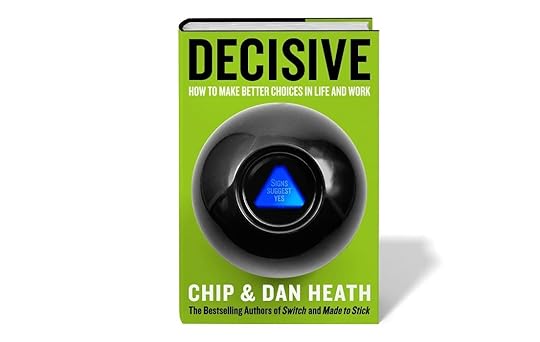
That’s why the Heath brothers wrote their new book, Decisive: How to Make Better Choices in Life and Work. I spent this last weekend reading it.
First, we have to understand the problem. The authors point out the “four villains” when it comes to making decisions:
We have too narrow of focus. We are guilty of “spotlight thinking.” We focus on the obvious and visible. We miss important facts outside our immediate view.
We fall into confirmation bias. We develop a quick belief about something and then seek out information that confirms that belief.
We get caught in short-term emotion. We are too emotionally connected to the decision and struggle with being appropriately detached.
We are guilty of overconfidence. We assume that we know more than we actually do know and jump to conclusions, thinking we can accurately predict the future.
The great value of the book is that it lays out a decision-making process that can be used in any situation. It is designed to counteract the influence of the four villains and consists of four steps:
Widen your options.
Reality-test your assumptions.
Attain distance before deciding.
Prepare to be wrong.
The authors refer to this as the WRAP Process from the first letter of each step. By the way, these four steps are sequential—you do them in order. And the more you employ this process, the better you get at it. With enough practice, it becomes second-nature.
In typical Heath brothers style, the book is filled with wonderful and memorable (dare I say “sticky”?) anecdotes that illustrate every principle. The book offers fresh strategies and fresh tools for making better choices.
The first thing I am going to do now that I have read Decisive is have everyone on my team read it. I can’t imagine anything that could impact the quality of our lives and business more than making better decisions.
Crown, Chip and Dan’s publisher, has agreed to give 50 copies of their new book, Decisive to my readers. To get a chance at snagging one, you must take the following three actions:
Leave a comment below. Answer the question at the bottom of this post.
Fill out the special form. I have set up a separate contact form to make it convenient for you to provide your mailing address. Please do not put your shipping address in your comment. This will automatically disqualify you.
Twitter a link to this post. You can do so automatically by clicking here. If you don’t have a Twitter account, you can use Facebook.
On Friday, March 29, 2013, I will select 50 people at random. If you are one of those selected, I will notify you via email. If you don’t hear from me, you can assume you were not selected.
Question: What appeals to you about this book and why do you want a copy? You can leave a comment by clicking here.








March 23, 2013
Use a Blogging Template to Write Posts Faster [Video]
In this brief video, I share the six-part framework I use to write my own blog posts. This enables me to write faster and with more predictable results.
If you can’t see this video in your RSS reader or email, then click here.
Start with the headline. Write something that will pull people into the body of the post.
Write a great lead paragraph. Make the topic immediately relevant and explain what people will get in the rest of the post.
Use a relevant image. Magazines do it. So do newspapers. Pictures catch the eye and pull people in.
Tell a personal story. Nothing works quite like stories. They connect with people and pull them deeper into the content.
Make your content scannable. Use short paragraphs, short sentences, and simple words. Use bulleted lists. Help people feel a sense of progress.
Invite others into the conversation. End with an open-ended question. And then participate in the discussion.
In addition to this short tip, Stu McLaren previews what we have going on this next month at Platform University. He previews the new Master Class, Backstage Pass, Member Makeover, and From the Road segments.
If you haven’t yet checked out Platform University, have a look at the first video. It’s free. I share how I built my own blog audience to more than 350,000 unique visitors a month.
Question: Do you use a blogging template? How is it different from mine? You can leave a comment by clicking here.



March 22, 2013
A Tale of Two Coaches: What Kind Are You?
There’s more to coaching than sharing your expertise. The way you communicate that expertise is as important as the knowledge itself.

Years ago I went golfing with my friend and colleague, Dr. Victor Oliver. I had played quite a bit as a teenager, but had set aside my clubs when I became an adult. At the age of forty-three I decided to take it up again.
I bought a new set of clubs, reviewed the rules, and even read a couple of golfing books. However, I was still lacking the one thing you must have to succeed at the game of golf: confidence.
I sliced my first drive, red-faced as the ball bounced into the tall grass and disappeared. Unfazed, Victor declared. “You have a great swing, Mike. You’re a natural. You’ll get the hang of this in no time.”
Rather than dwelling on my failed attempt, Victor’s assurance immediately turned my mind to the next shot. I couldn’t wait to take another swing.
After a few more shots, I was within striking distance of the green. As I approached the ball and began to setup for the shot, Victor gently interrupted me.
“For these kinds of shots, I always imagine I am sitting on the edge of a bar stool. I lean forward with my back straight and head down. Then I just take a nice, full swing … like this.”
“Got it,” I nodded. I then mimicked his stance, took a slow, steady swing, and put the ball right on the green, eight feet from the pin.
“Beautiful, Mike. I told you you were a natural.”
Over the next several years, I played golf with Victor numerous times. I always played my best when I was with him at my side. His gentle, reassuring voice gave me the one thing books, expensive clubs, and even lessons couldn’t: confidence.
I also occasionally played golf with another friend. I’ll call him Frank (not his real name). He was a good deal older than I, but a great golfer—even better than Victor. But the two were complete opposites when it came to coaching.
I still remember the last time I played with him. On hole number three, I sliced a drive into the deep rough. Certain it was unplayable, I dropped my club to the ground, and sighed.
“Well, that was a helluva shot,” Frank grumbled. “You didn’t finish your swing. You just kinda … kinda gave up on it.” He then frowned and snorted.
With that, he stepped up to the tee box and pinned his tee and ball to the ground in one seamless motion. Then, without so much as a practice swing, he blasted his ball straight down the middle of the fairway.
It was picture-perfect. Just like on TV. Speaking to no one in particular, he announced, “That’s how it’s done!”
He stood tall.
I felt small.
Unfortunately, this scenario was typical. Frank was always quick to point out my faults. If I happened to hit the ball well, he would say something like, “Well, you got lucky on that one, didn’t ya, kid?”
Not surprisingly, I always played my worst golf when I played with Frank. He chipped away at my confidence, and my performance unraveled as the game progressed. He made me want to quit.
In reflecting on these two different coaching styles, I realized I have a choice in how I lead.
I can either focus on what my teammates are doing right and thus increase their confidence, or I can focus on what they are doing wrong and thus increase their self-doubt. Both styles have an impact on their performance. And both have an impact on my effectiveness as a leader.
Question: What style do you use in coaching those you lead? You can leave a comment by clicking here.



March 21, 2013
What Would Steve Do? [Slide]


 If you can’t see this slideshow in your RSS reader or email, then click here.
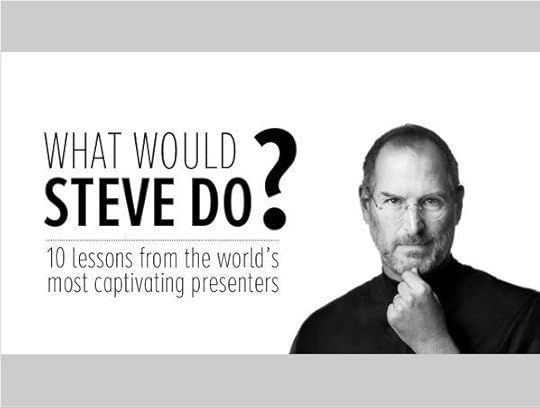
While Steve Jobs was known for delivering inspiring and memorable keynote presentations, most slide presentations are boring. The ten tips in this presentation will help you craft slideshows that will move mountains, or at the very least, get your point across in an effective and memorable way. (via HubSpot)



March 20, 2013
#046: How To Get More Twitter Followers–Legitimately [Podcast]
I joined Twitter on April 6, 2008 at the urging of my friend, Randy. I quickly came to discover that Twitter is one of the most powerful communication tools ever invented.

But the power of Twitter is greatly impacted by the extent of your reach, and that means the number of followers you have. In this episode, I talk about how to get more followers–without gaming the system.
Click to Listen
Podcast: Subscribe in iTunes | Play in browser | Download
First, let’s look at three reasons you might want more Twitter followers:
Reason #1: More followers provide social authority.
Reason #2: More followers extend your influence.
Reason #3: More followers lead to more sales.
So, here are twelve steps you can take now to legitimately gain more Twitter followers:
Show your Face.
Create an interesting bio.
Use a custom About page.
Make your Twitter presence visible.
Share valuable content.
Post frequently, but don’t flood your followers.
Keep your posts short enough to retweet.
Reply to others publicly.
Practice strategic, not aggressive, following.
Be generous in linking and retweeting others.
Avoid too much promotion.
Don’t use an auto-responder.
Ultimately, you shouldn’t worry too much about the numbers. If you follow the advice I have given above, the numbers will take care of themselves. Like most things in life, slow and steady wins the race. Don’t underestimate the power of incremental growth over time. I didn’t build my following overnight and neither will you.
Listener Questions
Christopher Scott asked, “What is the difference between HootSuite’s auto-schedule feature and Buffer app?”
Cory Nikkel asked, “What can I do outside of speaking to gain more Twitter followers?”
Dustin Dauenhauer asked, “What is the purpose of Twitter, especially as compared to Facebook?”
Erik Fisher asked, “Have you tried tweeting fewer but higher quality tweets?”
Jake Hower asked, “How do you move Twitter followers to e-mail subscribers to your blog?”
Jeff Keady asked, “Do you know of a resource similar to Brett Kelly’s Evernote Essentials e-book that is designed to help people learn the advanced features of Twitter?” and “Is Twitter your number one social media network and, if not, what is?”
Kerry-Ann Powell asked, “How do you engage your Twitter followers and how do you get them to follow you on your blog?”
Mark Jordan asked, “What is your strategy for following people, especially as your follower count grows?”
Mike Samboy asked, “What do you think about following a large number of people in the hope that they will follow you back?”
Scot Longyear asked, “Can you change your Twitter name on your current account?”
Shalon Palmer asked, “How do you go about sharing your new blog post on all the different social media networks?”
Special Announcements
If you are considering launching your own platform, you need to start with a self-hosted WordPress blog. This is not as complicated as it sounds. In fact, I have put together a completely free, step-by-step screencast on exactly how to do it. I walk you through the entire process in 20 minutes or less.
If you have ever thought about writing a book, but didn’t know where to start or if you already have a book, but want to do everything you can to make the biggest splash you can in the marketplace, then I urge you to get my 21-session audio course, “Get Published.” I cover everything I have learned about publishing in my thirty years in the industry as a publisher, literary agent, and two-time New York Times best-selling author.
My next podcast will be on the topic of “The Lost Art of Note-Taking.” If you have a question on this subject, please leave me a voicemail message. This is a terrific way to cross-promote your blog or website, because I will link to it, just like I did with the callers in this episode.
Episode Resources
In this episode I mentioned several resources, including:
Book: Platform: Get Noticed in a Noisy World by Michael Hyatt
e-Book: Evernote Essentials by Brett Kelly
Post: “Social Media and the New Culture of Sharing”
Post: “The Beginner’s Guide to Twitter”
Post: “Why I Won’t Retweet You”
Post: “The Power of Incremental Change Over Time”
Software: Buffer
Software: Feedly.com
Software: SocialOomph
Webpage: My Twitter About Page
Show Transcript
You can download a complete, word-for-word transcript of this episode here, courtesy of Ginger Schell, a professional transcriptionist, who handles all my transcription needs.
Subscription Links
If you have enjoyed this podcast, please subscribe:

iTunes

Zune

RSS
Your Feedback
If you have an idea for a podcast you would like to see or a question about an upcoming episode, e-mail me.
Also, if you enjoyed the show, please rate it on iTunes and write a brief review. That would help tremendously in getting the word out! Thanks.
Question: What are the best ways you have found to get more Twitter followers? You can leave a comment by clicking here.



March 18, 2013
Ideas on How to Deliver Extraordinary Results
Nine years ago, Mark Sanborn published Fred, a book about a postman and the extraordinary service he provided. The book was wildly successful, landing on all the bestseller lists and inspiring millions around the world, including companies, schools, and entire cities.
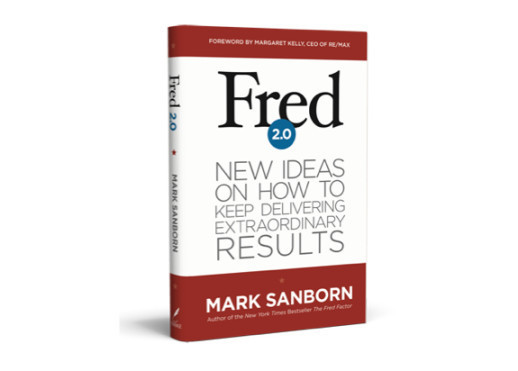
Now Mark has published an all-new book on the same topic. It is called Fred 2.0. New Ideas on How to Keep Delivering Extraordinary Results. I had the opportunity to read the pre-publication edition and endorse it. I wanted to share my thoughts about the book with you.
Fred Shea is Mark’s real-life mail carrier in Denver, Colorado. They have known each other for more than 20 years. As Mark observed Fred’s life, he distilled from it four “Fred” principles:
Everybody can make a difference.
Relationships are vital.
It’s possible to add value in every area.
You can keep reinventing yourself.
These principles not only have the power to change lives and corporate cultures, they have done so. In Fred 2.0, Mark recounts many of these inspiring stories.
But make no mistake, this book is not a re-hash of Fred 1.0. It is more like an advanced course in Fredology. It is designed to help you create extraordinary experiences for your clients, no matter what type of business you’re in.
The thing I love about the book is it is not about some famous business person like Steve Jobs or Warren Buffet. This is a book about how ordinary people in ordinary jobs and how they can become extraordinary.
Why extraordinary? Mark argues in the very first chapter:
Extraordinary brings us delight.
Extraordinary sets us apart.
Extraordinary defends our position.
Extraordinary determines our happiness and success.
In my book, Platform: Get Noticed in a Noisy World, I talk about the importance of starting with wow. I was referring primarily to products and services. But Mark applies the same basic concept to to people. Becoming extraordinary is the way for you to stand out.
Here are a couple of my key take-aways:
Normal is over-rated. Why settle for normal when you can be extraordinary and really make a difference.
Being a Fred is not about the job you hold but about the way you do the job you hold.
The person who benefits most when you act like a Fred is you.
Being a Fred is not about increasing your income or getting recognition. It is about adding value for its own sake.
Freds are everywhere. When we find them, we need to celebrate and reward them.
I’ve only scratched the surface. Mark talks about how to find your passion, how to cultivate your creativity, how to uncover your signature difference, and how to create better connections with customers.
I was particularly impressed with his C.A.R.E. acronym: “Create a Rare Experience.” He provides eight ways to elevate the experiences you provide and really demonstrate care. This is worth the price of the book.
The book is full of inspiring stories and role-models. It really motivated me to want to be a Fred—to my family, my work colleagues, and the random people I meet in my day-to-day interactions. Yes, it takes a little extra effort, but it can have an enormous impact.
By the way, if you purchase Fred 2.0 this week, Mark is giving away a bunch of free resources.
Tyndale, Mark’s publisher, has agreed to give 50 copies of his new book, Fred to my readers. To get a chance at snagging one, you must take the following three actions:
Leave a comment below. Answer the question at the bottom of this post.
Fill out the special form. I have set up a separate contact form to make it convenient for you to provide your mailing address. Please do not put your shipping address in your comment. This will automatically disqualify you.
Twitter a link to this post. You can do so automatically by clicking here. If you don’t have a Twitter account, you can use Facebook.
On Friday, March 22, I will select 50 people at random. If you are one of those selected, I will notify you via email. If you don’t hear from me, you can assume you were not selected.
Question: From my review of this book, what appeals to you? Why do you want a copy of this book? You can leave a comment by clicking here.



March 15, 2013
The biola.digital Conference [Event]

The biola.digital conference is designed to empower individuals with the vision, knowledge, and relationships necessary to be thoughtful stewards of digital technologies for ministry.
Date:
June 14, 2013
Time:
07:00 p.m.
Event:
The biola.digital Conference
Topic:
Platform: Get Noticed in a Noisy World
Sponsor:
Biola University
Venue:
Biola University
Location:
La Mirada, CA
Public:
Public
Registration:
Click here to register.
More Info:
Click here for more information.



7 Reasons I Picked Feedly to Replace Google Reader
On Wednesday, Google surprised denizens of the Internet with the news that they would be discontinuing Google Reader. This was a sad day for people like me who consume most of their blog content with this simple, easy-to-use RSS aggregator.

Almost immediately, I was flooded with messages from people wondering what I was going to do. You would have thought the North Koreans had just launched a missile against California!
Though I depend on Reader to forage the blogosphere in search of useful information for my tribe, I wasn’t in a huge hurry to solve the problem. After all, Google won’t be shutting down the service until July 1, 2013—more than three months from now.
As a result, I replied to these inquiries with, “I’m not sure what I will use to replace Google Reader. Right now, I am considering several alternatives.” But, that didn’t seem like a very good answer.
After a few hours, I thought I may as well dive in and figure it out. After all, that task sounded easier than actually working on the book I am supposed to be writing. (You can thank the Resistance for this post.)
I looked at the following apps:
Feedly
News Blur
Old Reader
Reeder
Taptu
Keep in mind that I typically process my RSS feeds on my MacBook Air, so I ruled out apps that were exclusively or primarily designed for the iPad.
I settled on Feedly for seven reasons:
It will transition your Reader feeds seamlessly. Some of the others might too, but in my research, Feedly made this explicit.
It uses most of the same keystrokes as Reader. (After years of using Reader, these are wired into my muscle memory.)
It has a nice, clean user interface.
It provides several viewing options: Titles (my preference), Magazine, Mosaic, Cards, and Full Articles.
It already integrates with Buffer and the developers are working on Evernote and Pinterest integrations now.
It has iOS versions.
It’s free (my favorite price).
The folks at Feedly even posted some tips yesterday for people migrating from Google Reader to Feedly. I suggest you check it out.
Making a decision about which software to use is highly personal. If Feedly doesn’t meet your needs, pick one that does. Thankfully, there are lots of options.
Question: Which program do you think you will use once Reader bites the dust? You can leave a comment by clicking here.



March 14, 2013
Inspired Coaches Impacting the World [Event]
I am looking forward to doing a half-day seminar for the alumni members of the Christian Coach Institute.
Date:
October 26, 2013
Time:
08:30-12:30 p.m.
Event:
Inspired Coaches Impacting the World
Topic:
Platform: Get Noticed in a Noisy World
Sponsor:
Christian Coach Institute
Venue:
Lake Junaluska Conference and Retreat Center
Location:
Lake Junaluska, NC
Public:
Private
More Info:
Click here for more information.



March 13, 2013
#045: A Peek Inside My Toolbox [Podcast]
In this episode, I give all of you a peek inside my toolbox. These are “tools” that I use virtually every day in my professional and personal life.

I am often asked about my tools. I hope that this episode gives you some insights and ideas about tools you might use to help with your own workflow. The podcast is a little long, but I didn’t want to leave anything out.
Click to Listen
Podcast: Subscribe in iTunes | Play in browser | Download
I want to look at my tools in six different areas: Hardware, Startup Software, Blogging, Writing, Speaking, and Podcasting
Hardware
13″ MacBook Air
27″ Apple Thunderbolt Display
Fujitsu ScanSnap 1300 Scanner
HP OfficeJet Pro 8100
Big Jambox by Jawbone
Time Capsule
iPad Mini
iPhone 5
Startup Software
Startupizer
Alfred
iKey
Typinator
Crashplan
Stay
DropBox
PathFinder
SnagIt
Cobook
Messages
Apple Mail
Hootsuite
Evernote
Google Calendar
Google Chrome
Nozbe
Blogging
WordPress
BlueHost
Get Noticed! Theme
Feedburner
Disqus
MailChimp
Akismet
Google Analytics
ScribeSEO
VaultPress
iStockPhoto
Evernote
Writing
Byword
Chicago Manual of Style, 16th Edition
MarsEdit
Pages
Word
Scrivener
Fast, Effective Copywriting
How to Write Bestselling Fiction by Dean R. Koontz
On Writing by Stephen King
The War of Art by Steven Pressfield
Writing a Winning Book Proposal by Michael Hyatt
Speaking
Keynote
KeySpan Remote
OmniOutliner
Photoshop
Evernote
Launch Conference
SCORRE Conference
Podcasting
Cliff Ravenscraft, The Podcast Answerman
Adobe Audition
BluBrry PowerPress
BroadVoice
SpeakPipe
Ginger Schell (transcriptionist)
ID3 Editor
LibSyn
OmniOutliner
SoundByte
Timer Utility
Listener Questions
Chris Jeub asked, “In addition to a toolbox, do you have a toy box? In other words, are there programs you are experimenting with that you are not quite ready to add to your toolbox”
Christelle Donaldson asked, “How do you organize Evernote for blogging?”
Derek Olsen asked, “Do you do any kind of plit testing on your website?”
Erick Rheam asked, “Have you tried other note-taking apps besides Moleskine, like PenUltimate?”
Erik Fisher asked, “What do you do to make sure you spend enough time investigating an app without spending too much time?”
Peder Aadahl asked, “How do you keep your personal and work tasks separate?”
Rene Ferret asked, “What tools would you recommend to a beginning blogger who doesn’t have a lot of money to spend?”
Robert Kennedy III asked, “Do you use Evernote Business of just Evernote Premium?”
Spence Smith asked, “What do you use to write your posts offline and then post them afterwards?”
Special Announcements
I have a number of speaking engagements in the next few weeks. If you are interested in having me speak to your organization or at your event, you can find out more on my speaking page. I have a list of my most requested speaking topics, some video clips of me speaking in front of a live audience, numerous endorsements, and, of course, a calendar of all my upcoming engagements.
Platform University continues to thrive. This week we posted a new Member Makeover screencast evaluating Ryan Jenkins’ platform. Every month we post four new sessions. You can read about it and join here.
My next podcast will be on the topic of “How to Get More Twitter Followers Legitimately.” I currently get 800–1,000 a week. If you have a question on this subject, please leave me a voicemail message. This is a terrific way to cross-promote YOUR blog or website, because I will link to it, just like I did with the callers in this episode.
Episode Resources
In this episode I mentioned several additional resources, including:
Post: “10 WordPress Plugins for AB/Split Testing”
Screencast: “How to Launch a Self-Hosted WordPress Blog in 20 Minutes or Less”
Service: AWeber
Software: Fluid
Software: ScreenFlow
Software: SuperDuper
Software: Title Split Testing for WordPress
Show Transcript
You can download a complete, word-for-word transcript of this episode here, courtesy of Ginger Schell, a professional transcriptionist, who handles all my transcription needs.
Subscription Links
If you have enjoyed this podcast, please subscribe:
iTunes
Zune
RSS
Your Feedback
If you have an idea for a podcast you would like to see or a question about an upcoming episode, e-mail me.
Also, if you enjoyed the show, please rate it on iTunes and write a brief review. That would help tremendously in getting the word out! Thanks.
Question: What tools have I missed? What Are you using that you think I should try? You can leave a comment by clicking here.