Michael Hyatt's Blog, page 170
April 25, 2013
The MacSparky Markdown Field Guide [Book]
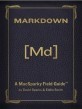
The MacSparky Markdown Field Guide by David Sparks and Eddie Smith (David Sparks, 2013)
One of the biggest problems writers face is distraction. It is especially frustrating when the very tools designed to help you become a distraction.
That’s why I am now writing eveything in a simple text editor, using a method called markdown. It enables me to remove the clutter of technology and just write.
If you have an interest in learning markdown, I recommend The MacSparky Markdown Field Guide by David Sparks and Eddie Smith. I read the whole thing last week in one sitting.
It is an iBook, so you will either need an iPad to read it, or if you don’t have an iPad, you can purchase the PDF version. The book includes 137 pages, 27 screencasts, and an additional hour of audio interviews.







April 24, 2013
#051: How to Build (or Rebuild) Trust [Podcast]


Trust is so crucial in every relationship and every situation. If you don’t have it, it make it very difficult to move things forward. If you’ve lost it, things can go south very fast.

Trust is not something you can take for granted. It takes months—sometimes years—to build. Unfortunately, you can lose it overnight.
Click to Listen
Podcast: Subscribe in iTunes | Play in browser | Download
If you are in a situation where you need to build trust—or even rebuild it—here are four specific steps you can take. These will work with your employees, your colleagues, your customers, your vendor or even your spouse.
Keep your word.
Tell the truth.
Be transparent.
Give without any strings attached.
Trust can always be rebuilt. Granted, in some situations, it can take years. It takes doing the right things over a long period of time.
But in most cases, it won’t take that long. Relationships can be turned around quickly if you own the problem and take the steps I’ve outlined above.
Listener Questions
Alan Williams asked, “How do you allow someone to regain their trust with you when they have done something to cause you to distrust them or their leadership?”
Chip Hutcheson asked, “How can I tell if a client or a prospective client has the ability to trust me?”
Evan Umberger asked, “What methods do you suggest for building your trust momentum?”
Jane Graham asked, “How can you rebuild trust with people when doing so might require you to betray someone else’s privacy?”
Kimberley Wiggins asked, “When you are trying to build or rebuild trust I know it is important to be transparent. Is it possible to be too transparent and share too much?”
Kristine Canavan asked, “When you are your own boss, should you let your clients know when you have been unhappy with your performance and given yourself a reprimand?”
Matt Coachran asked, “How do I help someone I lead rebuild trust with those they lead?”
Mike Burns asked, “How do you discuss sensitive performance issues with someone without out betraying the trust of the person you are discussing?”
Nicky Nics Cahill asked, “How do you rebuild trust with a person who has lied to your face and spread spiteful lies about you to other people, especially when it is someone with whom you have to work on a daily basis?”
Special Announcements
I am speaking tomorrow in Palm Springs, California at the INVEST Financial Corporation’s annual Leaders’ Conference. I will be talking about “Platform: Get Noticed in a Noisy World,” specifically tailored for people in the financial services industry.
On Friday, I will be speaking at the CEO Summit in Dallas, Texas, along with my friends, Bob Goff and Francis Chan. I will be doing two keynote sessions: “Why Vision Is More Important Than Strategy” and “Platform.”
I’ll be off the road the next week and then I’m headed to the SCORRE Conference in Orlando, Florida. We are sold out. But we do have a waiting list.
If you are considering launching your own platform, you need to start with a self-hosted WordPress blog. This is not as complicated as it sounds. In fact, I have put together a step-by-step screencast on exactly who to do it.
You don’t need any technical knowledge. I walk you through the entire process in exactly 20 minutes. The screencast is absolutely free!
My next podcast will be on the topic of “The Single Most Important Question You Can Ask When Bad Things Happen.” If you have a question on this subject, please leave me a voicemail message.
This is a terrific way to cross-promote YOUR blog or website, because I will link to it, just like I did with the callers in this episode.
Episode Resources
In this episode I mentioned several resources, including:
Book: Love Is the Killer App: How to Win Business and Influence Friends by Tim Sanders
Book: Just Listen: Discover the Secret to Getting Through to Absolutely Anyone by Mark Goulston, M.D.
Show Transcript
You can download a complete, word-for-word transcript of this episode here, courtesy of Ginger Schell, a professional transcriptionist, who handles all my transcription needs.
Subscription Links
If you have enjoyed this podcast, please subscribe:

iTunes

Zune

RSS
Your Feedback
If you have an idea for a podcast you would like to see or a question about an upcoming episode, e-mail me.
Also, if you enjoyed the show, please rate it on iTunes and write a brief review. That would help tremendously in getting the word out! Thanks.
Question: Are you in a relationship where the level of trust is not what it should be? What can you do today to begin building (or rebuilding) trust? You can leave a comment by clicking here.




April 23, 2013
Great Leaders Help People See Themselves as They Are [Video]
Most of the people I have led through the years were totally committed, hard-working, and exceptionally bright. But that’s not how they usually saw themselves.
Maybe this is because of our educational system with its relentless focus on where students are weak or missing the mark. Or maybe it is the mass media with the emphasis on superstar athletes, actors, and musicians.
What if our job as leaders was, in part, to help our people see themselves for who they truly are. This starts by noticing and affirming their strengths, talents, and positive performance.
They’re better than they think. Our job is to help them see that and tap into it.
Question: What would changing their view of themselves make possible? You can leave a comment by clicking here.



April 22, 2013
The Secret to Becoming Awesome
Nobody wants to lead an average life—at least nobody I talk to. But it's easy to do. We get lulled into a coma of ease and familiarity. Then we medicate our boredom and futility with entertainment. Before we know it, half our life is spent and we've done practically nothing important.
If you can’t see this video in your RSS reader or email, then click here.
Jon Acuff's new book, Start, is the perfect alarm to wake us up and help us pursue a truly meaningful calling. The subtitle says it all: Punch Fear in the Face, Escape Average, and Do Work that Matters.
Starting with Dave Ramsey, Jon looked at people who've succeeded in their chosen fields and noticed a pretty clear pattern. It's a five-stage journey he calls the road to awesome.
Learning. This is where we all start. It's a time of experimentation and exploration when we try a lot of different paths and approaches. We rack up experience and start getting a sense of what works and doesn't work for us.
Editing. Here's where we start applying that sense, where we start dropping the things that drain our energy or don't fit our aptitude and passions. Jon says that it's about getting focus and finding the work that allows us to be the best version of us, whatever that happens to be.
Mastering. Now it's time to invest in the best version of you. It's when we master our profession, our calling, the particular brand of awesome that we're after.
Harvesting. This stage is all about the rewards of all our learning, editing, and mastering. Don't confuse this with laying back. As Jon says, any farmer can tell you that harvest time is when you work the hardest. But it's also the time rewards are the greatest. Personally, I feel like I'm in this stage right now. I've never worked harder, nor have my efforts ever been more productive and satisfying.
Guiding. The final step on the journey is to help others on the path. Jon talks about how Dave Ramsey has done this for him. I've been intentional about mentoring younger men in the same way. This is the time to encourage, help, and instruct.
There are no walls between these stages. You might be in a place of heavy learning and just beginning to edit things down. You might be mastering an area and really seeing the harvest start to come in.
We used to tie these stages to age–learning in our twenties, editing in our thirties, and so on. Start shows us that today these stages are tied to our level of engagement. You might be thirty and finally starting to figure it out. You may be fifty and looking to start something new. It doesn't matter. Whenever we start, the point is to start. Anyone can do it at any time.
I found a long list of takeaways from Start, but here are the big three for me:
Passion is king. We all have our own unique definitions of awesome. Don't get trapped following someone else's definition. You'll never be the best version of you if you're always being a lesser version of someone else. And let's get real. Work is hard; it might as well be enjoyable too.
Jon tells the story of a girl in customer service for Apple. A job like that must be really hard, he told her. But she loved it. Her passion was solving problems and discovering new things. As far as she was concerned, helping people like Jon is what she was made for.
Entitlement will kill you. Of the many things that will derail your journey to awesome, one I've seen hurt a lot of people is entitlement.
Jon offers a great metaphor for understanding why entitlement is so bad. It's like a ladder on the road. You walk up a few rungs and feel good about your elevated position. But you've stopped making progress on the road. Worse, the higher you climb the more disconnected you are from reality.
We've all known colleagues so high up the ladder, they're practically worthless to their team below. This will drain the awesome out of any area of life: work, marriage, friendships. It's a deadly distraction.
The voices are wrong. We've all heard the voices of fear and doubt. They try to keep us from pursuing awesome. They tell us that we're not cut out for it, we're not ready, we're not able, we're too young, too old, whatever. But the voices lie.
Jon has an entire section dedicated to helping readers debunk their lying voices and live in the reality that, yes, they can be awesome despite their fears, despite their doubts.
Like everything Jon writes, Start is funny. But the humor comes with an important message that I'm convinced will help a lot of people who feel stuck in the land of average.
Lampo Press, Jon’s publisher, has agreed to give 50 copies of his new book, Start to my readers. To get a chance at snagging one, you must take the following three actions:
Leave a comment below. Answer the question at the bottom of this post.
Fill out the special form. I have set up a separate contact form to make it convenient for you to provide your mailing address. Please do not put your shipping address in your comment. This will automatically disqualify you.
Twitter a link to this post. You can do so automatically by clicking here. If you don’t have a Twitter account, you can use Facebook.
On Saturday, April 27, I will select 50 people at random. If you are one of those selected, I will notify you via email. If you don’t hear from me, you can assume you were not selected.
Question: Where are you along the road to awesome? You can leave a comment by clicking here.



April 20, 2013
Headlines That Grab Readers by the Eyeballs and Suck Them into Your Message
This is a guest post by Ray Edwards. He is is a marketing strategist, copywriter, speaker, and author. You can read his blog and follow him on Twitter. (I recommend both!) If you want to guest post on this blog, check out the guidelines here.
If you’re a blogger who wants more traffic, more readers, and more engagement with your tribe, this post is for you. I’m sharing a simple five-part framework that will make your blog post titles (“headlines”) more compelling.

In my work as a marketing consultant and copywriter, I see this problem all the time: great content obscured by boring titles and headlines.
A brief story: Morgan is a client who runs an executive consulting business, and she recently started a blog as a way of marketing her services. She called me to ask what she was doing wrong.
“I post lots of content, and it’s helpful stuff. But nobody seems to read it. I get zero comments.”
I brought up her blog on my laptop, and the first post I saw was entitled The Dynamics of Organizational Change Management During Transitional Periods. I read the post. She was right-it was good content. But for some reason she had crowned it with a repulsive title.
Virtually all her posts shared this flaw.
“I think I see your problem,” I said. “Nobody’s interested in reading an article with that title. Your title makes the post sound like a doctoral dissertation. You need a more appealing headline.”
“Okay,” she said, “what would you suggest?”
I thought about the movie I had watched over the weekend.
“How about something like The Avengers Guide To Building Superhero Teams During Troubled Times?”
It took some convincing for Morgan to believe this wasn’t a bit over-the-top, but finally she took my suggestion. Is it a coincidence that later that day this particular blog post actually began to get comments from readers? I think not.
The post titles you choose for your blog serve the same purpose as headlines in a newspaper or magazine. They either draw the reader in, or they push the reader away.
Here are five essential qualities of a compelling headline:
Grabs Attention. Your headline’s number-one job is to grab the reader’s attention. To accomplish this, your headline must either make a claim or promise, evoke an emotional response, or stir up curiosity.
Examples
Can You Really Be Younger Next Year?
Which Of These Five Mistakes Do You Make on Your Blog?
Screens and Qualifies Readers. Choose specific words that segment out the exact “tribe” you want to reach. Headlines that apply to everyone can just as easily apply to no one.
Examples:
Why New Authors Fail, and What to Do about It
Top 10 iPad Apps For Entrepreneurs
Draws Readers into the Body Copy. Remember you’re not selling your concept or proposition in the headline. You’re making one sale only: the idea of reading the rest of the post.
Examples:
How to Write a Book in Seven Days
Does God Want You to Be Rich?
Communicates the “Big Idea.” What is the one true benefit of your post, and how can you communicate that to your readers in a way that is meaningful to them? Put that in your headline.
Examples:
Triple Your Productivity Instantly
The Customer Is Not Always Right
Establishes Credibility. Authority is one of the most powerful ways of gaining attention. If you have an “authority card” to play, play it in the headline if possible.
Examples:
Ph.D. Psychologist Reveals Secret Of Self-Discipline
Harvard Study Shows 3 Common Traits Of Successful People
Incorporating these five principles into your blog post titles should bring you more traffic, more readers, and more engagement with your tribe.
Question: What are some other qualities you think great headlines should include? You can leave a comment by clicking here.



April 19, 2013
3 Blogging Mistakes That Are Killing Your Traffic [Video]
It’s easy to make mistakes when you start blogging. I’ve made plenty myself. Thankfully, none of them were fatal. But they kept my blog’s traffic from growing as quickly as it should have.
If you can’t see this video in your RSS reader or email, then click here.
You don’t have to make these same mistakes. In this video, I share the three biggest mistakes I see other bloggers making. These will kill your traffic if you don’t eliminate them.
Fortunately, all three are easy to remedy. But you have to know what they are in order to fix them.
Question: Which of these mistakes are you making? You can leave a comment by clicking here.



April 18, 2013
How to Make the Most of Your Unfair Advantages [Link]


How to Make the Most of Your Unfair Advantages

The Smart Passive Income Blog
April 16, 2013
We all have “unfair advantages” such as skills or resources that no one else has. These unfair advantages give us an edge over our competitors and can help us stand out in the crowd.
This blog post by Pat Flynn explains this concept in depth and provides a list of seven unfair advantages and how to best use those advantages in order to be successful.
Question: How are you using your unfair advantages? You can leave a comment by clicking here.



April 17, 2013
#050: 8 Leadership Lessons from a Symphony Conductor [Podcast]
Not long ago, I sat in Nashville’s Schermerhorn Symphony Center watching Hugh Wolff, a world renowned conductor, lead the Nashville Symphony in a performance of Rachmaninoff’s Symphonic Dances, Op. 45. It was fascinating!

Toward the end of the evening, it occurred to me that conducting an orchestra and leading a team have much in common. In fact, this analogy has become so powerful to me that I can hardly talk about leadership without referring to this example.
Click to Listen
Podcast: Subscribe in iTunes | Play in browser | Download
Here are eight leadership lessons I learned from watching a symphony conductor:Lesson #1: Start with a plan.
Lesson #2: Recruit the best players.
Lesson #3: Be visible, so everyone can see you.
Lesson #4: Lead with your heart.
Lesson #5: Delegate and focus on what only you can do.
Lesson #6: Be aware of your gestures and their impact.
Lesson #7: Keep your back to the audience.
Lesson #8: Share the spotlight.
Who knew that the world of music had so much to teach us as leaders? But it does. Leadership lessons are everywhere, if we only look.
Listener Questions
A quick note: If you are one of the people listed below, please send my assistant, Tricia, an e-mail with your shipping address, so I can send you an autographed copy of my book, Platform: Get Noticed in a Noisy World.
Adam Rico asked, “If someone has aspirations to move into an executive position in their career, what would you recommend they do now to prepare for an opportunity later?”
Ben Nielsen asked, “As a leader, how much do you need to know about your teammates specialities?”
Gary Morland asked, “How do you get a team aligned to work as one and think bigger than their own interests?”
Hanno van der Bijl asked, “How do you adapt to other people’s work habits if you are an introvert?”
Jim Ryan asked, “What should a leader do when he has department heads who aren’t playing nicely with one another?”
Kim Avery asked, “What is the best way to lead an organization from underneath?”
Mike St. Pierre asked, “How do I help my people work independently without completely relinquishing my role as their leader?”
Tara Chrisco asked, “What tips do you have for leaders who ‘conduct a symphony’ where the orchestra members play for many different conductors and the reporting structure is loosely defined?”
Timothy Moser asked, “Do you have any suggestions for ensuring that commitment is genuine before relying on team members?”
Special Announcements
We have opened up a couple of more speaking dates for this year. If you are interested in having me speak at an upcoming event, please check out my speaking page.
If you are considering launching your own platform, you need to start with a self-hosted WordPress blog. This is not as complicated as it sounds. In fact, I have put together a step-by-step screencast on exactly who to do it. I walk you through the entire process in exactly 20 minutes. The screencast is absolutely free.
My next podcast will be on the topic of “How to Build (or Re-Build) Trust.” If you have a question on this subject, please leave me a voicemail message. This is a terrific way to cross-promote your blog or website, because I will link to it, just like I did with the callers in this episode.
Episode Resources
In this episode I mentioned several resources, including:
Conference: Alignment Intensive
Post: “Why Vision Is More Important Than Strategy”
Post: “How to Do More of What You Love and Less of What You Don’t”
Podcast: “The Importance of a Leader’s Heart”
Podcast: “The Fine Art of Delegation”
Podcast: “How to Delegate Even If You Don’t Have a Staff”
Show Transcript
You can download a complete, word-for-word transcript of this episode here, courtesy of Ginger Schell, a professional transcriptionist, who handles all my transcription needs.
Subscription Links
If you have enjoyed this podcast, please subscribe:
iTunes
Zune
RSS
Your Feedback
If you have an idea for a podcast you would like to see or a question about an upcoming episode, e-mail me. Also, if you enjoyed the show, please rate it on iTunes and write a brief review. That would help tremendously in getting the word out! Thanks
Question: What lesson from a symphony leader do you need to apply now to become a better leader? You can leave a comment by clicking here.



April 16, 2013
Go Where There Is No Path [Quote]

Do not go where the path may lead, go instead where there is no path and leave a trail.”
Ralph Waldo Emerson



April 15, 2013
Are You a Catalytic Leader?
I’ve known Brad Lomenick for over a decade and have participated in his Catalyst leadership events for almost as long. Helping leaders grow is their stated desire, and it’s one that I fully support. Our growth as leaders is central to our success. It’s also increasingly urgent.
The tools of influence are more accessible today that ever before. When barriers come down, participation goes up. That means a growing number of people are flooding into leadership roles, many of them unprepared.
Instead of waiting decades trudging through the traditional leadership track in business, nonprofits, and churches, young people are seeing the needs and opportunities around them and stepping up to make a difference today.
This is a good thing—except when it isn’t. I can’t tell you the number of leaders I’ve personally seen blow up and burn out. Some good can come out these moments, particularly if we’re teachable. But we can shortcut a lot of those difficult learning experiences if we apply the learning of others.
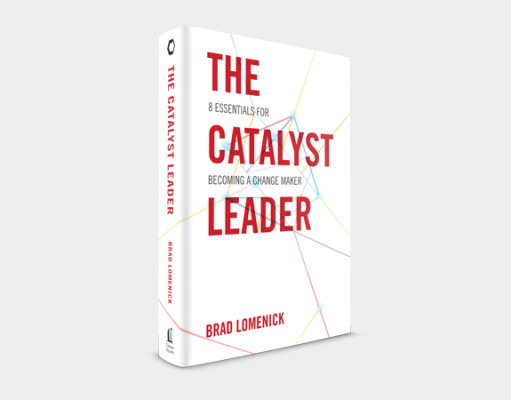
That’s why I’m excited to tell you about Brad’s new book The Catalyst Leader: 8 Essentials for Becoming a Change Maker.
From his ten years of training leaders at Catalyst Brad distills eight essentials to help leaders not only lead now, but also lead well:
Calling
Authenticity
Passion
Capability
Courage
Principle
Hope
Collaboration
Brad breaks down these traits and shows how they work on the ground through a ton of personal examples, insights from Catalyst speakers, and original statistical research of contemporary leaders by the Barna Group.
One thing I appreciate is Brad’s willingness to talk about when and how he falls short. Life’s too brief for bluffing, and Brad’s not even interested. Instead he shows where he went wrong and how others can avoid the same setbacks.
I also appreciate the way he stresses the importance of the leader’s heart, something