
Andy Wolverton's Blog, page 8
February 20, 2023
January and February 2023 New Releases
Apologies for not posting any new releases for awhile. These are always available on my YouTube channel, but I'm glad to post them here.
For January 2023:
https://youtu.be/IFlhrQwtteAAnd February 2023:
https://youtu.be/3E_P0IU6dBgMarch 2023 will be available in about a week. Thanks for stopping by.


February 2, 2023
Boiling Point (2021) Philip Barantini
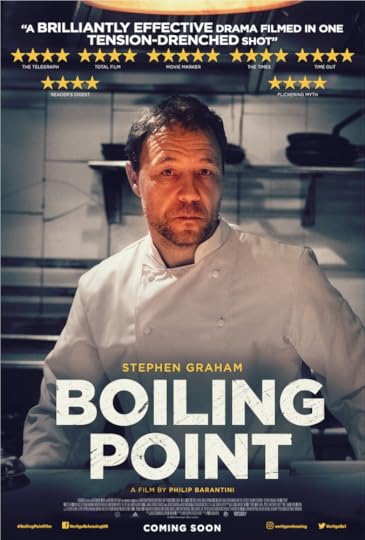
The single-take film seems to be a challenge many directors want to undertake, but in some cases it's not justified. It is justified with Boiling Point (2021) and works well, creating a sense of frantic activity in a busy restaurant kitchen, ramping up levels of anxiety and tension to the audience’s realization that something's got to give.
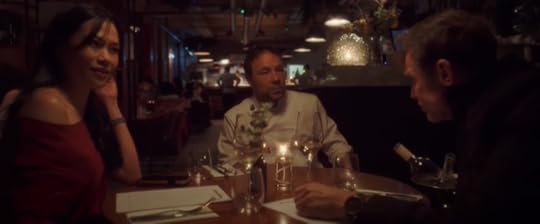
Andy Jones (Stephen Graham) is the Head Chef at Jones & Sons, an upscale London restaurant, which, as the film opens, has been downgraded from a 5-star Health and Safety raging to 3 stars after a recent inspection. In a brief scene before the action stars, we overhear part of a phone conversation Andy is having as he walks into the restaurant, a conversation that tells us that all is not right in the chef’s personal life.
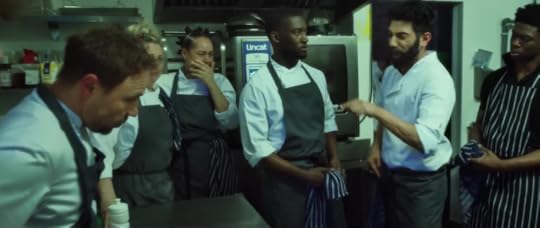
The same is true of the workplace. I won’t go into the details, but Andy’s kitchen has issues besides the drop in the Health and Safety rating. Perhaps these problems contributed to the lower rating. It doesn’t help that the restaurant’s host micromanages, and that one worker is both lazy and disrespectful, and that the new cold chef from France is struggling with English.
The restaurant is plagued with other problems, some internal, others external. You hear this type of description all the time, but it’s true: Watching the film is like watching a train wreck, but you can’t turn away.
One advantage of the single-shot film is in eliminating flashbacks and backstory. Backstory and character motivation do come out, but in an organic way. That is a blessing and a curse: We aren't bogged down in a character's history, but the actors are challenged to successfully convey to the audience who they are in their actions and words. The trick is to make it look natural, and in this, the actors in Boiling Point succeed.
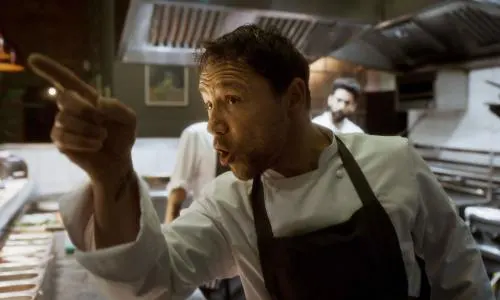
While Andy is the focal character, and Stephen Graham does a fine job, it’s the supporting cast that makes the film come alive. While many viewers will pick up on little details that spell out plot points a bit too clearly, the film mostly plays fair. Even if you know exactly where things are going, the journey is worth taking.
Boiling Point is streaming on various platforms. I viewed it on Kanopy. The film is not available on physical media in the U.S. but is available on Blu-ray in the UK (Second Sight), France (UFO), and Sweden (Njutafilms)
January 31, 2023
Forgotten Films: The Gypsy Moths (1969) John Frankenheimer
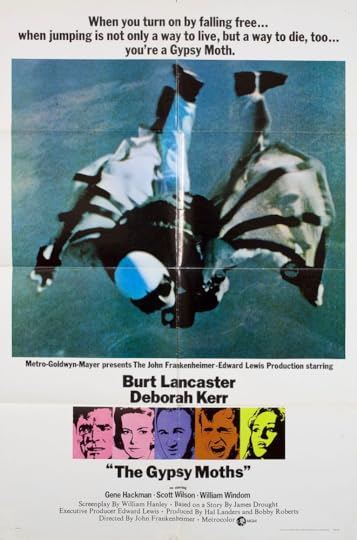
Like many R-rated movies I saw advertised in the newspaper when I was a kid, The Gypsy Moths is one that passed by me. I had almost forgotten about the film until I noticed it on DVD at a local thrift store and bought it. The disc sat around my house for months before I added it to an already large stack of unwatched movies I’m still working through.
The film has only 116 reviews on Letterboxd, and for a movie starring Burt Lancaster, Deborah Kerr, and Gene Hackman, that’s an incredibly low number. Plus it’s directed by John Frankenheimer, not an insignificant director. Yet I’m willing to bet most of the people reading this review have never seen it or maybe haven’t even heard of it.
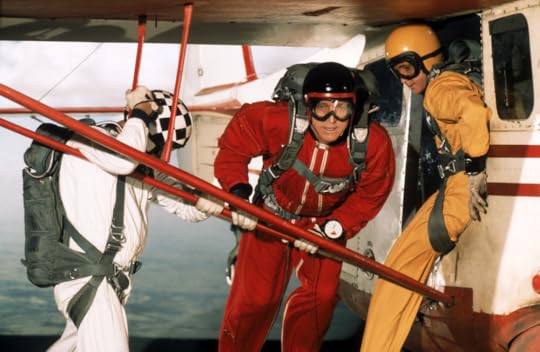
Mike Rettig (Lancaster, center), Joe Browdy (Hackman, L), and Malcolm Webson (Scott Wilson, R) make up a team of skydivers. This isn’t exactly a big-time operation backed by corporate sponsorship. In addition to acting as the performers, these guys are their own managers, promoters, and booking agents. In a different era - with far lesser technology - they would be the equivalent of acrobatic troubadours roaming the countryside for meals and a few coins.
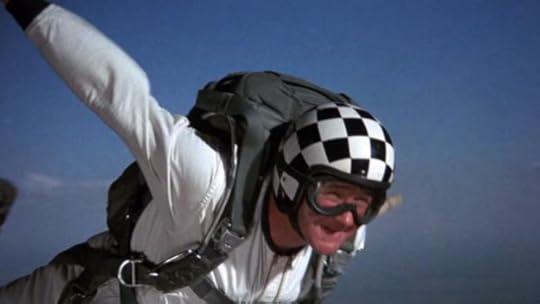
Browdy has booked the trio to perform in a small Kansas town for the Fourth of July weekend. We don’t know if this is the best or the only gig he could find for the group. Perhaps the location was suggested by Malcolm, who arranges for them to stay at the home of his uncle and aunt, John (William Windom) and Elizabeth Brandon (Kerr).
Things are a bit awkward at the Brandon house for several reasons:
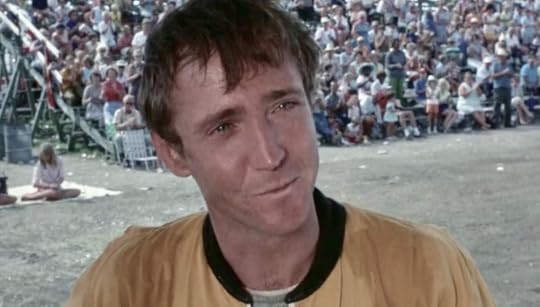
1 - Malcolm hasn’t seen his aunt and uncle for many years, not since he jumped out of their second story window when he was a kid. (Malcolm’s origin story?)
2 - The Brandons have a young college student named Annie (Bonnie Bedelia) boarding in their home, and Malcolm is interested.
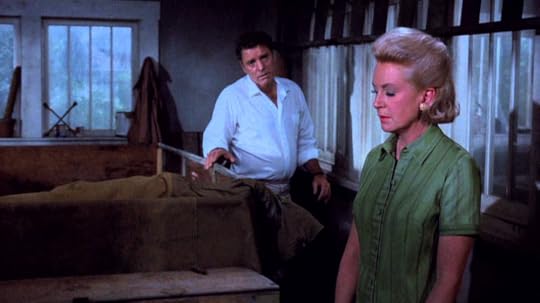
3 - The Brandons appear to have a somewhat tentative marriage. Rettig is interested in Elizabeth. Elizabeth is interested in Rettig. Well, now…
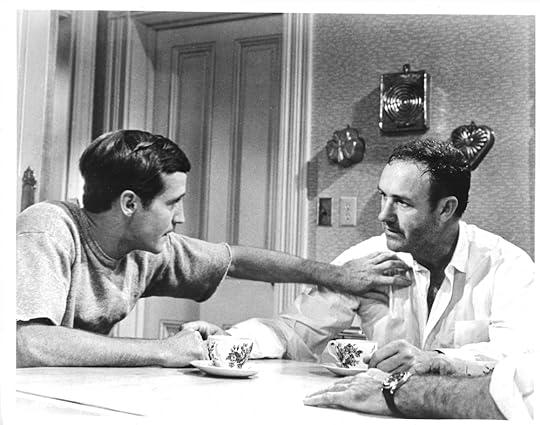
4 - And Browdy? Well, he’s got several issues. (What Gene Hackman character from this era doesn’t?)
Between the opening skydiving scene and the Fourth of July weekend performance, The Gypsy Moths is largely a melodrama, and a frustrating one. The local characters are so distant they’re almost unknowable, going through the motions of their small town and their insular existence at home. We certainly don’t get to know them much from their dialogue, but rather from their mannerisms, especially Elizabeth as she floats around the house making eyes at Rettig. Elizabeth and John are physically almost never together onscreen, which screams to the audience that this is a marriage on the verge of collapse. Their reserved, almost cloistered lifestyle also serves as a stark contrast to the hazardous skydivers, and while Browdy is the diver displaying the most machismo, and Rettig is a risk-taker in the air, it’s Malcolm, the group’s youngest member, who is the most careful and reserved. We would think he would be the one telling all the local dullards that the times, they are a-changin’.
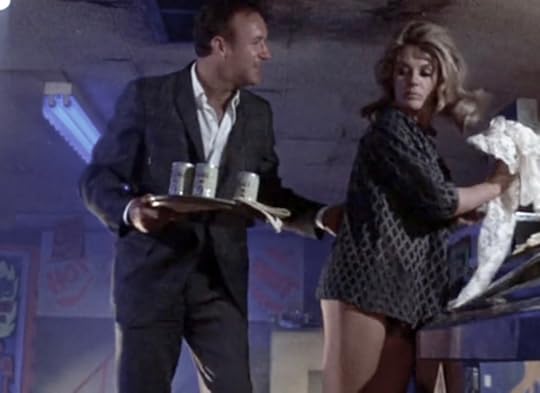
They certainly are. Even small towns in Kansas must have a nightlife including strip clubs, and the three skydivers find one, which is somewhat sanitized, even by 1969 standards. Yet things become much more jarring back at the Brandon home where we view a nude scene with Deborah Kerr, who had previously played a nun (Black Narcissus; Heaven Knows, Mr. Allison), a governess/teacher (The King and I, The Innocents, The Chalk Garden), and other innocent (no pun intended) characters. Yet the tryst and the lead-up to it is largely forgettable.
We don’t need the dramatic moments spelled out for us, but William Hanley’s script is vague in the presentation of its players and especially the women characters. Hanley, who was mostly a playwright and television writer, constructs the film like a play (without the skydiving, of course). In fact, I was stunned to discover that the film was adapted from a novel and not a play.
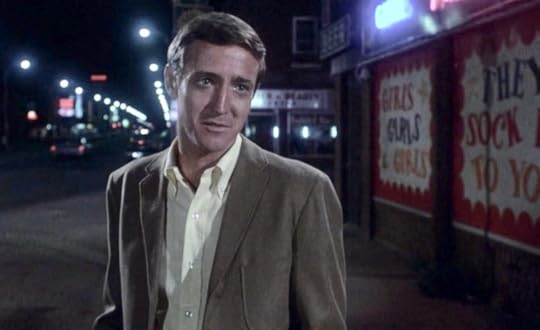
The audience is also never quite sure whose story this is: Rettig’s, Browdy’s, or Malcolm’s. Of course it can be an ensemble picture, but Burt Lancaster is the headliner (as well as the oldest cast member), so we are inclined to think it’s his story. Hackman was not yet a household name, and wouldn’t be until The French Connection hit theaters two years later. Scott Wilson, appearing here in only his fourth film, carries a quiet intensity that makes his character the most interesting of the three. (One of Wilson’s finest performances is in A Year of the Quiet Sun from 1984, another film that almost no one talks about.)
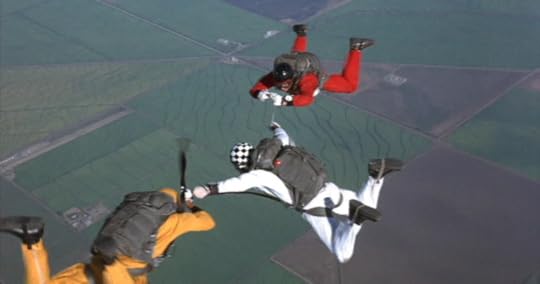
The skydiving stunts that open the film make for a good teaser, but we don’t see such action again until the finale, which gives us much more, but the cuts between the actors in skydiving gear and the real skydivers we view from a distance make for a tedious watch, even in 1969.
MGM did not spend much time or money promoting the film, and they also put it through the blender, cutting it for its debut at the family-friendly Radio City Music Hall, then adding the footage back in for an M (mature) rating. The film appears in 107 and 110 minute cuts.
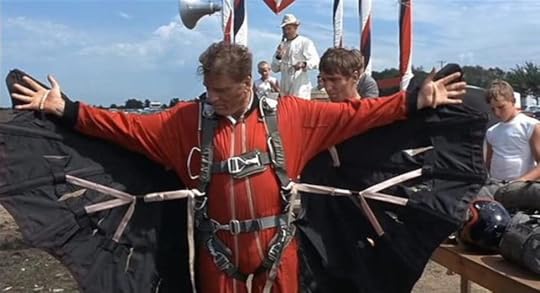
The film literally went into free fall, dying a quick death. Frankenheimer reportedly was suffering from depression during the making (and no doubt the release) of the movie, yet named it as one of his favorite films. This is the same man who directed Birdman of Alcatraz, The Manchurian Candidate, Seven Days in May, The Train, and my favorite Frankenheimer film, Seconds.
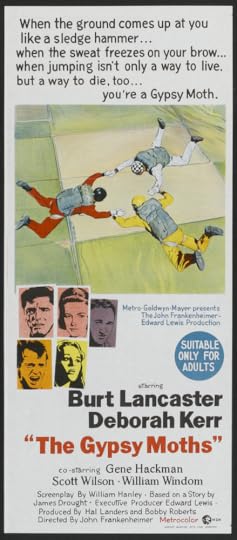
The Gypsy Moths is available to rent streaming from various companies, and is still available on DVD from Warner Archive.
Several of these photos are from Cult Film Freak
January 21, 2023
The Fabelmans (2022) Steven Spielberg
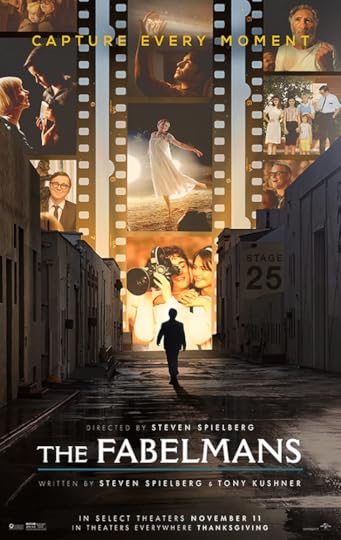
I must begin my review of The Fabelmans with the disclaimer that I am a sucker for Steven Spielberg and have been ever since I saw Duel (1971) on TV as a kid. There was a possibility that I would not like The Fabelmans, but it was a very remote possibility. Loosely based on Spielberg’s life, it’s a movie about the love of movies, and it’s perhaps the movie he’s created that he cares about most. If Schindler’s List (1993) was the film he made for his mother, and Saving Private Ryan (1998) for his father, then The Fabelmans is for Spielberg himself. It’s not for us to determine whether this film is therapeutic, confessional, or simply getting rid of the monkey on his back (no pun intended if you’ve seen the film; a spoiler if you haven’t). It’s simply for us to enjoy.
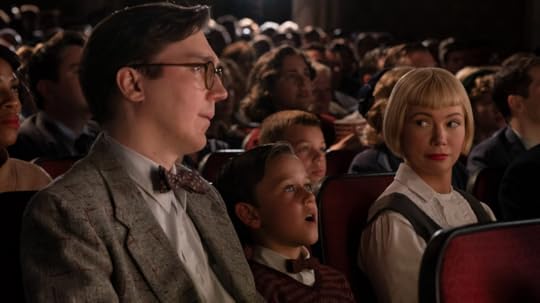
Anyone who knows anything about Spielberg knows that his family had issues. We see this in the film’s establishing scene set in 1952 as young Sammy Fabelman (Mateo Zoryan Francis-DeFord) is not convinced going to a movie theater to see The Greatest Show on Earth is a good idea. He’s frightened of the enormity of it all (a concept that will be explored again later in the film), yet his parents, Burt (Paul Dano) and Mitzi (Michelle Williams) convince him that he’s going to have a great time.
Sammy is absolutely mesmerized by the movie, especially the train derailing sequence, so much so that Sammy’s parents buy him an expensive train set. But Sammy doesn’t want to play with trains. He wants to recreate blowing them up like the scene from the film.
This is a crucial moment early in the picture, but it also suggests larger overarching themes that will become equally crucial during the film's 151-minute running time. Spielberg has had decades to dwell upon (or be haunted by?) ideas of art vs. making a living, being a driven individual vs. sacrificing for family, and more. It’s not a mistake that we aren’t aware that Sammy has other siblings until several scenes into the film.
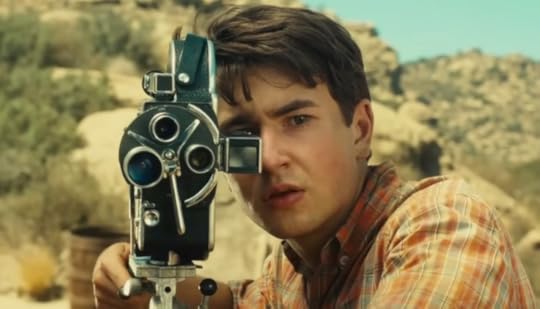
Sammy’s parents are clearly at odds as to what direction he should take in his life. His dad, who thrives in the tech/corporate world, wants stability and security for Sammy. But Mitzi, herself a former concert pianist, encourages Sammy to explore his love of the arts. Burt and Mitzi disagree on other issues as well, and when things finally come to a head, the performances of Williams and Dano deliver impact in a way that lesser actors could not.
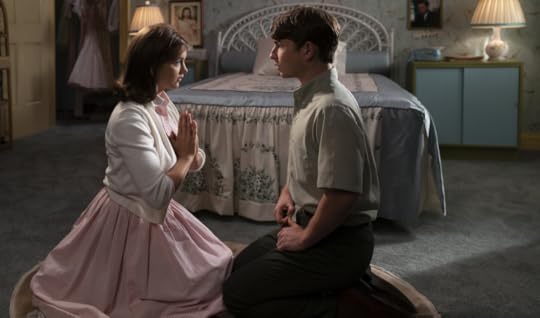
Teenage Sammy goes through the typical trials and tribulations of adolescents - young love, bullying from the jocks at school, dealing with his younger siblings, and more, but Spielberg primarily paints Sammy as an enormously talented outsider, a theme Spielberg pushes a little too hard a little too often. Yet all of this is presented in a way that avoids stereotypes and rises above the tropes we normally see. Sammy’s first kiss with a classmate named Monica (Chloe East) is one you won’t forget, and I’ve never witnessed a scene quite like the one in which Sammy is confronted by two students who are enraged over his documentary short which was screened at the school prom.
Most of all, Spielberg’s love of movies and his unrelenting desire to keep making them comes through, especially during Sammy’s homemade movies, one of which captures a startling revelation that changes everything. These are wonderful moments, making us remember why we fell in love with movies in the first place.
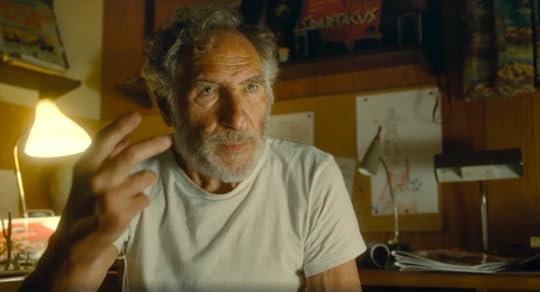
The performances in the film are tremendous, especially from Williams and Dano, but there’s much more. Seth Rogen is outstanding as Bennie Loewy, Burt’s co-worker and best friend, and several others (including Julia Butters as Sammy’s sister Reggie) are excellent. Everyone knows that David Lynch practically steals the film as John Ford, but God bless Judd Hirsch as Boris, Sammy’s granduncle, in a performance that just tore my heart out.
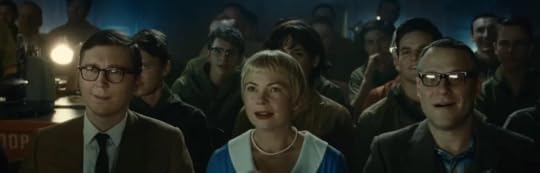
So Steven Spielberg did it to me again. I told you I’m a sucker for Spielberg. I suspect I’m not alone. I'll have more to say on this film in the near future, so stay tuned.
January 16, 2023
Substitute Teaching with Gran Torino (2008)
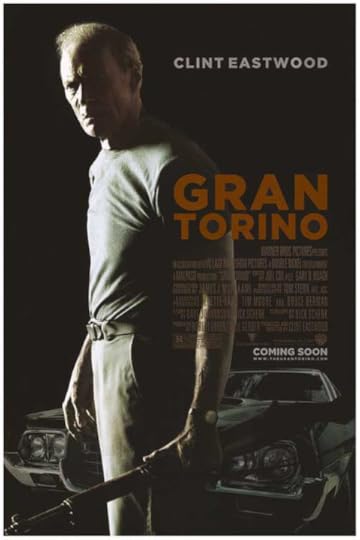
Recently I was asked to present and lead a discussion of the first film in a new series* at the Busch Annapolis Library. The event is called Immigration Stories, a four-film series exploring the plight of immigrants in America in various places and eras. My good friend Ann Glenn, who put the series together (and will present the next three films), contacted me a couple of weeks before the first event, telling me that she was going to be unable to kick off the series and asking if I would be available. I was glad to accept.
The first film for the series would be Gran Torino (2008), directed by and starring Clint Eastwood.
Ann and I met to discuss the film and how I might prepare not only for it, but also for introducing the series to the audience. Ann is a knowledgable and enthusiastic cinephile who has presented films in the Annapolis area and beyond for many years. She also has quite a following, bringing in some serious moviegoers to her programs.
It can be a bit unnerving speaking to someone else’s regular audience (somewhat like being a substitute teacher), but I knew from attending several of Ann’s previous presentations that her group shared at least a few people from my Severna Park Library audiences. I know my local people, and Ann knows hers, but when you’re a guest presenter you’re never really sure what to expect, especially with a potentially off-putting film like Gran Torino.
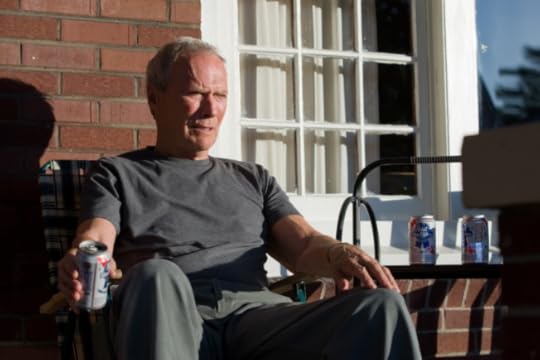
If you haven’t seen it, Gran Torino is the story of Walt Kowalski (Clint Eastwood), a recently widowed Korean War veteran who finds himself in an aging, decaying Detroit neighborhood filled with Southeast Asian immigrants and gang violence, a neighborhood that was once filled with working class white families. Walt is mad at the world, mad at God, and mad at his next-door neighbors, spouting all kinds of racial degradations at them. We sense there’s going to be more conflict.
Not knowing how many people would be offended by the film’s use of racial and ethnic slurs, as well as hostility to immigrants in general, I felt I had to give this audience a caveat. With every film you watch, I told them, someone (the writer, director, producer, etc.) is making a decision about what you see and how you see it. All such decisions are manipulative in some manner because choices must be made in every scene in every film: setting, background, camera angle, music or no music… The choices are legion. Often those decisions are designed to make the audience feel a certain way.
I warned my audience (primarily senior adults) that they may be uncomfortable, maybe offended. But I encouraged them to push through to the end. Everything in a film happens for a reason.
As we watch, we’re also learning something about the film’s characters. Why do they behave this way? Is their behavior justified? Is it reactionary? Of course you can analyze these things to death, but upon a first viewing (which it was for the majority of my audience), you try to consider those questions.
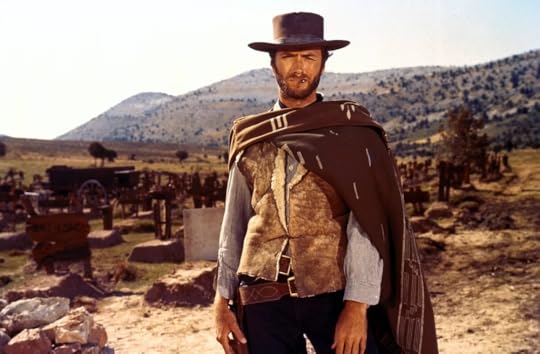
I also wanted to let my audience understand that Eastwood made many memorable Westerns and crime pictures in his 65-year (and counting) career. Most people of my age remember Eastwood’s personas of The Man With No Name and Dirty Harry Callahan. Those characters are familiar and carry a certain expectation.
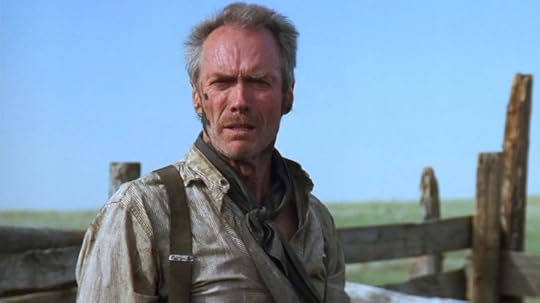
But something happened in 1992 that changed Eastwood’s persona. What happened was the film Unforgiven, which Eastwood starred in and directed. Even casual Eastwood fans knew there was something about that picture that was different. Most of Eastwood’s Westerns were not typical action pictures set in the West, but this one had something important to say (not that the previous ones didn’t). It felt personal, especially the first time we hear Eastwood’s character Will Munny say “It’s a hell of a thing, killing a man. Take away all he’s got and all he’s ever gonna have.”
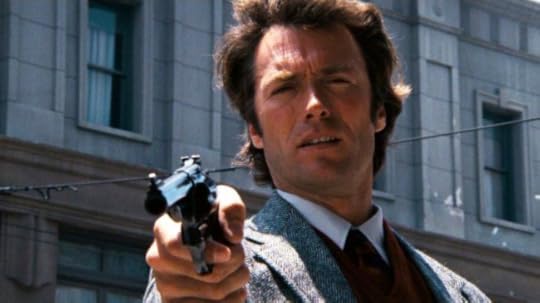
We’d never heard anything like that from an Eastwood character before. It’s a far cry from, “Go ahead, make my day” or “You’ve gotta ask yourself one question: ‘Do I feel lucky?’ Well, do ya, punk?”
If Unforgiven overturns Eastwood’s Western image, Gran Torino at least challenges his law-and-order-by-any-means-necessary cop image. If you grew up with those early films, like I did, you know - or think you know - where Eastwood is going, what he has up his sleeve. But, as I told my audience, if you haven’t seen a Clint Eastwood film in a while, you may be in for a few surprises.
I encouraged my audience to look for a few things while watching the movie:
Watch how people greet each other, what they say and their body language. Look at who they are and where they are, not only with respect to the film’s staging, but also in their lives.
Think about what the cars in the film say about the characters who own/drive them.
Pay attention to the camerawork and music, how they help convey character.
Post-Movie Discussion (SPOILERS)
Because I was presenting in a new location, didn’t completely know my audience, and wasn’t sure how much time we would have for discussion, I pointed out a few things that they may have picked up on:
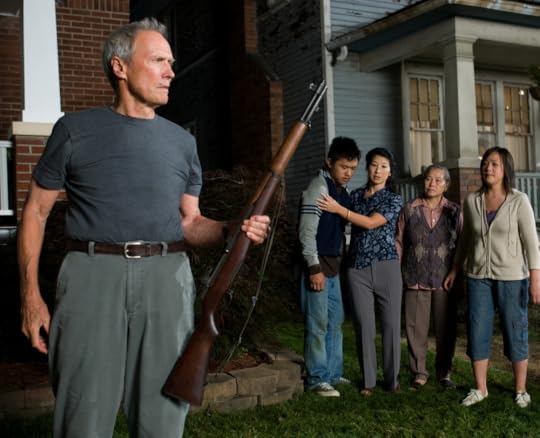
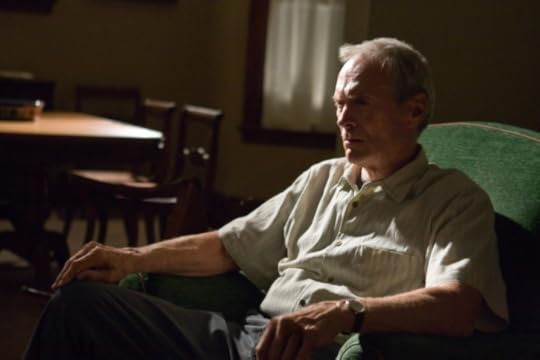
We often see characters placed or framed in positions of power or vulnerability. Walt appears in both: He’s a rugged, proud individual who frequently stands (with or without a firearm) like a sentinel, sometimes shot slightly from below to give him more gravitas. Yet at other times he’s shown as small and vulnerable due to his age and health.
Walt’s Hmong neighbors are generally shown as vulnerable and helpless, like children who can’t take care of themselves in this environment. This idea is most developed with the character of Thao (Bee Vang)+. This situation, of course, prepares us to accept Walt as the white savior (and many audience members commented on Walt’s Christlike death at the film’s end).
These are not-so-subtle aspects of the film that I wanted to get out of the way in order to focus on some other elements that may not be so obvious, such as a decision Eastwood makes as far as staging:
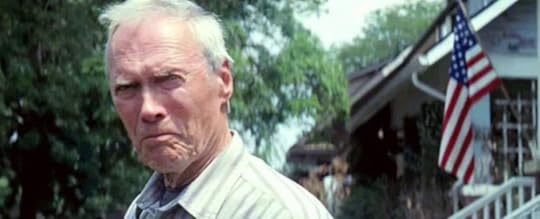
Eastwood creates a handful of shots in which Walt is placed on one side of the screen, usually berating his neighbors. On the other side of the frame, we see the American flag hanging from his house, which carries the idea that Walt’s racial slurs and attitudes are a part of who America is. Yet when Walt decides that Thao can borrow his beloved Gran Torino for his first date with Youa (Choua Kue), Walt is placed on one side of the screen as before, yet the American flag is absent. Walt has broken away from his former manner of looking at his Hmong neighbors. (Interestingly, we also see the flag when Father Janovich [Christopher Carley] challenges Walt.)
When I prepare for these presentations, I normally have far more material than I’ll have time to use. In the past I’ve had both very chatty audiences and groups who wouldn’t utter a sound if you lit a fire under their chairs.
This group had some excellent thoughts on the use of music, comic relief, setting, and more. Some shared their own experiences of changing neighborhoods and what it was like not only for them, but imagining what the immigrants themselves were feeling. We had many comments on how Walt’s war experience led him to become the man we see at the beginning of the film and how he uses that experience to rethink a few things. White savior elements aside, Walt does sacrifice his life for the betterment of a neighborhood where he’s the minority, but he’s also saving Thao’s life.
I was fortunate to have a great audience for this film. It’s not always this way. Perhaps in a future post I can discuss how to handle audiences that are indifferent or even hostile toward certain films. If you’d like to read about that, let me know. Thanks for reading.
*Other films include Goodbye Solo (2008), Entre Nos (2009), and Minari (2020).
+ Vang, who initially praised the film and its treatment of Hmong characters, has since spoken out against the film.
December 31, 2022
Best Film Reading in 2022
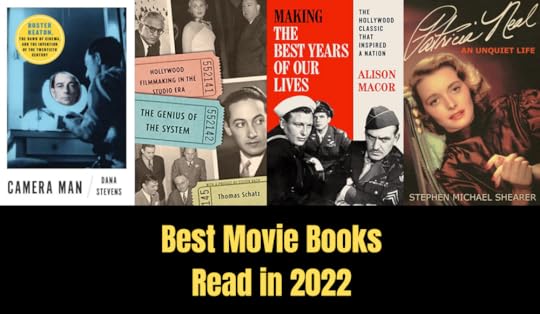
It's a real dilemma: Watch a movie or read about them? If you're reading this, you may have the same problem, especially when there are so many great books published about film these days. I read several this year, but these are the ones I enjoyed most in 2022. I look forward to hearing about your favorites. (Books are presented in the order I read them.)
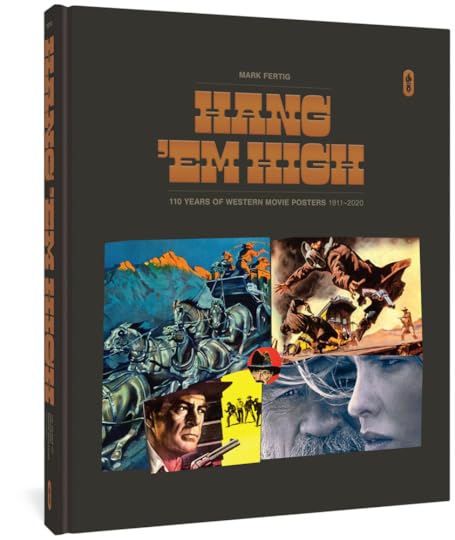
Hang ‘Em High: 110 Years of Western Movie Posters, 1911-2020 (2021) Mark Fertig
Don’t miss this tremendous book of Western posters from the silent era up to the year 2020. Mark Fertig gives a concise history of Westerns and the history of its posters while displaying some spectacular art. Trust me, you can look at these stunning images for hours. Sadly, Fertig passed away several months ago, yet this book is a worthy tribute to his work, vision, and passion. Highly recommended.
https://youtu.be/4AkyUbNHPBI
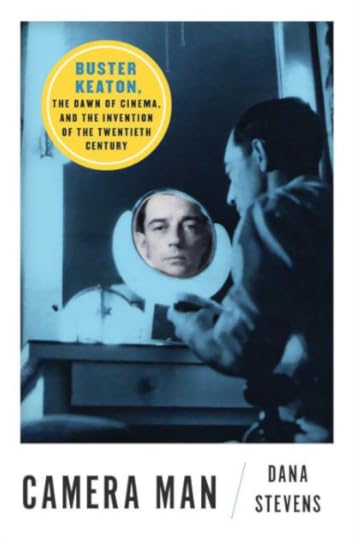
Camera Man: Buster Keaton, the Dawn of Cinema, and the Invention of the Twentieth Century (2022) Dana Stevens
Slate film critic Dana Stevens not only chronicles the life and career of Buster Keaton, but also cultural and cinematic history. The book shows how Keaton transcended film and continues to do so today. Essential reading.
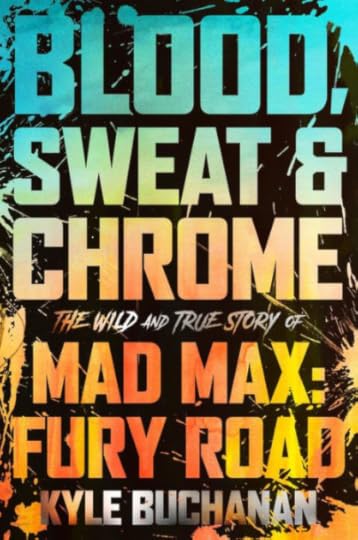
Blood, Sweat & Chrome: The Wild and True Story of Mad Max: Fury Road (2022) Kyle Buchanan
Okay, I’ll admit it. I picked up this book to find out if anyone was killed or seriously injured in the making of Mad Max: Fury Road. How could that not have happened? This is a meticulous look at how the film came to be in 2015, 30 years after the previous Mad Max movie. Dare I say it? It’s a wild ride.
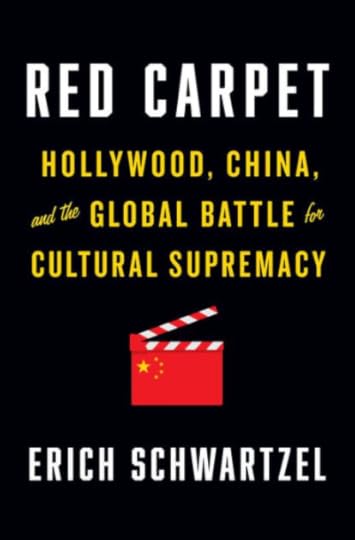
Red Carpet: Hollywood, China, and the Global Battle for Cultural Supremacy (2022) Erich Schwartzel
In 2021 China surpassed the United States as the leading box office movie market in the world with 7.3 billion dollars in revenue compared the 4.5 billion in the U.S. (Statistica) Does that surprise you? Then you need to read this book.
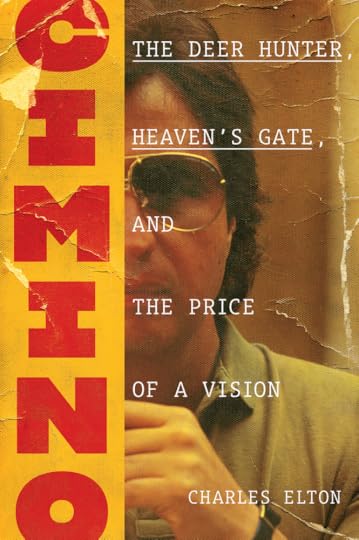
Cimino: The Deer Hunter, Heaven’s Gate, and the Price of a Vision (2022) Charles Elton
I don’t think I read a sadder book on movies in 2022 than this one chronicling the rise and fall of director Michael Cimino, a fascinating yet complex individual.
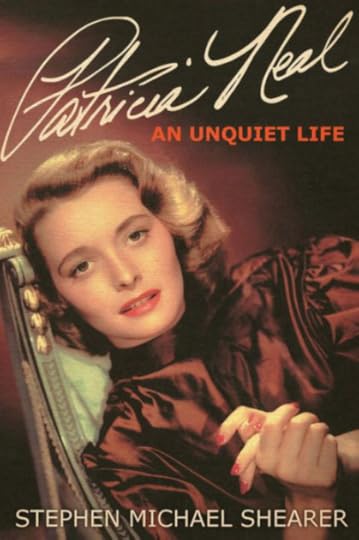
Patricia Neal: An Unquiet Life (2006) Stephen Michael Shearer
Speaking of complex, the story of Patricia Neal is a roller coaster of jubilation and tragedy. Her marriage to writer Roald Dahl would be enough to fill a book, but there’s so much more to this fascinating woman’s life and career.
[image error][image error]
The Monster Show: A Cultural History of Horror (1993, revised 2001) David J. Skal
If this book is any indication, I suspect I’m going to read everything Skal has written. Making connections to culture, literature, art, and more, Skal taps into what makes horror work, how it has developed, and why we keep coming back for more. I read the 1993 edition (right), but the updated 2001 edition (left) is probably the one to seek out.
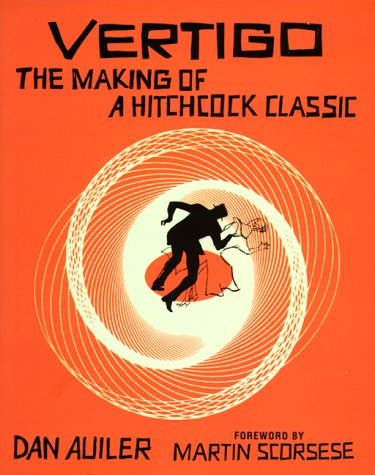
Vertigo: The Making of a Hitchcock Classic (1998) Dan Auiler (video)
Another book I covered in a video review:
https://youtu.be/7bqszUA5-6w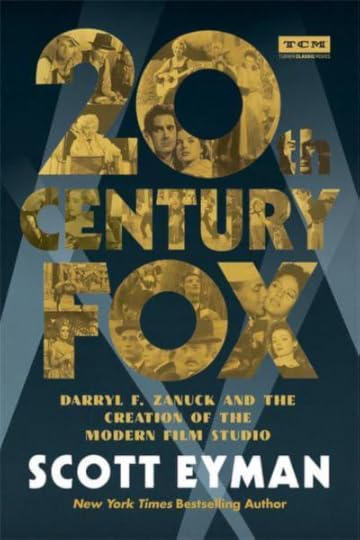
20th Century-Fox: The Complete History of Hollywood’s Maverick Studio (2021) Scott Eyman
It’s not easy to condense a movie studio’s entire history into 336 pages, but to do so in a manner that is readable and page-turning is quite a feat. Essential reading for anyone interested in movie history.
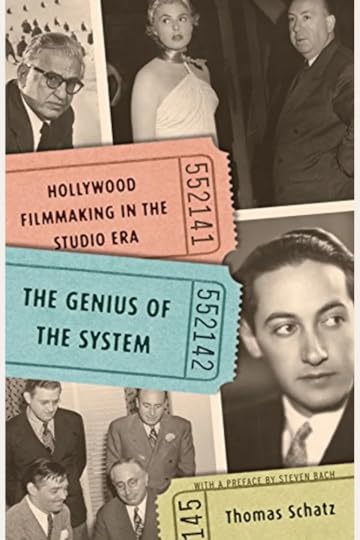
The Genius of the System: Hollywood Filmmaking in the Studio Era (1988) Thomas Schatz (video)
Another video review:
https://youtu.be/UtI7gk0un-Y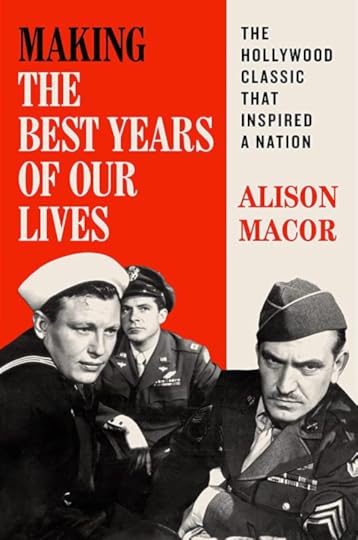
Making The Best Years of Our Lives: The Hollywood Classic That Inspired a Nation (2022) Alison Macor
When I was a teenager many years ago, my good friend Joe and I - avid movie fans - were discussing our favorite movies when Joe’s dad asked us if we had ever seen a film called The Best Years of Our Lives. We hadn’t. A veteran himself, Joe’s father began telling us about the movie. At a certain point tears welled up in his eyes, and he couldn’t continue speaking. When I saw the film just a few years later, I understood why. Each time I watch it, tears well up in my eyes as well. Looking back we might wonder why so many Americans went to theaters to see a three-hour movie about returning World War II veterans only one year after the end of the war. Apparently something more than escapism at the movies was on their minds. The Best Years of Our Lives (1946) was a film that transcended mere entertainment, although it certainly entertained audiences. More importantly it brought to America’s attention the plight of returning veterans, those suffering from strained relationships, the inability to find meaningful work, and a problem we would later refer to as PTSD. Alison Macor’s tremendous book Making The Best Years of Our Lives is not only a great book about a great film, it’s a testament to the courage of those who served as well as those who made the picture. That courage is present both in front of the camera, with the double amputee veteran Harold Russell, and behind the camera with director William Wyler, who suffered from deafness due to the war. With meticulous research Macor chronicles the enormous challenges Wyler faced in getting the film cast, produced, and approved by the Production Code. But the story is far more than a motion picture moving American audiences emotionally. People came away from the film with a greater understanding of just how much our veterans actually did give the best years of their lives for their country. Billy Wilder called the film “the best directed picture I have ever seen.” Roger Ebert stated “As long as we have wars and returning veterans, some of them wounded, The Best Years of Our Lives will not be dated.”The Best Years of Our Lives is a film that has resonated with audiences at home and abroad for generations. May it continue to do so, and may this outstanding book help keep the film alive for many more generations.
That's my list of the best books on movies I read in 2022. Please share yours! Happy New Year, everyone.
December 20, 2022
Best Nonfiction Reading from 2022
These are my favorite nonfiction reads from 2022 in no particular order, regardless of when they were published. I hope you find something to enjoy here, and please share your favorite nonfiction reads. (I'll cover books about movies later.)
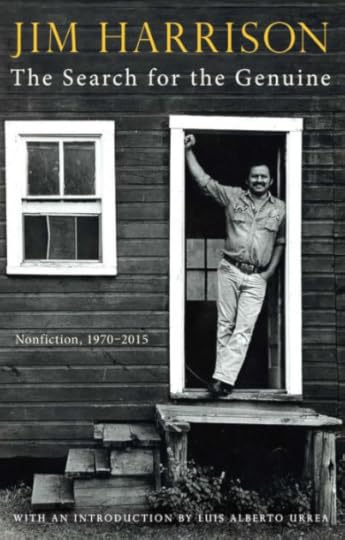
The Search for the Genuine: Nonfiction, 1975-2015 (2022) Jim Harrison
I’m embarrassed to admit that this is my first encounter with the work of Jim Harrison, but it won’t be my last. These essays cover a multitude of topics including nature, poetry, fishing, dogs, shark-tagging, the writing life, and much more.
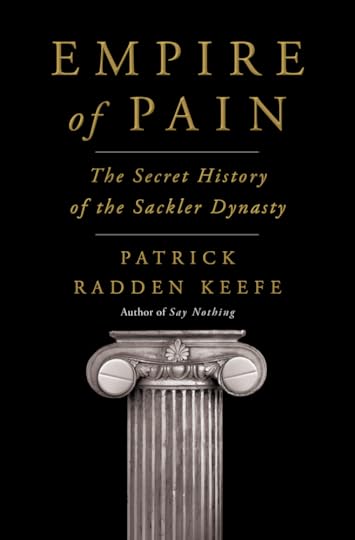
Empire of Pain: The Secret History of the Sackler Dynasty (2021) Patrick Radden Keefe
Ever since I read Say Nothing: A True Story of Murder and Memory in Northern Ireland, Patrick Radden Keefe has become one of my favorite writers. He brings the same level of compelling writing and tireless research to the story of the Sackler family and what can rightly be called crimes against humanity in the form of the marketing of OxyContin. Be warned: This book will infuriate you.
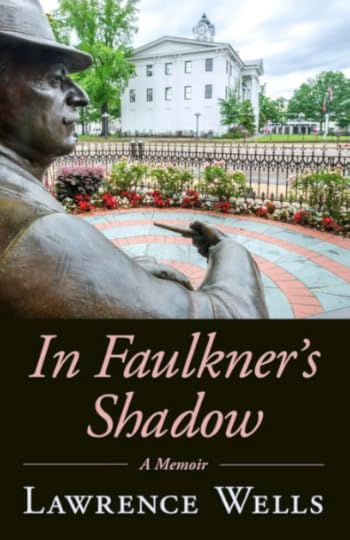
In Faulkner’s Shadow: A Memoir (2020) Lawrence Wells
What a beautiful, hilarious, sad, and jubilant memoir of the South, literature, and, as the title indicates, living in the shadow of William Faulkner. I absolutely loved it. It *almost* makes me want to move back to the South. Well… Who knows???
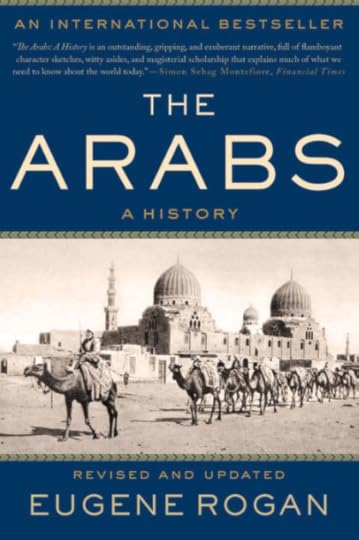
The Arabs (2009) Eugene Rogan
So many Americans - including me - have a very limited knowledge of the Middle East, but this book does a tremendous job of helping readers understand the Arab world and the tremendous conflict that has been a part of its history practically from the beginning. A tremendous read. Thanks to my friend Kendrick for recommending it.
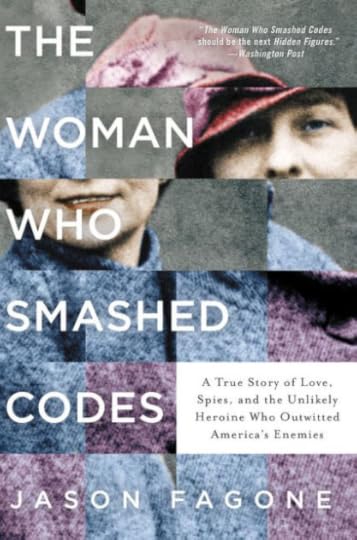
The Woman Who Smashed Codes: A True Story of Love, Spies, and the Unlikely Heroine who Outwitted America’s Enemies (2017) Jason Fagone
Although not as popular as Hidden Figures, The Woman Who Smashed Codes focuses on Elizebeth Smith, a nearly-forgotten woman who played a crucial role in intelligence and national security for forty years.
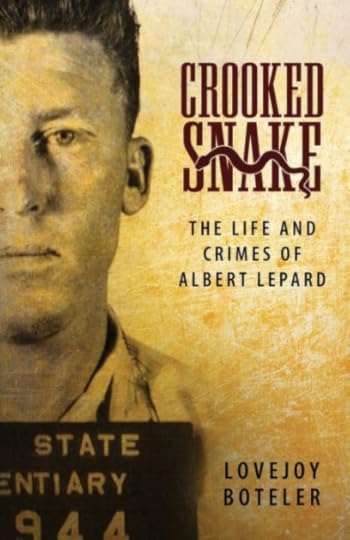
Crooked Snake: The Life and Crimes of Albert Lepard (2019) Lovejoy Boteler
How many books have you read by a teenager who was kidnapped by a serial killer, lived to tell about it, then set out to research his would-be killer? That’s exactly what Lovejoy Boteler did, and what a story it is, a tale that ends in Scott County, Mississippi where I grew up.
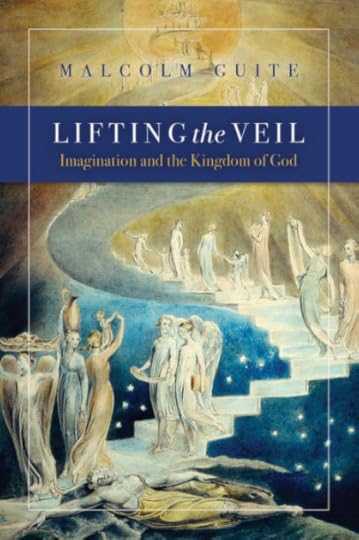
Lifting the Veil: Imagination and the Kingdom of God (2021) Malcolm Guite
A must-read for anyone involved in the arts, even if you’re not a Christian. Yet Guite explores the celebration of the imagination as it is considered from the Christian life, a study of the spiritual power of imagination and creativity. A short book (under 200 pages) that’s filled with abundant food for thought as well as some wonderful art and poetry.
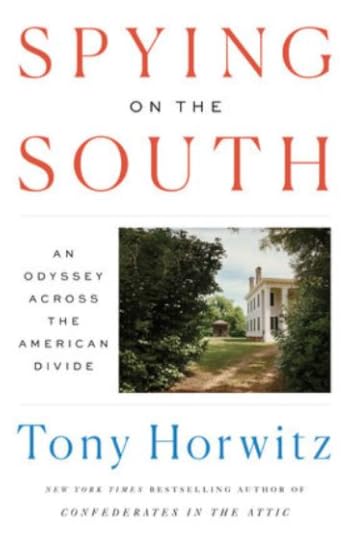
Spying on the South: Frederick Law Olmsted in a Fractured Land (2019) Tony Horwitz
I always enjoy works about the South written by non-Southerners who have spent considerable time there. This work takes its cue from Frederick Law Olmsted’s trek across the South in the 1850s as Horwitz retraces Olmsted’s steps on his own path to discovery.
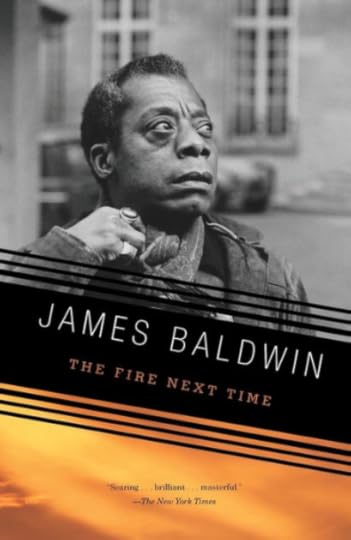
The Fire Next Time (1963) James Baldwin
A fascinating essay that has lost none of its power.
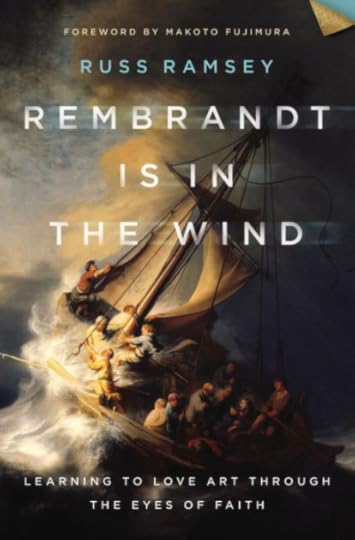
Rembrandt Is in the Wind: Learning to Love Art through the Eyes of Faith (2022) Russ Ramsey
One of my favorite nonfiction books of the year. Like Lifting the Veil, Rembrandt Is in the Wind deals with matters of art, faith, and imagination, yet is also a fascinating journey through art history.
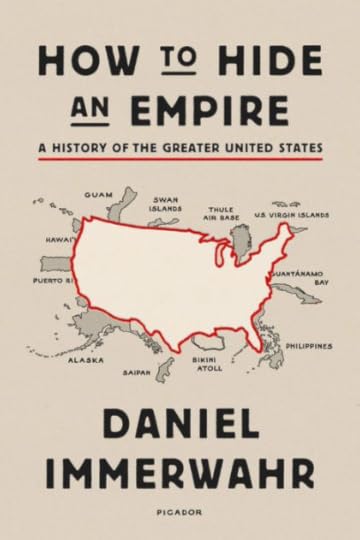
How to Hide an Empire: A History of the Greater United States (2019) Daniel Immerwahr
I stumbled across this book in doing research for my American Studies class. In short: a history of the U.S. beyond the United States. Fascinating and thought-provoking.
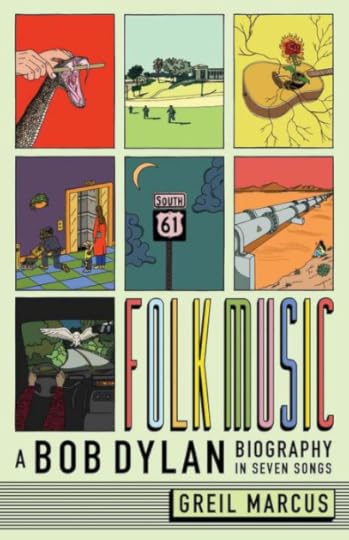
Folk Music: A Bob Dylan Biography in Seven Songs (2022) Greil Marcus
One of our most interesting writers on music, Greil Marcus, has selected seven Bob Dylan songs that examine not only American folk music but also the essence of America.
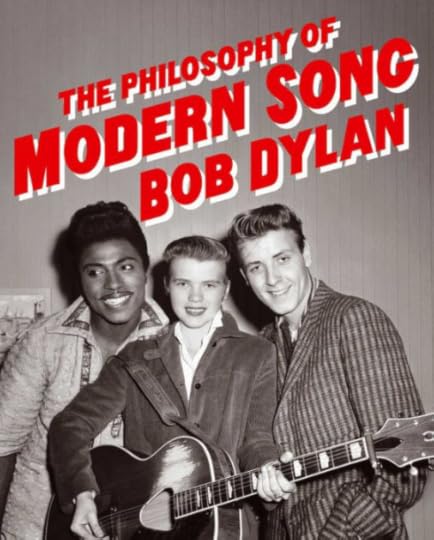
The Philosophy of Modern Song (2022) Bob Dylan
At the risk of polarizing non-Dylan fans, know that Dylan is writing about other people’s songs, not his own, but man, does he have some insight into the American songbook. Sure, he can get caught up in his own stream-of-consciousness from time to time, but you’ll look at songs you’ve known for decades in a different way after reading this book. The biggest revelation about this book? An examination of what songs don’t say. Read the book. You’ll understand.
If you decide to listen to the audiobook, its narrators include Jeff Bridges, Helen Mirren, Oscar Isaac, John Goodman, Rita Moreno, Sissy Spacek, Alfre Woodard, Jeffrey Wright, Steve Buscemi, Renée Zellweger, and Dylan himself.
I read lots of other good books this year (and some turkeys), which you can find here.
Next time I hope to cover my favorite books on film. Please let me know what you enjoyed reading this year.
December 19, 2022
Best Fiction Reading from 2022
These are my favorite fiction reads from 2022 in no particular order, regardless of when they were published. I hope you find something to enjoy here, and please share your favorite fiction reads. (I'll cover nonfiction later.)
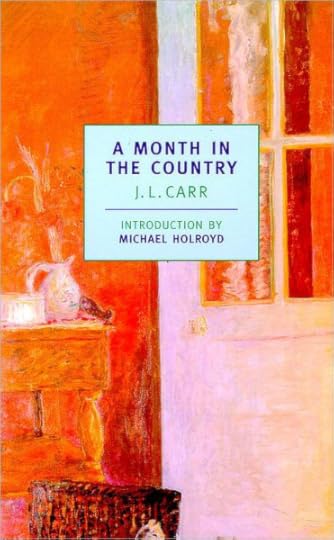
A Month in the Country (1980) J. L. Carr
I knew nothing of this book before I heard it discussed on the podcast Backlisted. Tom Birkin, a young WWI veteran, travels to the Yorkshire village of Oxgodby where he is hired to restore a local church’s recently discovered medieval mural. This is such a beautiful little book where seemingly little happens, but its power seeps into your bones. And it’s only 135 pages long.
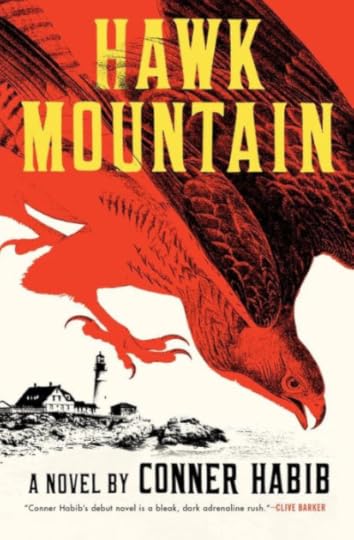
Hawk Mountain (2022) Conner Habib
An English teacher named Todd is having a relaxing day at the beach with his young son Anthony when along comes a man Todd hasn’t seen since high school. Even from a distance he knows that it’s Jack, the kid who bullied Todd mercilessly in school. But Jack seems different, more mature. Then Jack invites himself over to Todd’s house. This creepy thriller is not for the faint of heart.
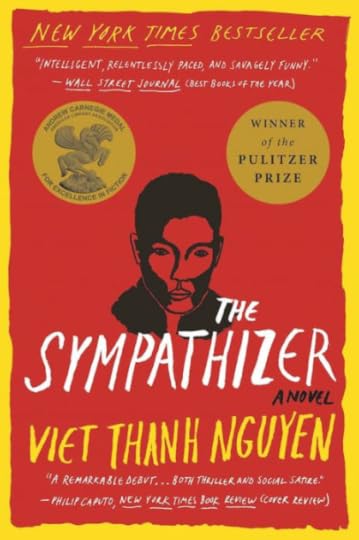
The Sympathizer (2016) Viet Thanh Nguyen
It’s rare for me to even pick up any book that’s been lauded to the stratosphere, but The Sympathizer is worthy of all the praise it has received. This is a Vietnam War novel filled with satire, humor, love, friendship, espionage, and more.
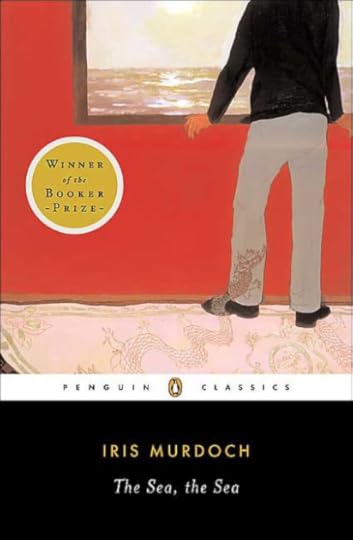
The Sea, the Sea (1978) Iris Murdoch
I was absolutely spellbound by this, my first experience with the work of Iris Murdoch. After a career in the theatre, Charles Arrowby retires to a remote coastal town, hoping to write a memoir. Dwelling upon lost loves and decisions he should have made as a youth, Arrowby begins to notice strange things going on by the sea. My second favorite work of fiction this year.
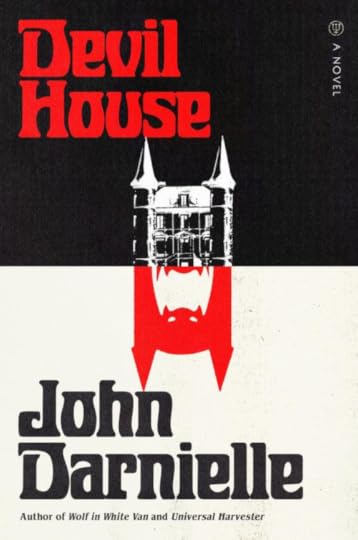
Devil House (2022) John Darnielle
Anyone expecting a traditional horror novel may be disappointed in Devil House. The book isn't even a traditional novel. Although it's not technically difficult to read (with one chapter being an exception), it's a complex, layered work that may not behave in the way you think it should. Darnielle probably isn't all that interested in reader expectations. The power of the novel - the way it conveys information and reveals its revelations - grows on you incrementally. In some cases, it may take a while to feel the full force of the story. This is one of those books that stays with you for a long, long time if you give it your full attention.
Devil House is probably best read in as few sittings as possible. If available, I would not recommend an audiobook version as it may make it too clear who is narrating, and that's part of the mystery of the novel in written form. I look forward to reading this book again in a year or two. There's definite treasure here if you're looking in the right place.
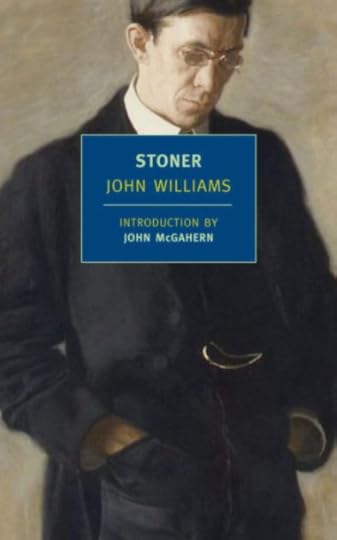
Stoner (1965) John Williams
From my Goodreads review: “A stunning book. I doubt I'll read a better novel this year.”
And I was right. Who would’ve thought a novel about the son of a Missouri farming family seeking to become a literature professor would be so moving and powerful? Yet it is. My favorite work of fiction I read this year.
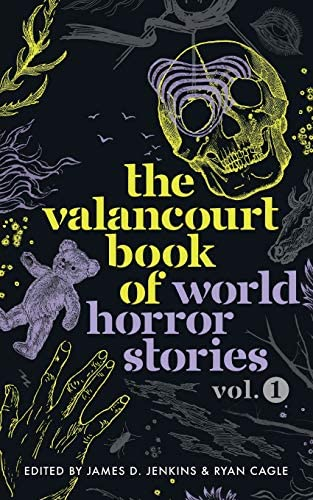
The Valancourt Book of World Horror Stories (2020) James D. Jenkins, Ryan Cagle, editors
Not your typical book of horror short stories. Read this book and you’ll probably have your concept of horror redefined for you, especially if most of your horror reading comes from the U.S. or Great Britain. Here you’ll find works from Spain, Romania, Sweden, Peru, Norway, South Africa, Senegal, Catalonia, and more. I need to pick up Volume 2. And 3.
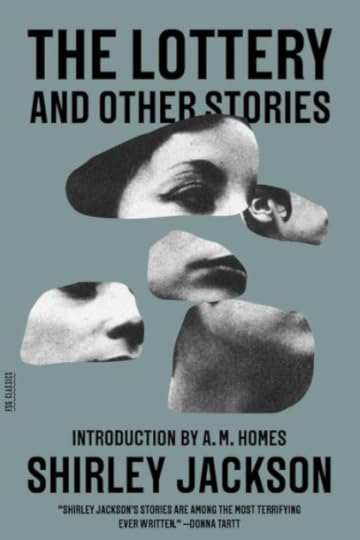
The Lottery and Other Stories (1949) Shirley Jackson
There’s so much more to Shirley Jackson than the title story and The Haunting of Hill House. Good gracious, this woman could write.
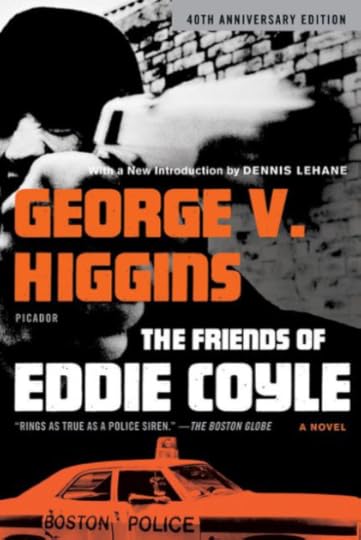
The Friends of Eddie Coyle (1970) George V. Higgins
It doesn’t get much better than this crime fiction masterpiece. I liked it so much made a video review:
https://youtu.be/fa-uTPQv5YY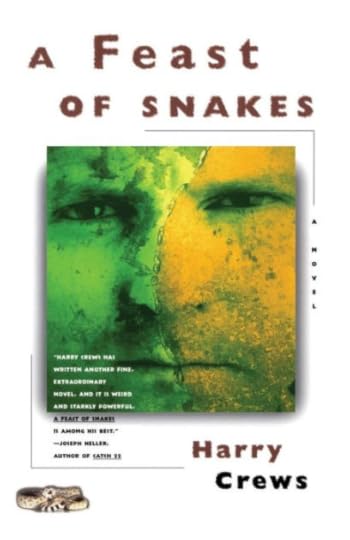
A Feast of Snakes (1976) Harry Crews
Hawk Mountain is not recommended for the faint of heart, but it’s a day at the playground compared to A Feast of Snakes. Brutally violent and dark, yet not without some equally dark humor. This one certainly won't be for everyone. What am I saying? I think I only know three or four people who would even finish the book. But I'll never forget it. I think I want to thank Jeff D. for recommending it to me, but I'm not sure...
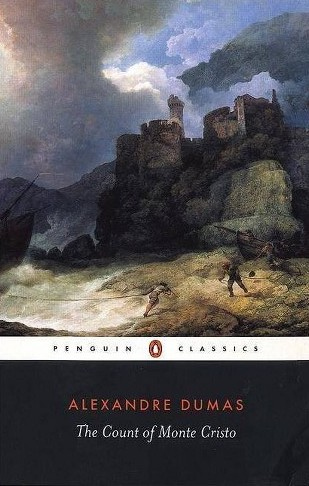
The Count of Monte Cristo (1884) Alexandre Dumas
Okay, the unabridged edition is 1276 pages long, but what a fun ride!
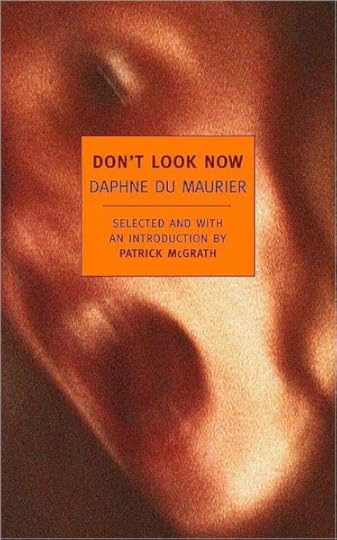
Don’t Look Now (2008 reprint) Daphne du Maurier, Patrick McGrath, ed.
If you’ve only read Rebecca, you’re not getting anything even close to the whole picture of Daphne du Maurier. Yes, this collection contains the title story and “The Birds,” but so much more.
I read lots of other good books this year (and some turkeys), which you can find here.
Next time I hope to cover nonfiction and maybe a video review of my favorite books on film. Please let me know what you enjoyed reading this year.
December 16, 2022
Teaching Again After 22 Years Away from the Classroom
The last time I taught students in a classroom Bill Clinton was President, the St. Louis Rams won the Super Bowl, and the first X-Men movie was in theaters. I was a lot younger then, and none of my current students had yet been born.

On little more than a hopeful lark, I decided to apply for an adjunct teaching position at Anne Arundel Community College (AACC) in Arnold, Maryland, about a 5-minute drive from where I work at the public library. AACC is consistently ranked as one of the top (and often the top) community colleges in the nation. To my surprise (shock?) I interviewed and got the job teaching Introduction to American Studies.
Had I ever taught this subject before? No.
Depending on how you define “teaching,” I’d never stopped doing it. I’d taught the occasional workshop for beginning writers, trainings at the library, Sunday school at church, and if my movie and book discussions aren’t really what you’d call teaching, at least I (hopefully) imparted some knowledge to those attendees. Yet none of those people had paid money to be there, and none of them were going to receive a grade at the end of the event.

This AACC class was different. These students (or their parents) were paying to be there, and I was getting paid to teach them. When money changes hands, there’s more at stake.
I know I’m not the only presenter who over-prepares. When I first began my Great Movies program at the library I spent hours preparing each introduction and closing thoughts for after-the-movie discussions, and Q&A sessions. But preparation for this class was on a whole other level.
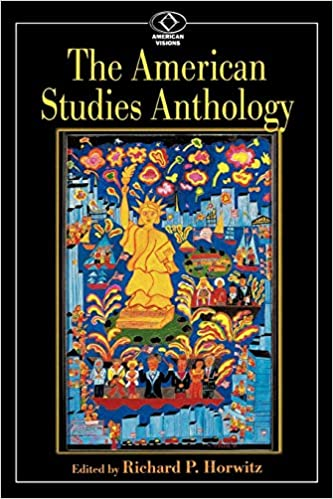
I accepted the position about 10 days before the class started. I was on vacation when I got the news and didn’t have a copy of the textbook, one that had already been chosen and was in the campus bookstore: The American Studies Anthology edited by Richard P. Horwitz (Table of Contents here). Although the book is a bit on the old side (2001) and much has happened since its publication, it contains some good essays. But I knew I wanted to play to my strengths and supplement the text with movies, music, and more.

Fortunately I have a friend named Steve who has taught at AACC for several years. He clued me in on how students learned (or didn’t) during Covid and what to expect. “Their attention spans are very short,” Steve said. “You won’t be able to stand up there and lecture for 75 minutes. You’ll need to break it up, make it interesting.” I planned for that, deciding that I would frequently place the students in small groups so they could discuss topics we were covering, then discuss them together as a class.
Mapping out as much as I could during those 10 days before classes began, I discovered I must come up with enough material for 28 class sessions. I had the syllabi from two previous instructors, but no curriculum other than the textbook. Relying heavily on the textbook, I planned the first three lessons and gained a rough idea for the next two or three beyond that.
On that first day, I went over the syllabus and talked to the students about what they wanted to get out of the class. Some of the answers were:
“I like history, so I thought this would be a cool class.”
Okay, not bad.
“I like history too and really like seeing how we got where we are today as a country.”
Even better.
“Dude, I’m just here for an easy A.”
At least he was honest.
I had 14 students on my roll. Two never showed up. One dropped after the first meeting. Two stuck around for about a month, then I never saw them again. I was left with a class of nine, all of them guys, all of them (probably) no older than 20. My library coworkers joked that this was “The Guys Book Club” (my library group) young man’s edition.
On that first day I learned a little more about the students, giving them their first “assignment” to tell me three things about themselves with one of them being a lie. They were all interesting, but this was the best one:
1 - My girlfriend’s grandmother turned down a marriage proposal from Joe Biden.
2 - I started a business at the age of 17 in trash removal.
3 - My brother and I have owned over 50 boats in our lifetime.
Which one do you think was the lie?
It was #3. They had actually owned 75 boats. (The student also showed me a non-Photoshopped picture proving #1.)
I also went around the room asking about their last two years of school with Covid.
“I haven’t had a face-to-face class since I was a sophomore in high school,” one freshman said. Others concurred.
“I’ll be honest,” another confessed, “I was watching YouTube the entire two years of virtual learning.”
I assured them that this would be an easy class if they did the work. I gave them a brief overview of the policies and what the class would look like. They seemed okay with it.
What I thought would be the biggest challenge - phones - really wasn’t. I saw a couple of students using them during my lectures, and I spoke to them after class. It mostly stopped, but not until I realized I was doing too much of the work for them: writing things on the white board or making notes on a Word document that was projected on the wall, making it too easy for them to take pictures of what I was writing.
To no one’s surprise, their first quiz provided clear evidence that their note-taking skills were not good, so we had a mini-class on how to take good notes, what to listen for, etc. I stopped writing things on the board and told them they had to figure out what was important.
The note-taking got a lot better.
But there was a bigger problem.
I gave the students assigned readings at almost all class meetings, most of them covering less than 10 pages (since the majority of the essays in the book are fairly short). At the end of one class I assigned them to read “The Significance of the Frontier in American History” (1893) by Frederick Jackson Turner. The next day in class, I told them to break into small groups. Once they did, I announced, “Okay, I want you to discuss what you think is significant from this reading.”
What happened? Silence, followed by the opening of textbooks and the frantic rustling of pages. More silence as they read.
“Gentlemen, I asked you to discuss what you read.”
I changed my strategy for the next assignment.
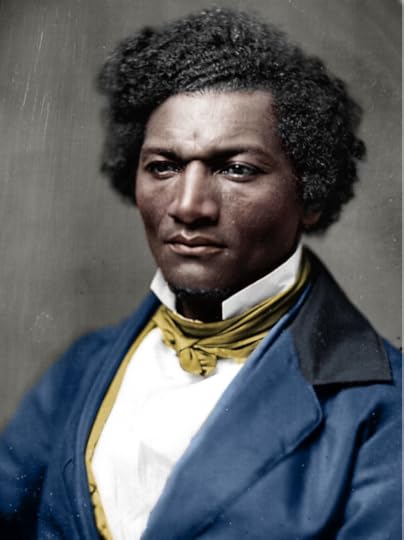
“What is the attitude of Frederick Douglass in the first two paragraphs of ‘What to the Slave is the Fourth of July’… Tell us… Bill! Then I’ll hear from Jonathan, then Jason.”
I typically don’t like putting students on the spot like that, but that strategy proved effective. They started reading more, preparing better.
All this to say it’s been a process. For them and for me.
I required them to write two papers for me. I probably should’ve done more, but there’s a point of diminishing returns, especially when you discover some fundamental problems that would take me far too long to address. After the first paper, we went over some of these issues. I mean real nuts-and-bolts problems: spelling, capitalization, subject/verb agreement, constructing an opening sentence, learning how sentences build to become paragraphs, and much more. I’m not a writing teacher (at least in this class), but we do have an excellent Writing Center on campus, and I strongly encouraged all of them to go there with a draft of their next paper.
The guys were also writing for their quizzes. Each quiz contained an essay question. This provided an opportunity for them to work on their writing (although with much less time than they would take for a paper) and put into practice some of the things we’d learned. Their writing did get better. I saw improvement with each student, not as much as I would’ve liked, but still improvement. Small victories.

We discussed songs. We watched portions of movies. We looked at various decades of American history and how trends developed and patterns emerged. But before we did any of that, we spent a long time talking about colonial America, the Pilgrims, and the country’s early days, laying a foundation for the course just as those early Americans were laying a foundation for the nation. I spent a lot of time asking “How did this period (whichever period we were discussing) deviate from the Mayflower Compact?” and “What’s different now? How have we changed?” No matter where we were in history, I tried to bring everything back to “Where have we come from?” and “Where are we now?” I used a lot of sports analogies, things I knew they would relate to easily.
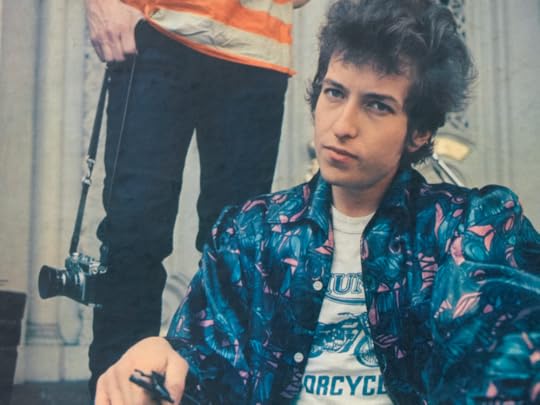
I think they enjoyed analyzing the songs by Alicia Keys, Woody Guthrie, Bruce Springsteen, Billie Holiday, and Bob Dylan. (My hat’s off to the class for hanging with me for a deep dive of Dylan’s “Tombstone Blues.”) At the last class meeting, one of the students said he’ll never forget “Strange Fruit.” I hope that’s true.
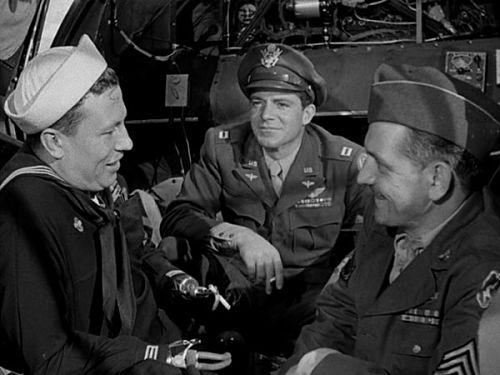
We watched several scenes from the following films: Double Indemnity (1944), The Best Years of Our Lives (1946, pictured above), The Searchers (1956), A Face in the Crowd (1957), and No Country for Old Men (2007). I also used Serena Bramble’s short film “Endless Night: A Valentine to Film Noir.” As I do with my Great Movies audiences, I spent a lot of time talking about how to approach older films, looking at them through the eyes of the people who saw them when they were released. What was going on culturally at the time? Politically? We talked about the Production Code, HUAC, and much more.
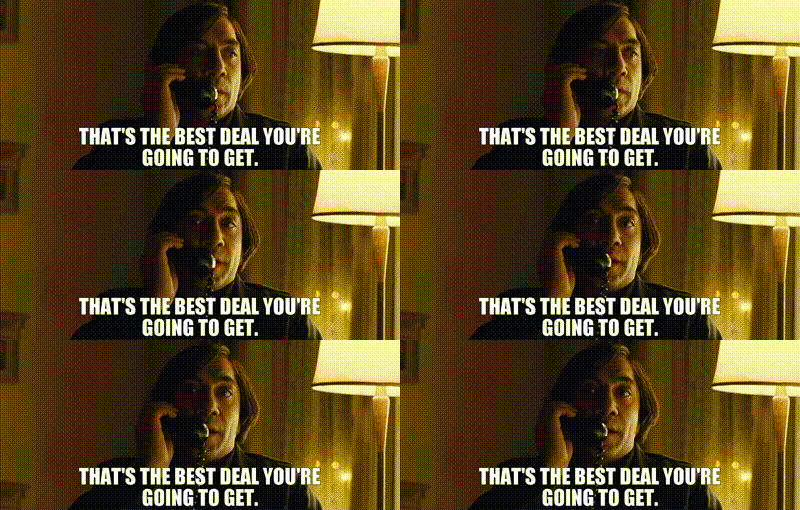
I was not surprised that No Country for Old Men was their favorite film as it was the most current. One of the things I did before screening the film was to talk about belief systems - religious and philosophical - and world views. We had some great discussions over whether Anton Chigurh is an existentialist, a nihilist, or something else altogether.
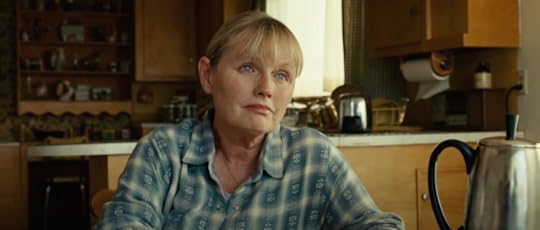
And we talked about the film’s last three minutes, especially Sheriff Ed Tom Bell’s (Tommy Lee Jones) dreams. I’ve seen the film at least a dozen times, but something I picked up on for the first time is the background for Bell’s wife Loretta (Tess Harper) contrasted with that of Bell. Loretta is seated in front of her kitchen cabinets with warm light giving the wooden cabinets and shelves a relaxing feeling of order and comfort.
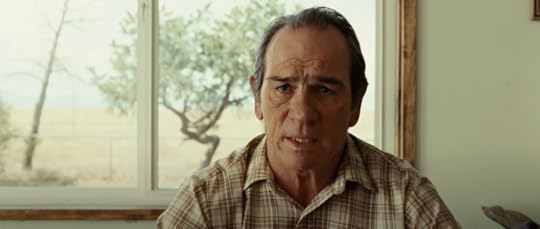
Bell is seated before a stark off-white wall with a window displaying two trees: one dead, leaning unnaturally to the right, the other a twisted, mangled array of branches, the kind of tree you’d find in a nightmare. Loretta is comfortable with her life and retirement. Bell is not.
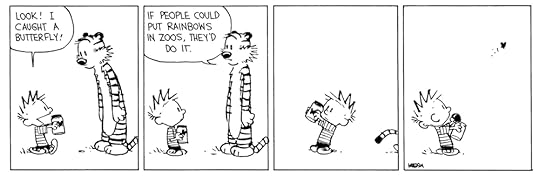
Discussions were hard to come by during those first weeks. During the last month or so, the guys were ready to open up, discussing the meanings and nuances of the readings, songs, films, and more. I was very fortunate to have earned their trust. There was never a time when I introduced a topic, song, film, or idea that they dismissed or disdained in any way. Again, I was very fortunate.
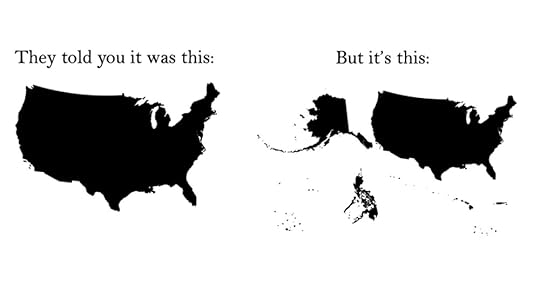
The students presented their final projects during Wednesday’s class, the last time we’d see each other. They all did a fine job, taking the projects seriously, clearly putting forth significant time and effort. It was something of a surreal moment, similar to teaching beginning band students in August and September, then hearing that final concert at the end of the year. It’s not quite the same, but I felt something of that on Wednesday, and it made me proud to be a teacher again, even if it was just for one class.
There’s something gratifying about teaching, something I’d largely forgotten. Part of that involves working with a group of students where they are and taking them somewhere else. The process may be easier when they’re younger, but not always. They may be able to look back on the experience immediately, discovering something they’ve learned, or it may take time. It may not happen at all. Sometimes you’ll never know. Other times, they’ll contact you out of the blue and tell you something that stuck with them.
So that’s my report. Thanks for reading it. Thanks also to Jarred and Heather for hiring me, to my friends Steve and Alison M. for their valuable suggestions and insight, Becky at the Writing Center, the librarians at AACC, my supervisors at work who allowed me to teach the class while remaining a full-time librarian at AACPL, and most of all my wife Cindy who encouraged me all along the way.
I know that I won’t be teaching next semester. The schedule simply won’t allow it. It is my hope that after I retire from the library (which probably won’t be too far away) I can teach again as an adjunct. We’ll see. But as far as this class went, it was a blast. I absolutely loved it.
Several people on social media wanted to know what we covered. Here it is. Items in bold came from the textbook. Everything else came from other sources.
Thanks for reading.
=======================
Unit 1: America as a New World
The Mayflower Compact (1620)
How America Was Discovered - Handsome Lake
A Model of Christian Charity (1630) John Winthrop
Letter III from an American Farmer (1782) J. Hector St. John de Crevecoeur
Wendell Berry and Agriculture
“Kill Your Mama” - Alicia Keys
Unit 2: America as an Independent Nation
Declaration of Independence (1776)
The Constitution of the United States (1787)
Declaration of Sentiments (1848)
The Significance of the Frontier in American History (1893) Frederick Jackson Turner
What to the Slave is the Fourth of July? (1952) Frederick Douglass
“Strange Fruit” - Billie Holiday
The Searchers (1956) John Ford
Unit 3: America as a Place to Belong
“This Land is Your Land” - Woody Guthrie
Americanism and the Foreign-Born (1915) Woodrow Wilson
Newspaper Comic Strips, Immigrants, and Representation
WWII Veterans and The Best Years of Our Lives (1946) William Wyler
Film Noir and Veterans (and others) Adjusting to Postwar Life
“Endless Night: A Valentine to Film Noir” - Serena Bramble
Double Indemnity (1944) Billy Wilder
Three American Originals: Baseball, Jazz, Western movies
Unit 4: America as a Land of the Free
The Gettysburg Address (1863)
The Four Freedoms (1941)
American Culture in the 1950s (mostly music, movies, TV)
JFK’s “Ask Not What Your Country Can Do for You” inaugural speech (1961)
“The Times They Are A-Changin’” - Bob Dylan
America in the 1960s - JFK, Civil Rights, Vietnam, Changing Culture
Unit 5: America as an Empire
A Face in the Crowd (1957)
The Utility of the Union (1787)
“Tombstone Blues” - Bob Dylan
The Monroe Doctrine (1823)
The 1970s - Changing Culture, Distrust of Government, Watergate, Kent State
The Logo Map and America as an Empire (Much of this lecture was taken from the book How to Hide an Empire: A History of the Greater United States by Daniel Immerwahr)
Are We an Empire?
Unit 6: America as a Culture
The “Me” Generation
Who Do We Trust? When Did We Stop Trusting?
Religion, Technology, and Crime
Philosophy
No Country for Old Men (2007)
December 9, 2022
A Terrific Noir Thriller You May Have Missed: Emily the Criminal (2022)
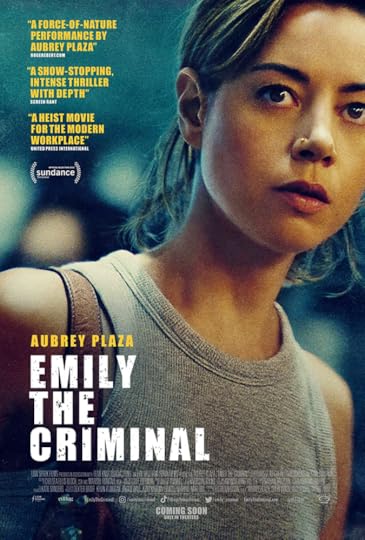
Emily the Criminal (2022) written and directed by John Patton Ford
Imagine you’re at a job interview. You’re asked about a DUI that’s on your permanent record. You confess that, yes, you drove some friends home from a concert late one evening and ran a red light.
Interviewer: “You were intoxicated?”
You: “I was less intoxicated than my friends.”
Then the interviewer surprises you with the results of a complete background check which details more of your record, information he initially said he didn’t possess. He says he wants you to be honest with him, but he hasn’t been honest with you.
Imagine yourself trying to keep the embarrassment, guilt, fear, and anger from showing on your face throughout this ordeal. This is exactly what Emily Benetto is attempting to pull off, yet Aubrey Plaza, the actor portraying Emily, has to convey this information to the audience in a way that’s honest and believable.
And she kills it.
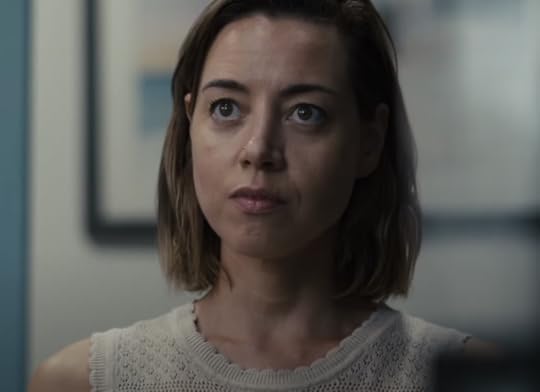
In the film’s first five minutes, Plaza shows us not only what her character is going through but what she’s capable of as an actor. If you think the opening is impressive, just keep watching.
With her record Emily is unable to find meaningful work, which would be bad enough, but she’s also racked up $70,000 in student loan debt. Just ask Emily or anyone else working in the food delivery service how long it takes to save $70K.
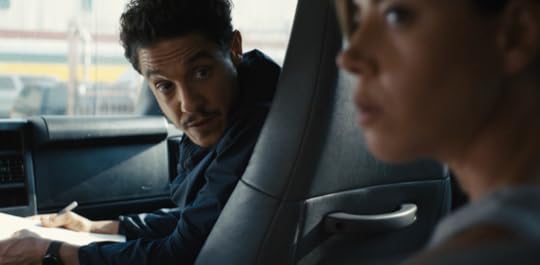
Emily’s coworker connects her with a “company” that hires dummy shoppers, promising she’ll make $200 for an hour’s work. Youcef (Theo Rossi), one of the “company” organizers, tells her right up front that the work is illegal, but profitable. $200 may not sound like a lot, but the second assignment pays $2,000. It’s also more dangerous.
In each scene the audience learns that Emily is smart, resourceful, and scared, weighing the potential gains against the risks. She’s a survivor and can get tough when she has to, which is more often than she’d like. Even her first “job” for Youcef is fraught with tension and anxiety. Does the cashier know what I’m really doing? Why is the credit card reader taking so long? Why is the security guard following me?
Emily hopes to survive long enough to pursue her dream of becoming an artist. Her childhood friend Liz (Megalyn Echikunwoke) is trying to get Emily an interview at the advertising agency where she works, but in the meantime, Youcef keeps providing her with “job opportunities” that pay well if she can stay alive.
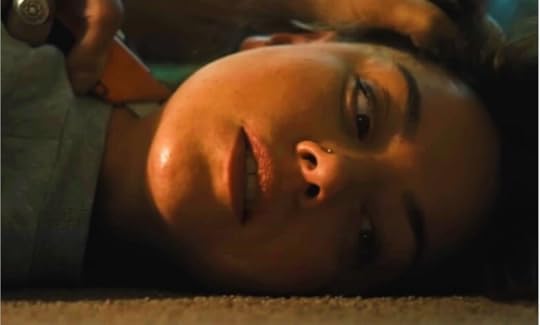
Several of these scenes turn into real nail-biters, which is thrilling for the viewer, but the real question soon becomes “What’s all this doing to Emily?” With each new challenge, we see Emily’s character becoming darker and more reckless, but we also catch glimpses of a growing invincibility. She displays a certain level of charm that slowly diminishes, giving way to an aggression that looks for opportunities to deceive and gain the upper hand if the need arises. We soon suspect that she increasingly wants the need to arise.
People often wonder why so many talented individuals who could otherwise put their skills to use in legitimate careers turn to crime. Like countless others, Emily begins to understand that many legit occupations also involve some manner of deception and underhanded behavior. Emily has been deceived so many times that she understands how deception, if handled carefully, works against and for people. Perhaps there are advantages to staying on the criminal path. It requires few scruples and promises incredible rewards, yet offers little time for meaningful relationships.
At one point in the film, Emily meets someone who could potentially become a part of her life. Upon meeting Emily for the first time, this person (whom I will not disclose) asks, “Who are you? Emily the teacher? Emily the mother?” We know the answer from the film’s title, but at this point in the picture, even Emily isn’t sure.
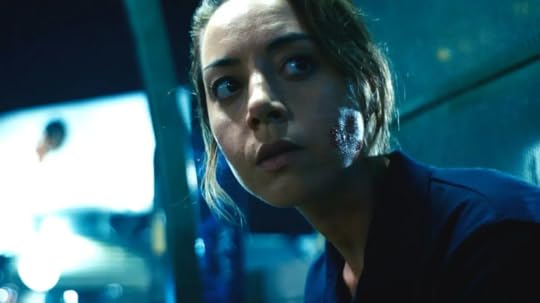
The entire movie is an exploration of Emily’s identity, taking the picture far beyond the realm of the typical mindless action thriller with explosions going off every 10 minutes. Emily is a complex character, not an action figure. She’s thinking every second, wondering whether she’s being played, or if she could be the one playing someone else.
Yet while we’re trying to figure out where Emily is eventually going to land (if she lands at all), we’re also asking questions about physical and economic survival in the third decade of the 21st century. How many people in Emily’s predicament are surviving, legally or otherwise? Can we escape our past? Will it haunt us forever?
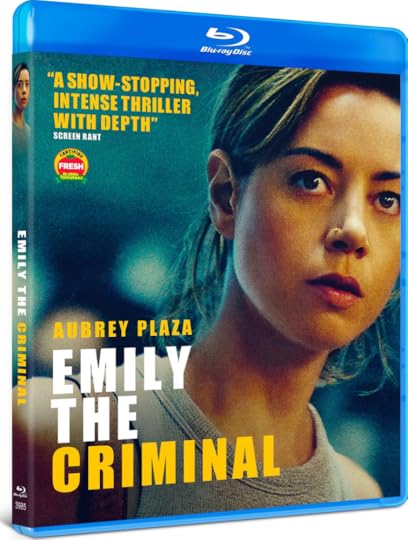
Emily the Criminal gives us our money’s worth and then some. While we’re along for the thrill ride, we’re also asking ourselves how we’re like Emily. It’s a terrific film that earned much word-of-mouth attention at various festivals and is now available on a barebones Blu-ray from Vertical Entertainment.
https://youtu.be/Xzf1YCEkLDI

