
Andy Wolverton's Blog, page 5
July 10, 2023
Indiana Jones and the Dial of Destiny (2023) James Mangold, Danial Rifky

Indiana Jones… He just can’t stay away from those Nazis…
That’s where we find Indiana Jones (Harrison Ford), captured by Nazis in 1944 as he and fellow archeologist Basil Shaw (Toby Jones) attempt to recover the Lance of Longinus from the hands of Nazi astrophysicist Jürgen Voller (Mads Mikkelsen). Nazis can’t keep from gloating, so Voller grants Jones a quick peek at the artifact before he meets his demise. Realizing it’s a fake, Jones rains on Voller’s parade (Don’t worry; there’ll be another parade soon), creating enough of a distraction for Jones to risk an escape with Shaw. But during their escape, Jones finds something on board that’s not a fake, which he snags.
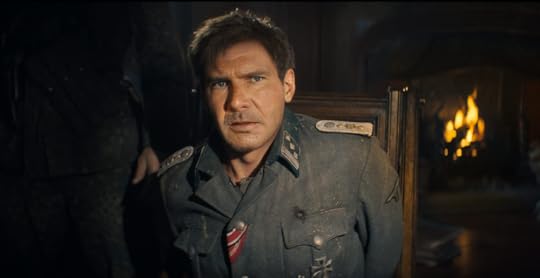
Immediately we have the beginnings of the most problematic visual element of the entire film: the digital de-aging of Harrison Ford. I had a big problem with this technique in Martin Scorsese’s The Irishman (2019), and while it’s carried out marginally better here, it’s still awkward. The facial expressions look cumbersome, like they’re out of sync with the character’s movements, but even worse, the voice for a roughly 45-year-old Indy is clearly that of the 80-year-old Harrison Ford. If you’re going to digitally alter the physical appearance, do you not have the technology to alter the audio as well?
The entire opening sequence (which accounts for the film’s first 20 or so minutes) is a visual mess. Almost every moment of these scenes occurs in dark places or atop a train at night. (Maybe the idea is that darkness tends to hide bad CGI?) It’s not even conceivable that the characters, much less the actors, could see what was going on. I don’t want to get into spoiler territory, but I’ll just say that these scenes, like many comparable moments from earlier Indiana Jones films, depend on expert timing, and in order for that timing to work, the audience has to see what’s going on. If we can’t, the characters can’t either, and if you try to convince us they can, you’ve cheated your audience. Yes, we know this is an Indiana Jones movie that’s largely action-adventure fantasy, but for a $250-$300 million budget, we expect better.
Jump forward to 1969, where an elderly Jones now lives in New York City, teaching at Hunter College (now using an overhead projector instead of a chalkboard). The students don’t have cellphones yet, but they’re distracted enough by the return of the Apollo 11 astronauts, who are being celebrated with a massive ticker-tape parade right outside the college.
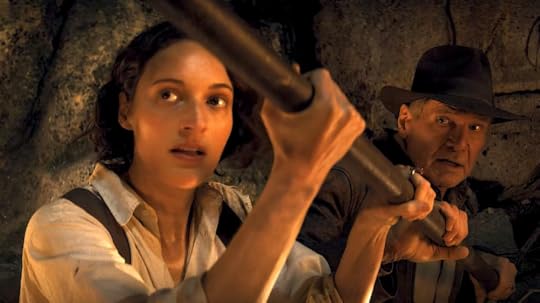
But things get even more interesting when Jones meets his friend Basil Shaw’s daughter (and Jones’s goddaughter) Helena Shaw (Phoebe Waller-Bridge), who’s interested in the artifact Jones snagged from the Nazi train, the Antikythera mechanism, aka the Archimedes Dial, or at least half of it. I won’t disclose what both parts of the dial could do when joined, but it’s a very big deal. And Ms. Shaw, also an archeologist, is eager to take the device off Jones’s hands, and not for the purposes of preservation in a museum.
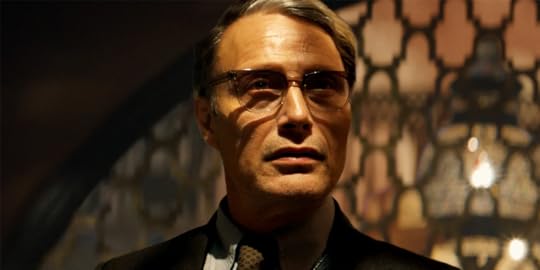
Already we begin to see familiar Indiana Jones tropes: Nazis, other archeologists, mysterious devices (in multiple parts), and we’re just getting started. Soon we’ll see horses, exotic locations, a child getting involved in the story, and more.
Not that there’s anything wrong with Indiana Jones tropes, unless you’re interested in using all of them. (And if that’s what you’re here for, you’ll love Dial of Destiny.)
The problem with the film is that the tropes dominate the film. Not only the previously mentioned themes or devices, but also rescues, chases, creepy crawlies, and more. We’ve come to expect these elements and know the producers can’t have an Indiana Jones movie without them.
And again, that’s okay. But something new has to be added, and that something in Dial of Destiny is (besides Jones getting old) is Helena Shaw.
Since she is new to the Indiana Jones universe, Helena is going to receive the most character development. Thankfully, she’s an interesting addition. I won’t get into details, but she contains elements of Marion Ravenwood (Karen Allen) and other women appearing in other Indiana Jones movies. We know she has secrets, and aren’t exactly sure what her motivations are, but Waller-Bridge makes her compelling. She’s brazen, confident, smart, and most importantly, captivating. Helena goes into the plus column.
As the movie progresses, we see so many scenes we’ve seen over and over through the years. We know where this is going. As alluded to earlier, we also see that visually and technically the timing is frequently off. If you go back and look at the chase scenes from the original trilogy, the timing is impeccable. Not only that, there’s a flow to what’s going on visually, especially when multiple elements are in motion at the same time. With Dial of Destiny those elements either aren’t as well thought out, aren’t properly executed, or both. Not only have we seen all this before, we’ve seen it done better.
While we recognize that we’ve seen much of this previously, we also see something slightly different, which I will not disclose. Here is an opportunity to do something unique, to take some risks with this franchise that (at least allegedly) ends with this film. How this opportunity develops is rather clumsy, but it made me sit up and take notice.
The problem with any franchise movie is the recognition that it’s always a balancing act. How much familiarity do you give the audience, how do you introduce fresh elements (or characters) that will bring in new audiences? With very few exceptions that I can think of, most series/sequels stand as evidence of the law of diminishing returns. But for many fans, that doesn’t matter. They seem to understand that and are okay with it as long as they get to see their favorite heroes doing their thing and the story is at least marginally interesting. One large component of the success of any franchise is the nostalgia factor, which is something I plan to write about very soon, but not here.
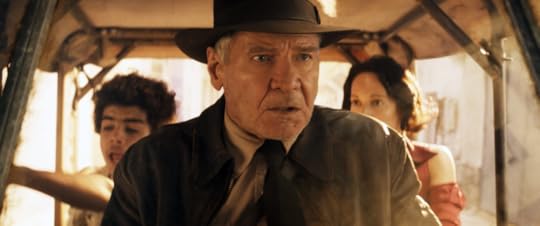
When everything is said and done (or overdone), Indiana Jones and the Dial of Destiny is a reasonably entertaining final entry (with Harrison Ford, at least) in a franchise that (with the exception of Indiana Jones and the Kingdom of the Crystal Skull) has satisfied audiences for 42 years. I’m glad it exists, but it makes me want to go back and watch the original trilogy to see how the magic really happens. Does that make me a prisoner of nostalgia? Perhaps. Maybe it truly isn’t the years, but the mileage. And if the mileage has now ended, the journey has mostly been good, and sometimes spectacular. Dial of Destiny isn’t spectacular, but it’s good enough.

If you enjoy my writing and would like to express your support and appreciation, ,you can buy me a coffee.


July 9, 2023
Time Schizophrenia: Preparing to Watch Indiana Jones and the Dial of Destiny
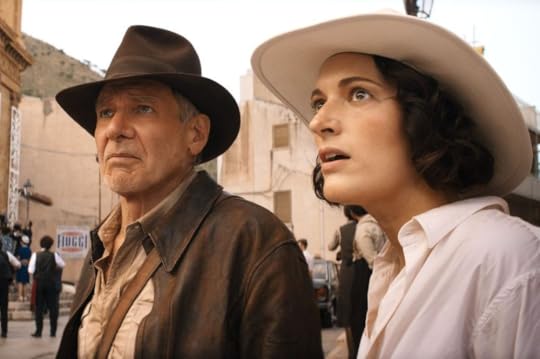
I am planning on going to the movies this afternoon to see Indiana Jones and the Dial of Destiny. I'm looking forward to it, but I think I'm experiencing a bit of time schizophrenia, which may accelerate during the movie.
Let me explain. Of the last seven movies I've watched, the newest film was made in 1935 (the delightful Hands Across the Table). Watching a movie that was just released a few days ago may be a shock to the system.
But wait, Indiana Jones and The Dial of Destiny apparently starts in 1944, then jumps to 1969. Without looking too closely at any writing on the film, I see that the year 212 BC is apparently an important plot point in the story.
It also boggles my mind that I saw the first film in this series, Raiders of the Lost Ark (I refuse to call it Indiana Jones and the Raiders of the Lost Ark) in 1981 when I was in college, 42 years ago. Harrison Ford, now 80 years old, was 38. Apparently Ford has been digitally de-aged in the film in order to look younger.
I don't know what's going on...
Wish me luck! I'll report back soon.
July 6, 2023
The Halfway Point: How Are You Doing?
It got here pretty quickly, didn’t it? More than half of 2023 is over, which means we’ve got less than six months of movie-watching before we’re introduced to the year 2024.
How are you doing so far? Do you have movie goals, lists you’re working through, projects? Do you plan out your movie-watching or live spontaneously?
Of course I’m talking first-world problems here, but let’s continue along this train of thought for a bit…
First, how many movies can we reasonably watch in our lifetimes? For now, let’s just stick to American movies. (Don’t get excited, we’ll conquer the world in a moment.) According to a source on Quora that I can’t verify, as of 2012 about 44,000 movies had been made in the U.S. If we take the average American lifespan (77 years) and started watching movies as soon as the doctor slapped our rear ends in the delivery room, we would have to watch 571.4 movies a year.

Now I know that some of you reading this watch more than 571 movies a year. Not to diminish that accomplishment, but let’s go global here. My good friends at Google tell me that since 1888, the world has produced over 500,000 movies. That comes out to 6,493 movies per year, which translates into nearly 18 movies a day. Even if you live to be 100, that’s still 13 movies a day.
You can’t watch it all. Clearly we have to make some choices here.
Since the person I know best is me, here’s how I prioritize:
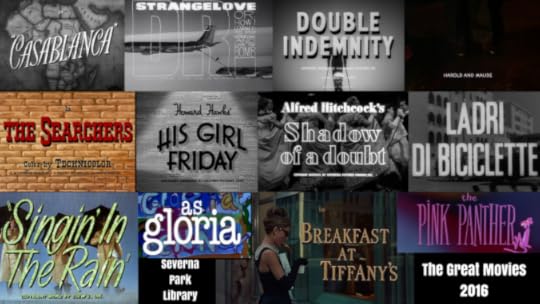
First, since I lead movie programs at the library and virtually, as well as present at other local venues, I spend considerable time preparing for those events by watching, researching, and studying those movies.
The same goes for the movies I write about, either for this website, or for other venues. And there's also my YouTube channel.
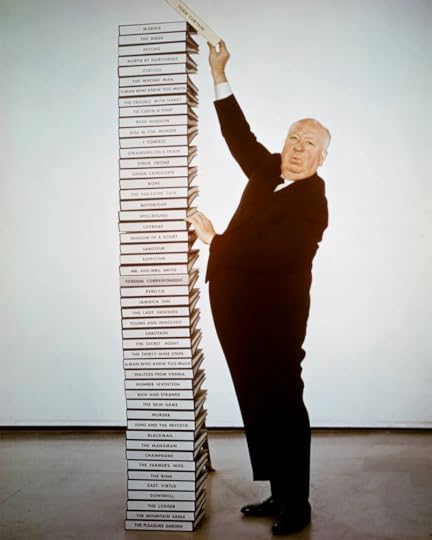
Then I have my own personal projects, some of which I write about (my Alfred Hitchcock Project), and some I don’t.
Here are some of my ongoing projects that are currently driving me crazy:
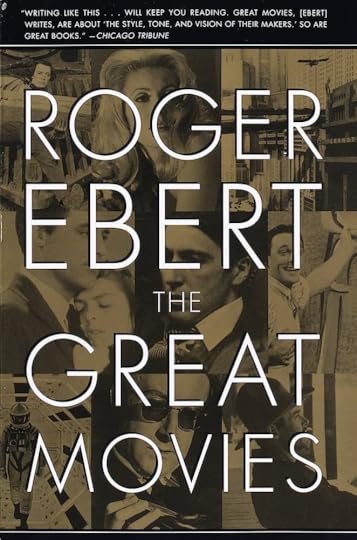
Roger Ebert’s Great Movies List
I’m not going to tell you how long it’s taken me to work through this list of 363 films, but I still have 59 films left, which I should be able to finish before the end of 2023. I've enjoyed it, but with all due respect to Roger, I need to end this thing and move on to another project.
How about one even more ambitious?
Jonathan Rosenbaum’s 1,000 Essential Films List
Good gracious, just slap me silly. The last time I counted the number of films I’ve seen from this list, it tapped out at an embarrassing 300 or so. (I'm going to need to live way past 77...)
I have other smaller lists: a director’s or actor’s body of work, etc.
Yet even if I religiously stuck to these lists, people are constantly recommending movies to me (and probably to you, too). “You’ve GOT to see this movie!” (Right now? This minute?) “Watch this tonight so we can talk about it tomorrow!” (Okay, so, this minute...) "You'll LOVE this!" (Probably not, but give it to me anyway.)
Those spontaneous experiences can be fun, and we need to give in to those from time to time.
And then, for the physical media folks, there are all these unwatched discs on our shelves…
And there are the streaming services you subscribe to…
And there’s TCM…
And your local movie theater (Remember those?)
And film festivals (Please support your local movie theaters!)
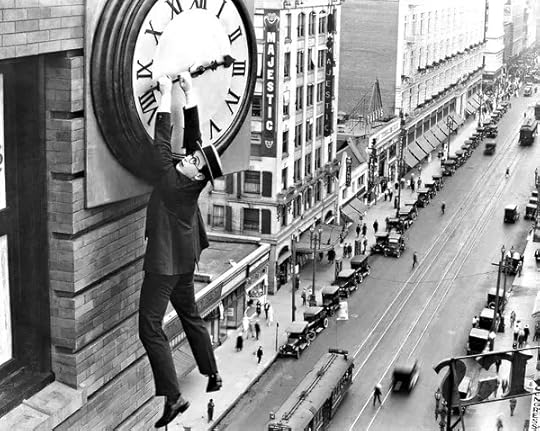
Time is limited. Even Harold Lloyd can’t help us. But we press on.
Let me know how you handle your movie-watching time. And, if you feel so led, let me know the movies you’ve enjoyed the most so far this year. (They can be from any year.) Here are a few of mine:
The Effect of Gamma Rays on Man-in-the-Moon Marigolds (1972)
The Three Burials of Melquiades Estrada (2005)
The Lighthouse (2019)
All That Heaven Allows (1955)
The Blue Angel (1930)
The Hunchback of Notre Dame (1923)
Tinker Tailor Soldier Spy (TV miniseries 1979)
L’Argent (1983)
Boudu Saved from Drowning (1932)
If you enjoy my posts and would like to express your support and appreciation, ,you can buy me a coffee. Thanks for reading!
July 2, 2023
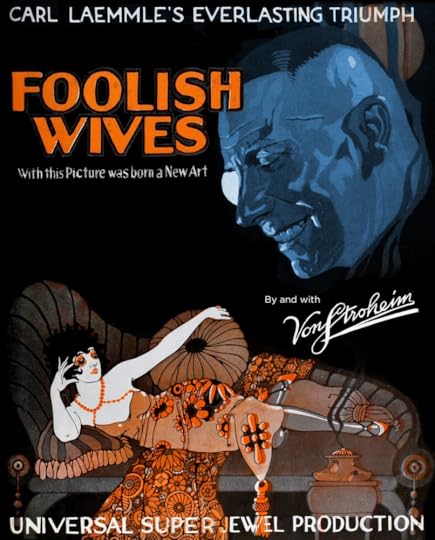
Foolish Wives (1922) A New Release from Flicker Alley
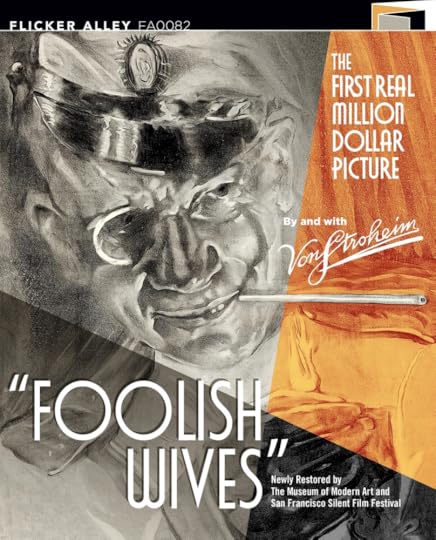
Foolish Wives (1922) Erich von Stroheim
Flicker Alley, dual format edition Blu-ray and DVD
Unless otherwise noted, all photos courtesy of Flicker Alley
This new 4K restoration of Foolish Wives reconstructs the original continuity by combining the surviving original film elements, meticulous image restoration, and recreation of the original stunning color effects, to offer audiences the closest look possible at the original version of the film.
Foolish Wives features a newly commissioned orchestral score composed and conducted by maestro Timothy Brock and performed by Real Filharmonia de Galicia and recorded in Santiago de Compostela, Galicia. (Flicker Alley press release)
================================
Audiences standing in line in 1922 for Foolish Wives may not have known the name Erich von Stroheim, but they had likely heard and seen the advertisements touting the film as the “first million-dollar movie.” Such excitement over a million-dollar budget today seems quaint if not laughable. Today the final budget for Foolish Wives would be the equivalent of just over $18 million, a figure that would account for about 9% of an average Marvel movie or roughly 12 minutes of screen time.
But in 1922, a million-dollar movie was big news.
The film’s opening title card reveals that our story takes place six months after the signing of the armistice that called for a cease in hostilities between the defeated Germany and the Allies in World War I. That card not only gives the viewer an historical landmark, it also sets the stage for our protagonists. Like criminals getting itchy between heists, this trio of malefactors sits in a villa in Monte Carlo awaiting a wealthy person to fleece. Introduced to the audience as members of the Russian aristocracy, this threesome may appear aristocratic, but they’re little more than vulgar pretenders.
Oh, but they do pretend well…
(photo: Garden of Silence)
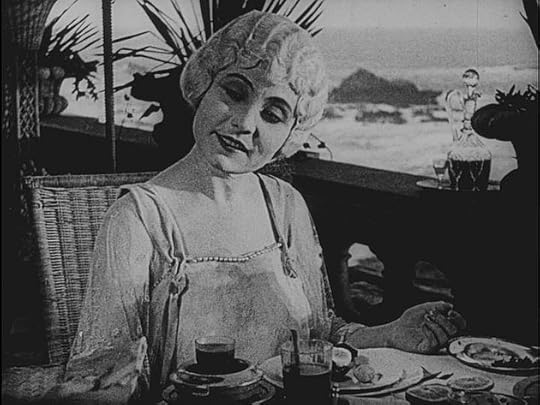
“Her Highness” Olga Petchnikoff (Maude George) would have made for an exceptional torturer during the medieval era. Olga expresses her contempt for the servant Maruschka (Dale Fuller) following a simple oversight for which the maid receives a prolonged pinch on the arm. Olga’s blonde tresses are eye-catching, yet they are best observed from a safe distance.
(photo: Garden of Silence)
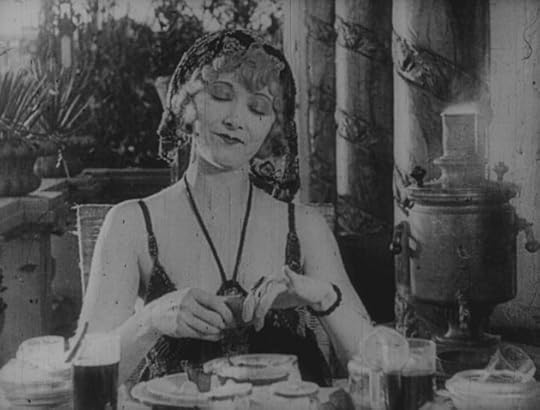
“Princess” Vera Petchnikoff (Mae Busch) is more of a free spirit, yet convincingly displays the suffering boredom of the idle rich, awaiting the next exciting adventure.
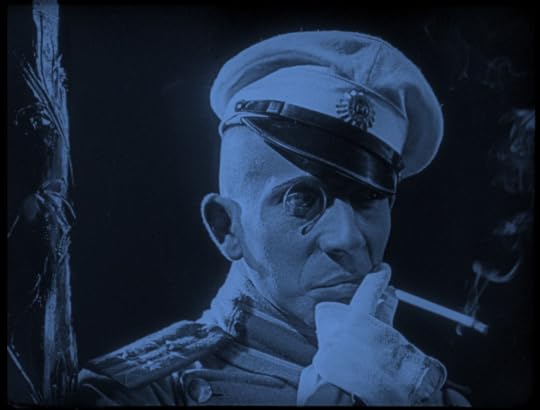
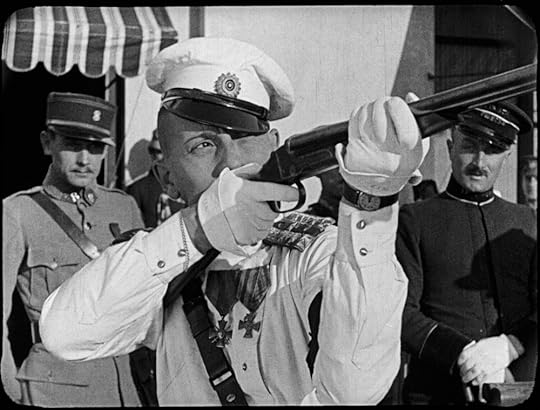
But our eyes are constantly drawn to Count Wladislaw Sergius Karamzin (Erich von Stroheim), constantly sporting a majestic white tunic offset with a dark crossed belt and medals. His polished boots, jodhpurs, cigarette holder, and monocle convey not only that he’s in charge, but demands your complete and undivided attention.
And that’s the point: amaze, distract, and swindle.
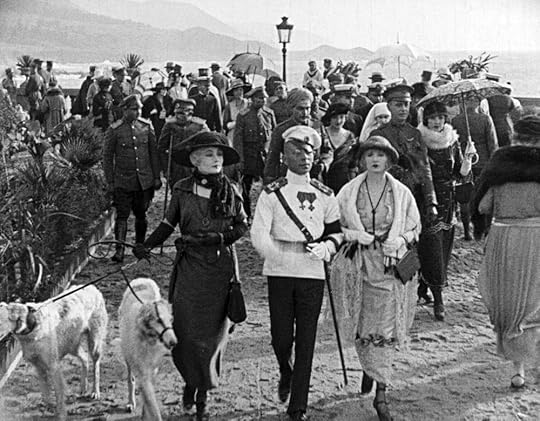
The trio is running low on funds, desperately needing to find a rich chump they can take to the cleaners. As con artists go, these three look and act the part with a practiced air of believability, especially Karamzin. We wonder if he’s been playing this part for so long he’s conned himself into thinking the persona of a Russian count is genuine. All he needs is for one rich sucker to believe it as well.
Enter American diplomat Mr. Andrew Hughes (Rudolph Christians) and his wife Helen (billed simply as “Miss DuPont”), who’ve just arrived in Monte Carlo. Soon Karamzin’s “divide and conquer” method kicks into high gear as Olga and Vera work on Mr. Hughes, and Karamzin slowly and methodically woos Helen.
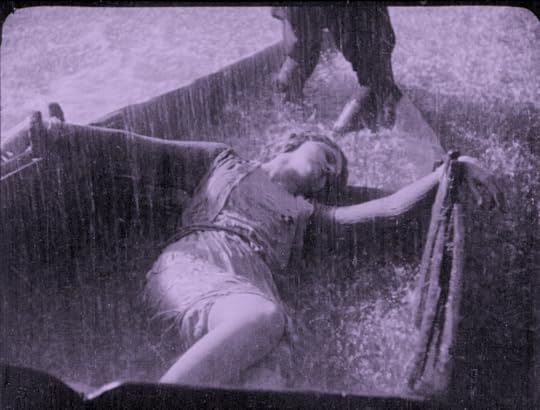
Mother Nature aids Karamzin in ways he never could have manipulated on his own. A massive storm forces Karamzin and Helen to give up their leisurely walk and flee for shelter, with Karamzin rowing them in a small boat to an abandoned shack. Even more advantageous for Karamzin, Helen can spend significant time recuperating from a sprained ankle during their escape, thereby depending on him even more.
Although the criminal triumvirate desperately needs the money, they’re content to play the long game, which involves an elaborate plan to invite Mr. Hughes to a casino and relieve him of his money. Yet the plan allows Hughes (and anyone else in the casino) to win counterfeit bills manufactured by Karamzin’s criminal connection Cesare Ventucci (Cesare Gravina).
Like all great crime pictures involving large-scale deception, Foolish Wives contains many moving parts and surprises which I will not reveal here. For a film nearly two-and-a-half hours long, Foolish Wives moves at a fairly brisk pace. Subplots are kept to a minimum but are significant not only to the story, but more importantly in helping develop the narcissistic character of Karamzin, who also has his eye on Ventucci’s mentally challenged daughter (Malvina Polo) as well as the maid Maruschka.
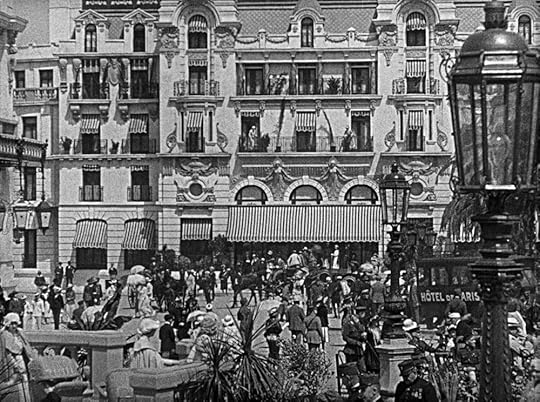
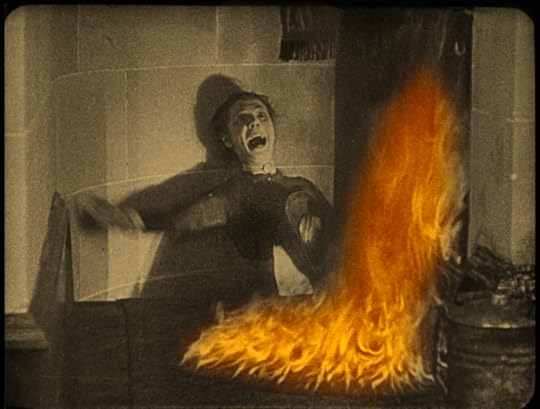
The film’s enormously extravagant and expensive sets, interiors, casino scenes, and particularly the spectacular fire sequence near the end of the film are all spectacular, yet the selling point here is Erich von Stroheim, especially in front of the camera. In Foolish Wives his Karamzin adopts a persona that is manufactured much like Stroheim, who created a fictional history for himself and remained consistent to it for practically his entire life. His claims of Austrian nobility and military honors were fabrications as are Karamzin’s boasts, yet both men display bold confidence and carry such gravitas that we believe them unquestioningly. Such actions overwhelm nearly everyone Karamzin meets. They take his every word as gospel.
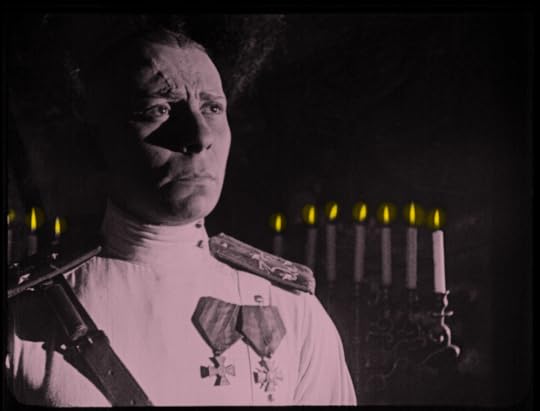
It’s unclear how much Stroheim is playing Karamzin and how much he is simply playing himself, or his own version of himself. Karamzin is fascinating because Stroheim is fascinating. As a director Stroheim is tyrannical, controlling, adamant, and insistent. He scorned the $250,000 budget he’d been given, made impossible demands, and even butted heads with Universal’s general manager Irving Thalberg, who threatened to fire Stroheim if he couldn’t bring the film under financial control. Stroheim simply reminded Thalberg that he was not only the film’s director, but also its star, and much of his scenes had already been shot.
Stroheim’s self-destructive tendencies simply could not be reined in, at least not by the director himself. Cutting Foolish Wives down from Stroheim’s intended six-hour running time to 143 minutes was outrageous, but it was nothing compared with his next project Greed (1924), a work of brilliance, but with a running time of 10 hours, all of which, argued Stroheim, was absolutely essential. Stroheim never gave up easily.
The film itself is just part of the story, and thanks to the wonderful extras on the Flicker Alley Blu-ray/DVD combo, we have more of the tale, which includes “Filming Foolish Wives,” an excerpt from Pathe’s Screen Snapshots series with behind-the-scenes and on-set footage from the film, “The Waves and the Merry-Go-Round: On Location with Erich von Stroheim,” a documentary giving the historical and thematic aspects of the film and Stroheim’s work, presented by historian Brad Rosenstein, “Erich von Stroheim and Hollywood’s First Million-Dollar Picture,” on the making of the film, presented by Museum of Modern Art curator Dave Kehr, “Restoring Foolish Wives,” a deep dive into the research, reconstruction, and restoration of the film with restorer Robert Byrne, a source comparison demo, a restoration demo, photo galleries, and a souvenir booklet featuring a new essay by James Layton on the film’s restoration, excerpts from an examination of the film by author and critic David Thomson, an introduction to the newly commissioned score by Timothy Brock, as well as production stills and promotional materials.
Flicker Alley has done it again with a superb presentation containing plenty of extras. This is undoubtedly the best Foolish Wives has ever looked since its initial run, so do not pass up this opportunity to own this wonderful edition of the film.
Many thanks to Flicker Alley for graciously providing me a review copy of this release.
June 30, 2023
What Did You Read in June 2023?

What did you read this month? Here's what I read (not pictured: AN EXPERIMENT IN CRITICISM - C.S. Lewis). I'd love to hear what you read and enjoyed this month.
June 25, 2023
What YOU Can Do to Keep Classic Movies Alive
Many of you already know about the shakeups going on at TCM (Turner Classic Movies) and are concerned. We all want to save TCM, but we also have to be concerned about expanding the audience, not just of TCM, but of classic movies in general. This short video addresses a few ways you can do just that.
https://youtu.be/jWUXRFA4Ua0June 20, 2023
July 2023 Film Noir New Releases
I'm trying something a little different in July: side-by-side comparisons of two releases of the same film. Let me know if this is helpful. Thanks for watching, and please consider subscribing to my YouTube channel.
https://youtu.be/SV4_BUNMBnwJune 11, 2023
2023 Summer Reading Challenge: 100 Great Film Performances You Should Remember - John DiLeo
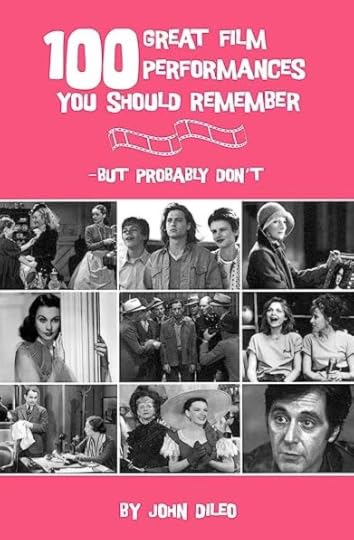
100 Great Film Performances You Should Remember - But Probably Don’t (2004) John DiLeo
Limelight Editions
Paperback, 416 pages
Includes table of contents, preface, photos
ISBN 9780879109721
(Photos below are not taken from the book.)
“Buster Keaton and W.C. Fields were comic geniuses, but couldn’t we simply call them great comic actors? How long can I stand the fact that Joel McCrea and Ida Lupino are not the screen icons they deserve to be? How many people even remember who Kay Kendall was?”
- John DeLio
John DiLeo knows his stuff. Not only that, he knows how to look at sometimes neglected classic films - even those that aren’t all that good - and find exceptional performances from actors who were lauded (if not idolized) for lesser work in more popular films. The important word in this book’s title is “should.” We should remember the 100 performances selected by DiLeo, but we probably don’t because we either never saw them or have been so caught up in the classics that get shown over and over. So don’t be surprised when you run across an actor’s name paired with a film you’ve possibly never heard of.

When you pick up a book covering great performances you know you’re going to see certain names, and you do. But you might be surprised that Greta Garbo appears for her performance in a movie that’s not Ninotchka (1939), Queen Christina (1933), or Camille (1937). Fred Astaire’s chapter spotlights a film that doesn’t costar Ginger Rogers. Edward G. Robinson gets an entry not for Little Caesar (1930), Double Indemnity (1944), or Key Largo (1948), but for…
Well, you’ll have to read the book.
Again, recall the book’s title. This volume isn’t necessarily about an actor’s greatest performance (yet sometimes it is), but ones you should remember. This gives us all a great excuse to track these films down and see if we agree or disagree with DiLeo, which is part of the fun.
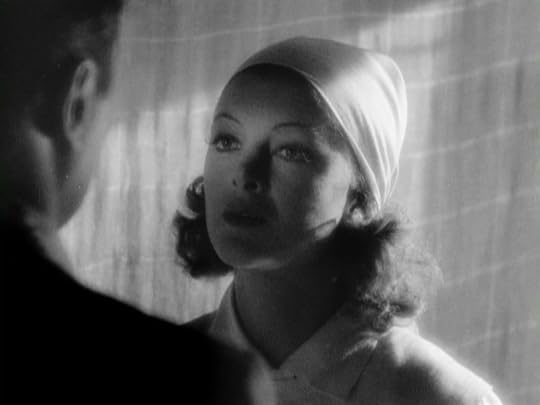
Myrna Loy in... ???
Most entries begin with some background about each star, what made them memorable, why this particular film might have been ignored or forgotten, and why it deserves rediscovery. DiLeo argues why the particular performance is noteworthy, whether the actor stepped out of his/her comfort zone in playing it, or was possibly paired with a director who was able to enhance an aspect of the actor’s talent that had previously been untapped.
Many of the entries focus on performances that are understated or atypical for a particular actor. Audiences (and the Academy Awards) love to praise and reward actors who give impassioned, showy, and even pyrotechnic performances, but to underplay a role is a sure-fire way to get yourself ignored. In this book, many such actors finally get their due for performances that don’t shout, “Hey, look at me!” but rather cause us to reflect long after the picture is over.
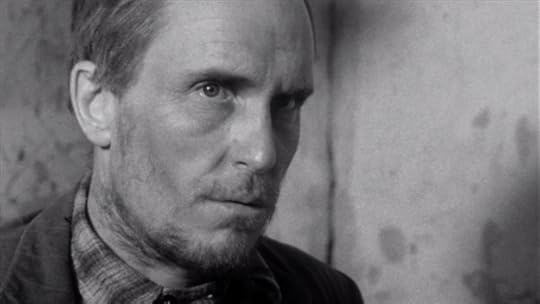
The book is loaded with wonderful performances and great writing. Again, DiLeo knows his stuff, and his wealth of knowledge and insight is clear throughout. Plus I can’t thank him enough for pointing out a performance by Robert Duvall that most people have forgotten or have never seen. (I will give you one spoiler and tell you that I believe it is the best adaptation anyone has made of a William Faulkner story.)
Do yourself a favor and pick up this and other books by John DiLeo. You won’t regret it.
Although the films in the book cover the period from 1920 to 2000, 80% of the book focuses on films from the classic era (through the 1970s), so I hope Raquel will let me slide on this one!

This review is part of the 2023 Summer Reading Classic Film Book Challenge. You can (and should!) sign up here and be a part of the challenge, telling others about the classic film books you're reading, and getting suggestions for your own reading. Enjoy!
If you enjoy my posts and would like to express your support and appreciation, ,you can buy me a coffee.
June 10, 2023
Is David Mamet’s Things Change (1988) The Ultimate Con Game?
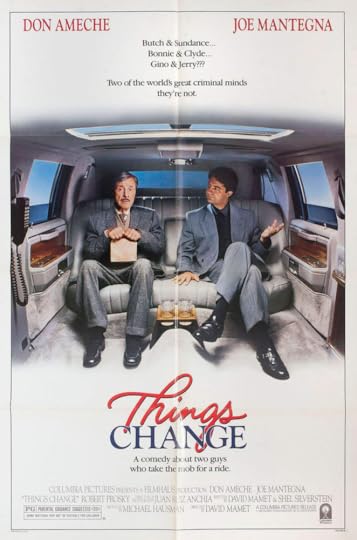
Say what you want about the mob, but no one can deny its strong sense of community. Without it, you have no organization. Maintaining that connection carries with it the constant fear that you may do something that removes you from the group (if not the world). Much of that bond is determined by family loyalty. Perhaps you were born into this circle and had no choice. You learn from an early age that everyone has a role to play and a certain amount of movement within the group is inevitable. But when you’re the big man, you’re always wondering if someone else wants to become the big man, thereby moving you out of the way - permanently.
But let’s look at it from a different perspective. Let’s say you’re on the outside looking in. Maybe you’re not even looking in, but the mob is looking at you. Maybe you’re like Gino (Don Ameche), a rather meek Sicilian shoe shiner who works in a quiet shoe repair shop in downtown Chicago. Two men enter Gino’s shop, hand him an address, and tell him to show up at a specific time. Confused, Gino tells the men he’s a shoe shiner. He’s told, “There will be shoes there.”
When he arrives for the appointment, Gino is faced with a proposition. Because he bears an uncanny resemblance to a high-level gangster accused of murder, Gino is asked by a local mob boss to take the man’s place. In return for a three-year prison stint, Gino will be lavishly rewarded with anything he wants. And what does he want? His own boat in Sicily.
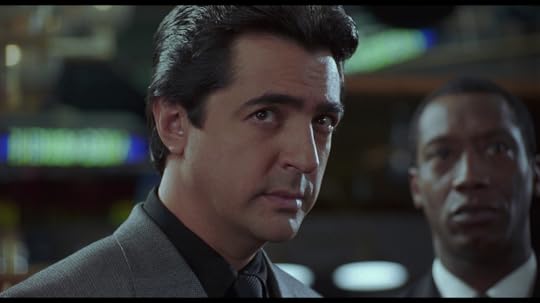
The deal is struck on a Friday and Gino promises to appear in court to confess on Monday morning. But to make sure Gino sticks to his word, he’s given an escort, a lower-level gangster named Jerry (Joe Mantegna). We aren’t sure what happened previously, but Jerry has screwed something up with his Chicago bosses and is working his way up from the bottom, wearing an apron and washing dishes when we first meet him. His mistake wasn’t enough to make him disappear, but it puts him back at square one. Jerry’s going to have to prove himself, and all he has to do is keep an eye on Gino until he can deliver him to court.
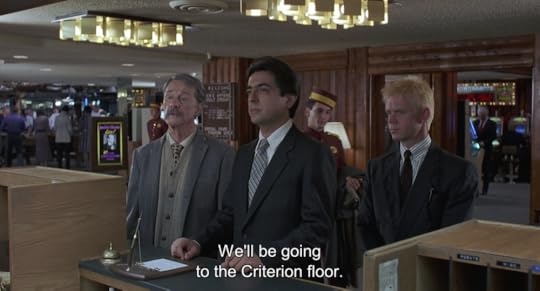
Yet Jerry can’t help bending the rules. (We gather that this type of behavior is what got him in hot water in the first place.) Rather than sit with Gino in a crummy Chicago hotel room until Monday morning, Jerry - on the mob’s money - takes Gino to Vegas, where Jerry maneuvers his way to getting them carte blanche at a posh hotel and casino.
We can see why the mob keeps Jerry around. He can spin all kinds of BS and make it sound like the real thing. Jerry talks in “Mamet speak,” a lingo created by playwright, author, and director David Mamet which often includes repeating ordinary words and phrases with a different rhythm or inflection, making the listener feel a level of anxiety as if he’s being interrogated in order to unearth some secret information.
Although he thinks on his feet and can talk his way through most tough spots, Jerry actually believes he’s a master of the “less is more” type of deception, but he soon learns he’s still on the bottom rung in that department. Gino is the real master; this shoe shiner isn’t attempting to deceive anyone. He’s simply being Gino, a quiet, dignified gentleman who carries himself with refinement and charm, so much so that everyone at the hotel and casino believes Gino is not “the man,” but rather “the man behind the man,” a high-profile Mafia Don. Gino’s facial expressions and body language aren’t attempting to hide anything at all, yet those who encounter him don’t know that his posture, gait, and comportment are those of a modest shoeshine man.
It’s the perfect con. Or it could be, if that was your goal.
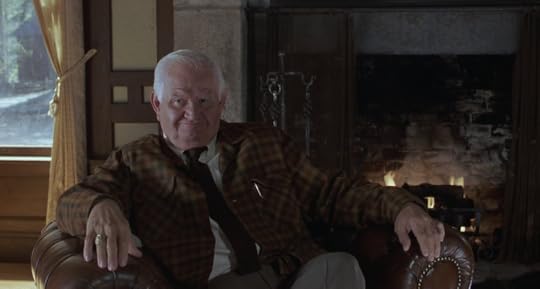
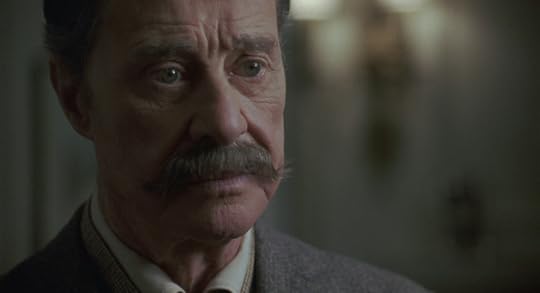
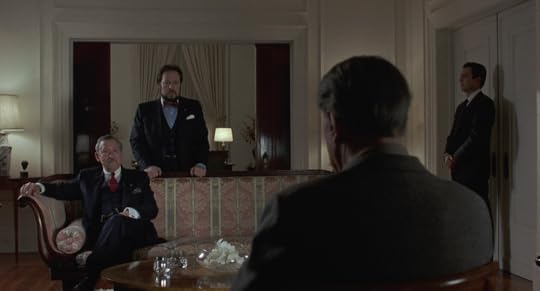
Before we know it, Gino gains some unwanted attention and is invited to the home of a Lake Tahoe crime boss named Joseph Don Giuseppe Vincent (Robert Prosky, in a role originally intended for Ameche). Don Giuseppe is suspicious of Gino until he realizes their connection, solidified by a coin Gino presents to him. Rather than killing a man he thought was an impostor, Don Giuseppe wants to spend significant time with Gino, a man he shares a bond with, yet is different from all the other people in his life. There’s a need for companionship that Don Giuseppe hasn’t had in many years, perhaps ever. When you’re “the man,” how do you know the difference between a person who’s truly genuine and someone who simply wants something? Every meeting or conversation is likely a prelude to some type of deal. But Gino presents a different type of loyalty, one that is authentic.
Mamet’s powerhouse film from one year earlier, House of Games (1987), focused on con games, the people who play them, and the consequences of their actions. Things Change is a kinder, gentler look at deception, but more than that, it’s an examination of truth, friendship, and trust. The genius of the character of Gino is that he is deceiving no one. He’s being himself, similar to the way Chance (Peter Sellers) behaves in Being There (1979). Unlike House of Games, Gino’s deception in Things Change is not diabolical. It’s not even intentional. Gino is who he is: genuine, honorable, trustworthy.
What makes Gino so compelling is that he believes others will be just as genuine, honorable, and trustworthy as he is. When Jerry tells Gino to simply walk away from the deal and live free, Gino is aghast, responding with, “I gave my word.” To Gino, that settles it. Done. Gino’s weakness - which Jerry knows and Gino doesn’t - is that the mob has no intention of holding up their end of the bargain.
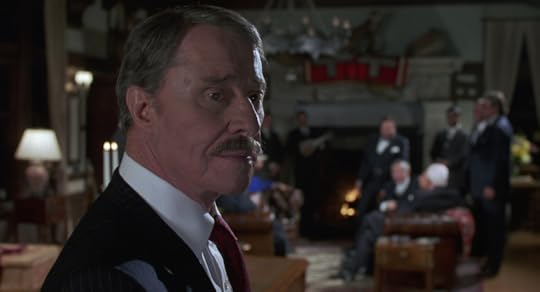
Yet Gino is no fool. As the finale nears, he understands what’s at stake and makes comedic attempts to hide himself when all other attempts to come clean to Don Giuseppe have failed. Each time Gino seeks to tell all, Don Giuseppe has another of his hangers-on pulling him away not only from Gino’s confession but also from true friendship.
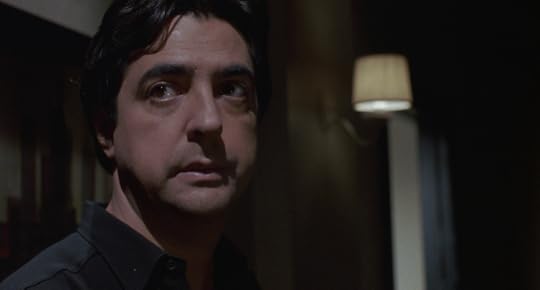
Jerry is different. Everyone loves Gino because they believe he’s a man of enormous power. Imagine how they would treat him if they knew he was a humble shoe shiner. The Chicago mob treats Jerry with scorn and derision because he’s a screwup. It doesn’t matter if he made one mistake or a lifetime of mistakes: He’s a screwup and is treated as one. Yet Jerry puts on a good front at the hotel, the casino, everywhere. While he gets frustrated with Gino, it’s clear Jerry cares about him. He sees something both genuine and unexplainable in the man, something he doesn’t have, perhaps something he’s never even seen in another person. Everyone Jerry knows is out to get something. Gino wants something too: a boat in Sicily.
Jerry’s suggestion of spending the weekend in Vegas seems to be self-serving. He initially wants to get out of the Chicago hotel because of his own boredom rather than the magnanimous gesture of giving Gino the sendoff of a lifetime. But something happens along the way as Jerry begins to observe what makes Gino tick, understanding that not only are they miles apart in their ways of looking at the world, but that Gino has something he doesn’t.
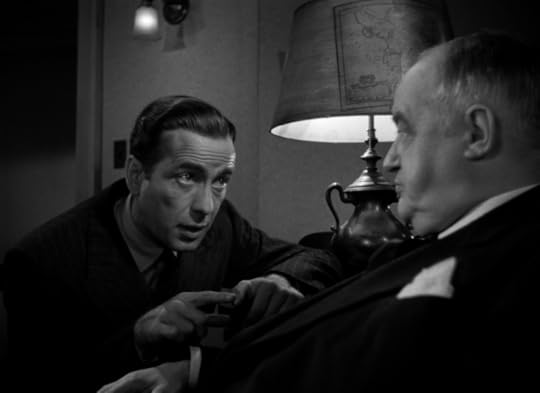
When I first saw The Maltese Falcon (1941) as a teenager, what fascinated me most was the fact that everyone was lying. Had Gino been a character in that movie, he would’ve lasted about 30 seconds. In a world where everyone is dishonest, deceitful, corrupt, and heartless, a person of pure goodness doesn’t have a chance. Yet Gino, unconcerned that any misstep could be his last, has nothing to hide. He has a clean conscience. He’s true to himself, even if he’s the only one in the universe who can say that. He doesn’t change, but perhaps Jerry, Don Giuseppe, and others do. Perhaps we do as well. Perhaps things really do change.
Things Change is available on a Region B Blu-ray from Indicator and can be rented on various streaming platforms.
With the exception of the poster, the images in this post come from DVD Beaver. Please consider supporting them.
If you enjoy my posts and would like to express your support and appreciation, ,you can buy me a coffee.
June 9, 2023
Why Physical Media Matters
There’s a story I heard years ago about a fan who walked up to science fiction writer Barry Longyear lamenting, “I just saw the movie Enemy Mine (1985, based on Longyear’s novella of the same name). It’s a travesty what they did to your book.”
Longyear responded, “They didn’t do anything to my book. It’s still available just as I wrote it.”
[image error]As movie fans learned recently, that’s not always the case. William Friedkin’s crime classic The French Connection (1971) has been censored by Disney, who owns the rights to the film. You can read more about the details here, but this is extraordinarily bad news, not only for movie fans, but everyone.
Whenever any person, corporation, or entity decides a creative work (or any part of a creative work) is unacceptable and removes it, they have ripped away the creative control of that artist. The rights of corporate ownership should cover the sale, distribution, and other aspects of the property without changing the property itself. Even when such things happen, the original property is usually made available as it was originally intended along with a “director’s cut” or “extended cut” (or however you wish to designate the modified version). Audiences should have the opportunity to own both the original and the newer cut. We may be opposed to the tampered-with version, but we should have the option to see and own the original. (George Lucas, I’m talking to you. Make both editions available.)
We can talk about this topic all day long, but ultimately we can’t do much about.
Or can we?
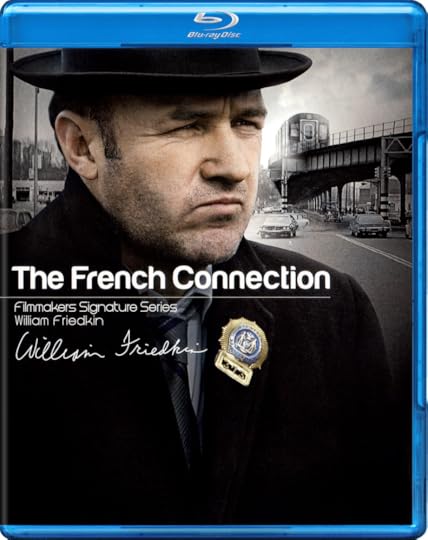
As soon as I heard the news about The French Connection, I looked online to see if the 20th Century Fox (owned by Disney) Filmmakers Signature edition Blu-ray was available to purchase. It was sold out on Amazon and Deep Discount DVD. Why? Because (1) as far as I know, it hasn’t been tampered with, and (2) physical media fans know that purchasing a movie on 4K, Blu-ray, or DVD is the only way to truly own a film that’s not going to be tampered with. (We hope it hasn’t been tampered with for the physical media release, but there are plenty of people online who can tell you if that’s the case, which sometimes includes music, film color, etc.) You can’t guarantee that with streaming or digital copies. Even if those platforms are showing the original intended editions, those can disappear at any time. Just ask Kindle users who have purchased eBooks that no longer appear on their devices.

The excellent book A Thousand Cuts: The Bizarre Underground World of Collectors and Dealers Who Saved the Movies by Dennis Bartok and Jeff Joseph chronicles the wild and crazy world of collectors of physical film, fans who feared that if they didn’t own (in most cases steal) such movies, they would be gone forever. They may be right, but they’re also keeping others from the enjoyment of those films. (Another story for another time.)
This is why physical media is so important. You’ve heard it again and again: You can’t depend on streaming, steaming doesn’t offer everything, anything that doesn’t fit into an algorithm must go, etc. But we also have to realize that the average person that subscribes to one of the major streaming services probably isn’t interested in classic movies. They certainly wouldn’t call them classics, but simply “old” movies, which translates to “Nothing I care to see.”
As long as the technology works (yet another conversation for another time), my DVDs and Blu-rays will play just fine. I don’t have to worry that someone sneaked into my basement, removed all the non-politically correct moments from Airplane! (or pick your own movie), and placed it back on my shelf. Not going to happen.
But we’re seeing censorship in places besides the movies. The act of banning books has been around as long as there have been books, but such things are done out of fear and ignorance. Yes, the world has produced many books, movies, songs, and other creative works that are offensive or contain offensive elements. We could sit down and talk about those things, why they’re offensive, how they affect us, and we can properly react to them, but it’s far easier to simply destroy or deny access to them.
It’s pretty simple. If a movie offends you, don’t watch it. Watch something else.
If a book offends you, don’t read it. Read something else.
Simple. Or it should be...
In the meantime, if you love creative works, purchase them in formats that you can own forever. Support the artists and companies you care about.


I recently purchased some films from Undercrank Productions, two Lon Chaney collections and a collection of Edward Everett Horton comedies. (And there’s a great sale that’s still going on.) I may go back for more.
Also support film screenings at museums, libraries, and film festivals. When you attend those events, you’re often watching films you can’t see anywhere else. Support the organizations that are trying to restore and preserve such works, organizations such as the Film Noir Foundation.
If you know me, you know that the best part of all this is building community. Being around people who share your passion is such a blast. You learn so much, and the excitement is contagious.
Please consider supporting physical media and the organizations keeping it alive. Keep watching, keep sharing. Thank you for reading.
If you enjoy my posts and would like to express your support and appreciation, ,you can buy me a coffee.


