
Andy Wolverton's Blog, page 11
May 14, 2022
Film Noir: The Dark Side of Cinema Vol. 1 Reissue
I'm very excited to discuss the reissue of a film noir box set many people missed when it went out of print last year, Film Noir: The Dark Side of Cinema Volume 1 from Kino Lorber. Everything you need to know is right here:
https://youtu.be/64OB8zCWI1U

May 5, 2022
Announcing My New Book: Men Don't Read (with Updates!)

I'm delighted to announce the publication of my first book, Men Don't Read: The Unlikely Story of the Guys Book Club. No, it's not about movies, but if you're interested in reading, libraries, or book clubs, I think you will enjoy it. UPDATES BELOW
The paperback edition comes out on June 16, but the eBook is available right now. You can pre-order the book at various locations, but the best way to support me is to purchase directly from the publisher.
You can also pre-order from these sites:
The book is currently available in the Anne Arundel County Public Library system and will soon be in the Arlington (TX) Public Library system.
UPDATES:
Although the official release date is Thursday, June 16, many people have already received their pre-ordered copies. You should still be able to pre-order and get the book on or before the June 16 release date.
If you would like the book in your library system, please contact the Materials Management or Acquisitions department of your local library and request the book. It should be available soon from Baker and Taylor as well as Ingram.
Some very kind people have offered to help me promote the book through an upcoming podcast as well as a speaking/signing event. Thank you!
Lastly, if you read and enjoyed the book, it would be very helpful if you left a review on Amazon , BookBaby , Goodreads , or all of the above.
Thank you all!
Here's a short video describing the book:
https://youtu.be/gbWD7E80l6IMen Don't Read has already received several wonderful reviews. Here are a few comments:
"If you love reading, Andy Wolverton's book is for you. Not only does he give great advice for starting and running your own book club, but he also offers quick reviews of some of the world's best books. The list of titles his book club for guys read through will make any enthusiastic reader’s mouth water."
"...an absolute gem of a book. It's a comforting work: part personal history, part guidebook not only for starting a book club, but also for engaging the world (and people) around you. I'd recommend it even if you don't think of yourself as much of a reader—or a joiner."
"If you have ever considered starting a book club, then this book is for you."
"This book will help librarians or patrons create meaningful experiences at their local library. The author describes how he observed a need in his community and then built a successful recurring library program around that need. As a library assistant, I deeply relate to stories he shares about the challenges of engaging library patrons. What's more, he reveals strategies he used to effectively build community around his idea and keep meetings fresh, interesting, and on-topic. I am going to use what I learned from this book to help me create better programming for my public library!"
If you read the book and enjoy it, please consider leaving me a review on BookBaby, Amazon, or Goodreads.
Thank you!
(By the way, I'm working on my next book, which will be about movies.)
April 26, 2022
Film Noir New Releases for May 2022
Right now I'm only posting the video version of my report on new releases in film noir and neo-noir. Thanks for watching!
April 18, 2022
Forgotten Film Noir? The Big Operator (1959)
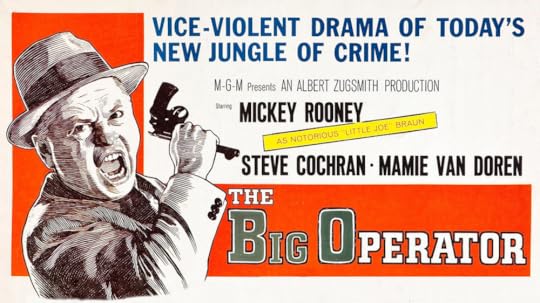
The Big Operator (1959) Charles F. Haas
If you'd rather watch this review, here you go:
https://youtu.be/4ho3LXOaBiYRecycling? Not a new thing, not at all. Movie studios were recycling long before those yellow (or blue) containers started appearing in our communities years ago. In 1959 MGM decided to do a little recycling of its own, revisiting a story by Paul Gallico (who wrote the source novel for The Poseidon Adventure), one that had been filmed in 1942 as Joe Smith, American, starring Robert Young.
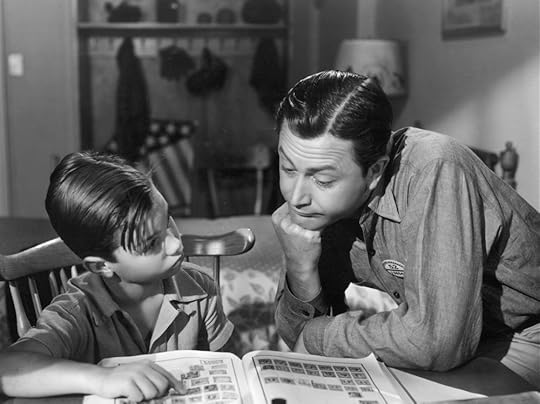
Young plays Joe Smith, the crew chief on a Lockheed assembly line in a defense plant during wartime. Joe’s boss and two men from Washington ask Joe to work on a top secret project. Later another group of men try to strong-arm Joe into coughing up the plans, otherwise his wife (Marsha Hunt) and son (Darryl Hickman) will disappear.
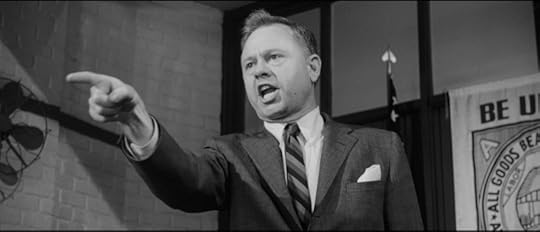
Joe Smith, American made a modest profit, which is all the inspiration producer Albert Zugsmith needed to cook up a remake. Zugsmith was not exactly the King of Great Ideas, but this one wasn’t bad: Instead of focusing on wartime patriotism at a defense plant, set the story around a labor union dispute at a factory, and hire Mickey Rooney as Little Joe Braun, a racketeering, off-the-rails union leader.
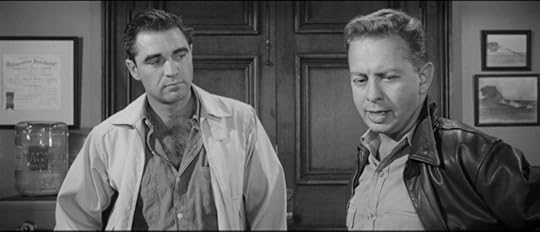
The film opens with Braun having a man murdered (I will not disclose how) by a hitman, Oscar “The Executioner” Wetzel (Ray Danton). When Braun and Wetzel meet to discuss the aftermath of the hit, factory coworkers and buddies Bill Gibson (Steve Cochran) and Fred McAfee (Mel Tormé) witness the meeting, and Braun witnesses them.
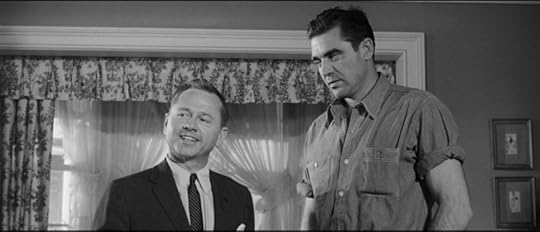
Braun attempts to entice both Bill and Fred to come work for him where he can keep an eye on them (i.e., make sure they don’t get any ideas about talking to the cops). When Braun pays a visit to Bill’s modest house, the contrast between Cochran (6’ 0”) and Rooney (5’ 2”) is laughable until Bill sits down and Braun remains standing, towering over Bill. It’s no longer funny, but frightening. Here’s Braun, a small-fry, not only intimidating Bill in his own home, but also spouting innuendoes about what he’d like to do with Bill’s wife Mary (Mamie Van Doren, in what has to be the most modest role she ever played).
Rooney chews the scenery with the best of them, but he’s also very believable as a blistering Jimmy Hoffa-type labor boss. Rooney had been dipping his toe into the darker stuff for quite some time with films like Quicksand (1950), Drive a Crooked Road (1954), Baby Face Nelson (1957), and The Last Mile (1959), but if you weren’t paying attention to those films, his portrayal of Braun was likely a big surprise.
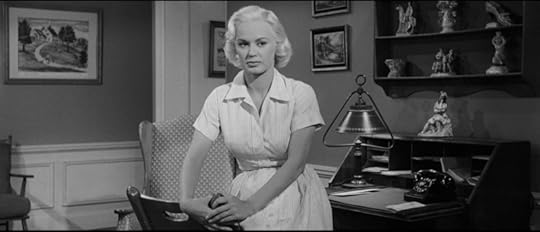
Steve Cochran is another matter. He didn’t get the chance to play too many good guys, so it’s a bit strange seeing him as an honorable character. Cochran’s no wimp here, but we’re used to seeing him slug somebody at least once a reel. It takes some getting used to, but it’s refreshing to see Cochran as a regular joe who enjoys his work and wants only to protect his family. It’s also nice to see Mamie Van Doren playing a character who’s not a sexpot. She really isn’t given much to do here, but she does okay. The film also features Jim Backus, Jackie Coogan, Vampira, and a pre-Dennis the Menace Jay North.
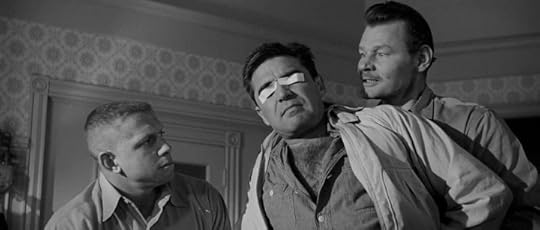
Although it’s a mixed bag, and believability is stretched to the absolute limit during the last act, The Big Operator is a solid crime picture you just can’t stop watching. I’m not convinced it can truly be called a film noir, but I wouldn’t argue the point, either. The amount of violence, at least for 1959, is a bit shocking. (I still can’t get over the fact that a man is set on fire in an MGM production, and a later torture session is particularly intense.) The movie includes most of the cast and crew of another picture released by MGM one month earlier, The Beat Generation, a title often lambasted, and probably for good reason.
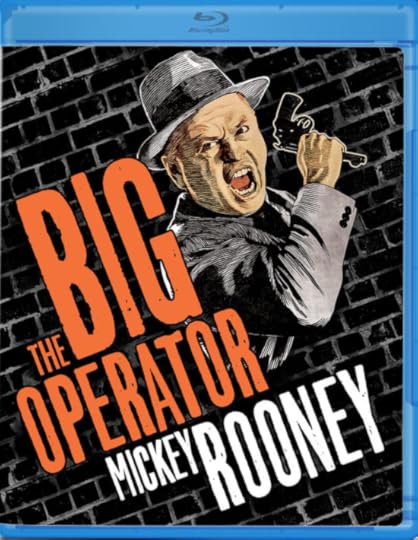
The Big Operator is on Blu-ray from Olive Films (released in 2014) and looks pretty good in CinemaScope. The Van Alexander score is a bit overblown, but that’s not uncommon for the era. The release contains no extras, but is currently on sale at Hamilton Book for six bucks. I think it’s worth a look.
If you’ve seen the film let me know what you think. Thanks for reading.
April 1, 2022
Film Noir New Releases for April 2022
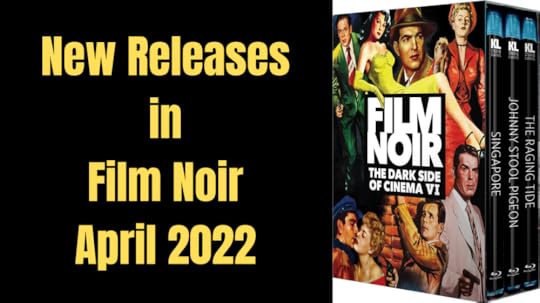
If you’re new to my monthly Film Noir Releases posts, welcome! My goal is to cover all the first-time releases to Blu-ray and DVD, usually passing over reissues unless there’s a good reason to include them. (I also tend to leave out more recent films.) Unless otherwise noted, the following are all North American Region A Blu-ray discs. I often use the terms “film noir,” “neo-noir,” and “noir-stained” rather loosely, so while you may quibble with some of my choices, I hope these are films you’ll at least consider. As always, if you know of any film noir, neo-noir, or noir-stained titles I’ve left out, please let me know in the comments below. And thanks for reading.
I also have a video version of my New Releases in Film Noir on my YouTube channel. I hope you’ll check it out:
https://youtu.be/0mep4jvnV-4If you decide you’re going to sleep through the month of April, you won’t miss all that much in new releases in film noir, but even though the releases are slim, there’s still some good stuff here to check out. Let’s get started:
April 6
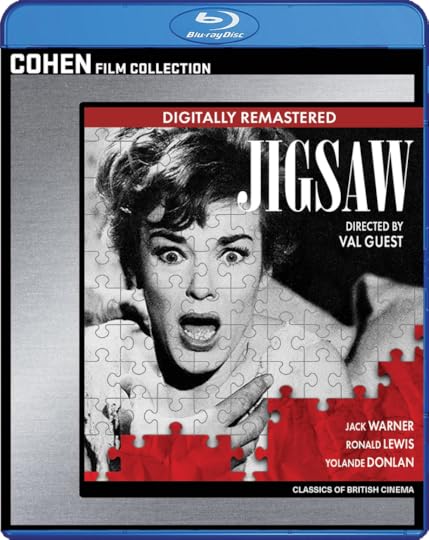
Jigsaw (1962) Val Guest - Cohen Media Group Blu-ray
Jigsaw (not to be confused with the 1949 film of the same name starring Franchot Tone) borrows a documentary style used years earlier in The Naked City (1948), and some would say to better effect. When a woman (Moira Redmond) confesses to her married lover (whom we do not see) that she’s pregnant, the man murders and dismembers her, then vanishes. Two police inspectors (Jack Warner and Ronald Lewis) attempt to reconstruct the final hours of the woman’s life, hopefully leading to the identity of the killer. Jigsaw is a taut police procedural with two investigators: a veteran paired with a much younger assistant, which is also similar to The Naked City. The mystery element is also strong. This one was announced from Cohen years ago, and now it’s here. No word on extras.
April 18
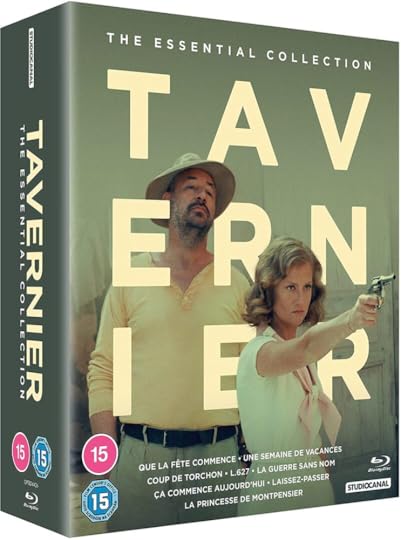
Tavernier: The Essential Collection (1975-2010) Studio Canal, 9 BD (UK, Region B)
If you’re a fan of the films of French director Bertrand Tavernier, you’ll want to pick up this box set simply titled Tavernier: The Essential Collection from StudioCanal on April 18. This is a Region B set, and it includes eight films, two of which may be of interest to film noir fans.
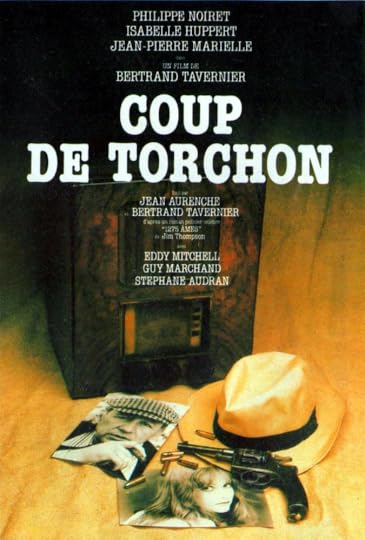
First we have Coup de Torchon (Clean Slate, 1981), a crime film based on the Jim Thompson novel Pop. 1280, changing the novel’s setting in the American South to a small town in French West Africa, where a police chief (Philippe Noiret) is mocked by the locals and his blatantly unfaithful wife (Stéphane Audran), until one day, the chief has finally had enough.
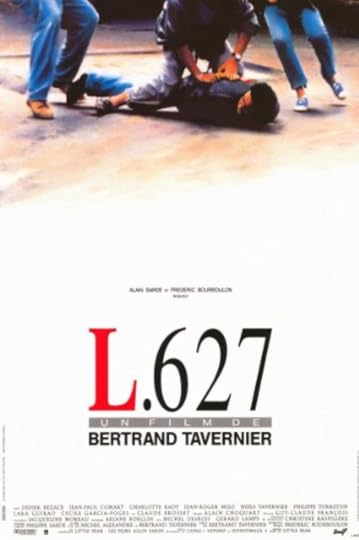
Next L.627 (1992), which finds an anxious Parisian narcotics officer named Lucien (Didier Bezace) facing burnout from trying to put away the city’s slippery drug dealers.
I’m embarrassed to admit that I’ve only seen one Tavernier film, The Clockmaker of St. Paul, which is excellent, but I’m planning on picking this set up.
April 26
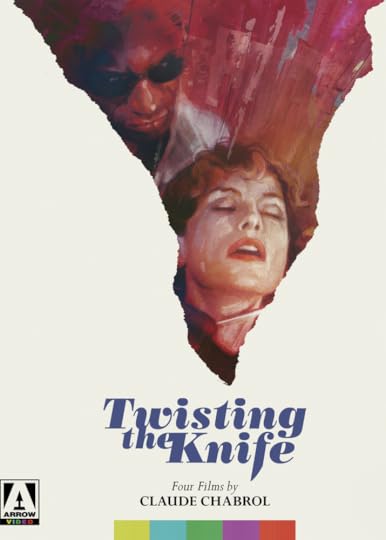
Twisting the Knife: Four Films by Claude Chabrol - originally scheduled for March. You can find the complete rundown on those films here.
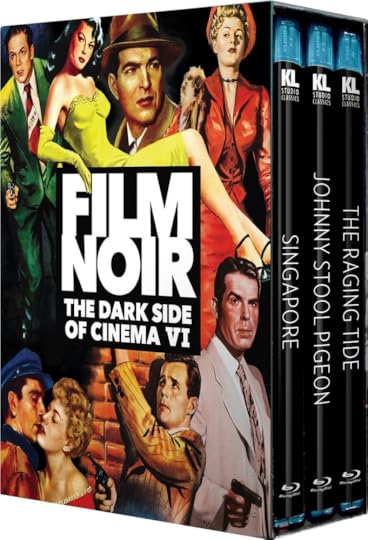
Film Noir: The Dark Side of Cinema VI (1947-1951) Kino Lorber 3 BD box set
Kino Lorber is not slowing down in 2022, that's for sure. In fact, it's been announced that they plan to continue this series which will end with Volume 15! In the meantime, here's what you can look forward to in Volume VI:
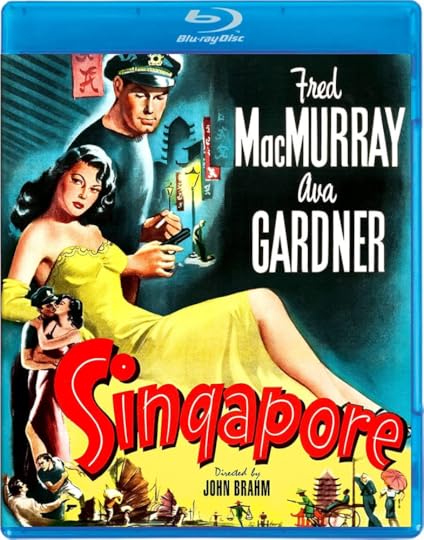
Singapore (1947) John Brahm
Fred MacMurray plays Matt Gordon, a pearl smuggler in Singapore who falls for a woman named Linda (Ava Gardner). They fall in love and plan to marry, but when the Japanese attack, Gordon assumes Linda was killed while waiting for him at the church. Jump ahead five years after the war when Gordon returns to Singapore to find that Linda has not only married someone else, but she also doesn’t remember Gordon at all. Stolen pearls and some real nasty people are involved in a plot that resembles Casablanca in many ways. No word on extras.
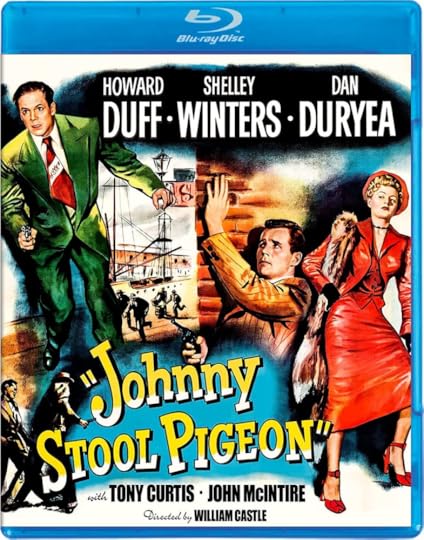
Johnny Stool Pigeon (1949) William Castle
How many film noir pictures can boast settings in San Francisco, Vancouver, and a dude ranch in Tucson? In Johnny Stool Pigeon, treasury agent George Morton (Howard Duff) recruits his childhood friend and convict Johnny Evans (Dan Duryea) to help Morton infiltrate a Vancouver business suspected of acting as a front for smuggling drugs. Johnny hates cops, but figures outside the joint has to be better than inside, so he joins Morton. Their investigation leads them beyond Vancouver, all the way to a dude ranch owner and drug dealer named Nick Avery (John McIntire). Johnny Stool Pigeon is a solid, entertaining noir which also features Shelley Winters, Barry Kelley, and a young Tony Curtis as a mute hitman.
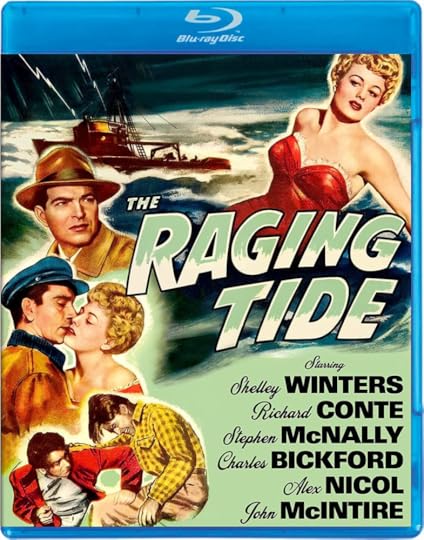
Raging Tide (1951) George Sherman
After bumping off one of his rivals, San Francisco mobster Bruno Felkin (Richard Conte) hides out on a fishing boat and is soon discovered by the ship’s skipper Hamil (Charles Bickford) and his son Carl (Alex Nicol). Somehow Bruno persuades young Carl to go ashore and collect Bruno’s protection money for him, while the gangster begins to strike a friendship with and appreciation for Hamil’s simple yet fulfilling life. Meanwhile, Carl starts making time with Bruno’s girl Connie (Shelley Winters). Stephen McNally stars as the cop looking for Bruno. An unusual noir for sure, but I’m glad Kino included this one.

Dementia (1955) John Parker - Cohen Media Group Blu-ray
The story behind Dementia is as fascinating as the movie itself. It’s the only film directed by John Parker (made with his mother’s money; Thanks, mom!), includes no dialogue, and was banned repeatedly by the New York State Film Board for being “inhuman, indecent, and the quintessence of gruesomeness.” Dementia follows a nameless woman (Adrienne Barrett), with knife in hand, as she journeys through the rougher parts of a city at night, witnessing a wide variety of crimes. Although it contains many elements of film noir, Dementia is usually considered a horror movie, especially when it was retitled and rereleased in 1957 as Daughter of Horror, which was trimmed down (from 60 minutes to 57) and added narration by Ed McMahon! Apparently the only extras on the Cohen disc include the Daughter of Horror cut and a theatrical trailer. The BFI Region B release from 2020 includes a new audio commentary by film critic and writer Kat Ellinger, and much more. I’m going to wait for a comparison of the two releases from DVD Beaver, but I’m leaning more toward the BFI.
That’s going to do it for April. Remember that release dates can change, and if any of them do, I’ll be sure to let you know. Thanks for reading.
March 15, 2022
Fantasy, Reality, Love, and Tragedy in Rainer Werner Fassbinder's Veronika Voss (1982)
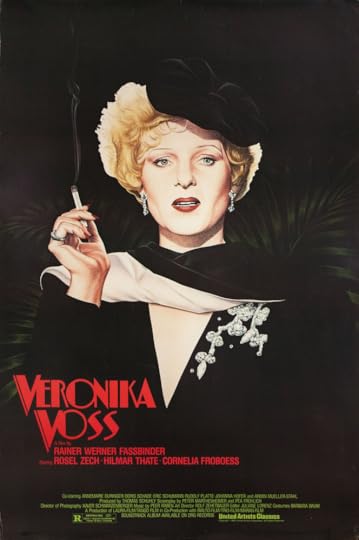
Veronika Voss (1982) Rainer Werner Fassbinder
One of the great pleasures of watching movies is the sense of discovery, particularly with a director who is clearly passionate about cinema. I think we can safely say that anyone who makes 37 films (to say nothing of his television work, short films, and theatre work) in less than two decades is passionate about cinema. Although I have only seen three films by Rainer Werner Fassbinder (1945-1982), I know that he was such a director. Each of these pictures made me think, feel, and reflect upon what it means to be human. I realize how grandiose that sounds, but I can’t bring myself to deny it. While Fassbinder’s Ali: Fear Eats the Soul (1974) and The Marriage of Maria Braun (1979) both moved me, Veronika Voss haunts me. Perhaps that was Fassbinder’s intention.
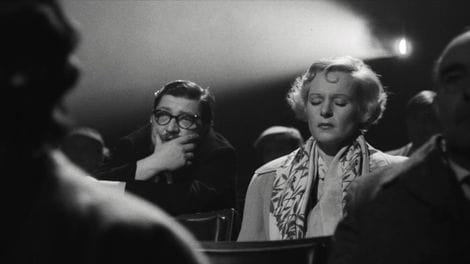
The black-and-white film opens in a movie theater in 1955 with Veronika Voss (Rosel Zech) watching one of her own films with an audience (which includes Fassbinder himself). The scene they’re viewing depicts Veronika’s character begging another woman for something (which I will not reveal). This moment will be significant later on, but for now, Veronika closes her eyes, refusing to watch. Is this because she doesn’t want to remember the scene and her performance in it, or is it something else?
Suddenly Fassbinder changes the point of view from the theatre audience to an observer on the set of the scene being shot. After the director says “Cut,” the cast and crew congratulate Veronika on her performance: “You were marvelous. Heartbreaking.” Veronika responds, “It’s my job to break hearts.”
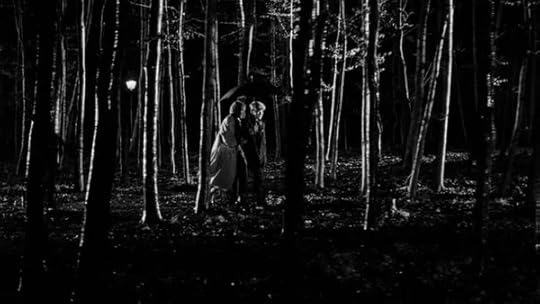
Standing outside in the dark, shivering and unprotected from the cold and rain, Veronika stands crying. A man named Robert Krohn (Hilmar Thate) walks up to her and offers to share his umbrella. The camera follows them as they walk through a wooded area. Their walk is purposeful, not only to get out of the rain, but also to avoid something unpleasant, possibly dangerous as if the two are attempting to escape from some deadly German fairy tale. Then, viewed from inside a Munich U-Bahn car, the couple moves past one window after another, as if traversing frames of film, transforming their journey from a primeval forest to a place of modernity. A sign shows us that Veronika and Robert have arrived at Geiselgasteig, an area known as the “Bavarian Hollywood.” All of these details are significant. We might be guilty of reading too much into them, but the concepts of modernity vs. the past, fantasy vs. reality, and how one adjusts to postwar life are inescapable, and Fassbinder knows that.

During the U-Bahn ride, Fassbinder utilizes Dutch angle shots and closeups to convey Veronika’s emotional state, her sudden fear that she’ll be recognized. Perhaps she harbors a greater fear that she won’t be recognized. Robert, a sportswriter, doesn’t recognize her at all, not until hours later when Veronika calls him to meet her at a restaurant. Robert’s ignorance has worked in his favor: Veronika thanks him for treating her like a human being during the previous night, yet it soon becomes obvious that she wants everyone (Robert, a waiter, and others) to recognize her celebrity status and cater to her every whim. But none of this bothers Robert. He’s hooked.
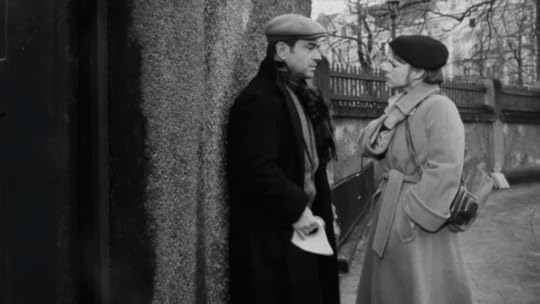
Initially seeking to write a story about aging film actresses, using Veronika as a case study, Robert is drawn into Veronika’s unstable and sometimes self-destructive world. Veronika’s magnetism is so strong that even Robert’s girlfriend Henriette (Cornelia Froboess) finds his affair compelling.
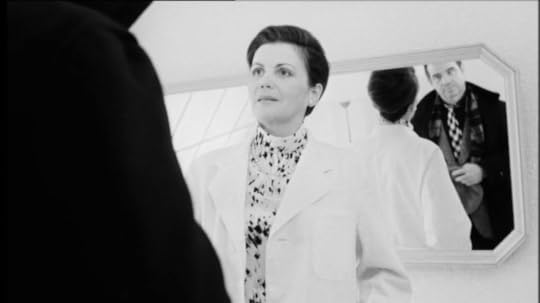
The allure of cinema’s artificial world of fantasy seems at odds with the harsh realities witnessed by a man whose job is reporting on sporting events. This dichotomy is reflected in Robert’s recognition of the signs of a toxic relationship developing with the actress, while he also pictures himself as her savior. Veronika’s salvation, Robert believes, must come about through her deliverance from a neurologist named Dr. Katz (Annemarie Düringer), who may not have Veronika’s best intentions in mind. Robert clearly sees himself as Veronika’s deliverer/hero.
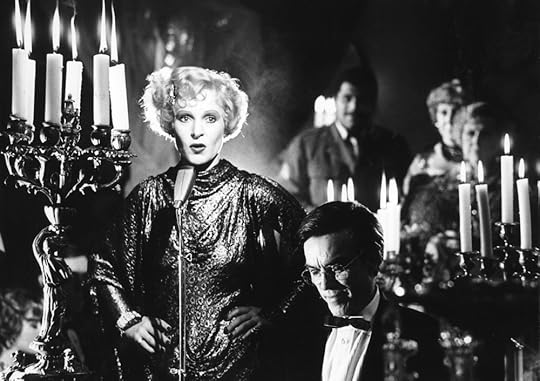
Comparisons to Billy Wilder’s Sunset Boulevard (1950), a film I recently discussed with my Great Movies library discussion group (LINK), are inevitable. Like Wilder’s masterpiece, Veronika Voss presents us with a once-famous actress whose life is changed by the unexpected appearance of a writer, although both writers seem to have different motivations.
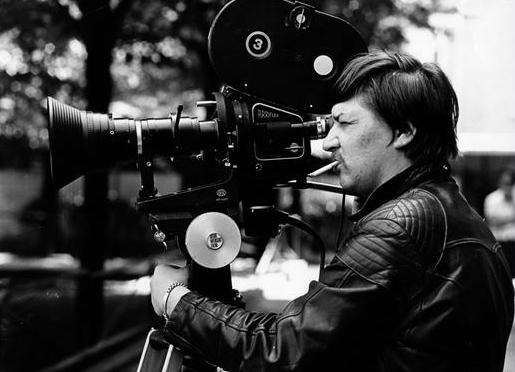
Photo: Peter Gauhe, DFF
I haven’t explored enough about Fassbinder to know how much he intended to borrow from Sunset Boulevard, so I will leave further comparisons to the reader, which are fascinating to consider. Yet this Fassbinder quote may give us a hint:
“Every decent director has only one subject, and finally only makes the same film over and over again. My subject is the exploitability of feelings, whoever might be the one exploiting them. It never ends. It’s a permanent theme. Whether the state exploits patriotism, or whether in a couple’s relationship one partner destroys the other.”
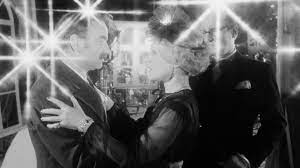
Veronika Voss stays with me, its images and sounds refusing to let me forget them or dismiss their presence with easy answers. The film’s lighting (with cinematography by Xaver Schwarzenberger) is a crucial element, and the actress tells us as much: “Light and shadow, those are the secrets of the cinema.”
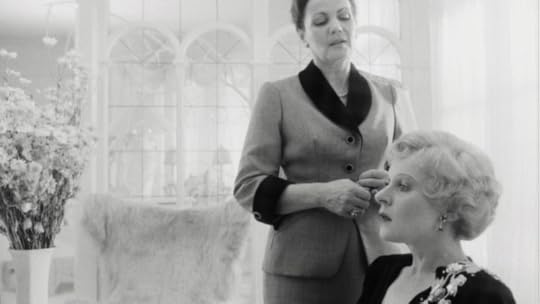
During their second meeting at a restaurant, Veronika commands a waiter to bring more light to their table. She knows what displays her talents most effectively and so does Fassbinder, staging the behind-the-scenes shots of Veronika’s films with shimmering prisms of illumination, reminding us that we’re in the midst of a beautiful world of unreality. Yet one wonders if the stark, blistering brightness of Dr. Katz’s clinic is meant to convey purity or blind us to something sinister hiding in plain sight.
There are many aspects of the film I have not explored here: the Treibels, an elderly couple also being treated by Dr. Katz, the use of American country music with songs such as “The Battle of New Orleans” and “Sixteen Tons,” the overarching theme of postwar Germany, and more. I suspect that, like Sunset Boulevard, Veronika Voss reveals more of its richness and depth with each viewing. If this is true of Fassbinder’s other works, we may all have much to explore.

Veronika Voss is the second film in Fassbinder’s BRD Trilogy, available on Blu-ray from Criterion.
March 9, 2022
My Most Important Movie of the Year? Mon Oncle (1958)
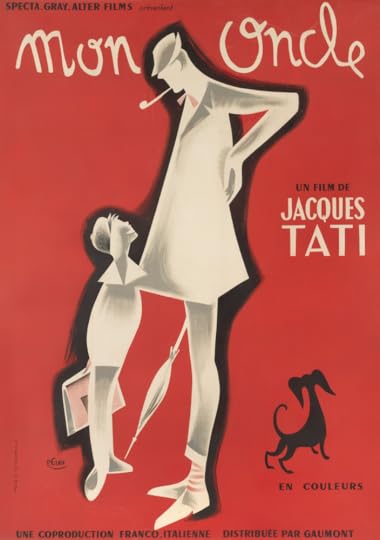
Mon Oncle (1958) directed by Jacques Tati
I usually don’t get this personal in my reviews, and certainly not this early in the post, but I struggle with depression. That is important for you to know, not particularly about me, but in describing how Mon Oncle affected me in a way I did not anticipate.
For several years I have been slowly working through Roger Ebert’s Great Movies, a list of 362 films Ebert considered the finest he reviewed during his tenure as movie critic at the Chicago Sun-Times. Out of those 362 films, I have watched 299, leaving 63 to go, a handful of which I own on Blu-ray unwatched. In an attempt to combat the bout of depression I was going through a few days ago, I decided the only film that might help lift me out of my funk was Jacques Tati’s Mon Oncle, part of the Criterion Tati box set from several years ago. I had previously watched Mr. Hulot’s Holiday (1953) and Playtime (1967) twice each, discussing both films with our library’s Great Movies discussion group. I anticipated a lifting of my spirits with Mon Oncle.
The opening scene with several stray dogs roaming the early morning streets of a French city succeeded in lifting my spirits momentarily. Having seen the other two films mentioned before, I knew that Tati wasn’t simply showing us a pack of dogs wreaking havoc (mostly innocuous havoc, to be sure). I felt sure he had something more in mind.

As soon as the film’s set piece, the ultra-modern house (designed by Henri Schmitt), makes its first appearance, I was instantly reminded of Playtime, a film whose scope and critique of modern technology cover more territory than Mon Oncle. I knew the schtick.
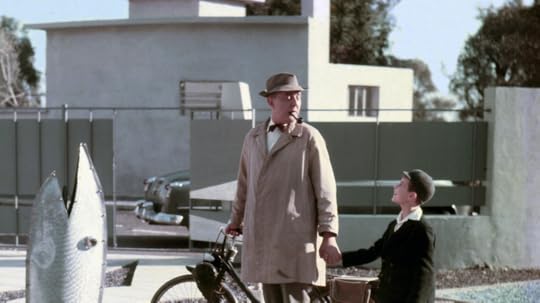
The ultramodern house and yard are filled with gadgets, push-button “time-saving” devices (such as automatic gates, doors, windows, a garage door), and a gauche aluminum fountain in the shape of a fish that spouts an unnatural blue-colored water from its mouth. We know that Mr. Hulot is going to visit this house and that in no time at all, he will more or less destroy it.
The house is the home of Monsieur (Jean-Pierre Zola) and Madame Arpel (Adrienne Servantie) and their young son Gérard (Alain Bécourt). Once they enter the picture, it takes the audience about 30 seconds to recognize that they are as empty as their spacious house. (You can’t really call it a “home.”) It is a place as impersonal as the Arpels themselves, and young Gérard, when he’s not playing with the young ruffians in the more run-down parts of town, finds one of life’s few pleasures in spending time with his mother’s brother, Monsieur Hulot (Jacques Tati).
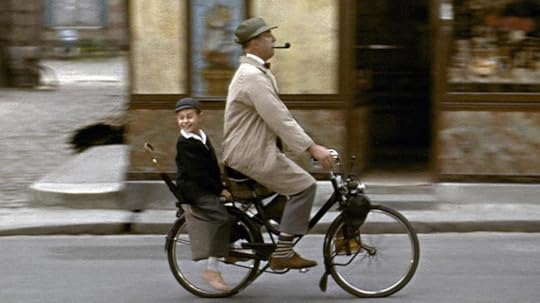
Before there was Chauncey Gardiner (Peter Sellers in Being There), Forrest Gump, or any other cinematic character who seems innocent and almost too good for this world, there was Monsieur Hulot. Hulot is unemployed (at least during most of the film) and unpretentious, without a care in the world. He takes things as they come, and in a world filled with wonder, Hulot wants nothing more than to explore it in a leisurely manner as if time stood still for his every journey of curiosity. In a sense, he is childlike, the perfect companion for Gérard.
SPOILERS
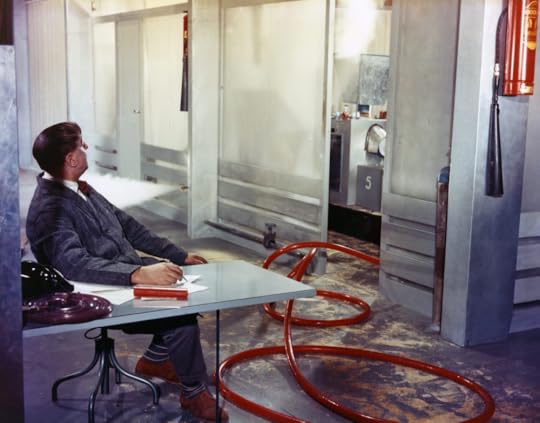
At the insistence of his wife, Monsieur Arpel hires Hulot to work in his factory, which manufactures plastic hoses. You can just imagine the comic possibilities, and Tati does not disappoint. Yet Arpel is very disappointed, relocating his brother-in-law to a distant factory where he will be out of his hair and away from influencing Gérard.
This dismissal of Hulot made me angry, which momentarily took me out of my depression. It’s bad enough that Arpel is jealous of Hulot, but to deny his son one of the few pleasures he gets out of life by removing his uncle is hateful and selfish. And it’s not like Arpel is suddenly going to become closer to his son. He’s going to acquire more gadgets and give Gérard more meaningless presents.
But Hulot takes it all in stride. To quote from Roger Ebert’s review of the film:
I love Monsieur Hulot. I love him because he wishes no harm, causes no harm, sees (whenever possible) no harm. He does not forgive his trespassers because he does not feel trespassed against; in the face of rudeness, he nods politely, tries to look interested and stays out of the way. In an emergency, he does what he can, stepping on the leak in the lawn so that the fish can continue to spout. What he would like to do, I think, is to set out each morning and walk here and there, tipping his hat, tapping his pipe, grateful for those amusements that come his way. If his heart breaks even a little when he says goodbye to the landlady's daughter, he doesn't let us know.
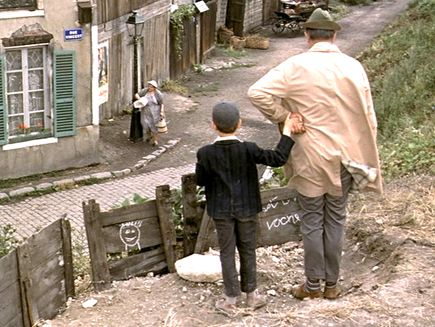
The day after I watched the film, I began to realize a few things that helped with my depression: Hulot does not need the praise of others. He is not a people pleaser and suffers no sense of doubt, lack of self worth, or feelings that he doesn’t measure up to everyone else. He has no self doubt, no feelings that he’s “never good enough.” When he can, he tries to help people who need it. Sometimes those efforts result in comic mayhem, but he’s trying to help.
Hulot is also about relationships, although sometimes he appears to be a reluctant participant. Perhaps, like many of us, he’s been burned a few times. But he doesn’t keep a list of wrongs done against him. He keeps on. He doesn’t have meltdowns, throw tantrums, or complain that his rights have been violated. He keeps on.
Note to self? You bet: Just keep on. And remember that everyone’s going through a hard time. Maybe try to make someone else’s day better before focusing on your own.
Is everyone better off at the end of Mon Oncle than they were at the beginning? Possibly. I don’t know. The dogs return, doing what dogs do. Kids will be kids. The Arpels will continue to be the Arpels. And Mr. Hulot will continue to be Mr. Hulot. Maybe no one in the film learned anything by the end of the film, but I did. In many ways, Mon Oncle could be the most important movie I’ve seen this year.

March 1, 2022
What I Watched in February 2022
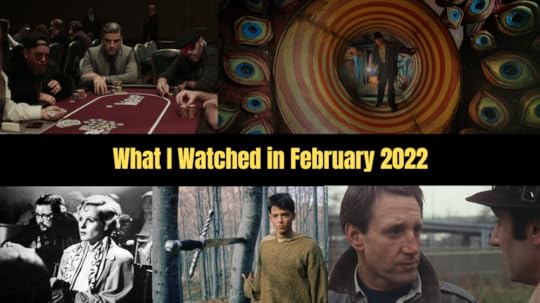
As I mentioned last month, my "What I Watched" postings, will be very stripped down this year. You'll see that February was a pretty slim month, but I'm listing the films and where you can find them. Films in bold are the ones I enjoyed the most.
Bloody Nose, Empty Pockets (doc 2020) Kanopy
When the Daltons Rode (1940) Western Classics I box set, Kino Lorber Blu-ray
La Belle Noiseuse (1991) Kanopy
Six Bridges to Cross (1955) Film Noir: The Dark Side of Cinema IV box set, Kino Lorber Blu-ray
The Card Counter (2021) Library DVD
Ladyhawke (1985) Warner DVD
Cabin in the Sky (1943) Warner DVD
Nightmare Alley (2021) HBO Max
The Chinese Ring (1947) TCM DVD
The Seven-Ups (1973) Signal One (UK) Blu-ray
Love at Large (1990) Kino Lorber Blu-ray
Horror Noire: A History of Black Horror (2019) Library DVD
Black Orpheus (1959) Kanopy
Veronika Voss (1982) Criterion Channel
Life Itself (doc 2014) Magnolia Pictures Blu-ray (2x)
Let me know what you watched and enjoyed last month. Thanks for stopping by.


