
Andy Wolverton's Blog, page 3
October 4, 2023
A New Video Series: The Best Thing I Watched This Week
I'm starting a new video series on my YouTube channel called "The Best Thing I Watched This Week." Each week I'll talk about the best thing I watched during the past week. That could be a movie, a TV show, a short film, a music video, anything, but it will be something you can access as well. AND I'll do it in under 3 minutes!
I hope (1) you'll enjoy the series, (2) will tell me about the best thing you watched, and (3) share my channel with others (optional, but appreciated).
Thanks!


October 1, 2023
What Are You Watching? Here's What I Saw Last Week
I had hernia surgery last week, so I had lots of time to watch movies and read books. I read so much that my books-to-movies ratio was almost equal. You’ll see several movies in a row starting with the letter B. That’s because I’m slowly (and alphabetically) going through the unwatched DVDs and Blu-rays in my collection.
So here’s what I watched, and at the end, I’ll let you in on a little secret.
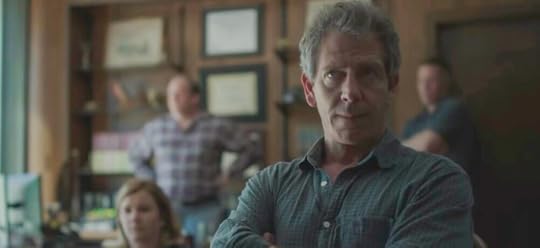
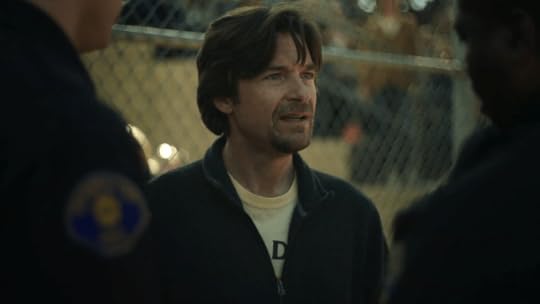
The Outsider (TV 2020) Library DVD
Maybe it was due to the fact that I’d recently finished reading the Stephen King source material, but this HBO series simply didn’t hold up. While the acting was good, the screenplay’s pacing never felt right. Part of what makes the novel so compelling is the slow realization (by the characters, not the reader) that something supernatural is at work in a seemingly ordinary town among seemingly ordinary people. If that’s what we’re after, is it really necessary to make every scene (indoor and outdoor) so visually dark? (“Evil has come to town,” I get it.) Also the character of Holly, although expertly played by Cynthia Erivo, is nowhere near as unique and compelling as in the novel. Still worth a look, but this miniseries was ultimately disappointing.
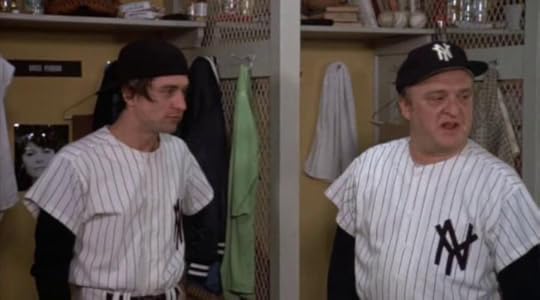
Bang the Drum Slowly (1973) John D. Hancock - Ex-Library DVD
Robert De Niro plays Bruce, a catcher for a professional New York baseball team that looks like (but isn’t) the Yankees. Bruce, from Georgia (Yes, De Niro with a Southern accent), has a terminal illness that only his best buddy, the star pitcher Henry (Michael Moriatry), knows about. Erratic tone shifts and some pretty bad baseball scenes make me say no to keeping this DVD. But it was fun watching Vincent Gardenia as the team manager. Let’s just say that De Niro’s next project (Mean Streets) fared much better.
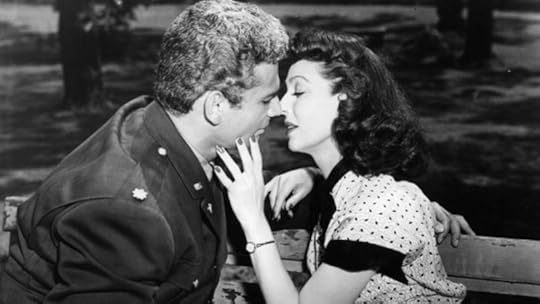
Because of You (1952) Joseph Pevney - Kino Lorber Film Noir: The Dark Side of Cinema V Blu-ray box set
This movie is so wrong in so many ways… Loretta Young plays Christine, a platinum blonde whose boyfriend (Alex Nicol) gets busted. They both go to prison, but Christine goes brunette and betters herself by studying to become nurse. While treating a wounded soldier (Jeff Chandler) who falls in love with her, things totally fall apart: their relationship, logical thinking, and the script.
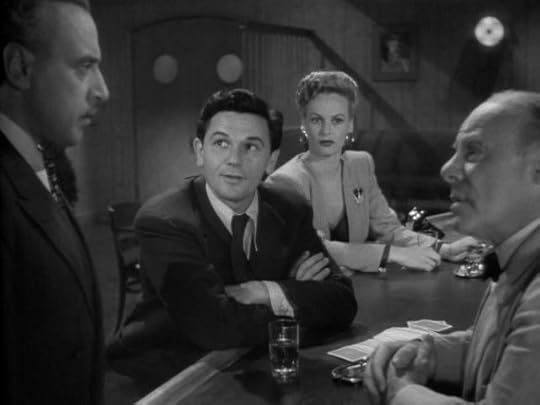
Between Two Worlds (1944) Edward A. Blatt - Ex-Library DVD
Seeking rescue from a WWII London blitz attack, two lovers (Paul Heinreid and Eleanor Parker) attempt to board an ocean liner and don’t make it. Or do they? They appear to be safely on the ship with other passengers, but there’s no visible crew. A good cast (John Garfield, Sydney Greenstreet, Edmund Gwenn, George Tobias, Faye Emerson, George Coulouris, Sara Allgood) make the film interesting, but anyone who’s seen even one Twilight Zone episode (from any era) will know what’s going on. I liked it well enough until the last five minutes, which were unforgivable.
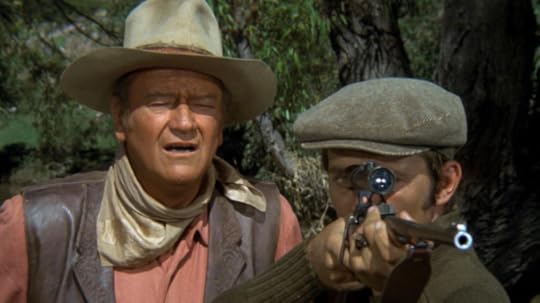
Big Jake (1971) George Sherman - Paramount Blu-ray (2x)
Rescue/revenge story with John Wayne playing an aging cattle man who kicks things into gear by attempting to rescue his kidnapped grandson. The year is 1909, and in case we need any reminders that the times are catching up with Big Jake, the producers provide the audience with ample shots of a motorcycle, a rifle with a scope, and more violence than audiences were used to from a John Wayne film. Too many logistical problems and clichés for me. At least the scenes with Richard Boone are good.
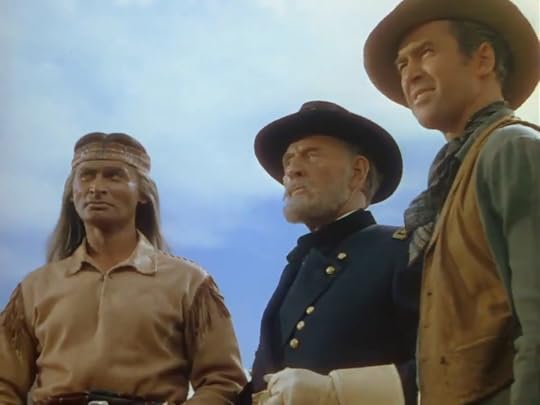
Broken Arrow (1950) Delmer Daves - Kino Lorber Blu-ray
I plan to write more about this Western in the coming days. For right now I’ll say that I admire what the film is trying to do, but the romance subplot is painful.
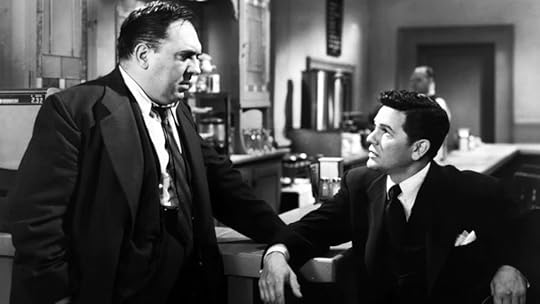
Force of Evil (1948) Abraham Polonsky (3x) Kino Lorber Blu-ray
Hey, two John Garfield movies this week! My third time around, and I like this film better each time. It's got it all: corruption, two brothers pitted against each other, and more. The Imogen Sara Smith audio commentary makes this one a must-own.
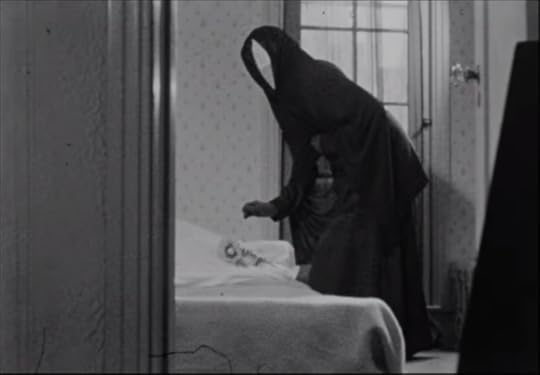
Meshes of the Afternoon (1943) Maya Deren - Criterion Channel
After watching this mesmerizing short film, I am going to have to pick up The Maya Deren Collection Blu-ray from Kino Lorber, no doubt.
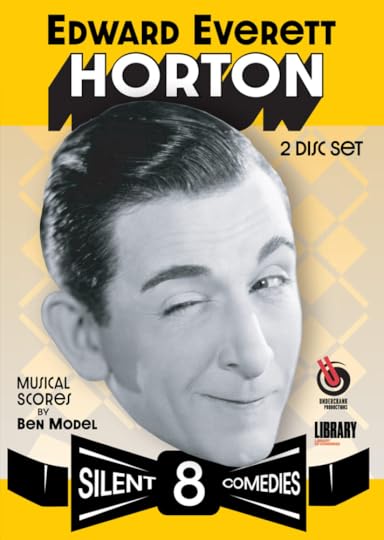
Edward Everett Horton: 8 Silent Comedies (1927-1928) Undercrank Productions DVD
This two-disc DVD set of two-reel comedies is a pure delight. Highly recommended!
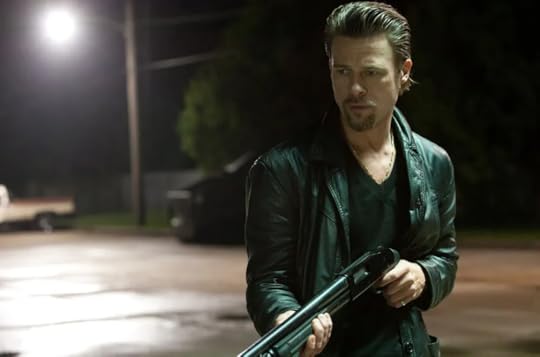
Killing Them Softly (2012) Andrew Dominik - used bookstore Blu-ray
This film is soooooo heavy-handed, which ruins the otherwise great look and feel of the film. If you listen to them, the conversations are (usually) far more important than the violence, and they should've been allowed to do most of the heavy lifting. The Pitt/Jenkins scenes provide a nice comedic element while at the same time reinforce the thematic elements of American business far more than blaring TV and radio reports on the economy. This should've been great.
Now first of all, I’d love to know what you watched last week.
Second, I noticed a definite increase in negativity in my responses to most of these films. What does this say about me? What does it say about all of us when we respond to movies in such a way? I’ll take a look at that next time. Thanks for reading!

If you enjoy my website and would like to support me, you could... well, buy me a cup of coffee! It's a way to contribute whether you enjoy the website or my YouTube channel. Thanks!
September 28, 2023
October 2023 Film Noir New Releases
We all know that October is filled with horror releases, but that doesn't mean there's no film noir to be had during the scary season. I've got a few films and maybe a surprise or two. Thanks for watching!
September 27, 2023
Growing Up with Movies: Frankenstein Must Be Destroyed (1969)
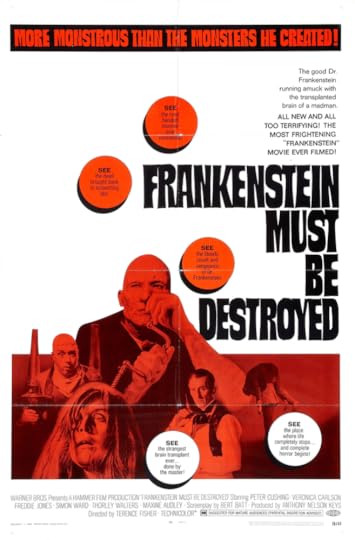
I often like to revisit films I haven’t seen in many years, not only to see if they’ve held up, but also to discover how I’ve held up, particularly in my ongoing development as a moviegoer. In the case of Frankenstein Must Be Destroyed (1969), which I first saw when I was seven, I obviously missed a lot, only seeing it on a surface level.
In fact I wondered if this was one of those movies I “saw” at the Town Theatre in Forest, Mississippi as a kid. I place “saw” in quotes since there were occasional instances of my buddies and me using the movie theater as a place to talk and cut up, especially when the theater manager was not roving the aisles, as was likely the case for this horror film.
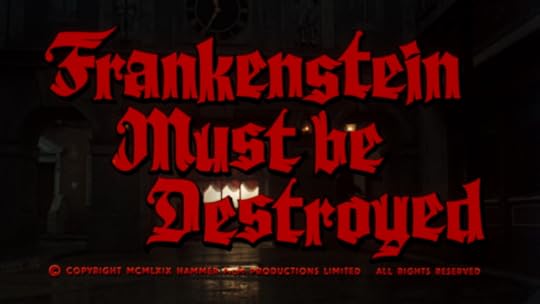
Yet most audiences (even the most distracted seven-year-olds) will pay attention to the beginning of any film, which always holds the promise for something exciting. The use of bright red titles on a black background was nothing new for Hammer films, so while the opening for Frankenstein Must Be Destroyed signaled familiarity, it also set the stage in our minds that some good scares were just around the corner.
We didn’t have long to wait. The murder of a doctor walking the London streets at night isn’t totally depicted onscreen, but a splatter of thick blood on a building wall tells us what we’re in for. Putting two and two together, even young viewers understand that the canister we see in the next scene is the good doctor’s head being carried into an underground laboratory. This lab, filled with beakers and test tubes illuminated with green and red light, places us in another world, separating the vibrant possibilities of scientific discovery from the drab ordinariness of the city’s daily routines, danger and excitement working hand-in-hand.
A thief breaks into the lab and is frightened by a disfigured man, who happens to be none other than Baron Victor Frankenstein (Peter Cushing), still up to his old tricks. Satisfied that the intruder will no doubt continue to run as far away from the lab as possible, Frankenstein gets to work, but not the work he had originally intended. Now that the lab has been discovered, it’s time to find a new location.
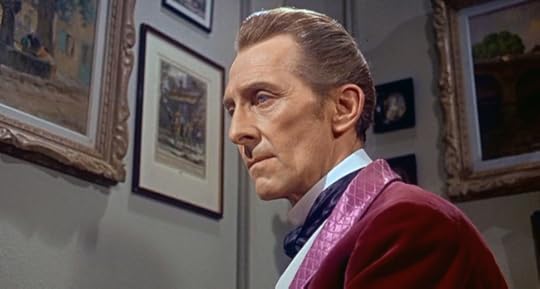
So far, Frankenstein Must Be Destroyed is off to a good start. We’ve got murder, mayhem, mad scientist work going on, and Peter Cushing, a known quantity, especially in Hammer pictures. (This was his 15th movie for Hammer.) But this is not typical Peter Cushing, as we shall see.
Knowing that the intruder probably stopped running at the doors of the police station, and that Police Inspector Frisch (Thorley Walters) is after him, Frankenstein - now calling himself Fenner - rents a room at a boarding house run by Anna Spengler (Veronica Carlson). Listening to a discussion between the other lodgers, Frankenstein discovers that a colleague, Dr. Brandt (George Pravda) is under lock and key at a local asylum. Normally Frankenstein could care less, but he remembers that Brandt had been developing a technique for transplanting brains, which apparently drove Brandt mad. If Frankenstein could just talk with Brandt…
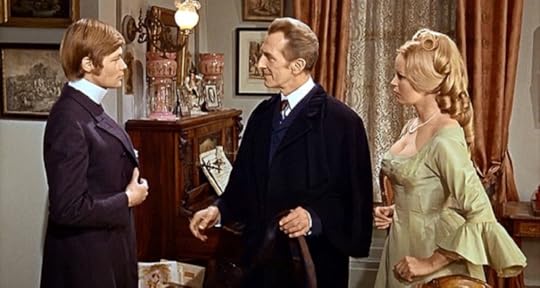
Karl (Simon Ward), Frankenstein (Peter Cushing), Anna (Veronica Carlson)
But Frankenstein needs a connection, and he finds it. Anna’s fiancé Karl (Simon Ward) is a physician at the same asylum where Brandt is being held. When Frankenstein discovers that Karl has been stealing and selling drugs to fund his future mother-in-law’s medical expenses, Frankenstein knows just what to do: blackmail Karl into helping him kidnap Brandt.
I won’t tell you all of what happens next, except that - as usually happens in horror films - something goes wrong. Very wrong, and Frankenstein is forced to change his plans. If you haven’t seen the film, stop reading right now. Go watch the movie and rejoin me.
SPOILERS
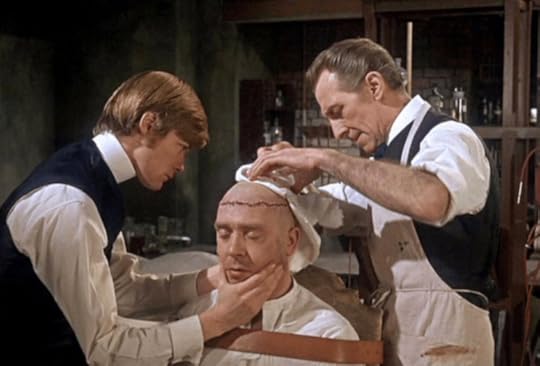
Freddie Jones, receipient of the worst haircut ever
If you’ve seen the film you know that Dr. Brandt suffers a heart attack while Frankenstein and Karl kidnap him from the asylum. Frankenstein can’t afford to have the knowledge locked in Brandt’s brain die with him, so the Baron additionally seizes Dr. Richter (Freddie Jones), who also works at the asylum. If he can just transplant Brandt’s brain into Richter’s body… Of course we’re left with the problem of what to do with Richter’s brain. Toss it in the street? Give it to some kid? Save it for the next movie? No, put it in Brandt’s (dead) body, then dispose of it. (This could’ve gone so wrong in so many comedic ways, which Mel Brooks clearly recognized.)
More immediate concerns cause Frankenstein to alter his plans. Mrs. Brandt (Maxine Audley), who had been asked to no longer visit her husband at the asylum, learns from Frisch that her husband has been kidnapped. During his questioning of the woman, Frisch learns that Brandt, before he went mad, had been corresponding with Frankenstein. And, walking down the street, Mrs. Brandt passes by Frankenstein and something in her brain (Sorry, couldn’t help myself) tells her she’s seen this man before…
Mrs. Brandt’s tracking down Frankenstein results in one of the more interesting moments in the film. After accusing Frankenstein of driving her husband mad, the Baron proves to her that he has, in fact, restored Brandt’s mind, proving it by having his brain (now in the body of Richter) to send signals to his body, raising his hand in response to Mrs. Brandt’s questions.
We don’t know what’s going on in Frankenstein’s mind during this exchange, but he’s such a master of lies and deception, Mrs. Brandt believes him. Everything the Baron tells her seems to be for her and her husband’s good, and he’s so convincing. She even thanks Karl, whose face displays deep regret for being thanked for something so odious to him. Yet as soon as she leaves, Frankenstein announces to Karl and Anna that they’re packing everything up immediately. Once again, he’s forced to relocate.
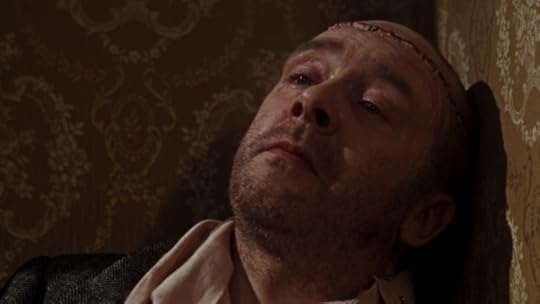
Here’s where things get really interesting. Frankenstein Must Be Destroyed takes a bold step in allowing the creature (Brandt’s brain in Richter’s body) speech and an intelligent mind, both of which he puts to good use. (I don’t know my Frankenstein films well enough to know whether this is the first time such a device has been used since Mary Wollstonecraft Shelley’s original novel, but if so, it’s about time.) In previous films we’ve witnessed a confused creature unsure of his body, the world, and his place in it, desperately making attempts to connect with others, yet always suffering from an inability to communicate freely and clearly. Brandt - intelligent and articulate - is able to do both with respect to his wife, but he’s also intelligent enough to know that any sense of normalcy can never happen. Frankenstein has ruined what was once good in this life, and on a larger scale, what was once good in the world.
This creature not only knows exactly what’s been done to him and why, he also understands that the only way to defeat Frankenstein is through his arrogant pride. Take away the thing he wants the most: the ability to fully transfer brains, thus bringing recognition and glory to himself. Theologically speaking, he’s playing God. Frankenstein really isn’t interested in helping others or advancing the cause of science, but rather promoting himself. Aware of this, Brandt (the creature) knows that destruction is the only way to stop the Baron. Brandt finally gives us a creature that is Frankenstein’s match in every possible way, again, something unique in the Frankenstein canon, yet more in line with the original Mary Shelley novel.
But he is also destroying himself and everything he owns. Thanks to Frankenstein, his relationship to his wife is ruined forever. What, then, does a house matter? What does his life matter when everything that has meaning for him has been ripped from him?
Before we go further, let’s take a closer look at both Frankenstein and Cushing’s performance. Cushing’s Baron Frankenstein here is not only a brilliant scientist, he’s also uncompromisingly driven, arrogant, and odious. We have no sympathy for the character at any point, but Frankenstein eventually passes the point of no return in his corruption, starting with his blackmail of Karl early in the film, his deception of Mrs. Brandt, and especially in raping Anna, a scene which was cut from some versions of the film, restored for the Warner Blu-ray.
Many have cited that the rape scene is unnecessary to the story and should be eliminated (which it was in many cases). Cushing himself was very opposed to the scene as was Carlson, yet Hammer executive James Carreras added the scene, which was not part of the original script, thinking the film needed more sex for American audiences. Carlson, interviewed in 1991 by Tom Johnson and Deborah Del Vecchio and appearing in the book Hammer Films: An Exhaustive Filmography, states,
I couldn’t refuse to do it. Peter was disgusted with the scene, and he didn’t want to do it. Terence Fisher was very understanding, but it was totally embarrassing and humiliating. It gives my character no credence. (p. 310)
I am not suggesting that Carreras was justified filming a scene that was so distasteful and revolting to Carlson and other cast and crew, yet the scene clearly affects Anna’s character throughout the remainder of the film. Without the scene, subsequent moments appear to show her walking in a fog, aimless and clearly not herself with no explanation. None of this makes sense without the rape scene, which has less to do with sex than it does power. If Frankenstein wasn’t content with the power to create life from death (again, playing God), in the frustration of his current situation, he can, with absolutely cruelty, seek to dominate and violate Anna. He will stop at nothing. Ironically, his own creation, Brandt in Richter’s body, will be the instrument of his downfall.
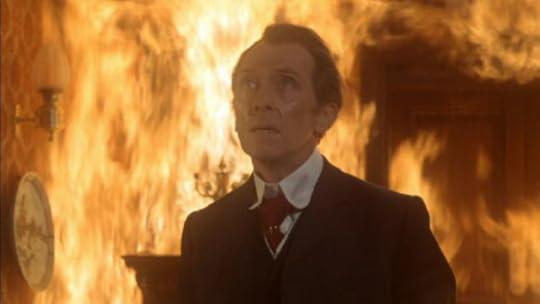
Brandt knows exactly where to strike: at Frankenstein’s pride. The baron cannot imagine his work and legacy going up in flames, but that’s exactly what Brandt does in destroying his own notes as well as his home, creating a legacy of ashes for Frankenstein. Brandt dies, but what does he have left to live for? This climactic scene is powerful, and to be honest, it is the only moment I actually remember from seeing the film as a child. I didn’t understand the significance of Brandt’s choice, yet I knew that the fire which encompassed the entire screen was destroying everything in this poor creature’s life. I knew enough to know that Brandt was a pathetic, miserable creature with no hopes of anything approaching a normal future, and the fact that he was intelligent and able to articulate his thoughts with clarity made him an even more miserable creature.
It also caused me to think of people I knew in my small town who suffered with deformities or were mentally challenged. There was something in Freddie Jones’s performance that conveyed a sorrow for such people, understanding that they were humans like all of us, but different, undeserving of ridicule, scorn, or the worst possible fate, to suffer the indignity of indifference, thus becoming invisible.
Perhaps this line of thought made Cushing’s performance of Frankenstein in this film so repellent. Here’s a man of science and intelligence willing to lie, cheat, steal, and murder, all to bring glory to himself. Add to his crimes the rape of Anna, the blackmail of Karl, and so much more, and we quickly understand the identity of the real monster. Yet Cushing is exceptionally good in this role. I haven’t seen all of his work, but Frankenstein Must Be Destroyed must stand as one of the actor’s finest moments.
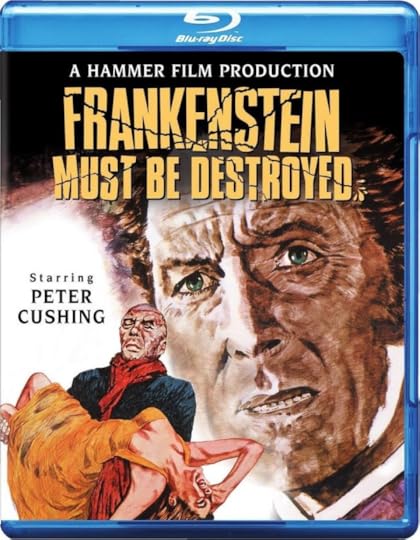
Revisiting the film made me examine our purposes, desires, goals. What or who are they for? Are there parts of science should be off-limits? Which ones? Yet these are fundamental thoughts even a seven-year-old (okay, maybe an older kid) could eventually have brought up. More important, perhaps, is an examination of evil, where it comes from, what it seeks to do, and how, why, and when it departs from good. These are questions that have been asked for centuries. The fact that these questions are asked doesn’t necessarily make Frankenstein Must Be Destroyed a great film, but I believe it’s a good one. And it makes me still ask some of the same questions I asked when I was seven.
September 23, 2023
Can You Relate?
People enjoy things they can identify with: songs, TV shows, novels, and much more, including movies that evoke an experience they’ve had. How often have I heard - or even said - “I just couldn’t relate to that movie.” I frequently talk about this feeling during my library movie presentations, especially when someone tells me they didn’t like a movie because they couldn’t relate to it in any way.
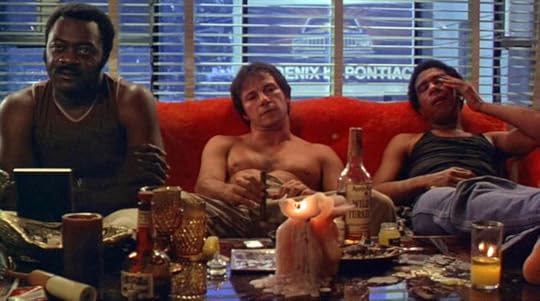
A few years ago I screened Blue Collar (1978) at the library. About 20 minutes into the film, a man stood up from his seat, put on his coat, approached me at the rear of the room and said, “I can’t stay for this. I have no interest in these characters,” and departed. Blue Collar, directed and cowritten by Paul Schrader, follows three friends, all Detroit autoworkers (Richard Pryor, Harvey Keitel, and Yaphet Kotto), all tired of being mistreated and having their needs ignored by their union. They make plans to rob the union, which seems like it would be easy. The robbery actually is easy; the consequences aren’t.
Although he didn’t say so, the man who walked out of the screening was probably not used to the picture’s profanity. He’d probably never rubbed shoulders with a Detroit auto worker, never considered taking something back from his employer that was due him, never thought breaking the law was the answer to his problems. It’s understandable that many people haven’t had that experience. But if we’re not willing to understand what we haven’t experienced, doesn’t that say something about us?
Blue Collar was part of a series I presented called “What Were the ‘70s Trying to Tell Us?” Maybe the movie was trying to tell this man that he should walk a mile or two in someone else’s shoes. We’ve all been mistreated, gypped, scorned, ignored, belittled by someone. If you haven’t, you’ve led a charmed (and probably boring) life.
The degree to which we are willing to listen to someone else’s experience, especially their problems and trials, reveals much about us. If I’m not willing to watch, listen to, and empathize with a certain onscreen character (or a character in a song, story, etc.), I’m probably not going to give a similar person in real life much consideration. The great thing about encountering those characters in a creative work is that it’s not real.
But don’t let yourself off the hook. It is real.
That character the songwriter/screenwriter/novelist created came from somewhere, from some experience, and was probably based on a real person or combination of real people. Maybe the story is how that creator actually dealt with that person or maybe how they wished they’d dealt with them. Or perhaps the story is a rehearsal for how the creator hopes you’ll respond when faced with the real thing. That creator is giving us the tools for dealing with people we might prefer to avoid. They probably aren’t the only tools, but it’s a start.

I recently read Miracle and Wonder: Conversations with Paul Simon (2021) by Malcolm Gladwell, Bruce Headlam, and Paul Simon. Actually I didn’t read it; I listened to it, which is the only way you can access the work, since it contains songs and sound clips. Also, Simon frequently picks up the guitar and sings to demonstrate how he writes songs and what makes them work. If you’ve listened to his music since the Simon and Garfunkel days, you know that Simon’s work is all about experimentation, exploration, and discovery. And although he is frequently allusive in the audiobook, Simon hints that what he’s really after is understanding. Sometimes he’s seeking to understand others. Sometimes he’s seeking to understand himself. Sometimes it’s both.
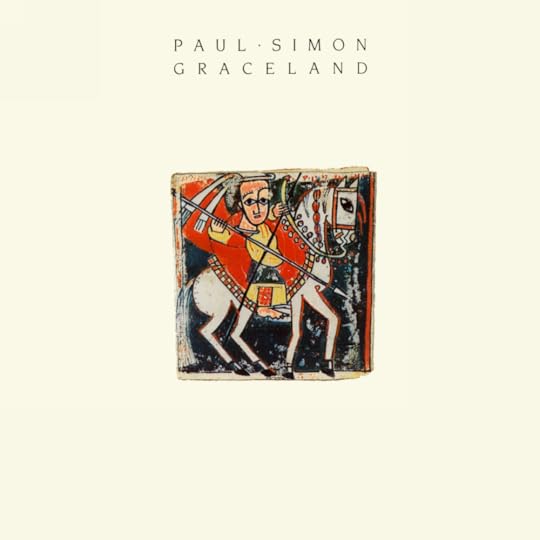
Let’s take a song many people know, “You Can Call Me Al,” from Simon’s Grammy-winning album Graceland (1986). It’s a catchy, fun track that offers an honest look at the song’s protagonist. Look at the third verse:
A man walks down the street
It's a street in a strange world
Maybe it's the third world
Maybe it's his first time around
Doesn't speak the language
He holds no currency
He is a foreign man
He is surrounded by the sound, the sound
Cattle in the marketplace
Scatterings and orphanages
He looks around, around
He sees angels in the architecture
Spinning in infinity
He says, "Amen and Hallelujah!”
The first line could take place anywhere. What could be more generic? “A man walks down the street.” So what? But then, “It’s a street in a strange world,” a place he’s never been before. It doesn’t have to be a world, per se, but a part of town you’ve never visited, perhaps a place you’ve avoided out of fear or a feeling you wouldn’t want to find yourself in that kind of neighborhood, you wouldn’t stoop to that. Like Dylan’s protagonist in “Ballad of a Thin Man,” you know that “something’s happening here, but you don’t know what it is, do you, Mr. Jones?”
What do you do with that? You realize that you’re helpless because you don’t understand. You have no common ground with these people, this culture. You don’t fit in. You’re the foreigner. How do you like that feeling?
He is surrounded by the sound, the sound
Cattle in the marketplace
He can’t escape the unusual, unclassifiable sounds, sounds made with strange, unrecognizable and unpronounceable instruments. Not only that, but with the next line, “cattle in the marketplace,” you can’t help but add in the smells of the place, the aroma of animals, dung, dirt and mud, the stench of food that hasn’t sold and has been sitting out for too long. This man is uncomfortable in these surroundings, and it feels as if these walls are closing in on him.
Scatterings and orphanages
Scatterings. Things or people that once belonged together. Orphanages. Children that once belonged to parents, now separated by distance or death. There’s also the odor of injustice here, overwhelming injustice.
You’re in the middle of this. You’re out of your element. You aren’t cut out for this.
How do you respond? Can you relate?
Although the song’s chorus is based on a humorous case of mistaken identity at a party, this third verse is what Simon faced when he traveled to Africa for the first time in 1985 with the idea of using African music and musicians for his new album. Where does he find solace? He sees angels in the architecture, in the structure and rhythm of African music. He spends time learning, understanding, empathizing.
Amen and Hallelujah.

I am also reading a book called Art and Faith: A Theology of Making by American artist Makoto Fujimura. It looks at creativity in a different way from the audiobook on Paul Simon, but they’re both passionate creators. Fujimura argues that artists - creating any kind of art - should not be content with only the utilitarian function of their art. Art doesn’t have to be functional, it doesn’t have to do anything. But Fujimura shows that art and creativity drive us to deeper thoughts, reflections, and a desire to become more aware of ourselves and others, coming to spiritual understanding through the lens of art. Martin Scorsese says of the book, “Makoto Fujimura’s art and writings have been a true inspiration to me. In this luminous book, he addresses the question of art and faith and their reconciliation with a quiet and moving eloquence.”
As I mentioned a few days ago, art matters. Art goes beyond consumerism, beyond profit and making money. Art is for the soul. Art is also for the future. It can bring us together, it can bring us to tears, and it can bring us tremendous joy.
These are the things I want to explore. Can you relate?
September 17, 2023
Saying Goodbye: Thomas Wenger Jr.
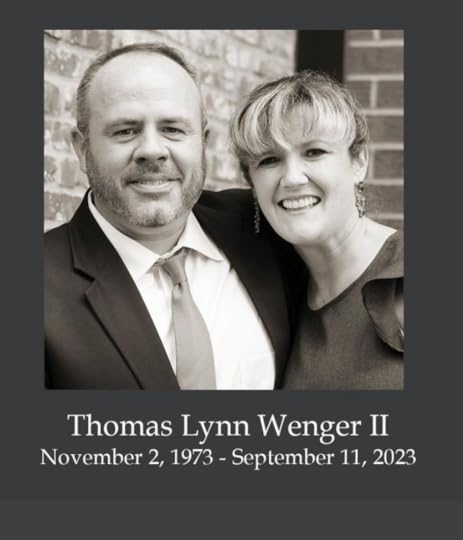
I have seen so many wonderful tributes to my friend and pastor Tom Wenger Jr. over the past week I didn’t think I could add anything to what others have already said so powerfully. Plus this week has allowed little time for me to adequately put together anything coherent (and I can’t guarantee that this will be). This week has been a whirlwind of emotions.
I feel I have little to say about Tom, at least compared to others. I knew him for only about seven years, a fraction of the time many in our church have known him. I don’t even have a picture of the two of us together. Yet in many ways I could speak volumes.
Cindy and I left our former church in 2017, joining Trinity Presbyterian Church, a church plant which sprang from Annapolis EP Church in 2014. I had heard Tom’s father, Tom Wenger Sr., preach a few times here and there. Cindy and I had also heard Tom Jr. once or twice, commenting to each other, “Man, that guy really talks fast!” But I could tell even from that first encounter that Tom had a heart for people and a passion for the gospel. (Tom later told he that he often felt he had so much to say in such a limited time, he had to rush to get it all out.)
Tom was so many things. He was absolutely genuine in his care and concern for others, was totally selfless in his dealings with people, and probably the most unselfish person I’ve ever met. Whenever we got together for lunch, he always wanted to know what was on my heart, on my mind. I usually came to him with a bunch of theological questions, especially about books. “What’s the best book on the Holy Spirit? Where do I start in reading the works of John Owen? What’s the best translation of ________________?”
Tom would usually answer quickly, or say, “I’ll send you a link.” And then he’d ask me, “Who’s your favorite crime fiction writer? What’s your favorite Coen brothers movie? Have you seen __________?” We spent so many hours talking about books, movies, and music. Over the years I’ve met several pastors with a fair amount of musical knowledge, but Tom blew them all away. I’ve got three music degrees, and Tom would often bring up composers and compositions I’d never heard of. He was amazing.

Resources from Tom's Summer of Psalms sermon series
A few of you have been impressed with my posts featuring stacks of books I’ve read each month, but I can’t hold a candle to Tom. He always told me that if I ever left the public library to please try to get a job at the Peabody Library so he could have an “in” there! Tom was so well-read in so many ways.
This weekend has been filled with memories of Tom. I have seen over 1,000 people gather together to mourn his passing and celebrate his life. With each person I wanted to stop and say, “Tell me something you remember about Tom.” He was truly loved by many, many people. He truly loved many, many people. To say we’ll all miss him would be an incredible understatement. Thank you, Tom, for serving your Lord so faithfully and for having a loving heart for every person you met, including me.
Art Matters

For the past few years, I’ve realized that too much of my reading life consisted of, well… junk. I normally make a point of abandoning any book (movie, music, etc.) that’s not working for me, anything I consider a waste of time. But often when I finish a work, I’ll think, “What was the point? What can I take away from this?”
Sometimes you just want to be entertained, and that’s fine. But I frequently found myself wanting something deeper. I started dabbling in the St. John’s College freshman reading list, trying not to get overwhelmed. (I’ve read 10 of those works during the past two years.) I began to read slowly, realizing there’s a lot in these books. My individual reading lacks what St. John’s offers in its seminars, and if you’re not familiar with the school and their curriculum, I encourage you to read more about it here and, if you’d like a deeper dive, here. I’m too old, too ill-prepared to pass the entrance requirements, and unable to afford the school, but anyone can read the books anytime. You’d save a lot of money, but you’d also be on your own.
Although it’s not the same method used at St. John’s, I am currently enjoying a journey through Dante’s The Divine Comedy, largely through a project called 100 Days of Dante. Although it (re)started in August, you can begin the project at any time at your own pace. You’re reading one canto at a time, then watching a short video (usually under 10 minutes) of scholars discussing the canto you’ve just read. The videos aren’t heavily academic, so don’t let any highbrow anxieties keep you from enjoying the work and the videos.
Just yesterday I watched a video on Canto 10 of Dante’s Inferno, the first book in The Divine Comedy. In this video, Dr. Jonathan Reimer (John H. Van Gorden Assistant Professor of History, Templeton Honors College, Eastern University) comments,
Hell is not, as Jean-Paul Sartre claimed, “other people.” On the contrary, it’s one’s field of vision collapsing to the point that all you can see is yourself.
I could spend hours contemplating that statement and its implications. All of the videos (at least so far) include such food for thought. That’s why Dante has been read and studied for centuries.
Classics such as The Divine Comedy, the works on the St. John’s reading lists, and more are so important. There’s a reason why they still hold up. They have so much to tell us. Yet that doesn’t mean you can’t keep reading popular works. I still do. But I have a problem with schools, libraries, and other institutions that remove classics from their shelves, either because they don’t feel those works are relevant or because they consider them problematic. Maybe they are problematic. If so, let’s have some conversations about them as we read them. Let’s discuss those problems. But let’s not be guilty of banning books. Freedom of expression is for everyone, even writers who lived in the ancient world.
I’m also currently reading a book called Art and Faith: A Theology of Making by Makoto Fujimura, which includes this blurb from the book’s jacket:
Makoto Fujimura’s art and writings have been a true inspiration to me. In this luminous book, he addresses the question of art and faith and their reconciliation with a quiet and moving eloquence. - Martin Scorsese
In his book, Fujimura discusses the importance of all the arts, not only art made by Christians, but by everyone:
As Christians, we can begin to sup on the feast to come, even though our vision of it is limited on this side of eternity. The arts - even as done by nonbelievers - celebrate this feast to come. Examples such as Isak Dinesen’s story “Babette’s Feast,” Ernest Hemingway’s A Moveable Feast, and Oliver Messiaen’s Quartet for the End of Time all point to the feast, even as they depict fissures of trauma in the twentieth century. These artists remind us that “a great artist…is never poor” (as Babette states) and that we need music and theater not just for entertainment, but as a proven way to survive our traumas, even in the most severe trials, such as the Nazi concentration camps. Art literally feeds us through beauty in the hardest, darkest hours. (p. 34)
Classic works in any field can instruct, move, inspire, and more. They can also help us build community, realizing when talking to others who enjoy the same work with the same passion, that we’re not alone. To borrow from the famous C.S. Lewis quote, those moments can cause us to look at another person and say, “What! You too? I thought I was the only one.”
I encourage you to delve into art, literature, film, music, dance, and more. Art matters. Let’s explore it and talk about it.
September 15, 2023
Where You'll Find Me: Noir City Magazine #38
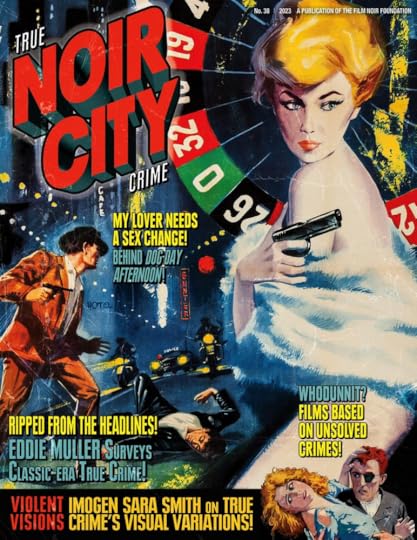
I am beyond delighted to announce that I have an article in the upcoming issue of Noir City Magazine, this issue’s theme being true crime.
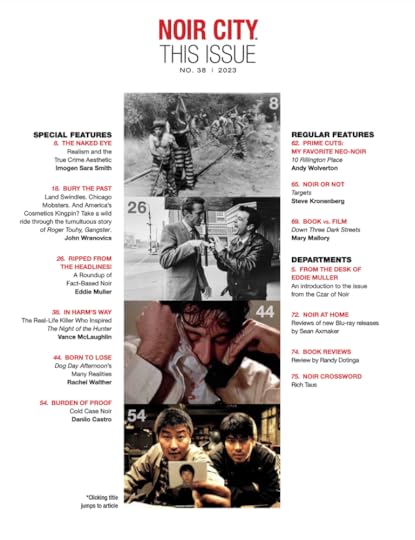
It’s a huge honor to be a part of the magazine, especially sharing space with such incredible writers listed on the “This Issue” page and to appear in a publication with such superb design work from Michael Kronenberg. It truly is a dream-come-true.
You can get the eMagazine every four months by making a donation to the Film Noir Foundation of $20 or more. The print edition is available through Amazon.
September 13, 2023
2023 Summer Reading Challenge: Showdown (1980) John H. Lenihan
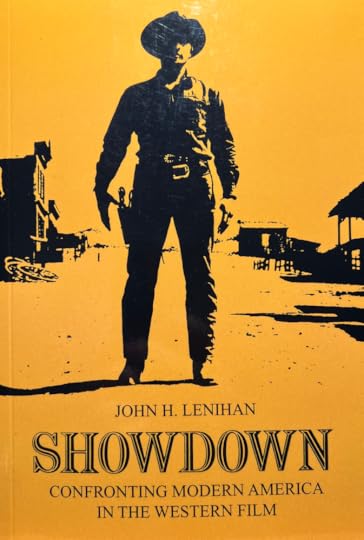
Showdown: Confronting Modern America in the Western Film (1980) John H. Lenihan
University of Illinois Press
Paperback, 214 pages
Includes acknowledgments, introduction, bibliography of films (1939-1978), bibliography of printed works and interviews, index, and photos
ISBN 978-0-252012549
Right up front Lenihan states that his purpose in writing Showdown is “to demonstrate its (the Western’s) relation to major political, intellectual, and social issues and trends since World War II and, in turn, to suggest some of the assumptions, concerns, and attitudes of the society that has rendered this genre so popular.”
If that sounds a little too academic, it’s really not. There’s often something important to be learned from Westerns, and even the people watching them during their heyday (generally the 1940s and ‘50s) knew what they liked and what they didn’t. Why they did or didn’t like them may have had something to do with the politics and/or worldview of the film as well as those of the viewer.
The Western was (and remains; it’s not dead) a genre that celebrates resolve, strength of character, and freedom. Audiences can look at those films in admiration of their heroes and their fortitude. Most of us don’t want violence to have a place in our society, but we must recognize that it took violence to settle the frontier. The question is “Where does the frontier end?” And by implication we might further ask, “Where do our values end?”
Lenihan looks at several films that are not only fine examples of entertainment, but also speak to the problems we as a nation were trying to solve at the time: the Korean War, the Cold War, and the Vietnam War. In what ways does a Western’s protagonist represent or trample the needs and values of our country? What about when those needs and values are disputed or divided? Is High Noon (1952) about a man’s courage or a town’s failings? Do Rio Grande (1950) and Only the Valiant (1951) seem to advocate for tolerating or destroying assailants? Do Arrowhead (1953) and Drum Beat (1954) appear to look upon their humanitarian characters with contempt? The Command (1954) features a physician (Guy Madison) forced to take lives rather than heal them. How do we deal with that? Westerns often present no easy answers.
Showdown further examines Westerns with chapters on racial attitudes, postwar alienation, society in the 1950s (complacent or plaintive?), and antiestablishment Westerns. Published in 1980, potential readers may think the book (and, by association, the Western itself) too dated with nothing to say about the times we live in now. Yet part of the book’s strength lies in its closeness to the the eras it examines. The reactions of audiences to the films discussed was not that far removed from the book’s publication. Remember that the book appeared just five years after the Vietnam War. While that short amount of time may not give us much room to reflect, it also touches on nerves that were still raw.
Showdown is at its strongest when Lenihan examines the 1950s, particularly looking at films that weren’t that well received when they were released. One such film, The Gunfighter (1950), opened the doors for other Westerns examining the dark side of individualism and justice. Veteran gunfighter Jimmy Ringo (Gregory Peck) has a target on his back every day of his life, confronted by ambitious wannabes, when all he really wants to do is to reconnect with his family. How do we live in such a community that not only allows for but promotes such constant one-upmanship?
Other films examine the connection between the hero and the community. If the hero needs redeeming, does the community need it as well? When does conformity become dangerous? What if a town is unworthy of its hero? That last question is just one of many addressed by High Noon (1952), which receives significant attention in the book.
In many ways, Showdown is a very brief overview of its subtitle: Confronting Modern America in the Western Film. With only 176 pages of text, Lenihan does not have enough space to explore these films or their themes in great detail, yet that was also not his intention. Although the book was published over 40 years ago, we are still confronting many of its issues, but doing so from a greater distance. There’s certainly value in reading Showdown, but the discussion clearly cannot stop here, not with so many excellent Westerns (large-screen and small) made since 1980 available now. Yet Showdown gives Western fans plenty to chew on.

This review is part of the 2023 Summer Reading Classic Film Book Challenge. You can (and should!) sign up here and be a part of the challenge, telling others about the classic film books you're reading, and getting suggestions for your own reading. Enjoy!
September 10, 2023
What I'm Watching - Sept. 3-9, 2023
With several projects going on, I thought it would be a nice break to give a quick overview of what I watched during the past week. (And please share what you watched.)
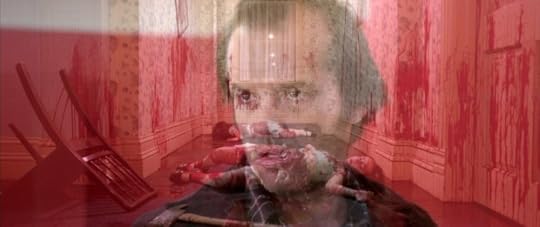
Room 237 (doc. 2021) Rodney Ascher - Library DVD
Full confession: I know it's horror film blasphemy, but I’ve never been a huge fan of Stanley Kubrick’s The Shining (1980). Yet perhaps I will change my mind after viewing Room 237, a documentary not so much on the making of the film, but rather the hidden meanings and (conspiracy) theories behind the work. I’m not on board with all of the documentary’s implications, but I think it will help me better appreciate my next viewing of Kubrick’s take on the Stephen King novel. From what I’ve read, the real value in watching Room 237 comes from listening to the Kevin McLeod audio commentary.
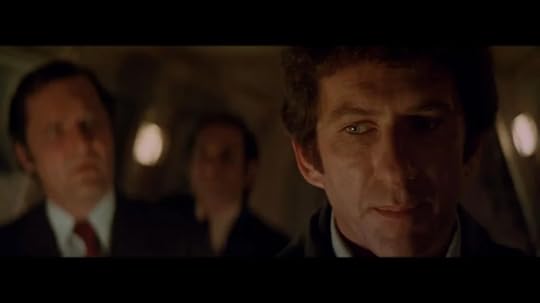
Fear is the Key (1972) Michael Tuchner (2x) - Criterion Channel (‘70s Car Movies)
Although the Criterion Channel has this revenge story categorized as a ‘70s car movie (which it is), I best remember Fear is the Key as an underwater movie. Although the submerged element only lasts about 10 or 15 minutes, that was what caught my attention as a 10-year-old moviegoer back in the day. My youthful self would not have considered the car chases and unfolding of the plot as ridiculous, but that’s pretty much how I see the film now, although I did enjoy it somewhat for what it is.
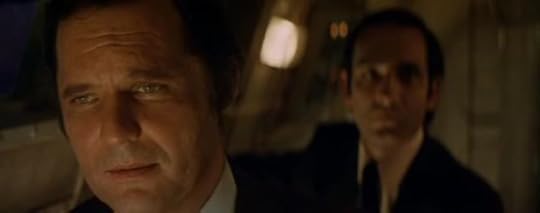
The film also stars Ben Kingsley in his film debut and Dean Wormer (John Vernon) himself! No double secret probation here…
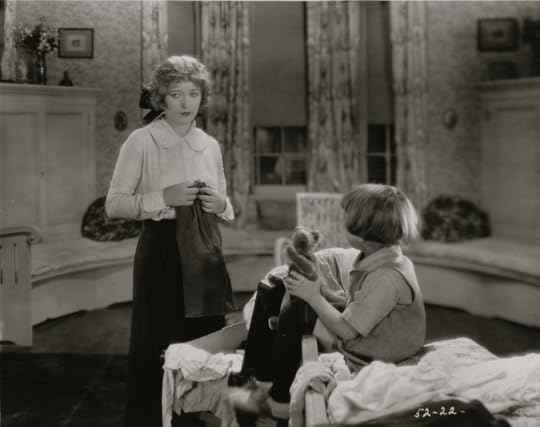
Zander the Great (1925) George W. Hill - Undercrank Productions Blu-ray
Before viewing Zander the Great, I had only seen one other Marion Davies movie, The Patsy (1928), which I enjoyed very much. I now want to read Lara Gabrielle’s book Captain of Her Soul: The Life of Marion Davies and see more of Davies’s films. I was captivated by Davies in her role as Mamie, a girl who escapes abuse at an orphanage finding solace and happiness in living with Mrs. Caldwell (Hedda Hopper), a kind woman with a young son named Zander. Yet Mamie and Zander are forced to flee due to circumstances beyond their control, winding up trapped in Arizona with a band of outlaws. Both the film and Davies are charming.
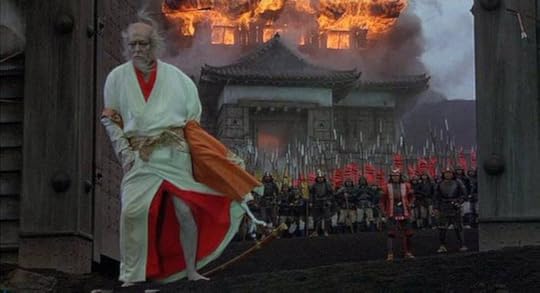
Ran (1985) Akira Kurosawa - Studio Canal Blu-ray (Region B)
Kurosawa’s take on Shakespeare’s King Lear is absolutely brilliant. Why did I wait so long to watch this?
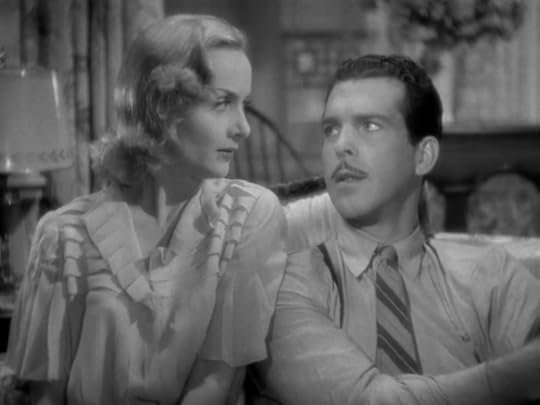
True Confession (1937) Wesley Ruggles - Universal Hollywood Icons: Carole Lombard DVD (also includes Hands Across the Table, Love Before Breakfast, and My Man Godfrey)
When Kenneth Bartlett (Fred MacMurray) isn’t making enough money as a lawyer, his wife Helen (Carole Lombard) decides to take a job as a secretary, despite the fact that she can’t type or take dictation. When her brand new employer is murdered, things go off the rails for Helen and Kenneth, and maybe the audience, too. Although the cast is wonderful and Lombard is giving it her all, the script is inconsistent as is the pacing. Still enjoyable.
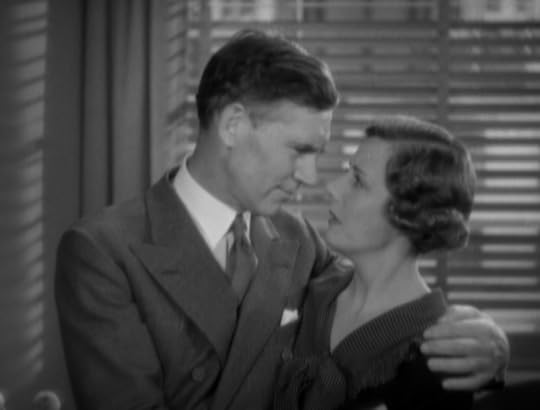
Ann Vickers (1933) - John Cromwell - Warner Archive DVD
I often complain about movies that are too long, but here's one that would've benefited from an extended running time. Irene Dunne plays Ann, a young woman dedicated to social work but finds herself falling for the wrong men leading to controversy. Startling for its time, Ann Vickers is a film Pre-Code fans should not miss. Director John Cromwell makes some interesting directorial decisions here and would return to a prison setting in 1950 for Caged, although that film has far more prison sequences than this one. Ann Vickers is definitely worth a look.
The Outsider (TV 2020) Library DVD
I read the Stephen King novel last month and am so far only two episodes into the miniseries, but right now my reactions are mixed. Check back with me next week.
So let me know what you watched last week - good, bad, or take-it-or-leave-it. Everyone have a great week!


