David Pilling's Blog, page 72
January 20, 2015
The Best Weapon
A few years ago I co-wrote a novel with my good friend (and then work colleague) Martin Bolton. In a change of gear from my usual historical meanderings, it was a fantasy tale roughly in the traditional style of Tolkien/George RR Martin etc, but with a few twists. It was called THE BEST WEAPON and published by Musa Publishing, garnering a few nice reviews and spawning a series of mini-sequels.
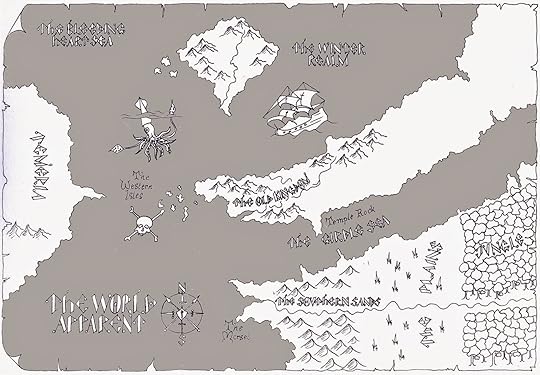
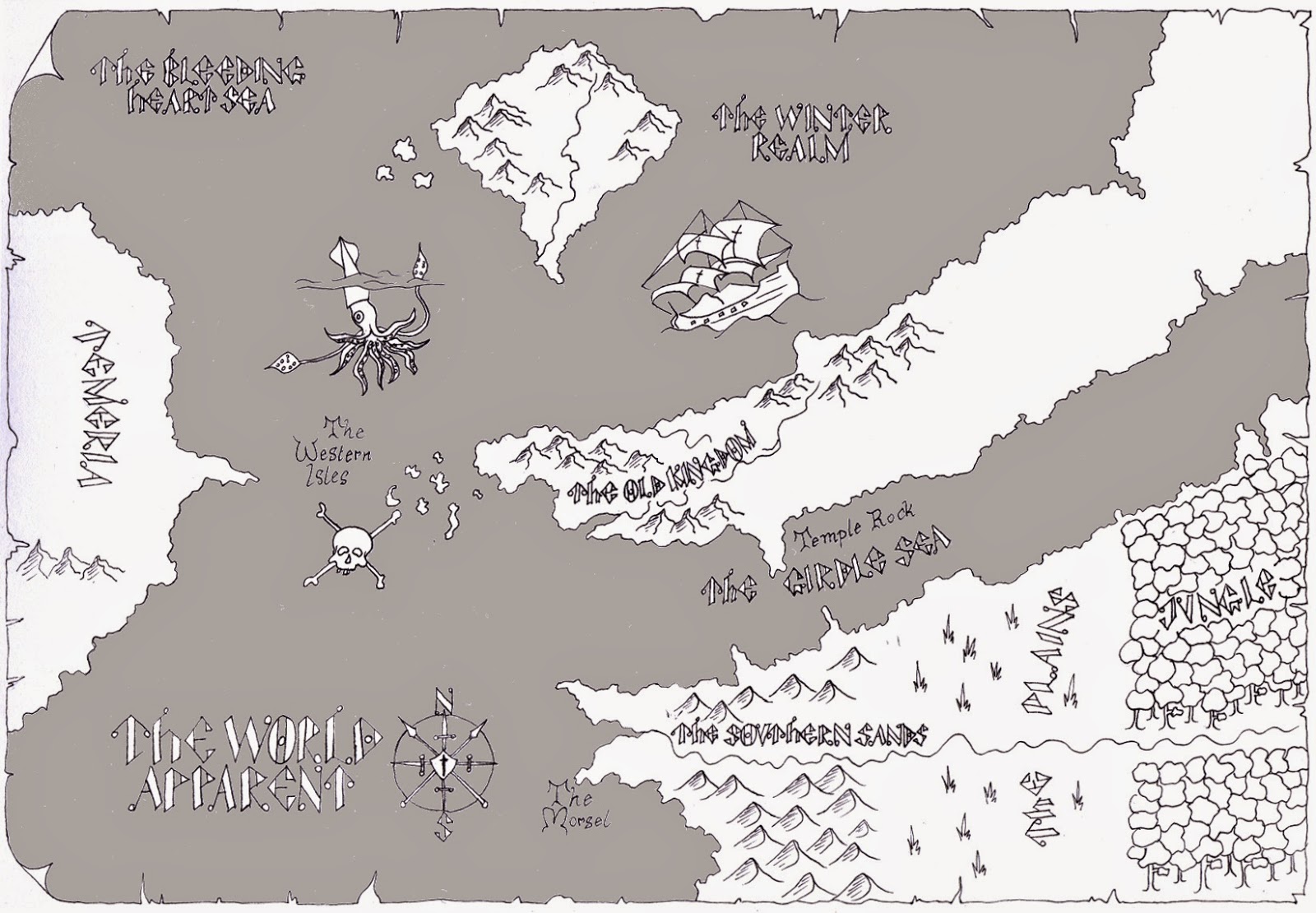
Our contract with Musa has now expired, so we are re-releasing the book under our own steam via Amazon, and have plans to compile and release the sequel (provisionally titled SORROW) as a single volume. The story takes place in a made-up universe named The World Apparent, a physical dimension much like our own world, but one that may or may not exist entirely inside the heads of gods and demons. Below is a map of the world as Martin, a skilled artist, recently drew it.
The Best Weapon focuses on the trials of two young men, Fulk the No Man's Son, and Naiyar, a teenager raised in the steamy jungles of the distant Southlands. While the world threatens to collapse around them, they are drawn together by forces beyond their control or understanding...
THE BEST WEAPON is now available in paperback and for pre-order on Kindle, with a release date for the latter of 19th February. Below is the link, with the shiny new book cover, to the Kindle edition on Amazon, along with some reviews of the previous edition kept for reference.
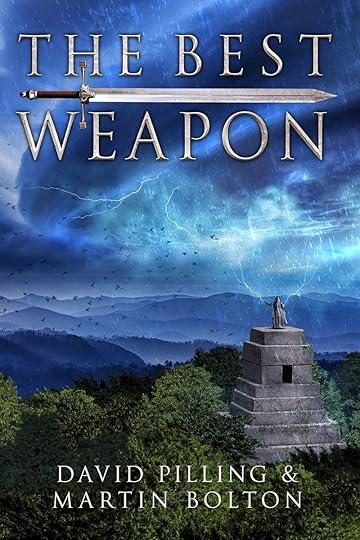
The Best Weapon - Pre-Order on Amazon.com
Our contract with Musa has now expired, so we are re-releasing the book under our own steam via Amazon, and have plans to compile and release the sequel (provisionally titled SORROW) as a single volume. The story takes place in a made-up universe named The World Apparent, a physical dimension much like our own world, but one that may or may not exist entirely inside the heads of gods and demons. Below is a map of the world as Martin, a skilled artist, recently drew it.
The Best Weapon focuses on the trials of two young men, Fulk the No Man's Son, and Naiyar, a teenager raised in the steamy jungles of the distant Southlands. While the world threatens to collapse around them, they are drawn together by forces beyond their control or understanding...
THE BEST WEAPON is now available in paperback and for pre-order on Kindle, with a release date for the latter of 19th February. Below is the link, with the shiny new book cover, to the Kindle edition on Amazon, along with some reviews of the previous edition kept for reference.
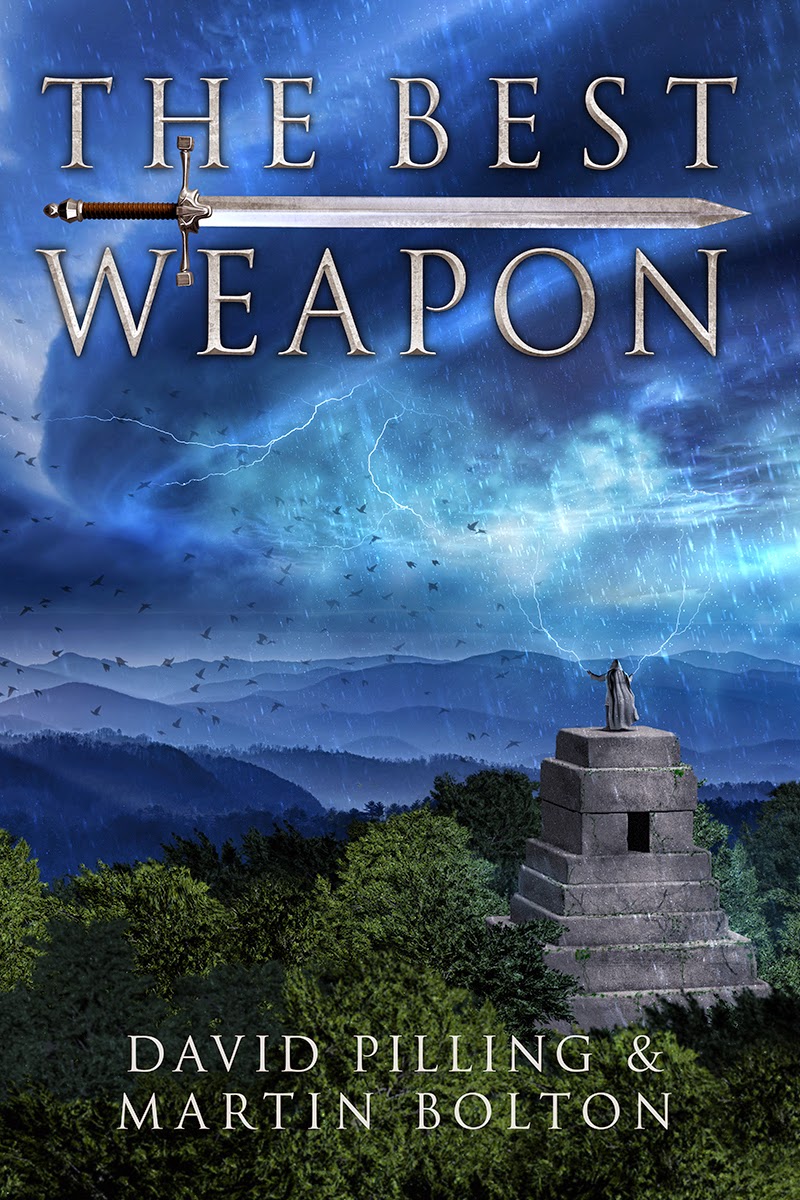
The Best Weapon - Pre-Order on Amazon.com


January 12, 2015
Who gets to meet Robin...?
...and the answer is...
...Alison Bahmuller!
With thanks to everyone who entered their names. A free Kindle edition of the novella, The King's Pardon, Part IV in my Robin Hood series, will be winging its way to Alison just as soon as its ready! I'm currently about a quarter of the way through it, and with luck and a following wind Robin should be springing back into action next month.
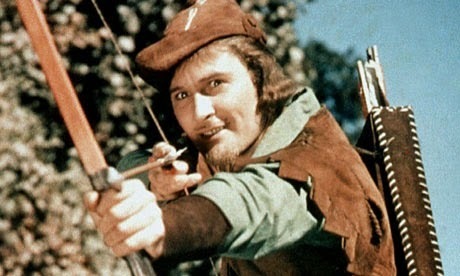 Alison, say hello to RobinApologies to all for my silence over the Christmas and New Year period - I was busy with family 'stuff', as many people were during the festive season, and suffered another loss of my internet connection: that's the price for living out in the wilds of West Wales!
I have lots of plans for 2015, including the re-release of The Best Weapon, the fantasy novel I co-wrote with my good friend Martin Bolton, the rest of The White Hawk series, and a (very) long-delayed sequel of sorts to The Half-Hanged Man...
Happy 2015 everyone!
...Alison Bahmuller!
With thanks to everyone who entered their names. A free Kindle edition of the novella, The King's Pardon, Part IV in my Robin Hood series, will be winging its way to Alison just as soon as its ready! I'm currently about a quarter of the way through it, and with luck and a following wind Robin should be springing back into action next month.
 Alison, say hello to RobinApologies to all for my silence over the Christmas and New Year period - I was busy with family 'stuff', as many people were during the festive season, and suffered another loss of my internet connection: that's the price for living out in the wilds of West Wales!
I have lots of plans for 2015, including the re-release of The Best Weapon, the fantasy novel I co-wrote with my good friend Martin Bolton, the rest of The White Hawk series, and a (very) long-delayed sequel of sorts to The Half-Hanged Man...
Happy 2015 everyone!
December 16, 2014
Robin Hood IV
I've had a few queries lately about my Robin Hood series, and when the next installment is due. I've been busy with other projects recently, but will soon be starting work on Part IV of the series, provisionally titled Robin Hood (IV): The King's Pardon.
I've also decided to offer readers a (small) part in the story - just leave a comment under this post and you get to appear as a character! No name is too bizarre, I'll fit you in somewhere :)
You also win a free copy of the book when it's ready: paperback or Kindle, it's your choice.
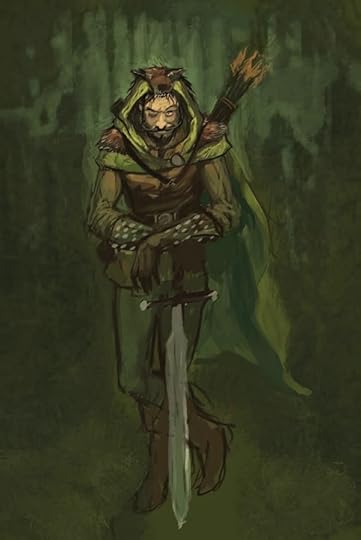 Leave a comment, and get to meet this man...I'll choose a winner after Christmas to join The Hooded Man in his next adventure - and in the meantime, happy holidays!
I've also decided to offer readers a (small) part in the story - just leave a comment under this post and you get to appear as a character! No name is too bizarre, I'll fit you in somewhere :)
You also win a free copy of the book when it's ready: paperback or Kindle, it's your choice.
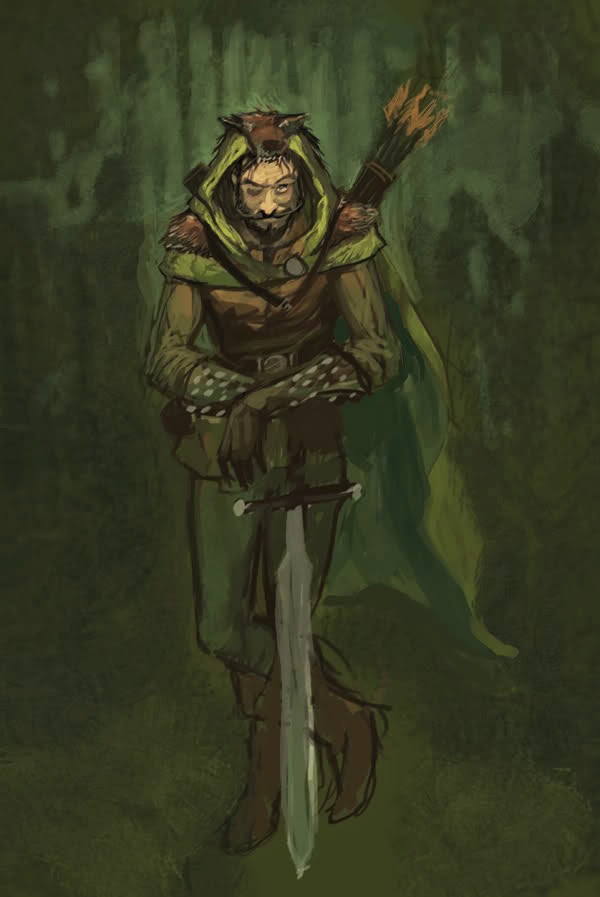 Leave a comment, and get to meet this man...I'll choose a winner after Christmas to join The Hooded Man in his next adventure - and in the meantime, happy holidays!
December 1, 2014
Folville's Law reboot
The very first novel I had published with Musa back in the autumn of 2011 - how long ago it seems now - has just been returned to my hot little hands after the contract expired. I've decided to repackage and re-release the mini-series - as I'm in the process of doing with The White Hawk - as two complete novels, instead of one novel and a series of episodic sequels.
Below is the spanking new cover, as ever designed by the grand folks at MoreVisual, the blurb as a reminder of the plot, and a link to the new edition on Amazon. I also have some ideas for book prize competitions in the pipeline. Sir John Swale rides again!
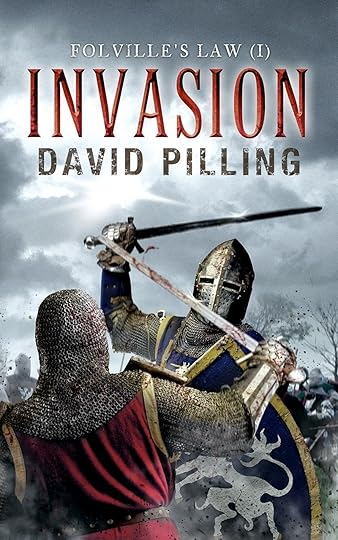
England in 1326 stands on the brink of civil war. Due to the incompetence of Edward II's government, the north is virtually overrun by the Scots, while an invasion fleet is massing across the channel, led by Edward's estranged queen, Isabella, the 'She-Wolf of France'.
The first book in the Folville's Law series follows the adventures of Sir John Swale, knight of Cumberland, as he investigates a murder that threatens to bring disaster to Edward's failing kingdom. Along the way he clashes with Eustace Folville and James Coterel, two of the most notorious and brutal outlaws in England.
As the death toll mounts, it remains to be seen who will survive and who will perish in the savage game of war and politics.
'Folville's Law (I): Invasion' is a new edition of the first part of the John Swale Chronicles.
Folville's Law (I): Invasion on Amazon
Below is the spanking new cover, as ever designed by the grand folks at MoreVisual, the blurb as a reminder of the plot, and a link to the new edition on Amazon. I also have some ideas for book prize competitions in the pipeline. Sir John Swale rides again!
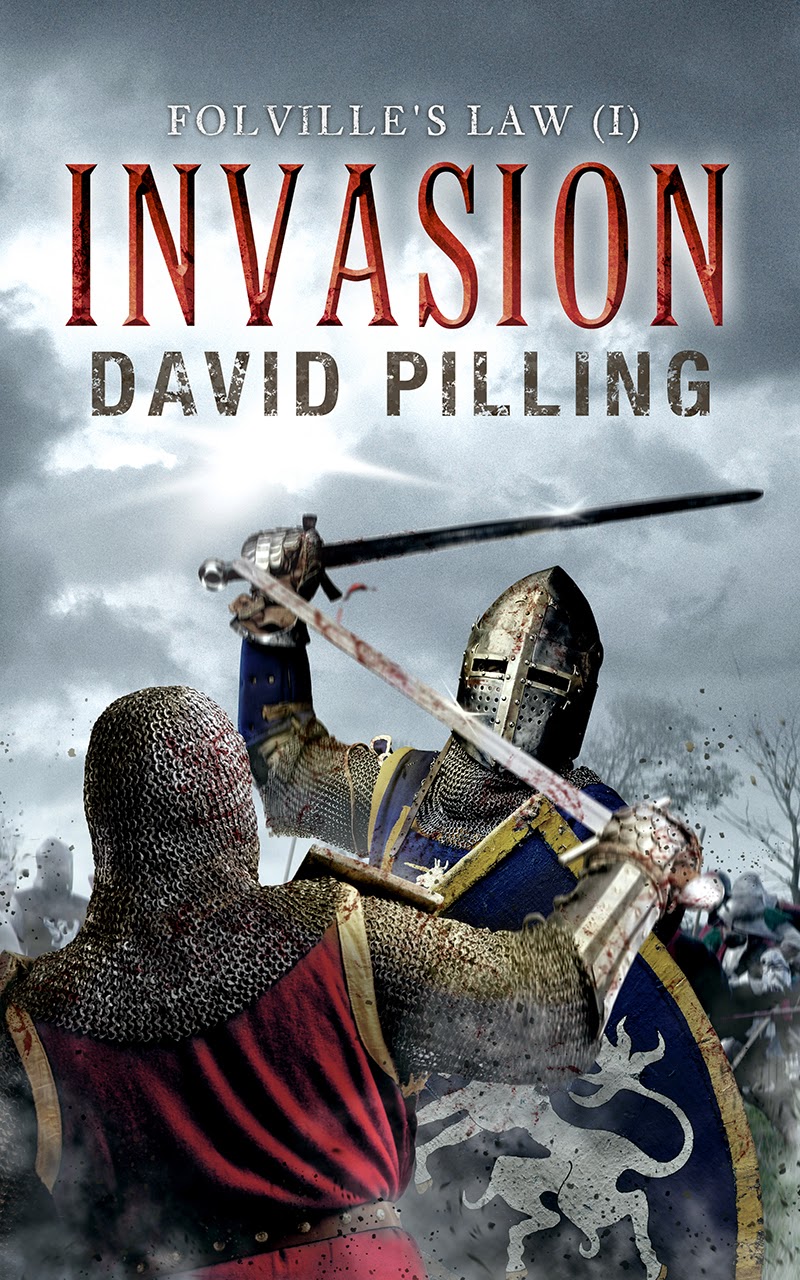
England in 1326 stands on the brink of civil war. Due to the incompetence of Edward II's government, the north is virtually overrun by the Scots, while an invasion fleet is massing across the channel, led by Edward's estranged queen, Isabella, the 'She-Wolf of France'.
The first book in the Folville's Law series follows the adventures of Sir John Swale, knight of Cumberland, as he investigates a murder that threatens to bring disaster to Edward's failing kingdom. Along the way he clashes with Eustace Folville and James Coterel, two of the most notorious and brutal outlaws in England.
As the death toll mounts, it remains to be seen who will survive and who will perish in the savage game of war and politics.
'Folville's Law (I): Invasion' is a new edition of the first part of the John Swale Chronicles.
Folville's Law (I): Invasion on Amazon
November 14, 2014
Leader of Battles (III) - Gwenhwyfar
"Arthur said, 'Though you do not reside here, chieftain, you shall have the gift your mouth and tongue shall name, as far as the wind dries, as far as the rain soaks, as far as the sun reaches, as far as the sea stretches, as far as the earth extends, except my ship and my mantle, and Caledfwlch my sword, and Rhongymiad my spear, and Wynebgwrthucher my spear, and Carnwennan my dagger, and Gwenhwyfar my wife..."
So said Arthur to Culhwch in the medieval Welsh tale Culhwch ac Olwen. His passing reference to Gwenhwyfar (who he appears to rank below his weapons in terms of value) is reckoned to be the earliest known reference to his wife, better-known from later stories as Guinevere, his adulterous queen who brings about the ruin of Camelot through her affair with Sir Lancelot.
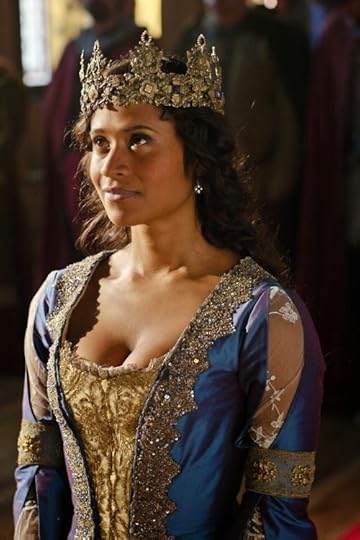
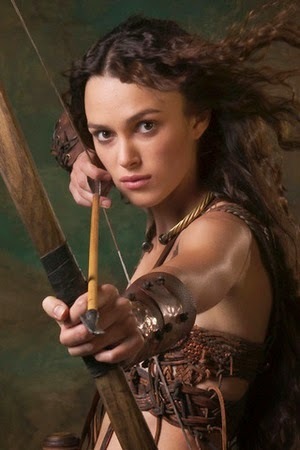
Guinevere should be familiar to most from any number of recent films and novels. Depictions of her vary wildly, from Kiera Knightley's, erm, interesting turn as a Pictish warrior princess with a Sloane accent and a leather fetish costume in 2004's King Arthur, to Angel Coulby's more decorous Gwen in the BBC Series Merlin: Coulby was also the first black actress to play the role.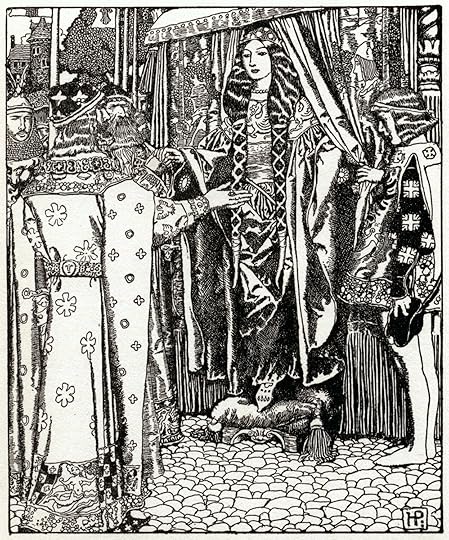 Howard Pyle illustration of Arthur and Guinevere
Gwenhwyfar - with the original Welsh spelling intact - is the central character of Part III of my Leader of Battles series. Parts I and II were dominated by male figures, Ambrosius and Artorius, and I wanted to do something different with the third book. I also wanted to try something different with the character of Gwenhwyfar, drawing on the older Welsh tales of her background and upbringing rather than the well-known medieval French/Anglo traditions.
This was easier said than done, since the Welsh traditions (as usual) are both fragmentary and contradictory. In one of the Welsh Triads concerning Arthur, there are no less than three separate Gwenhwyfars, all of them married to Arthur. Two other Triads deal with only one Gwenhwyfar, but mention a sister, Gwenhwyfach. The sisters argue, and their dispute causes the fateful Battle of Camlann, where Arthur and his war-band perish: Triad 53 talks of Gwenhwyfach slapping Gwenhwyfar, and this being one of the 'Three Harmful Blows of the Island of Britain', since it leads to Camlann. Triad 54, on the other hand, talks of the villain Medraut (the original Mordred) breaking into Arthur's court at Celliwig and dragging Gwenhwyfar from her chair. This insult to Arthur's wife and dignity leads to the strife of Camlann.
 Angel Coulby as Gwen in Merlin
 Keira Knightly as Xena...I mean Guinevere
On the face of it, all these tales would appear to stem from entirely different traditions. None of them mention Lancelot, a character invented and dumped into the story by later French romancers. However, even in these early tales there is a suggestion that Gwenhwyfar was unfaithful to her husband. Caradoc of Llancafarn writes of her being abducted (or eloping with) Melwas, a prince of the mysterious Summer Country. Arthur has to give chase with his army and storm Melwas' fort to get her back.
I decided to mix and match some of these elements, and throw in some others to come up with an original - or as original as I can make it - take on the character of Gwenhwyfar. In Part III of the series (still a work in progress) I portray her as the eldest daughter of Ogyrfan Gawr, the King of Powys, the lord of a mighty fortress called Caer Ogyrfan. The remains of this fort can still be seen today at Old Oswestry in Powys, a massive hilltop stronghold covering some forty acres of land. Gwenhwyfar is just sixteen at the beginning of the story, and has a younger sister who she doesn't get on with - shades of Gwenhwyfach, though I've changed her sister's name to Heledd to avoid any name confusion!
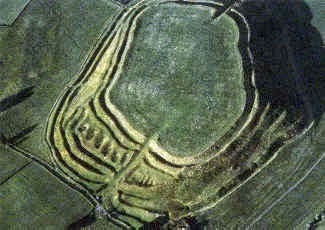 Aerial view of Caer Ogyrfan todayThe Gwenhwyfar of the Welsh tales is a somewhat mysterious figure, very much in the background, though perhaps not as passive as she was to later become. Apart from her violent row with her sister in the Triads, an old Welsh folk rhyme casts her in an intriguingly negative light:
"Gwenhwyfar ferch Ogrfan Gawr,Drwg yn fechan, gwaeth yn fawr."
"Gwenhwyfar, daughter of Ogrfan Gawr,Bad when little, worse when great."
Part III of Leader of Battles begins in the year 481, just two years after Artorius' signal victory over the Saxons at Mount Badon, and two years into his reign as High King over what remains of free Britannia. How Artorius and Gwenhwyfar meet, and their trials as man and wife - well, I'm still working on that...
So said Arthur to Culhwch in the medieval Welsh tale Culhwch ac Olwen. His passing reference to Gwenhwyfar (who he appears to rank below his weapons in terms of value) is reckoned to be the earliest known reference to his wife, better-known from later stories as Guinevere, his adulterous queen who brings about the ruin of Camelot through her affair with Sir Lancelot.
Guinevere should be familiar to most from any number of recent films and novels. Depictions of her vary wildly, from Kiera Knightley's, erm, interesting turn as a Pictish warrior princess with a Sloane accent and a leather fetish costume in 2004's King Arthur, to Angel Coulby's more decorous Gwen in the BBC Series Merlin: Coulby was also the first black actress to play the role.
 Howard Pyle illustration of Arthur and Guinevere
Gwenhwyfar - with the original Welsh spelling intact - is the central character of Part III of my Leader of Battles series. Parts I and II were dominated by male figures, Ambrosius and Artorius, and I wanted to do something different with the third book. I also wanted to try something different with the character of Gwenhwyfar, drawing on the older Welsh tales of her background and upbringing rather than the well-known medieval French/Anglo traditions.
This was easier said than done, since the Welsh traditions (as usual) are both fragmentary and contradictory. In one of the Welsh Triads concerning Arthur, there are no less than three separate Gwenhwyfars, all of them married to Arthur. Two other Triads deal with only one Gwenhwyfar, but mention a sister, Gwenhwyfach. The sisters argue, and their dispute causes the fateful Battle of Camlann, where Arthur and his war-band perish: Triad 53 talks of Gwenhwyfach slapping Gwenhwyfar, and this being one of the 'Three Harmful Blows of the Island of Britain', since it leads to Camlann. Triad 54, on the other hand, talks of the villain Medraut (the original Mordred) breaking into Arthur's court at Celliwig and dragging Gwenhwyfar from her chair. This insult to Arthur's wife and dignity leads to the strife of Camlann.
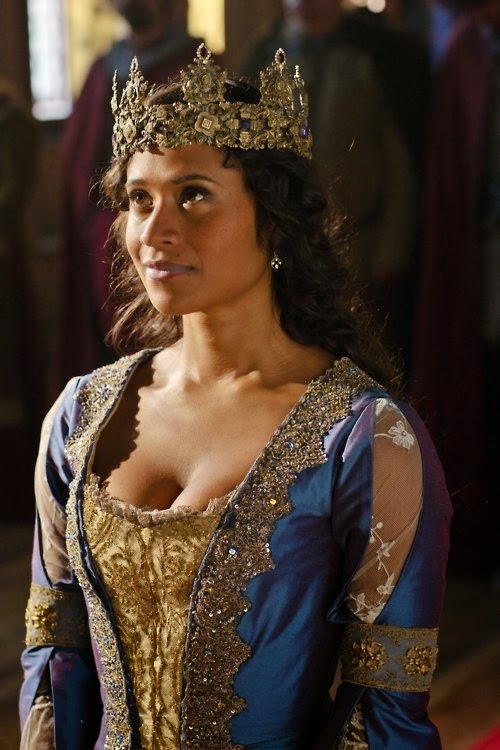 Angel Coulby as Gwen in Merlin
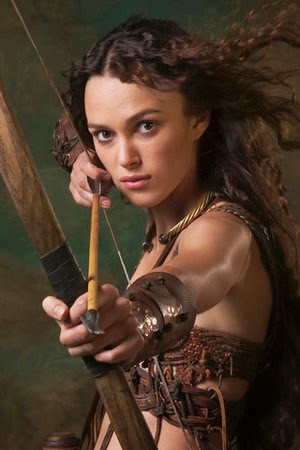 Keira Knightly as Xena...I mean Guinevere
On the face of it, all these tales would appear to stem from entirely different traditions. None of them mention Lancelot, a character invented and dumped into the story by later French romancers. However, even in these early tales there is a suggestion that Gwenhwyfar was unfaithful to her husband. Caradoc of Llancafarn writes of her being abducted (or eloping with) Melwas, a prince of the mysterious Summer Country. Arthur has to give chase with his army and storm Melwas' fort to get her back.
I decided to mix and match some of these elements, and throw in some others to come up with an original - or as original as I can make it - take on the character of Gwenhwyfar. In Part III of the series (still a work in progress) I portray her as the eldest daughter of Ogyrfan Gawr, the King of Powys, the lord of a mighty fortress called Caer Ogyrfan. The remains of this fort can still be seen today at Old Oswestry in Powys, a massive hilltop stronghold covering some forty acres of land. Gwenhwyfar is just sixteen at the beginning of the story, and has a younger sister who she doesn't get on with - shades of Gwenhwyfach, though I've changed her sister's name to Heledd to avoid any name confusion!
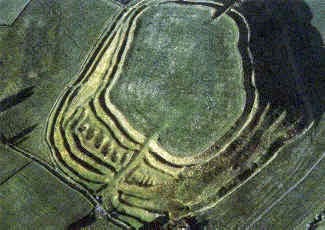 Aerial view of Caer Ogyrfan todayThe Gwenhwyfar of the Welsh tales is a somewhat mysterious figure, very much in the background, though perhaps not as passive as she was to later become. Apart from her violent row with her sister in the Triads, an old Welsh folk rhyme casts her in an intriguingly negative light:
"Gwenhwyfar ferch Ogrfan Gawr,Drwg yn fechan, gwaeth yn fawr."
"Gwenhwyfar, daughter of Ogrfan Gawr,Bad when little, worse when great."
Part III of Leader of Battles begins in the year 481, just two years after Artorius' signal victory over the Saxons at Mount Badon, and two years into his reign as High King over what remains of free Britannia. How Artorius and Gwenhwyfar meet, and their trials as man and wife - well, I'm still working on that...
November 6, 2014
The White Hawk pre-order
Book One of my rebooted series, The White Hawk, is now available for pre-order. The book will be released on Kindle on November 9th, and in paperback shortly afterwards. Just click on the link below the cover image to place your order!
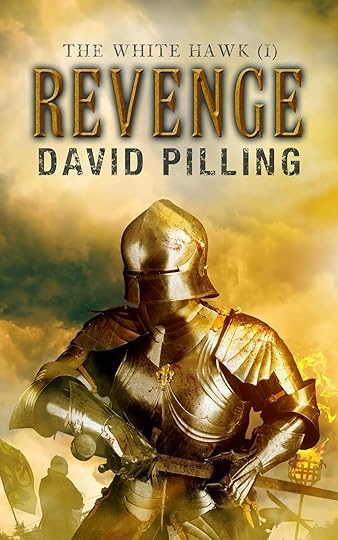
The White Hawk (I): Revenge on Amazon

The White Hawk (I): Revenge on Amazon
November 4, 2014
The White Hawk reboot
I have plans for The White Hawk, my series following the fortunes of a family of Lancastrian loyalists during the turbulent years of The Wars of the Roses - or The Cousins' War, as it is more fashionably called these days (thank you Philippa Gregory...).
First I aim to re-release new and improved versions of the entire series, with the first two books combined into a single volume. I already have a great new cover for it, again designed by the talented people at More Visual Ltd - see below!
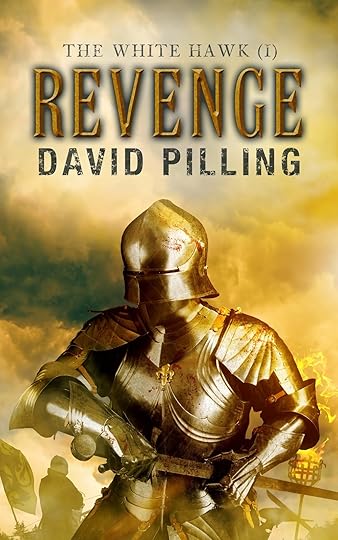
The original series will now be condensed into a trilogy, and Book Three will also include a new short story called The Devil's Due, which acts as a lead-in to the next chapter in the series: I intend to write a whole new series about the Boltons set during the period of the English (or British) Civil War between Charles I and Parliament.
More details on all this to follow shortly. For now, I shall leave you to gaze on the sumptous new cover...
First I aim to re-release new and improved versions of the entire series, with the first two books combined into a single volume. I already have a great new cover for it, again designed by the talented people at More Visual Ltd - see below!
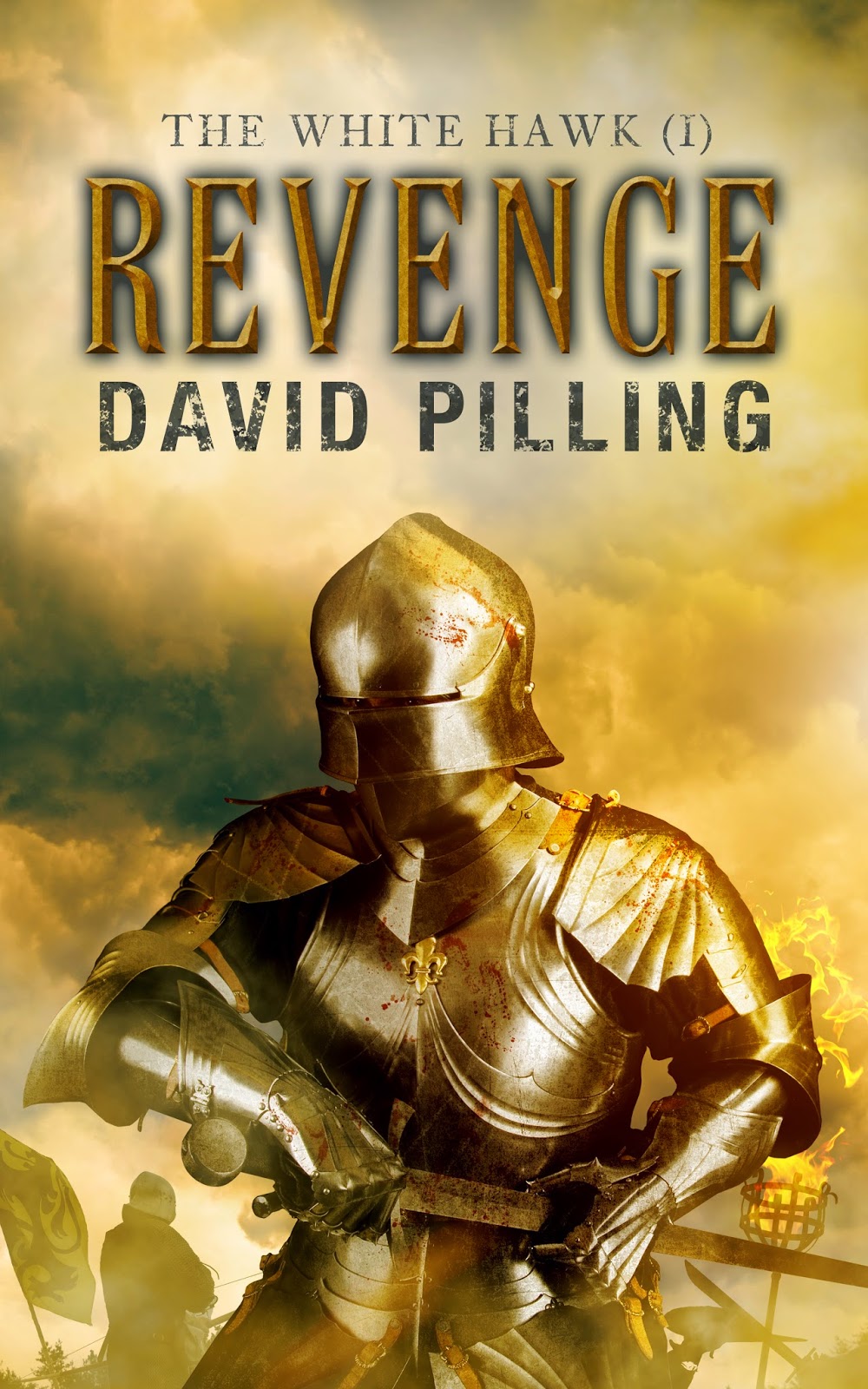
The original series will now be condensed into a trilogy, and Book Three will also include a new short story called The Devil's Due, which acts as a lead-in to the next chapter in the series: I intend to write a whole new series about the Boltons set during the period of the English (or British) Civil War between Charles I and Parliament.
More details on all this to follow shortly. For now, I shall leave you to gaze on the sumptous new cover...
October 17, 2014
Thunder & Lightning, very very...(etc)
Followers of this blog may have noticed a howling silence in recent weeks - this isn't due to me running out of things to say (fat chance) but a massive storm that hit my part of the country about twelve days ago and burned out our broadband connection.
It was all very dramatic 'rage of the gods'-type stuff, and splendid to listen to from under a blanket in the downstairs cupboard, but has meant that I have had no internet for almost a fortnight. Thankfully we're now hooked up to The Matrix again, so watch this space for news on a revamp of my White Hawk series, and more...
It was all very dramatic 'rage of the gods'-type stuff, and splendid to listen to from under a blanket in the downstairs cupboard, but has meant that I have had no internet for almost a fortnight. Thankfully we're now hooked up to The Matrix again, so watch this space for news on a revamp of my White Hawk series, and more...
October 1, 2014
Leader of Battles reviews
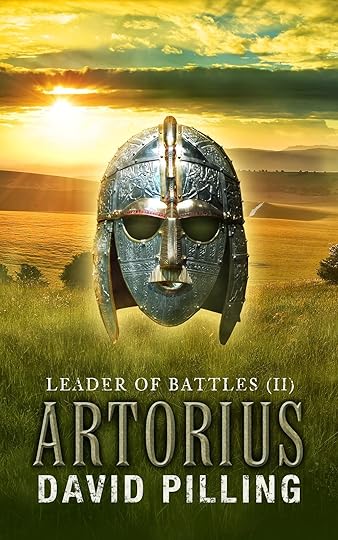
The first two books in the Leader of Battles series are garnering some nice reviews on Amazon and Goodreads. I thought I would post a few excerpts of them on here, as well as an idea for the next sequel(s).
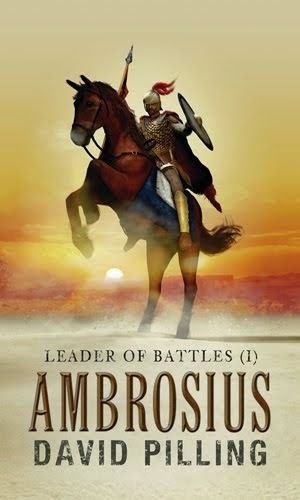
"Wow. This was good. Real good. I try everything out there that falls under the title "Arthurian" ' 90 percent of the time I am disappointed and stop reading. Exceptions being the Crystal Cave series by Stewart, Firelord by Goodwin, Rosemary Sutcliffe, and of course Bernard Cornwells trilogy. You can add Pilling to this short list. This book was awesome. I started it this morning after reading a few pages last night, and finished same day, because I could not put it down. Pilling excels here, and I can't recommend this book enough. If you are into literature in the King Arthur genre, then this will be the book for you."
"An interesting interpretation of a rather obscure period of England's history. Very plausible and descriptive. Something I always wondered about was how much of the Roman civilisation remained after the withdrawal of the legions and this book strives to fill that gap, quite successfully, I might say."
"Not a dull moment and so many discoveries to bring history and a hero to live again. Well done. Bravo."
"So good, so good. This is my favorite subject of historical fiction, done by my favorite author of historical fiction. I only wish it were longer. Pilling is a master story teller. Be done with all the lousy Arthurian garbage available out there, and read these instead. Cannot wait for the third, although I dread the end of this trilogy."
Encouraging stuff! As for future developments, I have in mind a mini-series of novellas titled Warriors of Arthur, linked to the Leader of Battles series but not part of the main trilogy. The novellas are intended to focus on each of Arthur/Artorius' most famous warriors in turn - probably Cei, Bedwyr and maybe Tristan or Drustanus - before I move on to complete the series with the third and final instalment of Leader of Battles. This way I can hope to 'flesh out' my version of Arthur's world and explore it thoroughly before coming to the inevitable end.
First, however, I am taking a break from the world of Post-Roman Britain and having a crack at the British/English Civil war...more details to follow soon!
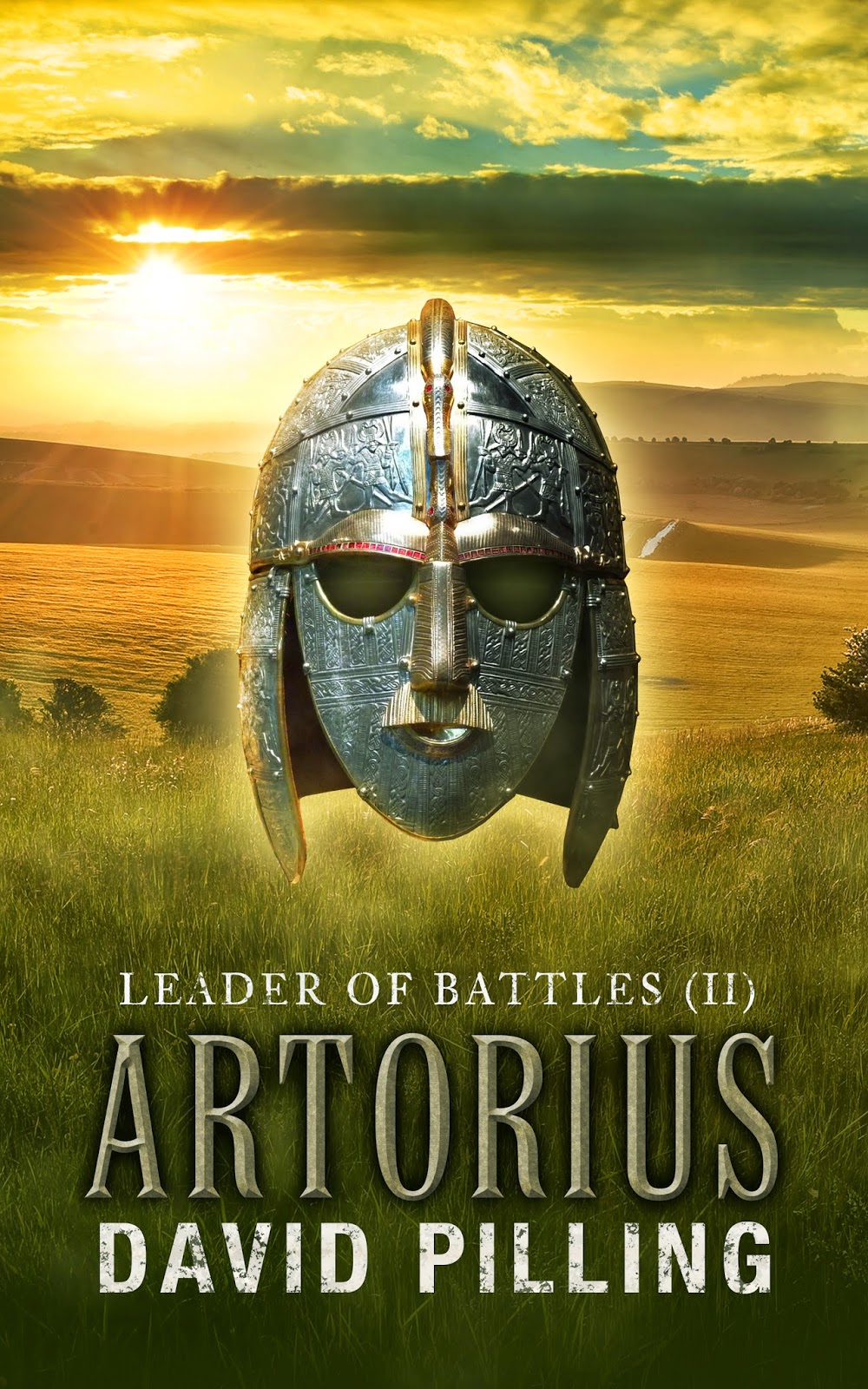
"Wow. This was good. Real good. I try everything out there that falls under the title "Arthurian" ' 90 percent of the time I am disappointed and stop reading. Exceptions being the Crystal Cave series by Stewart, Firelord by Goodwin, Rosemary Sutcliffe, and of course Bernard Cornwells trilogy. You can add Pilling to this short list. This book was awesome. I started it this morning after reading a few pages last night, and finished same day, because I could not put it down. Pilling excels here, and I can't recommend this book enough. If you are into literature in the King Arthur genre, then this will be the book for you."
"An interesting interpretation of a rather obscure period of England's history. Very plausible and descriptive. Something I always wondered about was how much of the Roman civilisation remained after the withdrawal of the legions and this book strives to fill that gap, quite successfully, I might say."
"Not a dull moment and so many discoveries to bring history and a hero to live again. Well done. Bravo."
"So good, so good. This is my favorite subject of historical fiction, done by my favorite author of historical fiction. I only wish it were longer. Pilling is a master story teller. Be done with all the lousy Arthurian garbage available out there, and read these instead. Cannot wait for the third, although I dread the end of this trilogy."
Encouraging stuff! As for future developments, I have in mind a mini-series of novellas titled Warriors of Arthur, linked to the Leader of Battles series but not part of the main trilogy. The novellas are intended to focus on each of Arthur/Artorius' most famous warriors in turn - probably Cei, Bedwyr and maybe Tristan or Drustanus - before I move on to complete the series with the third and final instalment of Leader of Battles. This way I can hope to 'flesh out' my version of Arthur's world and explore it thoroughly before coming to the inevitable end.
First, however, I am taking a break from the world of Post-Roman Britain and having a crack at the British/English Civil war...more details to follow soon!
September 17, 2014
Real Arthurs
While researching the Leader of Battles series, one thing swiftly became clear: there is very little evidence for a historical 'Arthur'. Unlike Robin Hood, the other big hitter of medieval English/British legend, there is a surprising lack of historical candidates for the real man behind the story. This post will take a look at the tiny handful of credible contenders.
1) Riothamus. Proposed as a viable Arthur by the historian Geoffrey Ashe, Riothamus is still a tantalising mystery. He is described as a 'King of the Brittones', though it is unclear whether this means the Britons of Britain or Britons who had emigrated to Amorica (now Western Brittany). In the year 470 he came to Gaul via the sea (presumably via the Channel) with an army of twelve thousand men to help the Western Emperor, Anthemius, fight the invading Visigoths. Sadly, thanks to the machinations of Arvandus, Prefect of Gaul, the Romans failed to support Riothamus in battle and his army was slaughtered. He is last mentioned fleeing in the direction of a town named Avallon in the land of the Burgundians: famously, the wounded Arthur was supposed to have been carried to Avalon after his last battle.
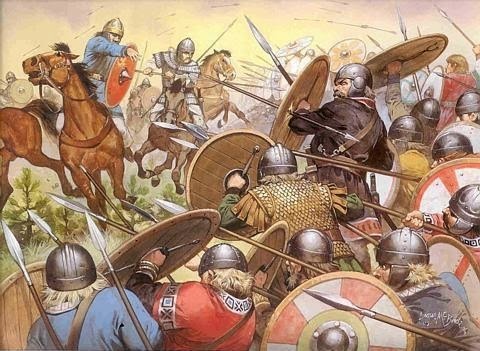 The defeat of RiothamusHis name is a problem, but could possibly have been a title, meaning 'High King' or 'Supreme Ruler'. However, Riothamus/Rigotomos was also a personal name, which doesn't help much. Overall, Riothamus remains perhaps the most intriguing of the known historical Arthurs.
2) Lucius Artorius Castus. On the face of it, this man doesn't look much like Arthur at all, despite his middle name. A second century Roman officer, Lucius was a career soldier who served all over the Roman Empire, including a few months (the exact term is uncertain) on one of the forts on Hadrian's Wall in Britain. Also stationed on the Wall were units of armed cavalry called Sarmatians, originally drawn from conquered Roman territory in Scythia and Rus, now parts of modern-day Russia.
The theory goes that Lucius was a cavalry officer in charge of the Sarmatians for a time, and that he led them in a series of smashing victories over invading Picts and other enemies. This left a lingering folk memory in the north of the country, which eventually became the legend of King Arthur and his knights. It's all highly speculative, but at least one big cheese Hollywood producer, Jerry Bruckheimer, found it persuasive enough for a film. 'King Arthur', released in 2004 and starring Clive Owen, Ray Winstone and Keira Knightley, was based on a somewhat garbled version of Lucius' career. The film was not a success, critically or financially, and Lucius has faded from view since.
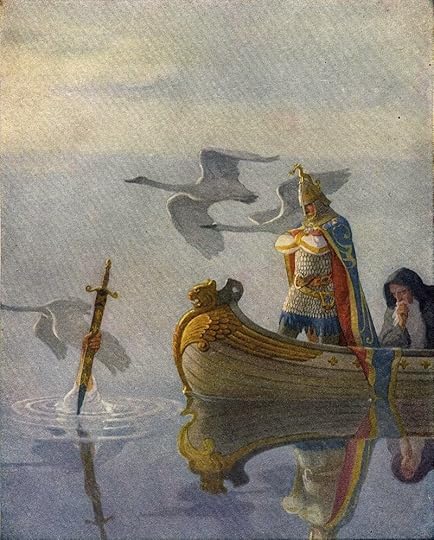 The Once and Future King of legend3) Artúir mac Aedan. Another slightly left-field choice, this man was a prince of Dál Riata, a British or Scotti kingdom in western Scotland, in the late sixth century. His father, Aedan, was King of Dál Riata, and it was prophesied (accurately) that none of his sons would live to succeed him as king. Aedan spent his reign fighting the Picts and Saxons that bordered his territory, and in one of the many battles his son Artúir was killed, probably when he was in his mid-30s: dates for his death range from c. 582 to 596.
David F. Caroll and Michael Wood, among others, argue that Artúir was known as a great warrior during his brief life, and active in the region north of the Wall known as Y Gododdin. The earliest poem to mention Arthur is found in a collection of poetry from this region, so it could be that Artúir was the original inspiration for the warrior, since changed out of all recognition. However, like Riothamus and Lucius Artorius Castus, the connections between Artúir and the legendary king are tenuous at best. The most that can be said is that he did at least bear the right name, and probably fought in an area of the country where 'Arthur' was remembered in poem and song.
4) Ambrosius Aurelianus. Ambrosius, whom I have talked about in recent posts and made the star of the first book of the Leader of Battles series, was a Romano-British hero of the mid-5th century. Gildas, pretty much our only native source for the period, describes him as 'a modest man' and 'the last of the Romans' who by chance happened to be left alive after the Saxons had gutted the country.
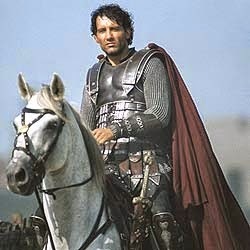 Clive Owen as 'King Arthur'
In spite of his modesty, Ambrosius managed to rally British resistance and led a campaign of fluctuating fortunes against the Saxon threat. The war ended with the siege of Mount Badon, where the Britons won a victory that led to peace in the land for an entire generation. Annoyingly, Gildas does not name Ambrosius as the leader of the British forces at Badon, though later tradition names the victorious general as Arthur. The fate of Ambrosius is unknown, though there are later stories of him being poisoned by jealous rivals.
And that's about it! There are various other princes and kings named Arthur (or variants) in the records, but details are sparse to non-existent, and the nature of the records themselves provoke endless debate among academics and enthusiasts. Whether the real Arthur will ever step out of the shadows of Dark Age history seems unlikely, but the continued mystery does at least provide writers like myself with an enduring source for fiction.
1) Riothamus. Proposed as a viable Arthur by the historian Geoffrey Ashe, Riothamus is still a tantalising mystery. He is described as a 'King of the Brittones', though it is unclear whether this means the Britons of Britain or Britons who had emigrated to Amorica (now Western Brittany). In the year 470 he came to Gaul via the sea (presumably via the Channel) with an army of twelve thousand men to help the Western Emperor, Anthemius, fight the invading Visigoths. Sadly, thanks to the machinations of Arvandus, Prefect of Gaul, the Romans failed to support Riothamus in battle and his army was slaughtered. He is last mentioned fleeing in the direction of a town named Avallon in the land of the Burgundians: famously, the wounded Arthur was supposed to have been carried to Avalon after his last battle.
 The defeat of RiothamusHis name is a problem, but could possibly have been a title, meaning 'High King' or 'Supreme Ruler'. However, Riothamus/Rigotomos was also a personal name, which doesn't help much. Overall, Riothamus remains perhaps the most intriguing of the known historical Arthurs.
2) Lucius Artorius Castus. On the face of it, this man doesn't look much like Arthur at all, despite his middle name. A second century Roman officer, Lucius was a career soldier who served all over the Roman Empire, including a few months (the exact term is uncertain) on one of the forts on Hadrian's Wall in Britain. Also stationed on the Wall were units of armed cavalry called Sarmatians, originally drawn from conquered Roman territory in Scythia and Rus, now parts of modern-day Russia.
The theory goes that Lucius was a cavalry officer in charge of the Sarmatians for a time, and that he led them in a series of smashing victories over invading Picts and other enemies. This left a lingering folk memory in the north of the country, which eventually became the legend of King Arthur and his knights. It's all highly speculative, but at least one big cheese Hollywood producer, Jerry Bruckheimer, found it persuasive enough for a film. 'King Arthur', released in 2004 and starring Clive Owen, Ray Winstone and Keira Knightley, was based on a somewhat garbled version of Lucius' career. The film was not a success, critically or financially, and Lucius has faded from view since.
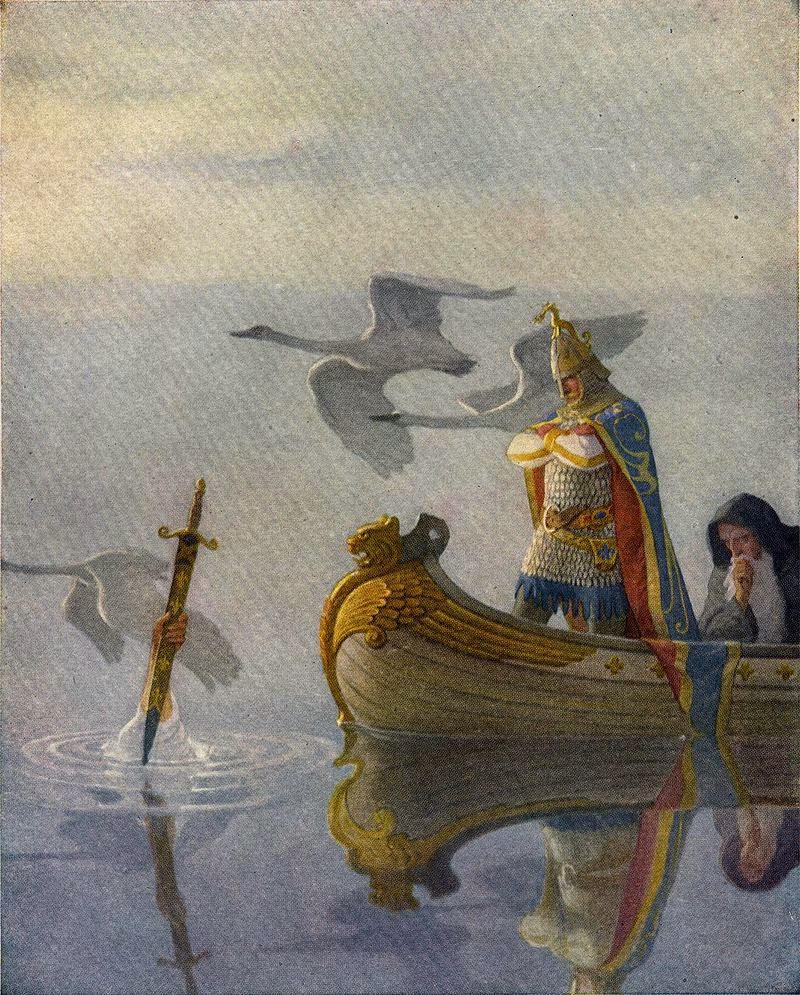 The Once and Future King of legend3) Artúir mac Aedan. Another slightly left-field choice, this man was a prince of Dál Riata, a British or Scotti kingdom in western Scotland, in the late sixth century. His father, Aedan, was King of Dál Riata, and it was prophesied (accurately) that none of his sons would live to succeed him as king. Aedan spent his reign fighting the Picts and Saxons that bordered his territory, and in one of the many battles his son Artúir was killed, probably when he was in his mid-30s: dates for his death range from c. 582 to 596.
 David F. Caroll and Michael Wood, among others, argue that Artúir was known as a great warrior during his brief life, and active in the region north of the Wall known as Y Gododdin. The earliest poem to mention Arthur is found in a collection of poetry from this region, so it could be that Artúir was the original inspiration for the warrior, since changed out of all recognition. However, like Riothamus and Lucius Artorius Castus, the connections between Artúir and the legendary king are tenuous at best. The most that can be said is that he did at least bear the right name, and probably fought in an area of the country where 'Arthur' was remembered in poem and song.
4) Ambrosius Aurelianus. Ambrosius, whom I have talked about in recent posts and made the star of the first book of the Leader of Battles series, was a Romano-British hero of the mid-5th century. Gildas, pretty much our only native source for the period, describes him as 'a modest man' and 'the last of the Romans' who by chance happened to be left alive after the Saxons had gutted the country.
 Clive Owen as 'King Arthur'
In spite of his modesty, Ambrosius managed to rally British resistance and led a campaign of fluctuating fortunes against the Saxon threat. The war ended with the siege of Mount Badon, where the Britons won a victory that led to peace in the land for an entire generation. Annoyingly, Gildas does not name Ambrosius as the leader of the British forces at Badon, though later tradition names the victorious general as Arthur. The fate of Ambrosius is unknown, though there are later stories of him being poisoned by jealous rivals.
And that's about it! There are various other princes and kings named Arthur (or variants) in the records, but details are sparse to non-existent, and the nature of the records themselves provoke endless debate among academics and enthusiasts. Whether the real Arthur will ever step out of the shadows of Dark Age history seems unlikely, but the continued mystery does at least provide writers like myself with an enduring source for fiction.