David Pilling's Blog, page 70
August 5, 2015
Rise of the Wolf!
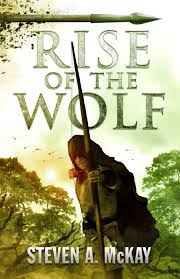
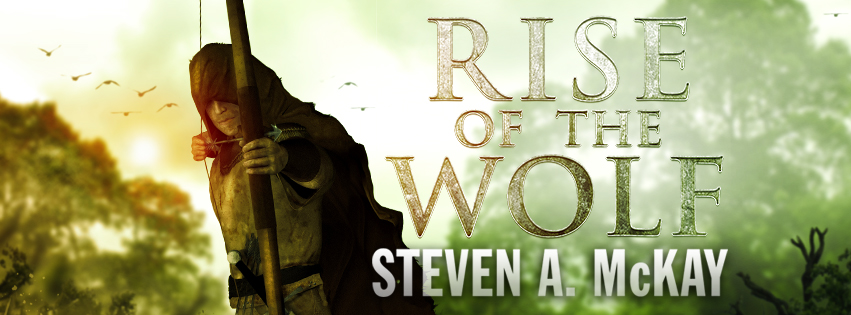
I don't usually do book recommendations and/or reviews, but couldn't ignore the new Robin Hood novel by Steven McKay, titled Rise of the Wolf. McKay has done something very different with the ancient story, as I tried to do with my own Robin Hood mini-series, and given Jolly Robin a much-needed shot in the arm.
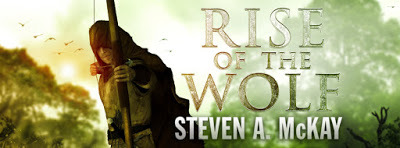
Rise is the third in the Forest Lord series - the first two were called Wolf's Head and The Wolf and the Raven - and follows the further adventures of Robin Hood and his gang as they are hunted by the nefarious Guy of Gisburne. So far, so standard, you might think: Gisburne has been Robin's stock enemy since the Errol Flynn movie back in the 1930s, and featured as such in almost every version of the tale ever since. Perhaps the most memorable screen Gisburne was Robert Addie in the 1980s ITV series Robin of Sherwood, though McKay's version is very different from Addie's inept blusterer: the Gisburne in Rise of the Wolf is a snarling, deadly, one-eyed mercenary, burning for revenge on Robin and willing to do anything to get it.
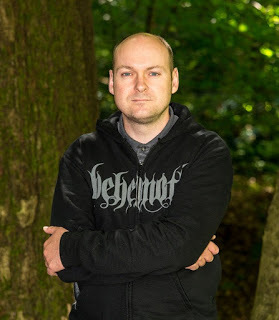 Mr McKay...McKay's masterstroke was to pluck Robin from his comfort zone of the Richard I/John era and propel him forward in time to early 14th century, and the troubled reign of Edward II. Robin and his men are outlawed as a result of their part in the failed rebellion of Thomas of Lancaster, Edward's cousin, and condemned to be hunted like animals in Barnsdale Forest. This is true to the oldest surviving medieval ballads, in which Robin meets 'Edward, our comely king' - probably supposed to be Edward II, who was said to be very 'comely' or handsome, and who did embark on a tour of the northern forests towards the end of his reign. Intriguingly, there was a man named Robyn Hode among Edward's retinue when he went north, though he is described as a porter or 'valet de la chambre' rather than a former outlaw.
By placing Robin Hood in an entirely new environment, McKay succeeds in shaking off most of the well-worn clichés: Robin is still hunted by the Sheriff and Gisburne, but the story takes place in a grim, gritty and entirely believable historical and political framework. This is no pantomime with men in green tights bounding through the sunny greenwood, waiting for their heroic king to come home and pardon them. The king is an incompetent, albeit a likeable one, and his nobles a bunch of bloodthirsty, self-interested marauders. England itself is a dirty and wretched place, which is no more than a faithful portrayal of the unspeakable conditions of the time: the early 1300s witnessed several terrible famines in England, appalling weather conditions, and a drawn-out, unwinnable war with Scotland that left much of the north country desolate and stripped of life.
McKay's novels are the first (that I'm aware of) to relocate the legend in Edward II's reign. This is perhaps a bit surprising, since the theory of the 'historical' Robin Hood being one of Lancaster's rebels has been around for almost 150 years. It was first suggested by Joseph Hunter, a 19th century antiquarian, who claimed to have discovered proof that one Robert Hood of Wakefield, a Yorkshireman living in the early 14th century, was the real man behind the legend. Sadly, on closer analysis Hunter's theory doesn't stand up, for there is no proof that Robert Hood was ever an outlaw or rebel.
That said, there remains the coincidence of Edward II's progress in the North, and the presence of a Robyn Hod in his household. Recent research has uncovered a man named John Littiljon, of Methley in Yorkshire, serving as a captain of archers in Lancaster's rebel army, as well as a William Scarlet, another Yorkshireman, among the rebel host. In purely historicist terms, then, it seems the early 1300s did have some kind of influence on the content of the ballads, though the actual process of history melding into fiction remains a mystery.
So much for the history. Whatever the truth behind the legend, McKay's series is a brave, uncompromising step in the right direction, and the perfect antidote to recent feeble screen Robin Hoods. If there was any justice - which, as Robin Hood could tell you, there isn't - these books would be turned into a series of films. Until then, enjoy the printed word, and the rise of the wolf...
Rise of the Wolf on Amazon
Rise is the third in the Forest Lord series - the first two were called Wolf's Head and The Wolf and the Raven - and follows the further adventures of Robin Hood and his gang as they are hunted by the nefarious Guy of Gisburne. So far, so standard, you might think: Gisburne has been Robin's stock enemy since the Errol Flynn movie back in the 1930s, and featured as such in almost every version of the tale ever since. Perhaps the most memorable screen Gisburne was Robert Addie in the 1980s ITV series Robin of Sherwood, though McKay's version is very different from Addie's inept blusterer: the Gisburne in Rise of the Wolf is a snarling, deadly, one-eyed mercenary, burning for revenge on Robin and willing to do anything to get it.
 Mr McKay...McKay's masterstroke was to pluck Robin from his comfort zone of the Richard I/John era and propel him forward in time to early 14th century, and the troubled reign of Edward II. Robin and his men are outlawed as a result of their part in the failed rebellion of Thomas of Lancaster, Edward's cousin, and condemned to be hunted like animals in Barnsdale Forest. This is true to the oldest surviving medieval ballads, in which Robin meets 'Edward, our comely king' - probably supposed to be Edward II, who was said to be very 'comely' or handsome, and who did embark on a tour of the northern forests towards the end of his reign. Intriguingly, there was a man named Robyn Hode among Edward's retinue when he went north, though he is described as a porter or 'valet de la chambre' rather than a former outlaw.
By placing Robin Hood in an entirely new environment, McKay succeeds in shaking off most of the well-worn clichés: Robin is still hunted by the Sheriff and Gisburne, but the story takes place in a grim, gritty and entirely believable historical and political framework. This is no pantomime with men in green tights bounding through the sunny greenwood, waiting for their heroic king to come home and pardon them. The king is an incompetent, albeit a likeable one, and his nobles a bunch of bloodthirsty, self-interested marauders. England itself is a dirty and wretched place, which is no more than a faithful portrayal of the unspeakable conditions of the time: the early 1300s witnessed several terrible famines in England, appalling weather conditions, and a drawn-out, unwinnable war with Scotland that left much of the north country desolate and stripped of life.

McKay's novels are the first (that I'm aware of) to relocate the legend in Edward II's reign. This is perhaps a bit surprising, since the theory of the 'historical' Robin Hood being one of Lancaster's rebels has been around for almost 150 years. It was first suggested by Joseph Hunter, a 19th century antiquarian, who claimed to have discovered proof that one Robert Hood of Wakefield, a Yorkshireman living in the early 14th century, was the real man behind the legend. Sadly, on closer analysis Hunter's theory doesn't stand up, for there is no proof that Robert Hood was ever an outlaw or rebel.
That said, there remains the coincidence of Edward II's progress in the North, and the presence of a Robyn Hod in his household. Recent research has uncovered a man named John Littiljon, of Methley in Yorkshire, serving as a captain of archers in Lancaster's rebel army, as well as a William Scarlet, another Yorkshireman, among the rebel host. In purely historicist terms, then, it seems the early 1300s did have some kind of influence on the content of the ballads, though the actual process of history melding into fiction remains a mystery.
So much for the history. Whatever the truth behind the legend, McKay's series is a brave, uncompromising step in the right direction, and the perfect antidote to recent feeble screen Robin Hoods. If there was any justice - which, as Robin Hood could tell you, there isn't - these books would be turned into a series of films. Until then, enjoy the printed word, and the rise of the wolf...
Rise of the Wolf on Amazon


July 22, 2015
Like leaves in Autumn...
The 21st of July marks the anniversary of the Battle of Shrewsbury, one of the most important battles fought on English soil. Had the result gone the other way in 1403, it's quite possible that England would have been carved into two separate pieces, with a King in the North and a King in London, and Wales would be much larger than it is (and probably independent of England).
These, at any rate, were the terms of the Tripartite Indenture, an agreement drawn up between the Welsh rebel leader Owain Glyn Dwr, Edmund Mortimer and Henry Percy, Earl of Northumberland. The indenture was drawn up in 1405, two years after Shrewsbury, but it seems likely that similar terms would have been agreed if the rebels had won the battle.
The battle was fought between a rebel army led by Northumberland's famous son, Henry 'Hotspur', so-called for his habit of dashing everywhere at high speed (pity the horses). Hotspur had won a glorious military reputation in the North, despite being on the losing end at the Battle of Otterburn. The Scottish victory at Otterburn, and the exploits of Hotspur and his rival, the Earl of Douglas, were forever enshrined in the Ballad of Chevy Chase. As the great Elizabethan knight, Sir Philip Sidney, said:
"I never hear the old song of Percy and Douglas, that I found not my heart was moved more than any trumpet..."
Hotspur was more than just a romantic figure, and the causes of the battle at Shrewsbury were grounded in hard political realities. Back in 1399, Hotspur and his father had helped Henry of Lancaster, Duke of Hereford, to depose Richard II and place Henry on the throne as King Henry IV. Richard conveniently died in prison, most likely starved to death, and the relationship between the new king and his allies quickly soured. Always short of cash, Henry owed the Percies huge amounts of money, and further angered them by forbidding them to ransom Scottish prisoners taken at the Battle of Homildon Hill. Compelled by these (and many other) reasons, the Percies raised the standard of revolt and marched south to raise an army in Cheshire.
Sweetly oblivious of all this, Henry was marching north to join the Percies to fight the Scots, and only heard of the rebellion on 12th July, when he had reached Burton-on-Trent. Instead of crying about it, he spun around and zoomed down towards Shrewsbury and the Welsh border.
Henry's speed probably saved his throne, not to mention his life. He seized the town of Shrewsbury before the rebels arrived in sight of the walls, and both forces set up camp on opposing banks of the Severn. Attempts at negotiation failed: it is said that Thomas Percy, Hotspur's uncle, deliberately spat insults at the king's envoys in the hope of forcing a battle. His hopes were soon to be realised.
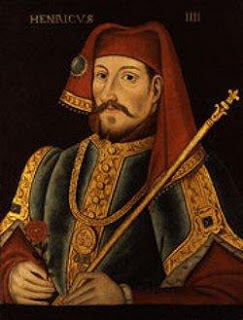 Henry IV and his flattering hatAfter some manoeuvring, the armies faced each other on a large open field. The size of the armies is uncertain, but both probably had somewhere in the region of 14, 000 men. Hotspur had recruited most of his men in Cheshire, including the dreaded Cheshire archers, skilled with the longbow. Some Welsh forces may also have joined him, but their leader Glyn Dwr was far to the west in Carmarthenshire, and had received no word of Hotspur's actions. Once again, as at Otterburn, the impetous northerner's desire for haste would prove his undoing.
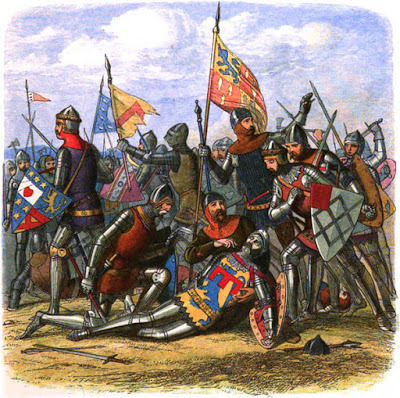
About two hours before dusk, King Henry raised his sword as the signal to advance, and the sky darkened with a storm of arrows. The Cheshire archers inflicted stinging casualties on the royalists. One chronicler described the king's men falling "like leaves in autumn, every arrow struck a mortal man."
Rather than stand and endure the arrow-storm, men started to turn and flee. The entire royalist left wing collapsed, the Earl of Stafford was killed, and the King's eldest son, Prince Henry (later Henry V), took an arrow in the face. It would later require an especially skilled surgeon, using a mixture of honey and alcohol and an instrument invented on the spot, to extract the missile from the prince's flesh. The scar remained with him all his days.
Things looked bleak for the royalists, but the remnant of the army stood its ground. Hotspur now ordered the archers to cease and led a massed charge directly at the royal bodyguard, hoping to put an end to the battle by striking down his old friend in person. There followed a massive brawl, involving thousands of men scattered across the field, in which the royal standard was beaten down, and the standard bearer, Sir Walter Blount, slain. Hotspur's old enemy Douglas, now fighting on his side, was unfortunate enough to lose a testicle in the fighting (ouch, ouch, ouch!).
Still the royalists held firm. King Henry is reported to have ordered his son off the field, to have his wound tended, but the prince refused and led a counter-charge. Amid the dust and blood and confusion, the cry went up that the king was dead. A tremendous roar erupted from the rebel lines:
"Henry Percy, King! Henry Percy, King!"
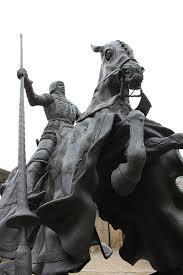 Statue of Hotspur at Alnwick
The rumour was false. King Henry was very much alive and fighting desperately at the head of his bodyguard, while Hotspur was dead. During a lull in the fight he raised his visor to gulp in air, and was promptly shot by an unknown archer.
As usual in medieval battles, the death or flight of the leader spelled doom for his men. With Hotspur dead, the rebels had nothing left to fight for save pride. Most fled into the night - it was dark by now - though a few diehards fought on through the night until all were killed or captured.
The aftermath was predictably grim. Thomas Percy and several other rebel captains were subjected to the hideous ritualistic deaths of hanging, drawing and quartering, and their severed heads put on public display. Hotspur was initially given honourable burial, until rumours began to spread through Shrewsbury that he was not dead: instead he had escaped from the battle and would come again, like Arthur, at the head of a new army.
Henry quashed the rumours flat by having Hotspur's naked body exhumed and impaled on a spear between two millstones in the market place. It was later cut into quarters and exhibited again in Chester, London and Newcastle. Thus it could said that Henry Hotspur, the rock star of his time, ended by going on tour...
These, at any rate, were the terms of the Tripartite Indenture, an agreement drawn up between the Welsh rebel leader Owain Glyn Dwr, Edmund Mortimer and Henry Percy, Earl of Northumberland. The indenture was drawn up in 1405, two years after Shrewsbury, but it seems likely that similar terms would have been agreed if the rebels had won the battle.

The battle was fought between a rebel army led by Northumberland's famous son, Henry 'Hotspur', so-called for his habit of dashing everywhere at high speed (pity the horses). Hotspur had won a glorious military reputation in the North, despite being on the losing end at the Battle of Otterburn. The Scottish victory at Otterburn, and the exploits of Hotspur and his rival, the Earl of Douglas, were forever enshrined in the Ballad of Chevy Chase. As the great Elizabethan knight, Sir Philip Sidney, said:
"I never hear the old song of Percy and Douglas, that I found not my heart was moved more than any trumpet..."
Hotspur was more than just a romantic figure, and the causes of the battle at Shrewsbury were grounded in hard political realities. Back in 1399, Hotspur and his father had helped Henry of Lancaster, Duke of Hereford, to depose Richard II and place Henry on the throne as King Henry IV. Richard conveniently died in prison, most likely starved to death, and the relationship between the new king and his allies quickly soured. Always short of cash, Henry owed the Percies huge amounts of money, and further angered them by forbidding them to ransom Scottish prisoners taken at the Battle of Homildon Hill. Compelled by these (and many other) reasons, the Percies raised the standard of revolt and marched south to raise an army in Cheshire.
Sweetly oblivious of all this, Henry was marching north to join the Percies to fight the Scots, and only heard of the rebellion on 12th July, when he had reached Burton-on-Trent. Instead of crying about it, he spun around and zoomed down towards Shrewsbury and the Welsh border.
Henry's speed probably saved his throne, not to mention his life. He seized the town of Shrewsbury before the rebels arrived in sight of the walls, and both forces set up camp on opposing banks of the Severn. Attempts at negotiation failed: it is said that Thomas Percy, Hotspur's uncle, deliberately spat insults at the king's envoys in the hope of forcing a battle. His hopes were soon to be realised.
 Henry IV and his flattering hatAfter some manoeuvring, the armies faced each other on a large open field. The size of the armies is uncertain, but both probably had somewhere in the region of 14, 000 men. Hotspur had recruited most of his men in Cheshire, including the dreaded Cheshire archers, skilled with the longbow. Some Welsh forces may also have joined him, but their leader Glyn Dwr was far to the west in Carmarthenshire, and had received no word of Hotspur's actions. Once again, as at Otterburn, the impetous northerner's desire for haste would prove his undoing.
About two hours before dusk, King Henry raised his sword as the signal to advance, and the sky darkened with a storm of arrows. The Cheshire archers inflicted stinging casualties on the royalists. One chronicler described the king's men falling "like leaves in autumn, every arrow struck a mortal man."
Rather than stand and endure the arrow-storm, men started to turn and flee. The entire royalist left wing collapsed, the Earl of Stafford was killed, and the King's eldest son, Prince Henry (later Henry V), took an arrow in the face. It would later require an especially skilled surgeon, using a mixture of honey and alcohol and an instrument invented on the spot, to extract the missile from the prince's flesh. The scar remained with him all his days.
Things looked bleak for the royalists, but the remnant of the army stood its ground. Hotspur now ordered the archers to cease and led a massed charge directly at the royal bodyguard, hoping to put an end to the battle by striking down his old friend in person. There followed a massive brawl, involving thousands of men scattered across the field, in which the royal standard was beaten down, and the standard bearer, Sir Walter Blount, slain. Hotspur's old enemy Douglas, now fighting on his side, was unfortunate enough to lose a testicle in the fighting (ouch, ouch, ouch!).
Still the royalists held firm. King Henry is reported to have ordered his son off the field, to have his wound tended, but the prince refused and led a counter-charge. Amid the dust and blood and confusion, the cry went up that the king was dead. A tremendous roar erupted from the rebel lines:
"Henry Percy, King! Henry Percy, King!"
 Statue of Hotspur at Alnwick
The rumour was false. King Henry was very much alive and fighting desperately at the head of his bodyguard, while Hotspur was dead. During a lull in the fight he raised his visor to gulp in air, and was promptly shot by an unknown archer.
As usual in medieval battles, the death or flight of the leader spelled doom for his men. With Hotspur dead, the rebels had nothing left to fight for save pride. Most fled into the night - it was dark by now - though a few diehards fought on through the night until all were killed or captured.
The aftermath was predictably grim. Thomas Percy and several other rebel captains were subjected to the hideous ritualistic deaths of hanging, drawing and quartering, and their severed heads put on public display. Hotspur was initially given honourable burial, until rumours began to spread through Shrewsbury that he was not dead: instead he had escaped from the battle and would come again, like Arthur, at the head of a new army.
Henry quashed the rumours flat by having Hotspur's naked body exhumed and impaled on a spear between two millstones in the market place. It was later cut into quarters and exhibited again in Chester, London and Newcastle. Thus it could said that Henry Hotspur, the rock star of his time, ended by going on tour...
July 11, 2015
Face of a Tudor
'Contemplating the horrific visage of the miserly old Welshman painted by Michael Sittow in 1505, with which we are all so familiar, one may wonder how such a creature could attract any adherents at all.'
Desmond Seward wrote the above in reference to the famous 1505 portrait of Richard's nemesis, Henry Tudor alias King Henry VII (1485-1509). Below is an image of the painting.
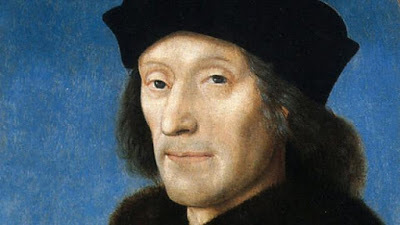
Even for a non-Ricardian like myself, it's hard to disagree with Seward's assessment. Henry does look fairly horrific in this picture, and you have to wonder how Sittow got away with it. The king's eyes are narrow and mismatched, and there is something mean and unattractive about the set of his mouth. All in all, he looks more like an evil Dickensian lawyer than a King of England. Or, as Richard Curtis and Ben Elton put it, he had a face like a ferret.
Is this a fair representation of Henry? The picture hardly tallies with Polydore Vergil's eyewitness description of the king: he said that Henry's 'appearance was remarkably attractive, and his face was cheerful, particularly when speaking.' Vergil goes on to admit that Henry's complexion was sallow, and his teeth in very poor condition, so he wasn't writing a mere panegyric for his Tudor paymaster.
Professor S.B. Chrimes, who wrote the definitive biography of Henry VII, describes him thus: 'We have to think of a man impressive and outstanding - tall, rather slender, dignified, of sallow complexion and rather aquiline features, whose most striking characteristic was the vivacity of his expression and the brilliance of his small blue eyes, especially in conversation.'
The accounts of Vergil and Chrimes are more in keeping with the bust of Henry, made from a plaster cast taken from his death mask. See below.
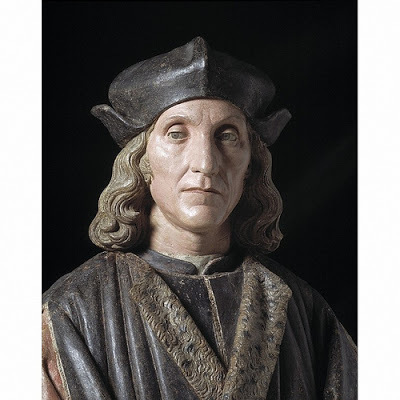
This Henry, though still a forbidding prospect, is rather more kingly and distinctly less ferret-like than the Witton portrait. It's far easier to imagine this man standing his ground at Bosworth and putting an end to thirty years of dynastic bloodshed. The death mask itself (below) shows a gaunt, dried-up, surprisingly sensitive face, with a hint of melancholy about the eyes.
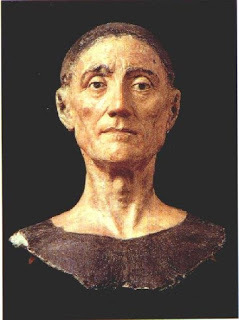
The mask is perhaps the closest we can get to the real man, shorn of the whims of portrait artists. When I look at it I'm reminded of the confession Henry made to Philip de Commines, while he was still in exile in Brittany. In a rare moment of relaxation, Henry said that 'since the age of five, I have been guarded like a fugitive or kept in prison.'
There is one more portrait to consider. This was drawn in the 16th century, but based on earlier portraits, and shows Henry as a young man, again while still in exile.

Chris Skidmore says of this image: 'It is Henry's eyes, large and weary with dark lines forming beneath them that stand out, just as they would later do for those that met him....it is perhaps this sense of weariness, of a young man who had spent his entire life on the run, in danger of his life, that Henry's tired but determined eyes reflected.'
The eyes, as some wise person once said, are the windows to the soul. They also form a running theme to these portraits, and maybe forge a link between the younger, more attractive Henry and the mean-eyed, tight-lipped 'miserly Welshman' of 1505. By the time Witton painted the king, Henry had survived, often by the skin of his (bad) teeth, twenty years on a throne he won in battle and kept by any means possible, no matter how unpleasant or devious. During that time he had lost his wife and eldest son, and grappled with an endless series of conspiracies, rebellions and betrayals.
The mere effort of survival, of hanging on to his crown, broke his health and reduced him to a paranoid tyrant, personally counter-signing his own account rolls and using money as a means to cure and control all ends. We know from Henry's own letters that his eyesight was failing (no spectacles in those days) and he suffered increasingly frequent bouts of gout and tuberculosis, among other ailments. The TB would eventually kill him, as it did several other members of his dynasty.
Few men, who endured so much, could hope to reach middle age looking like George Clooney. Henry died at the relatively young age of 52, a toothless, wizened, exhausted and generally hated figure, though he left a full treasury and a peaceful and prosperous country. Looking at various portraits of the man, it's easy to see that Shakespeare was quite correct, as usual: uneasy lies the head that wears the crown, and Henry Tudor's noggin lay the uneasiest of all.
Desmond Seward wrote the above in reference to the famous 1505 portrait of Richard's nemesis, Henry Tudor alias King Henry VII (1485-1509). Below is an image of the painting.

Even for a non-Ricardian like myself, it's hard to disagree with Seward's assessment. Henry does look fairly horrific in this picture, and you have to wonder how Sittow got away with it. The king's eyes are narrow and mismatched, and there is something mean and unattractive about the set of his mouth. All in all, he looks more like an evil Dickensian lawyer than a King of England. Or, as Richard Curtis and Ben Elton put it, he had a face like a ferret.
Is this a fair representation of Henry? The picture hardly tallies with Polydore Vergil's eyewitness description of the king: he said that Henry's 'appearance was remarkably attractive, and his face was cheerful, particularly when speaking.' Vergil goes on to admit that Henry's complexion was sallow, and his teeth in very poor condition, so he wasn't writing a mere panegyric for his Tudor paymaster.
Professor S.B. Chrimes, who wrote the definitive biography of Henry VII, describes him thus: 'We have to think of a man impressive and outstanding - tall, rather slender, dignified, of sallow complexion and rather aquiline features, whose most striking characteristic was the vivacity of his expression and the brilliance of his small blue eyes, especially in conversation.'
The accounts of Vergil and Chrimes are more in keeping with the bust of Henry, made from a plaster cast taken from his death mask. See below.

This Henry, though still a forbidding prospect, is rather more kingly and distinctly less ferret-like than the Witton portrait. It's far easier to imagine this man standing his ground at Bosworth and putting an end to thirty years of dynastic bloodshed. The death mask itself (below) shows a gaunt, dried-up, surprisingly sensitive face, with a hint of melancholy about the eyes.

The mask is perhaps the closest we can get to the real man, shorn of the whims of portrait artists. When I look at it I'm reminded of the confession Henry made to Philip de Commines, while he was still in exile in Brittany. In a rare moment of relaxation, Henry said that 'since the age of five, I have been guarded like a fugitive or kept in prison.'
There is one more portrait to consider. This was drawn in the 16th century, but based on earlier portraits, and shows Henry as a young man, again while still in exile.

Chris Skidmore says of this image: 'It is Henry's eyes, large and weary with dark lines forming beneath them that stand out, just as they would later do for those that met him....it is perhaps this sense of weariness, of a young man who had spent his entire life on the run, in danger of his life, that Henry's tired but determined eyes reflected.'
The eyes, as some wise person once said, are the windows to the soul. They also form a running theme to these portraits, and maybe forge a link between the younger, more attractive Henry and the mean-eyed, tight-lipped 'miserly Welshman' of 1505. By the time Witton painted the king, Henry had survived, often by the skin of his (bad) teeth, twenty years on a throne he won in battle and kept by any means possible, no matter how unpleasant or devious. During that time he had lost his wife and eldest son, and grappled with an endless series of conspiracies, rebellions and betrayals.
The mere effort of survival, of hanging on to his crown, broke his health and reduced him to a paranoid tyrant, personally counter-signing his own account rolls and using money as a means to cure and control all ends. We know from Henry's own letters that his eyesight was failing (no spectacles in those days) and he suffered increasingly frequent bouts of gout and tuberculosis, among other ailments. The TB would eventually kill him, as it did several other members of his dynasty.
Few men, who endured so much, could hope to reach middle age looking like George Clooney. Henry died at the relatively young age of 52, a toothless, wizened, exhausted and generally hated figure, though he left a full treasury and a peaceful and prosperous country. Looking at various portraits of the man, it's easy to see that Shakespeare was quite correct, as usual: uneasy lies the head that wears the crown, and Henry Tudor's noggin lay the uneasiest of all.
June 30, 2015
Soldier of Fortune
Back in the mists of time - all the way back in 2012 - I published a book called The Half-Hanged Man. It followed the adventures of Thomas Page, an English mercenary captain who carved out a brief career for himself in 14th century France and Spain.
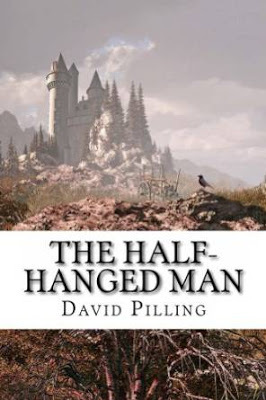
The Half-Hanged Man came to an adrupt and brutal end, with little prospect of a sequel. Until now, that is, and my brand spanking new novel SOLDIER OF FORTUNE (I): THE WOLF CUB.
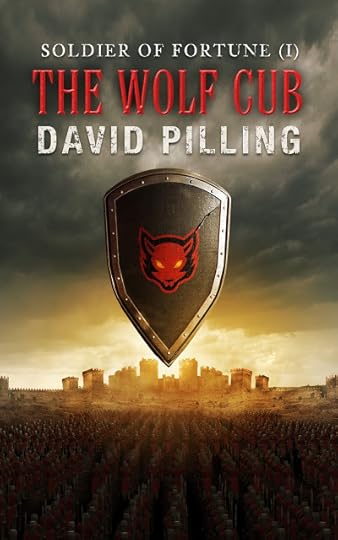
The Soldier of Fortune series is intended as an indirect sequel, and follows the career of Thomas Page's bastard son, John, during the first half of the 15th century. John is very much a chip off the old block, though he is something of a poet as well as a warrior: I have based him on a real-life poet named John Page, whose eyewitness account of the siege of Rouen, ducal capital of Normandy, by the army of Henry V in 1418 survives in a single manuscript.
My John Page is a poor esquire of Sussex who flees England after slaying his cousin in a duel, and eventually ends up as a soldier in the English army in Normandy. After a long and eventful career he is captured at the fall of Constantinople in 1453, and forced to describe the story of his life to the Ottoman Sultan...
Soldier of Fortune (I) The Wolf Cub on Amazon
1453 AD. The great city of Constantinople, last remnant of the once-mighty Roman Empire, falls to the Ottoman armies of Mehmed the Conqueror.
An English knight named Sir John Page is taken prisoner by the Ottomans, and forced to entertain the Sultan with tales of the West. Page chooses to tell the story of his own long career as a soldier of fortune in France, Bohemia and the Italian city-states.
Page's tale begins in the year of Agincourt, Henry V's famous victory over the French. As the bastard son of Thomas Page, a famous mercenary captain known as The Half-Hanged Man or The Wolf of Burgundy, Page soon acquires the nickname of The Wolf Cub.
After slaying his cousin in a duel, Page flees his home and joins a band of outlaws in the forests of Sussex. At last - tired of the brutality of his companions - he decides to leave England and join the English army in Normandy. There he endures brutal sieges, vicious combats, torture, betrayal and imprisonment, all to win glory and redeem his father's name.
Trapped in the Sultan's prison, Page must hope his story is enough to save him from the executioner's blade...at least for another three days...
SOLDIER OF FORTUNE (I): THE WOLF CUB is now available on Kindle, and will shortly be available on paperback.

The Half-Hanged Man came to an adrupt and brutal end, with little prospect of a sequel. Until now, that is, and my brand spanking new novel SOLDIER OF FORTUNE (I): THE WOLF CUB.

The Soldier of Fortune series is intended as an indirect sequel, and follows the career of Thomas Page's bastard son, John, during the first half of the 15th century. John is very much a chip off the old block, though he is something of a poet as well as a warrior: I have based him on a real-life poet named John Page, whose eyewitness account of the siege of Rouen, ducal capital of Normandy, by the army of Henry V in 1418 survives in a single manuscript.
My John Page is a poor esquire of Sussex who flees England after slaying his cousin in a duel, and eventually ends up as a soldier in the English army in Normandy. After a long and eventful career he is captured at the fall of Constantinople in 1453, and forced to describe the story of his life to the Ottoman Sultan...
Soldier of Fortune (I) The Wolf Cub on Amazon
1453 AD. The great city of Constantinople, last remnant of the once-mighty Roman Empire, falls to the Ottoman armies of Mehmed the Conqueror.
An English knight named Sir John Page is taken prisoner by the Ottomans, and forced to entertain the Sultan with tales of the West. Page chooses to tell the story of his own long career as a soldier of fortune in France, Bohemia and the Italian city-states.
Page's tale begins in the year of Agincourt, Henry V's famous victory over the French. As the bastard son of Thomas Page, a famous mercenary captain known as The Half-Hanged Man or The Wolf of Burgundy, Page soon acquires the nickname of The Wolf Cub.
After slaying his cousin in a duel, Page flees his home and joins a band of outlaws in the forests of Sussex. At last - tired of the brutality of his companions - he decides to leave England and join the English army in Normandy. There he endures brutal sieges, vicious combats, torture, betrayal and imprisonment, all to win glory and redeem his father's name.
Trapped in the Sultan's prison, Page must hope his story is enough to save him from the executioner's blade...at least for another three days...
SOLDIER OF FORTUNE (I): THE WOLF CUB is now available on Kindle, and will shortly be available on paperback.
June 22, 2015
The murder of Towton
 Towton. No fun at all. For the third and last of my blogs concerning the lives of ordinary soldiers in the medieval period, I have arrived - perhaps inevitably - at the Battle of Towton. Fought in a snowstorm on Palm Sunday, 29th March 1461, Towton is reckoned to be the biggest and bloodiest battle ever fought on British soil, with the possible exception of the massacre of Boudicca's forces by the Romans.
Towton was fought as part of the dynastic conflict remembered as The Wars of the Roses. Put simply, the House of York, led by the teenage giant Edward, Duke of York, fought against the House of Lancaster, led (in name only) by the insane King Henry VI. Henry was too mentally fragile to fight, and on the day his army was commanded by Henry Beaufort, Duke of Somerset. The two sides brought some 50,000 men to the field, and for hour after dreadful hour they slugged it out amid the snow and ice until the Lancastrians finally broke and fled. Once the rout began, the real butchery could begin as men were cut down from behind as they ran or killed when they surrendered. Many Lancastrians were caught as they tried to escape across a field that later became known as Bloody Meadow, and slaughtered without mercy.
There is something different about Towton. The other battles of the era were bloody enough, but at Towton a kind of madness was unleashed. Civil conflicts are always the worst, and the nobles of both sides had a great deal of bad blood to avenge: the Lancastrians, for instance, had killed Edward's father, the old Duke of York, at Wakefield, and set up his head on Micklebar Gate at York wearing a paper crown, in mockery of his ambitions.
 Exhibit AEdward therefore had his own private scores to settle, and the lesser knights and barons on both sides also had debts of blood to avenge. The usual rules of chivalry were cast aside, and the mutual hatred of the nobles seems to have infected their soldiers. It was claimed afterwards that over 30,000 men died on the field, though this was probably an exaggeration. Even so, it was clear that the Lancastrians at least suffered horrific casualties.
The true extent of the carnage only became clear to modern eyes in 1996, when workmen uncovered a mass burial pit while doing building work on the site. A team of osteoarchaeologists and archaeologists were called to the scene, and set about excavating and studying the remains of 43 individuals discovered in the pit.
It's hard to describe the evidence of battle-injured on the skeletons without a sense of revulsion. Most of the wounds were to the face or head, and caused by a terrifying variety of projectile and close-combat weapons: war-hammers, swords, daggers, battle-axes, maces, pole-axes and all the other killing tools of the era. Hideously, the pattern and distribution of the wounds suggests that most of them were inflicted on men already dead or unable to defend themselves. In other words, they were run down and mutilated with an almost ritualistic savagery, eyes gouged from their sockets, noses and lips cut off, faces smashed in, vertebrae crushed, and other horrors best left to the imagination. The images I have posted here should give an adequate impression.
 Exhibit B
The study of the remains, which is ongoing, has yielded other, less grisly results. It seems the men in the pit were in generally better health than many people of the era, and more robust and well-built, with evidence of high muscle development due to constant physical exertion. In contrast to the average peasant, these soldiers were strong and athletic, and enjoyed a better diet. This suggests that their lords and masters knew the value of keeping one's fighting retainers in good condition, and made sure they were well-fed, housed and exercised, like prize animals. Some of the skeletons bore the marks of previous wounds that had healed, such as the cleft jaw of one specimen. Many of the soldiers at Towton, then, would have been old campaigners, veterans who had escaped death in the past only to find him waiting for them on a snowbound field in Yorkshire.
 Reconstruction of a soldier's face. Note the scar to the jawThe raw, vivid awfulness of what happened at Towton is almost beyond comprehension. It wasn't fought over some especially high or noble purpose - the Wars of the Roses were a purely dynastic quarrel, fought between inbred cousins over which of them got to wear the crown. The whole thing might have been easily settled by a dozen picked champions from either side having a duel, or maybe a game of dice.
Instead we got a mass slaughter, and one that didn't even have the virtue of permanence. A few years after Edward's victory the wars started up again, and more battles had to be fought, and yet more battles, until the entire bloodstained circus finally juddered to a halt at Stoke Field in 1487, 26 years after Towton. Stoke was a Lancastrian/Tudor victory over the last fag-ends of the House of York, not that the men lying quiet inside their pit at Towton were in any position to appreciate it.
June 16, 2015
Missing eyes and broken cheekbones
Today is the second part of my series of posts on the fate of soldiers in the medieval period - not the kings, knights and nobles, but the faceless grunts whose corpses littered the fields of Hastings, Bannockburn, Agincourt and many others. To my mind, these men have just as much right to be remembered and admired - or pitied, as the case may be - as any inbred, sword-wielding clown on a horse.
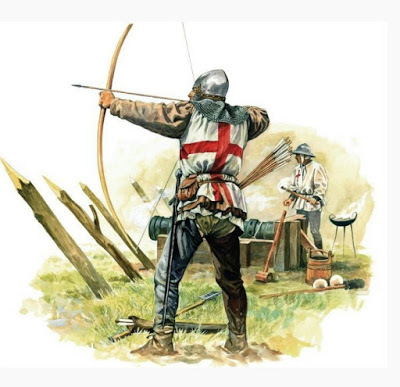
Last time I wrote about Stephen Franckton, the Shropshire man-at-arms thought to have slain Llewellyn ap Gruffydd, last native prince of Wales. Now I'll fast-forward from the 13th to the 15th century, and the reign of Henry V (1413-22).
Most people who know anything about the medieval era will have heard of the Battle of Agincourt, later glorified by Shakespeare, where Henry's little army ('four or five most vile and ragged foils/right ill-disposed in brawl ridiculous) put to flight the much larger French host.
The names of many of Henry's soldiers are preserved on the surviving muster rolls, which are now available to browse online. I've picked out one soldier in particular, an esquire or man-at-arms named Thomas Hostell.
An extremely rare petition survives, in which Thomas begs for financial aid from the government of Henry VI (1422-1471). Here is part of the text:
'To the king our sovereign lord,
Beseeches meekly your poor liegeman and humble petitioner Thomas Hostell that in consideration of the service which he performed to your noble progenitors of full blessed memory King Henry the Fourth and King Henry the Fifth, on whose soul God have mercy, being at the siege of Harfleur, there smitten with a crossbow bolt through the head, losing one eye and having his cheekbone broken, and also at the Battle of Agincourt, and later at the taking of the carracks on the sea, there with an iron bolt having his coat of plates broken asunder, and being sorely hurt, maimed and wounded...'
This one paragraph gives us an account of Hostell's extraordinary military career: first he served Henry IV (1399-1413) and then Henry V, fighting at the siege of Harfleur where he suffered a horrific wound, losing an eyeball and having his cheekbone broken by a crossbow bolt. Somehow he not only survived, but was fit enough to march on and fight at Agincourt. Later he fought at a sea-battle where he was again struck by a missile (it seems Hostell was something of a walking target) and had his shirt of iron plates burst to pieces.
The injuries he suffered at sea more than likely put an end to his military career. Like many another old soldier, Hostell had no means to support himself, and sometime during the reign of Henry V's successor was forced to live off alms. He describes himself in pitiful terms:
'...as a result of which (injuries) he is much enfeebled and weakened, and now being of great age has fallen into poverty, being much in debt and unable to help himself, having not the means whereby he can be sustained or relieved save only by the gracious almsgiving of other persons...'
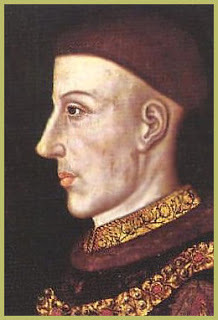 Henry V
In other words, he was forced to beg. Here is the grim reality of the lives of medieval soldiers, as opposed to the fictional likes of Thomas of Hookton, the archer in Bernard Cornwell's Grail Quest series. Thomas of Hookton ends his distinguished career as a lord, with lots of money and thousands of acres of land. Thomas Hostell, whose real-life services to the English crown were no less brave, ended with nothing.
What seems to have happened is that Hostell 'fell through the cracks' of the system. His petition goes on to claim that he was 'never yet recompensed or rewarded' for his services, meaning that he never actually got paid while he was in the army. This sounds incredible, but was by no means unusual: the army commissariat of the time was not very efficient, which was why many soldiers took to looting and plundering the countryside. Henry V, however, forbade this practice, which was good for his reputation but extremely bad for the financial security of his rankers. One English archer on the Agincourt campaign who broke the rules, and stole a pyx from a French church, was hanged for it.
Thomas Hostell ends his petition by begging for alms from Henry VI, offering in exchange to pray for the king and the souls of his ancestors. There is no record of whether the petition was successful or not, but I like to think so: for all his faults, Henry was a kind and pious man, and would surely have taken pity on the battered, penniless, one-eyed veteran who had done his father and grandfather such good service.
As the wars in France wore on, there must have been many other weary veterans, turned loose to fend for themselves once the fighting was done. Large numbers of them found employment as retainers in the households of English nobles, and the existence of so many private armies was one of the causes of The Wars of the Roses. This leads me on to my next post, and the grave-pits of Towton...

Last time I wrote about Stephen Franckton, the Shropshire man-at-arms thought to have slain Llewellyn ap Gruffydd, last native prince of Wales. Now I'll fast-forward from the 13th to the 15th century, and the reign of Henry V (1413-22).
Most people who know anything about the medieval era will have heard of the Battle of Agincourt, later glorified by Shakespeare, where Henry's little army ('four or five most vile and ragged foils/right ill-disposed in brawl ridiculous) put to flight the much larger French host.
The names of many of Henry's soldiers are preserved on the surviving muster rolls, which are now available to browse online. I've picked out one soldier in particular, an esquire or man-at-arms named Thomas Hostell.
An extremely rare petition survives, in which Thomas begs for financial aid from the government of Henry VI (1422-1471). Here is part of the text:
'To the king our sovereign lord,
Beseeches meekly your poor liegeman and humble petitioner Thomas Hostell that in consideration of the service which he performed to your noble progenitors of full blessed memory King Henry the Fourth and King Henry the Fifth, on whose soul God have mercy, being at the siege of Harfleur, there smitten with a crossbow bolt through the head, losing one eye and having his cheekbone broken, and also at the Battle of Agincourt, and later at the taking of the carracks on the sea, there with an iron bolt having his coat of plates broken asunder, and being sorely hurt, maimed and wounded...'
This one paragraph gives us an account of Hostell's extraordinary military career: first he served Henry IV (1399-1413) and then Henry V, fighting at the siege of Harfleur where he suffered a horrific wound, losing an eyeball and having his cheekbone broken by a crossbow bolt. Somehow he not only survived, but was fit enough to march on and fight at Agincourt. Later he fought at a sea-battle where he was again struck by a missile (it seems Hostell was something of a walking target) and had his shirt of iron plates burst to pieces.
The injuries he suffered at sea more than likely put an end to his military career. Like many another old soldier, Hostell had no means to support himself, and sometime during the reign of Henry V's successor was forced to live off alms. He describes himself in pitiful terms:
'...as a result of which (injuries) he is much enfeebled and weakened, and now being of great age has fallen into poverty, being much in debt and unable to help himself, having not the means whereby he can be sustained or relieved save only by the gracious almsgiving of other persons...'
 Henry V
In other words, he was forced to beg. Here is the grim reality of the lives of medieval soldiers, as opposed to the fictional likes of Thomas of Hookton, the archer in Bernard Cornwell's Grail Quest series. Thomas of Hookton ends his distinguished career as a lord, with lots of money and thousands of acres of land. Thomas Hostell, whose real-life services to the English crown were no less brave, ended with nothing.
What seems to have happened is that Hostell 'fell through the cracks' of the system. His petition goes on to claim that he was 'never yet recompensed or rewarded' for his services, meaning that he never actually got paid while he was in the army. This sounds incredible, but was by no means unusual: the army commissariat of the time was not very efficient, which was why many soldiers took to looting and plundering the countryside. Henry V, however, forbade this practice, which was good for his reputation but extremely bad for the financial security of his rankers. One English archer on the Agincourt campaign who broke the rules, and stole a pyx from a French church, was hanged for it.
Thomas Hostell ends his petition by begging for alms from Henry VI, offering in exchange to pray for the king and the souls of his ancestors. There is no record of whether the petition was successful or not, but I like to think so: for all his faults, Henry was a kind and pious man, and would surely have taken pity on the battered, penniless, one-eyed veteran who had done his father and grandfather such good service.
As the wars in France wore on, there must have been many other weary veterans, turned loose to fend for themselves once the fighting was done. Large numbers of them found employment as retainers in the households of English nobles, and the existence of so many private armies was one of the causes of The Wars of the Roses. This leads me on to my next post, and the grave-pits of Towton...
June 11, 2015
God help poor soldiers...
As part of my research for the next novel - an indirect sequel to The Half-Hanged Man - I've been researching the lot of common soldiers in the medieval period. Not the usual kings and knights and nobles, but the grunts or Poor Bloody Infantry.
Unlike the nobles, whose deeds were recorded by chroniclers, poets and bards (etc) the rank and file of medieval armies are a shadowy, faceless cast of thousands, mere also-rans to the 'glorious' deeds of their high-born masters. As individuals, they generally left no mark other than lists of names on muster rolls, and the occasional petition or passing reference in a chronicle. I've decided to rectify the situation, in my own small way, by writing a series of posts about some of the common soldiers who did make their mark on written medieval history.
First, one Stephen de Franckton of Ellesmere in Shropshire. This man lived in the 13th century and was a tenant of Roger Le Strange, a powerful baron of the Welsh March. He served his lord as a 'centenar' or minor officer in charge of a small troop of cavalry, and is remembered (not with any great affection by the Welsh) as the man who struck down Llewellyn ap Gruffydd, the enemy of King Edward I.
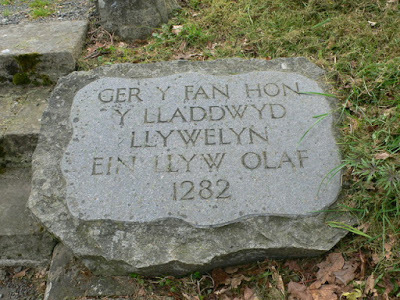 Memorial for Llewellyn 'the Last'Accounts of Llewellyn's death vary, but one version claims that the prince somehow got isolated from his main force at Orewin Bridge in mid-Wales, and encountered Franckton by chance. Franckton stabbed Llewellyn with his lance and rode on, not realising who he had been fighting. Later that day, the dying prince was discovered by another English soldier, Sir Robert Body. Body recognised the prince and cut off his head, to be sent as a welcome present to King Edward.
Other accounts claim that Llewellyn was deliberately lured into a trap by the Marchers and murdered/executed while unarmed and defenceless. Perhaps de Franckton and Body together acted as Llewellyn's executioners, watched by the Marcher Lords and Welsh nobles who had conspired to lure the prince to his doom.
A closer look at Franckton's career yields some startling results. Back in 1275, some seven years before Llewellyn's death, he was granted a pardon for past offences:
'Calender of Patent Rolls, Chester, September 10th 1275:
Ratification, at the instance of Roger Le Strange, of a pardon to Stephen de Franckton, granted by Henry III, at the instance of the said Roger, of his abjuration of the realm and also of all trespasses during the late troubles of the realm or at other times, and pardon to him at the king's suit for the said abjuration and trespasses...'
Intriguingly, this entry appears just under one of the formal summons made by Edward, ordering Llewellyn to come to court and pay homage to the English king. It seems that our Stephen was no common or garden grunt after all, but a former rebel who fought against Henry III during the Second Baron's War of the 1260s. 'Abjuring the realm' doesn't necessarily mean he fled the country. He might just have easily fled into Wales for a time, or another part of the March where the King's writ did not run.
Le Strange evidently valued him as a useful bit of muscle. One can picture Franckton as an experienced soldier and hired killer, a hard-faced old sweat untroubled by moral doubt: just the man to do a spot of dirty work when required....
 King Edward IFranckton seems to have profited little from his part in Llewellyn's death. He next appears in 1287 as a centenar or officer in charge of the soldiers raised in Ellesmere to help crush the revolt of Rhys ap Maredudd, a disgruntled Welsh lord who had rebelled against Edward I. Franckton led his company at the siege of Dryslwyn Castle in Carmarthenshire, again under Roger Le Strange. Other than his command of the Ellesmere men, there is no hint of any promotion or reward for his role in the death of Llewellyn.
Possibly Franckton got himself into fresh trouble, or the validity of his earlier pardon was questioned, for in 1293 Le Strange was obliged to seek a pardon from Prince Edmund, King Edward's brother. He was charged with harbouring a known felon, namely Stephen de Franckton, in Suffolk, back in the reign of Henry III. A separate record from the time places Franckton in York, again with his lord. What he and Le Strange were up to in York and Suffolk, far from their home territory in the Marches, is something of a mystery. It could be they were among the many groups of rebels and outlaws that roved about England in the last years of Henry III's reign, robbing and pillaging and generally making a nuisance of themselves.
Le Strange got his pardon, probably because by this time Franckton was dead. Sometime before 28th May 1292 he was killed, in unexplained circumstances, by a knight named Sir William de Vaus or Vaux. As yet I've been unable to discover much about Sir William. He served on the ill-fated Stirling campaign in 1297, and so could have been a knight of the royal household.
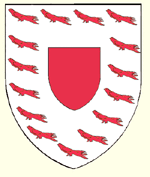 Arms of Sir William de Vaus
There's something sinister about Franckton's death. Not long after he was killed, his old lord Roger Le Strange forcibly disinherited his wife and son, and gave their lands over to another man. The son, Stephen Fitz Stephen, was still petitioning to get his lands back nearly forty years later, towards the end of Edward II's reign.
What secret history lies behind all this? Did Franckton know too much about the murky circumstances of the death of Llewellyn? Did Sir William kill Franckton in some private quarrel, or was he acting under orders? Why did Franckton's long-time lord and master, who had always favoured him in the past, suddenly turn against his bereaved family and throw them off their land?
It's all too easy to wallow in conspiracy theories, and suggest that Franckton was assassinated by the English crown for 'knowing too much'. Still, there is something murky and mysterious about his fate, and the sudden change in attitude of his lord. Plenty of room for speculation, if nothing else!
So much for Stephen de Franckton. Next, I fast-forward to the 15th century and a one-eyed veteran in the service of Henry V...
Unlike the nobles, whose deeds were recorded by chroniclers, poets and bards (etc) the rank and file of medieval armies are a shadowy, faceless cast of thousands, mere also-rans to the 'glorious' deeds of their high-born masters. As individuals, they generally left no mark other than lists of names on muster rolls, and the occasional petition or passing reference in a chronicle. I've decided to rectify the situation, in my own small way, by writing a series of posts about some of the common soldiers who did make their mark on written medieval history.
First, one Stephen de Franckton of Ellesmere in Shropshire. This man lived in the 13th century and was a tenant of Roger Le Strange, a powerful baron of the Welsh March. He served his lord as a 'centenar' or minor officer in charge of a small troop of cavalry, and is remembered (not with any great affection by the Welsh) as the man who struck down Llewellyn ap Gruffydd, the enemy of King Edward I.
 Memorial for Llewellyn 'the Last'Accounts of Llewellyn's death vary, but one version claims that the prince somehow got isolated from his main force at Orewin Bridge in mid-Wales, and encountered Franckton by chance. Franckton stabbed Llewellyn with his lance and rode on, not realising who he had been fighting. Later that day, the dying prince was discovered by another English soldier, Sir Robert Body. Body recognised the prince and cut off his head, to be sent as a welcome present to King Edward.
 Other accounts claim that Llewellyn was deliberately lured into a trap by the Marchers and murdered/executed while unarmed and defenceless. Perhaps de Franckton and Body together acted as Llewellyn's executioners, watched by the Marcher Lords and Welsh nobles who had conspired to lure the prince to his doom.
A closer look at Franckton's career yields some startling results. Back in 1275, some seven years before Llewellyn's death, he was granted a pardon for past offences:
'Calender of Patent Rolls, Chester, September 10th 1275:
Ratification, at the instance of Roger Le Strange, of a pardon to Stephen de Franckton, granted by Henry III, at the instance of the said Roger, of his abjuration of the realm and also of all trespasses during the late troubles of the realm or at other times, and pardon to him at the king's suit for the said abjuration and trespasses...'
Intriguingly, this entry appears just under one of the formal summons made by Edward, ordering Llewellyn to come to court and pay homage to the English king. It seems that our Stephen was no common or garden grunt after all, but a former rebel who fought against Henry III during the Second Baron's War of the 1260s. 'Abjuring the realm' doesn't necessarily mean he fled the country. He might just have easily fled into Wales for a time, or another part of the March where the King's writ did not run.
Le Strange evidently valued him as a useful bit of muscle. One can picture Franckton as an experienced soldier and hired killer, a hard-faced old sweat untroubled by moral doubt: just the man to do a spot of dirty work when required....
 King Edward IFranckton seems to have profited little from his part in Llewellyn's death. He next appears in 1287 as a centenar or officer in charge of the soldiers raised in Ellesmere to help crush the revolt of Rhys ap Maredudd, a disgruntled Welsh lord who had rebelled against Edward I. Franckton led his company at the siege of Dryslwyn Castle in Carmarthenshire, again under Roger Le Strange. Other than his command of the Ellesmere men, there is no hint of any promotion or reward for his role in the death of Llewellyn.
 Possibly Franckton got himself into fresh trouble, or the validity of his earlier pardon was questioned, for in 1293 Le Strange was obliged to seek a pardon from Prince Edmund, King Edward's brother. He was charged with harbouring a known felon, namely Stephen de Franckton, in Suffolk, back in the reign of Henry III. A separate record from the time places Franckton in York, again with his lord. What he and Le Strange were up to in York and Suffolk, far from their home territory in the Marches, is something of a mystery. It could be they were among the many groups of rebels and outlaws that roved about England in the last years of Henry III's reign, robbing and pillaging and generally making a nuisance of themselves.
Le Strange got his pardon, probably because by this time Franckton was dead. Sometime before 28th May 1292 he was killed, in unexplained circumstances, by a knight named Sir William de Vaus or Vaux. As yet I've been unable to discover much about Sir William. He served on the ill-fated Stirling campaign in 1297, and so could have been a knight of the royal household.
 Arms of Sir William de Vaus
There's something sinister about Franckton's death. Not long after he was killed, his old lord Roger Le Strange forcibly disinherited his wife and son, and gave their lands over to another man. The son, Stephen Fitz Stephen, was still petitioning to get his lands back nearly forty years later, towards the end of Edward II's reign.
What secret history lies behind all this? Did Franckton know too much about the murky circumstances of the death of Llewellyn? Did Sir William kill Franckton in some private quarrel, or was he acting under orders? Why did Franckton's long-time lord and master, who had always favoured him in the past, suddenly turn against his bereaved family and throw them off their land?
It's all too easy to wallow in conspiracy theories, and suggest that Franckton was assassinated by the English crown for 'knowing too much'. Still, there is something murky and mysterious about his fate, and the sudden change in attitude of his lord. Plenty of room for speculation, if nothing else!
So much for Stephen de Franckton. Next, I fast-forward to the 15th century and a one-eyed veteran in the service of Henry V...
May 25, 2015
Mount Silverback
Among the desolate flats of the Western Province, a particularly bleak region of the Winter Realm, rises a single spire of rock. This lone mountain is known as Mount Silverback, after the permanent caps of white ice gleaming on its lofty heights.
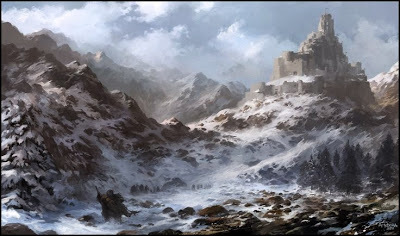
Seen from the plains below, it looks like a castle of sorts built into the side of the mountain. Seven round towers are visible near the summit, built on a series of uneven precipices linked by steep wooden staircases and paths hacked out of the rock. From the highest peak flies a great banner, rippling forever in the freezing winds that sweep across the plains and buffet the mountain. The banner displays a black sword against a stark white field, symbol of the priest-knights that dwell inside Silverback.
This is the outward face of the Temple of Occido, a grim warrior-cult dedicated to the worship of Occido, the God of War. The Templars that reside in this remote and inhospitable spot chose it for precisely those qualities. Here, far away from the other settlements of the Winter Realm, they are free to commune with their savage deity and pursue their secretive, ritualised existence.
The Templars play an important role in The Best Weapon, the first of the epic fantasy novels I am co-writing with Martin Bolton. One of the central characters, Fulk the No-Man's Son, was adopted by the Templars as an orphan, and raised to follow their grim code and grimmer religion. He is privy to some - not all - of their secrets, and knows what many outsiders don't: the core of Mount Silverback is essentially hollow, with hundreds of halls and winding passages carved out of the living rock by long-dead hands.
The first Templars discovered these deep chambers, bare and apparently deserted, when they first came to explore Silverback. They wasted no time in occupying the place, and in hiding or rubbing out the peculiar symbols and diagrams carved onto the walls. The existence of these, as well as certain passages that led down down into unexplored catacombs deep under the mountain, were carefully hushed up. So far as the knights of Occido are concerned, what they don't know (probably) won't hurt them.
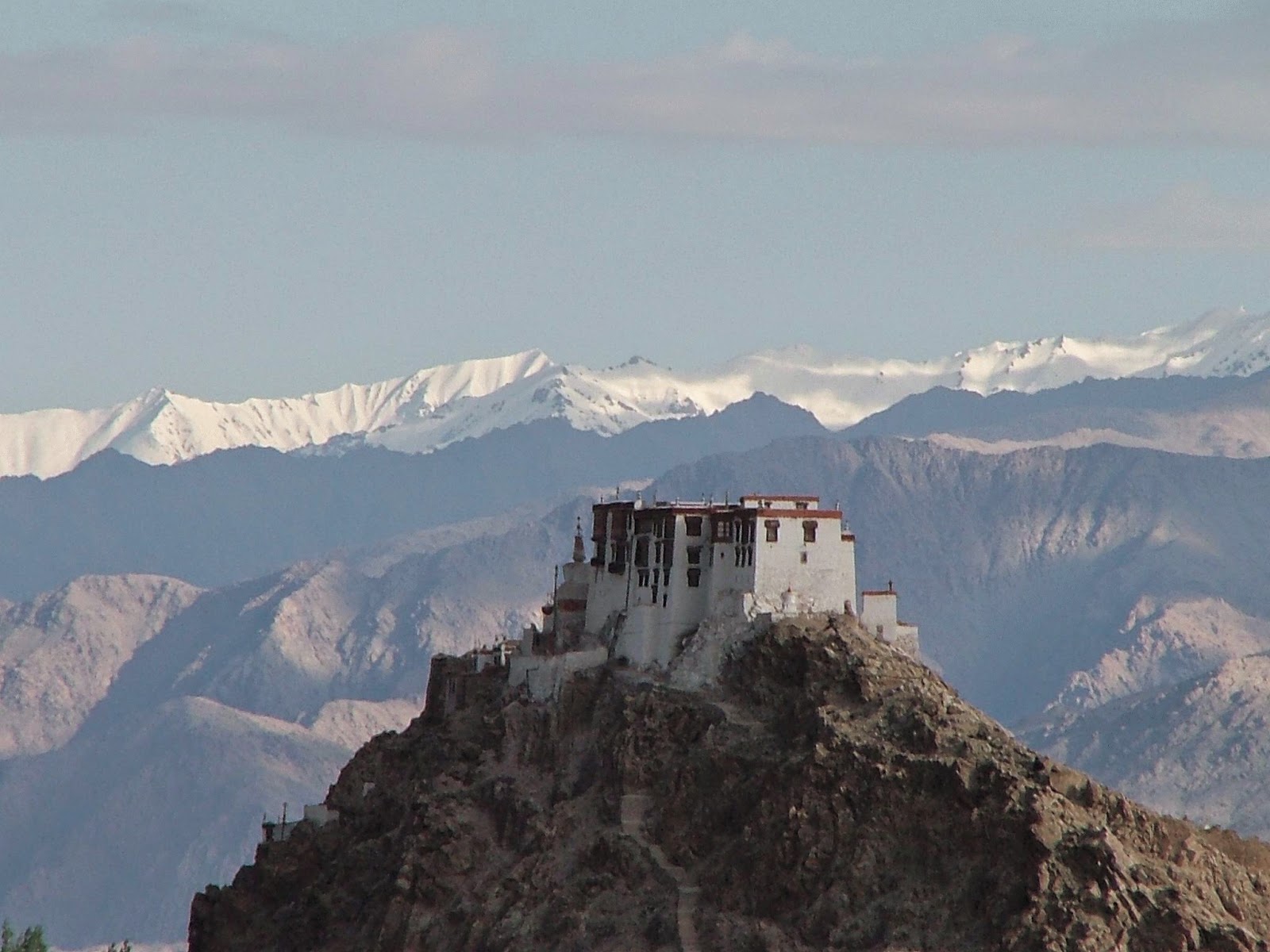
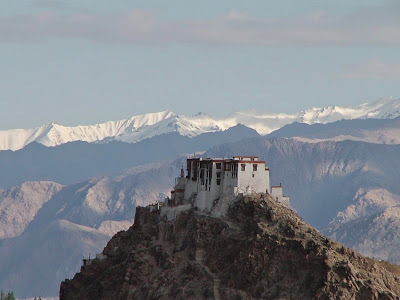 I took my inspiration for the Temple, and its reclusive inhabitants, from various cells of my fractured mind. The Temple itself, perched on a high mountain far away from the rest of civilisation, was inspired by dramatic images of Buddhist temples in Nepal and Tibet, such as the one to the right.
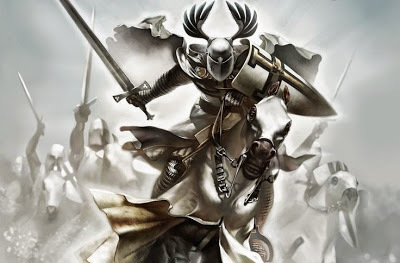
Occido, the belligerent God of War, was inspired by Mars, the Roman God of War, though he has a slightly cruder, more shamanic quality. The Templars envisage him as a gigantic warrior, clad in armour of steaming, red-hot iron, faceless behind the stern visage of his helm. All that can be seen of his face is a pair of red eyes that glow like twin fires. As befits a god of war, Occido is pitiless, heartless, and entirely fixated on death and slaughter and military glory. These are the things prized by the Templars, making them a fairly joyless bunch to deal with, though very good at fighting.
The Templars themselves are obviously inspired by the historical Templars, though unlike their real-life counterparts they play little to no part in politics, and do not allow themselves to become corrupted or softened by worldly riches. Hidden away on their mountain, reliant on mysterious resources to survive, they resemble the inmates of a prison who have chosen not to escape.
Still, this brotherhood of strange and rather unpleasant men - they are almost all men - have played an important part in the history of the Winter Realm, and are fated to do so again in The Best Weapon and its sequels. The black sword of the Temple will once again fly over stricken battlefields, and the war-shout of the knights of Occido will cause the enemies of the realm to quake in their boots...
The Best Weapon on Amazon

Seen from the plains below, it looks like a castle of sorts built into the side of the mountain. Seven round towers are visible near the summit, built on a series of uneven precipices linked by steep wooden staircases and paths hacked out of the rock. From the highest peak flies a great banner, rippling forever in the freezing winds that sweep across the plains and buffet the mountain. The banner displays a black sword against a stark white field, symbol of the priest-knights that dwell inside Silverback.
This is the outward face of the Temple of Occido, a grim warrior-cult dedicated to the worship of Occido, the God of War. The Templars that reside in this remote and inhospitable spot chose it for precisely those qualities. Here, far away from the other settlements of the Winter Realm, they are free to commune with their savage deity and pursue their secretive, ritualised existence.
The Templars play an important role in The Best Weapon, the first of the epic fantasy novels I am co-writing with Martin Bolton. One of the central characters, Fulk the No-Man's Son, was adopted by the Templars as an orphan, and raised to follow their grim code and grimmer religion. He is privy to some - not all - of their secrets, and knows what many outsiders don't: the core of Mount Silverback is essentially hollow, with hundreds of halls and winding passages carved out of the living rock by long-dead hands.
The first Templars discovered these deep chambers, bare and apparently deserted, when they first came to explore Silverback. They wasted no time in occupying the place, and in hiding or rubbing out the peculiar symbols and diagrams carved onto the walls. The existence of these, as well as certain passages that led down down into unexplored catacombs deep under the mountain, were carefully hushed up. So far as the knights of Occido are concerned, what they don't know (probably) won't hurt them.
 I took my inspiration for the Temple, and its reclusive inhabitants, from various cells of my fractured mind. The Temple itself, perched on a high mountain far away from the rest of civilisation, was inspired by dramatic images of Buddhist temples in Nepal and Tibet, such as the one to the right.
 Occido, the belligerent God of War, was inspired by Mars, the Roman God of War, though he has a slightly cruder, more shamanic quality. The Templars envisage him as a gigantic warrior, clad in armour of steaming, red-hot iron, faceless behind the stern visage of his helm. All that can be seen of his face is a pair of red eyes that glow like twin fires. As befits a god of war, Occido is pitiless, heartless, and entirely fixated on death and slaughter and military glory. These are the things prized by the Templars, making them a fairly joyless bunch to deal with, though very good at fighting.
The Templars themselves are obviously inspired by the historical Templars, though unlike their real-life counterparts they play little to no part in politics, and do not allow themselves to become corrupted or softened by worldly riches. Hidden away on their mountain, reliant on mysterious resources to survive, they resemble the inmates of a prison who have chosen not to escape.
Still, this brotherhood of strange and rather unpleasant men - they are almost all men - have played an important part in the history of the Winter Realm, and are fated to do so again in The Best Weapon and its sequels. The black sword of the Temple will once again fly over stricken battlefields, and the war-shout of the knights of Occido will cause the enemies of the realm to quake in their boots...
The Best Weapon on Amazon
May 20, 2015
The World Apparent, Part One...
Following the release of The Path of Sorrow, the second full-length novel in our fantasy series co-written with Martin Bolton, I want to post a series of articles about the universe we have created, and the characters that populate it.
World-building is a fascinating process, as well as a challenge: unlike historical fiction, where everything is set up and ready to go, you have to create the backdrop before writing the story. To that end we spent many evenings - usually in various central London pubs - ranting at each other about the geography of our fantasy planet, the names of the countries, oceans and cities etc, and whose turn it was to stagger to the bar.
Thus The World Apparent was born on a series of damp beermats and notepads, first as a barely decipherable squiggle (drawing is not my strong point) and then as something rather more impressive and easy on the eye, courtesy of Martin Bolton, who is a talented artist as well as an insufferable clown. Below is the world map we eventually agreed on.
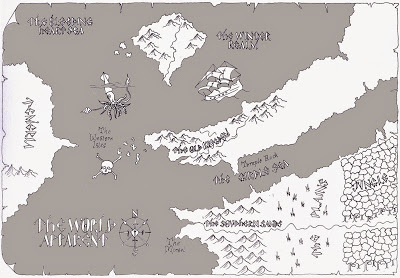
To avoid arguments spilling over into bloodshed, we decided to carve up the world between us: I chose the northern half of the map, developing the history and layout of the Winter Realm and the Old Kingdom, while Martin took the lands south of the Girdle Sea. Temeria, the big continent to the west, was more or less a blank space until we fleshed it out for The Path of Sorrow. Other parts of the map will be explored as and when we invent them.
I had great fun shaping The Winter Realm, the teardrop-shaped northern island at the top of the map. Since this was fantasy, I was able to slap together lots of different elements to create a land of snow and ice, ringed on all sides by impassable mountains, and with only one entrance/exit. This is the Iron Gate, an enormous man-made barrier on the southern tip of the island, raised and lowered by a complex mechanism of chains and winches. The sentries on the rampart have absolute control over who can sail in or out, making the Iron Gate the most important fortress on the island.
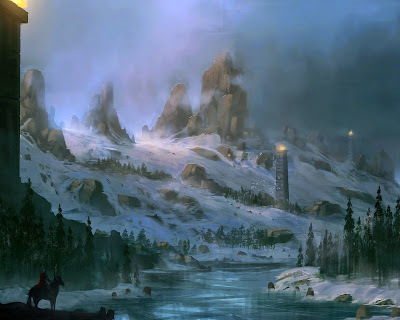
The Winter Realm is populated by the descendants of refugees from The Old Kingdom, the continent immediately to the south, who fled when that ancient realm was devastated by civil war and a series of earthquakes. Harsh conditions - the land is covered by snow for all but three months of the year - mean that the population remains low, no more than half a million souls thinly spread over the rocky, inhospitable plains and mountains.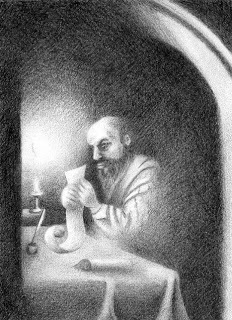 Cardinal Flambard, by Zennor Matthews
The culture of the Winter Realm is (naturally) medieval, vaguely 11th-12th century Western Europe, and with few refinements. There is only one real city, founded by the first refugees on one of the few patches of fertile land, and home to a few thousand people. The city is named Hope, and from here the Winter Realm is ruled by a series of kings who claim direct descent from the leader of the refugees. By the time of The Best Weapon, the last king has died, leaving only an infant daughter to succeed him. Until she comes of age, the land is governed by a regent, Cardinal Flambard. Flambard is a grotesque, corrupt, cynical, hugely intelligent and politically able man, a mixture of Baron Vladmir Harkoonen (from the Dune series by Frank Herbert) Cardinal Wolsey, Narses and various other svengali figures culled from fantasy, history and my imagination.
The rest of the Winter Realm is bare and desolate. Much of it is howling wasteland, with lots of scattered baronies and strongholds. One of the larger of the ugly stone bastions dotted about the land is Clifford's Mount, an imposing pile of grey rock on a mound, known as Evil Hold by the local peasants due to the brutal nature of the lords who reside there.
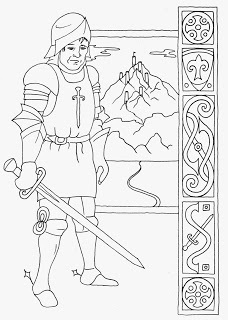 Fulk, by Zennor MatthewsThe only major settlement in the western part of the island is Mount Silverback. This enormous spire of rock rises from the windswept flatlands that surround it, like a great finger pointing at the sky, and is home to the Temple of Occido. Occido is the War God, the most bellicose of the pantheon of gods that dwell in the Celestial Sphere. His worshippers on the mountain are a reclusive cadre of Templar Knights, the best fighters in the Winter Realm - possibly in the whole world - and semi-independent from the Kings at Hope.
One of the two main characters of The Best Weapon, Fulk the No-Man's Son, begins the story as a young recruit at the Temple. Orphaned while still a baby (hence his name) he was adopted by the Templars and raised amid the strict martial temple-fortress of Mount Silverback. Fulk, however, is destined to become much more than just another priest-knight of Occido...
More on the Winter Realm, and The World Apparent in general, to follow!
World-building is a fascinating process, as well as a challenge: unlike historical fiction, where everything is set up and ready to go, you have to create the backdrop before writing the story. To that end we spent many evenings - usually in various central London pubs - ranting at each other about the geography of our fantasy planet, the names of the countries, oceans and cities etc, and whose turn it was to stagger to the bar.
Thus The World Apparent was born on a series of damp beermats and notepads, first as a barely decipherable squiggle (drawing is not my strong point) and then as something rather more impressive and easy on the eye, courtesy of Martin Bolton, who is a talented artist as well as an insufferable clown. Below is the world map we eventually agreed on.
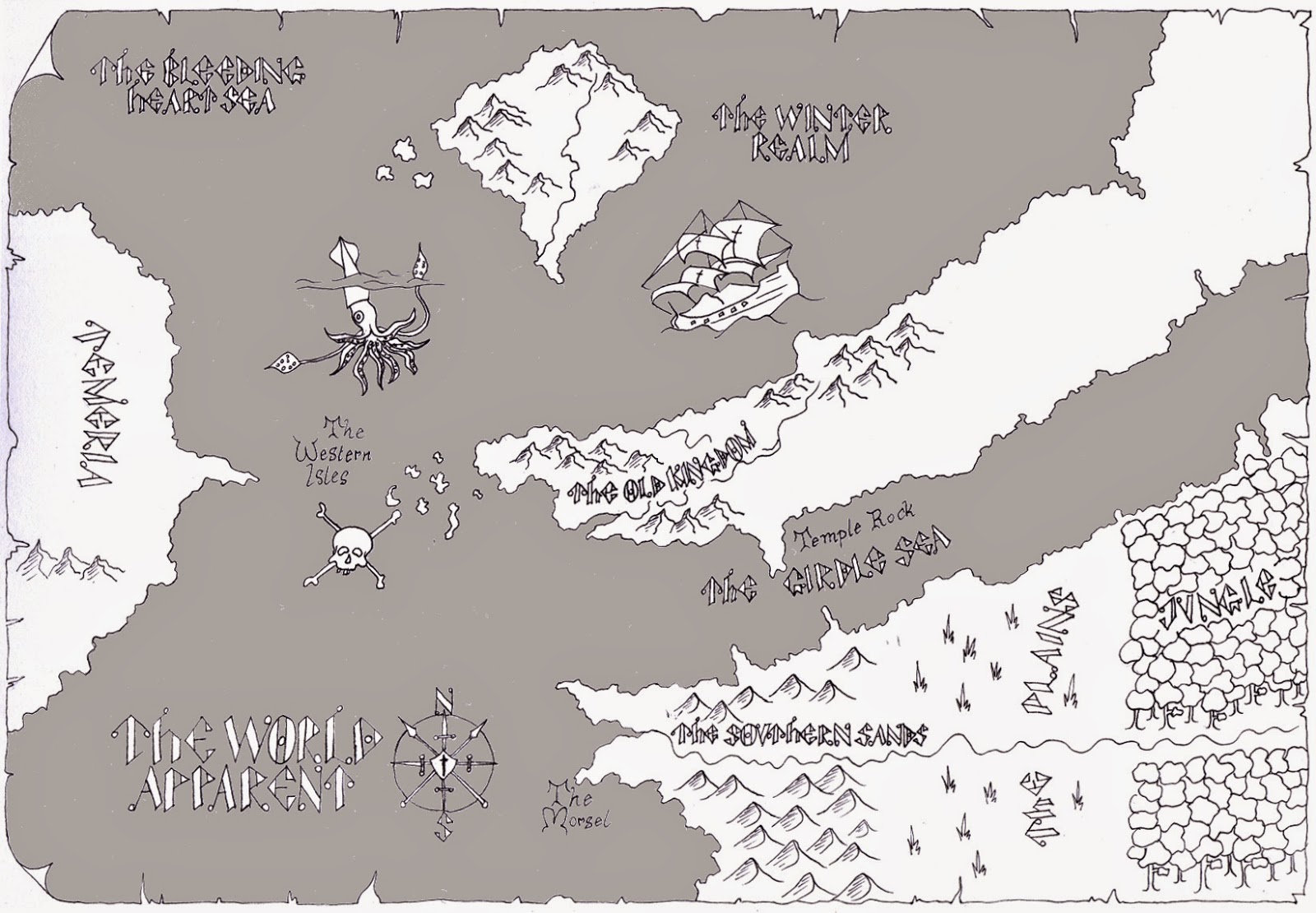
To avoid arguments spilling over into bloodshed, we decided to carve up the world between us: I chose the northern half of the map, developing the history and layout of the Winter Realm and the Old Kingdom, while Martin took the lands south of the Girdle Sea. Temeria, the big continent to the west, was more or less a blank space until we fleshed it out for The Path of Sorrow. Other parts of the map will be explored as and when we invent them.
I had great fun shaping The Winter Realm, the teardrop-shaped northern island at the top of the map. Since this was fantasy, I was able to slap together lots of different elements to create a land of snow and ice, ringed on all sides by impassable mountains, and with only one entrance/exit. This is the Iron Gate, an enormous man-made barrier on the southern tip of the island, raised and lowered by a complex mechanism of chains and winches. The sentries on the rampart have absolute control over who can sail in or out, making the Iron Gate the most important fortress on the island.

The Winter Realm is populated by the descendants of refugees from The Old Kingdom, the continent immediately to the south, who fled when that ancient realm was devastated by civil war and a series of earthquakes. Harsh conditions - the land is covered by snow for all but three months of the year - mean that the population remains low, no more than half a million souls thinly spread over the rocky, inhospitable plains and mountains.
 Cardinal Flambard, by Zennor Matthews
The culture of the Winter Realm is (naturally) medieval, vaguely 11th-12th century Western Europe, and with few refinements. There is only one real city, founded by the first refugees on one of the few patches of fertile land, and home to a few thousand people. The city is named Hope, and from here the Winter Realm is ruled by a series of kings who claim direct descent from the leader of the refugees. By the time of The Best Weapon, the last king has died, leaving only an infant daughter to succeed him. Until she comes of age, the land is governed by a regent, Cardinal Flambard. Flambard is a grotesque, corrupt, cynical, hugely intelligent and politically able man, a mixture of Baron Vladmir Harkoonen (from the Dune series by Frank Herbert) Cardinal Wolsey, Narses and various other svengali figures culled from fantasy, history and my imagination.
The rest of the Winter Realm is bare and desolate. Much of it is howling wasteland, with lots of scattered baronies and strongholds. One of the larger of the ugly stone bastions dotted about the land is Clifford's Mount, an imposing pile of grey rock on a mound, known as Evil Hold by the local peasants due to the brutal nature of the lords who reside there.
 Fulk, by Zennor MatthewsThe only major settlement in the western part of the island is Mount Silverback. This enormous spire of rock rises from the windswept flatlands that surround it, like a great finger pointing at the sky, and is home to the Temple of Occido. Occido is the War God, the most bellicose of the pantheon of gods that dwell in the Celestial Sphere. His worshippers on the mountain are a reclusive cadre of Templar Knights, the best fighters in the Winter Realm - possibly in the whole world - and semi-independent from the Kings at Hope.
 One of the two main characters of The Best Weapon, Fulk the No-Man's Son, begins the story as a young recruit at the Temple. Orphaned while still a baby (hence his name) he was adopted by the Templars and raised amid the strict martial temple-fortress of Mount Silverback. Fulk, however, is destined to become much more than just another priest-knight of Occido...
More on the Winter Realm, and The World Apparent in general, to follow!
May 10, 2015
Two books for one...sort of...
I have a double announcement to make - two 'new' books have been released at the same time on Kindle and paperback. One, The Path of Sorrow, is co-written with Martin Bolton and forms a sequel to our first effort, The Best Weapon. The other is the third and last episode (for now) in The White Hawk series, set during the turbulent civil wars between Lancaster and York.
There will be all sorts of freebie competitions and prizes happening in the next few weeks for both novels, so keep your eyes peeled! I will post something more detailed in the near future...
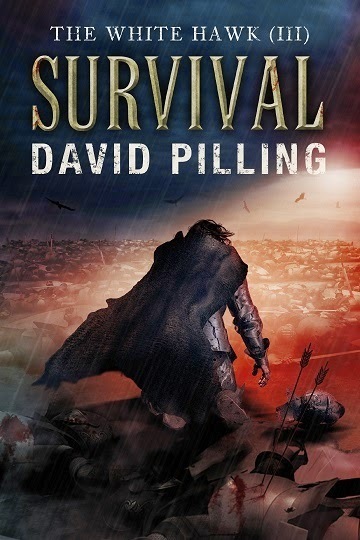
The White Hawk (III) on Amazon
There will be all sorts of freebie competitions and prizes happening in the next few weeks for both novels, so keep your eyes peeled! I will post something more detailed in the near future...

The White Hawk (III) on Amazon