David Pilling's Blog, page 69
February 26, 2016
Civil war, gout, and rebel earls...
Robert de Ferrers, 6th Earl of Derby (1239-79), was one of the strongest - and strangest - characters in a period of English history stuffed full of dynamic, larger-than-life personalities. He tends to get a bit overlooked or dismissed in the histories, so I thought I’d shine a flashlight on him for this post.

Ferrers' ancestors were among the original mob of land-hungry Normans who came over with the Conqueror in 1066. The centre of their power was in Derbyshire, though it wasn’t until the early 13th century that they really started to piece together a mighty chunk of territory in the north and midlands. Despite their wealth, they were an unlucky family in some ways: the males suffered from hereditary gout, a debilitating and embarrassing disease for noblemen required to take active roles in war and politics. Robert’s father William, the 5th Earl, suffered so badly from the malady he had to be carried everywhere in a litter. In an age when only condemned men travelled in litters, this was a severe humiliation. The final insult came in 1254 when his litter overturned on a bridge and tipped him into the river. He did shortly afterwards of injuries sustained in the fall.
Ferrers, only fifteen when his father died, was left in a difficult position. Too young to inherit, the wardship of his estates was handed over to his cousin Lord Edward, Henry III’s eldest son and future Edward I. Edward promptly sold the wardship to his mother, Eleanor of Provence, and Peter of Savoy for the handsome sum of 6000 marks. The sale effectively mortgaged his kinsman, body and soul, until he was old enough to do homage and take possession of his lands. When Ferrers finally came of age in 1260, he encountered further difficulties. His mother’s dowry ate up most of his income, while he also had to provide for his younger brother William, his wife Mary, and his kinsman Edward, who retained some of the Ferrers estate after the earl came of age. There were also debts to pay, inherited from the previous earl. Ferrers was left with a stipend of just £100 a year to run one of the largest estates in England and sustain thousands of dependants.
 Peveril Castle in DerbyshireHis money woes, allied to his wild and ungovernable nature, drove Ferrers to violence. Shortly after coming of age he attacked Tutbury Priory, a religious house his family had been patrons of for generations, and partially destroyed it. He also encouraged his tenants to illegally hunt beasts inside the Derbyshire forests, as well as commit assaults and robberies against his neighbours.
In 1263 Ferrers fell in with the baronial reform movement, keeping company with Simon de Montfort and Richard de Clare, Earl of Gloucester. After de Montfort’s return to England in April 1263, as the leader of an armed rising against Henry III, Robert swung into action. In May and June of that year his forces were active on the southern marches of Wales, seizing the ‘Three Castles’, as they were called, that belonged to the Lord Edward. His long-running rivalry with the prince was the defining feature of Ferrers’ life: “of no-one was Edward more afraid”, wrote the chronicler Robert of Gloucester.
In February 1264, after some skirmishing and renewed war on the marches, Ferrers’ army descended on Worcester. The town was stormed, and the Jewish quarter sacked, with many Jews murdered or kidnapped by his troops. The earl deliberately stole bonds recording Jewish loans he had taken out and carried them off to his castle at Tutbury - a neat way of wiping out one’s debts. He then advanced down the Severn to Gloucester, where he hoped to snare Edward. To his fury, a truce made by Henry de Montfort allowed Edward to slip away to his father at Oxford, ravaging Ferrers’ lands en route. The gloves were now off between the two noble kinsmen, who embarked upon a series of brutal tit-for-tat raids. In March Edward harried his enemy’s lands in Staffordshire, stormed Chartley Castle, and in the following month razed Tutbury and extorted protection money at swordpoint from the earl’s tenants.
After Edward’s capture at the Battle of Lewes, Ferrers was able to respond in kind. His forces overran Edward’s castles in Yorkshire and Nottinghamshire, captured the castle of Fotheringhay in Northamptonshire, and in late June seized the prince’s chief stronghold, Peveril Castle in Derbyshire. Flushed with his successes, Ferrers then swept west at the head of twenty thousand horse and foot, seized Edward’s base at Chester and routed an army of Welsh troops under the command of Dafydd ap Gruffydd. By now his fearsome reputation preceded him: “they did not dare to come against the earl in battle,” a chronicler wrote of Dafydd’s men, “and so fled....when it came to the pursuit, he killed up to a hundred of them, and captured others; and only one of his men was wounded.”
Ferrers’ days of glory were numbered. Simon de Montfort himself was nervous of his violent and unpredictable ally, and wanted the power base of Chester for himself. He soon cooked up a scheme to nullify the earl. Displaying a typical lack of political cunning, Ferrers accepted de Montfort’s summons to London, where he was promptly arrested on various trumped-up charges and thrown into the Tower. With few friends among the English nobility, Ferrers was powerless to prevent de Montfort stripping away the assets he had only recently made his own. Thus the vicious circle was complete: Edward had robbed Ferrers, Ferrers had robbed Edward, and now Ferrers was robbed by de Montfort.
The victor didn’t have long to enjoy his spoils. In August 1265 Edward pulled off a spectacular reversal of fortune and smashed the de Montfort clan in two bloody engagements at Kenilworth and Evesham. Simon himself was hunted down by a specially chosen death-squad and his body mutilated on the field at Evesham. Perhaps surprisingly, the vengeful prince took no action against Ferrers, still cooling his heels in the Tower. In December the prisoner was released and allowed to buy a pardon for 1500 marks and a gold cup studded with gems. Despite his hatred of Edward, Ferrers was too important to be done away with: he was popular among his tenants in the north midlands, and the ageing King Henry needed his money and support in the region.
 Edward IDame Fortune had chosen to smile on Ferrers. His response was to spit in her eye. In the spring of 1266 he joined a new band of rebels in the north, headed by Baldwin Wake and John de Eyvill, a rough northern baron described as ‘the bold d’Eyvil, a canny and hardy warrior.” This new baronial coalition ravaged the northern and eastern counties of England in an orgy of fire and sword and rampant bloodletting. They made their base, like so many Robin Hoods, in the greenwood at Duffieldfrith in Derbyshire, close to Ferrers’s chief stronghold at Tutbury.
Ferrers’ decision to go back into rebellion has baffled historians. He is generally assumed to have acted out of sheer greed and stupidity, but that seems a little unfair. Efficient roughnecks like John de Eyvill wouldn’t have accepted a fool for a leader, and Ferrers and his allies may have had valid causes for complaint. King Henry was still hanging on to their lands, even though they were supposed to have been returned the previous year. For the barons, raised and trained to settle every dispute with the sword, there could only be one response.
Henry’s response was to send an army racing north to quash the rebellion. The rebels were ambushed at Chesterfield and their forces scattered. John de Eyvill escaped to carry on the fight, but Ferrers was quite literally caught with his pants down: he was being bled for his gout when the royalists attacked, and had to stagger away and hide under a pile of woolsacks in a nearby church while his enemies looked for him. In the end he was betrayed, locked up in a cage and carted south to Windsor. No matter what they did, his family just couldn’t stay out of carts.
This time the King and his sons meant to de-fang the troublesome earl once and for all. He remained in prison for three years while a scheme was hatched to strip him of all his lands and goods. Finally, in October 1269, the prisoner was offered a hopeless deal: unless he paid the sum of £50,000 inside ten days, the whole of his estate would be taken away and given to King Henry’s second son. Edmund. Ferrers could not possibly hope to find the money in such a short time. Even so his enemies took out a bit of extra insurance, just in case. On 9th July he was taken from Windsor to Chippenham, where in the presence of the Chancellor he was ordered to formally sign away his inheritance. The demand was almost certainly made with the threat of physical torture if he refused: in later years Ferrers certainly claimed as much. He had no choice but to obey, and at the end of May was released, a free man, but now landless, penniless and utterly dishonoured.
Whatever else he might have been, Ferrers was no quitter. Even a broken man may still have teeth, and he still had the loyalty of his old tenants. Shortly after his release the Midlands was hit by a staggering wave of violent crime, as bad as anything experienced in the civil war. Hundreds of armed robbers, mounted and on foot, plagued the forests and highways, attacking secular and religious persons alike, thieving and murdering with impunity. At the same time a band of ‘night robbers’ emerged from the Derbyshire woods and attacked Nottingham, smashing the timber defences and killing a number of the citizens.
 Battle of Lewes
The leader of this army of footpads was one Roger Godberd, a yeoman farmer who held the manor of Swannington in Leicestershire of Ferrers. Evidently a useful bit of muscle, Ferrers had employed him in the garrison of Nottingham Castle in 1264, from where Godberd and other men rode out to commit large-scale poaching offences inside Sherwood Forest. Given the close relationship between lord and tenant, and the timing of Godberd’s revolt, it seems most likely that this new uprising was inspired by anger at Ferrers’ disinheritance. Alternatively, Godberd may simply have been acting on his master’s orders.
Ferrers himself was not idle. While the Midlands descended into anarchy, he led a band of armed men to seize and occupy the manor of Stanford in Berkhire. Stanford was one of his confiscated manors, recently given to Roger de Leyburn, the Lord Edward’s favourite crony. Leyburn had gone to the Holy Land on Crusade with his master, and his absence may have encouraged Ferrers to make the attempt. However, King Henry’s troops soon arrived on the scene and turfed him out again. Soon afterwards he suffered another blow when his ally, Roger Godberd, was finally captured inside Sherwood by royalist forces and imprisoned. Godberd was shunted about between various prisons until his trial at Newgate in 1276. Incredibly, he was acquitted of all charges and released.
Even now, Ferrers was not done. By this point he was little more than an outlaw, leading a gang of brigands in the woods and wild places of the land he had once owned. In 1273 he popped up in Staffordshire at the head of another band of armed loyalists and drove out the royalist garrison at Chartley Castle. His old rival Edward, now King Edward I, was informed that the rebels had not only seized the castle but started working the land nearby, felling timber for sale and using the mills to grind corn. Alarmed and no doubt deeply irritated by Ferrers’ stubborn refusal to go away, Edward despatched an army to retake Chartley and smoke out the men occupying it. His troops were succesful, though not without suffering casualties. Ferrers escaped, thus avoiding a probable third term of imprisonment.
After this latest setback, Ferrers switched tactics. He finally found a friend in the person of Gilbert ‘the red’ de Clare, Earl of Gloucester, and with his support tried to seek redress at law. Technically he had a good case - his disinheritance in 1269 was a monstrous injustice - but the crown had no intention of allowing the fallen earl to rise again. Almost all of his claims were thrown out of court, though in 1275 King Edward relented a little and allowed Ferrers to recover the manor (though not the castle) of Chartley and the manor of Holbrook in Derbyshire.
If this was a sop to keep the old pest quiet, it had the required effect. Ferrers spent his last years living quietly at Chartley with his second wife, Eleanor de Bohun, and their young family. Having lost the majority of his vast inheritance, he did at least suceeed in fathering a son, John, to inherit what remained. He died in 1279 at the relatively young age of forty, probably from an illness related to gout, and was buried at the Augustinian priory of St Thomas in Staffordshire. His descendents, reduced to the lower levels of the English baronage, proved remarkably enduring, and the title of Earl Ferrers has survived to this day. Hopefully the present incumbent doesn’t suffer from gout.

Ferrers' ancestors were among the original mob of land-hungry Normans who came over with the Conqueror in 1066. The centre of their power was in Derbyshire, though it wasn’t until the early 13th century that they really started to piece together a mighty chunk of territory in the north and midlands. Despite their wealth, they were an unlucky family in some ways: the males suffered from hereditary gout, a debilitating and embarrassing disease for noblemen required to take active roles in war and politics. Robert’s father William, the 5th Earl, suffered so badly from the malady he had to be carried everywhere in a litter. In an age when only condemned men travelled in litters, this was a severe humiliation. The final insult came in 1254 when his litter overturned on a bridge and tipped him into the river. He did shortly afterwards of injuries sustained in the fall.
Ferrers, only fifteen when his father died, was left in a difficult position. Too young to inherit, the wardship of his estates was handed over to his cousin Lord Edward, Henry III’s eldest son and future Edward I. Edward promptly sold the wardship to his mother, Eleanor of Provence, and Peter of Savoy for the handsome sum of 6000 marks. The sale effectively mortgaged his kinsman, body and soul, until he was old enough to do homage and take possession of his lands. When Ferrers finally came of age in 1260, he encountered further difficulties. His mother’s dowry ate up most of his income, while he also had to provide for his younger brother William, his wife Mary, and his kinsman Edward, who retained some of the Ferrers estate after the earl came of age. There were also debts to pay, inherited from the previous earl. Ferrers was left with a stipend of just £100 a year to run one of the largest estates in England and sustain thousands of dependants.
 Peveril Castle in DerbyshireHis money woes, allied to his wild and ungovernable nature, drove Ferrers to violence. Shortly after coming of age he attacked Tutbury Priory, a religious house his family had been patrons of for generations, and partially destroyed it. He also encouraged his tenants to illegally hunt beasts inside the Derbyshire forests, as well as commit assaults and robberies against his neighbours.
In 1263 Ferrers fell in with the baronial reform movement, keeping company with Simon de Montfort and Richard de Clare, Earl of Gloucester. After de Montfort’s return to England in April 1263, as the leader of an armed rising against Henry III, Robert swung into action. In May and June of that year his forces were active on the southern marches of Wales, seizing the ‘Three Castles’, as they were called, that belonged to the Lord Edward. His long-running rivalry with the prince was the defining feature of Ferrers’ life: “of no-one was Edward more afraid”, wrote the chronicler Robert of Gloucester.
In February 1264, after some skirmishing and renewed war on the marches, Ferrers’ army descended on Worcester. The town was stormed, and the Jewish quarter sacked, with many Jews murdered or kidnapped by his troops. The earl deliberately stole bonds recording Jewish loans he had taken out and carried them off to his castle at Tutbury - a neat way of wiping out one’s debts. He then advanced down the Severn to Gloucester, where he hoped to snare Edward. To his fury, a truce made by Henry de Montfort allowed Edward to slip away to his father at Oxford, ravaging Ferrers’ lands en route. The gloves were now off between the two noble kinsmen, who embarked upon a series of brutal tit-for-tat raids. In March Edward harried his enemy’s lands in Staffordshire, stormed Chartley Castle, and in the following month razed Tutbury and extorted protection money at swordpoint from the earl’s tenants.
After Edward’s capture at the Battle of Lewes, Ferrers was able to respond in kind. His forces overran Edward’s castles in Yorkshire and Nottinghamshire, captured the castle of Fotheringhay in Northamptonshire, and in late June seized the prince’s chief stronghold, Peveril Castle in Derbyshire. Flushed with his successes, Ferrers then swept west at the head of twenty thousand horse and foot, seized Edward’s base at Chester and routed an army of Welsh troops under the command of Dafydd ap Gruffydd. By now his fearsome reputation preceded him: “they did not dare to come against the earl in battle,” a chronicler wrote of Dafydd’s men, “and so fled....when it came to the pursuit, he killed up to a hundred of them, and captured others; and only one of his men was wounded.”
Ferrers’ days of glory were numbered. Simon de Montfort himself was nervous of his violent and unpredictable ally, and wanted the power base of Chester for himself. He soon cooked up a scheme to nullify the earl. Displaying a typical lack of political cunning, Ferrers accepted de Montfort’s summons to London, where he was promptly arrested on various trumped-up charges and thrown into the Tower. With few friends among the English nobility, Ferrers was powerless to prevent de Montfort stripping away the assets he had only recently made his own. Thus the vicious circle was complete: Edward had robbed Ferrers, Ferrers had robbed Edward, and now Ferrers was robbed by de Montfort.
The victor didn’t have long to enjoy his spoils. In August 1265 Edward pulled off a spectacular reversal of fortune and smashed the de Montfort clan in two bloody engagements at Kenilworth and Evesham. Simon himself was hunted down by a specially chosen death-squad and his body mutilated on the field at Evesham. Perhaps surprisingly, the vengeful prince took no action against Ferrers, still cooling his heels in the Tower. In December the prisoner was released and allowed to buy a pardon for 1500 marks and a gold cup studded with gems. Despite his hatred of Edward, Ferrers was too important to be done away with: he was popular among his tenants in the north midlands, and the ageing King Henry needed his money and support in the region.
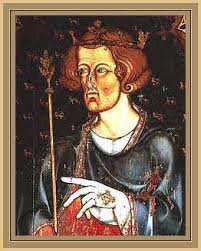 Edward IDame Fortune had chosen to smile on Ferrers. His response was to spit in her eye. In the spring of 1266 he joined a new band of rebels in the north, headed by Baldwin Wake and John de Eyvill, a rough northern baron described as ‘the bold d’Eyvil, a canny and hardy warrior.” This new baronial coalition ravaged the northern and eastern counties of England in an orgy of fire and sword and rampant bloodletting. They made their base, like so many Robin Hoods, in the greenwood at Duffieldfrith in Derbyshire, close to Ferrers’s chief stronghold at Tutbury.
 Ferrers’ decision to go back into rebellion has baffled historians. He is generally assumed to have acted out of sheer greed and stupidity, but that seems a little unfair. Efficient roughnecks like John de Eyvill wouldn’t have accepted a fool for a leader, and Ferrers and his allies may have had valid causes for complaint. King Henry was still hanging on to their lands, even though they were supposed to have been returned the previous year. For the barons, raised and trained to settle every dispute with the sword, there could only be one response.
Henry’s response was to send an army racing north to quash the rebellion. The rebels were ambushed at Chesterfield and their forces scattered. John de Eyvill escaped to carry on the fight, but Ferrers was quite literally caught with his pants down: he was being bled for his gout when the royalists attacked, and had to stagger away and hide under a pile of woolsacks in a nearby church while his enemies looked for him. In the end he was betrayed, locked up in a cage and carted south to Windsor. No matter what they did, his family just couldn’t stay out of carts.
This time the King and his sons meant to de-fang the troublesome earl once and for all. He remained in prison for three years while a scheme was hatched to strip him of all his lands and goods. Finally, in October 1269, the prisoner was offered a hopeless deal: unless he paid the sum of £50,000 inside ten days, the whole of his estate would be taken away and given to King Henry’s second son. Edmund. Ferrers could not possibly hope to find the money in such a short time. Even so his enemies took out a bit of extra insurance, just in case. On 9th July he was taken from Windsor to Chippenham, where in the presence of the Chancellor he was ordered to formally sign away his inheritance. The demand was almost certainly made with the threat of physical torture if he refused: in later years Ferrers certainly claimed as much. He had no choice but to obey, and at the end of May was released, a free man, but now landless, penniless and utterly dishonoured.
Whatever else he might have been, Ferrers was no quitter. Even a broken man may still have teeth, and he still had the loyalty of his old tenants. Shortly after his release the Midlands was hit by a staggering wave of violent crime, as bad as anything experienced in the civil war. Hundreds of armed robbers, mounted and on foot, plagued the forests and highways, attacking secular and religious persons alike, thieving and murdering with impunity. At the same time a band of ‘night robbers’ emerged from the Derbyshire woods and attacked Nottingham, smashing the timber defences and killing a number of the citizens.
 Battle of Lewes
The leader of this army of footpads was one Roger Godberd, a yeoman farmer who held the manor of Swannington in Leicestershire of Ferrers. Evidently a useful bit of muscle, Ferrers had employed him in the garrison of Nottingham Castle in 1264, from where Godberd and other men rode out to commit large-scale poaching offences inside Sherwood Forest. Given the close relationship between lord and tenant, and the timing of Godberd’s revolt, it seems most likely that this new uprising was inspired by anger at Ferrers’ disinheritance. Alternatively, Godberd may simply have been acting on his master’s orders.
Ferrers himself was not idle. While the Midlands descended into anarchy, he led a band of armed men to seize and occupy the manor of Stanford in Berkhire. Stanford was one of his confiscated manors, recently given to Roger de Leyburn, the Lord Edward’s favourite crony. Leyburn had gone to the Holy Land on Crusade with his master, and his absence may have encouraged Ferrers to make the attempt. However, King Henry’s troops soon arrived on the scene and turfed him out again. Soon afterwards he suffered another blow when his ally, Roger Godberd, was finally captured inside Sherwood by royalist forces and imprisoned. Godberd was shunted about between various prisons until his trial at Newgate in 1276. Incredibly, he was acquitted of all charges and released.
Even now, Ferrers was not done. By this point he was little more than an outlaw, leading a gang of brigands in the woods and wild places of the land he had once owned. In 1273 he popped up in Staffordshire at the head of another band of armed loyalists and drove out the royalist garrison at Chartley Castle. His old rival Edward, now King Edward I, was informed that the rebels had not only seized the castle but started working the land nearby, felling timber for sale and using the mills to grind corn. Alarmed and no doubt deeply irritated by Ferrers’ stubborn refusal to go away, Edward despatched an army to retake Chartley and smoke out the men occupying it. His troops were succesful, though not without suffering casualties. Ferrers escaped, thus avoiding a probable third term of imprisonment.
After this latest setback, Ferrers switched tactics. He finally found a friend in the person of Gilbert ‘the red’ de Clare, Earl of Gloucester, and with his support tried to seek redress at law. Technically he had a good case - his disinheritance in 1269 was a monstrous injustice - but the crown had no intention of allowing the fallen earl to rise again. Almost all of his claims were thrown out of court, though in 1275 King Edward relented a little and allowed Ferrers to recover the manor (though not the castle) of Chartley and the manor of Holbrook in Derbyshire.
If this was a sop to keep the old pest quiet, it had the required effect. Ferrers spent his last years living quietly at Chartley with his second wife, Eleanor de Bohun, and their young family. Having lost the majority of his vast inheritance, he did at least suceeed in fathering a son, John, to inherit what remained. He died in 1279 at the relatively young age of forty, probably from an illness related to gout, and was buried at the Augustinian priory of St Thomas in Staffordshire. His descendents, reduced to the lower levels of the English baronage, proved remarkably enduring, and the title of Earl Ferrers has survived to this day. Hopefully the present incumbent doesn’t suffer from gout.


January 27, 2016
Tony Riches
Today I am hosting a guest post by a fellow writer of historical fiction, Tony Riches. Tony is also based in Wales and is currently writing a series of novels based on the lives of Owen and Jasper Tudor, essentially the founders of the Tudor dynasty. Take it away, Tony...

"Inspiration for writing The Tudor Trilogy:
I was born within sight of Pembroke Castle and often visit the small room where the thirteen-year-old Lady Margaret Beaufort gave birth to the future king, Henry Tudor. I also recently stood on the remote beach at Mill Bay near Milford Haven, imagining how Jasper Tudor would have felt as he approached with Henry and his mercenary army to ride to Bosworth - and change the history of Britain.
All I knew about Owen Tudor was that he was a Welsh servant who somehow married the beautiful young widow of King Henry V, Queen Catherine of Valois, and began this fascinating dynasty. Inspired to write a historical fiction trilogy about them, I was amazed to discover that, although there are plenty of references to Owen, Jasper and Henry in novels, there were none that fully explored their lives. I wanted to research their stories in as much detail as possible and to sort out the many myths from the facts.
There are, of course, huge gaps in the historical records, which only historical fiction can help to fill. For example, there is no record of the marriage between Owen and the Dowager Queen Catherine, although I have also not been able to find evidence of the legitimacy of his descendants, particularly Henry VII, ever being challenged.
Another advantage I have is that my previous two historical fiction novels, The Secret Diary of Eleanor Cobham, and WARWICK ~ The Man Behind The Wars of The Roses are also set in the fifteenth century, so my considerable library of books and papers on the period are invaluable in cross checking dates and events.
I’m pleased to say that the first book of The Tudor Trilogy, OWEN, has already become an Amazon best-seller in the UK and US, and is my best-selling book in Australia, where I have a rapidly growing readership. I would like readers to remember Owen as an adventurer, a risk-taker, a man who lived his life to the full and made his mark on the world through his descendants. Jasper Tudor made it possible for his nephew Henry to become King of England and bring a lasting peace to the country.
I am now helping to campaign for a statue of Henry Tudor to be erected outside Pembroke Castle so that their legacy is not forgotten. Tony Riches is a UK historical fiction author living in Pembrokeshire, Wales. Here he discusses his latest novel about Owen Tudor, the Welsh servant who married the Queen of England and founded the Tudor dynasty..."
You can find out more on Tony’s blog ‘The Writing Desk’ at www.tonyriches.co.uk and find him on Twitter @tonyriches. Owen – Book One of the Tudor Trilogy is now available in eBook and paperback on Amazon

"Inspiration for writing The Tudor Trilogy:
I was born within sight of Pembroke Castle and often visit the small room where the thirteen-year-old Lady Margaret Beaufort gave birth to the future king, Henry Tudor. I also recently stood on the remote beach at Mill Bay near Milford Haven, imagining how Jasper Tudor would have felt as he approached with Henry and his mercenary army to ride to Bosworth - and change the history of Britain.
All I knew about Owen Tudor was that he was a Welsh servant who somehow married the beautiful young widow of King Henry V, Queen Catherine of Valois, and began this fascinating dynasty. Inspired to write a historical fiction trilogy about them, I was amazed to discover that, although there are plenty of references to Owen, Jasper and Henry in novels, there were none that fully explored their lives. I wanted to research their stories in as much detail as possible and to sort out the many myths from the facts.
There are, of course, huge gaps in the historical records, which only historical fiction can help to fill. For example, there is no record of the marriage between Owen and the Dowager Queen Catherine, although I have also not been able to find evidence of the legitimacy of his descendants, particularly Henry VII, ever being challenged.
Another advantage I have is that my previous two historical fiction novels, The Secret Diary of Eleanor Cobham, and WARWICK ~ The Man Behind The Wars of The Roses are also set in the fifteenth century, so my considerable library of books and papers on the period are invaluable in cross checking dates and events.
I’m pleased to say that the first book of The Tudor Trilogy, OWEN, has already become an Amazon best-seller in the UK and US, and is my best-selling book in Australia, where I have a rapidly growing readership. I would like readers to remember Owen as an adventurer, a risk-taker, a man who lived his life to the full and made his mark on the world through his descendants. Jasper Tudor made it possible for his nephew Henry to become King of England and bring a lasting peace to the country.
I am now helping to campaign for a statue of Henry Tudor to be erected outside Pembroke Castle so that their legacy is not forgotten. Tony Riches is a UK historical fiction author living in Pembrokeshire, Wales. Here he discusses his latest novel about Owen Tudor, the Welsh servant who married the Queen of England and founded the Tudor dynasty..."
You can find out more on Tony’s blog ‘The Writing Desk’ at www.tonyriches.co.uk and find him on Twitter @tonyriches. Owen – Book One of the Tudor Trilogy is now available in eBook and paperback on Amazon
January 20, 2016
Sweet Clemence
Medieval women, especially noblewomen, are often depicted as pliant and oppressed, very much in the shadow of their menfolk. There were some notable exceptions, such as Eleanor of Aquitaine and Joan of Arc, but in general women in this era tend to be viewed as pawns - useful chattels, brood mares and bargaining counters, to be wedded, bedded and replaced once the inevitable pregnancies killed them off.
 Shy and retiring? Moi?One startling exception to the rule was Clemence de Lungvilers, a minor noblewoman whose family held lands at Egmanton in Nottinghamshire and Barnburgh in South Yorkshire. Unusually for a woman of her class and time, Clemence doesn't seem to have married, or perhaps her husband died young. She was scarcely in need of a husband to act as protector, for Clemence was as capable of violence as any man, especially when it came to defending her rights. The York Assize of 1273 records one particularly vicious assault she and her followers committed against a certain Richard de Boulton:
"Richard de Boulton appeared against Clemence de Lungvilers, William le Noble, John de Pengiston, William le Keu, Roger Cony, Hugh le Messager and William son of Maud de Egmanton, accusing them of having assaulted him lately at Egmanton, and beat, wounded and mistreated him, in such a way that he was completely in despair of his life, and took and carried away his money and other goods and chattels, and inflicted other serious damages on him against the peace of the lord king..."
The reason for this attack is not given, but we know from a later entry in the Patent Rolls that Richard was a forest official in the service of Richard de Clifford, a royal justice. Possibly Richard had overstepped the mark and tried to impose his authority on Clemence, If so, he soon had cause to regret it.
Clemence avoided prosecution thanks to two of her kinsmen, Robert Deyvill and William Deyvill, who stood surety for her behaviour in court. These local knights were her relatives by marriage, since her father, Sir John de Longvilers, had married into the Deyvill clan. The Deyvills were themselves a dangerous family, one of the lawless Mafia-style gangs of rural gentry that plagued England, and involved in a staggering level of crime. Between 1263 and 1281, they were indicted in over three hundred separate cases of robbery, homicide, arson and other crimes, as well as being active in the civil wars between Henry III and Simon de Montfort. One of the clan, Sir John Deyvill, described as a 'canny and hardy warrior', plundered almost every major town between York and London. Another, Jocelin, led a band of two hundred armed robbers who rode about the country disguised as monks, and was eventually drawn and hanged for his crimes.
 A family wedding, medieval-styleWith such people for in-laws, Clemence needed to tread carefully. However, shortly after the assault on Richard de Boulton, family relations broke down:
"Clemence de Lungvilers claims that John de Eyvill, Adam his brother, Thomas de Eyvill, John de Eyvill the nephew of John, William, John de Eyvill's clerk, John de Husthayt, William de Eyvill of Egmanton and Robert de Eyvill of Egmanton came with force of arms to her manors of Egmanton and Barnburgh, seized and carried away her goods and belongings, and inflicted other outrages upon her. She demands justice."
The dispute between Clemence and the Deyvills rumbled on in the courts for almost a decade, until a final judgement was reached in 1278 whereby both parties were ordered to keep the peace. By now Edward I was on the throne, and he wasn't going to tolerate the sort of low-level crime and disorder that marred his father's reign. The violent energy of the Deyvills was channelled against the enemies of the realm: John and his kinsmen were summoned to do military service in Wales, where their taste for guerilla warfare could be put to good use. One of them, Adam, was killed during the final war of 1282 against Llewellyn ap Gruffydd.
Clemence, meanwhile, appears to have been left to enjoy her lands in peace. No shrinking violet, she wasn't afraid to use the tools of the men around her - casual violence, family connections, shameless recourse to law - to survive and prosper in an unimaginably bleak and bloody world.
 Shy and retiring? Moi?One startling exception to the rule was Clemence de Lungvilers, a minor noblewoman whose family held lands at Egmanton in Nottinghamshire and Barnburgh in South Yorkshire. Unusually for a woman of her class and time, Clemence doesn't seem to have married, or perhaps her husband died young. She was scarcely in need of a husband to act as protector, for Clemence was as capable of violence as any man, especially when it came to defending her rights. The York Assize of 1273 records one particularly vicious assault she and her followers committed against a certain Richard de Boulton:
"Richard de Boulton appeared against Clemence de Lungvilers, William le Noble, John de Pengiston, William le Keu, Roger Cony, Hugh le Messager and William son of Maud de Egmanton, accusing them of having assaulted him lately at Egmanton, and beat, wounded and mistreated him, in such a way that he was completely in despair of his life, and took and carried away his money and other goods and chattels, and inflicted other serious damages on him against the peace of the lord king..."
The reason for this attack is not given, but we know from a later entry in the Patent Rolls that Richard was a forest official in the service of Richard de Clifford, a royal justice. Possibly Richard had overstepped the mark and tried to impose his authority on Clemence, If so, he soon had cause to regret it.
Clemence avoided prosecution thanks to two of her kinsmen, Robert Deyvill and William Deyvill, who stood surety for her behaviour in court. These local knights were her relatives by marriage, since her father, Sir John de Longvilers, had married into the Deyvill clan. The Deyvills were themselves a dangerous family, one of the lawless Mafia-style gangs of rural gentry that plagued England, and involved in a staggering level of crime. Between 1263 and 1281, they were indicted in over three hundred separate cases of robbery, homicide, arson and other crimes, as well as being active in the civil wars between Henry III and Simon de Montfort. One of the clan, Sir John Deyvill, described as a 'canny and hardy warrior', plundered almost every major town between York and London. Another, Jocelin, led a band of two hundred armed robbers who rode about the country disguised as monks, and was eventually drawn and hanged for his crimes.
 A family wedding, medieval-styleWith such people for in-laws, Clemence needed to tread carefully. However, shortly after the assault on Richard de Boulton, family relations broke down:
"Clemence de Lungvilers claims that John de Eyvill, Adam his brother, Thomas de Eyvill, John de Eyvill the nephew of John, William, John de Eyvill's clerk, John de Husthayt, William de Eyvill of Egmanton and Robert de Eyvill of Egmanton came with force of arms to her manors of Egmanton and Barnburgh, seized and carried away her goods and belongings, and inflicted other outrages upon her. She demands justice."
The dispute between Clemence and the Deyvills rumbled on in the courts for almost a decade, until a final judgement was reached in 1278 whereby both parties were ordered to keep the peace. By now Edward I was on the throne, and he wasn't going to tolerate the sort of low-level crime and disorder that marred his father's reign. The violent energy of the Deyvills was channelled against the enemies of the realm: John and his kinsmen were summoned to do military service in Wales, where their taste for guerilla warfare could be put to good use. One of them, Adam, was killed during the final war of 1282 against Llewellyn ap Gruffydd.
Clemence, meanwhile, appears to have been left to enjoy her lands in peace. No shrinking violet, she wasn't afraid to use the tools of the men around her - casual violence, family connections, shameless recourse to law - to survive and prosper in an unimaginably bleak and bloody world.
January 13, 2016
Soldier of Fortune 2, complete with Hussites
It's been a while since my last post, for which the festive season and my own unpardonable lethargy can be blamed. Now, though, with the New Year kicking in amid endless downpours and rainwater rising through the carpet in my house (yes, January in West Wales is every bit as grim as it sounds) I'm all fired up and ready to shed the Christmas waistline.
The first bit of news is that I've started work on the sequel to Soldier of Fortune (I): The Wolf Cub, which was a something of a hit on the Amazon Bestsellers list and floated around the Top Five in the Historical Fantasy section for a few months. The adventures of Sir John Page, an English mercenary captain knocking around Europe in the early 1400s, seem to have struck a chord, and there are plenty more to come.
 The death of Jan HusStill holed up in the Sultan's prison in Constantinople, obliged to tell (possibly slightly exaggerated) stories of his own life in order to stay alive, Page's second enforced memoir concentrates on his exploits during the Hussite Wars. These were religious wars fought in Bohemia (the modern-day Czech Republic) between the followers of Jan Hus and the various hostile kingdoms that surrounded their country. When they weren't fighting external enemies, the 'Hussites' often split into factions and fought each other, making poor Bohemia quite the battleground.
Jan Hus was a Bohemian priest who spoke out against the corruption of the Catholic church. One of his main bugbears was the sale of indulgences, whereby the church effectively sold pardons, guaranteeing an individual redemption for his or her sins, in exchange for cash. Anyone from the lower classes who spoke out against this practice was beheaded, and these victims were later considered the first Hussite martyrs. Hus himself, after many years preaching against the abuses of the church, was lured to an assembly at Constance in Germany in 1415 with the promise of a safe conduct. There he was betrayed and burned at the stake, his ashes thrown into the Rhine. His last reported words were 'Christ, son of the Living God, have mercy on us!"
 Hussites at warThe death of Hus sparked outrage in Bohemia. Four years after his death open war broke out between the followers of his teachings, the Hussites, and the supporters of Sigismund, King of Hungary, brother of the late King of Bohemia. Sigismund wanted the crown of Bohemia for himself, but there was one rather large snag: it was Sigismund who had lured Hus to Constance, and Sigismund who tore up the hapless preacher's safe conduct and had him consigned to the flames. The chances of Hus's followers, of which there were thousands in Bohemia, especially among the peasantry, accepting Sigismund as their monarch were therefore less than zero.
With the support of the Pope, and the military backing of his own kingdom as well as allies in Germany and a huge number of mercenaries, Sigismund might have expected to roll over Bohemia's apparently feeble defences. Against his enormous and well-equipped army, bursting at the seams with armoured knights and men-at-arms equipped with all the latest gear, the Hussites could only muster a few thousand peasants and a tiny number of loyal Bohemian nobles, nowhere near enough to face the might of their enemies in the open field. It should have been a wipe-out, a massacre, all over inside a few weeks if not days, similar to the Nazi invasion of Poland in 1939.
 Statue of Jan Zizka in PragueOne man, however, rescued this apparently hopeless situation. His name, as any Czechs who might be reading this will know, was Jan Zizka. My next post will focus on Zizka, one of the genuinely great commanders of history, and to this day considered a national hero in the Czech Republic.
The first bit of news is that I've started work on the sequel to Soldier of Fortune (I): The Wolf Cub, which was a something of a hit on the Amazon Bestsellers list and floated around the Top Five in the Historical Fantasy section for a few months. The adventures of Sir John Page, an English mercenary captain knocking around Europe in the early 1400s, seem to have struck a chord, and there are plenty more to come.
 The death of Jan HusStill holed up in the Sultan's prison in Constantinople, obliged to tell (possibly slightly exaggerated) stories of his own life in order to stay alive, Page's second enforced memoir concentrates on his exploits during the Hussite Wars. These were religious wars fought in Bohemia (the modern-day Czech Republic) between the followers of Jan Hus and the various hostile kingdoms that surrounded their country. When they weren't fighting external enemies, the 'Hussites' often split into factions and fought each other, making poor Bohemia quite the battleground.
Jan Hus was a Bohemian priest who spoke out against the corruption of the Catholic church. One of his main bugbears was the sale of indulgences, whereby the church effectively sold pardons, guaranteeing an individual redemption for his or her sins, in exchange for cash. Anyone from the lower classes who spoke out against this practice was beheaded, and these victims were later considered the first Hussite martyrs. Hus himself, after many years preaching against the abuses of the church, was lured to an assembly at Constance in Germany in 1415 with the promise of a safe conduct. There he was betrayed and burned at the stake, his ashes thrown into the Rhine. His last reported words were 'Christ, son of the Living God, have mercy on us!"
 Hussites at warThe death of Hus sparked outrage in Bohemia. Four years after his death open war broke out between the followers of his teachings, the Hussites, and the supporters of Sigismund, King of Hungary, brother of the late King of Bohemia. Sigismund wanted the crown of Bohemia for himself, but there was one rather large snag: it was Sigismund who had lured Hus to Constance, and Sigismund who tore up the hapless preacher's safe conduct and had him consigned to the flames. The chances of Hus's followers, of which there were thousands in Bohemia, especially among the peasantry, accepting Sigismund as their monarch were therefore less than zero.
With the support of the Pope, and the military backing of his own kingdom as well as allies in Germany and a huge number of mercenaries, Sigismund might have expected to roll over Bohemia's apparently feeble defences. Against his enormous and well-equipped army, bursting at the seams with armoured knights and men-at-arms equipped with all the latest gear, the Hussites could only muster a few thousand peasants and a tiny number of loyal Bohemian nobles, nowhere near enough to face the might of their enemies in the open field. It should have been a wipe-out, a massacre, all over inside a few weeks if not days, similar to the Nazi invasion of Poland in 1939.
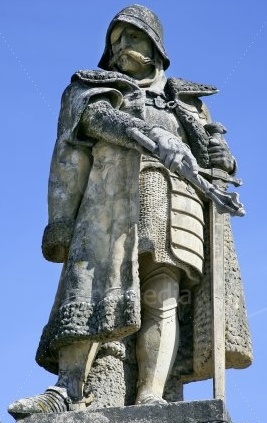 Statue of Jan Zizka in PragueOne man, however, rescued this apparently hopeless situation. His name, as any Czechs who might be reading this will know, was Jan Zizka. My next post will focus on Zizka, one of the genuinely great commanders of history, and to this day considered a national hero in the Czech Republic.
December 9, 2015
New Battles for old!
Leader of Battles (IV): Drystan is now available on Kindle - get it while it's hot! The paperback version will be on sale shortly, I'll post an update when it's available.
Leader of Battles (IV): Drystan on Amazon

Leader of Battles (IV): Drystan on Amazon

November 18, 2015
New cover
I've just received the new cover for Leader of Battles (IV) Drystan, once again designed by the talented folks at Morevisual!

More news on the book soon...

More news on the book soon...
November 2, 2015
Leader of Battles IV
I've just completed the first draft of Part IV of the Leader of Battles series. This volume will be titled Leader of Battles (IV): Drystan, and is my version of the story of Tristan and Isolde - or Drystan and Esyllt as I call them in the book.
 Tristan and Isolde as depicted by Herbert DraperThis is one of the most famous romances and tragedies in the world, retold in many variations over the centuries. The core of the story is the adulterous affair between Tristan, a Cornish knight, and an Irish princess named Isolde. It seems to have predated (and influenced) the romance of Sir Lancelot and Queen Guinevere, and been inspired by French, Celtic and even Persian influences.
The character of Sir Tristan or Tristram himself occupies a strange place in Arthurian lore. His origins are obscure: the oldest Cornish and Breton tales are lost, though there are echoes of them in the later Anglo-Norman legends. The original tales may have been entirely separate from the Arthurian cycle, but the Tristan en Prose or Prose Tristan of the thirteenth century, one of the most popular romances of its day, made him into one of King Arthur's most distinguished knights and a member of the Round Table.
 The 'Tristan' stoneThere may be a historical basis for the legend of Tristan. Near the road leading to Fowey in Cornwall, an ancient stone, seven feet high and set in a modern concrete base, can still be seen. On one side of the stone is a worn Latin inscription that reads: :
DRUSTANUS HIC IACITCUNUMORI FILIS(Drustanus lies here, son of Cunomorus)
In 1540 the antiquarian John Leland claimed to have seen a third line on the stone, now missing, that read:
CUM DOMINA OUSILLA(With the Lady Ousilla)
It has been suggested that these were the names of the historical Tristan and his lover Ousilla (or the Brythonic Esyllt), while Cunomorus might be King Mark, Tristan's father: Cunomorus translates 'Hound of the Sea', which in some versions of the legend was Mark's nickname. Cunomorus is also the Latinised version of the Brythonic name Cynfawr, identified by the ninth-century chronicler Nennius as the historical King Mark.
 The legendary Tristan and IsoldeAs usual with Arthurian scholarship, little is certain. The veracity of the inscription on the stone is questionable, as are the historical existence of Tristan, his doomed lover and treacherous father. I chose to incorporate some of the older aspects of the story, and depict Tristan as an ambitious Dark Age princeling, greedy for power and fame. His mate Esyllt harbours similar ambitions, though she is rather more intelligent, doomed to live in a time when most women were treated slaves or brood mares.
Leader of Battles (IV) should be ready for release by early December, and I'll post further updates nearer the time.
 Tristan and Isolde as depicted by Herbert DraperThis is one of the most famous romances and tragedies in the world, retold in many variations over the centuries. The core of the story is the adulterous affair between Tristan, a Cornish knight, and an Irish princess named Isolde. It seems to have predated (and influenced) the romance of Sir Lancelot and Queen Guinevere, and been inspired by French, Celtic and even Persian influences.
 The character of Sir Tristan or Tristram himself occupies a strange place in Arthurian lore. His origins are obscure: the oldest Cornish and Breton tales are lost, though there are echoes of them in the later Anglo-Norman legends. The original tales may have been entirely separate from the Arthurian cycle, but the Tristan en Prose or Prose Tristan of the thirteenth century, one of the most popular romances of its day, made him into one of King Arthur's most distinguished knights and a member of the Round Table.
 The 'Tristan' stoneThere may be a historical basis for the legend of Tristan. Near the road leading to Fowey in Cornwall, an ancient stone, seven feet high and set in a modern concrete base, can still be seen. On one side of the stone is a worn Latin inscription that reads: :
DRUSTANUS HIC IACITCUNUMORI FILIS(Drustanus lies here, son of Cunomorus)
In 1540 the antiquarian John Leland claimed to have seen a third line on the stone, now missing, that read:
CUM DOMINA OUSILLA(With the Lady Ousilla)
It has been suggested that these were the names of the historical Tristan and his lover Ousilla (or the Brythonic Esyllt), while Cunomorus might be King Mark, Tristan's father: Cunomorus translates 'Hound of the Sea', which in some versions of the legend was Mark's nickname. Cunomorus is also the Latinised version of the Brythonic name Cynfawr, identified by the ninth-century chronicler Nennius as the historical King Mark.
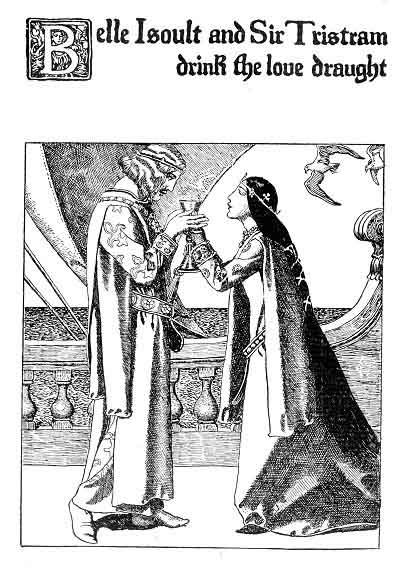 The legendary Tristan and IsoldeAs usual with Arthurian scholarship, little is certain. The veracity of the inscription on the stone is questionable, as are the historical existence of Tristan, his doomed lover and treacherous father. I chose to incorporate some of the older aspects of the story, and depict Tristan as an ambitious Dark Age princeling, greedy for power and fame. His mate Esyllt harbours similar ambitions, though she is rather more intelligent, doomed to live in a time when most women were treated slaves or brood mares.
 Leader of Battles (IV) should be ready for release by early December, and I'll post further updates nearer the time.
October 4, 2015
The flamboyant Captain Wade
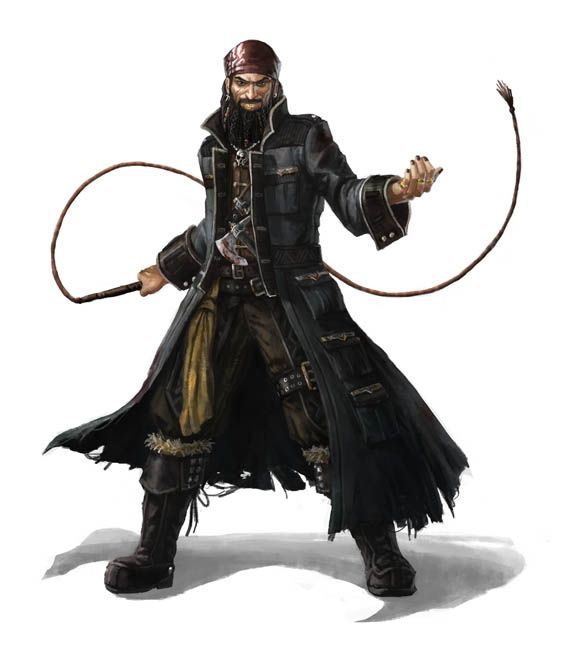 Captain Wade, or someone very similar...
Today I'm hosting a Q&A with my friend and co-author, Martin Bolton. Martin talks about his character, Captain Wade, a notorious pirate captain who haunts, roves, plunders, steals, murders, burns, loots and generally makes a damned nuisance of himself on the high seas of The World Apparent: this is the fantasy world setting for our co-written novels, The Best Weapon and The Path of Sorrow. We're currently working on a third in the series, and there is scope for plenty more.
Take it away, Master Bolton...
1) What was your inspiration for the character of Captain Wade?
I wanted Wade to be eccentric and a slightly ludicrous. So my obvious inspiration was a Bond villain. There's a bit of Blofeld in there; instead of a cat, he's got a ridiculous mute midget assistant called Erlo. That's about as far as it goes, because, unlike you, I don't know much about Bond villains. The rest I just made up myself.
I started by dressing him as a bit of a dandy. Frills, oiled ringlets in his hair, fine jewellery and a long cigarette holder. He effectively talks to himself most of the time, but directs it at his assistant who of course never answers because he is unable to speak. His speech is flowery and somewhat poetic, even though he's usually talking about killing, burning and looting.
I like the idea of someone talking like a poet whilst being a sadistic, murdering lunatic.
2) What would you think of him if you knew him?
I would think he was mental and completely unpredictable. I wouldn't lend him a fiver or invite him round for film night but if he needed the money he could do the garden and I would just keep the door locked. If he invited me to a stag do I would pretend I was away that weekend.
I would consider his advice on the best curtains to go with my wallpaper though.
3) On the surface Wade appears to be a typically greedy, selfish pirate, interested in only the gold, the precious gold, and the yo-ho-hos. Is there any compassion there, deep down?
I don't think Wade is driven entirely by greed. He considers himself too artful to be seduced by such base desires. Wade does enjoy the finer things in life but it's the 'game' that really makes him tick. He is amused by the power and control he has over the world and the people around him. He sees life as a game of chess. A battle of wits. And he is a very cunning man, so he enjoys this game immensely.
This need for control stems from his having been born into poverty. He grew up having to scrape a living from the dirt and never knowing where his next meal would come from. This is a powerless predicament, always at the mercy of those with more wealth and influence. This obviously profoundly effected him. He vowed that he would be powerful and enjoy the trappings of wealth, and as you are not taught morals when you have no parents, he doesn't care that his wealth is stolen.
Beneath all this lies a child, buried under a lifetime of brutality. I would like to think he does have the capacity for compassion, it'll just take the right experience to awaken it in him. Time will tell whether that happens...
4) Do you think some people have a natural tendency towards good or evil, or is everyone a product of their environment?
I think people are shaped at a very early age, right from the day they are born. I've never seen an evil baby. I've never seen a good one either. Just hungry ones, cold ones, hot ones, shitty ones.
I grew up with some utter bell ends. But their parents were cock--eyed morons who taught them nothing of any use, so I can't really blame them.
5) Wade is a fairly eccentric character with a freakish band of companions. Do you plan to reveal more of his past at some point?
Yes I do. Wade's role in the World Apparent Tales isn't over. I'd like to explore who he is and why, and also give him some moral decisions to make and see how he copes.
6) Is Wade destined to remain a pirate all his life, or does he aspire to something greater?
Wade always aspires to something greater. In the The Path of Sorrow, he shows a few subtle signs that he is growing tired of his way of life. He thinks most of his crew are idiots, which is why he shows such fascination with Colken, who he finds a bit more complex.
I can't really say what will happen to Wade without giving a lot away, but there is more of his story to tell.
7) Besides co-writing fantasy fiction with me, you write short stories for a webzine called The 900 Club. What are your writing plans for the future?The 900 Club will have been going for three years at the end of 2015 and it has been an extremely rewarding experience. Writing a new short story every single month is a challenge. It has given me more belief in myself as writer and I have learned a lot from my fellow 900 Club writers too. This will be my last year writing with them as I want to concentrate on doing some independent stuff. Hopefully can put what I've learned into practice.
At the moment, I am working on my share of the third World Apparent Tale (the follow up to The Path of Sorrow), which I am very excited about. After that I am thinking about putting together an anthology of fantasy short stories. Although, I am also considering writing a novel of my own. I expect I'll do both but I don't know which I'll do first.
8) Why is your writing partner (me, in other words) so attractive to the opposite sex? Is it my dusky charm, my heart-melting smile, my staggering intellect, or perhaps a composite of all these attractive elements plus a few extra?
My writing partner (you) is a malodorous hog of a man. The opposite sex are attracted to him in the same way people were attracted to public hangings in medieval times. They're drawn to him in the same way people were drawn to Joseph Merrick. They're just fascinated.
Dusky charm? Perhaps this is a misquote of the words “musky farm”. I don't know about heart-melting smile but I know he possesses eye-melting breath. And as for staggering intellect, well, I've seen him staggering so he's half way there.'
Thank you, Martin (I think). Below are links to The Best Weapon and The Path of Sorrow on Amazon:The Best Weapon
The Path of Sorrow
September 3, 2015
Hooded musings
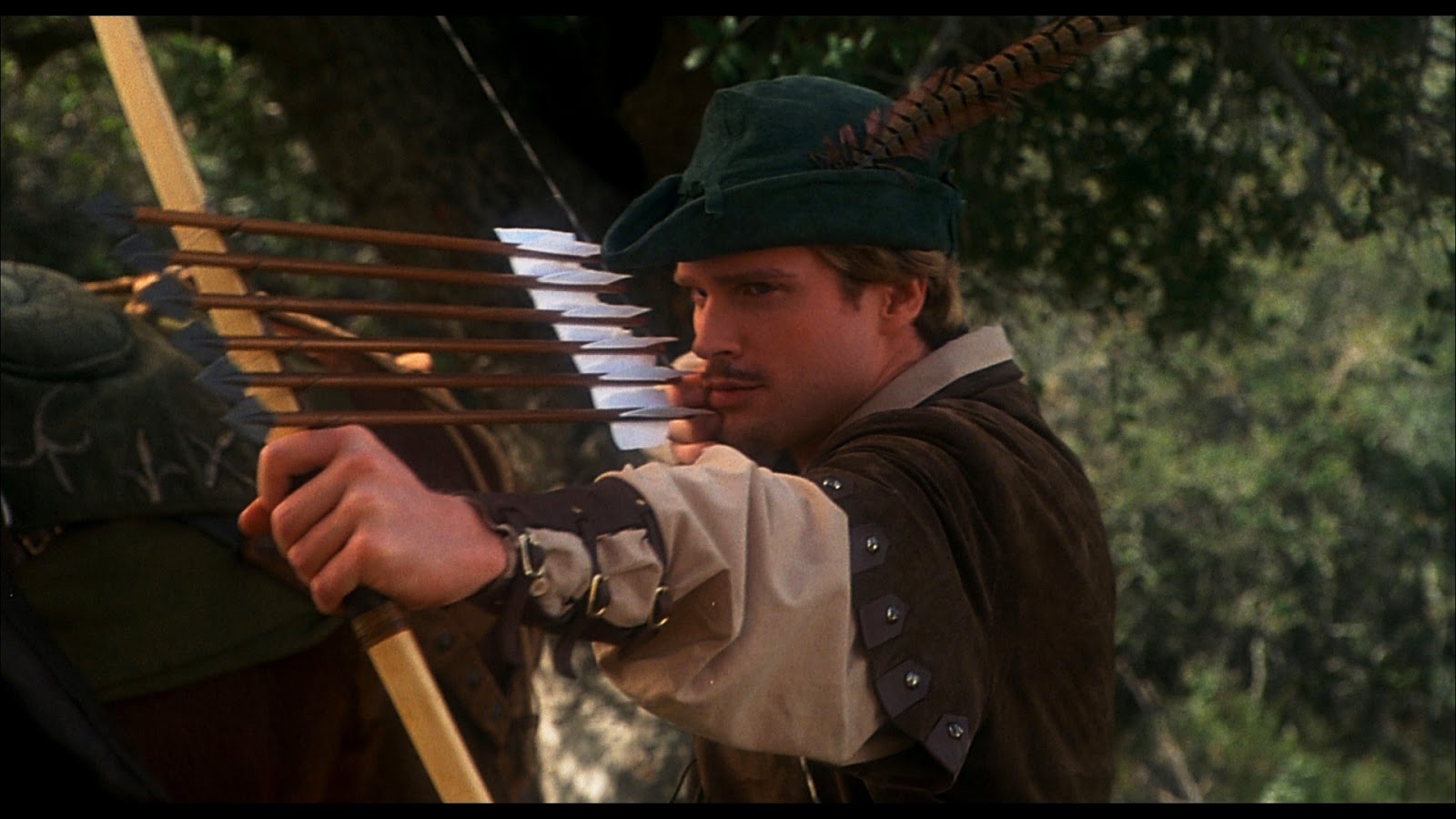 Why have one arrow when you can have seven?Those who follow this blog will know I have an interest in the legend of Robin Hood, and am one of those dreadful 'empiricists' who believe the legend has some foundation in historical reality. In fact I regard the legend as more of a composite myth - essentially fictional, but with bits and pieces of historical matter woven into the narrative by any number of anonymous authors and minstrels etc.
One of the most popular 'empiricist' theories, first suggested by Joseph Hunter in the 1800s, is based on a man named Robert Hode (or Hood) of Wakefield, who lived in the Wakefield area of West Yorkshire in the early 1300s. Hunter and other writers after him suggested that this man was caught up in the rebellion of Thomas of Lancaster against King Edward II in 1322, and outlawed after the rebel defeat at the Battle of Boroughbridge. He was (so the theory goes) later pardoned and served for a time as a porter or 'valet de la chambre' in Edward II's household.
This sketchy outline of Robert Hode's career would fit with the narrative of the Geste, a 15th century compilation of Robin Hood ballads and the first to try and provide the famous outlaw with some kind of career. In the Geste Robin Hood is indeed pardoned by a king named Edward (not Richard the Lionheart) and spends some time at court before leaving to go back into outlawry.
It's a neat theory, but one with massive gaps in the evidence. There's no clear proof that Robert Hode of Wakefield was ever outlawed, or the same man as the 'Robyn Hod' who served as one of Edward II's porters. Recently I've been researching the 14th century plea rolls held at the National Archives in London, and have found a bit of evidence that may help to close a few of the gaps.
Below is the record in question:
'King's Bench Plea Rolls, 1316:
An assize comes to recognise if Alice, who was the wife of Robert de Everingham, William le Corour, Thomas Page of Brotherton, Henry de Tikehull, Adam Pakock and Robert Hode unjustly, etc, disseised Juliana, who was the wife of Richard Farburne, of her free tenement in Farburne after the first, etc. And whereupon they complain that they disseised her of four acres of land with appurtenances, etc. And Alice has come and the others have not. But a certain Thomas de Wartre answers for them as their bailiff, and says that they have done no injury or disseisin thereupon. And as to this he places himself upon the assize....'
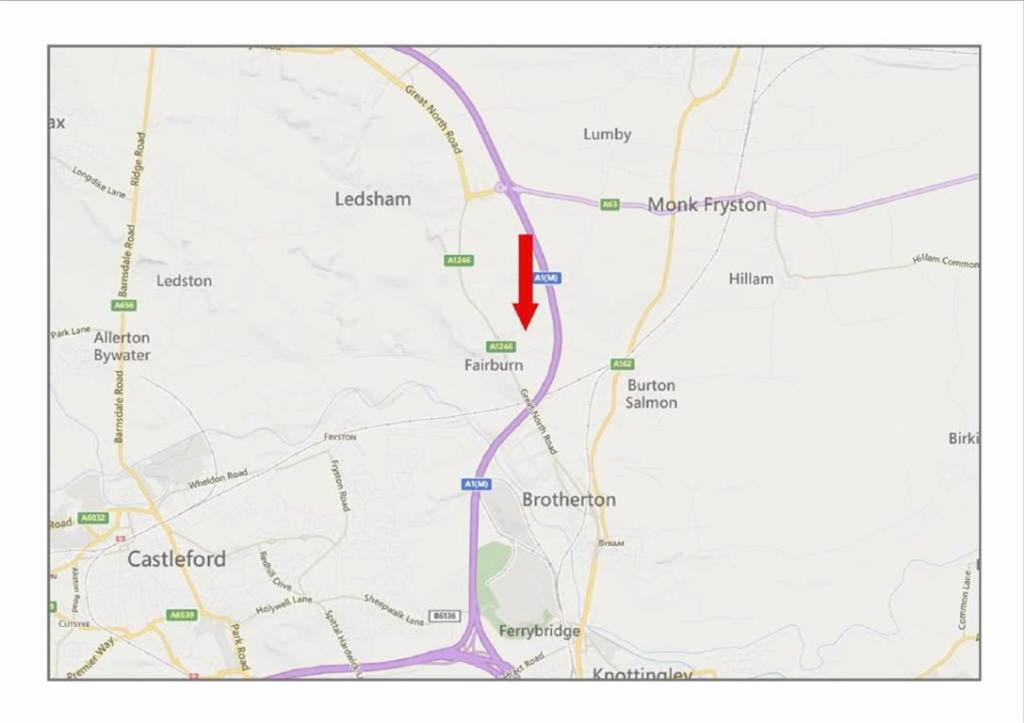
At first glance it doesn't look very exciting, just a standard land dispute. However, a few things stand out. Alice's husband, Robert de Everingham, was the last hereditary Keeper of Sherwood Forest. He was imprisoned in Nottingham Castle for various offences, and died there in 1287, quite possibly tortured to death for refusing to throw himself on the mercy of a jury. So here is Robert Hode (almost certainly the Wakefield man) in league with the widow of the Keeper of Sherwood.
The locations mentioned - Brotherton. Tikehull or Tickhill, Farburne or Fairburne - are all within the area of Wakefield and Barnsdale: Barnsdale, a wooded valley in the West Riding, is the setting for much of the early Robin Hood ballads. See the map below (Barnsdale itself is a little way south of Ferrybridge):
 It's also worth pointing out that the Everinghams were a rebel family: Robert's brother and Alice's brother-in-law, Adam de Everingham, definitely fought at Boroughbridge and was taken prisoner by the royalists. He had to pay King Edward the hefty sum of 400 marks to save his neck and buy his freedom.
Granted, this is still a long way from proving that Robert Hode was an outlaw in Barnsdale, or the model for the ballads of Robin Hood. However it does at least add to our knowledge of the man, and demonstrate his connections with a family of knightly rebels and certain ballad locations. More information may yet come to light. Now, back to those dusty old court rolls...
August 22, 2015
Tobias the Minstrel...
Today I'm hosting a guest spot for the very lovely and talented Prue Batten, author of The Gisburne Saga (based on the character of Guy of Gisburne from the Robin Hood ballads, but very different...) and The Chronicles of Eirie.
Prue has just released Book One in a splendid-sounding new series set in and around the declining Byzantine Empire. The main character, Tobias, is both a minstrel and a dwarf - or vertically challenged, perhaps I should say - and below is the summary of the plot:
"Byzantium stretches a weakening grip across Eastern Europe, trying in vain to hold onto all that has made it an empire. Tyrian purple, the unique dye that denotes its power, is held under close guard by the imperial house.However a Jewish merchant from Venice has sourced an illegal supply and Tobias the dwarf minstrel and his twin brother, Tomas, begin a dangerous journey to retrieve the purple and deliver it into the merchant’s eager hands.But is this supply as secret as they had hoped?Trade is cut throat, men are expendable, money is power and Constantinople provides the exotic backdrop during a time of scimitars and shadows.This is Tobias – the story of a minstrel and a broken life…"
Below is the rather gorgeous cover

Here is a comment from Prue's editor, John Hudspith:
'Without doubt, Tobias is your most thrilling novel yet. Your skill regarding conveyance of rich settings and situation I was expecting, but it has developed further, sliding down into the contours of the human soul, plumbing the depths of connection.'
And here is the author herself!
Here Prue talks about the challenges of writing Tobias:
Writing Tobias stretched more than I could ever have imagined. Firstly the character is a dwarf, a little person, someone who has the condition; achindroplasia, and that alone required detailed research, particularly when placing that character in amongst the rigours of the Middles Ages. Add to that Byzantine history, a twelfth century city that was destroyed in later years and which made finding my locations almost impossible AND the fact that I have a very weak stomach for violence and it's safe to say I had a challenge on my hands. But I have never given up in the face of a challenge and I had grown to love Toby too much not to tell his story.
I wanted it to be real, to pull at emotions and make the reader question just what he or she would do if placed in Tony's unenviable position. Toby (Tobias more properly) is the star of the show however. He is by nature an aesthete, being a troubadour, but he is also a spy and it was a challenge for me to combine the two into a believable character, in a believable setting and with a believable plot. I hope I've done little people proud and that readers will hold their breath as Tobias and his brother faces challenges that would leave most of us gasping...
Tobias on Amazon
Prue has just released Book One in a splendid-sounding new series set in and around the declining Byzantine Empire. The main character, Tobias, is both a minstrel and a dwarf - or vertically challenged, perhaps I should say - and below is the summary of the plot:
"Byzantium stretches a weakening grip across Eastern Europe, trying in vain to hold onto all that has made it an empire. Tyrian purple, the unique dye that denotes its power, is held under close guard by the imperial house.However a Jewish merchant from Venice has sourced an illegal supply and Tobias the dwarf minstrel and his twin brother, Tomas, begin a dangerous journey to retrieve the purple and deliver it into the merchant’s eager hands.But is this supply as secret as they had hoped?Trade is cut throat, men are expendable, money is power and Constantinople provides the exotic backdrop during a time of scimitars and shadows.This is Tobias – the story of a minstrel and a broken life…"
Below is the rather gorgeous cover

Here is a comment from Prue's editor, John Hudspith:
'Without doubt, Tobias is your most thrilling novel yet. Your skill regarding conveyance of rich settings and situation I was expecting, but it has developed further, sliding down into the contours of the human soul, plumbing the depths of connection.'
And here is the author herself!

Here Prue talks about the challenges of writing Tobias:
Writing Tobias stretched more than I could ever have imagined. Firstly the character is a dwarf, a little person, someone who has the condition; achindroplasia, and that alone required detailed research, particularly when placing that character in amongst the rigours of the Middles Ages. Add to that Byzantine history, a twelfth century city that was destroyed in later years and which made finding my locations almost impossible AND the fact that I have a very weak stomach for violence and it's safe to say I had a challenge on my hands. But I have never given up in the face of a challenge and I had grown to love Toby too much not to tell his story.
I wanted it to be real, to pull at emotions and make the reader question just what he or she would do if placed in Tony's unenviable position. Toby (Tobias more properly) is the star of the show however. He is by nature an aesthete, being a troubadour, but he is also a spy and it was a challenge for me to combine the two into a believable character, in a believable setting and with a believable plot. I hope I've done little people proud and that readers will hold their breath as Tobias and his brother faces challenges that would leave most of us gasping...
Tobias on Amazon