David Pilling's Blog, page 71
April 27, 2015
The Battle of Dunbar
Today is the anniversary of the Battle of Dunbar, one of the lesser-known battles of the Scottish Wars of Independence. It was also the first pitched encounter between the English and Scottish forces, and the only battle to be fought in Edward I's invasion of 1296. It's a while since I 'celebrated' an anniversary on this blog, so thought I would give my take on it.
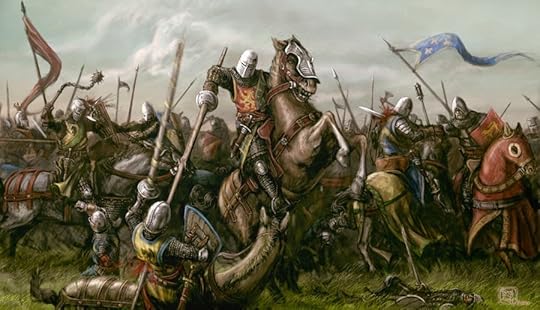 Clang, hack, slay...First, some context. Edward's invasion of Scotland was the end result of years of haggling to and fro over the rightful claimant to the vacant Scottish throne, which ended in John Balliol being installed as King of Scots in return for acknowledging Edward as his feudal overlord. Balliol's own countrymen considered him something of a nonentity, and nicknamed him 'Toom Tabard' or the Empty Coat, mocking him for being a spineless puppet of the English king.
In fact Balliol seems to have been used by both sides: when Edward started demanding Scottish troops to aid him in his war against France, a council of twelve Scottish nobles took the decision out of Balliol's hands, refused to supply Edward with soldiers, and instead signed a treaty of mutual aid with the French.
Edward's reaction was predictably furious. Having ordered a huge army to assemble at Newcastle, he led his host up to the castle of Wark on the Tweed, where news reached him that the Scots were getting their retaliation in first: on Easter Monday a Scottish force made an unsuccessful attack on Carlisle, while bands of outriders ravaged the border with fire and sword. One English chronicler claimed that the Scots committed a particularly heinous act of savagery at Hexham, rounding up a hundred schoolboys and burning them alive in a church. The tale might have been exaggerated or plain invented as useful propaganda, but on the other hand such incidents were by no means uncommon in medieval warfare.
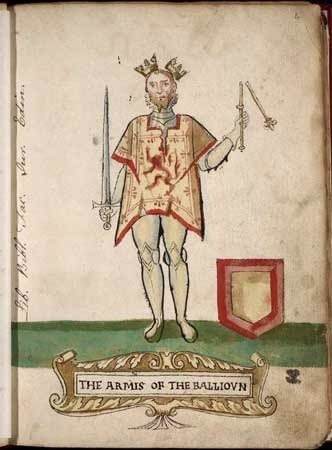 John Balliol or 'Toom TabardEdward didn't seem worried by these events. When he received a message from Balliol, in which the Scottish king formally renounced his homage, he smiled and remarked: "What folly he commits. He shall have no need to come to me, for I shall go to him."
Any Scottish atrocities were soon eclipsed by the horrors of Edward's sack of the town of Berwick-upon-Tweed. Seven hundred years on, this incident is still clouded by contemporary propaganda and modern nationalist sentiment - much like the later sacks of Drogheda and Wexford in Ireland. Trying to see through these mists is difficult, but what seems to have happened is that Edward initially offered the town terms of surrender. These were scornfully rejected, and a number of his sailors were killed by the people of Berwick when his ships ran aground near the harbour.
Edward, who from boyhood onward had displayed a streak of cruelty when roused, lost control of himself. He unleashed his shock troops on the town and personally led the cavalry charge on his war-horse, Bayard: it says something for Berwick's pitiful defences that his horse was able to leap the dyke and gallop into the streets.
Three days of bloody massacre followed. It's unclear whether Edward ordered the general extermination of the citizens, or of the men of the garrison. Either way, many thousands of innocents died, and Berwick was reduced to a gory, reeking shambles. Accounts vary of what finally persuaded Edward to put an end to the bloodshed: one story claims that a group of priests appeared before him, bearing the Host and begging on their knees for him to show mercy. Another says that Edward was violently sick after witnessing a soldier run his sword through the belly of a pregnant woman, and cried out 'Laissez! Laissez' - "Let be, let be!" as the signal to halt.
 Arms of John de Warenne
Whatever the state of Berwick after this orgy of destruction, the crucial port town on the Tweed was now in Edward's hands. He followed up by sending his lieutenant and drinking crony, the Earl of Surrey, to secure the castle of Dunbar, a few miles up the Tweed. Surrey, a typically hard-faced baronial ruffian who had once waved a rusty sword under the noses of Edward's lawyers when they started asking difficult questions about his ancestral rights, duly sped off with a strong body of mounted knights and men-at-arms.
A note on warfare in this era. Descriptions of medieval campaigns can sometimes come across as a bland recitation of dry facts - King Wotsit marched over here and took this castle, then this town, and then marched back again. It's difficult for us modern, civilised, 21st-century types to imagine the smell and the stench of it, the hardship and the suffering of soldiers and civilians as oversized, indisciplined feudal hosts straggled up and down the country, often in appalling weather and over bad roads, all the while losing men to guerilla attacks, disease and desertion.
Desertion in particular was a serious problem for Edward I in his Welsh and Scottish campaigns. The majority of his infantry were made up of badly armed and trained feudal levies - conscripts, essentially, townsmen and peasants, often armed with little more than knives. To counter the problem, Edward supplemented his forces with large numbers of Basque and Gascon mercenaries, and after the conquest of Wales was able to call upon the services of thousands of tough Welsh archers and spearmen. Rather than starve in their own lands and be treated as second-class citizens by English immigrants, many of the Welsh chose to enlist in the armies of their conqueror.
By 1296, then, Edward's army was a pretty formidable beast, hardened by years of campaigning in Wales and France. The king's grasp of logistics could be pretty tenuous - he once sent out orders for 60,000 infantry to be raised, when there was perhaps a third of that number of able-bodied men in the whole of England - but he knew how to lead and direct an army. The same went for Surrey, another veteran of the Baronial wars and Welsh campaigns.
The Scots, by contrast, had nothing like the same degree of warlike experience to call upon. Scotland had largely been at peace for the past century, bar a couple of minor battles against the Norwegians and the Manx, and poor old Toom Tabard wasn't blessed with military genius. Balliol was camped at Haddington with the main body of the Scottish feudal host when urgent messages reached him from the garrison at Dunbar, warning that the English were on the move.
Balliol despatched his own knights, probably led by the Comyns, to meet Surrey. The two forces came in sight of each other near the castle, and for a while engaged in a staring contest. The Scots held the high ground, and may have expected Surrey's men to withdraw rather than risking attacking such a strong position. Instead he led his men down into a gulley and across a river called the Spott Burn.
 Dunbar Castle today
As they struggled across the river, the ranks of English knights started to break up. Seeing the enemy host apparently dissolve into chaos, the Scots launched an all-out charge. It must have been a pretty rare and glorious spectacle, hundreds of mounted knights streaming downhill, pennons waving, lances couched as the earth quaked under the racing hoofs of their destriers.
Alas, they were deceived. Old Surrey was something of a general as well as a hooligan, and had deliberately ordered his men to feign indiscipline when they crossed the burn. As the disorderly horde of Scots thundered down towards them, the English knights suddenly closed up again and launched a counter-charge, a difficult manoeuvre that Napoleon's cavalry might have been proud of.
It was all over in minutes. After a brief fight the Scots panicked and fled westwards to the refuge of Ettrick Forest. They probably didn't suffer many casualties: one English source boasted that ten thousand of them died, but in reality only one minor Lothian knight, Sir Patrick Graham, was slain, and a hundred Scottish lords, knights and men-at-arms taken prisoner.
The blow to Scottish arms, however brief and bloodless the actual fighting, was devastating. Berwick and Dunbar knocked the fighting spirit out of the Scots, at least for a time, and the remainder of the campaign was little more than a promenade. Edward swaggered about the country, taking castles, towns and prisoners as the fancy took him, and sent hundreds of Scottish nobles south to England as captives.
Toom Tabard, needless to say, was one of them. After having the royal arms of Scotland torn from his body in a humiliating ritual at Stracathro near Montrose, he was packed off to the Tower of London for safe keeping. Edward eventually let him go to France, where he ended his days on his family's ancestral estates in Picardy: a far more pleasant fate than most of Edward's enemies.
In the long run, Dunbar was not the decisive blow it may ave appeared at the time: a year later Surrey was embarrassed by William Wallace and Sir Andrew de Moray at Stirling Bridge, and Edward spent the rest of his life leading one army after another across the border, determined to hammer them into submission. Eventually the hammer ran out of steam, and it was left to Edward II, he of Piers Gaveston and red-hot poker fame, to finish the job of conquering Scotland. Let's just say it didn't turn out too well for him...
 Clang, hack, slay...First, some context. Edward's invasion of Scotland was the end result of years of haggling to and fro over the rightful claimant to the vacant Scottish throne, which ended in John Balliol being installed as King of Scots in return for acknowledging Edward as his feudal overlord. Balliol's own countrymen considered him something of a nonentity, and nicknamed him 'Toom Tabard' or the Empty Coat, mocking him for being a spineless puppet of the English king.
In fact Balliol seems to have been used by both sides: when Edward started demanding Scottish troops to aid him in his war against France, a council of twelve Scottish nobles took the decision out of Balliol's hands, refused to supply Edward with soldiers, and instead signed a treaty of mutual aid with the French.
Edward's reaction was predictably furious. Having ordered a huge army to assemble at Newcastle, he led his host up to the castle of Wark on the Tweed, where news reached him that the Scots were getting their retaliation in first: on Easter Monday a Scottish force made an unsuccessful attack on Carlisle, while bands of outriders ravaged the border with fire and sword. One English chronicler claimed that the Scots committed a particularly heinous act of savagery at Hexham, rounding up a hundred schoolboys and burning them alive in a church. The tale might have been exaggerated or plain invented as useful propaganda, but on the other hand such incidents were by no means uncommon in medieval warfare.
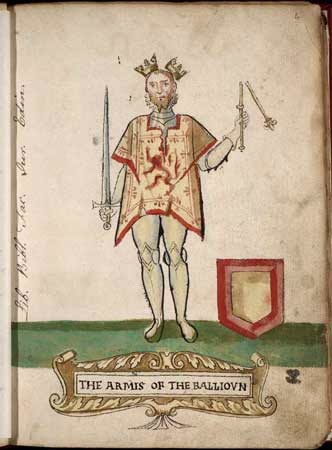 John Balliol or 'Toom TabardEdward didn't seem worried by these events. When he received a message from Balliol, in which the Scottish king formally renounced his homage, he smiled and remarked: "What folly he commits. He shall have no need to come to me, for I shall go to him."
Any Scottish atrocities were soon eclipsed by the horrors of Edward's sack of the town of Berwick-upon-Tweed. Seven hundred years on, this incident is still clouded by contemporary propaganda and modern nationalist sentiment - much like the later sacks of Drogheda and Wexford in Ireland. Trying to see through these mists is difficult, but what seems to have happened is that Edward initially offered the town terms of surrender. These were scornfully rejected, and a number of his sailors were killed by the people of Berwick when his ships ran aground near the harbour.
Edward, who from boyhood onward had displayed a streak of cruelty when roused, lost control of himself. He unleashed his shock troops on the town and personally led the cavalry charge on his war-horse, Bayard: it says something for Berwick's pitiful defences that his horse was able to leap the dyke and gallop into the streets.
Three days of bloody massacre followed. It's unclear whether Edward ordered the general extermination of the citizens, or of the men of the garrison. Either way, many thousands of innocents died, and Berwick was reduced to a gory, reeking shambles. Accounts vary of what finally persuaded Edward to put an end to the bloodshed: one story claims that a group of priests appeared before him, bearing the Host and begging on their knees for him to show mercy. Another says that Edward was violently sick after witnessing a soldier run his sword through the belly of a pregnant woman, and cried out 'Laissez! Laissez' - "Let be, let be!" as the signal to halt.
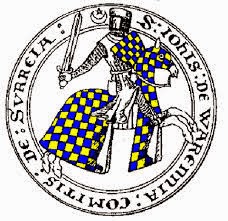 Arms of John de Warenne
Whatever the state of Berwick after this orgy of destruction, the crucial port town on the Tweed was now in Edward's hands. He followed up by sending his lieutenant and drinking crony, the Earl of Surrey, to secure the castle of Dunbar, a few miles up the Tweed. Surrey, a typically hard-faced baronial ruffian who had once waved a rusty sword under the noses of Edward's lawyers when they started asking difficult questions about his ancestral rights, duly sped off with a strong body of mounted knights and men-at-arms.
A note on warfare in this era. Descriptions of medieval campaigns can sometimes come across as a bland recitation of dry facts - King Wotsit marched over here and took this castle, then this town, and then marched back again. It's difficult for us modern, civilised, 21st-century types to imagine the smell and the stench of it, the hardship and the suffering of soldiers and civilians as oversized, indisciplined feudal hosts straggled up and down the country, often in appalling weather and over bad roads, all the while losing men to guerilla attacks, disease and desertion.
Desertion in particular was a serious problem for Edward I in his Welsh and Scottish campaigns. The majority of his infantry were made up of badly armed and trained feudal levies - conscripts, essentially, townsmen and peasants, often armed with little more than knives. To counter the problem, Edward supplemented his forces with large numbers of Basque and Gascon mercenaries, and after the conquest of Wales was able to call upon the services of thousands of tough Welsh archers and spearmen. Rather than starve in their own lands and be treated as second-class citizens by English immigrants, many of the Welsh chose to enlist in the armies of their conqueror.
By 1296, then, Edward's army was a pretty formidable beast, hardened by years of campaigning in Wales and France. The king's grasp of logistics could be pretty tenuous - he once sent out orders for 60,000 infantry to be raised, when there was perhaps a third of that number of able-bodied men in the whole of England - but he knew how to lead and direct an army. The same went for Surrey, another veteran of the Baronial wars and Welsh campaigns.
The Scots, by contrast, had nothing like the same degree of warlike experience to call upon. Scotland had largely been at peace for the past century, bar a couple of minor battles against the Norwegians and the Manx, and poor old Toom Tabard wasn't blessed with military genius. Balliol was camped at Haddington with the main body of the Scottish feudal host when urgent messages reached him from the garrison at Dunbar, warning that the English were on the move.
Balliol despatched his own knights, probably led by the Comyns, to meet Surrey. The two forces came in sight of each other near the castle, and for a while engaged in a staring contest. The Scots held the high ground, and may have expected Surrey's men to withdraw rather than risking attacking such a strong position. Instead he led his men down into a gulley and across a river called the Spott Burn.
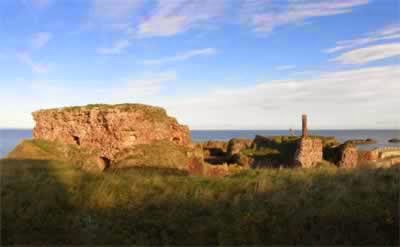 Dunbar Castle today
As they struggled across the river, the ranks of English knights started to break up. Seeing the enemy host apparently dissolve into chaos, the Scots launched an all-out charge. It must have been a pretty rare and glorious spectacle, hundreds of mounted knights streaming downhill, pennons waving, lances couched as the earth quaked under the racing hoofs of their destriers.
Alas, they were deceived. Old Surrey was something of a general as well as a hooligan, and had deliberately ordered his men to feign indiscipline when they crossed the burn. As the disorderly horde of Scots thundered down towards them, the English knights suddenly closed up again and launched a counter-charge, a difficult manoeuvre that Napoleon's cavalry might have been proud of.
It was all over in minutes. After a brief fight the Scots panicked and fled westwards to the refuge of Ettrick Forest. They probably didn't suffer many casualties: one English source boasted that ten thousand of them died, but in reality only one minor Lothian knight, Sir Patrick Graham, was slain, and a hundred Scottish lords, knights and men-at-arms taken prisoner.
The blow to Scottish arms, however brief and bloodless the actual fighting, was devastating. Berwick and Dunbar knocked the fighting spirit out of the Scots, at least for a time, and the remainder of the campaign was little more than a promenade. Edward swaggered about the country, taking castles, towns and prisoners as the fancy took him, and sent hundreds of Scottish nobles south to England as captives.
Toom Tabard, needless to say, was one of them. After having the royal arms of Scotland torn from his body in a humiliating ritual at Stracathro near Montrose, he was packed off to the Tower of London for safe keeping. Edward eventually let him go to France, where he ended his days on his family's ancestral estates in Picardy: a far more pleasant fate than most of Edward's enemies.
In the long run, Dunbar was not the decisive blow it may ave appeared at the time: a year later Surrey was embarrassed by William Wallace and Sir Andrew de Moray at Stirling Bridge, and Edward spent the rest of his life leading one army after another across the border, determined to hammer them into submission. Eventually the hammer ran out of steam, and it was left to Edward II, he of Piers Gaveston and red-hot poker fame, to finish the job of conquering Scotland. Let's just say it didn't turn out too well for him...


April 15, 2015
The Jagged Response of Master Bol-Tan
Martin Bolton has struck back at my deconstruction of Uhtred of Bebbanburg, and been very forthright about it too. Have a read here:
Saxons, Dogs and Rock n'Roll Witches
Saxons, Dogs and Rock n'Roll Witches
April 9, 2015
Uhtred, Schmutred
This is the second of the arguments/debates with my friend and co-author Martin Bolton. Last time we raved at each other about Game of Thrones, the world-conquering fantasy series by George R.R. Martin. Now we're going to cross swords - or axes - over an almost equally popular series, the Saxon Chronicles by Bernard Cornwell. My task is to tear the series to bits, Martin's is to stick it back together again. Any comments and opinions by readers are welcome!
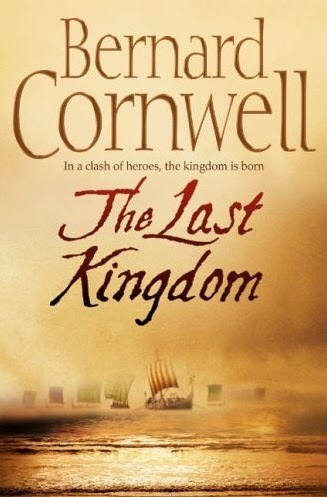
So. Uhtred of Bebbanburg. It all started so well, didn't it? The first book in the series, The Last Kingdom, brilliantly depicted the muddy, bloody, rainy world of ninth-century Britain, where crazed psychopathic killers were hailed as heroes, and ramming a knife into someone's guts was regarded as career advancement. Cornwell did an equally brilliant job describing Dark Age Britain in his Warlord series, based on the legend of King Arthur.
Sadly, for all Cornwell's skill at capturing past worlds, he isn't so good as depicting past lives. My problem with the series started the moment Uhtred encountered the young Prince Alfred, later to become Alfred the Great.
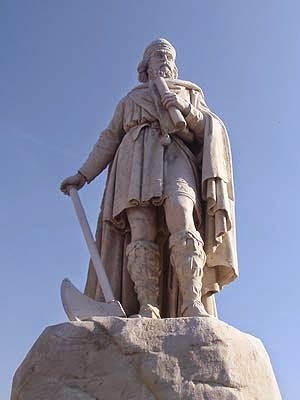 Get stuffed, Uhtred. I'm the man, not you.
This version of Alfred is all but unrecognisable from the stubborn warrior-king of the Anglo-Saxon Chronicle, who fights the Danes 'like a wild boar' at Ashdown and is later hailed as 'England's shepherd, England's darling'. Alfred in this version is a long-nosed, watery-eyed, insufferably tedious little man who stinks of faeces, is devout to the point of insanity, and putty in the hands of the evil black-robed priests who cluster about him, dripping poison into his ears.
The ludicrous nature of Christian piety, and the essential nastiness of the Christian church, are themes that crop up over and again in Cornwell's work. It's especially overdone in the Saxon series, though to sweeten the pill Cornwell introduces a nice priest, Pyrlig, who rejects the standard teachings of the church and is a sort of Welsh Friar Tuck: fat, jovial, good at breaking heads. Uhtred, for his part, is especially talented at humiliating and beating up corrupt priests, something Cornwell clearly enjoys writing about. Which is why he writes it again. And again. And again. After a while you start to wonder if the author has got some personal grudge against the church.
As it happens, he does. As a child, Cornwell was raised by a particularly strange sect of Christian fundamentalists, and this experience seems to have affected his attitude towards Christianity in general. I mention this, not so much to have a personal dig at the author, but because it is clearly relevant to his writing. Alfred was a devout Christian, so Cornwell portrays him as a sickly weirdo who has to get a pagan to fight his battles for him. He also depicts priests, with few exceptions, as rapists and liars and villains. Some of them end up being righteously murdered by Uhtred - and of course, they always thoroughly deserve their comeuppance. It's dull and repetitive and slightly disturbing, and speaks volumes for the writer's own prejudices - however understandable they may be - rather than any kind of historical reality.
Cornwall is not only a talented writer, but a shrewd one who knows how to appeal to a mass market. Uhtred, who on the surface appears to be a rough, tough man of his time, is really a fantasy Alpha Male figure for a modern secular age: unbeatable in a fight or an argument, attractive to women, poetic, intelligent, and inclined to laugh at the mores and values of his day. I could just about take three books of Uhtred the Indestructible, though my gorge rose when it became clear that Cornwell was going to give all the credit for the Saxon victory at Ethandun - one of the most vital battles fought on English soil - to his fictional Rambo instead of Alfred, who really led the line against the Danes on that day.
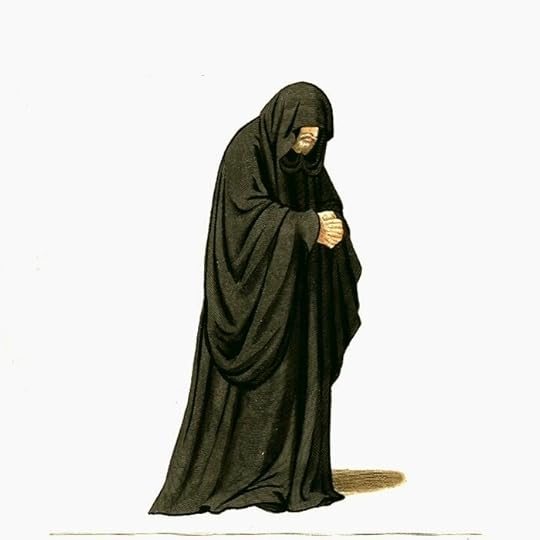 An evil priest, probably off to stamp on some puppies. Booooo!!!I think my breaking point came near the end of the third book in the series, Lords of the North, when a witch manages to calm some angry dogs by singing at them. Coupled with an earlier episode, in which Alfred's son Edward is cured of an illness by being dragged through a hole in the ground, it became apparent that Cornwell is pushing yet another agenda: not only is Christianity false, but paganism is real, and actually works. Having mocked the rituals of the Christian religion, he now gives us singing witches and magic tunnels.
Now, I can just about accept an anti-religious stance, so long as it is consistent, but to be told that one faith is somehow 'better' than another - sorry, Bernard, no. That's not right. It's not particularly brave either. The Christian church is fair game these days, but would fiction writers like Cornwell dare to present Islam in the same light? Can anyone imagine a series of novels in which a tough, charismatic, no-bullshit Christian warrior mocks imams for their piety, and makes a fool of some famous Islamic historical figure - Mehmed the Conqueror, perhaps? I very much doubt it.
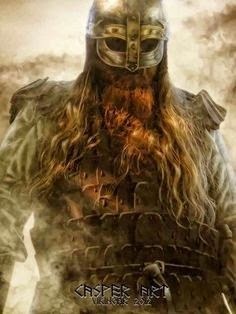 A Viking. Just because I needed a picture hereSpeaking of Alfred's children, Cornwell fails spectacularly in his portrayal of Edward and Aethelflaed. For some reason he shows Edward as a callow teenager when he becomes King of Wessex, though in reality he was thirty years old and a veteran of several battles. Uhtred acts as a sort of unofficial tutor to Edward, and at one point hurls him into a ditch as a lesson in kingship. The idea of anyone hurling Edward the Elder, a hard-faced warlord who killed more Danes than the plague, into a ditch or anywhere else is frankly absurd.
Then we come to Aethelflaed, the famous Lady of the Mercians. Cornwell is a bit uncomfortable with female characters, and generally has them falling into bed with his heroes for lack of anything else to do. He does the same with Aethelflaed, who has an affair with Uhtred in an entirely pointless sub-plot. She also gets kidnapped by the Danes at one point, and is abused by her savage husband Aethelred. There's no evidence whatsoever for either incident, though Cornwell does at least admit that his treatment of Aethelred is extremely unfair.
There seems little sign of the Saxon series coming to an end any time soon: it's far too lucrative and Cornwell has said he wants to take the story all the way up to the Battle of Brunanburh, by which time Uhtred will be in his mid-80s or thereabouts. No doubt our hero will still be fully capable of tearing apart umpteen Viking warriors without breaking a sweat, while at the same urinating on a dead monk.
The case for the prosecution rests. In a few days Mr Bolton will take up the cudgels for the defence....

So. Uhtred of Bebbanburg. It all started so well, didn't it? The first book in the series, The Last Kingdom, brilliantly depicted the muddy, bloody, rainy world of ninth-century Britain, where crazed psychopathic killers were hailed as heroes, and ramming a knife into someone's guts was regarded as career advancement. Cornwell did an equally brilliant job describing Dark Age Britain in his Warlord series, based on the legend of King Arthur.
Sadly, for all Cornwell's skill at capturing past worlds, he isn't so good as depicting past lives. My problem with the series started the moment Uhtred encountered the young Prince Alfred, later to become Alfred the Great.
 Get stuffed, Uhtred. I'm the man, not you.
This version of Alfred is all but unrecognisable from the stubborn warrior-king of the Anglo-Saxon Chronicle, who fights the Danes 'like a wild boar' at Ashdown and is later hailed as 'England's shepherd, England's darling'. Alfred in this version is a long-nosed, watery-eyed, insufferably tedious little man who stinks of faeces, is devout to the point of insanity, and putty in the hands of the evil black-robed priests who cluster about him, dripping poison into his ears.
The ludicrous nature of Christian piety, and the essential nastiness of the Christian church, are themes that crop up over and again in Cornwell's work. It's especially overdone in the Saxon series, though to sweeten the pill Cornwell introduces a nice priest, Pyrlig, who rejects the standard teachings of the church and is a sort of Welsh Friar Tuck: fat, jovial, good at breaking heads. Uhtred, for his part, is especially talented at humiliating and beating up corrupt priests, something Cornwell clearly enjoys writing about. Which is why he writes it again. And again. And again. After a while you start to wonder if the author has got some personal grudge against the church.
As it happens, he does. As a child, Cornwell was raised by a particularly strange sect of Christian fundamentalists, and this experience seems to have affected his attitude towards Christianity in general. I mention this, not so much to have a personal dig at the author, but because it is clearly relevant to his writing. Alfred was a devout Christian, so Cornwell portrays him as a sickly weirdo who has to get a pagan to fight his battles for him. He also depicts priests, with few exceptions, as rapists and liars and villains. Some of them end up being righteously murdered by Uhtred - and of course, they always thoroughly deserve their comeuppance. It's dull and repetitive and slightly disturbing, and speaks volumes for the writer's own prejudices - however understandable they may be - rather than any kind of historical reality.
Cornwall is not only a talented writer, but a shrewd one who knows how to appeal to a mass market. Uhtred, who on the surface appears to be a rough, tough man of his time, is really a fantasy Alpha Male figure for a modern secular age: unbeatable in a fight or an argument, attractive to women, poetic, intelligent, and inclined to laugh at the mores and values of his day. I could just about take three books of Uhtred the Indestructible, though my gorge rose when it became clear that Cornwell was going to give all the credit for the Saxon victory at Ethandun - one of the most vital battles fought on English soil - to his fictional Rambo instead of Alfred, who really led the line against the Danes on that day.
.JPG) An evil priest, probably off to stamp on some puppies. Booooo!!!I think my breaking point came near the end of the third book in the series, Lords of the North, when a witch manages to calm some angry dogs by singing at them. Coupled with an earlier episode, in which Alfred's son Edward is cured of an illness by being dragged through a hole in the ground, it became apparent that Cornwell is pushing yet another agenda: not only is Christianity false, but paganism is real, and actually works. Having mocked the rituals of the Christian religion, he now gives us singing witches and magic tunnels.
An evil priest, probably off to stamp on some puppies. Booooo!!!I think my breaking point came near the end of the third book in the series, Lords of the North, when a witch manages to calm some angry dogs by singing at them. Coupled with an earlier episode, in which Alfred's son Edward is cured of an illness by being dragged through a hole in the ground, it became apparent that Cornwell is pushing yet another agenda: not only is Christianity false, but paganism is real, and actually works. Having mocked the rituals of the Christian religion, he now gives us singing witches and magic tunnels.Now, I can just about accept an anti-religious stance, so long as it is consistent, but to be told that one faith is somehow 'better' than another - sorry, Bernard, no. That's not right. It's not particularly brave either. The Christian church is fair game these days, but would fiction writers like Cornwell dare to present Islam in the same light? Can anyone imagine a series of novels in which a tough, charismatic, no-bullshit Christian warrior mocks imams for their piety, and makes a fool of some famous Islamic historical figure - Mehmed the Conqueror, perhaps? I very much doubt it.
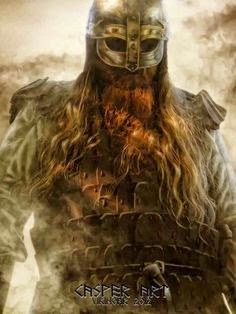 A Viking. Just because I needed a picture hereSpeaking of Alfred's children, Cornwell fails spectacularly in his portrayal of Edward and Aethelflaed. For some reason he shows Edward as a callow teenager when he becomes King of Wessex, though in reality he was thirty years old and a veteran of several battles. Uhtred acts as a sort of unofficial tutor to Edward, and at one point hurls him into a ditch as a lesson in kingship. The idea of anyone hurling Edward the Elder, a hard-faced warlord who killed more Danes than the plague, into a ditch or anywhere else is frankly absurd.
Then we come to Aethelflaed, the famous Lady of the Mercians. Cornwell is a bit uncomfortable with female characters, and generally has them falling into bed with his heroes for lack of anything else to do. He does the same with Aethelflaed, who has an affair with Uhtred in an entirely pointless sub-plot. She also gets kidnapped by the Danes at one point, and is abused by her savage husband Aethelred. There's no evidence whatsoever for either incident, though Cornwell does at least admit that his treatment of Aethelred is extremely unfair.
There seems little sign of the Saxon series coming to an end any time soon: it's far too lucrative and Cornwell has said he wants to take the story all the way up to the Battle of Brunanburh, by which time Uhtred will be in his mid-80s or thereabouts. No doubt our hero will still be fully capable of tearing apart umpteen Viking warriors without breaking a sweat, while at the same urinating on a dead monk.
The case for the prosecution rests. In a few days Mr Bolton will take up the cudgels for the defence....
March 19, 2015
Thoughts on A Song of Ice and Fire By David Pi...
Thoughts on A Song of Ice and Fire
By David Pilling
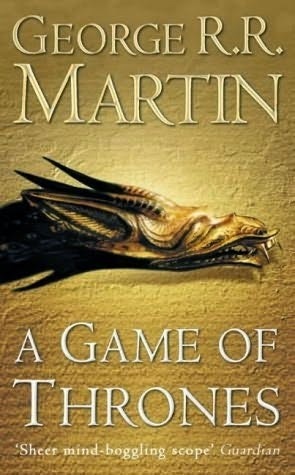 Some free advertising
Right, then. This is my counter-argument to Martin Bolton’s thoughtful deconstruction of A Song of Ice and Fire, which I’m sure needs little introduction as the best-selling fantasy series by George R.R. Martin. The screen version by HBO, retitled Game of Thrones, is of course a monster hit and about to enter its fifth season.
For those who haven’t read the books, I would advise looking away now, as it’s impossible to have an argument/debate like this without giving away spoilers.
To anyone who hasn’t yet read Martin’s piece, here is the link again:
Martin's thoughts
Firstly, let me say that Martin Bolton is a decent guy. A solid citizen, goes to work every day, not a bad cook, likes a few ales. Basically harmless. There’s just one tiny problem. He tends to suffer from multiple brainwrongs that lead him to express inaccurate opinions. Without me around to point him onto the true path, he would probably be living up a tree somewhere by now, worshipping rocks.
He’s done it again with A Song of Ice and Fire. Don’t believe all that guff he wrote about not wanting to dissuade anyone from reading the books, or about it being a matter of ‘personal taste’. That’s just a smokescreen. He hates George R.R. Martin and all his works with a terrifying passion, and it’s my Christian duty to word-slap some sense into him.
Martin claims that the books are too rambling, and feature lengthy and unnecessary descriptions of food and clothes. Well, there may be a kernel of truth in that, but what you have to understand is that George - I’m going to refer to the author as George, to avoid talking about Martin and Martin - cares about us. He really does. By taking up a whole five pages describing a meal, or the colour of the flagstones in a back alley, he’s trying to paint a vivid picture of his fantasy universe, and pull us readers out of humdrum reality for a couple of hours.
Also, he likes to make us hungry. Reading about his characters eat - shortly before they get an axe in the head, or engage in lesbian/dwarf/animal coitus - makes me want to eat. Otherwise I would probably forget, and fade away to nothing. So in that sense, I owe George my life. Maybe.
Granted, George could probably do with a good editor or three. If you were to comb all the extraneous detail from the last two books, A Feast for Crows and A Dance with Dragons, and just keep the essential plot, you would probably end up with a small pamphlet. And you can’t sell pamphlets in hardcover at £25 each, so it’s essential George keeps writing reams and reams of irrelevant pap about comedy Vikings, 16-course buffets and the interesting fauna and flora on a made-up island. Otherwise he might go bankrupt, and I would forget to eat. Do I want that? No.
To be serious for a moment, the first four volumes in the series were, in this one’s humble opinion, riveting, fast-paced, unpredictable fantasy fiction, dark and bloody and harrowing and utterly compulsive. They were the literary equivalent of crack, and deprived me of sleep for weeks on end as I sat up all night, thinking ‘I’ll just read the next chapter and then go to bed...”- before I knew it, the sun was rising and I was only halfway through. Only one other series, the Jack Aubrey novels by Patrick O’Brien, has had that effect on me.
The trouble is, and here I can’t really disagree with Martin’s analysis, George wrote himself into a corner. He grew too fond of killing off likeable characters in various nasty and unexpected ways, a shock tactic that served him well in the first book but just got silly by the time of The Red Wedding. This scene, in which pretty much anyone you could possibly care about in Westeros gets massacred, is one of the most horrifying and darkly powerful passages I’ve ever read. Few authors would have the guts to attempt such a thing, but I was left with the sense that George had shot his bolt. Thereafter the books decline in focus and quality, and many readers are left hanging on solely to find out what happens in the end. Something similar happened with the Wheel of Time series by Robert Jordan, which started off as a compelling read and then got bogged down until the narrative virtually ground to a halt.
George’s initial idea, to create a fantasy tale inspired by the real Middle Ages, specifically the Baron’s Wars and the Wars of the Roses in England, was genius. He was by no means the first to try it, but no other fantasy author (with the exception of Frank Herbert) manages to convey the savage warfare and intrigue between rival Houses with such panache. The Wars of the Roses is his most obvious reference point, though he also draws on the history of various noble families such as the Percies of Northumberland and throws them into the melting pot along with the House of Lancaster (Lannister) and Stark (York). Some of his characters draw cleverly on historical figures in a general sort of way - for instance, the supremely ruthless Tywin Lannister is a blend of several Plantagenet kings, mainly Edward I or Longshanks, the Hammer of the Scots. So George clearly knows his history, and how to effectively weave reality into fiction.
Martin makes the point that there is far too much darkness in the series, and the few chinks of light quickly get smothered in the general mayhem. I would agree to a point, but the slaughter of the ‘good’ characters, while it does become excessive, merely reflects the sadness of reality. The cold, hard fact is that nice guys rarely come out on top, especially when competing for power, which is why our world is governed by Killer Bastards from the Planet Sly. Ned Stark’s demise, while tragic and shocking, could have been avoided if he had laid aside his precious honour and got out of King’s Landing while there was still time. George was making the - entirely valid - point that those who refuse to compromise inevitably come to bad ends.
In a way, Ned Stark’s version of honour is exposed as selfish: by getting himself captured and killed, he left his family to endure the storm that followed. Hence, The Red Wedding was the direct consequence of Ned’s folly in refusing to tell a few lies in order to save his bacon. He left his son Robb to make one mistake after another, ending in the wholesale slaughter of the Starks and their bannermen at the hands of the dreadful Freys.
BUT...George does leave room for hope. Most of Ned’s children are still alive, though scattered, and I confidently expect them to get revenge for their father in due time. Whether there will be anyone left to avenge themselves on - the Lannisters have been going down like ninepins as well - remains to be seen. It could be that the whole cycle of honour and revenge turns out to be a massive waste of time, which is again a valid lesson. You need only glance at history to see that blood-feuds only result in more blood, generation after generation, until someone has the courage to forget about revenge and draw a line under it all.
In the end, I don’t think the series needs to be about ‘balance’, as Martin puts it. There is no balance of light and darkness in the real world, only shades of grey and people trying to get through the day as best they can. This is reflected in Westeros, where knightly virtues of chivalry and honour turn out to be either delusional or sheer hypocrisy.
I can’t disagree too much with Martin’s final comment, that the series lacks a sense of humour. There isn’t much laughter in Westeros, and sometimes you do wonder why anyone bothers to get out of bed, since they only have another weary round of mud and violence and treachery to look forward to. In that sense it doesn’t mirror our reality at all: few of us would care to struggle through life without a joke or two.
There’s always the hot lesbian sex, of course. George is very fond of hot lesbian sex.
So, that’s my take on A Song of Ice and Fire. What do YOU all think? Don’t hold back, now....and remember, points (might) mean prizes...
By David Pilling
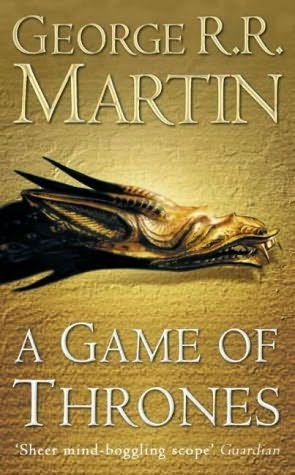 Some free advertising
Right, then. This is my counter-argument to Martin Bolton’s thoughtful deconstruction of A Song of Ice and Fire, which I’m sure needs little introduction as the best-selling fantasy series by George R.R. Martin. The screen version by HBO, retitled Game of Thrones, is of course a monster hit and about to enter its fifth season.
For those who haven’t read the books, I would advise looking away now, as it’s impossible to have an argument/debate like this without giving away spoilers.
To anyone who hasn’t yet read Martin’s piece, here is the link again:
Martin's thoughts
Firstly, let me say that Martin Bolton is a decent guy. A solid citizen, goes to work every day, not a bad cook, likes a few ales. Basically harmless. There’s just one tiny problem. He tends to suffer from multiple brainwrongs that lead him to express inaccurate opinions. Without me around to point him onto the true path, he would probably be living up a tree somewhere by now, worshipping rocks.
He’s done it again with A Song of Ice and Fire. Don’t believe all that guff he wrote about not wanting to dissuade anyone from reading the books, or about it being a matter of ‘personal taste’. That’s just a smokescreen. He hates George R.R. Martin and all his works with a terrifying passion, and it’s my Christian duty to word-slap some sense into him.
Martin claims that the books are too rambling, and feature lengthy and unnecessary descriptions of food and clothes. Well, there may be a kernel of truth in that, but what you have to understand is that George - I’m going to refer to the author as George, to avoid talking about Martin and Martin - cares about us. He really does. By taking up a whole five pages describing a meal, or the colour of the flagstones in a back alley, he’s trying to paint a vivid picture of his fantasy universe, and pull us readers out of humdrum reality for a couple of hours.
Also, he likes to make us hungry. Reading about his characters eat - shortly before they get an axe in the head, or engage in lesbian/dwarf/animal coitus - makes me want to eat. Otherwise I would probably forget, and fade away to nothing. So in that sense, I owe George my life. Maybe.
Granted, George could probably do with a good editor or three. If you were to comb all the extraneous detail from the last two books, A Feast for Crows and A Dance with Dragons, and just keep the essential plot, you would probably end up with a small pamphlet. And you can’t sell pamphlets in hardcover at £25 each, so it’s essential George keeps writing reams and reams of irrelevant pap about comedy Vikings, 16-course buffets and the interesting fauna and flora on a made-up island. Otherwise he might go bankrupt, and I would forget to eat. Do I want that? No.
To be serious for a moment, the first four volumes in the series were, in this one’s humble opinion, riveting, fast-paced, unpredictable fantasy fiction, dark and bloody and harrowing and utterly compulsive. They were the literary equivalent of crack, and deprived me of sleep for weeks on end as I sat up all night, thinking ‘I’ll just read the next chapter and then go to bed...”- before I knew it, the sun was rising and I was only halfway through. Only one other series, the Jack Aubrey novels by Patrick O’Brien, has had that effect on me.
The trouble is, and here I can’t really disagree with Martin’s analysis, George wrote himself into a corner. He grew too fond of killing off likeable characters in various nasty and unexpected ways, a shock tactic that served him well in the first book but just got silly by the time of The Red Wedding. This scene, in which pretty much anyone you could possibly care about in Westeros gets massacred, is one of the most horrifying and darkly powerful passages I’ve ever read. Few authors would have the guts to attempt such a thing, but I was left with the sense that George had shot his bolt. Thereafter the books decline in focus and quality, and many readers are left hanging on solely to find out what happens in the end. Something similar happened with the Wheel of Time series by Robert Jordan, which started off as a compelling read and then got bogged down until the narrative virtually ground to a halt.
George’s initial idea, to create a fantasy tale inspired by the real Middle Ages, specifically the Baron’s Wars and the Wars of the Roses in England, was genius. He was by no means the first to try it, but no other fantasy author (with the exception of Frank Herbert) manages to convey the savage warfare and intrigue between rival Houses with such panache. The Wars of the Roses is his most obvious reference point, though he also draws on the history of various noble families such as the Percies of Northumberland and throws them into the melting pot along with the House of Lancaster (Lannister) and Stark (York). Some of his characters draw cleverly on historical figures in a general sort of way - for instance, the supremely ruthless Tywin Lannister is a blend of several Plantagenet kings, mainly Edward I or Longshanks, the Hammer of the Scots. So George clearly knows his history, and how to effectively weave reality into fiction.
Martin makes the point that there is far too much darkness in the series, and the few chinks of light quickly get smothered in the general mayhem. I would agree to a point, but the slaughter of the ‘good’ characters, while it does become excessive, merely reflects the sadness of reality. The cold, hard fact is that nice guys rarely come out on top, especially when competing for power, which is why our world is governed by Killer Bastards from the Planet Sly. Ned Stark’s demise, while tragic and shocking, could have been avoided if he had laid aside his precious honour and got out of King’s Landing while there was still time. George was making the - entirely valid - point that those who refuse to compromise inevitably come to bad ends.
In a way, Ned Stark’s version of honour is exposed as selfish: by getting himself captured and killed, he left his family to endure the storm that followed. Hence, The Red Wedding was the direct consequence of Ned’s folly in refusing to tell a few lies in order to save his bacon. He left his son Robb to make one mistake after another, ending in the wholesale slaughter of the Starks and their bannermen at the hands of the dreadful Freys.
BUT...George does leave room for hope. Most of Ned’s children are still alive, though scattered, and I confidently expect them to get revenge for their father in due time. Whether there will be anyone left to avenge themselves on - the Lannisters have been going down like ninepins as well - remains to be seen. It could be that the whole cycle of honour and revenge turns out to be a massive waste of time, which is again a valid lesson. You need only glance at history to see that blood-feuds only result in more blood, generation after generation, until someone has the courage to forget about revenge and draw a line under it all.
In the end, I don’t think the series needs to be about ‘balance’, as Martin puts it. There is no balance of light and darkness in the real world, only shades of grey and people trying to get through the day as best they can. This is reflected in Westeros, where knightly virtues of chivalry and honour turn out to be either delusional or sheer hypocrisy.
I can’t disagree too much with Martin’s final comment, that the series lacks a sense of humour. There isn’t much laughter in Westeros, and sometimes you do wonder why anyone bothers to get out of bed, since they only have another weary round of mud and violence and treachery to look forward to. In that sense it doesn’t mirror our reality at all: few of us would care to struggle through life without a joke or two.
There’s always the hot lesbian sex, of course. George is very fond of hot lesbian sex.
So, that’s my take on A Song of Ice and Fire. What do YOU all think? Don’t hold back, now....and remember, points (might) mean prizes...
March 18, 2015
A Game of Opinions
Just for something different - and hopefully spark some healthy debate - my friend and co-author Martin Bolton have decided to host an argument.
The subject? First, the 'Song of Ice and Fire' series by George R.R. Martin, possibly better known these days as Game of Thrones, though we will be discussing the books rather than the HBO screen version. Martin isn't a fan of the series, and has posted a critique at his blog below:
Bolton the Writer
I'll be posting my counter-argument tomorrow - please feel free to weigh in with your own comments/opinions! There's no 'winner' as such, though I may consider some kind of freebie for whoever comes up with the most thoughtful and/or entertaining remarks.
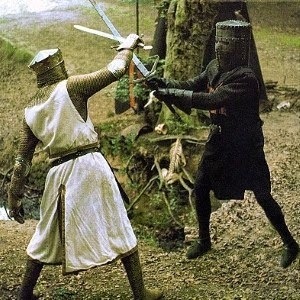
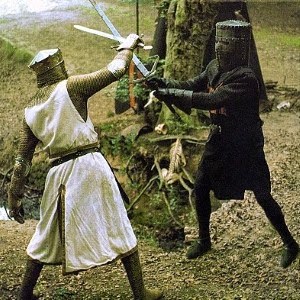
After we've tackled Martin, we'll be having a good old row over the Saxon series by Bernard Cornwell. Hopefully we can keep it civilised, unlike the gentlemen below...
The subject? First, the 'Song of Ice and Fire' series by George R.R. Martin, possibly better known these days as Game of Thrones, though we will be discussing the books rather than the HBO screen version. Martin isn't a fan of the series, and has posted a critique at his blog below:
Bolton the Writer
I'll be posting my counter-argument tomorrow - please feel free to weigh in with your own comments/opinions! There's no 'winner' as such, though I may consider some kind of freebie for whoever comes up with the most thoughtful and/or entertaining remarks.
After we've tackled Martin, we'll be having a good old row over the Saxon series by Bernard Cornwell. Hopefully we can keep it civilised, unlike the gentlemen below...
March 11, 2015
Friar Tuck alias Frere Tuk alias...
Trying to identify the inspiration for characters in medieval ballads and legends is usually fairly pointless, albeit a good brain exercise. Some characters, such as Hereward the Wake, Fulk FitzWarin and Eustace the Monk, were based on very real historical figures, while others like Gamelyn, Adam Bell and Robin Hood himself, remain a mystery.
Of all the pantheon of medieval English ballad heroes, Robin Hood has proved the most enduring, and attracts the most research into his origins. From that point of view, the English might have done better to cling onto Hereward instead of dumping him in favour of the Prince of Thieves. The former was very much flesh and blood, and is namechecked in a handful of references in Domesday Book. Jolly Robin, meanwhile, appears in no contemporary source save a few dubious passages in various chronicles, written by monks who were either working from existing ballads or deploying artistic licence i.e. making it up.
There is a good possibility, however, that one of Robin's companions was based on a real person. During the reign of Henry V, while King Hal was gearing up for another crack at the French after his smashing away win at Agincourt, the following entry appears in the court rolls:
Feb 9 1417 Commission to Thomas Camoys,Thomas Ponynges and John Pelham to arrest one assuming the name of Frere Tuk and other evildoers of his retinue who have committed divers murders, homicides, robberies, depredations, felonies, insurrections, trespasses, oppressions, extortions, offences and misprisions in the counties of Surrey and Sussex, and bring them before the king and council...
From this it seems that the identity of the man 'assuming the name of Frere Tuk' was unknown at this point, and that he was the captain of a band of robbers who rampaged around Surrey and Sussex, committing all manner of horrid crimes. A few months later, possibly after some hasty detective work, a little more info came to light:
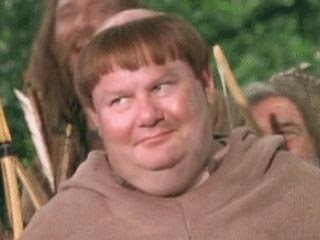
Ho ho ho! The terribly amusing Friar Tuck...
May 22 1417 Commission to William Lasyngby and Robert Hull to enquire into the report that a certain person assuming the unusual name of Frere Tuk and other evildoers have entered parks, warrens and chases of divers lieges of the king in the counties of Surrey and Sussex at divers times,hunted therein and carried off deer,hares,rabbits, pheasants and partridges, burned the houses and lodges for the keeping of the parks, warrens and chases and threatened the keepers...
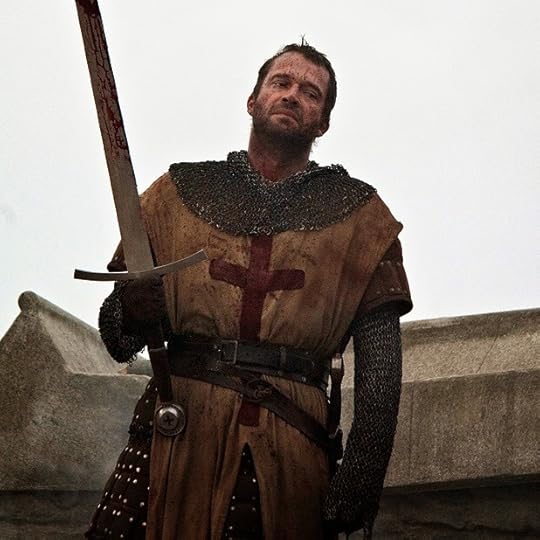
...though he was probably more like this guy
Frere Tuk and his boys were attacking royal forests, assaulting the keepers and trespassing on land held by loyal subjects of the King, before making off with heaps of slaughtered game. The identity of Tuk himself is still a mystery, and the strong arm of the law - not so long or strong in those days, with no standing police force - failed to lay a hand on him or his followers.
Unless they were gentry like the Folvilles and the Coterels, and could rely on calling in a few favours, it was uncommon for outlaws in those days to enjoy long careers. Most ended in a short walk and a long drop, but Frere Tuk seems to have been exceptional. On 12th November 1429 - twelve years after his last appearance in the records - he pops up again:
Nov 12 1429 Robert Stafford, late of Lyndefeld, co. Sussex,chaplain, or Robert Stafford of Lyndefeld, chaplain, alias ' Frere Tuk,' for not appearing before the king to answer Richard Wakehurst touching a plea of trespass; or before Henry V to answer that king touching divers trespasses whereof he, the said Robert,was indicted...
By this point Tuk's identity had at last been revealed - he was Robert Stafford of Lyndefeld or Lindfield in West Sussex, a chaplain who for some reason had taken to outlawry and assumed the name of Frere Tuk as an alias while carrying out his crimes. The clerks who recorded his misdeeds seem to have been unaware of the name 'Frere Tuk', suggesting they had either never heard a rhyme of Robin Hood, or that the character of Friar Tuck was not yet part of the canon.
The fate of the real Frere Tuk, alias Robert Stafford, is unknown, though he was certainly still alive in 1429: otherwise there would be no need for the court summons. It could be that the long career of this renegade chaplain inspired a verse or two, and that he eventually found his way into the fictionalised greenwood, to live on forever as a rather unfunny sideman with a pie fixation and a drink problem. Glory, eh?
Of all the pantheon of medieval English ballad heroes, Robin Hood has proved the most enduring, and attracts the most research into his origins. From that point of view, the English might have done better to cling onto Hereward instead of dumping him in favour of the Prince of Thieves. The former was very much flesh and blood, and is namechecked in a handful of references in Domesday Book. Jolly Robin, meanwhile, appears in no contemporary source save a few dubious passages in various chronicles, written by monks who were either working from existing ballads or deploying artistic licence i.e. making it up.
There is a good possibility, however, that one of Robin's companions was based on a real person. During the reign of Henry V, while King Hal was gearing up for another crack at the French after his smashing away win at Agincourt, the following entry appears in the court rolls:
Feb 9 1417 Commission to Thomas Camoys,Thomas Ponynges and John Pelham to arrest one assuming the name of Frere Tuk and other evildoers of his retinue who have committed divers murders, homicides, robberies, depredations, felonies, insurrections, trespasses, oppressions, extortions, offences and misprisions in the counties of Surrey and Sussex, and bring them before the king and council...
From this it seems that the identity of the man 'assuming the name of Frere Tuk' was unknown at this point, and that he was the captain of a band of robbers who rampaged around Surrey and Sussex, committing all manner of horrid crimes. A few months later, possibly after some hasty detective work, a little more info came to light:

Ho ho ho! The terribly amusing Friar Tuck...
May 22 1417 Commission to William Lasyngby and Robert Hull to enquire into the report that a certain person assuming the unusual name of Frere Tuk and other evildoers have entered parks, warrens and chases of divers lieges of the king in the counties of Surrey and Sussex at divers times,hunted therein and carried off deer,hares,rabbits, pheasants and partridges, burned the houses and lodges for the keeping of the parks, warrens and chases and threatened the keepers...
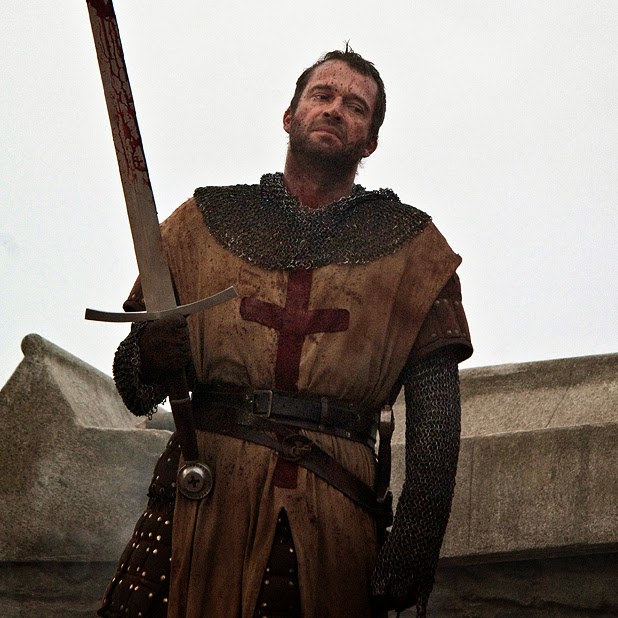
...though he was probably more like this guy
Frere Tuk and his boys were attacking royal forests, assaulting the keepers and trespassing on land held by loyal subjects of the King, before making off with heaps of slaughtered game. The identity of Tuk himself is still a mystery, and the strong arm of the law - not so long or strong in those days, with no standing police force - failed to lay a hand on him or his followers.
Unless they were gentry like the Folvilles and the Coterels, and could rely on calling in a few favours, it was uncommon for outlaws in those days to enjoy long careers. Most ended in a short walk and a long drop, but Frere Tuk seems to have been exceptional. On 12th November 1429 - twelve years after his last appearance in the records - he pops up again:
Nov 12 1429 Robert Stafford, late of Lyndefeld, co. Sussex,chaplain, or Robert Stafford of Lyndefeld, chaplain, alias ' Frere Tuk,' for not appearing before the king to answer Richard Wakehurst touching a plea of trespass; or before Henry V to answer that king touching divers trespasses whereof he, the said Robert,was indicted...
By this point Tuk's identity had at last been revealed - he was Robert Stafford of Lyndefeld or Lindfield in West Sussex, a chaplain who for some reason had taken to outlawry and assumed the name of Frere Tuk as an alias while carrying out his crimes. The clerks who recorded his misdeeds seem to have been unaware of the name 'Frere Tuk', suggesting they had either never heard a rhyme of Robin Hood, or that the character of Friar Tuck was not yet part of the canon.
The fate of the real Frere Tuk, alias Robert Stafford, is unknown, though he was certainly still alive in 1429: otherwise there would be no need for the court summons. It could be that the long career of this renegade chaplain inspired a verse or two, and that he eventually found his way into the fictionalised greenwood, to live on forever as a rather unfunny sideman with a pie fixation and a drink problem. Glory, eh?
February 25, 2015
Loyalty!
Some readers may recall I decided to condense and release new editions of The White Hawk, my series following the adventures and misfortunes of a family of Lancastrian loyalists during The Wars of the Roses. The shiny new version of Book One, retitled Revenge, was put out a couple of months ago, and now the next episode is ready.
Previously released under the title 'Restoration', The White Hawk II: Loyalty has a brand new cover, and is now available on Kindle. The paperback version will follow shortly.
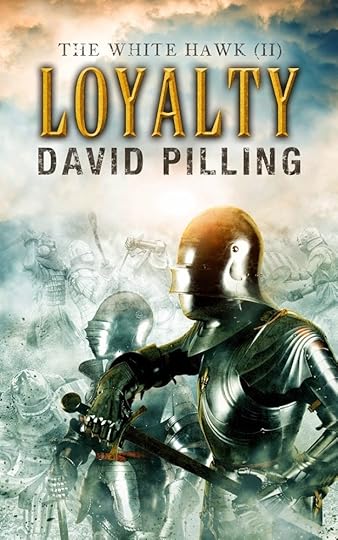
At the start of Loyalty, the surviving members of the Bolton clan are on the run and all at sea in the company of the Earl of Warwick, later known as the Kingmaker. Things look grim after the victory of King Edward IV at Empingham, and the Lancastrian cause hangs by a thread. James Bolton is despatched to the court of Margaret of Anjou, Henry VI's exiled Queen, with orders to try and cobble together some kind of alliance. Trouble is, a whole vat of bad blood exists between Margaret and Warwick, and it will take some pretty smooth talking from the former chaplain-turned-secret agent to broker a deal...
The White Hawk (II): Loyalty on Kindle
Previously released under the title 'Restoration', The White Hawk II: Loyalty has a brand new cover, and is now available on Kindle. The paperback version will follow shortly.

At the start of Loyalty, the surviving members of the Bolton clan are on the run and all at sea in the company of the Earl of Warwick, later known as the Kingmaker. Things look grim after the victory of King Edward IV at Empingham, and the Lancastrian cause hangs by a thread. James Bolton is despatched to the court of Margaret of Anjou, Henry VI's exiled Queen, with orders to try and cobble together some kind of alliance. Trouble is, a whole vat of bad blood exists between Margaret and Warwick, and it will take some pretty smooth talking from the former chaplain-turned-secret agent to broker a deal...
The White Hawk (II): Loyalty on Kindle
February 19, 2015
Q&A
Today I'm hosting an interview with Martin Bolton, co-author of our epic fantasy novel, The Best Weapon, which is released today.
I gave Martin a series of questions to answers on one of the characters he invented for the novel, Husan al Din, the fearsome Caliph of the Fifth Army of the Seven Sands. Below the interview is a link to my answers to Martin's interview questions.
Husan enjoys beating underlings with a belt, smoking, eating and planning his next conquest. Find out more about the rotund desert lion below!
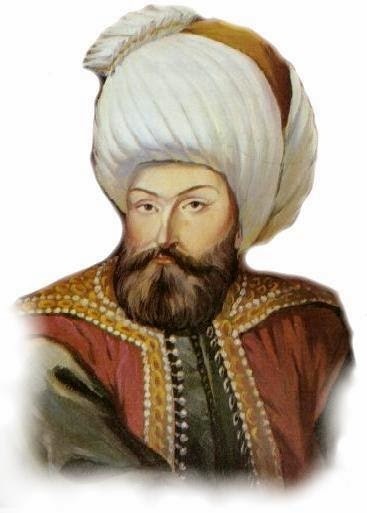 Husan, or someone like him...
1) What was your inspiration for the character of Husan al Din, Caliph of the Fifth Army of the Seven Sands?
I wanted Husan to be a reluctant hero. He would rather be left alone to smoke and drink and live an easy, debauched life. He'll do enough to keep his army content and The Southern Sands a peaceful, uneventful place, and he'd rather not be interrupted by any life-threatening or arduous endeavours. Unfortunately for him, he is not given that choice.
He's not a bad person per se, but he would rather do nothing at all than go out of his way to do a good deed. Most of what he does he is either given no choice, or he sees some gain in it for himself.
I think humour is important in fantasy, even dark fantasy, as it balances out the inevitable scenes of death and destruction. My intention was that Husan provided a bit of that as he was forced from his hammock and made to raise an army against his will, despite his terrible constipation.
2) How much of your own personality is reflected in his character?
The desire for a quiet life and the love of boozing and smoking, not to mention his stomach troubles and persistent flatulence, all come from me – these are my best points.
3) Husan has a very blunt way of dealing with subordinates - usually with the aid of a belt. Do you envy him his ability to do this?
In a manner of speaking. That's to say that a certain amount of my own pent up rage is exorcised by Husan giving someone a good whipping with the buckle-end. Have some of that, you mangy dog!
4) Will we be seeing more of Husan in future instalments of The World Apparent Tales?
We will meet Husan again, I enjoy disturbing his much needed rest far too much to let him sit in his palace and get fatter and drunker. Like many of the characters in The Best Weapon, Husan al Din's story is not yet finished.
Not only that but I spent too much time dreaming up his people, the Sharib, and their glorious but distant past, to leave it there. Husan's true destiny awaits him, and if he knew about it, he'd be bloody annoyed.
5) How did The World Apparent develop?
The World Apparent developed during a beer-soaked ranting session with David Pilling in a pub in St James' Park in London. This culminated in his scruffy drawing of a map on the back of a beer mat with a pen borrowed from a kindly barmaid who looked at us with a mixture of pity and revulsion. I took that beer mat home and drew a neater version. I've drawn it about twenty times since then.
The main characteristic of that early scribble was The Girdle Sea, an idea of Pilling's that split the world roughly in two. We then built the world around it.
6) How do you see the series developing in general - do you think there is scope for exploring new characters and story lines in the same world?
The World Apparent is a vast world and we have only explored a small part of it so far. There are many more races and cultures to discover yet, and more diverse and varied characters than you can shake a stick at.
The Best Weapon is just the beginning of a chain of events, spanning a further two books, that will bring The World Apparent to the brink of annihilation. And that is just one of the many stories yet to be told.
We are also working on a separate story with a whole new host of heroes and villains, and some characters who don't fall into either category. There are many more World Apparent Tales to come.
7) Do you feel it is important for writers to try and progress with each book?
Personally, I would like to think each time I write a book or short story, my writing improves. Not only that but hopefully I grow and learn as a person and get to know myself better, and thereby try to become a better person.
8) What are your writing plans for the immediate future?
I am currently working on another World Apparent Tale (with Pilling), which is about half way to completion (or maybe a third) and I will be concentrating on getting that finished in 2015. Although we've written a fair chunk it, the actual title of the thing is still in the beer-soaked ranting stage. Where's that barmaid when you need her?
I also write a short story every month for The 900 Club: a group of four writers (including Pilling's dad) who each post a 900 word short story on the 900 Club blog on a monthly basis.
Those two things take up most of my time, but at some point I will write a more substantial piece of work of my own.
Link to my interview on Martin's blog
I gave Martin a series of questions to answers on one of the characters he invented for the novel, Husan al Din, the fearsome Caliph of the Fifth Army of the Seven Sands. Below the interview is a link to my answers to Martin's interview questions.
Husan enjoys beating underlings with a belt, smoking, eating and planning his next conquest. Find out more about the rotund desert lion below!
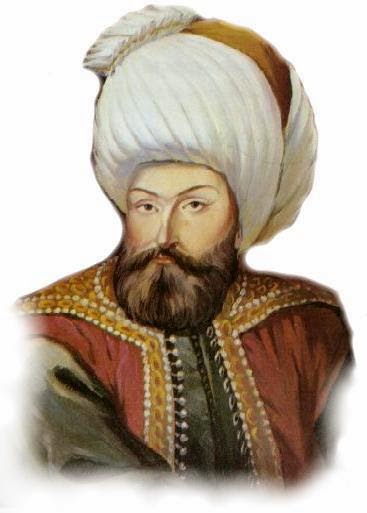 Husan, or someone like him...
1) What was your inspiration for the character of Husan al Din, Caliph of the Fifth Army of the Seven Sands?
I wanted Husan to be a reluctant hero. He would rather be left alone to smoke and drink and live an easy, debauched life. He'll do enough to keep his army content and The Southern Sands a peaceful, uneventful place, and he'd rather not be interrupted by any life-threatening or arduous endeavours. Unfortunately for him, he is not given that choice.
He's not a bad person per se, but he would rather do nothing at all than go out of his way to do a good deed. Most of what he does he is either given no choice, or he sees some gain in it for himself.
I think humour is important in fantasy, even dark fantasy, as it balances out the inevitable scenes of death and destruction. My intention was that Husan provided a bit of that as he was forced from his hammock and made to raise an army against his will, despite his terrible constipation.
2) How much of your own personality is reflected in his character?
The desire for a quiet life and the love of boozing and smoking, not to mention his stomach troubles and persistent flatulence, all come from me – these are my best points.
3) Husan has a very blunt way of dealing with subordinates - usually with the aid of a belt. Do you envy him his ability to do this?
In a manner of speaking. That's to say that a certain amount of my own pent up rage is exorcised by Husan giving someone a good whipping with the buckle-end. Have some of that, you mangy dog!
4) Will we be seeing more of Husan in future instalments of The World Apparent Tales?
We will meet Husan again, I enjoy disturbing his much needed rest far too much to let him sit in his palace and get fatter and drunker. Like many of the characters in The Best Weapon, Husan al Din's story is not yet finished.
Not only that but I spent too much time dreaming up his people, the Sharib, and their glorious but distant past, to leave it there. Husan's true destiny awaits him, and if he knew about it, he'd be bloody annoyed.
5) How did The World Apparent develop?
The World Apparent developed during a beer-soaked ranting session with David Pilling in a pub in St James' Park in London. This culminated in his scruffy drawing of a map on the back of a beer mat with a pen borrowed from a kindly barmaid who looked at us with a mixture of pity and revulsion. I took that beer mat home and drew a neater version. I've drawn it about twenty times since then.
The main characteristic of that early scribble was The Girdle Sea, an idea of Pilling's that split the world roughly in two. We then built the world around it.
6) How do you see the series developing in general - do you think there is scope for exploring new characters and story lines in the same world?
The World Apparent is a vast world and we have only explored a small part of it so far. There are many more races and cultures to discover yet, and more diverse and varied characters than you can shake a stick at.
The Best Weapon is just the beginning of a chain of events, spanning a further two books, that will bring The World Apparent to the brink of annihilation. And that is just one of the many stories yet to be told.
We are also working on a separate story with a whole new host of heroes and villains, and some characters who don't fall into either category. There are many more World Apparent Tales to come.
7) Do you feel it is important for writers to try and progress with each book?
Personally, I would like to think each time I write a book or short story, my writing improves. Not only that but hopefully I grow and learn as a person and get to know myself better, and thereby try to become a better person.
8) What are your writing plans for the immediate future?
I am currently working on another World Apparent Tale (with Pilling), which is about half way to completion (or maybe a third) and I will be concentrating on getting that finished in 2015. Although we've written a fair chunk it, the actual title of the thing is still in the beer-soaked ranting stage. Where's that barmaid when you need her?
I also write a short story every month for The 900 Club: a group of four writers (including Pilling's dad) who each post a 900 word short story on the 900 Club blog on a monthly basis.
Those two things take up most of my time, but at some point I will write a more substantial piece of work of my own.
Link to my interview on Martin's blog
February 5, 2015
Release day!
Leader of Battles (III): Gwenhwyfar is now available on Kindle! The paperback should be available early next week, and I will be hosting a free giveaway competition and possibly a blog hop or two to promote the book.
Once again the cover was done by the talented people at VisualMedia, who (as always) have done a splendid job in evoking the theme and 'feel' of the book.
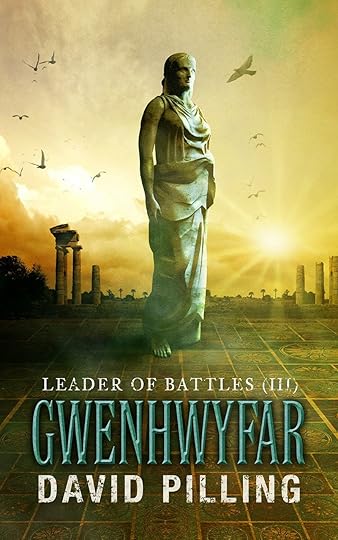
I wrote a blog post back in November about decision to make Gwenhwyfar - better-known as Guinevere, the ill-fated Queen of Camelot - the focus of the third part of the series. You can access the post at the link below:
Gwenhwyfar
Below is a potted description of the story, and a link to the Kindle version. Happy reading! Please feel free to send me any comments and feedback etc.
“Gwenhwyfar, daughter of Ogyrfan Gawr,Bad when little, worse when great...”
Britannia, 481 AD. Artorius has reigned as High King for two years. After his shattering victory at Mount Badon, an uneasy peace reigns over the land. The squabbling British kingdoms cling on in the west, while to the east the Saxons under Cerdic lick their wounds, waiting for a new generation of warriors to grow to manhood.
Artorius is still unmarried, and faces increasing pressure from his nobles to take a wife. When civil war threatens, he finds a bride in the person of Gwenhwyfar, eldest daughter of the King of Powys. In return for his promise of protection, Gwenhwyfar agrees to marry the High King and live with him in the new British capital at Caerleon.
Wolves circle the royal couple. Britannia is threatened by Scotti pirates ravaging his coasts, plundering at will and carrying off treasure and slaves. Artorius raises an army and sails to Hibernia, where he plans to defeat the Scotti tribes and capture the fabled Cauldron of Annwn. With the aid of Bedwyr, Gwenhwyfar is left to rule in his stead, and must survive assassination attempts and savage barbarian invasions.
Book Three of the Leader of Battles series chronicles the rise of Gwenhwyfar, better-known as Guinevere, Queen of Camelot. Drawing on Welsh folklore, the glory and tragedy of Britannia are seen through the eyes of a woman who struggles to control her own fate even as darkness begins to fall over her husband’s kingdom.
Leader of Battles (III): Gwenhwyfar on Amazon
Once again the cover was done by the talented people at VisualMedia, who (as always) have done a splendid job in evoking the theme and 'feel' of the book.
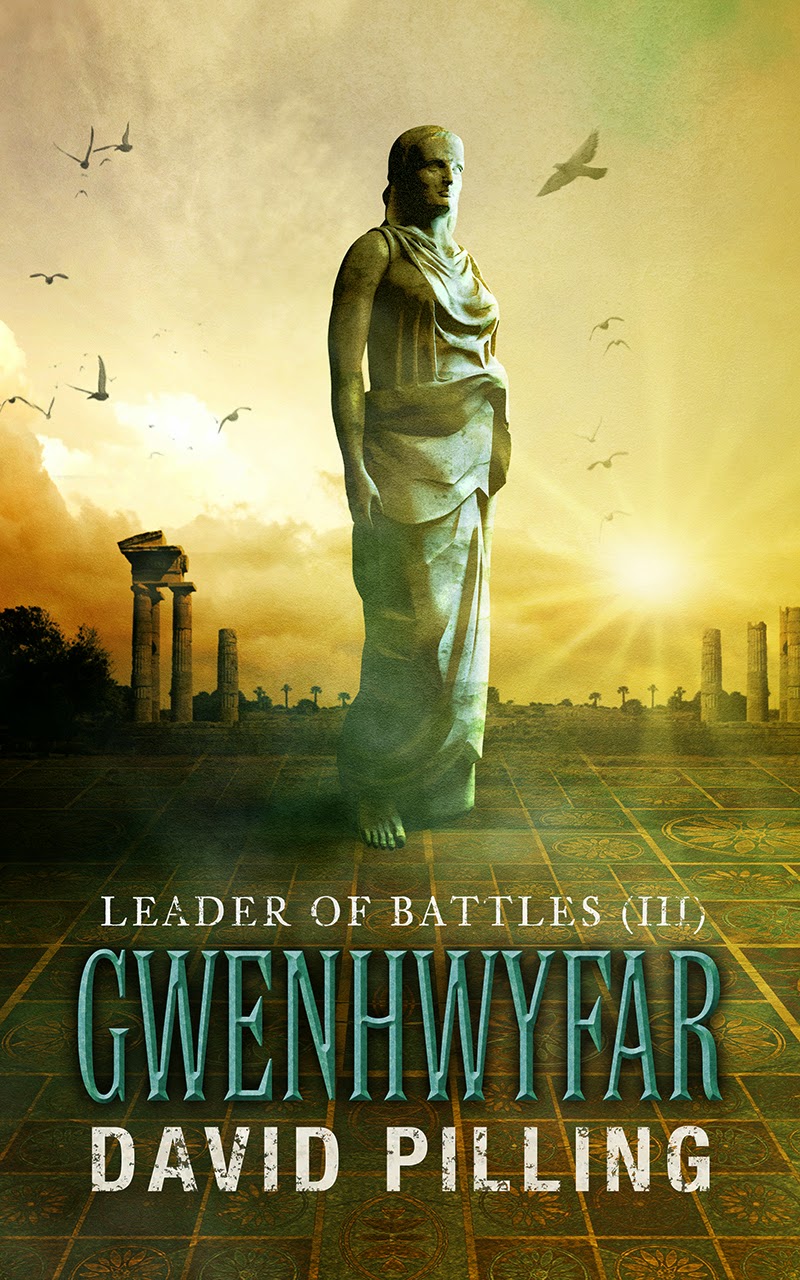
I wrote a blog post back in November about decision to make Gwenhwyfar - better-known as Guinevere, the ill-fated Queen of Camelot - the focus of the third part of the series. You can access the post at the link below:
Gwenhwyfar
Below is a potted description of the story, and a link to the Kindle version. Happy reading! Please feel free to send me any comments and feedback etc.
“Gwenhwyfar, daughter of Ogyrfan Gawr,Bad when little, worse when great...”
Britannia, 481 AD. Artorius has reigned as High King for two years. After his shattering victory at Mount Badon, an uneasy peace reigns over the land. The squabbling British kingdoms cling on in the west, while to the east the Saxons under Cerdic lick their wounds, waiting for a new generation of warriors to grow to manhood.
Artorius is still unmarried, and faces increasing pressure from his nobles to take a wife. When civil war threatens, he finds a bride in the person of Gwenhwyfar, eldest daughter of the King of Powys. In return for his promise of protection, Gwenhwyfar agrees to marry the High King and live with him in the new British capital at Caerleon.
Wolves circle the royal couple. Britannia is threatened by Scotti pirates ravaging his coasts, plundering at will and carrying off treasure and slaves. Artorius raises an army and sails to Hibernia, where he plans to defeat the Scotti tribes and capture the fabled Cauldron of Annwn. With the aid of Bedwyr, Gwenhwyfar is left to rule in his stead, and must survive assassination attempts and savage barbarian invasions.
Book Three of the Leader of Battles series chronicles the rise of Gwenhwyfar, better-known as Guinevere, Queen of Camelot. Drawing on Welsh folklore, the glory and tragedy of Britannia are seen through the eyes of a woman who struggles to control her own fate even as darkness begins to fall over her husband’s kingdom.
Leader of Battles (III): Gwenhwyfar on Amazon
January 27, 2015
Goodreads giveaway
I haven't done one of these Goodreads giveaways in a while, so I clubbed together with my friend and co-author Martin to set up a giveaway competition for three free paperback copies of THE BEST WEAPON, currently on pre-order and due for release on February 19th.
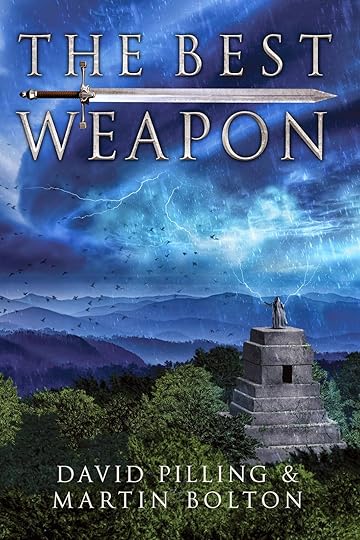
If interested, just click the 'Enter to Win' button on the page below, and a free copy could soon be winging (or posting) its way to you after the competition closes on the 19th!
Giveaway link on Goodreads

If interested, just click the 'Enter to Win' button on the page below, and a free copy could soon be winging (or posting) its way to you after the competition closes on the 19th!
Giveaway link on Goodreads