David Pilling's Blog, page 75
February 17, 2014
Heresy!!
Recently I've been nose-deep in the dark and bloody history of the Cathars, one of the most popular and widespread 'heretical' groups of medieval Europe, and as such doomed to a horrible fate at the hands of the established church.
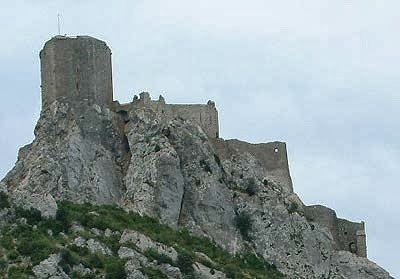 The Castle of Queribus in Southern France, a Cathar strongholdThe Cathar religion is a fascinating subject, steeped in ancient mysticism and consisting of beliefs that seem downright insane to the modern mind. It was a dualist faith, effectively believing in not one God but two: a God of light and goodness, and a God of evil and darkness. Unlike the Christian religion, which believes that the forces of good are superior to evil, the Cathars placed evil on an equal footing.
Put simply, they were obsessed with evil, and saw it everywhere, in all living things. To a Cathar, all physical matter was by its nature corrupt, and goodness could only be achieved via the spirit. This meant that Jesus Christ had never taken physical form in the world, and the stories of his crucifixion and resurrection were lies invented by the Church. Christ had only ever existed as pure spirit, and the souls of the dead would join him once the corrupted matter of their bodies had ceased to breathe. Essentially, they believed in reincarnation.
Doesn't sound too bad, you might think, and vaguely reminiscent of Buddhism in some respects. But the Cathars didn't deal in mere theory. Since all earthly flesh was sinful and generally rotten, they considered sex an abomination, and marriage as a form of prostitution. Their goal was to obtain purity and become 'parfaits'. These parfaits served as unofficial priests of the religion, preaching to their followers and demanding they abstain from meat, sexual pleasure, and generally as much physical expression and interaction as possible.
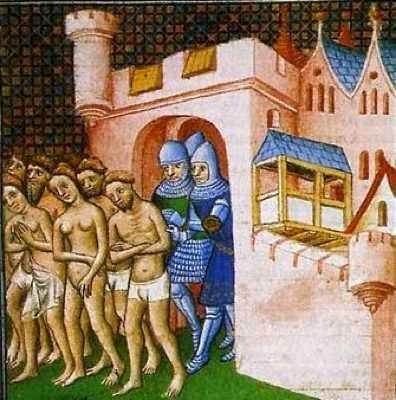 Medieval depiction of the persecution of Cathars
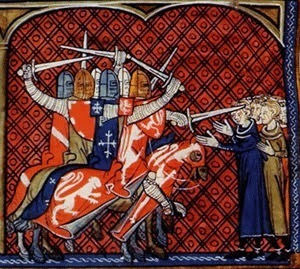 The Pope hurled his military forces against the CatharsThe Cathars were largely based in the Langudeoc in the South of France, where they found much support among peasants and nobles alike. The Counts of Toulouse, who owned large tracts of the south, were rather more forward-looking than their peers in the rest of the country, and permitted the Cathar faith to spread in the early 1200s.
Initially the Pope and the Catholic church attempted to mediate with the Cathars, but then in 1208 a papal legate was murdered by an agent of the Count of Toulouse, and all Hell (which the Cathars didn't believe in, incidentally) broke loose. The Pope flexed his military might, hurling army after army at the Cathars and declaring successive Crusades against them.
The Cathars had a problem in that their faith forbade them from taking up arms. However, despite their rejection of the trappings of wealth and power, they did enjoy the support of wealthy patrons, and so hired mercenaries to do the fighting. For over forty years, they stubbornly held out in one remote fortress after another, the dramatic ruins of which can still be seen scattered about Provence and the Languedoc.
Appalling massacres were committed by the papal Inquisition, set up during the mid-1220s to root out the Cathars and other heretical groups. I don't intend to go into the sickening details of the punishments inflicted by the Inquisition: even at a distance of 700 years, it is enough to turn the stomach. Suffice to say that by the 1240s, the remaining Cathars had been driven from their last refuge, though they lingered on into the next century. The last known Cathar, Guillaume Bélibaste, was burned alive in 1321.
And now I shall look for some lighter reading matter...
 The Castle of Queribus in Southern France, a Cathar strongholdThe Cathar religion is a fascinating subject, steeped in ancient mysticism and consisting of beliefs that seem downright insane to the modern mind. It was a dualist faith, effectively believing in not one God but two: a God of light and goodness, and a God of evil and darkness. Unlike the Christian religion, which believes that the forces of good are superior to evil, the Cathars placed evil on an equal footing.
Put simply, they were obsessed with evil, and saw it everywhere, in all living things. To a Cathar, all physical matter was by its nature corrupt, and goodness could only be achieved via the spirit. This meant that Jesus Christ had never taken physical form in the world, and the stories of his crucifixion and resurrection were lies invented by the Church. Christ had only ever existed as pure spirit, and the souls of the dead would join him once the corrupted matter of their bodies had ceased to breathe. Essentially, they believed in reincarnation.
Doesn't sound too bad, you might think, and vaguely reminiscent of Buddhism in some respects. But the Cathars didn't deal in mere theory. Since all earthly flesh was sinful and generally rotten, they considered sex an abomination, and marriage as a form of prostitution. Their goal was to obtain purity and become 'parfaits'. These parfaits served as unofficial priests of the religion, preaching to their followers and demanding they abstain from meat, sexual pleasure, and generally as much physical expression and interaction as possible.
 Medieval depiction of the persecution of Cathars
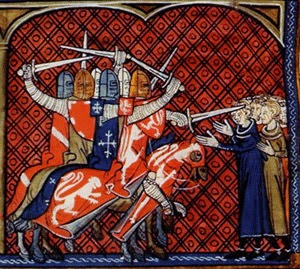 The Pope hurled his military forces against the CatharsThe Cathars were largely based in the Langudeoc in the South of France, where they found much support among peasants and nobles alike. The Counts of Toulouse, who owned large tracts of the south, were rather more forward-looking than their peers in the rest of the country, and permitted the Cathar faith to spread in the early 1200s.
Initially the Pope and the Catholic church attempted to mediate with the Cathars, but then in 1208 a papal legate was murdered by an agent of the Count of Toulouse, and all Hell (which the Cathars didn't believe in, incidentally) broke loose. The Pope flexed his military might, hurling army after army at the Cathars and declaring successive Crusades against them.
The Cathars had a problem in that their faith forbade them from taking up arms. However, despite their rejection of the trappings of wealth and power, they did enjoy the support of wealthy patrons, and so hired mercenaries to do the fighting. For over forty years, they stubbornly held out in one remote fortress after another, the dramatic ruins of which can still be seen scattered about Provence and the Languedoc.
Appalling massacres were committed by the papal Inquisition, set up during the mid-1220s to root out the Cathars and other heretical groups. I don't intend to go into the sickening details of the punishments inflicted by the Inquisition: even at a distance of 700 years, it is enough to turn the stomach. Suffice to say that by the 1240s, the remaining Cathars had been driven from their last refuge, though they lingered on into the next century. The last known Cathar, Guillaume Bélibaste, was burned alive in 1321.
And now I shall look for some lighter reading matter...


February 3, 2014
Screen Kays
Following on from my last post about Sir Kay and his development (or rather, degeneration) over centuries of Arthurian legend and storytelling, I want to post something about the various depictions of the character on film and TV. I am aware of four Screen Kays, though obviously there are many more screen versions of the story. If anyone knows of Kays I might have missed, please feel free to say.
First up is Cartoon Kay, from the 1963 Disney animated version of TH White's The Sword in the Stone. White's book and its sequels are, for me, far and away the greatest version of this very old story, full of pathos and humour and imbued with one man's righteous fury against the dreadfulness of humanity as a species. The film encompasses none of these things, but then it doesn't try to. It's an efficiently amusing cartoon for kids, in which a young Arthur - or Wart - gets turned into various creatures by Merlin, with the occasional sing-song and dancing teapot thrown in.
Arthur's older brother, Kay, is one of the most obnoxious depictions of Kay since Malory showed him slapping a woman to get Sir Percival's attention. This Kay is not only an unpleasant bully who makes Wart's life hell, but dumb as a post.
 WAAAARRRRTTT!!!!Even when Arthur draws the sword from the stone, Kay has trouble figuring out what's going on, and we last see him squinting miserably at his own feet after his father, Sir Ector, forces him to kneel before King Arthur.
Next up is Sexy Celtic Kay, from the 1970s series Arthur of the Britons. Made by HTV between 1972-3, this series was an interesting but flawed experiment, the first screen version of the legend to make an attempt at placing Arthur and his followers in a believable historical context i.e. post-Roman Britain. The warlord Arthur and his men are just a bunch of grubby Celtic warriors living in thatched halls and roundhouses, though they do have fabulous hair - none more so than Michael Gothard as Kay (Kai).
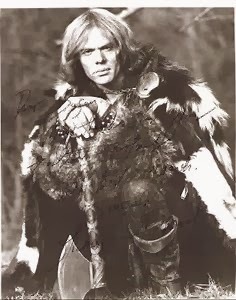 Mmmmm....CelticKai is a Saxon orphan, reared as Arthur's brother by their father, Lud. Stern and loyal and perpetually unsmiling, the nastier side of the character is largely absent in this depiction. In general, Arthur of the Britons was a bold effort, but hamstrung by a tiny budget and some iffy pacing and editing. A remake might be interesting.
Screen Kay no.3 is my personal favourite. Played by Niall O'Brien, Sir Kay in John Boorman's Excalibur (1981) plays a subtle but important role in the film. Boorman clearly did his research on the character, and allows Kay his proper place as Arthur's loyal seneschal, a constant and dependable presence when all the other knights are falling to bits (quite literally, since they never take their armour off. That stuff rusts).
This Kay remains by Arthur's side when the rest of the knights ride off on the doomed Grail quest, here reinvented as an almost pagan symbol of fertility and renewal. A hint of his obnoxiousness remains, such as when he says to an aspiring young squire: "kitchen knives and greasy spits will be your weapons, boy - to the kitchens!" but otherwise he is a decent, upright sort of chap.
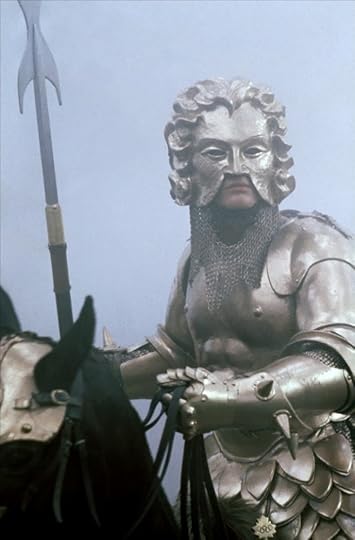 Me? Evil?When the evil Mordred, played here by Robert Addie as a truly vile product of incest, rides up to Camelot and demands Arthur's castle and kingdom, it is Kay who (I'm paraphrasing) warns the horrible little jerk to back off unless he wants Kay's foot up his shiny metal ass. Kay is one of the few men to ride with Arthur to his first battle, and the few to ride with him to the last, a weird, mist-shrouded affair in which knights in shiny silver armour and knights in dirty black armour cut each other to bits. Kay is last seen hacking away at the bad guys, before a white-bearded Lancelot thunders in to save the day.
The fourth and last of my Screen Kays is sadly the worst. Played by Peter Mooney in the ill-fated Starz series Camelot - or Hack n'Shag, as it might have been called, such was the degree of naked tits and softcore humping on display - this Kay lands with a dull thud. Mooney is one of those routinely handsome actors that seem to populate all modern fantasy/sci-fi shows, and his character is as boring as his haircut. Not a whit of Kay's traditional nastiness remains. Without that, and without much natural charisma from the actor playing him, Kay is reduced to just another knight, though he keeps his role as Arthur's foster-brother.
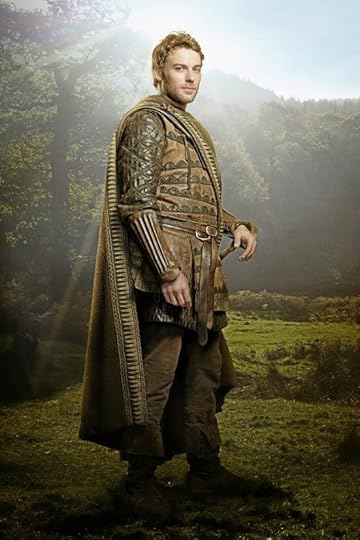 YawnKay was spared the embarrassment of appearing in the 2004 Bruckheimer-produced abomination King Arthur. This was billed as the Truth Behind the Legend, in the sense that Kevin Costner's Prince of Thieves was a gritty, realistic, hard-hitting exposé of social conditions in late 12th century England.
So far as I'm aware, no more Arthurian films or televised dramas are planned for the near future, though doubtless there will be: one recent idea, apparently shelved, was a remake of Excalibur. Hopefully, the next time Sir Kay appears onscreen, he will be in his full glory as an obnoxious, sarcastic asshat capable of breathing underwater, shooting fire from his hands, killing oxen with a single blow and shooting up to the height of a tree. At least it would be good for a laugh.
First up is Cartoon Kay, from the 1963 Disney animated version of TH White's The Sword in the Stone. White's book and its sequels are, for me, far and away the greatest version of this very old story, full of pathos and humour and imbued with one man's righteous fury against the dreadfulness of humanity as a species. The film encompasses none of these things, but then it doesn't try to. It's an efficiently amusing cartoon for kids, in which a young Arthur - or Wart - gets turned into various creatures by Merlin, with the occasional sing-song and dancing teapot thrown in.
Arthur's older brother, Kay, is one of the most obnoxious depictions of Kay since Malory showed him slapping a woman to get Sir Percival's attention. This Kay is not only an unpleasant bully who makes Wart's life hell, but dumb as a post.
 WAAAARRRRTTT!!!!Even when Arthur draws the sword from the stone, Kay has trouble figuring out what's going on, and we last see him squinting miserably at his own feet after his father, Sir Ector, forces him to kneel before King Arthur.
Next up is Sexy Celtic Kay, from the 1970s series Arthur of the Britons. Made by HTV between 1972-3, this series was an interesting but flawed experiment, the first screen version of the legend to make an attempt at placing Arthur and his followers in a believable historical context i.e. post-Roman Britain. The warlord Arthur and his men are just a bunch of grubby Celtic warriors living in thatched halls and roundhouses, though they do have fabulous hair - none more so than Michael Gothard as Kay (Kai).
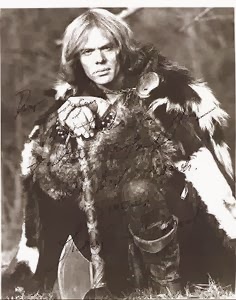 Mmmmm....CelticKai is a Saxon orphan, reared as Arthur's brother by their father, Lud. Stern and loyal and perpetually unsmiling, the nastier side of the character is largely absent in this depiction. In general, Arthur of the Britons was a bold effort, but hamstrung by a tiny budget and some iffy pacing and editing. A remake might be interesting.
Screen Kay no.3 is my personal favourite. Played by Niall O'Brien, Sir Kay in John Boorman's Excalibur (1981) plays a subtle but important role in the film. Boorman clearly did his research on the character, and allows Kay his proper place as Arthur's loyal seneschal, a constant and dependable presence when all the other knights are falling to bits (quite literally, since they never take their armour off. That stuff rusts).
This Kay remains by Arthur's side when the rest of the knights ride off on the doomed Grail quest, here reinvented as an almost pagan symbol of fertility and renewal. A hint of his obnoxiousness remains, such as when he says to an aspiring young squire: "kitchen knives and greasy spits will be your weapons, boy - to the kitchens!" but otherwise he is a decent, upright sort of chap.
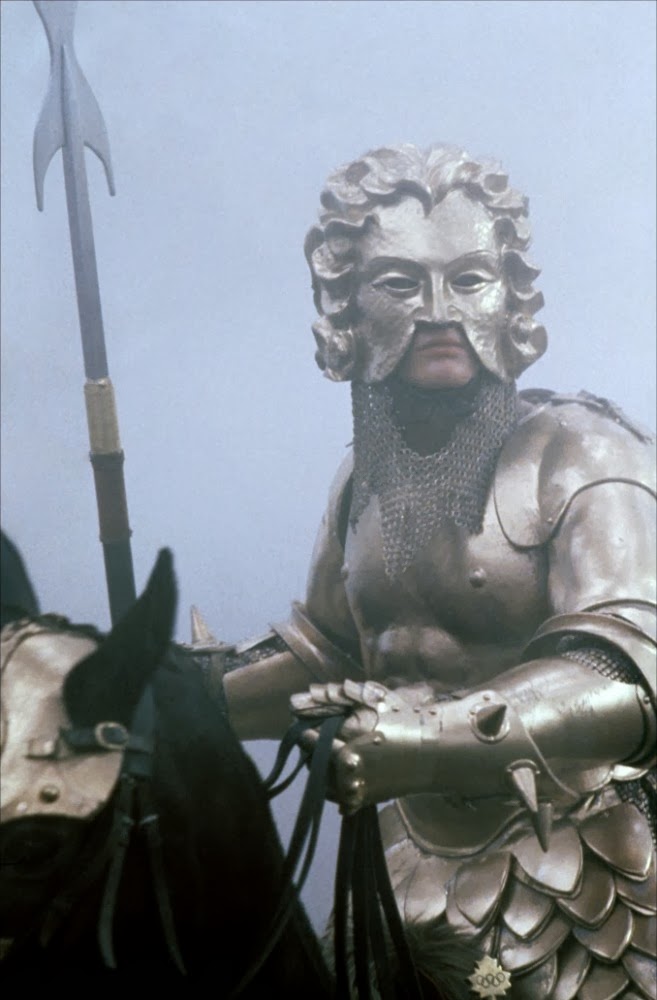 Me? Evil?When the evil Mordred, played here by Robert Addie as a truly vile product of incest, rides up to Camelot and demands Arthur's castle and kingdom, it is Kay who (I'm paraphrasing) warns the horrible little jerk to back off unless he wants Kay's foot up his shiny metal ass. Kay is one of the few men to ride with Arthur to his first battle, and the few to ride with him to the last, a weird, mist-shrouded affair in which knights in shiny silver armour and knights in dirty black armour cut each other to bits. Kay is last seen hacking away at the bad guys, before a white-bearded Lancelot thunders in to save the day.
The fourth and last of my Screen Kays is sadly the worst. Played by Peter Mooney in the ill-fated Starz series Camelot - or Hack n'Shag, as it might have been called, such was the degree of naked tits and softcore humping on display - this Kay lands with a dull thud. Mooney is one of those routinely handsome actors that seem to populate all modern fantasy/sci-fi shows, and his character is as boring as his haircut. Not a whit of Kay's traditional nastiness remains. Without that, and without much natural charisma from the actor playing him, Kay is reduced to just another knight, though he keeps his role as Arthur's foster-brother.
 YawnKay was spared the embarrassment of appearing in the 2004 Bruckheimer-produced abomination King Arthur. This was billed as the Truth Behind the Legend, in the sense that Kevin Costner's Prince of Thieves was a gritty, realistic, hard-hitting exposé of social conditions in late 12th century England.
So far as I'm aware, no more Arthurian films or televised dramas are planned for the near future, though doubtless there will be: one recent idea, apparently shelved, was a remake of Excalibur. Hopefully, the next time Sir Kay appears onscreen, he will be in his full glory as an obnoxious, sarcastic asshat capable of breathing underwater, shooting fire from his hands, killing oxen with a single blow and shooting up to the height of a tree. At least it would be good for a laugh.
January 31, 2014
The degeneration of Sir Kay
As part of my recent swerve into Arthurian legend, I wanted to post something about one of the most unfairly maligned characters in the story, namely Sir Kay, Arthur's seneschal and foster-brother.
Anyone familiar with Chrétien de Troyes and Malory will know that Kay is a pretty undesirable character: jealous of the prowess of other knights, a buffoon and a braggart and a bully, he is frequently humiliated and beaten up, yet never loses the affection of his King, who seems to regard Kay as indispensable. After one particularly embarrassing episode, in which Kay fails to defend a noble lady, Arthur says to him:
"Seneschal, stay at court as usual, and you may be sure that I have nothing in this world I would not give you without hesitation just to keep you here. "
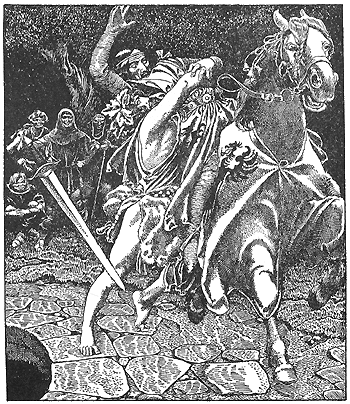 The hapless Sir Kay fails againOne gets the impression that the medieval writers found Kay's presence something of an irritant. Unlike the other knights, he occupies a unique place in the story, being arguably closer to Arthur than even Queen Guinevere or Sir Lancelot: he is certainly more loyal than either. His deathless loyalty remains intact throughout most versions of the legend, even though his character and ability as a warrior are ruthlessly degraded.
In fact Sir Kay (or Cei in his original form) is one of the oldest of all Arthurian characters. He and Bedwyr (later Sir Bedivere) are the first of Arthur’s named companions in the early Welsh texts and triads. From the beginning, he is a difficult and slightly ambivalent personality, ferocious in battle but inclined to be rude and quarrelsome. His own father, named as Cynyr rather than Sir Ector, prophesies that his son’s heart would be eternally cold, and his nature exceptionally stubborn.
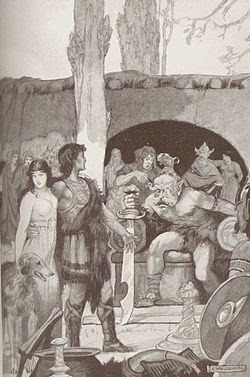 A depiction of Cei in Welsh legend
Cei is also infused with magical powers, as the following extract from Culhwch and Olwen describes:
"Thereupon Kai rose up. Kai had this peculiarity, that his breath lasted nine nights and nine days under water, and he could exist nine nights and nine days without sleep. A wound from Kai's sword no physician could heal. Very subtle was Kai. When it pleased him he could render himself as tall as the highest tree in the forest. And he had another peculiarity,--so great was the heat of his nature, that, when it rained hardest, whatever he carried remained dry for a handbreadth above and a handbreadth below his hand; and when his companions were coldest, it was to them as fuel with which to light their fire."
Unlike his later incarnation, Cei is also a ferocious and terrifying warrior. The tenth century Welsh poem Pa Gur says this of him:
Prince of the plunder,The unrelenting warrior to his enemy;Heavy was he in his vengeance;Terrible was his fighting.When he would drink from a horn,He would drink as much as four;When into battle he cameHe slew as would a hundred.Unless God should accomplish it,Cei's death would be unattainable.Worthy Cei and LlachauUsed to fight battles,Before the pain of livid spears...'
Even at this early stage, however, there is a stubborn and quarrelsome side to Cei. When Arthur makes the mistake of mocking his exploits, Cei explodes with rage and flounces off, declaring that he will have no more to do with Arthur or his court: henceforth: 'Cei had nothing to do with Arthur from then on, not when the latter was waning in strength, or when his men were being killed.' This is a rare instance of Cei showing disloyalty to Arthur, and an early warning of the dark side to his character.
As the Middle Ages progressed, new characters were introduced into the Arthurian cycle, often at the expense of the old. Many of Arthur's oldest followers were jettisoned entirely in favour of the likes of Sir Lancelot and Sir Galahad etc, but Cei (now Sir Kay) remained, albeit in a much-reduced state. His traditional role of the gatekeeper to Arthur's hall is downgraded to 'salver' i.e. a sort of glorified butler, and his chief purpose is to act as a blundering foil for the younger knights, insulting and belittling the likes of Sir Gareth and Sir Percival until they lose patience and give him a thrashing. Thus the mighty British warrior of old was robbed of his dignity and turned into a laughing stock.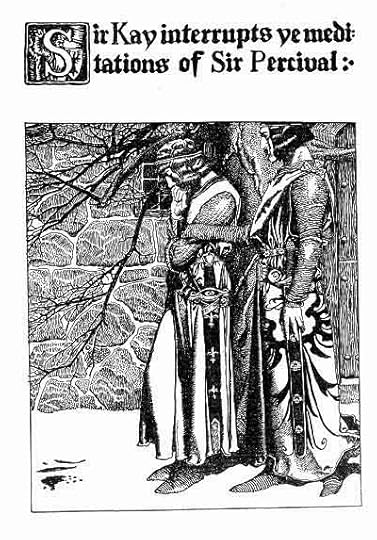 Sir Kay annoys the hell out of Sir PercivalSome writers have detected a more subtle meaning behind Kay’s behaviour, and suggested that his bullying was a deliberate tactic to keep order at court. This set me on the road to thinking of Kay as a more clever and subtle character than his latter-day reputation suggests – ‘very subtle was Kai’, as an early Welsh text puts it. The idea that he played the bully to keep Arthur’s knights in line suggests a man who was rather more intelligent than most of them, and perhaps entrusted with political secrets.
Gradually an idea for a story centred on Sir Kay took shape in my mind, but more on that later...
Anyone familiar with Chrétien de Troyes and Malory will know that Kay is a pretty undesirable character: jealous of the prowess of other knights, a buffoon and a braggart and a bully, he is frequently humiliated and beaten up, yet never loses the affection of his King, who seems to regard Kay as indispensable. After one particularly embarrassing episode, in which Kay fails to defend a noble lady, Arthur says to him:
"Seneschal, stay at court as usual, and you may be sure that I have nothing in this world I would not give you without hesitation just to keep you here. "
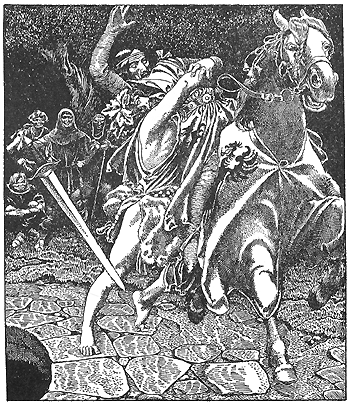 The hapless Sir Kay fails againOne gets the impression that the medieval writers found Kay's presence something of an irritant. Unlike the other knights, he occupies a unique place in the story, being arguably closer to Arthur than even Queen Guinevere or Sir Lancelot: he is certainly more loyal than either. His deathless loyalty remains intact throughout most versions of the legend, even though his character and ability as a warrior are ruthlessly degraded.
In fact Sir Kay (or Cei in his original form) is one of the oldest of all Arthurian characters. He and Bedwyr (later Sir Bedivere) are the first of Arthur’s named companions in the early Welsh texts and triads. From the beginning, he is a difficult and slightly ambivalent personality, ferocious in battle but inclined to be rude and quarrelsome. His own father, named as Cynyr rather than Sir Ector, prophesies that his son’s heart would be eternally cold, and his nature exceptionally stubborn.
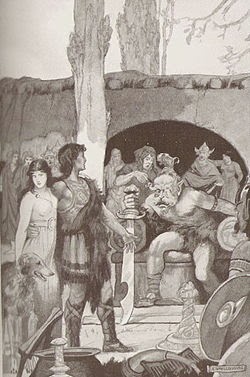 A depiction of Cei in Welsh legend
Cei is also infused with magical powers, as the following extract from Culhwch and Olwen describes:
"Thereupon Kai rose up. Kai had this peculiarity, that his breath lasted nine nights and nine days under water, and he could exist nine nights and nine days without sleep. A wound from Kai's sword no physician could heal. Very subtle was Kai. When it pleased him he could render himself as tall as the highest tree in the forest. And he had another peculiarity,--so great was the heat of his nature, that, when it rained hardest, whatever he carried remained dry for a handbreadth above and a handbreadth below his hand; and when his companions were coldest, it was to them as fuel with which to light their fire."
Unlike his later incarnation, Cei is also a ferocious and terrifying warrior. The tenth century Welsh poem Pa Gur says this of him:
Prince of the plunder,The unrelenting warrior to his enemy;Heavy was he in his vengeance;Terrible was his fighting.When he would drink from a horn,He would drink as much as four;When into battle he cameHe slew as would a hundred.Unless God should accomplish it,Cei's death would be unattainable.Worthy Cei and LlachauUsed to fight battles,Before the pain of livid spears...'
Even at this early stage, however, there is a stubborn and quarrelsome side to Cei. When Arthur makes the mistake of mocking his exploits, Cei explodes with rage and flounces off, declaring that he will have no more to do with Arthur or his court: henceforth: 'Cei had nothing to do with Arthur from then on, not when the latter was waning in strength, or when his men were being killed.' This is a rare instance of Cei showing disloyalty to Arthur, and an early warning of the dark side to his character.
As the Middle Ages progressed, new characters were introduced into the Arthurian cycle, often at the expense of the old. Many of Arthur's oldest followers were jettisoned entirely in favour of the likes of Sir Lancelot and Sir Galahad etc, but Cei (now Sir Kay) remained, albeit in a much-reduced state. His traditional role of the gatekeeper to Arthur's hall is downgraded to 'salver' i.e. a sort of glorified butler, and his chief purpose is to act as a blundering foil for the younger knights, insulting and belittling the likes of Sir Gareth and Sir Percival until they lose patience and give him a thrashing. Thus the mighty British warrior of old was robbed of his dignity and turned into a laughing stock.
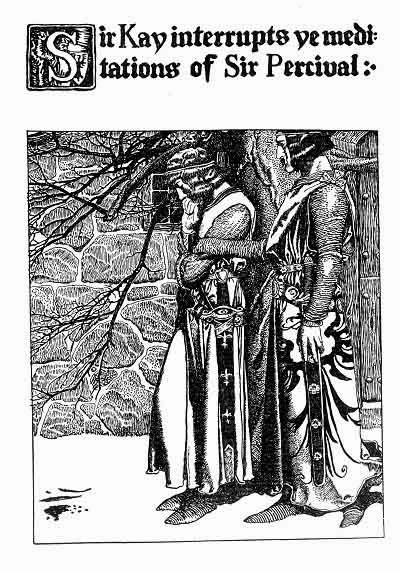 Sir Kay annoys the hell out of Sir PercivalSome writers have detected a more subtle meaning behind Kay’s behaviour, and suggested that his bullying was a deliberate tactic to keep order at court. This set me on the road to thinking of Kay as a more clever and subtle character than his latter-day reputation suggests – ‘very subtle was Kai’, as an early Welsh text puts it. The idea that he played the bully to keep Arthur’s knights in line suggests a man who was rather more intelligent than most of them, and perhaps entrusted with political secrets.
 Gradually an idea for a story centred on Sir Kay took shape in my mind, but more on that later...
January 19, 2014
The remains of Alfred...or not
I thought I should post something on the latest historical kerfuffle making the news - namely, the discovery by archeologists of a piece of human pelvis which might have belonged to Alfred the Great. The bit of old bone was not found inside a cathedral, where you might expect to find the remains of a dead king, but in a cardboard box in a dusty storeroom in Winchester museum, mixed in with a load of animal bones and random human fragments.
That's right. We gave Margaret Thatcher a state funeral, with politicians lining up to weep over her gaudy jewelled tomb before firing it into space, but for centuries the greatest of England's kings has languished inside a cardboard box. Or at least a bit of him: the rest of his bones were lost in the 18th century, when Hyde Abbey was torn down to make way for a new prison.
 Just put me in here, I'll be fineI posted quite recently on the subject of digging up the dead, and the ethics of it. Should we really disturb the graves of our ancestors, just because we're curious to know what they looked like? It's not as if the various facial reconstruction techniques are very accurate. If so, then poor old Richard III, who surely had enough to cope with, bore a marked resemblance to Quentin Tarantino.
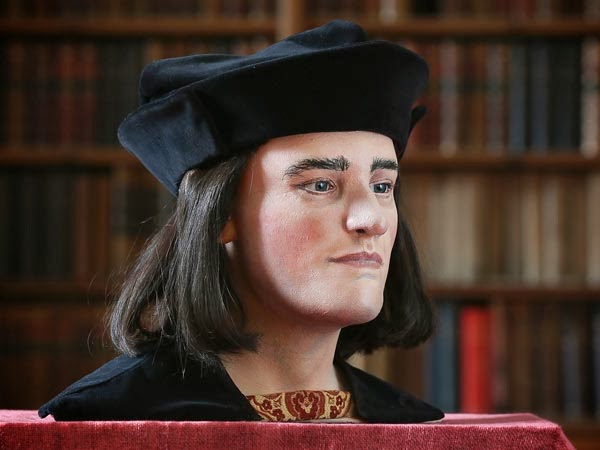 Quentin IIIIn the case of Alfred, archeologists have found a bit of him in a box rather than digging up his grave, so the question of ethics doesn't apply. The whole exercise seems curiously pointless: they can hardly reconstruct his face from a piece of pelvic bone, and it may not be his anyway. The bone has been carbon-dated to between the late ninth-early tenth century, which at least covers the date of his death in 899, but belonged to a man aged between 26 and 45 at death. Alfred was fifty when he died. The other option is that it may have belonged to his son, Edward the Elder, but that's even further out, for Edward died in his mid-fifties. Perhaps the likeliest candidate is Alfred's youngest son, Aethelweard, who died in 922, probably in his forties. Whether or not the bone belonged to Alfred, or a member of his family, is unlikely to be top of the agenda in the next few weeks. The official line is that Alfred Has Been Found, for few are likely to be attracted to news stories and TV documentaries devoted to the discovery of a bit of pelvic bone belonging to Aethelweard, a historical nobody with an odd-sounding name.
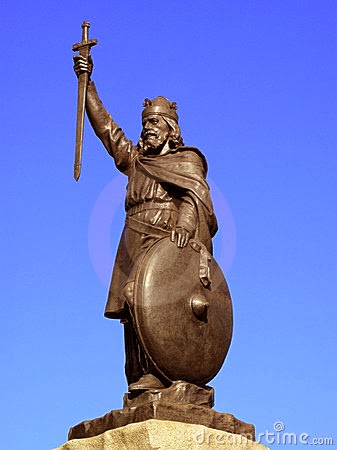 We are the King of Wessex, not a 'fun ride'The team who discovered the bone are said to be 'elated', as well they might be, since more excavation of the Hyde Abbey site will now be greenlighted...and perhaps some of the tourist dollars about to flow into Leicester could be redirected to Hyde. In due course the site may become the home of the Alfred the Great Fun Centre, with Viking longboat-themed rides and fast food outlets selling Alfred-Burghers, plastic horned Viking helmets and Saxon battle-axes for the kids, Alfred the Great cakes (slightly burned), Alfred the Great t-shirts, plastic replica Alfred Jewels...the possibilities are endless, people! Now, who else can we exhume and make a fat profit from...?
 January 7, 2014
Siege of Rome
My third release for this month - if you include the re-release of Book One of Caesar's Sword, is the sequel, CAESAR'S SWORD (II): SIEGE OF ROME.
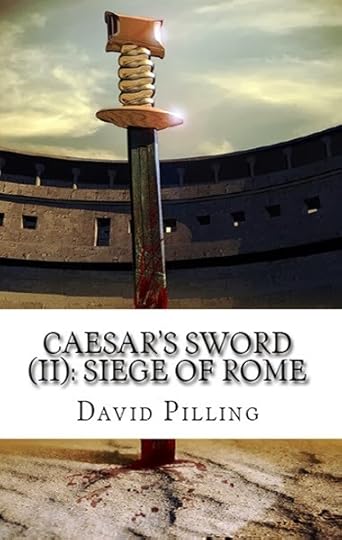
Book Two of the series is set shortly after the events of The Red Death, which saw Arthur's grandson, Coel ap Amhar, rise from a lowly slave to a charioteer in The Hippodrome, to a respected soldier in the Roman army led by Flavius Belisarius, the last great general of imperial Rome.
Belisarius has re-conquered the old Roman province of North Africa, and brought the mad King of the Vandals, Gelimer, back to Constantinople as a captive, along with heaps of treasure. Encouraged by this success, the Emperor Justinian has made Belisarius a Consul, and plans to take back Italy and the lost city of Rome. Once the capital and beating heart of the Roman Empire, Rome has for over a century been in the hands of the 'barbarian' Goths and Ostrogoths. Justinian entertains grand dreams of restoring the shattered Western Empire, and ruling over East and West in the manner of his predecessors.
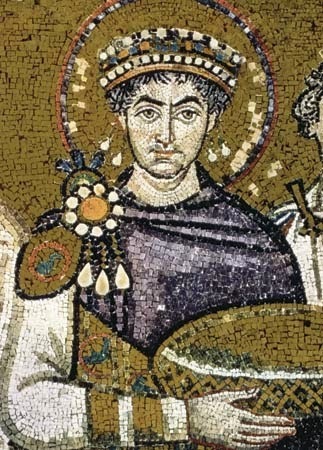 Emperor Justinian ITo this end, he sends Belisarius with an army of twelve thousand men, mostly mercenaries and foederatii troops, to recapture Sicily and the Italian mainland. The Goths are in turmoil, as their kings are murdering each other left and right, and Justinian hopes his golden general can take advantage of the chaos. Before long, however, a new and vigorous Gothic monarch emerges from the ruck, and the Romans find themselves stranded and hideously outnumbered in the middle of hostile territory.
Armed with just his famous grandfather's sword, Caledfwlch, and a heap of fortitude, Coel must fight to defend the walls of Rome and preserve his own life from the ever-growing numbers of deadly enemies and assassins who wish him ill...
Caesar's Sword (II): Siege of Rome
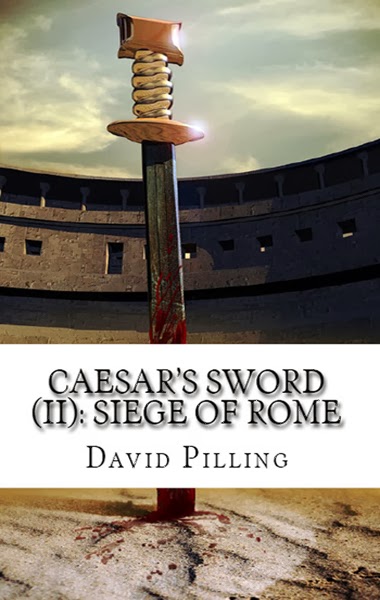
Book Two of the series is set shortly after the events of The Red Death, which saw Arthur's grandson, Coel ap Amhar, rise from a lowly slave to a charioteer in The Hippodrome, to a respected soldier in the Roman army led by Flavius Belisarius, the last great general of imperial Rome.
Belisarius has re-conquered the old Roman province of North Africa, and brought the mad King of the Vandals, Gelimer, back to Constantinople as a captive, along with heaps of treasure. Encouraged by this success, the Emperor Justinian has made Belisarius a Consul, and plans to take back Italy and the lost city of Rome. Once the capital and beating heart of the Roman Empire, Rome has for over a century been in the hands of the 'barbarian' Goths and Ostrogoths. Justinian entertains grand dreams of restoring the shattered Western Empire, and ruling over East and West in the manner of his predecessors.
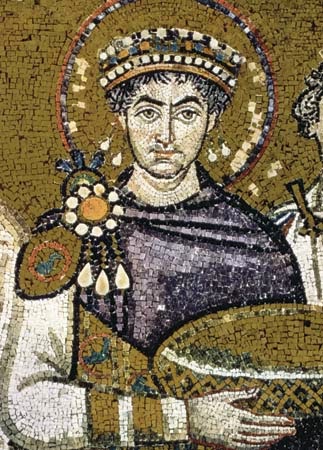 Emperor Justinian ITo this end, he sends Belisarius with an army of twelve thousand men, mostly mercenaries and foederatii troops, to recapture Sicily and the Italian mainland. The Goths are in turmoil, as their kings are murdering each other left and right, and Justinian hopes his golden general can take advantage of the chaos. Before long, however, a new and vigorous Gothic monarch emerges from the ruck, and the Romans find themselves stranded and hideously outnumbered in the middle of hostile territory.
Armed with just his famous grandfather's sword, Caledfwlch, and a heap of fortitude, Coel must fight to defend the walls of Rome and preserve his own life from the ever-growing numbers of deadly enemies and assassins who wish him ill...
Caesar's Sword (II): Siege of Rome
January 4, 2014
Stories
I'm going to be doing a bit more promotion on here this month than is usual, so bear with me. I have two new books out, one of which is the sequel to Caesar's Sword (I) The Red Death, and the other a compilation of my short stories simply entitled 'Stories'.

The stories are culled from the past five years or so, and many have appeared in various online and print zines, including Abandoned Towers, Heroic & Fantasy Quarterly, Solander, Bewildering Tales, and others. They include a hefty dollop of historical fiction (as you might expect) as well as stabs at fantasy, murder mystery and horror. It ends with an unfinished sequence of tales featuring Hasan al-Asim, a reluctant assassin and sometime prophet.
'Stories' is currently available on Kindle, but a paperback version will be available soon.
Stories on Amazon

The stories are culled from the past five years or so, and many have appeared in various online and print zines, including Abandoned Towers, Heroic & Fantasy Quarterly, Solander, Bewildering Tales, and others. They include a hefty dollop of historical fiction (as you might expect) as well as stabs at fantasy, murder mystery and horror. It ends with an unfinished sequence of tales featuring Hasan al-Asim, a reluctant assassin and sometime prophet.
'Stories' is currently available on Kindle, but a paperback version will be available soon.
Stories on Amazon
December 27, 2013
Caesar's Sword reboot
As we emerge, blinking and groaning and rubbing our aching bellies, weighed down with the weight of turkey and sherry and all the rest of that Christmas cheer, into the cold, unforgiving light of the New Year, I thought it worth advertising my re-launch of CAESAR'S SWORD (I): THE RED DEATH.
The first book in this planned trilogy was released in February, since when it has sold well and achieved some good reviews, but I thought it was time for a re-boot: New Year, new cover! Below is the fantastic new book cover designed by the folks at More Visual Ltd:
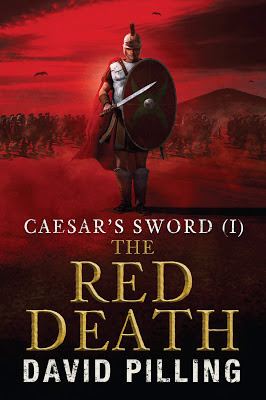
The book will be available FREE as a download for Kindle on Amazon from 5th-10th of January, so if any of the good people who happen to be reading this fancy obtaining a free copy and leaving a review on Amazon, that would be very much appreciated :)
For those who don't know, the Caesar's Sword trilogy is my attempt at melding some of the Welsh aspects of Arthurian legend with the history of the Later Roman Empire, specifically during the reign of Emperor Justinian I (527-65). The following is a summary of the plot:
"It is the year 568 AD. From his monastic refuge in Brittany, King Arthur’s aged grandson, Coel, begins to write the incredible story of his life. Now a monk, he is determined to complete his chronicle before death overtakes him.
His tale begins shortly after the death of his famous grandfather at the Battle of Camlann. Britain is plunged into chaos, and Coel and his mother are forced to flee their homeland. They take with them Arthur’s famous sword, Caledfwlch, once possessed by Julius Caesar. Known to the Romans as The Red Death, it is said to possess unearthly powers.
When he grows to adulthood, Cleo enlists in the Roman army under General Flavius Belisarius, the most famous soldier of the age, and serves in the Roman invasion of Africa. He makes an enemy of the corrupt Empress of the East, Theodora, and falls into the clutches of Gelimer, the mad King of the Vandals.
Caesar's Sword (I): The Red Death follows the adventures of a British warrior of famous descent in the glittering, lethal world of the Late Roman Empire. From the riotous streets of Constantinople, to the racetrack of the Hippodrome and the bloodstained deserts of North Africa, he must fight to recover his birthright and his pride..."
The sequel - CAESAR'S SWORD (II): SIEGE OF ROME is nearly finished, and should be available in the next few weeks!
Caesar's Sword (I): The Red Death
The first book in this planned trilogy was released in February, since when it has sold well and achieved some good reviews, but I thought it was time for a re-boot: New Year, new cover! Below is the fantastic new book cover designed by the folks at More Visual Ltd:
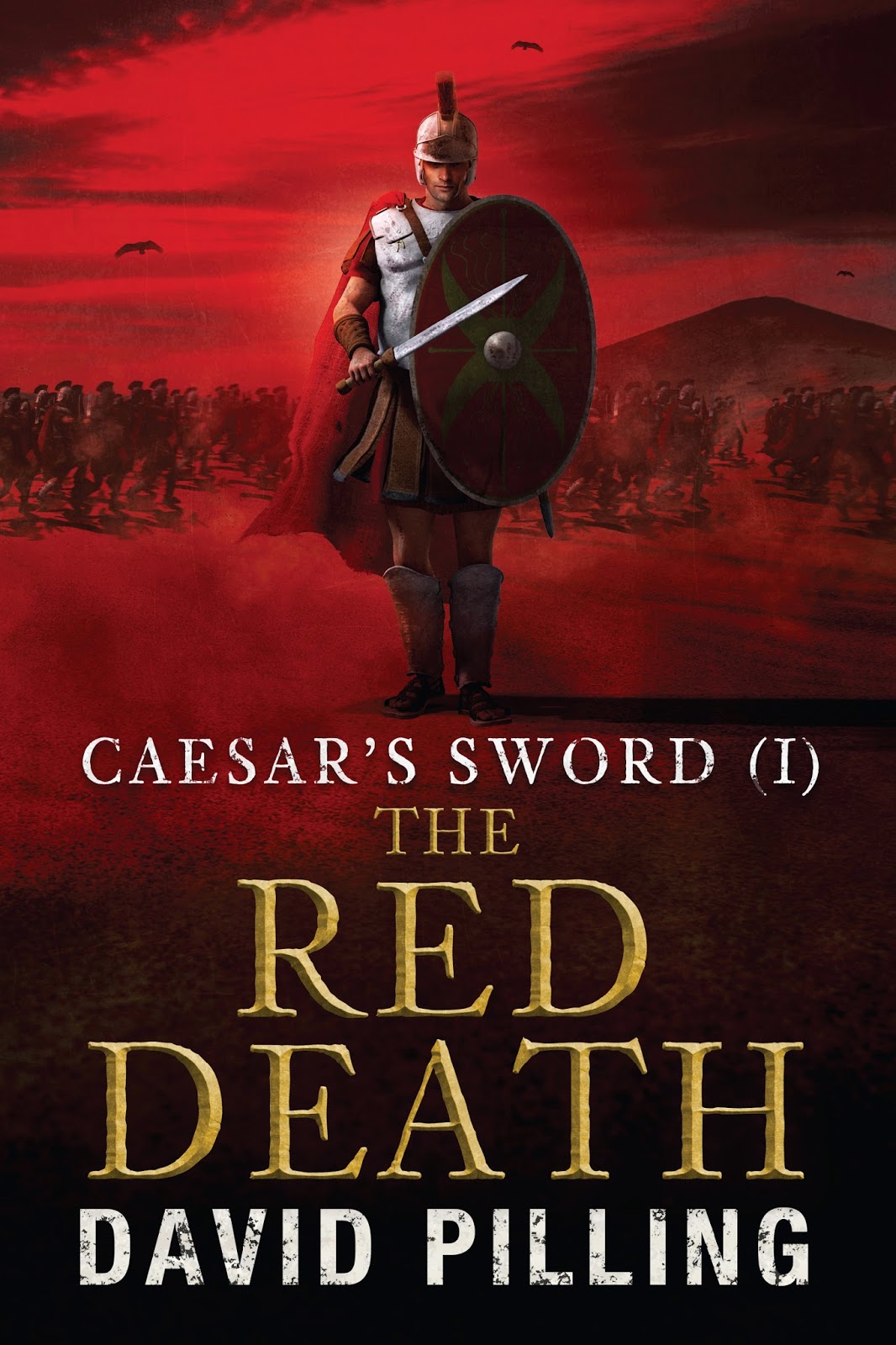
The book will be available FREE as a download for Kindle on Amazon from 5th-10th of January, so if any of the good people who happen to be reading this fancy obtaining a free copy and leaving a review on Amazon, that would be very much appreciated :)
For those who don't know, the Caesar's Sword trilogy is my attempt at melding some of the Welsh aspects of Arthurian legend with the history of the Later Roman Empire, specifically during the reign of Emperor Justinian I (527-65). The following is a summary of the plot:
"It is the year 568 AD. From his monastic refuge in Brittany, King Arthur’s aged grandson, Coel, begins to write the incredible story of his life. Now a monk, he is determined to complete his chronicle before death overtakes him.
His tale begins shortly after the death of his famous grandfather at the Battle of Camlann. Britain is plunged into chaos, and Coel and his mother are forced to flee their homeland. They take with them Arthur’s famous sword, Caledfwlch, once possessed by Julius Caesar. Known to the Romans as The Red Death, it is said to possess unearthly powers.
When he grows to adulthood, Cleo enlists in the Roman army under General Flavius Belisarius, the most famous soldier of the age, and serves in the Roman invasion of Africa. He makes an enemy of the corrupt Empress of the East, Theodora, and falls into the clutches of Gelimer, the mad King of the Vandals.
Caesar's Sword (I): The Red Death follows the adventures of a British warrior of famous descent in the glittering, lethal world of the Late Roman Empire. From the riotous streets of Constantinople, to the racetrack of the Hippodrome and the bloodstained deserts of North Africa, he must fight to recover his birthright and his pride..."
The sequel - CAESAR'S SWORD (II): SIEGE OF ROME is nearly finished, and should be available in the next few weeks!
Caesar's Sword (I): The Red Death
December 26, 2013
Blog Hop winner...
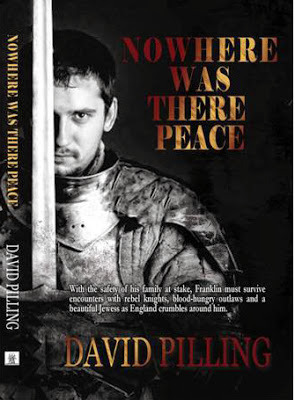
A few days have passed since the 'Casting Light on the Darkness' blog hop, and it's time to announce the winner...Alison Bahmuller! A signed paperback copy of my novel, Nowhere Was There Peace, will be winging its way towards Alison as soon as possible. Congratulations to her, and thanks to you all for participating.
Oh, and a belated Merry Christmas and a peaceful and prosperous New Year to you all!

Oh, and a belated Merry Christmas and a peaceful and prosperous New Year to you all!
December 20, 2013
Casting fire upon the darkness...

Today sees the launch of an epic blog hop involving over thirty authors, including Julian Stockwin, Helen Hollick and Manda Scott. The theme is 'Casting Light upon the Darkness' - as you can see by the lovely graphic logo above, designed by Avalon Graphics - and there are lots of great free prizes on offer. Simply browse (or hop) the links posted at the bottom of this page to see the posts by other bloggers and enter competitions.
I am offering a free paperback copy of my medieval saga, Nowhere Was There Peace, set in England during the baronial wars of the 1260s, and published this year by Fireship Press.

If you are interested in winning a copy, just leave a comment under this post and I will select a winner a few days after the 21st!
For the hop I have chosen to write about the age-old mystery of Greek Fire, the terrifying incendiary weapon employed by the Byzantine Empire to quite literally cast light upon their enemies.
The Empire survived for over a thousand years until the capture of Constantinople by the Ottoman Turks in 1453 and the death in battle of the last Emperor, Constantine XI. Without Greek Fire, the steadily shrinking Byzantine state would probably not have endured for so long, and how this vital weapon was made remains a mystery to this day.
 Medieval depiction of Greek Fire in actionGreek Fire was by no means the first incendiary weapon to be used in warfare: for instance, the Assyrians were using flaming arrows and pots packed full of combustible substances as early as the 9th Century BC. However, unlike earlier weapons, something about Greek Fire seems to have captured the imagination of contemporaries.
 One of the earliest possible references to it date from the early sixth century, when the Byzantine Emperor Anastasius I used a sulphur-based compound to incinerate a rebel fleet. It was certainly in use by the seventh century, when Constantinople was twice besieged by the combined land and sea forces of the Arab Caliphates. After four years of warfare, the Emperor Constantine IV led out his fleet in a head-on assault. His ships were equipped with Greek Fire, and the naval battle that ensued resulted in the total destruction of the Arab fleet.
These accounts suggest that Greek Fire was used primarily as a naval weapon, and carried into battle by single-deck warships called dromons, converted to house the devices needed to heat and pressurise the mixture. The specially trained crew would then direct it through a nozzle or hose, spraying enemy ships with unquenchable liquid flame. Greek Fire was notorious for burning on water, so a hideous death awaited enemy sailors even if they jumped overboard.
 The Byzantine army in battleThe Byzantines were nothing if not inventive, and all sorts of variants were introduced over the centuries. Some manuals describe jars being stuffed with Greek Fire and thrown at the enemy, like early hand grenades, and caltrops smeared with tow and soaked in the substance being hurled from catapults. Cranes were fitted aboard ships and used to drop 'bombs' onto enemy ships, while siphons were fixed to the prows of Byzantine ships, so they could ram the enemy and hose him with fire at the same time.
The siphons were elaborate affairs, made of brass or iron and shaped like the heads of lions or other wild beasts. Their mere aspect was frightening, their jaws wide open to shoot Greek Fire through their mouths, as though they were vomiting over the enemy.
Greek Fire continues to fascinate because of the centuries-old mystery surrounding its composition. Knowledge of the formula was a closely guarded state and military secret. This is unsurprising, since the Byzantines could not afford their secret weapon to fall into the hands of their many enemies. The term 'Byzantine complexity' might have been invented to describe the process of keeping the formula secret: even the engineers and technicians who worked with the stuff were only made aware of certain components, while being kept ignorant of others. This meant that no-one could blab the secrets of Greek Fire to the opposition.
Many generations of scholars have tried to reconstruct the formula for Greek Fire from informed supposition and fragments of surviving sources. Certain clues can be gleaned from Byzantine military textbooks and descriptions of other incendiary weapons, such as the following from the Alexiad, written by Anna Komnene, daughter of the Byzantine Emperor Alexios I:
"This fire is made by the following arts. From the pine and the certain such evergreen trees inflammable resin is collected. This is rubbed with sulfur and put into tubes of reed, and is blown by men using it with violent and continuous breath. Then in this manner it meets the fire on the tip and catches light and falls like a fiery whirlwind on the faces of the enemies..."
No precise description of the formula for Greek Fire exists. All we know for certain is that it burned on water, could be extinguished only by sand, strong vinegar or urine, and that it was a liquid substance. Strangely, for a pre-gunpowder weapon, the discharge was apparently accompanied by a loud bang and lots of smoke. The demoralising effect on an enemy, who faced being turned into a human torch if he stuck around, can only be imagined.
 Greek Fire being expelled through a portable siphonFor all that, it was not a 'perfect' weapon. It had a limited range and could only be deployed in ideal weather conditions, with a fair wind and a calm sea. Muslim navies developed various forms of protection, either staying out or range or covering their ships in flame-retardant felt and hides soaked in vinegar.
 The records indicate that Greek Fire was used often and decisively for many hundreds of years, and was still in use in the 12th century. For some reason - perhaps the secret of making it had been lost - there is no record of it being used against the Crusaders when they sacked Constantinople in 1203. Nor was it deployed in the final battle against the Turks in 1453.
One of the latest and most colourful accounts of this terrible weapon come from the Memoirs of the Lord of Joinville, written during the Seventh Crusade in the mid-13th century. I'll sign off with this epic description from the memoir of Greek Fire in action:
“... the tail of fire that trailed behind it was as big as a great spear; and it made such a noise as it came, that it sounded like the thunder of heaven. It looked like a dragon flying through the air. Such a bright light did it cast, that one could see all over the camp as though it were day, by reason of the great mass of fire, and the brilliance of the light that it shed.” And below is the list of our lovely bloggers!
Helen Hollick : A little light relief concerning those dark reviews! Plus a Giveaway PrizePrue Batten : Casting Light....Alison Morton : Shedding light on the Roman dusk - Plus a Giveaway Prize! Anna Belfrage : Let there be light!Beth Elliott : Steering by the Stars. Stratford Canning in Constantinople, 1810/12Melanie Spiller : Lux Aeterna, the chant of eternal lightJanet Reedman The Winter Solstice MonumentsPetrea Burchard : Darkness - how did people of the past cope with the dark? Plus a Giveaway Prize!Richard Denning : The Darkest Years of the Dark Ages: what do we really know? Plus a Giveaway Prize! Pauline Barclay : Shedding Light on a Traditional PieDavid Ebsworth : Propaganda in the Spanish Civil War : Fear of the DarkDerek Birks : Lies, Damned Lies and … ChroniclesMark Patton : Casting Light on SaturnaliaTim Hodkinson : Soltice@NewgrangeWendy Percival : Ancestors in the SpotlightJudy Ridgley : Santa and his elves Plus a Giveaway PrizeSuzanne McLeod : The Dark of the MoonKatherine Bone : Admiral Nelson, A Light in Dark TimesChristina Courtenay : The Darkest Night of the YearEdward James : The secret life of Christopher Columbus; Which Way to Paradise?Janis Pegrum Smith : Into The Light - A Short StoryJulian Stockwin : Ghost Ships - Plus a Giveaway PresentManda Scott : Dark into Light - Mithras, and the older godsPat Bracewell Anglo-Saxon Art: Splendor in the DarkLucienne Boyce : We will have a fire - 18th Century protests against enclosureNicole Evelina What Lurks Beneath Glastonbury Abbey? Sky Purington : How the Celts Cast Light on Current American Christmas TraditionsStuart MacAllister (Sir Read A Lot) : The Darkness of Depression
December 11, 2013
RIP Ripper Street
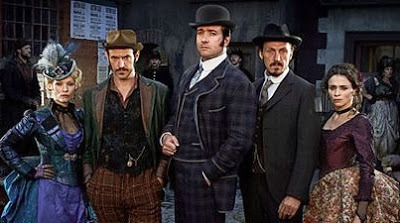
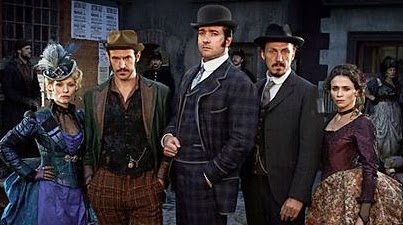
Something a bit different today. After castigating the BBC's recent efforts at historical drama - namely The Tudors and The White Queen - I thought it only fair to applaud the effort that went into Ripper Street, and mourn its premature demise. After just two series, the BBC have cancelled the show, quoting poor ratings and the need for 'creative renewal', whatever that means.
 Bye then
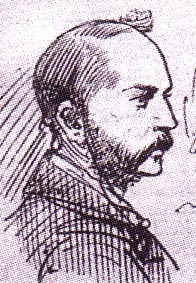
For those who haven't seen it, Ripper Street is a melodrama set in 1890s London, and follows the adventures of the local police of H Division in their efforts to retain a semblance of order in the chaotic, poverty-stricken slums of Whitechapel. The title derives from Jack the Ripper: though Jack himself has vanished from the streets shortly before the beginning of the first series, the police are still weighed down with guilt at their failure to catch him. That failure, as we know, was never redeemed. Inspector Frederick Abberline, who in reality was in charge of the Ripper case, features as a character, though for some reason Clive Russell plays him with a Cockney instead of a West Country accent (Abberline was from Dorset).
 Frederick Abberline
The series has been much-praised for its realistic depiction of life in one of the poorest and most crime-ridden quarters of Victorian London, and for not pulling its punches in depicting the often brutal and illegal methods employed by the main character, Inspector Reid (Matthew McFayden) and his hard-nut sergeant, Bennet Drake (Jerome Flynn, playing a Cockney version of Bronn in Game of Thrones). The recreation of Whitechapel itself can hardly be faulted, with its narrow, crooked streets and alleys, beggars, matchgirls, tarts, pimps, and grimy urchins. No prettied-up version of the past here. Whitechapel is liberally coated in shit, and the people look suitably grimy, pale, underfed and exhausted.
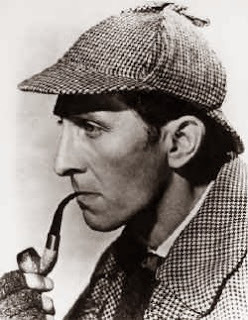
The crimes that H Division deal with are usually extremely bloody, often political - the second series in particular has dealt in themes with some relevance to 2013, with homosexuality tackled in one episode, Irish 'terrorism' in another, corrupt bankers etc - and clumsily handled. No-one could accuse the upright, violent sobersides Reid of being a particularly brilliant detective, and I sometimes wished Sherlock Holmes would turn up (it was the right period) to sneer at his methods. However, that would probably result in Holmes being escorted to the cells by Drake for a quick beating.
 No, Reid, that is not a clue
I'm not wholly convinced that the series is as realistic as it claims. Despite all the stabbings and garrottings and gory fistfights, it is sometimes guilty of the usual sin of TV historical drama i.e. imposing modern values on the past. Episode Five of Series Two, 'Threads of Silk and Gold', was particularly guilty of this. Dealing with the issue of (male) child prostitution, it packs in as many abusive Victorian terms for homosexuals as possible, and depicts Sergeant Drake as a casual homophobe. Being an innately decent man, however, despite his rough habits, he eventually learns the error of his ways and appreciates that gay people are no different from the rest of us. This is designed to appeal to the thinking of a modern audience, and bears no relation to the grim reality of 19th century attitudes towards homosexuality: the chances of a rough, uneducated Whitechapel police sergeant changing his attitude towards 'mollies' were about as great as mine are of winning the Eurovision Song Contest.
Nit-picking aside, Ripper Street was a compelling watch, and got better as it went on, losing the slightly disjointed feel of the first series and successfully fleshing out the characters. One of my peeves was Adam Rothenberg, playing the dissolute American surgeon/rogue Captain Homer Jackson. He was practically inaudible in some of the earlier episodes, speaking through his nose while chewing on a cigar, but someone seems to have told him to speak up. Once I could hear what he was actually saying, the darkness and cruel wit of Jackson came into sharp focus.
Overall, then, the ambition and gorgeous production values of Ripper Street are to be applauded, even if it occasionally fell flat. The cancelled third series, with all the bugs ironed out, could have been spectacular, but the BBC apparently knows better than we mere peasants. More space is needed in the schedules for the likes of Strictly Come MasterChef Celebrity Dancing (or whatever) so you can stick your interesting, well-made, thoughtful period dramas, and get ready for a further barrage of glittery tat.
PS: Just caught a story in The Guardian that the producers of Ripper Street are in talks with LoveFilm to film a third and maybe even fourth series, so perhaps all is not lost...
 Bye then
For those who haven't seen it, Ripper Street is a melodrama set in 1890s London, and follows the adventures of the local police of H Division in their efforts to retain a semblance of order in the chaotic, poverty-stricken slums of Whitechapel. The title derives from Jack the Ripper: though Jack himself has vanished from the streets shortly before the beginning of the first series, the police are still weighed down with guilt at their failure to catch him. That failure, as we know, was never redeemed. Inspector Frederick Abberline, who in reality was in charge of the Ripper case, features as a character, though for some reason Clive Russell plays him with a Cockney instead of a West Country accent (Abberline was from Dorset).
 Frederick Abberline
The series has been much-praised for its realistic depiction of life in one of the poorest and most crime-ridden quarters of Victorian London, and for not pulling its punches in depicting the often brutal and illegal methods employed by the main character, Inspector Reid (Matthew McFayden) and his hard-nut sergeant, Bennet Drake (Jerome Flynn, playing a Cockney version of Bronn in Game of Thrones). The recreation of Whitechapel itself can hardly be faulted, with its narrow, crooked streets and alleys, beggars, matchgirls, tarts, pimps, and grimy urchins. No prettied-up version of the past here. Whitechapel is liberally coated in shit, and the people look suitably grimy, pale, underfed and exhausted.
The crimes that H Division deal with are usually extremely bloody, often political - the second series in particular has dealt in themes with some relevance to 2013, with homosexuality tackled in one episode, Irish 'terrorism' in another, corrupt bankers etc - and clumsily handled. No-one could accuse the upright, violent sobersides Reid of being a particularly brilliant detective, and I sometimes wished Sherlock Holmes would turn up (it was the right period) to sneer at his methods. However, that would probably result in Holmes being escorted to the cells by Drake for a quick beating.
 No, Reid, that is not a clue
I'm not wholly convinced that the series is as realistic as it claims. Despite all the stabbings and garrottings and gory fistfights, it is sometimes guilty of the usual sin of TV historical drama i.e. imposing modern values on the past. Episode Five of Series Two, 'Threads of Silk and Gold', was particularly guilty of this. Dealing with the issue of (male) child prostitution, it packs in as many abusive Victorian terms for homosexuals as possible, and depicts Sergeant Drake as a casual homophobe. Being an innately decent man, however, despite his rough habits, he eventually learns the error of his ways and appreciates that gay people are no different from the rest of us. This is designed to appeal to the thinking of a modern audience, and bears no relation to the grim reality of 19th century attitudes towards homosexuality: the chances of a rough, uneducated Whitechapel police sergeant changing his attitude towards 'mollies' were about as great as mine are of winning the Eurovision Song Contest.
Nit-picking aside, Ripper Street was a compelling watch, and got better as it went on, losing the slightly disjointed feel of the first series and successfully fleshing out the characters. One of my peeves was Adam Rothenberg, playing the dissolute American surgeon/rogue Captain Homer Jackson. He was practically inaudible in some of the earlier episodes, speaking through his nose while chewing on a cigar, but someone seems to have told him to speak up. Once I could hear what he was actually saying, the darkness and cruel wit of Jackson came into sharp focus.
Overall, then, the ambition and gorgeous production values of Ripper Street are to be applauded, even if it occasionally fell flat. The cancelled third series, with all the bugs ironed out, could have been spectacular, but the BBC apparently knows better than we mere peasants. More space is needed in the schedules for the likes of Strictly Come MasterChef Celebrity Dancing (or whatever) so you can stick your interesting, well-made, thoughtful period dramas, and get ready for a further barrage of glittery tat.
PS: Just caught a story in The Guardian that the producers of Ripper Street are in talks with LoveFilm to film a third and maybe even fourth series, so perhaps all is not lost...