David Pilling's Blog, page 79
June 2, 2013
The Summer Banquet Blog Hop!

Welcome to the Summer Banquet Blog Hop – ‘sumer is icumen in’, as they sang in medieval times, and so myself and thirty other historical fiction authors have decided to get our heads together and treat you, the lucky readers, to a series of posts all about food and drink in days of yore.We are also hosting a fabulous range of prizes and giveaways, so please browse through the blogs listed at the bottom of this post to see if anything takes your fancy. If you wish to enter a competition, just leave a comment below the relevant post. The author will then announce the winners at end of the hop and send the prize out to you as quickly as possible.

I am giving away a free paperback copy of The White Hawk, Book One of my family saga set during the bloody days of The Wars of the Roses. You can see some reviews and a blurb at the link below:The White Hawk
The White Hawk follows the fortunes of the Boltons, a family of Staffordshire local gentry. The Boltons are much further up the social ladder than the average peasant, slightly above the yeoman and mercantile classes, but well below the upper tiers of the aristocracy. They own three manors and are reasonably prosperous, though constantly threatened by the shifting tides of war and the ambitions of treacherous neighbours.People like the Boltons could have expected to eat well, though their diets would seem crude and alarming to modern eyes. Cuisine didn’t change much in Europe throughout the medieval period, and it would be centuries before the health benefits of fruit and vegetables were fully appreciated. The emphasis for rich folk like the Boltons was on meat, and lots of it.
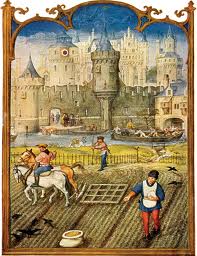 Medieval illustration of peasants working in the fieldsThe peasants that worked their land were not quite the feudal slaves of previous centuries: events such as the Black Death and the Peasant's Revolt had done much to shake loose their chains, and by the late fifteenth century many farm workers would have been hired labourers. Their diet hadn't changed much, though, and most would have relied on cereals for sustenance. Barley, oats, rye, pulses and beans were still staples among the poor, since New World crops like potatoes and tomatoes were not yet discovered. Rye bread, porridge and gruel was the order of the day. Ironically, the poor consumed more vegetables than their social superiors, and so enjoyed a healthier diet in that sense: if ‘enjoy’ is the right word to describe such a dull, repetitive and tasteless repast. Prevailing wisdom considered there to be a natural resemblance between one’s labour and social class and one’s food: it was only right that the working classes ate cheaper, more functional foodstuffs. After all, you wouldn’t feed a horse roast beef, would you? Even the briefest study of medieval society is enough to bring out anyone's inner socialist.
 Rich medieval folk with bad haircuts absolutely stuffing themselves
While the plebs chewed miserably on their bowls of slop, the Boltons and their ilk were dining on game and other rich meats in their manor houses. Domestic fowl, beef, pork and chicken were all popular and regularly found their way down well-muscled aristocratic throats. A wide variety of fish was also consumed, including dried, smoked and salted cod and herring. From the Crusades onwards, exotic spices imported from abroad increasingly found their way onto the dining tables of the nobility.
Common seasonings included combinations of wine and vinegar, while spices such as black pepper, saffron and ginger served to improve the taste of meat (and hide it if the meat was tough or spoiled). Eye-watering combinations of spices, along with the widespread use of sugar and honey, would have given many dishes a sweet-sour flavour that might taste extremely curious, if not downright revolting, to modern palates. Biscuits, cakes and scones made with honey were popular as after-dinner snacks, assuming you could stuff anything else down on top of the heaps of cooked flesh. The rich also loved their fruit, and consumed vast quantities of almonds, currants, dates, figs, prunes, raisins, pears and apples etc: presumably this was the only thing that saved them from chronic constipation. Given this taste for sweeteners, and the general lack of proper dental care, it is hardly surprising that many of the nobility suffered from bad teeth: Henry VII’s teeth, for example, were described by a contemporary chronicler as being “few, poor and blackish.” The recently-discovered skull of his mortal enemy, Richard III, also showed signs of dental trouble, as well as a few painful tooth extractions. The skeletons of soldiers found in the mass grave-pits on the field of Towton showed signs of having enjoyed a better diet than the working poor – it was in the interests of the warring nobles to keep fighting men well-fed – but their teeth, like their horrifically mangled remains, were in a generally hellish condition.
Note: I was going to post a sample image of some medieval teeth, but decided against it: I don't want to turn stomachs!
Entire books could be written - and no doubt have - on the subject of medieval food, and this is only intended as a brief overview. Hopefully it gives some idea of what our ancestors ate, and how the stark divide between rich and poor in medieval times was reflected in diet. Whatever other dangers that face my fictional family, the Boltons, they are certainly not threatened with starvation...Below is the list of other Hop participants. Please have a browse and enjoy the foody posts!Hop Participants
Random Bits of Fascination (Maria GraceAnna BelfrageDebra Brown Lauren GilbertGillian BagwellJulie K. RoseDonna Russo MorinRegina JeffersShauna RobertsTinney S. HeathGrace ElliotDiane Scott LewisGinger MyrickHelen HollickHeather DominMargaret SkeaYves FeyJL OakleyShannon WinslowEvangeline HollandCora LeeLaura PurcellP. O. DixonE.M. PowellSharon LathanSally Smith O’RourkeAllison BruningViolet BedfordSue MillardKim Rendfeld


May 30, 2013
Caesar's Sword
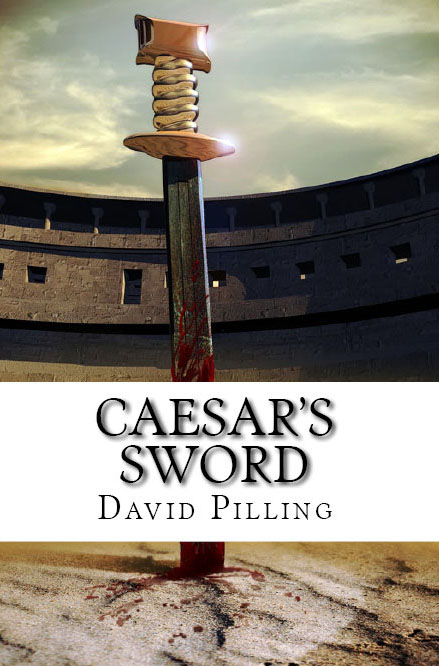
I have just released CAESAR'S SWORD, a slight change of pace from my usual medievalisms: set during the days of the Late Roman Empire, the story could be described as a 'mashup' of Arthurian legend and Roman military history.
Romans seem to be all the rage in historical fiction at the moment. I wanted to do something different, and no recent author that I am aware of has covered the spectacular reign of the Emperor Justinian I (527-65). Justinian's reign saw the last gasp of 'Roman' military might, as his brilliant general Flavius Belisarius reconquered large chunks of the Western Empire that had been lost in the previous century. Starved of resources by his suspicious master, vastly outnumbered by the 'barbarian' nations he fought against, Belisarius managed to pull off a series of stunning victories that marked him out as one of the greatest soldiers of all time.

Above is part of the Ravennamosaics that depict the Emperor Justinian and his court: the bearded figure is thought by some to be the only contemporary image of Belisarius
I wanted to tell the story of Belisarius, or part of it, but I prefer not to have historical figures at the centre of the narrative: their lives and destinies are pre-set, and one can't fiddle around with them too much. I had the idea of merging the legend of Arthur, generally thought to have its origins in the late 5th/early 6th century, with the dramatic doings of the Empire.
One of the more obscure tidbits of Welsh folklore describes Arthur as having a number of sons. This is very different from the more familiar medieval French traditions, in which Arthur's only son is the bastard traitor, Mordred. Arthur never had much luck with his family, and all of his sons in the Welsh tradition come to sticky ends. One of them, Amhar, is described in the Historia Brittonum as being slain by his own father:
“There is another wonder in the country called Ergyng. There is a tomb there by a spring, called Llygad Amhar; the name of the man buried in the tomb was Amhar. He was the son of the warrior Arthur, who killed him there and buried him.”
How and why Arthur came to kill his own son is not described, leaving writers with much fertile ground for fiction: strangely, the less interesting French versions have prevailed, and the even darker Welsh alternative remains largely unexplored. I came up with my own explanation of why Amhar died, and decided that "Caesar's Sword" would be told from the perspective of Coel, his son.
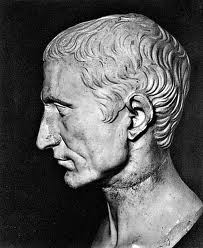 Julius Caesar
The title of the book is derived from another old British legend, relating to a sword once owned by Julius Caesar. When Caesar invaded Britain in 55BC (so the story goes) his legions were attacked by a British army led by a prince named Nennius. Caesar and Nennius met in personal combat, and before Caesar was obliged to retreat he left his sword buried in the unfortunate Nennius's skull.
The prince later died of his dreadful wound, but Caesar's sword was kept by his family and passed down the generations. Known as 'Crocea Mors' (Yellow Death) by the Romans, the British named it "Angau Coch" (Red Death) or "Agheu Glas" (Grey Death). It was said to have been forged by the gods on Mount Olympus, and have the power of slicing through any armour forged by man. Any man unfortunate enough to be struck by the blade would die instantly.
It is possible - though far from certain - that somewhere along the line the legend of Crocea Mors got mixed up with the stories of Arthur, and formed the basis for Excalibur, Arthur's magical sword. In the Welsh tales Arthur's sword is called Caledfwlch, which roughly translates as Hard Cleaver. The temptation to have Arthur's grandson running around in the glittering, blood-spattered world of the Late Roman Empire wielding Arthur's sword was too strong to resist, and so this forms the nucleus of my tale.
There is much more to the story, including battles in North Africa, mad kings and corrupt empresses, prostitutes and dancers, chariots and Hippodromes, swords and sandals and blood by the bucketload, so I will say no more for now except to direct kind readers to the link below...
Caesar's Sword is available as a free download on Amazon from tomorrow until Sunday:
Caesar's Sword
May 29, 2013
Summer Banquet Hop
It's almost summer - though UK-based people like me could be forgiven for thinking otherwise - and the season for barbecues: or, if you were living in the Middle Ages and could afford it, a feast or banquet.
To get your taste buds quivering, over thirty historical fiction authors will be posting about the kind of food consumed during their chosen eras of writing. The hop is scheduled to run between the 3rd-7th of June and as usual lots of fantastic free prizes and giveaways will be on offer.
I will be offering a free paperback copy of Book One of my Wars of the Roses saga, The White Hawk: a bloody, violent and intensely political tale, and something for the lucky winner to get his or her teeth into...
May 23, 2013
Robyn Hode - Part One
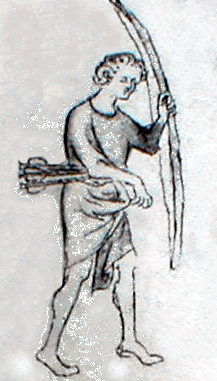
Medieval manuscript image of an archer - a historical 'Robin Hood' might have looked rather more like this than Russell Crowe. Not to mention Kevin Costner...
I have just published on Amazon Part One of my take on the legend of Robin Hood. This is something I have been mulling over for a very long time, and have decided to release in short installments at a - hopefully - affordable price.
For the past decade or so I have been part of a research group focused on uncovering the historical origins of Robin Hood. I won't say we succeeded, but we have uncovered a great deal of new information, extracted during lengthy hours of combing original medieval legal records at the National Archives and elsewhere.
Some (not all) of this information is included in my story, which focuses on the adventures of Robert Hode, a Yorkshireman in the early thirteenth century, outlawed for...well, have a read and find out ;)
If Part One goes down well, then Parts Two-Six will follow. Watch this space...
May 15, 2013
The Jews and Little Saint Hugh of Lincoln
Life in thirteenth century England was dirty, disease-ridden and grim for everyone - even an Earl had little protection against toothache, and God help anyone who suffered a burst appendix - but one section of society had it worse than most. The Jews were a despised and exploited minority, barred from the majority of professions and tolerated for one reason only: their wealth. Moneylending, despite being perceived as glorified usury by Christians, was one of the very few livings a Jew was allowed to make in England.
The Kings of England were in constant need of cash, usually to waste on futile attempts to claw back the Angevin Empire, and the Jews were a useful source of income. If the King tried to tax his barons too heavily, the barons had the means to protest, but there was no-one to stand up for the Jews. Henry III (reigned 1216-1272) taxed them as unmercifully as any of his predecessors, and his reign witnessed a number of appalling attacks by Christians on Jewish communities.
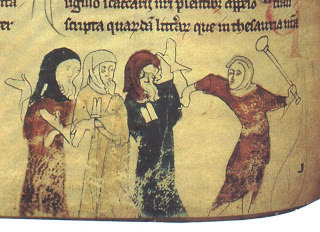 A contemporary illustration of Jews being assaulted
It didn't take much to precipitate such attacks. Anti-Jewish propaganda was rife, one famous example being the case of Little Saint Hugh of Lincoln.
Hugh was the best known of the "blood libel" saints - Christian children whose mysterious deaths were attributed to the Jews - and just nine years old when he vanished in Lincoln on 31 July 1255. His body was discovered at the bottom of a well a few weeks later. A local man accused a Jew named Copin of having murdered the boy as part of an arcane rite and hidden the body. Copin was arrested and under torture confessed to the crime. Torture is always useful in that regard, and for good measure he was made to implicate the entire Jewish community of Lincoln. He was executed, but that wasn't the end of it.
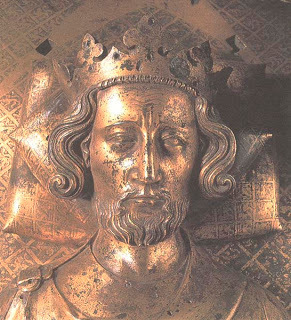
Henry III
It was now that things got political. Six months before Hugh's death, Henry III had sold his rights to tax the Jews to his clever brother, the Earl of Cornwall. Realising his blunder, Henry compensated by making himself eligible to receive the money of any Jew implicated in a crime. The news of the murder of Hugh of Lincoln was a Godsend for the cash-strapped monarch, and ninety Jews were arrested in Lincoln and dragged to the Tower. Eighteen of them were convicted of taking part in a ritual murder and hanged. Henry duly confiscated their money and property. The rest were pardoned and released, probably because Cornwall could see his assets going up in smoke and intervened to spare their lives.
This, by the way, was the supposedly meek and mild Henry III, a good Christian and devoted family man, albeit a fairly inept king. Being a good Christian in those days meant you could be perfectly foul to anyone else and get away with it.
The story of Hugh's death quickly circulated around England, along with lurid details of what the 'evil' Jews had supposedly done to him that I won't repeat here. He became the youngest ever candidate for sainthood, and the 27th July was his feast day. However, his sainthood was never formally recognised by the Vatican and he was never included in the official roll of Catholic martyrs.
The atmosphere in Lincoln remained poisonous against Jews for decades after the death of Hugh, and the community was subjected to further attacks by the Disinherited under the command of Sir John Deyville, who I have talked about before on this blog. Deyville's reasons for attacking them were more practical: like many Christian knights, he was heavily in debt to Jewish moneylenders, and so he and his men deliberately destroyed the rolls and charters that were the only official evidence of those debts. They also murdered and abducted individual moneylenders and their families, hoping to make a fat profit by ransoming the wealthiest.
The attack on Lincoln features in my book, Nowhere Was There Peace, shortly to be released by Fireship Press. Unpleasant as it is to dwell on the suffering of the Jews in this period, I felt it should not be ignored or brushed aside. It also serves to shed an entirely different light on many of the historical figures of the time: Simon de Montfort, for instance, who like little Hugh also achieved a kind of sainthood after his death, was as infected with Anti-Semitism as any of his peers.
The Kings of England were in constant need of cash, usually to waste on futile attempts to claw back the Angevin Empire, and the Jews were a useful source of income. If the King tried to tax his barons too heavily, the barons had the means to protest, but there was no-one to stand up for the Jews. Henry III (reigned 1216-1272) taxed them as unmercifully as any of his predecessors, and his reign witnessed a number of appalling attacks by Christians on Jewish communities.
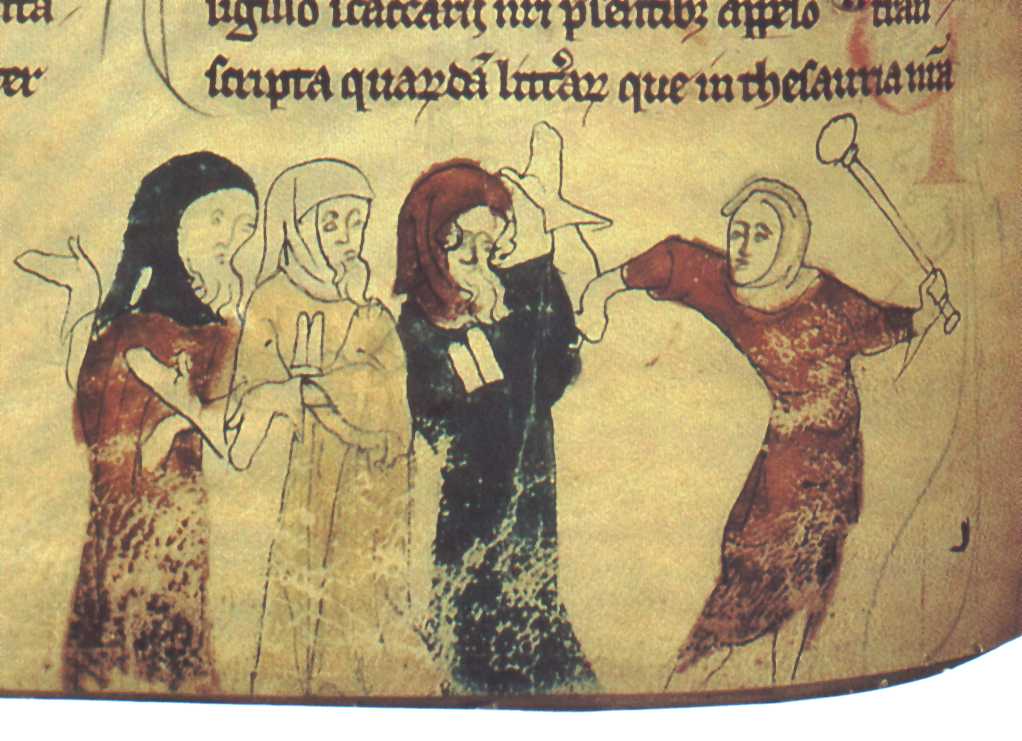 A contemporary illustration of Jews being assaulted
It didn't take much to precipitate such attacks. Anti-Jewish propaganda was rife, one famous example being the case of Little Saint Hugh of Lincoln.
Hugh was the best known of the "blood libel" saints - Christian children whose mysterious deaths were attributed to the Jews - and just nine years old when he vanished in Lincoln on 31 July 1255. His body was discovered at the bottom of a well a few weeks later. A local man accused a Jew named Copin of having murdered the boy as part of an arcane rite and hidden the body. Copin was arrested and under torture confessed to the crime. Torture is always useful in that regard, and for good measure he was made to implicate the entire Jewish community of Lincoln. He was executed, but that wasn't the end of it.

Henry III
It was now that things got political. Six months before Hugh's death, Henry III had sold his rights to tax the Jews to his clever brother, the Earl of Cornwall. Realising his blunder, Henry compensated by making himself eligible to receive the money of any Jew implicated in a crime. The news of the murder of Hugh of Lincoln was a Godsend for the cash-strapped monarch, and ninety Jews were arrested in Lincoln and dragged to the Tower. Eighteen of them were convicted of taking part in a ritual murder and hanged. Henry duly confiscated their money and property. The rest were pardoned and released, probably because Cornwall could see his assets going up in smoke and intervened to spare their lives.
This, by the way, was the supposedly meek and mild Henry III, a good Christian and devoted family man, albeit a fairly inept king. Being a good Christian in those days meant you could be perfectly foul to anyone else and get away with it.
The story of Hugh's death quickly circulated around England, along with lurid details of what the 'evil' Jews had supposedly done to him that I won't repeat here. He became the youngest ever candidate for sainthood, and the 27th July was his feast day. However, his sainthood was never formally recognised by the Vatican and he was never included in the official roll of Catholic martyrs.
The atmosphere in Lincoln remained poisonous against Jews for decades after the death of Hugh, and the community was subjected to further attacks by the Disinherited under the command of Sir John Deyville, who I have talked about before on this blog. Deyville's reasons for attacking them were more practical: like many Christian knights, he was heavily in debt to Jewish moneylenders, and so he and his men deliberately destroyed the rolls and charters that were the only official evidence of those debts. They also murdered and abducted individual moneylenders and their families, hoping to make a fat profit by ransoming the wealthiest.
The attack on Lincoln features in my book, Nowhere Was There Peace, shortly to be released by Fireship Press. Unpleasant as it is to dwell on the suffering of the Jews in this period, I felt it should not be ignored or brushed aside. It also serves to shed an entirely different light on many of the historical figures of the time: Simon de Montfort, for instance, who like little Hugh also achieved a kind of sainthood after his death, was as infected with Anti-Semitism as any of his peers.
May 9, 2013
The little battle of Chálons
As part of the build-up to the release of Nowhere Was There Peace, my novel set during the end of the reign of Henry III, I thought it worth writing about another little-known incident in the life of his son and heir, Edward I. This was a tournament at Chálons in 1274 that rapidly got out of hand and was remembered as 'the little battle of Chálons'. It also gives me as an excuse to write about tournaments in general, a bloody and exciting sport that I would have very much liked to have witnessed (at a safe distance).

A contemporary drawing of Edward I (reigned 1272-1307) Note the cross expression
Edward was on his way back from the Holy Land to be formally crowned as King of England - his father had passed away two years previously - and on the way through France his retinue passed by a little town called Chálons. The Count of that place challenged Edward and his knights to take part in a tournament, which Edward accepted.
Unlike the more decorous one-on-one combats known as jousts, tournaments were bloody free-for-alls that usually took place over several miles of open country. Bands of knights battered each other all over the field, the idea being to smash your opponent into submission and capture him for ransom. This was the only way of earning an income for many younger knights, trained from childhood to fight and pretty damn useless at anything else. It wasn't uncommon for tournaments to last several days, and they provided terrific entertainment for the 'common' people, who got to watch their arrogant and tyrannical masters knocking seven bells out of each other.
Unsurprisingly, serious injuries and even death were not uncommon. Chaucer, who must have witnessed his fair share of tournaments, supplied a vivid description of one in The Knight's Tale:
'Shafts were shivering upon thick shields,
One man felt the stab to the breast-bone,
Up sprung spears twenty foot on high,
Out came swords bright as silver,
And hewed and split helms,
Out burst the blood with stern red streams,
With mighty maces they crushed bones...'
You get the general idea. Edward was just seventeen when he took part in his first tournament, an exceptionally violent affair at Blyth, and later fought on the tournament circuit in France with his cronies, the Lusignans. They apparently didn't do very well, and Matthew Paris gleefully notes that the young prince and his chums were repeatedly defeated and lost all their horses and armour.
By 1274 Edward was a very different creature, a man grown with the defeat of Simon de Montfort and his harrowing experiences on Crusade under his belt. At Chálons he lined up on the tourney field with a thousand of his knights. Opposing them was the Count and a much larger number of French knights. In case of foul play, Edward stationed a large force of archers just outside the lists.
Foul play was exactly what the Count intended. He had already broken the rules of the challenge by bringing twice the number of men that Edward had, and his intention was to capture the prince and hold him to ransom: shades of the Duke of Austria and Richard the Lionheart.
The trumpets sounded, lances were set in rest, and the earth quaked as hundreds of iron men on massive horses charged together. The impact of their collision is almost beyond imagining - I have never seen a medieval tournament adequately recreated on screen - and they immediately set about doing each other grievous bodily harm.
In the midst of the fighting, the count rushed at Edward and grabbed him around the neck. This might seem a crude tactic, but was often employed by medieval knights in combat: one 12th century account describes a knight grabbing William the Marshal the Younger's head in an attempt to wrestle his helmet off. His reward was to have his hands sliced off, and the Count was also destined to come to grief.
Edward spurred his horse into a sudden gallop and dragged the hapless count in his wake. The Frenchman apparently lacked the wit to let go, and so fell to earth with an almighty rattle of ironmongery. Edward then climbed off his horse, stood over his victim and bashed away at him with the shaft of his lance. He ignored the fallen man's cries for mercy and gave the signal for his archers to get involved.
These men heeded no rules of chivalry, and gleefully bent their bows and shot down the French knights in droves. Then they swarmed onto the field and cut the throats of the wounded men as they lay helpless and bleeding on the ground. The French footmen tried to help their masters and were slaughtered without mercy by Edward's knights, for "they were but rascals and of no great account."
At last, when the vile temper of the Angevins had cooled somewhat in his blood, Edward allowed the Count to surrender and ceased pounding away on his armour. In the midst of the reeking human carnage, Edward added to his foe's humiliation by forcing him to give up his sword to a common soldier. "My servants shall have your tarnished sword," the prince said scornfully, "for I shall not touch it."
Thus ended the little battle or "war" of Chálons. A fairly grim affair, by the standards of the time, but the disgrace was held to lay in the treachery of the Count, rather than the scale of unnecessary death and bloodshed. Brutal times, brutal men, perfect fodder for fiction.
May 8, 2013
I'd buy that for a dollar...
...and hopefully, so will a few other people. The White Hawk, my novel set during The Wars of the Roses in medieval England, is now on sale for just 99 cents or £1 on Amazon.
The book has already garnered some nice reviews, for which I am very grateful. It was certainly a lot of fun to write - the era is hugely fascinating, full of larger-than-life characters indulging in mass slaughter and shameless treachery in an England so far removed from modern times one might as well be describing an alien planet.
To give a flavour of the book, here's an extract describing the climactic (and traumatic) Battle of Towton:
'The stricken man screamed and fell onto one knee. Giddy with bloodlust, Richard smashed the hammer-head of the poleaxe down onto his helm, crumpling the iron and stoving in his skull. A third Yorkist stabbed at him with a spear, but he dodged and buried his bloody point into the man’s face, dropping him where he stood.
All along the line it was the same. Despite having the advantage of the slope, the Yorkists were being slaughtered, and each casualty they suffered struck fear into the men behind. Dismayed and demoralised, Fauconberg’s division was forced to give ground.
Richard lunged at an unprotected kneecap and cracked it open. His poleaxe blade sliced with ease through a leather jack and chopped open a belly. Trampling on the mess of entrails that poured forth, he risked a glance to his left and saw Henry grinning like a madman as he wielded his two-handed broadsword, red to the elbows in Yorkist blood. Richard uttered a wordless cheer. They were winning. God and Saint George were on the side of Lancaster. And the white hawk.
Fifteen miles away, King Henry knelt and prayed in the keep of York Castle. No-one was listening. Not his commanders, who had ignored his wish for the battle to be postponed since it was Palm Sunday. Not his Queen, who sat in a window-seat, gaunt and pale and quivering with tension as she turned over her rosary beads. Not his son, just eight years old and a miniature Attila, playing on the floor with his toy soldiers and uttering a gleeful cry each time he knocked one over.
And not God, who is deaf to my pleas and allows men to slaughter each other on a holy day.
Why did he pray? Because Christ was his Saviour and England was his charge. Henry had no other security. The deaths of thousands of his subjects were on his conscience. If he had been born a better man, a stronger man, all might have been avoided. Instead God had seen fit to punish the House of Lancaster in the third generation from its unjust usurpation and murder of Richard II. Henry was nothing more than the tool of persecution.
He wept. God was cruel and terrible and undeniable. Out there, in the snow and ice, his people were murdering each other, and Henry could do nothing to stop it.
“Oh, for the blanket of madness to cover me again,” he whispered, “and veil me from the world’s evil.”
If thou dost like what thou dost read, sirrah, then check out the the Kindle and paperback versions of the book on sale at Amazon below:
The White Hawk
The book has already garnered some nice reviews, for which I am very grateful. It was certainly a lot of fun to write - the era is hugely fascinating, full of larger-than-life characters indulging in mass slaughter and shameless treachery in an England so far removed from modern times one might as well be describing an alien planet.
To give a flavour of the book, here's an extract describing the climactic (and traumatic) Battle of Towton:
'The stricken man screamed and fell onto one knee. Giddy with bloodlust, Richard smashed the hammer-head of the poleaxe down onto his helm, crumpling the iron and stoving in his skull. A third Yorkist stabbed at him with a spear, but he dodged and buried his bloody point into the man’s face, dropping him where he stood.
All along the line it was the same. Despite having the advantage of the slope, the Yorkists were being slaughtered, and each casualty they suffered struck fear into the men behind. Dismayed and demoralised, Fauconberg’s division was forced to give ground.
Richard lunged at an unprotected kneecap and cracked it open. His poleaxe blade sliced with ease through a leather jack and chopped open a belly. Trampling on the mess of entrails that poured forth, he risked a glance to his left and saw Henry grinning like a madman as he wielded his two-handed broadsword, red to the elbows in Yorkist blood. Richard uttered a wordless cheer. They were winning. God and Saint George were on the side of Lancaster. And the white hawk.
Fifteen miles away, King Henry knelt and prayed in the keep of York Castle. No-one was listening. Not his commanders, who had ignored his wish for the battle to be postponed since it was Palm Sunday. Not his Queen, who sat in a window-seat, gaunt and pale and quivering with tension as she turned over her rosary beads. Not his son, just eight years old and a miniature Attila, playing on the floor with his toy soldiers and uttering a gleeful cry each time he knocked one over.
And not God, who is deaf to my pleas and allows men to slaughter each other on a holy day.
Why did he pray? Because Christ was his Saviour and England was his charge. Henry had no other security. The deaths of thousands of his subjects were on his conscience. If he had been born a better man, a stronger man, all might have been avoided. Instead God had seen fit to punish the House of Lancaster in the third generation from its unjust usurpation and murder of Richard II. Henry was nothing more than the tool of persecution.
He wept. God was cruel and terrible and undeniable. Out there, in the snow and ice, his people were murdering each other, and Henry could do nothing to stop it.
“Oh, for the blanket of madness to cover me again,” he whispered, “and veil me from the world’s evil.”
If thou dost like what thou dost read, sirrah, then check out the the Kindle and paperback versions of the book on sale at Amazon below:
The White Hawk
May 7, 2013
Blog Hop winners!
And the winners of the Heroes & Villains Blog Hop are...
KATIE AND TINNEY HEATH!
Congratulations to you both, and thank you to everyone else who has viewed, commented and otherwise contributed to the hop.
If Katie and Tinney could get in touch with me via my email - Davidpilling56@hotmail.com - a free digital copy of The Best Weapon shall be yours!!
KATIE AND TINNEY HEATH!
Congratulations to you both, and thank you to everyone else who has viewed, commented and otherwise contributed to the hop.
If Katie and Tinney could get in touch with me via my email - Davidpilling56@hotmail.com - a free digital copy of The Best Weapon shall be yours!!
May 2, 2013
Heroes & Villains!

Welcome to the HEROES & VILLAINS Blog Hop!
First, the rules. Please leave a comment below if you wish to enter to one of two FREE copies of The Best Weapon (link at the cover image below). At the foot of this post are links to the blogs and websites of the other authors taking part, all of whom are also offering free book prizes. So you, the lucky readers, are spoiled for choice.
‘Heroes and Villains’ is the theme, which leaves me with only one option: as everyone knows, villains are far more interesting. Where would Star Wars be without Darth Vader and the evil Emperor creeping about and strangling impertinent underlings with their magical Force fingers? The insufferable Luke Skywalker only acquires a slender appeal after - spoiler alert, for the three people on Earth who have never watched Star Wars - he gets his hand chopped off and starts dressing all in black, just like his dear old dad.
Heroes are, in a way, far more difficult to write. They have less interesting moral ambiguity, and their actions must always be more or less justified, otherwise they aren’t heroes. It is possible to turn a villain into a hero, or portray a man of dubious moral leanings doing something heroic (Winston Churchill might be a good example from history), but someone who starts clean-cut has to pretty much stay clean-cut, which is ever so dull. This leads to what I call the ‘Alan Rickman’ effect, where the audience ends up rooting for the villain because the good guy is so obnoxiously boring.

Archpriest Flambard plottin' and schemin', as per usual
With all that in mind, I have chosen to use this post as an opportunity to talk about the central villain of my fantasy novel, The Best Weapon, co-written with my good friend Martin Bolton.
The character's name is Archpriest Flambard, which should give some clue as to his villainy: much like Grand Viziers, all fictional Archpriests are rotters. Something about the combination of absolute power allied to an arcane religious or secular title makes them bad. They just can’t help it. Their invariable fate is to be either spitted on the mighty hero’s magical broadsword, hurled into their own Fiery Pit of Doom, or devoured like a boiled sweet by the same demonic spirits they conjured up to help them CONQUER THE WORLD!!!
No such clichéd fate is likely to befall Flambard. For a start, he’s too clever to be outwitted by some two-bit Conan the Barbarian impersonator. Secondly, he doesn’t regard himself as a bad person doing bad things. As the regent of the Winter Realm during the minority of that frozen land’s infant monarch, he is a pragmatist, obliged to do harsh and unpopular things in order to keep his country afloat. Or that’s how he sees it. Like many modern-day politicians, his job is to labour all hours on behalf of a public that loathes and despises him.
I imagined Flambard as a cross between Henry VII’s advisor Cardinal Wolsey, Baron Vladimir Harkoonen (the villain of the sci-fi novel ‘Dune’ by Frank Herbert) and Cardinal Richelieu, the nemesis of the Three Musketeers. To that end he is physically obese, mentally acute, and much given to backstairs politics and working all the hours the gods send. He clothes himself in rich robes and fine jewellery, as befits a man of his station and pomp, and runs mental rings around his peers.
Why is he particularly villainous, you may well ask? Well, he begins the story as a typically hard-nosed politician whom the term realpolitik might have been invented for, a man who believes the ends always justify the means. And then something happens that makes him even worse.
Much, much worse. Physically and mentally, terrible things start happening to Cardinal Flambard. Put it this way…he starts to rot.
Intrigued? Then leave a comment underneath this post, and a free copy of The Best Weapon could be hacking and swinging its way towards you very soon!
And don’t forget to check out the blogs and websites of the other lovely authors listed below:
#1 Nyki Blatchley#2 Martin Bolton#3 Debra Brown#4 Adrian Chamberlin#5 Mike Cooley#6 Karin Cox#7 Joanna Fay#8 Peter B Forster#9 Ron Fritsch#10 Mai Griffin#11 Joanne Hall#12 Jolea M Harrison#13 Tinney Sue Heath#14 Eleni Konstanine#15 K. Scott Lewis#16 Paula Lofting#17 Liz Long#18 Peter Lukes#19 Mark McClelland#20 M.Edward McNally#21 Sue Millard#22 Rhiannon Douglas#23 Ginger Myrick#24 E. M. Powell#25 Kim Rendfeld#26 Terry L Smith#27 Tara West#28 Keith Yatsuhashi
April 26, 2013
Heroes & Villains Blog Hop!

Join me and twenty-eight fantasy, science fiction and historical fiction authors for the Heroes & Villains blog hop on Friday 3 – Monday 6 May and give yourself a chance of winning glorious prizes. I will be giving away two copies of my fantasy novel (co-written with Martin Bolton) The Best Weapon and every single author below will be giving away prizes too.
 Epic Fantasy The Best WeaponSo why not check in here and make sure you flick through all these talented writers’ blogs. Details on how to enter for prizes on each blog will be posted on Friday 3 May.“See” you next week!Heroes & Villains taking part are:#1 Nyki Blatchley
#2 Martin Bolton
#3 Debra Brown
#4 Adrian Chamberlin
#5 Mike Cooley
#6 Karin Cox
#7 Joanna Fay
#8 Peter B Forster
#9 Ron Fritsch
#10 Mai Griffin
#11 Joanne Hall
#12 Jolea M Harrison
#13 Tinney Sue Heath
#14 Eleni Konstanine
#15 Kyle Lewis
#16 Paula Lofting
#17 Liz Long
#18 Peter Lukes
#19 Mark McClelland
#20 M.Edward McNally
#21 Sue Millard
#22 Rhiannon Douglas
#23 Ginger Myrick
#24 David Pilling
#25 E. M. Powell
#26 Kim Rendfeld
#27 Terry L Smith
#28 Tara West
#29 Keith YatsuhashiShare this: