Horton Deakins's Blog, page 27
September 20, 2011
You Say Mikoshi, I Say Musashi …
… Let's call the whole thing off … or not. Here are a few examples of the mikoshi, or portable shrines, that appeared in the 1988 Misawa City Festival Parade (Misawa-shi Matsuri).
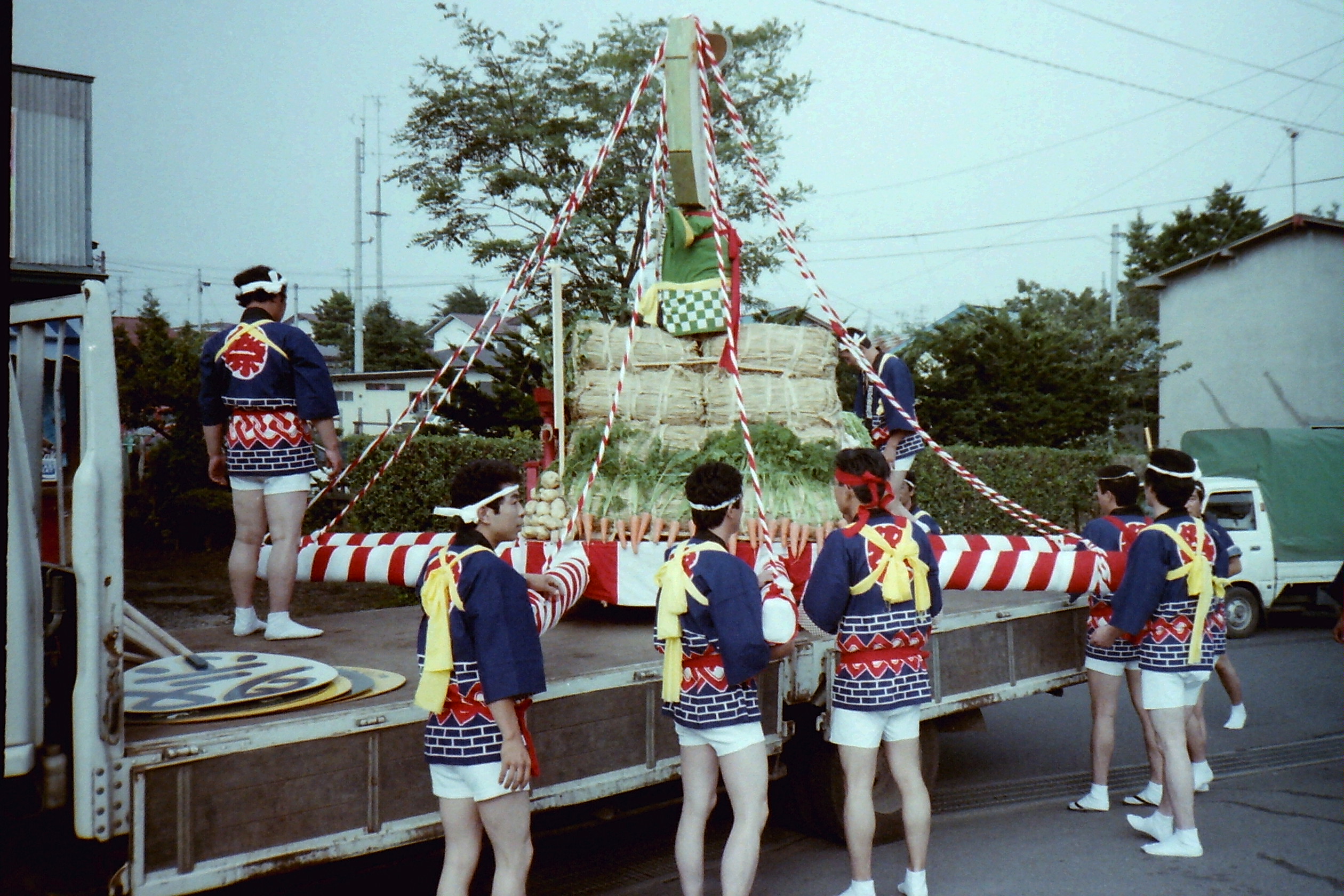
Check out the carrots on that thing!
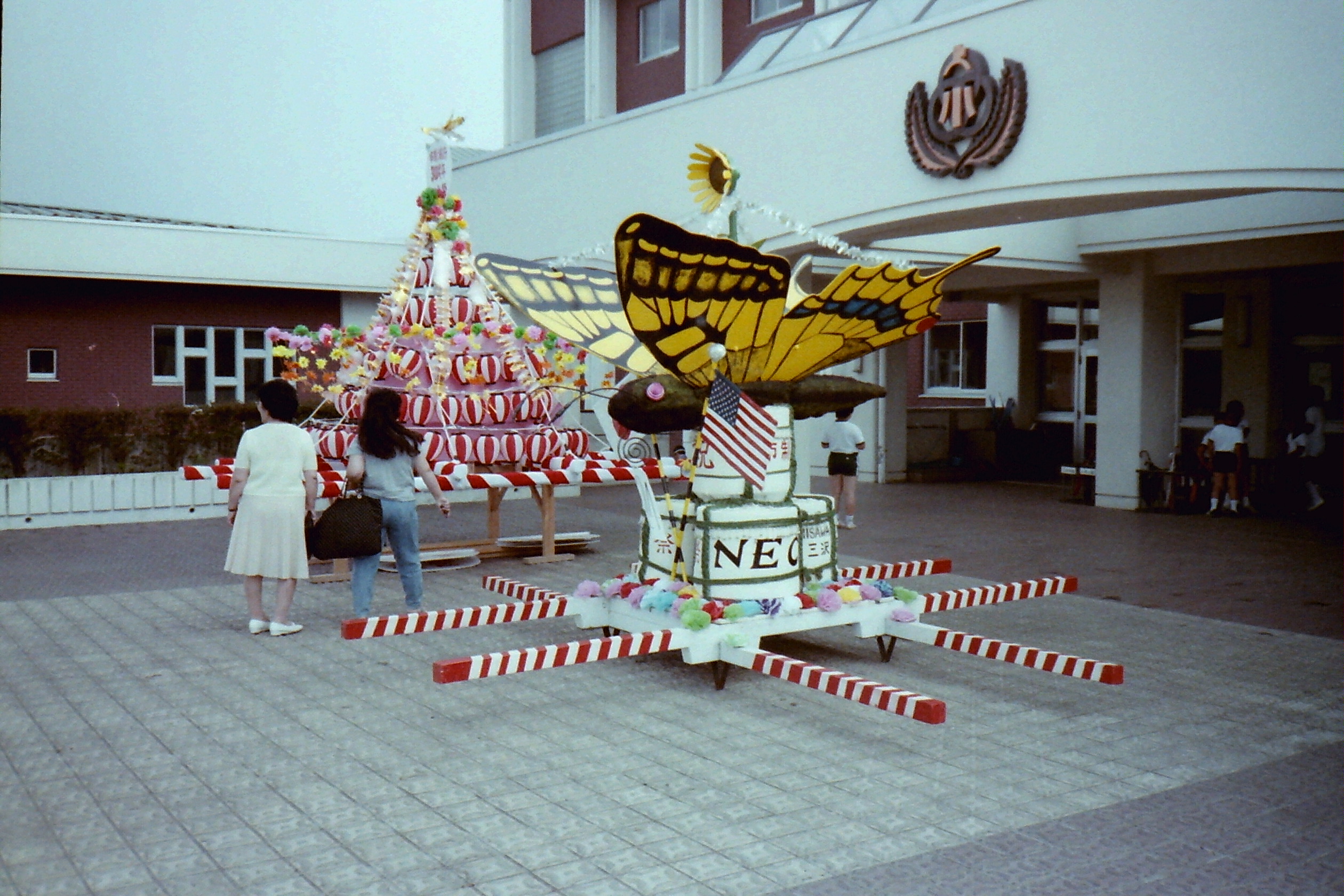
Nippon Electric Company's entry for the parade
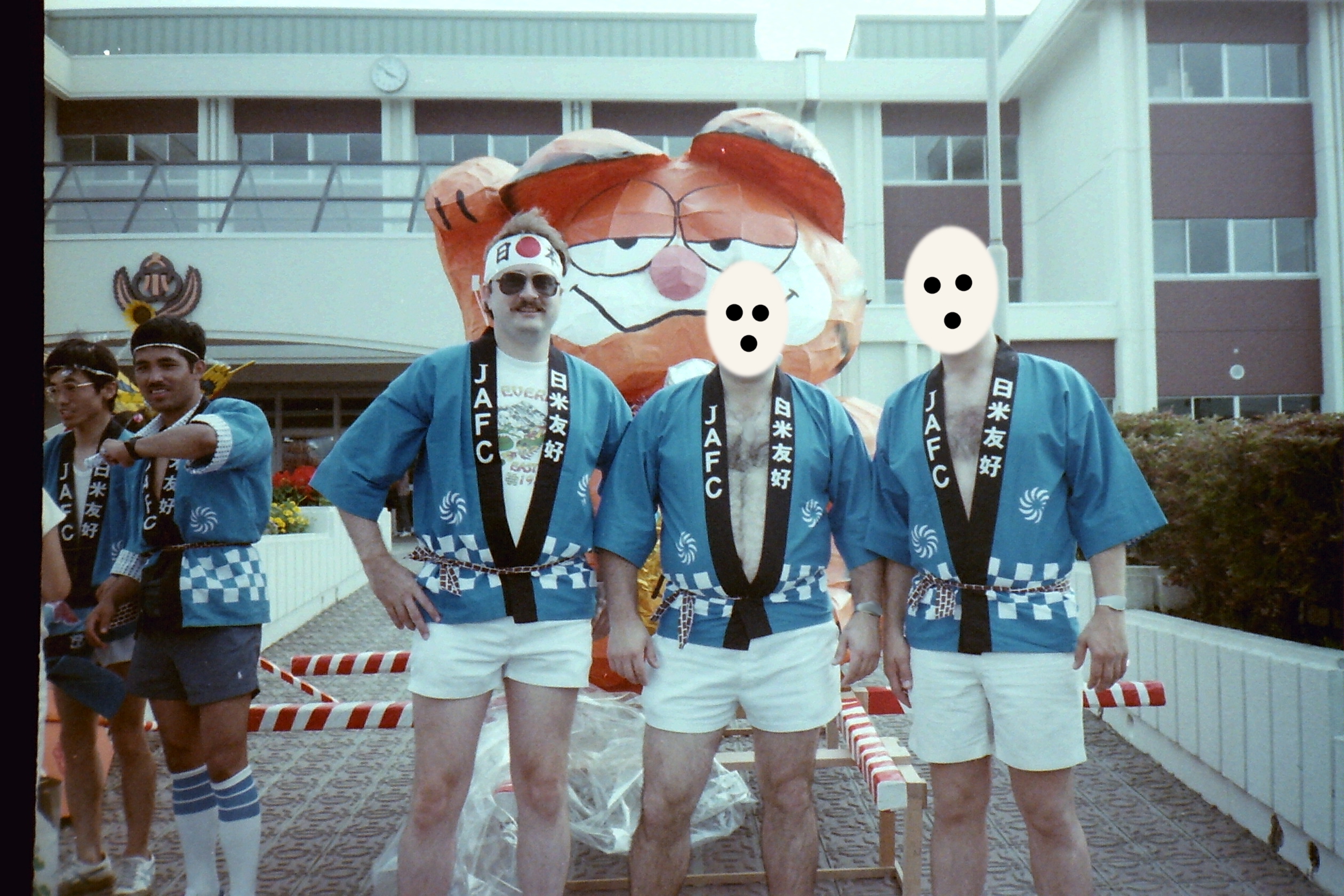
Myself and the no-name twins with JAFC float
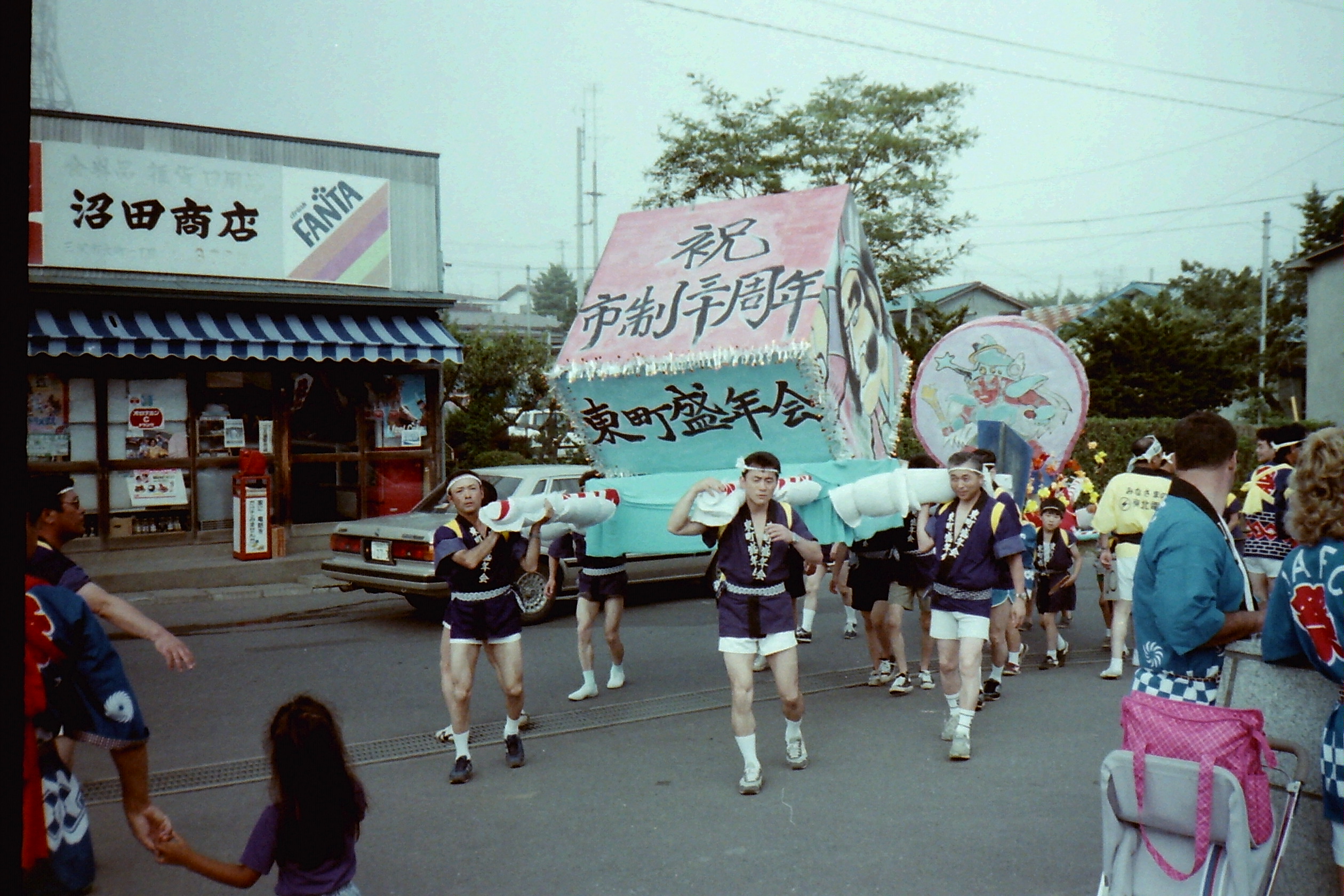
A mikoshi on the move
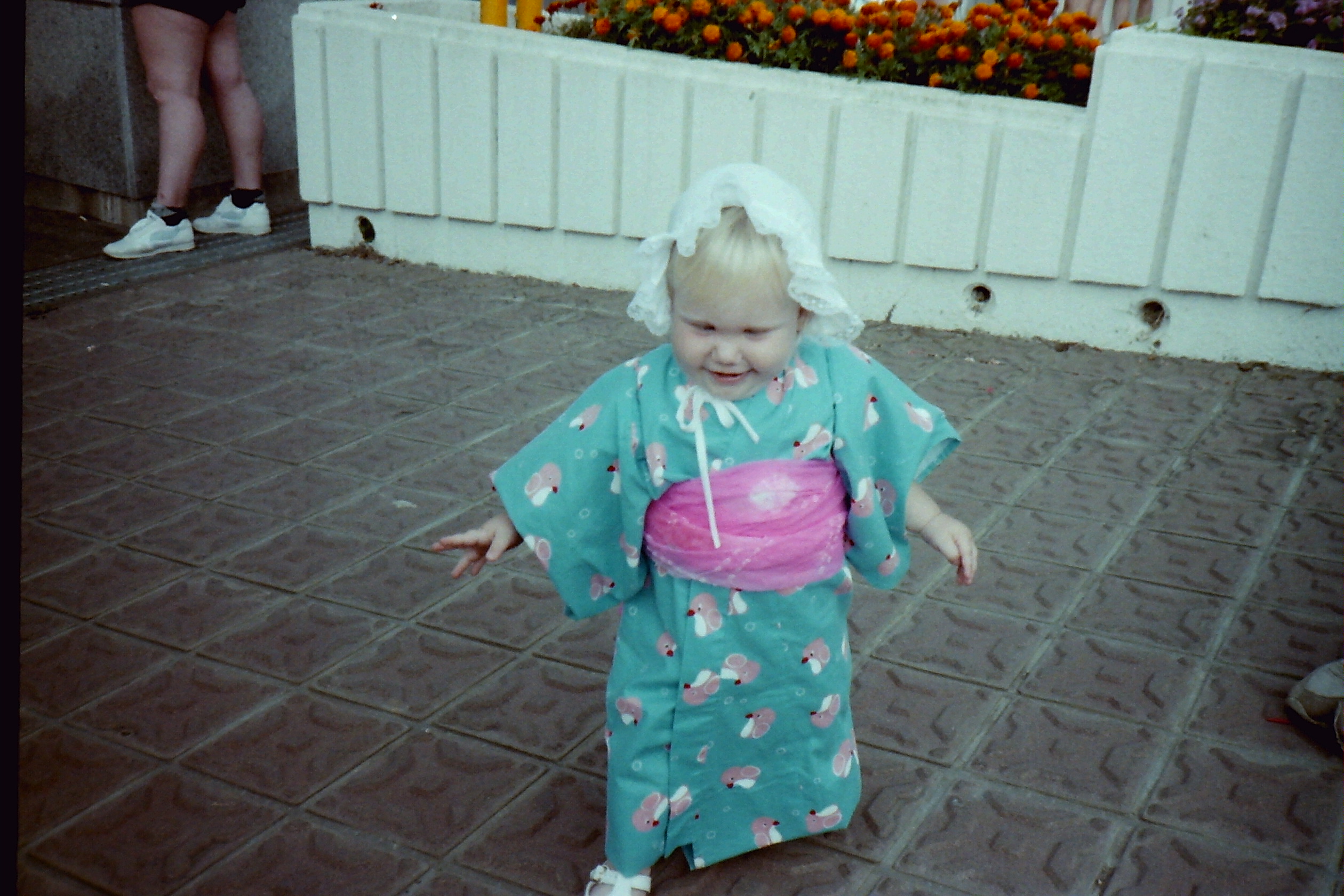
Cuteness in a Kimono
Lots more parade photos to come — we're just getting started! Mata, ne! (Later, right!?)


September 18, 2011
1988 Misawa City Festival
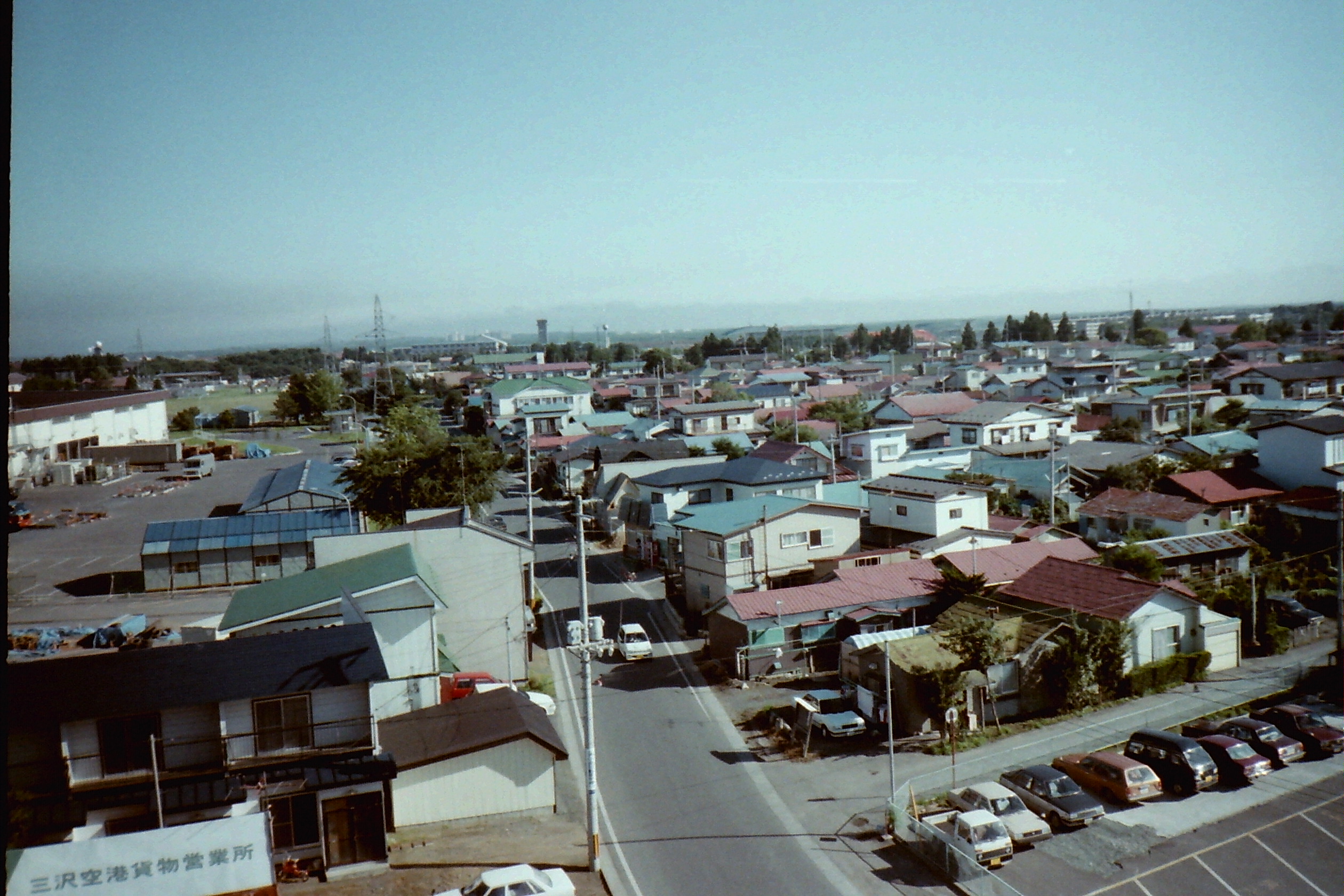
A view to the north
The morning of the city festival, I took several photos from the top of the Park Hotel. This one is looking almost due north.
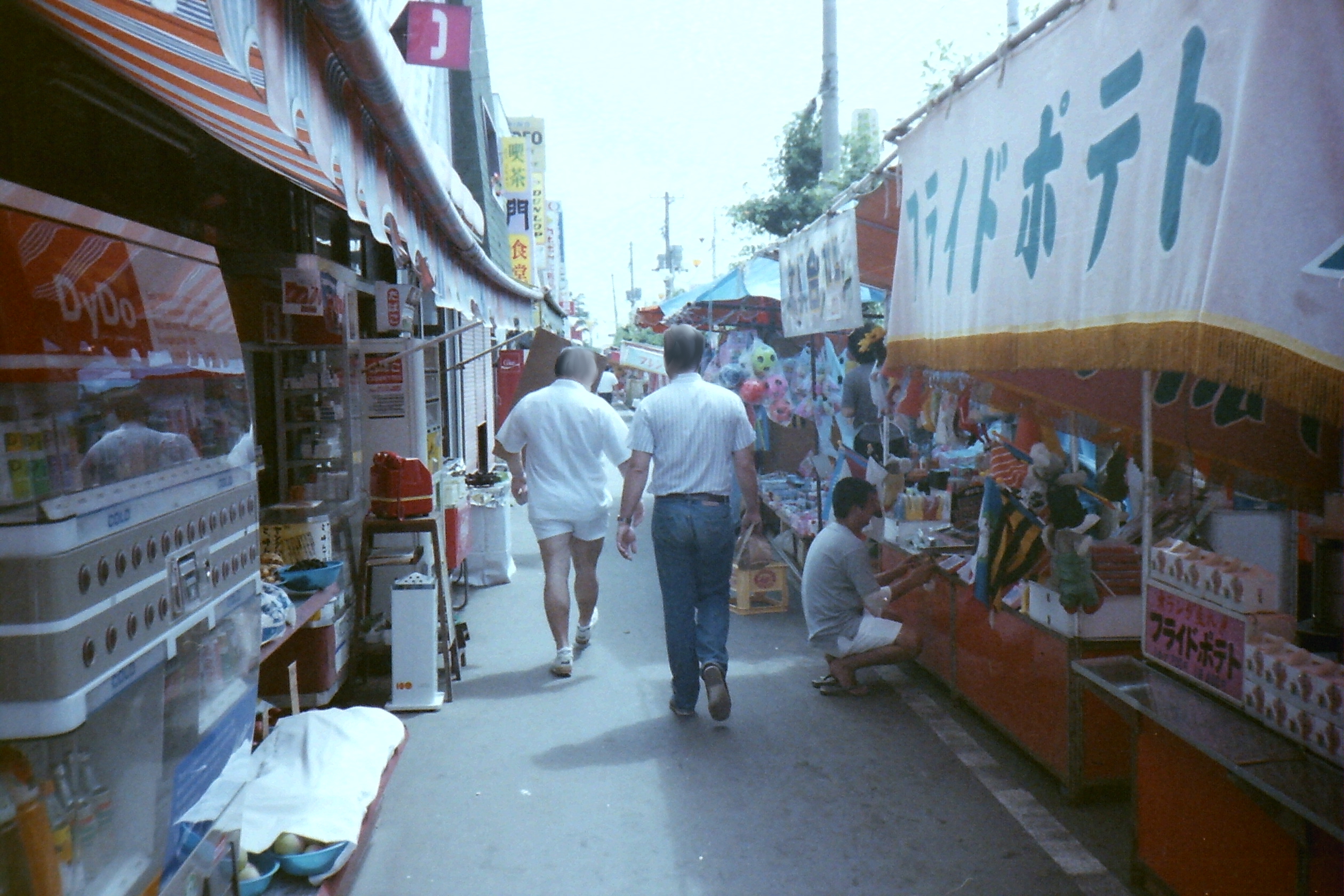
Festival food booths in the street
The food boothes went on forever. The one on the right was selling fried potatoes, but you are more likely to find grilled squid on a stick (yaki ika) and a pancake with everything but the kitchen sink on it (okonomiyaki). If you get thirsty, you just drop some yen coins in the vending machines, several examples of which are on the left. A lot of beer and cold sake were dispensed from the machines that day.
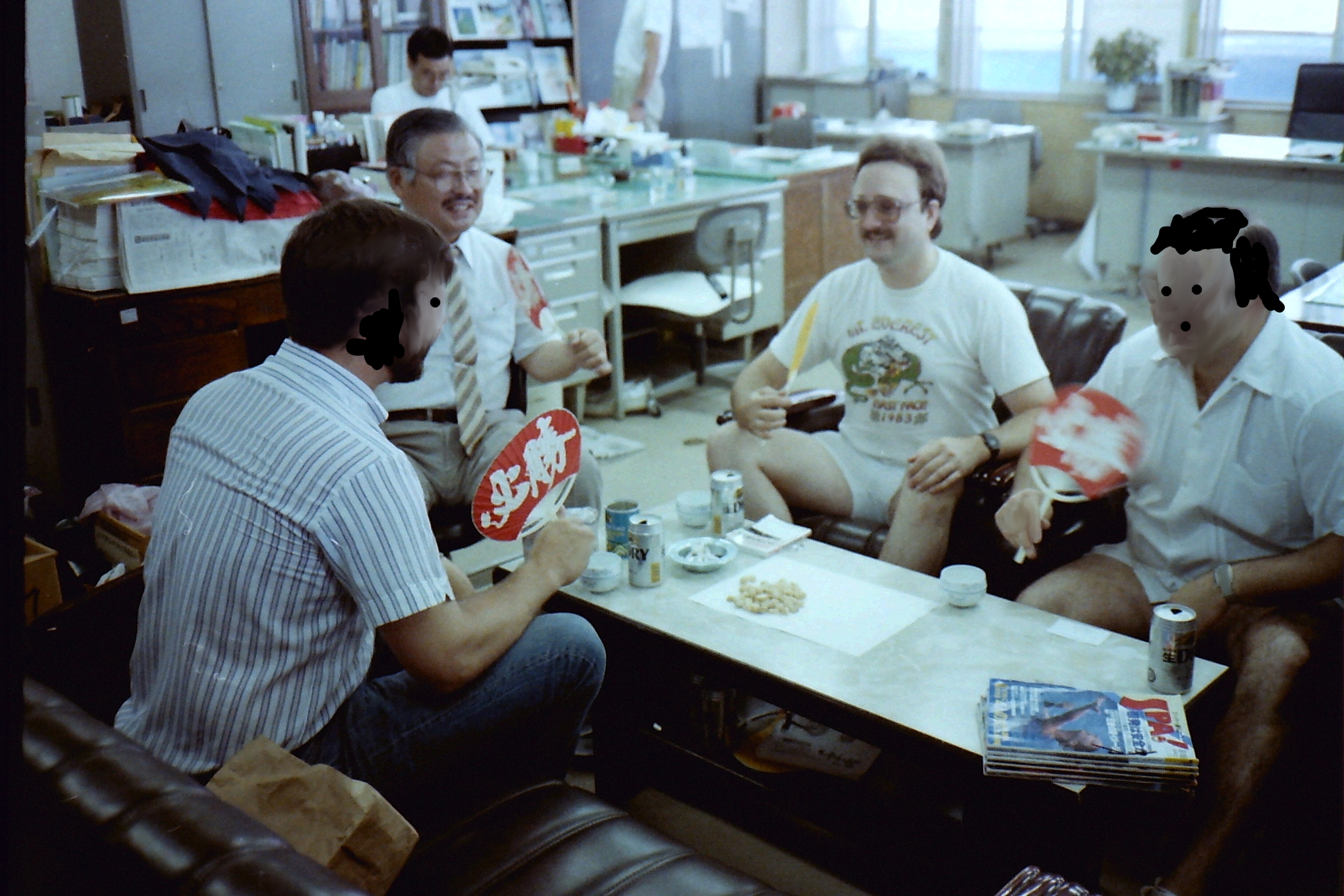
Adult beverages on the job
Also on the morning of the parade, a couple of my coworkers and I were invited to visit the Misawa City offices. We got quite a tour, and something was taking place at this table that you would never see in America — they served us beer and sake during working hours. We were preparing to take part in the parade, also known as the Mikoshi Parade, where we carried a float with the Japanese American Friendship Club, or JAFC. We had met one of the city workers in a nice little restaurant called Hana Zen, which means "flower table," and he invited us to visit the city offices.
A mikoshi is a portable shrine, and they are often made to be very heavy in order to demonstrate the physical abilities of the young men carrying them. I'll post some mikoshi another time, but if you'd like to see an example, check out this YouTube link: 2009 Mikoshi Parade
In English, JAFC stands for "Group of Americans Helping Japanese Improve their English Skills." We knew that going in, though, and it was still fun anyway. At the meetings, the Japanese were charged dues, but the Americans got in free. We paid anyway, however, just to help them with their expenses. It was really funny, though, how sometimes they would argue with us Americans as to what constituted proper English.
You have probably noticed by now thatI blurred-out some of the faces. That is partly to preserve the anonymity of the dudes I worked with, but also because they don't really deserve to appear in this blog. I didn't know much about these guys when I first began working with them, but I believe what must have happened to them both, simultaneously, in different cities, while they were young, were incidents of their misunderstanding the advice given them by their mothers. They must have had their stereos turned up while their moms were saying something like, "Now, little Tommy/Danny (names changed), about one percent of the time everyone's going to be a complete narcicistic, antisocial miscreant, and so will you. But you should try to be nice to people the other ninety-nine percent of the time." Unfortunately, little Tommy and Danny got the numbers backwards, and this is the only plausible explanation for their behavior. I did suspect that questionable things would eventually occur with one of the guys, since my supervisor at the company from which we both had come told me that the reason they couldn't "find" a job for him at the end of a contract was because they had no desire to keep him around any longer. After a few months of putting up with this sociopath, I understood this all too well. One day, after everyone else had left the office, he pulled out a switchblade and brandished it in front of my face in a vain attempt to make sure I knew who the "boss" was. On another occasion, in order to convey to me an additional veiled threat, he hit a table with with a piece of hard plastic he employed in lieu of brass knuckles. No wonder his wife left him as soon as he departed the USA. After his divorce was final I heard him mumble, "Next time I'm getting a damn slave." And I woudn't doubt that he would admit to saying that, too, and be proud of it.
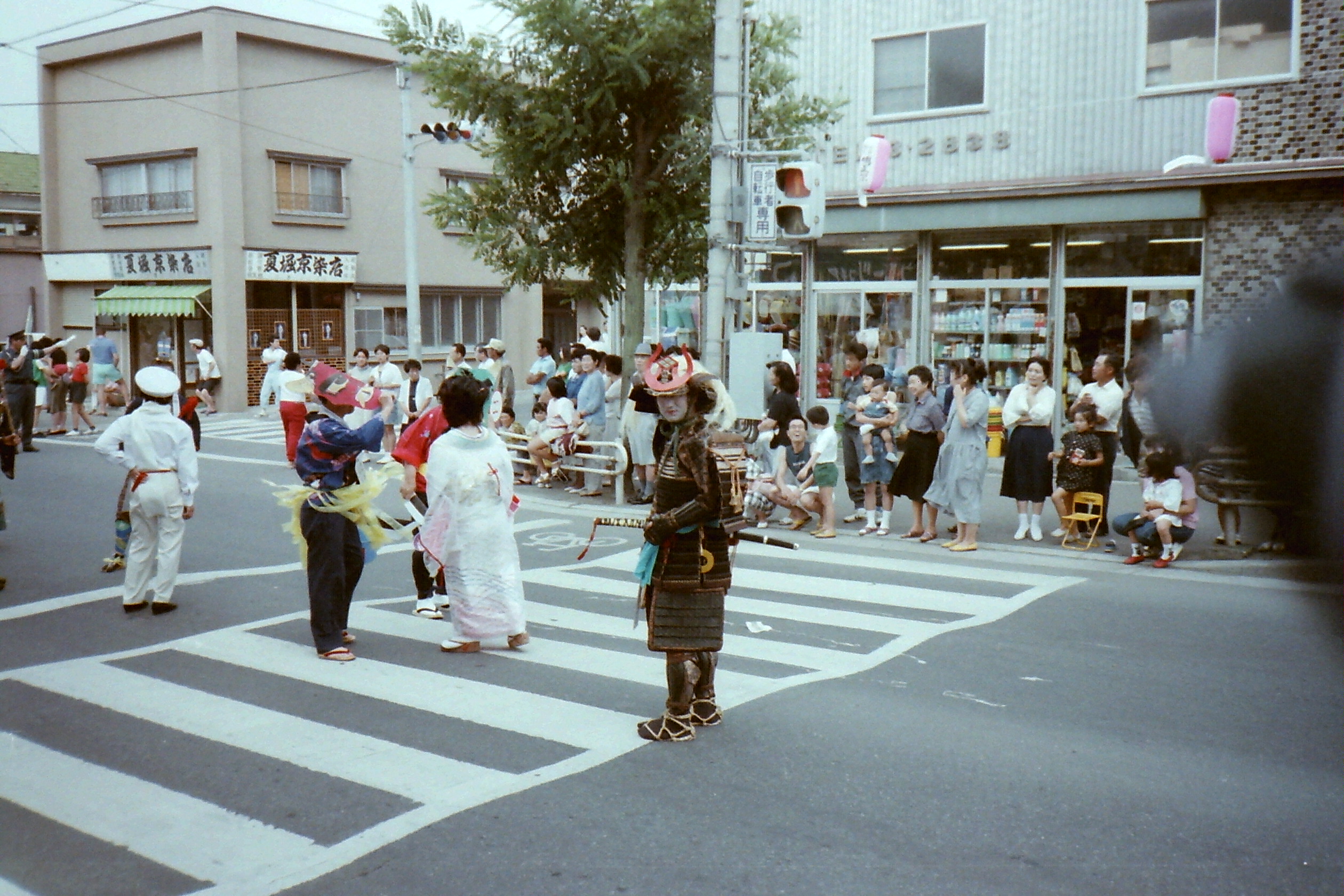
Young man in samurai costume
The parade is just about to get started, and this samuri has spotted me taking his picture. I had to run away to keep from becoming shish-kabob (heh-heh).
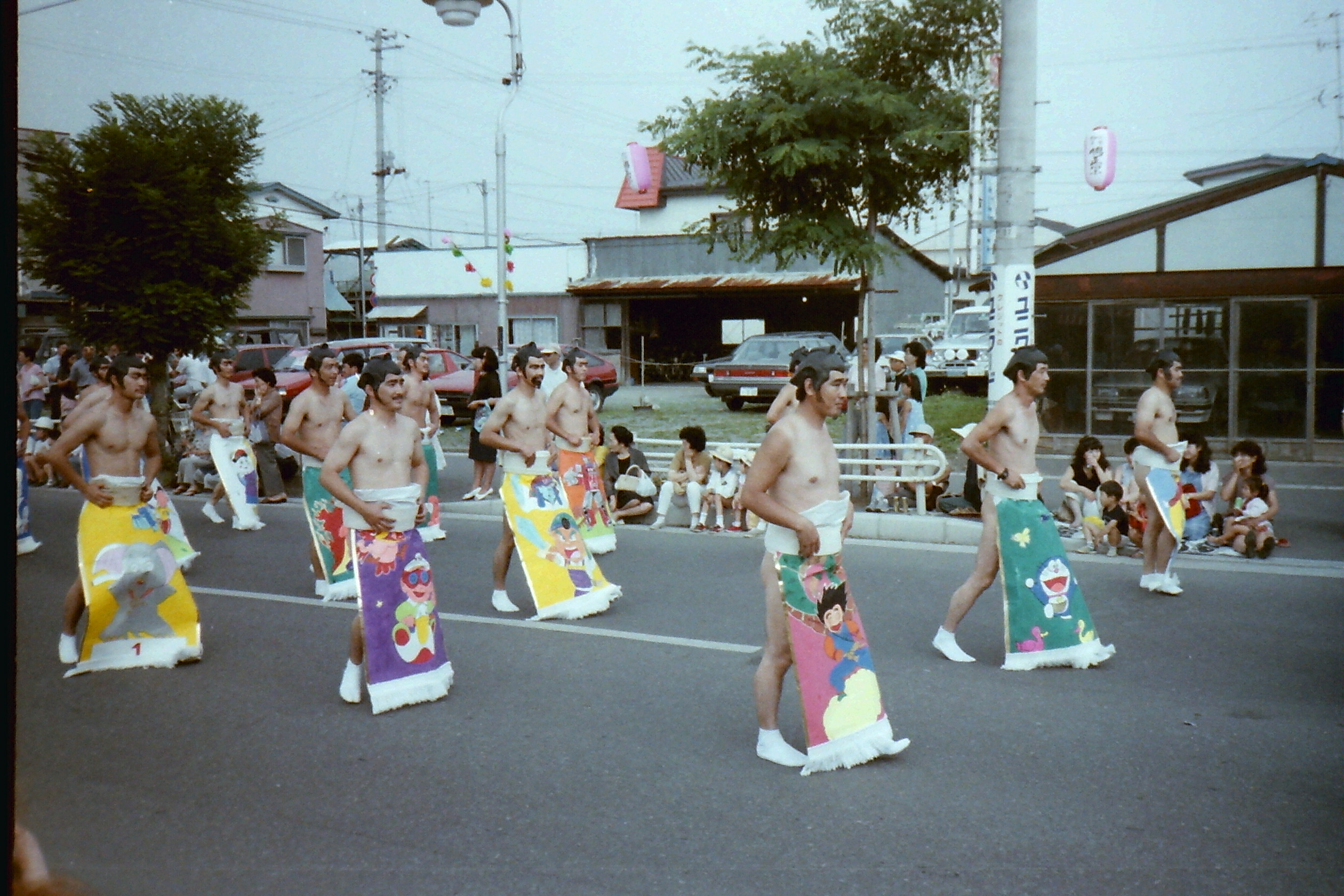
Here come the sumo wrestlers
These guys needed more than just the towels they were holding in front. In the next photo, you'll see what I mean.
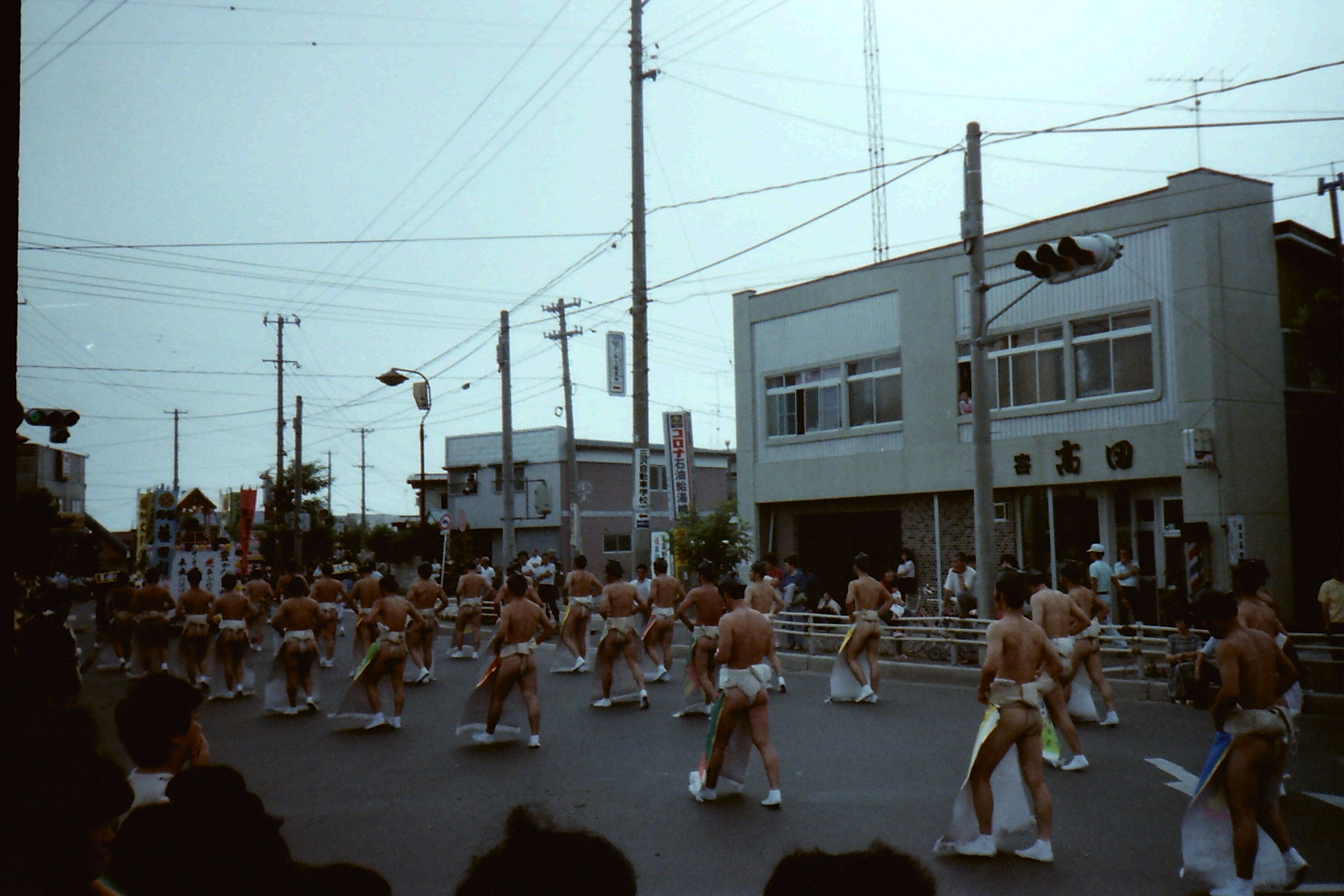
There go the sumo wrestlers
'nuff said? Only in Japan.
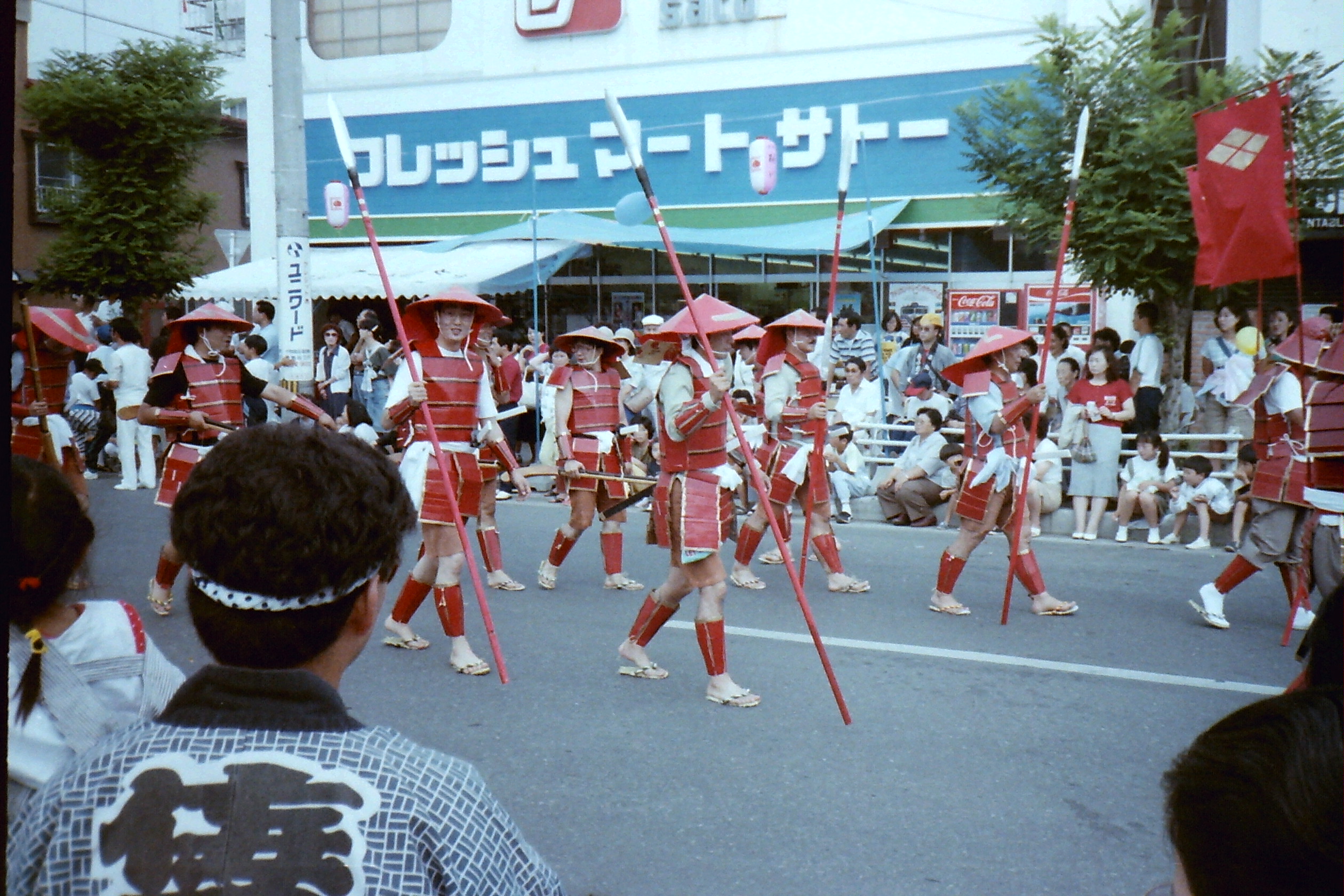
The warlord's soldiers
I don't know whether they made these costumes fresh each year or used them over and over. In any case, it obviously took a lot of work to produce them.
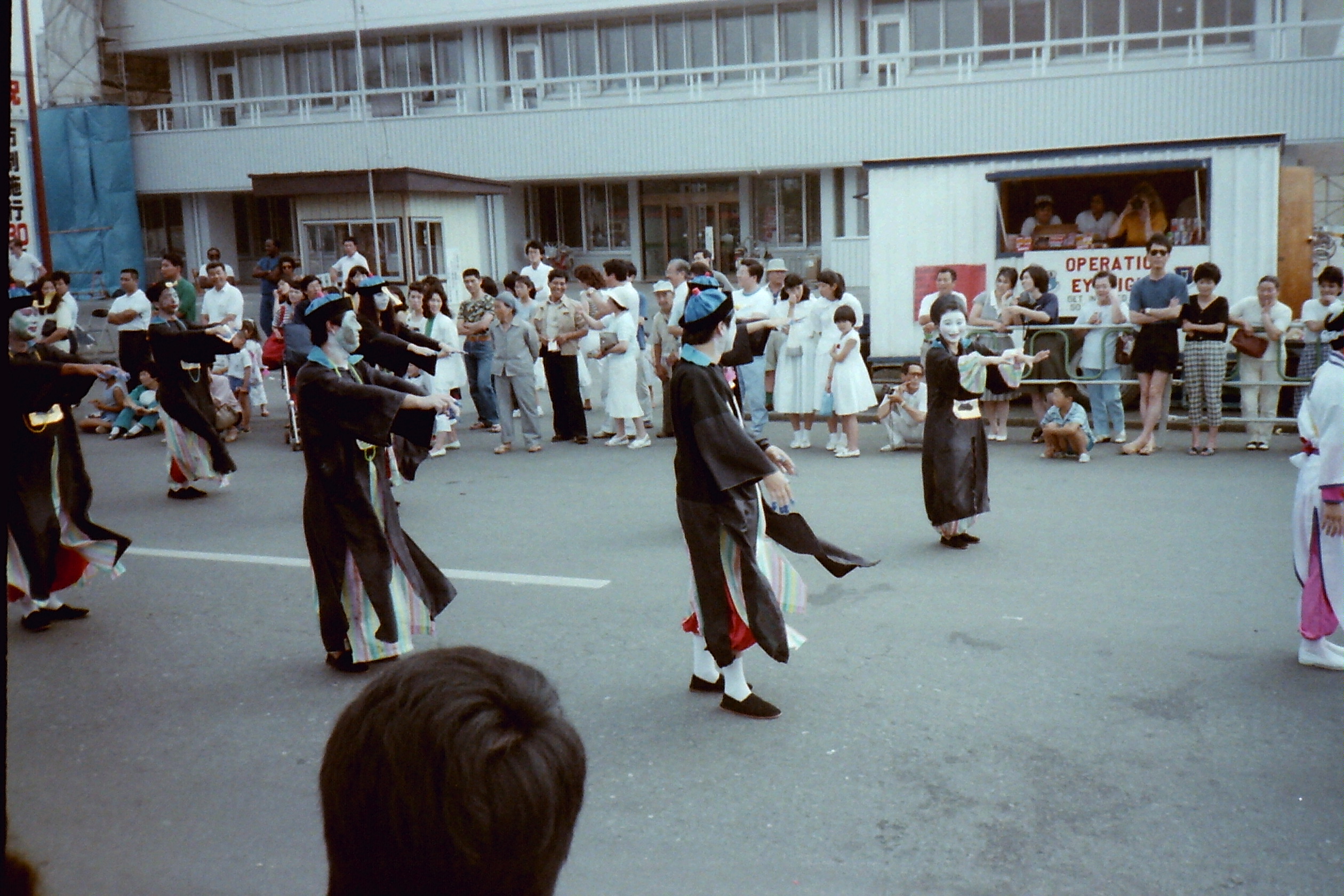
Chinese cult movie parade entry
These folks were imitating a Chinese cult-classic movie akin to Night of the Living Dead. I actually caught this movie on TV one evening. The zombies held their arms out in front of them and hopped toward their victims. The only way to stop a zombie was to tack a strip of paper containing a prayer or incantation to its forehead.
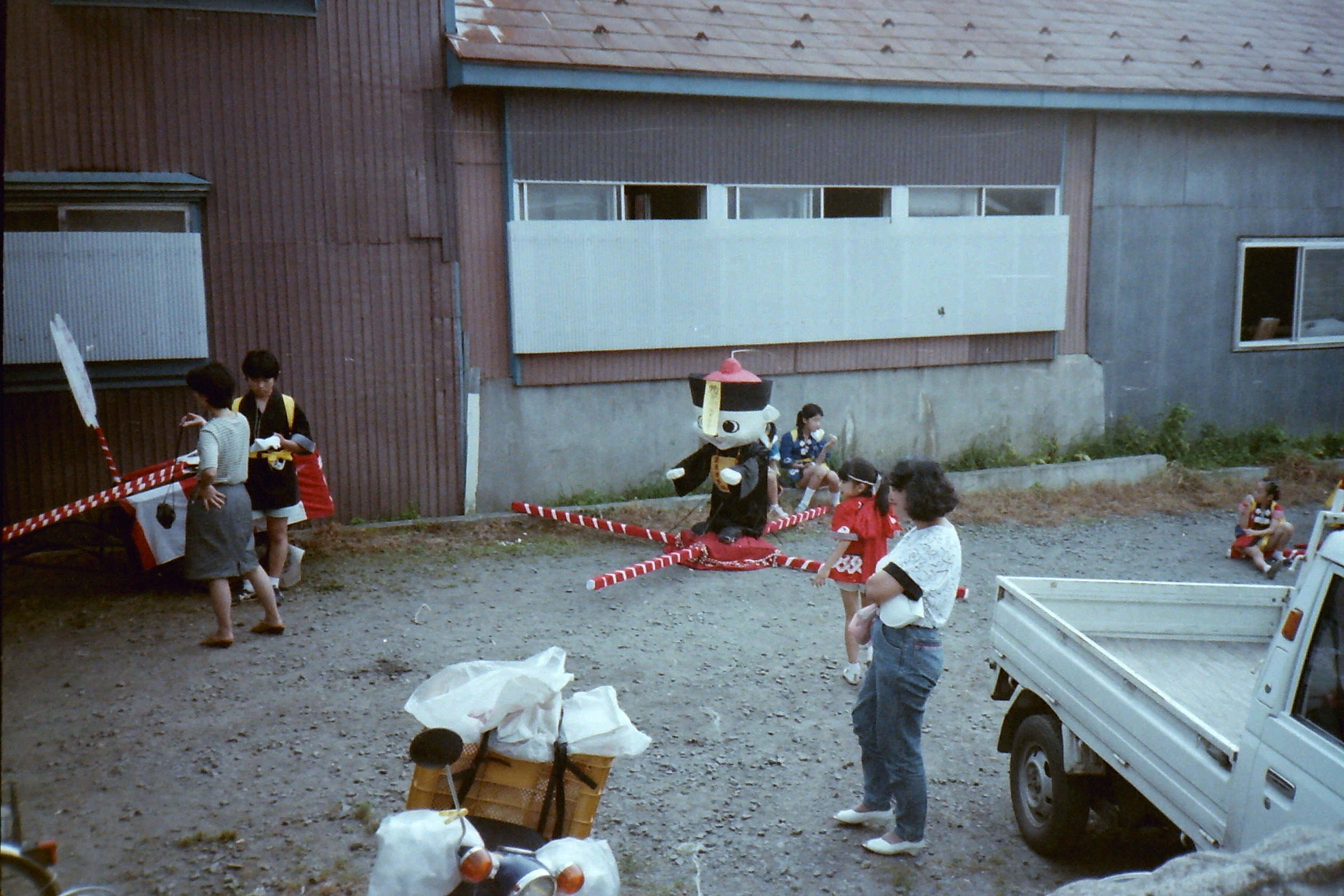
Zombie mikoshi
Here's a small mikoshi modeled after the Chinese cult-classic movie.
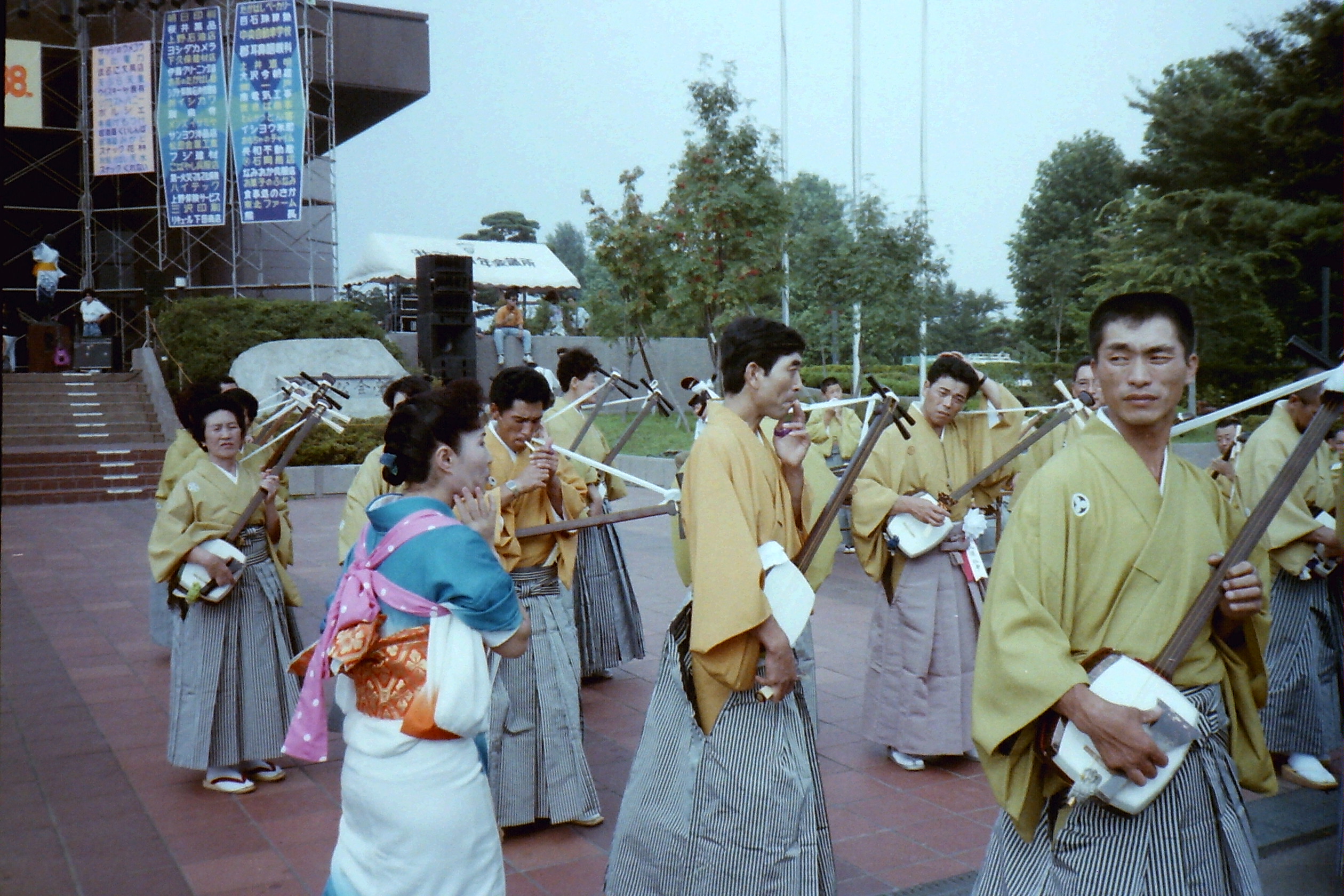
Time for a smoke break
These shamisen players were getting ready to march in the parade. At least two of them were taking this opportunity to light up. Virtually everyone in Japan smoked. I was told that cigarettes were approved by the government, and the Japanese believed the government could do no wrong, therefore cigarettes were not dangerous. In any case, once everyone was hooked, it made no difference. I suspect the Yakusa got a healthy kickback on all cigarette transactions.
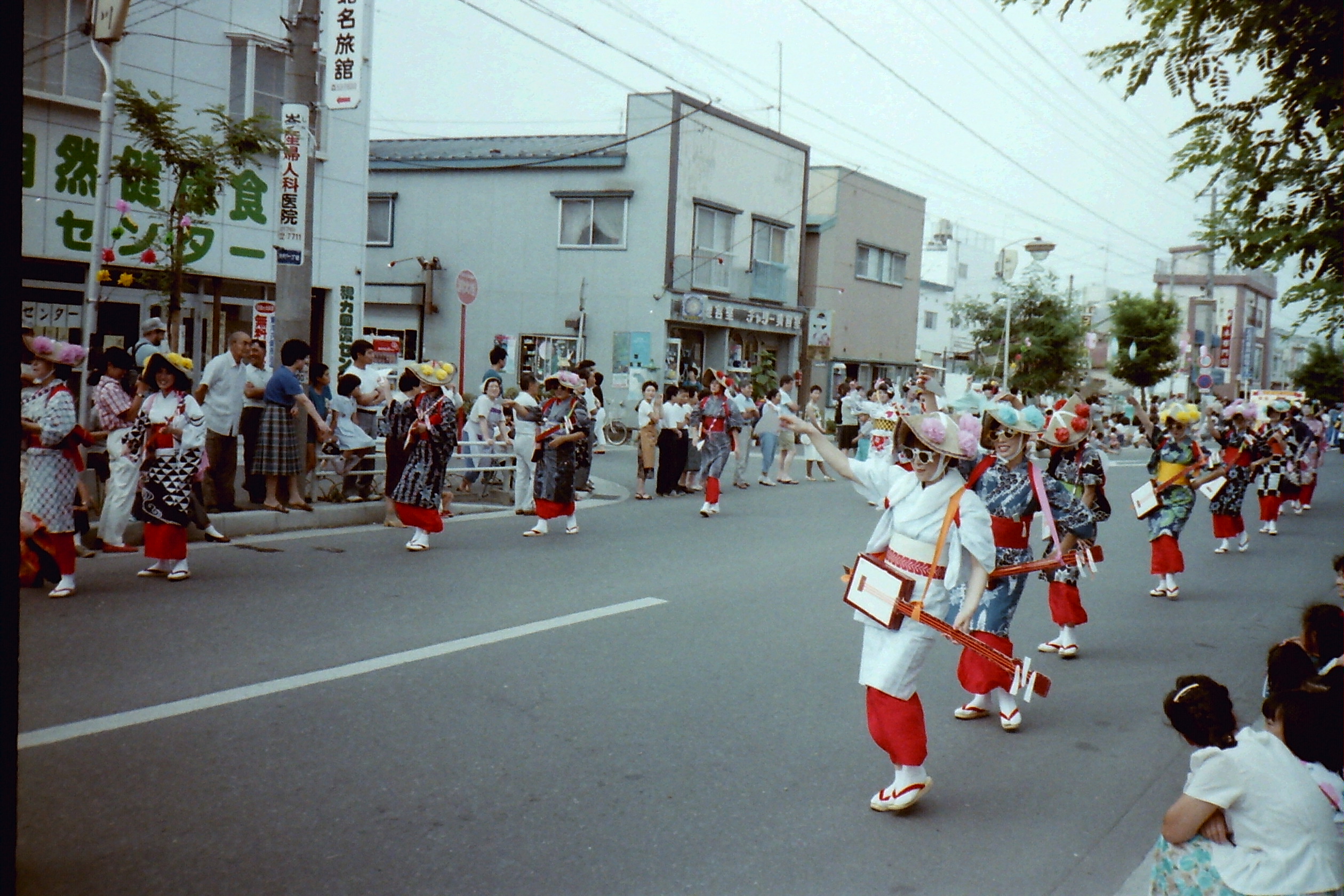
The "not-so-serious" shamisen players
I'm pretty sure all these were women.
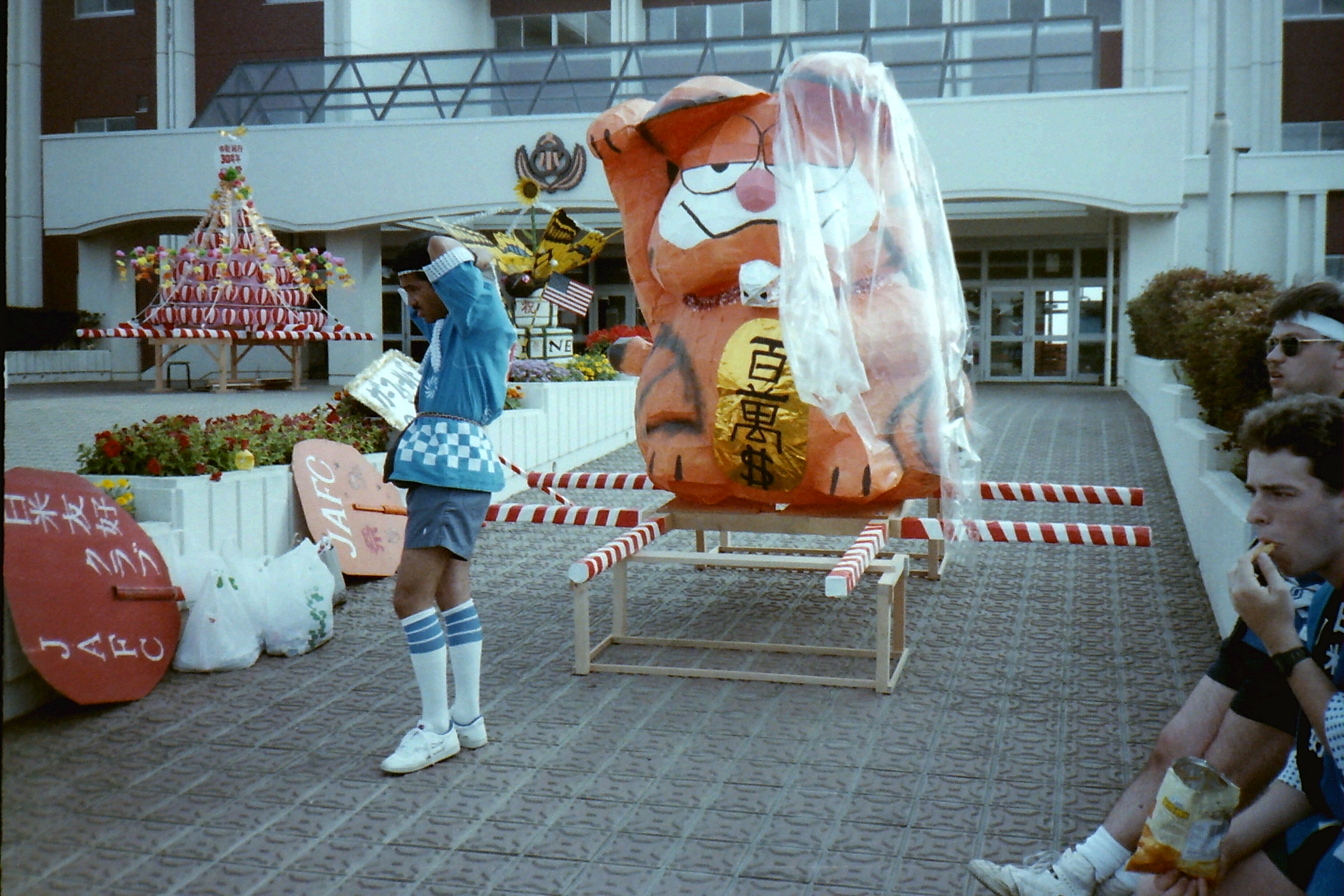
Maneki Neko Garfield
This is the mikoshi the Japanese American Friendship Club was preparing to carry in the parade. You may have seen the "beckoning cat" as a ceramic decoration in both Japanese and Chinese restaurants. This one, of course, bears a striking resemblance to Garfield. The medallion he is wearing around his neck is typical for the maneki neko, also known as the "money cat," and it depicts the kanji for one million yen (hyaku man en). This one, though, is sporting a dollar sign, so it represents more than 100 times that much. All the young men in this photo are wearing the official "hapi" coats of the JAFC, but I believe that there are two "versions" of the uniform represented here.
I helped carry this float, and whenever we rested, I took the opportunity to take photos. I usually wore the camera on a lanyard around my neck. When the leader blew his whistle, we had to pick up the mikoshi immediately and quite violently. One time, my camera hung down over one of the carrying poles, and as we lifted the float on high, my camera swung over my head and into the crowd, breaking my camera and bruising some unfortunate person on the sidelines. I was able to pop my camera back together and continue with my photography, but I couldn't apologize enough to satisfy the poor Japanese person I had wounded.
September 17, 2011
Misawa shi kara Towadako made
One of my first road trips from Misawa City was to see the scenic Oirase River and Lake Towada. Lake Towada is the largest volcanic crater lake on the main Japanese island of Honshu. The Oirase River is the only river draining it, and it exits the lake to the east, emptying into the Pacific Ocean at Hachinohe City.
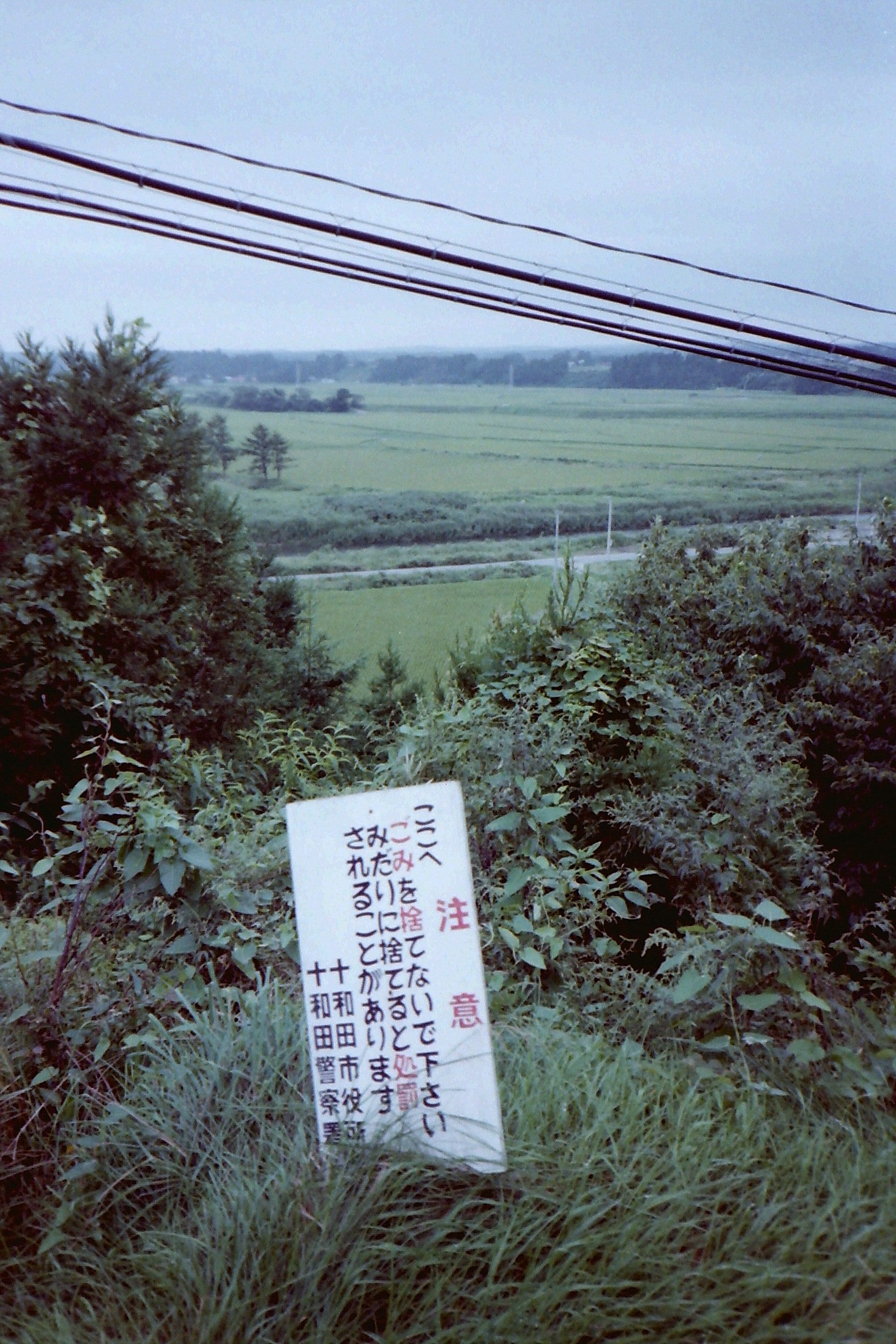
Sign along the road to Towadako
I snapped this interesting sign along the road to Towadako (Lake Towada). I haven't taken the time to fully translate it, but I'm guessing it's a notice posted by the City of Towada asking you nicely not to dump your trash here.

Oirase River
This was the first place I could stop for a photo along the Oirase River. There are five kanji on the sign, and I only know that the first three say "Oirase," but I have no idea what it points to.

View of the road along the Oirase River, on the way to Lake Towada
It was a beautiful area, even if the day was overcast. I'll forego further commentary to share a few shots of waterfalls along the way, then I'll pick it back up when we get to the lake.

Waterfall and bench

Another waterfall

Yet another waterfall
As I mentioned, the day was very overcast, so I'll include only one view of the lake. If I find a shot from a nicer day, I'll post it later. Until then, if you'd like more information on the area, you can browse to the Lake Towada Travel Guide.

Lake Towada, or "Towadako"
September 15, 2011
Home Sweet Home Away from Home
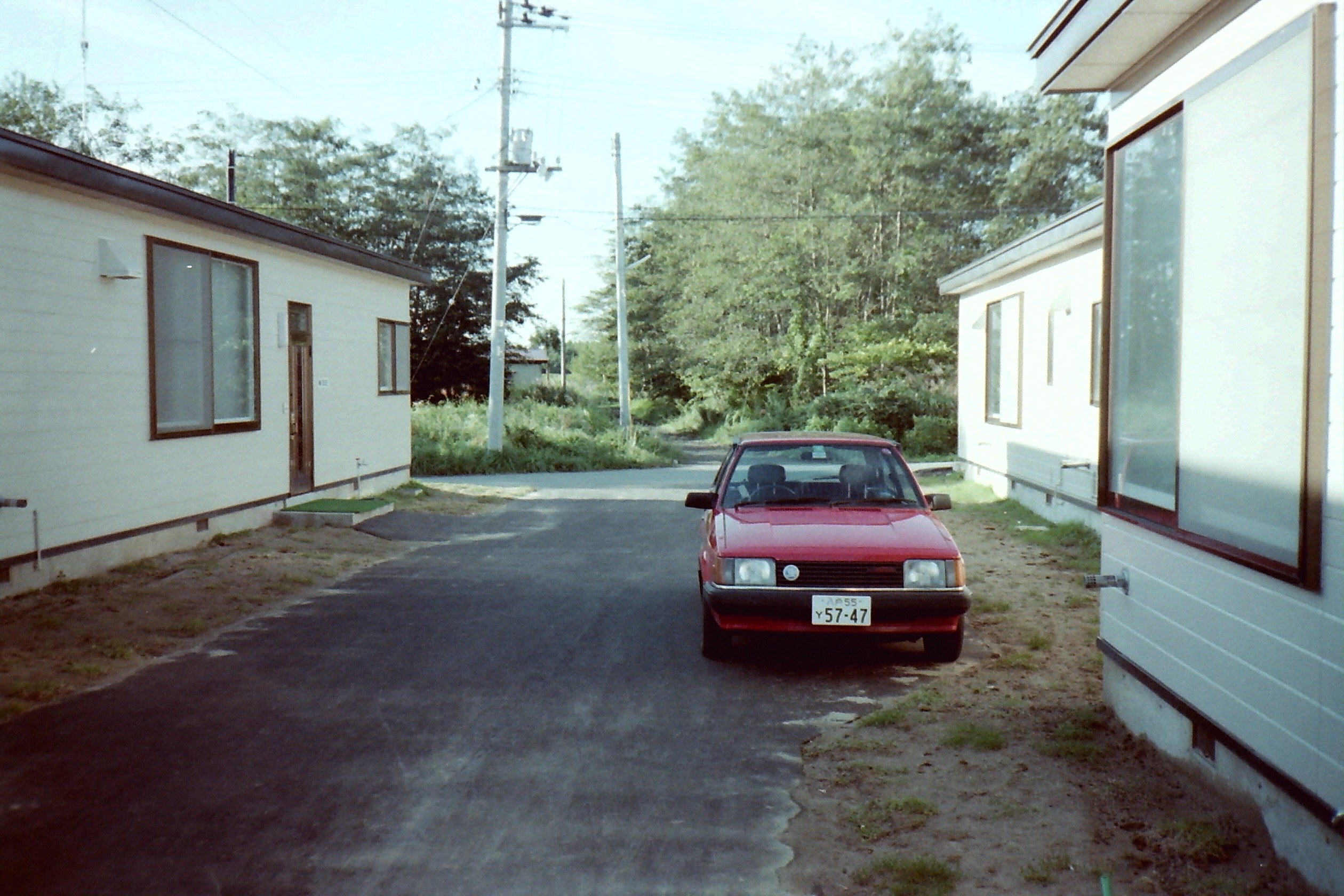
My Mazda at rental cluster house
I don't remember what model year this car was, but it had a manual shift and a powered sunroof. Now, if you think driving on the left side of the road would be a challenge, you should try shifting with your left hand — it takes some getting used to. My rental house is on the right. You can just make out the kerosene heater vent beneath the window. I was lucky enough to have a heater with an external tank, i.e., I never had to pour the kerosene myself. After a few months, you get used to your place smelling like JP-8 all the time. There were five houses clustered into this small area, each with a very small attached garage with no door. You had to drive carefully to be able to park in that garage, and when there was room to park outside, you didn't even try. Notice where I'm parked. My garage already had suffered a collision on one side, and the owner tried to force me to pay for the damage when I left.
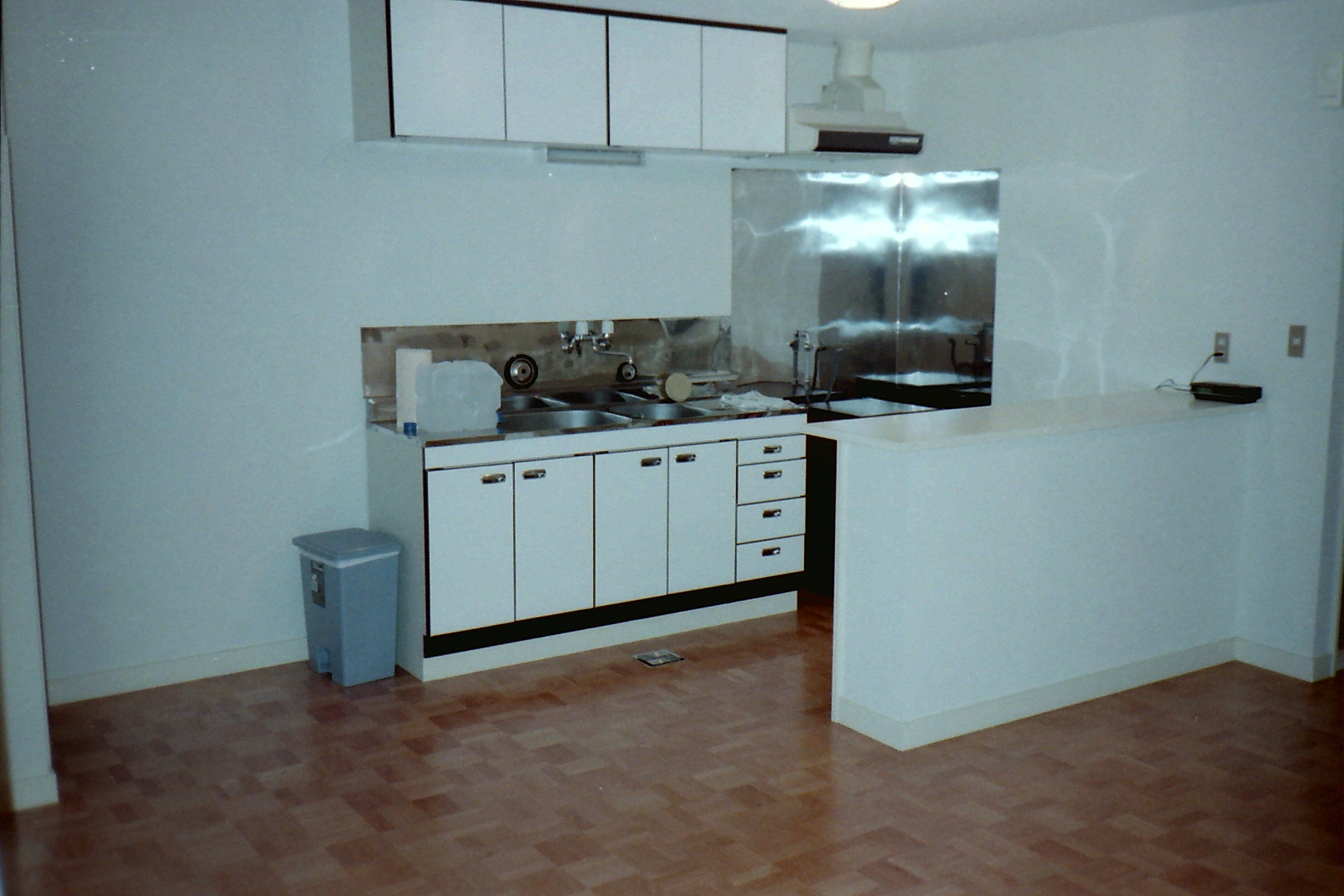
My kitchen
This was shortly after I moved in. Cute little kitchen for a three-bedroom house, huh? Just be careful wat you plug into that electric socket at the end of the bar, though — it provides only 90 volts. But that was enough to run my hotplate, and I bought a transformer to power my microwave.
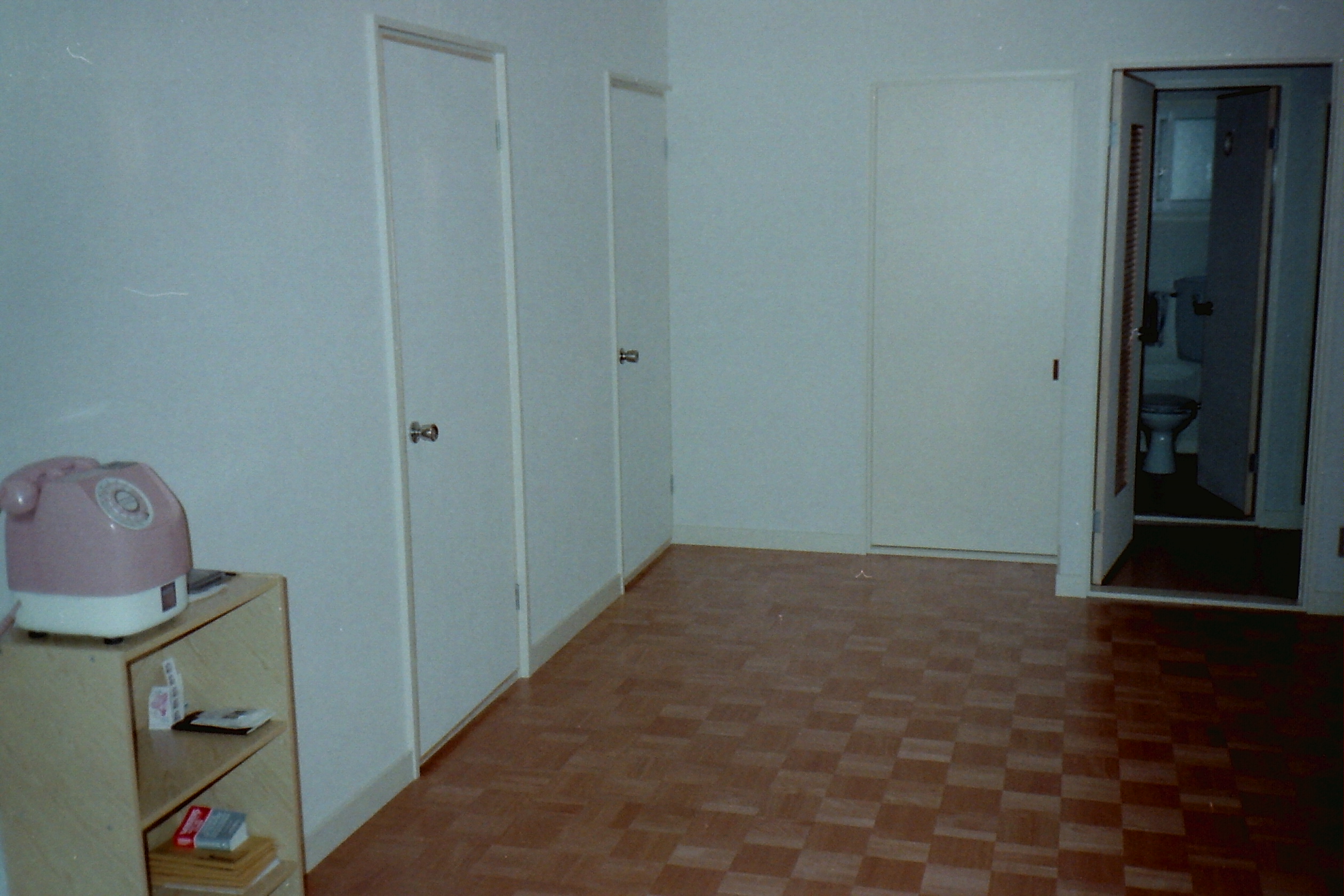
Complete with pay phone and free toilet
Behold, the ubiquitous "pink phone." The white part at the bottom is the coin box. Just keep a supply of ten-yen coins nearby and feed it while you talk. And local calls, only, please. If you want long distance, go buy a phone card and find a green phone. I think yellow phones might also work, but I never could get the color system down.
Note the boards that span the bottoms of the doorways. In Japan, you must remove your shoes to prevent tracking in the abrasive volcanic dirt, so you'll be sure to stub a toe in the dark getting up to go to the can for the first week or so.
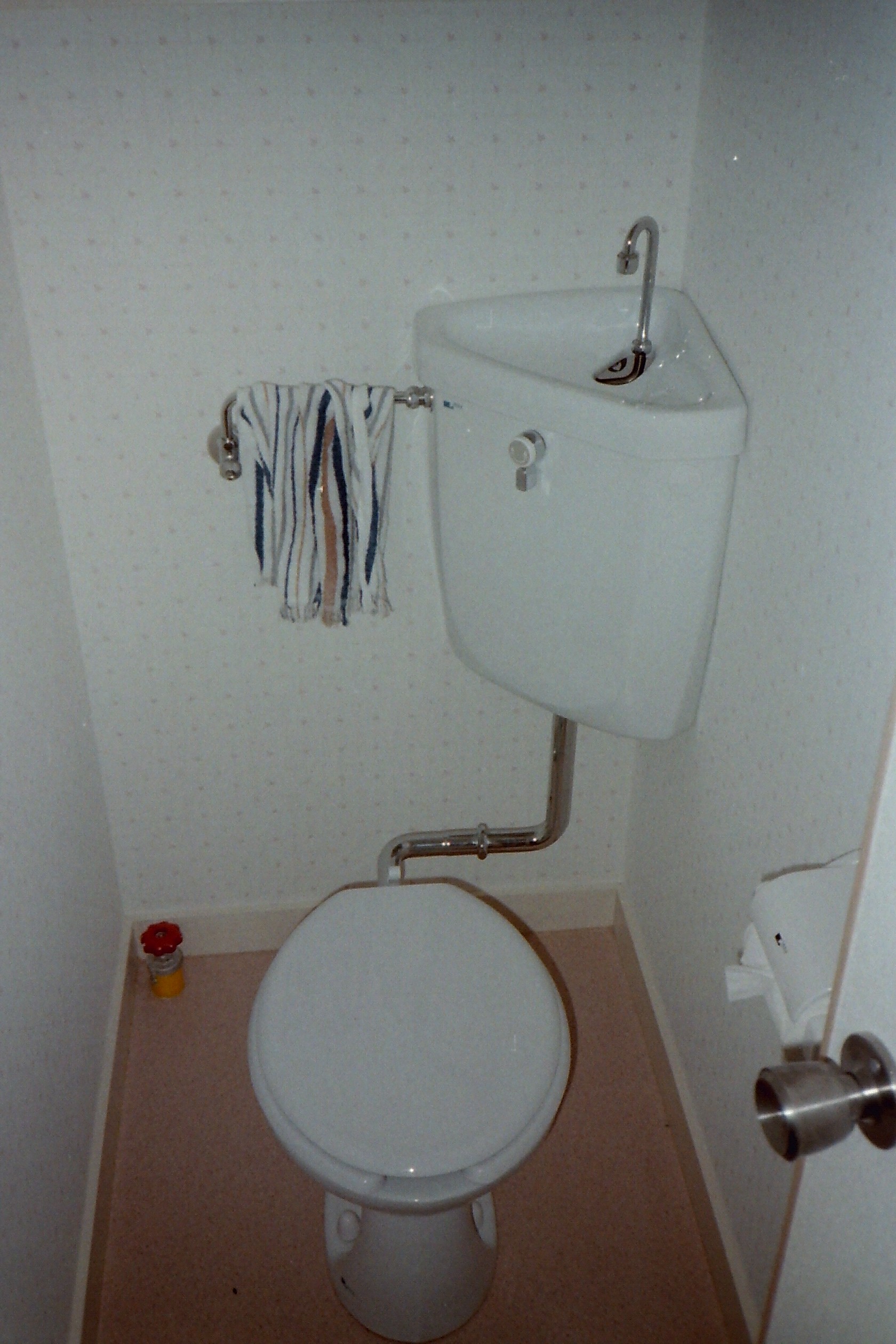
There's efficiency for you!
No wasted space here. The tank goes in the corner, and the feed pipe doubles as a towel rack. When you push the flush lever (either direction), the water comes out the faucet at the top so you can wash your hands, and the water is caught in the basin on the top and continues on into the tank, ready to provide the fluid for the next flush. No place for soap, though. Also note the brake on the toilet paper dispenser. Handy thing, that — it rests on the top of the roll and prevents it from spinning off paper onto the floor if you pull too hard.
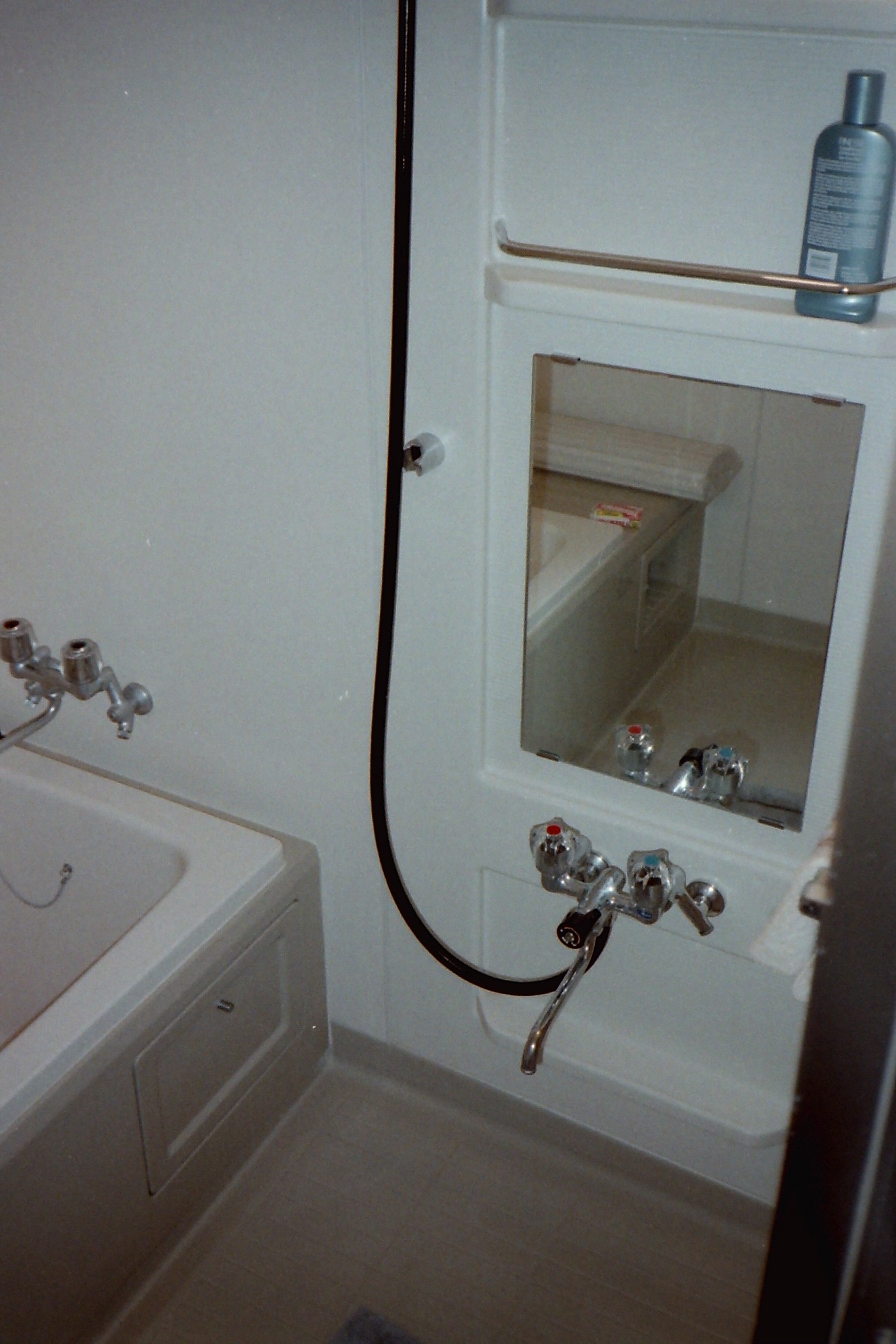
Make sure you shower before you bathe
Bath time in Japan is right before dinner (or supper, depending on what part of the US you come from). The black hose rises to a shower head, but if you want to do it the Japanese way, you'll need to get yourself a short stool and a pan, one that looks like it was meant for watering your dog, and you sit in front of the faucet and wash yourself. The tub is used for soaking, only, thank you very much. In the mirror you can see the insulating cover for the tub, in case you want to set it up in advance, or in case the whole family needs to use the same water: Grandparents first, then the parents, then the older children, then the young children, males before females. That tub is short, but it is deep. I got caught in there once during a 5.1 earthquake, and I feared the roof would fall in and I would be drowned in the tub before it could drain.
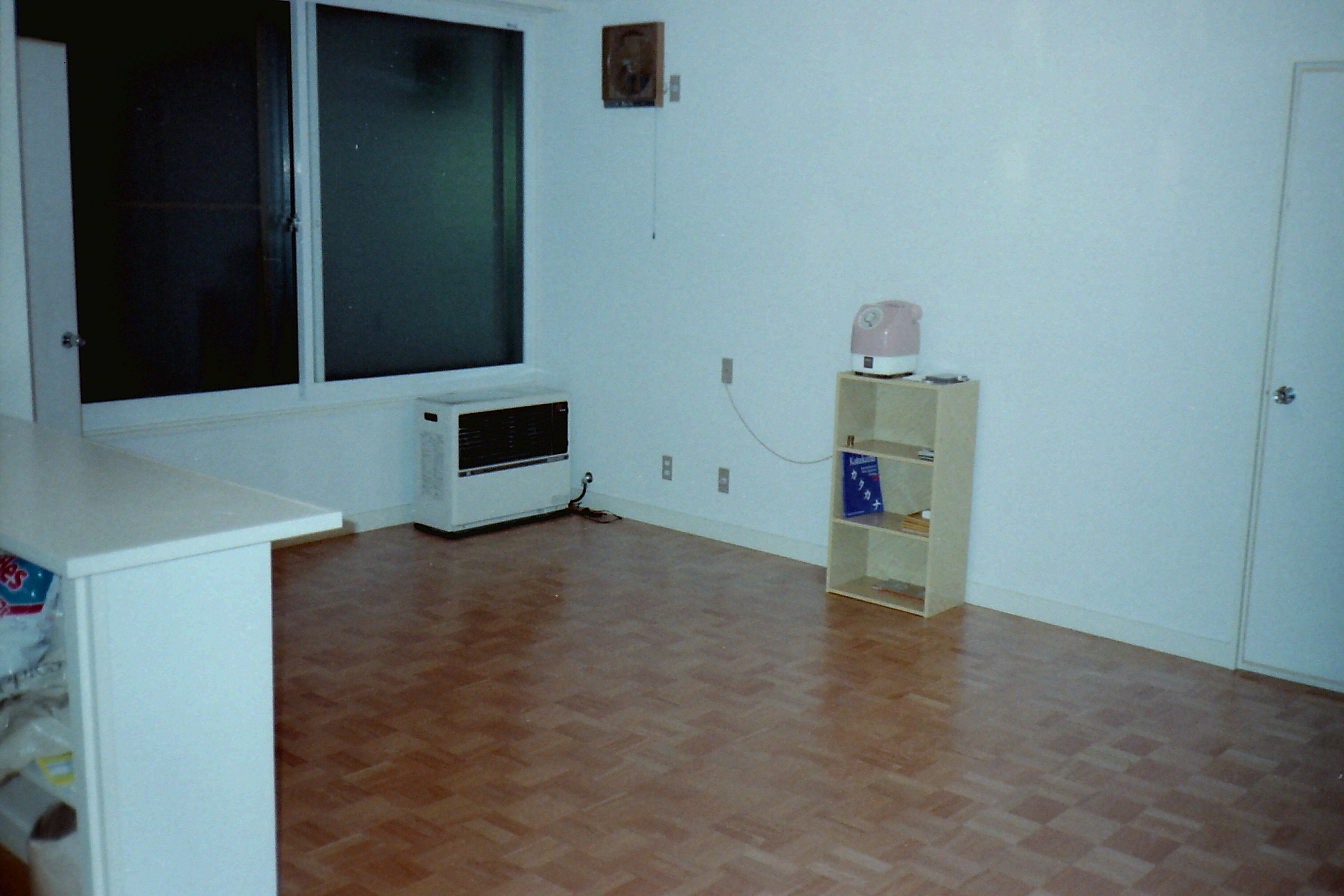
Needs furniture
Shortly I will have a nice carpet, a low-to-the floor Japanese table, a big TV, a component stereo system and large speakers, with bookshelf Bose speakers in the rear for surround sound. In the corner you can see the kerosene heater I mentioned previously. You can also see the connection for the fuel line. Above, on the wall, there is an exhaust fan in case the kerosene fumes get overpowering. It doesn't do much for the carbon monoxide, though, since that is heavier than air, but the window slides open and you can let in cold, fresh air (except that the heater vent is right beneath the window!) to go with the warm, toxic air — basically the same principle as heating with a hibachi (in other words, sleep with a heavy comforter and wear a hat in the wintertime). On the shelf beneath the phone is my Katakana (one of two Japanese phonetic alphabets) study book and some Japanese dictionaries. Pay no attention to that bag of potato chips under the bar.
September 12, 2011
Welcome to Japan
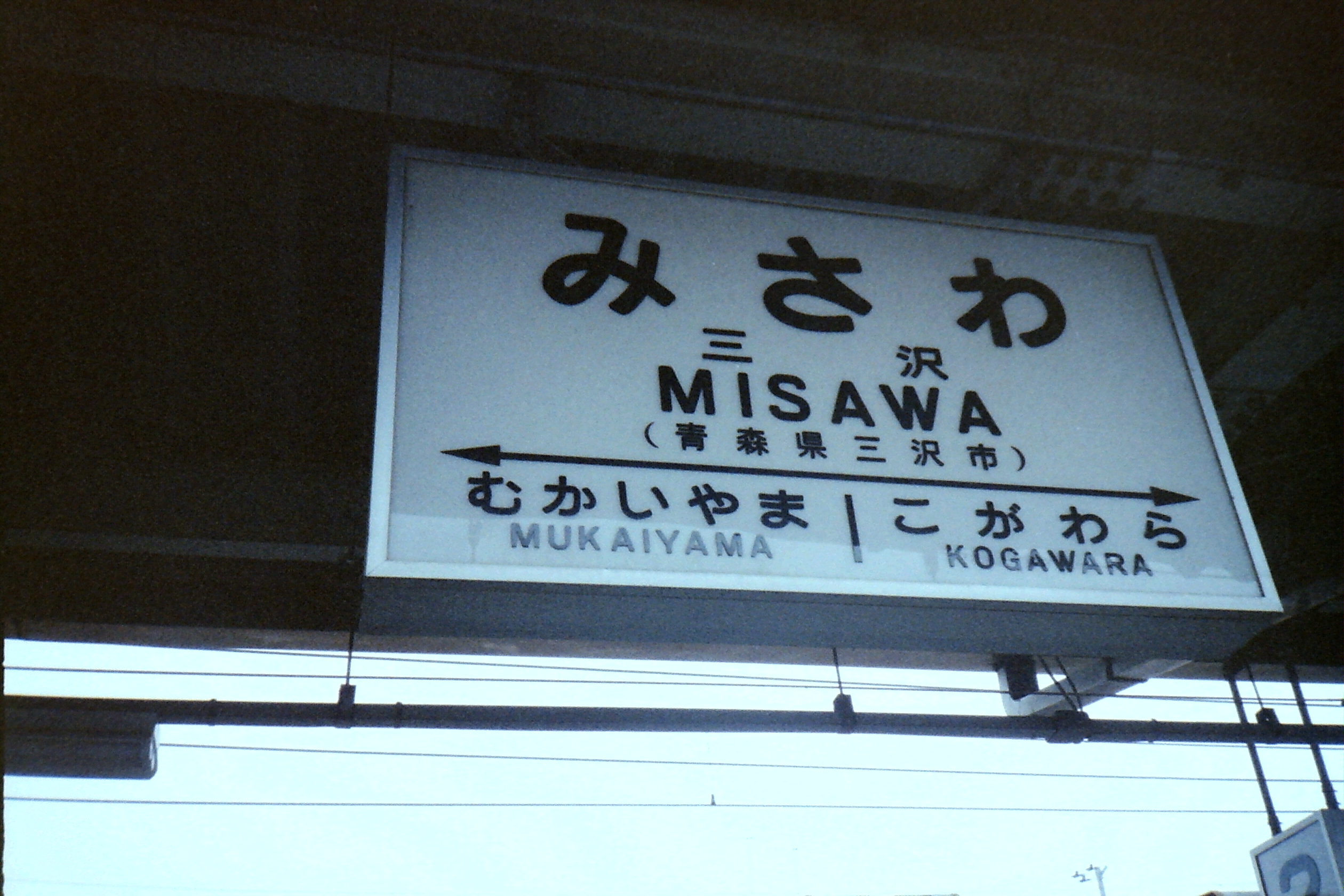
Arriving at Misawa City, Aomori Prefecture
And welcome to Misawa train station. But a lot of water flowed under the bridge before I could arrive at this destination. First, when your plane lands at Narita International Airport in Tokyo (and go business class, if at all possible — it's worth the difference in cost), you can't just change planes and continue on to your next stop. No, if you're going to Misawa, which is on the northern tip of the main island of Honshu, you will probably have to spend the night in Tokyo.
But I'm just getting started. Before you can spend the night, you have to take a bus to your hotel, which will probably be near Haneda airport. Haneda serves internal destinations for Japan. According to Google maps, it is an hour and forty-one minutes to Haneda. But by bus, it's at least two hours, and that's when it's not rush hour. And those busses don't come with bathrooms, and they don't stop, either.
Here's a view near Haneda:
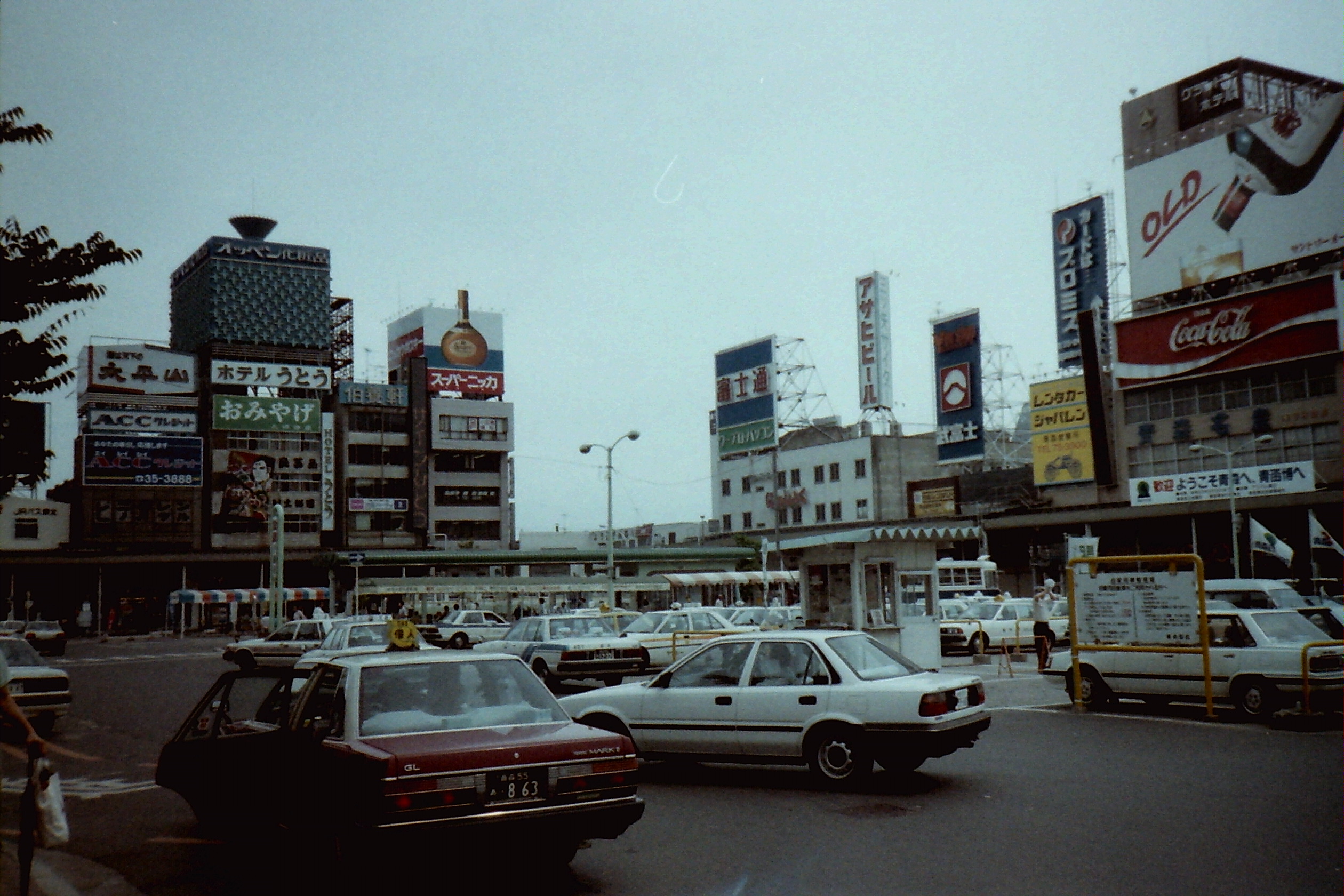
View near Haneda Airport (I think)
The next morning, my flight to Misawa was delayed by fog at Misawa. When they finally announced the takeoff, I almost didn't understand, and when I did, my way was blocked by dozens of uniformed little Japanese schoolgirls who didn't want to budge to let me through.
The flight was short, but like Joshua circling Jericho, the plane circled Misawa seven times. The attendant fired up the intercom and explained the situation in Japanese for about two solid minutes. Then, in English, I heard her say that we couldn't land, we'd be going on to Aomori Airport, and "so sorry, hope you have better luck next time."
So, how am supposed to get to Misawa? My instructions did not include a detour to Aomori. I supposed I'd have to take a train, but how? Everything is in Japanese, and few people spoke English (despite assurances from naive Americans who had never been to Japan — especially back in 1988, and especially outside of Tokyo).
When I got off the plane, they handed me some cash, which included coins. It was hardly enough to compensate me for my trouble. I made my way outside, where I caught a bus to the train station. When I asked about getting a ticket to Misawa, lo and behold, the price of the ticket was EXACTLY the amount of yen I had been handed at the airport. Now the trick was to begin looking out the window of the train for the sign for Misawa, which you saw at the beginning of this post.
Here's a view from the train:
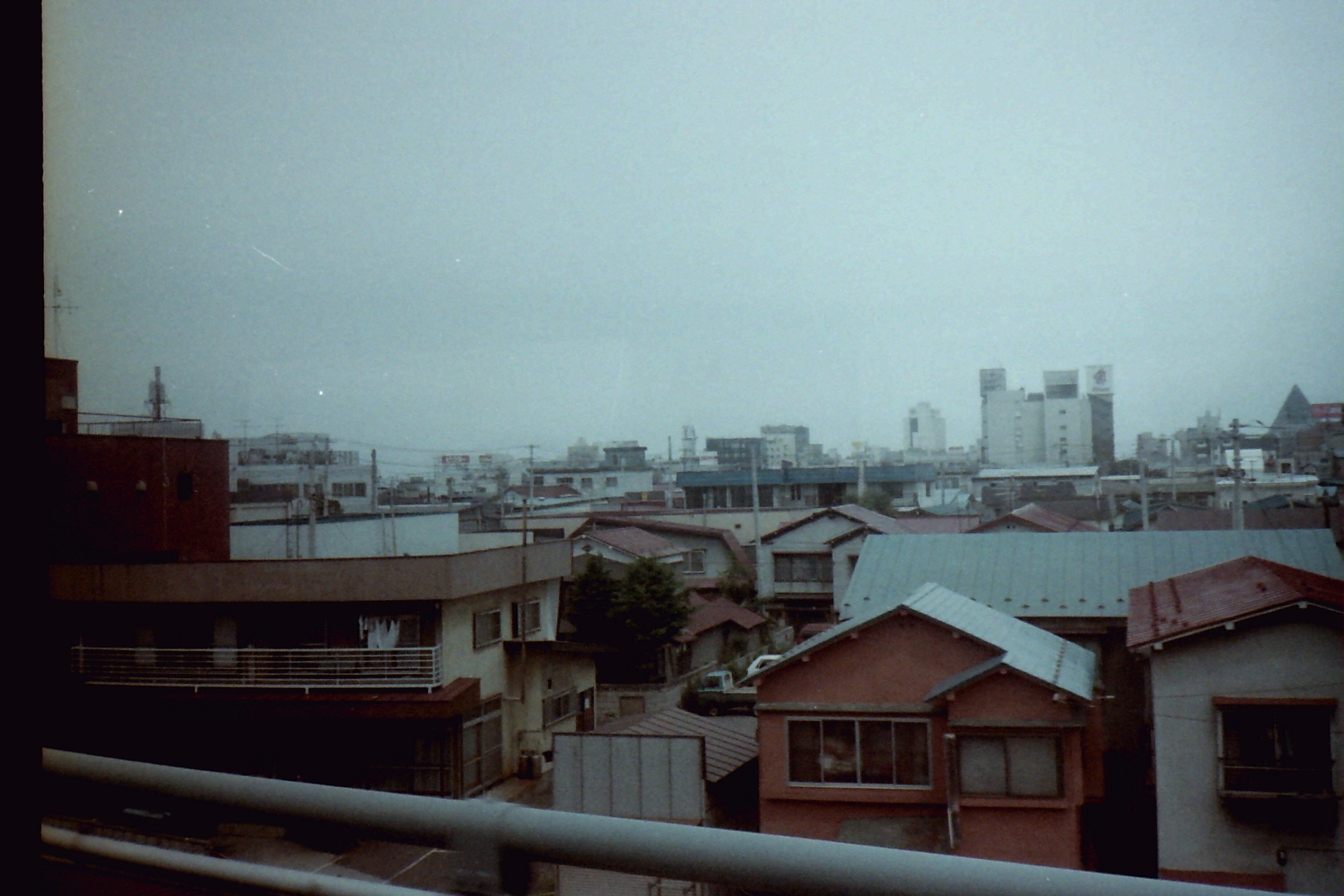
View from the train
There's lots of things in Japan just sitting on the sidewalks to meet your needs in addition to people in airports handing you money. For instance, there are vending machines everywhere, serving everything from cigarettes to beer, wine, and bottles of hard liquor. Check out these machines, where you can get ice cream, soft drinks, fruit juice, isotonic drinks, and plenty of cigarettes.
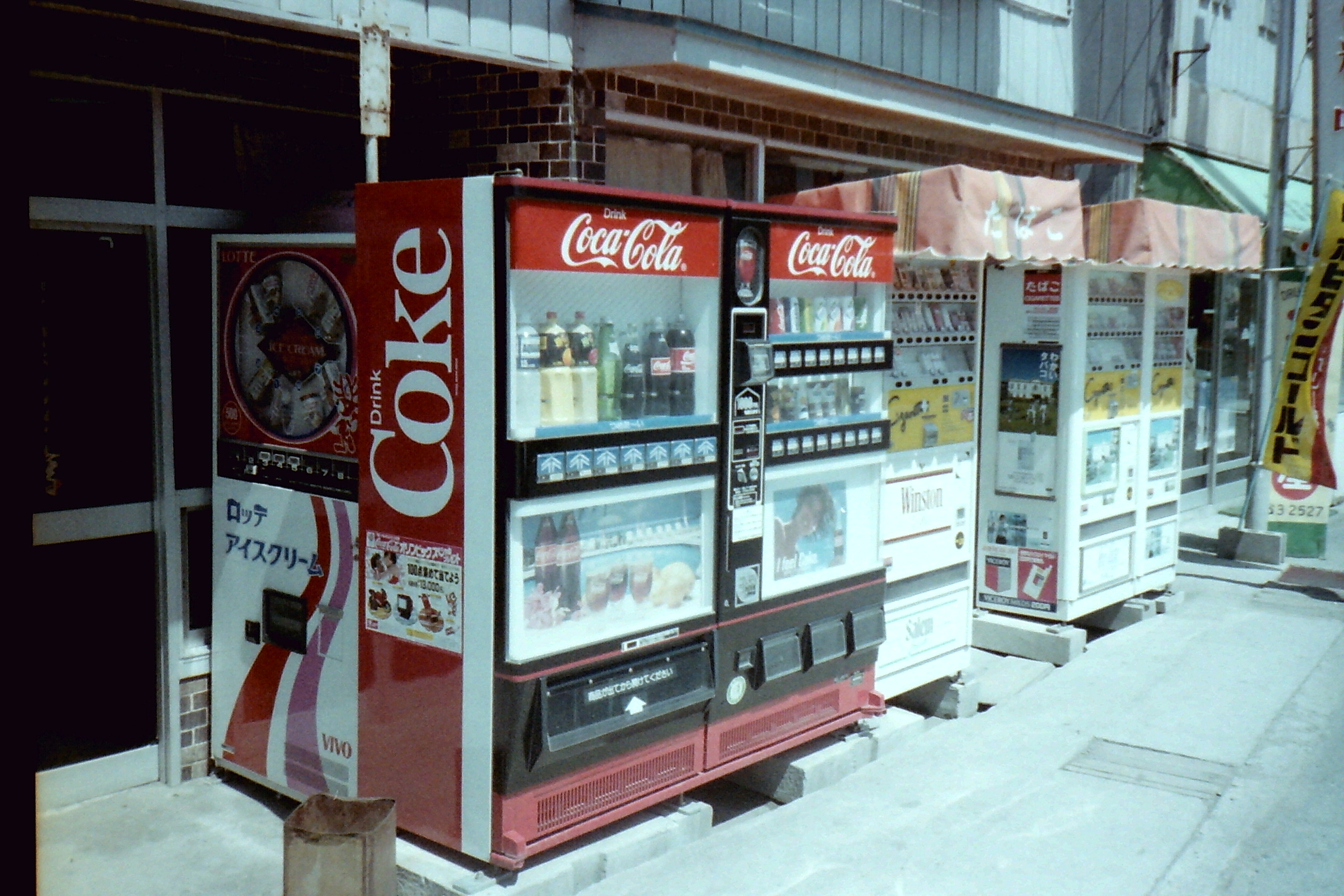
The sidewalk convenience store.
And don't forget those religious needs–you might need to give thanks that you made it in once piece. Many of the people in the Aomori area in 1988 were still bitter about the war, as that area was heavily bombed in WWII. Here's a public shrine.
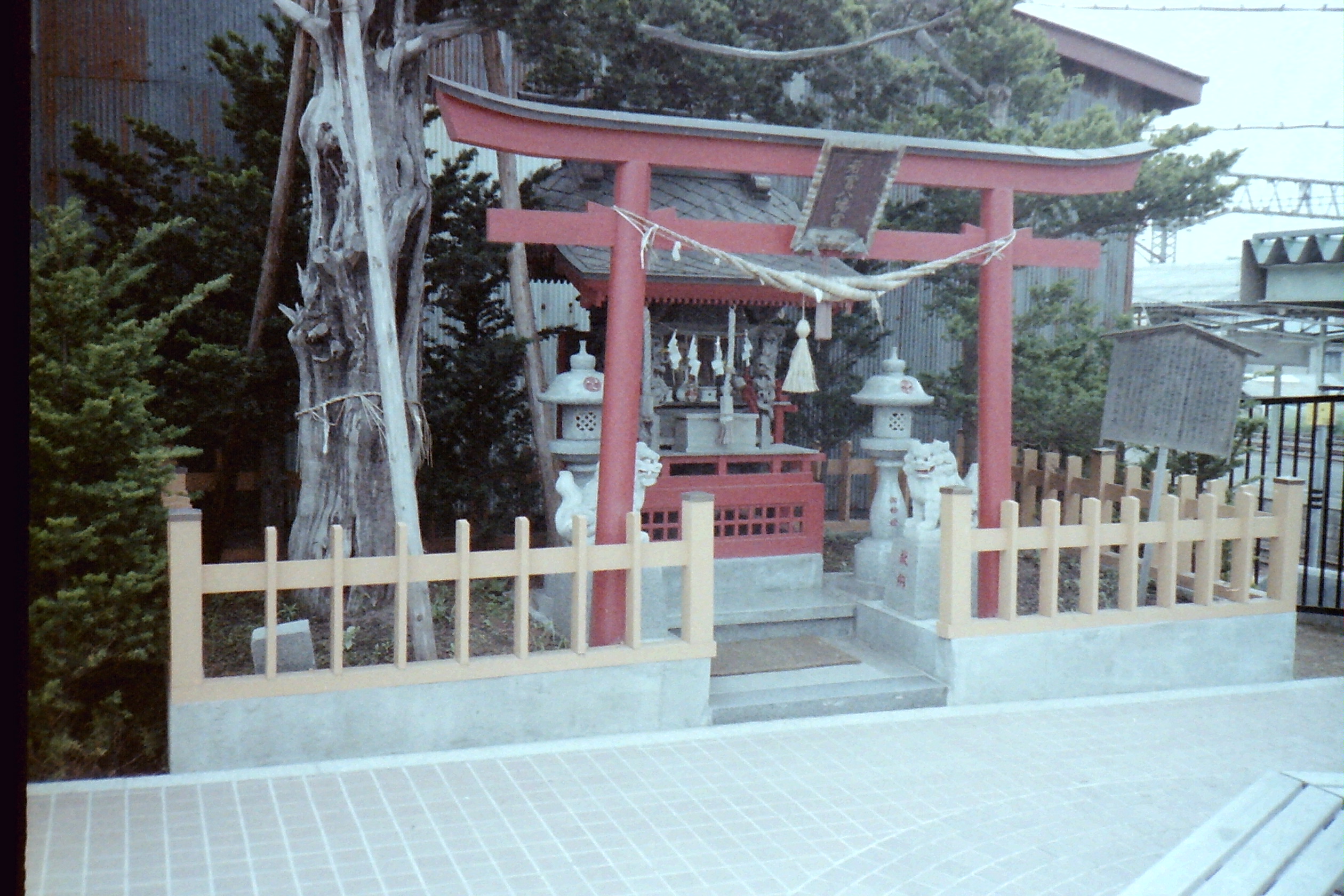
Sidewalk shrine
Home at last–until I get a place to rent. Here's the Misawa Park Hotel. I was on the sixth floor, if memory serves me. And no, it wasn't one of those pocket hotels, but it was a bit cramped, nonetheless.
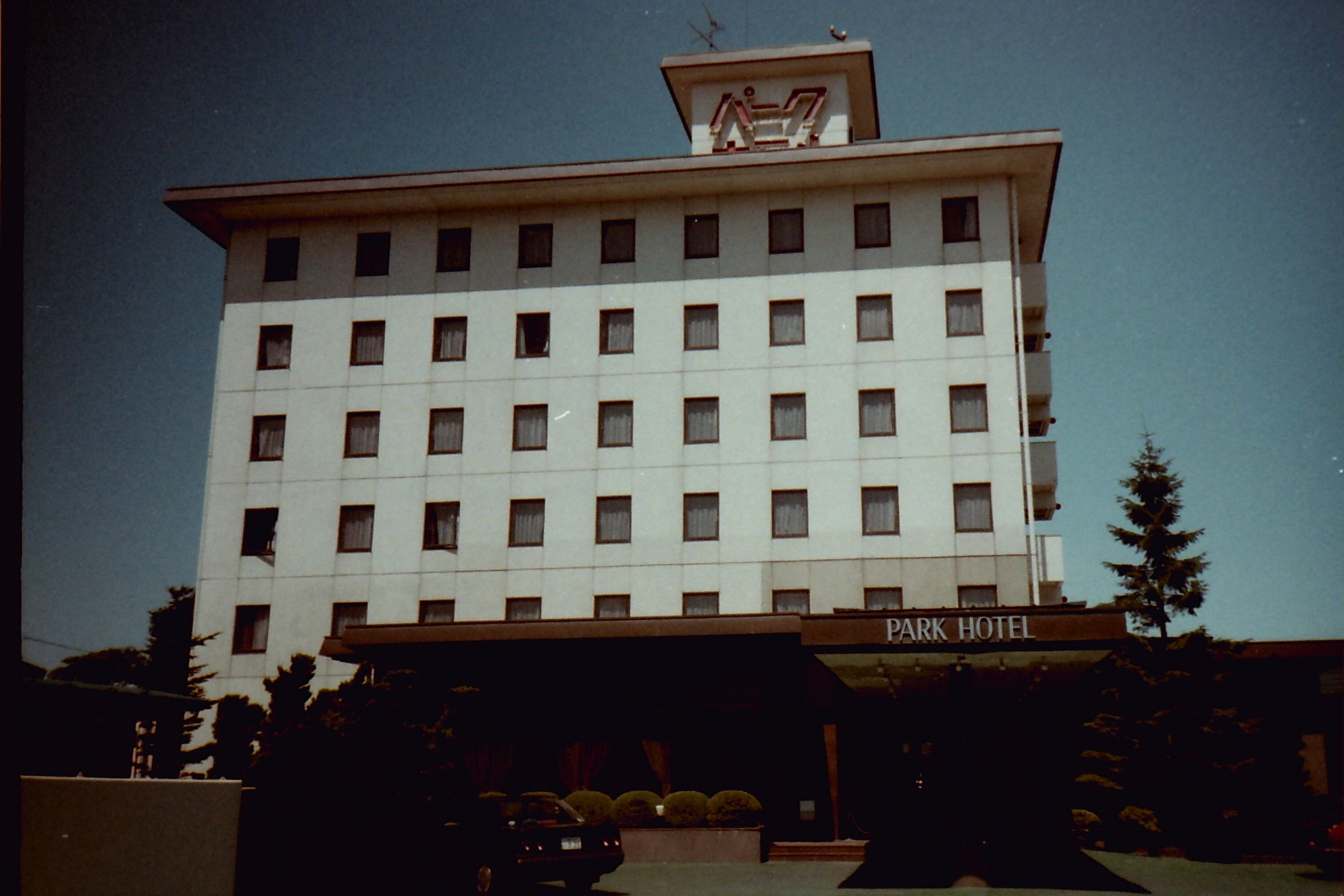
Misawa Park Hotel
September 8, 2011
More skiing in Japan
OK, I found a spare moment, so I'm posting a few more skiing photos from Japan. These are from Shizukuishi, and are just a couple weeks later than the first ones — still in January, 1989. The weather was very foggy that day, so I'm only going to share the best of the bunch.
Since the sign in the third photo appears to indicate beech trees, and the trees appear to look the same as in my previous post where I asked if anyone knew what they were, then it also appears that I have answered my own question. Dewa mata, ne.
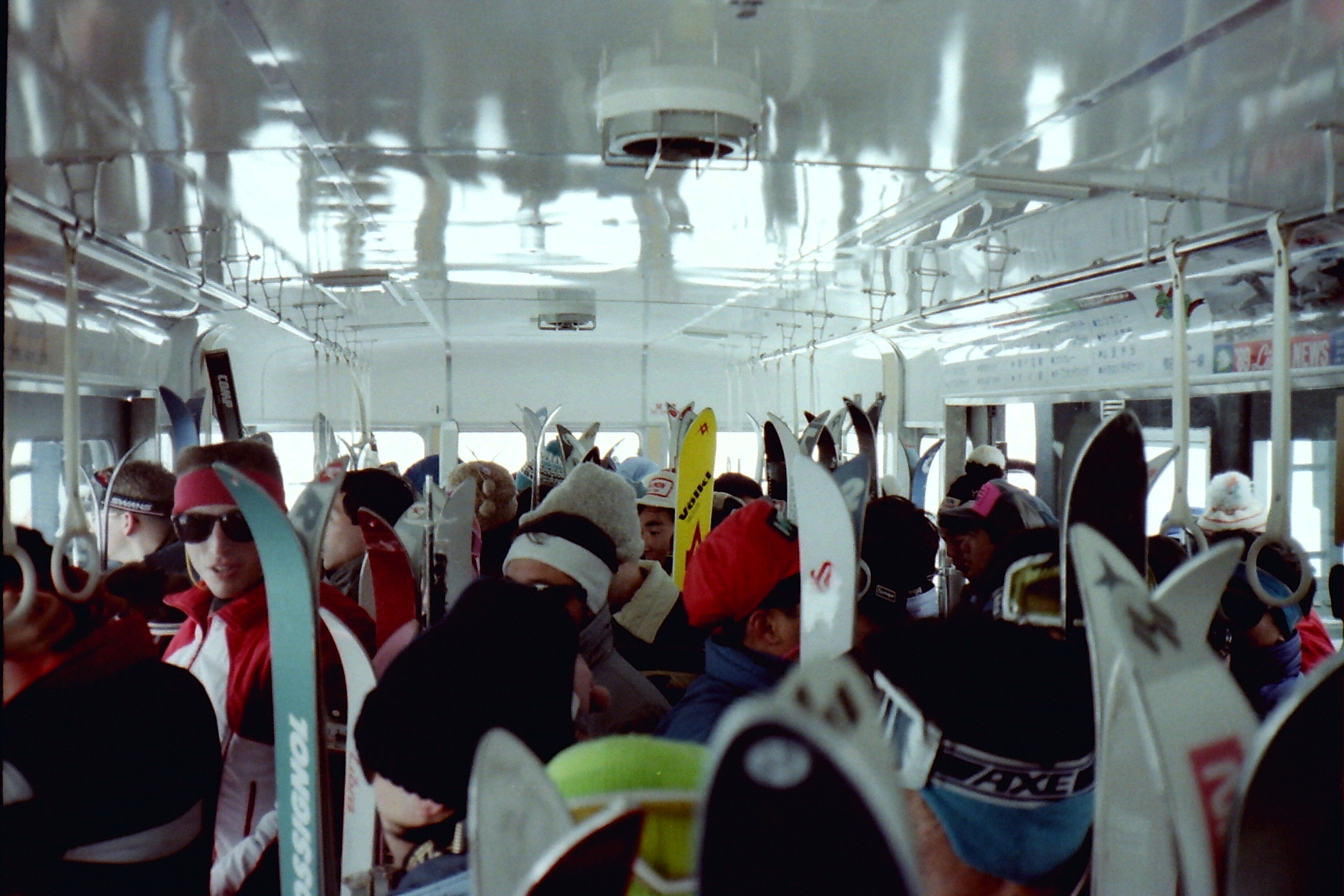
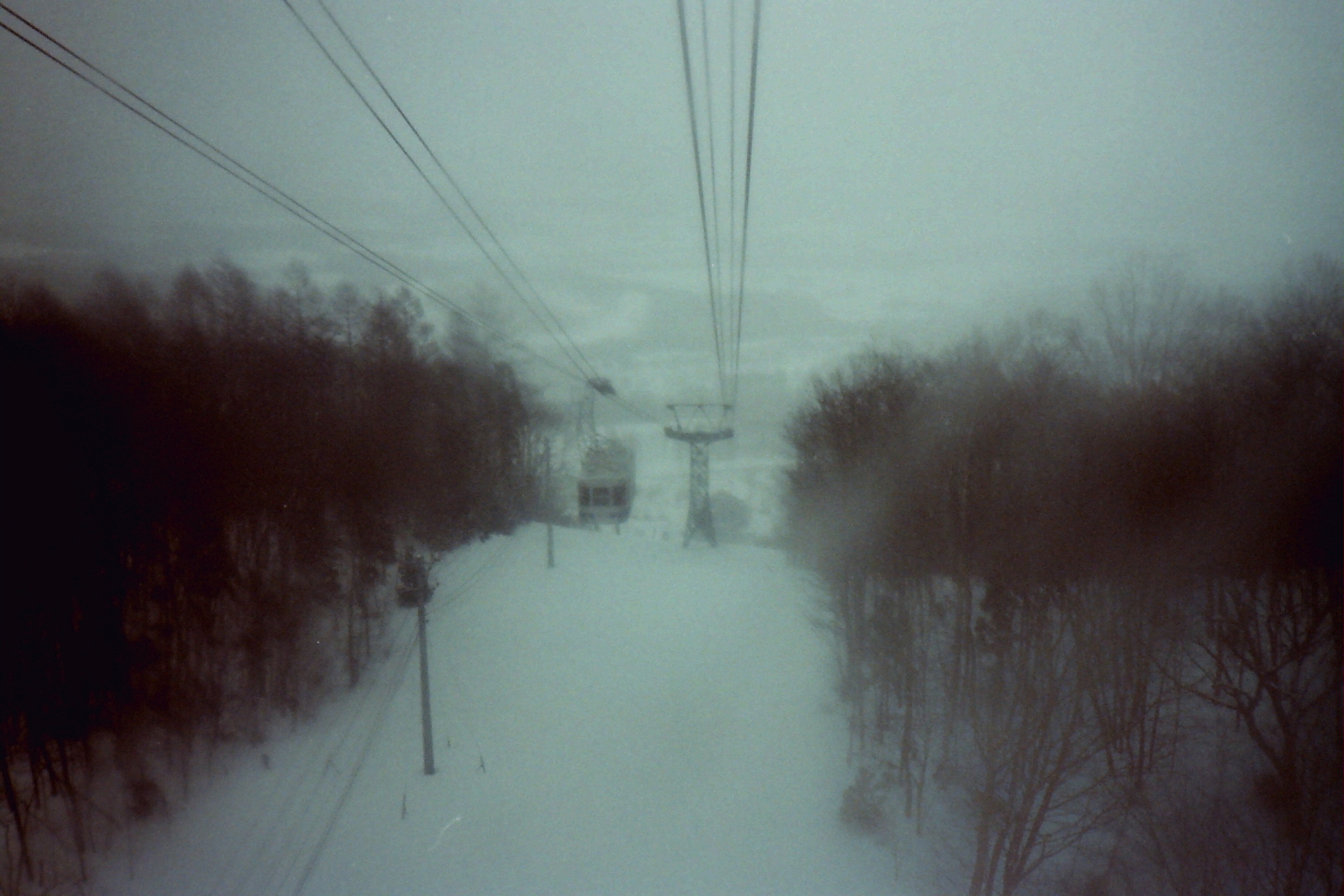
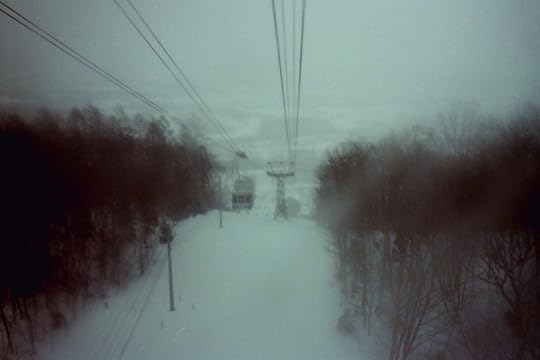
We're packed into the gondola like sardines, or iwashi.
Note the down-going gondola that we just passed in this next shot.
We must be beyond the halfway point.
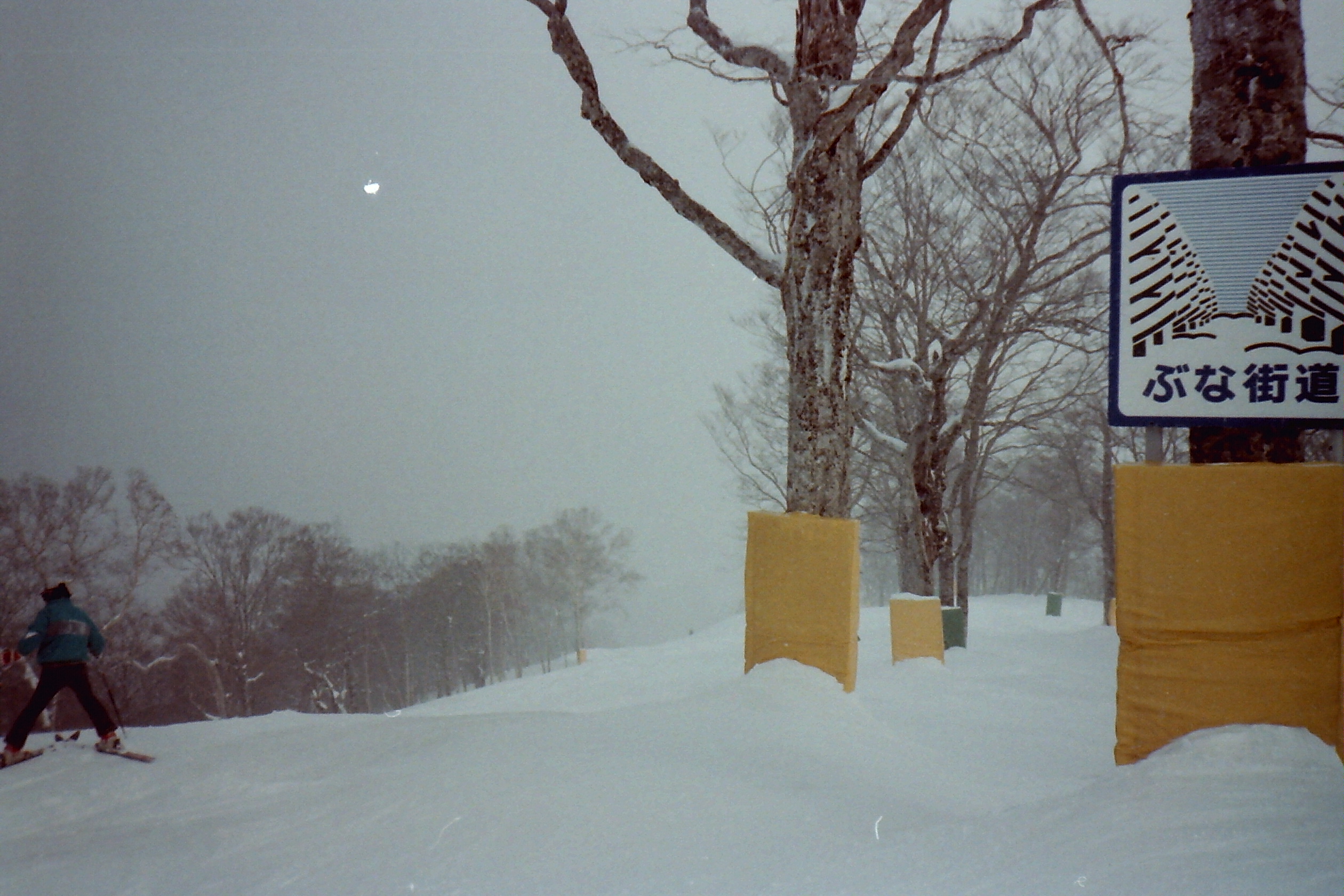
I think it says, "Beech Road Course"
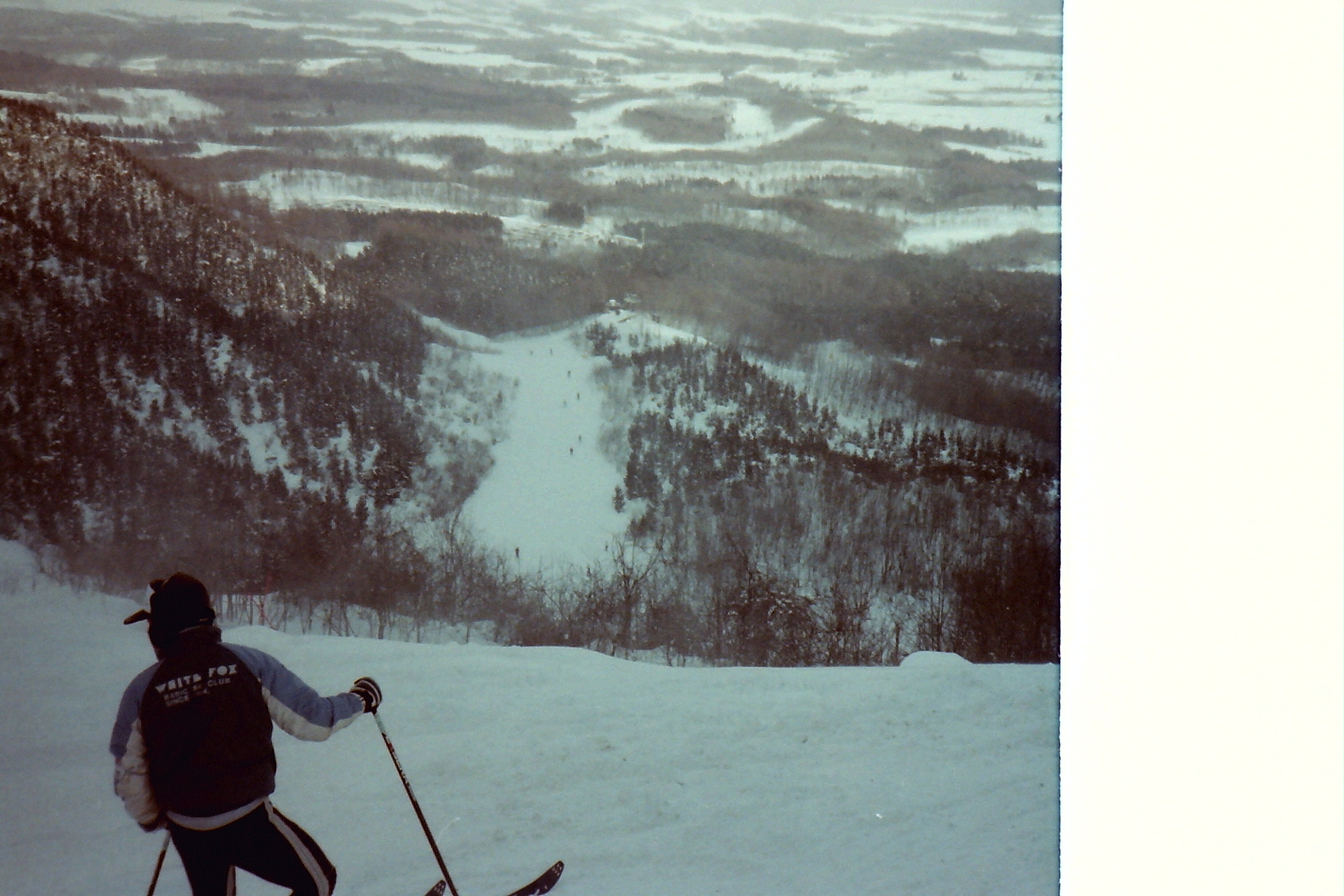
Looks really steep -- but it's the only way down, so ... "Banzai!"
September 6, 2011
So APPI to ski in Japan
This will likely be my last post for several days, since we just had a death in the family.
I recently started scanning in some of the hundreds of negatives of photos I took in Japan in 1988-89, so here are a few of my trip to the APPI ski area (pronounced AHP-PEE) in early January, 1989.
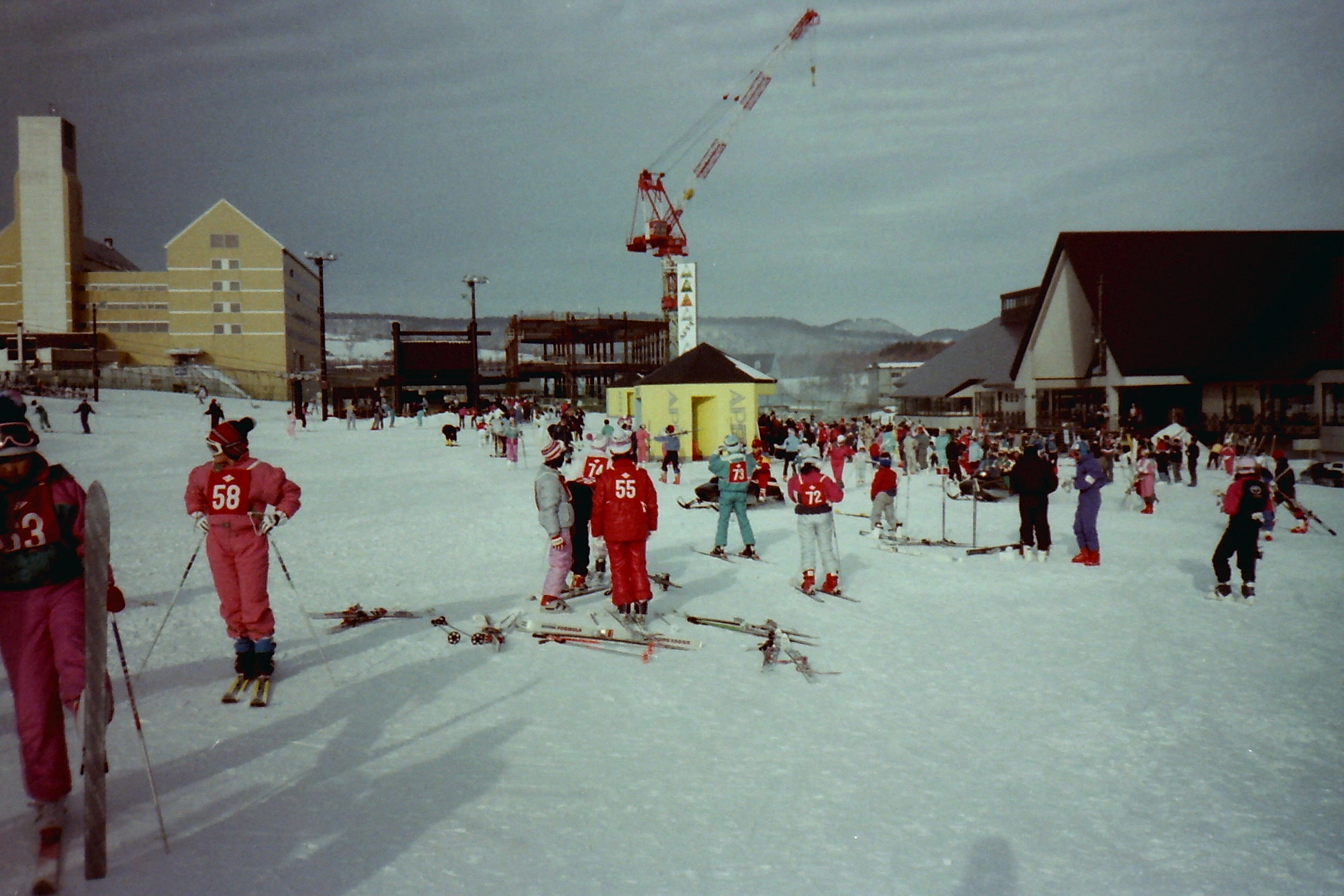
APPI base area. Don't miss the gift shop!
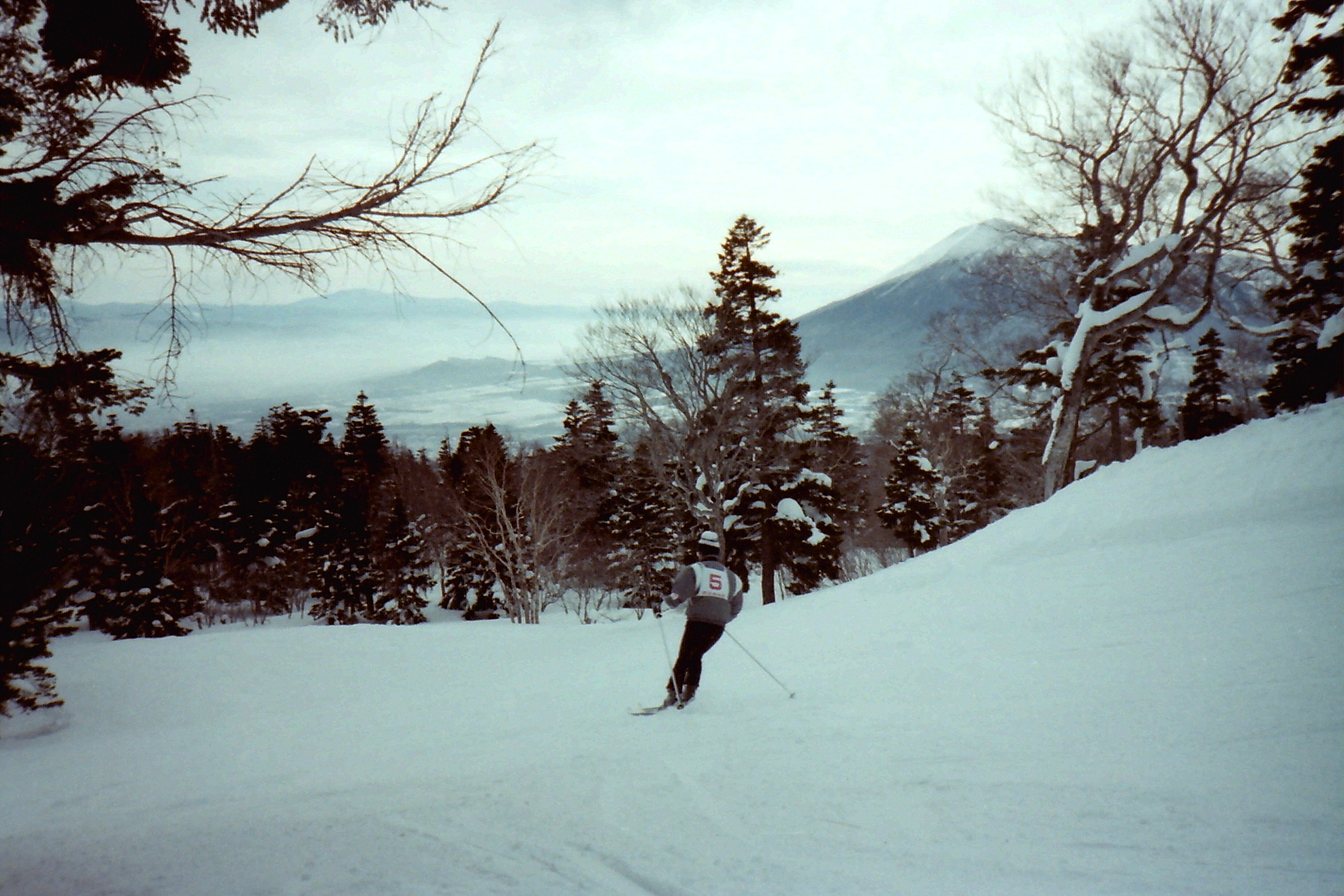
Many mountains in Japan are volcanos. Check out the one in the background.
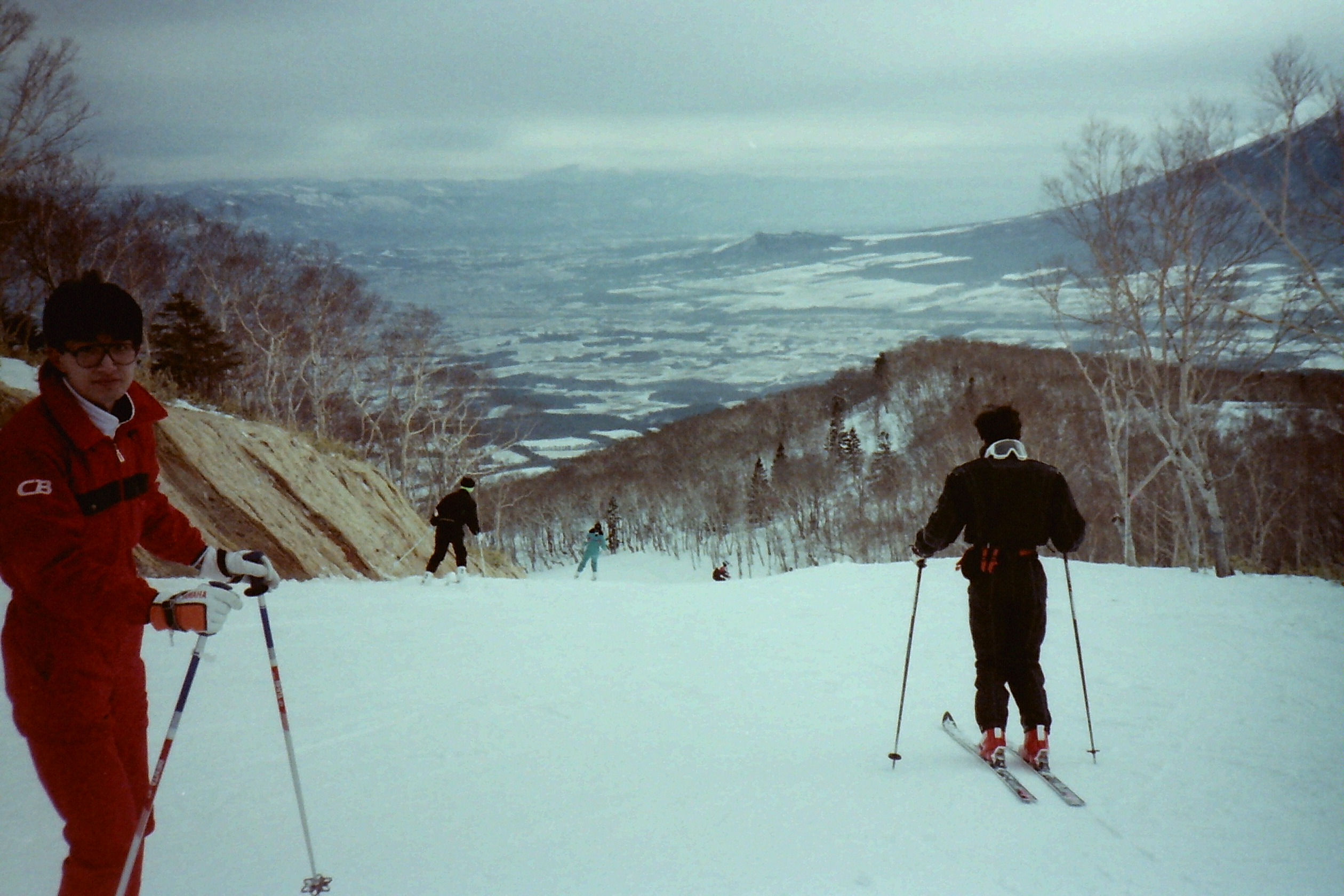
Taking a break before tackling the black diamond slope!
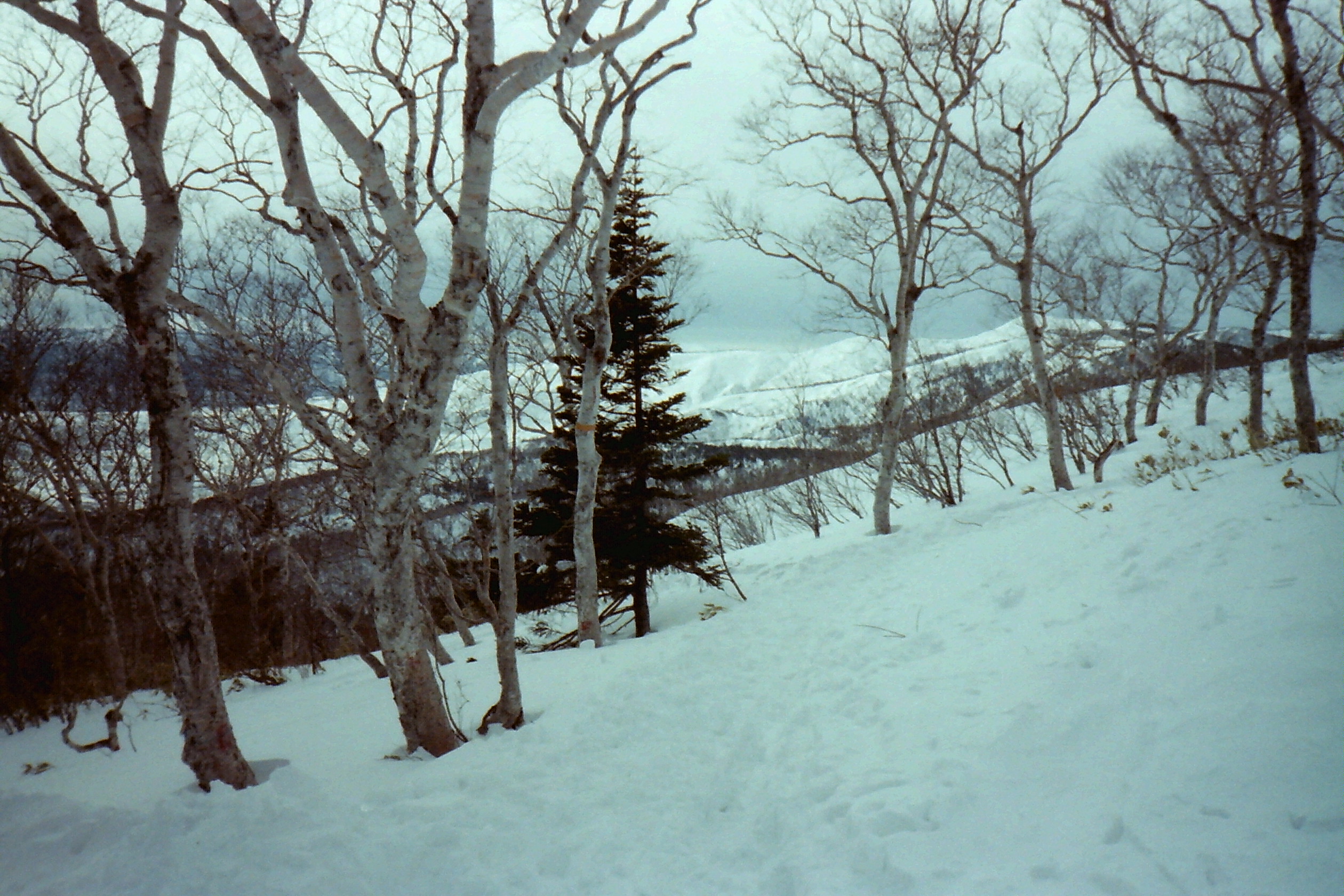
Anyone know what kind of trees those are? Nothing like you'd see in Colorado.
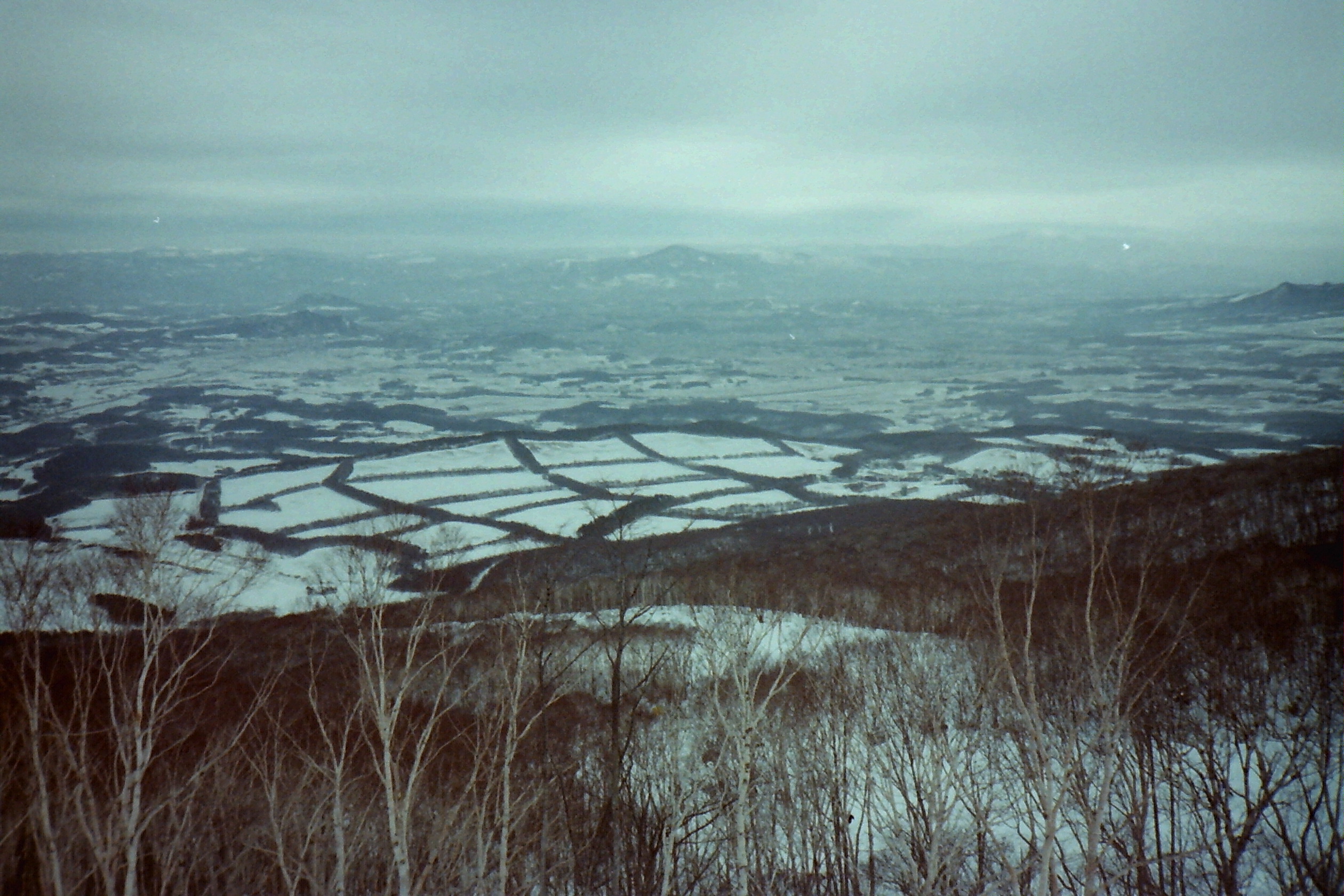
Rice paddies in the snow.
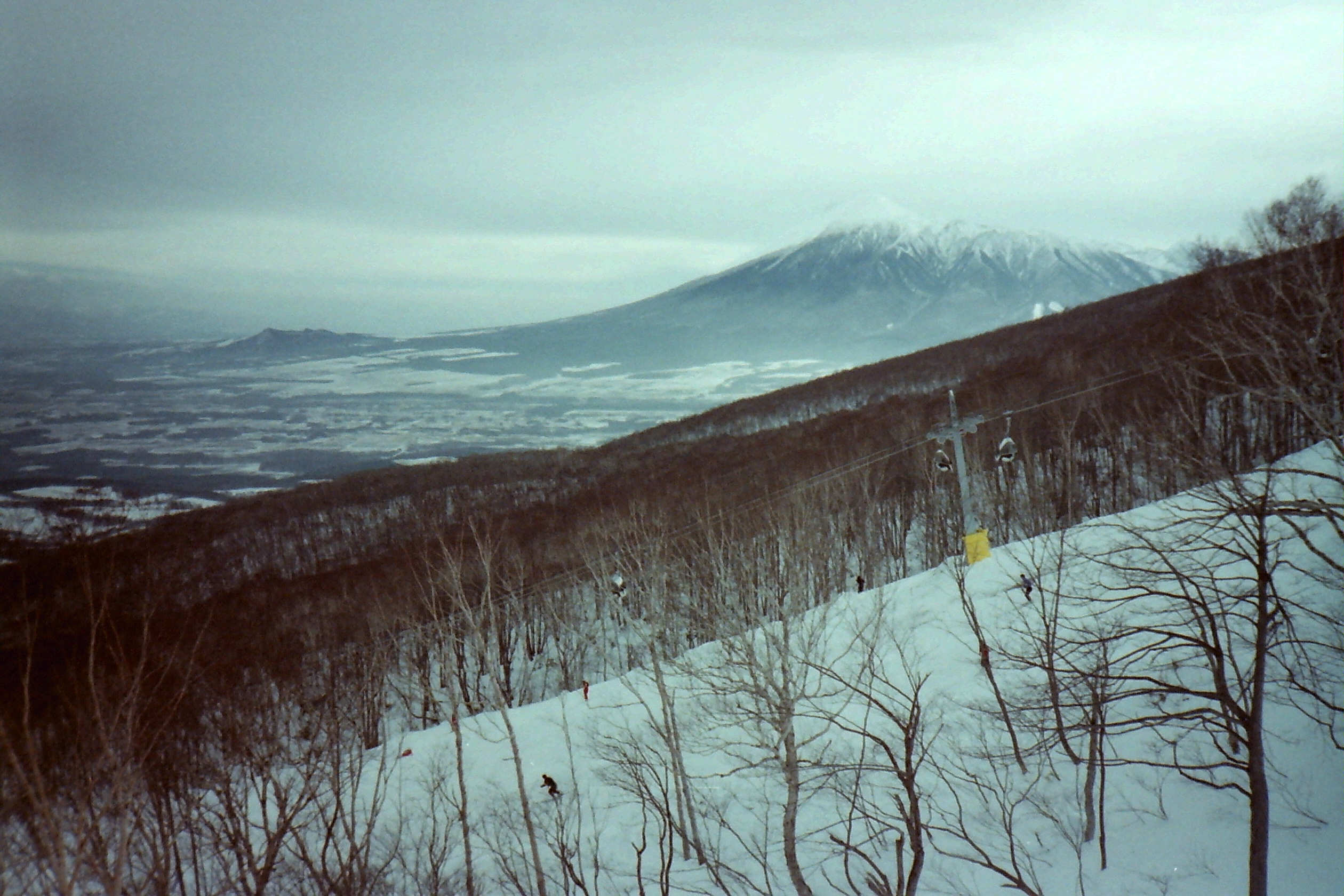
A closer view of that volcano
September 5, 2011
A Lesson in Drowning — the conclusion
I'm posting the rest of this story today, but there's something about it I haven't told you yet. "A Lesson in Drowning" introduces OSBI Special Agent Craig Brewer, one of the main characters from my science-fiction book, Time Pullers. In the book, however, he is no longer an OSBI agent; rather, he has retired from the OSBI and has become an FBI agent. More significant than that, however, is that "A Lesson in Drowning" takes place during Agent Brewer's "life before intercontinuum travel." If you didn't catch why that little fact is of interest, perhaps you didn't notice the title banner of this blog.
And now, the final installment of "A Lesson in Drowning." I hope you enjoy it.
A Lesson in Drowning
by Horton Deakins
Conclusion
"Sheriff," Jim Henthorn said, "there's an agent from the OSBI on the line. Says he's returning your call."
"Jim, you've had your coffee, time to go home," the sheriff said. "You do realize you don't actually work here, don't you?"
"You know I'm just trying to help, Sheriff. Not like I don't have better things to do. See you tomorrow when the coffee's fresh."
"Hello, Sheriff Gray here."
"Sheriff, this is Special Agent Craig Brewer with the OSBI. How are you today, sir?"
"Fine, Special Agent Brewer. And you?"
"I'm fine too, sir. Could you fill me in on what you know about the D'Angelo drowning?"
Sheriff Gray brought Special Agent Brewer up to date on the case. "I keep telling everyone it doesn't pass the smell test, so I was hoping you boys could help us out with this one."
"We'll sure try, Sheriff. I'll move this one to the top of the pile."
∞∞∞
Special Agent Brewer contacted the ME in Tulsa and requested a tox screen. He ran credit card checks and found charges made by Michael D'Angelo at an Oklahoma City gas station on the day of his wife's death, enough gasoline to fill the tank of the F-250. He found another full-tank charge on the same day in Tahlequah, not far from No Head Hollow, but the time stamp was just after three in the morning. Brewer decided to pay Mr. D'Angelo a visit.
Michael D'Angelo was watering the roses in his front flowerbed when Special Agent Brewer drove up in his classic '76 Trans Am. D'Angelo was staring off into space as if he didn't notice Brewer get out of his car and approach him.
"Mr. D'Angelo? Mr. D'Angelo, I'm Special Agent Craig Brewer with the OSBI."
D'Angelo turned off the water and shook Agent Brewer's hand.
"Mr. D'Angelo, I'm truly sorry for your loss."
"Thank you. What did you say your name was?"
"Special Agent Craig Brewer. I'm with the OSBI. I just need to clear up some loose ends concerning your wife's death. Can we go inside and talk?"
"Sure, sure. Just let me coil the garden hose."
Brewer followed D'Angelo into the house. "Can I get you some iced tea, maybe some coffee, Agent Brewer?"
"Tea would be nice, thank you."
D'Angelo poured two large glasses of tea, lots of ice. Brewer took a sip, and then set the glass on the kitchen counter. "Mr. D'Angelo, again, I'm sorry for what happened. Did you and your wife make frequent trips to the river? Were you into canoeing, fishing, things like that?"
"No. No we hadn't been to the river in years. We hadn't actually been in the water since the day we got engaged. That's when we first dove off the bridge."
"No other trips? None at all? I know it's difficult to focus right now, but try to remember, Mr. D'Angelo. It's important."
D'Angelo turned away and walked into the living room, and Brewer followed him. Against an interior wall was a large, empty fish tank, the kind you might see at an aquarium.
"That's a huge tank, Mr. D'Angelo. What kind of fish did you keep in there?" Brewer asked.
"Not me, my wife," D'Angelo said. "I mean, my wife kept salt-water fish in there." He waved the air in disinterest and plopped down on the couch. "I never liked those fish. Got rid of them this morning. If you're interested, you can have the tank. Weighs nearly a ton with all the water, though, so you'd better have a sturdy slab foundation."
"No thanks, Mr. D'Angelo. Say, can we go out to the garage? I heard you had an F-250, and I'd like to take a look at it."
"Why?"
"Ah. You'll have to excuse me — that's just a personal interest. You can't pick up a load of anything with a Trans Am, and I'm thinking of getting a second vehicle."
The two entered the garage. The F-250 had been backed in as if ready for a quick getaway.
"Nice. That's last year's model, right?"
"Yeah."
Brewer noticed there were dozens of five-gallon plastic jerry cans occupying the space where another vehicle would have been. "Did you get rid of the car, too, Mr. D'Angelo?"
"Huh?"
"The car. Your wife's car. She did have a car, didn't she?"
"Oh, her car. Yeah, I gave that to her brother. I can't afford insurance on two vehicles."
"So, what are all the jerry cans for?" Brewer asked.
"She had a guy make up the salt water mixture special, and we'd put the cans in the truck and go pick it up." D'Angelo opened the door to the house. "I'm going back inside to get my tea."
Brewer picked up one of the cans and removed the lid. He shouted back to D'Angelo, "Say, I wonder why the inside of this can doesn't smell salty?" He turned his back to the door to test another can, and then he realized what the smell was. River water.
The next thing Brewer knew was his head was killing him, he was face down on a bed of putrid fish tank gravel, and his hands were tied behind him. Worse than that, D'Angelo had locked the lid to his prison down tight, and he had rigged the garden hose to fill the tank through a small opening.
"Stay cool, stay cool, just grab your piece and shoot the glass," Brewer told himself. But both his primary and backup pistols were missing.
The tank was filling fast. Brewer managed to turn onto his side to get a little more space between his face and the water. The rope was tight around his wrists, cutting into his flesh, and he was still wearing his jacket, so it was difficult to move.
He rolled to his back, took a deep breath, and tried kicking the lid. No go. But he felt his keys still inside his pants pocket. He took another breath and thrust his hips upward several times until his keys fell out.
Brewer grabbed the keys and then pressed his face against the lid to catch his breath. Not much time left, he had to move fast. On his key ring was a small punch tool he carried in case his car ever went into water and he needed to break the glass. He took one more breath and rolled over onto his side. He brought his knees up for leverage and pushed the punch against the glass with all his might.
The broken glass, water, gravel, and Special Agent Brewer spilled out onto the living room floor. Michael D'Angelo was nowhere to be found, his truck was gone, and Brewer's cell phone was permanently out of order.
Brewer picked up D'Angelo's land line phone and called the OSBI.
"D'Angelo blind-sided me and nearly drowned me in a fish tank," Brewer told one of the other agents. "He must have drowned his wife in there, too, because he had over forty jerry cans he had used to bring back river water the night before. That's why he had to buy gas so early in the morning in Tahlequah."
"We discovered he had purchased dry ice," the other agent said. "He must have used it to keep her cool to confuse the time of death, and I'll bet he lined his truck bed with that plastic sheet so he could keep her in the iced-down river water for the trip back to the bridge."
"Must have," Brewer said. "Anything else?"
"Yes. Your suspicions were right about the tox screen. They couldn't find anything in Tina D'Angelo's blood because it had been over twenty-four hours, but they discovered evidence of flunitrazepan, you know, date-rape drug, in her urine."
Brewer could tell from the other agent's tone he was holding out on him. "And?"
"Okay, ya got me — I've been saving the best for last. Three months ago D'Angelo took out a million-dollar insurance policy on his wife."
"I suspected something like that. But now we have to find him," Brewer remarked.
"Already on it. He just charged a bus ticket to Tulsa, and he's on his way. Plans to take a plane from there to St. Louis, and he's got reservations from there to Jamaica, but he'll never get there. We've got agents and the Cherokee County sheriff waiting for him at the Tulsa bus station."
Brewer stripped out of his wet coat and threw it into the trunk of his Trans Am. He wanted to be there when D'Angelo got off that bus.
The bus had about a half-hour head start, but Brewer managed to average well over a hundred mph once he hit the turnpike, and he passed the bus about three-fourths of the way there.
∞∞∞
When Michael D'Angelo stepped from the bus, he stood bolt upright and turned pale.
"What's the matter, Michael? Just seen a ghost?" Brewer quipped.
Michael D'Angelo held out his wrists for the cuffs.
"No, I'm not going to cuff you, Michael. That's for the sheriff. I just wanted to see your face, and it was well worth the trip."
"Okay, you've had your fun," Michael said. "Show's over."
Brewer grinned and started to walk away, but he stopped and turned back to Michael as the sheriff was slapping the cuffs on him. "Oh, one more thing, Michael. It looks like you could use a lesson in drowning."
The End
September 4, 2011
A Lesson in Drowning — part III
The Oklahoma State Medical Examiner, Eastern Division, determined that the time of death was most likely about three to four hours before the corpse was pulled from the water, based on body and water temperature, and also on the distance from the bridge and the pace of the river that day. But the conversations he had with Sheriff Gray concerning the unusual nature of the death convinced him to do a full autopsy.
Sheriff Gray was just finishing dinner at home when he got the call.
"Sheriff Gray, this is Monte Hartford with the Medical Examiner's office. I have the results of the autopsy."
"Hold on a second, let me take this on the phone in my study." The sheriff retreated to the small dimly-lit utility room he had converted to an office and closed the door. "What do you have for me, Doctor?"
"Cause of death was indeed drowning. There was water in the lungs, and it is likely it took place in the River, since I found escherichia coli and enterococcus bacterias trapped in her larynx. These are common to the Illinois River Watershed. I also discovered diatoms from that area. Barring any other evidence, I'm going to have to rule this one an accident."
"All right, thank you Doctor. I have to tell you, though, there's something about this case that makes it difficult for me to buy that. I just can't put my finger on it."
"Sheriff, there was one other thing — her skin. Its characteristics were such that if I didn't know better, I would have though she had been in the water a lot longer."
"Is that so?" Sheriff Grey asked. "Doctor Harford, tomorrow I'm going to call in the OSBI on this one. Can you put her back on ice for awhile?"
"Can do."
(excerpt from A Lesson in Drowning © 2011 by Horton Deakins)
September 3, 2011
A Lesson in Drowning — part II
Sheriff Gray took Dan Fremont's statement and dismissed him. He tried to get a few more details from Michael, but Michael didn't feel like talking anymore, and the Sheriff didn't want to press him after what had just happened.
"Excuse me, Mr. D'Angelo. I'll be back in a moment." Sheriff Gray returned to his car and called for some of his deputies to help with the investigation. "Something just doesn't pass the smell test," he said.
Michael accompanied his wife in the ambulance. Sheriff Gray gave him explicit instructions to stay at the hospital after his wife was moved to the morgue, and he told the grieving husband he would be along shortly.
The deputies found Michael's F-250 pickup truck near Comb's Bridge. The bed was covered, but not locked. Inside they found a large tool box and a couple of suitcases. Other than that, and a strong musty smell coming from the bed, they discovered nothing unusual.
Farther down the river, about a quarter mile past No Head Hollow, they found a large, extra-heavy-ply plastic sheet. It looked new, and the folds could still be seen where it was prepared for packaging. But there was nothing there to tie it to the truck or to Michael D'Angelo.
The pickup still had the keys in it as well as D'Angelo's wallet with identification under the seat, so after his deputies finished their inspection, Sheriff Gray drove the truck to the hospital. He found Michael sitting in the main waiting room.
"Mr. D'Angelo, here are your keys and wallet. Is the address on your driver's license current?"
"Yes."
"You can go on home now, Mr. D'Angelo. We're sending your wife's remains to the medical examiner in Tulsa. We still need a few questions answered. I'll get in touch with you when your wife's body has been released for burial."
"You're going to have her autopsied?" D'Angelo asked. "Her mother will be really upset that she can't have an open-casket funeral."
Sheriff Gray raised an eyebrow, but he said nothing.
(excerpt from A Lesson in Drowning © 2011 by Horton Deakins)