
Michelle Ule's Blog, page 82
June 27, 2014
Archduke Franz Ferdinand and You

100 years ago on June 28 Archduke Franz Ferdinand of Austria was murdered in Sarajevo, launching into motion events that led to The Great War.
Everything about our modern world can, perhaps, be tied back to the assassination of both Archduke Franz Ferdinand and his beloved morganic pregnant wife Sophia.
Did it have to happen?
Does it matter?
It happened, the Great War occurred and your life is different as a result. Click to Tweet
(Mine exists; you’ll have to read my post coming up on August 5, 2014 to find out why and how.)
Serbia had been a restless part of the Austro-Hungarian kingdom for, oh, about 600 years. Eleven years earlier, Serbian nationalists had broken into the royal palace and killed the ruling King Alexander Obrenović and his wife, Queen Draga, in what became known as the May Coup.
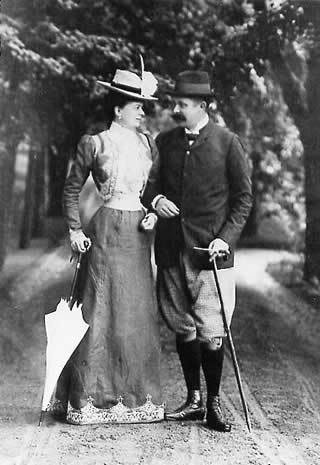
Franz Ferdinand and Sophie
Archduke Franz Ferdinand himself was not a particularly popular fellow in either Austria or Serbia, but he and his wife traveled there anyway on a vacation. The deeply religious Catholic couple had attended mass that fateful morning and were riding in an open car to the town hall.
A Serbian nationalist threw a pocket bomb at the couple, but the driver saw it coming and swerved to miss. It fell inches behind the royal couple, Archduke Franz Ferdinand shoved it away and it exploded as the car zoomed away. Several people were injured.
Among the people lining the streets that day were a group of six young men of the “Black Hand” who had traveled to Sarajevo specifically to kill the Archduke. Despondent about missing their chance, they wandered away, one into a tea shop.
Archduke Franz Ferdinand and Sophie continued with their planned outing, stopping at the town hall for a ceremonial welcome–the mayor read his script which mentioned how delighted everyone in Sarajevo was about the couple’s visit.

Franz Ferdinand & Sophie Leave Sarajevo Guildhall
As the doting father of four children, Franz Ferdinand insisted on being taken to the hospital to visit the people injured in the attempted bomb assassination. The Bosnian military governor assured him there would be no further trouble, claiming “if I know anything about the Serb fanatics, they are capable of only one assassination attempt a day.”Unfortunately, the chauffeur got lost driving them to the hospital. When the governor realized his error, he stopped the driver and told him to turn around.
The driver shifted gears, but while doing so “in a coincidence that has reverberated down the decades,” according to G. J. Meyer in The Story of the Great War, he stopped right in front of Gavrilo Princip. The one Black Hand assassin who had not been arrested already and the leader of the gang, pulled out his revolver and fired twice.
He got both Archduke Franz Ferdinand and Sophie. The Archduke was heard to cry, “Sophie dear; Sophie dear, don’t die. Stay alive for our children.”
They were both dead within minutes.
Princip died in prison of tuberculosis nearly four years later.
What does Archduke Franz Ferdinand’s death have to do with you? Click to Tweet
More than you know.
The Great War shook up Europe and took a wealthy continent and fire blasted it to ruins. When it finally ground to what the French consider a long cease fire and the Germans regard as the middle of the European Civil War, the Spanish flu killed 50 million people world-wide. Out of those grim ashes came American super power notions as the saviors of the world and ultimately, Adolph Hitler’s Nazi Germany.
You don’t think any of that affected your life?
I’ve been reading World War I history since February, 2013. It’s a continuing source of agony to read about all the small events that led to the big one. Kaiser Wilhelm of Germany was on vacation in a Scandinavian fjord and unreachable. The nervous heads of Europe had treaties requiring them to come to the aid of other nations. Once the Russian tsar called up his reservists, there was no going back–it took a week for them to get into place and in those years of stick telephones and Morse Code telegrams, the soldiers could not be recalled and returned home.
(For another way to understand what happened to start the war, consider If World War I was a bar fight.)
As a result of the Great War:
*the United States became a major player in international affairs–we were an isolationist nation before.
* The center of world banking shifted from London to New York.
* France lost so many men and so much of their industrial capabilities were destroyed, they had little ability or much less enthusiasm to fight World War II.
* Germany was so bankrupted paying reparations, the National Socialist Party was able to take over the country within a generation.
* Russia’s weak tsar was overthrown and Communism became the ruling power, ultimately leading to the Iron Curtain and the Cold War after World War II.
* European colonies were dismantled throughout the world.
* The breakup of the Ottoman Empire resulted in countries like Iraq being formed of ethnic groups that didn’t get along. All of the Middle East was divided up following the end of World War I. (Thanks a lot, Lawrence of Arabia).
* Serbia, Croatia, Slovenia (important to me), Bosnia and Herzogovina were mixed into a country called Yugoslavia.
* Anti-semitism rose, ultimately leading to the Holocaust.
An expanded list can be found here.

Would any of the these had happened–and you have to admit they’ve effected you in some ways–if Archduke Franz Ferdinand and Sophie had gone elsewhere on their vacation? Click to Tweet
Unfortunately, we’ll never know.
How did World War I affect your life?
The post Archduke Franz Ferdinand and You appeared first on Michelle Ule, Author.


June 24, 2014
Pruning Words and Other Rewrite Joys

I’m nearing the end of my novel rewrite and I’m spending a lot of time pruning words from my text.
It’s made me consider how often I, among others, use too many words–whether in writing or speaking.
My husband occasionally complains that I feel compelled to explain everything.
“It’s not enough you tell the children to do something, you then go on and on and on about why they should do it. You’re prolonging the misery of giving them orders.”
He’s a military officer, of course he would see it that way: short and sweet: “Go!”
I don’t know if this is the difference between male and female; first born and last born, story tellers and actors–but we have a conflict of interest here.
I needed explanations growing up–I wanted more words than I got.
He, apparently, didn’t care.
Our children don’t seem to care either. So, I’ve been pruning words–in my speech–for years.
At least it feels that way to me.
Gardeners will tell you trees need to be pruned for a variety of reasons: to let in air for better circulation, to allow light into the interior of the tree, to cut off excess weight and to balance what a tree looks like. Those are all excellent reasons to prune a manuscript.
And since words are like leaves (and easier to get rid of than sawing off enormous branches of unnecessary scenes), I like to start there.
For more thoughts on the pruning metaphor, check out my guest post on Jamie Chavez’ blog here.
As a writer, I’m advised to tell the story no matter how many words it takes and then go back–pruning words is a necessary part of editing.
I’m guilty of far too much explanation in my prose as well my directions to children, but in the last several projects I’ve worked on, word count has been important, so I’ve been pruning words as I go along.
Or now, in the rewrite, slashing at the thicket of unnecessary verbiage to find simpler statements that are
1. easier to understand

Grapevines before pruning
2. faster to read
3. and give me more words to use elsewhere.
Here’s an example from my current manuscript:
“She pawed through the pages, vaguely remembering when he’d talked about sin and feelings.”
Not bad, fourteen words, but I’ve got a limited number and that gerund weakens the sentence.
This is one way to tighten it up:
“She flipped the pages looking for his thoughts on sin and emotions.”
Okay I only saved two words. Let’s try another.
“She has a child to think about and family in England. What good is staying in a desert hut with foul smelling soldiers and grieving followers begging her for wisdom?” (30 words)
How about
“She can take her child home to England. Why stay in the miserable desert with mourners begging for answers to impossible questions? (22 words)
Better or worse?
And a third:
“She drew her niece close and they stood together until Sylvia’s rigid body relaxed and her head drooped naturally to Anne’s shoulder.” (22 words)
I’m narrowing this to:
“Anne hugged Sylvia until her niece’s rigid body relaxed and she sobbed freely.” (13 words)
I can’t decide which works better.
Perhaps it needs to be read in context?
Most writers have a list of “overused” words. Mine includes
that
very
some
just
really
and more.
[image error]
English: Pruning : before – after Français : Élagage : avant – après (Photo credit: Wikipedia)
I like to do a “word census” to determine which words I’m overusing in a manuscript. Click to Tweet
It makes pruning words easier to find.
I’ve written about this on Books & Such’s blog. You can read it here.
The writing program Scrivener provides a word census for those who have it. My husband wrote a utility program for me to use on Microsoft Word, and that’s how I find what I need.
I’ve got quite a bit left to go–pruning words, wise–and so I’ll get back to it.
What words do you overuse–whether in speech or writing? Click to Tweet
The post Pruning Words and Other Rewrite Joys appeared first on Michelle Ule, Author.
June 20, 2014
Genocide and a Summer’s Day
Seven summers ago, I stopped in to visit my friend Jane for a lovely afternoon in her charming screened- in Connecticut porch.
We discussed genocide.
That had not been the plan when I arranged to visit, but when I walked into the porch, I stopped beside a stack of books. I knew the titles, books like these:
Left to Tell: Discovering God Amidst the Rwandan Holocaust
Machete Season: The Killers of Rwanda Speak
We Wish to Inform You that Tomorrow We will Be Killed With Our Families
I picked them up , shaking my head over the ones that had baffled me, and feeling yet again the oppressive grief that came from such a horror.
“Why are you reading these?” I asked, explaining what I’d thought of each of them.
Jane fell into her porch chair. “You’re the only person I know who would have read all those books.”
I shrugged. “I just couldn’t get my head wrapped around why someone would suddenly decide to kill a neighbor. I was reading to find out why.” Click to Tweet
“Did you find out?” she asked.
“No.”
Jane is a professor of education. She’d been approached by several students and asked if she’d teach a course about genocide. She thought about it and said yes. That summer she was preparing to teach.
“What else do you know about genocide?” she asked as she poured iced tea.
Surprisingly, I knew a great deal. We discussed it all afternoon.
She even took notes.
As it happened, I’d been challenged to read a thick book called Blood and Soil: A World History of Genocide and Extermination from Sparta to Darfur by Ben Kiernan, a few months earlier by a man I knew only as
[image error]
Cover via Amazon
“Random Name,” on World Magazine‘s then-blog.
Another writer and I had taken up the opportunity to read through this dense history of genocide. I’m not sure how Wendy managed, but I only got half way through. Who knew a million people lived in the Mekong delta of Vietnam in 1000 had spent a summer killing each other?
Not me.
As Kiernan relayed story after story of people deliberately choosing to terminate someone’s life, I felt overwhelmed by man’s inhumanity to man. I was also astonished no one, seemingly, could get along. Nothing seemed to satiated the drive to kill those who had something someone else wanted. Click to Tweet
Here in the Christian end of things, we call that sin.
Sin, of course, always equals death.
Jane and I talked about the Holocaust; Armenia; the extermination of the native Americans in north America by means of smallpox-infested blankets; the Comanches (Empire of the Summer Moon explains quite well the dastardly role of the Texas Rangers in that slaughter) and several areas she had a particular interest in: Darfur, Kosovo, and Cambodia.
(Did you know the first thing the Khmer Rouge did when they took power in Cambodia was to kill everyone who wore glasses? They figured if you wore glasses, you could read; and if you could read you could think and therefore would be a threat to them. See the film, The Killing Fields.)
Jane’s area of expertise is children’s literature, and she’s recently written a book providing educators with bibliographies about genocide in children’s books–books intended to help children understand what to make of the world, particularly if they’ve been the victims of terror. It’s called Genocide in Contemporary Children’s and Young Adult Literature: Cambodia to Darfur (Children’s Literature and Culture) by Dr. Jane M. Gangi.
This is a college text book and not easily read, but Jane put it together for educators trying to make sense of the world. She used a multi-dimensional approach, and we talked about ways genocide can be reflected in art. Paintings, music, sculpture, poetry, film.
I told her the story of Goreki’s Third Symphony, Symphony of Sorrowful Songs, written to commemorate the Holocaust–as an example of music used to respond to horror.
I heard of it through Chuck Colson and Nancy Pearcey‘s book How Now Should We Then Life. You can listen to it here.
I bought the CD on Colson’s recommendation and the first time I listened to it, turned on the stereo and returned to email. I was writing away, when my mind wandered to my grandmother, recently deceased, and then my mother. Before I knew it, I put my head down on the computer and sobbed.
It was the music, touching a part of my sorrowing heart I didn’t even know needed lancing.
We live in a time of what feels like unprecedented killing. But that summer, I remembered murder and death–sin–have been going on since Cain and Able. Click to Tweet
As a Christian, I know of only one way to mitigate the power of sin’s horror to destroy: that’s knowing Jesus Christ died on behalf of all sinners.
It doesn’t take away the grotesque nature of genocide; it merely gives me one way to cope with the knowledge that men and women have always killed others.
Literature can tell us what, but not explain; films can show us how, but not explain; music can help us grieve, but not explain.
I come back to Jesus, always, and remember his words: “weep with those who weep.”
When I left Jane that beautiful afternoon, we hugged each other, thankful for what we shared and for what Jane went on to teach.
Genocide on a summer’s day. Click to Tweet
The post Genocide and a Summer’s Day appeared first on Michelle Ule, Author.
June 17, 2014
Recasting the Middle
 I’m in the middle of rewriting a novel and have come to the hardest part–I’m recasting the middle.
Traditionally, novels have to work extra hard in their center sections. The beginning sets the story line, gets the hero into trouble and starts the hero on the road to fulfillment, or at least an ending.
The ending of the novel, of course, brings all the pieces together into a coherent and satisfying finish. It’s fun to write the ending.
But you’ve got to get from the beginning to the end with an interesting middle and that’s where I am right now.
In my book.
And in my life.
I know where I’ve been and I know where I want to go. The trick is getting there and that means shaking things up. Click to Tweet.
For the manuscript, that means spreading each chapter across the kitchen island and reorganizing it. As I reconsider each scene in light of my hero’s stated goal, I rewrite or change it.
(See my last post here about killing my darlings. I’m not saying if I’m keeping that scene or not, just yet!)
I’m saving the writing of a new chapter–about camels–for a day when I can’t rework anymore without going crazy. I know it’s going to be, not exactly fun, but easy to do.
For my life–well that started a little while ago.
Recasting the middle–of my body–began when I started getting up at 5:20 to attend a 6 am exercise class. It was time to make some drastic changes if I wanted to remain healthy to the end of my life.
It meant my husband and I sold our big house and bought a smaller one–shedding books, furniture, clothes, and worn out possessions.
We went through almost everything, examining its role in the past (shedding some tears), and trying to see if it would fit into the future (am I ever going to go bowling again?)
Some of those darlings I didn’t get rid of–I’ve still got the camping gear, the sewing machine, the piano–and I anticipate using them with the adorable grandchildren.
But I’ve thought about their place in my life and it’s not so central anymore.
Everything in my manuscript and in my life, has to prove its value. Click to Tweet
If a scene, a possession, a verb, isn’t doing the work it needs to advance the story line–whether of my life or my novel–it needs to be pruned back, altered or removed.
I’ve removed some of my favorite scenes from the middle of my manuscript–putting them into a file called “Outtakes,” where I can find them if I decide they’re important.
Recasting, of course, means something old can be put into a different role.
A scene that once demonstrated the love interest’s arrogance, has been rewritten to show his soft heart.
Furniture once used as a dresser now stands in the hallway and houses the library books and tablecloths.
Friends once celebrated their 30th wedding anniversary by signing up for a year’s worth of marriage counseling. As they explained, “we’re not having problems, we just want to make sure we’ll be able to go the distance with our marriage.”
Checking for needed course corrections, as it were.
Examining the middle to see what needs to be recast is a good marker for both my life and my manuscript. Click to Tweet
Socrates said the unexamined life is not worth living.
We have to be deliberate about what we write and how we live.
And be prepared to recast if necessary.
Have you ever seen such a need in your life?
The post Recasting the Middle appeared first on Michelle Ule, Author.
June 13, 2014
Killing My Darlings

She’s reacting to the loss of the scene; it’s not personal!
I’m in the middle of a mammoth rewrite and I’ve come to the defining moment of killing my darlings.
The term, “killing my darlings,” has been attributed to a number of writers from William Faulkner to Allen Ginsburg, but it boils down to writers need to be ruthless in their personal editing. They need to really think about lines they love and consider getting rid of them for the sake of the story.
It has nothing to do with how valuable or beautiful the lines or scenes are, but whether or not they contribute to the tale you’re telling or distract.
I’m afraid I’ve got some distractors, and it’s killing ME!
Before I plead my case, I’d like to point out that killing my darlings is something I’ve needed to do in my personal life as well, and therefore the concept might be valuable beyond writers.
We all need to consider what’s important in our lives and remove the harmful. Click to Tweet
For example, if I want to stay healthy, I’ve been killing my darlings of sleep: I get up to attend a 6 am exercise class several days a week.
When I’ve had friends, often well-meaning friends, who have diverted my attention from what I needed to do, I’ve severed the relationship–well, maybe just politely declined invitations. I’d never kill my friends!
I really need to kill my darlings love of M&Ms and I’m working on it. I don’t care for plain anymore, limiting myself to peanut butter M&Ms which are harder to find!
(Help me!)
But it all comes back to defining goals and making the ruthless choices, cuts, changes needed to achieve what you really want.
In the case of my current novel, I’ve got a gorgeous scene that I love that I may be able to slice and slip into a different place. Maybe. But I need help.
If you’d like to voice your opinion, read through this excerpt and tell me, is this a case of killing my darling, or one of say, reformatting? Click to Tweet
Vote in the comment section.
Thanks!

One sparkling night, Anne agreed to visit Cairo’s most famous tourist attraction. They took a cab across a grand bridge to the western side of the Nile River and up the Giza plateau. Under a moonlit sky, they hired horses and rode to the base of the pyramids.
Certainly Claire had seen drawings; she knew plenty about the three largest pyramids and the mysterious Sphinx. Coming up the rise with the full moon shining across the landscape, however, Claire thought it an eerie place touched by magic.
Across the silent Libyan desert, a faint wind pushed the hair from her face and made her skin tingle. The biggest pyramid, Cheops, shone in the moonlight, throwing black shadows into precise angles on the sand. Claire shivered at the plaintive cry of a jackal far away. Her horse shied.
Claire understood the unease. The plateau glowed otherworldly and ancient, a place far removed from anything she’d seen before. Swallowing a whimper, she stared at an ebony sky spangled in stars, galaxies wheeling in clouds across the universe. Against the pyramid’s age and mass, Claire felt tiny and unimportant, a wisp of a girl doomed to waft away like the shifting sand. Was frigid eternity reaching down to touch her on such a clear night?
“The heavens declare the glory of God,” she whispered.
Her God must dwell beyond the faintest pinprick of light. She knew he looked upon her with favor and could see her tiny form. It comforted Claire to remember his everlasting love and know underneath that love, God’s arms waited to catch her.
“This way,” her mother called.
They rounded a corner of the rugged pyramid and stopped. The matching triangular tents of an Australian army division spread toward the horizon. Camp fires sparked in the textured night; low voices rumbled in the dark.
Did the soldiers camping in the desolate desert fear heaven? Did the enormous night sky fill their minds with eternity? Her horse stepped into Cheops’ shadow.
“Impressive, isn’t it?” Jock said.
“Timeless.”
He nodded, the moonlight playing with the planes of his face. “Good word. Will you write it up?”
“This is too big to describe. I don’t know how to paint the picture.”
“Start with the emotions; the story will write itself from there.” He nudged his mount forward and they paced around the lofty and overpowering monument to a dead Pharaoh. Claire could not look at the stone majesties straight on; she could only peer at them from the corner of her eyes. They were too much, otherwise, to take in.
She gazed at the stars once more. They stretched to the western horizon and disappeared over the edge of the world.
“Do you remember?” Jock murmured to Anne.
“How could I forget?”
Once again, Claire heard unknown emotions. Her father reached for her mother’s hand and they rode on.
Hollow, Claire thought, watching them go. That’s what she felt.
Hollow.
You vote!
Does the scene go or does it stay? Killing my darlings is hard! Click to Tweet
The post Killing My Darlings appeared first on Michelle Ule, Author.
June 10, 2014
A Magical Whale Watching Trip
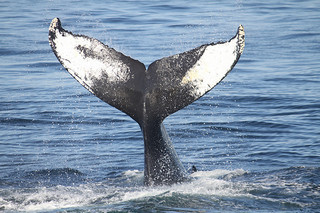
We’ve gone whale watching from time to time over the years, most recently out of Monterey, California, but we always come home feeling like we’ve missed something special.
It has nothing to do with the whales or the operators, but with our expectations.
You see, we went on a magical whale watching trip once, and no trip has ever been quite as moving since.
Whenever I read The Voyage of the Dawn Treader, I’m there with Reepicheep sailing off to the ends of the earth where the water vanishes into the horizon.
I can see it because the ocean and sea felt like that once on a whale watching trip out of Plymouth, Massachusetts.
We were on a trip with the Mystic Aquarium, one summer afternoon. The children were toddlers and my husband newly home from sea. We rode out into Boston Bay and perhaps beyond, for two hours before we saw anything.
But then, the whales came.
Our ship wasn’t large and one whale in particular took a fancy to us. He “spy hopped,” came out of the water and fixed and eye on the 100 people on this ship. While our cameras clicked and we pointed, he disappeared back under the water.
And came up on the other side to spy hop again.
He played this game with us for a long time; long enough that we could almost count the barnacles on his brow he became so familiar.
And then he turned to his side and waved.
The ship flexed and tilted as we scurried from one side to the other watching the whale.
 No one spoke. Just listened to the splashing.
I pondered what the whale thought he was doing. Just out swimming around when he came upon a boatload of people who instantly pulled out small devices and aimed at him. Perhaps he was in a playful mood that day, toying with us and watching us respond to him.
The leviathan of the deep was so big, he could have flipped our ship over with his tail.
Fortunately, unlike Reepicheep who could not have hurt us valiant mouse though he was, the whale had the power to destroy.
Instead, he teased.
Not exactly a tame lion, but a benign humpback whale playing in the sun.
The light that day was magical, as perhaps you can see in the waving photo. The blue ocean silvered as it neared the horizon until it melted into a golden cloudy sky–much like I envisioned the far Silver Sea of Narnia.
“Very soon the open sea which they were leaving was only a thin rim of blue on the western horizon. Whiteness, shot with faintest color of gold, spread around them on every side.”
The waters off Massachusetts our whale watching day looked like liquid metal, and shimmered in the setting sun.
The only sounds were the quiet thrum of the engine and the joyous gasps of the watchers.
When the boat turned west to return the long ride back to dock, the whale spy hopped in our wake.
As soon as we got far enough away, he breached.
I stood in the back and watched him breach, again, and again, and again; almost as if he was pleading with us to stay and play.

I watched a long time, counting, until he was nearly out of sight. He must have breached forty times, a lonely whale in the midst of the sea.
Magic.
Tweetable
A magical whale watching trip. Click to Tweet

The post A Magical Whale Watching Trip appeared first on Michelle Ule, Author.
June 6, 2014
Kids and Summer Entertainment
 With the first days of summer upon us, it’s time for a reprise of how to entertain/teach kids over their summer break.
I took a pile of unread National Geographic Magazines to the hospital with me when I gave birth to my third child. I had a lot of reading to catch up on and I figured the photos would be a good diversion if I couldn’t concentrate on the words.
It turned out to be a prescient choice. A lengthy article about hiking the Appalachian trail caught my imagination and I saw what this new baby, a third boy, and his older brothers could be some day. Hikers. Boy Scouts. Outdoorsmen.
(Girls, obviously, could do this too. but at that time females didn’t seem a likely addition to our family. God laughed.)
It all came true, we’ve got three Eagle Scouts (Though we’ve yet to hike the trail). They’re great hikers and campers, can find anything with a compass, and know how to start fires. Everyone rests easily when you know a contingent of young men are around and prepared.
I like to think I had at least a small hand in that because of training they received from the much vaunted and teeth-gritting summers they spend in Mrs. Ule’s Mean and Cruel Summer School.
The school was devised after one too many afternoons watching perfectly capable boys kill aliens for hours on end. Sure, we lived in military housing and perhaps they thought keeping America safe for democracy was a valuable task, but with the Hawaiian sunshine beckoning and their eyes glazing over, I’d had enough.
Someone needed to do these chores. Somebody, somebody had to, you see, (and for some reason) that somebody turned out to be me. (My apologies to Dr. Seuss).
The curriculum was short that first summer: basic kitchen clean-up, meal preparation, ironing, laundry, and swimming lessons (we used a contractor for that).
Reading was required, television was off until dark and the computer could only be used–one child at a time–for an hour a day each.
(They quickly argued for one hour of play but two hours of observing. We negotiated).
In later years it was expanded to include checkbook balancing, travel arrangements and clothing purchasing, plus school supplies.
Since we did at least two loads of laundry every day, they caught on quickly and, of course, decided they didn’t care how clean their clothes were but would cooperate.
Ironing made no sense. (Indeed, my own three year-old granddaughter just came in and asked, “What are you doing?” She’d never seen an iron before.)
That summer the boys were supposed to learn all the skills they’d need as adults when their mother wasn’t around.
 I didn’t get very far with button sewing (why not?) but they did take a few photos from time to time. Yard work had to be supervised, but they liked some elements of it (climbing on the roof to sweep it clear of monkey pods, which you could then fling at your brothers).
Because we lived in such a terrific spot, they also rode their bikes down to a nearby marina and sail in Pearl Harbor (they had sailing lessons the first summer). They’d tape golf clubs onto the same bikes and catch a lift to Ford Island on the ferry. Using old golf balls, they’d duff their way about the admiral’s abandoned golf course for a couple hours.
Once a week we’d visit a museum or unusual spot in downtown Honolulu. Once we rode The Bus just for the experience. Who said summer school was all bad?
What summer be without trips to the library? Mrs. Ule did have one rule: you could read as much as you like.
Even Star Wars novels.
We never did make it to the Appalachian Trail. Perhaps I should suggest it for later this summer.
Well, what would you do if your mother asked you?
How did you spend childhood summers? What was the best part?
Tweetables
Mean and Cruel Summer School techniques Click to Tweet
Summer Ideas for Bored Kids Click to Tweet
And if all else fails, they can sort the Lego!
Happy summer!

They only did this once, but never forgot!

The post Kids and Summer Entertainment appeared first on Michelle Ule, Author.
June 3, 2014
Living (and Writing) Backwards
 There’s something to be said for looking and planning your life backwards.
You’ve probably heard countless admonitions to make plans and work towards them, and that’s fine advice. But given a recent experience with my writing, I’d like to suggest that starting at the end and working backwards might be a helpful way to figure out what’s truly important and what you really want.
In both writing and life.
As parents, my husband and I had plenty of things we wanted for our children as they grew up: health, happiness, education, a relationship with God. But it was only a couple years into the chaos, er, family life, that I put together a list of things I wanted the children to accomplish before they left home.
You probably have a similar list, but here are a few of the things I wanted my children to know how to do:
* Cook
* Do laundry
*Manage Money
*Type
*Swim
Obviously, we added items to this list, but this was the basis and knowing what we wanted them to accomplish, meant we looked for opportunities for them to learn and grow as we went along. I got behind on the laundry (they didn’t start that until their senior year of high school), but everything else was done in a timely manner.
It helped all three boys ended up Eagle Scouts. :-)
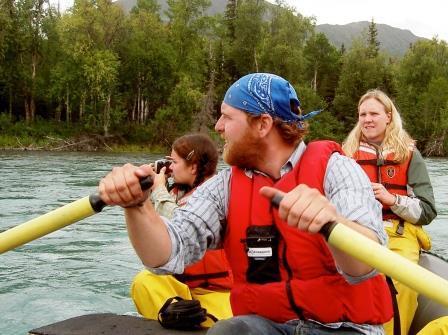
Some rivers require you row backwards . . . .
One day, though, I thought to ask them what they would like to learn before they left home. Surely they had dreams and desires I might not have thought of.
The oldest one, a dreamer, had a list: “Oh, I want to learn how to ride a horse, learn archery,row a boat . . . . ” and so on.
Number two, a more pragmatic child and younger, thought carefully as he chewed his Cheerios. When he finally spoke, he had only two desires: “I would like to learn how to drive a car and count money.”
I swallowed my laughter while I guaranteed he’d learn those two tasks.
Knowing where we were headed–our end result–enabled us to make changes and decisions along the way. Click to Tweet
It was very helpful.
Similarly, if I want to accomplish something, it works better if I know the end point.
If I want to finish something by a certain date, I work backwards from that date, figuring out what I need to do by specific times along the way. Click to Tweet
If I want to lose ten pounds by ten weeks from now, say, I need to lose a pound a week. (Would it work if I trimmed 3500 calories a week out of my diet?)
I’ve recently been working through a rewrite of my novel. As part of that, I reread the manuscript looking for clues of things I needed to know about how to direct the 100,000+ word book. I hadn’t read the manuscript in some time, and I enjoyed remembering the story. (It’s amazing how much you forget!) But it was in the fourth paragraph from the end of the entire book that I found the key to what I sought.
Hallelujah!
Now I know where I’m going, I just have to work backwards and incorporate those themes through the book. Click to Tweet
Or, in another twist, making the last first. 
What could be simpler than that?
Do you plan your life backwards?

The post Living (and Writing) Backwards appeared first on Michelle Ule, Author.
May 30, 2014
The Scorpion and the Titanic
 A friend reminded me that last week was the anniversary of the sinking of the USS Scorpion (SSN-589) and, of course, April saw anniversary #102 of the sinking of the Titanic.
Two technological marvels of their time that unexpectedly sunk and tragically drowned a lot of people.
As it happens, the two are connected–at least the discovery of their locations is.
I first heard of the USS Scorpion when I was a new Navy wife. Someone told me the haunting tale of wives and children lined up at a dock waiting for a submarine to return on its planned day and it never came.
I later realized the story was ridiculous–subs have to maintain radio silence, but they always check in before they come into port. (So the families would not have been waiting) Still, the Navy lost contact with the Scorpion on May 22, 1968, and didn’t find it’s resting location until a couple weeks after–owing to “increased marinelife activity.”
Chilling.
They didn’t know what happened to it, unlike the USS Thresher (SSN-593) which they heard breaking up. Theories abound, and may still be out there, but some 20 years later, the Navy commissioned Dr. Robert Ballard to take a small submersible from Woods Hole Oceanographic Institute in Massachusetts out to find it. The boat went down off the Azores.

The Scorpion went down off the Azores, islands northwest of Spain.
The deep sea submersible found the Scorpion, took photos, investigated it as best they could and came back. On the way, Ballard asked permission to do a side trip to see if he could find the Titanic. Using information he’d learned from viewing the Scorpion wreckage (heavier items sink first; debris follows currents), he went to the general area of the Atlantic Ocean where the “unsinkable” ship went down.
A week or so later, Ballard drove down to Groton, CT and asked to tour the USS Skipjack (SSN-585), sister ship to the Scorpion. He came aboard, where he saw several old friends and he met my husband–the Chief Engineer.
My husband said it was very eerie to walk the ship with Ballard–who kept stopping to point and comment: “This was missing on the Scorpion.” He had photos and was trying to get a sense of what happened based on what remained intact on her sister ship.
Many on the crew were uncomfortable with him there.
The Navy released a report on the sinking of the Scorpion in 2009. The findings were two unexplained explosions in the forward compartment caused the crew to lose control of the boat. As she sank below crush depth, the boat came apart.
(For those who are interested, Ballard’s research determined the nuclear reactors from both the Scorpion and the Thresher are intact and pose no problems to marine life or anyone else.)

Bow of sunken USS Scorpion; 3,000 feet deep
After the Scorpion and the Thresher sank, the US Navy instituted far-reaching safety features on their submarines which are used to this day. The United States has not lost a submarine since 1968–a credit to the professionalism of nuclear submarine sailors, in my opinion.
But then, I’m prejudiced. :-)
My family has always been interested in the Titanic story, but have adamantly refused to watch the block-buster movie. But I needed a sense of what the ship was like, and what types of clothing would have been worn at that time, for a book I’m writing and so I checked the film out of the library last week–on May 22. I turned it on and was shocked to discover the movie begins with a Robert Ballard-type character hunting for the Titanic.
I called my husband to watch and he laughed–once a submariner, always a submariner.
I laughed, too. It’s amazing to me how often my research overlaps with my real life.
(Titanic artifacts were displayed at the museum in my home town one summer day we visited!)

Don’t you love it when technological advances designed for one purpose can help solve an historical question? Click to Tweet
What do the Scorpion and the Titanic have in common? Click to Tweet
Finding a sunken boat owing to “increased marine life activity.” Click to Tweet

The post The Scorpion and the Titanic appeared first on Michelle Ule, Author.
May 27, 2014
Six Ways to Deal with Prayer Distractions

“Do you ever get off-track while praying? How do you deal with prayer distractions?”
What a great question to get from your daughter!
My husband laughed. “When do I not get prayer distractions?”
I nodded. “It’s a frequent problem.”
Commiserating is not the same thing as answering a question, so I thought about it a little more and here it is:
Six Ways to Deal with Prayer Distractions
1. Recognize distractions are likely to occur and minimize what you can before you start.

*If you know your schedule will make you uneasy because you have somewhere to be at a given time, set a timer (watch, phone, kitchen stove) for when you need to be done.
*If you’re in a time crunch and really need to get some chores done first, get things started–like the laundry and the dishwasher
* Turn off the telephone
*Get a blanket/sweater/socks
*Bring a glass of water with you
*Choose a better time
2. Ask God to help you stay focused. Click to Tweet
Hey, you’re praying anyway, why not ask God to help you stay on task? He’s just as interested in what you have to say as you are!
3. Work through a list and picture exactly who or what you’re praying about
*If I’ve agreed to pray for someone about something, it helps to picture them and their situation as I pray. This focuses me more and often opens the door to more effective praying. It also reminds me that I’m not praying in a vacuum–someone needed me to pray and since, as Oswald Chambers reminds us, “prayer is the more important work,” I can take the task more seriously.
4. Read Scripture
On days I cannot keep myself in gear, er, prayer distractions at bay, I resort to reading Scripture out loud. I’ll start with a psalm or two, speaking them into air and listening to what I’m saying. Since the psalms are songs, or prayers to God, they can help me. If I’m praying about a specific need, I can find the pertinent Bible passage and substitute my name in the appropriate place, thus enabling my soul to take my petition to God and allow my ears to agree–sort of a two-fer, though I’m the same person.
5. Write down the distraction and return to prayer
I’ve been doing this for years. Fine, even though I’m praying about something else, this little thank you note I need to write is insisting it needs to be done RIGHT. NOW. That’s not true, I”m praying, but if I find a piece of paper and write it down, I’m more likely to get to it in due time.
Or, I ask God to remind me to do it at a better time (this prayer is usually prayed in the middle of the night when I don’t want to get out of bed).
6. Follow the distractions and pray about them
Sometimes the prayer distraction will not go away, no matter what I do (see above). I take that to mean the Holy Spirit may be at work and thus I pray about the distraction.
 “Okay, Lord, I know the birds are noisy this morning and they have nothing to do with what I’m praying about, but let me take a moment to thank you I can hear. Thank you for giving birds songs to enchant and to praise you with. Thank you I’m in a quiet enough place to hear them, and don’t have to worry about my safety or their’s. Thank you they have water to drink and food. Thank you for the good things birds bring to my life.”
And so on.
You pray like this long enough and the distraction becomes a cause of thankfulness.
Prayer distractions will always be with us. They’re part of a busy life and a spirituality that Satan doesn’t like. Remember the adage? If Satan can’t tempt you to sin, he’ll make you busy. Often, it’s that busyness that acts against our ability to sit, listen, open our hearts and to pray.
What sort of prayer distractions do you deal with?
How do you deal with prayer distractions? Click to Tweet
Prayer is the greater work Click to Tweet

The post Six Ways to Deal with Prayer Distractions appeared first on Michelle Ule, Author.



![[image error]](http://commons.wikipedia.org/wiki/File:%C3lagage_avant_-_apr%C3%A8s.jpg)