Michelle Ule's Blog, page 80
September 5, 2014
Hard Books
 Following up on the last post about unforgetable books, I’m writing today about hard books–books that tackled challenging subjects and changed the way I think.
I haven’t reread any of them.
They’re simply too difficult, emotionally, to revisit, but they were very helpful. Click to Tweet
The Cost of Discipleship by Dietrich Bonhoeffer–led off the last list and remains at the top of this one. The requirements Bonhoeffer described made for a hard book, even as a vigorous twenty year old and while several points have stayed with me ever since, I’ve not been eager to revisit.
I probably should.
Go ahead and judge me, now. :-)
I’m working my way up to a reread.
The Harvest of Sorrow by Robert Conquest
This book starts out with a staggering concept: every letter in the book represents the death of twenty Ukrainians in a famine manufactured by the Soviet government in the 1930′s.
The outrage from that first stat starts the 1986 book and doesn’t let up for the entire 430 pages. I read it on a vacation and was numb the entire time.
I kept seeing myself as a kulak, the focus of hatred of people who wanted me dead because my life style–owning a few chickens–might get in the way of their political power.
I still can’t get over it.
But it made me quite knowledgeable when discussing local politics with people from Moldova several years ago.
Empire of the Summer Moon by S. C. Gwynne
I read this one while attending a writer’s conference and was a total basket case every time I opened it.
The story, basically, of genocide against Commanches in Texas by the Texas Rangers, horrified me and challenged long understood truths.
I couldn’t believe native Americans were hunted down like prey and slaughtered. I have Texas ancestors, good, Godly people, preachers among them. How could they have countenanced such behavior?
Texas Rangers were not heroes and I shudder, now, when I read stories about them.
[image error]My husband thinks I tend toward the negative, sometimes, when discussing history. But when fine books are published on subjects that interest me, I read them–even if they are as gruelling as this one.
Someone has to bear witness to history. Click to Tweet
Someone has to know what really happened.
You all know the adage, “those who do not study history are condemned to repeat it.”
What do you know about the Soviet gulags? What sort of crimes sent so many people there?
Behavior I never give a second thought while doing. :-(
(To be fair, I also spent a sunny afternoon on a Hawai’ian beach reading The History of Siberia.
My take away from that one is, did you know in the 19th century, the biggest export from Siberia was ivory? It was taken from the tusks of the wooly mammoths they dug out of the melting permafrost.
The Siberian peasants thought the mammoths were some sort of underground animal digging toward the surface when they died . . . so, not all is grim.)

Life and Death in Shanghai byNien Cheng
I’ve long been fascinated by the question of how people survive in a totalitarian government with their souls intact. Click to Tweet
Cheng’s book detailed how she endured the changes in China which ultimately forced her into prison for six years. I learned a lot about The Great Leap Forward and other aspects of Chinese modern history which served me in good stead while visiting China and hearing the guide’s very different take on his country.
A Little Humor with the Horror
In a different vein, Tony Horwitz also provides interesting takes on American history, with offbeat and wry descriptions of other terrible events. I particularly appreciated two of his books: Confederates in the Attic and A Voyage Long and Strange.
Confederates in the Attic is the story of Civil War reenactors, a seemingly benign topic full of irony and humor. But he tells the tale of people going to extremes to provide verisimilitude during their (usually) CSA battle reenactments.
In the process, Horwitz provides us with plenty of insight into the hardships real soldiers went through 150 years ago. Poignant, funny as anything, but also hard to read at times.
A Voyage Long and Strange has a lengthy subtitle: On the Trail of Vikings, Conquistadors, Lost Colonists and Other Adventurers in Early America.
I’ve read a lot of history in my time, but this book was filled with stories I’d never heard –tales of the search for The Fountain of Youth, and of ziggaruts in the southern corner of the United States. He talked about De Soto and others horrific marches across the desert and, once again, encountering native Americans in the natural.
A lot more civilization was going on prior to 1492 then I ever knew. Click to Tweet
That’s what made A Voyage Long and Strange important to me.
There are more I could list, but this is sufficient.
What books have you read that were hard but changed your way of seeing life, history, politics?
The post Hard Books appeared first on Michelle Ule, Author.


September 2, 2014
Unforgetable Books
 I was challenged on Facebook recently to list ten unforgetable books–books that have stayed with me over the years for one reason or another.
The idea was not to think too hard, just write down the first ten to come to mind.
I’ve been reading since the age of four and I have a degree in English Literature, so there were many unforgetable books to choose from!
This was my quick list, with explanations:
The Cost of Discipleship by Dietrich Bonhoeffer
I’d seen this little green book around for years at our church, but on a summer’s trip to Europe where I could only take three books, I chose it. I figured being away, thinking about my life and needing something meaty, I needed a book that would do the trick.
Perfect.
“Jesus bids us come and die,” to ourselves, Bonhoeffer admonished and I got to apply that to myself several times in the six weeks I spent with Swiss relatives. I talked about the book to every English speaker I met on that trip–I was twenty years old–and ended up giving away my copy to a fascinated-in-the-book guy I met at a youth hostel.
The Tapestry by Edith Schaeffer
I’ve written about this book’s affect on my life elsewhere, but suffice it to say, it taught me to buckle down and live the life God has given me with thankfulness and actions of beauty. Edith was a role model in many positive ways to my life.
I read this one at the ripe old age of 27.
 Decision Making and the Will of God by Gary Frieson
A gift from my dear friend Jane Gangi, this book taught me about understanding God’s will. Do I need to ask him what to eat for breakfast, or should I use the brain he gave me to determine what makes the most sense? Liberating.
I was 29 when I read it.
The Wood and the Trees by Mary Elgin
A seemingly light romance published in 1967, I found this in the Monterey Public Library when I was 31. Elgin only wrote three books before an early death, but her pithy descriptions and the unusual way she tackled what was then highly provocative subject matter, surprised me.
Long out of print along with her other two novels, I read them periodically as comfort novels. This line resonated, in my cynical sense of humor:
“You can’t exactly hate a child you’ve given birth to, but you can dislike him.”
What is an unforgetable book?
Click to Tweet
I think it’s one that haunts you and whose words and ideas pop into your mind at surprising times. You may find yourself unconsciously identifying with a character you read about in one of these unforgetable books, and not quite know how you know how to react, but you do.
 White Road by Olga Ilyin
Read at 24 when I was weeks away from giving birth to my first child, 3500 miles from home and relatives, and with my husband out to sea on a submarine (and his return in time for the birth problematic). White Road spoke to several things in my life: the ache of missing my daring husband; the loneliness of having a baby by myself; the tragedy of Russian history and the determination that somehow God would work it all out.
He did.
And I have some beautiful pieces of jewelry now. :-)
My Utmost for His Highest by Oswald and BIDDY Chambers 
The words belong to OC, but Biddy put the book together. My life has been changed in many, many ways as a result of reading this devotional for the last 15 years. I was in my 40s when I finally picked up a copy.
And of course, I’ve used themes from it in my WWI novel A Poppy in Remembrance.
Waiting for Snow in Havana by Carlos Eire
This one turned up on my library reserve list the day before I left for a week-long outdoor camp with my daughter’s sixth grade class, so I was in my 40s. I read by flashlight that week because this was so deliriously fun, yet tinged with poignancy. The language is over-the-top Latin and I simply loved it.
Every time I’ve read it.
A Ring of Endless Light by Madeleine L’Engle
My favorite writer from childhood, Madeleine L’Engle and her books were of great interest to me as I reached adulthood. I bought this book as a 23 year old adult as soon as it turned up in the bookstores. It taught me about death and letting go, abandoning people who aren’t good for you, and how much the love of a family is important in the growing up years I had just reached.
It was early in my first pregnancy, husband out to sea again, and I needed comfort.
Airs Above the Ground by Mary Stewart
I love Mary Stewart’s books for her plucky heroines, gorgeous descriptions, exotic locations and, in this book, her dialogue. I’ve read it numerous times (another comfort novel), but what stands out is my read when I was 29 and we’d just been in an automobile accident.
My husband was out to sea, of course.
I missed him a great deal in a frightening time in my life. There’s a bit of dialogue in this one where a husband unexpectedly turns up from his job, surprising his wife with a warmth and humor I desperately needed that cold Connecticut night.
Reading it silently, then aloud, was almost like having my husband home with me for just a short time, telling me things might look difficult, but they would be all right.
And they were.
Especially when he came home. :-)
The Birth Order Book by Kevin Leman.
I read it the first time in my twenties when I was trying to figure out just when I’d gotten myself into, I, a first born with younger brothers married to a baby with older sisters.
“That’s the most stable type of marriage,” Leman wrote, “but you make him put his clothes in the hamper.”
I called my husband at work on his duty night and read that section aloud . . .
My daughter and I listened to this book on audio two summers ago during a long car ride and laughed as we picked out all our family member’s traits together. Fun, and insightful.
Bonus: The best book I’ve read the last five years? Unbroken by Laura Hillenbrand. But you probably already know that!
Tell me some of the unforgetable books in your life.
Tweetables
Unforgetable books for trying times Click to Tweet
Bonhoeffer, Chambers, Friesen, Stewart, Ilyin, Schaeffer, Eire, Elgin, L’Engle Leman and other unforgetable reads. Click to Tweet
The post Unforgetable Books appeared first on Michelle Ule, Author.
August 28, 2014
Drought and Graywater Gardening

First crop!
Taking a break from the usual subject matter to describe a graywater gardening project we’ve run during California’s third straight year of drought.
I’ve always felt guilty about letting the water run in the shower until its warm enough to suit me.
It seems like such a waste to watch the water spin down the drain.
For water-saving reasons when we lived in the country with an iffy septic tank, we bought a front-loading, water saving energy efficient washing machine 16 years ago.
It helped, particularly in years I did two loads of laundry a day.
With drought upon us and moved into a new house, we examined ways to make this home more water-efficient, and were delighted when Sonoma County made it easier to install a graywater system.
What is graywater? Click to Tweet
According to our county website:

The garden bed in the March rains.
“Graywater is untreated wastewater that has not been contaminated by any toilet discharge. Graywater includes wastewater from bathtubs, showers, bathroom sinks, clothes washing machines and laundry sinks. It does not include wastewater from kitchen sinks, dishwashers, photo lab sinks or laundry water from soiled diapers.”
I’d suggested storing gray water at our last house, but we would have had to pump water up hill to where it was needed. That didn’t seem practical or cost-saving.
In the new house, though?
All we needed was a new valve, a hole in the wall and some PVC pipe. It took a couple hours and we were in business.
Ironically, we put the system into place last March–on one of the few rainy days we had!

A new valve was needed on the washer drain–note you can release graywater into the yard or down the drain.
Pipe came out halfway down the wall. It went down the side of the house and then “T”ed into a performed PVC pipe that ran the length of the bed. We have a slight slope in our yard, so a shorter perforated pipe (the area is about four feet by 20 feet) was “elbowed” into the end and extended across the top of the bed about where the sidewalk bends.
The washing machine’s discharge motor pumps strong enough for the graywater to reach the end of the shorter arm, and run the length of the house.
My husband, a retired submarine officer very experienced with pipes, figured the draw of gravity would enable that shorter arm to water whatever we put in down there.
It worked.
The bed had to be dug a foot deep or so, and it was clay soil. The first thing our trusty assistant Daniel had to do was siphon off the excess water!
Once less muddy, the perforated pipe was set on the ground and then covered with a thick–at least three inches–layer of mulch.
The instructions we received indicated the vegetables you plan to eat should not touch the soil–for that reason, everything should be planted on a trellis. We planted green beans, cucumbers, pumpkins, tomatoes (in cages) and what we thought would be a climbing zucchini–at least that’s what we think it is. It didn’t climb, and we decided to each it anyway with all that mulch between the plant and graywater.

Trellis. You can see the dryer vent to the left; pipe from washer is directly behind the left trellis.

Planting seedlings
We could not plant seeds, but had to use seedlings which enabled us to dig a hole in the mulch, touching the clay “topsoil,” putting in “real” topsoil and placing the seedling in the hole. We pressed down the soil around the seedling (planted near the bottom of the trellis), and then surrounded it with mulch.
We did the same with tomatoes, which ultimately got their own cages.

We were surprised by how fast the cucumbers and beans climbed.
The peas came in first, but the green beans and cucumbers were right behind them. This spot is normally very sunny and we’ve been eating tomatoes since May–about two months after the plants went into the ground.

Beans climbing their teepee–one month in the ground!
I have to use a special soap,ECOS, which I can purchase from Costco. With a valve on the washing machine rinse water discharging line, I can release the graywater into the garden (which we do most of the time), or, when I need to use bleach or a harsher chemical, I can turn the valve up and release the rinse water into the sewer system.
This will be particularly important in the winter when, God-willing, we’ll have rain again.

You can buy the right soap at most stores, including Costco
I don’t think all my plants get the same amount of water, and so once or twice a week I rinse off the leaves (as it it were raining) of the growing plants, and provide a little more moisture for the ones further away from the perforated pipe buried under the mulch.
“I think this is the best garden you’ve ever had,” my husband said the other day.
He may be right.
All I do is wash clothes, and vegetables grow effortlessly! Click to Tweet
Beans anyone?

The beans in August.

You can even grow small sugar pumpkins on a trellis!
We have not discerned any difference in flavor from vegetables grown this way. The cucumbers have been prolific and we’ve even grown a cute little sugar pumpkin. The one that’s escaped the trellis to the ground, a month later, is much larger and should be perfect for Halloween–if we last that long!
Tweetables:
Growing vegetables using laundry rinse water. Click to Tweet
The ease of putting in and using a graywater system. Click to Tweet
The post Drought and Graywater Gardening appeared first on Michelle Ule, Author.
August 26, 2014
Two Years with Oswald Chambers

English: Oswald Chambers (1874-1917) (Photo credit: Wikipedia)
I’ve actually spent fifteen years reading Oswald Chambers‘ famous My Utmost for His Highest , but the last two years have been memorably intense.
My life is richer for it, in unexpected ways.
It started in summer, 2012 when we purchased a copy of David McCasland’s biography Oswald Chambers: Abandoned to God.
My husband and I read the book avidly and learned much about “OC.” We discussed and marveled together (he reads My Utmost for His Highest daily as well. By the way, you can read it refreshed each morning at www.umost.org).
But it was in January 2013, that my life changed when I began to write a book that touched on Oswald Chambers.
It was an ambitious undertaking and my agent was concerned. “Do you think you’re up to this?”
“If I have to spend an intense year, who better to spend it with than Oswald Chambers?” Click to Tweet
Who knew I was a prophet?
I, of course, underestimated how long it would take me to master World War I events sufficient to write intelligently about them, so it stretched to this summer.
It’s the personal I’m recounting here, and that’s where OC impacted me in the best way–a novelist does not write in a vacuum.
In May 2013, we unexpectedly agreed to sell our house to our son and his wife. We didn’t know the market had turned to a seller’s market, and so when the buyers sold their house in one week, we had to scramble to find a new place to live.
Have you ever had nine people living in your house while you tried to market a book, write a book, pack up your home and find a new place to live?
It had never happened to me before either, though I love all the people who crowded into our home.
We had a wonderful summer, when I wasn’t fretting about finding a new home.
Oswald Chambers, of course, had plenty to say on several pertinent spiritual topics during this time. Try a few:
“If our hopes seem to be experiencing disappointment right now, it simply means that they are being purified. Every hope or dream of the human mind will be fulfilled if it is noble and of God. But one of the greatest stresses in life is the stress of waiting for God. He brings fulfillment, “because you have kept My command to persevere . . .” (Revelation 3:10).” ~The Discipline of Spiritual Perseverance
I lost track of how many houses we looked at. Nothing “sat right” with my spirit.
This could not have been surprising to God, but where were we supposed to go?
A saint’s life is in the hands of God like a bow and arrow in the hands of an archer. God is aiming at something the saint cannot see, but our Lord continues to stretch and strain, and every once in a while the saint says, “I can’t take any more.”
Yet God pays no attention; He goes on stretching until His purpose is in sight, and then He lets the arrow fly. Entrust yourself to God’s hands. ~The Faith to Persevere.
As we tramped through house after house, I kept going back to a point OC made on several occasions:
“Whenever our right becomes the guiding factor of our lives, it dulls our spiritual insight. The greatest enemy of the life of faith in God is not sin, but good choices which are not quite good enough. The good is always the enemy of the best.” ~The Good or the Best
My husband chafed under that quote as we racked up another weekend of looking at houses that just. would. not. work. for. me.
I not only appreciate Oswald Chambers, but I love his kindred spirit wife, Biddy. Click to Tweet
A no-nonsense British woman, one of her signature lines was “I believe God.”
Biddy’s was a straight forward faith. She seemed unflappable at the lengths her husband stretched her, choosing always to believe God was at work. Click to Tweet
As we reached week 10 and I floundered, I thought a lot about their faith.
Keep the thought that the mind of God is behind all things strong and growing. Not even the smallest detail of life happens unless God’s will is behind it. Click to Tweet
Therefore, you can rest in perfect confidence in Him. ~The Concept of Divine Control
Our real estate agent ran out of houses to show us. He shook my hand one day and said, “something will turn up someday. We’ll keep in touch.””
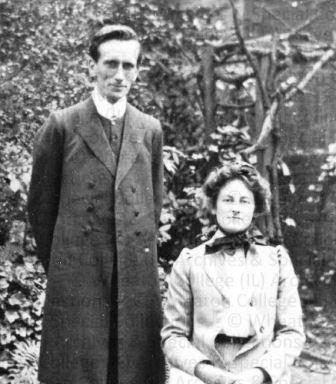
Oswald and Biddy; photo courtesy Wheaton College Special Collections library
I decided to echo Biddy’s “I believe God,” and enjoy the final summer with nearly my whole family at home. We had a lot of fun.
Within the next five days, we had four choices for a house.
Ten days later, we moved in to where we are today.
OC was right.
All those “goods,” were nothing compared to this “best.”
I, apparently, just needed to believe God for what He had planned all along. Click to Tweet
I’m not sure we could have survived 2013 without Oswald Chambers’ words echoing through our devotions and my writing every single day.
Because, ultimately, Oswald Chambers always pointed back to God, Jesus and the Holy Spirit, and from his teaching, faith and enthusiasm, my faith and confidence grew.
Thanks be to God.
Have you got any goods and bests in your life?
The post Two Years with Oswald Chambers appeared first on Michelle Ule, Author.
August 21, 2014
What to do with Self-Pity
 I’ve been tempted to wallow in self-pity today on several different levels.
But I’m choosing not to do it.
There are a couple reasons I’m rejecting the draw of feeling sorry for myself, not the least being words that ring in my ears from that great teacher Oswald Chambers:
“I must learn that the purpose of my life belongs to God, not me. God is using me from His great personal perspective, and all He asks of me is that I trust Him.
I should never say, “Lord, this causes me such heartache.” To talk that way makes me a stumbling block.
When I stop telling God what I want, He can freely work His will in me without any hindrance. Click to Tweet
He can crush me, exalt me, or do anything else He chooses. He simply asks me to have absolute faith in Him and His goodness.
Self-pity is of the devil, and if I wallow in it I cannot be used by God for His purpose in the world.” Click to Tweet
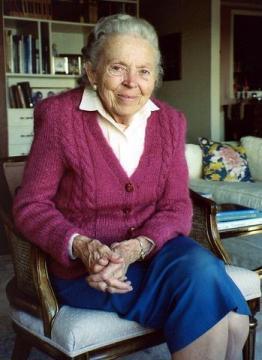
Elisabeth Elliott
He’s not the only one who sears my soul on this subject. Author Elisabeth Elliott also used to nail me to the wall in a similar fashion:
“Self-pity is a death that has no resurrection, a sinkhole from which no rescuing hand can drag you because you have chosen to sink.”
She goes on elsewhere to give direction on what to do with self-pity:
“Refuse self-pity. Refuse it absolutely. It is a deadly thing with power to destroy you. Turn your thoughts to Christ who has already carried your griefs and sorrows.”
I also have the example of that wonderful sage, Marilla Cuthbert from Anne of Green Gables:
Anne Shirley: Can’t you even imagine you’re in the depths of despair?
Marilla Cuthbert: No I cannot. To despair is to turn your back on God.
Sigh.
I know they’re right and so I’m turning my back on the luxury of feeling sorry for myself.
I’m rejecting it, kicking it to the curb and choosing to stand tall and hope in God for I will yet praise him.
But what do you do when events seem to pile up and you’re back is aching from carrying burdens and disappointments?
Here are five suggestions of what to do when you want nothing more than to crawl into a hole and hide away from your disappointments. Click to Tweet
1. Recognize you’re disappointed and acknowledge it happens to everyone.
Scripture reminds us: “In the world you will have tribulation; but be of good cheer, for I have overcome the world.”
Who has overcome the world? Me and my talents?
No, Jesus.
2. Talk to God about it and refuse to condemn yourself for what has happened–unless, of course, you need to confess sin.
“Therefore there is now no condemnation for those who are in Christ Jesus.”
Just because you’ve had a disappointment, doesn’t mean you’re a terrible person. Don’t swallow the lie.
3. Acknowledge you do not have to feel sorry for yourself, but you can cast that burden into God’s lap and He will accept it.
“No temptation has overtaken you except such as is common to man; but God is faithful, who will not allow you to be tempted beyond what you are able, but with the temptation will also make the way of escape, that you may be able to bear it.”
The temptation to feel sorry for ourselves can overwhelm, but we need to remember that God doesn’t turn his back on us–he’ll give us a way of fleeing from that temptation.
Perhaps I need to share my burden with a friend, and ask for prayer to get through the difficulty.
(Beware a friend, however, who feeds bitterness into your soul over that disappointment).
4. Trust God knows what he is doing with your life.
Psalms 42 and 43 remind me to take my eyes off myself and point them where they belong:
Why are you cast down, O my soul?
And why are you disquieted within me?
Hope in God;
For I shall yet praise Him,
The help of my countenance and my God.
5. Thank Him for what He will do with this disappointment and for what He has planned for you in the future.
The Bible tells us “in everything give thanks; for this is the will of God in Christ Jesus for you.”
The best place for me is in the center of God’s will for my life. He knows the future, I do not. He knows how he wants to use my gifts, my frailties, my hopes and circumstances to His glory, not mine.
Who am I to complain of what the Creator of the Universe–who knows the beginning and the end and every hair on my head– has done with my life?
Bonus: Know that you will understand and be able to put this disappointment into better context later.
The infamous “they” say you can best see God’s will in the rear view mirror. Click to Tweet
My life experience has demonstrated that over and over again. I choose to believe that today’s disappointments, personal, physical and professional (I’ve had quite a day!) all rest in God’s hands–right where they belong.
It all comes down to do I trust God with my life or not? Click to Tweet
I choose God.
Rejoice with me, won’t you?
God is good. Even when I don’t see how or why.
The post What to do with Self-Pity appeared first on Michelle Ule, Author.
August 18, 2014
What IS it about the Romanov Family?

Olga, Marie, Tsar Nicholas, Tsaritsa Alexandra, Anastsia, Alexei, Tatiana
I’ve just set aside everything to read a new book about the Romanov family.
It’s only about the thirtieth book on the Romanovs to capture my imagination over the years.
Nearly 100 years after the regicide of Tsar Nicholas II, his Tsaritsa Alexandra and five children Olga, Tatiana, Marie, Anastasia and Alexei, still attract writers and readers.
A friendly chat with friends from all over the country reveals they, too, have long been intrigued by the family and the story.
Indeed, over on Pinterest, a 1300+ pins Romanov board by Dawn Phillips has nearly every photo imaginable and the daughters are referred to by an acronym: OTMA.
For the few people on the planet who don’t know the story, Nicholas II, a grandson of Queen Victoria, married the beautiful Alix of Hesse shortly after he became tsar in 1894. They had four daughters in a row and finally a son–who had hemophilia. Alix, known as Alexandra, was in poor health and worried constantly about the heir to the throne–who was unlikely to live to adulthood.
The Imperial doctors tried everything and then a mysterious “priest” from Siberia came to see them, Rasputin, and he was able to calm the boy’s bleeding.
He also unduly influenced the nervous Alexandra and his meddling in Russian affairs was part of what led to the dynasty’s ultimate downfall, though he was murdered a few years before.

The Romanov family celebrated 300 years of dynastic rule in 1913. Four years later following the February Revolution, Tsar Nicholas II was forced to abdicate. Owing to Alexei’s ill health, he abdicated for both himself and his child. The crown went to his brother, but not for long.
Held under house arrest for over a year at the Alexandra Palace outside of St. Petersburg, the entire family savored their time together, sustained by their devotion to the Russian Orthodox Church. In 1918, the family was moved to Ekaterinburg in western Siberia. They were kept under close guard in the Ipatiev House and finally shot to death in a horrific nightmare of a basement room on July 17, 1918.
Not content to have simply murdered the family, the Bolsheviks took the bodies to a pit outside of the city. They poured sulfuric acid over the bodies and set them on fire.
Stories abound for many years that the youngest daughter, the spirited Anastasia, had been smuggled away and survived. When a mysterious woman named Anna Anderson was found many years later following a drowning attempt, she claimed to be the long lost Anastasia. Many believed her–family members perhaps because they wanted to believe her–but when DNA testing became available, she was proved to be a Polish peasant.
In 1991, the Romanov bodies were found, exhumed, and DNA testing was performed proving who they were (Prince Philip of England was among several still alive relatives provided DNA for that testing). In 2000, the Romanov family as individuals were proclaimed passion-bearers by the Russian Orthodox Church. (According to Wikipedia, a passion-bearer is a saint who was not killed because of his faith like a martyr but died in faith at the hand of murderers.)
What a story!
But why would an average girl of Sicilian-British-French-Danish nationality who grew up in Los Angeles be fascinated by the Romanov family? Click to Tweet
What would intrigue her so much she would write a story about them (in which Anastasia survives) and win a national writing contest in high school?
And why am I still reading about them now?
Why not?
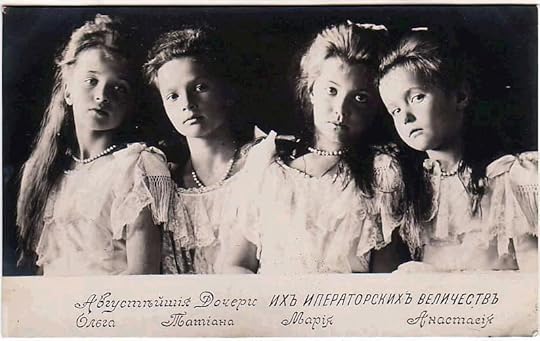
Olga, Tatiana, Maria and Anastasia as children
The Romanov story has all the elements of an opera with the added sadness of being true: kings, doomed empire, beautiful young daughters, cruel politicos, fabulous jewelry and heartbreaking illness, not to mention a world war. Click to Tweet
For me, as a fourteen year-old reading Robert K. Massie‘s epic Nicholas and Alexandra for the first time, the pathos was overwhelming–and there were so many events to cry about.
Perhaps its the lot in life for teenage girls to become passionate about love stories that transcend time or even logical thought. Perhaps it was the pageantry, the gorgeous girls (my then-age) impeccably dressed in matching white, or even the tragedy of a boy who could die from falling while playing a game?
I’m not so enraptured with the beauty of the story now that I’ve read more of the history of the times. When my mother asked me if I named my son Nicholas in honor of the tsar, I was appalled.
“I’d never name a child for him. While well meaning, he was a weak autocrat whose choices doomed his national to seventy years of Communism.”
My mother and I were both surprised at my vehemence!
Still, the fascination continues.
Tonight I’m reading Helen Rappaport‘s The Last Days of the Romanovs: Tragedy at Ekaterinburg. I thought I knew everything about this story, but Rappaport is providing insights about Ekaterinburg I’d missed. Beautifully written, heartfelt and headed to that horrible ending, I’ll be savoring this one for a few days.
Still pondering, though, why the story continues to capture my attention.
What do you think?
Why are we still sobbing over the Romanov story nearly 100 years after their death?
You can hear Tsar Nicholas speak here.
You can watch the Tsar and three daughters enter a carriage here.
Romanov family Russian Orthodox Church icon
“” by Loraine90 – Own work. Licensed under CC BY-SA 3.0 via Wikimedia Commons.
The post What IS it about the Romanov Family? appeared first on Michelle Ule, Author.
August 14, 2014
UCLA–Back to the Research Library

UCLA’s Young Research Library
I returned to UCLA‘s University Research Library recently to finish my research on A Poppy in Remembrance.
(Back in the dark ages when I was a student, we called it the URL; it’s now the Young University Research Library YURL after former chancellor Charles Young).
The years have disappeared in an alarming way, but as I stood on the steps and peered in the glass doors, it might have been yesterday.
I spent nearly every day of my three years at UCLA in that library.
I had a heavy schedule and my living arrangements were always at least a mile away. Between taking classes, marching in the band and working at the UCLA Daily Bruin, once I got to campus I stayed there.
For that reason, along with my books, I toted my Bible in my backpack. In between classes, I’d go to the research library‘s third floor, find a carrel and study Scripture and pray.
It worked well for me.

This is Powell Library, more impressive looking but I never went there.
After dinner when I lived in the dorms, the guys two doors down went to the library every night after dinner to study and they took me with them.
It’s amazing what you can accomplish when you spend three quiet hours in a research library every night! Click to Tweet
That may have been what got me through school in three years! 
Certainly, there were plenty of other distractions on campus.
 (UCLA’s basketball team went to the NCAA championships several times during my tenure. My roommate told the story of being in the research library during the semi-finals–”because I had to study, even though I knew the center”–and getting up for a drink. As she rounded the stacks, she saw a rabbit ear antenna sticking out from a study carrel.
This was in the days before smart phones.
She tiptoed into a group of silent students watching the game over an unsuspecting viewer’s shoulder. “It was funny. A great play would occur and we’d throw our arms up in the air like mimes!”
In this particular game, the star player on the other side chased a ball out of bounds. When the official threw back his arm and whistled, he caught the player under the chin and knocked him five feet backwards onto his rump.
The “silent” students all shouted and clapped, startling the TV owner who hadn’t realized he’d drawn a crowd, and causing everyone else in the library to shout, “Shhhhh!”
But I digress.)
The research library looms large in my college memories–and I loved it. Click to Tweet
Today at the Young University Research Library
But two weeks ago I returned, looking for a specific book.
I had its information on my smart phone and walked up to the front desk. I handed the student librarian my phone, she smiled, drew me a map and sent me to the fifth floor–which was completely empty on a July Saturday morning.
I was eighteen again and I loved everything about the experience!
 I spent two hours in the stacks, pulling books off the shelf, leafing through, taking pictures with my phone, and using my Ipad for the very reason I bought it: to document research materials.
The study carrel’s shelf was the perfect height to take photos with the Ipad.
I’ve written before about the ease of using an Ipad for research–I just had to find what I wanted and take the photos–I can read the information later.
I took 130 photos of some ten volumes.
A research library is designed to provide many different sources of information. While an afternoon at Sonoma State‘s library had resulted in a handful of resources, UCLA had three entire stacks full of books and periodicals in multiple languages covering a wide range of years.
UCLA’s research library was a treasure trove of information! Click to Tweet
After finding specific information about the how, I decided reporter memoirs would be helpful.
But where was the card catalog?
I knew better than to search for the old physical card catalog. I haven’t used one in a library since 1988. Click to Tweet
So, I hunted for a computer terminal. But I couldn’t find one anywhere at the research library, thus having to resort to my smart phone.
Odd, don’t you think?
I finally found it on my way out.

The catalog.
Those Ipads really get around!
My day at the research library was highly successful, so much so that the next time I get a big project that requires a lot of research, I’m just going to spend a week in UCLA’s library.
Amazing how much younger and resourceful you feel when you return to your college roots! Click to Tweet
The post UCLA–Back to the Research Library appeared first on Michelle Ule, Author.
August 12, 2014
An August Blog Tour

Authors periodically participate in a blog tour which involves answering several questions and then pointing you on to writers (next week) whose answers you may find interesting as well.
The versatile Amy Parker selected me to answer questions about my current work in progress.
Amy is a fun loving woman with a lovely southern accent from the outskirts of Nashville and last summer I had dinner with her, discussing the project that I’ll be writing after the next one.
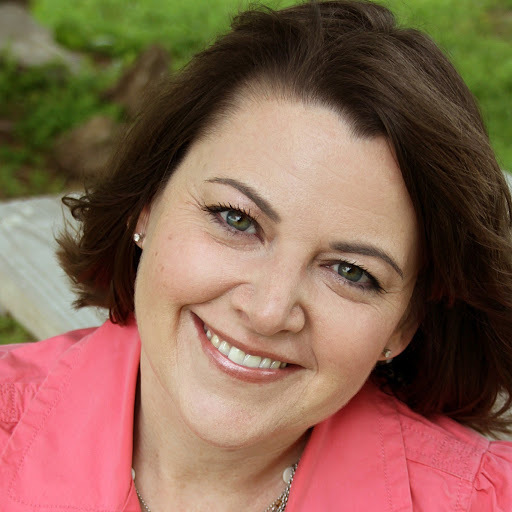
Amy Parker
As it happens, that project is set in her town and her mother knows some of my character’s relatives!
Such a small world!
Amy herself writes about both a smaller world (books for children) and for how small the world can be for those who have soft hearts. Click to Tweet
Her twenty books for children and adults include the best-selling A Night Night Prayer.
I’m particularly looking forward to Frederick releasing next month, the soul-searing story of a young man whose arms were sliced off by a machete in 1994 Rwanda. A co-written tale of hope and encouragement, Frederick meant Amy and her family traveled to Rwanda to visit the scenes depicted in the story.
(She took her husband and their young son, who made this video about his experiences)
Amy’s description of why she writes inspires:
“I write what I do because I’m moved to, inspired to, nagged to until I can no longer ignore the beautiful nagging. I write because I want everyone from toddlers to teens to adults to know the overwhelming love of God and the hope that it brings. I want every single person on the planet to see the beauty right here among us. I want to love on this big world. And I’ve found that, for me, right now, putting words on paper is the best way to do that.”
See what I mean?
Here are my answers to the four blog hop questions:

“Spelman, Delsbo, svensk folkmusik” by Torbjörn L – Own work. via Wikimedia Commons -
What are you working on now?
Having just completed a massive World War I novel, I’m now turning to a project releasing as an ebook on November 6, The Yuletide Bride; and the writing of its sequel, The Sunbonnet Bride which also will release as an ebook on July 20, 2015. (Both from Barbour Publishing)
The Yuletide Bride is the fun story of a “grasshopper” fiddler who falls in love with a bagpipe-playing mercantile worker. The marriage can’t go through until the fiddler earns enough money ($70) to keep his prospective bride in 1873 Nebraska. Music, a snow storm and money matters complicate the novella. I had so much fun writing it–and attempting to play the bagpipes–I can hardly wait for it to come out. (It also will release as a Walmart-only special on October 14 as part of White Christmas Brides for those of you who don’t have ebook readers).
I’ll start writing its sequel this month, which features characters from The Yuletide Bride in an 1874 Nebraska story about a tornado, entrepreneurship and summer love called The Sunbonnet Bride. This one involves a teamster with a big heart and a seamstress with a great idea.
How does your work differ from others of its genre?
I love research and like to find real events to set within my stories. In both these two ebooks (Part of The 12 Brides Collection), money issues drive the story and my characters are confronting both personal and out-of-their-control challenges. I’m always curious about the why–why do people behave the way they do and what motivates them, both good and bad?
I like to blend fact with my imagination to produce a story that not only makes sense in both the historical and spiritual, but also honors God. Click to Tweet
I’ve also taken to including Pinterest boards to add a visual element to those interested in my stories.
Why do you write what you do?
The world is a grim place full of discouragement and events are not improving. As an inspirational writer, I need to point people in the direction of hope and God’s answers to our heart cries.
Emily Dickinson expresses it so well:
“Hope” is the thing with feathers -
That perches in the soul -
And sings the tune without the words -
And never stops – at all -And sweetest – in the Gale – is heard -
And sore must be the storm -
That could abash the little Bird
That kept so many warm -I’ve heard it in the chillest land -
And on the strangest Sea -
Yet – never – in Extremity,
It asked a crumb – of me.

How does your writing process work?
I work part time, teach Bible study, play my clarinet, sing at church, and have a big family. I write on Tuesday afternoons and all day on Thursdays; many late afternoons and evenings and a good part of Saturdays. We don’t have television so the nights are quiet for writing.
I usually write off a prompt and think a lot about the story and what I know from history about the subject.
I read on my subject area continually as I write, researching all the way to the end and sometimes changing the tale to match the facts. I listen to God’s inspiration in all sorts of unusual places and am thankful for the feedback I get from fellow writers and my editor friend. I’m very fortunate in that I type 120 words per minute and because of my experience as a reporter, know to write whether I feel like it or not.
The next stop on the blog tour–watch for her next Tuesday, August 19–is Julia Roller:
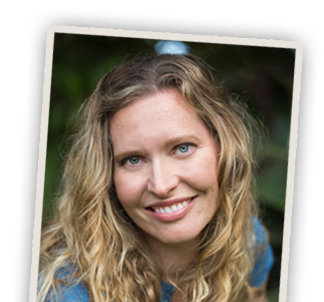
Julia Roller
Julia Roller‘s most recent book is Mom Seeks God: Practicing Grace in the Chaos. A deep thinker and graduate of both Centre College and The University of California, Berkeley (go Bears!) School of Journalism, she has written or edited several books, among them 25 Books Every Christian Should Read; A Year with God; and A Year with Aslan.
She and her husband have two young boys and life looks a lot different than it did during her Berkeley days! Click to Tweet
I met Julia several years ago and relished our wide-ranging conversation!
The post An August Blog Tour appeared first on Michelle Ule, Author.
August 8, 2014
Hurricanes, Hawai’i and the US Navy

English: Hurricane Iwa from NOAA-17. Inventory ID: NSS.GHRR.NC.D82327.S2323.E0110.B0732021 (Photo credit: Wikipedia)
The hurricanes powering through the Hawai’ian islands today are reminding me of several incidents involving my family.
In 1982, powerful Hurricane Iwa roared over Kaua’i, the western most inhabited island in the chain, and left it in shambles.
Electrical power was out for more than a week in some places on this lush vegetated island, and it was declared a disaster area.
Among ideas floated for helping the residents, was sending the USS Indianapolis (SSN-697), a fast attack nuclear powered submarine, to help.
According to my personal resource (a former Submarine Repair Officer at Pearl Harbor Submarine Base), the Indianapolis would have gone into Nawiliwili Harbor (near the largest city, Lihue) and attached itself to the shore lines. They’d merely swap the way the electricity ran, in this case from the boat to the shore.
While a terrific idea, it didn’t come to that; three portable generators arrived in Kaua’i and they used them instead.
But other members of my family were also involved.
One relative worked for a the west coast distributor of Eveready batteries. They sent a pallet of batteries to Kaua’i and earned everyone’s thanks!
Naval Vessels and Hurricanes
It also reminds me of Hurricane Gloria, which came ashore in New England on September 27, 1985.
My husband’s submarine was in port that month, but as news of the hurricane changed and it became clear the storm was headed in our direction, every submarine at the New London Naval Submarine base took to sea.
“What do you mean?” I demanded, as the chief engineer packed up his gear. “Are you really going to leave me here in this house surrounded by trees with no neighbors, to fend for myself with two toddlers?”
He kissed me goodbye. “Submarines are safer under water during bad storms. If they stayed in port, they’d be banged up against the pier causing much damage.”
He didn’t seem to remember I’d grown up in southern California and had never been in a hurricane before. Click to Tweet
Off he went, and, in an unprecedented move, the submarine tender USS Fulton also set sail.

USS Fulton
Such a sobering thought: women and children left behind in port while a hurricane hurtled in our direction. Click to Tweet
I prepared as best I could–moving vulnerable items to high ground, wrapping the photo albums in plastic and storing them in the washing machine and dryer (in case of water getting in the house, what better place?). I filled up the car with gas, bought batteries, made sure the camping stove and lamp worked and covered the wood pile twice with tarps.
I had plenty of canned goods and a hand crank can opener. When the winds rose and the fifty foot oak trees surrounding my house began to dance, I abandoned ship, er, house, and went to stay with Liz and Roy.
The children had a wonderful time. I watched the clouds mass and move from the safety of an upstairs window overlooking a hay field.
When the hurricane was past just before dusk, Roy followed us home.
It was dark on Route 12, all the traffic lights were out and still swinging in the heavy breeze. Several trees were downed along the way and branches covered our steep driveway.
The house looked fine.
Our metal storage shed, however, had been tossed into the air, thrown over the heating oil tank, and lodged in a tree.
“Your husband can take care of that when he gets back,” Roy chuckled. He taught me how to light the lantern and fought his way home.
We lived on a trunk line and got electricity back the next day.
We fared just fine.
And so did the submarines.

The Indianapolis (SSN-697) Wikipedia
I’ve always liked the thought a submarine could have been used to power up the island of Kaua’i. Click to Tweet
For those of us who have spent years supporting nuclear submarines, it’s satisfying to know that in an emergency, their power can be used for local good.
Our thoughts and prayers are with Hawai’i today.
The post Hurricanes, Hawai’i and the US Navy appeared first on Michelle Ule, Author.
August 5, 2014
A Doughboy Earns His Citizenship

Pvt. Antonio Ruvolo 1918
The one hundredth anniversary of the start of World War I is significant to me and my family because a doughboy earned his American citizenship as a result.
That doughboy was my grandfather, Antonio Ruvolo.
What’s a doughboy? Click to Tweet
“Doughboy is an informal term for a member of the United States Army or Marine Corps, especially members of the American Expeditionary Forces in World War I. The term dates back to the Mexican–American War of 1846–48, after observers noticed U.S. infantry forces were constantly covered with chalky dust from marching through the dry terrain of northern Mexico, giving the men the appearance of unbaked dough.” (Thanks Wikipedia)
My grandfather probably didn’t know that because he was a Sicilian immigrant to the United States working in a Chicago paint factory when he was drafted into the US Army on October 4, 1917 at the age of 27.
He’d come to the United States from Milazzo, Sicily ten years earlier in hopes of securing a fortune, or at least enough to live on, and return home to his family. It was harder and took longer than anyone realized.
By the time he was drafted, he’d decided he liked America.
In fall 1917, he was sent to Rockford, Illinois where he spent a month drilling and waiting for enough recruits to gather before they were shipped to Houston, Texas. Army pay was $30 a month.
As soon as they arrived, a call went out for carpenters and engineers. Owing to his past experience with machinery, Antonio qualified and was assigned to Company F, 108th Engineer Battalion.
(My grandfather left school at eight. He had a natural aptitude for fixing things.)
Army Life
Four days after their arrival in Texas, the recruits were sent on a day-long march through woods and streams. As he marched, Antonio’s head started spinning and he had difficulty finishing the trek.
Because the Army had yet to issue uniforms, they had to remain in their wet clothing upon their return to camp. Antonio argued with his sergeant about the need to get into dry clothes, but was ignored.
His headache grew worse and was followed by dizziness, excruciating pain, blindness and a stiff neck. He vomited all night.
He was unable to get up the next morning and didn’t make it to roll call. The sergeant came looking for him and sent him to sick bay. His temperature was 104.
Antonio did not improve and three days later was sent to the hospital. A week later they did a spinal tap and reached a diagnosis: spinal meningitis.
In those days before antibiotics, spinal meningitis often caused death or permanent damage to vision, hearing and the brain.
He spent 45 days in the hospital.
The army doctors later told the doughboy he had “gone behind the cemetery gates and back.”
He returned to his company in early December, but was too weak to drill and couldn’t physically handle the training.
The Army put him into a new division calling for cooks and sent Antonio to Cook and Bakery School at the Presidio in San Francisco.

Presidio, 1906
His original division, the 33rd Infantry, went to France where they fought in the bloody Meuse-Argonne Offensive.
Many did not return from “over there.”
The Presidio
During World War I, San Francisco’s Presidio processed and trained recruits and officers. A railroad track went all the way into the camp and was busy for the duration of the war.
Antonio spent six months in the San Francisco school cooking for the recruits. This was long before the Golden Gate bridge was built, and the Presidio sits at the northern most point of the peninsula. It was cold and often foggy out there!
Always a curious man who loved to learn, Antonio visited other parts of the city during his time off–noting the city still had plenty of damage left over from the devastating 1906 earthquake!
In those days, Army cooks worked over oil stoves in camp and over pits on the rifle range. They worked in two shifts, the first starting at 4 am. He commented that they cooked a lot of potatoes, roast beef, beans, goulash, stew, macaroni and cheese, and scrambled eggs. The menus were planned by the company commander using the food issued for the day.
While there, Antonio put in his application to become an American citizen. Only those who could read and write were permitted citizenship. He’d gone to night school in Chicago and made the grade.
He received his citizenship papers on June 24, 1918. The war ended November 11 and Antonio was discharged from the army on Christmas Eve. He was the train cook all the way back to Chicago.

Pvt Antonio Ruvolo returned to the Presidio for Veteran’s Day 1979. When the public affairs officer discovered he was probably one of the oldest surviving veterans from WWI, he arranged for the old doughboy to have a tour and lunch as a special guest of the post commander.
He had a wonderful time!
During a tour of the mess hall, he was asked about the differences. Antonio laughed. “When the soldiers didn’t eat what was served in my day, they had the same thing served the next day. No leftovers were thrown out!”

Pvt Ruvolo at 90
(One of the reporters covering the story noted “he was probably the one most familiar with the guns and equipment they saw in the Presidio museum!)
My grandfather died shortly before his 103rd birthday. We’ve always been amazed that a man who should have died in 1917 lived so long. His army service provided our family with American citizenship and is the key to our successes.
I’ll always be sorry the war to end all wars ended so badly for so many people around the globe. For our family, however, it was just the beginning.
Tweetables
A doughboy earns his citizenship through WWI service. Click to Tweet
The post A Doughboy Earns His Citizenship appeared first on Michelle Ule, Author.