Michelle Ule's Blog, page 83
May 23, 2014
A Salute to the Writer’s Loved Ones

NOT my husband; he’d just moved out of the photo
I’m in the depths of despair tonight and while it’s a relief to grovel here–sort-of–I’m really feeling pity for my poor, long suffering husband and want to salute him and all the other writer’s loved ones out there.
It’s not completely my/our fault. My husband knew I was a writer when he fell in love with me.
That was my stated goal at 15, and we’re still listening to me talk about it many years later.
Fortunately I’ve had success, so I can actually say I’m a published writer, which is more than what I said for most of our life together.
Five things writer’s loved ones endure: Click to Tweet
1. Ridiculous moaning and complaining:
“Do you think I’m getting fat sitting at the keyboard all the time?”
“Who removed my writing to download yet another game about saving the world from aliens?”
“I could have written the Great American Novel in the time I’ve wasted doing two loads of laundry for twenty years.”
“Do you think I ever had any talent?”
2. Boredom
“Would you mind rereading my opening chapter? You’ve been so helpful on the previous six revisions.”
“Did you notice the changes I made in the synopsis I left on your desk last night?”
“Let me tell you about my hero/heroine.”
“I’ve learned yet another tidbit of minutiae about the Civil War!”
“Can we please drive 250 miles out of our way so I can check what a wagon wheel feels like to the touch?”

The book title: The Good Life; he’s waiting for me to describe Alaska.
3. Potential Noteriety
“No one will think this is how we kiss.”
“The fat character is NOT based on your mother.”
“Readers won’t assume all my Navy escapades are based on things you did.”
“I made up this fight, no one will think this is the type of stuff we say to each other.”
“Puff ball is a perfectly acceptable romantic nickname.”
4. Travel Adventures
* Why spend the day in Paris when we can visit the trenches on the Somme?

Any guesses on what I’m making them do here?
* I thought it was your idea to visit all the French and Indian War battlefields.
* Can you smell the ocean from here?
* Why can’t you entertain two children in Salt Lake City while I spend 18 hours in the library?
* Forced to visit macabre exhibits and speak intelligently on war issues.
5.Word debates
“Can you give me a sensory description of an olive?”
“Do you think I have too many passive verbs in this, or should I remove all the ‘ly’ words?”
“What color green do you think this is?”
I feel sorry for writer’s loved ones, particularly those who have gone before. Consider just a few:
Count Leo Tolstoy forced his long suffering wife, Sophia the mother of eight living children who also ran his homes, to not only write her own diaries, but read his, every night. She also was responsible for transcribing War and Peace by hand–she rewrote the words seven times!
Dick Francis’ wife Mary did almost all his research and many believe she ghostwrote his books.
Vera Nabokov served as her husband’s assistant, editor and secretary and occasional taught his classes for him.
For further reading: How to be the Spouse of a Writer.
How to be a Writer and a Spouse
What is the Role of the Spouse in Writing?
Got any other suggestions? What can a partner do to encourage the writer they love?
In the meantime, let’s hear it for all those poor writer’s loved ones and for what they put up with. Click to Tweet
The post A Salute to the Writer’s Loved Ones appeared first on Michelle Ule, Author.


May 20, 2014
Oswald Chambers and Thoughts on War
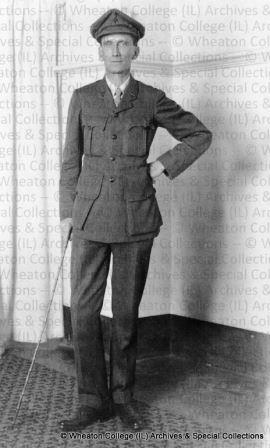
All photos from Wheaton College Special Collections
I’ve been writing a novel set during The Great War for the last sixteen months, which has affected my thoughts on war.
How should we see war? How should we react? What is war?
Oswald Chambers, a noted Bible teacher in the years leading up to World War I, had interesting insights which bear examination.
He believed elements of war are inevitable, as recorded in the December 4 devotional of My Utmost for His Highest:
“Life without war is impossible either in nature or in grace. The basis of physical, mental, moral, and spiritual life is antagonism. This is the open fact of life.”
Antagonism is always apparent in men and women and has been with us since Cain and Able. On a broad scale, that will lead to war and certainly that’s what happened in 1914.
Oswald Chambers presented an interesting angle on what war is and why it occurs.
His article in the September 1914 issue of Tongues of Fire, addressed these thoughts:
Is war of the devil or of God?
It is of neither.
It is of man, though God and the devil are both behind it.
War is a conflict of wills either in individuals or in nations, and just now there is a terrific conflict of wills in nations. Click to Tweet
Our Lord insists on the inevitability of peril. Right through His talks with His disciples, without panic and without passion and without fear He says, ‘you must lay your account with this sort of thing, with war, with spite, with hatred and with jealousy, with despising, with banishment and with death. Now remember I have told you these things that when they happen you may not be scared.’ [Luke 21]
We are not only hearing of wars and commotions, they are here right enough. It is not imagination, it is not newspaper reports, the thing is here at our doors, there is no getting away for it. War, such as history of the world has never know, has now begun.
Jesus Christ did not say: You will understand why the war has come–but : Do not be scared, do not be in a panic. Click to Tweet
There is one thing worse than war, and that is sin. Click to Tweet
We get tremendously scared when our social order is broken up, and well we may. We get terrorized by hundreds of men being killed, but we forget there is something worse–sinful dastardly lives being lived day by day, year in and year out in our villages and towns . . . these are things that produce pain in the heart of God, not the wars, and devastation that so upset us.
Are the terrors, that are abroad producing panic? You never saw anybody in a panic who did not grab for themselves whether it was sugar or butter or nations.
Jesus would never allow His disciples to be in a panic. The one great crime on the part of a disciple, according to Jesus Christ, is worry.
Whenever we begin to calculate without God we commit sin.” Click to Tweet
(Taken from David McCasland’s Oswald Chambers: Abandoned to God, pp 194-195)
Chambers, as always, goes to the heart. The root cause of war is sin, individual sin.
It’s an interesting concept, because our own sin is something we can control.
Once it starts in one person’s heart, however, and is allowed to grow unchecked, it can spread to another and another until the whole world is up in flames.
He was not a pacifist, Oswald Chambers “enlisted” in the Young Men’s Christian Association (YMCA) chaplaincy corps, to help those going to war. He closed down his Bible Training College in 1915 and headed to Egypt where he served at the Zeitoun YMCA camp, six miles north of Cairo. He spoke to tent-loads of soldiers at Zeitoun, teaching them from the Bible and helping prepare their hearts for their service in battle.
“They” say there are no atheists in foxholes. Chambers worked to ensure everyone who crossed his path understood his significance to God and what that meant, before they faced eternity.
On Wednesday nights, Chambers preached at Ezbekieh Gardens in downtown Cairo, not far from the famous Shepherd’s Hotel. The YMCA rented three acres of grounds at Ezbekieh as a rest and recreation center for the troops. Chambers lectured, much like Billy Graham, after hymn singing, piano playing and other entertainment. His was a popular ministry.
How do you deal with war? Particularly war you did not bring upon yourself?
Oswald Chambers took it upon himself to use that war, those circumstances, as an opportunity for men and women to examine their personal consciences and make choices about their lives–both then and in eternity.
He did not take up a rifle, but he laid down his life.
When Oswald Chambers died on November 15, 1917, the British military command in the Middle Eastern Theater understood the significance of his death. He may have been a YMCA chaplain, but in that heat and humidity, they delayed Chambers’ burial for a day.
They wanted, and they did, bury him with full military honors.
Have you ever likened your own personal sins to war?
How should Christians respond to war?
Do you agree with Oswald Chambers that “Life without war is impossible either in nature or in grace?” Click to Tweet

The post Oswald Chambers and Thoughts on War appeared first on Michelle Ule, Author.
May 16, 2014
Research and the Camel Conundrum

So it’s come to this. I have to learn about camels.
Perhaps it’s not too surprising because my clients, er, characters spend time in the Middle East, but I hadn’t seen this ripple in the story when I laid it out.
I saw references to camels while I did my research and I posted a couple photos on the Pinterest pages just because they were interesting.
When I recently reworked the synopsis, I saw an opportunity to use a unique porter to shed new light on my heroine.
Hence the camels.
I don’t know a lot about camels. It seems to me they’re tall.
They’ve got bony knees, long noses and they like to spit. That’s about it.

My former naval officer father didn’t care for the ships of the desert
I could probably gather up some adorable children and take them to the zoo, but do I really need to go to that much trouble for one chapter in my book?
What do you think?
My family has some history with camels and I’ve been hunting through the photo albums. Unfortunately, I can’t find the classic photo, but these blurry shots tell the story of my parents and grandmother visiting the pyramids in 1976 Cairo.

Grammy taking one out for a spin!
Grammy loved the entire outing, even donning the hat! My mother wrinkled her nose and my father was blunt: “never again.”
The smell, the enormous size of their feet, the shouting herders, and the decidedly cranky temperament made them less than enthusiastic about their rides, though the view was splendid!
But don’t we all live with the image of Lawrence of Arabia racing his desert ship across the sands to Aqaba?
Haven’t we heard stories about their prodigious capacity to go without water for long stretches of time?
By the way, how come some have two humps and others only one?
Wikipedia explains:
A camel is an even-toed ungulate . . . bearing distinctive fatty deposits known as “humps” on its back. The two surviving species are the dromedary or one humped camel, which inhabits the Middle East and the Horn of Africa, and the Bactrian, or two-humped camel which inhabits Central Asia. Both species have been domesticated; they provide milk, meat, hair and are working animals with tasks ranging from human transport to bearing loads.
So, if for some reason you got lost, you could guess at your locale based on the numbers of humps on the camels . . .
By the way, water is NOT stored in the hump. Click to Tweet
Other odd facts about the cud-chewing creatures:
*They have a third eyelid that moves horizontally across the lens, basically acting as a windshield wiper to clear the sand.

Mom was always a good sport
*They’re not spitting at you–a waste of water according to the link–they’re vomiting on you.
*They don’t waste water on their dung either–and it can be used while fresh for a fire.
*They can live to fifty years, usually retiring at 25.
*They can cover 25 miles a day across the desert as porters, and generally carry no more than 450 pounds, though they can go as high as 900. (Your mileage may vary)
*A riding camel can cover 80-100 miles in a single day (see Lawrence of Arabia).
For my story, however, I need other information, particularly with how my heroine will respond and react to these creatures, who play a significant emotional role. So, give us some sensory descriptions.
What does a camel sound like?
You can find anything on Youtube! (This video also lets you observe their behavior, like, how they fold up their legs!) Growling, moaning, chewing, sniffing.
What does their hide–which is used by many for a variety of projects–feel like?
(Wait, don’t I own a camel hair coat?)
Camel hair, as used in coats, is made from the Bactrian camel fur and is blended to a smooth, warm, finish. It’s even mentioned in the Bible–John the Baptist (Matthew 3:4) wears clothing made from camel’s hair.
Their hide is tough and wool-like and has many uses. It seems to be soft to the touch, but that’s not clear yet. It would be warm under the desert sun and it lightens in the summer time.
What does camel’s milk taste like?
Tasting slightly more salty than cows’ milk, but with three times the vitamin C and up to 10 times the iron content, camel’s milk is touted as a powerful tonic against many diseases and as an aphrodisiac.
I haven’t tried it yet . . .
What does a camel smell like?
My friend Linda found this information:
It’s.. well… it depends on the handler of the camel. If he washes the camel then it will smell like a bit of urine/manure/sun.If he doesn’t (which is the most case here), it smells so bad that any Asian, American and European nose will be so assaulted, you’ll be running away for your olfactory life. Seriously, it a mixture of manure, urine, and an odd pungent smell that we can’t identify.
That confirms it, who needs to go to the zoo?

Oswald, Biddy and Kathleen Chambers ca 1917
How far do you go to research? Click to Tweet
How did the camel get his hump and other research joy? Click to Tweet

The post Research and the Camel Conundrum appeared first on Michelle Ule, Author.
May 13, 2014
Four Tips for Working with a Professional
 I’ve recently had reason to work with a professional and I’ve garnered a few suggestions for others in my position.
In my case, I was working with a freelance editor, but these points are just as germane to anyone you pay to help you: doctor, lawyer, real estate agent, counselor, home decorator and so forth.
Four tips for working with a professional (writing or otherwise):
1. Ask around and find an appropriate professional for your particular need.
I needed someone to assist me with a project I’ve worked on for some time. A freelance editor I knew had an opening just when I had a need. She’s co-written award winning books and is a long time fiction writer. She coaches writers and has strengths where my writing needs improvement.
I didn’t hire someone who specialized in children’s books, even though I knew another freelance editor who takes clients and who has written children’s books. I didn’t seek out an English teacher because I needed a professional who has published in the arena in which I’m working. I did not hire an editor whose work I do not care for. I didn’t hire a friend I know is overbooked.
2. Treat the professional like a professional and pay them a fair rate commiserate with their skills.
The Bible is very clear: “a workman is worthy of his hire,” or in other words, a person you employ is worth being paid appropriately.
My husband likes to tell the story of a retired engineer called in to fix a machine:
He examines the machine and draws a circle around the screw that needs to be tightened.
He presents the owner with a bill for $5,000.
“But all you did was draw a circle around a screw!”
So the engineer writes a new bill:
- drawing a circle around a screw: $1.
- knowing where to draw it: $4999.
Don’t insult a professional by telling them their time isn’t worth much. Feel free to negotiate, but make sure they’re making enough money to spend adequate time on your project and earn a fair wage. Someone who has worked in publishing for ten years should not make only $1 an hour on your project. Click to Tweet
3. Do your homework before the meeting.
I always brush my teeth before I go to the dentist, even if I’m getting a cleaning. I think about what’s going on in my mouth and if I have any questions. I prepare for the appointment, even if it’s just a routine meeting and bring what I need with me. I don’t want to waste the professional’s time, particularly if I’m paying for it.
Prior to meeting with my freelance editor, I reviewed my project, gave thought to what I wanted from her, and wrote out questions. I thought through what I wanted to say and took notes.
I recognized what was pertinent to my need and what was not–and despite all my instincts, refused to tell her any fun stories that had nothing to do with my project.
I sent her an email detailing what I wanted ahead of time and we worked through those points during our appointment.
3. Listen to what the professional says about your project (whether it’s you, a manuscript, your dryer, the lawn sprinkler, etc.). Be humble, this is what you’re paying them to do.
It’s tempting as a writer to argue and try to explain, but with a manuscript, the work has to show itself. I won’t be sitting next to a reader pointing out all the details they’re missing because my writing isn’t clear.
Chances are excellent the professional will see things you don’t realize and will know things you don’t know. You’re paying them for their experience, remember?
This is not a contest about which one of you is smarter. This is an opportunity for you to be ignorant, to admit you need help–that’s why you’re paying for this service.
The professional doesn’t expect you to have all the answers–you’re presenting a need and they’re meeting it.
Take notes if possible and ask the professional for any notes they have taken. Consider having a trusted friend join you to take notes and with whom you discuss the meeting afterwards. (It’s amazing how much more someone can take in if they’re not as emotionally invested in the project as you are).
4. Do what you’re told and follow through.
My freelance editor friend gave me handouts to work through. The questions looked difficult. I had to rethink my entire manuscript.
It was hard.
I sat up from 10 to 1 one night thinking through my story line. I used one of the handouts as a worksheet and applied it to my manuscript–wherein I saw all sorts of unexpected insights. Because the editor asked questions in a way different from what I expected, I was able to view my story from a different perspective and improve it.
If you doctor tells you to lose ten pounds and get more exercise and you’ve paid him to tell you that, shouldn’t you follow through and do it?
Why pay a professional for their advice if you’re not going to take it? Click to Tweet

The post Four Tips for Working with a Professional appeared first on Michelle Ule, Author.
May 8, 2014
Remembering a Lost Mother on Mother’s Day
 With Mother’s Day in the United States approaching this weekend, I’ve been thinking about mothers. The most poignant story from my family is about Carrie, the woman at the left.
Thirty years ago, my grandmother sat down to write the story of her life. She started on the first page of the top left corner of a yellow legal pad and wrote in pristine handwriting, front and back all the way to the final page–without crossing out a word.
I transcribed her writing when I wrote her life story, The Rose of Mayfield . This is what she said about her mother, Carrie:
“When I was seventeen months old, my brother Arvon was born on May 5, 1906 . . . Our mother was very ill after his birth, due to having a new, inexperienced doctor. Blood poisoning set in. My poor mother suffered terribly because of this . . .
My grandparents, Hans and Caroline Wickman . . . came over to be with my mother. It being early summer, the wild roses were in bloom alongside the creek by the house. They are a pastel pink blossom and very fragrant to smell. Grandfather Wickman picked some of them and brought them to my mother and twined some in her hair to show his love and concern for her. It was Mother’s Day.
She had blonde hair and blue eyes. After seven weeks of suffering, she died. This was a sad thing as she was so young, twenty-fours years of age.
I was too young to remember her. I do not have the faintest recollection of her. I was told by my aunts that my Aunt Hannah made a white dress for me with lace beading and ran black ribbon through this beading for the burial services.
The day of the services Aunt Hannah was holding me in her arms and when they closed my mother’s casket, I waved my hand and said, “bye-bye, Mama.”
Thus began my grandmother’s account of her life. The day I typed it into the computer, I stopped and put my head down on the keyboard to cry.
I feel like crying right now.
My grandmother lived 90 years without that beautiful mother.
I’m not sure any of us ever got over the story.
Carrie’s suffering haunted me while I was in labor with my second child. My first son was 28 months old, nearly a year older than my grandmother when her sibling was born. I couldn’t bear the thought he might never remember me if I didn’t return from the hospital alive (77 years later unlikely, but laboring women are . . . not always thinking clearly).
I sat up late reading him story after story as his brother prepared to come into the world. I wanted to leave an indelible memory. I was a crying wreck, thinking of Carrie.
Fortunately, I survived.
He doesn’t remember . . .
I grew up with this photo hanging on the wall at my grandmother’s house, the only one we had, I thought. (Carrie was a teenager when it was taken in Emery Utah, circa 1900)
But when I went to write The Rose of Mayfield, the stack of photos included one I’d never seen before–of Carrie holding her firstborn on her lap, her husband Conrad leaning over her shoulder.
I’ve stared at this photo hundreds of time, trying to make sense of such a pretty Danish woman dying such a gruesome death. (I don’t know who wrote on my grandmother’s bonnet in pen.)
I’ve often started letters of condolence to friends with these words: “You’re never old enough to lose your mother.”
Among the papers, I found an envelope with a letter written to Conrad after Carrie’s death by that young inexperienced doctor. Dr. C.E. West felt great anguish:
“My Dear Sir and Friend,
Believe me when I say, that the death of a dear wife and mother is the saddest, and greatest calamity a man is ever forced to meet. Such a misfortune is indeed a cruel, domestic and social wrong that can never be remedied.
Ordeals of this nature have caused many men to carelessly drift into the saloon and brothel, thereby blighting their lives and disgracing their precious children, whom their fond mother so dearly loved and also sacrificed her valued life to bring forth the darling tributes of her husband’s love.
Conrad, I hope you possess too much manhood and upright character to ever permit such unmanly means, in order to drown the sorrow of her loss. For in so doing you would darken the blessed memory; because she cherished too large amount of womanly purity to smile on debauchery in any form.
Let the beautiful vision of your courtship’s happy hours, mingled with the sweet dreams of a loving wife and mother ever rise before you, and serve the angelic purposes of directing you in the noble path of duty, a loving father and an honorable citizen.
Those sweet orphans demand your wise counsel, a dear father’s love and good exampled in citizenship, a credit to you and an honor to their angel mother.
Trusting you may receive these few words of sympathy and kind counsel in the kindly spirit with which it is given, I wish to remain your friend in deepest Sorrw.
Dr. C.E. West
My grandmother was doted on by her grandmother, and the young aunts still in the household. She grew up well-loved and passed that love on to her own family.
I certainly benefited from being loved by her.
Happy Mother’s Day. Make sure you hug your mother, grandmother, great-grandmother, or anyone else who’s ever mothered you.
Tweetables
Losing a mother as a toddler: one poignant tale. Click to Tweet
1906 condolences on a childbirth death. Click to Tweet
Haunted by a great-grandmother’s childbirth death while in labor Click to Tweet

The post Remembering a Lost Mother on Mother’s Day appeared first on Michelle Ule, Author.
May 6, 2014
Four Tips to Start Rewriting a Novel

I’ve begun rewriting a novel.
It’s an intimidating process to pick up a manuscript you’ve slaved over for, in my case, fifteen months and realize it needs to be redone.
How do you even start?
This is where I am today, with
Four tips on how to start rewriting a novel:
1. Accept the manuscript needs work.
For many of us writers operating on just a margin of ego that frequently slips away as easily as the sun, it’s hard to admit your project isn’t perfect. People use a variety of ways to write a novel: the meticulous plotter (essential for thriller and mystery writers), the general planner who waves her hands and says “something will happen here,” and the seat-of-the-pants writers who miraculous find their story as they write.
All the methods have advantages and probably are linked to the author’s personality, but one thing remains–
We all need help at some point and our manuscript often will show it. Click to Tweet
So, don’t be embarrassed, accept the fact and move forward.
You can’t fix a problem if you refuse to recognize it.

2. Step away from the manuscript for awhile and then read it quickly
I had another project with a deadline intervene, and so I was able to leave the manuscript for a month. I’m not sure a month is even long enough, but since I’m about to sit down and start reading the whole thing this morning for the first time in 34 days, that’s what I’m going with.
Time gives us distance–we forget what’s in the story, both the good and the bad. Click to Tweet
It enables us to read “fresher,” more like a “real” reader. Zipping through the manuscript–reading it for pleasure not to find problems–enables us to get a better feel for what works and what doesn’t work.
I’ve got my pencil sharpened and as I read, I plan to make Xs in the margin of areas that don’t work in the following ways:
*boring
*repetitious
*unlikely
*out of character
* rabbit trail
*unnecessary
*WHAT?
and so forth.
3. Find a reader/ pay someone who understands technique to critique for you.
Several long-suffering friends, not to mention my saintly husband, have read my manuscript. They’ve been kind but have not screamed with delight–which was a warning to me something wasn’t working.
None are professional writers, however, and while they love to read (and love me!), I’m not sure they knew what the problem, technically, was. That left me very uneasy.
Lacking a critique group, I took the proposal to a professional writer who was able to give me some excellent points and steer me in a better direction.
Because I”m dealing with some personal time issues, the immediate advice was more important than the fee I’m paying.
If you are fortunate enough to have a reader/writer friend or a critique group, use them.
4. Beg your readers for their negative reactions and listen to them.
My father-in-law used to famously say an articulate enemy can be better than a loving friend.
As an aerospace engineer, he needed someone to criticize his WORK who was not afraid of jeopardizing the relationship.
I need to know where the problems are in my baby, er, manuscript, so I can improve. Click to Tweet
Of course it’s going to hurt, but I can’t fix it her, er, it, if I don’t know where it is.
Having watched me work through the research and writing of this manuscript through an extremely stressful period in my life, my agent knew her criticisms were going to be difficult for me to swallow.
They were.
I cried.
BUT, I knew it was for the benefit of my manuscript that I hear the problems and take them in.
I wrote notes. I was too emotional really to listen.
When I talked with Cindy Coloma, I took notes. She took notes. I’ve reviewed them several times.
I needed the feedback.
So do you.
Everyone needs an editor.

5. Bonus! Realize all the great writers write more than one draft. Here are a few suggestions:
Ernest Hemingway–who rewrote The Old Man and the Sea umpteen times, in long-hand!
Anne Lamott–everyone knows how she describes first drafts! :-)
Madeleine L’Engle–who famously said, “I can only write so far and then I need an editor to help me.”
Join me in the rewriting a novel stage! If you’ve got any tips, I’m open to hearing them.
In the meantime: I’m rewriting a novel. Back to the book!
How do you begin to rewrite work you’ve already written? Click to Tweet

The post Four Tips to Start Rewriting a Novel appeared first on Michelle Ule, Author.
May 2, 2014
Total Joy! The Rewrite!
Don’t you love to rewrite?Not just your manuscript, but your whole life?
Does an eraser on the end of a pencil give you comfort?
Are you thrilled with the cut and paste feature that comes with word processing?
Do you feel an enormous sense of relief that there is no sin God will not forgive?
It’s total joy, the ability to rewrite.
At least that’s what I’m telling myself these days as I send off my latest novella to the publisher and I return to my novel-in-writing set during World War I.
Back to the morass.
At least that’s what it felt like after I experienced the high of finishing the FIRST DRAFT of my manuscript (see post here), took a break to write a novella, and then got a reaction from my agent.
Not ready. Back to work.
Arg, the downfall!
I took a couple days off to mourn I’m not a wonder writer whose first draft was so perfect it had to be rushed to the printer. I sulked, moped, ate too much and watched movies while I played solitaire on my Ipad. I gave myself three days to simply wallow in my grief.
I gave myself the month of April to work on another project and when my mind drifted to “oh, no! What now?” I sternly invoked the reminder: “You don’t have to think about this until May.
Okay, so I cheated. The Yuletide Bride wrote like a dream. I finished early. My mind kept returning to my WWI manuscript.

It wasn’t May.
Well, I could do auxiliary research, right? I’d watch a few more movies, finally read the definitive novel, Mark Helprin‘s A Soldier of the Great War. Keep my hand in, so to speak, while I wrote about bagpipes and 1873 Nebraska.
It didn’t work. I couldn’t stomach the book (It’s 860 pages long!). I had no heart for war movies. I DID NOT DO ANY WORLD WAR I research! I barely read my Facebook Great War 100 daily postings. I was tired of the war. Tired.
But even as I wrote about Nebraska, my mind drifted back to my story and the concerns of my agent. It reminded me of a rumpled bed that needed to have the sheets and blankets straightened, the pillows plumped and the spread pulled taut–then the story would be ready. It was just a matter of straightening and writing a synopsis that reflected the story.
What a relief.
But in those early days, my brain spun in circles and I was confused. I knew my usual editor, Jamie Chavez, was busy. (Jamie very helpfully wrote a pertinent blog post during this time about writing more than a first draft. Sigh.) I don’t have a critique group. My usual readers hadn’t noticed what my agent pin pointed.
I needed a little clarifying help.
Fortunately, another novelist/book doctor was free and I contacted Cindy Coloma. She has a personal interest in a key component of my tale. She read the proposal, got enthusiastic, and sent it back with track changes. She also discussed it with me on Skype for 45 minutes so I could talk out my concerns with a writer who understood the technical issues. She sent me information that I turned into a work sheet. It was very helpful.
I like to call this the second draft synopsis. :-)
We’ll see what Cindy thinks. In the meantime, I’m grateful for another chance to explain my story. I love the project and I’m looking forward to returning to those characters, shaking up their lives a little more, giving them a more pointed destination and playing with the manuscript.
Don’t you love a rewrite?
At the same time, I get to review my euphoria over completion, eat some humble pie, be grateful God loves me no matter how silly I am, and, well, Word makes it all so easy.
Who can feel anything but relief?
Especially because, no matter what, the research is all done!
Tweetables
From the depths of despair to the cheerful joy of a rewrite opportunity. Click to Tweet
How many drafts of a project do you need before you’re done? Click to Tweet

The post Total Joy! The Rewrite! appeared first on Michelle Ule, Author.
May 1, 2014
Sneaky Behavior on May Day
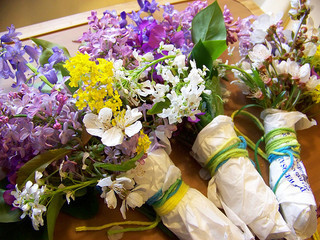
So today is May Day, May 1, and I woke this morning to reflect on how quickly the calendar turns!
(posting a day early because of the date . . . )
Perhaps it’s a bow to my historic reading, but when you say “May Day” to me, I think of rows of grim-faced Soviet generals and politicians lining up on top of a building overlooking Red Square in Moscow.
A scene from my childhood lived under the threat of all-out nuclear war, those men (I don’t recall any women) were watching workers march past, usually followed by enormous weapons.
I remember the first Friday of the month in Southern California when at 2 o’clock a siren would scream from the NIKE base on top of the Palos Verdes Peninsula. Our teacher would close the venetian blinds and we scrambled under our desks curled into a ball with our hands protecting our necks. When the all clear sounded (or did it? Fuzzy history now), we’d be released, the blinds would go up and the teacher usually would read for the rest of the day.
It was part of our childhood, I rarely thought about it. Except now, on the very rare occasions when I hear that doo-wopping sound, I’m taken back to black and white horror films of death and destruction, fearsome worries and a child’s helplessness.
I felt the same way in 2010 when I visited the Terror House Museum in Budapest and saw photos on the wall. You can read about that misery here.
My father was a naval officer, like my husband. “Mayday” is a call of distress. I guess it was for me as a kid.
But May Day is fun for other people and I’ve decided to adopt a happier tradition. Click to Tweet
The idea of a Maypole tantalizes me. Wouldn’t you love to grab hold of a ribbon streamer and weave your way in and around a maypole?  Wikipedia describes the dance like this:
Pairs of boys and girls (or men and women) stand alternately around the base of the pole, each holding the end of a ribbon. They weave in and around each other, boys going one way and girls going the other and the ribbons are woven together around the pole until the merry-makers meet at the base. . . . Temporary Maypoles are usually erected on village greens and events are often supervised by local Morris dancing groups.
I’m charmed by the idea, sneaking past and under ribbons to weave a happy paen to spring! Maybe next year . . .  Perhaps you prefer Robert Herrick’s poem Corinna’s Gone A-Maying and it’s catchy lines:
Come, my Corinna, come; and comming, marke
How each field turns a street; each street a Parke
Made green, and trimm’d with trees: see how
Devotion gives each House a Bough,
Or Branch: Each Porch, each doore, ere this,
An Arke a Tabernacle is
Made up of white-thorn neatly enterwove;
As if here were those cooler shades of love.
Can such delights be in the street,
And open fields, and we not see’t?
Come, we’ll abroad; and let’s obay
The Proclamation made for May:
And sin no more, as we have done, by staying;
But my Corinna, come, let’s goe a Maying.
May Day in Hawai’i is also Lei Day and my children made leis in school of a variety of items, festooning themselves and coming home laden and happy.
For many people, May Day is a fun romp to welcome spring. A friend grew up making posy cones of construction paper, filling them with popcorn and placing a flower in the midst. She’d visit the homes of friends, set the posy on the steps, ring the doorbell and run away–a sneaky gift of fun.
I like that idea the best, so today, I bought a small basket of flowers, scribbled a “Happy May Day,” card and snuck it onto a friend’s doorstep.
I hope it will make her laugh and rejoice in spring.
What are you doing to celebrate May and spring coming? Click to Tweet
The post Sneaky Behavior on May Day appeared first on Michelle Ule, Author.
April 29, 2014
The Value of a Prompt
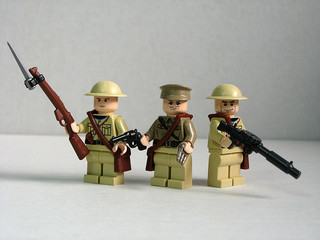
All five of my published works were the result of a prompt, as is the massive World War I novel I’m working on now.
I’ve written a number of other projects but, curiously, my own ideas seem to go nowhere. It’s only when an editor or a friend suggests something that my imagination flows and the project is purchased.
I’m not sure what that says about me.
Got any ideas? :-)
What is a writing prompt?
Daily Writing Tips explains it this way:
“A writing prompt is simply a topic around which you start jotting down ideas. The prompt could be a single word, a short phrase, a complete paragraph or even a picture, with the idea being to give you something to focus upon as you write. You may stick very closely to the original prompt or you may wander off at a tangent.”
I recognized the value of a prompt on one of my first writing projects–written to pay back a debt to my then-boyfriend. He wanted a story in exchange for fixing something. I couldn’t come up with an idea of what might entertain him, so I asked my father to give me a title, any title, and I’d write a story to match.
A mischievous sense of humor was his stock in trade. Dad laughed. “How about The Creature that Ate Bakersfield?”
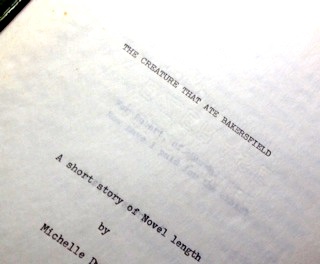
Uh, thanks, Dad.
I wrote it, though, and the boyfriend married me so obviously I’d found some way to turn a prompt into action.
Creative writing prompts are readily available on the internet, of course. You can view some here, here and here.
Prompts are also important in other areas of our lives, in particular, prayer.
I’ve recently written a post describing how to pray for someone for a lengthy period of time.
I personally don’t need more than a few prompts to pray–tell me the person’s name and the general problem. I don’t want to know more than that because I believe it limits my ability to “hear” the direction into which the Holy Spirits is sending me to pray.
(The internet, of course, has sites full of prayer prompts. You can find some here, here and here.)
Since the Holy Spirit is the one who interprets our “moans and groans to God,” I believe he also prompts the earnest pray-er in what to pray about.
That means I “sit” with the specifically limited knowledge that I have about an individual’s situation, and that person’s name. I close my eyes and think about that individual. I try to imagine what they’re thinking and feeling as they go through a circumstance, and I pray “in that direction,” just telling God what crosses my mind.

I “sit with” that person’s image and request and pray in every direction, about every facet–often using the tradition “who, what, when, where, how, and why?” as I pray. As explained in my prayer post, I praise God for whatever comes to mind, repent any part I may have in the situation, ask on behalf of the individual and yield the results in God’s hands. I wait until I feel done, and then I say ‘amen.”
Obviously, I have an imagination–I’m a novelist. I’ve also been a lay counselor for most of my adulthood–I’ve encountered lots of different situations over the years.
But most importantly, I believe the Holy Spirit provides the best prompts for prayer–and He knows far more than I do about prayer and that particular individual.
Prompts are given for action.
They’re to get us moving in the right direction, whether in writing, prayer or even making it to the dentist on time. They’re a tool, and as such are a help. The rest is up to you.
Tweetables
How often do you need prompts in your life? Click to Tweet
The value of a prompt. Click to Tweet
Do you think the Holy Spirit is the best prompt of all? Click to Tweet
Meanwhile, what do you make of that photo at the top of the blog? What does it inspire you to write or pray? 

The post The Value of a Prompt appeared first on Michelle Ule, Author.
April 25, 2014
How Do You Pray for Half-an-Hour for Someone?
 This is a post I recently wrote for a missionary friend, explaining to the people who had signed up to pray for her,
exactly how I pray for an extended period of time.
Once a month my husband and I spend at least half an hour praying for our friend Hillary.
Some of her supporters are puzzled as to how to pray that long, so here is how I did it.
I set the timer so I wouldn’t keep looking at the clock. I’ve done this before while praying—usually when I have somewhere to be and don’t want to be late.
Setting the timer frees me to focus what I’m doing- praying- and allows me to relax and wait for the Holy Spirit to lead my prayers.
I like to use the PRAY acronym.
I can’t tell you how long I spend on each letter– each component of the prayer time– but it helps organize me and the time.
P stands for Praise.
I begin by thanking God for the honor to pray for Hillary and for Sicily. I praise God for specific things I know about Hillary’s life and circumstances. I remember incidents from the past that God has used in her life and thus in mine.
I praise God for Hillary’s family, for her education, for her experiences, for her love of Scripture, for her enthusiasm for the gospel, for her obedience to Christ.
I praise God for experiences I’ve had with Hillary, for things I’ve learned from her, for the people in her life who have blessed me, for her perseverance and a host of other things.
I also spent time just praising God for who he is and how he works in our lives; for the Holy Spirit’s promptings, Jesus’ willingness to die on our behalf and so forth.
It’s probably worth noting that prior to praying for Hillary, I read through passages of Scripture.
When I feel like I have exhausted this category—it feels like I’m mentally gone through the closets in my brain looking for things to praise God for—I move on.
R stands for Repent
What does that have to do with praying for Hillary? Maybe nothing, but again, it helps keep me organized to have the framework.
I don’t personally know of any areas in her life that Hillary needs to repent, and it’s none of my business anyway. However, the Holy Spirit knows her heart and so I ask that she would be receptive to the leading of the Holy Spirit in any area that needs to be addressed.
I repent for things I may have said that have not been helpful to Hillary—my own lack of faith in certain areas of her ministry.
A is for Ask
Most of us think asking God for things is prayer, and I’m no different, so I spend the most time here.
Hillary provides us a list of specific prayer concerns each month and I work through those. Several are of particular interest to me and I pray around them from different angles.
In addition, I pray for
*People—those in her current life encouraging her, those whom she encourages, those she needs to speak with, those with whom she will be working in Sicily, those who need her in Sicily.
*Places—her current job, her ministries, the towns of Belpasso and Catania, wherever she is today.
*Things—specific items I know she needs (visa, new computer, more financial support)
*Responses to the Holy Spirit—that she would recognize where and when she is being sent and respond in accordance with Scripture.
I’m sure you have similar lists.
Y stands for Yield
I yield Hillary’s life up to God, gave her ministry and her situation to the Lord, and asked him to bring peace into her heart about her current circumstances.
I praise God and thank him as well, because that so often is the result of prayer.
When the timer dinged off, I was done with my half hour.
It went faster than I thought!
Closing Thoughts
Author Carolyn Weber on April 15, 2014 Family Life Today, spoke of the result of one man’s willingness to share the gospel with her. (The whole story is told in her wonderful memoir Surprised by Oxford):
“As the result of Kent sharing the gospel with me—living the gospel out to me, and even marrying me—it’s changed the hearts of my family, of my unbelieving friends, of my students, of my community at Oxford, my community in Canada, my children—everything. Everything has changed from that one drop in the pond.”
Prayer is the vehicle by which God changes people’s lives, prompts them to speak, and gives them the confidence to trust everything into God’s hands.
Is half an hour of prayer one day a month for one person a long time? Click to Tweet
What would I do to break the hold of sin on one person’s heart? Click to Tweet
What does it mean to love my neighbor through prayer? Click to Tweet
It’s a privilege to join with my brothers and sisters in Christ on behalf of Jesus in Sicily.
And to thank him for providing a willing heart in Hillary.
Join me, won’t you? Or do you have someone/thing else that needs lengthy prayer? :-)

The post How Do You Pray for Half-an-Hour for Someone? appeared first on Michelle Ule, Author.