
Michelle Ule's Blog, page 62
July 1, 2016
12 Brides: Auctions and Movie Inspiration

By Scott Bauer, USDA ARS Wikimedia
Where did the inspiration for one of my scenes in The Sunbonnet Bride come from?
One of my favorite movie musicals: Oklahoma.
In the movie, the townspeople indulged in a favorite money-raiser in frontier towns: the box luncheon auction.
Plenty of variation on the theme are out there and I used a pie auction in place of a lunch–though the auctioned item was in a decorated box.
The idea was a woman made a pie, wrapped it up in a special wrapping and brought it to the auction.
Interested bidders could browse the boxes, try to guess what type of pie was inside but, in the case of would-be suitors, figure out who made the pie in the first place.
Whoever won the bidding also won the pie maker–for, in the case of the lunch box social, the amount of time it took the couple to eat lunch.
With a pie–well, however long was necessary.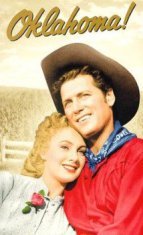
My inspiration for the pie auction was from the movie but also from other movie musicals like Seven Brides for Seven Brothers–where again, young men were competing for the attention of the available young women in town.
At the time, if you were a young woman with an eye on a young man, you might signal to him which box was yours.
Some men tried the direct approach, like Lena’s father:
“What kind of pie did you make for me?” Pa asked Lena.
She batted her lashes. “You’ll find your favorite on the table.”
Or, perhaps a friend would drop a hint, as happened in The Sunbonnet Bride:
“They were baking pies when I went by the boarding house,” Ewan said. “Lena was pitting cherries on the front porch.”
Sport returned with his stick and Malcolm scratched the dog’s ears. “Thanks.”
Since box socials traditionally were used to collect money or build a church–in The Sunbonnet Bride the funds were used for victims of a tornado–the auctioneer ran the bidding as high as he could.
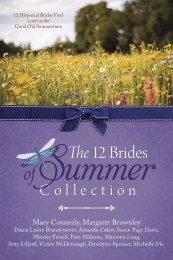
For sale here: http://amzn.to/1sbm79B
You might say, auctioneers took advantage of young men in love.
Malcolm hurried to the auction and egged on by the auctioneer as well as his wealthier rival emptied his pockets trying to win Sally’s pie.
The same thing happened to Curly in Oklahoma.
But did it?
Young women were well aware of the temptation to pass signals.
Some did.
Some didn’t.
And some found inspiration from the Biblical story of Rachel and Leah‘s father.
You’ll have to read the book to learn if the best man won the young lady’s heart.
In the meantime, here’s a clip from a dramatic production of the auction scene in Oklahoma:
Tweetables
Box socials, flirting and pie. Click to tweet
The movie Oklahoma inspires a Sunbonnet Bride. Click to Tweet
A pie social auction for romance or revenge? Click to Tweet
The post 12 Brides: Auctions and Movie Inspiration appeared first on Michelle Ule, Author.


June 28, 2016
Devotions: How to Use a Devotional Book
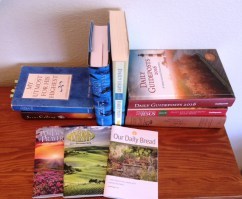
A selection of popular devotional books
How do you use a devotional book in daily devotions?
(This is part four of a series of posts about Devotionals. Click on the numbers to read parts 1, 2 and 3.)
For the first 25 years of my walk with God, I didn’t read a devotional book.
I didn’t see a need to when I had the Bible and my own prayers.
But at the turn of the last century someone in my husband’s Sunday school class gave him a copy of a famous devotional I’d heard of many times but never looked at: My Utmost for His Highest.
We had reached an odd period of time in our lives when that little blue devotional book first arrived in our household.
My husband had been out of work for several months and wasn’t having much success as he sought new employment.
Our oldest son was leaving for college; our second son was beginning to focus on where he would go once he graduated from high school.
Things were changing, again, and we had other stressors in our “larger” family.
I’d been teaching Bible study for years but I needed something to “change up” my daily worship of God.
I needed a little more input into how to pray and how to look at God.
So, when this devotional book arrived in my life, I thought, “why not?”
My Utmost for His Highest by Oswald Chambers
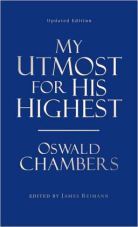
The 1982 edition I’ve used for many years.
My Utmost for His Highest captured me on the first morning. A 350-word devotional, it prepared me and asked questions of me I wasn’t expecting.
I’ve read it every day since; 17 years, because I find so much in it that speaks to me where I am on any given day, and challenges me to think about God a little differently.
For many people, it’s advanced Christianity, not because it supposed a long walk with Christ, but because it demands a depth of commitment to God that many people haven’t considered before. It’s a different way of looking at your spiritual life.
OC asks us to be mature in our Christian life. He asks questions of me that I don’t always want to think about. Sometimes the readings make me uncomfortable where I am in my spiritual life on that very day.
Other times, the readings reassure me, point me in the right direction or simply confound me. They’re different 366 days of the year—just like I am.
The Power of a Praying Woman by Stormie Omartian
Like most women, I wanted to strengthen my marriage as well, so I picked up The Power of a Praying Wife by Stormie Omartian, and used it in my devotions with God during the same time.
The Power of a Praying Woman is divided into 30 chapters; each one a specific way of praying for your husband.
At the end of each short chapter is a short prayer dealing with the issues in the chapter.
After the first couple times I read through the book and felt like I had a good handle on the how and why of each chapter’s prayer, I began to just pray the prayer at the end of the chapter. I’d open to that day’s date and pray that prayer.
I used The Power of a Praying Woman as a devotional book for 4 years.
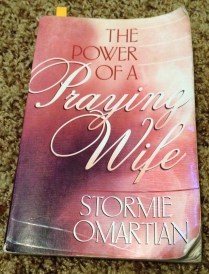
Dog-earred for good reason!
An amazing thing happened during that time.
My husband changed.
And so did I
I feel ridiculous even writing that—what’s the good of praying for change in my husband if I’m surprised when it comes?
His spiritual walk deepened, I began to see him in a different way. God was at work and my prayers probably played a part.
You don’t have to use this book on just your husband. Lately, I’ve been thinking I should pray these same prayers for other men in my life . . .
I didn’t spend a lot of time on either books—though maybe a little longer on My Utmost for His Highest, if I was completely confounded or some concept caught my attention and needed me to pray about it.
A devotional book can augment a quiet time but should not replace the two main ingredients: Bible reading and prayer.
The three components, My Utmost for His Highest, my Bible and my personal prayers have served and abetted my understanding and relationship to God for a long time.
I’m so thankful the Creator of the Universe wants to communicate with me and reveal who He really is.
Thanks be to God.
Tweetables
How to use a devotional book. Click to Tweet
A devotional book in addition to the Bible and prayer? Click to Tweet
The role of a devotional book in a quiet time. Click to Tweet
The other posts in the series are:
The post Devotions: How to Use a Devotional Book appeared first on Michelle Ule, Author.
June 24, 2016
Devotions: Prayer
This is not me praying. Hinterglasbild Psalm 119, 22 (Wikipedia)
Prayer is at the heart of my daily devotions.
“Prayer does not prepare us for the greater work; prayer is the greater work.”
Prayer is conversation between man and God. Genesis 3 indicates God walked and talked with Adam and Eve in the cool of the evening after their work was done. He expected to see them and spend time with them. He wanted to hear about their day.
Jeremiah 33:3, NKJV. “Call to Me, and I will answer you, and show you great and mighty things, which you do not know.”
The Jeremiah passage indicates God is calling us to talk with him so that he can show us things we don’t know or understand; he wants to be in communication with us and engaged in our lives.
Because I often talk to God about what I’m reading in the Bible (which is how I begin), segueing into prayer is easy.
There are hundreds of books on how to pray.
Jesus himself gave the best example in the Lord’s Prayer as found in Matthew 6: 9-13
How to Pray
I use an acronym, PRAY, as an outline for prayer, especially during my daily quiet time with God.
[image error]
The Lord’s Prayer ( Wikipedia)
PRAY
P= praise
R= repent
A=ask
Y= yield.
I just work my way through those four areas.
Praise
I begin by praising God for what he has done in my life; answers to pray, his character.
That enables me to remember I am talking about my life and the situations of others with the Creator of the Universe.
I’m not talking to a friend so much as someone who really does control everything.
Blessed be His name!
Sometimes I just sing a song or a hymn, anything to focus my mind on the majesty, character, ability and creativity of God.
I need to clear my heart before him—confessing not only sins I recognize, but I use this time to tell Him what’s really bothering me.
Maybe I’m irritated with a friend because she always complains.
Maybe someone has upset me in another area.
Often, when I complain to God about that individual or situation, He reveals where the sin is in my life.
I don’t like it.
I don’t like having to confess.
But if I don’t . . .
I’ll be locked up and unable to live in peace with one another, not to mention God.
I spend a lot of time repenting . . . . !
[image error]
Praising hands (Wikipedia)
Ask
Once I’ve got set in my mind who I’m talking to and my soul is clean before Him, then I can ask for things—both for myself and for others.
I feel like God can hear me better, and I’m more comfortable asking Him for things then—though this often doesn’t take very long.
I think about what I’m asking–because I cannot ask God to do anything that is not in line with His will as demonstrated in the Bible.
If my prayer request isn’t something God would honor, there’s no point in asking.
I like what Father Tim says in Jan Karon‘s Mitford book, Out of Canaan. He and his wife Cynthia liked to pray “The only prayer that never fails: Thy will be done.”
Yield
I give the day, the situations, and my life over to God to use to His glory every day.
The day usually goes better as a result!
“To say that “prayer changes things” is not as close to the truth as saying, “Prayer changes me and then I change things.”
Tweetables
The heart of devotions: prayer. Click to Tweet
PRAY as an acronym for prayer. Click to Tweet
Daily prayers and daily devotions. Click to Tweet
This part 3 of a series. Part 1 is Devotions or Quiet Times?
Part 2 is Devotions: Bible Reading.
The post Devotions: Prayer appeared first on Michelle Ule, Author.
June 21, 2016
Devotions: Bible Reading
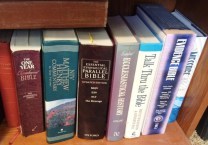
We own a variety of Bibles
The Importance of Devotions: Bible Reading
This part 2 of a series. You can read part 1 here.
The most important part of my daily devotions is reading the Bible.
The Bible is the Word of God,
“inspired by God and profitable for teaching, for reproof, for correction, for training in righteousness” (2 Tim 3:16; NASB)
and
“is living and powerful, and sharper than any two-edged sword, piercing even to the division of soul and spirit, and of joints and marrow, and is a discerner of the thoughts and intents of the heart.” (Hebrews 4:12; NKJV)
Written, true, by men, but “inspired by God.” This is the one place you can be sure of what God really says and means—because He told men to write it down.
To develop a mind of Christ, to become like Jesus, you have to spend time with him. After a while, his ideas, his words, his actions become part of who you are because you’ve spent so much time reading them and applying them to your life.
I started out by reading two portions of Scripture, now I read three. This is how I would order them:
One Psalm
One chapter in the Gospels
One chapter in another part of the Bible, Old or New Testament.
“Selkirk reading his Bible” (Wikipedia)
Bible reading and Psalms
I love the Psalms because they show us God’s heart and I like the start the day remembering how much God loves me—particularly in this cruel world where somedays it doesn’t feel like many people love me at all.
The Psalms also let us see emotions—and that God can handle and even encourage us to express our emotions to Him.
Read the start of Psalm 43:
Vindicate me, O God,
And plead my cause against an ungodly nation;
Oh, deliver me from the deceitful and unjust man!
2 For You are the God of my strength;
Why do You cast me off?
Why do I go mourning because of the oppression of the enemy?
3 Oh, send out Your light and Your truth!
Let them lead me;
Let them bring me to Your holy hill
And to Your tabernacle.
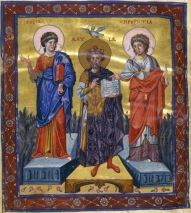
King David (Paris Psaulter-Wikipedia)
King David shouted at God, demanded attention, begged for justice. He was upset, worried, afraid.
He continued, but as he vented his emotion, the Holy Spirit worked in his heart.
King David knew he’d been heard by the time the Holy Spirit calmed him, and he ended with expectation and thanksgiving:
4 Then I will go to the altar of God,
To God my exceeding joy;
And on the harp I will praise You,
O God, my God.
5 Why are you cast down, O my soul?
And why are you disquieted within me?
Hope in God;
For I shall yet praise Him,
The help of my countenance and my God.
I like it when psalms end, “hope in God, for I will yet praise Him,” because that’s always an encouragement to me.
Sometimes I read that day’s Psalm out loud. Sometimes I whisper it, sometimes I read it and weep. But it always buoys me and reminds me I can tell God anything.
Bible reading the Gospels
God became a man and came to earth to live among us. That astounding fact is the reason we can converse with God.
God became man—Jesus—so he could know what life as a human being was. Jesus felt heat, cold, and a pebble in his sandals.
He experienced people pressing against him and demanding him to do things they should have been able to do themselves.
There is no temptation that is not common to man and Jesus both.
Jesus, however, as the perfect Son of God and Son of Man, did not sin.
He’s the heart of who God is and the best way for me to “see God in action.”
The Gospels remind me, every day, how Jesus behaved in extraordinary conditions so much more challenging than the small things in my life.
The good news of Jesus’ life grounds me in truth.
The verses are active in my soul—and I’m meant to engage with them
God tells us in Isaiah 1:18: “come now, let us reason together.”
That doesn’t mean to just read through the words. It means to react to them—in your mind or even out loud—to God.
The more often you read them, the more surprised I’ve become by how verses I’ve never seen before spring out of the text.
[image error]
An image of Psalm 23 (KJV), frontispiece to the 1880 omnibus printing of The Sunday at Home. (Wikipedia)
How many times have I read the Christmas story in 45 years?
And yet, I see something new almost every time.
Are the words changing in some magical way?
No.
I come to the words a new person every day.
Think how you responded to this verse if you first read it as a teenager, like I did:
“But woe to those who are pregnant and to those who are nursing babies in those days! 20 And pray that your flight may not be in winter or on the Sabbath.” (Matthew 24:19-20 NKJV)
“That would be hard, but someone would help you, maybe.” And I went on.
I read that verse as the new mother of a baby and was terrified. It came home to me in a completely different way when I had a nursing child.
That’s why the words—say of Psalm 23—can be so comforting in a sad situation.
God looks at your heart and provides the words of comfort you need that day.
I also read another Bible passage each day–working my way through the entire Bible itself chapter by chapter. I’m in Leviticus now with a 63 more books to go before I start over again!
Grace
Sometimes, I scan the daily Bible readings and it doesn’t mean much. Sometimes my life is crazy and I can’t concentrate.
In cases like that, I stop and read one paragraph—not an entire chapter—to reflect upon as I go through the day.
I believe God understands–since He knows my heart.
The best way to grow into a fuller knowledge of God, Jesus, the Holy Spirit and how they operate is by studying the Bible and/or meditating on it in bits and pieces every day.
It’s worked for me for a long, long time.
You can read Part I of this series here.
Tweetables
The importance of Bible reading. Click to Tweet
Bible reading and daily devotions. Click to Tweet
What’s most important in daily devotions? Click to Tweet
The post Devotions: Bible Reading appeared first on Michelle Ule, Author.
June 19, 2016
12 Brides of Summer: Maureen Lang
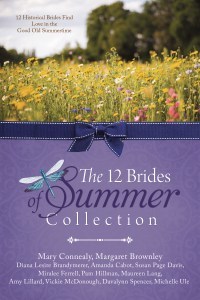 Maureen Lang’s The Summer Harvest Bride takes readers to a unique part of rural 1851 Illinois where a grist mill is being built.
As included in The 12 Brides of Summer Collection, it’s a companion to her Christmas novella The Gift Wrapped Bride.
Pretty Sally, the shy young girl who played Mary in the nativity pageant, has grown up in the intervening three years and settled into a small town west of Chicago with her farming parents.
Still timid, she’s caught the eye of the mayor’s son–who is quite a catch in the small town.
Her sister Alice wants Sally to be happy, but she’s not sure the mayor’s son is the right man.
The status quo changes for Sally the day Lukas Daughton arrives with his father and brothers to build a controversial grist mill.
Suddenly the thought of “settling” for a marriage to someone who never once made her pulse speed makes Sally reconsider her future.
But can the townspeople, and Sally, trust men from far away with such an outlandish and expensive plan–especially when they won’t be around to see if it works?
Can a timid woman take a risk for a handsome man she wants to trust?
And will a traveling builder change his life for the love of a pretty girl?
Themes and Research
Maureen’s theme in The Gift-Wrapped Bride was one of forgiveness and grace. Her characters learned God could really change people if they let him.
Maureen took a different tack in The Summer Harvest Bride:
“I wanted to explore the idea that even though we might be comfortable, it might not be where God wants us. Not only is the placement of the mill in question (a comfortable spot, or a risky one?), but Sally must decide if safety found in following the apparently inevitable path is better than taking a risk, even if it results in a broken heart.”
A grist mill is an unusual setting for a story and not one Maureen had set out to use, but as happens with writers, the research caught her imagination.
“I was looking for something else when I came across the familiar name of one of the few working grist mills still in Illinois not far from where I grew up. That led me to another site about a recently built replica of another grist mill a little farther west.

Look at the size of that wheel!
Grist mills were necessary and farmers traveled from all over to use them, but this mill had a different twist to its location.
“The man who built the Franklin grist mill wanted to build the mill where it was most convenient for the town instead of right on a river bank. He engineered a plan to divert water from the spring head to fill his mill pond.
Some people in the town thought it was foolish to build a mill so far from the river. He proved them all wrong! I love a story like that, especially when it’s true.”
Maureen quickly arranged for a tour.
“I was fascinated to learn the local population contributed their time and money to completely rebuild a grist mill originally considered controversial because it didn’t sit right on the river.
They dug a trench from a nearby river’s fountainhead to fill their own mill pond. The more I learned about how some people in the town didn’t think the grist mill could run so far from the river—even though the actual placement would be more convenient to the town—the more my own story began to take shape.”
She enjoyed learning about the mill so much, she included as much information about it as The Summer Harvest Bride novella could hold!
“Being on scene helped in the writing. I always love putting the pieces of a story together, especially when I have some visuals to go along with my story. . . . .
It’s so much easier to envision my characters when I know what they would have seen. It makes everything come alive for me.”
To learn about Sally’s life in Chicago before her move to the small town,check out The Gift-Wrapped Bride, still available for only 99 cents here.
You also might enjoy Maureen’s recent Indie title: The Cranbury Papermaker, available here.
Who is Maureen Lang?

The author of a dozen books, Maureen Lang has been writing since childhood.
She lives with her family in the Midwest.
You can learn more about Maureen and her books at her website: www.maureenlang.com
She regularly blogs on the Christians Read website.
You can also find her on
Tweetables
Who is Maureen Lang? Click to Tweet
Grist mills, summer and a cute builder. Click to Tweet
Summer Harvest results in love. Click to Tweet
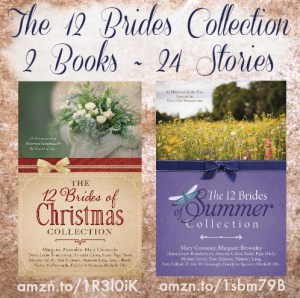
The 12 Brides of Summer Collection is available at all booksellers, or here.
For those looking for a complete collection of The 12 Brides of Christmas novellas, you can find the book here.
The post 12 Brides of Summer: Maureen Lang appeared first on Michelle Ule, Author.
June 17, 2016
Devotions: Or Quiet Time?
 The Importance of Having Daily Devotions or a Quiet Time
(Four part talk given at New Life Church, Ukiah, CA; June 18, 2016)
The measure of the worth of our public activity for God is the private profound communion we have with Him.… We have to pitch our tents where we shall always have quiet times with God, however noisy our times with the world may be.
~My Utmost for His Highest, January 6
Quiet time or devotions?
I can only speak from my own experience.
Back in the Dark Ages when I gave my heart to Christ, I was told that to grow as a Christian, I needed to spend time alone with God.
There, I would learn about Him, listen to him, respond to him, and my heart, mind, soul and life would change.
I like directions and so I followed what the good folks at Trinity Lutheran Church in San Pedro called “having a daily quiet time.”
I’ve been doing it ever since, with only one alteration in all those years.
Let’s start with a definition:
“Quiet time” suggests sitting quietly and listening—whether to the Bible or to God’s answers to your prayers.
It has a sense of “receiving” from God, and can be likened and really, is, meditating on the Bible passages.
It also touches on “listening” to how and what God says in answer to your prayers.
“Devotions” suggests “being devoted” particularly to God and showing your devotion by reading a devotional book, the Bible and praying.
“Having devotions” feels more like an action than having a “Quiet Time.”
But really, they are parts of the same thing, as described in several passages of Scripture:
Mark 1:35 “In the morning, rising up a great while before day, he went out, and departed into a solitary place, and there prayed.
Joshua 1:8 “This book of the law shall not depart from your mouth, but you shall meditate on it day and night, so that you may be careful to do according to all that is written in it; for then you will make your way prosperous, and then you will have success.
Mark 6:31 “Jesus said, “Let’s go off by ourselves to a quiet place and rest awhile.” He said this because there were so many people coming and going that Jesus and his apostles didn’t even have time to eat.”
Matthew 6:6: “When you pray, enter into your room, and when you have shut your door, pray to your Father who is in secret; and your Father who sees in secret shall reward you openly.”
[image error]
A Carmelite nun sits in her cell, praying, meditating on the Bible. (Wikipedia)
Basically, it’s just spending time alone with God.
It’s you and God, communing, talking, listening—Him to you; you to Him, responding and sorting yourself out until you are at peace with the One who loves you best of all.
But what does it look like? What do you do in a Quiet Time?
There are three parts to a quiet time, or a devotional time.
In my life, they boil down to
Reading three Bible passages
Praying
Reading a devotional book to get myself “in the mood.”
We’ll take all three in turn starting next time.
Tweetables
Quiet time or devotions? What’s the difference? Click to Tweet
Jesus on spending time alone with God. Click to Tweet
What is a daily quiet time? Click to Tweet
The post Devotions: Or Quiet Time? appeared first on Michelle Ule, Author.
June 14, 2016
An Angel and the Apostle Paul
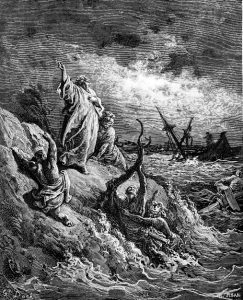
St. Paul Shipwrecked by Gustave Dore; courtesy www.creationism.org
Did you know the apostle Paul met an angel?
Everyone knows angels filled the sky when Jesus was born, and they turned up from time to time in the Bible to encourage believers in the one true God.
But Paul?
He met Jesus on the road to Damascus.
He was given visions and breathless escapes.
Why did he need an angel?
The meeting was described in Acts 27:23, with Paul providing the information to a group of terrified sailors as they endured a horrific storm in the Mediterranean Sea.
Paul stood in the midst of them and said, “Men, you should have listened to me, and not have sailed from Crete and incurred this disaster and loss. 22 And now I urge you to take heart, for there will be no loss of life among you, but only of the ship.23 For there stood by me this night an angel of the God to whom I belong and whom I serve, 24 saying, ‘Do not be afraid, Paul; you must be brought before Caesar; and indeed God has granted you all those who sail with you.’25 Therefore take heart, men, for I believe God that it will be just as it was told me. (Acts 27: 21b-25; NKJV)
They were on their way to Rome and despite Paul’s pointing out the weather was bad and they would lose all if they set off in October, the ship’s captain wanted to take a risk.
His Egyptian ship–with 276 passengers and crew–was filled with wheat.
The captain was in a hurry and didn’t want to linger in Fair Haven, Greece, through the winter.
When Paul, who had been shipwrecked several times before, pointed out disaster would befall them if they sailed, he refused to consider it.
And why would he? As far as he knew Paul was a mere prisoners, though an important one judging by the Roman centurion who escorted the man, not to mention the two men traveling with Paul.
Paul knew God wanted him in Rome and wasn’t fearful about setting off–he knew he would get there–but 275 other people might not.
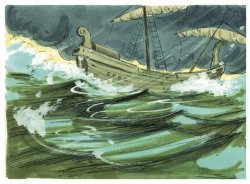
Bible Illustrations by Sweet Media.jpg (Wikipedia Commons)
Off they sailed.Three days later they were bailing and crying for their lives after a monster storm, a Euroclydon. blew up.
The experienced sailors went to work immediately. They secured their skiff “with difficulty.”
(Traditionally, the skiff traveled behind the ship, towed by a rope [line]. If the storm filled the skiff with water, it served as a dragging anchor and was likely to sink, possibly compromising the big ship itself.)
Once they got the skiff on board, they used cables to undergird the ship and took down their one sail.
Removing the sail was a last ditch effort to keep the ship from breaking up. They gave themselves to the winds and the waves, come what may.
They tossed overboard all that precious Egyptian wheat–to lighten the load and so the ship would sail higher in the water–making it less likely to run aground and break up.
On the third day, they tossed all the ship’s tackle overboard–the lines.
They knew their ship was blown off course–but the skies never cleared long enough for them to check the navigational stars.
They gave up hope and left their fate “to the gods,” the superstitious sailors hoped would come through.
Think of all the men down in the hull–probably including Paul–tossed about by the waves for two weeks. They were so seasick they couldn’t eat.
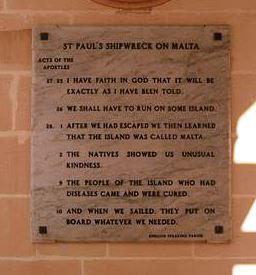
By Frank Vincentz (Wikipedia Commons)
But after 14 days, perhaps even Paul needed a little encouragement from an angel.
Paul knew he would get to Rome. He had confidence God would get him there somehow.
But, the men were frightened and Paul had told them they would get to Rome.
To help Paul and perhaps encouragement his faith, too, God sent an angel.
How could Paul be sure he was seeing an angel?
The first the angel said was, “do not be afraid!”
He also brought the good news that the prophecy Paul had foretold would come to pass for all who remained on board with him: all would be saved.
A mighty big promise and assurance in the midst of a mighty big storm.
Paul passed the word on to the sailors–those superstitious sailors–as well as to his Roman guards.
And you know what happened?
God’s word came to pass.
In Acts 28, all 276 people on board the ship made their way, shipwrecked and storm tossed, to the island of Malta.
Eventually it took Paul some 15 months to get from Caesarea to Rome.
He took good care to give Jesus the glory at every spot and to tell the good news.
An angel helped when he needed him.
Tweetables
Apostle Paul meets an angel. Click to Tweet
An angel arrives in the hull of a ship. Click to Tweet
Even St. Paul needed an angel to say, “fear not.” Click to Tweet
The post An Angel and the Apostle Paul appeared first on Michelle Ule, Author.
June 10, 2016
The Unexpected Expert
Takes one to know one?
Have you ever unwittingly discovered yourself an expert?
My friend Shirley was having one of those crazy days. She’d worked a long shift at the hospital, needed to stop at Walmart, the post office, the grocery store and the gas station before winding up the hillside to her home on a hot day.
She was bushed when she got home, knew she had to figure out dinner and a host of other issues cropped up.
She stopped to drink a glass of water and glanced through the mail. One pamphlet caught her eye:
“Are you feeling exhausted, overworked, overwhelmed and ready to be over everything?”
Yes.
“Are you looking for a time of relaxation, quiet and directed contemplation?”
Yes.
“Do you need to reconnect with the God who loves you the most?”
Yes.
That’s exactly what Shirley needed. Where? How?
It was a brochure from our local Christian retreat camp.
Of course, Shirley would go. When?
When she opened it up for details, she was startled to see her own face looking back.
She was the keynote speaker.
We’ve laughed about the irony ever since.
What is an Expert?
According to Merriam-Webster’s Dictionary, an expert is someone “having or showing special skill or knowledge because of what you have been taught or what you have experienced.”
Apparently the definition applies whether you feel like it or not!
Others only slightly disagree.
An Expert Even on the Internet?
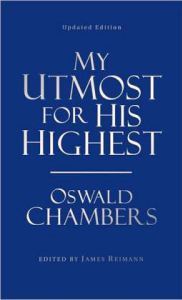
This is the 1982 paperback Barbour edition I’ve used for many years.
I’m currently writing a biography called Mrs. Oswald Chambers–the story of Biddy Chambers’ life.
I’ve reached one of the more challenging chapters concerning the compilation of My Utmost for His Highest.
It took Biddy three years to write and I’ve been scouring the Internet and other books, trying to understand her thinking while putting the book together.
It’s taken me to other classics from that time: Streams in the Desert, The Daily Light and Spurgeon’s Morning and Evening: Daily Readings.
As I’ve researched and tried to frame just what this new devotional was about, I realized I needed to define a devotional.
Of course I have my own understanding, but I like to deal with definitions.
So, I typed in “What is a Christian Devotional?”
Only one post on that front page asked and answered that question.
To my surprise, the author was me.
I laughed out loud, remembering Shirley’s surprise at being the expert on a confusing day.
If you’ve got the same question, here’s the answer!
And I followed it up the next day with “Six Keys to Writing Christian Devotionals.”
Which I had remembered writing and is in my notes.
I was wiser than I thought eighteen months ago!
Shirley, by the way, did a wonderful job at the retreat and we all left feeling less overwhelmed and exhausted.
Just as I did yesterday when I stumbled on something I had already written and could use again.
Though I still don’t feel like an expert!
Tweetables
Are you an expert and don’t even know it? Click to Tweet
The shock of expert status when you sure don’t feel like it! Click to Tweet
Expert status whether you remember or not! Click to Tweet
The post The Unexpected Expert appeared first on Michelle Ule, Author.
June 7, 2016
Sunbonnets: Business or Charity?
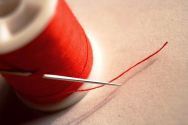 One of the themes I examined in The Sunbonnet Bride was the difference between running a business or a charity.
It’s a concept Sally struggles with when a local calamity runs into her dreams and ambitions.
Sally took a job working for a Fairhope seamstress with hopes of opening her own shop one day.
Creating clever hats were at the heart of her dreams, but she knew she’d need to earn money as a seamstress first.
When she was paid, Sally tucked away her earnings in a jar which she hid under her bed.
She knew it would take time to learn about running a business and to save enough money to start one.
A handsome banker in town liked Sally’s ambition, and was intrigued by her desire to have her own business.
He encouraged her, even suggesting she set up a savings account at his bank.
Sally demurred.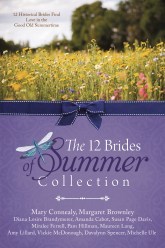
But, recognizing his financial savvy, she asked questions.
Asking a man about his business is an excellent way to his heart!
When a tornado roared through the area, Sally sewed sunbonnets for a church fundraiser aimed at helping farm families.
Recognizing a profit
Even today many small businesses have financial trouble after they are launched. It’s the most common reason businesses fail.
Capital is the major problem, along with keeping the cash flowing in time to get the bills paid.
As part of her contribution to the fund raiser, Sally sewed bonnets using gift fabric, after her work day.
They were quite a hit in the county seat.
But one day Banker Josiah asked her what it cost her to make them. Once the bonnets she’d sewn for charity were gone, she would be able to sell the same bonnets as a side business.
He’d found a market for them in the county seat.
Sally had no clue what the bonnets were worth.
So I discovered the answer for her.
In 1875, calico cost seven cents a yard; a spool of thread could be had for a dime.
The reeds were free. It took her perhaps two hours to complete a bonnet.
Materials, therefore, cost her a little less than 17 cents (you don’t use an entire spool of thread).
But what was her time worth?
In The Little Town on the Prairie, Mrs. White paid Laura 25 cents a day to sew.
She worked 10 hours a day, so 2.5 cents an hour.
Assuming Sally did the same, she should allot five to six cents per bonnet made, totaling 23 cents.
Since she would need some sort of a profit, it would be to her advantage to charge 25 cents per bonnet when she sold them.
It seemed an outrageous sum to Sally.
Josiah pointed out folks were willing to pay that much, so she shouldn’t worry about it.
But shouldn’t all the money she made from the bonnets go into the fund raising efforts?
Even generous, Teamster Malcolm thought her foolish if she didn’t retain the cost of making the bonnets.
“You can give away your time if you want for a fundraiser, but not the amount it costs you to make the items if you barely have enough to live on.”
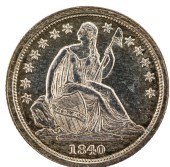
National Numismatic Collection, National Museum of American History.
Undervaluing her worth?
Too many people undervalue their time, despite the admonition from 1 Timothy 5:18 “a worker is worthy of his/her hire.”
I’ve known talented women whose businesses have failed—in part because of their generosity and lack of knowledge about just how business works.
They didn’t quite understand how to count the cost of producing their beautiful goods for sale–to make sure they charged enough to stay in business!
The Sunbonnet Bride doesn’t lack for businessmen interested in a pretty young seamstress with definite promise.
But when the young men tried to advise Sally on how to manage her money—well, she struggled with which business concept makes the most sense–to her mind and her heart.
Josiah comes up with a clever business ploy for the sunbonnet market. How much does he charge for Sally’s bonnets?
You’ll have to read The Sunbonnet Bride in The 12 Brides of Summer to find out!
Tweetables
An 1875 seamstress learns about running a business. Click to Tweet
Profit or charity? An 1875 seamstress learns the difference. Click to Tweet
A basic business lesson in 1875 Nebraska. Click to Tweet
The post Sunbonnets: Business or Charity? appeared first on Michelle Ule, Author.
June 5, 2016
12 Brides of Summer: Davalynn Spencer
 Davalynn Spencer returns to 1886 Colorado with The Columbine Bride in
The 12 Brides of Summer Collection
.
Davalynn Spencer returns to 1886 Colorado with The Columbine Bride in
The 12 Brides of Summer Collection
.The Columbine Bride is a sequel to her Christmas novella and features a character who demanded his own story.
“While I wrote The Snowbound Bride, I became intrigued by a secondary character, Buck, the uncle who helped raise my hero, Nate Horne. Buck needed a story of his own – to see if he would practice what he preached to his nephew when faced with the same dilemma.”
Her Christmas story ended with a December wedding and the sequel picks up five months later and continues through the summer. Ara and Nate are married and pregnant–everyone fears she’s carrying twins because of her size.
“But the biggest change is in Buck who – well, I won’t give that away.”
Enter Lucy Powell and her two small children and watch Buck’s world turn up-side-down.

Columbine
Lucy is struggling to get over her late husband’s freak accident at their ranch last summer. She wrangled a teaching job to support her family, but the school year is over and it’s time to return to the scene of their heartbreak.
Can she and her young children manage?
And if not, how will they survive?
“Need” is the driving idea behind The Columbine Bride. Need and how God meets it,” Davalynn said.
“It’s funny, but I become very attached to my characters when I’m working on a story. I feel I know them better than many actual people in my day-to-day life.
But this one? Oh, I’m especially fond of Buck and Lucy and the depth of their feelings.”
Since Davalynn lives near the setting for The Columbine Bride, she didn’t have to do much additional research.
She did, however, hear a story that worked its way into the novella.
“I had an interesting conversation with a horse woman who grew up around here near Cañon City, Colorado. She talked about “limbing” (cutting the limbs off) a fallen tree, then dragging it out from the woods on horseback.”
You’ll have to read The Columbine Bride to find out the importance of that little fact.
Who is Davalynn Spencer?
Multi-published author Davalynn Spencer writes inspirational Western romance complete with rugged cowboys, their challenges, and their loves.
She is the 2015 recipient of the Will Rogers Gold Medallion for Western Inspirational Fiction and has also finaled for the Inspirational Reader’s Choice Award, the Holt Medallion, and the Selah Awards.
As a former rodeo journalist and newspaper reporter, she has won several journalistic awards and has more than 100 freelance articles, interviews, and devotionals published in national periodicals.
She teaches Creative Writing at Pueblo Community College and pens a popular slice-of-life column for a mid-size daily newspaper. Davalynn makes her home on Colorado’s Front Range with a Queensland heeler named Blue and two mouse detectors, Annie and Oakley.
Connect with Davalynn online at www.davalynnspencer.com and https://www.facebook.com/AuthorDavalynnSpencer
Tweetables
Snowbound women and Columbines make for two splendid Colorado brides. Click to Tweet
Limbing a tree to win a bride? Click to Tweet
Who is Davalynn Spencer? Click to Tweet
The 12 Brides of Summer Collection is available at all booksellers, or here.
For those looking for a complete collection of The 12 Brides of Christmas novellas, you can find the book here.
The post 12 Brides of Summer: Davalynn Spencer appeared first on Michelle Ule, Author.



![[image error]](http://commons.wikipedia.org/wiki/File:Hammerhof_Hinterglasbild_Psalm_119.jpg)
![[image error]](http://commons.wikipedia.org/wiki/File:Brooklyn_Museum_-_The_Lord%27s_Prayer_%28Le_Pater_Noster%29_-_James_Tissot.jpg)
![[image error]](http://commons.wikipedia.org/wiki/File:Praising-hands.svg)
![[image error]](http://commons.wikipedia.org/wiki/File:Selkirk_reading_his_Bible.png)
![[image error]](http://commons.wikipedia.org/wiki/File:The_Sunday_at_Home_1880_-_Psalm_23.jpg)
![[image error]](http://commons.wikipedia.org/wiki/File:OCD_Zelle.jpg)