
Michelle Ule's Blog, page 61
July 29, 2016
Living Inside God’s Frame
 What does a picture frame have to do with the Christian life?
It depends how you look at it.
The idea/words popped out of my mouth a number of years ago while talking with a childhood friend.
We had grown up in each other’s library books while in elementary school, but the last time I’d seen her was at the 1984 Los Angeles Summer Olympics Opening Ceremonies.
That was it until Facebook entered our lives.
We reconnected, discovered we now lived 20 miles apart in Northern California, and made arrangements for coffee.
We picked up exactly where we had left off–though, obviously with more mature themes and stories–and laughed and caught up for a couple hours.
Wonderful.
But my brilliant, well-read, witty journalist friend was perplexed by something in my history.
“Christianity, Michelle? Why?”
I let the Holy Spirit answer the question, as in keeping with Jesus’ wisdom in Luke 12:11:
“Now when they bring you to the synagogues and magistrates and authorities, do not worry about how or what you should answer, or what you should say.”
I laughed and explained very simply:
“I see Christianity as a freeing way to live. The Bible provides the frame in which I live my life. I’m free to do anything I like as long as I stay within those basic parameters.”
She shook her head, probed my answer a little more like a good reporter and then we moved onto another topic.
I loved seeing her then and I love interacting with her today.
Thanks, Facebook.
Why live your life in a frame?
She didn’t ask, but that’s really the root of her question.
I like having a frame.
Long ago, I read about a new elementary school that didn’t want their students to feel oppressed or limited.
The school designers thought fences were a problem so they didn’t build any. The playground opened to wide fields.
A curious thing happened, though, at recess.
The children didn’t play all over that wide-open space. They huddled or stuck close to the buildings with their balls and games.
When asked, several explained they didn’t feel safe because they didn’t know where the playground ended and the fields began.
In other words, they needed a boundary, a frame, so they would know where they were safe and where they were not.
When the chagrinned administrators erected a fence, the children fanned out and played all over the playground–all the way up to the fence.
Knowing where the line was gave them the freedom not to worry about it.
How do you live in a frame?
 The Bible provides my frame. I believe that God gave me the gifts, talents and abilities He desired for me to use and enjoy.
I think God enjoys watching how I use my wonderful gifts (thank you, God!) in creative ways–whether cooking, cleaning, writing, loving, playing, working, reading.
The Bible tells me where the limits are–what I can and cannot do and remain under God’s benevolent care.
The Bible provides lots of examples of people turning their backs on God’s frame to go their own way.
They don’t care if they offend the God who created them in a specific time and place, with or without gifts, for His purposes.
They want to do what is right in their own eyes, no matter what God thinks.
That’s called sin.
Sin, ultimately, results in eternity separated from God.
I don’t want to live one day separated from the Creator of the Universe, the Jesus who sacrificed his life so I do not have to spend eternity apart from God.
I want to live in fellowship with the amazing Holy Spirit who inspires and rejoices and points me back, time and again, to the God who loved and created me.
If that means living within a framework, terrific!
That frame allows me to live my life wide and tall–to paint the picture God has put into my soul all the way to the ends.
And when the paint in my life overflows the frame or slops outside the boundary, I always can see Him beckoning me back to where it’s safe.
I apologize and he helps me back in.
I love the frame God placed around my fun, joyous, wide and tall life.
Thanks be to God.
Tweetables
What does living in God’s frame look like? Click to Tweet
Framed or freed by the Bible? Click to Tweet
The Bible as a frame for God’s creativity in you. Click to Tweet
This scene from the BBC version of The Voyage of the Dawn Treader always amuses me. Note that the children are happier once they’re inside the frame and back in Narnia!
The post Living Inside God’s Frame appeared first on Michelle Ule, Author.


July 26, 2016
Pinterest and World War I
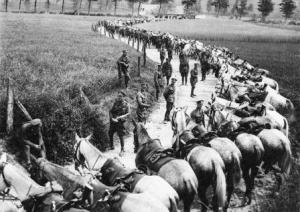
My most repinned pin–why?–and which side?
I’ve been maintaining a Pinterest board for World War I for three years.
It’s part of the background for a novel I’ve written (but haven’t sold yet) set during World War I.
My novel is a coming of age story about a young woman growing emotionally spiritually and professionally over the course of the war.
Oswald and Biddy Chambers are marquee characters in the novel as well, which is what started me on the research that led to my being contracted to write Biddy Chambers’ biography.
(More about that another time)
But WWI plays a significant role in the novel and so I had to learn a lot about that war.
(Really, who in their right mind would want to learn about it otherwise?)
I’ve written a lot of posts about WWI (and probably will continue to do so), but I needed to see the sites of the story–and thus the hunts through Pinterest.
Pinterest Pinners Choose Sides
In 2013 when I began, almost all the pictures that came up on searches were from the Allied side–England and France, as well as the Anzac countries of Australia and New Zealand. (Anzac stands for Australia and New Zealand Army Corps).
Russian photos have crept in–usually of the czar–and of course the Americans are all well represented in their pride.
I noticed almost immediately how unbalanced the pin sources were–were no Germans, Italians or even Ottoman army fans pinning on Pinterest?

The cursed but popular Red Baron (Wikipedia Commons)
Red Baron fans posted his photos, of course.Flyers provided plenty of boards with sopwith camels (British airplanes) and the German versions. Zeppelins appeared regularly as well.
The preponderance of books written from Allied side, particularly in English, would explain some of that–to the winners go the spoils and the history books.
(Britain’s Imperial War Museum released photos, videos and masses of documents over the years, making their materials far more accessible to English-speaking scholars, which also added to the flooding of the resources.)
As a former journalist, however, I’m skeptical.
In researching my novel, I learned how much the British government–under the original directions of former journalist/ head of the Navy Winston Churchill–relied on propaganda.
The first thing the British government did once they declared war was sever the German’s telegraph line to North America. Britain controlled the news–and it never had a good thing to say about the Kaiser’s men.
Perhaps that had something to do with the few German-themed pins on Pinterest 99 years after the war began?
The Axis Pinners finally begin to Pin
That’s still true now.
The majority of pins that I see still come from Allied-army supporters.

The German film crews were there.Bundesarchiv, Bild 183-1983-0323-501 (Wikipedia Commons)
But I’m seeing more pins featuring photos of German troops, Italian army men and even an Ottoman or two when the photos are of Gallipoli.This morning, I saw this article about a German soldier’s photo album that provided plenty of pin-worthy photos.
The soldiers look as young and raw as they do on the Allied side.
Research and my eyes have shown me the Germans built better, more secure trenches. They did not suffer as much as the British and French troops did in the mud.
Some of that is because they tended to have the physical high ground.
The German army had superior training and materials.
Their people suffered just as much as anyone else. The German forces were depleted by 1918 and their people were starving.
War was terrible for them as well.
Objectivity
My grandfather served in the American Army on the side of the Allies–that’s where my heart lies.
But from my journalism training in everything, I seek objectivity–I want to read and SEE both sides.
So, I welcome pinning photographs from the Axis country’s armies and I’m thankful, so far, Pinterest provides me with another look at a terrible war.
It’s still not pretty, but it’s important.
For the sake of our humanity, we need to know, even on such a medium as Pinterest.
I maintain a number of different WWI Pinterest boards. Here they are:
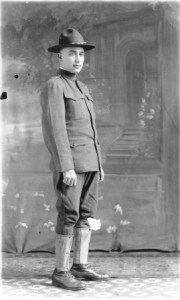
Grandpa in the American army
(My novel covered quite a bit of ground!)
Tweetables
The WWI German Army finally appears on Pinterest. Click to Tweet
Objectivity in war? Not on Pinterest for too long. Click to Tweet
Pinning WWI on Pinterest, the Allies are winning. Click to Tweet
The post Pinterest and World War I appeared first on Michelle Ule, Author.
July 22, 2016
British Book Publishing and Wartime
 What happened to British book publishing during wartime in the 1940s?
I’d never given it much thought until I realized the iconic photo of the Blitz and St. Paul’s Cathedral in London really isn’t about St. Paul’s not burning down.
It’s about one million books going up in flames, or as The Bookseller wrote on January 1, 19141, “it was a crematorium for books.”
Booksellers had been working their trade around St. Paul’s since Shakespeare’s day. On December 29, warehouses went up in smoke and countless publishers were put out of business.
The Oswald Chambers Publication Association was affected, as I’ve written here.
But all publishers were and as I’ve done research, I’ve uncovered some surprising facts about books and wartime, at least in England during World War II.
Wartime Paper Rationing
Of course paper had to be rationed, just like everything else. Several things caused this in England.
Inaccessibility of raw materials for manufacturing
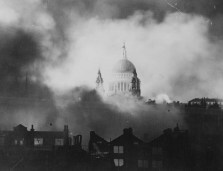
One of the causes of severe paper shortages
When France fell in June 1940, Great Britain lost access to the raw material needed to make paper that came from France and French North Africa.here.
Publishing houses were at first limited to 65% of the paper they used during 1939. By 1941, that percentage had decreased to 35% of usage. Books were becoming hard to get!
2. Government needed the paper
Regulations, ration cards, army training manuals, signs, you name it. By the end of WWII, the British government used twice as much paper as commercial publishers.
3. Manpower shortages
Both the producers of paper and printers themselves, young men in particular, were called up to serve in the armed forces.
Change in Reading Habits
British citizens were not great readers prior to the start of the war but with blackout requirements, that all changed.
Once the sun went down, streetlights were off, headlights shrouded, bomb damage in the streets, signposts deleted, it was dangerous to travel at night.
The flare of a match was even frowned upon.
Hours spent listening to the crump of bombs exploding from air raid shelters or deep in underground stations meant plenty of time to read for some.
(Knitting was also popular because not only were socks always needed, but it could be done in dim light).
Wartime Reading Material
With war looming in 1939, the most popular book was Mein Kampf. Obviously, British readers wanted to understand what the madman across the Channel was thinking.
Other favorites were John Gunther’s Inside Asia, another international book of interest in a war that was spanning the globe, along with Gone with the Wind and How Green was My Valley.

A favorite in 1942
The most requested novel in 1942 London was War and Peace.
Soldiers recovering in hospital and locked in POW camps also wanted books to read. The Red Cross stepped in to provide in a massive effort.
Remember, however, paper quality had deteriorated and paperbacks generally only lasted through 20 readings at most. The demand never let up.
Among popular titles in German POW camps according to Print for Victory: novels by Ernest Hemingway, John Steinbeck, Somerset Maugham, John Buchan and Naomi Jacobs, while toward the end of the war, biographies, thrillers, detective fiction and books on gardening, agriculture and architecture were in high demand.
C. S. Lewis and J.R. R. Tolkien compiled an honors-level degree course in English and volunteered to mark examination scripts sent from German POW camps!
German kommandants paid attention to the books that entered their camps, particular the popular escape narrative from WWI: H.G. Durnford’s The Tunnellers of Holzminden.
Managing the Stock
Books publishers were in the business of selling books and making money. They had to be careful which books to publish–in part because the British government’s War Risk Insurance was very expensive and based on the value of stock on hand–not whether it was selling or not.
For the Oswald Chambers Publishing Association with its tiny catalogue, the members made the sensible decision to focus on keeping My Utmost for His Highest in stock as best they could.
Demand for the book came in from around the globe, including from Germany (where it had been translated into German in the mid-1930s).
As the small group–no more than seven–wrestled with publishing decisions and scrambled with paper shortages and quality, they managed to keep their small publishing ministry producing books throughout the war.
(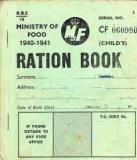 By 1951, the eleven year-old Finnish translation of My Utmost for His Highest, had sold 31,000 copies in a small country of 4 million people who had spent more than half that period at war.)
They managed, like all the big houses, to meet their public’s reading need–both for entertainment and spiritual growth.
Tweetables
How did British publishers manage during WWII? Click to Tweet
Mein Kampf as London’s 1939 best seller? Click to Tweet
Paper shortages, blackouts and WWII London. Click to Tweet
The post British Book Publishing and Wartime appeared first on Michelle Ule, Author.
July 19, 2016
What is a Change of Command?

Honoring the color guard
Today at a change of command for a Coast Guard friend, our pastor’s wife asked me if I’d ever attended one before.
“Frequently for 20 years,” I said.
Changes of commands are part of the military ritual and I enjoyed today’s very much.
Most of my civilian friends, however, didn’t know what I what I was talking about.
A change of command is exactly what it says it is–changing the officer responsible for a unit for the next officer responsible for the unit.
The program explained in a little more detail:
The Change of Command is a formal, time-honoring ceremony conducted before the assembled members of a command. It formally restates the continuing authority of that
command.
This ceremony is a transfer of total responsibility for the unit and crew from one individual to another.
Aside from its legal connotations, the change of command affords members of the command, guests and the community at large the opportunity to recognize the achievements and service of the Commanding Officer, while welcoming aboard the Prospective Commanding Officer.
At the United States Coast Guard Training Center in Petaluma on July 15, Captain Charles Fosse handed over the command to Captain Paul Flynn.
Official Ceremonies
Like most military ceremonies, a change of command traditionally starts with a color guard bringing in the flag, followed by the National Anthem.
On this beautiful day, I listened with my eyes closed, feeling a surge of patriotic pride for what my friends in the military have accomplished during their tenures.

reviewing the troops
After an invocation by a military chaplain, the outgoing and incoming commanding officers inspected their men.
They paused to shake hands with the senior enlisted men.
A senior officer oversaw the ceremony, Rear Admiral David G. Throop.
Admiral Throop knew both men well and he told a few stories. He presented Capt. Fosse, the outgoing commanding officer, with a citation of merit.
Capt. Fosse thanked a long list of distinguished guest for attending the ceremony. He worked through a list of senior military officers, local

Lots of “scrambled eggs” means many senior officers
dignitaries, family members and friends.
Particularly impressive to me, because I was sitting with them, were the four people who had given long service to their country in time of war.
One was a survivor of Pearl Harbor, one a flyer who spent a long time in a Germany POW camp during WWII.
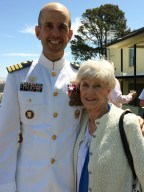
Distinguished guest: Enigma-not
One air force officer flew many missions over Viet Nam and when Capt. Fosse compared notes with him, discovered the pilot had attended a school with Capt. Fosse’s air force officer father in the mid-1970s.
My personal favorite, was a 98 year-old former analyst with the Department of Navy during WWII.
I knew many stories about her, but in this case I hadn’t heard that one day her boss came in and placed an Enigma machine on her desk and asked her to figure out the code breaker.
I whispered to her, “did you figure it out?”
She laughed back, just as Capt. Fosse quoted her answer: “I didn’t know how to do stuff like that.”
Capt. Fosse’s three years were well spent at the only training command on the west coast. In particular, the Coast Guard culinary school is located there–which meant delicious food was served at the reception afterwards!
He thanked many people, reflected on his time and made everyone in the audience feel appreciated on that warm, beautiful California day.
As a now “retired” Navy wife, I always listen closely to an outgoing officer’s words about his/her spouse.
Juggling life in a military environment is challenging and requires dedication to both the spouse and the military far more than the average person can ever really know.
We only moved a dozen times–and we had several four-year tours. We were an exception.
Most of my military friends moved more times than that and we all tended to travel back and forth from one side of the continent to another.
My Coast Guard wife friend Karen Fosse heard many deserved and wonderful praises about her on July 15.
Capt. Fosse wrapped up his remarks by reading his orders.
If you’re a real fan, here is a recording of all 28 minutes of his speech!
http://michelleule.com/wp-content/uploads/2016/07/Chuck-Remarks-1.m4a
After all the applause and thank yous from Capt Fosse, Capt. Paul Flynn stood, made a few remarks, and read his orders.
The chaplain returned to pronounce a benediction, the colors were retired and we moved up the hill for lunch, more stories, a cake cutting and a few gag gifts for Capt. Fosse and his family from his men.
A lovely day and a fine tradition.
Thank you, United States Coast Guard.
Thank you, Chuck and Karen.
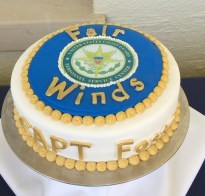
Outgoing cake–you can tell the culinary school is in Two Rock!
Tweetables
What is a Change of Command? Click to Tweet
What happens at a Change of Command? Click to Tweet
Enigma, Pearl Harbor, POW and pilot; honorees all. Click to Tweet
The post What is a Change of Command? appeared first on Michelle Ule, Author.
July 15, 2016
Jesus, Scientists and Me
 I got involved with Jesus and scientists about the same time.
Mine was a simple childhood in a family of athletes, history buffs, readers and musicians.
But I started attending a Lutheran church the summer before high school and there met Jesus and then a cute guy.
Jesus saved my soul.
The cute guy told me, “I’m going to be an engineer some day.”
I thought it an odd profession in the modern age. I’d never met anyone who drove a train.
But we started going out and I soon learned other definitions for engineer: scientist, builder, fixer, problem solver, space capsule designer, clever guy.
Ah, engineers do more than drive trains.
Reader, I married the man–who became a nuclear engineer among other things.
He swept me off to the world of Navy nuclear submarines.
When you spend all your social time with those smart men and their clever wives, you start to think you may know something about nuclear engineering.
Here’s what this Bachelor of Arts knows: you push the rods in, you pull them out, and the boat goes through the water.
That’s all this feeble mind could handle.
But I did learn to question everything, to assume there was a scientific or mechanical answer to why things work the way they do. Anything was fixable.
I had always been rational, but living with scientists made it even more important.
Facts, logic, reason and observation were important tools for living a satisfying life.
Jesus and scientists
While the tension between science and Christianity is well known, many years ago we stumbled on an organization that married the two together in a beautiful way: Reasons to Believe.
Our pastor had heard about them and asked my husband to take a look, as a scientist, to evaluate their books and teaching.
My multiple-degreed engineer who drove a submarine, appreciated and savored their books from the start.
Finally, he could read Christian apologetics that melded with his understanding of science–across the board.
We’ve purchased and read every book Dr. Hugh Ross and his colleagues have written.
“Try this one,” my engineer said, handing me The Fingerprint of God.
[image error]
Milky Way. Our solar system is one of billions in the galaxy. And the galaxy is one of billions in the universe. (Wikipedia)
My science credentials are meagre: classes along the order of “Calculus for idiots” and “Physics for Dummies,” taken at UCLA back in the dark ages.
I didn’t understand everything, but as I read, I felt like my brain was expanding in ways that were exciting and awe-inspiring.
I marveled at the concept that the Hebrew word for day is flexible time-wise and can mean more than 24-hours. (I understood the nuances of word choice!)
I gasped at the idea that we live in a universe that is “just right” and could be completely altered by the difference in the weight of a dime.
I could appreciate Bible accounts could corresponded with the continuing scientific findings in the secular world.
Really, it was breath-taking.
The Creator and the Cosmos
The other book my husband likes to share is The Creator and the Cosmos.
The cover of the third edition (I don’t know how many copies of this we have purchased and given away), lists the following questions which are answered inside:
Why are astronomers now talking about God?
What does the Big Bang say about God?
How can science show that God is personal and transcendent?
What new findings enhance the case for design?
What do recent measurements of the cosmos reveal about the Creator?

UFO (Wikipedia)
I went on to read a number of the books, my personal favorite is Lights in the Sky and Little Green Men: A Rational Christian Look at UFOs and Extraterrestrials.
(I loved the explanation as to the how and why of UFO sightings –it made sense to me from a spiritual standpoint, if nothing else.)
We listened to their podcast, we even met Dr. Ross once.
It is satisfying and wonderful to know the Jesus we worship, created the universe in such a knowable and marvelous scientific way.
So what?
Not all scientists or Christians agree with Dr. Ross and the other researchers and scientists at Reason.org.
But that’s okay.
When God created the universe according to the scientific laws is an apologetics issue, not a salvation issue.
Whether you believe in long-day creation or short-day creation, it doesn’t affect why Jesus came to earth–which is the most important question.
Creationism beliefs don’t change the reason Jesus walked among us.
They don’t alter the logic of the way he took his place on the cross to die for my sins.
No matter how God created the universe, Jesus and his sacrifice on behalf of all mankind remains true.
Even an English major can grasp that important fact.
Tweetables
Jesus, the scientists and an English major: me! Click to Tweet
Reason, logic, Jesus and the Creation of the Universe Click to Tweet
Apologetics is NOT a salvation issue. Click to Tweet
The post Jesus, Scientists and Me appeared first on Michelle Ule, Author.
July 12, 2016
Oswald Chambers and Children
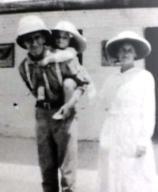
Photo courtesy Wheaton College Special Collections
Oswald Chambers loved children.
Even as an itinerant preacher traveling about the British Isles on behalf of the League of Prayer, he was known for his fondness and wish to have the children come unto him.
During those years, he traveled by train from city to city teaching on spiritual issues and lodged with League supporters in their homes.
(He was not paid for this work. He lived on the gifts of others–and never asked for money. His father didn’t much care for this method of living.)
Oswald enjoyed the personal contact that came from staying in private homes.
He spent many of his evenings telling stories to the household’s children, romping, observing and sometimes making suggestions to their parents that changed their lives.
Telling stories
According to daughter Kathleen Chambers, one evening while staying with devout friends, Oswald volunteered to watch their ailing children so the parents could attend an evening church service.
When the parents returned, they asked the children, “Did Uncle Oswald tell you some lovely Bible stories and teach you some lovely hymns?”
“Yes.”
He had taught them a silly poem which they happily recited:
“Little Willie in belts and sashes
fell in the grate and was burn to ashes.
Presently the room grew chilly,
But nobody cared to poke poor Willie.”
No word on whether Oswald was ever asked to babysit again.
Kathleen noted her father was excellent at imitating animals as well.
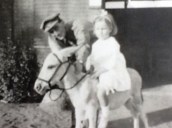
Good at imitating animals and romping with children. [Photo courtesy Wheaton College Special Collections]
Romping and Observing
Young Dorothy Docking lived in Blackpool and “Uncle Oswald” stayed with her family every year for a week as he preached. She thought him as handsome as a fairy prince, and didn’t realize he was even old enough to get married until he showed up with Biddy when she was 9 years old.
“I don’t think I ever knew he was a minister,” she remembered years later.
“He never talked about religion to me; I thought he was just a friend, a kind playmate.
He seemed my age when he visited, and always was willing to talk about whatever we [Dorothy and her brothers] wanted to talk about.”
Dorothy remembered Oswald coming into the parlor while she was writing a poem about Queen Victoria at Buckingham Palace.
When he asked about it, the eight year-old handed over the poem and waited while he read it.
They talked about the books she liked to read and why.
The conversation changed her life.
Oswald went to her mother with an observation and some advice:
“You must see Dorothy goes to University and that she takes honors English literature, because she’s going to make her life in literature.”
The Docking family took Oswald’s opinion seriously. Dorothy ultimately took two degrees in English Literature and became an English professor.
Dorothy Docking taught English Literature at Santa Barbara’s Westmont College for twenty years. Among her many stories was a claim that she suggested a name for a new automobile line produced by her automaker brother: the Jaguar.
Kathleen
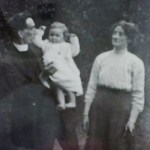
Delighting in his own child. [Photo courtesy Wheaton College Special Collections]
No child, of course, was as well loved as his daughter Kathleen.They called her “their flower from God,” and Oswald doted on his only child.
He played with her in the garden of their home in Clapham Common, he let her sit on his lap during meals at the Bible Training College, and chuckled with the rest when she participated in hymn sings at night, advising, “all wise,” when it was time to stand up.
She was only four years old when he died, but the photos of the two together show him focused on her and enjoying their times together.
Would a doting father have suggested his wife bring a toddler to live in a YMCA camp in Egypt during a war?
Only one who loved his child and trusted his God as much as Oswald Chambers.
Tweetables
Oswald Chambers and children. Click to Tweet
Suffering the children to come? Not Oswald Chambers. Click to Tweet
A romping prince who didn’t talk about religion: Oswald Chambers. Click to Tweet
The post Oswald Chambers and Children appeared first on Michelle Ule, Author.
July 10, 2016
12 Brides of Summer: Pam Hillman
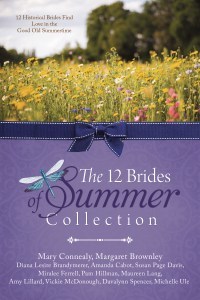 The Lumberjack’s Bride is Pam Hillman’s contribution to The 12 Brides of Summer Collection
A sequel to her The Evergreen Bride story from The 12 Brides of Christmas, The Lumberjack’s Bride returns to the same heart of the Mississippi pine belt in 1889.
Many of the characters return to this story set 18 months later when the family sawmill and logging operation has expanded. They need additional help and ask for business assistance from Annabelle’s uncle.
Annabelle’s plans for a white Christmas in The Evergreen Bride involved a trip to Illinois to visit her relatives, in particular her cousin Lucy Denson, a dainty petite city gal.
When the opportunity arose to write a sequel, Pam explained, “I wanted to use the same setting, the sawmill and the logging industry, for the second book. Lucy Denson was the obvious heroine.”
The pretty young woman soon catches the eye of Eli, a rough-and-tumble Mississippi lumberjack in an earth-shattering meeting deep in the forest.

Minnesota Historical Society Location no. HE6.41 p20 Negative no. 4291
A Mississippi native, Pam had to do research to make her story come alive.
“I delved more into the logging industry in the late 1800s and incorporated several terms unique to the hard-working lumberjacks.
Some of the terms, like widow-maker and gut-hammer are self-explanatory when used in context.
I enjoyed learning more about the era and the logging industry and figuring out ways to sprinkle The Lumberjack’s Bride with logging jargon.”
Both Pam’s stories deal with contentment and recognizing true love when it’s right in front of you, to a happy and satisfying ending.
But how important is it for Lucy to learn to cook well?
Only The Lumberjack Bride‘s groom will tell.
Who is Pam Hillman?
CBA Bestselling author PAM HILLMAN was born and raised on a dairy farm in Mississippi and spent her teenage years perched on the seat of a tractor raking hay.
In those days, her daddy couldn’t afford two cab tractors with air conditioning and a radio, so Pam drove an Allis Chalmers 110.
Even when her daddy asked her if she wanted to bale hay, she told him she didn’t mind raking.
Raking hay doesn’t take much thought so Pam spent her time working on her tan and making up stories in her head.
Now, that’s the kind of life every girl should dream of.
For more about Pam, visit her webpage www.pamhillman.com
You can also find her on
You can order The Evergreen Bride here: BUY
Tweetables
Who is Pam Hillman? Click to Tweet
A lumberjack fills out the summer with romance Click to Tweet
Who knew–logging in Mississippi? Click to Tweet
The 12 Brides of Summer Collection is available at all booksellers, or here.
For those looking for a complete collection of The 12 Brides of Christmas novellas, you can find the book here.

The post 12 Brides of Summer: Pam Hillman appeared first on Michelle Ule, Author.
July 8, 2016
Flying over the Grand Canyon

Grand Canyon; thanks Southwest!
Writing about the Grand Canyon may seem random, but wait until you see the pictures!
We flew OVER the Grand Canyon the other day and it was so fun, I want to share.
I first saw the Grand Canyon as a child, with my mother anxiously trying to hold us back from getting too close.
My father, typically, had already stood at a dangerous spot to take a photo and she didn’t want us to follow suit.
I read Brighty of the Grand Canyon as a child, and marveled at anyone wanting to ride a donkey down those steep and narrow trails. I’d much rather hike it myself.
I always dreamed of rafting down the river far below, or hiking the eight hours to get there.
But the river trip has never happened and my difficulties with heat, it gets as high as 105 degrees in the canyon, meant it would never happen to me.
We returned several times while I grew up and my husband and I visited on our honeymoon.
We brought a new tent in October, but as the rain fell from leaden skies, we discovered we should have sealed the seams.
Decamping quickly, we spent the night in Flagstaff.
Children in the Park
I returned with my parents and four children of my own many years later.
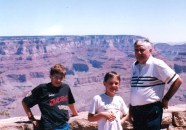 Dad was just as daring, but my children obeyed and stood back.
I had the same reaction I’ve had at every visit: something so grand and overwhelming as that canyon, can only be viewed out of the corner of my eyes.
It’s just too big to take in!
With a baby on my back, I directed the boys into the visitor’s center, where they enjoyed learning about the Native Americans and how they regarded that enormous crack in the earth designed by God and the Colorado River.
During that visit, my father, as usual, found money on the ground–in this case a $20 bill–and bought us all ice cream on a hot June day.
From the Air
Which brings us up to date.
We were flying home on Southwest Airlines from Nashville and I’d just finished my book.

It’s more colorful from the air!
We were slated to arrive in Las Vegas soon, so I glanced out the window.
I gasped.
The Grand Canyon, silent and timeless as ever, stretched below the plane.
While I’d seen it from the air in photos, I’d never seen it in person.

Colorado River snaking through.
I practically shouted, “Look! The Grand Canyon!”
No one looked up. Not even the husband beside me.
So I took photos.
Enjoy!
Tweetables
Family vacations and the Grand Canyon. Click to Tweet
The Grand Canyon seen from air! Thanks Southwest! Click to Tweet
Gorgeous photos of the Grand Canyon. Click to Tweet

West of the canyon
The post Flying over the Grand Canyon appeared first on Michelle Ule, Author.
July 5, 2016
Naming Characters for Friends?

Glam photo for a fictional pig owner
Is naming characters for your friends a good idea?
Many would argue no.
But, if your friends are good-hearted and don’t mind, why not?
That’s what I did in The Sunbonnet Bride, part of The 12 Brides of Summer Collection.
I felt a little guilty naming characters after several friends, but when I showed them in the book–no one cared.

Mrs. C sews beautifully herself
Here’s a rundown:
“Her landlady joined them, shaking her fine skirts and spinning with pleasure. The hoops she wore belled out the new dress beautifully and Mrs. Campbell looked lovely on the summer day with rosy cheeks and a spring in her step.”
Matching friends with behavior.
A little surprise on this one:

Char did give away her chickens!
“Charlie from the north side of Fairhope announces he’s got more layers than he knows what to do with. He’ll give one layer to each of the first ten Sterling families who find him.”
Matt is a fun guy who often finds himself in interesting predicaments for God‘s glory. This generosity reminded me of him:

No accordions appear in the story, but not a bad idea.
“A small load when you can get to it out at Brush Creek. Matt Boden said you should concentrate on those who need help first.”
Two ladies in my periodic book club were irresistible customers to the seamstress shop because while they are both always look well turned out, but more to the point, they love to read and are good friends (Note the reference to “bosom friends,” which is a nod to Anne of Green Gables, of course):
“So clever with the framing,” Mrs. Fitzgerald said. “I don’t know how you thought of it.”

Even wearing a hat!
She passed it to her bosom friend, Mrs. Downdall, who nodded. “Could you make me one in my favorite color: sky blue?”
The women took their leave. They’d purchased a copy of The Ladies Home Journal and wanted to read the story together.”
Using friend’s names just for fun, nothing else.
Reverend Cummings appeared in both The Sunbonnet Bride and its prequel, The Yuletide Bride. He’s actually the friend who let me play with his bagpipes:
Mr. Finch had just announced Reverend Cummings the winner of the suckling pig. “Raise him up and you could have bacon next year.”

A clan chief in real life.
The reverend’s daughter Grace began to cry. “I don’t want to kill the piggy.”
Malcolm returned to the back of the crowd after helping Grace Cummings find a spot in the family barn for her piglet, whom she named Hamlet.”
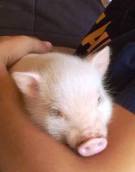
Sleeping Hamlet
Who would name a pig Hamlette (corrected spelling–she’s female)?
My niece.
So far, naming characters after people I like has worked out fine. All my friends have loved being part of my novella.
Why wouldn’t they?
I didn’t kill anyone and certainly none of them were the bad guys.
I name my bad guys after . . .
Well, who would you choose and why?
Tweetables
Naming characters after friends–a good idea or bad? Click to Tweet
How do you name your characters in a novel? Click to Tweet
Naming characters for friends–just for fun! Click to Tweet
The post Naming Characters for Friends? appeared first on Michelle Ule, Author.
July 3, 2016
12 Brides of Summer: Amanda Cabot
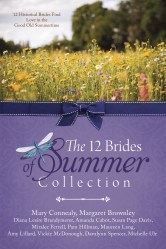
The Fourth of July Bride by Amanda Cabot is part of The 12 Brides of Summer Novella Collection, and includes romantic fireworks!
A sequel to her The Christmas Star Bride, the new novella returns readers to Esther’s bakery –the site of Esther’s Christmas romance with Jeremy, a portrait painter.
Amanda enjoyed coming up with a summer romance to match.
“I had so much fun with Jeremy and Esther that I wanted to include them in this story. As readers know, Jeremy paints portraits in Esther’s bakery, so I started asking myself, ‘Who else would want a portrait painted, and who else would be in the bakery?’ One question led to another, and before I knew it, Naomi and Gideon had come to life.”
Set in Amanda’s adopted hometown of Cheyenne, Wyoming in the 1880s,
“The Fourth of July Bride takes place about six months after The Christmas Star Bride’s final scene, and – as you might expect – the weather has changed. So, too, have Esther and Jeremy. They’re expecting a blessed event, and that’s caused all kinds of changes in their lives.”
Jeremy is still painting in a corner of the bakery and, in this case, is working on a portrait of the handsome and wealthy bachelor Gideon Carlisle. Gideon’s mother back east is after him to settle down and he hopes a painting will convince her he’s doing fine and doesn’t need a bride.
Gideon enjoys sitting for the portrait and likes passing the time with the beautiful Naomi who works at the bakery.
[image error]
English: Fireworks on the Fourth of July (Photo credit: Wikipedia)
For her part, Naomi is smitten, but waiting for Gideon to make a move. She’s worried about money and when Gideon comes up with an interesting proposition to meet her need, she agrees even as her heart breaks. Can he really be so blind? What will his mother think when she comes to visit in time for the fourth of July?
Will there be fireworks?
You’ll have to read The Fourth of July Bride to find out!
Amanda enjoyed writing about Cheyenne, having already written two full-length novels about this time period: Waiting for Spring and With Autumn’s Return. (Several characters from Waiting for Spring make a cameo appearance in The Fourth of July Bride.)
“It’s fun to bring Cheyenne in the 1880s to life for my readers, because not many people realize that the cattle barons made Cheyenne the wealthiest city per capita in the country or that we had the only opera house west of the Mississippi.”
While Amanda enjoys writing historical fiction, she’s recently branched out into more contemporary stories. See her website for more details.
Who is Amanda Cabot?
Amanda Cabot is the author of more than thirty novels, including the CBA bestseller Christmas Roses and Waiting for Spring.
She write about her life on her website, and notes the following:
“No doubt about it, I’ve been blessed. I had parents who nurtured my love of reading and have a husband who’s not just my best friend but who’s driven tens of thousands of miles to help me research books and who, after all these years, still hasn’t lost his sense of humor, even when dinner is late because I have “just one more scene” to write.”
For more information about Amanda, please visit her website or read her blog.
You can also find her on
Tweetables
Who is Amanda Cabot? Click to Tweet
The 4th of July Bride is a firecracker! Click to Tweet
Cheyenne, an engagement of convenience and the 4th of July! Click to Tweet
The 12 Brides of Summer is available at most book selling outlets, or here.
For those looking for a complete collection of The 12 Brides of Christmas novellas, including Amanda’s The Christmas Star Bride, you can find them here.
The post 12 Brides of Summer: Amanda Cabot appeared first on Michelle Ule, Author.



![[image error]](http://commons.wikipedia.org/wiki/File:Milky_Way_galaxy.jpg)
![[image error]](http://commons.wikipedia.org/wiki/File:4thFireworks1.JPG)