Michelle Ule's Blog, page 3
July 8, 2025
Daily Christian History: A Remarkable Surprise

I’m reading Christian history in my email every morning these days.
The email comes from Christian History Institute. Dan Graves writes the main story and a timeline of significant events for the day.
I’m writing this on June 17, 2025. Here’s today’s email.
The lead story is 457 words long.
(The June 17 story is about Count von Zinzendorf–whom Lettie Cowman quoted in Streams in the Desert, January 1.)
The story is followed by ten facts (usually deaths) that occurred on June 17. (Or whatever day you read it.)
Fascinating.
Who writes Christian history each day?Dan Graves has written stories for the Christian History Institute since 1996, or for 29 years.
I’ve been reading the daily stories for six months.
Curious about where the Christian history information came from, I interviewed Graves–on June 17!
What are some of the most surprising stories you’ve heard?“I still marvel at Rubruk’s 13th-century visit to the Khan (May 7). And Bar Sauma’s similar trip westward from China (March 28).”
And why not? Look at this map of Rubruk’s travels from the University of Washington:
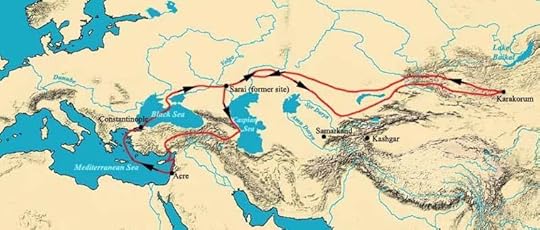 Travel of Guillaume de Rubrouck in 1253
(Wikimedia Commons)
Why do you think learning about Christian history is important to the everyday person who isn’t interested in history?
Travel of Guillaume de Rubrouck in 1253
(Wikimedia Commons)
Why do you think learning about Christian history is important to the everyday person who isn’t interested in history?
The church is Christ working in people, so their stories matter.
Others’ lives, whether long ago or in other countries, open a window onto the richness of human experience. [They also demonstrate] God’s dealings with our kind—[which is] surely worth contemplating.
History shows us that no one tradition of Christianity has a lock on God’s blessing. He’s used people of all sorts of backgrounds. Church history forces us out of our silos. . . . A people without a past can hardly be called a people.
Where do the stories come from?Graves has a Master’s degree in Library Science and has read Christian history since his childhood in Papua New Guinea. (His parents were missionaries.)
Foxe’s Book of Martyrs was the first book he read about the history of Christian persecution. It includes biographies of the martyrs. “For the first time, I realized being a Christian is serious business.”
(He noted his grandmother sent him a copy of A Connecticut Yankee in King Arthur’s Court. Graves sat up all night reading by a kerosene lamp. He slept a few hours, rose, and reread the whole book the next day!)
Like any good researcher, while reading about one person, he often discovers another interesting character.
 Dan Graves
He investigates that person’s role in Christian history, then discovers another.
Graves also keeps an eye out for the dates events took place.
“Deaths seem to be the most-recorded dates,” Graves said. “So I try to get as eclectic a range of non-deaths as I can find.”
While reading Spiritual Lives of the Great Composers, he recently discovered that Edward Elgar was a devout Christian.
“I’ll probably write a story about him,” in the future.
Christian History is at the heart of faithAs Graves explained:
“Christians have a historical religion, based on actual events in an actual time and place. Our creed recognizes this when it says of Christ, ‘who suffered under Pontius Pilate.’
“Also, most ‘modern’ heresies about Christ are actually recycled and have already been refuted by the church. Why reinvent the wheel?
“When we see how intently Christians believed and what they suffered for that belief, it’s hard to brush off Christianity as a fairy tale. (Many people find the religion of Communism hard to dismiss for the same reason. Read the story of Mao’s Great March.)”
(Or, see my blog posts here: Jesus Life Under Communism, or Persecuted, yet Jesus is Always with Believers.)
Personal Benefits for Graves–and othersI asked Graves about the stories’ effects on him, personally. Or, if he ever double-checked the unusual ones.
(Some of these stories, particularly from the early centuries of Christian history, are hard to believe).
“They sustain my zeal and encourage me. Paton having the contents of chamber pots thrown on him, or Charles Simeon locked out of his own church, make my problems seem small.
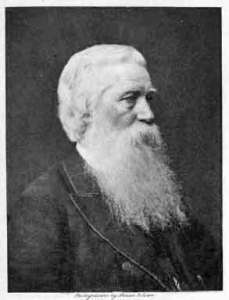 John G Paton (Wikimedia)
“Cannibals could not turn Paton from his Mission on Tanna.”
Charles Simeon Shouted “Hallelujah!” and Became a Powerful Educator.
But he also appreciated how “real” Christian saints are–they’re not just pictures on the wall.
“When I see Christians having fun (as Moody and James Chalmers did), or working hard to fulfill mundane needs (as Bob Pierce did), I am reminded of the importance of the entire human.
The Chalmers Arrived at Rarotonga Aboard a Pirate Ship.
Tweetables
Who finds and writes the daily Christian History posts? Click to Tweet
The importance of reading Church history–on a daily basis! Click to Tweet
The post Daily Christian History: A Remarkable Surprise appeared first on Michelle Ule, Author.


July 1, 2025
Trapped in Writing Mania’s Grip
 I got trapped in a writing mania‘s grip once.
 It was glorious.
Exhausting.
Numbing.
It felt like an adrenaline high. I was happy when it ended.
Here’s the description.
What is writing mania?Let me describe a Saturday to you.
I’d been trapped in a writing mania’s grip all week long.
I woke early, wrote for several hours, then lived a “normal” day, which included writing all afternoon.
My body was giving out–mostly my eyes–by 8:15 every night, so I went to bed. My husband had a good book, so no worries.
Friday was the same. Exhausted by 8, I crawled into bed. I felt so tired, I only read five pages of the terrific The Guernsey Literary and Potato Peel Pie Society. Then I fell asleep.
I woke at 2:15.
I’d hoped for something more reasonable, say, 5:15, to catch up on the week.
But the cat climbed in beside me at 2:15, yowling and demanding food. I ignored her and tried to fall asleep again.
But why fall asleep when you’re in writing mania’s grip?Lines from the story plagued me.
The cat stalked me.

My husband slept soundly.
At 3:45, I gave up.
I checked my email, said hello to a friend in Papua New Guinea, and had my morning devotions.
I didn’t feed the cat until the customary 5:30.
Wide awake, I went to my upstairs office.
As customary, I’d left the manuscript at an easy place to return to writing.
But I’d no sooner opened it when I got an idea for a blog post.
Why not use the time to write a blog post?I wrote the blog post, including photos, tweets, and all the other items necessary to make a blog post work.
Then, to my surprise, another blog post idea came up.
I wrote it.
By then, I was ready to get into my book.
I really needed to finish chapter five that weekend.
Biography writing is very time-consuming. I have to check, recheck, and reexamine everything, and I like to do it as I write.
An hour or so into that, another blog idea struck.
I wrote another blog post.
Then I ate breakfast, tossed in the laundry, and cleaned the kitchen.
Then I kissed my husband awake, let the cat in and out, and drank a cup of coffee.
Back to the book.
I could only write until 11 o’clock if I wanted to get a walk in before an appointment. We then had a movie date (4 o’clock showing, we knew I’d never last any longer).
I had several glasses of water, a discussion with my husband, and then I got ANOTHER blog idea!
(This time, I made note of it, but I didn’t write).
When I returned to the last four pages of chapter five, I finished it all by 10:50.
Dazed, astounded, so very thankful, I bounded down the stairs to my husband.
I turned on the printer, moved the laundry, let the cat in and out, then got dressed!
My husband read the chapter.
He loved it!
By 11:15, we were out for a walk.
No matter what siren called from the keyboard and screen, I was done for the day.
I’ve had writing mania before.While finishing A Poppy in Remembrance, I knew exactly how it ended. I wrote the final 25,000 words in five days.
It’s a glorious feeling–the words poured and I couldn’t type fast enough (I type 125 words a minute).
With all the cylinders firing, I lost track of time. I was shocked to see it was 12 hours later.
A week later, I read through my work with a critical eye and cried.
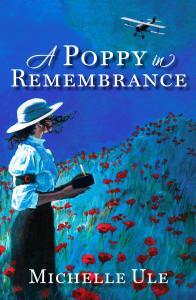
I wept reading the ending. The writing was good, yes, but also because I couldn’t believe the intensity of the ideas.
I still can’t believe I wrote it.
Truly a marvelous, wonderful, awe-full, incredible feeling.
I’ve got 10 chapters to go on this book–about 30,000 words.
I can hardly wait.
Frankly, though, I’d really prefer to live like a normal person, living manageable hours.
Tweetables
Writing mania–what it looks like in real life. Click to Tweet
Living with writing mania. Click to Tweet
Writing mania–read it and weep. Click to Tweet
The post Trapped in Writing Mania’s Grip appeared first on Michelle Ule, Author.
June 24, 2025
Hydroplaning and Skids, and My Spiritual Life
I’ve been learning about hydroplaning and skids lately while preparing for a driver’s test.
I’ve experienced them, yes, in my decades of driving.
But I never really understood how they worked.
This refresher course helped, but it also helped me see parallels with my spiritual life.
And explained an event from many years ago.
Hydroplaning and Skids? Or something else?On a January day long ago, I drove across Connecticut’s Gold Star Memorial Bridge, part of I-95, headed west. Eight months pregnant, I needed to buy my toddler a snow jacket.
It had snowed the day before, melted by sundown, and the air still felt frosty that morning.
A friend sat beside me as I drove up the on-ramp headed to New London. My two-year-old sat in his car seat in the Toyota hatchback’s backseat.
The on-ramp dumped our car into the left lane.
I needed to cross the bridge’s five lanes over the Thames River to reach the New London off-ramp.
Turning on my blinker, I glanced over my right shoulder. A large truck came barreling toward us.
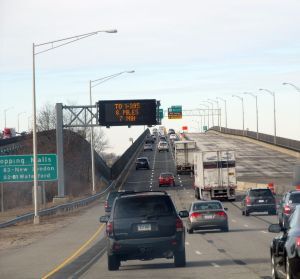 Many years before. I had to get from this lane to the far right.
 (Wikimedia Commons)
I’m from California. What did I know?
I hit the brakes.
The little car skidded across three traffic lanes. Driver’s training from years before kicked in and I remembered not to brake. I took my foot off the brake pedal.
Then I remembered to turn into the skid.
The car promptly swung around and recrossed the three lanes of traffic.
It spun and came to a stop facing the wrong direction.
Our old car’s flywheel didn’t always start when I put in the clutch and turned the key.
What happened? Hydroplaning and skids?I saw the truck coming and prayed, “Let the ignition flywheel work, Lord.”
Engaging the clutch and shifting into first gear, I turned the key.
Ignition!
I turned on my left blinker (!!!!), and made a deft U-turn into the proper lane..
With my heart pounding and the babe in my womb kicking like mad, I drove across the bridge and exited.
The truck followed us off the bridge. When we reached the traffic light at the bottom of the off-ramp, he indicated I should roll down my window.
“What happened back there?” he shouted. “I was terrified I was going to hit you!”
“Ice? I skid.”
“Oh, yeah! So glad we’re safe!’
The light turned green. He waved, and we continued on our way, thanking God.
I never understood what happened until I took a review class before getting my new license.
Thanks, California Department of Motor Vehicles (DMV).
Hydroplaning and skidsWhat are they?
I took driver’s training in the last millennium in Los Angeles.
 Water is always dangerous on the road. (Wikimedia Commons)
I’d never seen hydroplaning. I had no idea what it was, even when the teacher explained.
Skidding made more sense. I’d experienced that.
But water and the roadway?
Wouldn’t that just make the road cleaner?
(You remember the song? “It never rains in Southern California?”)
What is Hydroplaning?Along with rocks, trash, and dirt, roads often get oily from the vehicles using them.
When it starts to rain, the oil mixes with rainwater. The car tires don’t have traction with the road, but ride on a filmy mixture of oily water.
California’s DMV explained, “the vehicle skates on a cushion of air with oil and water underneath.”
That’s why driver training tells us to
Slow down in rain or bad conditions. Take your foot off the accelerator, but don’t brake! Let the car slow on its own.Proceed slowly when you feel the tires regain traction on the road.SkiddingIn both a hydroplaning and skids situation, suddenly hitting the brakes can cause them to lock. The more slippery the road, the less brake pressure needed to send you into a skid.
So, again, in dicey road conditions, slow down. Let the cars honk at you.
Obviously, you know your car. See your manual or check out articles about skidding online.
It’s obviously more complicated than my simple explanation.
The snow had melted sufficiently on the Gold Star Bridge that the roadbed was slippery.
Shocked, I hit the brakes, rather than simply slow down and return to my correct lane.
Hitting the brakes caused my tires to lose traction, sending me into a spin.
When I turned into the skid, the tires began hydroplaning. My car spun in the reverse direction.
I don’t remember what I did, in shock, to cause the car to die.
Fortunately, a good truck driver, and the answer to prayer, got us safely home.
Spiritual takeaway?We can get so focused on where we’re going that we can miss dangerous situations.
Sometimes we forget basic spiritual guidelines: putting on the armor of God, praying, and listening to God.
Spiritual hydroplaning and skids in the spiritual life can look like this:
Sinning. (In auto terms, not obeying the law. I had time to get across the bridge. I was in a hurry.Not recognizing the need for off-ensive prayer. (We were taught off-ensive driving skills in the Dark Ages.)Avoiding responsibility for brothers and sisters. (I’m not the only driver on the road).Not staying up-to-date with personal devotions.My take-away? I need to avoid overconfidence in my driving and to keep renewing and reviewing my driving skills!
And, don’t stop learning how to drive better!
How about you?
 Panorama, Gold Star Memorial Bridge in spring. (Wikimedia Commons)
The post Hydroplaning and Skids, and My Spiritual Life appeared first on Michelle Ule, Author.
June 17, 2025
Complaining Again? How to Choose Not To

As we chatted, I realized I was complaining again.
No, that couldn’t be.
I must have been reasonably discussing.
We continued.
But the twinge. “Really?”
We continued, but I slowed down my fervor.
(That means I stopped waving my hands. I’m Sicilian by heritage.)
Except the Holy Spirit had alerted me. I was complaining again.
I apologized
My friend laughed.
I made another statement, then threw in the towel.
“Let’s talk about something else.”
One way to reverse complaining again and again.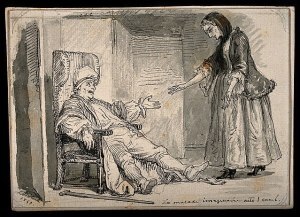 A hypochondriac complaining to his wife. (Wikimedia Commons)
Look at these synonyms for complaining!
protesting grumbling griping kvetching whining fussing squawking unforgiving uncompromising impatient intolerant unyieldingDo any of those words sound like “reasonably discussing?”
Bible Gateway added to the fire, noting 54 results in the NKJV concordance for the word “complain.”
Not surprisingly, the book of Numbers listed the most times complaining again that occurred.
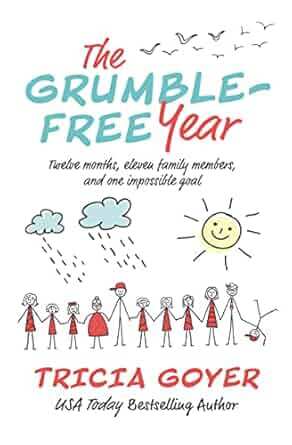
A Grumble Free, complaining-free, life?My friend, writer Tricia Goyer wrote a book several years ago about stopping complaining, again, in the family.
Her book, The Grumble Free Year, describes how her family worked to stop the griping!
(You can watch her in Focus Family discussion, “The Year My Family (Sort Of) Didn’t Complain “ in November 2019.)
In the case of the Goyer family, they focused on gratitude–finding ways to be thankful.
It’s Scriptural.
“In everything give thanks; for this is the will of God in Christ Jesus for you.” (1 Thessalonians 5:18; NKJV)
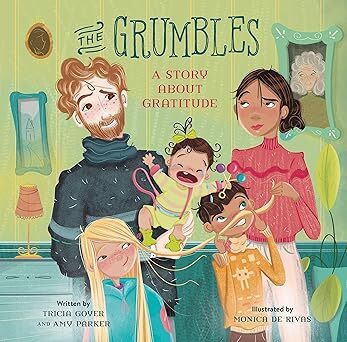
Tricia turned her parental guide into a children’s picture book with another friend, Amy Parker.
Starting the children out right, giving thanks and not complaining again, can help.
 Except I’m an adult. How do I change?
My friend and I are both “retired” Navy wives. We hadn’t told all our stories to each other, so we binged!
It was wonderful.
We laughed and laughed.
She well knew my signature line (which even my civilian friends know!): “He was out to sea, of course.”
It felt good to get rid of that pain with a friend who can commiserate.
But sometimes we commiserated too long.
I started feeling guilty. Was I complaining again?
I told her husband, “I loved many things about being a Navy wife. In fact, I’m going to write a list.”
He laughed.
When I got home, I mailed him a list of 60 things I loved about being a Navy wife.
My goodness. What was I complaining about?
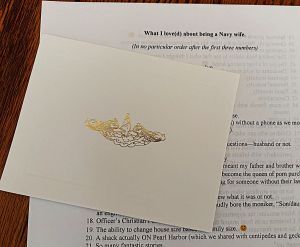
My husband loved reading the list, too.
How to stop?Cultivate a thankful heart.The Bible’s New King James Version has 109 verses about thanks. Practice those.Ask the Holy Spirit to call you on complaining, grumbling, or choosing not to be thankful.If you are tempted while talking with a particular friend, make a pact not to grumble.Ask friends and family to hold you accountable.Listen to what you’re saying and catch yourself.Be encouraged that complaining again is not the unforgivable sin. But, it can become a habit.Never forget there is no sin that Jesus will not forgive. Be thankful for that!Tweetables
Suggestions for how to stop complaining again! Click to Tweet
How to choose the opposite of grumbling when commenting. Click to Tweet
The post Complaining Again? How to Choose Not To appeared first on Michelle Ule, Author.
June 10, 2025
Walking the Strait of Juan de Fuca

Walking the Strait of Juan de Fuca recently gave us a beautiful time in nature.
(And this photo essay).
The Strait is the watery divide between Washington State and British Columbia, Canada, to the north.
We’d traveled to Sequim, Washington, to spend time, again, along that body of water.
We wanted to hike Dungeness Spit, but the weather discouraged us.
So, we admired it from a distance.

That’s the Dungeness Lighthouse, a distant white tower in this photo.
It’s five and a half miles one way–and you have to return the same way.
I didn’t have eleven miles in my knees.
So we plunged down a steep bushy trail to the rocky shore below our B&B.
Through the Olympic Mountain scrubSequim sits in the “rain shadow” of the Olympic Mountains in the northwest corner of the continental US.
The weather is better than most of Washington State.
White capped mountains stand to the west, and lavender fields spread across the plain.
To reach the strait, hikers plunge down a steep set of staircases through ferns, wild geraniums, and pines.
At the bottom of our trail, my husband opened a “drawbridge” to the beach to navigate more easily.
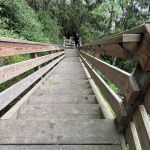
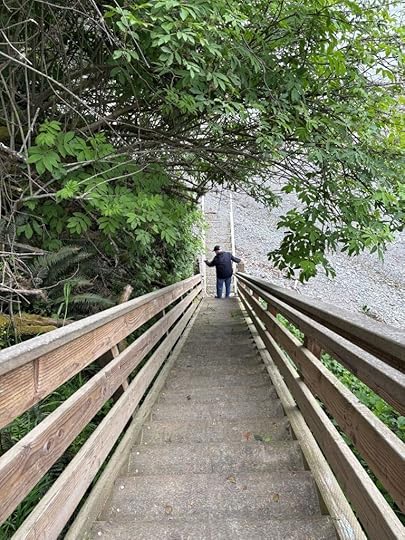
And then we stood across the watery border with Canada.
The teeming sea, calling gulls, and the rocky low tide lay between us.
The wind blew strongly on that cloudy day.
Glorious.
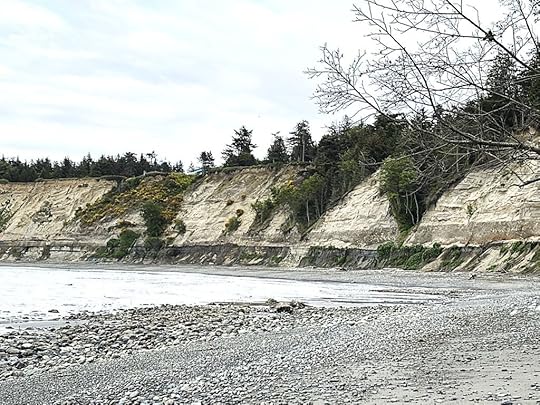
The rocky Strait of Juan de FucaWe headed east (we were on the US side) before the rocky beach narrowed to water.
See the height of those shoreline bluffs?
The ladders only reach halfway up.

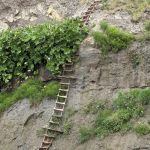
It took a lot of agility to use them. We were thankful for the steep stairs!
Why the Strait of Juan de Fuca?Fur trader and sea captain Charles Barkley sailed the Imperial Eagle through the strait in 1787.
He named it for Juan de Fuca, a Greek navigator from the 16th century. De Fuca sailed on a Spanish expedition seeking the Strait of Anián. (Anián was believed to be the boundary between North America and Asia.)
History doesn’t record if de Fuca found what he sought.
The waterway named after him opens up the entire Puget Sound for commerce and military use.
On the day we visited, the rocky shore was ours to explore. Only two ships traversed the strait during our visit.
We felt a long way from anywhere!
We’ve crossed the Strait several times on the ferry between Port Angeles and Victoria.
My husband made his first cell phone call while on a submarine transiting the Strait.
It’s been a friendly boundary for many years.
Sometimes you can even spot pods of orcas swimming past.
What makes up the Strait?Besides ocean water?
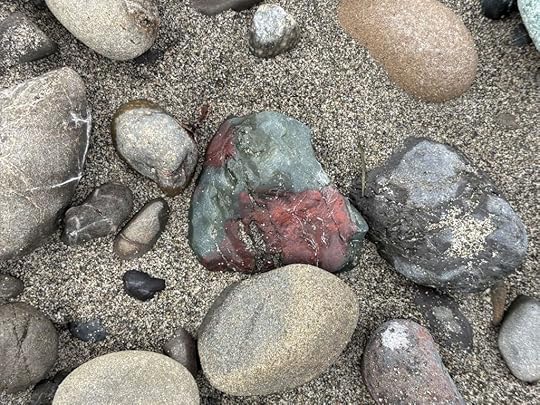
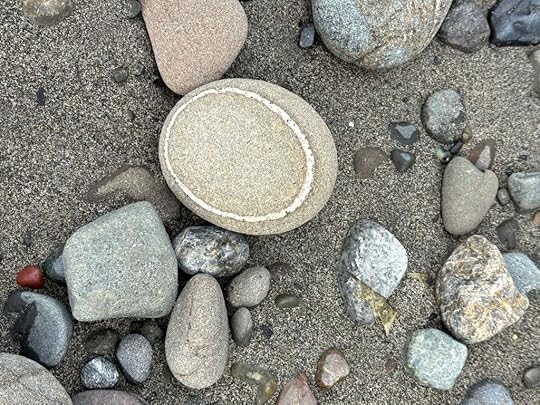
All sorts of rocks, sand, petrified wood, and logs wash up along the Strait of Juan de Fuca.
(Agates, jasper, carnelian, and occasionally jade).
I fell in love with the different colored stones along the waterway–and took too many photos! Here’s a sample
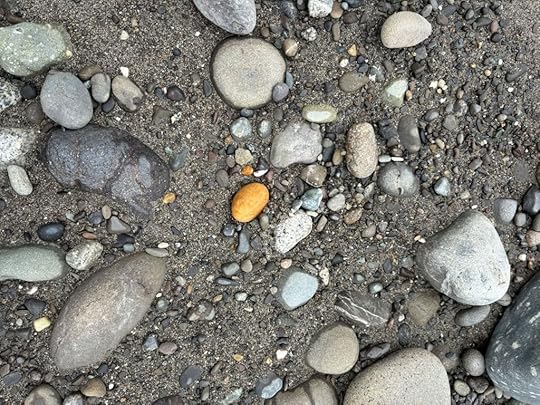
Our God made such a splendid, unique, and colorful world.
The wind blew, the gulls flew, we breathed deeply, and just appreciated.
I carried both rocks and shells up the steep bluff staircase from the Strait of Juan de Fuca.
And entered a different world altogether.
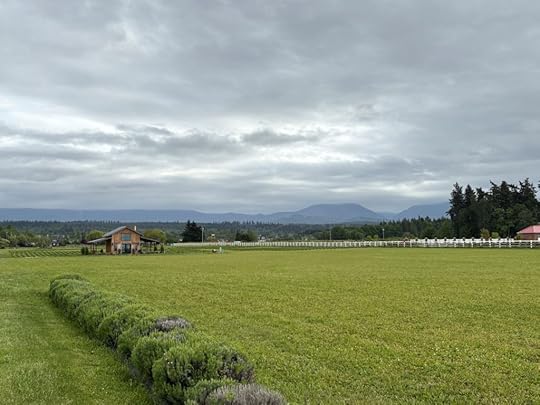
The post Walking the Strait of Juan de Fuca appeared first on Michelle Ule, Author.
June 3, 2025
Spring after Fire: Six Years Later
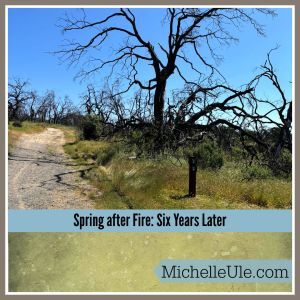
We recently examined how the 2025 spring after fire looked while hiking in Windsor, California’s Foothill Regional Park.
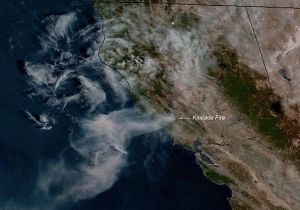
This park was the scene of a terrible firefight in October 2019.
The Kincade fire had ranged through the hills and met its match at this park.
(One of the most frightening photos I ever saw was of firefighters lining the freeway about a mile away. Had the Kincade fire jumped the highway, it would have gone all the way to the sea (30 miles away!)
While the park is near our home, we haven’t hiked there since the fires.
But last month, I needed to escape pressing concerns.
I needed to be out in nature and think about something else!
Blue sky, wild flowers, soaring and calling birds sparked joy in my heart. We heard croaking frogs and their splash into full ponds.
Perfect.
Other than all the blackened and gray trees.
What does Spring after fire look like?Signs of both were everywhere around us.
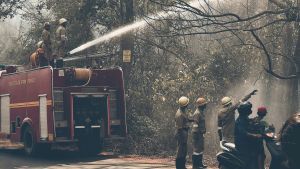 Photo by Slava Taukachou on Unsplash
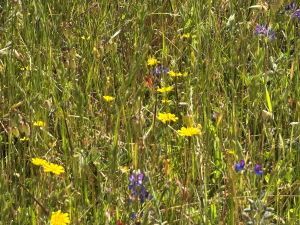
We went to see the local wildflowers.
They were there.
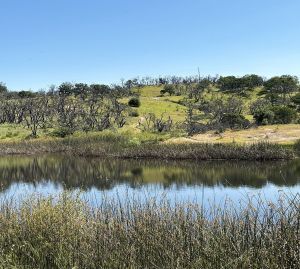
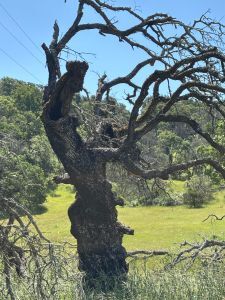
But so were the twisted, mangled, blackened trees from fire six years ago.
They’re recovering.
It’s still startling to see the effects of fire on a landscape.
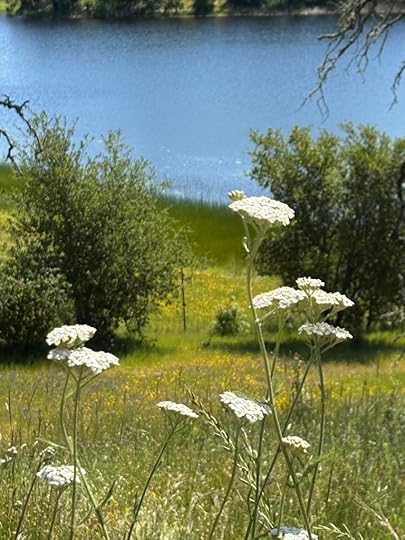
That day’s contrast between vivid, green, and yellow flower-dotted hillsides struck me repeatedly.
My husband waited patiently as I took many photos.
If you don’t know the reason for that contrast between a Spring after fire, it’s fascinating.
If you do, then you’re sad.
 Why did the Kincade Fire roar through here and then stop?
For all you folks who don’t know how fire spreads, here’s the photo to help you see:
Fire likes to follow gullies and valleys. Wind gusts go uphill, particularly in narrow canyons. (So, if you’re running away from fire, go downhill).
Topography makes a huge difference.
Topography
The lay of the land also affects how fire behaves. As fire engulfs an area, it interacts with the surrounding terrain. When moving uphill, fire encounters less obstructed fuel. That allows it to burn continuously and reduce its confinement to a specific area. Additionally, the steepness of the slope aids in preheating the vegetation ahead, causing it to become more susceptible to combustion.
We climbed to the top of a steep hill and looked north, toward even taller hills and steeper valleys.
That was the way the fire came.
 [image error]
Foothill Park in the spring after fire is still a beautiful place. The twisted blackened wood adds contrast to the vivid greens.
It’s all a sign that life is harder to destroy than we may think.
For some plants, fire rejuvenates.
I can’t really say the same for a park, but it was a lovely day this spring.
And I forgot all about my cares while hiking the hills!
Well, no.
Meanwhile, a peace spring sounds like this:
The post Spring after Fire: Six Years Later appeared first on Michelle Ule, Author.
May 27, 2025
Flying with Kids: Bad, Ugly, and Wonderful

Have you ever been flying with kids, and the experience was bad, ugly, or wonderful?
I have.
Many times.
So, what to do?
Will you ever see these people again?Long ago, I flew with a two-year-old and a four-year-old from New York to Rome.
We were hunting down their father, patrolling the Mediterranean Sea on a submarine.
He’d been gone several months. When you’re two years old, that number mounts up into large percentages of your entire life.
We all needed to see Dad again.
But that was a long trip.
Did I prepare in advance?
I read an article in the New York Times Sunday Magazine discussing horrible flights with children.
It included this memorable tale:
On an eight-hour flight to Rome, my infant cried the entire flight. We tried everything. Nothing worked. I finally ended up standing in the back of the plane with the baby screaming away, for the entire flight.
Everyone hated the baby. I hated the baby. Nothing worked. I finally consoled myself with one thought. “I’ll never see any of these people again.”
That’s the only thing that helped.
I laughed when I read it. It gave me hope. Flying with kids couldn’t get any worse than that, right?
Our trip home went well–a Navy wife friend from the same boat switched her flight home and flew with us.
Flying with kids on an ugly day Photo by Paul Hanaoka (Unsplash)
I flew a lot with my older children.
On another memorable flight hunting my husband, I traded eight Chex cereal boxtops for a free round-trip ticket.
Pregnant with our second child, we decided I would travel to meet the boat in Florida with the two-year-old.
It was a time of airline deregulation. You could find cheap deals, but they may not be direct. Or at a convenient time.
This flight involved flying with kids from Groton, CT, to New York City, to Atlanta, to Jacksonville, to Orlando.
“What?” I exclaimed over the phone.
“Oh, it’s practically direct going home: Orlando to Detroit to New York to Groton.”
One free plane ticket, I told myself.
The child was two. I was pregnant. I flew up on the first leg. He spilled juice on the second. He danced on the third while screaming, “I want orange juice,” egged on by an orange grower.
My husband met us at the airport. Thanks be to God.
On the flight home, he threw up, spilled juice, and we landed in Detroit during a snowstorm.
I had one diaper left.
The delay was not overlong. We got home safely.
Without our luggage.To a stopped-up sink.To a surprising house guest dropping by.But I digress.
Flying with kids was ugly, but we got home safely.
But then there’s the wonder.Other than friends or family who flew with us, I’ve never met anyone on a flight again.
 Peek-a-boo is great! Lucas Favre (Unsplash)
Everything is new when you’re a child–even when you’ve flown before.
Pushing the shade up and down, pushing buttons, and looking out the window.
It can be magic.
On a recent flight between San Francisco and Seattle, I sat beside a woman with her ten-month-old daughter.
A lucky woman, her husband sat on the other side and shared the baby.
We talked the entire flight about the joy of children and the ability to travel with them.
By the time we arrived, this high-tech professional thanked me for the conversation.
“You’ve convinced me. I think I’m going to have another baby.”
I didn’t look at her husband.
My stories of flying with kids gave her hope and encouragement.
We survived. So did the kids. Modern technology gave us a chance to see the world.
The good, the bad, the ugly, yes, but also the wonder and the joy of finding Daddy in a strange land
At least for us.
Thanks be to God.
The post Flying with Kids: Bad, Ugly, and Wonderful appeared first on Michelle Ule, Author.
May 20, 2025
Perseverance in Prayer with Lettie Cowman
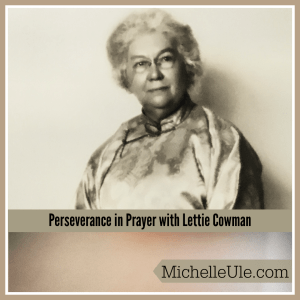
Lettie Cowman was a master of perseverance in prayer.
She spent hours a day in prayer.
Why?
She explained in Streams in the Desert‘s May 7 devotional.
Perseverance in Prayer starts with the ScripturesLettie scoured the Bible every day as part of her prayer time.
She routinely wore them out from page turning, marking, and occasionally, cutting them up.
She took her call to prayer from the gospels and used it for her May 7 devotional.
He spoke a parable unto them… that men ought always to pray, and not to faint (Luke 18:1).
As Lettie explained, using thoughts she’d read or considered over the years:
“No temptation in the life of intercession is more common than this of failure to persevere. We begin to pray for a certain thing.
“We put up our petitions for a day, a week, a month. And then, receiving as yet no definite answer, straightway we faint, and cease altogether from prayer concerning it.”

As she compiled Streams in the Desert in 1924, she explained a common attitude many of us have while praying. (Look, all the fingers are pointing back at me in this post!)
We want an immediate answer. When God doesn’t “give” us the answer we want at once, we feel discouraged and give up.
Does that honor God? Do we stop to wonder if something else might be going on?
Lettie chides us to persevere!So, when we don’t get an immediate answer, we give up?
“This is a deadly fault. It is simply the snare of many beginnings with no completions. It is ruinous in all spheres of life.
“The man who forms the habit of beginning without finishing has simply formed the habit of failure.
“The man who begins to pray about a thing and does not pray it through to a successful issue of answer has formed the same [failure] habit in prayer.”
Streams in the Desert May 7 U-Version
Two grim thoughts–giving up without an answer means you’ve got a habit of failure. Continuing in this way can ruin your life in general.
Perseverance means “a continued effort to do or achieve something despite difficulties, failure, or opposition: steadfastness.”
Choosing not to persevere, according to Lettie, indicates an attitude that “To faint is to fail.”
Once you give in, “defeat begets disheartenment. Unfaith in the reality of prayer, which is fatal to all success.”
That feels harsh, but Lettie is trying to encourage us not to give up hope.
But, how long should we pray?

But someone says, “How long shall we pray? Do we not come to a place where we may cease from our petitions and rest the matter in God’s hands?”
For it is faith from, yes, the faith of God, within us.
There is but one answer. Pray until the thing you pray for has actually been granted. Or until you have the assurance in your heart that it will be.
In the first case we stop because we see. In the other, we stop because we believe. The faith of our heart is just as sure as the sight of our eyes.
Streams in the Desert May 7. (One Place).
She asks an excellent question. Don’t we reach a place where there’s no point anymore?
Death, obviously.
I’m involved in a prayer ministry where we say, “where there’s life, there’s hope.”
As long as someone has a mustard seed of faith, we’ll pray.
Perseverance and Prayer = BattleThe Bible is full of military allusions and battle descriptions.
Paul tells us to “put on the armor of God” daily so we can stand and fight–often in prayer.
(The word battle is used 189 times in the New King James Bible.)
Prayer is not only a calling upon God, but also a conflict with Satan.
God is using our intercession as a mighty factor of victory in that conflict. He alone, and not we, must decide when we dare cease from our petitioning.
So we dare not stop praying until we receive the answer or are assured it will come.
Streams in the Desert, May 7.
What does it mean to battle?
Praying for long periods of time can feel like a fight.
It helps to check these things:
What does God say about this type of situation in the Bible?Do these words I’m praying sound like words Jesus would use? (As in, not complaining?)Has God ever done what I’m asking Him to do in the Bible?How am I praying for this situation?Does it honor God this way: Praise, Repent, Ask, Yield?Am I willing to accept that the answer might be ‘no?’Remember what happened to Moses when he got tired of holding up his arms?
Two men joined him and held up his arms the rest of the day.
And the battle was won.
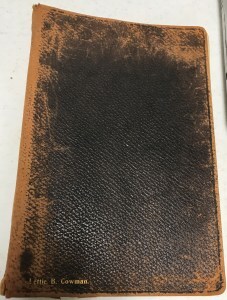 Lettie wore out more than one hymnal! (OMS archives)Praising God is a weapon for Perseverance in Prayer.
Lettie spent many hours praying in her Oriental Mission Society office.
Whenever a perplexing issue in the ministry arose, she went to prayer.
Sometimes that prayer involved playing her office piano and singing hymns.
Hymns built her faith and encouraged her on.
Mighty works of God came from those hours of prayer and singing.
I wrote about Lettie praying 91 times in my 216-page Overflowing Faith.
Who’s counting, though?
Amen.
The post Perseverance in Prayer with Lettie Cowman appeared first on Michelle Ule, Author.
May 13, 2025
Intercession and Sympathy, and My Utmost for His Highest

Intercession and sympathy are often addressed in My Utmost for His Highest.
Sometimes with a warning.
Oswald Chambers spent long hours in prayer. He knew, understood, and lived the power of prayer changing things. (August 28, My Utmost for His Highest)
He also knew the need to spend hours in prayer.
He knew and understood the frustration of prayer.
Especially not having God immediately answer by snapping His fingers and shouting, “Yes!”
Sometimes that happens.
Hallelujah.
Then there’s the rest of the time.
How do we use intercession and endurance when praying?As the Apostle Paul reminds us:
Rejoice always. Pray without ceasing, give thanks in all circumstances; for this is the will of God in Christ Jesus for you. Do not quench the Spirit.
1 Thessalonians 5:16-19. (ESV)
God is not surprised when we pray over and over about events and circumstances.
As the Scripture indicates, He expects us to come to Him with the burdens on our hearts.
Jesus even tells a parable about a widow who continues to plead before a judge until the judge relents. (Luke 18:1-8; ESV).
Intercession and sympathyShould we use our emotions when we pray?
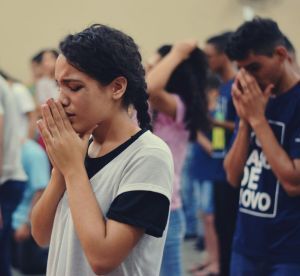 Photo by Cason Asher (Unsplash)
Doesn’t God allow for intercession and sympathy for the person?
Of course. Sympathy often is what motivates us to pray for people.
We want to see God solve their problems.
We sympathize with their situation.
However . . .
It’s not just time spent. Consider your attitude.The “key” to “success” in prayer is our attitude.
After all, we’re talking to the Creator of the Universe when we pray.
Oswald Chambers warned:
“Beware of imagining that intercession means bringing our personal sympathies into the presence of God and demanding He does what we ask.
“Our approach to God is due entirely to the vicarious identification of our Lord with sin.”
My Utmost for His Highest, May 4
Too many of us pray or intercede for others by presenting various demands to God.
In a sense, we toss down a gauntlet before God and say, “Do it!”
(Do you like it when people treat you that way?)
The only reason our sins are forgiven is because Jesus’ death tore that Temple veil in two.
Intercession and sympathy are necessary tools for talking with God on behalf of others.
We need to pray broadly, with both imagination and knowledge of Scripture.
Can we intercede for something contrary to Scripture?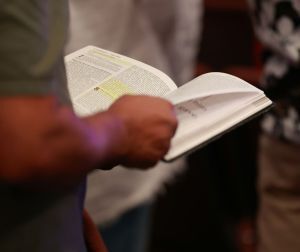 Photo by Edgar Baltazar (Unsplash)
Thank you for your intercession and sympathy for someone.
But if your prayer doesn’t align with or agree with the Bible, you ask in vain.
Our (often too sympathetic) hearts can get in the way of effective prayer.
Chambers again:
We do not identify ourselves with God’s interests and concerns for others, and we get irritated with Him. Yet we are always ready with our own ideas; our intercession becomes only the glorification of our own natural sympathies.
My Utmost for His Highest, May 4
In essence, we’re using intercession and sympathy to explain to God why He’s wrong and to suggest our better idea.
Chambers turns the prayer table and asks us to examine our own hearts:
“Spiritual stubbornness is the greatest barrier to interceding for others in the way we should. If we are spiritually stubborn, we sympathize with something in ourselves or in others which doesn’t need sympathy; rather, it needs to be atoned for by the blood of Christ.”
My Utmost for His Highest, May 4
Long ago, my prayer partner and I learned a simple and effective prayer for our kids:
“Lord, let them hit bottom sooner rather than later. We know that when they reach the bottom of their sin and are broken, they’ll find Jesus.”
What’s the good of intercession and sympathy?Sympathy often is what motivates us to pray for someone.
We need to be careful our love doesn’t get in the way of praying for what they need (not want).
Chambers ends the reading this way:
“Intercession means that we deliberately substitute God’s interests in others for our natural sympathy with them.”
It can be hard. But would you want it any other way?
The post Intercession and Sympathy, and My Utmost for His Highest appeared first on Michelle Ule, Author.
May 6, 2025
The Soil and the Soul

Both the soil and the soul came to mind yesterday while I dug in my garden.
It’s my twelfth year digging up this raised bed.
As I turned over the soil, I pondered, “Why are there rocks in this bed after all these years of double-digging?”
The Holy Spirit responded quickly.
“Why are you still dealing with the same soul problems year after year?”
I thrust the garden spade into the dirt and shook my head. The Holy Spirit made a good point.
Jesus and soilMatthew, Mark, and Luke all include a parable dealing with soil and the soul.
It’s a comparison, a metaphor that describes different faith responses depending on the quality of the soil.
Faith seeds that fall in rocky soil belong to one “who hears the word and receives it with joy. Yet he has no root in himself, but endures for a while, and when persecution arises . . . he falls away.” (Matthew 13:20 ESV).
In my garden, rocky clay soil makes it difficult for a seed to grow well.
(Other than bitter dandelions. They love to root around a rock–both in the yard and in my heart.)
But faith seeds flourish when they fall in good soil and the soul. Their roots spread, capturing water and nutrition, and thus grow into healthy plants.
What makes a good bed for planting?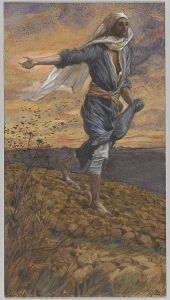 The Sower by Tissot
(Wikimedia)
The Sower by Tissot
(Wikimedia)Not all rocks are bad. Planting soil is good.
But, it doesn’t matter how easily the spade slips into the ground if the soil lacks nutrition.
I double-dig to mix good surface soil with the denser clay soil.
The good dirt aerates the clay, allowing the garden bed to better hold moisture.
That’s also true with my soul. I blend truth I’m learning from daily Bible readings with my old experiences of God at work in my life.
When I drop seeds of faith into my blended soul, my faith and trust in God’s promises grow.
How do I make the soil and the soul of my heart a place to plant God’s truth?Ezekiel describes a solution:
He took some of the seed of the land and planted it in a fertile field;
He placed it by abundant waters and set it like a willow tree.
It grew and became a spreading vine of low stature;
Its branches turned toward him.
Ezekiel 17:5-6 NKJV
Plant the seeds in fertile soil–soil prepared, nourished, and ready for seeds of faith.
Preparing the heart often involves confessing sin–digging up the rocks blocking spiritual root growth.
If we say that we have no sin, we deceive ourselves, and the truth is not in us. If we confess our sins, He is faithful and just to forgive us our sins and to cleanse us from all unrighteousness.
1 John 1:8-9 NKJV
I dig up my soil and the soul, turn it over, examine it, and confess my rocky sins.
The garden bed of my heart feels fresher and prepared for my faith to flourish into life.
Worms aerating the soil, psalms feeding my soul, help sweet fruit to grow!
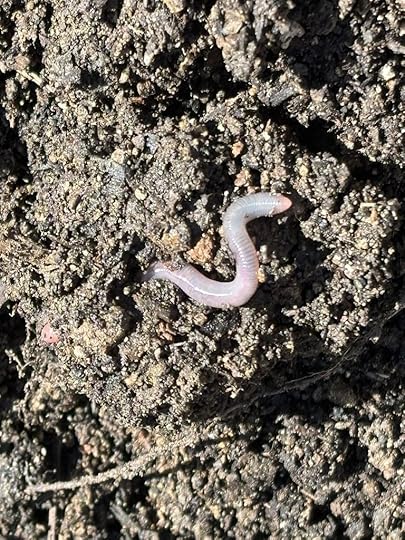
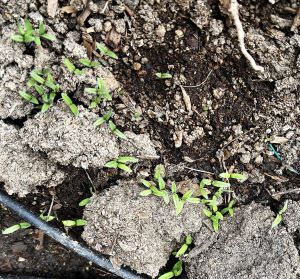
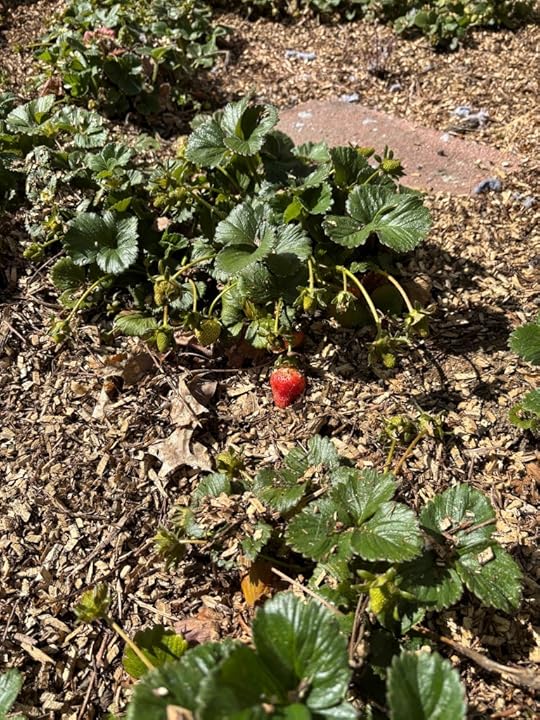
What’s God doing after all this work–in the soil and the soul?
Then I will sprinkle clean water on you, and you shall be clean. I will cleanse you from all your filthiness and from all your idols. I will give you a new heart and put a new spirit within you. I will take the heart of stone out of your flesh and give you a heart of flesh. I will put My Spirit within you and cause you to walk in My statutes. You will keep My judgments and do them.
When our hearts are prepared to receive what He has to say, then God can work.
And when He sends gentle rain, my garden can grow, too.
Thanks be to God.
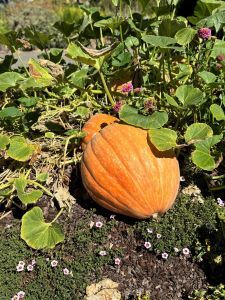 Because you never know what will come from digging in your soul–or soil.
The post The Soil and the Soul appeared first on Michelle Ule, Author.