
Yanis Varoufakis's Blog, page 85
March 27, 2019
The swallows of the EUROPEAN SPRING are in full flight. If you missed it, watch the launch of our European Parliament election campaign at the Bozar, Brussels


Why Norway plus gives Britain the time it needs to get out of its Brexit mess – op-ed in The Telegraph
Brexit is, undeniably, important. The Prime Minister’s faulty negotiations have now turned what the majority of the British people considered an opportunity into a national crisis. However, now is perhaps the moment to reflect that, in an era of trade wars, geopolitical realignment and existential threats to our nations’ democracies, Brexit is not as important as we have allowed ourselves to imagine.
Its mishandling has certainly whipped up damaging uncertainty – not helped by the events of the last week. Nevertheless, the decision of Japanese car makers to end production in the UK reflects a broader change in the global division of labour.
Similarly, the role of the City of London in Britain’s future deserves careful reconsideration independently of Brexit.
Turning to constitutional matters, the Irish backstop controversy is a reminder of the incomplete peace achieved in Northern Ireland because London and Dublin abandoned their strict sovereignty claims without completing their worthy efforts with a post-Westphalian joint sovereignty arrangement.
In short, never before have the people of the UK needed more a serious debate on their business model and constitutional arrangements. But never before has, courtesy of Brexit, such a debate been less possible.
Brexit has turned the majority of Britons into hostages of three extreme interest groups labouring under strong motives: hard Remainers hellbent on rescinding the June 2016 verdict; hard Brexiteers for whom a costly clean exit from the EU is a prerequisite for “making Britain great again”, and an EU establishment whose only priority is to demonstrate to Europeans that anyone challenging Brussels’ authority will be ritually humiliated.
Caught up in that three-way feud, Britain’s majority are being denied the opportunity to have a truly vital debate about the country’s future.
Democracies are good at engendering convergence in the face of polarisation. But that requires time. Three conditions are needed to give such a debate a chance in the foreseeable future.
First, the Prime Minister must present the EU with an offer that Brussels cannot refuse before April 12.
Second, this offer cannot be her previous deal, given Parliament’s intense and justifiable opposition to a treaty that only a nation defeated at war would accept.
Third, both the Hard Remainers and Hard Brexiteers must be denied what they seek, at least in the short term.
Either a no-deal Brexit before June or Britain’s participation in the European Parliament elections during a lengthy extension of Article 50 would poison the well of British democracy, by maximising the losing minority’s discontent while disempowering the middle ground who favour a soft Brexit.
Key to finding a way out of the current Brexit impasse is to focus on creating the space for a Great Debate on Britain’s business model and constitution, both of which are in a state of disrepair.
An ideal Brexit is out of reach but a decent medium-term settlement allowing Britons jointly to envision their future is not. And that settlement is none other than a Norway Plus, or a Common Market 2.0, solution for the medium term.
In practical terms, Norway Plus would involve Mrs May ditching her deal and mustering a majority in Parliament in favour of an amended Withdrawal Agreement specifying a short transition period after which Britain will remain indefinitely, but not necessarily forever, in the single market and customs union.
The DUP, Labour and Brussels would have no alternative but to agree to this amended agreement before the April 12 deadline.
Once the gun has been removed from the country’s head, another technical extension of Article 50 would be granted to complete the necessary legislative steps.
At the same time, the House of Commons, Britain’s civil society, chambers of commerce, trades unions, citizens assemblies etc can deliberate on how to bring up to date the UK’s business model and constitutional arrangements, including its long-term relationship with the EU.
The argument that Norway Plus is favoured only by a minority is correct but irrelevant. As no majority exists for any type of Brexit outcome, the aim must be to enable democratic dialogue by minimising the discontent of the most discontented and by satisfying the more numerous middle ground who hold the least intense preferences.
While the UK would have to implement EU rules for an indefinite period, Norway Plus respects the 2016 decision to leave the EU without committing the British government to the humiliation of any backstop.
Having left everyone slightly dissatisfied, but no one terribly incensed, Norway Plus would make possible the much needed Great British Debate that the country needs.
And if this debate leads the people of Britain to conclude that they wish to move toward a “cleaner” outcome, then a second referendum can be held, in the fullness of time, to decide either to re-join in the EU or to leave its single market and the customs union.
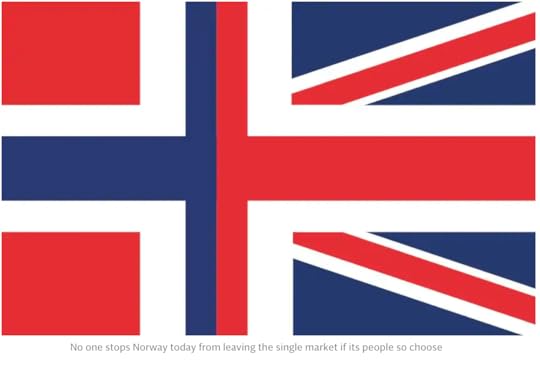
After all, no one stops Norway today from leaving the single market if its people so choose.
Why the Deutsche Bank merger with Commerzbank must be stopped – HANDELSBLATT (English & German)
The official story is one of creating a national champion, a German bank large enough to compete with American investment banks. The truth is far less heroic and a lot more sordid than that. Here is why Demokratie in Europa is campaigning against this merger.
Both banks are zombies. Commerzbank has gone through eight years of constant cost-cutting but still delivers profits of less than $1 per share at a time when the European Central Bank is bending over backwards to help Europe’s banks profit. Deutsche Bank is not doing much better. Since 2010 its share price has fallen from $77 to $8, its market value today is lower than it has been since 2008, and its return to equity is… negative.
If Deutsche Bank and Commerzbank merge, we shall have a disaster in our hands. Think about it: Together, the two banks have outstanding loans of $2 trillion. But their market capitalisation, or value, is less than $30 billion. Such a chasm between the merged bank’s value and its loans would be the definition of a gigantic zombie relying on the kindness of the German taxpayer and on the ECB’s readiness to turn a blind eye to its fragility.
This is all well known, as is the simple truth that you cannot create a healthy bank by marrying two zombies. So, the question is: Who is pushing for this merger and why? The answer is seriously disturbing and is one that German citizens must be made aware of: The whole affair is based on a trick that the financial engineers behind the merger are conjuring up, the result of which will be detrimental to the interests of German society. What is that trick? It is called “negative good will”.
In financial markets, the concept of ‘goodwill’ relates to an intangible asset – like buying a dead brand (e.g. NSU in the German car industry or TWA in the airline industry) which has potential for the buyer based on the goodwill toward the brand by customers who remember the dead brand. Normally, the buyer will pay more than the current price of such a brand and this excess payment will be attributed to goodwill. Negative goodwill is an odd concept but, in principle, it reflects the theoretical possibility that you are buying a dead brand for a low, low price. Then, financial accounting rules allow you to record this (negative goodwill) as an ‘asset’ in your books – even though it is an asset that has never been realised in dollar or euro terms.
So here is the key to understanding the push for the Deutsche-Commerz merger: The combined market value of the two banks is much, much lower than their combined audited value; i.e. the value that the German government says that these two banks have. As these lines are written, Deutsche Bank shares sell in Frankfurt’s stock exchange at a price 70% below their official audited value. Commerzbank’s shares are also selling at a price 66% lower than its official, audited level.
If and when Deutsche Bank buys Commerzbank, Deutsche would count as a new, magical asset (negative good will) the difference between the price of Commerzbank’s shares and its audited value. Given that the market value of their combined shares is $30 billion, a negative goodwill of approximately $16 billion will be added, magically, to the books of the new, merged bank. In simpler words, the financial engineers are about to create 50% more value from thin air for the merger – money that does not exist but which will give the new board of directors the opportunity to pretend that their new super-bank is healthier than it is. Guess what they will do immediately afterwards: They will give themselves another pay rise while closing down branches and firing thirty thousand of their much-less-well-paid employees in the name of consolidation and… efficiency.
This is not idle speculation. In 2018, while Deutsche Bank’s investment bank saw its revenues decline sharply, its head more than doubled his salary to €8.6m. The penchant of top managers for profiting at the expense of the rest of society did not stop at the gates of the bank. As top management was boosting its compensation from €29.8m in 2017 to €55.8m in 2018, at the very same time the bonuses going to lowering ranked Deutsche employees was cut by 14 per cent. The extent of this scandalous behaviour can be seen from a startling fact: Overall, in 2018 the bonuses to Deutsche Bank’s management exceeded the pre-tax level of its profits and amounted to more than five times the investment bank’s earnings!
Why is the federal government turning a blind eye to such behaviour and why does it support this dangerous fraud of a merger? The answer is simple: Because it is embarrassed that, ten years after the banking crisis began, Germany’s top banks are still zombies. And because Mrs Merkel’s government does not want to see eurozone banking rules, that her government agreed to, being imposed by the European Central Bank’s Single Supervisory Mechanism on banks like Deutsche Bank and Commerzbank. It is one thing that the eurozone common rules are applied to the Italian and the Greek banks and it is quite another thing, it seems, that they should be applied to Frankfurt-based banks that are, supposedly, national champions.
In short, a sordid political agenda is about to utilise a sordid financial trick in order to conspire against the interests of German taxpayers, bank employees and bank customers. This is why we, at Demokratie in Europa, are opposing the Deutsche-Commerzbank merger.
FOR THE HANDESBLATT SITE, CLICK HERE. Or read on
Die Begründung für die Fusion der Deutschen Bank mit der Commerzbank ist die Gründung eines nationalen Champions, der groß genug sei, um mit amerikanischen Investmentbanken zu konkurrieren. Es folgen die Gründe, warum wir von „Demokratie in Europa“ gegen diese Fusion kämpfen.
Die Commerzbank hat acht Jahre lang kontinuierlich ihre Kosten gesenkt, erzielt aber nur Gewinne von weniger als einem Dollar pro Aktie. Der Aktienkurs der Deutschen Bank ist seit 2010 von 77 auf acht US-Dollar gefallen, der Marktwert ist bis heute niedriger als vor der Bankenkrise, und die Eigenkapitalrendite ist negativ.
Wenn Deutsche Bank und Commerzbank fusionieren, dann stehen wir vor einer potenziellen Katastrophe. Zusammen haben die beiden Banken ausstehende Kredite von zwei Billionen Dollar, während ihr Wert unter 30 Milliarden Dollar liegt. Diese Kluft zwischen dem Wert der fusionierten Bank und ihren Krediten wäre der Beleg für die Erschaffung eines gigantischen „Zombies“.
Die Frage ist: Wer drängt auf diese Fusion und warum? Die Sache basiert auf einem Trick, an dem die Finanzjongleure hinter der Fusion arbeitenund der den Interessen der deutschen Gesellschaft entgegensteht. Was ist das für ein Trick? Er wird als „negativer Goodwill“ bezeichnet
Auf den Finanzmärkten bezieht sich das Konzept des Goodwills auf einen immateriellen Vermögenswert wie etwa den Kauf einer bereits toten Marke (zum Beispiel TWA) – ein Kauf, der für den Käufer aber aufgrund der positiven Einstellung gegenüber der Marke noch Potenzial hat. In der Regel zahlt der Käufer mehr als den aktuellen Preis der Marke, und die Zuzahlung wird dem Firmenwert zugerechnet.
Negativer Goodwill ist ein seltsames Konzept, aber es spiegelt die theoretische Möglichkeit wider, eine tote Marke zu einem sehr niedrigen Preis zu kaufen. Die Regeln der Finanzbuchhaltung ermöglichen es, diesen (negativen) Firmenwert als Vermögenswert in den Büchern zu erfassen.
Hier liegt der Schlüssel zum Verständnis des Vorstoßes hinsichtlich der Fusion: Der gemeinsame Marktwert der beiden Banken ist sehr viel niedriger als ihr kombinierter geprüfter Wert, das heißt der Wert, den diese beiden Banken laut Bundesregierung haben.
Zum Zeitpunkt der Erstellung dieses Artikels werden die Aktien der Deutschen Bank zu einem Preis verkauft, der 70 Prozent unter ihrem geprüften Wert liegt. Auch die Commerzbank-Aktien werden zu einem Preis angeboten, der 66 Prozent niedriger ist als der offizielle geprüfte Wert.
Bei einem Kauf der Commerzbank durch die Deutsche Bank würde diese ein neues, „magisches“ Vermögen hinzugewinnen: die Differenz zwischen dem Kurs der Commerzbank-Aktie und ihrem geprüften Wert. Da der Marktwert der gemeinsamen Aktien 30 Milliarden Dollar beträgt, wird ein negativer Goodwill von rund 16 Milliarden Dollar so wie auf magische Weise in die Bücher der neuen Bank aufgenommen.
Einfacher ausgedrückt: Die Finanzjongleure sind dabei, 50 Prozent mehr Wert aus dem Nichts zu erschaffen – Geld, das es nicht gibt, das aber dem neuen Vorstand die Möglichkeit geben wird, so zu tun, als wäre die neue Bank gesünder, als sie es tatsächlich ist. Es ist einigermaßen absehbar, was darauf folgt: Der Vorstand wird sich selbst eine weitere Gehaltserhöhung verschaffen, indem er Filialen schließt und Mitarbeiter entlässt.
Das ist keine leere Spekulation. Während die Erträge der Investmentsparte der Deutschen Bank im Jahr 2018 stark zurückgingen, verdoppelte ihr Vorsitzender sein Gehalt auf mehr als 8,6 Millionen Euro. Das Topmanagement hat seine Vergütung von 29,8 Millionen im Jahr 2017 auf 55,8 Millionen Euro 2018 erhöht.
Gleichzeitig wurden die Boni, die an die schlechtergestellten Mitarbeiter der Deutschen Bank gehen, um 14 Prozent gekürzt. Insgesamt haben die Boni das Vorsteuerniveau ihres Gewinns überschritten und beliefen sich auf mehr als das Fünffache der Erträge der Investmentsparte!
Warum duldet die Bundesregierung das, und warum unterstützt sie diesen gefährlichen Betrug bei einer Fusion? Die Antwort: weil es ihr peinlich ist, dass die Topbanken Deutschlands zehn Jahre nach der Bankenkrise immer noch Zombies sind. Und weil Angela Merkel die Regelungen zu einer Bankenüberwachung für deutsche Banken durch die Europäische Zentralbank nicht umsetzen möchte, obwohl ihre Regierung den Regelungen zugestimmt hat.
Eine schmutzige politische Agenda ist dabei, einen schmutzigen Finanztrick zu nutzen, um sich gegen die Interessen der deutschen Gesellschaft zu verbünden.
March 24, 2019
A Speech of Hope for Britain – The NewStatesman, 20 MAR 2019
The memory of past greatness can be debilitating for a people who feel they have failed to rise to a historic occasion. We Greeks have been burdened by this sensation at various moments in our postwar history: in 1967, when we failed to prevent a military coup; or more recently in 2015, when we allowed the troika of the EU, the IMF and the European Central Bank to crush us. Brexit Britain is, today, wallowing in a similar sense of having betrayed both its past and its future. A “Speech of Hope” for Britain is now more necessary than ever as the country endures a humiliating impasse.
Polarisation and discord have been Brexit’s predictable consequences. However, there is something that binds together all strands of British public opinion: self-pity. Right-wing Brexiteers are perhaps the group most immersed in it. They crave “Empire 2.0” (a global, London-centred, mercantilist realm) and imagine themselves as an insurgency against brutish forces they cannot overcome. Pro-establishment Remainers strive to thwart Brexit, trading on the sad conviction that sovereignty is a luxury for an island constantly shrinking in global influence. Lexiteers imagine that Brexit may help them avenge the left’s comprehensive defeat at the hands of home-grown Thatcherism.
This self-pity is the foundation of the various groups doing battle in the shadow of Theresa May’s calamitous Brexit. A sense of helplessness hides under the epidermis of both Leave’s delusion of greatness and Remain’s illusion that revoking Brexit will fix everything. Bitterness and self-resentment ooze out of both left-wing and right-wing Brexiteers but, equally, out of the shrinking “radical” centre’s determination to restore Little Englandism for the many and Davos-like, globe-trotting financialisation for the few.
Now is precisely the moment when a credible blueprint for the future must be issued. A Grand Plan for Britain that overcomes Brexit and places it in its historical context. A visionary roadmap depicting a nation healing itself after a decade of austerity and an interminable, technical, procedural Brexit debate that has alienated Leavers and Remainers alike.
Here is an ambitious agenda for meeting four challenges Britain has hitherto not faced:
Britain’s failed economic model
Since Margaret Thatcher’s wilful vandalism of British industry, the UK economy has relied on “the kindness of strangers”. No other European economy, except Ireland, has required such large infusions of foreign capital to make ends meet (the UK’s current account deficit widened from 3.8 per cent of GDP to 5.0 per cent in the third quarter of 2018). This is why Britain relies on cheapness: low taxes, low wages (which are not due to regain their pre-crash peak until 2025) and zero-hour contracts. If Britain is to move beyond this unholy trinity of low skills, low productivity and slow growth, a profound rethink of its place in the global econom is required.
However Brexit is ultimately resolved, the Speech of Hope must therefore announce: (a) an industrial policy supported by a new public investment bank which, backed by the Bank of England, will soak up idle cash from the City of London and divert it to the green transition projects that are uniquely capable of creating high-quality jobs; (b) a public digital payments system, based on the tax office’s digital platform, that will not only compete with the private banks’ payments system but also enable the government to divert funds to communities and families without the fear that these monies will leave the country; (c) a wealth fund into which large corporations are required to deposit a portion of their shares (eg 10 per cent), the dividends of which will fund a Universal Basic Dividend – the first step to a post-capitalist order that allows all citizens to enjoy the fruits of automation.
Austerity, migration and Britain’s place in the world
Austerity damaged local communities and helped trigger a moral panic over migration. Free movement of people within the EU obscured the role of domestic spending cuts in curtailing public services and social housing, making an upsurge in xenophobia inevitable.
The Speech of Hope must set out a vision for an open Britain; a Britain that is a beacon of hope and light in Europe and beyond; a country that takes the lead in resurrecting the spirit of giants such as William Morris and John Maynard Keynes with practical proposals for a new Bretton Woods-style settlement and a world in which freedom and rights are reserved for people, not capital.
Democracy: Referenda, citizens’ assemblies, the electoral system and parliamentary sovereignty
There is a revealing paradox concerning referenda. Many of the advocates of a second Brexit referendum are typically opposed to such public votes, especially when they deliver the “wrong” verdict. The Speech of Hope must describe a future in which parliament and citizens’ assemblies work harmoniously, as they did during last year’s Irish abortion referendum, incorporating direct democracy into a revitalised parliamentary system. The Speech of Hope must also restart debate on electoral reform and the replacement of the UK’s antiquated first-past-the-post system with one that bridges the gap between the will of the parliament and the will of the people. Parliamentary process must also be revisited: throughout the Brexit process, the House of Commons has been denied adequate influence, including over the transposition of EU legislation into UK law.
The English and Irish questions
The sense of self-pity that drove Brexit, and is poisoning public discourse, is primarily English. Tony Blair’s incomplete devolution settlement made England the only nation of the UK without its own dedicated assembly or parliament. Combined with the devastation caused by remorseless deindustrialisation and the austerity imposed on the left-behind – and held-behind – areas of rural and coastal England, a majority of the English feel only disdain for a Westminster parliament that is unrepresentative of their hopes and fears.
The Speech of Hope must promise further devolution to create a new federal state. For instance, whoever delivers it must explain that the Irish “backstop” controversy is due to the incompleteness of the 1998 Good Friday Agreement. The tremendous success of ending the Troubles was achieved because London and Dublin abandoned their strict claims of sovereignty. Now is the moment to secure the peace with the formalisation of a post-Westphalian joint sovereignty arrangement between the UK and Ireland and, perhaps, one between the UK and Scotland too.
Who should deliver this sorely needed Speech of Hope for Britain? There is only one British politician who can do so credibly today: Jeremy Corbyn.
Yanis Varoufakis is the co-founder of DiEM25 (Democracy in Europe Movement 2025) and the former finance minister of Greece
March 23, 2019
Διεθνικό πολιτικό όραμα κόντρα στην υπεροπτική μεμψιμοιρία – ΕφΣυν 22 ΜΑΡ 2019
Με ρωτούν αν υπάρχουν κοινά σημεία μεταξύ του Brexit και του εξευτελισμού που ζει η Ελλάδα στα χέρια της άτεγκτης τρόικας εδώ και μια δεκαετία. Απαντώ πως, ναι, παρά τις μεγάλες διαφορές, υπάρχει ένα κοινό σημείο: Πρόκειται για αυτόν τον συνδυασμό αντικρουόμενων συναισθημάτων που οδηγούν τους λαούς μας στην παράλυση: υπεροψία και μεμψιμοιρία.
Στην περίπτωση των Βρετανών, είναι εντυπωσιακό πως ο συνδυασμός αυτός διατρέχει όλες τις πολιτικές δυνάμεις. Οι δεξιοί ευρωσκεπτικιστές οραματίζονται τη Βρετανική Αυτοκρατορία 2.0 (μια παγκόσμια αγορά με επίκεντρο το Λονδίνο που περιλαμβάνει τις τέως βρετανικές αποικίες) αλλά, παράλληλα, θεωρούν εαυτούς κάτι σαν ηττημένους εξεγερμένους που ζουν υπό τον ζυγό μιας ευρωκεντρικής ελίτ.
Οι φιλοευρωπαίοι που πασχίζουν να ανατρέψουν το Brexit ζουν υπό την εξίσου θλιβερή πεποίθηση ότι η εθνική κυριαρχία αποτελεί πολυτέλεια για μια χώρα της οποίας η σημασία φθίνει στο διεθνές στερέωμα. Την ίδια στιγμή, η ευρωσκεπτικιστική Αριστερά βλέπει το Brexit ως μια ευκαιρία να πάρει εκδίκηση από ένα κατεστημένο που την έβαλε στη γωνία από την εποχή της Μάργκαρετ Θάτσερ και για πάντα.
Το ίδιο ισχύει και στη δική μας περίπτωση. Η εθνικιστική Δεξιά ανατρέχει συνεχώς σε Μεγαλέξανδρους και Κόκκινες Μηλιές, τονίζοντας την ανωτερότητα της φυλής ενώ, την ίδια ακριβώς στιγμή, παρουσιάζει τον λαό μας ως το μόνιμο θύμα των ισχυρών. ΠΑΣΟΚ και Νέα Δημοκρατία υπεραμύνονται των δύο πρώτων Μνημονίων, με το επιχείρημα ότι έτσι κράτησαν την Ελλάδα στον «σκληρό πυρήνα» της ευρωζώνης επειδή η χώρα μας είναι πολύ… ανίσχυρη να πει όχι σε καταστροφικά για τον λαό μας «προγράμματα».
Από το 2015 προστέθηκε στο μνημονιακό τόξο ό,τι απέμεινε από έναν ΣΥΡΙΖΑ που και αυτός επιδίδεται στον ίδιο συνδυασμό μεγαλείου και μεμψιμοιρίας: Παραμείναμε όρθιοι, σαν ένα νέο ΕΑΜ-ΕΛΑΣ… συνθηκολογώντας. Ημασταν πολύ αδύναμοι για να μην υπογράψουμε το 3ο και το 4ο Μνημόνιο, αλλά εμείς αποδείξαμε το μεγαλείο και την υπευθυνότητά μας… υπογράφοντάς τα.
Αν χαρακτηρίζει κάτι τη μνημονιακή Ελλάδα στο φαντασιακό της άρχουσας τάξης, αυτό είναι η κουλτούρα της αυτο-λύπησης που κρύβεται πίσω από την υπεροπτική μεμψιμοιρία την οποία υποκινεί το σύνολο του μνημονιακού Τόξου. Η άνευ όρων παράδοση κρύβεται έντεχνα μέσα στο περιτύλιγμα μιας αβάσταχτης υπεροψίας.
Για τη Νέα Δημοκρατία, οι Ελληνες είμαστε ανώτεροι σε σχέση με «υποδεέστερους» γειτονικούς λαούς. Αλλά για να βρούμε το δίκιο μας πρέπει να πάμε στην «Ευρώπη» ως επαίτες.
Για τον σημερινό ΣΥΡΙΖΑ, πρέπει να γιορτάσουμε ότι η πρώτη αριστερή κυβέρνηση ανέτρεψε τα σκοτεινά σχέδια του Σόιμπλε, κρατώντας τη χώρα στην ευρωζώνη. Αλλά, ως υπεύθυνοι αριστεροί, πρέπει και να αποδεχθούμε ως αυταπάτη την πεποίθηση που μας ένωσε το 2015 πως ένας μικρός λαός μπορεί να ευεργετήσει την Ευρώπη αποδρώντας από τη Χρεοδουλοπαροικία με ένα ΟΧΙ στο τοξικότερο δάνειο της Ιστορίας.
Και στις δύο περιπτώσεις, Ν.Δ. και ΣΥΡΙΖΑ, η νομιμοποίηση της ήττας που ισοδυναμεί με τη σημερινή μας παγίδευση στο 4ο Μνημόνιο (που και τα δύο κόμματα έχουν επί της ουσίας αποδεχθεί έως το 2060) βασίζεται στη λογική της υπεροπτικής μεμψιμοιρίας που, με τη σειρά της, θεμελιώνεται σε μια διάθεση αυτo-λύπησης. Ουσιαστικά πρόκειται για την ολική επαναφορά της λογικής της Ψωροκώσταινας, σε μεταμοντέρνα βέβαια έκδοση.
Οπως στην εποχή του Λαϊκού Κόμματος, έτσι και τώρα η ελληνική ολιγαρχία στηρίζει την εξουσία της στο αφήγημα ενός ανεπρόκοπου λαού με ένδοξο παρελθόν. Tο νέο συστατικό της μεταμοντέρνας έκδοσης του αφηγήματος της Ψωροκώσταινας είναι η προσχώρηση του ΣΥΡΙΖΑ σε αυτή τη λογική με το αφήγημα ότι, το 2015, η συνθηκολόγηση ήταν «αναπόφευκτη» επειδή ο λαός μας, αν και ένδοξος, «δεν ήταν έτοιμος να στηρίξει τη ρήξη» με τη Χρεοδουλοπαροικία.
Μόνη υγιής αντίδραση σε αυτό το σύνδρομο είναι η απόρριψη τόσο της υπεροψίας όσο και της μεμψιμοιρίας. Δεν είμαστε ο περιούσιος λαός. Δεν είμαστε γενναιότεροι ή σπουδαιότεροι γειτονικών λαών. Αλλά, παράλληλα, δεν είμαστε τόσο αδύναμοι όσο μας λένε.
Και δεν δικαιούμαστε να υποτιμάμε τον λαό μας φορτώνοντάς τον με τις αμαρτίες της άρχουσας τάξης ή του πολιτικού συστήματος, είτε αυτό παίρνει τη μορφή τού «μαζί τα φάγαμε» είτε του «δεν ήταν έτοιμοι οι πολίτες να στηρίξουν τη ρήξη με την τρόικα». Αντίθετα, έχουμε την υποχρέωση να απορρίψουμε την αυτολύπηση, που είναι η άλλη όψη του νομίσματος της «μεγάλης ιδέας για τον εαυτό μας».
Τι σημαίνει αυτό επί του πρακτέου; Πώς απεμπολεί κανείς ταυτόχρονα την ψυχολογία της Ψωροκώσταινας και του περιούσιου λαού; Πρώτο βήμα είναι η καταγραφή όλων αυτών που πρέπει να γίνουν άμεσα ώστε να σταματήσει η ερημοποίηση της χώρας και η ανάδειξη αυτού του καταλόγου μέσα από συγκεκριμένο, λογικό, ρεαλιστικό πολιτικό πρόγραμμα. Δεύτερο βήμα, η ένταξη αυτού του προγραμματικού μανιφέστου, και του κόμματος που το καταθέτει ενώπιον των πολιτών, σ’ ένα πανευρωπαϊκό προοδευτικό πρόγραμμα και κίνημα.
Αυτά τα δύο βήματα εξασφαλίζουν, πρώτον, τον ρεαλισμό που υπερνικά τις αυταπάτες και, δεύτερον, την προοδευτική διεθνική συμμαχία που καθιστά το πρόγραμμα κοινό όραμα Ελλήνων, Γερμανών, Ιρλανδών, Πολωνών κ.λπ. Ούτε υπεροψία λοιπόν ούτε μεμψιμοιρία αλλά, αντίθετα, ευρωπαϊκός διεθνισμός και οικονομικός ορθολογισμός στην υπηρεσία της απ’ άκρο σ’ άκρο κοινωνικής απελευθέρωσης των Ευρωπαίων.
Αυτό το όραμα πρεσβεύει το ΜέΡΑ25 και το πανευρωπαϊκό μας εκλογικό σχήμα, η Ευρωπαϊκή Ανοιξη, που το βράδυ της δικής μας εθνικής εορτής –Δευτέρα 25 Μαρτίου– έχει την τιμητική της στο θέατρο Μποζάρ των Βρυξελλών.
Αντίθετα με τις θλιβερές εκδηλώσεις μνημονιακών δυνάμεων στην Αθήνα που κάποτε ήταν ριζοσπάστες (είτε στο πλαίσιο του πάλαι ποτέ ΠΑΣΟΚ είτε στον ΣΥΡΙΖΑ), τη Δευτέρα το βράδυ στις Βρυξέλλες θα βρεθούμε μαζί όλοι όσοι εργαστήκαμε σκληρά από τα τέλη του 2015 για να σφυρηλατήσουμε τη Νέα Συμφωνία για την Ευρώπη, στην οποία εμπεριέχεται το εκλογικό πρόγραμμα του ΜέΡΑ25 τόσο για τις ευρωπαϊκές όσο και για τις εθνικές εκλογές.
Μας φέρνει μαζί η πεποίθηση ότι η λύση πρέπει να είναι ευρωπαϊκή αλλά πως, για να είναι λύση, θα πρέπει να βασίζεται στη συνολική, ριζική ρήξη με την ευρωπαϊκή ολιγαρχία, με το Eurogroup, με την τρόικα, με το εγχώριο κατεστημένο κάθε χώρας. Σύνθημά μας το «Εντός της Ε.Ε. Εναντίον αυτής της Ε.Ε.»!
Δεν έχουμε αυταπάτες. Αυτή η Ευρώπη αποδομείται, καταρρέει. Αυτή η Ελλάδα ερημοποιείται. Ναι, μπορεί να αποτύχουμε. Ομως, το διεθνικό κίνημά μας θα είναι εκείνο που, υπερβαίνοντας τόσο την επικίνδυνη υπεροψία όσο και την ηττοπάθεια, είτε θα ανακόψει την ευρωπαϊκή κρίση είτε θα είναι εκεί για να μαζέψει τα κομμάτια μιας Ευρώπης που δεν κατάφερε να αποτρέψει τη διάλυσή της, μιας Ελλάδας που ασφυκτιά.
*Γραμματέας ΜέΡΑ 25
March 22, 2019
The European Spring in full bloom this Monday at the Bozar Theatre, Brussels. Join us!
One paneuropean movement is opposing both faces of authoritarianism with a single comprehensive policy agenda, the NEW DEAL FOR EUROPE. It is the EUROPEAN SPRING that is fielding candidates across Europe under a single list with a single message and a single set of policy proposals to all Europeans.
Want to meet the candidates?
Want to discuss our NEW DEAL FOR EUROPE?
Want to inject a little progressive fun to the otherwise drab and disheartening European election process?
Join us at the Bozar Theatre on Monday 25th March at 19.00. (Book your ticket here)
Besides European Spring leaders, like Yanis Varoufakis (DiEM-MeRA25), Benoit Hamon (Generation-s), Daniela Platsch (DiE), Karin Rohr Genz (Alternativet), and other candidates for the European Parliament, we will also be joined by:
 Laura Alvarez (human rights lawyer from Mexico, and Jeremy Corbyn’s partner)
Pamela Anderson (activist and actor)

Book your ticket here




March 21, 2019
Stagnant Capitalism – Financial News & Project Syndicate
 When the Great Depression followed the 1929 stock-market crash, almost everyone acknowledged that capitalism was unstable, unreliable, and prone to stagnation.
In the decades that followed, however, that perception changed. Capitalism’s post-war revival, and especially the post-Cold War rush to financialised globalisation, resurrected faith in markets’ self-regulating abilities.
Today, a long decade after the 2008 global financial crisis, this touching faith once again lies in tatters as capitalism’s natural tendency toward stagnation reasserts itself. The rise of the racist right, the fragmentation of the political center, and mounting geopolitical tensions are mere symptoms of capitalism’s miasma.
A balanced capitalist economy requires a magic number, in the form of the prevailing real (inflation-adjusted) interest rate. It is magic because it must kill two very different birds, flying in two very different skies, with a single stone.
First, it must balance employers’ demand for waged labour with the available labour supply. Second, it must equalise savings and investment. If the prevailing real interest rate fails to balance the labour market, we end up with unemployment, precariousness, wasted human potential, and poverty. If it fails to bring investment up to the level of savings, deflation sets in and feeds back into even lower investment.
It takes a heroic disposition to assume that this magic number exists or that, even if it does, our collective endeavors will result in an actual real interest rate close to it. How do free marketeers convince themselves that there exists a single real interest rate (say, 2%) that would inspire investors to funnel all existing savings into productive investments and spur employers to hire everyone who wishes to work at the prevailing wage?
Faith in capitalism’s capacity to generate this magic number stems from a truism. Milton Friedman liked to say that if a commodity is not scarce, then it has no value and its price must be zero. Thus, if its price is not zero, it must be scarce and, therefore, there must be a price at which no units of that commodity will be left unsold. Similarly, if the prevailing wage is not zero, all those who want to work for that wage will find a job.
Applying the same logic to savings, to the extent that money can fund the production of machines that will produce valuable gadgets, there must be a low enough interest rate at which someone will borrow all available savings profitably to build these machines. By definition, concluded Friedman, the real interest rate settles down, quite automatically, to the magic level that eliminates both unemployment and excess savings.
If that were true, capitalism would never stagnate — unless a meddling government or self-seeking trade union damaged its dazzling machinery. Of course, it is not true, for three reasons.
First, the magic number does not exist.
Second, even if it did, there is no mechanism that would help the real interest rate converge toward it.
And, third, capitalism has a natural tendency to usurp markets via the strengthening of what John Kenneth Galbraith called the cartel-like managerial “technostructure”.
Europe’s current situation demonstrates amply the non-existence of the magical real interest rate. The EU’s financial system is holding up to €3tn ($3.4tn) of savings that refuse to be invested productively, even though the European Central Bank’s deposit interest rate is -0.4%. Meanwhile, the European Union’s current-account surplus in 2018 amounted to a gargantuan $450bn. For the euro’s exchange rate to weaken enough to eliminate the current-account surplus, while also clearing the savings glut, the ECB’s interest rate must fall to at least -5%, a number that would destroy Europe’s banks and pension funds in the blink of an eye.
Setting aside the magical interest rate’s non-existence, capitalism’s natural tendency to stagnation also reflects the failure of money markets to adjust. Free marketeers assume that all prices magically adjust until they reflect commodities’ relative scarcity. In reality, they do not. When investors learn that the Federal Reserve or the ECB is thinking of reversing its earlier intention to increase interest rates, they worry that the decision reflects a gloomy outlook regarding overall demand. So, rather than boosting investment, they reduce it.
Instead of investing, they embark on more mergers and acquisitions, which strengthen the technostructure’s capacity to fix prices, lower wages, and spend their cash buying up their companies’ own shares to boost their bonuses. Consequently, excess savings increase further and prices fail to reflect relative scarcity or, to be more precise, the only scarcity that prices, wages, and interest rates end up reflecting is the scarcity of aggregate demand for goods, labor, and savings.
What is remarkable is how unaffected free marketeers are by the facts. When their dogmas crash on the shoals of reality, they weaponise the epithet “natural”. In the 1970s, they predicted that unemployment would disappear if inflation were subdued. When, in the 1980s, unemployment remained stubbornly high despite low inflation, they proclaimed that whatever unemployment rate prevailed must have been “natural”.
Similarly, today’s free marketeers attribute the failure of inflation to rise, despite wage growth and low unemployment, to a new normal — a new “natural” inflation rate. With their Panglossian blinders, whatever they observe is assumed to be the most natural outcome in the most natural of all possible economic systems.
But capitalism has only one natural tendency: stagnation.
Like all tendencies, it is possible to overcome by means of stimuli. One is exuberant financialisation, which produces tremendous medium-term growth at the expense of long-term heartache. The other is the more sustainable tonic injected and managed by a surplus-recycling political mechanism, such as during the WWII-era economy or its postwar extension, the Bretton Woods system. But at a time when politics is as broken as financialisation, the world has never needed a post-capitalist vision more. Perhaps the greatest contribution of the automation that currently adds to our stagnation woes will be to inspire such a vision.
For the Project Syndicate original site, click here.
March 18, 2019
ΜέΡΑ25 – το μόνο κόμμα για το οποίο ο πολιτισμός παράγει πολιτική (video)
Το ΜέΡΑ25 δεν χρησιμοποιεί τον πολιτισμό ως προπαγανδιστικό εργαλείο αλλά, αντίθετα, βλέπει τον ακομμάτιστο πολιτισμό ως πηγή έμπνευσης προοδευτικών πολιτικών. Σε αυτή την εκδήλωση που οργάνωσε το DiEM25 και ο πολιτιστικός του βραχίονας, το DiEM Voice, καλλιτέχνες όπως ο Brian Eno, o Bobby Gillespie και η Δανάη Στράτου αλλά και συγγραφείς όπως ο Γιάνης Βαρουφάκης και ο Σρέτσκο Χόρβατ, μιλούν για την τέχνη, τον πολιτισμό και την πολιτική.
Why I am running in Germany for the European Spring – Gabor Steingart podcast
For the whole podcast (that includes summaries of my answers in German), click here. For the English part only click here.
Yanis Varoufakis's Blog

- Yanis Varoufakis's profile
- 2451 followers

