
Cindy Thomson's Blog, page 9
April 1, 2023
The Irish Harp
The harp is one of the symbols of Ireland. You’ll find it on Irish euros, the Guinness logo, and many more places.
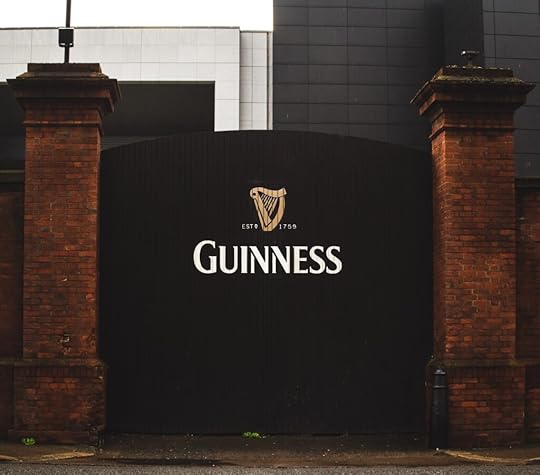 Photo by Louis Hansel on Unsplash
The harp has been a beloved instrument since Old Testament days and maybe since the beginning of time. Angels play harps, right?
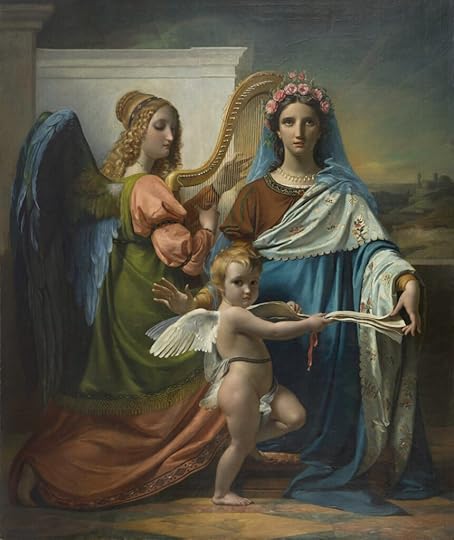 Saint Cecilia of Rome, by François-Joseph Navez. Provided by General Delegation for the Digitization of Cultural Heritage. PD for Public Domain Mark
In my book, Celtic Song, I talk about the legend of Dagda’s Harp. The legend has to do with a battle and a harp that was so magical it put the enemy to sleep.
The harpist is the only musician who is of noble standing. Flute players, trumpeters and timpanists, as well as jugglers, conjurers and equestrians who stand on the backs of horses at fairs, have no status of their own in the community, only that of the noble chieftain to whom they are attached.
~From the Brehon Laws
Harp music is some of the most beautiful music people can make, in my opinion. It’s not hard to imagine being lulled to sleep.
Of course I had to include some music for you to listen to. Enjoy but try not to nap. 


March 17, 2023
Thoughts on St. Patrick’s Day
A few things I’ve been thinking about….
 Designed by macrovector / Freepik
St. Patrick is in the same category as St. Nicholas and St. Valentine, real people who have been reduced to cartoon-like effigies in order to celebrate a secular holiday. And to a history buff, that’s a bit annoying.
 http://interestingliterature.com/2014/02/13/the-literary-origins-of-valentines-day/, CC0, via Wikimedia Commons
However, who among us would even have heard of these saints without these holidays? So it’s a mixed blessing.
Most people are happy not knowing anything about these saints. That’s just how it is. Nothing wrong with having fun with friends.
St. Patrick’s Day has become a day to celebrate all things Irish, which is not a bad thing at all. It’s certainly good for Irish tourism, and it’s a day to celebrate and pay tribute to one’s Irish heritage.
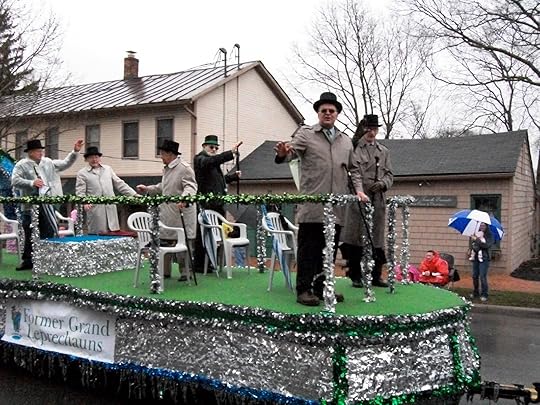 Photo by Cindy Thomson, parade in Dublin, OH
The day encourages people to seek out who St. Patrick was, and with the internet today, so much information is accessible. Hopefully they’ll be inspired by what they find. (You can even search this blog to find out more.)
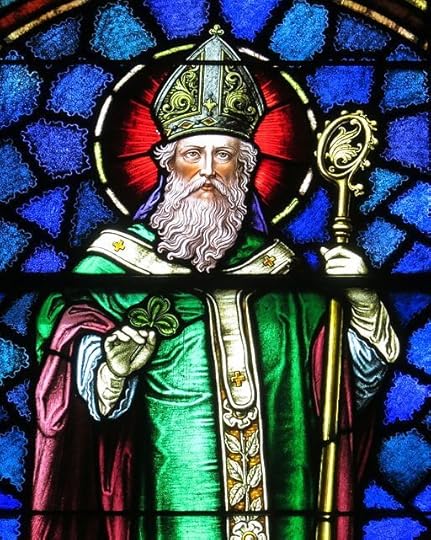 Nheyob, CC BY-SA 4.0, via Wikimedia Commons
St. Patrick’s Breastplate (not written during his lifetime, but probably by someone who was influenced by his legacy.)
I arise today
Through a mighty strength, the invocation of the Trinity,
Through belief in the threeness,
Through confession of the oneness
Of the Creator of Creation.
I arise today
Through the strength of Christ’s birth with his baptism,
Through the strength of his crucifixion with his burial,
Through the strength of his resurrection with his ascension,
Through the strength of his descent for the judgement of Doom.
I arise today
Through the strength of the love of Cherubim,
In obedience of angels,
In the service of archangels,
In hope of resurrection to meet with reward,
In prayers of patriarchs,
In prediction of prophets,
In preaching of apostles,
In faith of confessors,
In innocence of holy virgins,
In deeds of righteous men.
I arise today
Through the strength of heaven:
Light of sun,
Radiance of moon,
Splendor of fire,
Speed of lightning,
Swiftness of wind,
Depth of sea,
Stability of earth,
Firmness of rock.
I arise today
Through God’s strength to pilot me:
God’s might to uphold me,
God’s wisdom to guide me,
God’s eye to look before me,
God’s ear to hear me,
God’s word to speak for me,
God’s hand to guard me,
God’s way to lie before me,
God’s shield to protect me.
God’s host to save me
From snares of devils,
From temptations of vices,
From everyone who shall wish me ill,
Afar and anear,
Alone and in multitude.
I summon today all these powers between me and those evils,
Against every cruel merciless power that may oppose my body and souls,
Against incantations of false prophets,
Against black laws of pagandom
Against false laws of heretics,
Against craft of idolatry,
Against spells of witches and smiths and wizards,
Against every knowledge that corrupts man’s body and soul.
Christ to shield me today
Against poison, against burning,
Against drowning, against wounding,
so that there may come to me abundance of reward.
Christ with me, Christ before me, Christ behind me,
Christ in me, Christ beneath me, Christ above me,
Christ on my right, Christ on my left,
Christ when I lie down, Christ when I sit down, Christ when I arise,
Christ in the heart of every man who thinks of me,
Christ in the mouth of everyone who speaks of me,
Christ in every eye that sees me,
Christ in every ear that hears me.
I arise today
Through a mighty strength, the invocation of the Trinity,
Through belief in the threeness,
Through confession of the oneness,
Of the Creator of Creation
March 16, 2023
5 Things You May Not Know About St. Patrick’s Day
Happy St. Patrick’s Day!
Here’s my list of things you might not know (and you just might because I have such smart blog readers!)
1. Ireland’s traditional color is blue, not green. Shocking, isn’t it? Well, I suppose that depends on how far you want to go back. I’m thinking there wasn’t an official color when Patrick came to Ireland and if even if there had been, he wasn’t Irish. (Also shocking, right? He was a Roman Briton, likely born in Wales or Scotland, according to who you want to believe.) Here’s some information on the color blue.
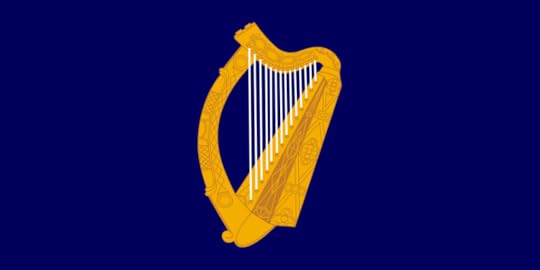 Presidential Flag of Ireland with alternate official state harp design. Public Domain via Wikipedia.
2. The leprechaun has nothing to do with St. Patrick, and the one we’re most familiar with has nothing to do with Ireland. Apparently it was Walt Disney who invented the happy-go-lucky leprechaun. The Irish version is a trickster, not one you probably want to encounter, and… incidentally, he likely wore no green.
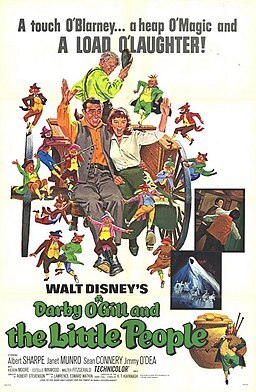 Reynold Brown, Public domain, via Wikimedia Commons
3. The Irish don’t dye their beer green. Why mess with it? Besides, Guinness doesn’t take the dye well. And other green beer? Well, I’ve heard (not a beer drinker myself) that things turn green when you consume it. Don’t say I didn’t warn ye!
4. Parades aren’t traditional in Ireland. Yes, Dublin, Ireland, has a fantastic St. Patrick’s Day Parade but the parades began in America. Irish soldiers in the British army held the first one (so it’s said) in NYC in the 18th century. There should be an option to stream the parade online. Google should direct you, or do what I did last year and stream a live tour on Heygo.com, but remember if you’re in the US about the time difference. You’ll need to watch it in the morning.
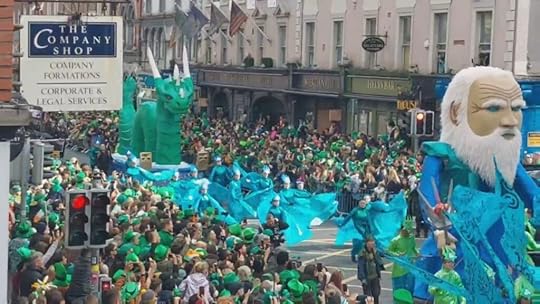 2022 St. Patrick’s Day Parade in Dublin, Ireland. Photo via Heygo Tour.
5. Wearing a shamrock is a traditional way of celebrating St. Patrick’s Day. Folks in Ireland started that in the early 1700’s. So, go for it!
 HAPPY ST. PATRICK’S DAY! ©CindyThomson
Learn who Saint Patrick really was. Visit the Saint Patrick Centre, Downpatrick, County Down, Northern Ireland. That’s me in front of the Centre, but you can visit here.
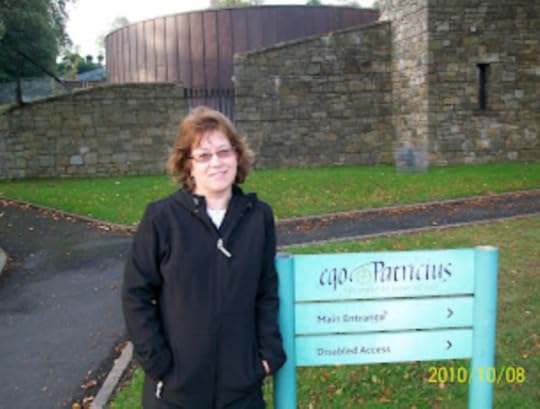 Cindy Thomson, St. Patrick Centre, Downpatrick, County Down, Northern Ireland ©CindyThomson
March 6, 2023
On the Genealogy Trail
*an updated post
I have long known that the Thomsons were quite the characters (and I married into the family so I should know!)
But seriously many years ago my husband’s grandfather shared some genealogical information he had received from another family member. He was quite proud to say that the Thomsons were related to Charles Thomson, the secretary of the Continental Congress. And they were wealthy barons from Scotland. And their direct line came from a Revolutionary War soldier who was commended for bravery by General George Washington himself.
Being the genealogy buff I am, I was intrigued, and maybe even a little skeptical. Families often spread stories that are bent in flattering ways and passed down generation to generation.
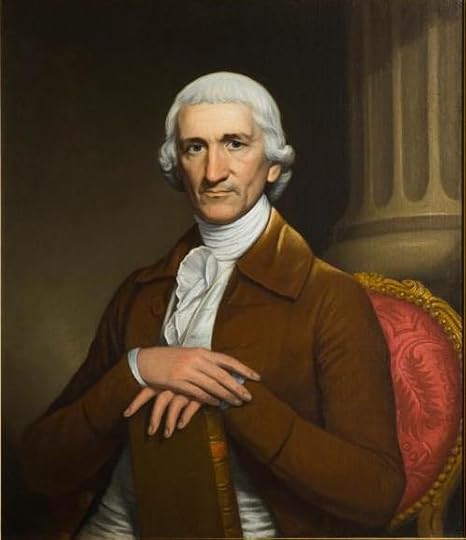 Charles Thomson, via Wikipedia, public domain
The story is that our Thomsons could be related to Charles Thomson, or maybe not (so far not a proven connection in the least), who not only was a patriot and a well educated man who married into a wealthy family, but also translated from the original Greek the first American printed Bible. He was friends with Ben Franklin (who I am connected to through by marriage but not blood related to). Charles Thomson wrote down his memoirs. Before he died Charles burned his diaries, proclaiming that there they contained information that would not be flattering to our country’s founding fathers and he wanted to preserve the legacy that Americans held dear. Oh, my. We will never know the nitty gritty it seems. What stories he probably could have told!
I sought to find out more about our proven Thomson line: William Thomson born in 1711 in Ireland. Family lore said that he served at Valley Forge and was commended. A true patriot like Charles Thomson, perhaps. That’s what my husband’s grandfather believed. The truth, however, is a little different, but in my opinion more interesting. He did serve at Valley Forge. He enlisted in January 1778 (yes that terrible winter we’ve all heard about) and he was 67 years old at the time! William’s oldest son, Hugh, also served in a different PA regiment. William was an Adjutant Officer, which means he was the assistant to the commander of his unit. You can find his name here spelled with a p.
 Edwin Austin Abbey (1852-1911), Public domain, via Wikimedia Commons
This painting depicts Baron von Steuben drilling the troops at Valley Forge in the winter of 1778.
William did receive something from General Washington, but it was not what Grandpa had thought. In May of 1778 William Thompson (Thomson) received a court martial. Here is the note attached to his file: Charged with failing to report when summoned by Major Francis Nichols. Thompson was acquitted; however was convicted of using “ill language.” Washington understood the reasons for Thompson using the language and remitted the conviction.
So instead of a commendation, he received a pardon.
We all got a good laugh over that. Not sure how old Major Nichols was but can’t you see a 67-year-old man giving that young fellow a piece of his mind?
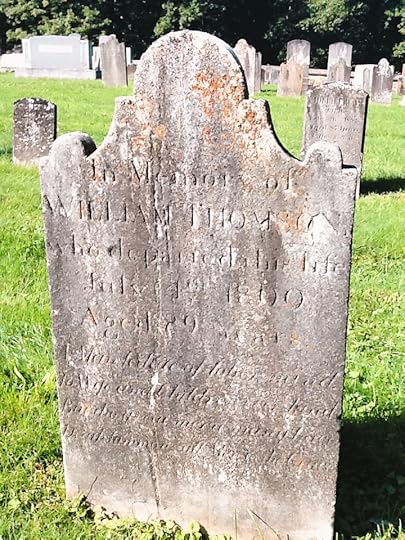 William Thomson’s grave. ©CindyThomson
William Thomson lived to the ripe old age of 89 (dying July 4, 1800) and was buried at Piney Creek Cemetery next to a Presbyterian church of the same name. There is more to the family story that I’d like to explore. It’s said that he sold his farm with the intent of moving to Kentucky with his wife and his son and his son’s family. But the American money he accepted for his farm turned out to be worthless. And his wife died. So they abandoned those plans and William moved to Taneytown, MD, and rented a farm there. It’s there he died. Several other Thomsons are buried in this small cemetery (all spelled this way and not with a “p” or without the “h” as previous genealogists have claimed.)
Family lore can provide clues, but you always need to follow up with research.
 Soldiers Quarters at Valley Forge
Dr. Blazer, CC BY-SA 4.0, via Wikimedia Commons
March 1, 2023
One Grave Not Forgotten
This is an older story, but one I wanted to share about a genealogy trip my husband and I took. While I don’t know the name of the man from history involved (update: I do. His name was William Patterson), he was someone who was a major contributor to a Presbyterian church where many of the members were of Scots-Irish descent. (Piney Creek in Taneytown, MD)
While searching for my husband’s Thomson ancestors, we had a pleasant time talking to the church’s current pastor, The Rev. Paul Matthews. The photo below is the pastor in the middle, Tom on the right, and one of the church elders on the left (we unfortunately forgot his name.)

Rev. Matthews told me a historical story about one of the graves in the churchyard. When a local man’s house slave passed away, he wanted to have her buried at Piney Creek. This is a church right on the Mason-Dixon line and the congregation said no way, this is for our white church members. He insisted. They said no. He said, fine then. I’ll bury her somewhere else, but I’ll leave as well and take my tithe with me. Apparently he was a wealthy and generous man so they relented, saying he could bury her in the furtherest corner of the graveyard, which he did.
*When I first wrote this, over a decade ago, I thought her name was Sarah Agnes. But on FindaGrave it says Nancy. Her date of birth is unknown but she died in 1885.
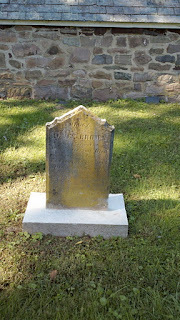
It’s a wonderful story of a man standing up for what he believed was right. This woman, Nancy Agnes Brown, had served this man’s family well for many years. She was a part of the family and died well after slavery ended. Even so, prejudices remained. However money talks. And in this case it seems justified. The current church members think so too. They’ve taken very good care of all the old grave sites in this small churchyard. They are slowly going about pouring new concrete footings for the old markers. One of the first they finished was Nancy’s. Here it is:
February 28, 2023
Happy St. David’s Day
St. David is the Patron Saint of Wales. He was a 6th century founder of numerous religious communities and is the only native Welsh saint from that golden age of Celtic monasticism. He ran a strict order that some might even call strict but that I believe he probably considered basic and simple. He is known for a short but profound saying: Do the little things. That’s actually part of his last words to his followers: “Be joyful, keep the faith, and do the little things that you have heard and seen me do.”
This wisdom reminds us that what we do every day and how we treat those around us is far more important than doing great, noticeable things that bring fame. Be kind. Be gentle. Treat those in your circle with grace and care.
It’s said that St. David is to Wales what St. Patrick is to Ireland. He brought the love and grace of the One True God to the people.
I admit that once I discovered an ancestral line that trails back to Wales, I’ve become a lot more interested in learning about that wee Celtic country. My latest Ancestry DNA update says I have 17% Welsh ancestry. My parents had less. I got some from both sides but I do know the line of my paternal grandmother goes back to Wales in the 17th century. The saint’s feast day has been observed and celebrated since about the 12th century so I imagine it was part of my ancestors’ lives.
What do you know about Wales? Have you ever been? I hope to go one day.
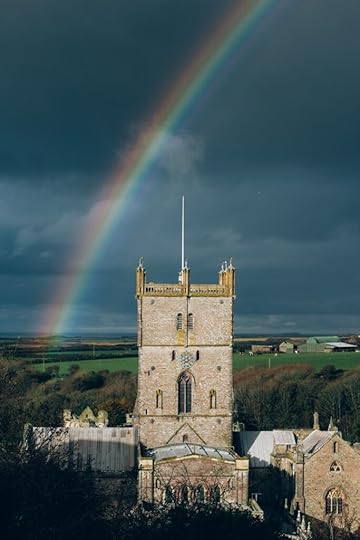 Photo by Mike Erskine on Unsplash
February 1, 2023
Yes, YOU Can Celebrate Imbolc
Imbolc, the ancient Celtic festival of light, marks the halfway point between the Celtic festivals of the dark and light halves of the year (Samhain and Beltane.) Spring is coming! In Ireland and the UK the appearance of the snowdrops is a sign.
 Photo by Yoksel
  Zok on Unsplash
Because Imbolc is a pre-Christian, ancient Celtic observance, the festival has been adopted by modern pagans. But that does not mean Christians and other people of faith cannot also observe it. Spring is a time of renewal, a time of new hope, a fresh beginning.
In the verse below, God through the prophet Jeremiah is bemoaning the fact that God’s people have turned away from Him, but instead, this is what they should be acknowledging.
They do not say from the heart,
‘Let us live in awe of the LORD our God,
for he gives us rain each spring and fall,
assuring us of a harvest when the time is right.’
~Jeremiah 5:24 New Living Translation (NLT)
Pagan means “country folks.” And country folks by the nature of their lifestyle are more in tune to creation and what miracles it reveals–the nature of God. And that, is why Christians should celebrate the ancient Celtic festival of Imbolc.
What do you think?
For the beauty of the earth,
For the beauty of the skies,
For the love which from our birth
Over and around us lies,
Lord of all, to thee we raise
This our grateful hymn of praise.
~From the hymn written by Folliot S. Pierpoint
January 31, 2023
Happy St. Brigid’s Day!
February 1, St. Brigid’s Day, Imbolc in the Celtic calendar, and Ground Hog’s Day (Feb. 2) in the U.S., are associated with the arrival of spring. It certainly feels like spring where I am, although that might not last.
Traditionally, school children in Ireland weave a new St. Brigid’s Day cross on this day. The cross has an odd shape, at least to the non Irish. Some say it’s shaped like a wheel and indicates the four seasons.
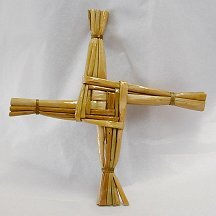
St. Brigid is said to have woven these, and at the end of my novel she weaves one (but you’ll have to read it to find out why!)
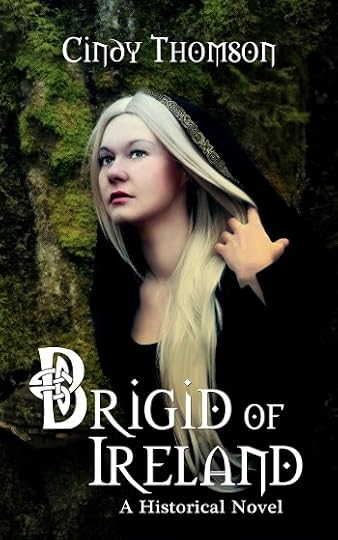
In my book The Roots of Irish Wisdom, I talk a bit these crosses. “In some parts of Ireland children weave the crosses on the eve of the Feast of St. Brigid and distribute them to their neighbours. Each year a fresh cross is hung over the doors of homes and barns or placed in the rafters in remembrance of the story and to ask God’s blessing and protection. Historically, in some places the old crosses were destroyed or hung elsewhere in the house, but in many places they remained in the rafters and the age of the house could be determined by counting the crosses.”
I would love to hear your thoughts on St. Brigid’s Day. Today I’ll be making some more crosses to giveaway (straw ones) and baking some bread–brown bread or Irish soda bread, haven’t decided yet.
Here is a link to my St. Brigid post on the Irish Fireside. Here’s a video that demonstrates how to make the crosses. That last little bit at the end I had not been doing. I’m going to try that!
Also from The Roots of Irish Wisdom:
Sweet heaven’s smile
Gleamed o’er the Isle,
That gems the dreary sea,
One far gone day,
And flash’d its ray,
More than a thousand years away,
Pure Bridget, over thee.
~Rev. Abram J. Ryan, From St. Brigid, Patroness of Ireland, Translated by Joseph A. Knowles
January 28, 2023
ST. Brigid: Patroness of Ireland
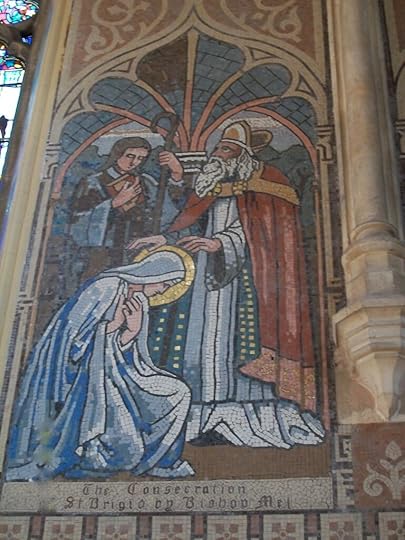 From St. Patrick’s Cathedral Armagh depicting the concretion of St. Brigid by Bishop Mel
Why did I choose to write about St. Brigid and why do people continue to be interested? All I can say is her legacy spoke to me and once I began to tell her story, she never left me alone. I’m not sure where the time went, but it’s been 17 years this March since my first novel was published. The legends about her are lessons for us all: be generous, be brave, continually seek the grace of God.
When taken in the context of the historical setting in which the acts of St. Brigid took place, these things are miraculous indeed. She was born a slave. Christianity was still a minority belief system. In those desperate times it was each person for him/herself. To give away something could mean you’d starve. Brigid had such courage in her beliefs that she ignored the conventions of the age. She went against the grain. She did such outrageous things the people around her could not help but notice.
There is a part in the prayer St. Patrick’s Breastplate that has been speaking to me lately and I think Brigid’s life reflected it well.
Christ in the heart of everyone who thinks of me,
Christ in the mouth of everyone who speaks of me,
Christ in every eye that sees me,
Christ in every ear that hears me.
Take a moment to read that again.
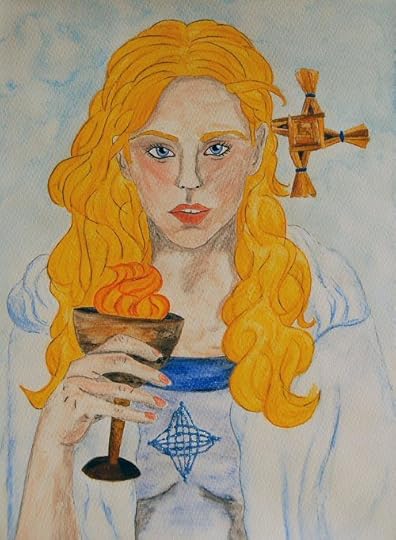 Brigid of Kildare by Sheeri
When I think of Brigid, the first things that come to mind are not who she was (in fact there is much debate on whether she was a real person or a goddess.) I don’t think about what color her hair was, whether she had brothers or sisters, how much wealth she may have accumulated, whether or not she could read. You see where I’m going with this? I think about her deeds, her devotion, her bravery. I think about all things Jesus taught us, and therefore, I think of Him, not her, and that’s how Brigid fulfilled the prayer mentioned above.
A Tangible ReminderSo, this St. Brigid’s Day, Feb. 1, reflect on her stories, what people said about her, and consider what you will do on this day. A tall task? Sure it is! But not impossible because it’s a prayer and a goal. Thank goodness we’re not in this alone! 
I find physical reminders to be helpful, so if you’d like a St. Brigid’s cross as a reminder, you can do as school children and adults are doing in Ireland right now. Weave a St. Brigid’s cross. This year I’m going to use some material recommended to me by author Kenneth McIntosh. In Ireland they would be using real rushes available this time of year, which we don’t have where I live. Here’s an affiliate link to what I’m using if you’re interested. I’ll post the result after I make one.
There are other things you can do to remember this saint’s legacy. Make some Irish soda bread. Take a walk outside to look for signs of spring. (Brigid’s feast day is associated with the first day of spring in Ireland.) Wrap yourself in a shawl and think about the legend of Brigid’s mantle. Give something away. Be kind to those you meet. Stand up for those without a voice. Say a prayer.
Have you ever made a St. Brigid’s cross? Tell us about it in the comments.
January 25, 2023
Food in Ireland
The Irish have such interesting names for things, don’t you think? Like mashed potatoes and sausages, for instance. If you don’t speak the lingo, at least now you know what bangors and mash is.
 David Pursehouse
Also, Freckle Bread is simple raisin bread; Black Pudding is made with pig’s blood but some people say it tastes amazing. Maybe I’ll try it next time; Soda Bread is a quick bread made with raisins (okay, it’s better than that sounds, but you get the idea); Wheaten bread is soda bread made, I think, with some whole wheat flour;
The Black Stuff is dark ale, probably Guinness; Colcannon is a dish made from cabbage, potatoes, and leeks; Brack is a sweet bread for tea, usually with fruit; Coddle is a one pot meal of bacon, sausage, potatoes, onions, and maybe barley and carrots and a few other things. And by the way, bacon is not bacon. Not sure if you can find American type bacon in Ireland, but I haven’t been everywhere. Rashers is bacon and that’s more like thick ham.
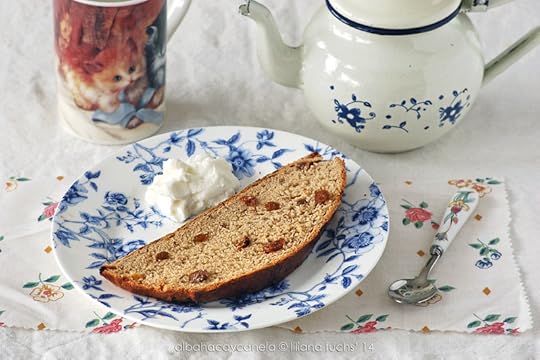 Irish tea brack Liliana Fuchs
Crisps are potato chips and chips are French fries. Prawns are shrimp. Crumbles are similar to what I call apple crisp, but with all different kinds of fruit. I had some rhubarb crumble that was sooo good. Irish stew is to die for. Sometimes the little cafes at tourist sites have soups and stews brought in, made by the employee in her kitchen at home.
I’ve heard the ice cream is very good. I can’t eat it but I thought I’d pass that info on.
Beware of the different kinds of mustards. Some are very, very hot!
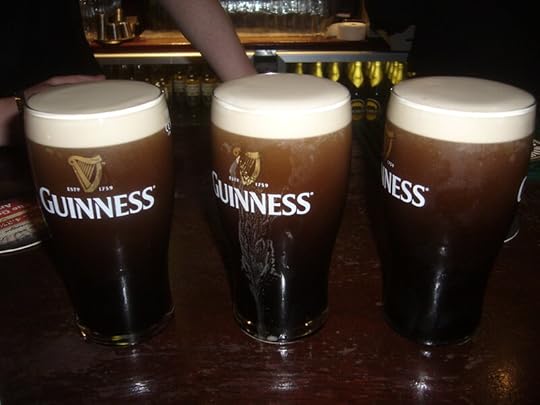 The Black Stuff Ángel Apellido
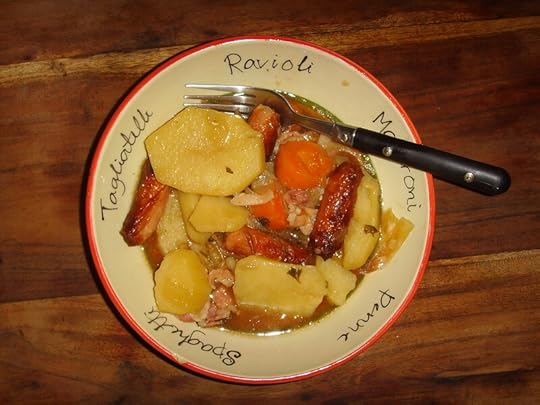 Coddle, a Dublin Stew Sean O’Donnell
A full Irish breakfast will probably be on your table at some point on your trip. It’s a little different in the north than it is in the republic, but all good with a lot of food. If you’ve never had one before, some of it will seem very odd to you. And I admit I skip some of it. The one below includes potatoes, which surprised me. When I was in Ireland before potatoes were never on the breakfast menu. All other times of the day of course, but not breakfast. See the rashers? Looks like ham.
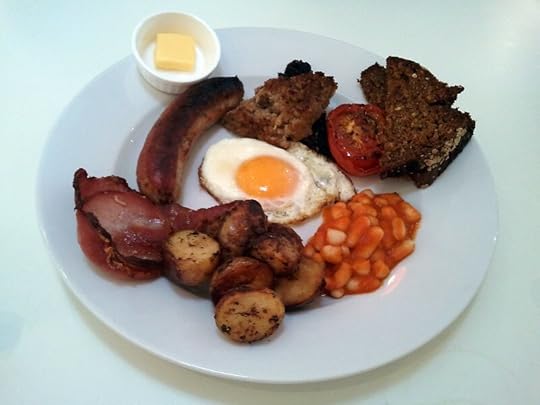 Full Irish breakfast Ben and Asho
Speaking of potatoes…there is one way of cooking them that I’ve never had anywhere else. The potatoes are parboiled and then roasted in the oven. Here are the details and a recipe.
I know I’ve missed a lot here. But my point is to point out how creatively the Irish name their dishes and how it’s probably a good idea to study up on the terms before you go. There are some things you have to discover for yourself, however. Here are two things I learned about the food: yogurt in Ireland (and probably in Europe in general) is not the same as it is here. At least what I ate wasn’t. Probably the bacteria is different, I’m not sure. But being lactose-intolerant I can eat yogurt because of the healthy cultures. But…uh…didn’t seem to be so in Ireland so I’ll skip it next time. Another thing we discovered was that vegetable soup is not like ours, which is generally tomato-based. This was good, but a clear broth with mostly onions, leeks, and carrots.
Here are a few other tips: Coffee is much, much, stronger. Be warned. (Although that may have improved since I was last there.) Tea is always served with milk, even if you ask to omit it. I like mine straight and that seems very, very peculiar to the Irish. I like how they serve it. The tea bag is put into a pot of hot water rather into your cup. Brew your whole little pot and then refill. If you go somewhere fancy they’ll strain your loose leaf into your cup. Packets of sugar and sweetener are long and vertical rather than our square packs. Not that you won’t find square but I don’t think that’s the norm. And brown sugar too. I was surprised to see that on the table. You may also find sugar cubes.
 Horst Gutmann
If you get hungry for chicken salad, wait until you get home. A chicken salad sandwich in Ireland is bread, cold chicken, and some lettuce. Scones are wonderful, but as varied from restaurant to restaurant as they are in America.
If reservations are required they’ll probably ask if you’re in the book or diary. Takeaway is carryout food. Tipping isn’t expected, although it’s widely known Americans like to tip. Don’t leave your money on the table. They will only bring you a bill if you ask for it. They aren’t ignoring you, just don’t want to rush you. To pay in Ireland, go to the bar or register and pay there. You can do that at any point in your meal.
I’m not knocking the food, far from it. You will eat well. Try something new when you’re in Ireland. Fish and chips might not be new, but I don’t know how you can go to Ireland or England and not have some. And don’t forget the tea and biscuits (cookies)!
Beef is usually very good in Ireland, grass-fed and local.
Craving a pizza or Chinese? McDonalds, KFC, Subway, or Burger King? You can get those things as well. I wouldn’t, but I’m not judging.



_-_stained_glass,_Saint_Patrick_-_detail.jpg)
