
A.B. Gayle's Blog, page 9
December 20, 2011
A Classic Reworking of a Classic
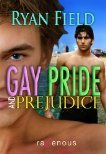 Gay Pride and Prejudice by Ryan Field
My rating: 5 of 5 stars
So far, of all the remakes I enjoyed this one the most. Mainly, because Ryan does such a good job of translating the pride and prejudices to the gay community.
Don't expect a scene by scene remake. This takes the aspects that are at the core of Jane Austen's book: the cutting observations about people and society and what people of that ilk are proud and prejudiced about but putting them into a modern gay context. So, we're not getting dry 1800 social observations of character but 2010 characterisations from a gay POV. They're none the less apt.
This means that the characters will be different. Tristan is no Eliza Bennett, but he shares some of her qualities, her honesty and her embarrassment at the behavior of her relatives, and most of all in being opinionated. Likewise Miller is no Mr Darcy, but he also is bound by the strictures of his parents and background.
In this case the prejudices and pride are linked up with new vs old money, gays vs straights, old queens vs new age gay.
I want you to stick with our own kind, and I don't want you screwing around with all these straights.
There's also the more normal kind of pride:
Ellen's face gleamed with pride; she gazed at her big strong straight son with love and affection.
I love that the alternate love interest is a stud ex-serviceman just back from Iraq.
The parallel works really well in this case, as the whole topic of marriage is at the core of the original. Who should marry who and why and again in this case, all Tristan wants to do is get married.
"As I got older and legalized same-sex marriage became an issue within the lgbt community, I started to realize I deserved to fall in love and get married just as much as heterosexual couples deserved it. I made a decision a long time ago I wouldn't settle for less. Call it pride, call it being stubborn. But I won't settle for less."
In this case "Mr Darcy" is still not exactly pro marriage. He just wants to fuck.
There are some priceless bits eg when one main character comes up with this:
"Do you want to suck my dick?" Miller asked. He adjusted his position and spread his legs wider.
Tristan smiled. He had a feeling Miller was trying to shock him on purpose. "That's not very romantic," Tristan said.
"You haven't sucked my dick yet, so you don't really know that for sure. It might be the most romantic thing that's ever happened to you."
And later, the other MC says this:
Though Tristan would have laughed at clichéd expressions like dripping dick or weeping cock in public, and he would have frowned if anyone had used these awful, trite, clichés in ordinary conversation, when he had one right in front of him it was a different story.
you have to smile!
Ryan has the equivalent faux pas down pat. The comments about the price of things, never done by someone who really is "old money". And I loved this bit:
And Clint had been giving him fashion tips. Eldridge hadn't worn a bow tie, a crew neck sweater draped over his shoulders, or a pair of pink plaid slacks in weeks.
But Ryan doesn't neglect sharing real facts to educate people about factors affecting the LGBT community. In this case:
"There are many older gay couples who have been together for years. Just like straight married couples, they own property together. When one of them passes away, the surviving partner is forced to pay inheritance taxes on their own property. It runs into thousands and it wipes them out."
He also doesn't pull his punches on a couple of occasions about hypocrisy.
Ryan Field's "Covers of Classics" can be a bit hit or miss, but to me, "Gay Pride and Prejudice", does exactly what he has set out to do.
View all my reviews


December 7, 2011
The Eternal Dungeon best Gay Fantasy in this year's Rainbow Awards!
 Rebirth by Dusk Peterson
My rating: 5 of 5 stars
There are a few stories around that were born as online sagas and for various reasons never went the traditional route of publishing. "Special Forces" is one, "The Administration" is another. "Eternal Dungeon" ranks right up there with them.
The 400,000 word epic is obtainable from Smashwords: http://www.smashwords.com/books/view/....
The stories that make up "Rebirth", the first volume about "The Eternal Dungeon" are dark, but that's because they explore serious themes. Themes of good and evil, guilt and repentance, redemption and renewal. Love is at the core of the stories and while there is some sex, it's a very small component and vital to the plot.
Each of the chapters except the last are primarily told through the eyes of the two main characters, Elsdon Taylor and Layle Smith. Rebirth 6 is told completely by a totally new character, giving a whole new twist on the scene.
The following quote from the POV of Layle's former master isn't the story by any means, but illustrates some of the concepts covered.
"The master's first acquaintance with his prisoner had come through the arrest records, and what he read there confirmed his long-held belief that the torturers of the Eternal Dungeon were fools. Their hope in prisoners' rebirth seemed to be based on the belief that prisoners' evil nature was shaped by the people around them: that if the prisoners met the right people, their natures could be shaped back to their original goodness.
The master considered this theory to be muck. In his experience, most people who did evil had been evil from the day they were born. This boy was a clear example. His early childhood had been no harder than that of many other children, and his time in the band had been, by the witness of the children and of those who had seen the boy during those years, a relatively pleasant period. There was no reason the boy should have turned to criminal torture – unless he was a boy born to do evil until someone stopped him by strangling him.....
It seems to me," he said slowly, "that your friends are looking at the matter from the wrong side round. The question isn't whether the evil men of this world should receive punishment. The question is what happens to the hearts of men who decide to inflict such punishment on their own, in time of anger. It's quite possible, you know, to become as evil as the wickedness you're punishing."
On the surface, a reader might expect tales of torture and abuse, pain and suffering, whereas in fact the specifics covering these are rarely entered into. If you fear reading them because the physical manifestation of torture doesn't appeal, you'll miss a truly great read.
The Eternal Dungeon is in essence the story of psychology. It's a story about the mind, not the body. It's a story about madness and sanity. It's the story about love given unreservedly to one who feels undeserving of that love. It's a story about sacrifice on every level.
And if you're still worried, there is a HFN at the end.
Just an update that "Eternal Dungeon" came second in Elisa's Rainbow Awards 2011 in the Best Setting Development and won (in a tie) Best Gay Fantasy!
View all my reviews
November 14, 2011
A Timeless Insight into what life can be like for many Gay Men
In light of all the kerfuffle about books in the genre not being authentic. Here's one that is. I'm not sure how Patric is these days. I hope he is as well as can be expected. His lively input is certainly missed.
 Timeless by Patric Michael
My rating: 5 of 5 stars
I bought and read Timeless after chatting to Patric Michael in Bethwylde's Yahoo Group. I'd never heard of him or "Timeless" before, so I was curious to see what it would be like.
The story starts with what could, for some, be a Spoiler but which the author told me later he sees more as a "hook". We learn straight up that Nate and Andy kiss.
Given that the next few pages were devoted to showing that Andy is straight, I was flumoxed by why the author would start the story that way. Once I got past this reaction, I started to see "Timeless" for what it was, a tale of two men, one who had acknowledged his homosexuality from an early age and another who went to great pains to prove he was straight.
They have ups and downs in their professional lives, each has lovers of varying degrees of closeness, but all the time they circle around each other as if connected by a long piece of string.
Timeless is a tale of friendship as much as it a tale of love. Andy and Nate might not have been lovers during all those years before they kissed, but they were still there for each other when it counted.
I also found it hard to believe that Nate wouldn't have sensed Andy's homosexuality, so I contacted the author and posed some of these questions to see just how realistic these scenarios would be, and he assured me he'd seen or experienced similar. Apparently guys are very capable of hiding their nature away if they fear recognition.
In which case, this story steps up above the rank of the usual m/m romance and actually becomes a study of human relationships. Of how people's needs and urges change over time. How difficult it was and possibly still is for some men to acknowledge their sexuality.
These concepts aren't belaboured, on the contrary, I found their inclusion made "Timeless" different from the majority of the m/m romances on the market and they made up for the little niggle I had with the opening spoiler.
"Timeless" is worth reading for the insight it gives into male bonding and male relationships as well as for the sweet romance it portrays.
Postscript: Now that more people have read this book, I'm interested to see that some of the younger males who read it, didn't like it because (I suspect) they didn't agree with the lifestyle choices the characters made. One reviewer going so far as to express dissatisfaction with slutty behavior. Now, note by "lifestyle" I'm not referring to whether or not they are gay, but the type of life they lead. I feel this behavior reflects the era of the man writing the story. When he "came out" / grew up, homosexuality was not as accepted as it was today.
This tended to create a different attitude to sex and monogamy. The latter was unheard of between gay males, or if couples did exist, they were the exception rather than the rule. Men, therefore, being treated as outcasts often went that one step further, pushing the boundaries and being hedonistic, because you were damned if you did and and damned if you didn't.
Hopefully, gay men when reading books by writers who lived in the generations before theirs, won't judge behavior on today's standards. Instead they should take the opportunity to learn what it was like and be thankful that times have changed.
So, while the behavior of the protagonists may not be "Timeless" their hopes and desires are.
View all my reviews
Timeless by Patric MichaelMy rating: 5 of 5 stars
I bought and read Timeless after chatting to Patric Michael in Bethwylde's Yahoo Group. I'd never heard of him or "Timeless" before, so I was curious to see what it would be like.
The story starts with what could, for some, be a Spoiler but which the author told me later he sees more as a "hook". We learn straight up that Nate and Andy kiss.
Given that the next few pages were devoted to showing that Andy is straight, I was flumoxed by why the author would start the story that way. Once I got past this reaction, I started to see "Timeless" for what it was, a tale of two men, one who had acknowledged his homosexuality from an early age and another who went to great pains to prove he was straight.
They have ups and downs in their professional lives, each has lovers of varying degrees of closeness, but all the time they circle around each other as if connected by a long piece of string.
Timeless is a tale of friendship as much as it a tale of love. Andy and Nate might not have been lovers during all those years before they kissed, but they were still there for each other when it counted.
"Played. Was that it? Was I just tired of the casual dates that punctuated my social life to that point? I wasn't sure, but it felt right. I suddenly wished for Andy. Longed for him with an intensity that made my stomach cramp from the sheer weight of it. Andy would tease me, make me laugh, keep me from thinking. I wanted to wrap his vitality around me like a blanket and simply hide beneath the cover of our long friendship.", [Patric Michael, Timeless:]It was a story about real life, real characters. If I was Nate, I'm not sure I could have excused Andy when he finally came out of the closet after wasting so many years when he'd been seemingly hopelessly in love with him, but obviously life's like that and there's a lesson to be learned there.
I also found it hard to believe that Nate wouldn't have sensed Andy's homosexuality, so I contacted the author and posed some of these questions to see just how realistic these scenarios would be, and he assured me he'd seen or experienced similar. Apparently guys are very capable of hiding their nature away if they fear recognition.
In which case, this story steps up above the rank of the usual m/m romance and actually becomes a study of human relationships. Of how people's needs and urges change over time. How difficult it was and possibly still is for some men to acknowledge their sexuality.
These concepts aren't belaboured, on the contrary, I found their inclusion made "Timeless" different from the majority of the m/m romances on the market and they made up for the little niggle I had with the opening spoiler.
"Timeless" is worth reading for the insight it gives into male bonding and male relationships as well as for the sweet romance it portrays.
Postscript: Now that more people have read this book, I'm interested to see that some of the younger males who read it, didn't like it because (I suspect) they didn't agree with the lifestyle choices the characters made. One reviewer going so far as to express dissatisfaction with slutty behavior. Now, note by "lifestyle" I'm not referring to whether or not they are gay, but the type of life they lead. I feel this behavior reflects the era of the man writing the story. When he "came out" / grew up, homosexuality was not as accepted as it was today.
This tended to create a different attitude to sex and monogamy. The latter was unheard of between gay males, or if couples did exist, they were the exception rather than the rule. Men, therefore, being treated as outcasts often went that one step further, pushing the boundaries and being hedonistic, because you were damned if you did and and damned if you didn't.
Hopefully, gay men when reading books by writers who lived in the generations before theirs, won't judge behavior on today's standards. Instead they should take the opportunity to learn what it was like and be thankful that times have changed.
So, while the behavior of the protagonists may not be "Timeless" their hopes and desires are.
View all my reviews
October 18, 2011
A Progressive Dance of Love
 Plus Ones by Hank Edwards
My rating: 5 of 5 stars
To start out, I have to admit I'm not a big fan of weddings, especially the five figure extravaganzas that seem to be the norm these days, so a book that features a number of the darn things might be one you would think I'd avoid. However, a book by one of my favorite authors about gay weddings is different. Not because the colors are brighter or the guests are sexier, but purely because until recently, for many men, getting married has been an impossible dream.
This subtext of the political and cultural importance of the occasion runs lightly in the background of Hank's tale about two men who sincerely want their HEA. They want the white picket fence, the shared pet/s, the certainty of knowing they have someone to share the rest of their life with.
In real life, many men have found this future and even more are looking for it. This book is about the latter. The sheer number of the false starts they make along the way is quite believable given tales I've heard from gay men today.
Using at times, hilarious and at other times, pounding sex we see the two men weave their way around the metaphorical dance floor like one of those progressive dances where they meet up by chance only to swing away with a new partner.
This isn't a case of the big misunderstanding that could easily be solved if only they talked. To have a misunderstanding you have to have a relationship that can be threatened in the first place. This is more two men both burned by love, not daring to act on gut feelings while the object of their affection seems involved with someone else.
I really enjoyed the story. I enjoyed the insight into the wistfulness, despair and the insecurities often covered up by sarcasm and flippancy that I would imagine is quite common in gay men and their relationships. Often being too scared to commit for fear of being made vulnerable to hurt as they have been so many times before.
The weddings that take place in the background, particularly that of their friends Alden and John act as a beacon of hope for the men in the book and probably reflects the situation in real life as does the bigotry and hatred that still threatens from the outside.
I once asked the noted writing guru, Debra Dixon, how to introduce conflict into humorous romance as any book without conflict is boring. Her immediate response was embarassment. Hank uses this deliberately to portray his slightly clutzy hero Evan. This sort of character easily creeps into a reader's affection.
The object of his lust, Paul, without having any of these audience grabbing attributes comes across as more aloof, but that's okay. Two people the same wouldn't work and Paul's slight off-handedness is more a product of his being betrayed on more than one occasion by people he gives or nearly gives his heart to. He recognises his faults in a very telling scene towards the end, when his boss, John, asks him to be his best man.
Hank has also done a wonderful job of portraying his secondary characters, the unforgettable Miggy and the pathetic Meryl. Even Jeremy and Adam in a few short words take on a life of their own.
"Plus Ones" has everything readers are demanding in m/m romance. There is romance, emotional involvement and lots of hot sex. Sure, for most of the book the sex is with other people, but the quality of the sex with different partners was never the problem, it is the people they are having the sex with. The little things that turn them off like the high pitched voices or weird kinks and psychological problems. To me, this is a realistic view of the world of gay men dating even if possibly concentrated and embellished for our amusement.
I have been a fan of Hank's writing for a while now, but I think "Plus Ones" is a step above the rest. There is still the light humor he does so well, but underneath that is this testament to marriage and what it means to so many gay men.
View all my reviews
October 8, 2011
Twice Caught Caught Me
 Twice-Caught by Syd McGinley
My rating: 5 of 5 stars
What a great follow up to "Out of the Woods"!
Any book told from the point of view of a protagonist who is not privy to all the facts but relies on his inherent common sense will create a skewed view of the world he inhabits. So it continues to be with Tarin.
Underlying the continuing charming story about Twice Caught and Beak-Face there is a depiction of a society where one sector is kept ignorant, and kept in their place even though they are cherished. This makes an interesting parallel with our own world (in different parts and at different times) if you translate "boys" to "women". Not that I'm suggesting that is the point of the story, but the problems that can occur when one sector is artificially kept down definitely resonates.
Yes, the men are harsh, paternalistic and at times stupid but not intentionally so. Over time, the changes that are already happening - thanks to Tarin's catalytic arrival in their midst - will continue to improve the way they think and operate. You can see the officers beginning to see flaws in the way they opertae already. So, unlike some reviewers, I don't "hate" the men. Most of their mistakes and faults stem from ignorance.
But are they the oppressors? Or is it the Mothers who deliberately keep them in a state of borderline survival, forcing them to co-operate and find their own solutions?
Bad-Egg Jadon was an over the top villain (again seen through the eyes of one very biased boy) so it will be interesting to see what sort of character will provide the conflict should there be a further book in the series.
I see lots of potential for future stories both for our hero and other characters. Especially now Tarin has gypsy status. I, for one, would love to learn more about his world and how it came to be as devastated as it is. Anyway, I'm sure he'll have to find a cow, even if it's only so he can eat truly great pizza.
While you read, take the time to unravel all the different references to our culture in the books, songs, nursery rhymes, stories, terms. That's half the fun.
Once again, Syd has delivered with a book that satisfies on so many levels. A heart-warming love story, a fascinating world, an interesting look at the ways society operates along with so many distinct and interesting characters.
The book is also a great example of what can be done with limited viewpoint. We don't have to be in every character's heads to work out what they're like. Not that Tarin tells us outright, once again, the clues are there in what he sees and hears, it's up to the reader, using a more experienced view of life to interpret the clues and detect the real nature of the character.
"Twice Caught" caught me. Once I started reading, I couldn't put it down and when I finally did, my biggest reaction was relief and satisfaction that Syd hadn't let me down.
(What is even better is that, unlike with "Out of the Woods", I didn't notice and typo's!)
View all my reviews
September 30, 2011
Delving into the mind of Jane Davitt
The first book of Jane Davitt's that I read was "Bound and Determined". I loved that, so I bought "Drawing Closer" and "Wild Raspberries". That led me to "Wintergreen".
I make it a practice to email authors when I really enjoy their work. Call me a crazy fangirl, whatever! I like to tell author's what really works for me. As well as being a great story teller, Jane's writing style is very fluid. The sort of thing that possibly escapes most reader's notice, but as a freelance editor as well as a fledgling author, I appreciate well written prose when I see it. So another congrats are in order to Jane (and/or her editor *grins*). This is from the email I sent about a year ago:
Can I just say "Wintergreen" has to be one of the best "sequel" books I've read. To me, the anticipation of a couple getting together in the first place is what makes a romance, so sequels often don't cut it. However, the way you handled the story and the knowledge from the get-go that the pairing would have its difficulties was fantastic. The conflict didn't feel manufactured and the resolution was well done. I'm not a fan of external conflict being brought in just to create tension in a story. However, in this case, the action in book two had almost been foreshadowed in book one. The tension and conflict still centred around the characters' past and personalities, with the action being the vehicle to carry that forward.
So, I sent the above to Jane and a discussion followed which I'm blogging here with her permission. Firstly, her response:
JD: Thank you so much for taking the time to write to me; it's much appreciated!
I'm so glad Wintergreen worked for you. I loved Dan and Tyler and I wanted to do a sequel and see just how they were getting on a few months down the road. I think there were a lot of pointers in Wild Raspberries that it wasn't going to be easy to them, yes; just too much dragging at them from the past.
I like to think that now they finally made it on their journey :-)
AB: I'm glad you're not tempted to drag it out further with another book. So many authors do.
JD: I don't think I could really get into it; one book is usually enough, though Alexa and I did do a trilogy together and enjoyed it.
AB: Though, the next time it would be interesting to be a "fly on the wall" when Tyler gets to retirement age and Dan is at his peak (ie in his thirties). Transitions in relationships are a great source of conflict.
JD: They are! But they're only, what 14 years apart? When Tyler's 65, Dan would be 51 :-) ; not that far apart maybe? So, if they last that long, I don't see it being an issue because they'd have adjusted to it by then.
AB: I'm interested in your collaborative process with Alexa. Do you do it character by character i.e. in role-play or are there elements each adds?
JD: We usually write a character each and tag back and forward, sometimes a paragraph, sometimes more. And we're not possessive; we often borrow each other's characters for a few lines. I wouldn't write:
Would you like a cup of coffee, X
and then send it to her; I'd use her character to answer and pass it over when it got to somewhere more interesting.
With each book, we've become less attached to a single character; in our most recent one, "Room at the Top", though we each dreamed up a character, when we came to write, we would write long tags, using each other's characters freely until it got to the point where they were jointly owned, really. It made the writing go much faster and the story flow better, I think.
Because, I also collaborate with other writers in an online soap "Redemption Reef", I followed up this question with a couple of other to clarify matters:
AB: I gather you each take a particular character then and write the next scene from that viewpoint by yourself, is that correct? But, that would mean you would have to have some idea about what each of your characters is going to do in that scene, so you must have plotted something out. How much pre-plotting do you do when you're co-writing?
JD: We don't do a whole scene on our own; sometimes it's a paragraph, sometimes even a line. It's totally dependent on the story. We alternate POVs so if the chapter's from 'my' character's POV, maybe I'd handle anything that added something new to what we know about him or write a particularly emotional bit, but the more we write together, the more the lines blur. We used to add notes, 'hope it's okay, I borrowed your character for a few lines' but we don't now, we just do it and we're way faster and the voice is more consistent, I feel. Think of us as being parents to each character; one of us gave birth to him but we bring him up together :-)
Plotting we do outside the story via email. We'll sketch it out roughly, with a few highlights to include, get started, try to incorporate the highlights -- sometimes the story shifts direction and they don't work -- and plot in more detail as we write. It's a very fluid, easy process. Mostly, the story tells itself.
AB: If you each "own" a character. Which ones are yours and which are Alexa's?
JD: See above :-) To start with, we have a character each and swap their bios, maybe include a photo so that we get a mental image. But once we start writing, these days it's all a melting pot. This is a snippet from Room at the Top, written from Jay's POV (Jay was my character, Austin was Alexa's and we shared Liam). From memory, I'll try and divide it as we wrote it, but honestly, it's hard to remember because we have such a close joint voice so I can't swear who wrote which :-). I'm in italics. So you can see that we're both writing both of them.
"It's not—" Jay took a deep breath and abandoned the argument before it began. "I'll be good."
"If you are, I'll buy you something special," Austin said. "It'll be like Christmas. Really late Christmas."
"Or really early." Jay didn't care either way. He loved Christmas, and the most recent one he'd spent with Austin had been as close to perfect as he could have wished for. They'd had an amazing tree and piles of presents, and Christmas breakfast had consisted of the two of them snuggled on the couch in their almost identical new bathrobes, sipping hot chocolate and eating fresh cinnamon rolls. The apartment had smelled like cinnamon for days. "Too bad there won't be candy canes."
"Yeah, I think those are a seasonal thing. Have a good afternoon, okay?"
"Love you."
"Love you two."
"Love you three," Jay said. If he'd heard anyone else say that, he'd have rolled his eyes at the sap overload, but when it was between them, it felt like a joke only they got.
He tucked his phone away and left a scatter of bread crumbs for the ants.
Did they even eat bread? Maybe he'd look it up when he got back to the library. He was going through Dewey numbers in his head as he crossed the road, but he made it to the other side, so he must've looked both ways.
end of chapter
Hope that helps!
AB: Why do you collaborate?
JD: Alexa and I both started off writing fanfic (still do!) and worked together on several fics in the Buffy fandom years ago. We enjoyed it so we decided to try co-writing a novel. At that point we'd both had solo novels published. I find it fun, because you get to read at the same time as writing. I once collaborated on a fic with three other people and we posted a new chapter daily for eight months, each taking turns to write it, and we were as much fans of the fic as writers of it. I find that there's no writer's block when you're collaborating; if you're stuck, you do a short tag and your partner digs you out and then you return the favor. It gives it a very organic feel, especially in the sex scenes; you're not controlling events and it's looser, more natural.
AB: Do you find it difficult to write by yourself?
JD: No, not at all. I'm pretty prolific :-) I do find it's much faster to collaborate, though. Solo, I aim for 1000-2000 words a day; with Alexa, we can knock off 5,000 a day easily.
AB: Do you have other things you've written that you are looking for publishers for? Or are you flat out writing for your current publishers?
JD: I have four publishers, Torquere and Ellora's Cave for my solo novels, Loose Id for the books with Alexa and Total-e-Bound for short stories (it just sort of happened that way) and no, everything I write is usually at their request so I don't have anything hanging around. I aim for a solo novel and a co-written one a year plus a few shorts.
Recently Jane responded again when I reviewed her book "Hourglass" at Goodreads which also appears in m,y previous blog post.
JD: That is such a great review; thank you! I don't just mean it's good because you liked the book either; I love that you really took the time to detail your feelings and responses to the story as you read it. It was so interesting to see the book through your eyes that way.
Emboldened, I asked her some more questions which she was kind enough to answer:
AB:. When you set out to write "Hourglass" did the concepts about the structure come first or did they grow with the story? In other words, was the "how" you were going to write the story always there from the start?
JD: It was, yes. I had the idea of the TV show first and then I decided it'd be fun to not just refer to it in the book, but to plot it out in detail. From there, I got the idea of starting each chapter with a snippet of script or a show-related article. They were masses of fun to write and of course, I could use them to echo something going on in the 'real' story (though in some ways, both sets of characters felt equally real by the end).
AB: What prompted that decision? Did something else inspire you?
JD: Nothing in particular. I guess as a fan myself, I know just how it feels when a show is cancelled so I drew on that, and I own many scripts of shows, which I love reading. They came in handy as templates so that the scripts were as authentic as I could make them.
AB:. How much of what I interpreted as being deliberate was, or am I reading into it much more than you did consciously?
JD: Sometimes, I'll write something and people will read more into than I consciously intended, but with Hourglass I was very deliberately setting up echoes between the actors and the characters they played and structuring it in quite a complex way. It was like someone sitting between mirrors and seeing endless reflections of themselves. There was a story within a story within a story.
AB: Would you ever write something so untraditional again (not necessarily using the same methods but other more deliberate devices)?
JD: If an idea comes to me that would fit that format, sure, why not?
AB: How did Torquere receive the story?
JD: I don't recall any issues at all. I sent it in; my editor, Vincent Diamond, liked it, and we worked together to polish it up.
AB: Do you have an editor there who encouraged that style or was it more of a case of "Well you're a well-respected author of the genre so people will forgive you for your untraditional story telling style?"
JD: I work with different editors there but I'm sure whoever edited it would have been supportive. To be honest, it never occurred to me that it WAS all that untraditional or out there. I thought the concept with the chapter headings telling a parallel story was interesting but I'm sure it's been done before (what hasn't? :-)). Ben introducing and ending it, well, I liked Ben and I didn't see why the story had to be solely about Ash and Lee; there seemed room in the story for him. They were actors; they needed to be directed, if that makes sense.
AB: Do you regret that m/m romance particularly is becoming formulaic?
JD: I read a fair bit of it now that I have an e-reader, and I don't know if it is or it isn't really. The genre of romance itself does have a framework that readers like because it's reassuring and that goes for m/f, m/m, or f/f romances. I definitely like stories to push the boundaries, but I'd be pouting if there was an unhappy ending so maybe I don't want them pushed too far!
AB: What would you like to see more of in the genre?
JD: Nothing comes to mind. There's a huge variety of settings and heat levels as it is, plus crossovers with SF, horror, mystery and such. I think it's a vibrant, growing genre, especially with the surge of interest in e-books and I'm proud to be part of its growth.
AB: Any other comments you'd like to make on reviewers, readers and your future writing plans?
JD: I'm currently writing a solo novel for Torquere that's my first novel not set in a contemporary setting. It's a pre-industrial fantasy world, no magic, no dragons, but definitely not our world, with a theatrical background. An actor sees a young man fresh from the country in trouble and steps in to help him only to find he's unable to walk away once his good deed's done. I'm having a lot of fun (in a vaguely Hourglass way!) in having the actor quote from plays that I invented, and coming up with dozens of titles.
And to reviewers and readers alike, I have only one thing to say which is : thank you! Thank you for reading and for being interested enough to comment. It's much appreciated.
"Room at the Top", Jane's most recent collaboration with Alexa is now available from LooseID.
A big thank you to Jane for so patiently answering my questions. I do enjoy knowing more about the why and how they write.
I make it a practice to email authors when I really enjoy their work. Call me a crazy fangirl, whatever! I like to tell author's what really works for me. As well as being a great story teller, Jane's writing style is very fluid. The sort of thing that possibly escapes most reader's notice, but as a freelance editor as well as a fledgling author, I appreciate well written prose when I see it. So another congrats are in order to Jane (and/or her editor *grins*). This is from the email I sent about a year ago:
Can I just say "Wintergreen" has to be one of the best "sequel" books I've read. To me, the anticipation of a couple getting together in the first place is what makes a romance, so sequels often don't cut it. However, the way you handled the story and the knowledge from the get-go that the pairing would have its difficulties was fantastic. The conflict didn't feel manufactured and the resolution was well done. I'm not a fan of external conflict being brought in just to create tension in a story. However, in this case, the action in book two had almost been foreshadowed in book one. The tension and conflict still centred around the characters' past and personalities, with the action being the vehicle to carry that forward.
So, I sent the above to Jane and a discussion followed which I'm blogging here with her permission. Firstly, her response:
JD: Thank you so much for taking the time to write to me; it's much appreciated!
I'm so glad Wintergreen worked for you. I loved Dan and Tyler and I wanted to do a sequel and see just how they were getting on a few months down the road. I think there were a lot of pointers in Wild Raspberries that it wasn't going to be easy to them, yes; just too much dragging at them from the past.
I like to think that now they finally made it on their journey :-)
AB: I'm glad you're not tempted to drag it out further with another book. So many authors do.
JD: I don't think I could really get into it; one book is usually enough, though Alexa and I did do a trilogy together and enjoyed it.
AB: Though, the next time it would be interesting to be a "fly on the wall" when Tyler gets to retirement age and Dan is at his peak (ie in his thirties). Transitions in relationships are a great source of conflict.
JD: They are! But they're only, what 14 years apart? When Tyler's 65, Dan would be 51 :-) ; not that far apart maybe? So, if they last that long, I don't see it being an issue because they'd have adjusted to it by then.
AB: I'm interested in your collaborative process with Alexa. Do you do it character by character i.e. in role-play or are there elements each adds?
JD: We usually write a character each and tag back and forward, sometimes a paragraph, sometimes more. And we're not possessive; we often borrow each other's characters for a few lines. I wouldn't write:
Would you like a cup of coffee, X
and then send it to her; I'd use her character to answer and pass it over when it got to somewhere more interesting.
With each book, we've become less attached to a single character; in our most recent one, "Room at the Top", though we each dreamed up a character, when we came to write, we would write long tags, using each other's characters freely until it got to the point where they were jointly owned, really. It made the writing go much faster and the story flow better, I think.
Because, I also collaborate with other writers in an online soap "Redemption Reef", I followed up this question with a couple of other to clarify matters:
AB: I gather you each take a particular character then and write the next scene from that viewpoint by yourself, is that correct? But, that would mean you would have to have some idea about what each of your characters is going to do in that scene, so you must have plotted something out. How much pre-plotting do you do when you're co-writing?
JD: We don't do a whole scene on our own; sometimes it's a paragraph, sometimes even a line. It's totally dependent on the story. We alternate POVs so if the chapter's from 'my' character's POV, maybe I'd handle anything that added something new to what we know about him or write a particularly emotional bit, but the more we write together, the more the lines blur. We used to add notes, 'hope it's okay, I borrowed your character for a few lines' but we don't now, we just do it and we're way faster and the voice is more consistent, I feel. Think of us as being parents to each character; one of us gave birth to him but we bring him up together :-)
Plotting we do outside the story via email. We'll sketch it out roughly, with a few highlights to include, get started, try to incorporate the highlights -- sometimes the story shifts direction and they don't work -- and plot in more detail as we write. It's a very fluid, easy process. Mostly, the story tells itself.
AB: If you each "own" a character. Which ones are yours and which are Alexa's?
JD: See above :-) To start with, we have a character each and swap their bios, maybe include a photo so that we get a mental image. But once we start writing, these days it's all a melting pot. This is a snippet from Room at the Top, written from Jay's POV (Jay was my character, Austin was Alexa's and we shared Liam). From memory, I'll try and divide it as we wrote it, but honestly, it's hard to remember because we have such a close joint voice so I can't swear who wrote which :-). I'm in italics. So you can see that we're both writing both of them.
"It's not—" Jay took a deep breath and abandoned the argument before it began. "I'll be good."
"If you are, I'll buy you something special," Austin said. "It'll be like Christmas. Really late Christmas."
"Or really early." Jay didn't care either way. He loved Christmas, and the most recent one he'd spent with Austin had been as close to perfect as he could have wished for. They'd had an amazing tree and piles of presents, and Christmas breakfast had consisted of the two of them snuggled on the couch in their almost identical new bathrobes, sipping hot chocolate and eating fresh cinnamon rolls. The apartment had smelled like cinnamon for days. "Too bad there won't be candy canes."
"Yeah, I think those are a seasonal thing. Have a good afternoon, okay?"
"Love you."
"Love you two."
"Love you three," Jay said. If he'd heard anyone else say that, he'd have rolled his eyes at the sap overload, but when it was between them, it felt like a joke only they got.
He tucked his phone away and left a scatter of bread crumbs for the ants.
Did they even eat bread? Maybe he'd look it up when he got back to the library. He was going through Dewey numbers in his head as he crossed the road, but he made it to the other side, so he must've looked both ways.
end of chapter
Hope that helps!
AB: Why do you collaborate?
JD: Alexa and I both started off writing fanfic (still do!) and worked together on several fics in the Buffy fandom years ago. We enjoyed it so we decided to try co-writing a novel. At that point we'd both had solo novels published. I find it fun, because you get to read at the same time as writing. I once collaborated on a fic with three other people and we posted a new chapter daily for eight months, each taking turns to write it, and we were as much fans of the fic as writers of it. I find that there's no writer's block when you're collaborating; if you're stuck, you do a short tag and your partner digs you out and then you return the favor. It gives it a very organic feel, especially in the sex scenes; you're not controlling events and it's looser, more natural.
AB: Do you find it difficult to write by yourself?
JD: No, not at all. I'm pretty prolific :-) I do find it's much faster to collaborate, though. Solo, I aim for 1000-2000 words a day; with Alexa, we can knock off 5,000 a day easily.
AB: Do you have other things you've written that you are looking for publishers for? Or are you flat out writing for your current publishers?
JD: I have four publishers, Torquere and Ellora's Cave for my solo novels, Loose Id for the books with Alexa and Total-e-Bound for short stories (it just sort of happened that way) and no, everything I write is usually at their request so I don't have anything hanging around. I aim for a solo novel and a co-written one a year plus a few shorts.
Recently Jane responded again when I reviewed her book "Hourglass" at Goodreads which also appears in m,y previous blog post.
JD: That is such a great review; thank you! I don't just mean it's good because you liked the book either; I love that you really took the time to detail your feelings and responses to the story as you read it. It was so interesting to see the book through your eyes that way.
Emboldened, I asked her some more questions which she was kind enough to answer:
AB:. When you set out to write "Hourglass" did the concepts about the structure come first or did they grow with the story? In other words, was the "how" you were going to write the story always there from the start?
JD: It was, yes. I had the idea of the TV show first and then I decided it'd be fun to not just refer to it in the book, but to plot it out in detail. From there, I got the idea of starting each chapter with a snippet of script or a show-related article. They were masses of fun to write and of course, I could use them to echo something going on in the 'real' story (though in some ways, both sets of characters felt equally real by the end).
AB: What prompted that decision? Did something else inspire you?
JD: Nothing in particular. I guess as a fan myself, I know just how it feels when a show is cancelled so I drew on that, and I own many scripts of shows, which I love reading. They came in handy as templates so that the scripts were as authentic as I could make them.
AB:. How much of what I interpreted as being deliberate was, or am I reading into it much more than you did consciously?
JD: Sometimes, I'll write something and people will read more into than I consciously intended, but with Hourglass I was very deliberately setting up echoes between the actors and the characters they played and structuring it in quite a complex way. It was like someone sitting between mirrors and seeing endless reflections of themselves. There was a story within a story within a story.
AB: Would you ever write something so untraditional again (not necessarily using the same methods but other more deliberate devices)?
JD: If an idea comes to me that would fit that format, sure, why not?
AB: How did Torquere receive the story?
JD: I don't recall any issues at all. I sent it in; my editor, Vincent Diamond, liked it, and we worked together to polish it up.
AB: Do you have an editor there who encouraged that style or was it more of a case of "Well you're a well-respected author of the genre so people will forgive you for your untraditional story telling style?"
JD: I work with different editors there but I'm sure whoever edited it would have been supportive. To be honest, it never occurred to me that it WAS all that untraditional or out there. I thought the concept with the chapter headings telling a parallel story was interesting but I'm sure it's been done before (what hasn't? :-)). Ben introducing and ending it, well, I liked Ben and I didn't see why the story had to be solely about Ash and Lee; there seemed room in the story for him. They were actors; they needed to be directed, if that makes sense.
AB: Do you regret that m/m romance particularly is becoming formulaic?
JD: I read a fair bit of it now that I have an e-reader, and I don't know if it is or it isn't really. The genre of romance itself does have a framework that readers like because it's reassuring and that goes for m/f, m/m, or f/f romances. I definitely like stories to push the boundaries, but I'd be pouting if there was an unhappy ending so maybe I don't want them pushed too far!
AB: What would you like to see more of in the genre?
JD: Nothing comes to mind. There's a huge variety of settings and heat levels as it is, plus crossovers with SF, horror, mystery and such. I think it's a vibrant, growing genre, especially with the surge of interest in e-books and I'm proud to be part of its growth.
AB: Any other comments you'd like to make on reviewers, readers and your future writing plans?
JD: I'm currently writing a solo novel for Torquere that's my first novel not set in a contemporary setting. It's a pre-industrial fantasy world, no magic, no dragons, but definitely not our world, with a theatrical background. An actor sees a young man fresh from the country in trouble and steps in to help him only to find he's unable to walk away once his good deed's done. I'm having a lot of fun (in a vaguely Hourglass way!) in having the actor quote from plays that I invented, and coming up with dozens of titles.
And to reviewers and readers alike, I have only one thing to say which is : thank you! Thank you for reading and for being interested enough to comment. It's much appreciated.
"Room at the Top", Jane's most recent collaboration with Alexa is now available from LooseID.
A big thank you to Jane for so patiently answering my questions. I do enjoy knowing more about the why and how they write.
September 11, 2011
One of the best of 2010
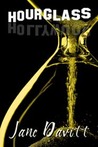 Hourglass by Jane Davitt
My rating: 5 of 5 stars
Have you ever picked up a book, started reading it and gone WTF? Hourglass did that for me.
I bought it purely because I love Jane Davitt's writing (possibly the ones she writes by herself more than the ones with Alexa). I didn't read the blurb first and found Ben - the guy whose POV the first chapter is written in - frankly obnoxious. Then Samantha his daughter arrived on the scene....
Now, I'm not one to stop reading because of unlikeable characters and have even rated books higher if the author can sell me a story where the main protagonists are less than perfect (Bad Company), but when I first picked up "Hourglass", it didn't grab me.
Maybe I wasn't in the mood.
I left it in my Mobipocket reader library along with all my other unread stories. Over the next few weeks, other purchases came and went as I read through them quickly, but still Hourglass remained. The weird thing was that my reader for some reason uses one cover as a default, so out of, say, thirty books, half may have one illustration. Every time I opened my reader the multiple images of an hourglass grabbed my attention. It was almost as if the book was yelling at me to read the damn thing.
Finally, I succumbed and am bloody glad I did.
There are only a couple of writers whose work resonates with me as being "original". Other readers may not see them that way, but something in their books or their characters jumps out as "different" and enjoyable, mainly because of that difference. Syd McGinley's Dr Fell and Jay Lygon "Chaos Magic" books fall firmly into that category. Interestingly they are also published by Torquere Press.
At this point of writing, I'm half way through Hourglass and dreading that Kate Mc's review of (Brilliant first half, shame about the rest) remark is correct.
So far so good. Now that I have the hang of what is going on, I'm enjoying the structure. The characters and their romance is one level, but the underlying circumstances with the real life parallels to shows like Torchwood and the little digs at the movie industry and the workers in it are worth reading for their own sake.
Ben is growing on me and even the presence of the daughter is not an eye-rolling diversion.
In fact, seeing the couple from Ben's POV adds another dimension to the story. The cynical onlooker. A device that Take My Picture could have used (see my review).
Reading on......
Part of the "problem" people have with the book is the amount of "telling" versus "showing" there is, particularly bits from Ben's POV where we gets lines like this:
The read-through a week earlier had been a disaster. Morden and Simons had sat as far apart as was humanly possible at a round table and said their lines to each other with an icy politeness that robbed them of meaning, or a bored mumble. Sure, no one expected a cold reading to be Oscar-material, but the tension had been palpable. The only time they'd behaved like professionals was when the script called for them to talk to someone else. For those scenes, they'd taken their heads out of their asses and actually given him something resembling a glimmer of hope that this movie would be halfway watchable.Now, in most m/m romances you would get this scene "shown", but then it would have to be in one of the character's heads, so it would have been uneven as neither would ever admit to themselves they were being pig-headed. So, by telling it from Ben's perspective, we are able to picture the scene ourselves simply because we already know the characters so well. Sure, we're not spoon-fed with it by seeing it in detail, but I can still picture everything that happens.
Perhaps that's why I'm enjoying the book so much. There is freedom for me to fill in the gaps.
Which reminds me of one of my current peeves. There is a growing fashion in romance writing for everything to be shown (and I'm not just talking graphic sex scenes, but that's one symptom of it). I think it's great if we get a good balance between the two forms of writing. Used intelligently in the appropriate place and then read patiently, a good tell can be just, if not more rewarding.
Anyway reading on......
By now, Ben's really growing on me.
"Son, the writers put a palomino in that scene," Ben said with his friendliest, scariest smile. "If you want to be the one to tell them that you couldn't get them what they wanted, if you want to be the one to destroy their artistic vision, just trample it to the ground, then go right ahead. They're in that little room beside the men's john."Pity he's straight!
"The broom cupboard?"
"Is that what they're calling the writers' room these days?" Ben inquired innocently. "Like the green room or something?"
"No, I think it's actually a --"
"Go away," Ben said softly, with emphasis, tiring of the game.
Two-thirds of the way through now. Still OK, still making sense. Logical relationship progression. Not too fast, not too slow.
Fucking each other once, no matter whether the earth moved or not, is not going to magically atone for ten years of having their lives fucked up. Some criticisms have been levelled at the tired old trope of the big misunderstanding being used, but that was only one aspect of their problem. They admit themselves that they weren't ready for a relationship at that stage, society was less accepting of celebrities being gay and an element of professional jealousy prevailed.
I think another reason I'm enjoying Hourglass is that the author treats her readers as people with intelligence. A rare occurrence. Take this bit for example:
If this was a movie, the script would call for him to splash water on his face, stare at his reflection in the mirror, maybe punch a wall. Ash didn't want to do any of those things, which just went to show how artificial scripts were. He sat on the toilet, with the seat down, and stared at the floor, a spotless white tile, subtly patterned with swirls and with an iridescent gleam.I can really relate to that.
Reading on.... Ooh, something unexpected happens. This must be the spoiler that Kate deleted. Hm, not too sure what I think of this development. I can see where the author is coming from, though, making a pretty heavy statement about the right of celebrities to live their lives in peace, without papparazi or the public thinking they own them, just because they see them regularly on their little rectangular boxes in their living rooms.
Reading on....
Dramatic, but hey, the whole incident parallels the television series they starred in which almost demanded something of this magnitude. In a way, their real life resembles a movie script (more of that later).
Also, I may have commented somewhere that reading half a good book and putting it down because the rest is no good is more rewarding than reading the whole of one mediocre book. Whle this may be true, the sentiment doesn't apply in this case.
There's nothing "wrong" with the last half of Hourglass. For starters, if you did stop, you'd miss the snarky scene between Ash and Ben at the swimming pool.
Lately I've noticed that too many authors just churn out book after book, filled with repetitive chunks of their own writing or are derivative of other people's work, complete with plots you could fill in after reading the first chapter, so it's good to discover that Jane has in a number of instances deliberately skipped the clichéd turn of events, eg people recognising someone when the obvious plot move would be not to.
And as for the show vs tell debate... the point is that that the author has some great "shown" scenes in the book. But they're kept for the important sections.
At no stage did I think these two guys were chicks with dicks. At no time did their angsting, or their dialogue feel anything but right for the character.
I like it when one hero can say to the other:
"You're just one tangled mess of hang-ups and issues, you know that?"and the remark is uttered affectionately, naturally. The sort of dialogue two men would have.
Sure, Lee's statement above about Ash was a spot on and accurate assessment of his faults. But that didn't stop him loving him, or as he so succinctly puts it later:
Let me know when you've stopped emoting and I'll finish the foreplay and get to your favorite bit."
There was a word or two here and there I would have tweaked to an alternative that might fit better. But, hey, that's me, over-refining the text until it's almost too slick to be real.
And the sex?
Despite what Lee says above, the foreplay for the last, very satisfying scene was the best part of it. All "shown" beautifully, dahlings.
I loved the laugh-out-loud bits of dialogue (and there are lots of those). This is a feel good, smiley book if you let it be.
Lee laughed. That was Ash all over. If he was issued a halo in heaven, he'd probably ask if it made his ears look big. "You make bed head look good, trust me."Even the ending of the original television series is sigh-worthy.
Now for the final zinger. "Why did the author start and finish the book through the eyes of Ben?" My best explanation is that this makes the love story between Ash and Lee feel like just that, a story boxed up and presented to the reader by Ben, the producer. Although we quickly switch into feeling it is their story, we get pulled back out often enough to give the impression that we're watching this love affair unfurl on television - complete with interruptions - while segments of the TV series, magazine articles, horoscopes, action told from another point of view are slotted in, much like television commercials.
Whether or not you think, as a reader, this is a good thing or not remains to be seen. At least in this case those "breaks in the viewing" are relevant and act almost like a Greek chorus, commenting indirectly on what's just happened or about to happen. Removed but pertinent.
To sum up. If you're reading m/m romances to get a quick sexual titillation, then maybe this isn't for you. (The sex/romance is there. I can point out the page numbers if you like!) If you're looking for your standard boy meets boy, they have a bit of conflict but get together in the end, well that's also there but that's not all that's there. If you're looking for a story about two men in love presented in a way that suits that love, then that's there in spades.
If you're sick of the same old, same old and despair of the standard of m/m romances, then give "Hourglass" a burl, but first lose the expectations, lose the preconceptions about how m/m romances should be written. Love the characters for who they are, enjoy watching them connect and discover that there is a relationship beyond the sex. Savor the carefully crafted touches that make this book stand out far above the crowd.
It could have been written as a straight gay romance, but by "wrapping" up a simple love story and presenting it in a box, interleaved with sheets of "tissue paper" Jane has given me, at least, an unforgettable ride of a read.
Or, in this case, in the words of Samantha who by now I liked nearly as much as her Dad:
"That was just perfect," she declared.
5.5 stars rounding down to 5.
View all my reviews
August 25, 2011
More of a Plug than a Review
 Chainmale: 3SM--A Unique View of Leather Culture by Don Bastian
My rating: 5 of 5 stars
I've often wondered what makes a good Dominant. Are they just sadistic control freaks? Most BDSM m/m books that delve into the psychology and not just the mechanics are told from the perspective of the sub, with a few notable exceptions like Syd McGinley's Dr Fell series.
Hence, when I discovered that there was a non-fiction book written by a well known Dom in the Leather scene I was intrigued and then ultimately satisfied. "Chainmale" is written as a stream of consciousness and in it I found the answers to a lot of my questions. It's a book that you have to stop and think about as sometimes just two paragraphs may contain a whole strand of thought which needs consideration.
As many readers don't have access to a Kindle, I'm including some quotes to give you an idea of the sorts of things I'm talking about that put the whole thing into perspective. There is a hard copy version, and you can get Kindle as a free download to your PC.
(The Dungeon Master)becomes director, psychologist, props manager, and scriptwriter, all in one. This fully rounded individual enables the bottom to explore a full range of experiences, emotions, and fears with total support and confidence. Mentor and student. And maybe that is why I feel that my education as a Top is never complete. There is always some applicable piece of information cropping up to spark new approaches and explanation
.....
The fact that I actually cared about my bottom's well-being and acknowledged it drew various negative responses from the audience. To some, I became 'too-real', meaning that my ability to 'feel' got in the way of their fantasy. Some wanted truly sadistic scenes in which the bottom viewed the Top as an uncaring power figure. A valid point too. These fantasies are needed by some and, I admit, there are times when I enjoy them also.
.....
A "mean, tough, cream-puff" is a rough exterior with a marshmallow center and a great analogy of most Leatherfolk in my opinion. I have never met more passionate and caring people in my life.
I could provide a safe and trustworthy place to explore their fantasies, within the confines of their submission. A place to let go knowing they might trip but I would catch their fall.
.....
I value a bottom who is creative, spontaneous, and objective. I do not wish a doormat. After all, someone who can think for themselves also pushes my creativity and limits. It is the respect shown me as a Top that carries weight and has the most value emotionally, in or out of the playroom.
It is the respect shown me as a Top that carries weight and has the most value emotionally, in or out of the playroom. Not time out, but just a toned down period that allows readjustment or re-evaluation of the contractual needs.
....
For example, a weekend of intense bondage and the ability to play for a lengthy period, for me, requires tremendous focus.
....
Even through clenched teeth, a difference can be intimated just by volume. The exception to this being if the bottom displays a "this-is-a-test" attitude to discover what it takes to make a Top abandon the scene. The 'you-couldn't-get-a-response-so-I-win' attitude that some bottoms exhibit. Well, they usually get a response from the Top they were not expecting. Translate that anyway you wish. I have two words for pushy bottoms - duct tape.
Some of the boys I have played with repetitively use this tactic to see what my limits are. Well, boys, it's not nice to test Daddy's patience. And to be fair, if I am not getting the responses I expect, maybe our needs just aren't meshing. Mood swings and expectations are influenced by many factors both before and during a scene. The trick is to know when it is not working and call it off rather than perform a mercy-fuck just to save face.
There are times when the bottom just puts out and shuts-up, especially if Daddy is in the mood to mete out some long-remembered act of retribution. "Forgive but never forget" is my motto, and it comes in very handy.
Then the classic story he describes when he comes home unexpectedly and finds his boy curled up in bed instead of doing chores. He made up an excuse for being there, left without acknowledging he'd seen the boy and then lets him stew for days before he brings it up in a scene.
"Ah, sweet fate. I'll let him squirm for a while. He'll relax eventually. I'll bet he tip toes around his duties and the conversation for a few days though. Besides, time is on my side and I never forget.
....
I know better now. I know what to ask, how to ask it, and how to deduce the subtle answer about what was not said as opposed to what actually was said.
Mistakes generally occur because of eagerness to be part of a scene. In this case, I had been thinking with my dick instead of my head. Experience is the best lesson.
The language we all use to communicate is borrowed, adapted, and labeled with special meaning to become applicable to the Leather culture. Words are still words, but some have dual meanings and carry more power under circumstances for which the original meanings were not designed.
My Leather taught me one very important fact: communication is not just talking, it is also observing.
....
Good communications skills - more to the point, good listening skills - allow me to disseminate information and express ideas that ultimately lead to my objective, whether that objective is buying a car or negotiating my way into someone's pants. I remember scolding a bottom and telling him that there was a reason he had two ears and one mouth. His wrong reply was, so that I had something to hold onto while he gave me a blowjob. He was difficult, but he got over it - with a little help from the welts on his back.
The book also shows that there's a lot of philosophy as well as psychology at play. At one stage, Don the Dom discusses the concept of listening:
Too many people like to hear themselves talk because it makes them feel important. Listening allows me to change my mind about a willingness, or unwillingness, to advance the conversation with someone to whom I am attracted.
....
Many scenes have gone awry because of misinterpretation. For this reason, the ability to listen, as well as the ability to ask the right questions without tipping your hand are crucial to success.
I could list more examples.
Despite the weighty thoughts behind it, the writing is lyrical and easy to read. This is a good example of the bits that lift the book from the mundane to the extraordinary:
The looks on those faces swirling around the bar are enough to entertain me all night. The music seems to increase in volume, rhythms guiding the gyrating masses, the din of conversation lowering under the weight of the music, communication becoming eye contact only. The hunt has started. Needy eyes, glazed eyes, come-fuck-me eyes, eyes that were begging just for that masculine touch against their skin at any cost. The want was so evident that it scares off most with its pleading and eagerness. Few eyes make contact with mine. It is the honesty in my eyes, I think, that is intimidating to most. Nothing superficial about the questions in my eyes, "What are you really looking for?" and, "Are you prepared to be honest in return?" No hidden agendas here. Naked trust questioned at a glance. "Are you willing? Will you bare your throat to the wolf with the red roses?" They glance away.
I am indebted to Teddy Pig for leading me to this book. He mentioned it in a blog he did back in 2005 http://www.leatherflog.com/2005/11/leath... and then repeated part of it in his current "Naughty Bits" blog. I'll leave it up to his experience to comment on the validity of the content, I'm happy just to share and recommend it to those looking for a fuller picture of the scene.
View all my reviews
August 19, 2011
It's Okay to be Gay!
 The All Trilogy: All Together by Dirk Vanden
My rating: 5 of 5 stars
Kudos to loveyoudivine Alterotica for re-releasing Dirk Vanden's "All" trilogy: "I Want It All", "All Or Nothing" and "All is Well" in one combined book. The three stories stand alone, each told from the first person viewpoint of a different character, however common characters and a couple of common events link them together.
The first version was released before the Stonewall Riots, and to quote Dirk: "My books weren't considered worthy of editing when they were first published.... We were lucky just to get the books published and to get a few bucks for an outright sale."
Drugs feature unapologetically strongly throughout. Both the upside - the euphoric feeling that you had all the answers, understood the essence of life and the universe and then the downside as reality stabbed euphoria in the back and painted black shadows around everything.
Apparently, one publisher wanted Dirk to "apologise" for all the drug use in his books, but as he explained it to me in an email: "We were illegal, immoral perverts in those days and anything we could do to our heads to keep from thinking how terrible we were just to have sex with each other and how even more terrible we were to write about it. As a result, I tried marijuana, mescaline and LSD and discovered that they "opened doors in my mind. Drug use in Gay bars in the 60s and 70s was as common as beer and cigarettes, and, of course, like nicotine, and alcohol, the drugs were addictive."
The books are set solidly in the late sixties, early seventies, an era famous for its music, its hippies and its drug taking, but still a time when homosexuality was illegal in most States. The times they were a-changing though. Chuck, the son of the last book's protagonist, sees it as a time when sex was not a big deal, and who you did it with was almost irrelevant.
In each story, a man who always thought of himself as straight, discovers he is happier being gay. Remember that in those days, this was a fate considered far worse than death. Those who identified as such were hounded by the law, consigned to the depths of hell by religion, rejected by family and rebuffed by their peers.
Making an apology is another theme in common. The viewpoint character has to acknowledge and seek forgiveness for a hurtful act. Until this is done, the character can never find peace within himself.
So let's get into the stories themselves. If the concept of golden showers and other such things turns you off, don't read this trilogy.
If you don't like learning about what it was like to be gay back in the 1970's, don't read this trilogy.
If politically incorrect sections like this:
"Gay guys are the most bewildering people on earth! One minute they can be so damned pleasant--and then turn right around and be the bitchiest bastards you've ever seen. It's like they all had split-personalities! (I kept remembering that kid I'd picked up in Nevada, and the Jekyl-Hyde thing that happened to him.) I don't know--it's like gay guys live on a tightrope or something; you never know what's going to set them off! Like--a guy would come in and order his drink, and usually he'd be smiling and happy, saying "hi" to everyone--and he'd pick out a spot to stand and display himself and cruise; but then, maybe half an hour later, you'd hear him snapping at people, swearing--or go storming out, shoving people out of his way! And who knows what the hell happened? Maybe he cruised someone and got turned down--or maybe he thought things weren't happening fast enough--or got hungup thinking nobody wanted him! Or, you're down at one end of the bar and a guy wants to talk--and someone else goes down to the other end, wanting a drink--and no matter what you do then, you're wrong; they act like you're insulting them both by not being in two places at once! Or if you're out of the one kind of beer a guy likes, it's like you've said something against his mother!"offends your sensibilities don't read these stories.
If reading about rape upsets you - again don't start reading.
While there is a "Happy Ever After" for each, if you're looking for a sweet m/m romance, don't read "All Together".
Are you getting the picture, yet?
However, if you want an honest, no-holds-barred look at the scene back then, check it out. The background is painted around a basic plot of what happens to three different "straight" men involved in the rape of a gay man passing through town.
The second story, "All or Nothing", runs in parallel to "I Want it All". The first chapters cover the same territory but it's seen from a different point of view.
Being a painter himself, Dirk has a very observant eye. He remarked to me in an email: "My head works differently somehow. I see "more" than other people. I don't know what that means. I've always thought of it as "paying attention."
Here's an example:
"They were all fascinating to watch--the way most of them tried to look so casual; they really worked at it, leaning against the wall, or the bar, or the pool table in the alcove, in just the right stray gleam of light to show off their "baskets." (I learned many new words that night.) They were posing in every sense of the word--some of them not just for a possible "trick" but for themselves; I got the feeling that if anything happened to disturb the pose, they wouldn't be able to function until they got back into it."
Once again, he is also not afraid to make some statements about being gay and what it means:
"At any rate, I learned that night that there were almost as many "types" as there were gay men. Apparently something had changed since I'd first heard about "fairies.""
and remember this was written back in the seventies.
Dirk, via his character, has some interesting takes on marriage too:
"Maybe someday the laws and ideas about marriage will change also, and when that happens, maybe it won't be impossible to have both a wife and a family and a male lover-friend, all at the same time."
and earlier in a description that parallels his own relationship with his partner who died in the AIDS epidemic.
"Gay marriages just don't work, Bill. The only ones that do are where they're not really lovers, you know? Not in the sense of a husband and wife at least. They're friends. Each one does his own thing for sex, but they live together as friends."
This is backed up by his thoughts about why the character's marriage didn't work:
"(the) part of the female personality that, to me, made females unattractive--a blind preoccupation with two people getting together in a "marriage" and devoting their entire lives to it."
In his recent interview on Lambda Literary, http://www.lambdaliterary.org/features/0... Dirk commented that he wrote the stories to say: "It's okay to be Gay!" "There are those who believe that Gay Liberation started at the Stonewall Inn in Greenwich Village on June 28, 1969. That is like believing that a flower can blossom without having been planted." Most of Richard (Amory)'s and my books were published before Stonewall. I would like to think that all those Gay dirty books were the fertilizer to make the Gay flowers grow."
"All is Well", the final story in the trilogy is different. It's a lot more cerebral for a start. A lot of the "action" takes place inside the hero, Bob's, head.
Being the son of a Mormon Minister, for Bob, religion played a large part in his upbringing. I've read two other books that use this religion as part of the plot: James Buchanan's "Hard Fall" and Z.A.Maxfield's "The Pharaoh's Concubine". While these two authors may have done meticulous research, they don't capture that overwhelming feeling of guilt and stultifying constriction of attitudes and beliefs that Dirk conveys so well, having been brought up a Mormon himself.
The trilogy as a whole is uncompromising; "All Together" is by no means an easy read, but worth it in the end. Dirk's writing makes you care even when the guys are at their worst, wallowing in their misery (particularly the last story). You just want Bob to break out of his funk. I'm not a fan of paranormal, and this is a good example of what you can do without resorting to that level of fantasy. We all have the capacity to do these things ourselves. Be the strong invincible vampire, the werewolf that can change to a form that can vanquish its enemies and we can all harbor the demon from hell within.
In some ways, "All is Well" covers the steps of the archetypal hero's journey, complete with the wrong goal, the black moment and the mentor (in this case drugs). As in all such journeys, the hero has to reach deep inside himself to find the solution to his predicament and confront his worst fears in doing so:
"I had created the problems myself, however childish or ill-advised I had been, and now I had to solve those problems myself."
I don't know whether this was intentional on Dirk's part - to follow Joseph Campbell's prescription, but there are definitely elements there. There's even the symbolism of the epiphany happening on Easter Sunday when the hero leaves his past behind and is reborn, complete with the biblically significant three day turnaround from the time he leaves San Francisco and returns.
None of these literary elements intrude on the narrative. Many readers may not even see the story at this level, but I enjoyed "All is Well" that much more after I recognised what had happened.
Another theme that ran through this story was:
"I had to keep an open mind, adjust myself to the changes in the world."
The world was definitely a-changing. Another book that came to mind as I read was Andrew Holleran's The Beauty of Men. Set in the nineties, after AIDS had decimated the gay population, the different scenes in steam baths bear comparison. Although there are two very different establishments in "All is Well" neither have that pathetic lost quality that imbues Holleran's classic.
In Dirk Vanden's time:
"Here there were dozens of men wandering around, most of them young, and many of them very attractive, manly-looking, well-muscled, with white towels narrowly wrapped around trim tanned waists. One or two I saw were clean-shaven and short haired, but most of them had long hair, moustaches, sideburns, many with full luxuriant beards.
While in Holleran's book, the middle-aged Lark describes it thus:
Driving to the baths in 1983 was like going to Valhalla, he thinks as he walks down the hall. Going to the baths in 1995 is like driving to have his tires rotated and oil changed.
In the end, the title of the last segment of the trilogy takes on a new triple-edged meaning as the different worlds collide and become one. Not only do the three characters come together, but for Bob, the hero of "All is Well", "all" the facets of his personality converge as well. Very neatly done.
There is almost a messianic fervor in the closing pages. The certainty hippies had in the seventies that a New Age was coming: The Age of Aquarius. Forty years on we can see that unfortunately the Roberts of the world didn't quite lose their grip. And while the Bobs may no longer be jailed for their sexuality, there is still room for more change to happen.
Dirk's writing style is fluid, his dialogue natural and his characters are vivid. It's great to see the trilogy, re-edited to tidy up a few problems and published with a great new cover based on one of Dirk's own paintings. Again, congrats to loveyoudivine Alterotica for recognising what should be seen as one of the building blocks of gay fiction.
View all my reviews
It\'s Okay to be Gay!
The All Trilogy: All Together by Dirk VandenMy rating: 5 of 5 stars
Kudos to loveyoudivine Alterotica for re-releasing Dirk Vanden's "All" trilogy: "I Want It All", "All Or Nothing" and "All is Well" in one combined book. The three stories stand alone, each told from the first person viewpoint of a different character, however common characters and a couple of common events link them together.
The first version was released before the Stonewall Riots, and to quote Dirk: "My books weren't considered worthy of editing when they were first published.... We were lucky just to get the books published and to get a few bucks for an outright sale."
Drugs feature unapologetically strongly throughout. Both the upside - the euphoric feeling that you had all the answers, understood the essence of life and the universe and then the downside as reality stabbed euphoria in the back and painted black shadows around everything.
Apparently, one publisher wanted Dirk to "apologise" for all the drug use in his books, but as he explained it to me in an email: "We were illegal, immoral perverts in those days and anything we could do to our heads to keep from thinking how terrible we were just to have sex with each other and how even more terrible we were to write about it. As a result, I tried marijuana, mescaline and LSD and discovered that they "opened doors in my mind. Drug use in Gay bars in the 60s and 70s was as common as beer and cigarettes, and, of course, like nicotine, and alcohol, the drugs were addictive."
The books are set solidly in the late sixties, early seventies, an era famous for its music, its hippies and its drug taking, but still a time when homosexuality was illegal in most States. The times they were a-changing though. Chuck, the son of the last book's protagonist, sees it as a time when sex was not a big deal, and who you did it with was almost irrelevant.
In each story, a man who always thought of himself as straight, discovers he is happier being gay. Remember that in those days, this was a fate considered far worse than death. Those who identified as such were hounded by the law, consigned to the depths of hell by religion, rejected by family and rebuffed by their peers.
Making an apology is another theme in common. The viewpoint character has to acknowledge and seek forgiveness for a hurtful act. Until this is done, the character can never find peace within himself.
So let's get into the stories themselves. If the concept of golden showers and other such things turns you off, don't read this trilogy.
If you don't like learning about what it was like to be gay back in the 1970's, don't read this trilogy.
If politically incorrect sections like this:
"Gay guys are the most bewildering people on earth! One minute they can be so damned pleasant--and then turn right around and be the bitchiest bastards you've ever seen. It's like they all had split-personalities! (I kept remembering that kid I'd picked up in Nevada, and the Jekyl-Hyde thing that happened to him.) I don't know--it's like gay guys live on a tightrope or something; you never know what's going to set them off! Like--a guy would come in and order his drink, and usually he'd be smiling and happy, saying "hi" to everyone--and he'd pick out a spot to stand and display himself and cruise; but then, maybe half an hour later, you'd hear him snapping at people, swearing--or go storming out, shoving people out of his way! And who knows what the hell happened? Maybe he cruised someone and got turned down--or maybe he thought things weren't happening fast enough--or got hungup thinking nobody wanted him! Or, you're down at one end of the bar and a guy wants to talk--and someone else goes down to the other end, wanting a drink--and no matter what you do then, you're wrong; they act like you're insulting them both by not being in two places at once! Or if you're out of the one kind of beer a guy likes, it's like you've said something against his mother!"offends your sensibilities don't read these stories.
If reading about rape upsets you - again don't start reading.
While there is a "Happy Ever After" for each, if you're looking for a sweet m/m romance, don't read "All Together".
Are you getting the picture, yet?
However, if you want an honest, no-holds-barred look at the scene back then, check it out. The background is painted around a basic plot of what happens to three different "straight" men involved in the rape of a gay man passing through town.
The second story, "All or Nothing", runs in parallel to "I Want it All". The first chapters cover the same territory but it's seen from a different point of view.
Being a painter himself, Dirk has a very observant eye. He remarked to me in an email: "My head works differently somehow. I see "more" than other people. I don't know what that means. I've always thought of it as "paying attention."
Here's an example:
"They were all fascinating to watch--the way most of them tried to look so casual; they really worked at it, leaning against the wall, or the bar, or the pool table in the alcove, in just the right stray gleam of light to show off their "baskets." (I learned many new words that night.) They were posing in every sense of the word--some of them not just for a possible "trick" but for themselves; I got the feeling that if anything happened to disturb the pose, they wouldn't be able to function until they got back into it."
Once again, he is also not afraid to make some statements about being gay and what it means:
"At any rate, I learned that night that there were almost as many "types" as there were gay men. Apparently something had changed since I'd first heard about "fairies.""
and remember this was written back in the seventies.
Dirk, via his character, has some interesting takes on marriage too:
"Maybe someday the laws and ideas about marriage will change also, and when that happens, maybe it won't be impossible to have both a wife and a family and a male lover-friend, all at the same time."
and earlier in a description that parallels his own relationship with his partner who died in the AIDS epidemic.
"Gay marriages just don't work, Bill. The only ones that do are where they're not really lovers, you know? Not in the sense of a husband and wife at least. They're friends. Each one does his own thing for sex, but they live together as friends."
This is backed up by his thoughts about why the character's marriage didn't work:
"(the) part of the female personality that, to me, made females unattractive--a blind preoccupation with two people getting together in a "marriage" and devoting their entire lives to it."
In his recent interview on Lambda Literary, http://www.lambdaliterary.org/features/0... Dirk commented that he wrote the stories to say: "It's okay to be Gay!" "There are those who believe that Gay Liberation started at the Stonewall Inn in Greenwich Village on June 28, 1969. That is like believing that a flower can blossom without having been planted." Most of Richard (Amory)'s and my books were published before Stonewall. I would like to think that all those Gay dirty books were the fertilizer to make the Gay flowers grow."
"All is Well", the final story in the trilogy is different. It's a lot more cerebral for a start. A lot of the "action" takes place inside the hero, Bob's, head.
Being the son of a Mormon Minister, for Bob, religion played a large part in his upbringing. I've read two other books that use this religion as part of the plot: James Buchanan's "Hard Fall" and Z.A.Maxfield's "The Pharaoh's Concubine". While these two authors may have done meticulous research, they don't capture that overwhelming feeling of guilt and stultifying constriction of attitudes and beliefs that Dirk conveys so well, having been brought up a Mormon himself.
The trilogy as a whole is uncompromising; "All Together" is by no means an easy read, but worth it in the end. Dirk's writing makes you care even when the guys are at their worst, wallowing in their misery (particularly the last story). You just want Bob to break out of his funk. I'm not a fan of paranormal, and this is a good example of what you can do without resorting to that level of fantasy. We all have the capacity to do these things ourselves. Be the strong invincible vampire, the werewolf that can change to a form that can vanquish its enemies and we can all harbor the demon from hell within.
In some ways, "All is Well" covers the steps of the archetypal hero's journey, complete with the wrong goal, the black moment and the mentor (in this case drugs). As in all such journeys, the hero has to reach deep inside himself to find the solution to his predicament and confront his worst fears in doing so:
"I had created the problems myself, however childish or ill-advised I had been, and now I had to solve those problems myself."
I don't know whether this was intentional on Dirk's part - to follow Joseph Campbell's prescription, but there are definitely elements there. There's even the symbolism of the epiphany happening on Easter Sunday when the hero leaves his past behind and is reborn, complete with the biblically significant three day turnaround from the time he leaves San Francisco and returns.
None of these literary elements intrude on the narrative. Many readers may not even see the story at this level, but I enjoyed "All is Well" that much more after I recognised what had happened.
Another theme that ran through this story was:
"I had to keep an open mind, adjust myself to the changes in the world."
The world was definitely a-changing. Another book that came to mind as I read was Andrew Holleran's The Beauty of Men. Set in the nineties, after AIDS had decimated the gay population, the different scenes in steam baths bear comparison. Although there are two very different establishments in "All is Well" neither have that pathetic lost quality that imbues Holleran's classic.
In Dirk Vanden's time:
"Here there were dozens of men wandering around, most of them young, and many of them very attractive, manly-looking, well-muscled, with white towels narrowly wrapped around trim tanned waists. One or two I saw were clean-shaven and short haired, but most of them had long hair, moustaches, sideburns, many with full luxuriant beards.
While in Holleran's book, the middle-aged Lark describes it thus:
Driving to the baths in 1983 was like going to Valhalla, he thinks as he walks down the hall. Going to the baths in 1995 is like driving to have his tires rotated and oil changed.
In the end, the title of the last segment of the trilogy takes on a new triple-edged meaning as the different worlds collide and become one. Not only do the three characters come together, but for Bob, the hero of "All is Well", "all" the facets of his personality converge as well. Very neatly done.
There is almost a messianic fervor in the closing pages. The certainty hippies had in the seventies that a New Age was coming: The Age of Aquarius. Forty years on we can see that unfortunately the Roberts of the world didn't quite lose their grip. And while the Bobs may no longer be jailed for their sexuality, there is still room for more change to happen.
Dirk's writing style is fluid, his dialogue natural and his characters are vivid. It's great to see the trilogy, re-edited to tidy up a few problems and published with a great new cover based on one of Dirk's own paintings. Again, congrats to loveyoudivine Alterotica for recognising what should be seen as one of the building blocks of gay fiction.
View all my reviews


