
A.B. Gayle's Blog, page 8
July 2, 2012
What happens after the last page is turned...?
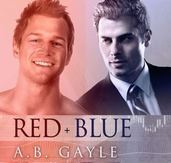 Here's a blog I did recently with fellow Dreamspinner Author,
Clare London*
Sequels and Series - to do or not?! Please feel free to join in the discussion.
There are also equally interesting chats on:
The End ... at Anne Barwell's blog .
Choosing a POV ... at the Dreamspinner blog .
As I see it, there are a few different options:
The Epilogue where all loose ends are neatly tidied up.
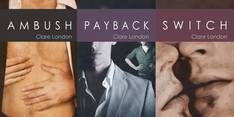
A short story, published separately, showing the characters living happily together. Clare’s own trilogy of shorts that follow “True Colors” is a good example of these as are the many Holiday themed stories that authors write involving their popular characters.
A follow up story where unresolved external issues from the past intrude, eg stories like Jane Davitt’s “Wintergreen”, the follow-up to “Wild Raspberries”.
A sequel where the nature of their personality differences or their living conditions provide new / unexpected conflict. (the factors that can tear them apart)
Ongoing books in a series where their jobs and/or world allows for ongoing adventures that are as interesting and significant as the parallel romance plot which develops over the series.
Spin Offs involving minor characters in the first book which show the ongoing relationship of the initial characters in their own secondary role.
Each of these has a place depending on the characters and circumstances of the initial book.
Problems can arise, however, with readers noting that follow up books where all the edginess and tension has gone can be boring, no matter how hot the sex.
In other instances, readers have developed certain expectations based on the first book and are disappointed if these aren’t met.
All books need conflict. That’s what gets readers turning the page to see if this can be resolved. However books that rely just on arguments between the two characters can lead to this sort of reader reaction:
“It was like going one step forward and two steps back.” and another reader commented on a different story:
“I just wish they didn't argue about little things so much.”
One of the features I like to explore in my stories is the concept of opposites or characters who are immediately attracted to each other but have significant hurdles to overcome before they can get together.
My first novella, “ Mardi Gras ” which is centred around Australia’s “Pride” parade has two guys from different countries, different age groups and different backgrounds. A common reaction after that was disbelief that the characters would be together long term. I have yet to write the sequel, but I believe they can, and do.

 My next novella,
“Caught”
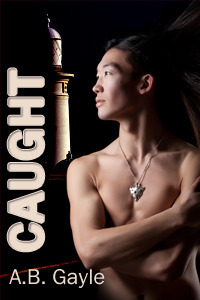
featured men from different cultural backgrounds.
My next novella,
“Caught”
featured men from different cultural backgrounds.In this case, the quickness of their hooking up also made some readers query whether common ground can be found in the long term.
“Red+Blue” again is posing these sorts of responses.
While “Opposites Attract”, do they “Stay Together”?
I could have written a single chapter epilogue, based it a year in the future and shown them playing “Happy Families” followed by a hot fuck. But I want to do more than that. I want to explore the concept of meeting these problems and overcoming them in a book “Give+Take”.
Clare had an interesting comment to make at the time, likening her characters’ lives to a Work in Progress.
So, here’s our discussion.
A.B. Gayle: What’s your attitude to sequels?
Clare: I've personally never deliberately considered them because I write the one story, and that's that :). However the first story I had published at DSP had a bittersweet ending - before they launched that specific range - and on accepting it, they asked me to write a sequel that would bring the main characters around to a HEA. I was happy to do that and it didn't feel like an uncomfortable compromise, but a further development (now published as one volume BRANDED ).
Otherwise, I don't necessarily wrap up all the ends, but I strongly feel the story should stand on its own. Freeman 's a good example - he and Kit will always be an odd couple, and they've only just come back together at the end of the book.
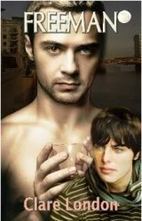 I don't think either of them ever mentions love or commitment aloud! Freeman will continue to skate close to the edge of legality, and Kit will remain rash and independent. But I felt it had enough of a settlement to stand alone. That said, I have started a sequel but it's in very early stages *g*. Freeman gets caught up in yet another dodgy deal and Kit helps - and this continues to add layers to their personal interaction.
A.B. Gayle: Freeman is a favourite of mine and I often quote it when talking about first person POV. It would definitely lend itself to follow up books in the style of options 3, 4 or 5!
Clare: Yes, I think that's the one book I could imagine equally tense and messy and sexy sequel(s), while they *both* grow up! They may spend time apart as a result, but I'd still hope to bring them back together.
A.B. Gayle: What I find is that these two concepts “Hooking Up” and “Staying Together” don’t always fit comfortably in the one story. What’s your take on that?
Clare: You raise a very intriguing thought - how much do we truncate our stories at an early get-together stage to fit the romance HEA trope, yet the characters are so sparky with each other it's possible they won't stay together long-term? I'd say all my characters have long-term potential - but that's because I'm publishing in the romance genre. Some of my free fiction explores less stable and/or healthy relationships, and that can be both fun and challenging for an author.
A.B. Gayle: Sequels would be easier for me, because my heroes are "Opposite" and have already got major hurdles that aren't going to go away, eg Danny and Taylor - cultural, Patrick and Damien - age, Ben and Adrian - location as much as anything. These things are already built in so sequels are almost being demanded. Are there any sorts of sequels you don’t like?
Clare: The HEA sequel where nothing happens except they cook dinner and have perfect sex all the time *lol*. I don't mean any disrespect to "slice of life" sequels - and you're right, they tend to come up at holiday periods - but they're not as interesting for me as a reader, however much I liked the characters first time around. However, I'm pretty sure that's because I don't read much in the cosy romance genre anyway, whereas many readers love to feel part of the domestic life of their favourite characters.
A.B. Gayle: What sort of series do you think work best?
Clare: This relates to my response to the last question. My favourite characters are ones who struggle in the first place i.e. the HEA in book#1 is the beginning of a story, not the end. Look at Jordan Castillo Price's PsyCop series - there's no doubt Jacob and Vic are a great couple, but they still have plenty of friction. That's actually what makes me love the series so much. There seems to be scope for more stories, and she feels that way too. Whereas her Channeling Morpheus series - while I love that even MORE - has a definite arc that it followed, with a beginning and end, and that was that. Perfect!
Dennis Lehane wrote an excellent series with Pat and Angie as P.I.s, but the last in the series had them breaking up over a point of moral principle that was very powerful. I've just read a new sequel to that, when they're back together and married, although re-addressing the case they broke up over. It's still a good thriller, but the break-up one made a far stronger impact on me.
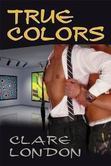 A.B. Gayle: Would you like to explain your rationale behind the writing of the sequels to True Colors?
Clare: They were a chance for me to revisit the guys after they got together, essentially to explore sex scenes, but also to progress the relationship further. Admittedly it establishes them more firmly rather than examines their conflict, but I still wanted to show *some* conflict, even if it's only personality-based like your (option 4), and ways they find to compromise and complement. A pretentious theory for 3 short sex scenes I suspect :), but that was why I wrote them.
Mind you, several people had expressed disappointment they didn't see Miles bottom in the original story. I wouldn't have written the sequel showing it if that wasn't true to the characters, but I felt that Miles *would* want to explore that - though not enough for a whole novel!
 A.B. Gayle: Speaking of Spin Offs, is there any chance to see if Red and Carter hook up?
Clare: Funny you should say that :). I have started another story with Red and Carter - that's me giving into peer group pressure again *lol* - but I don't intend to have it feature Miles and Zeke's relationship too strongly, just them as friends of the couple.
A.B. Gayle: What sort of follow up stories don’t you like?
Clare: I can get irritated by the manufactured conflict, just to make another book. A previously-unknown stalker turns up, or a long-lost - and threatening - relative suddenly reappears, or one of them suddenly reconsiders his love and they break up over something daft just to be able to re-live finding the HEA, etc etc.
A.B. Gayle: One reason I end my books where I do (and explore this further in Anne’s blog) is that I like to think I’ve shown enough about the characters’ personalities and strengths that the reader, using their imagination, can develop their own futures for them. How do you feel about that aspect?
Clare: That's a great viewpoint and I agree. It ties in with my opinion that a book should be self-contained, although it's fine if threads are left for a potential sequel - and for the readers to develop their own ideas, as you say. I often won't read a book in the first place if I know in advance it'll end on a cliffhanger - it feels like I'm being "tricked" into buying a long-running series before #1 is even out. I like to read a book, love it, then find there's another about the characters that I'd also like to read. The difference is difficult to explain! and I'm struggling to think of an example. Maybe for me it's the difference between the Black Dagger Brotherhood books, which are fascinating individually, and some of the long-running crime series, which start to pall and become repetitive after too many.
For me, it's all about contrivance - if another book rises out of the ending of the first, all well and good. I find it less justifiable to set out to write a series - and also tricky in the m/m genre because it implies an endless supply of gay main characters, all in the same setting! The Sean Michael series is an example of handling this logistical problem, with the BDSM clubs.
A.B. Gayle: I was advised that rather than write a sequel, I should write a totally new story as sequels don’t sell as well.
Clare: I got similar advice from a publisher, too - that sequels don’t sell as well unless they *are* a fully-fleshed plot on its own. It's heartening to hear on one level. However, I can see plenty of series books doing excellently! It must have its pros and cons - on the one hand, a much-loved book will have an established and supportive market for a series, but on the other hand, if a reader didn't like #1, they're perhaps unlikely to try #2 through #12.
A.B. Gayle: Well, thanks for letting me pick your mind, Clare. I’ll be interested to hear your readers’ thoughts on the subject and maybe even hear examples of ones they think work and ones they don’t.
Clare: Great to see and chat with you!
* This interview and blog originallty appeared on Clare's Live Journal here


June 22, 2012
Fires and other Catastrophes
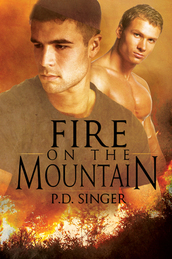 Today it's my pleasure to welcome author P.D. Singer whose book,
"Fire on the Mountain"
is being released today by Dreamspinner Press.
Today it's my pleasure to welcome author P.D. Singer whose book,
"Fire on the Mountain"
is being released today by Dreamspinner Press.First off, the blurb for her new release:
Take a break from academics, enjoy the Colorado Rockies, fight a fire now and then. That’s all Jake Landon expected when he signed up to be a ranger. He’ll partner with some crusty old mountain man; they’ll patrol the wilderness in a tanker, speak three words a day, and Old Crusty won’t be alluring at all. A national forest is big enough to be Jake’s closet—he’ll spend his free time fishing.
Except Old Crusty turns out to be Kurt Carlson: confident, competent, and experienced. He's also young, hot, friendly, and considers clothing optional when it’s just two guys in the wilderness. Sharing a small cabin with this walking temptation is stressing Jake’s sanity—is he sending signals, or just being Kurt? And how would Kurt react if he found out his new partner wants to start a fire of a different kind? Jake’s terrified—they have to live together for five months no matter what.
Enough sparks fly between the rangers to set the trees alight, but it takes a raging inferno to make Jake and Kurt admit to the heat between them.
Bonus Short Story: Into the Mountains
Long before he met Jake, Kurt Carlson climbed Yosemite with his best friend, Benji. But after a storm traps them halfway up the face of El Capitan, Kurt has to accept that their friendship isn't what he thought.
The First Electronic Edition of Fire on the Mountain was published by Torquere Press in 2009. I asked Pam the background to the re-release and other questions about her writing.
 We've got the fire, now for the grilling!
Thanks for agreeing to an interview, PD.
First up, can I say how much I enjoyed “The Rare Event” . There’s so much m/m released these days, around 200 a month according to Elisa Rolle. So when someone writes a book that stands out from the crowd, I think it’s worth noting.
The m/m Romance group at Goodreads has a poll of preferred jobs for our heroes. Cops and Private Eyes top the list with 17.3%, followed by cowboys, shifters and military. It wasn’t until near the bottom at 2.3% that business men featured.
I wish I’d known that statistic when I was planning “Red+Blue” !
I remembered a gay guy commenting in a thread that he wished authors would write about people in everyday jobs. So as I can’t resist a challenge I wrote about an actuary working for an insurance company. I did mention I liked a challenge didn’t I?
However, the thought of writing about hedge fund traders like you did in “The Rare Event” never crossed my mind. Brilliant! And you did it so well.
Now to make you sing for your supper!
AB: What fascinates me about your writing is that both "Maroon" and "The Rare Event" centre on a worldwide catastrophe, yet in neither case do you actually include the catastrophe in the story. Was this a deliberate decision?
PD: With the Rare Event, the whole catastrophe was just too large and spread over time, so I had to tackle a chunk of it. With Maroon, the call was for a story to go with a color, and being Attila the Pun, maroon meant ships to me. I have an Age of Sail story meant for that call, but I couldn’t make the ending come out happy without bending history to the breaking point. Then I found one of Walter Lord’s Titanic books, which had a tidbit that became a central plot point. With the Titanic, you are limited to a few possible outcomes to get a happy ending, and a reunion in heaven has already been done. If you can’t pick out the event, let me know; I’ll tell you.
 AB: Are there other catastrophes out there that you'd like to use as backdrop?
PD: Disasters tend to reveal character. I’ve set mountains on fire, dropped avalanches on characters, sunk ships, it’s all good fun. I’ve thinking of doing one centered on Krakatau but it would have to be a Dreamspinner Bittersweet. Might manage with Tambora better. I have a big book of catastrophes that could keep me in plot bunnies for years.
AB: When did you start writing and what made you venture into m/m?
PD: I’m an old fanficcer; I started with vampires, were-wolves, and necromancers, all of which are conspicuously absent in my published stories. Eden Winters and I started as crit partners in fandom, and teased each other into attempting original work. She led me into reading m/m, and then we decided we could try writing what we enjoyed reading. We’ve been together since our early head-hoppy messes, and anything one of us bumps our nose on, the other tries to learn from. It’s like getting double the experience.
AB: What did your hubbie say when he found out you were writing m/m?
PD: Oh, My husband knew early on about the m/m romance; he lifted an eyebrow initially but encouraged me to publish. He’s my trusted resource on rock climbing, camping, distance cycling, guy anatomy, and guy-speak. And he loves research nights.
AB: But why do you write when you can probably make more money in your EDJ?
PD: I’m fortunate with the day job in that it’s steady, socially useful, and interesting, but it doesn’t feed all parts of my soul. Money is one way to know you’ve resonated with readers, but I write because I want to tell the stories.
AB: I’m an online writing course junky. How have you developed your craft?
PD: Holly Lisle’s novel revision class was very valuable, and so was getting edited by Vincent Diamond. My action sequences are more exciting after Vincent took a red pen to the original lyrical sentences. Every book provides a new learning experience on some aspect of the craft; the latest lesson was how not to commit ellipsis abuse.
AB: What is the best piece of writing advice you ever got and what is the most useful thing you could pass on to would-be writers?
PD: The most useful writing advice came out of Holly Lisle’s novel revision course and distils down to: a true scene contains a protagonist, an antagonist (someone or something preventing the protagonist from getting what he wants), the conflict between them, a setting, and finally, a twist, where something changes. When one or more of those are missing, it’s not a scene, it’s pretty writing. Putting this information to work will probably keep me honing my craft for the rest of my life.
AB: You mentioned that you have revised and are re-issuing "Fire on the Mountain" what did you see as the flaws in the original version and how are you fixing them?
PD: Fire was a pretty good book initially, but when I brought it to Dreamspinner, it was too short to be a novel. Bringing it to length allowed me to flesh out Jake, Kurt, and their backgrounds, and to improve “tell” sections into “show” sections, which are more vivid and interesting. Would you rather watch Kurt struggle with the tanker (and see why it’s a sore spot with him) or just know it happened? And because an author does tinker with sentences, flow is improved.
AB: You're very lucky in having a regular beta reader who is also a writer. Has it strained the friendship?
PD: Only if she sells more books than I do. Please, nice readers, keep peace between us!
AB: As a writer, what comes easier to you? The plot or the characters?
PD: I usually have the plot sketched out before I know what characters will inhabit it, but my true struggle is to get all the scenes on the page they way they play in my head.
AB: What would you see as your strengths as a writer and what ... apart from overuse of ellipsis ;) ,,, would you see as the things you need to always work on?
PD: I think my strength lies in being open to learning new methods of both writing craft and being willing to tackle a new subject if there’s a potential plot attached. I develop a new writing quirk with every piece—I stamp that last book’s lesson out and promptly have a new issue to edit. The ellipses weren’t a problem in previous books, but abounded in The Rare Event’s first draft. (They aren’t there now!) It remains to be seen what quirk an editor will point out in Blood on the Mountain.
I gather that's you sequel to Fie on the Mountain. Well, good luck with this release and maybe when the next one comes out, I'll have you back to grill you some more.
If you want to know more about P.D. and her books, visit her at her website.
June 21, 2012
SFRBrigade Summer Solstice Blog Hop
One lucky commentor will win a copy of the first book in the series, "Isolation" and all respondents will go into the draw for a chance to win the major prize.
See front page for more details. The Saa'ar Chronicles #2: Nature by A.B. Gayle
Chapter 1
“What date is it?” Sookie glanced over at Isaac who was, as usual, slouched in his wheelchair staring moodily at the exterior vid screen.
He gave a cursory glance at his watch. “June 22nd.” A slight pause and then, almost as if against his will, he dragged his attention away from the image of the huge spaceship parked beneath the space station and added somewhat testily. “That’s on Earth, of course. Why do you want to know?”
Sookie held up her leather bound book. “This is the first chance I’ve had to write in my journal for ages. Been too busy, and I’d lost track of time.” Sighing, she turned to the correct page. “Summer solstice,” she noted absently and started writing.
“Does that mean, you’ll be throwing off your clothes and dancing butt naked down the corridors?”
Sookie’s jaw dropped in amazement. Did Isaac just crack a joke? Or at least attempt to? Given the fact that his girlfriend had died along with her compatriot aliens, his usual glumness was understandable. Still, he was the last person she expected to make her smile.
When Ethan was around, she’d often found herself laughing, but since the transferral of the hibernation pod he shared with Dana, the whole atmosphere was subdued, almost in mourning. She missed seeing the big man, missed hearing his heavy tread, missed seeing his instinctive smile whenever he saw her no matter how tired he was. And she had always known when he was exhausted because of the slight jerkiness in his stride as he struggled to deal with his lower leg prosthetics. She sighed. No time for regrets, best to focus on something else. “Where I come from, June the twenty-second would be the longest night and definitely too cold to prance around the streets in the all together.” Not that she would have done that even if it had been midsummer. She wouldn’t have dared.
Isaac levered himself more upright in his wheelchair. She definitely had his full attention now. “But Korea is above the equator.” He flushed and looked uncomfortable for a second. “Oh, the war... Where did you end up?”
“Australia. Our boat brought us to Christmas Island along with thousands of others.” Sookie snapped her journal shut. She hated being reminded of her family’s desperate flight when the atomic bombardment from the north began. “After we left the detention centre, they sent me to high school in Darwin, then I was lucky enough to be awarded a scholarship to study at Melbourne Uni. June the twenty-second is the middle of winter there.” Much as she was impatient to reach her destination, the impending departure was bringing back too many bad memories. In a way, that’s what she felt like again. Not a participant in an exciting trip to another galaxy, but a refugee who could no longer return to her home-world, totally dependent on the generosity and goodwill of others for her future.
Part of her problem was that ever since she’d been selected as one of the hundred “Bright Young Things” to start up a new colony as man’s first venture out of the solar system, she’d felt useless. What could she contribute? A doctoral thesis on the comparative evolution of plants on different continents hardly qualified her as an expert in anything.
The journal’s cover wasn’t providing her with any inspiration. How could she put into words the dramatic and tragic events that had happened since they had arrived here? Where to start? The last few weeks had been surreal, the stuff of an action movie. Even now, outside the Saa’ar comm’s room, everything was go go go as preparations were made for their departure.
The rest of her friends had specific tasks. Gaby and Kenji had taken over the security role and were busy organising everything. Hu and Adrienne were packing up Ramirez’s surveillance equipment and Astrid Dreher’s office. José and Olga were over-seeing the hibernation process . Rory and Thanksin were looking after all the medical gear, taking good care to ensure that all the drugs and chemicals were being transported safely. After a hurried meeting, they’d decided not to inform the Saa’ar what was inside the containers, hoping that the warnings on the tightly closed and locked lids were sufficient.
She was supposed to keep Isaac amused and make sure he didn’t sink back into his black funk. Judging by the way he’d slumped back into his chair, his brief period of interaction was over.
Stashing away her journal, Sookie took up her usual position at the back of his wheelchair. It wasn’t in her nature to force the issue and tell others what to do, but before he left them, Ethan had told her to trust her instincts, and her instincts were telling her that allowing Isaac to remain isolated was not in his best interests or anyone else’s.
“What are you doing?” Isaac snapped, but he didn’t try to stop her as she released the handbrake and wheeled him out of the room.
Once his belligerent tone would have made her shrink back into herself and defer to him, but now she had to be strong. Dana had insisted that Isaac be looked after, even if he didn’t want to be. It was time to snap out of her blue funk anyway. She didn’t have his excuse of being a paraplegic and confined to a wheelchair for the rest of her life.
“Let’s check on how they’re going with putting people into the pods. You know José. He’s sure to be wanting to know something and without you there to translate, he’s only guessing.”
“My chair will just get in the way.”
That had been his favourite excuse for not getting involved. True, the narrow corridors were teaming with humans and Saa’ar as they transported the gear down the ramp, but the stasis room was big enough for them to find a spot.
“Told you.”
Before they got there, they were forced to squeeze into an alcove so that two of the Saa’ar carrying a full pod back to the spaceship could pass.
“We’ll be fine.” A shiver ran down Sookie’s spine. She definitely wasn’t in a hurry to get into one of those things. She hadn’t felt as apprehensive when leaving Earth, but then Ethan and Abu had been around to reassure her. Anyway, those chambers had been more like humidicribs with glass sides. These were totally solid, and although she’d seen the inside of one, they reminded her too much of a coffin for comfort. At least these were bigger than the ones she’d initially seen. The need to bring more suitable ones from Saa’ar had been the reason for the delay, though there was still confusion as to whether this was the same Inter-stellar space ship or not. Two of them could have passed each other in transit. Although he could converse with them fairly well, Isaac still didn’t understand everything they said to him.
One of her suspicions had proven correct. Not all Saa’ar were the same.
When the new crew of Saa’ar arrived to take them on the final stage of their journey, everyone had been surprised that accompanying the tiny albino-like aliens were some absolutely gigantic specimens. No, she had to stop thinking of them like that. They weren’t animals to be studied as part of an experiment, however humans wasn’t the right word and people seemed inadequate.
Even the huge Maori, Rory Te Morenga, was dwarfed by these... creatures. At least the ones who had accompanied them from Earth looked like humans. These new arrivals may have had two arms and two legs, but there, the resemblance ended. At first, she’d assumed they must have been wearing some sort of armor or cloaked themselves in the skins of a beast, but then she’d realized that the grey, thick covering was their skin and the clothes they wore were rudimentary at best. Not that they seemed to have much to cover up.
Their job seemed to be providing the physical grunt as they operated at the direction of their smaller, paler counterparts. Slow and lumbering, more like an elephant until she’d seen one sprint to catch a box that had been knocked off a trolley. Then they were more like a rhinoceros attacking at full speed.
“Good, I’m glad you’re here, Isaac. I was just going to page you.” Gabrielle gestured at them both to come inside the room where, one-by-one, the humans were placed into the pods ready for transit.
Sookie studied the tall, fit figure of the Frenchwoman who had been thrust into the leadership role. She was looking tired, but no way would she ever admit it. At least she had Kenji to back her up. He was busy restraining a scowling man. Carlos. The security guard. Ramirez’s offsider. Sookie felt herself bristle. The guy who’d tried to kill Ethan. Twice.
Looking on, in their typical impassive fashion were two of the smaller aliens. One was holding what looked like a cylindrical wand.
“Isaac, can you find out what the damn thing is for. Carlos won’t let them near him.”
Carlos had been shot when he and his boss had tried to prevent Ethan from rescuing Dana. His injury had only been a flesh wound in the shoulder while his boss had been killed. Just another death to add to the total since they left Earth. The bandage on his chest seemed to be worrying the alien, he was picking at the edges as if he wanted to take it off.
“Bastard.” Carlos jerked his head to the side and spat. Sookie wasn’t sure whether he was aiming at the alien or Kenji who had just twisted his arm up higher.
Isaac spoke a few words to the alien but looked confused by the reply. After a moment’s silence, he shrugged and said, “Cha’ang used the word mahjaan which is Sa’ar for healer, but he used the negative form by placing otur before the word. Then he followed that with nokat usi which translates literally as blessed gift.”
The Saa’ar raised the shiny implement again. Carlos still eyed him warily, but the strange alien didn’t seem to notice the hostility that positively oozed from the man. Sookie couldn’t think of anyone who was less likely to be blessed, but then, who was she to judge.
“You’ve got no choice, Carlos. Either let him put that thing next to your skull, or we’ll leave you here.” Sookie could almost hear Gaby crack her infamous whip.
“Everyone’s had the procedure.” José hardly looked up from where he was adjusting the nozzles inside the chamber.
“I don’t trust you.”Carlos struggled for a few seconds, but finally settled enough to allow the tiny alien to reach up and place the instrument near the base of his skull.
Sookie wasn’t sure what she expected. Some dramatic convulsion perhaps, but apart from the fact that Carlos’s eye widened and he seemed to lose concentration for a second, from what she could tell, the machine had done nothing at all. The alien seemed satisfied though.
“Nokat usi,” he repeated, nodding his head as he carefully marked the cylinder with some kind of stamp that melted the surface before sealing it completely and stacking it on a trolley alongside about thirty others.
 Click on the banner opposite to purchase "Isolation" the first book in the chronicles.
 On Friday 22nd June (Pacific Time) for your chance to win books, gift cards, swag bags...and lots more just log onto the following SFRBrigade sites and leave a comment!
Plus there's TWO GRAND PRIZES!
1st Prize - a Kindle Touch or Nook Touch
2nd Prize -a library of science fiction romance titles from over 20 authors
(mostly ebooks with one print anthology), and an Anabanana Gift Card.
Each time you comment at a stop, you'll earn one entry into the grand prize - so the more sites you visit, the greater your chances of winning. The winners will be drawn at random on the 24th June and announced on this site. The list of participating authors can be found below this post.
See front page for more details. The Saa'ar Chronicles #2: Nature
by A.B. Gayle
Chapter 1
“What date is it?” Sookie glanced over at Isaac who was, as usual, slouched in his wheelchair staring moodily at the exterior vid screen.
He gave a cursory glance at his watch. “June 22nd.” A slight pause and then, almost as if against his will, he dragged his attention away from the image of the huge spaceship parked beneath the space station and added somewhat testily. “That’s on Earth, of course. Why do you want to know?”
Sookie held up her leather bound book. “This is the first chance I’ve had to write in my journal for ages. Been too busy, and I’d lost track of time.” Sighing, she turned to the correct page. “Summer solstice,” she noted absently and started writing.
“Does that mean, you’ll be throwing off your clothes and dancing butt naked down the corridors?”
Sookie’s jaw dropped in amazement. Did Isaac just crack a joke? Or at least attempt to? Given the fact that his girlfriend had died along with her compatriot aliens, his usual glumness was understandable. Still, he was the last person she expected to make her smile.
When Ethan was around, she’d often found herself laughing, but since the transferral of the hibernation pod he shared with Dana, the whole atmosphere was subdued, almost in mourning. She missed seeing the big man, missed hearing his heavy tread, missed seeing his instinctive smile whenever he saw her no matter how tired he was. And she had always known when he was exhausted because of the slight jerkiness in his stride as he struggled to deal with his lower leg prosthetics. She sighed. No time for regrets, best to focus on something else. “Where I come from, June the twenty-second would be the longest night and definitely too cold to prance around the streets in the all together.” Not that she would have done that even if it had been midsummer. She wouldn’t have dared.
Isaac levered himself more upright in his wheelchair. She definitely had his full attention now. “But Korea is above the equator.” He flushed and looked uncomfortable for a second. “Oh, the war... Where did you end up?”
“Australia. Our boat brought us to Christmas Island along with thousands of others.” Sookie snapped her journal shut. She hated being reminded of her family’s desperate flight when the atomic bombardment from the north began. “After we left the detention centre, they sent me to high school in Darwin, then I was lucky enough to be awarded a scholarship to study at Melbourne Uni. June the twenty-second is the middle of winter there.” Much as she was impatient to reach her destination, the impending departure was bringing back too many bad memories. In a way, that’s what she felt like again. Not a participant in an exciting trip to another galaxy, but a refugee who could no longer return to her home-world, totally dependent on the generosity and goodwill of others for her future.
Part of her problem was that ever since she’d been selected as one of the hundred “Bright Young Things” to start up a new colony as man’s first venture out of the solar system, she’d felt useless. What could she contribute? A doctoral thesis on the comparative evolution of plants on different continents hardly qualified her as an expert in anything.
The journal’s cover wasn’t providing her with any inspiration. How could she put into words the dramatic and tragic events that had happened since they had arrived here? Where to start? The last few weeks had been surreal, the stuff of an action movie. Even now, outside the Saa’ar comm’s room, everything was go go go as preparations were made for their departure.
The rest of her friends had specific tasks. Gaby and Kenji had taken over the security role and were busy organising everything. Hu and Adrienne were packing up Ramirez’s surveillance equipment and Astrid Dreher’s office. José and Olga were over-seeing the hibernation process . Rory and Thanksin were looking after all the medical gear, taking good care to ensure that all the drugs and chemicals were being transported safely. After a hurried meeting, they’d decided not to inform the Saa’ar what was inside the containers, hoping that the warnings on the tightly closed and locked lids were sufficient.
She was supposed to keep Isaac amused and make sure he didn’t sink back into his black funk. Judging by the way he’d slumped back into his chair, his brief period of interaction was over.
Stashing away her journal, Sookie took up her usual position at the back of his wheelchair. It wasn’t in her nature to force the issue and tell others what to do, but before he left them, Ethan had told her to trust her instincts, and her instincts were telling her that allowing Isaac to remain isolated was not in his best interests or anyone else’s.
“What are you doing?” Isaac snapped, but he didn’t try to stop her as she released the handbrake and wheeled him out of the room.
Once his belligerent tone would have made her shrink back into herself and defer to him, but now she had to be strong. Dana had insisted that Isaac be looked after, even if he didn’t want to be. It was time to snap out of her blue funk anyway. She didn’t have his excuse of being a paraplegic and confined to a wheelchair for the rest of her life.
“Let’s check on how they’re going with putting people into the pods. You know José. He’s sure to be wanting to know something and without you there to translate, he’s only guessing.”
“My chair will just get in the way.”
That had been his favourite excuse for not getting involved. True, the narrow corridors were teaming with humans and Saa’ar as they transported the gear down the ramp, but the stasis room was big enough for them to find a spot.
“Told you.”
Before they got there, they were forced to squeeze into an alcove so that two of the Saa’ar carrying a full pod back to the spaceship could pass.
“We’ll be fine.” A shiver ran down Sookie’s spine. She definitely wasn’t in a hurry to get into one of those things. She hadn’t felt as apprehensive when leaving Earth, but then Ethan and Abu had been around to reassure her. Anyway, those chambers had been more like humidicribs with glass sides. These were totally solid, and although she’d seen the inside of one, they reminded her too much of a coffin for comfort. At least these were bigger than the ones she’d initially seen. The need to bring more suitable ones from Saa’ar had been the reason for the delay, though there was still confusion as to whether this was the same Inter-stellar space ship or not. Two of them could have passed each other in transit. Although he could converse with them fairly well, Isaac still didn’t understand everything they said to him.
One of her suspicions had proven correct. Not all Saa’ar were the same.
When the new crew of Saa’ar arrived to take them on the final stage of their journey, everyone had been surprised that accompanying the tiny albino-like aliens were some absolutely gigantic specimens. No, she had to stop thinking of them like that. They weren’t animals to be studied as part of an experiment, however humans wasn’t the right word and people seemed inadequate.
Even the huge Maori, Rory Te Morenga, was dwarfed by these... creatures. At least the ones who had accompanied them from Earth looked like humans. These new arrivals may have had two arms and two legs, but there, the resemblance ended. At first, she’d assumed they must have been wearing some sort of armor or cloaked themselves in the skins of a beast, but then she’d realized that the grey, thick covering was their skin and the clothes they wore were rudimentary at best. Not that they seemed to have much to cover up.
Their job seemed to be providing the physical grunt as they operated at the direction of their smaller, paler counterparts. Slow and lumbering, more like an elephant until she’d seen one sprint to catch a box that had been knocked off a trolley. Then they were more like a rhinoceros attacking at full speed.
“Good, I’m glad you’re here, Isaac. I was just going to page you.” Gabrielle gestured at them both to come inside the room where, one-by-one, the humans were placed into the pods ready for transit.
Sookie studied the tall, fit figure of the Frenchwoman who had been thrust into the leadership role. She was looking tired, but no way would she ever admit it. At least she had Kenji to back her up. He was busy restraining a scowling man. Carlos. The security guard. Ramirez’s offsider. Sookie felt herself bristle. The guy who’d tried to kill Ethan. Twice.
Looking on, in their typical impassive fashion were two of the smaller aliens. One was holding what looked like a cylindrical wand.
“Isaac, can you find out what the damn thing is for. Carlos won’t let them near him.”
Carlos had been shot when he and his boss had tried to prevent Ethan from rescuing Dana. His injury had only been a flesh wound in the shoulder while his boss had been killed. Just another death to add to the total since they left Earth. The bandage on his chest seemed to be worrying the alien, he was picking at the edges as if he wanted to take it off.
“Bastard.” Carlos jerked his head to the side and spat. Sookie wasn’t sure whether he was aiming at the alien or Kenji who had just twisted his arm up higher.
Isaac spoke a few words to the alien but looked confused by the reply. After a moment’s silence, he shrugged and said, “Cha’ang used the word mahjaan which is Sa’ar for healer, but he used the negative form by placing otur before the word. Then he followed that with nokat usi which translates literally as blessed gift.”
The Saa’ar raised the shiny implement again. Carlos still eyed him warily, but the strange alien didn’t seem to notice the hostility that positively oozed from the man. Sookie couldn’t think of anyone who was less likely to be blessed, but then, who was she to judge.
“You’ve got no choice, Carlos. Either let him put that thing next to your skull, or we’ll leave you here.” Sookie could almost hear Gaby crack her infamous whip.
“Everyone’s had the procedure.” José hardly looked up from where he was adjusting the nozzles inside the chamber.
“I don’t trust you.”Carlos struggled for a few seconds, but finally settled enough to allow the tiny alien to reach up and place the instrument near the base of his skull.
Sookie wasn’t sure what she expected. Some dramatic convulsion perhaps, but apart from the fact that Carlos’s eye widened and he seemed to lose concentration for a second, from what she could tell, the machine had done nothing at all. The alien seemed satisfied though.
“Nokat usi,” he repeated, nodding his head as he carefully marked the cylinder with some kind of stamp that melted the surface before sealing it completely and stacking it on a trolley alongside about thirty others.
Click on the banner opposite to purchase "Isolation" the first book in the chronicles.
On Friday 22nd June (Pacific Time) for your chance to win books, gift cards, swag bags...and lots more just log onto the following SFRBrigade sites and leave a comment! Plus there's TWO GRAND PRIZES!
1st Prize - a Kindle Touch or Nook Touch
2nd Prize -a library of science fiction romance titles from over 20 authors
(mostly ebooks with one print anthology), and an Anabanana Gift Card.
Each time you comment at a stop, you'll earn one entry into the grand prize - so the more sites you visit, the greater your chances of winning. The winners will be drawn at random on the 24th June and announced on this site. The list of participating authors can be found below this post.
June 11, 2012
Researching LGBT Issues for m/m Romance
 When I decided to write
“Mardi Gras”
, my m/m romance centred around Australia’s Pride Parade, I checked the local libraries to see what they had on the subject. Luckily, I found a great book by a Melbourne academic, Robert Reynolds,
“What Happened to Gay Life”
. In it, he interviews gay men from different generations about their experiences and attitudes to the parade itself. At the end, the different feedback suggests that changes in their attitude really reflect society’s attitude to gays in the era that they came out: from when it was illegal, through the fear of catching AIDS just by being in the same room as a gay man, to today’s more toleration (but still not celebration) of the fact that LGBT people exist.
When I decided to write
“Mardi Gras”
, my m/m romance centred around Australia’s Pride Parade, I checked the local libraries to see what they had on the subject. Luckily, I found a great book by a Melbourne academic, Robert Reynolds,
“What Happened to Gay Life”
. In it, he interviews gay men from different generations about their experiences and attitudes to the parade itself. At the end, the different feedback suggests that changes in their attitude really reflect society’s attitude to gays in the era that they came out: from when it was illegal, through the fear of catching AIDS just by being in the same room as a gay man, to today’s more toleration (but still not celebration) of the fact that LGBT people exist.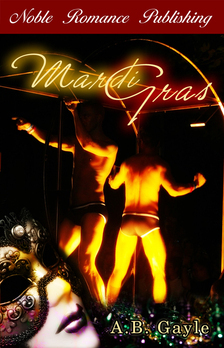 My book was based on the 2010 parade and revolves around the theme of making and maintaining connections within the gay community. This theme is hidden inside a May-December romance as men from two different generations connect. To get the feeling of this right, I also scoured Star Online, Australia’s premium gay paper
Star Online
Opinion pieces there and comments on them, gave me an insight into how real gay men think (as compared to ones found in romances). Mind you these may be atypical, but what it did prove was that there was no “one” way. Ten people had ten different opinions, proving how wrong it is to shove them all into one stereotypical box.
My book was based on the 2010 parade and revolves around the theme of making and maintaining connections within the gay community. This theme is hidden inside a May-December romance as men from two different generations connect. To get the feeling of this right, I also scoured Star Online, Australia’s premium gay paper
Star Online
Opinion pieces there and comments on them, gave me an insight into how real gay men think (as compared to ones found in romances). Mind you these may be atypical, but what it did prove was that there was no “one” way. Ten people had ten different opinions, proving how wrong it is to shove them all into one stereotypical box. 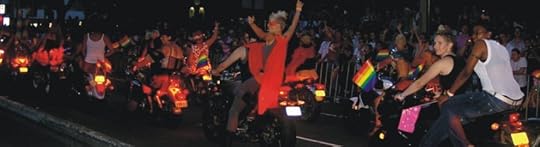 When it came time to research my Dreamspinner novel,
“Red+Blue”
, I needed different research, because this deals with people being infected by HIV. Not only the clinical implications but also attitudes in the community to those affected. I used the insurance industry as my vehicle to display that. My heroes work for a company called Sydney Sutherland Family Insurance which is (in the book) one of the few companies offering any type of life insurance to people who are HIV positive.
When it came time to research my Dreamspinner novel,
“Red+Blue”
, I needed different research, because this deals with people being infected by HIV. Not only the clinical implications but also attitudes in the community to those affected. I used the insurance industry as my vehicle to display that. My heroes work for a company called Sydney Sutherland Family Insurance which is (in the book) one of the few companies offering any type of life insurance to people who are HIV positive.Life insurance is boring, I hear you say. Who needs it? People taking out loans on property for starters.
When I started researching this topic, I discovered that despite advances in the treatment of HIV, there are no life insurers that currently underwrite whole or term life insurance for applicants with HIV. A few firms offer impaired risk insurance (capped) as they do all people who fall into the high risk category. This article on how to get life insurance when your are HIV positive was very helpful as was this source . I also discovered that a small family firm did offer full cover a few years ago but stopped.
 I love writing romances that leave people feeling good. I like to give all these sorts of themes a positive spin because I believe that showing how things should and could be done is as important as all the well-meaning books that dwell on the negative.
Toward the end of “Red+Blue” Adrian, the son of the firm’s President makes this statement to Damian (the blogger out of “Mardi Gras”): “(People with HIV) need to be reassured that their life still matters. That they matter. Society is too quick to shun them once they’ve been diagnosed, but the more encouragement we can give them to keep fit and healthy and keep their illness from progressing, the more likely they are to survive. With the new treatment regimes, many are living asymptomatic for years. Their life expectancy is almost an unknown. The longer they live, the more proof they’re giving the bean counters that they are an acceptable risk.”
Mind you insurance companies don’t just discriminate against people with HIV, but unless the community is prepared to stand up and fight for people infected by HIV just as they would any other disease, then infected people will feel like second class citizens.
 Obviously, I have strong feelings on these topics, but I try not to let these messages overpower the rest of the story. Many readers may not even pick up on the issues I’m covering, but I do love it when I get responses like this from a Goodreads reviewer, Lisa: “ Mardi Gras, by A.B. Gayle, is a blend of political history and personal exploration. It delivers a multilayered story with intriguing characters, a complex message, and an interesting background that kept me turning pages and had me surfing the internet for information. ”
 My style is to use humor to lighten the tone. “Caught” was a good example of that.
Without the internet, I could never have written the stories I do. I even read blogs of gay and bi men to get a more rounded picture. I do think as a writer using LGBT characters, I have a “duty of care” towards them. Therefore, it is up to me to get as true a picture of possible of their world and, when I can, alert readers who are only looking for romance to the real issues that affect their lives. The trick is to wrap that up in a page-turning romance that people will enjoy reading.
To celebrate YAM magazines support for LGBT issues, I'm giving away a copy of one of my ebooks to the first person to comment on this article. The choice of which one it is, is up to you.....
June 10, 2012
Journeys Through Life and Love
 Love Wanted, Will Travel by Don Schecter
My rating: 5 of 5 stars
I always enjoy reading Don’s stories. The prose flows fluently and there’s always enough uniqueness to lift his stories out of the ordinary. When Don asked me to beta read them for him once again, I was very happy to oblige. Not that I have to do much. His craft skills are superb. My job is to alert him to the odd typo or missed comma. Even more rarely, content-wise I might spot a section that needs further exploration or elaboration, but that is usually it.
After sending my input back, I was eager to see the final stories in their context. Re-reading them as parts of a whole with a theme in mind. In this case it was travel. Physical travel which enlightens and also the journey through life which broadens the mind.
The anthology starts with an amusing tale that includes (off camera) sex with females. One of the reasons I read Don’s book and use him as my beta reader is that I want to discover the reality of life as a gay man. Not the romantic version found in books. Sure, some have sex scenes and are about love, but just as important for me are the fears, fantasies and physical reactions.
After I read “The Widows” I asked Don whether that would have been physically possible for a gay man. His answer was an emphatic “Yes”. Physical stimulation produces results without the need for emotional connection.
This tale touches a number of taboos in the m/m romance trope but skirted the pitfalls brilliantly. No infidelity, no manipulation a pure win/win situation. Well done.
There is definitely a food theme running through many of the stories and most of these come from other countries, another aspect of broadening your horizons.
I love the way the protagonists in Don’s stories aren’t all hunky twenty year old clichéd gay guys (although they all might have been once!). In “Mama’s Boy”, the hero is sixty five but still young enough to yearn for love. This story is long and deserving of attention although it may not be immediately satisfying. After reading it, my main thoughts were sympathy for Paolo, but in all his thoughts and interests and being so set in his ways was he really ready for another man?
The next story “Seconds” is my favorite. Don did a great job. While it may not be involved with physical travel, there is definitely a journey of discovery for the hero. There’s also a paragraph in it that reflects an attitude that I’ve noticed frequently in books written by gay men but rarely seen in books written by women:
“As I grew up, I emulated my daddy—married my high school sweetheart, had two kids, started my own business—but I guess some part of me always felt that the gender division wasn’t quite fair.The current trend in trying to avoid writing gay men as “chicks with dicks” creates protagonists who are very macho figures. Not that men having these feelings need to be outwardly feminine, but it is the absence of this feeling of wanting to be “owned” by their lover that is often neglected. “Seconds” explores this beautifully. It also explores the agony of choice for a man who thought he was in a loving relationship and then discovers he loves another man. What is he to do?
Successful as I was, I never lost that little-boy feeling that I wanted someone to take care of me.”
“It seemed to me that in the old days, when homosexuality was a crime, things were easier. You stayed with the wife and went underground with your man. You split yourself in two: frustrated at home and living for the moments of ecstasy in secret. But nowadays, you have choices. I had choices. You can leave the wife and marry the lover. But what do you do when you love your wife? And kids? And home? And the life you’ve been leading? Well, then I guess you have to consider the nature of love.Contrary to expectations, it is a sweet HEA for all.
“I love Laurel and my children. They are my family. I’ve got history with them, and obligations. But I yearn for my lover; every fiber in my body aches and cries for Clay. To hold him, have him hold me. I need him in me, on me, around me. I want to wear him like a second skin.”
There is a lot of physical motion in the next story, “Reel Life” but this starts out as just running around a track. The character Don draws is typical of his writing skill. You can picture the boy, heck you’ve probably met a few like him yourself. It’s therefore interesting to get inside this boys head. You may not agree with his thoughts and motivations but you can definitely agree that they suit him.
This is more a story about barriers that have to be crossed. One of the most important of these is the concept of commitment. In his words he was...
”floating rudderless on the seas of higher education.Other barriers abound. Like the fact that the character (like Don) has Jewish heritage. When reading this story, just remember these are a form of memoir for Don. Adapting (not retelling) his life experiences (and work experiences) to tell a story. That alone makes the detailed background interesting.
Next comes “Rudy Redux” which is very much in vein of Don’s older man younger love tales.
It’s interesting reading stories where sex is just another facet of a relationship between two people, but not the make or break cornerstone.
This review is taking on short story status itself, so I won’t go into what’s “In the Bag” which is probably just as well. Finally, “Dress Right” gives a lovely picture of a whole range of characters some we met in the other stories, and fascinating characters they are.
Have Love/Will Travel stands on equal footing with the other three books in this series. All are great reads.
View all my reviews
May 15, 2012
The Problem with Rushing the Sex
 Wild Raspberries by Jane Davitt
My rating: 5 of 5 stars
The Problem with Rushing the Sex
There is a growing tendency amongst ebook erotica publishers to want, if not demand, that there be a sex scene within the first three chapters. Apparently sex sells and (some?) readers are impatient if they have to wait too long for it.
Re-reading one of my favourite m/m romances, Jane Davitt’s “Wild Raspberries” proves how wrong that concept can be.
While the couple have a few brief sexual encounters about halfway through the book, these and the rest of the plot only heighten the tension so when the full-on main event finally does occur, it becomes so much stronger for the reader and the participants themelves.
To quote Tyler: “He loved doing this. Loved feeling the self-imposed frustration build, deepening the intensity of his arousal...”
Similarly, Jane’s lead up to this act, deepens the intensity of the encounter. I’ve read a lot of m/m books in my time, but the next ten or so pages have to be the best written sex scene I’ve found so far. There is just the right amount of physical description to allow you to picture the moment, but also you’re right there in Tyler’s head, feeling everything he feels. Every reaction he has to Dan leads on logically from what has come before.
Recently, I participated in one of Linnea Sinclair’s online classes on how to write kick-butt action. Amongst the many helpful hints she gave was to use prequels and sequels (scenes not stories) to provide the reader with all the facts they need to prevent these details slowing the pacing down when the shit starts hitting the fan.
In many ways, this is what also has to happen to really make a sex scene mean more than slot A into slot B in a step-by-step description.
If we know why Tyler is holding back, if we can picture Dan’s eagerness, if we are familiar with the house and the setting, we only need to glimpse these briefly in the sex scene to pad it out mentally.
Similarly, we don’t need the full on emotional reaction within the scene, these can come afterwards in the “sequential” scene.
Similarly, within the scene, there has to be good balance between the reactions to what is happening and the actions themselves. To sum up, the actual sex scene needs to follow the rules of writing action, full speed ahead, then a pause for a second before continuing. In Jane’s case, before resuming the action, she inserts some more description of the setting, then ratchets the action up a notch to an even more scorching level.
It’s not just mundane description either but more the way the character reacts to the setting rather than just describing the scene: “The room was lit only by moonlight and the glow of the forgotten lamp still burning in the main room, and Tyler decided to keep it that way. There was enough light for him to see what he was doing and enough darkness for Dan to feel less on display.”
Hardly prize winning writing, but just the correct weight of words and context to suit the purpose. Breaking the action with description, mirrors the momentary downturn in intensity as they relocate to the bedroom.
Writing good sex scenes is akin to writing good action scenes. The same rules apply.
Recently, I’ve been reviewing my m/m collection, sorting out which ones have stood the test of time and a re-read. “Wild Raspberries and its must-read-as-well sequel “Wintergreen” together make a great story. But they will always stay near the top of my re-read pile purely because of the way Jane has written this great sex scene.
Perfect.
I'd blogged an interview with Jane a while back. This can be read here: http://www.abgayle.com/1/post/2011/09...
Okay. I admit to being a fan. But with good reason. As an author, I've learnt a lot from her writing. As a reader, I'm always interested in what she's going to come up with next. Her books are definitely not just variations of the same premise or writing style. Compare these ones with "Hourglass" and "Spoken fron the Heart". Each has that little touch of difference that will make her writing last when many other, more popular writers fade from memory.
View all my reviews
May 10, 2012
Striking a Different Chord – The Perfect Third
To date, most of my interviews have been with established writers. Here's one with someone new on the scene, Morticia Knight.
AB: Hi, Morticia. Welcome to the hot seat. Let’s start by finding out a little bit about you. When did you start writing?
MK: I’ve been writing since I was a little girl, but I was led astray by the lurid siren call of rock ‘n’roll, so concentrated on my music career for 15 years. In that era, the only writing I did was lyrics to songs. It was odd – I would have these crazy sci-fi or paranormal romance stories running around in my head – but if I tried to write anything down, it would come out in a rhyme scheme! I guess I just needed to be in that zone during that time.
AB: It’s always fascinated me that there seems to be a special mystique about male rock musicians. There is almost a cliché about the beautiful actress and the definitely less attractive male rock star. What do you think is the appeal?
MK: Definitely the bad boy persona. I’ve always found myself more attracted to that than the classically handsome guy. I’m sure a psychotherapist could work that all out for me – but I’m happy with my bad boy (it can be an illusory image) husband of the last 6 years – so I wouldn’t want to change it!
AB: Men are often accused of not being romantic or not being able to express their emotions well, yet by far the majority of the ballads that tug at the heartstrings are written by or sung by males. Is that the secret? They feel it is permitted for them to express these sorts of feelings in song, but they could never speak or write these words normally.
MK: Absolutely! I fear I might fall in that category as well. I look back at some of the things I would write and then sing about on stage and I think “No way would I ever actually say that to anyone!” There’s a weird sense of freedom of expression that you get when you take on that rock singer persona on stage; you feel as though you can hide safely behind it. I feel that way as an author too, but I believe it helps my writing to be more truthful.
AB: What exactly was your involvement in the scene? Were you in a band?
MK: Two, actually. But the last one was the one that burned me on the business. We got some college radio airplay and charted, did some regional college tours, sold a few CD’s, but the business aspect of music destroyed it for me.
AB: You mentioned getting “burned out by the music business in L.A.” Was that from the back stage people eg promoters and managers or the performers. Do you miss those days?
MK: – Sometimes I miss the synergy that you can achieve with other musicians on stage or in the studio. It can be like a very spiritual human connection moment. However, the beauty of that gets degraded by the record companies, distributors, etc, behind the scenes. It takes something pure and magical, and turns it into a commodity no different than a box of cereal. I get that we all want/need to make money – but there was a special type of viciousness associated with the music and film business that I haven’t encountered elsewhere.
AB: Would you ever write a romance novel based on the music scene?
MK: I actually have a few bouncing around in my head. There’s a rich well to draw from that subject matter!
AB: I gather that your path to writing stemmed from ghost writing or helping to write someone’s memoir. Care to elaborate?
MK: I had been involved more in the behind the scenes aspect of the music business and found myself working in P.R. with a crazy ex-music journalist who had interviewed everyone from Bowie to Chuck Berry to Led Zeppelin. I collaborated with him on his memoir, and that was when the writing juices got flowing again. I got out of the music business, moved to the mountains 2 hours away from L.A., and began to focus all of my creative energies on writing.
AB: How long ago was this? What sort of writing did you do in those days?
MK: This was about 10 years ago. I hadn’t gotten to the point yet where I was ready to start writing fiction again, like I did when I was a kid, so writing about other people, other fellow musicians even, helped me to flex my writing muscles.
AB: What prompted your re-location to Oregon?
MK: Two hours was still too close to Los Angeles, so a couple years ago I moved to the northern Oregon Coast. It is savage and dreary and gorgeous and peaceful here. In this environment, I have been able to get to a wonderful place where I can write down my romance stories. It was a little over a year ago, while I was laid up for a little while, that I discovered Total-E-Bound Publishing. I researched the internet; discovering that there was a huge market for books and stories of erotica. For some reason, it clicked for me. It felt like I could write some of my wild stories down under the erotica genre, and not worry about whether it was too questionable for a mainstream audience or publisher.
AB: Did you have any background in Creative Writing or are you totally self taught?
MK: I began to study towards an English degree before I left L.A.. I wanted to make sure I was grammatically coherent before I made a complete idiot of myself. But after I’d devoured all of the writing, literature, philosophy and history classes – I was done. I’m still not a hundred percent sure why I need a lab science class to get an English degree. Especially when they charge you so much money!
AB: What appeals to you about writing romance?
MK: I like it when romance (whether erotica or not) tackles the real challenges that all of us go through - we all have some physical or emotional block to believing we’re the perfect partner. So what happens when we have a very intense block – such as a massive injury like your hero Ethan did in “Isolation”? Does that mean we are no longer deserving of love and sexual fulfillment?
Sure - some readers might be uncomfortable with that, but I think it’s a worthwhile subject. There are plenty of women who read, write and enjoy rubenesque romances for that same reason. I think you should write what moves you, and the right readers will be moved by it.
Also, I like literature to push boundaries the way books like American Psycho, No Country For Old Men, and The Claiming of Sleeping Beauty have done. I’m not at the stage of my erotica career where I could even hope to compare my writing to such illustrious authors and works, but I am striving to remain creative and true to the craft of writing. At the very least, I want my characters to be real and vibrant, and a part of stories that have a strong arc and remain with my readers. This is my hope!
AB: What sort of stories do you write and why?
MK: It seems as though my erotica writing has remained in a contemporary setting, primarily using BDSM and ménage as a back drop. But I also have several sci-fi and paranormal storylines in the works, and am currently working on an M/M contemporary men in uniform series. So I suppose I’m going where my heart takes me at the time!
AB: BDSM and ménage seem to be the flavour of the month or even year, and is even come to the attention of the NY publishing scene. Do you have aspirations to write the next “Fifty Shades of Gray”?
MK: Not at all. Unless you mean it in the sense of reaching a wider audience with my writing. It’s ironic – and I know several erotica authors who feel this way – I have a BDSM series “Bound by Pleasure”, that has been on Amazon since last summer, and the scenario is very similar to the one in Fifty Shades. Since I never even heard of Fifty Shades until a few months ago, and have never read it, I find that interesting. I truly believe there’s a little of the collective consciousness out there when it comes to that sort of thing. But I do hope that the success of Fifty Shades will help other erotica authors such as you and I to get our books seen.
AB: Bondage and bit of lightweight caning with a paddle can be seen as healthy kink, but have you ever had any contact with or desire to write about the full-on BDSM scene with its rules, safe-words and protocols?
MK: I was in rock ‘n’ roll, remember? (*wink*) I had a little contact with the scene back in the day, and the “Bound by Pleasure” series is fairly hardcore, and might be too much for some readers to handle.
AB: What writers inspire you?
MK: Stephen King was my first (*blushing*). From there, it’s been an eclectic swirl. Cormac McCarthy, Karen Marie Moning, Charlaine Harris, Phillip K. Dick and Hunter Thompson, to name a few.
AB: You mention that you have had scifi and paranormal stories swirling around your head, would you ever write these? Would they be erotica, or would you be aiming at a different market?
MK: I would like to write some sci-fi/paranormal erotica. I started one about an evil djinn during NaNoWriMo, but I have had other deadlines I’ve needed to attend to. I have a few sci-fi’s outlined that I may try to pitch to a mainstream romance market. We’ll see!
AB: I gather you have a new story coming out soon with Total E Bound. Tell me about it.
MK: I have an M/M/F story, “The Perfect Third” included in the new ménage anthology All Together Now that has just been released by Total-E-Bound Publishing. There are a total of six scorching hot ménage stories included in this anthology set in all different settings, and it’s available by clicking on the cover at the botom of the page.
I’ve also included a little excerpt from “The Perfect Third” for your enjoyment!
Adult Excerpt from “The Perfect Third”, a contemporary MFM Menage that is included in the All Together Now Anthology available May 7th from Total-E-Bound Publishing. All rights reserved.
After a large swallow of wine, Lorne set his glass on the coffee table and leaned into Alexa. He looked directly into her eyes, and locked his lips on hers once again. She melted into him, allowing herself to shut her eyes and feel the moment. Lorne used both hands to explore her body, sliding up and down her, briefly fondling her breasts, stroking her hair, petting the side of her face. Alexa began heating up again, and reciprocated by rubbing his broad, muscular chest, and caressing the stone-hard tops of his thighs.
Abruptly, Lorne pulled back and stood up. He looked down at her as she leant back against the arm of the sofa, and began to unbutton the white tuxedo shirt he was wearing, throwing the bow tie to the ground. His chest exposed, Alexa feasted her eyes on just how well built he was, with just a light smattering of golden hair. He undid his belt and slacks, which were also then cast aside. He was left standing in black briefs that strained under the hardness of his generous cock.
“Would you like to do the final honours?” he said to her, a mischievous tone to his voice.
Alexa wanted to rip the fabric from his body to get at what was being held prisoner beneath. She leant forward so that her face was even with his crotch. Feeling lightheaded from the wine, and maybe a little dangerous, she grabbed the elastic waistband with her teeth and began tugging it downward. He was so hard, it was difficult to get the underwear to cooperate, so she gave it an extra tug with both her hands.
Finally his large prize was free, and she immediately caught it with her lips, licking and tonguing the shaft, teasing the tip as she eased it in and out of her mouth. Lorne placed both hands on her head, moaning, and began to thrust his cock deep into her, pushing at the back of her throat as she opened up to take as much of him as she could.
Lorne held her head fast in his hands, so Alexa was free to begin sliding out of her silk dress. As it fell to her waist, she lifted up slightly to get it the rest of the way off. She sat perched on the edge of his white couch in a red satin lace bra and thong panties. She saw Lorne looking down at her and hoped that the sight of his thick prick ramming into her face and her full C-cup breasts bouncing in the red push-up bra was bringing him true delight.
She was briefly unsure of herself as he pulled his dick out of her mouth, but he reassured her. “You are way too sexy in this outfit, with a sweet, sumptuous mouth. I’m afraid I won’t be able to contain myself.”
He knelt down in front of her and began to kiss her again, and she could feel that her mouth was sloppy and her lips were swollen from the recent assault of his shaft. Her cheeks were flushed, and he watched as her chest rose alluringly with fast breath. He began to explore her again, and he made it clear it was time for the rest of her clothing to come off. He undid her bra, and she helped move things along by sliding her panties off.
“I appreciate your enthusiasm,” he said, locking with her eyes again. “I plan to reward it.”
If you would like to learn more about Morticia or some of her other available titles, you can find her at these usual hangouts:
Blog: www.morticiaknight.blogspot.com
Facebook: http://www.facebook.com/#!/morticia.knight
Twitter: https://twitter.com/#!/MorticiaKnight
AB: Hi, Morticia. Welcome to the hot seat. Let’s start by finding out a little bit about you. When did you start writing?
MK: I’ve been writing since I was a little girl, but I was led astray by the lurid siren call of rock ‘n’roll, so concentrated on my music career for 15 years. In that era, the only writing I did was lyrics to songs. It was odd – I would have these crazy sci-fi or paranormal romance stories running around in my head – but if I tried to write anything down, it would come out in a rhyme scheme! I guess I just needed to be in that zone during that time.
AB: It’s always fascinated me that there seems to be a special mystique about male rock musicians. There is almost a cliché about the beautiful actress and the definitely less attractive male rock star. What do you think is the appeal?
MK: Definitely the bad boy persona. I’ve always found myself more attracted to that than the classically handsome guy. I’m sure a psychotherapist could work that all out for me – but I’m happy with my bad boy (it can be an illusory image) husband of the last 6 years – so I wouldn’t want to change it!
AB: Men are often accused of not being romantic or not being able to express their emotions well, yet by far the majority of the ballads that tug at the heartstrings are written by or sung by males. Is that the secret? They feel it is permitted for them to express these sorts of feelings in song, but they could never speak or write these words normally.
MK: Absolutely! I fear I might fall in that category as well. I look back at some of the things I would write and then sing about on stage and I think “No way would I ever actually say that to anyone!” There’s a weird sense of freedom of expression that you get when you take on that rock singer persona on stage; you feel as though you can hide safely behind it. I feel that way as an author too, but I believe it helps my writing to be more truthful.
AB: What exactly was your involvement in the scene? Were you in a band?
MK: Two, actually. But the last one was the one that burned me on the business. We got some college radio airplay and charted, did some regional college tours, sold a few CD’s, but the business aspect of music destroyed it for me.
AB: You mentioned getting “burned out by the music business in L.A.” Was that from the back stage people eg promoters and managers or the performers. Do you miss those days?
MK: – Sometimes I miss the synergy that you can achieve with other musicians on stage or in the studio. It can be like a very spiritual human connection moment. However, the beauty of that gets degraded by the record companies, distributors, etc, behind the scenes. It takes something pure and magical, and turns it into a commodity no different than a box of cereal. I get that we all want/need to make money – but there was a special type of viciousness associated with the music and film business that I haven’t encountered elsewhere.
AB: Would you ever write a romance novel based on the music scene?
MK: I actually have a few bouncing around in my head. There’s a rich well to draw from that subject matter!
AB: I gather that your path to writing stemmed from ghost writing or helping to write someone’s memoir. Care to elaborate?
MK: I had been involved more in the behind the scenes aspect of the music business and found myself working in P.R. with a crazy ex-music journalist who had interviewed everyone from Bowie to Chuck Berry to Led Zeppelin. I collaborated with him on his memoir, and that was when the writing juices got flowing again. I got out of the music business, moved to the mountains 2 hours away from L.A., and began to focus all of my creative energies on writing.
AB: How long ago was this? What sort of writing did you do in those days?
MK: This was about 10 years ago. I hadn’t gotten to the point yet where I was ready to start writing fiction again, like I did when I was a kid, so writing about other people, other fellow musicians even, helped me to flex my writing muscles.
AB: What prompted your re-location to Oregon?
MK: Two hours was still too close to Los Angeles, so a couple years ago I moved to the northern Oregon Coast. It is savage and dreary and gorgeous and peaceful here. In this environment, I have been able to get to a wonderful place where I can write down my romance stories. It was a little over a year ago, while I was laid up for a little while, that I discovered Total-E-Bound Publishing. I researched the internet; discovering that there was a huge market for books and stories of erotica. For some reason, it clicked for me. It felt like I could write some of my wild stories down under the erotica genre, and not worry about whether it was too questionable for a mainstream audience or publisher.
AB: Did you have any background in Creative Writing or are you totally self taught?
MK: I began to study towards an English degree before I left L.A.. I wanted to make sure I was grammatically coherent before I made a complete idiot of myself. But after I’d devoured all of the writing, literature, philosophy and history classes – I was done. I’m still not a hundred percent sure why I need a lab science class to get an English degree. Especially when they charge you so much money!
AB: What appeals to you about writing romance?
MK: I like it when romance (whether erotica or not) tackles the real challenges that all of us go through - we all have some physical or emotional block to believing we’re the perfect partner. So what happens when we have a very intense block – such as a massive injury like your hero Ethan did in “Isolation”? Does that mean we are no longer deserving of love and sexual fulfillment?
Sure - some readers might be uncomfortable with that, but I think it’s a worthwhile subject. There are plenty of women who read, write and enjoy rubenesque romances for that same reason. I think you should write what moves you, and the right readers will be moved by it.
Also, I like literature to push boundaries the way books like American Psycho, No Country For Old Men, and The Claiming of Sleeping Beauty have done. I’m not at the stage of my erotica career where I could even hope to compare my writing to such illustrious authors and works, but I am striving to remain creative and true to the craft of writing. At the very least, I want my characters to be real and vibrant, and a part of stories that have a strong arc and remain with my readers. This is my hope!
AB: What sort of stories do you write and why?
MK: It seems as though my erotica writing has remained in a contemporary setting, primarily using BDSM and ménage as a back drop. But I also have several sci-fi and paranormal storylines in the works, and am currently working on an M/M contemporary men in uniform series. So I suppose I’m going where my heart takes me at the time!
AB: BDSM and ménage seem to be the flavour of the month or even year, and is even come to the attention of the NY publishing scene. Do you have aspirations to write the next “Fifty Shades of Gray”?
MK: Not at all. Unless you mean it in the sense of reaching a wider audience with my writing. It’s ironic – and I know several erotica authors who feel this way – I have a BDSM series “Bound by Pleasure”, that has been on Amazon since last summer, and the scenario is very similar to the one in Fifty Shades. Since I never even heard of Fifty Shades until a few months ago, and have never read it, I find that interesting. I truly believe there’s a little of the collective consciousness out there when it comes to that sort of thing. But I do hope that the success of Fifty Shades will help other erotica authors such as you and I to get our books seen.
AB: Bondage and bit of lightweight caning with a paddle can be seen as healthy kink, but have you ever had any contact with or desire to write about the full-on BDSM scene with its rules, safe-words and protocols?
MK: I was in rock ‘n’ roll, remember? (*wink*) I had a little contact with the scene back in the day, and the “Bound by Pleasure” series is fairly hardcore, and might be too much for some readers to handle.
AB: What writers inspire you?
MK: Stephen King was my first (*blushing*). From there, it’s been an eclectic swirl. Cormac McCarthy, Karen Marie Moning, Charlaine Harris, Phillip K. Dick and Hunter Thompson, to name a few.
AB: You mention that you have had scifi and paranormal stories swirling around your head, would you ever write these? Would they be erotica, or would you be aiming at a different market?
MK: I would like to write some sci-fi/paranormal erotica. I started one about an evil djinn during NaNoWriMo, but I have had other deadlines I’ve needed to attend to. I have a few sci-fi’s outlined that I may try to pitch to a mainstream romance market. We’ll see!
AB: I gather you have a new story coming out soon with Total E Bound. Tell me about it.
MK: I have an M/M/F story, “The Perfect Third” included in the new ménage anthology All Together Now that has just been released by Total-E-Bound Publishing. There are a total of six scorching hot ménage stories included in this anthology set in all different settings, and it’s available by clicking on the cover at the botom of the page.
I’ve also included a little excerpt from “The Perfect Third” for your enjoyment!
Adult Excerpt from “The Perfect Third”, a contemporary MFM Menage that is included in the All Together Now Anthology available May 7th from Total-E-Bound Publishing. All rights reserved.
After a large swallow of wine, Lorne set his glass on the coffee table and leaned into Alexa. He looked directly into her eyes, and locked his lips on hers once again. She melted into him, allowing herself to shut her eyes and feel the moment. Lorne used both hands to explore her body, sliding up and down her, briefly fondling her breasts, stroking her hair, petting the side of her face. Alexa began heating up again, and reciprocated by rubbing his broad, muscular chest, and caressing the stone-hard tops of his thighs.
Abruptly, Lorne pulled back and stood up. He looked down at her as she leant back against the arm of the sofa, and began to unbutton the white tuxedo shirt he was wearing, throwing the bow tie to the ground. His chest exposed, Alexa feasted her eyes on just how well built he was, with just a light smattering of golden hair. He undid his belt and slacks, which were also then cast aside. He was left standing in black briefs that strained under the hardness of his generous cock.
“Would you like to do the final honours?” he said to her, a mischievous tone to his voice.
Alexa wanted to rip the fabric from his body to get at what was being held prisoner beneath. She leant forward so that her face was even with his crotch. Feeling lightheaded from the wine, and maybe a little dangerous, she grabbed the elastic waistband with her teeth and began tugging it downward. He was so hard, it was difficult to get the underwear to cooperate, so she gave it an extra tug with both her hands.
Finally his large prize was free, and she immediately caught it with her lips, licking and tonguing the shaft, teasing the tip as she eased it in and out of her mouth. Lorne placed both hands on her head, moaning, and began to thrust his cock deep into her, pushing at the back of her throat as she opened up to take as much of him as she could.
Lorne held her head fast in his hands, so Alexa was free to begin sliding out of her silk dress. As it fell to her waist, she lifted up slightly to get it the rest of the way off. She sat perched on the edge of his white couch in a red satin lace bra and thong panties. She saw Lorne looking down at her and hoped that the sight of his thick prick ramming into her face and her full C-cup breasts bouncing in the red push-up bra was bringing him true delight.
She was briefly unsure of herself as he pulled his dick out of her mouth, but he reassured her. “You are way too sexy in this outfit, with a sweet, sumptuous mouth. I’m afraid I won’t be able to contain myself.”
He knelt down in front of her and began to kiss her again, and she could feel that her mouth was sloppy and her lips were swollen from the recent assault of his shaft. Her cheeks were flushed, and he watched as her chest rose alluringly with fast breath. He began to explore her again, and he made it clear it was time for the rest of her clothing to come off. He undid her bra, and she helped move things along by sliding her panties off.
“I appreciate your enthusiasm,” he said, locking with her eyes again. “I plan to reward it.”
If you would like to learn more about Morticia or some of her other available titles, you can find her at these usual hangouts:
Blog: www.morticiaknight.blogspot.com
Facebook: http://www.facebook.com/#!/morticia.knight
Twitter: https://twitter.com/#!/MorticiaKnight
May 2, 2012
Gay fiction with a romantic element or m/m romance?
 Desert Run by Marshall Thornton
My rating: 5 of 5 stars
Thanks to a Facebook "share" from Kayla Jameth of a blog he wrote on the difference between m/m romance and gay fiction: http://www.goodreads.com/author_blog_..., I discovered Marshall Thornton's books.
Impressed by things he said, I bought and read "Desert Run" and am glad I did. The book hit all the right notes of the action, suspense genre. It also includes a "gay for you" scenario (or rather an "out for you", taking into account the POV character's reluctant recognition of his attraction to guys in the past). There is also gay sex in it, love and a HEA.
However, it doesn't fit the "Harlequinized" m/m romance agenda. For starters, there is explicit m/f sex at the beginning. This is necessary, because it fits the plot.
The presence of this scene has provoked at least one reaction which exemplifies the problem Marshall discusses in his blog. To quote a reviewer on Amazon:
"Heavy on the action, but it also has a pretty sweet romantic element:
The writing is a little wooden at times because it focuses so much on relating the things that happen rather than the character's emotional reactions to them, but the plot is quite good. I'm afraid that the book might have a limited audience, though: those looking for gay fiction might be put off by the straight sex, and others might be put off by the gay scenes."
Once again the expectations of the reader as to what they will find in the genre are seen as being a negative.
From a quick scroll through Goodreads booklists of males who I know are gay, many are not averse to reading books with heterosexual characters, so it's not the guys who might be put off by the straight sex scene. Which only leaves the females. In real life, many men have had sex with women before becoming "out for you" or being happy to be gay, so why shouldn't that be included in books if it fits the plot?
Marshall's writing is fluid with good cadence and flow. All kudos to Torquere for publishing the book as is and not demanding that the sex scene be cut to pander to females who want their m/m girl cootie free. I'll even replace the star I took off for the typos. But, hey, get a copy editor folks...
So how to classify its genre? M/m romance or gay fiction?
In the blog Marshall states: M/M at its core is about the formation of a committed relationship
A committed relationshp develops but this happens rather than being sought after, a by-product of the plot rather than the plot. So this might tend to swing it away from m/m romance.
Furthermore, if m/m romance readers demand emotional reaction to plot developments and insist on no m/f sex being depicted then again it's not an m/m romance.
Are these factors enough to preclude it from being m/m then? Perhaps the problem is that so many readers automatically tag the word "romance" after the initials, whether they are appropriate or not. Are the Adrien English mysteries m/m romance? In fact, the story is reminiscent of Josh Lanyon at times without the emotional angst (although there is some). There is a raw grittiness which I think fits the story and suits the characters. They're certainly not chicks with dicks.
Perhaps it's best to describe Desert Run as action/suspense with gay protagonists who develop a committed relationship and admit they're in love. That's enough of a romantic element for me.
If this makes Desert Run gay fiction rather than m/m romance, then fine, give me more.
View all my reviews
March 4, 2012
My scifi romance "Isolation" - how feasible is the science behind the story?

Out now from Total E-bound. For me, one of the most fascinating aspects of science fiction is this ability to craft the ultimate "What If".
Before I started writing, "Isolation" I saw my characters trapped on an alien Space Station near Neptune (our outermost planet) with their ability to go anywhere else totally out of their control. This obviously led to questions about why they were there, how they got there and when would they be "rescued".
Answering these and other questions led me to research, and if you keep enough true science in science fiction, then the whole scenario of inter-stellar and even inter-planetary travel becomes mind boggling.
I mention the Voyager probes in my story and they are the best way to get a handle on the whole distance and time thing. According to astronomers, solar wind made up of electrically charged atomic particles, composed primarily of ionized hydrogen, streams outward from the sun. However, there is a sort of a barrier at the edge of our solar system. A point where the stuff between solar systems - the interstellar medium - restricts the outward flow of the solar wind and confines it within a magnetic bubble called the heliosphere. Near the edge, this wind (which is carrying along the Voyager probes) is travelling at an average speed of 300 to 700 kilometers per second (700,000 to 1.5 million miles per hour).
Before they reached this "boundary" (expected in the next couple of years) Voyager 1 and Voyager 2 encountered termination shock where the solar wind has been slowed by pressure from gas between the stars and becomes denser and hotter. After being launched in 1997, Voyager 1 crossed the termination shock entering the solar system's final frontier on December 16, 2004 . The spacecraft then entered the heliosheath, the region beyond the termination shock at 8.7 billion miles from the sun. They are still there but are both expected to "break free" sometime in the next couple of years. Scientists are hoping that both spacecraft will continue to operate and send back valuable data until at least the year 2020. For those interested, there is some fascinating reports on the NASA site about this record breaking project and this document was very comprehensive: www.jpl.nasa.gov/news/fact_sheets/voyager.pdf
This aspect is only touched upon very briefly in the book, but it's a handy fact to know when reading about space travel.
Our solar system is huge. But we know we are just one of many, and the existence of extra-terrestrial life has been the subject of speculation and study for years. Seeing we've had no success finding any other forms of life outside our planet using things like SETI, the next most obvious question is how would anyone find us? For alien life forms to find Earth, it would be like finding a lost diamond in the Sahara. The best hope you might have is if the sun glints off it.
In a way, this is what happens in my book. Back in 2009, NASA and their European equivalent announced plans to launch robotic orbiters to study Jupiter's moons in 2020, reaching there in 2026 and carrying out studies for three years. http://www.nasa.gov/topics/solarsystem/features/20090218.html
Astronomy is one field where amateurs and students make a huge contribution. Elsewhere, I'd read about the concept that students can send signals to probes that are currently out of operation, so that gave me the whole starting point about how this first contact could come about.
But how would we communicate? Picture for yourself beings in a spaceship who have never landed on Earth, never seen a cat, a tree, a house or even a human. Now picture Westerners meeting some of the isolated tribespeople of New Guinea where "First Contact" didn't occur until the early part of last century. At least they could both point to a tree and use their mutual word. How could two beings who have never seen each other's "trees" interact? That set up a whole new range of research and thinking if I wanted to make this futuristic rather than pure speculative science fiction. Juliette Wade did a great blog on this subject once: http://talktoyouniverse.blogspot.com.au/2009/03/when-you-have-no-translator-or-babel.html
Then there was the problem about the time travel takes. Personally, I hate being stuck in a seat in an aircraft for longer than ten hours. If the vessel isn't large, how would they cope with the huge distances involved? Then came the concept of "Hypometabolic Stasis" which is currently being researched by the European Space Agency.
But then came the biggest problem of all. Finding the balance between what the audience needed to know, what they wanted to know and what I wanted to tell them. Heather Massey in her blog "The Galaxy Express" talked about this at least once: http://www.thegalaxyexpress.net/2009/05/7-unnecessary-science-fiction.html
Yikes, I can hear the reader say now. Don't tell me that "Isolation" is filled with these boring facts!
Rest assured it isn't!!!
I attended a lecture on world building that maintained that research was all about what not to put in, rather than what to put in. This is so true. By the time I finished, I cut out heaps of info dumping . Research I'd done on weapon development, immune systems etc etc. In fact, Jacqueline Lichtenberg, did a great post on that topic too: http://aliendjinnromances.blogspot.com.au/2008/08/source-of-expository-lump.html
Back story and, in science fiction, world building was described to me once as like dropping a huge stained glass panel on the ground, then inserting each fragment into the relevant piece of story. Hopefully, I've done that successfully and the reader gains a feeling that "this is possible" rather than "ho hum, another boring piece of crap I don't care about!"
How much is "too much" depends on the intended audience. Because this is a cross genre story where many readers are more interested in the romance and action, the science is not as detailed or as pertinent as it might be for a pure scifi novel. Linnea Sinclair was a great teacher in this regard. In fact, I can safely say, if it hadn't been for Linnea, I would never have written "Isolation".
I'd be interested on readers thoughts on the subject of how much science is too much science in science fiction. As an incentive to contribute, I will give away a copy of "Isolation" to a random pick from comments left either here or on the linked Goodreads site before the 21st March.
December 26, 2011
The Depth of Field - Ryan Field
For those who don't know, to quote his bio: "Ryan Field is a fiction writer who has worked in publishing for almost twenty years. He has worked as an assistant editor and editor for magazines and non-fiction publishers. And aside from writing over eighty-four distinct published works, his short stories have been published in anthologies and collections by Alyson Books and Cleis Press."
One of the most valid criticisms levelled at male writers in the m/m romance genre is about their inferior "craft". Let's be brutally honest here, some just don't write as smoothly as the majority of good female writers. So for starters, that is one thing Ryan does well. His writing flows beautifully. This allows you to focus on the plot and the characters.
I'd heard of Ryan for ages, but never read any of his books, because I'd been put off by criticisms like "Oh, they're just rip-offs of classic romances and not as good as the original." So, for all those reviewers out there who try to protest that readers aren't put off by your comments, think again!
Silly me! Now I have a hefty chunk of reading to "catch up!"
When I finally read "Four Gay Weddings and a Funeral" (FGWAAF), I was very pleasantly surprised. Perhaps because a) I hadn't seen the original and b) I started to understand what Ryan was doing. So, I posed a number of questions which Ryan was kind enough to answer.
AB: As a writer, your "specialty" seems to be writing gay versions of m/f romance classics. Do you do these scene by scene and translate/equate that to what would be equivalent in the gay world? Or, am I reading too much into it?
RF: I actually see it as more of an overall picture, rather than scene by scene. And some things from the original story don't work with m/m, so I had to change a lot. Sometimes, what I find works, is to take the opposite of what's happening in the movie and put it into the m/m book. As in FGWAAF, I hated the movie and the weird love story. I wanted to just shake them both and say "grow up"" This is why I added a new character, changed the ending totally, and gave it my own twist. For me, the original was too boring and too sappy. So, when people say the books were rip-offs, they most likely haven't read the books in full, to grasp what I've done. I change each and every storyline. It's only the basic formula from which I draw the ideas. And it's really my publisher who insists on using titles similar to the movies. If I had my way, I wouldn't do it. But this is something that seems to be working and the publisher is right, so I let the publisher do what they want. The collaboration works.
I'd also like to mention "My Fair Laddie" wasn't based at all on the play/movie. And I've been slammed by that over and over by "some" anonymous reviewers, "My Fair Laddie" was based on the classic "Pygmalion," which most of these people/reviewers have never even heard of. It's been remade by me, and tons and tons of others over the years. The basic storyline is classic: wealthy older man/woman, takes in poor uneducated man/woman, and transforms them into a well-polished socialite. Again, the reviews and things you read don't even know about this, which is sad on a large scale...that people are so uneducated about classics. I love the classic storyline. I wish I could redo it and write it all over again in a completely different way sometimes.
AB: Personally, I think you have every right to do this. It's a form of appropriation as I see it. Saying these sorts of romantic dreams are not the sole prerogative of females, but this is the gay man's slant on it.
RF: There are no such things as totally original storylines...at least I don't believe there are in romance of any kind. It's the same basic seven to ten storylines in each book/movie that's always being remade. Here's one link that touches on the subject. http://answers.google.com/answers/threadview?id=210539
The other huge reason I started doing these quasi movie tie-in books was also because gay men like me, and the tons of others who read my books, have never had things like this to read before in the mainstream. There was nothing for us to identify with in mainstream movies/love stories at all. The only books and movies we saw, until recently, were depressing, downtrodden, "arty" things that only touched certain fringes of the gay community and revolved around suicide, depression, and dark subjects. I'm sort of making up for all the things I always wanted to see and read, but no one would take seriously.
AB: Can we go back to something you said above: "And some things from the original story don't work with m/m, so I had to change a lot." I'd like to revisit that if I may. One of the fascinating aspects for me are these places where you can't just change the sex of the participants, you have to change the scenario as the two aren't interchangeable.
Take for example in FGWAAF, the straight husband coming onto gay guys. (I'm not talking so much about couples who swing, but "straight" guys who cheat on their wives, but feel it's okay because it's "only" with a guy). Do gay guys just see it as an example of Kinsey's sliding scale at work? Do they feel demeaned because these guys have totally no respect for them? Or are some gay guys just so desperate for cock that they'll take anything?
RF: It really depends on the individual gay guy. I personally would never even consider anyone married. I think it is demeaning to me, and some guys are just too bold and don't care. I actually took that part from my own experience. I've never been to a wedding where I didn't get hit on by a married guy. Sometimes old, sometimes younger. But for me, it's just ick. For other gay guys, they would love it. In this case, like straight people, gays are just as diverse.
AB: So Neil's comment here: "Neil despised infidelity of any kind. He'd had more than enough chances to cheat with married men, gay or straight, and he'd always turned and walked away—with pride, and not an ounce of remorse." is you. But then later you have this:"With gay marriage being so new to gay men, it hadn't occurred to him that cheating only counted now when someone was, in fact, legally married. Neil wondered if this was how the straights looked at it. He had to ask Portia or Thai. That would be an interesting question to ask on Facebook.
RF: Well, it's something I agree with, but I wouldn't say it was me. It would be impossible to remove myself completely from my characters in any book. And, I'm trying to write modern romances, and I don't think readers want to read about infidelity in a flighty, carefree way. Infidelity is so common these days in real life, I think romance readers want the escape from that sort of thing...Yes, the second part of this question would be interesting to ask on social media. I honestly don't know the answer to this. But I'm sure there would be a variety of comments and replies.
AB: There's also some interesting and informative facts about the reality of being HIV positive. I remember reading your blog about it back in April: http://ryan-field.blogspot.com/2011/04/hiv-condoms-and-what-so-many-dont.html So I'm glad you brought things you said in that blog into your story.
RF: Thanks...the hard part about m/m romance is that it's still romance, and it's escapism, and it's all about happy endings. So I try not to get too heavy in my books. I like to touch on subjects I think are important, like HIV and people living with HIV, though. There's not enough information out there, and I'm always astounded that people don't know all the facts. Most people don't know that HIV is considered a chronic illness now, not a death sentence. However, I don't think people read romance to get into heavy topics. I save those things for the blog and go into more details.
AB: Okay, now we've got all that out of the way, and I can see where you're coming from, I'd like to get down to some specifics. If I were to ask you what point you're making in FGWAAF, not the plot or description of characters what would you say?
RF: In this case, with this book, I would say the main point is that sometimes we are all blinded by what we think true, passionate love is. And we ignore the real aspects of love by chasing a dream or a fantasy, when we had it right there in front of us all the time and never knew it. This is the ultimate dream/fantasy.
AB: Neil comments at one stage that a character "plays the gay card" and how much it annoys him. Is this something that resonates with you also?
RF: Oh yes (smile). I see this happen sometimes and it makes me cringe. I don't want to be treated differently because I'm gay...or for that matter, treated better and given free passes. Most LGBT people only want to be treated the same as everyone else. But I have seen some capitalize on their sexual orientation and get away with it.
AB: See, I find a lot of Neil's observations on life fascinating and wonder how much are they your little digs on life, the Universe and everything in it. Here's another one: "There were no limits to what some gay guys would do for a buck."Anything further to add, or does that say it all?
RF: I have seen gay men lay on the camp and effeminate mannerisms on purpose...for the sake of entertainment. And many times it's because these people profit financially from this kind of exploitation. It's insulting to those of us who don't live or act this way.
AB: I know the reader should never equate the character with the writer but some things inevitably creep in. Neil's love for rap music?..... "They did the toast as a staged rap song, which took almost as long as the rap vows they'd sung for the ceremony. Neil applauded when they finished." Sarcasm much? Or am I being too bitchy!
RF: I absolutely love rap music and can't get enough of it. I *despise* Broadway and show tunes. If you want to torture me, sit me down, tie me up, and force me to listen to Jerry Herman songs (or the TV show Glee). Show tunes make me gag. Piano bar sing-alongs make me heave. If I could choose to come back in another lifetime, I would come back as a rapper. So this, I will admit, was taken from my love for rap music. And the only thing I wanted to show was that we (gay men) don't all like Broadway music...or the music those kind folks who write movies like Sex and the Citywould have you all believe we like.
AB: A lot of your writing is little snippets of things I get the feeling you've seen or experienced, am I right? Here's another one: "Poor Kevin had to pry Larson away from Blaine. The two of them started to sob on each other's shoulders. If Kevin hadn't pulled them apart, they would have continued to hug and cry for the rest of the afternoon." In this case, the college buddies had slagged the guy off all the way to the wedding and then when faced with evidence of his happiness (however bizarre) found their cynicism disappearing. Do you find a lot of gay guys wear this cynicism as a brittle veneer to protect a mushy interior?
RF: This is one of those "it depends" answers. I wish I could pinpoint it. If anything, I've seen straight people do the same thing at weddings (smile). I think it's human nature, especially when people are so wealthy it's almost disgusting. So it's hard to really answer this one exactly. It worked with the characters this time. I didn't want them to come off as being too vicious...even though it would have worked both ways.
AB: Again I know we shouldn't be gleaning facts of life from romance novels, but this statement also resonated: "Gay relationships are complicated sometimes. It's never been about the sex for us." This is one factor I feel a lot of females miss, and I have only started to understand after corresponding with gay male writers. A few have, or are in relationships with guys who are their best buddies (in some cases almost carbon copies of who they are). I sometimes wonder if finding someone "just like them" is reassurance that they are "okay" and from this springboard they are able to go out and have (casual) sexual relationships with other men. Most hetero people have had this "reassurance" from one of their parents when growing up, but by always feeling "different" gay guys have felt lost until they find someone to have this basic relationship with. To outsiders looking in, this is seen as promiscuity and unfaithfulness where, if they understood the true relationship of the "couple" in the first place, the rest would make more sense. I'm possibly not making a lot of sense myself here, but can you see what I'm getting at?
RF: I know exactly where you're going with this. Again, this really does depend on the individuals. I know many long term gay male couples who have been in relationships for a long time and the sex dwindles and yet they remain together. Some do, in fact, have arrangements where they can go out and fool around. But not all do this. There doesn't seem to be a set standard. I also think this happens with straight couples over a period of time, too. This is why they hit 40 and have a mid-life crisis. It's the strong couples that survive, gay or straight.
AB: You seem to draw a lot of your life experiences when writing or real people you've met and I'm correct in saying this?
RF: I take bits and pieces from everyone I've known. And then I put them together and form something new. But sometimes you can't write about all you know...people wouldn't believe it. So you have to make up it totally, which I do often. Besides, making it up is more than half the fun. I'd be too bored writing about people I know and I wouldn't want to do it.
AB: A couple of things get repeated quite often in your books: bad driving, guys whose legs bow slightly at the knees, the hand to the chest/throat/mouth yet I rarely see other writers using them. Is there any reason why you use these?
RF: I know a lot of gay men who are attracted to guys with slightly bowed legs...maybe it's the cowboy fantasy. And the hand to chest/throat/mouth is just a way to show how a character is feeling...or a way to express an emotion without actually getting into it. If you observe actors on stage or in film, they do it often. A character says, "You're an idiot." The other character presses his palm to his chest to show shock; that's he's been insulted, instead of actually saying "He was insulted." "He clenched his fists," shows anger instead of saying, "He was angry." Bad driving creates conflict and humor at the same time. I'm always looking for something that will do this. And, a lot of my books involve road trips and cars.
AB: One statement: "He said he could depend on Warren and he never had to worry about anything when he was with him." And later the same character says: "I'm marrying for security and companionship. I need stability. I need to know what to expect next." Is this a lot of what gay men are looking for? Not so much a sugar Daddy but someone they can trust? And they will forgo some of the other aspects for this?
RF: In the book, I wanted him to be more sensitive than a true gold digger, but that's really what he was. Neil just didn't want to face it because he was in love with the "image" of him and he couldn't see clearly. And in real life, there are certain younger gay men looking for sugar daddies, just like this character. I even know a few. But most gay men aren't looking for this, especially these days when more and more younger gay men are coming to terms with who they are. They are looking for the same things straight people are looking for: love, security, companionship, and happiness...family. They are hoping to find it in marriage, in a traditional sense, just like everyone else. If I had a choice between a rich sugar daddy and going short of a buck for someone I loved, I'd choose the love over the sugar daddy any day. I think most gay men would agree.
AB: One aspect that rang true for me was that Neil's brain was often saying one thing but his body (cock) was pointing in the other direction (literally): "Just because they had an arrangement didn't mean Neil had to adhere to it or agree with it morally. But he'd just kicked off his shoes and his pants." Should gay guys get the guilts in these circumstances or is it the expectations of a hetero nuclear society with its different needs and standards kicking in when it shouldn't? In other words, in the gay community, is their growing pressure to be monogamous and labelling guys who sleep around as "sluts". The original trend when the laws changed was for a lot of free sex. AIDS put a damper on that. Assuming everyone takes precautions (another topic of conversation) is there a need for gay guys to be monogamous?
RF: This depends, too. Gay or straight, everyone has a different guilt level, so to speak. I've met straight women who can cheat on their husbands and look you right in the eye and deny it completely. This varies from person to person. In the book, I wanted Neil to feel something.
AB: the concept of "romance" is important in FGWAAF. Especially when one character, is described as: Evidently, Tom wasn't the romantic, sentimental type. And later this In its own peculiar way, Neil thought it was romantic. It wasn't by any means the kind of tender romance he'd once craved from a lover... But at this point, Neil decided to settle for what he could get. and also this priceless bit: "I love your ass so much." Neil laughed. He wiped a few beads of sweat from Tom's forehead and kissed him. "And I love your dick just as much." A common criticism by female reviewers is the lack of "romance" in male-written m/m romance, but Neil (and Tristan in Gay Pride and Prejudice) actually seem to prefer this rough and ready non-romantic approach. Do you expect to get flak from some reviewers?
RF: Romance can be as complicated as it can be simple, and I don't like anyone to define what it is to me. I also think that straight couples joke around this way all the time. It's just that sometimes it's a bit too realistic for readers who are looking for more traditional romance. They'd rather have it less graphic. And I can understand this, and I never fault a reader for getting upset about it. But I try to diversify. In my story, "Strawberries and Cream at the Plaza," there's hardly any sex and most of it is along the lines of classic romance. It depends on the book and the story.
I don't get freaked by bad ratings and reviews. Sometimes they work just the opposite. I would rather have ten bad reviews and ten great reviews, than twenty mediocre reviews. I know that sounds backward, but nothing kills a book more than "meh" reviews. To get a bad review, it means you had to piss someone off, and you had to spark an emotion of some kind. That's better than not "touching" them at all.
I also receive hundreds of e-mails from readers that don't post reviews or make ratings or online comments. Erotica, and erotic romance is a discreet genre and the majority of readers never make public comments at all. It's a nice little secret erotic authors know, and we respect the discretion of our readers. They trust us.
AB: The scene mentioned above concludes with this statement: When the experimenting with other guys was over, they agreed to be monogamous. Is this something you think readers should expect/allow gay guys to do? It was interesting reading (in a private FB group) about how a gay guy had sex with a straight guy and years later talked to him about it. Turned out he enjoyed the experience but related much better with his wife as a person. He never regretted "experimenting" and actually found it invaluable when his son admitted he was gay. Is there a place for "experimentation" even with committed couples as a reassurance/reminder that what they have is special? Neil describes this episode as "sordid at best". I suppose I'm just wondering why you included it?
RF: I tend to think all relationships are complicated in this sense. And what happens in the bedroom is different for everyone. In the book, they experiment this way because they are getting to know each other and building something even though they may or may not know it. In other words, they weren't taking themselves seriously at this point, at least not Neil. He thought he was only having fun and games.
AB: Given your sweet innocent outer shell (judging by your photos) can you relate to this or is there a "type" like this? Maybe he'd been a dirty little fucker all along and it just hadn't occurred to him until now.
RF: Ha! I'm laughing because I think we can all relate to this. I know I have at certain times in my life thought about this. I've always been more conservative than outrageous. I'm still wondering, though.
AB: Okay, and now to my continued study of Gayology 101, the mechanics: He'd once been with a guy who had so much trouble coming he usually lied about it and pulled out before Neil had a chance to examine the condom. Neil had learned straight men weren't the only ones who often suffered anguish of fake orgasms with their female partners, especially when there was a condom involved. Gay men could be just as tricky .
RF: This happens for a variety of reasons. And I have heard stories from gay friends where this has happened to them. Sometimes the guy isn't into the other guy and he wants to be polite so he fakes it. Sometimes the guy is just tired and has other things on his mind that night so he fakes it. And sometimes he's just not in the mood but doesn't want to hurt the other guy's feelings. It's not always personal, yet people tend to take it that way. I would imagine it's the same way with straight couples. This "image" about men being horny all the time is highly overrated on TV sitcoms like "Raymond."
AB: And can you expand on this? Is it accepting it hard and dry or does emotional comfortableness allow for easy entry" They'd reached that point in their relationship where Neil knew how to take him without needing any foreplay.
RF: It's a combination of physical and emotional. People get used to each others' bodies and they know what to expect, which is a nice point to reach in a relationship. It's also easier when you're with someone you love and know than it is with someone you don't. I once had a friend who couldn't bottom unless he felt something special for a guy.
AB: (His) dick had a slight upward curve, which hit one of the most sensitive spots inside Neil's body. Is this the prostate or are there other "sensitive spots"?
RF: It's usually the prostate, but there are, indeed, other spots. Depends on the person...and the connection between the two people.
AB: And another aspect interests me (if you have time, even a link would be fine) namely, the political aspect: Neil wasn't about to go into a long explanation about same-sex marriage on a federal level. I assume it's things like inheritance taxes etc that "Gay Pride and Prejudice" deals with. So the ability to "get married" is only one aspect I gather.
RF: It's very important to same sex couples, especially as they get older together, to have the same rights and legal protections as straight couples. It is about romance and love and all those good things, but it's also about cold hard facts of life and legal issues like owning property, businesses, etc... There are many links that get into this. But I haven't found one yet that actually spells it all out in one place. The American dream is different for gay couples who aren't allowed to legally marry, especially if they own property together. Inheritance taxes can wipe them out.
AB: If you ever read my reviews (and my book "Mardi Gras") you'll realise how interested I am in the whole concept of how the changing laws and society in place when gay guys first realize they are gay have had a profound effect on their attitudes and their ability to relate to gays from different generations. So I found this bit interesting: But when it came to gay weddings Tom did a turnaround that left Neil speechless. To me, there is a difference in attitude between those who came out pre-legalisation (still angry and bitter – resigned – the optimist who has been stepped on too many times), then you have those who came out during the AIDS era (fearful). Those that came out after, but prior to HIV becoming deemed "chronic rather than a death sentence" (cynical) to today's generation (idealistic and not very sympathetic to those coming before) I know these are broad brush statements, but do you see generational differences?
RF: I see certain generational differences. But for the most part I think it really depends on the people. I know some older couples who think very differently than other older couples. I think this is just another example of we're all very different, which is important in breaking down the stereotypes.
AB: Apart from the characters at the core of the story, the tale of Craig and Luke really stood out for me. I loved this bit: The minute he walked into my classroom as a college freshman, a bright white light flashed before my eyes for a split second and I knew I had to get to know him better. I really loved the twist in this (I mean, I didn't it was very sad) but I love the way you avoided the cliché. You had me in tears, not easy when it comes to books.
RF: I actually took that from a real life experience I had once. I met someone, I saw a flash of what I can only describe as a bright white light, and I did get to know him better. I think we all experience this at least once...I hope so anyway. It's a great feeling, even though it doesn't last.
AB: You've been very patient, so far, many thanks. Before we finish off, I'd like to touch briefly on your other writing. The first book of yours I ever read was "You Missed a Spot, Big Guy" which is pure erotica. No romance. Books written more for guys than gals. Do you think readers in general understand that writers slant their books to what publisher's loyal reader base like and expect?
RF: I try to explain this on my blog whenever something new is released, so readers understand. I try to put it in the blurbs, too. I'm always telling readers that when they are shopping for books please check out author blogs and web sites. Most authors I know explain what they are doing in detail on their web sites. We really do care about giving readers all the information. And I'm always asking people to e-mail me if they have a question about buying a book or story I wrote. Many do this. I once had a woman e-mail me just to find out the ending of a book so she'd know whether or not she wanted to buy it. She didn't like the ending, didn't buy that book, but went on to buy others. I'd rather see a happy customer not buy something than a disgruntled customer.
AB: To wrap up. Neil didn't see the same "white light". Just standing next to Andre was an emotional roller coaster.... Oh, he was sick and tired of the drama, most of which he'd created on his own. The question for the reader then, is this settling? Or being realistic? To me, FGWAAF is a great exploration of what it means to commit, who to choose to commit to, and the perils and pratfalls that can occur along the way. I think readers of both sexes will relate to many parts of the story. It's not even unusual to have these doubts at the altar. Relationships are tricky things at the best of times. There is no "Mr Right" and "Mr Wrong". So who do you choose? The one who chooses you for who you are in reality?
RF: I wanted Neil to see that he came very close to losing true love because he was more focused on a dream. It wasn't settling, not in this case. And I agree, readers of both sexes can identify with this. I know I've been there myself.
AB: So, to get back to the original "rip off" accusation. I prefer to see Ryan's "Covers of Classics" as first and foremost romantic love stories from a genuine gay male perspective, often with that twist and occasional stark reminder of how their world differs from ours. Sure there is diversity and you can't make generalisations, however I found the insight into different standards/morals/codes of behaviour/fantasies and fears of gay men fascinating.
RF: Thanks, this is what I've been trying to do. It's not always easy because I don't want to get on a soap box and preach. And, even though the gay community is different, we are all individuals and it's hard to give definitive answers. There are times I honestly don't even know when I am giving stark reminders.
AB: Thanks again to Ryan for being so willing to answer my questions. Knowing what he's trying to achieve and why sure makes me appreciate his writing just that much more in both this series as well as others not directly related to existing books, eg "Hot Italian Lover" and his less romantic books published by lyd. Check out my reviews if you want to know more, or better still read his books for yourself!


