
A.B. Gayle's Blog, page 6
February 21, 2013
BDSM Porn - raw, rough and ready
Last blog,
Kim Dare
spoke about the difference between BDSM porn and BDSM romance. Her stories are at one end of the spectrum, Jack's books are at the other. Both are excellent in their own way. Interestingly, both are British (as are Sd McGinley and Jane Davitt.....What DO they get up to in those public schools?)
 A Road to Bondage by Jack Brighton
My rating: 4 of 5 stars
This is not m/m romance.
They don't use condoms
There is dubious consent
Little if any lube
They do BDSM while drunk
They don't have safe words
There is sex with other men
It is gay porn. The cocks are at least nine or ten inches and always hard. The studs can come more than six times a night. They can withstand dry fucking with little or no prep. They can withstand abuse and even kidnapping.
So why 4 stars and not 1 or 2? Because underneath all these pornographic trappings is a book that delves into the line between abuse and BDSM and the part alcohol plays in both. It also shows how "true love" can hit even the most jaded player.
In this case, sobriety prevents Alex from expressing the kinky part of his personality.
The Epilogue is the true essence of the book. But it needed the details of the rest of the story to make it real.
(view spoiler)[
Here we see the grown up versions of the two men ten years after they met and "tells" us how their relationship developed over those years. Some readers might have preferred to be "shown" that, but my imagination worked just fine in joining all the dots together based on the men I got to know through the first few chapters.
Capped off by a novel way to use Maltesers.
I'm enjoying reading Jack Brighton's books and those of his alter ego's Tom Ferrell and Fergie Boy. Yeah, there is a sameness about the sex, but there is also a story there.
A few typos stop it being a five star.
View all my reviews
A Road to Bondage by Jack BrightonMy rating: 4 of 5 stars
This is not m/m romance.
They don't use condoms
There is dubious consent
Little if any lube
They do BDSM while drunk
They don't have safe words
There is sex with other men
It is gay porn. The cocks are at least nine or ten inches and always hard. The studs can come more than six times a night. They can withstand dry fucking with little or no prep. They can withstand abuse and even kidnapping.
So why 4 stars and not 1 or 2? Because underneath all these pornographic trappings is a book that delves into the line between abuse and BDSM and the part alcohol plays in both. It also shows how "true love" can hit even the most jaded player.
In this case, sobriety prevents Alex from expressing the kinky part of his personality.
The Epilogue is the true essence of the book. But it needed the details of the rest of the story to make it real.
(view spoiler)[
Here we see the grown up versions of the two men ten years after they met and "tells" us how their relationship developed over those years. Some readers might have preferred to be "shown" that, but my imagination worked just fine in joining all the dots together based on the men I got to know through the first few chapters.
Rory stared at the face he had grown to love. It was a fine face indeed. Even now after these months of worry which had added a haggard element; Alex still looked amazing. He was forty-three; and five of those years had caught up on him suddenly, so that he now looked nearer his age. But he carried it so well; strong fleshy features under dark brown hair that always looked unkempt... and exactly right, even though the lucky bugger never bothered to do anything with it. The designer stubble he had taken to wearing, added to the manliness; and Rory really liked the new look, even though he nagged him to death about shaving it off. There always had to be something to use as his stick to prod Alex with.It explores the way BDSM can fit into a "normal" relationship. How and when they switch into the groove.
Alex needed a bit of a prodding; but by God, could he spring into action once the mental barrier was crossed. Whisky and a few verbal jibes usually did the trick. The game had started and they were both fully aware of it. They never initiated it with direct words: no clear statement of intent, just an understanding of what was going to happen.By being "told" we also see Rory's maturity and the understanding he has developed for his partner's needs and his own and how they can both be met.
Rory loved how he could push him and would have such fun in doing so; get away with blue murder for weeks on end: then slap! A hard crack across the cheek, totally out of the blue, and the balance was reset in an instant. And it was at that moment, when a flash of fear shot through his being and adrenalin flooded his body, that Rory loved him the most, that their relationship seemed totally solid, that he would do anything for this man and take whatever he chose to dish out, grateful for every thrust from his virile big cock and blow from his strong right arm.(hide spoiler)]
Capped off by a novel way to use Maltesers.
I'm enjoying reading Jack Brighton's books and those of his alter ego's Tom Ferrell and Fergie Boy. Yeah, there is a sameness about the sex, but there is also a story there.
A few typos stop it being a five star.
View all my reviews


February 11, 2013
Grilling Kim Dare about BDSM
 AB: So, far I've had interviews with Jane Davitt which can be read here and Dusk Peterson whose interview can be found here. Today, I’m thrilled to be chatting to KIM DARE. Stick around and at the end there will be a prize to be won by a lucky commentor
First up, I do appreciate you giving up your time in what must be a busy week as you have a new release. Can you give me some details?
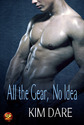
KD: Thanks for having me! My next story will be a Valentine’s story called Once a Brat. It's a prequel to two other Valentine’s tales that came out in previous years - Call Me Sir, Boy! and All the Gear, No Idea.
Those two books came out with All Romance E-books, but Once a Brat is coming out with Riptide Publishing. The transfer to Riptide marks a new starting point to the collection, which now has a new and improved series title—Kinky Cupid.
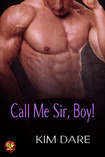 Call Me Sir, Boy! And All the Gear, No Idea will both move across to Riptide and become part of the Kinky Cupid series in due course.
 But, getting back to Once a Brat! I'm so excited about this one. It's the story of Bret and Marcus and how they met. Bret was a really fun character to write about - Marcus had no idea what kind of whirlwind was about to enter his life!
AB: Ooh, that’s great news. Bret is such an integral character to both those books. Cupid is a great description. I’m really looking forward to reading it. What's it about?
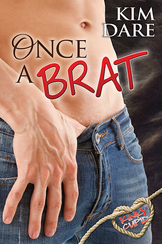 KD: Experienced dominant Marcus has a stalker. On the plus side, the boy following him around his local leather club is gorgeous and a self-professed submissive. Unfortunately, he’s also inexperienced, bratty, and liable to drive Marcus insane within his incessant chatter and questions.
 Bret Daniels fell head over heels with Marcus the moment he first saw him. He’s willing to do whatever it takes to get Marcus’s attention and prove his worth as a submissive. He might not be a traditional sub, but he knows he has a lot to offer a dom who can handle his quirks.
When Marcus gives in and agrees to do a scene with Bret, sparks fly. One scene quickly becomes another, and another. But will it be a case of once a brat, always a brat? Bret intends to prove to Marcus that—expectations and experiences aside—he deserves his master’s collar.
 And the blurb for the Kinky Cupid series as a whole:
When it comes to traditional vanilla couples, the cute little flying cherub might have everything under control. But what about the guys who prefer crops to candy hearts and gay leather clubs to candle-lit dinners?
Sometimes, Cupid needs a little helping hand. Whether Bret is convincing the dom he loves to collar him, or matching up his master’s friends, he’s more than capable of playing Kinky Cupid, reminding the men around him that leather and love can be a perfect match. Valentine's celebrations at The Spread Eagle leather club will never be the same again.

You can pre-order Once a Brat here: http://riptidepublishing.com/titles/once-brat
AB: And now for the hard questions. Why do you choose to make BDSM the focus of your stories? What draws you to that as opposed to writing a story in which the characters are just kinky or even if steeped in the lifestyle it's just a part of who they are?
KD: In real life, I'm a dyed in the wool sub, so vanilla romance doesn't make much sense to me. I write kinky characters because I want people “like me” to have a chance to live happily ever after.
I do like to make the developing relationship the focus rather than throw in lots of distractions from the core story. So, I guess that means kink often comes front and centre.
That said, in a lot of the books, the conflict comes from other parts of the relationship—differences in “real world” statuses, paranormal species, sexual orientation, and a whole host of other things.
 AB: How do you research for your BDSM books?
KD: I don't really do any research for the books. I did spend a lot of time reading about BDSM several years ago, when I first started to realise that there were other people out there who liked the same things as me, but fiction was the last thing on my mind. Since then, I might check my facts regarding an unfamiliar kink or piece of equipment, but that's it.
 AB: What do you look for when you read BDSM?
KD: I think it's changed over time. I’ve read from the sweetest to the most extreme ends of the spectrum, the classics, the free things on the net.
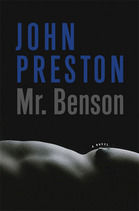
At the moment, the only kinky things I'm reading are John Preston’s books. I'm gradually building up a collection of all his titles. I've yet to read one that I don't find amazing. I’d recommend them to everyone who likes MM and/or BDSM.
 AB: What do you try to convey when you write BDSM?
KD: It depends on the story, sometimes I just want to give the reader and the characters something to smile about. Other times, there are more complicated messages that I want to get across. I often find myself writing about how love and leather can intermingle and how the kink is at the essence of the love story, not just a fun added extra.
 AB: Has "Fifty Shades of Grey" helped the BDSM genre or harmed it? Is kink coming out of the closet?
KD: I haven't read it, so I can't really say too much. I've heard that some of the content doesn't depict the more ethical/realistic side of BDSM, but each to their own preferences.
I think the biggest problem kink faces when something like Fifty Shades of Grey becomes so successful in the mainstream is that one book’s content can affect the way lots of people judge a whole way of life. People end up believing that the BDSM depicted in it is the only kind that exists. It becomes the “One True Way” for them.
As a result, it can become more difficult for anyone else to show people the whole range of intensities and the differences in what various parts of the community like to get up to. You can suddenly find yourself facing a lot of “that’s not the right way to do it. It’s not supposed to be done like that. In Fifty Shades of Grey they…”
 AB: Why do you think "Fifty Shades of Grey" appeals to readers who aren't in the scene and have no wish to get into the scene?
KD: I think the same could be said of all BDSM fiction to an extent. I know I have quite a few readers who don't identify as a dom or a sub, or have any interest in getting kinky. They just like reading about it. Maybe for them it's the same as reading about a cop or a werewolf without having any interest in being a detective or a shape shifter? Or maybe they like it for the reason some women like MM - because it's different from their day to day experiences?
And, of course, there are those who like it because it is in the spotlight, because liking it is the done thing of the moment, or because it seems to have become an “I’m not repressed/closed minded” badge of honour in some quarters.
A fair percentage of the same people were probably raving about Harry Potter or Twilight not so long ago.
 AB: BDSM usually gets classified as erotica or porn regardless of the amount of sex present. Do you think this is fair?
KD: It’s never fair to pigeon hole things.
I think the current form of classification can make it difficult to write stories that, by nature of their plot or characters, need to contain little or no sex during either parts of, or even during the entire, story. Because it will still be categorised as hot, spicy or extreme, readers will expect a lot of sex throughout the story and might be disappointed not to get it.
It would be great if there was a way to get around this problem. Maybe it’s just a matter of time. The same used to be true of the way all MM books were classified, but the sweeter side of that spectrum is at least recognised as existing now.
AB: What do you think of the proliferation of abuse fiction doing the rounds that gets perceived as BDSM? Do you see that as a problem?
KD: I haven't read any of the books in question, so I'm not sure if they fit into this theory, but in general I think there are two different types of BDSM fiction. (And I want to stress that these are my definitions, not the ones that other writers/publishers/readers use.)
First, there's what I call BDSM porn - which is all about reading whatever fantasy rocks your boat. And, the fact is, that fantasies aren't always ethical, or even logical. These stories aren’t about what you'd like to happen to anyone in real life, or what real life BDSM is all about, they’re just about some things that it can be enjoyable to think about, or which can raise enjoyably intense emotional responses in certain people. I've read stories like that, and enjoyed them on that basis.
Then, there's what I call BDSM romance, which for me is all about a completely different fantasy – these are the stories that I would like to happen to someone in real life. In this context, things need to be ethical and realistic (for a given value of realism of course, lol). Personally, I'd struggle to accept any kind of abuse in the main characters relationship with each other in this kind of story. I want the characters to live happily ever after. I want them to be safe, sane and consensual, or to at least practice RACK – risk aware consensual kink.
 AB: Is there something you feel is taboo for BDSM books? Anything you wish wasn't as taboo?
KD: I think a lot of the main publishers, especially those whose target audience is female, tend to have very similar, and very fixed, rules about what they consider taboo.
The core taboos are acts like under age sex, bestiality, necrophilia. I’m fine with those being off limits.
But there are other taboos that I think can and should be tested on occasions. For example, one book I have out with Total-e-bound (The Mark of an Alpha) contains knife play and scarification, which I think would both be considered taboo by a lot of similar publishers, but I believe it works in this case, and they were willing to go with it, which was great.
I have other stories, which I have yet to pitch, which contain water sports. I hope whoever I ultimately approach for those books will consider pushing their boundaries a bit and allow me to break the taboo.
Thanks Kim for giving such great responses to my questions.
Kim has offered to give away one copy of any e-book title from her backlist
or a title from her coming soon list.
We'll choose the winner on 19th February,
but let's make it interesting by telling us in 200 words (or less)
what you like or don't like about the genre!
About Kim Dare
Kim Dare is a twenty-nine year old, full time writer from Wales (UK). First published in 2008, she has since released close to eighty BDSM erotic romance titles.
While most of Kim’s stories follow male/male relationships, she also writes about characters that enjoy male/female, female/male (female dominant), female/female and all kinds of ménage relationships. Kim’s titles have included contemporary stories, fairytale re-tellings, vampires, time travelers, werewolves and werelions—not to mention the occasional wereduck.
Regardless of the gender of her characters or the different genres they inhabit, from short stories to full-length novels, there are three things Kim always wants to give her characters—kink, love, and a happy ending.
Contact Info
E-mail: kim@kimdare.com
Website: www.kimdare.com
Blog: http://kimdare.com/blog.php
February 6, 2013
Full Release - Understanding the Genre
 Full Release by Marshall Thornton
My rating: 4 of 5 stars
Full Release - Understanding the genre
It’s important when reviewing a book that you assess it in terms of the genre it slots into. If you missed it, check out this blog by the author himself. http://marshallthornton.wordpress.com...
This story is mystery/suspense. So what elements do we look for in this genre?
A crime, someone to solve the crime, logical steps along the way to reveal the villain and tension while doing it.
Mystery/suspens has been written for centuries. Judging by the sheer volume of books available in stores it’s one of the widest read and biggest selling. So it’s rare to find anything new.
So how can a writer stand out from the crowd. By setting the story in an unusual setting, updating the methods of solving it to a specific time and expertise, having an unusual crime solver and giving that person a distinctive voice.
In this case, the investigating hero is gay, but his sexuality is only relevant in the way it has affected his personality, his relationships with other people and the background the story takes place in. Along the way there is sex needed to drive the plot along, and even a possible long term hook up, but more importantly it gives the author the chance to make some pithy observations on the gay community and the different people who populate it. But all this is still background, the story is not about “being gay”.
Marshall’s sleuth is a fairly innocuous accountant, the last person anyone would peg for an action hero. One reviewer accused him of being too stupid to live. Well, that’s exactly what he’s meant to be. He’s out of his element, out of his depth and needing sleep.
The question is then, does Marshall deliver on the rest? All the “guns on the wall” fired. I found the story very readable. His descriptions were good, his writing style smooth. My main bitch is the number of silly typos that pulled me out of the story time and time again, usually missed prepositions or wrong words. Most people may not even notice them, but I’ve done enough editing to make something like that shine out at me. Especially as they were basic things that should have been pulled up. Apart from these, I felt the character’s voice suited the plot and depiction. The background setting was skilfully drawn. I found the crime and its solution believable enough given the basic premises. Realistic? Probably not, but we’re talking fiction here.
Someone also suggested it was a comedy and the juxtaposition of murder and comedy was wrong. This is definitely not the case. Sarcasm about life does not equal comedy. For someone who was forever being put down because of their profession (accountancy = boring), being vanilla, having a failed relationship, being cleaned out of all his money by an ex-partner, with a job under threat even before the crime is committed of course he’s going to be wanting to fight back, however he can. In this case, with words and throw away lines about the city he lives in and the people around him.
I found the bitterness and bitchiness of Matt very similar to a couple of gay guys I know.
Did I feel the story was good as it could be? No. Apart from the typos, one of the problems came from the structure of the book and the character himself. Because he was so alienated, alone and helpless, he has no-one to bounce dialogue off, no side-kick, so a lot of the plot development – the clue solving, has to take place in his head. If, as a reader, you don’t feel any sympathy for the guy, or relate to his “voice” then this can all become dry.
It didn’t make me stop reading or dislike the book, but it does make it harder to emotionally become involved with the book or the character. I probably should read some Raymond Chandler or other authors who have written the lone warrior style hero and see how they get around this problem. Maybe they don’t, and then it comes down to a preference of styles.
If you like this type of story where the single, much put upon underdog has to bumble around trying to do something he’s not trained to do, then you will enjoy reading “Full Release”.
I found Matt’s efforts to solve the case rewarding enough, and because I can’t see any other way the story could have been better given that scenario, that set-up and setting, I’m giving it 4 stars rounded down to 3.5 because of the typos.
View all my reviews I reread this to remind me of some of the pitfalls in trying to balance action/mystery and romance.
Not an easy mix to get right.
NEXT WEEK - Kim Dare talks about BDSM
January 21, 2013
Thirsty, hungry, fatigued and sexless
 Warrior Brothers - My Life In the Australian SAS by Keith Fennell
My rating: 5 of 5 stars
This was a fantastic read, but I was surprised to discover the sentence that moved me to tears didn’t chronicle deaths of comrades or depictions of men with spirits broken by fear but:
When the most remarkable and powerful friendships you will ever have in your life become severed by distance – both in geography and lifestyle – it feels like the death of a friend.By this stage, the author had completely exposed himself on the page. I’d seen his dedication to task, the obsession to learn unfamiliar skills, the concern he has for those whose lives he is responsible for, so I knew how true those words were.
“Warrior Brothers” is marketed as memoirs of a member of the Australian SAS Regiment, but it is so much more than that. It also covers the time after the author left the SAS and worked as a security consultant in Iraq and later in Indonesia after the tsunami. It’s not a boys-own tale of battle and gung-ho heroics. Before that quote, it related only two depictions of contact with opposing forces. East Timor and then Afghanistan.
These are the only instance where he describes his involvement in a fire-fight. So, any reader expecting blood-thirsty tales of close combat and heroics will be disappointed. Instead we learn that life for a soldier is really about being: “thirsty, hungry, fatigued and sexless.”
After the death of Joe, a colleague from his years in Afghanistan and Iraq, the author received an email from his closest mate, Kane.
“At times we may drift from our true selves but at heart we are warriors. Sadly many warriors die. It’s what we do for a life that separates us from those who never know the honour or companionship associated with that price.”The book succeeds in giving a glimpse into this brotherhood. Not the ‘bro’ of the ghetto, but the ones who laugh at a joke, take the piss out of you, challenge you in the gym or a cross-country run and, more importantly, are there when you need them in battle or simply if shifting house.
Other books have been written about the SAS. But rarely from the viewpoint of an insider. There is almost an unwritten rule that you don’t advertise the fact that you are or were a member of the Regiment. Faces of serving members are obscured by masks or digital smudging. They are referred to by first names only.
He recounts a few SAS operations he wasn’t involved, but this book only gives first-hand accounts of the above two (he doesn’t let on how many more cases of contact there were – if any).
His first deployment occurred when the Australian Government finally responded to a request from the recently declared independent East Timor for protection against the Indonesian backed militia who were trying to stir up trouble. Here, Keith describes how he came to kill another human being and captures the slow build up and confusion before the encounter that is the culmination of his years of training and, just as demanding, simulations. Afterwards he talks about what it felt like to take a life, contrasting it to the feelings he had after going on a feral- pig shoot as a youngster. Interestingly, he found that the latter revolted him more. The man he killed was armed and trying to kill him. An important distinction. It still kept him awake at night for a long time afterwards.
The other encounter he describes in detail was in Afghanistan. Here, what he doesn’t say is just as interesting as what he relates. You have to read about the same incident in Ian McPhedran’s book The Amazing SAS: The Inside Story of Australia's Special Forces to get the full picture. Much to their frustration, the author’s six-man patrol was not actively involved in the actual fire-fight but one of his best mates belonged to a similarly sized patrol that was. Keith’s patrol’s main concern was dealing with prickly leaves constantly blowing into their observation post while, only a few kilometers away, the other patrol was surrounded by eighty men out to capture and/or kill them. The group had to hold them off, killing a few in the process and survive under fire for hours until a rapid response force came to their aid. It was possibly the aftermath of this which may have played a part in the author’s decision to leave the SAS. He doesn’t exactly state that (and I may be wrong) only saying
The men were courageous but there are many fogs to war.Ian’s book gives more details of how one of the men snatched up a hat and rifle from an enemy corpse and was subsequently severely reprimanded. Instead of being hailed as heroes, all the men in the patrol bore the brunt of the top brass. Some left the SAS, some were kicked out and one later committed suicide (a fact that Ian’s book fails to mention). He, too, described it as an unfortunate byproduct of “the fog of war.”
No doubt, the way the incident was treated had a profound effect not only on those involved but other men in the Regiment. I’m sure other factors were involved in Keith's decision to leave something he so obviously loved, but the sheer omission of more detail suggests problems. It’s like a chapter was removed from the book.
What does get included is a statement
The end of our tour of Afghanistan arrived with an overwhelming sense of futility. How best could we think about our role there and what we’d achieved when it felt like such a drop in the ocean.In the next chapter is the following
Unless one’s country is being invaded, a soldier’s loyalty is, first and foremost, to his mates. A patriotic duty to one’s country is commendable, and everyone is aware of the larger picture, but this is not what holds soldier’s together in battle.Everything in life occurs for a reason. Part of his SAS training involved six months intensive study to learn Bahasa, the national language spoken in Indonesia. As usual, the author went over and above the call of duty and became as fluent as he could be. This would prove invaluable when working in Aceh Banda. His ability to speak to the locals in their language allowed him to gain greater insights into their tragedy.
Other skills he learned will no doubt come into play as his life evolves post SAS. Apparently, he is finding transition difficult. But, he would not be alone in finding that. At one stage, he says that in covert operations, there are long segments of time when you have to be quiet and still and it is only the quality of your imagination that can make these interesting. He includes poems he has written as tributes to fallen comrades. Since leaving he has immersed himself in a creative writing degree at the University of Wollongong. This has given him the skills to tell the tale, just as surely as all the runs up the hill behind the Enoggera barracks with a fully laden pack on his back helped him get into the Regiment in the first place.
Hopefully, other soldiers who have been-there-done-that will benefit from this book and understand they are not alone in this alienation when they return to civilian life. Likewise the families and friends of these men may get a better insight into their moods and disconnectedness.
As for the wider community, no one would argue with the need for a defence force. At one stage the author makes the statement “Ineptitude kills.” If boarding illegal fishing boats with overwhelming force gives men in training real life simulations, then isn’t that better than sending untried, untested youngsters into the battlefields as they did in World War 1, 11 and Vietnam? Ignorance is not bliss, it’s bloody dangerous.
All through the book, you get the picture of the might of the US army. The trucks carrying not one but multiple tanks rolling along the highways of Iraq. The gunships appearing over the horizon and scattering an oncoming thousand-strong force just by their reputation alone.
If training covert elite forces who can ultimately save lives by ensuring subsequent battles are as efficient as possible, isn’t that a good thing? Sending small units into hostile territory seems foolhardy, but a small undetected force, relying on stealth and discipline can prove invaluable in getting to know an enemy’s strength and weaknesses.
At least by getting up close and personal they are reminded that their enemy are people first and foremost and not just statistics or targets in a drone’s scope.
In his reminisces about providing security for a private organization providing new fresh water in Aceh Banda after the catastrophic tsunami, you can see that witnessing death and destruction on that scale makes it difficult to cope with the petty complaints most people have.
The trouble is that once you’re SAS, you’re never “most people.” The tales the author recounts are probably just a small sample of his encounters and were closely vetted by the powers-that-be, but they still give a wonderfully moving picture of the life of an elite soldier. Its ups and downs. But more than anything there remains that image of a band-of-brothers. People who will put their life on hold for one another in peacetime and while on active duty.
I’d strongly recommend this book to anyone and, if you enjoy it, read the accompanying book on his training and more of his transition back into a “normal” life with a side-salad of a trip on anti-pirate patrol in the seas off Yemen. It is not a me-as-the-hero tale but a tribute to the lives of those he’s served with, especially those who died before their time.
View all my reviews
January 16, 2013
Grilling Dusk Peterson about BDSM
 This is the second in my series where I asked some well-known m/m BDSM authors, questions about the genre. The first, by Jane Davitt, can be read here and I'm pleased to announce that Kim Dare's responses will be posted next.
Today, I'm pleased to introduce the author of some of the most thought-provoking but entertaining stories, I've ever read: Dusk Peterson. Dusk's books are all self-published, therefore these titles may not have appeared on reader's radar, but they are definitely worth checking out. Many are free.
Having lived the lifestyle, Dusk was very helpful with criticisms and suggestions for an early draft of my upcoming release "Leather + Lace"
AB: Hi Dusk, please start by giving me details about your next book.
DP: I don't have my 2013 publication schedule set up yet, so I can't say what my next book is likely to be. However, I can briefly summarize three series to which I'll be adding titles this year. All three focus on power-differentiated love.
The Eternal Dungeon is a favorite with my readers, and it won the Best Gay Fantasy category in the Rainbow Awards 2011. It's about a medieval-style dungeon in a Victorian world. The dungeon is run by a code of ethics, though how ethical a dungeon of torture can be is a question that various characters raise. The plotline centers on a relationship between the angst-ridden head torturer and a man who is under his power . . . somewhat.
Life Prison is also set in the Victorian period. It follows the attempts of a group of progressive-minded prisoners and guards to reform their prisons, and it explores what type of relationships can arise in a system that thrives on differences in rank and status.
Waterman is hard to summarize because it has so many different elements: it's an Edwardian boarding-school story, a nautical tale, a story of lords and liegemen, and has an additional setting based on a futuristic version of the 1960s. The central tension in the series arises from the fact that all people in this society are classified at birth as masters or servants. The question naturally arises: What if someone decides they've been misclassified?
 All three of these series are part of my
Turn-of-the-Century Toughs
cycle of historical fantasy series set in alternative version of America between 1880 and 1914. Readers can jump into any of the series at any point, without having read previous stories in the series.
All three of these series are part of my
Turn-of-the-Century Toughs
cycle of historical fantasy series set in alternative version of America between 1880 and 1914. Readers can jump into any of the series at any point, without having read previous stories in the series.AB: What do you look for when you read BDSM?
DP: My interest is primarily in the relationship aspect of D/s and M/s. Though I appreciate a well-crafted sex scene, I'm more interested in the couple's daily interactions outside the bedroom or dungeon. If one hangs out at 24/7 BDSM forums (FetLife, whose home page is decidedly not work-safe, has a lot of them), one quickly finds that these everyday interactions play a big role in many of the participants' lives.
AB: What do you try to convey when you write BDSM?
DP: I'm going to use the 1947 words of Robert A. Heinlein, as quoted in William H. Patterson, Jr.'s Robert A. Heinlein: In Dialogue with His Century . Heinlein said, "My notion of a story is an interesting situation in which a human being has to cope with a problem, does so, and thereby changes his personality, character, or evaluations in some measure because the coping has forced him to revise his thinking. How he copes with it, I can't plot in advance because that depends on his character, and I don't know what his character is until I get acquainted with him."
That's how I approach writing stories. I don't start with the intention of trying to convey something; I merely follow a character in a particular situation and see how he copes with it. Along the way, a theme will arise organically, out of the plotline.
That said, I always try to keep in mind the varying knowledge levels of my readers. There are a lot of misconceptions about BDSM, not only among outsiders, but among BDSM folk themselves. I try not to add to those misconceptions, and I try not to suggest that BDSM is in any way a homogenous practice or belief system. Different people have approached BDSM in different ways, particularly when they lived in different eras from our own.
 AB: Why do you think "Fifty Shades of Grey" appeals to readers who aren't in the scene and have no wish to get into the scene?
DP: A similar question has been asked many times: Why is gay fiction appealing to women who have no desire to be gay men? Emily Veinglory said back in 2004: "Fiction, almost by definition, involves experiences outside the writer's immediate experience. If we have no trouble with J K Rowling writing about the experience of a male child, or Don Marquis writing poetry from the perspective of a cockroach, why is a woman writing about a gay man taboo?"
Similarly, Mark McLelland asked in 2001, "Why *shouldn't* Japanese women's comics be full of boys bonking? . . . Why should men's interest in 'lesbianism’ be taken for granted whereas women's interest in male homosexuality somehow be in need of interpretation?"
Instead of asking why readers who don't practice BDSM enjoy reading about it, shouldn't we be asking why non-detectives enjoy reading detective stories? Or why non-explorer Americans enjoy reading about Africa? I believe that the answer in all cases is the one Ms. Veinglory gave: "Fiction, almost by definition, involves experiences outside the writer’s immediate experience." That is part of fiction's appeal: it takes us into other people's minds, and lets us see life through their eyes.
AB: Has "Fifty Shades of Grey" helped the BDSM genre or harmed it? Is kink coming out of the closet?
DP: I can't comment on Fifty Shades of Grey, since I haven't read it. However, I can say that kink came out of the closet long ago. That's why BDSM conventions are often held at hotels.
Of course, some BDSM folks are in the closet; BDSM remains a non-mainstream practice. But mainstream awareness of BDSM has existed for a long time. Story of O was published in 1954, and it was hardly the first arrival of BDSM into the literary mainstream.
Quite honestly, I don't find anything groundbreaking about Fifty Shades of Grey in terms of its erotic subject matter. Back in 1992, leatherman John Preston edited an anthology named Flesh and the Word for New American Library's paperback imprint Plume. The anthology consisted mainly of reprints – including BDSM tales – from hardcore pornography magazines. (The publisher insisted on calling these stories "erotica," much to Preston's amusement.) BDSM has continued to show up regularly in mainstream erotica anthologies; one such anthology sits on the shelf of my local public library.
I think what is actually startling about Fifty Shades of Grey is that it is unapologetically fan fiction. That's new: in the past, publishers have gone to great efforts to disguise the origins of any fan fiction they published. I suppose it's harder for them to do that in the Age of Google.
 AB: BDSM usually gets classified as erotica or porn regardless of the amount of sex present. Do you think this is fair?
DP: Not in the least, but I don't think that's likely to change any time soon, for the simple reason that most BDSM folk classify all their interactions, no matter how mundane, as NC-17. I've witnessed intense, emotional discussions between BDSM folk over whether one will corrupt innocent children if one calls one's master "sir" in public.
AB: How do you research for your BDSM books?
DP: I've written three types of BDSM stories: contemporary leather stories set in the modern day, retro leather M/s stories set during and before the 1980s, and historical fantasy stories with BDSM elements that are either plainly stated or believed to be there by my readers.
For my contemporary and retro stories, I hung out in the M/s and gay leather communities for several years. It's really much easier to do this than most writers realize. I think many writers envision BDSM as a shady world of hidden bars and secret clubs. Well, you can find the bars and the clubs through their websites on the Internet, and if even those are too scary to contemplate visiting (I walked around the block three times before I got up the courage to walk into a leather store for the first time), you can attend one of the many BDSM conventions, which are run very much like your average fan convention.
For my retro stories, I also perused a heck of a lot of early leather literature and art, and I visited the Leather Archives & Museum in Chicago. Today, it's even easier to get access to leather literature, because Viola Johnson tours the United States with her Leather Library. The library's slogan is "Never again landfill. Never again flames." That's because so many BDSM materials have been lost over the decades, not only through destruction by censors, but through BDSM folk discarding such materials, not realizing that they were discarding their community's own history.
My historical fantasy tales with BDSM elements require a more delicate approach to research. BDSM certainly existed during the Victorian and Edwardian periods, and I've dug up what little I can find about it, but most of those period sources haven't been published, were destroyed long ago, or simply were never recorded. So I have to reconstruct what gay BDSM might have been like back then.
Most importantly, I have to consider what BDSM would have meant to those characters, living in an earlier era. In modern America, a lot of the taboo nature of BDSM comes from the idea of non-egalitarian sexual relationships. But in Victorian times, virtually every marriage was non-egalitarian, and even in the United States, society was far more class-bound than it is today. The words "yes, sir" would have a very different meaning in a culture where "sir" was used as an everyday mode of address.
 AB: Is there something you feel is taboo for BDSM books? Anything you wish wasn't as taboo?
DP: Well, what is taboo depends on the community and the publication method. Online BDSM stories have much wider scope for subject matter, because the authors are only restricted by the rules of their webmasters, who generally are working under looser regulations than publishers do. On the other hand, fiction communities can collectively decide that their members are not (or should not be) interested in reading about certain subjects. These days, it's very easy, from a literary point of view, to break taboos, simply by starting one's own website or publishing company. The legal issues are the highest barriers to breaking taboos.
My own pet peeves have less to do with taboos than with the relative lack of certain literary approaches that I like. For example, many writers of fantasy, science fiction, and historical fiction go out of their way, in a delightful manner, to create cultures that are other-worldly, that are different from our own. Then, if they're BDSM writers, they plop modern BDSM players into the middle of these cultures and have their characters play with modern sex toys and safewords. I won't say this is wrong; anachronistic literature has its role to play, as Shakespeare showed. But it seems odd to me that few historical BDSM writers, for example, subject BDSM to the same rigorous historical research to which they subject their characters' costumes, language, and nautical etiquette.
I also wonder why so few m/m romance writers and slash writers have written about gay leather. I can understand the practical reasons why: if they're heterosexual women, it's often easier for them to research pansexual BDSM. But many m/m writers seem not to realize that pansexual BDSM, while sometimes practiced today by gay men, is actually descended from heterosexual BDSM. During the 1950s and 1960s, gay men developed their own, separate tradition of BDSM, independently of heterosexuals. This tradition, called leather, has many practices, terms, and attitudes that are different from what takes place in pansexual BDSM. In fact, there was very little interaction between gay BDSM players and heterosexual BDSM players until the 1990s. So anyone who is interested in the history of gay BDSM is likely to be interested by gay leather.
 AB: What do you think of the proliferation of abuse fiction doing the rounds (ie Flesh Cartel) that gets marketed as BDSM? Do you see that as a problem?
DP: I haven't heard of Flesh Cartel till you mentioned it, but I had a look at the blurb and warnings posted at the publisher's website, and it doesn't appear to me that the work is being marketed specifically as BDSM (though it has several BDSM-related tags associated with it). The first book is described in its blurb as a "psychosexual thriller," and it appears to be marketed as darkfic. Judging from the full list of theme tags for all its books (abduction/kidnapping, abuse, addiction, angst, etc.), the publisher seems to be especially interested in darkfic.
Darkfic – the term comes from fan fiction – is an overlapping but not identical subgenre to BDSM; it consists of stories with dark settings, and it often addresses the topic of abuse. I both read and write darkfic myself.
I think it's hard to create hard-and-fast literary lines between BDSM and abuse, just as it's hard to create hard-and-fast literary lines between vanilla sex and abuse. We're human beings, and human beings often fail to live up to their potential. Sometimes even the best-intentioned people become abusive. Sometimes ordinary people fall into the hands of vicious abusers. I think it's important to deal with these issues, not in every story about erotic desire, but in some of them.
As for "abuse as recreation literature" (aka the Marquis de Sade School of Literature) it's not to my particular taste, because I prefer realistic literature with an ethical stance. But reading about abuse for fun is no odder a literary taste than wanting to read light-hearted war stories. All of the people I know who have this literary taste are quite capable of understanding the distinction between fiction and reality.
What does bother me is reading stories that mix "abuse as recreation literature" with "abuse as examined through an ethical perspective." That sort of mix-and-match is very hard for my mind to handle. But quite often it's not intentional; it's simply the result of a writer not thinking through the full implications of what they've written. I've had more conversations than I can count with writers in which I asked them, concerning their manuscripts, "Immediately after this chapter on the ethics of the character's decision, you imply thematically that forced seduction is okay. Did you mean to imply that?" And the response I invariably get back is, "Gee, I didn't think about it when I wrote that scene. It just turned me on to write the scene. Let me see whether I can fix the problem. . . ." I think most writers, when their attention is drawn to the matter in a polite way, are willing to scrutinize their stories for possible flaws.
AB: Why do you choose to make BDSM the focus of your stories? What draws you to that as opposed to writing a story in which the characters are just kinky or even if steeped in the lifestyle it's just a part of who they are?
DP: Actually, writing stories in which kinkiness is just a part of who the characters are is exactly what I do. I've never written a story about BDSM that wasn't about other topics as well. In most of my historical fantasy stories that include BDSM elements, the main focus of the story isn't on BDSM, and I don't market those stories as BDSM tales (unless I'm specifically promoting them to BDSM readers). On the other hand, I'm a great believer in what is called "Chekhov's gun": the dramatic theory that, if you're going to place a gun on the wall during a play, it needs to be shot by the end of the play. If I'm putting BDSM or any other subject in my story, it's going to play a role in the story.
I'm afraid I'm one of those writers who can't analyze, except in an after-the-fact manner, why BDSM stories appeal to me. It's a taste I seem to have been born with. I can say that, in my case, it's a small portion of a much larger attraction to tales about power-differentiated relationships, both sexual and nonsexual. Kings and subjects, mentors and protegés, employers and employees, officers and enlisted soldiers, masters and servants . . . I love to read and write about them all, and to explore the gravely important ethics of the characters' interactions. For me, moral philosophy is like potato chips: I can't get enough of it.
 Dusk suggested I trim the responses if they were too wordy, but I couldn't as there was so much interesting content. I hope you agree.
If you haven't already, do check out Dusk's stories . They're great and for those who are interested, I reviewed "Rebirth" here.
January 13, 2013
No such word as "Can't"
 Warrior Training - the making of an Australian SAS Soldier by Keith Fennell
My rating: 5 of 5 stars
I came across this book while conducting research for my current WIP "Truth+Lies" which will feature an ex-SAS guy and a guy who claims to be.
There is apparently an unwritten rule in the Australian SAS not to write books about their exploits. In fact, some say they don't even tell anyone except their immediate family that they are a part of the elite unit, preferring to be vague about their roles. "If you say you're SAS, you probably aren't."
While serving, their faces are usually covered in photographs and Christian names or nicknames are all they're referred to by.
As far as I can tell, only two ex SAS members have written first-hand accounts of their time with the special forces, Terry O'Farrell's "Behind Enemy Lines" covering the Vietnam conflict and Keith's books.
The first book he wrote Warrior Brothers - My Life In the Australian SAS tells of what happened on active duty mainly in Afghanistan. This later book backtracks, covering his training and also his transition back to civilian life after the other book "finishes".
Both aspects are well worth reading. I gather this book was submitted to the Regiment prior to publishing and got their stamp of approval.
Probably because it almost acts as a recruiting filter and will either inspire or deter others who may be interested in following his footsteps. They're pretty big footsteps, too. At 21, he was one of the youngest ever to be selected and performed above average in all the tests. From what he writes, this was because being fit and strong had been a large part of his life from early childhood. He also possesses a few other ingredients he sees as crucial: self-belief and determination to reach his goals.
Since leaving the service he's finally managed to find a place in civilian society by turning these strengths into new goals. He's done Arts and Creative Writing courses at Wollongong Uni which must have not only helped him write the books, but also formulate the motivational talks he gives to groups as diverse as the Auckland Warriors NRL team and corporate business.
He also encourages his children to do the best they can, is involved in his local surf club, preparing those who want to go to State Carnivals and just generally gets out there and tries to extend himself and everyone he comes across to make the most of their physical potential.
The book has been written in an easy to read style and is imparted in a sufficiently humble tone that you don't get the impression that it was Keith Fennell's army, but he was just one of many like him.
This humility alone would have made the book get the stamp of approval from the powers-that-be. They would have also been happy that he didn't attempt to expose faults in the system even though they are sure to exist.
Warrior Training is a positive look at a Regiment the author loved, still loves and feels deserves respect.
There were a few quotes that resonated:
I don't gauge my success by comparing myself to others. Those who do are often left bitter and fail to reach their potential. I compete with myself, because then the potential for growth is infinite; I am not bordered by those above and below.And another
My experiences, training and relationships have shaped my life, but the way I reflect on these things allows me to grow and progress with confidence. Not everything I attempt works out, but I give everything I attempt the same level of commitment."
Life is full of pessimists, people who say something can't be done. And even if they're right and you fail - so what? Those who embrace their dreams and come up short have not truly failed. Failure belongs to those who didn't have the courage to step over the starting line."This advice is doled out between harrowing tales of gruelling physical trials and almost inhumane treatment over 72 hours of simulated enemy interrogation.
One story resonated of some men quitting because they were given a seemingly impossible command to run back to base when they were all dead on their feet. The remaining ones who grudgingly obeyed to the best of their ability were picked up by transport less than half a kilometre down the road. In other words, 500 metres was the difference between those who made it through and those that didn't.
"No such word as can't." and "Giving up is not an option." All cliches, that helped the author survive and prevail, but they really apply to everyone.
View all my reviews
December 27, 2012
Cinderfella - Kayla Jameth
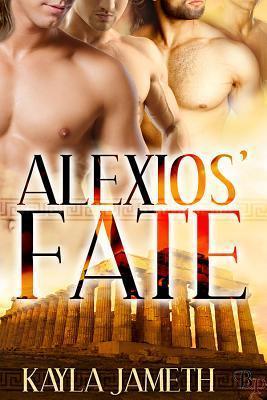
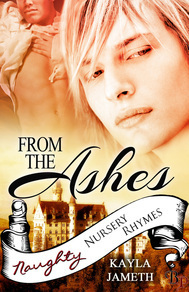 Today it’s my pleasure to host, Kayla Jameth. Kayla's first novel, "Alexios’ Fate" was set in ancient Greece. Being a student of history, she took great care to ensure all aspects of that story were as accurate as possible. Her "Next Big Thing" "Cinderfella" is scheduled for release on January 4th .
What is the working title of your book?
From the Ashes is a Cinderfella set in 16th century France. A Cinderfella is an m/m version of the classic Cinderella story.Cendres is the French word for ashes and is the root word for Cinderella, little ash girl. Since Cinderella comes from the ashes, it seemed like the perfect title for my tale of how Cinder rises from the ashes.
Where did the idea come from?
A friend told me about a submission call for m/m fairy tales. I've always loved fairy tales. The romance, the grand gestures, the happily ever after, not to mention the fantastical settings and descriptions. It's all so much bigger than life.
So I tried to come up with a logical, probable explanation of why Cinder would be dressed as a servant girl in his own home. So Dame Constancia was born, a greedy, grasping cold-hearted harridan of a stepmother who would stop at nothing to steal Cinder's inheritance from him.
Thus Cinder finds himself forced into his stepsister's cast offs at the tender age of 8 and renamed Cinderella. Cinder is approaching maturity, but because of a poor diet, he still doesn't look like a young man. Delayed puberty has kept him small, his voice from changing, and hair from sprouting in inconvenient places. But even that won't hide his stepmother's subterfuge much longer because the changes are starting to occur in his body.
What genre does your book fall under?
From the Ashes is an m/m historical erotic romance. It's mostly historical, but Cinder does still have a fairy godmother. It's not really a paranormal either. Maybe I should just stick to calling it an m/m erotic romance. Like Cinder, From the Ashes defies description.
Which actors would you choose to play your characters in a movie?
Dougray Scott is not only Drew Berrymore's Prince Charming; he's who I modeled Prince Henri on.
As for Cinder? I think the lovely young model on the cover of From the Ashes is perfect. If I could tell you his name, I would but he's only listed as "a stylish teenager". He's obviously a young man, but you can see how long hair, a dress, and a known history of being a girl could lead one to overlook the obvious and believe the "fact" that he is a young woman instead.
What is a one sentence synopsis of your book?
Cinder never thought that he could rise from the ashes of his life, but an unexpected encounter with a woman claiming to be his fairy godmother may be just what he needs to send him off to meet his Prince Charming.
Will your book be self-published or represented by an agency?
From the Ashes is with Breathless Press and will be available January 4, 2013. They have all my published works.
How long did it take you to write the first draft of your manuscript?
The first rough draft of From the Ashes took approximately a week to write and was only about 10K long. I reworked it and the second draft was 15K long. By the time I finished all my beta readers' suggestions, From the Ashes was over 20K.
What other books would you compare this story to within your genre?
I'm not sure I can answer that. I haven't read anything similar in the "genre". Whatever its true genre is. M/M erotic romance is a little too broad and the other stories in the category have very little in common with From the Ashes. I haven't even read any Cinderfella slash to compare it to. From the Ashes is a twisted fairy tale.
I have read some fantasy stories by SA Payne, Emily Veinglory, and Ann Somerville, but the fantasy genre was the extent of the similarities.
Who or What inspired you to write this book?
Linda Reilly was originally responsible for the inception of From the Ashes. She was the first of Cinder's godmothers. Rebecca Leigh liked the story and suggested that I go ahead and submit it, but the submission call had closed by that time. She is the second of Cinder's godmothers. Deanna Wadsworth kept pushing me to submit From the Ashes somewhere. She played a large role in finally convincing me and in adding layers and expanding scenes until I had more that the basic form of the tale. Deanna is the last of Cinder's godmothers.
What else about your book might interest the reader?
I think From the Ashes biggest draw is the traditional fairy tale happily ever after. It's nice to know that good people who are treated shabbily can still rise above all that and win the ultimate prize.
The setting, 16th century France, is somewhat exotic and full of interesting tidbits. I try to give you a taste of Cinder's world without drowning the reader in details. As it is a fairy tale, it is told in Cinder's voice, i.e. in the vernacular. From the Ashes doesn't read as a Regency Era novel, mainly because it predates that era.
I guess for me, the most important thing is that Cinder's godmothers love From the Ashes. I hope everyone else does as well.
Thanks, Kayla. I'm really looking forward to seeing the final product. I remember reading a very early draft and look forward to reading the full story. Why don't you give readers a taste of what to expect. Cinder never thought that he could rise from the ashes of his life, but an unexpected encounter with a woman claiming to be his fairy godmother may be just what he needs. Finding himself flung into his very own fairy tale, she sends him off to meet his Prince Charming. But was the gown really necessary?
Excerpt:
Cinder glanced around. Paper lanterns floated in the trees, lined the walks, and graced the gazebo near the reflecting pool, giving the grounds a mystical air. Their warm glow caught the dancing jets of the fountain splashing merrily to his right. The musical, crystalline tones carried on the night wind’s breath. He was reminded of the enchanted gardens in the fairy tales his father had read to him when he was a child. What would happen to him if he dared walk there?
Henri led him toward the gazebo. Soon he would find out.
The cool breeze caressed his uncovered neck. Cinder shivered at the ethereal touch. Henri turned to him, the question clear in his eyes, but he didn’t know how to answer. Instead he breathed in the tangible scent of rich earth and flowing water, hoping to calm his bounding heart.
Henri lightly stroked his arm. Cinder’s breath caught at the silky brush of the other man’s fingers. He drew another shaky breath. Henri may have meant to soothe him; instead his touch set Cinder’s wayward body aflame.
They left the last of the courtiers behind as they entered the dim interior of the fanciful pavilion. Vines climbed its intricately carved posts, perfuming the air within. The music and voices of the aristocrats faded away. Only a single intrepid nightingale could be heard over the cheerful burbling of the fountain. Hidden from the rest of the court, an unworldly sense of peace filled him. Was his very own fairy tale about to come true?
Bespelled and bemused, he could feel the magic in every beat of his heart, in every trembling breath he drew.
Once inside the bower, Henri reached to cup Cinder's cheek. Unused to being touched, he nearly flinched away but managed to still, heart pounding, before giving himself away. The older man's thumb slid across his cheekbone and came to rest lightly on his mouth. Why did he want to lean into that caress?
The other man's warm, slightly musky scent filled his nostrils, drowning his senses.
Henri's other hand wrapped around his waist and drew him close. He leaned closer while tipping Cinder's face upwards. Cinder's breath left him in a rush, stirring the noble’s hair. Henri was all that he could see, his mouth slowly, carefully descending toward Cinder’s. If he allowed this, the other man might discover his deception. He couldn’t risk that, so why then did he ache to feel Henri’s kiss? Their lips brushed, light as thistle down.
Surprisingly, Henri's mouth was soft and warm upon his own. After a moment, it pressed more firmly against his. Something fluttered in his chest, trying to get out.
Cinder didn't think to pull away until he felt Henri's tongue seeking entrance. The hand on his face slipped to his nape and held firm. He froze in shock, not even daring to breathe, as flames rushed through his body. The very beat of his heart betrayed him.
The questing tongue stroked his lips and pushed between them. It slid over his teeth, seeking to enter. When he protested, Henri swept in and began a lazy, sensuous exploration that left him breathless.
Soon he found himself returning the caress. Henri responded to his fledgling attempts by pulling him closer and moaning into his mouth. He had never experienced anything so sensual and erotic. He fed his own needy pleas to the other man one at a time.
Finally they separated slightly, Cinder panting heavily, trying to catch his breath. Was Henri as affected by their kiss as he was? A quick glance confirmed Cinder was not alone in his arousal. Flushed and gasping, Henri gazed at him with eyes full of wonder and something unnamed smoldering in their depths.
A knight and a former princess, Kayla Jameth now spends her time writing m/m romance. A true Renaissance woman, she has done everything from cross stitch like a proper lady to welding with the best of them. An eclectic life has left her with a unique understanding of the world inhabited by men and an appreciation for the difficulties faced by men in m/m relationships. It is her devout wish that her experiences translate into a richer telling of such tales.
You can find her here:
Blog: http://kaylajameth.blogspot.com/
Facebook: http://www.facebook.com/Author.Kayla.Jameth
Twitter: https://twitter.com/KaylaJameth
 Kayla is giving away an ebook copy of From the Ashes. Please comment below to enter.
December 19, 2012
Grilling Jane Davitt about BDSM
 Recently, I invited a few of my fave BDSM authors to answer the same set of questions about the genre. Here is the first from Jane Davitt who writes BDSM with her long time collaborator, Alexa Snow. You can read another interview I did with Jane,
here
.
Recently, I invited a few of my fave BDSM authors to answer the same set of questions about the genre. Here is the first from Jane Davitt who writes BDSM with her long time collaborator, Alexa Snow. You can read another interview I did with Jane,
here
.AB: What do you look for when you read BDSM?
JD: A solid, loving connection between the characters and something different. I've read so many that I want something fresh, not the same old, same old.
AB: What do you try to convey when you write BDSM?
JD: That what's happening is based on deep trust and understanding, needs being met on both sides.
AB: Why do you think "Fifty Shades of Grey" appeals to readers who aren't in the scene and have no wish to get into the scene?
JD: Ack, I loathe that series so much that when I try to discuss it, I end up ranting incoherently. Not that I've read it beyond snippets but the betrayal of fandom cuts too deeply for me to be fair. To be honest, I think it's mildly naughty for most of the readers but sanctioned and made safe by its popularity. They’re titillated without really getting what it's about and without wanting it for themselves except in a watered-down way.
 AB: Has "Fifty Shades of Grey" helped the BDSM genre or harmed it? Is kink coming out of the closet?
JD: I suppose it's good that it's opened eyes and legitimized the genre somewhat but couldn't it have been a better book that did it? And one that didn't have such a skewed portrayal of BDSM? Sheesh.
AB: BDSM usually gets classified as erotica or porn regardless of the amount of sex present. Do you think this is fair?
JD: No, but it's a fact that there aren't many BDSM books out there that are sex-free. I'd love to write one about an everyday BDSM couple with no actual sex, just the framework of their relationship coloring their day-to-day life subtly.
 AB: How do you research for your BDSM books?
JD: Online for the most part. It's a treasure trove with many people sharing their experiences with incredible frankness and courage.
AB: Is there something you feel is taboo for BDSM books? Anything you wish wasn't as taboo?
JD: Umm, I'd like to see Doms who didn't care about their subs as much. Okay, that came out all wrong. Strong Doms. Ones who were matched with subs who genuinely felt that what their Dom wanted and needed came first and they got fulfillment through making that happen. Selfless submission.
Yes, I'm contradicting myself from earlier, I know. I don't mean arrogant assholes and doormats, just a whole different dynamic. I dipped my toes in it once with a short story that fizzled on me. Maybe one day I'll get back to it.
 AB: Please give me some details about your next book.
JD: Next one to be published comes out on Dec 18, the sequel to Room at the Top. It's from Loose Id, co-written with Alexa Snow, and it's called "Room at the Edge". She's the best co-writer I could imagine working with. Such an inspiration. We’re working on the sequel to “The Square Peg” now and I have a solo project or two that I'm noodling with.
AB: What do you think of the proliferation of abuse fiction doing the rounds (ie Flesh Cartel) that gets marketed as BDSM? Do you see that as a problem?
JD: I've read that series and I don't think it's BDSM yet, though it might turn into it down the road. The authors don't consider it to be; I think they describe it as a psycho-sexual thriller. Labels can be tricky. It’s dark and intense but to someone who cut her teeth on fanfic that goes way further than most published works can, it didn't disturb me. I was really annoyed when Amazon banned it. Totally ridiculous decision.
 AB: Why do you choose to make BDSM the focus of your stories? What draws you to that as opposed to writing a story in which the characters are just kinky or even if steeped in the lifestyle it's just a part of who they are?
JD: I write many stories that don't feature BDSM so that's hard to say. I just write the plot that comes with the characters and it's who they are that dictates things. Karl in "Truthful Change" wouldn't think of himself as a Dom, Ben in "The Square Peg" wouldn't either, whereas Owen in "Bound and Determined" would.
AB: Thanks for participating, Jane. Now tell us some more about “Room at the Edge” your latest collaboration with Alexa.
JD: My pleasure and thanks for the interesting questions!
 “Room at the Edge” now available from LooseId.
Three sexy men, one hot relationship. In "Room at the Top", devoted sub couple Jay and Austin went looking for a no-strings attached Dom and ended up falling for Liam, who, much to his surprise, turned out to be the Dom of their dreams. But their happy ending was only the beginning of their story.
Now Jay is begging Liam to turn up the heat with fire play and Austin wants them all under one roof, no matter what people might think. Caught up in the difficulties and pleasures of their new relationship, it's easy to miss the way they're moving dangerously close to the edge of falling apart, not deeper in love.
My thanks to Jane Davitt for co-operating and being so generous with her time.
Down the track, I hope to get the same set of questions answered by another great BDSM writer, Kim Dare. Stay tuned!
December 13, 2012
An Interview with Christopher Koehler
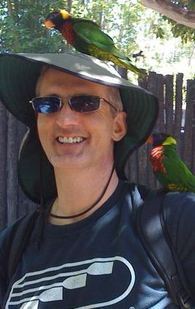 Thanks for agreeing to an interview, Chris or is it Christopher?
CK: Chris is fine. I reserve Christopher for book covers, legal documents, and overly familiar salespeople.
It was interesting reading “Rocking the Boat” as so many of the aspects felt familiar and reminded me of “Red+Blue”: being on the water, the getting fit and being forced back into the closet to keep a job.
I’ve only rowed a couple of times (apart from hours spent mucking around in a tinny as a kid) but I do see the boats out on the water when I’m in my kayak. I loved your analogy of the baby-sitting coach in his boat, keeping an eye on them and screaming out instructions through his megaphone. I see that a lot because the Como Boatshed for the St George Rowing Club is directly opposite one of the launching spots.
 Photo by Sarah Ivey When you’re out on the water before daylight and a mist hangs just above the surface, it’s an eerie sight to see an eight or even a single boat silently swish past. Luckily we can see them before they see us.
I think that “going backwards” thing is something that turned me off rowing, even though I apparently have the build and reach for it, and my Dad was in a Varsity crew.
There were so many facets of RTB I could relate to, the blisters, the importance of technique, having to train in less than ideal conditions. I think that’s why I enjoyed reading it so much. Thank you for writing the series.
I’m interested in reading more and understand that you have a new one coming out soon and are in the middle of writing the fourth. So, to kick things off, why don’t you tell me a bit about the new one out.
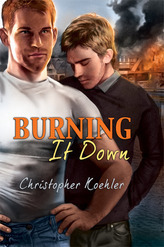 Click on photo to buy. CK: The new one, Burning It Down, wasn’t supposed to happen. It’s an outgrowth of a scene in Tipping The Balance, one in which Brad Sundstrom and Owen Douglas, a hot firefighter, make out. That scene is in none of my notes for TTB, either. There was something about Owen that just begged to have his story told, and that short scene in TTB wasn’t enough. So instead of writing Stuart Cochrane’s story, I wrote Owen’s.
Newly promoted Owen has always been the hook-up and never the boyfriend, and he’s ready for that to change, even before he’s almost snuffed by an on the job accident. As part of his rehab, he ends up in an adaptive rowing program run by the former coach at California Pacific, Nick Bedford. There Owen meets Adam Lennox, who has some hidden secrets. To find out more, of course, you’ll have to read it yourself.
 AB: I make it a practice of connecting with gay men who write m/m. I think that they have something special to add to the genre. Yes, women can and do write good m/m but when I read books that I know are written by men, invariably I read something that sets a lightbulb off in my head.
I made some notes when reading “Rocking the Boat” and would like to quiz you on them if I may.
CK: I can’t wait to see where this lands!
First off, though, I need to mention that one thing that concerns me when I read reviews from readers of male written m/m books, there is sometimes a dismissal of something that happens in the book along the lines of “gay men wouldn’t say or do that” or even worse they use the word “shouldn’t.” I won’t go into the quagmire of expectations of monogamy after the first kiss. However, one aspect did intrigue me. (Spoilers here if you haven’t read “Rocking the Boat”) On the first night Nick and Morgan are together, they kiss but basically just cuddle in bed when Morgan stays the night.
Why did you do this?Was that for the female m/m reader? Did/do you consciously censor or adapt your books to suit their sensibilities?
CK: That was strictly plot driven. As I recall (I haven't read RTB since it was published) Morgan needed some reassurance so that's what they did. Also, as a gay man, my own experience has been to defer sex until there’s an emotional bond so that's what I write.
As for censoring or adapting, I'll say that I don't consciously do it, but also that based on what I've seen and experienced in this little community of ours, I'm probably more prudish than some of my readers.
AB: When I read, I mark paragraphs or sentiments that offer me something fresh (eg terminal sperm poisoning). In this case, I loved the description of the party Morgan went to… the cruising. I’d never seen it depicted so well before. The signals. Wow. Is that common knowledge? How do guys learn the language?
CK: Beats me. :-) I’m horrible at it, absolutely horrible. I don’t recognize anything until it reaches the point of vulgarity, at which point I recoil in utter aesthetic horror. When I was an undergraduate at university, I dragged female friends to parties with me because they recognized it almost immediately and usually put a stop to it.
I do remember at one bar some nelly thing exclaiming as my cousin and I walked by, “How Americana.”
So what Morgan experienced? I basically pulled it out of my ass as an idealized version of what cruising was like when I was his age. I’m 42; he’s half my age. But I’ve also spoken to a number of younger men, and their worlds are much different that the one I experienced back in the late ‘80s and early ‘90s when I came out. It occurs to me that people Morgan’s age might not bother with cruising. For all I know, they just approach each other, saying, “Wanna fuck?”
AB: But another paragraph that really stood out for me was the one describing the final race as they pull ahead in the closing stages. Beautifully written. I could feel it, hear it, identify with it.
CK:Racing’s like that, or at least good racing is when you’ve got a lot invested in it, and yes, I’ve seen people puking over the gunwales of their shells. I’ve never done it myself, which I guess means I wasn’t pulling hard enough.
AB: I loved the way you described that empty feeling post sex, when there was no emotional connection. I gather from your remarks above and the fact that you’ve been married for nearly twenty years that this is important to you. Were you always this way or did you go through the slutty horn dog stage? What made you change?
CK: I married my first steady boyfriend, so for me sex and emotions have always been linked. Also, I used my first boyfriend ever for sex and it was really bad sex—did you know you can fall asleep when someone’s blowing you? twice?—so I certainly learned my lesson. That said, in a relationship as long as the one as I’m in, there’s plenty of room for bad sex, or hurtful sex, or sex that leaves you feel alone afterward, really the whole gamut of nasty feelings.
I kind of wish I’d gone through a slutty stage, if only so I had a better idea of what I like before I settled down, but then, I’m not sure I’m capable of that kind of thing, either.
Anyway, I suppose this is where I have to plead guilty to writing to please my market. In some ways, this genre isn’t about physical eroticism at all. It’s actually about the emotional kind, and part of my outlining process is making sure I’ve accounted for genuine emotional responses to various situations, including physical intimacy.
 AB: Reading your books also made me think about why we read. As a writer and reading reviews of mine and other books, I’ve come to the understanding that people read for different reasons so it’s impossible to please everyone. Some like following the slow build of a relationship, some like the sex or just want see the “love” while not being as interested in other aspects such as building respect and understanding, others like the ability to step into someone else’s shoes to see what they’re like. That’s what it was like for me, reading RTB. Yet these shoes were familiar enough to feel comfortable from the start.
What have you learnt about readers since you started writing?
CK: I’ve only been contacted by a relative handful of readers, and all they’ve really said is they like what I write. Not all that illuminating, I suppose. I’ve noticed more of the differences you describe among the publishers. I write primarily for Dreamspinner, and the relationship is definitely a part of it, along with the all-important Happily Ever After. DSP’s readers like the sex, but I’ve seen varying level of physicality in stories and no one bats an eye. On the other hand, I wrote a short story for MLR and thought it was a fine, perfectly lovely and sentimental story, only to have my editor demand dick. As this was a Christmas story, I was a bit nonplussed, but she bought it, and if she wanted a sex scene, then that’s what she’d get.
AB: When did you start writing? What made you venture into m/m romance rather than, say, gay fiction?
CK: I started writing before I was literate, filling notebooks with the swoopy spiral children think cursive writing looks like. I really got into after watching “Clash of the Titans” in the early 80s, one of many occasions I’ve thought, “Damn. Is that all the higher the bar is?”
After grad school, I spent a decade or so unlearning my academic writing style while working on both fantasy and manners comedies. They all lacked something, and that something was emotion. When I stumbled upon m/m romances, one of my first thoughts was, “Aha!” This genre helped me correct what was at the time the major flaw in my writing.
I read a few m/m romances that were wonderful, moving books, and I read a few that made me think, “Is that all the higher the bar is? I can do that.” So that’s what I set out to do, and the result was Rocking the Boat. In some ways, it makes me cringe now. I would write it differently now, but it was the best book I had in me at the time.
Hmmm, m/m vs gay fiction. It’s not a distinction I’ve considered much. Maybe it’s because gay fiction doesn’t seem to speak to my life (sorry, but most of us aren’t NYC sophisticates), but I can usually find something to identify with in most m/m romances.
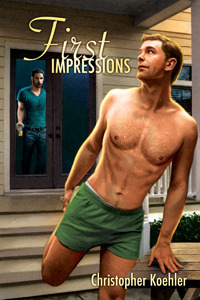 AB: I’ve also read, and loved, “First Impressions”. It’s inspired by “Pride and Prejudice” I understand. Would you prefer to see it referred to as m/m romance or gay fiction?
CK: FI is a funny book, I think. I started the original manuscript over a decade ago when I was a member of Sacramento Frontrunners/Frontwalkers (see the dedication). I realized one day on the way to a run that my life was very much like that of an Austen character: I was part of a very small community; we all knew each others business, and we furthermore knew each other’s mating habits; life was a series of dances and parties with one goal in mind, specifically finding a husband; and finally, our little society was a shark tank in that we all waited for someone to make a single wrong move before the feeding frenzy of gossip and social ruination began. Since I was in a stable relationship, I suppose my husband and I were the Gardiners, a bit above all the backstabbing and gossip, but not too far. I certainly did my share of social disciplining.
When I rewrote it, I rewrote it as a m/m romance, but is it gay fiction? To be honest, I don’t have that firm a grasp on what “gay fiction” is. FI has two gay male protagonists who end up in love. It’s written by a gay man. Into which pigeonhole should it go?
AB: What do you think about the m/m romance genre as a whole? Are there aspects you’d like to see change?
CK: I think the m/m romance genre is for the most part a friendly and welcoming one, with a space for anyone who wants for wants or needs it. I’ve met a lot of interesting people, and made some lifelong friends.
What would I like to see changed? I am sick to fucking death about the debate about women writing m/m romance. Sick. Of. It. I refuse to read anything more about it. All it does is get me riled up, which is rather rude, really.
From a purely practical standpoint, this genre wouldn’t exist without our many fine women authors. From an artistic standpoint, women have written better novels than I ever will. Who cares about the gender of the mind that produced it, so long as the story is good?
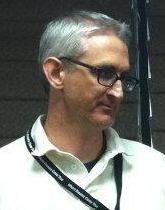 AB: I gather you’re a house-husband, have a nine year old child and elderly parents to take care of, do you find it difficult to find time to clear your head well enough to write? Why do you write? Is there an aspect of trying to show the real side of m/m relationships?
CK: Fortunately my parents aren’t quite to the elderly stage. I’ll give them another decade at most, however, and yes, I have a nine year old with ADHD and oppositional-defiant disorder. On top of all that, I have major depressive disorder (sometimes, two types of depression at the same time! Wheee!). Quite frankly, sometimes I can’t clear my mind to write.
When I do sit down to write—and I try to write for at least a few hours every day, including weekends—there’s at least a good 45 minutes or so of social media and music through headphones to isolate me from my life. Now that I think about it, my mother’s getting bad about calling me on my cell phone for the most trivial of reasons when I’m writing. I’ll have to put a stop to that.
I write because I have to, because I must escape a life I find at times quite intolerable.As for showing the real side of m/m relationships, oh God no.Who’d want to read that?
People read fiction because it interests them, because it takes them to places they’ve never been or would never go to, but most of life is quite boring. Someone (Hemingway?) once said something along the lines that fiction is just like real life, only with all the boring parts cut out. Most of life is far from romantic, and I think our readers are only too aware of that. We’d all like life to be a bit gentler, a bit kinder, a bit more gracious, than it is. Also, a lot hotter. We all know it’s not. We’re not stupid or delusional. I’m surprised by the number of damaged people I’ve met in this business, including myself, and if m/m or any kind of romance or science fiction or fantasy provides us a bit of shelter, then so much the better and I’m glad to help.
AB: I’m an online writing course junky. How have you developed your craft?
CK: I just keep writing. There’s no rest, no vacation. I never stop.
AB: What is the best piece of writing advice you ever got and what is the most useful thing you could pass on to would-be writers?
CK: I’m going to steal from Hemmingway again, which is odd because I hate reading his books. Throw out your first million words.
Also, read as much as you can. If you don’t read, you can’t write. Lots of authors have said this and there’s a reason for it.
AB: As a writer, what comes easier to you? The plot or the characters?
CK: The plot. The characters tell me who they are only gradually.
AB: “First Impressions” had some brilliant witty and catty dialogue. Does that come easy to you?
CK: Oh my, yes.
AB: Tell me a bit more about what made you write “First Impressions”.
CK: I guess I’ve covered that a bit above. But I tried not to hew too closely to the plot of P&P because I wasn’t trying to write a gay Pride and Prejudice. I was trying to tell a story somewhere between what I’d realized about my life at a certain point in time and Austen’s keen insights into human behaviour. Likewise, while there are some obvious parallels in characters, none of them in FI is too obviously one to one, and there are certainly far fewer in FI than in P&P.
AB: Are any other remakes planned?
CK: No, but that said, I’ve got a wonderful book of Restoration comedies that no one’s read in a century or so. If I run out of ideas…
AB: The books had some great secondary characters: Thad, Van, Desmond. Is there any hope of a spin-off for these three?
CK: No. They drove me crazy at times. Darren Jessup, on the other hand? Maybe…
AB: What would you see as your strengths as a writer and what do you need to work on?
CK:One strength is my rather meticulous outlining. By the time my first draft is done, it’s almost ready to be submitted. Because I work so much out ahead of time, I rarely have to delete large chunks of text.
What might I need to work on? I tend to be sparse on description. In part, this is deliberate. I want the reader to fill the blanks with her imagination, what she thinks a given scene should look like. With a few exceptions, I even try to be vague about race. Ideally, I’d like a reader to be able to fill in her own race with her imagination. I’m not sure how often I’m successful at that, but as I writer I’m rather a coward at writing cultures or races other than my own. I don’t want to offend anyone with an inaccurate or oafish portrayal.
AB: Okay, let’s get back to your next release, and your current WIP which I gather is about the eight’s cox, Stuart. How real do you try to make your books? Do your draw on real life for your characters and their trials and tribulations?
CK: I try to make the books as real as I can, so I do draw on real life, yes. So for example, Stuart’s starting medical school at the UC Davis Medical School. I’ve bookmarked the curriculum page for the school, I’ve read it carefully, and what Stuart will be taking his first quarter is what medical students at UC Davis take. As for the scene depicting one of his first days of school, my husband (a physician specializing in internal medicine) kindly told me all about his first days of med school at the Medical College of Georgia. It keeps changing its name, so I’m not sure it’s called that anymore, but whatever.
I’m also a vulture when it comes to scavenging people’s experiences. I don’t say a lot in social situations, and that’s because I’m listening intently to what people say, even in other conversations.
But I also remember that I write fiction, and sometimes it’s enjoyable to make things better than they are. I’m indulging in a bit of that with my WIP, Settling The Score.
AB: I’m happy to post an excerpt, and it doesn’t have to be a sex scene. Give me a taste of what ‘Burning it Down” is all about. (Edited slightly for context)

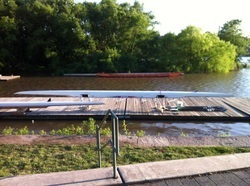 Adam wasn’t just a pretty face, plus whatever he was packing under those workout clothes. He must’ve handled their boat like a pro, because Brad hadn’t said anything about it, and yet somehow Adam had managed to keep up a steady stream of low-voiced corrections that had kept Brad from riding him too hard. Owen adjusted his semi. He’d had one all day. Okay, not all day, not like get to the ER now all day, just when he thought about Adam and rowing. Mostly Adam.
Adam.
From the moment they started rowing, the two of them had been involved in an extended flirtation. No, he corrected, something stronger than that. More of a slow-burning seduction, like they’d both known what the outcome would be, but they had plenty of time to get to there and they didn’t feel like bothering Brad or anyone else with the details.
Then they touched for the first time thanks to Owen’s bum leg, and stars had exploded in his head. Something about the way Adam had said, “You’re safe.” He’d known instinctively that he truly was. He’d relaxed as soon as he’d heard Adam say that, deeply, almost totally. Sure, he could’ve been seriously hurt by a fall, but then there was Adam before he’d barely done more than wobble. He hadn’t even had time to get pumped up on adrenaline before Adam had swooped in to save him.
Then Adam had helped him down the ramp to their boat. It felt so nice under Adam’s arm, so protected. So intimate. He never wanted that to end, and okay, sure, he’d hadn’t really needed any more help after getting down the ramp on the dock, but he hadn’t wanted to leave that shelter where his broken body didn’t matter. He never wanted to leave that shelter.
That wasn’t to say he hadn’t been perving on his pair-partner, although to be fair, Adam had been macking right back. Holeeee shit, Adam helping him into the boat? He’d had lovers who’d caressed him less intimately than Adam had. He hoped his hard-on hadn’t been too obvious, because it had been nearly instantaneous. Sure, it had been an accident, but the one time Adam had grazed his nipple? OMG. He hadn’t groaned, had he?
AB: Thanks, Chris, for agreeing to be grilled by me. If your next book is anywhere near as good as others in the series or “First Impressions”, we’re in for a great read.
CK: My pleasure.
 All of Chris's books are available at Dreamspinner Press and why not visit his webpage here
December 5, 2012
The Next Big Thing Blog Hop
Recently, fellow author, Clare London, invited me to participate in this blog hop. Clare's contribution can be found
here
. The concept is that a series of writers answer the same questions about their books. So here goes!
What is the working title of your book?
“Leather+Lace” is the second in my “Opposites Attract” series.
The plus symbol is not just an “and” - it’s more showing that the final result is the sum of the two. Both people contribute to something new.
I don't have a cover yet, but here's what I cobbled together for my Pinterest board .
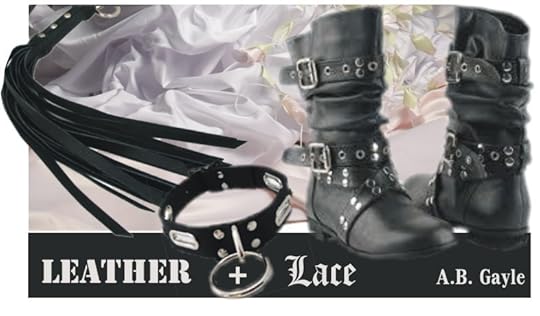
 While the characters in this book are different, they exist in the same universe as the series opener: “Red+Blue” and one minor character links in. It also links to “Caught” a novella I wrote for Dreamspinner Press a couple of years ago. The two heroes from there, “Nat and Danny” feature in “L+L” and ultimately I will write another novella with them called “Bound” so that will become “Caught+Bound.”
 Where did the idea come from for the book?
 Interview
here
I’ve always been fascinated by the concept of BDSM. Not so much the mechanics of it, but the mindset and why people would become involved. Over time, I’ve read a lot of good and bad stories.
Interview
here
I’ve always been fascinated by the concept of BDSM. Not so much the mechanics of it, but the mindset and why people would become involved. Over time, I’ve read a lot of good and bad stories.
On the good side have been writers like Jane Davitt with “Room at the Top” and Syd McGinley whose Dr Fell has to be one of the best written Dominants around.
 Interview
here
I also loved the way Kim Dare showed that the Dom also serves his slave in her book Duck.
Interview
here
I also loved the way Kim Dare showed that the Dom also serves his slave in her book Duck.
But one day I had a conversation with a writer who had lived the scene and had a very distressing Master/slave relationship. That made me think about the flip side. Since then, I have discovered others whose experiences with BDSM have not always been positive.
 Reviewed
here
and interviewed
here
Reviewed
here
and interviewed
here
Mind you, some BDSM books show scenarios where that happens without the writer realizing it. They depict narcissistic Doms, subs who should be in therapy and scenarios where my gut churns at the manipulation going on.
That is why I appreciate it when books such as “Chaos Magic” by Jay Lygon and the other two in the series show what happens when the line is crossed into abuse. Jay addresses that in the Gods and Chaos series which needs to be read in entirety to get the point.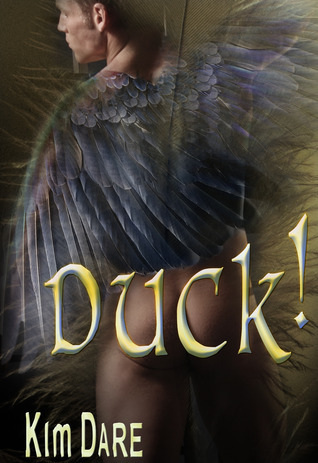 Reviewed
here
I also find the concept of Drag fascinating. We have some great drag artists in Sydney, and I’ve been to a few shows. For the most part, Australian artists tend to be the over-the-top caricatures of females, real ball-busters, but some work hard to be as glamorous as possible and some of these, in real life, are decidedly masculine.
Reviewed
here
I also find the concept of Drag fascinating. We have some great drag artists in Sydney, and I’ve been to a few shows. For the most part, Australian artists tend to be the over-the-top caricatures of females, real ball-busters, but some work hard to be as glamorous as possible and some of these, in real life, are decidedly masculine.
So, being me, I was intrigued as to what would happen if the two met and mixed. One who, by convention, flouts rules, and the other who continually expounds them.
What genre does your book fall under?
I would call it an m/m romance. But probably because it involves BDSM, it will get filed in the erotica section. However the actual physical nature of BDSM is only a minor part of the book, it’s more about BDSM: its strengths and weaknesses, the misconceptions that take place and what can happen through ignorance. So those fearing to read it because of expectations of pain and humiliation and lots of “Please hurt me, Sir.” can rest assured that they’re more likely to read “Don’t call me boy!”
 Reviewed
here
This is a book more about respect, trust, honesty and love. I took great pains to ensure it is respectful of the scene, by reading books by people such as Guy Baldwin and Joseph Bean. I’ve also had three people in the scene read it, and all have been more than happy with the final product. This isn’t a “how to” book or even a “how not to” book, it’s just that the main characters happen to be in the scene and it explores what that means for them as individuals.
Reviewed
here
This is a book more about respect, trust, honesty and love. I took great pains to ensure it is respectful of the scene, by reading books by people such as Guy Baldwin and Joseph Bean. I’ve also had three people in the scene read it, and all have been more than happy with the final product. This isn’t a “how to” book or even a “how not to” book, it’s just that the main characters happen to be in the scene and it explores what that means for them as individuals.
 Reviewed
here
. Which actors would you choose to play your characters in a movie rendition?
Reviewed
here
. Which actors would you choose to play your characters in a movie rendition?
 The incomparable Stevie Nicks
  Even though I know it’s something writers are meant to do, I hesitate to answer this one because as soon as I do, a reader’s attitude to those actors would color how they saw Steve and Don. Physically, they are both small – under five nine.
One is described as more of a bulldog, strong, compact and a determined tenacious attitude. The other is able to impersonate the petite Stevie Nicks, but don’t let that fact fool you into thinking he’s the gay, femme type.
Here are a couple of photos of a local Perfomance Artist, Dallas Dellaforce, who shows that you don’t have to look feminine to play feminine. In fact, beef him up a bit more, and he could play both roles.
 Bo Ladashevska
Mr International Leather 2006 What is the one-sentence synopsis of your book?
A drag performer struggles to overcome past hurt and prejudices as his life and future become entangled with a man steeped in the traditions of the Old Guard, the original leathermen of BDSM.
Will your book be self-published or represented by an agency?
I’m both pleased and honored that the book will be published by Dreamspinner Press in March or April 2013.
The team at Dreamspinner have always supported and encouraged my writing.
 How long did it take you to write the first draft of your manuscript?
The initial draft was written during 2011 Nanowrimo and posted in my Live Journal as I went. Subsequent revisions over the next seven months made it grow from the original 55,000 words into just over 100,000. I realized I’d left out a whole chunk in the middle, and my first draft had a lot of “told” scenes that needed to be converted into “shown” ones.
What other books would you compare this story to within your genre?
I’m not sure it’s like any. As said before, some of the premise is covered in “Chaos Magic” but I handle it differently. It’s told purely from the first person perspective of Steve, the drag performer whose past is gradually revealed as the story progresses. I haven’t consciously tried to mimic any book. If anything, I’d prefer to list books that this story rebuts or at least takes a totally different approach to but that might get me into trouble.
I find most BDSM books have submissives who seem to have no trouble in handing over all their power to masters who don’t inspire me with any confidence (other than their own belief) that they deserve it. Few of the submissives struggle with or even think about what they’re doing or why. Being told they are submissive by a Dom doesn’t count in my way of thinking. I also don’t like books where the proponents are willingly complicit one minute, then despise what they do the next.
The whole topic of kink, its place in society and whether it’s healthy is addressed - the fine line between brain-washing, co-dependency and the reality of trying to live the lifestyle 24/7.
 Review
here
Books like John Preston’s “Mr Benson” and david stein’s “Carried Away” with their concept of putting yourself completely into another’s hands intrigue me.
Review
here
Books like John Preston’s “Mr Benson” and david stein’s “Carried Away” with their concept of putting yourself completely into another’s hands intrigue me.
I read every book I could find on the Old Guard and the traditions of BDSM by those in the scene to ensure that I captured both the best aspects of what true submission and mastery can mean while also showing what can happen if care is not taken to treat the scene with respect.
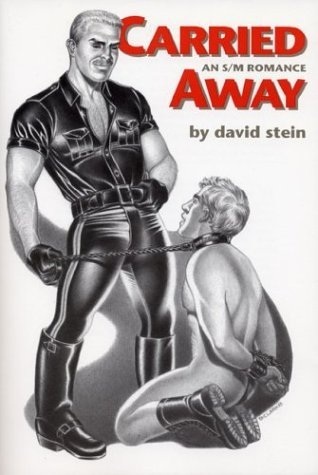 Review
here
Who or What inspired you to write this book?
Review
here
Who or What inspired you to write this book?
The conversation with the author and hearing about his ongoing problems. I was accused by someone in the scene that I’d never be able to get it right because I’m not a participant, but thanks to the internet and the ability to listen to lectures on the subject, and the above books that I used for research, I think I came pretty close. According to the betas (one a current slave and one who has been) I succeeded, remembering that there is no single right way to do anything and every relationship is different.
In the end, I thought about normal heterosexual marriages and the dynamics within them. You don’t have to be involved in BDSM or a Master/slave relationship to understand the mental games that can be played between two people who may not even be aware of what they’re doing. The major difference is that in BDSM, when properly executed, the participants consciously play out scenarios restricting freedoms, imposing discipline (physical and mental) and rewarding different behaviors appropriately and, ideally, while doing so communicating about what is working and what isn't.
What else about your book might pique the reader’s interest?
Motor cycles play a big role. Polished chrome always adds a glint to any story!
Sir and boy, Master and slave, Dominant and submissive, husband and wife are all just labels depicting two people forming a deep bond which will become a prison without mutual love and respect. I think people in the scene and even those who aren’t will enjoy “Leather+Lace”. I’ve made it sound all very serious, but in reality these aspects are hidden in a sometimes amusing tale.
At this point, I'd like to acknowledge a few people. Once again Kate and Don helped me over a few hurdles and Jess proved to be a welcome addition to my team of hand holders. I was also very grateful for pointers from Dusk Peterson who is in a real life M/s relationship and writes great BDSM stories.
Once it was complete, having betas say they stayed up until 6.30am is the best sort of feedback I can get.
By the time I sent it off to Dreamspinner, I still loved Steve and Don, if anything more than I did at the start. For a writer, that’s a good sign….
(I know I was supposed to pass the baton onto five more writers, but most of my friends are participating already. But you can read an interview I did with Clare London some time ago here.)
What is the working title of your book?
“Leather+Lace” is the second in my “Opposites Attract” series.
The plus symbol is not just an “and” - it’s more showing that the final result is the sum of the two. Both people contribute to something new.
I don't have a cover yet, but here's what I cobbled together for my Pinterest board .
While the characters in this book are different, they exist in the same universe as the series opener: “Red+Blue” and one minor character links in. It also links to “Caught” a novella I wrote for Dreamspinner Press a couple of years ago. The two heroes from there, “Nat and Danny” feature in “L+L” and ultimately I will write another novella with them called “Bound” so that will become “Caught+Bound.” Where did the idea come from for the book? Interview
here
I’ve always been fascinated by the concept of BDSM. Not so much the mechanics of it, but the mindset and why people would become involved. Over time, I’ve read a lot of good and bad stories.On the good side have been writers like Jane Davitt with “Room at the Top” and Syd McGinley whose Dr Fell has to be one of the best written Dominants around.
Interview
here
I also loved the way Kim Dare showed that the Dom also serves his slave in her book Duck. But one day I had a conversation with a writer who had lived the scene and had a very distressing Master/slave relationship. That made me think about the flip side. Since then, I have discovered others whose experiences with BDSM have not always been positive.
Reviewed
here
and interviewed
here
Mind you, some BDSM books show scenarios where that happens without the writer realizing it. They depict narcissistic Doms, subs who should be in therapy and scenarios where my gut churns at the manipulation going on.
That is why I appreciate it when books such as “Chaos Magic” by Jay Lygon and the other two in the series show what happens when the line is crossed into abuse. Jay addresses that in the Gods and Chaos series which needs to be read in entirety to get the point.
Reviewed
here
I also find the concept of Drag fascinating. We have some great drag artists in Sydney, and I’ve been to a few shows. For the most part, Australian artists tend to be the over-the-top caricatures of females, real ball-busters, but some work hard to be as glamorous as possible and some of these, in real life, are decidedly masculine.So, being me, I was intrigued as to what would happen if the two met and mixed. One who, by convention, flouts rules, and the other who continually expounds them.
What genre does your book fall under?
I would call it an m/m romance. But probably because it involves BDSM, it will get filed in the erotica section. However the actual physical nature of BDSM is only a minor part of the book, it’s more about BDSM: its strengths and weaknesses, the misconceptions that take place and what can happen through ignorance. So those fearing to read it because of expectations of pain and humiliation and lots of “Please hurt me, Sir.” can rest assured that they’re more likely to read “Don’t call me boy!”
Reviewed
here
This is a book more about respect, trust, honesty and love. I took great pains to ensure it is respectful of the scene, by reading books by people such as Guy Baldwin and Joseph Bean. I’ve also had three people in the scene read it, and all have been more than happy with the final product. This isn’t a “how to” book or even a “how not to” book, it’s just that the main characters happen to be in the scene and it explores what that means for them as individuals. Reviewed
here
. Which actors would you choose to play your characters in a movie rendition? The incomparable Stevie Nicks Even though I know it’s something writers are meant to do, I hesitate to answer this one because as soon as I do, a reader’s attitude to those actors would color how they saw Steve and Don. Physically, they are both small – under five nine. One is described as more of a bulldog, strong, compact and a determined tenacious attitude. The other is able to impersonate the petite Stevie Nicks, but don’t let that fact fool you into thinking he’s the gay, femme type.
Here are a couple of photos of a local Perfomance Artist, Dallas Dellaforce, who shows that you don’t have to look feminine to play feminine. In fact, beef him up a bit more, and he could play both roles.
Bo Ladashevska Mr International Leather 2006
What is the one-sentence synopsis of your book?A drag performer struggles to overcome past hurt and prejudices as his life and future become entangled with a man steeped in the traditions of the Old Guard, the original leathermen of BDSM.
Will your book be self-published or represented by an agency?
I’m both pleased and honored that the book will be published by Dreamspinner Press in March or April 2013.
The team at Dreamspinner have always supported and encouraged my writing.
How long did it take you to write the first draft of your manuscript?The initial draft was written during 2011 Nanowrimo and posted in my Live Journal as I went. Subsequent revisions over the next seven months made it grow from the original 55,000 words into just over 100,000. I realized I’d left out a whole chunk in the middle, and my first draft had a lot of “told” scenes that needed to be converted into “shown” ones.
What other books would you compare this story to within your genre?
I’m not sure it’s like any. As said before, some of the premise is covered in “Chaos Magic” but I handle it differently. It’s told purely from the first person perspective of Steve, the drag performer whose past is gradually revealed as the story progresses. I haven’t consciously tried to mimic any book. If anything, I’d prefer to list books that this story rebuts or at least takes a totally different approach to but that might get me into trouble.
I find most BDSM books have submissives who seem to have no trouble in handing over all their power to masters who don’t inspire me with any confidence (other than their own belief) that they deserve it. Few of the submissives struggle with or even think about what they’re doing or why. Being told they are submissive by a Dom doesn’t count in my way of thinking. I also don’t like books where the proponents are willingly complicit one minute, then despise what they do the next.
The whole topic of kink, its place in society and whether it’s healthy is addressed - the fine line between brain-washing, co-dependency and the reality of trying to live the lifestyle 24/7.
Review
here
Books like John Preston’s “Mr Benson” and david stein’s “Carried Away” with their concept of putting yourself completely into another’s hands intrigue me.I read every book I could find on the Old Guard and the traditions of BDSM by those in the scene to ensure that I captured both the best aspects of what true submission and mastery can mean while also showing what can happen if care is not taken to treat the scene with respect.
Review
here
Who or What inspired you to write this book?The conversation with the author and hearing about his ongoing problems. I was accused by someone in the scene that I’d never be able to get it right because I’m not a participant, but thanks to the internet and the ability to listen to lectures on the subject, and the above books that I used for research, I think I came pretty close. According to the betas (one a current slave and one who has been) I succeeded, remembering that there is no single right way to do anything and every relationship is different.
In the end, I thought about normal heterosexual marriages and the dynamics within them. You don’t have to be involved in BDSM or a Master/slave relationship to understand the mental games that can be played between two people who may not even be aware of what they’re doing. The major difference is that in BDSM, when properly executed, the participants consciously play out scenarios restricting freedoms, imposing discipline (physical and mental) and rewarding different behaviors appropriately and, ideally, while doing so communicating about what is working and what isn't.
What else about your book might pique the reader’s interest?
Motor cycles play a big role. Polished chrome always adds a glint to any story!
Sir and boy, Master and slave, Dominant and submissive, husband and wife are all just labels depicting two people forming a deep bond which will become a prison without mutual love and respect. I think people in the scene and even those who aren’t will enjoy “Leather+Lace”. I’ve made it sound all very serious, but in reality these aspects are hidden in a sometimes amusing tale.
At this point, I'd like to acknowledge a few people. Once again Kate and Don helped me over a few hurdles and Jess proved to be a welcome addition to my team of hand holders. I was also very grateful for pointers from Dusk Peterson who is in a real life M/s relationship and writes great BDSM stories.
Once it was complete, having betas say they stayed up until 6.30am is the best sort of feedback I can get.
By the time I sent it off to Dreamspinner, I still loved Steve and Don, if anything more than I did at the start. For a writer, that’s a good sign….
(I know I was supposed to pass the baton onto five more writers, but most of my friends are participating already. But you can read an interview I did with Clare London some time ago here.)


