
A.B. Gayle's Blog, page 7
November 29, 2012
A Comedy of Manners
 First Impressions by Christopher Koehler
My rating: 5 of 5 stars
First up, this is gay fiction not m/m romance although a romance is at the heart of the book.
"First Impressions" is one of the best books I've read this year. There is so much going for it, if you drop your prejudices, look beneath the surface and think about what the author is saying.
It makes a number of statements on a number of levels clothed in witty, irreverent and scathing dialogue as befits a gay writer doing exactly what Jane Austen did many years ago.
Forget about trying to draw the parallels with specific characters. They are there, but at times the lines blur. For example, Simon is sometimes said to be the Wickham character, but really he reminds me more of Elizabeth's friend Charlotte and her marriage of convenience to Mr Collins aka Henry's Uncle Brenton. The master stroke was making his alter ego, the drag queen as a beautiful rendition of Lady Catherine.
Just as in the original, the secondary characters are seen through the eyes of the long suffering quieter pair, Elizabeth and Darcy, or in this case Cameron and Henry. Their friends' frivolities and flaws stand out in marked contrast to the latter's more conservative behavior.
True, the antics can be at times over-the-top, because deep down the POV character, Cameron, makes no bones about the fact he's gay and allows the stereotypical acerbic gay wit to sneak through.
Some of the scenes in the book are priceless. Take for example the early scene in the diner where the four men have gathered on Cameron's birthday. Their sniping dialogue is very well done.
Reading this requires you to look underneath words and concentrate more on what characters do. Those with good hearts may on the surface appear bratty, selfish and out of control but that is often a front donned to protect themselves from the judgemental pricks of (and in) society.
There's also a very serious, thought-provoking discussion on what makes the perfect partner. Present are Cameron's mentors, Brent and Aspen (aka Mr and Mrs Gardiner) and Darren (aka Mr Bingham)
All I'd like to know is if Darren ends up with Thad or Van (or both maybe) that would be a perfect match.
So, if you've been put off reading the book because of negative reviews, do yourself a favor and read it without prejudice because I think the author should be proud of what he's written.
Mind you, you don't have to have read Pride and Prejudice to enjoy the story, and I'd forgotten hearing about the link until half way through. It doesn't try to recreate it in a different era or setting, but it is a comedy of manners, a sarcastic take on the society it's set in and a collection of some really memorable characters.
View all my reviews Keep tuned for an interview with Christopher that I will be posting in a few days time.


November 24, 2012
Someone Needs a Spanking
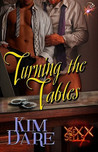 Turning the Tables by Kim Dare
My rating: 2 of 5 stars
Check my stats. I read three times more books than I rate simply because I like to promote books I like, especially if I feel fellow readers might not come into contact with them or not read them because other people see them differently and rate them badly.
If I don't like a book, I usually don't rate or review it, recognising that it may be someone else's cup of tea and don't want to infuence them. Hence, I rarely write negative reviews, but I feel this book made some fundamental writing mistakes that I feel need to be stated. Of course, I may be in the minority here and that's fine.
Normally, I love Kim's books (see my last blog post!). But TTT not only didn't do it for me, the dynamics didn't ring true. The submissive Boss is a difficult character to pull off and make it feel real. There are only a few books that attempt to capture it and rarely do they make me believe it can happen and be healthy. "Uneven" is one that gets close, but it deals with a very specific type. I acknowledge the fact that there is no one "true" scenario in a BDSM relationship, nevertheless the writer has to sell me on the one they're trying to portray.
For starters, I feel the story should have started earlier. Then we could have seen how the other Doms treat their subs in the office atmosphere to get a better idea of why Jacob was so desperate not to be seen as being anything but in control. We were told he was afraid of being outed often enough, but we never saw why. Even if Jacob had considered the different pairings and the type of men in them more than just the "Peter Ingram is all Dom" being the only evidence offered. In any case, the latter just came across (in this story) as an insensitive brute who sensed something was going on but never talked about it.
Secondly, all the talk about being a Dom or a sub got stale after a while. Do guys think in those terms? Or would it be more in terms of being in control or losing control. Losing respect, being admired for being strong. Admitting to having unmet needs. The continual labelling of the relationship as Dom/sub made it seem like "play" rather than real.
Next, we were told repeatedly that Lee loved Jacob, but we were never told why or shown it. The story flips to his POV at times, but the only feeling I got was all centred around the Dom/sub label and nothing for Jacob as a person. His taste in food, clothing, what he drove, how he drove it. If Lee really loved Jacob as a person, we would see how he related to all these aspects of Jacob's life not just his submissiveness. I didn't see any reason for the younger man to love him. We're told he wanted to grab him and kiss him senseless, but why? I never saw Jacob do anything that would provoke this reaction.
I might have believed the story more if there had been a scene where Jacob secretly dreamed of having a collar around his neck. If he really is a submissive, wouldn't he have envied what Floyd and Carl had?
When he yelled at someone, did he secretly wish someone yelled at him just like that? If so, why? Excusing this as being just because he's submissive is a cop out. What was Mary like? Did she mother him? Protect him from everyone else.
Like with all Kim's writing, there were scenes that moved me. Usually when they were interacting in private and sex was involved... Lol.
But to reiterate, the main problem was that Jacob's fear of being "found out" didn't ring true. I can appreciate the fact that it's difficult to depict a situation where the person viewing the scene doesn't understand the scenario, and therefore doesn't get what dominance and submission is about beyond the labels, but by not showing the scenes at all, the reader has nothing to back up the premise that underpins the book.
Possibly the book is a victim of a restricted word count.
One book I feel where this issue could be explored more thoroughly is if Kim ever decides to write Hamilton's story in her avian shifter series.
From what I can gather about the submissive boss dynamic, the person needs an outlet outside of work where he can let go. In many vanilla heterosexual relationships this is the norm. Many men, even in they don't realize it, are under the control of their wives inside the house even if that never shows in public. They are happy with this setup. It doesn't mean they have to rant and rave as bosses or that they are pussy-whipped at home. Some are very good bosses, but by the time they get home, they have had enough. That's the psychological form.
Kim's Jacob exhibited the different dynamic where the boss felt he needed to be punished. This can get into a whole different mindset where his past must be explored. Unresolved guilt questioned. Early abuse checked for. Kim, being English, has possibly seen this dynamic with Members of Parliament being caught with their pants down being whipped by a Domme in high heels and scanty leather.
Is it because they have a true pain kink or are deeper psychological issues involved? Is it that after caring for other people at work they need to feel someone cares for them and they are the centre of someone else's attention? Some of Joey Hill's books explore this theme in an m/f environment. Translating this to m/m, with the Dom being younger, (possibly - but not in this case) physically weaker, holding a lesser rung on the corporate ladder is the tricky thing.
Dom/sub relationships are very much about the tight links that bind people together. During scenes, the total focus is on the other person. In an age where there may be thousands of virtual or fleeting relationships, having one that is one hundred percent focussed can be the true need.
View all my reviews
November 3, 2012
A Super Shiny Bauble
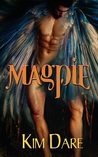 Magpie by Kim Dare
My rating: 5 of 5 stars
Rarely have I received as much pleasure from $5.99 as I did when I read Kim Dare’s “Magpie”. Like one of the breed that starred in her latest avian shifter story, I had been eyeing off the bright, shiny offering as soon as it was released, not daring to get too close in case it wasn’t as glittering as the previous book, “Duck”.
I shouldn’t have worried. From the first page, she had me as enthralled with the story as Kane was by any coveted trinket. In fact, as I read, I could identify more and more with his cravings because my love for Kim Dare’s stories are the same.
Deep down, I know there are probably more worthwhile books on the market -- ones that offer deeper characterization, more elaborate plots, more meaningful relationships -- but I can’t resist them. I have them all squirreled away on my ebook reader so I can visit them from time to time, having read each so often that I only need to look at the title to recall exactly what went on. Yet, just like a magpie who can’t resist touching bright shiny things, I’ll re-read them to gain that instant gratification.
Kim Dare is a masterful story teller. True, a harsh critic might say her stories have a sameness to them, but it’s the reassuring kind of sameness that a Master gives to his submissives, giving them exactly what they expect, so they can take comfort from that knowledge. There must be some part of me that needs the kind of reassurance that Kim deals out in spades.
Like “Duck” though, the increased word count allows Kim to offer more than just the quick fix. This is the soup tureen or the magnificent epergne in the middle of the table, rather than the silver cutlery or goblets that grace the edges. Kim’s depiction of the way Kane suffers through his withdrawal, and the patience and steadfastness Everet exhibits as he demonstrates to the thieving magpie that nurture can overcome nature are magnificently crafted.
The scene as Everet accepts punishment on Kane’s behalf won’t be forgotten in a hurry.
A lot of psychology goes into Kim’s writing. Each person gets exactly what they need to make the partnership work. Yet, Everet and Kane’s needs bear little resemblance to Raynard and Ori’s which were all about pecking order. I’d love to discover whether this is just instinctive on Kim’s part, or if she has researched what makes people tick.
I even enjoy seeing minor characters behaving badly because I know that their flaws will be addressed in future stories. Her eagle, Hamilton's, pride will definitely come before a fall. I look forward to seeing what she does with him.
Kim has an understanding of people that is sometimes overlooked when discussing her books. Perhaps her characters are just stereotypes, but if so, she always has a wonderfully fresh way of presenting them to the reader.
The only niggle were the three or four typos that jumped out at me. These should have been found by a half-decent copy editor. But these were only minor blemishes on the surface and were easily brushed away. “Magpie” is still a super, shiny bauble.
View all my reviews
October 27, 2012
Changing the Perspective
(This blog first appeared on the Dreamspinner Blog, but I'm repeating it here as
One of the common tricks of the trade when trying to get deep into a character’s head is to write the story in first person and then switch the pronouns around to third person.
While writing “Red+Blue”, I came to the conclusion that this method works only to a point. There are subtle differences in the resulting versions that only appear when you look at a quantity of words. This blog is a discussion about what I discovered.
Why Third? because … “I Refuse to Read Books told in First”
How many times have we heard that! I suspect some readers find it difficult to empathise with a character who is not of their gender or who they can’t relate to when it comes to moral and ethical choices. Perhaps others find it squicky to be involved as the “participant” in down and dirty sex scenes.
Shifting the perspective to third allows them a slight distancing.
Another characteristic of first person POV is that the character and the reader should have absolutely no knowledge of what is going on in another person’s head, i.e. doesn’t know their motivations or reasoning. Sure, interpreting body language can give them some indication, but it’s not the same as “being inside that person’s head”.
The current trend or fashion in romances is to switch the POV in deep third between the two protagonists. Although some, like Isabelle Rowan’s “A Note in the Margin” and Catt Ford’s “A Strong Hand” use multiple points of view.
Some books switch POV constantly, paragraph to paragraph. Marquesate’s and Vashtan’s“Special Forces” is a good example of this, reflecting the fact that the book was written by two writers, working on the same document at the same time. The serial soap I’ve been involved in with DSP authors, Andrea Speed, Jessie Blackwood and J.J. Levesque: “Redemption Reef” and“Second Chances” was also done that way.
The difference here is that you immediately know where the other person stands and how they have reacted to the previous action or word.
Some Good Examples of Effective First Person
I’m always intrigued by the way different writers have used the first person perspective to good effect. In “The White Knight”, Josh Lanyon told the story from the POV of the same person, but switched from first to third to show one was taking place in the present and one in the past.
It’s also used to interesting effect in Tom Collins’s “When Irish Eyes are Sparkling” where there is dual first person.
First person POV allows the author to draw the reader closer, almost colluding with them, by using little quips, as if they’re telling them a tale.
However, it can also be used to keep the reader distant by excluding certain facts. Typical of these is the unreliable first person narrative used in stories like Clare London’s “Freeman” where the viewpoint character deliberately conceals his reasons for chasing Kit. Or in the case of Ash Penn’s“Stray”, the viewpoint character’s harsh opinion of himself is only seen to be erroneous by the way the other characters relate so positively towards him. All bark and no bite.
When I wrote “Red” and “Blue” I wanted the reader to feel that the character was chatting directly to them. Giving them their versions of the events.
But You Can’t KNOW That!
Years ago, I’d watched “The Norman Conquests”, a great TV series in which the same scene is rehashed from the different perspectives of the participants.
Unless we are blessed with clairvoyance or have great communication channels open, we don’t know what motivates people or even what happens while we’re apart. I wanted to convey this part of my characters lives before they get together. The conclusions we draw from what we see and hear may be accurate, but they may also be wrong based on misinterpretation of signals or deliberate design.
The characters in long stories in first person POV can almost come across as self-absorbed or even self-obsessed. It’s all about “them”. This can be a good or bad thing.
Interestingly, when I tried switching the first person to third, the characters felt more distant. When using first person, in a lot of these scenes, the character and the reader are the ones most intimately involved.
Getting the Balance Right
This is all very well when the characters are by and large apart, but what happens when they are together? First person POV becomes almost impossible then.
What then was I to do when the two characters of the book are together? Keeping the story in first (using one of the characters) proved to be totally different from writing and then reading it in third person. The reader may not have been as involved, but the characters felt more of a pair, less self-absorbed. Perhaps this difference was just in my mind, my perception, but after experimenting a lot with POV writing, I could sense the difference.
I also discovered that writing directly in third person resulted in more showing and less telling.
“First” naturally lends itself to confessions and a lot of thinking. Because this doesn’t work so well in third, more dialogue is needed. This also serves to draw the characters together and keep them on a more equal footing in relationship to the reader.
Which to Use
When discussing POV choice with other writers and teachers, the usual remark is to do what works best. Linnea Sinclair (a romance scifi writer) says always use the viewpoint of the character with the most to lose in the scene.
Even at the final editing stage of “Red+Blue”, a suggestion was made to switch the POV to the other character at a crucial part of the story. The switch worked brilliantly. Thanks DSP editors!
A number of unwritten “rules” were broken when writing the book. All I can say is that each was done deliberately.
I’ll be interested to get feedback from readers and fellow authors about whether they noticed the changes and their reaction to them.
One of the common tricks of the trade when trying to get deep into a character’s head is to write the story in first person and then switch the pronouns around to third person.
While writing “Red+Blue”, I came to the conclusion that this method works only to a point. There are subtle differences in the resulting versions that only appear when you look at a quantity of words. This blog is a discussion about what I discovered.
Why Third? because … “I Refuse to Read Books told in First”
How many times have we heard that! I suspect some readers find it difficult to empathise with a character who is not of their gender or who they can’t relate to when it comes to moral and ethical choices. Perhaps others find it squicky to be involved as the “participant” in down and dirty sex scenes.
Shifting the perspective to third allows them a slight distancing.
Another characteristic of first person POV is that the character and the reader should have absolutely no knowledge of what is going on in another person’s head, i.e. doesn’t know their motivations or reasoning. Sure, interpreting body language can give them some indication, but it’s not the same as “being inside that person’s head”.
The current trend or fashion in romances is to switch the POV in deep third between the two protagonists. Although some, like Isabelle Rowan’s “A Note in the Margin” and Catt Ford’s “A Strong Hand” use multiple points of view.
Some books switch POV constantly, paragraph to paragraph. Marquesate’s and Vashtan’s“Special Forces” is a good example of this, reflecting the fact that the book was written by two writers, working on the same document at the same time. The serial soap I’ve been involved in with DSP authors, Andrea Speed, Jessie Blackwood and J.J. Levesque: “Redemption Reef” and“Second Chances” was also done that way.
The difference here is that you immediately know where the other person stands and how they have reacted to the previous action or word.
Some Good Examples of Effective First Person
I’m always intrigued by the way different writers have used the first person perspective to good effect. In “The White Knight”, Josh Lanyon told the story from the POV of the same person, but switched from first to third to show one was taking place in the present and one in the past.
It’s also used to interesting effect in Tom Collins’s “When Irish Eyes are Sparkling” where there is dual first person.
First person POV allows the author to draw the reader closer, almost colluding with them, by using little quips, as if they’re telling them a tale.
However, it can also be used to keep the reader distant by excluding certain facts. Typical of these is the unreliable first person narrative used in stories like Clare London’s “Freeman” where the viewpoint character deliberately conceals his reasons for chasing Kit. Or in the case of Ash Penn’s“Stray”, the viewpoint character’s harsh opinion of himself is only seen to be erroneous by the way the other characters relate so positively towards him. All bark and no bite.
When I wrote “Red” and “Blue” I wanted the reader to feel that the character was chatting directly to them. Giving them their versions of the events.
But You Can’t KNOW That!
Years ago, I’d watched “The Norman Conquests”, a great TV series in which the same scene is rehashed from the different perspectives of the participants.
Unless we are blessed with clairvoyance or have great communication channels open, we don’t know what motivates people or even what happens while we’re apart. I wanted to convey this part of my characters lives before they get together. The conclusions we draw from what we see and hear may be accurate, but they may also be wrong based on misinterpretation of signals or deliberate design.
The characters in long stories in first person POV can almost come across as self-absorbed or even self-obsessed. It’s all about “them”. This can be a good or bad thing.
Interestingly, when I tried switching the first person to third, the characters felt more distant. When using first person, in a lot of these scenes, the character and the reader are the ones most intimately involved.
Getting the Balance Right
This is all very well when the characters are by and large apart, but what happens when they are together? First person POV becomes almost impossible then.
What then was I to do when the two characters of the book are together? Keeping the story in first (using one of the characters) proved to be totally different from writing and then reading it in third person. The reader may not have been as involved, but the characters felt more of a pair, less self-absorbed. Perhaps this difference was just in my mind, my perception, but after experimenting a lot with POV writing, I could sense the difference.
I also discovered that writing directly in third person resulted in more showing and less telling.
“First” naturally lends itself to confessions and a lot of thinking. Because this doesn’t work so well in third, more dialogue is needed. This also serves to draw the characters together and keep them on a more equal footing in relationship to the reader.
Which to Use
When discussing POV choice with other writers and teachers, the usual remark is to do what works best. Linnea Sinclair (a romance scifi writer) says always use the viewpoint of the character with the most to lose in the scene.
Even at the final editing stage of “Red+Blue”, a suggestion was made to switch the POV to the other character at a crucial part of the story. The switch worked brilliantly. Thanks DSP editors!
A number of unwritten “rules” were broken when writing the book. All I can say is that each was done deliberately.
I’ll be interested to get feedback from readers and fellow authors about whether they noticed the changes and their reaction to them.
August 12, 2012
A View from Within
 The Slave Journals and Other Tales of the Old Guard by Thom Magister
My rating: 5 of 5 stars
I really enjoyed this collection of stories. The blurb (which is really a series of reviews) says it all, as does the introduction.
While a lot is predictable, there are some surprisingly touching stories inside. Once the initial Centurions group is set up, there are a few shorts stories about hooking up between different couples: Finding the inner man with a porn star. A man who has recently lost his leg in a bike accident. The naive, the jaded, the intelligent, the inarticulate. They're all different, reflecting the personality of the different Masters telling the story. I really enjoyed Master Butch amusing repartee as he takes on a notoriously pushy bottom.
God knows I don’t want to look at your face when I fuck you.” “You’re not going to fuck me.”
“Having your period?”
“No.”
“Hemorrhoids? Pregnant? Clap?”
“No, I don’t like you.”
“That’s harsh. And we’ve spent so much quality time together. I might cry.” He looked away. “Back to your life story. When did you start sucking cocks? And do you swallow? That’s part A and part B of the quiz.”
The writing is easy to read and has some evocative imagery:
"I’m not turned on by those handsome model types you see in the magazines, but when you see the real thing in person, you just know the Creator was having a great day when he made this one. This dude stopped traffic — literally. The fucking bar came to a standstill the first time he came through the door. You’d have to be blind, deaf, and stupid not to want to just breathe the same air he did."
There are even hints that these tough guys are really soft underneath.
“C’mon, Jeff, move with me. Be my boy and give your gift. I promise to treasure it. That’s it, slowly, slowly, taking long easy loving strokes . . . open, open . . . that’s it, keep moving. Feel my cock inside you. Feel it pleasuring you and taking pleasure from you.” He moved his ass perfectly, and we kept the pace together for what seemed like hours. “Talk to me, Jeff. Tell me everything you’re feeling.”
It's a man's idea of "romance" and if taken as such, will please anyone who likes reading about hot men hooking up. But there's also wisdom there:
There is no satisfaction if what happens in a session is the result of a moment’s weakness. The satisfaction comes from a man making a conscious decision, at a distance, in the light of day — safe in his own room.
Although this is fiction fuelled by fantasy, at each story's core there is underlying respect for the needs of the person they are with, whether it be a desire for pain, humiliation or just affection, but even more importantly, there is self-respect. Not self-loathing. Given the era in which they were set, this goes a long way to explain why the Old Guard and the structures of SM and Leather provided an ironically safe haven.
View all my reviews
August 9, 2012
Pungent picture of a past era
 Bathroom Trysts by Mykola Dementiuk
My rating: 4 of 5 stars
Despite being released by an erotic romance publisher, “Bathroom Trysts” is neither romantic nor even erotic. At least, it won’t be to the majority of readers of gay romance (ie heterosexual women). The book would have found itself more at home with a publisher like Cleis or Lethe Press and marketed as gay fiction where it would have been welcomed by gay men and those interested in social history.
In succinct, dispassionate but at times hauntingly lyrical prose, the author captures the people, the place and the essence of the era.
First person point of view immediately puts the reader fair and square in the head of a young man (we are not told his age initially) in a time where being gay was seen as a sin. Readers who are naturally warm-hearted will squirm as the narrator does things they would never dream of doing or thinks thoughts repugnant to them. But anyone with a degree of imagination and empathy, (especially if they have read other books of that period) can really feel the loneliness and shame as he relates his tales with a disconcerting lack of emotion.
This distance extends to the sex scenes, mirroring the disconnectedness that pervaded that aspect of his life as well. No lingering pleasure was achieved from these brief encounters, only a quick gratification of urges leaving the narrator and reader even more sullied by an experience which in better circumstances should be uplifting and fulfilling. There was nothing sexy or even romantic about these trysts. The rainbow may be their symbol, but those two ideals were pots of gold at each end. Impossible to find – in those days at least.
This will be a difficult story for many people to read and review. No doubt it will attract its share of criticism. But I wouldn't mind betting that some men will get a kind of guilty pleasure while reading it. Possibly the same men who shared these encounters with similar young men or dreamed of doing so. Others will read the stories and wince at the memory.
Some of the scenes depicted are disturbing, and I suspect the author meant them to be. After all, isn't that a form of comment on the incidents themselves. What was the alternative? Wrap the memories up in judgemental self-loathing? Gay men were always made to feel the outsider. Dirty, shameful.
Dirk Vanden, winner of this year’s Lambda Award for erotic romance maintains that in those days gay men deliberately sought out and indulged in degraded sex because that's all they felt they deserved for being queer. Seeing everyone reviled them for being gay and they were going to hell anyway, the shackles were off as they sought out the company of like-minded men to share in their “downfall”.
These people were not just the six pack Adonises who grace the cover of today’s m/m romances. They were the overweight, the hairy, the meek, the mild, the old, the married, the accountant (or priest) and the truck driver stinking of BO.
It is not until we are further into the book that we discover the narrator is still a teenager, 15, underage, illegal. This throws another angle into play. Underage sex. But it also explains why, apart from exploitation there are other factors involved: experimentation, lack of money, confusion, not knowing anything else is possible, immaturity, the self-centredness of youth, lack of empathy from not having enough life experience.
Mind you, some teens look like men and I'm sure people weren't flashing around ID cards.
Now, without judging a reviewer’s right to their own opinion, I’d like to address a point I came across in another review which can be read in context here: http://briefencountersreviews.com/201...
“What really turned me off the story, though, was the narrator's reaction to the cross-dressing character who asks him to come on her face, even offering money for his "scum". When it doesn't quite go to plan and she takes the money back, the narrator curses her, calling her a "faggot whore" and a "half-boy/half-girl fake". If this transphobia had been dealt with by the narrator, calling on a more mature perspective in his later life (the point from which he is supposedly narrating) then I could have accepted it as the callousness of youth. Unfortunately this didn't happen, and after that I lost all sympathy for him.”
While totally understanding where they are coming from, I see this differently.
First off, I’m going to assume that now he is older, the author is well aware of how he will come across if he writes words like that. The question is, should he self-censor who he was back then? At that age, that was truly what he thought. Heck, a lot of adults still feel like that. But, given his intelligence as shown by other factors, isn't there a degree of self-criticism implicit in his acknowledgement of writing how he felt then?
Gay men had pecking orders. All men do. Some men who were struggling with coming to terms that they were gay felt that pretending you were female or acting like a female was the worst thing you could do. Check out the rules of the Old Guard and again, Dirk Vanden's writing of that time. Even though there are still pockets of prejudice, the fem gay man of today or the cross dresser or transman should count themselves lucky that they live in a different era. But this has only been possible because being gay stopped being a crime.
Like the pungent aroma of antiseptic used in a public urinal, the sad, lonely, and self-loathing stories will leave you with a nasty aftertaste. Thank God we have come so far since then that we are revolted by the difference to today’s standards.
Sometimes, I wonder if gay guys over forty deep down resent or are jealous of the fact that younger men didn't go through all this. That they escaped being divorced from their families, their work colleagues and society in general.
I read stories by men like Mykola Dementiuk, Blake Deveraux and others damaged by their pasts and cringe when these facts are included in their novels and they get condemned by reviewers for the content. In a way, I find that as bad as the condemnation that existed in their day.
We should be thanking these men for writing stories like this. Hopefully, they are a cathartic experience. No, we are not meant to "get off" on them.
Writing of these “trysts” without the author’s intervention or apology for thinking or doing things that may be unacceptable by today’s standards is better in the long term as these stories will last well into a future which will see even more changes. If “judging” be done, let each era, read, appreciate and make their comments on their current knowledge and values and acknowledge (hopefully) how much better things are now.
If the writer had written or “judged” from today’s viewpoint that puts an anachronistic stopper into the piece. His thoughts back onto what he was like then may change in ten years. Heck, they’re possibly even different from what they were ten years ago. Better to chronicle without judgement and let an empathetic reader use the picture it paints to understand the era.
In Australia, for a long time, a big deal was made about saying “Sorry” to aborigines for the way they were treated in the past. Oppressed, taken away from their families, abused, mistreated. Many people objected strongly to the notion that they should apologise for actions they themselves had nothing to do with, in fact many happened before they were born. Just the thought that an apology was needed created great debate. It is only a word. Action is needed as well, but sometimes, these gestures can carry great meaning. They are a line in the sand. An expression of determination never to repeat that mistake.
In the same vein, whenever I read books like this, I am often prompted to do the same. Instead of adding further agony to the negativity the author received in the past, I am going to praise the book and say “Sorry” the world was not a better place.
View all my reviews
Pungent perfect picture of a past era
Bathroom Trysts by Mykola DementiukMy rating: 4 of 5 stars
Despite being released by an erotic romance publisher, “Bathroom Trysts” is neither romantic nor even erotic. At least, it won’t be to the majority of readers of gay romance (ie heterosexual women). The book would have found itself more at home with a publisher like Cleis or Lethe Press and marketed as gay fiction where it would have been welcomed by gay men and those interested in social history.
In succinct, dispassionate but at times hauntingly lyrical prose, the author captures the people, the place and the essence of the era.
First person point of view immediately puts the reader fair and square in the head of a young man (we are not told his age initially) in a time where being gay was seen as a sin. Readers who are naturally warm-hearted will squirm as the narrator does things they would never dream of doing or thinks thoughts repugnant to them. But anyone with a degree of imagination and empathy, (especially if they have read other books of that period) can really feel the loneliness and shame as he relates his tales with a disconcerting lack of emotion.
This distance extends to the sex scenes, mirroring the disconnectedness that pervaded that aspect of his life as well. No lingering pleasure was achieved from these brief encounters, only a quick gratification of urges leaving the narrator and reader even more sullied by an experience which in better circumstances should be uplifting and fulfilling. There was nothing sexy or even romantic about these trysts. The rainbow may be their symbol, but those two ideals were pots of gold at each end. Impossible to find – in those days at least.
This will be a difficult story for many people to read and review. No doubt it will attract its share of criticism. But I wouldn't mind betting that some men will get a kind of guilty pleasure while reading it. Possibly the same men who shared these encounters with similar young men or dreamed of doing so. Others will read the stories and wince at the memory.
Some of the scenes depicted are disturbing, and I suspect the author meant them to be. After all, isn't that a form of comment on the incidents themselves. What was the alternative? Wrap the memories up in judgemental self-loathing? Gay men were always made to feel the outsider. Dirty, shameful.
Dirk Vanden, winner of this year’s Lambda Award for erotic romance maintains that in those days gay men deliberately sought out and indulged in degraded sex because that's all they felt they deserved for being queer. Seeing everyone reviled them for being gay and they were going to hell anyway, the shackles were off as they sought out the company of like-minded men to share in their “downfall”.
These people were not just the six pack Adonises who grace the cover of today’s m/m romances. They were the overweight, the hairy, the meek, the mild, the old, the married, the accountant (or priest) and the truck driver stinking of BO.
It is not until we are further into the book that we discover the narrator is still a teenager, 15, underage, illegal. This throws another angle into play. Underage sex. But it also explains why, apart from exploitation there are other factors involved: experimentation, lack of money, confusion, not knowing anything else is possible, immaturity, the self-centredness of youth, lack of empathy from not having enough life experience.
Mind you, some teens look like men and I'm sure people weren't flashing around ID cards.
Now, without judging a reviewer’s right to their own opinion, I’d like to address a point I came across in another review which can be read in context here: http://briefencountersreviews.com/201...
“What really turned me off the story, though, was the narrator's reaction to the cross-dressing character who asks him to come on her face, even offering money for his "scum". When it doesn't quite go to plan and she takes the money back, the narrator curses her, calling her a "faggot whore" and a "half-boy/half-girl fake". If this transphobia had been dealt with by the narrator, calling on a more mature perspective in his later life (the point from which he is supposedly narrating) then I could have accepted it as the callousness of youth. Unfortunately this didn't happen, and after that I lost all sympathy for him.”
While totally understanding where they are coming from, I see this differently.
First off, I’m going to assume that now he is older, the author is well aware of how he will come across if he writes words like that. The question is, should he self-censor who he was back then? At that age, that was truly what he thought. Heck, a lot of adults still feel like that. But, given his intelligence as shown by other factors, isn't there a degree of self-criticism implicit in his acknowledgement of writing how he felt then?
Gay men had pecking orders. All men do. Some men who were struggling with coming to terms that they were gay felt that pretending you were female or acting like a female was the worst thing you could do. Check out the rules of the Old Guard and again, Dirk Vanden's writing of that time. Even though there are still pockets of prejudice, the fem gay man of today or the cross dresser or transman should count themselves lucky that they live in a different era. But this has only been possible because being gay stopped being a crime.
Like the pungent aroma of antiseptic used in a public urinal, the sad, lonely, and self-loathing stories will leave you with a nasty aftertaste. Thank God we have come so far since then that we are revolted by the difference to today’s standards.
Sometimes, I wonder if gay guys over forty deep down resent or are jealous of the fact that younger men didn't go through all this. That they escaped being divorced from their families, their work colleagues and society in general.
I read stories by men like Mykola Dementiuk, Blake Deveraux and others damaged by their pasts and cringe when these facts are included in their novels and they get condemned by reviewers for the content. In a way, I find that as bad as the condemnation that existed in their day.
We should be thanking these men for writing stories like this. Hopefully, they are a cathartic experience. No, we are not meant to "get off" on them.
Writing of these “trysts” without the author’s intervention or apology for thinking or doing things that may be unacceptable by today’s standards is better in the long term as these stories will last well into a future which will see even more changes. If “judging” be done, let each era, read, appreciate and make their comments on their current knowledge and values and acknowledge (hopefully) how much better things are now.
If the writer had written or “judged” from today’s viewpoint that puts an anachronistic stopper into the piece. His thoughts back onto what he was like then may change in ten years. Heck, they’re possibly even different from what they were ten years ago. Better to chronicle without judgement and let an empathetic reader use the picture it paints to understand the era.
In Australia, for a long time, a big deal was made about saying “Sorry” to aborigines for the way they were treated in the past. Oppressed, taken away from their families, abused, mistreated. Many people objected strongly to the notion that they should apologise for actions they themselves had nothing to do with, in fact many happened before they were born. Just the thought that an apology was needed created great debate. It is only a word. Action is needed as well, but sometimes, these gestures can carry great meaning. They are a line in the sand. An expression of determination never to repeat that mistake.
In the same vein, whenever I read books like this, I am often prompted to do the same. Instead of adding further agony to the negativity the author received in the past, I am going to praise the book and say “Sorry” the world was not a better place.
View all my reviews
August 6, 2012
Dated but still relevant Insight into BDSM
 Ties That Bind: The SM/Leather/Fetish Erotic Style, Issues, Commentaries and Advice by Guy Baldwin
My rating: 5 of 5 stars
This is another of the books I purchased from Amazon towards the end of 2011 when they were still available as Amazon Digital Editions. Unfortunately, you can no longer buy it in that format, so I'm sharing more than I would have otherwise.
While there is a dearth of similar books written more recently, even though the information is dated, "Ties that Bind" makes a valuable resource for those wanting to gain a better understanding of the scene if writing about it. Especially if you're trying for a more realistic picture rather than the stereotypical fantasy version.
One of the biggest lightbulb moments for me was understanding participants not simply as Dom and sub but a combination of the three types:Dominant / Vanilla / Submissive
Sadist / Vanilla / Masochist
Agressive / Neutral / PassiveThis is a good way to explain the Pushy Bottom so often characterised in m/m romances, but it also demonstrates the different Tops that may be around and also the relationship the couple will have.
"Adversarial SM is the stuff that happens between aggressive sadists and aggressive masochists who are both dominant."
Sterotypical Top and bottoms are a combination of all on the left or all on the right, but:
"Most folks are various configurations of these themes, and, importantly, they usually change from day to day or even moment to moment. This changing is very healthy from a psychological point of view, because it allows for flexible responses to changing situations."
There is also a great section on how to make relationship triads/menages work although he admits that the effort to keep them stable can be exhausting. This bit puts it well:
"At their most basic level, relationships happen between two people or entities at a time. This means that when three become involved, there are really a total of six different relationships: the three between each of the three pairs, and three more between any individual and each of the other pairs. Not included in this list is the relationship one has with one's self."
Another pertinent part of this chapter is true for all relationships:
"As you might guess, this can be a complicated process to manage, and will require great commitment and effort on everyone's part. But it can be done if everyone has the ability to tell the truth to one's self and others, to listen carefully, and to say what they mean and mean what they say."
He also feels that the imbalance between the number of Tops and bottoms in reality (figures of 10 to 15:1 quoted) are because:
"For a while now, I have suspected that the reason more men don't let their dominance manifest itself in a more directly erotic way has to do with the fear and guilt they feel when they come face to face with the magnitude of their needs to be sadistic, their urges to control, and to dominate. It is as though they sense the presence of some anarchic, lusty beast within themselves who could run wild and destroy everyone and everything in its path if released."
Being a qualified psychotherapist, Baldwin has seen people who have been adversely affected (both physically and mentally by the scene). While there is the typical submissive who has been abused by greedy, insensitive Tops, he is just as concerned by the number of Tops burnt out by "castrating" bottoms, who use passive aggressiveness to deal their own form of damage.
Guy believes that the Top's needs are often not met, discussed or examined. He portrays the way a submissive can be encouraged by steady escalation of sensation to reach his endorphin high. But what about the Top in all this? He maintains that:
"This delicate balancing act on the razor's edge between the urge to rape, pillage and destroy and the need for self-restraint is a battle that takes place behind the steely eyes of the sadist, the dominant. The tension created by this battle releases a flood of endorphin driven ecstatic pleasure that is unequalled."
As stated at the beginning of this review, the material within is dated. According to Baldwin in a paper addressed to The Los Angeles Leather Weekend in 2004 and posted on The Palm Springs Gay Mens Health site: http://www.psgaymenshealth.com/leathe... Old Guard is leather is dead. To Baldwin, this is a natural progression as it evolved from the experiences of the men who created it. The rigid protocols (many of which stemmed from their military background) became irrelevant. However, the need for a group to feel safe where the core values can be expressed will never disappear.
Reading books like "The Ties that Bind" and text of his recent lectures show that despite the changes, men (and society) need to understand the benefits (apart from the great sex) that can result from exploring (and supporting others as they explore) the true nature of themselves.
Integrated honesty was one term that resonated.
Baldwin also stresses that men with a kink shouldn't deny this aspect of their personality and likens denial to the damage caused by not admitting your sexuality:
"...while he continues to deny himself that kink, he has one part of himself at war with the rest and can never therefore be a fully integrated person. All the parts of oneself should fit together and mesh smoothly with all the other parts. No part of the self is exiled. All parts of the self must welcome all the other parts and none of the parts of the self are at war with the other parts."
View all my reviews
August 1, 2012
The Internet Construct
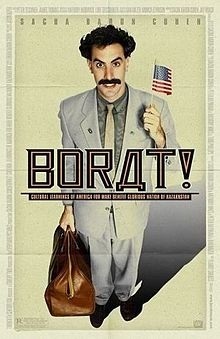 Sascha Baron Cohen has created some fascinating characters over time. When I first saw Ali G on television, I didn't know who he was and thought (as I was supposed to) 'What an obnoxious git'.
Since then, like most people, I've been amused and appalled (often at the same time) by characters such as Borat, Bruno and Admiral General Aladeen. I don't agree with everything they say or even everything that Sascha says through them, but I acknowledge he has the right to say what he wants and there is a point behind his in-character rants.
My main problem is that developing a persona, sometimes quite different to who you are in real life is becoming more and more common on the Internet.
For want of a better term, I'm calling them Internet Constructs and they come in a variety of forms. Sometimes this is people harmlessly becoming the person they want to be or feel like they were meant to be.
Sometimes it is not so harmless, particularly if people think and relate to this person as a real person and are encouraged to do so.
I take people (even if hiding under a pseudonym) at their word. If they say they are male and give advice as a male about things pertaining to being male, I'd like to think they are (note I am not referring to Transgender people here). If they say they are a therapist and give advice or criticism of people's behavior as if they were a therapist, I'd like to think they have a qualification to do so.
Some constructs can be amusing and thought provoking. A form of entertainment. But in that case, I feel some form of disclosure should be made.
Some constructs are created by authors as a backstory for their characters. In the end, their lives, actions and thoughts become THE story. Again, somewhere there should be the warning that this is fiction. So that when their aunty/cousin/or they themselves "die", we don't have their "friends/"fans grieving anymore than they would if someone was written out of their favourite TV show.
Some constructs are sock puppets to further their creators own careers. It was Ryan Field's blog on this subject here that prompted me to write this.
But if it's not made clear that the online identity is a construct then call me naive or gullible, I assume the person I think I'm dealing with is a real person not someone who is fake through and through.
If you want to make your points in a "different" way, fine become a Borat or an Ali G, but Sascha Baron Cohen never hid his real identity or denied playing these "characters".
If you're bored with your real identity and want to create a new one. Fine. But say so and give your "Friends" the chance to interact on different levels with both identities.
The trouble is that once you discover these constructs aren't "real" you question everything they've ever said. Where does the truth end and the lies begin? With opinions as well as facts.
July 7, 2012
Ithaka

When I go canoeing in the Quetico.
This is the poem that always
sticks in my brain.
It's by Constantine P. Cavafy
(29 April 1863 – 29 April 1933 / Alexandria)

When you set out for Ithaka
ask that your way be long,
full of adventure, full of instruction.
The Laistrygonians and the Cyclops,
angry Poseidon - do not fear them:
such as these you will never find
as long as your thought is lofty, as long as a rare
emotion touch your spirit and your body.
The Laistrygonians and the Cyclops,
angry Poseidon - you will not meet them
unless you carry them in your soul,
unless your soul raise them up before you.
Ask that your way be long.
At many a Summer dawn to enter
with what gratitude, what joy -
ports seen for the first time;
to stop at Phoenician trading centres,
and to buy good merchandise,
mother of pearl and coral, amber and ebony,
and sensuous perfumes of every kind,
sensuous perfumes as lavishly as you can;
to visit many Egyptian cities,
to gather stores of knowledge from the learned.
Have Ithaka always in your mind.
Your arrival there is what you are destined for.
But don't in the least hurry the journey.
Better it last for years,
so that when you reach the island you are old,
rich with all you have gained on the way,
not expecting Ithaka to give you wealth.
Ithaka gave you a splendid journey.
Without her you would not have set out.
She hasn't anything else to give you.
And if you find her poor, Ithaka hasn't deceived you.
So wise you have become, of such experience,
that already you'll have understood what these Ithakas mean.


