Foster Dickson's Blog, page 22
December 2, 2021
Don’t forget the books!
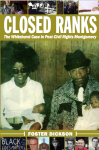 Closed Ranks:
The Whitehurst Case in Post Civil-Rights Montgomery
Published in 2018 by NewSouth Books, Closed Ranks tells the latter-day story of the Whitehurst Case, a police shooting controversy in Montgomery, Alabama in the 1970s. In this previously untold Black Lives Matter story, a white police officer shot and killed an unarmed black man, whose family is still seeking justice. The Alabama Writers Forum’s review of the book stated, “Closed Ranks is a powerful and methodical memoir that captures a wrongful historical account of the untold murder of Bernard Whitehurst Jr., an African-American man who was senselessly killed on December 2, 1975 by a white officer on the Montgomery police force.”
Buy Direct from NewSouth Books Children of the Changing South:
Accounts of Growing up During and After Integration
Published in 2011 by McFarland & Co., the edited collection Children of the Changing South contains memoirs by eighteen writers and historians who spent their formative years in the South from the 1950s through the 1990s. The book opens with Foster’s introduction, which provides an academic argument for the importance of studying this subject. Notable contributors include Jim Grimsley, Stephanie Powell Watts, Ravi Howard, and Kathleen Rooney.
BUY direct from McFarland Amazon I Just Make People Up:
Ramblings with Clark Walker
Published in 2009 by NewSouth Books, I Just Make People Up offers a biography and full-color retrospective of Clark Walker, an artist whose career in Montgomery, Alabama spanned more than five decades from the 1950s through the 2010s. The book was based on conversations between the writer and the artist in 2004, when they were neighbors. In her review of I Just Make People Up, the late Julia Oliver called it “a gorgeous coffee table book” and “a triumph of the as-told-to style of writing.”
BUY direct from NewSouth Books

November 21, 2021
“Children of the Changing South” Turns Ten!
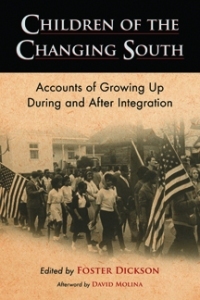 It’s hard to be believe that it has been ten years since the November 2011 release of Children of the Changing South. The anthology, which was published by McFarland & Co., collected firsthand stories about growing up during and after integration. It contains eighteen memoirs by writers who grew up all over the South from the 1950s through the 1990s.
The primary concern of Children of the Changing South is to show what so many other books, documentaries, and websites do not: what it was like trying to grow up alongside and within the turmoil during this period of change. Most children who grew up in the middle and late twentieth century had no role in any social change movement, and likewise most of their parents had no role either. Yet, no one in the South was unaffected, especially not children whose formative years were spent during that time of upheaval. I’ve read before that the long-prevailing white, male patriarchal culture left a “toxic residue” on the South, and this book asks, what about the young people who grew up in that? How were they – since I’m among them, we – affected?
While there may be stories to tell about the big names during this period in the South, the perspectives and stories of those who witnessed it and were affected by it should not go unnoticed or untold. In the collection, readers will find stories about escaping bomb threats against schools, living the struggles of women in times of change, navigating the early days of school integration, walking in Martin Luther King, Jr.’s footsteps long after he was gone, and experiencing the discomforts of learning about family history. Among the essays are Stephanie Powell Watts’ “Black Power,” which was included in Oxford American‘s 2009 race issue, and Jim Grimsley’s “Black Bitch,” which was expanded into his 2015 memoir How I Shed My Skin.
The anthology retails for $19.99 and should be available through retailers large and small.
Buy on AmazonNovember 9, 2021
Lesson Plans on “Nobody’s Home”
 Lesson plans are now being made available one at a time on Nobody’s Home. By the end of 2021, secondary English Language Arts and/or Social Studies lessons will be available for every essay in the anthology. The curricular offerings will utilize anchor standards from Common Core, since most Southern states have adopted some form of these standards. They will be linked at the end of their corresponding essays, at the bottom of the webpage with the author bio.
November 4, 2021
Watching: “My Name is Pauli Murray” (2021)
Seemingly from out of nowhere, the documentary My Name is Pauli Murray was suddenly everywhere. I had seen the film among Amazon Prime’s myriad choices, but since I’d never heard of Murray, I would scroll past. But the ads and articles and reviews kept coming, and the media giant’s heavy-rotation tactics wore me down. Seeing it come up again and again, I decided to watch— and I’m glad I did.
Pauli Murray was clearly an extraordinary person, brilliant and determined. Born in 1910, Murray was orphaned at a young age and rode freight trains during the Depression, then later attended Harvard Law School, corresponded with Eleanor Roosevelt, taught at Brandeis, and became an Episcopal minister. This activist, writer, lawyer, and priest sought the freedom and justice proclaimed in America’s ideals, while struggling to live through mid-twentieth century as a nonbinary person of color.
My Name is Pauli Murray reminds us to look beyond the often-discussed to lesser-known people whose contributions to our collective understanding of diversity and freedom are underestimated, underappreciated, or both. This film made me think of Bayard Rustin, and to a lesser extent of Allen Ginsberg, whose mid-century efforts for equality, fairness, and social justice are often overshadowed by the celebrated victories of movements that came later. While some brave independent activists have taken their proper places in the overall narrative, others, like Pauli Murray, seem to have remained on the periphery. Hopefully, this documentary will help to establish the recognition that Murray deserves.
October 26, 2021
A Quick Tribute to Hy Pyke, Gone Fifteen Years Now
I first saw as the weird and shifty Mayor Daley in Dolemite. Unlike the latecomers who discovered this blaxploitation classic via Eddie Murphy, my friends and I somehow obtained VHS copies of Rudy Ray Moore’s Dolemite, The Human Tornado, and Petey Wheatstraw: The Devil’s Son-in-Law back in the early ’90s, passing them around and repeating their oddball dialogue. Though the role was a minor one, Hy Pyke’s mayor was a seminal aspect of Dolemite. Here was this weird, little bald man with sideburns and a mustache trying to orchestrate our streetwise hero’s defeat from a mid-day cocktail party in the hills.
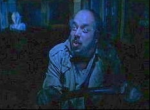 The next time I noticed Hy Pyke was in Lemora: Child of the Supernatural. This bizarre horror movie was released around the same time at Dolemite, though I saw it much later. Once again, the actor’s role was minor. He played the spooky bus driver who picks up the main character, but then he gets attacked by the creepy creatures running around in the woods. As the scene was playing, I kept thinking, I know that actor . . . then hit me— he was Mayor Daley!
If you knew Pyke as Taffey Lewis from 1982’s Blade Runner, you wouldn’t make those connections. He looks totally different, much more conventional, and until I read his filmography, I had no idea he was even in that movie. He’s clean cut and older, and basically kind of normal looking. His other film credits include an appearance in one of Ray Manzarek’s student films, as well as roles in The First Nudie Musical, in a Spanish adult-film adaptation of Don Quixote, in the 1978 horror-sci Spawn of the Slithis, and in two kitschy ’80s horror films Vamp and Hack-o-Lantern. IMDb describes him as a character actor, and I think that’s a fair assessment.
Hy Pyke died fifteen years today, in 2006. Though I can only name one film he was in that was actually good – Blade Runner – it was his presence and his style in other films that made me remember him. Born in 1935, he was the son of vaudeville performers and came along in his mid-30s at a time when wacky was hip. A guy like this wouldn’t even make it near the studio’s front desk today, but in a time before homogeneity and commercialism ruled the film industry, his uniqueness had a place, albeit minor. Who else could have driven that bus that Lemora got on? Nobody.
October 20, 2021
Southern Movie 56: “Poor Pretty Eddie” (1975)
The first time I watched the 1975 film Poor Pretty Eddie, I kept thinking, “What the hell . . . is this . . . ?” I would say that the story centers on an African-American singer who is travelling alone in the South then gets stranded with car trouble, but it’s really more about the backwoods freak show that she encounters while trying to get her car fixed. The film’s title character is a deranged Elvis wannabe with an aging sugar momma. They live in an array of isolated vacation cabins in the Deep South, while a handful of assorted weirdos play supporting roles. Not exactly the place for an attractive black lady in the mid-’70s, but that’s what we’ve got here. Some call this Southern gothic, others a horror movie, still others say it’s blaxploitation, which could be why it came out under the alternate titles Heartbreak Motel, Redneck County Rape, and Black Vengeance. (To be frank, the title Poor Pretty Eddie does not sum up or even describe this movie.)
Poor Pretty Eddie begins with a focus on Liz Weatherly (Leslie Uggams), who is exhausted from her busy career as a famous singer. We first see her singing the national anthem at a football game, but we find out through a voiceover that she wants to get away and rest. Liz hits the road in a big, fancy car, but breaks down in an isolated part of the Deep South. Seeking help, she wanders, bag in hand, down a heavily forested dirt road and finds a dilapidated lodge. It appears to be autumn, the whole place is unkempt, and old cars in various states of disrepair litter the large yard. If that wasn’t scary enough for her, the first thing she encounters, when she swings open a barn door, is the large and frightening Kino chopping the head off a chicken. His scowling face has a scar down one side, and he asks gruffly what she wants. Frightened but with no choice but to be in this place, Liz Weatherly tells him that her car has broken down.
So, Kino takes her into the barroom, where Eddie Collins (Michael Christian) is sipping on a Budweiser and twitching to the old-time country music coming from the jukebox. Collins may not be handsome, but he clearly thinks that he is. His hair helmet, sideburns, hairy chest, white tank undershirt, and blue jeans all scream redneck Casanova, and his abusive treatment of Kino in front of Liz screams alpha male. Once Eddie is through ordering Kino around, telling him to tow her car to their place, he flashes his winning smile at Liz, who is not having it. She asks for a room, and he hands her a clipboard to give her name, which he recognizes immediately. Then, Eddie begins to lay it on thick. But Liz is still not hearing it. She just wants to go to her room. Eddie tells her that he’ll give her cabin six, which has air conditioning. So far, things are a little creepy but not toooooooo bad.
Poor Pretty Eddie gets really creepy in the next two scenes. First, we meet Bertha (Shelly Winters), who we discern from the pictures on her wall, her style of dress, and the decor in her room is an aging chorus girl or possibly minor movie star from the days of old Hollywood. She wanders around in a negligee and feather boa, drinking vodka, and playing an old record on a Victrola. Bertha seems fine in her little world until she sees out the window that Eddie is escorting Liz to a cabin. Realizing that there is another woman on site, she begins to make herself up.
Once they’re in the cabin, it is clear what Eddie is up to. He sheepishly apologizes for the mess, telling Liz that he sometimes crashes in the room when he’s working his music. On the walls are an array of nude pin-ups, one of which he snatches down with a playful grin. Liz is not amused, but Eddie keeps on trying to seduce her. Ultimately, she gives him some cash and half-pushes him out of the room. Eddie insists that he should clean up the room some more, but all Liz wants is privacy.
Back in the barroom, Eddie is surprised by Bertha, who has gotten all gussied up. Eddie plays dumb, but Bertha demands to know about the woman and why she is there. Eddie tries to appease her, saying that Liz will be gone by nightfall, which he knows isn’t true. She berates him for putting Liz in her cabin, then accuses him of having a wandering eye. Eddie then reassures her, kissing her neck and snuggling with her, a grotesque scene to be sure.
Then, Kino returns with Liz’s car – what looks to be a Rolls Royce or a Bentley – and Eddie is immediately impressed. He tells Bertha that they need a car like that. As the ugly but calm giant Kino unhooks the car from the tow chain, Eddie lurks around, rubbing on the fine automobile. Kino begins to put water in the radiator, which he tells Eddie and Bertha is all that’s broken, but Eddie gets angry and removes the hose after Bertha leaves. Kino sees what is happening, and when Eddie tries to strong-arm his employee, Kino replies by snatching Eddie up and putting a menacing karate chop just shy of the smaller man’s neck. We understand the men’s relationship as antagonistic. Kino leaves the scene laughing, and after he’s gone, Eddie pulls a few connections loose to ensure that the car won’t start.
Interposed with the end of this scene and continuing beyond it, we watch Liz taking photographs around the place. Her camera focuses on the dense forest, rusting trucks, and murky water. Meanwhile, the tension between Eddie and Bertha rachets up when Bertha finds Eddie putting on his best sparkly Elvis jumpsuit. He claims that he’ll finish fixing the car after supper, but Bertha doesn’t see him doing that in his performing outfit.
Enter the sheriff (Slim Pickens) and his mentally challenged son. Pickens brings his aw-shucks demeanors and toothy grin to this portrayal too, and we quickly realize his grown son is a little off because he is wearing a belt on his overalls and is shooting random things with a slingshot. Of course, the father gives his son a kick in the seat of the pants as a “Cut it out!” Bertha comes out to welcome the father and son, and she invites them to come to dinner. The sheriff wonders out loud why Eddie is dressed up and whether Bertha bought him the white car nearby. Bertha is wandering off and twists an ankle in her high-heeled shoe. Maybe we’re supposed to laugh at all this, I don’t know.
At the dinner table in the barroom, they are all gathered: Kino in a coat and tie, Eddie in his sparkly suit, Bertha dolled up. Liz looks confused and dismayed. The sheriff tries to make conversation with Liz in his overstated country way, then insists that their famous guest should hear Eddie sing. She obviously wouldn’t care to, but everyone except Kino insists. Out loud, the sheriff tells her that Eddie is a favorite at the local VFW then whispers that he can’t sing any better than he can fix cars. Meanwhile, Eddie has gotten his guitar, and while he introduces himself with a monologue more appropriate to an actual concert, he drops the guitar on the floor. We can tell that this is going to be bad. Eddie does his best Elvis, which is probably as good as the average impersonator, and everyone grins their approval except Liz, who is being hit on by the sheriff. He is offering to get her out of there by taking her home with him. But outside, he eggs Eddie on, saying that Liz was making eyes at him while he was singing . . .
When dinner is over, the group leaves Kino to clean up and goes outside. Eddie pursues Liz in the dark, offering her a nighttime ride in the Jeep to see the scenery. She declines, and soon Bertha is hollering after Eddie. The older woman finds them by the car and gets belligerent with Eddie. He blows her off, saying she is drunk. This situation, though, belies Eddie’s true intentions.
Next we see, Liz is coming downstairs in her cabin, wearing her nightclothes, and Eddie is sitting shirtless on her bed. He tries and fails to seduce her once again. It is when she knees him in the balls that he snaps and proceeds to attack then rape her. This three or four minutes of the movie is very bizarre. While the violence between Eddie and Liz is occurring at night, the film cuts back and forth to another daytime scene where a truckload of people have brought a dog to mate with Kino’s dog. Kino throws the dog into the pen, and we simultaneously watch Liz get raped and the two dogs mate, while a folksy country song (sung by a woman) plays. During the rape scene, no nudity shown but it is slow-motion, violent, and disturbing. What makes it more so is that there are also brief visuals of men on the fence watching the dog-mating scene.
Once that part is over, the next scene has Bertha rebutting Liz’s accusations of rape, while Eddie is nowhere to be found. Bertha is not interested in facts or morals, but only in whether Eddie remains there with her. Liz angrily relays that she doesn’t care about Bertha or Eddie, and asks for the older woman’s help. It isn’t coming.
In the light of day, then, Eddie is taking Liz on that sightseeing trip. He puts Liz in the Jeep and drives to a dam, where he has her taking promo-style pictures of him in his Elvis jumpsuit and with his guitar. Their faces show that, to him, it is a date and, to her, it is a nightmare. Liz Weatherly is in survival mode, while Eddie Collins is living out his fantasy. At the end of the scene, this culminates in Liz imagining that she is shooting him not with a camera but with a gun, leaving his bloody body on an old dead tree trunk.
What follows is a few quick-succession scenes of Bertha making Eddie angry with her accusations against him, some slow-motion imagery of someone with a shotgun shooting a bird out of the sky, then Liz eyeing a station wagon, presumably as a possibility for escape.
Inside the barroom, we see who is driving the station wagon. A surly and probably drunk white man (with ridiculously messy hair) is eating a plate of food and gulping down beer while talking to Bertha. Liz comes into the barroom where they are and tries to talk Bertha into getting her out of there. She concedes that Bertha wants Eddie and that helping her leave is the way to have him. But Bertha does her dirty. She puts Liz in the car with the man, who seems to be a traveling salesman perhaps, and he drives her to a secluded spot to sexually abuse her as well. The problem for him is that Eddie has hidden in the back seat. Eddie discovers them in the act, and though we don’t see what happens to the man, we do see him whip Liz with a belt.
Here is where the story begins to shift. Back at the home place, Bertha and Kino are cleaning up when Eddie comes back. Bertha has been talking to Kino about selling the place and moving on, but Eddie comes in being his normal charming self. Of course, Bertha has no idea what has happened, thinking that she put Liz in the car with the old man, so now she’s gone. Outside, in the dark, Liz is tiptoeing toward the Jeep to make another escape. Kino comes out quietly and sees her while petting his dog, but does nothing to stop her. Liz makes a successful escape and is flying down a two-lane road, when a police car in the trees pulls out to follow her.
At the police station, the officer brings in Liz in cuffs, and the sheriff laughs at her presence. No need for the cuffs, he tells the officer, then asks Liz what the problem is. She wants to press charges— for assault, auto theft, kidnapping . . . and rape. This last one gets the sheriff’s hackles up. He gets a clipboard from his son, but before he begins, he asks Liz if she wants to “suck on a tomato.” She declines, so he gets one for himself and begins eating. Instead of taking down her statement, the sheriff is drawing dirty pictures and asking lascivious questions, showing himself to be both inept and perverted. Liz explains that Eddie raped her the night before and again that afternoon, but the sheriff tells her that it wasn’t too smart to hang around and let it happen again.
So, they head down to the local barroom where Eddie, Bertha, and an array of locals are assembled, drinking and listening to music. The bar is owned by the justice of the peace (Dub Taylor), who is wearing a stained t-shirt that is far too small. The sheriff speaks to him, and when Eddie comes over, they have to tell him about Liz’s charges. Of course, he denies them. So, the justice of the peace declares that they will have a trial, right then and there. Now, we see the old man’s motives and goals. The first thing he asks for is evidence, wanting Liz Weatherly to stand up on a table and take off her shirt to expose alleged bite marks on her breast. She is, of course, mortified and terrified, but the justice of the peace gets tired of waiting and rips her shirt open. Then all hell breaks loose, which the filmmakers put in slow motion, adding a Jew’s harp and an array of primal screaming for effect. This technique makes the scene all the more horrific, as we watch Liz continue to suffer amid the fighting.
What we see in that barroom remains unresolved, but after the scene changes, Eddie comes back home with Bertha and Liz, who has obviously been handed back over to her captor. The trio gets out of the car, and Kino is standing on the porch. Eddie threatens him, knowing it was he who allowed Liz to escape. Bertha remains defiant, after Eddie leaves with Liz, clearly taking her to bed with him. Bertha pleads with Kino, but he has no answers for her.
The next morning, Eddie greets them all with a smile, saying that he has fixed everyone a nice breakfast as an apology. Bertha is hungover, Kino is wary, and Liz is traumatized, but the backwoods Elvis still tries to charm them. He tells them that he caught a rabbit and made stew. They all begin to eat, Bertha telling him that it’s good, but the peace is broken when Liz finds a dog collar in her bowl! This isn’t rabbit— it’s Kino’s dog. Bertha and Liz both burst into hysterics, Eddie bursts into laughter, and while Kino is figuring it all out, Eddie hits him in the back with a big tree limb. With Kino on the floor, Eddie can run amok. To cap it all off, he throws the dog’s skin onto the table.
As Poor Pretty Eddie comes to a close, the title character’s craziness has come to a head. We see Liz have a mental breakdown, staring in the mirror. Then Eddie comes into where Bertha is sleeping to tell her that people from town are coming over for a wedding. Bertha thinks he is talking about the two of them and gets excited, but Eddie retorts angrily that she won’t be the bride. Even though he doesn’t say it, we know who will be. Yet, Liz is in no condition. When Eddie takes her the dress that he took away from Bertha, Liz is stone cold and catatonic.
The movie’s final scene is a wedding in the barroom. Some locals are there, including the sheriff and the justice of the peace. Eddie is dressed up, and an exhausted Liz appears in Bertha’s wedding dress. Waiting on the ceremony, the justice of the peace remarks to the sheriff that Yankees are just like hemorrhoids: if they come down and go back, it’s fine, but if they come down and stay down, they’re a pain in the ass! (Once again, the pair seems to function as comic relief, but at this point, it’s out of place.) Before everything can take place, Eddie has to go in the back to get something for the food service, and Kino is waiting back there. The giant attacks and tries to strangle him, but Eddie manages to grasp a large kitchen knife and stabs Kino several times. Eddie being Eddie, he changes his clothes into another sparkly jumpsuit, this one yellow, and goes out to get married to the woman he has been victimizing.
But not so fast. The end of Poor Pretty Eddie comes quickly but is done in slow motion, like the rape and the barroom brawl were. Kino comes bursting in with a pump shotgun and blasts Eddie. The sheriff returns fire, wounding first the justice of the peace then Kino. Throughout this shooting, there are sounds of animalistic wailing amid the slow-motion violence. Then, as Kino falls, the sounds change as Liz picks up the gun. A female country singer lets out a somber rendition of “Amazing Grace” as Liz finishes the job, blasting Eddie one more time before destroying a mirror to end the film.
The blog Birth. Movies. Death. wrote of Poor Pretty Eddie: “This Southern Gothic hicksploitation shocker is one of the sleaziest exploitation films ever made,” and another blogger called it a “putrid exploitation shocker that lives up to its notorious reputation.” Ultimately, it’s hard to say what genre this film is. Exploitation might the best descriptor. It has elements of the action, thriller, and horror genres, but parts of it are so bizarre as to defy classification. Other parts are so unseemly as to offend a decent person’s sensibilities. For example, to have the rape of Liz superimposed with two dogs being mated in a pen, while playing to a light folk-country song about love . . . what the hell? Also, it seems like Slim Pickens’ sheriff and Dub Taylor’s justice of the peace are supposed to provide comic relief, but in the context of what is happening, these two sick portrayals aren’t funny at all. Other aspects are so random as to be inane additions to the cruelty, like the drunk traveling salesman who Bertha tries to give Liz to.
As a document of the South, 1975’s Poor Pretty Eddie plays on the same fears we see in more exaggerated form in 1964’s Two Thousand Maniacs and in 1973’s The Texas Chainsaw Massacre and The Hills Have Eyes— the idea that, when civilized people leave the cities and go out into the sparsely populated countryside, there will be amoral and ruthlessly sadistic people committing gross atrocities because they can. In Two Thousand Maniacs, the small-town murderers do have a reason – to avenge the South’s loss in the Civil War – but in the two 1973 films, there is no reason, just insanity. In Poor Pretty Eddie, which was filmed in Georgia, there’s a mix of the two. Eddie does have a goal – to be a country singer – but he seems to believe that raping and imprisoning a famous singer will help to get him there. Bertha wants to keep Eddie to herself, but does nothing about Eddie’s obvious crimes. The buffoonish sheriff and the incompetent justice of the peace claim to work for law and order, but then indulge their starvation for sex and their desire to abuse a helpless black woman. The businessman in the station wagon is nothing but a predator. The scarred and twisted Kino, it seems, could have been the one decent person among them; however, he ignores or tolerates what is done to Liz Weatherly and is only incited to action when Eddie kills his beloved dog. The story, its characters, and their actions tell us that post-Civil Rights whites in the South are demented in every way. (Don’t fail to notice the Confederate flag in the barroom during Liz’s “trial.”) The trope used here, which resembles Erskine Caldwell’s paradigm in some ways, builds upon the Civil Rights-era stereotype of white Southerners as not only uncivilized and backwards, but also rabidly violent, insane with racism, and obsessed with sex.
On the other hand, Poor Pretty Eddie delves into a seldom-discussed subject: the sexual abuse of black women by white men in the South. Where Liz Weatherly is an outsider, not a local, her isolation is still used against her. Eddie’s role is clear and cruel. Bertha is an example of a white woman who turns a blind eye to what her white man is doing to a black woman, even going so far as to regard the black woman as the problem. Kino represents the apathetic on-looker, who doesn’t participate in the abuse but who does condone it by being aware but passive. Finally, the sheriff and the justice of the peace represent the South’s law enforcement and legal system, both of which have been populated with abusers. Once Liz Weatherly has been abused and assaulted in every way imaginable and by everyone possible, she is left with one option to save herself: violence. Right after she kills her abuser, we get “The End,” and no aftermath is shown. Realistically, Liz Weatherly would be put in the hands of the same “legal system” that we saw in that crowded barroom.
October 14, 2021
From Judas Priest to the Dalai Lama
One bored Sunday night recently, I was browsing the “Cult Classics” section of the Tubi streaming app and came across this short film I’d never seen or heard of: Heavy Metal Parking Lot. Now, in my late 40s, I’ve been interested in the obscure, the off-beat, and the otherwise odd for most of my life, so I’m always pleased to make new discoveries. This one I should have seen a long time ago: a fifteen-minute, homemade documentary about the parking lot outside a Judas Priest concert in Maryland in 1986. Back in the day, these were my people.
As I watched, I thought about my teenage self in the late 1980s and early ’90s and remembered being full of energy, anger, and frustration like the guys in the movie. Nothing around me seemed right or fair or even desirable. It seems sad to me to think about now, but I had no role models. There was no one – no grown man – who I looked up to, who I wanted to emulate, about whom I thought, I wanna be like that guy. In Generation-X Alabama, that was an empty and stifling feeling. My own father was anti-social, often confusing, and overly concerned with obedience, and most of the other dads I knew reminded me of Roy Turner in The Bad News Bears. The only men at school were the coaches (nope!) and the principal (oh hell no!). My family wasn’t close so I didn’t have uncles around, and both of my grandfathers died before I was born. Though I didn’t understand this at the time, I turned to music, TV, and movies for the images I wanted to find. (Of course, there were men who wrote books and who were portrayed in books, but I wasn’t there yet and certainly didn’t know anything about the counterculture writers I would discover later.)
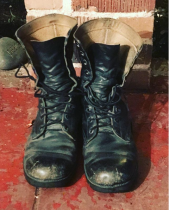 For an MTV-generation kid, many of those images came from hyper-masculine, uber-angsty heavy metal. Coming from a working-class Southern family, the emphasis on toughness was there, but for kids like me who weren’t athletic or outdoorsy, this hardened image was an alternative. The bands, songs, and imagery told me, You may not be Andrew Clark, but you could still be John Bender. The music was driven by loud and abrasive electric guitars. The look was in-your-face, dirty, and unkempt. The attitude was sneering, rebellious, and defiant. The lyrics reminded us that no one liked us, no one wanted us, and everything – every adult, every institution, every rule – was bogus, self-serving, and designed for conformity. Sometimes, as an adult, I’ve looked back at these bands and wondered why in the world I ever liked their ridiculous clothes and hair, their screechy voices, their often-mediocre songwriting. But, when I’m honest, I do know: they presented an alternative to what I saw around me, which led the authority figures in my life to be as dismayed and frustrated with me as I was with them. It may not have been justice, but it felt pretty good to an immature teenager as retribution.
So, when I watched Heavy Metal Parking Lot and saw those mostly shirtless teenage boys, I recognized them. Because I knew them. I understood why, in 1986, they were smoking and holding their beers high and screaming into a microphone that Judas Priest and their opening act Dokken were the best things ever. To a bunch of scraggly boys (and the few girls) who had piled into somebody’s scraggly car and spent their last few bucks on some beer and cigarettes, it felt good to pull into that parking lot and see all those folks who were just like them. It felt good to be away from the parents and teachers who said things like “Cut your hair!” and “Why do you act like that?” I know, because in 1989, I went to our local coliseum to see Cinderella and White Lion – two terribly mediocre hair metal bands – and had those feelings. The heavy metal of the 1980s was of questionable artistic merit, but for some people, it fueled something that begged to be fueled: a sense that you weren’t alone in refusing the conventional life that was being emphasized.
Looking back, though, this alternative – heavy metal and its musical cousins – didn’t offer us solutions, just more gasoline for the fires that were already burning. The messages and the mentality were not about finding something better, but about staying as disgruntled as possible. I think about hearing Metallica’s “Fade to Black” or Danzig’s “Mother” and how devoid of hope and full of violence it all was. I also think about the imagery on the album covers, t-shirts, magazines, and posters: dead bodies and skeletons, Nordic gods, fire, all on a black background. I can remember parents or teachers making me or some friend get a hair cut, stop wearing a favorite article of clothing, or throw away a favorite cassette, and all that did was made us more resentful. The hair, the clothes, and the music weren’t the disease, they were the symptoms. The disease was alienation, which led to feeling disaffected and hopeless. The lifestyle choices were just the part that people could see.
I’m not turning into one of those PMRC types in my old age, but I do recognize now what the damage was. When a teenage boy is confused about life and sees very little reason for hope, he doesn’t need recurring messages like the ones in heavy metal. Where there was comfort in the community of it – knowing that I feel this way, but I’m not alone, so I must not be wrong – there was also a self-perpetuating aspect to it. Finding solidarity through heavy metal told us that we had a right to feel that way, but that led too many listeners to the wrongheaded notion that it was good to feel that way. It wasn’t.
What prompted me to think about all this was a tweet from the Dalai Lama’s account the morning after I watched Heavy Metal Parking Lot:
We all have a responsibility to educate our human brothers and sisters. Inner values are the ultimate source of happiness, not money and weapons, whether you’re talking about individuals or the whole of humanity.
— Dalai Lama (@DalaiLama) September 6, 2021
If I had seen this as a 1980s teenager, I would have equated the word “responsibility” with parents and taken the word “educate” to mean school, and he’d have lost me before I even saw the word “happiness,” which I’d have scoffed at anyway. Today, I’m sharing it because I know that “responsibility” means the ability to be responsive, and because I know that education happens in more settings than school, and because he’s right about happiness coming from affirming what we value, not from obsessing on what we reject. That’s the exact opposite of the hopelessness, hate, and violence that heavy metal offered me and other young men in the 1970s and ’80s.
The 1980s may be long gone, and hair metal may have been relegated to the joke book of modern history, but what we see in Heavy Metal Parking Lot is still around. The “we” in the Dalai Lama’s message means that all of us can do something to help somebody who needs it, and what I’m adding is: showing them a better way does not necessarily mean offering them more ways to conform, obey, or fit in.
People who are overcome by alienation have considered those traditional options already and have found them unsuitable. (That can be hard for people who find traditional options suitable, or even enjoyable, to understand or accept, but it’s a fact.) What experience tells me is that “we” can look past typical options, like sports and clubs and churches, and find out what disaffected young people might be looking for. Platitudes about staying in school, finding your place, praying about it, and getting a job weren’t ever going to work on a young guy who has ended up shirtless, drunk, and cursing in a concert parking lot. Asking him what he truly wants, what he’s looking for but can’t find, then listening respectfully to his answer . . . that actually might.
October 5, 2021
A Southern Movie Bonus: The 2021 Spooky, Scary Southern Sampler
In October, everybody likes horror movies. Even people who don’t like horror movies. All of the movies listed below are set in the South, are available on streaming services, and can satisfy a Halloween-time craving for the spooky and the scary. Since people have different tastes and preferences, the sampler offers some old movies and some newer ones.
Son of Dracula (1943)When a beautiful Southern belle with an interest in the occult invites an Eastern European count to visit her at the family estate Dark Oaks, nothing good can happen. That’s even truer when a film stars Lon Chaney.
Night of the Hunter (1955)Some people might disagree about this being a horror movie, but to me, it is. Robert Mitchum is famous for his portrayal of a man who chases two children all night long, with the intention of killing them. Though he claims to be a preacher, the character is really a grifter and conman who sets his sights on the children’s mother after finding out that their imprisoned father has hidden a stolen fortune. Then when he realizes that the children know where the money is, the real trouble begins.
Abby (1974)Set in Louisville, Kentucky, Abby combines horror with blaxploitation. This was the mid-’70s, and blaxploitation films were never known for stellar acting, though this film is interesting for other reasons. William Marshall (who played Blacula) appears not in the lead role this time, but as the main character’s father, an anthropologist who has unleashed the demon that possesses his daughter. Abby goes from being a nice young woman to acting like a total freak, and of course, they’ve got to deal with it. Abby came out the year after The Exorcist and packs less of a punch, but it’s still pretty creepy.
Poor Pretty Eddie (1975)Like Night of the Hunter, some people might not say this is a horror movie . . . but it is. The story centers on an African-American jazz singer who is travelling alone in the South then gets stranded with car trouble, but it’s really more about the backwoods freak show that she encounters while trying to get her car fixed. The film’s title character is a deranged Elvis wannabe with an aging sugar momma, and they live in an array of isolated vacation cabins in the Deep South, while a handful of assorted weirdos play supporting roles. Not exactly the place for an attractive black lady in the mid-’70s, but that’s what we’ve got here. Some call this Southern gothic, others a horror movie, others still say it’s blaxploitation, which could be why it came out under the alternate titles Heartbreak Motel, Redneck County Rape, and Black Vengeance.
From a Whisper to a Scream (1987)Back in the ’80s, these Creepshow-style films were popular, the ones that collect stories within an outer frame. (HBO’s Tales from the Crypt has a similar format.) This one stars Vincent Price, who couldn’t any be less Southern. He gets hounded by a female reporter who wants the real story of a serial killer who has just been executed. Price has to relay stories from the town’s ugly past to explain what she wants to know. If you liked Stephen King movies back in the day, you’ll like this.
Lost Child (2017)This was a much better movie than I expected it to be when I turned it on. One reviewer on IMDb called it an “anti-horror movie,” and I think that’s a fair assessment. The story has female veteran coming home to the rural Southern locale where her parents had been drug addicts. She begins living in their now-abandoned house and looking for her brother, who is likely in the same situation. Then a little boy wanders out of the woods. Local legends say that he is a tatterdemalion (an evil spirit) but the child welfare advocate says that he’s just a boy who needs to be loved, so the woman has to ascertain which might be true.
September 23, 2021
The Fourth Batch of New Works in “Nobody’s Home”
Earlier this week, the fourth batch of creative nonfiction works was added to Nobody’s Home: Modern Southern Folklore. That batch completes the initial compilation of the online anthology, which has taken place during the last year. The anthology now has forty-four works by forty-one writers from all over the South, as well as twenty-three posts in the editor’s blog. Not a bad final result for a year’s work, and more is coming later in 2021: lesson plans and more blog posts. To read the published works, visit the anthology’s index.
For those writers who may still want to submit, there will be an open submissions period in the spring, and I will continue to look at submissions of reviews and interviews year-round.
Finally, here is a selection of posts from Groundwork, my editor’s blog:
September 4, 2021: Reading Ben Beard’s The South Never Plays Itself
August 31, 2021: Watching “Fertile Ground” on PBS
August 24, 2021: A Road Trip, Southbound
August 5, 2021: People are gon’ do what they’re gon’ do: COVID in the South
July 22, 2021: Reading Noel Polk’s Outside the Southern Myth
July 6, 2021: Watching Meltdown in Dixie from America ReFramed on PBS
June 29, 2021: Reading Matthew Lassiter’s The Silent Majority
June 22, 2021: Myths and Facts: LGBTQ in the South
June 3, 2021: Watching Far East Deep South from America ReFramed on PBS
May 25, 2021: Reading South to a New Place, edited by Suzanne W. Jones and Sharon Monteith
May 4, 2021: Vox Press’s new Mississippi Prison Writings anthology
April 10, 2021: More Substance than Stereotype: Southerners and Guns
March 25, 2021: Reading Myth and Southern History, Volume 2: The New South
February 23, 2021: Reading Alexander Lamis’ The Two-Party South
January 23, 2021: Reading Stephen A Smith’s Myth, Media, and the Southern Mind
December 19, 2020: Reading Jack Temple Kirby’s The Countercultural South
December 8, 2020: The Looming Specter of the Dormant Voter
November 24, 2020: Reading Charles Reagan Wilson’s Judgment & Grace in Dixie
November 12, 2020: Work
November 3, 2020: Reagan at Neshoba, August 1980
October 13, 2020: Crazy, Wrong Madness
September 29, 2020: A Personal Religion that Goes Public
September 17, 2020: Narratives, Old and New
September 14, 2021
The Great Watchlist Purge of 2021: As Done as Done is Gonna Get
After eight months, I’m calling it quits on the Great Watchlist Purge of 2021. As I’ve tried to wheedle down the watchlist, watching some movies and giving up on others has left only a handful films in the list, which started with seventy-two. By July, I was down to thirty-seven films total, a number that included ten I had added during the purge but had not yet watched. A few of these remaining films are in my Netflix DVD cue, some are available to rent or buy on at least one streaming service, but a few still seem pretty elusive.
Of those original seventy-two, I cut twenty-one films from the list without watching them. Most of those because I couldn’t seem to find them. Among those, some are foreign, and I couldn’t seem to find a version with subtitles. A small number have gone into the No column after I watched some of it and turned it off, and only one or two have I given up on before even starting them. I did that with Brian DePalma’s Greetings after watching Hi Mom! from the same period, and also with The Night They Robbed Big Bertha’s, which I only has 2.4 stars in IMDb. Why put myself through it?
Earlier this year, I wrote up two progress reports: one in April and one in July. This time, during the two months between between mid-July and mid-September, I watched eleven more movies from the list: two from the 1960s, three from the 1970s, three from the 1980s, two from the 2000s, and one from the 2010s. They span a pretty broad cross-section of subjects, styles, and places.
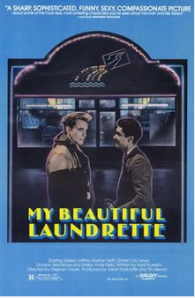 My Beautiful Laundrette (1985)
I hadn’t realized when I put this film in the watchlist that the story was written by Haneif Kureshi. I like his novel The Buddha of Suburbia – even taught it for a few years in my senior English class – so my viewing of this was somewhat informed by that novel. Though the story was solid, I could see the end coming. I was also a bit disappointed in the acting. But as a quirky 1980s underground film, it stands up to films of its day like Suburbia.
American Splendor (2003)
Good movie— dark but good. I’m not a comic book guy, so I’d never heard of Harvey Pekar (though I am familiar with R. Crumb, who was also a character in the movie). Pekar reminded me of Bukowski, but not quite as belligerent. Giamatti did well to portray the main character, and he had a lot to live up to, since the man he was playing was also shown in alternate scenes. All in all, I think my favorite part was listening to Pekar’s wife say that Revenge of the Nerds was, for her, like the “I Have a Dream” speech.
Frances Ferguson (2019)
I kind of feel bad that I didn’t finish this movie, but I just couldn’t. It’s a dark comedy about a young female teacher who has gotten in trouble for having sex with a student, but it was so steeped in that Millennial ironic humor that I could only tolerate about an hour of it. The generations behind mine seem to think stupid, pointless shit that’s devoid of substance or personality is funny, but it’s not. In this movie, the main character wasn’t even remotely likable, the other characters were equally uninteresting, and it was done in that dry Napoleon Dynamite style but with a voiceover narrator. At least in Napoleon Dynamite the characters were quirky. In Frances Ferguson, there was nothing for the story stand on. I’m getting irritable just writing my comments about it. I hope I forget that this movie was ever made.
Alone in the Dark (1982)
A good ol’ 1980s horror movie about escapees from an insane asylum. Despite having a solid cast – Donald Pleasance, Jack Palance, Martin Landau, Dwight Schultz – this movie was as hokey as I hoped it would be. In this one, Donald Pleasance is not the stone-faced doomsayer of Halloween but a wacky, hippie-dippy psychologist who relies too much on hugs and compassion. So, of course, he dies. And Dwight Schultz is not the kooky Murdock from The A Team, but the straight man in a weird situation. All in all, they basically go through the motions in a forgettable way.
Pierrot le Fou (1965)
When I started watching this, I realized that I had started this movie previously but hadn’t watched more than about thirty or forty-five minutes of it. I recognized it up to the part when they steal the car that’s up on the lift at the gas station. Overall, I didn’t care for this movie. I had wanted to see it after liking Godard’s Contempt (with Brigitte Bardot), which was beautiful and heartbreaking. I saw the same style, etc. here but didn’t like it as much: more experimental, more disjointed, with a less-direct storyline that started out like John Updike’s Rabbit Run then turned into a love story amid international intrigue. I think I was supposed to sympathize with Pierrot/Ferdinand, but he was so aloof that it was hard to feel anything for him.
Smokey and the Good Times Outlaws (1978)
Even though this movie was corny and low budget, it is also a great example of mid- to late 1970s Southern kitsch, that goofy comedy sub-genre that spawned Smokey and the Bandit and The Dukes of Hazzard. I had this in the original list with The Night They Robbed Big Bertha’s, which I cut because it looked irredeemably bad, but I watched this one. It was just a simple, feel-good, and predictable cash-in on the kinds of working-class, usually Southern movies that were being made at the time.
The Spider Labyrinth (1988)
One of the reviewers under another film mentioned this Italian horror/thriller in his review of that one. He had high praise for it, and it was pretty good. The acting wasn’t stellar, but it beat 1989’s Black Cat by a long shot. The story was a little bit formulaic, with some Indiana Jones scholar-adventurer elements, some outsider-discovers-a-hidden-secret. The influence of Suspiria was also detectable. The crescendo that resolved the conflict was really creepy.
House (1977)
This was one of the most fucked up movies I’ve ever seen. It began like one of those 1970s after-school specials that used to come on TV (but Japanese, not American), silly and naive almost to the point of ridiculous. Then, about a third of the way, it began to depart from kitschy and got weird in subtle ways. And it rode that slow train down the path to ultra-weird for the remaining hour. I don’t know what this director was thinking, whether the movie was intentionally shot this way or if it was just low budget, or what. By the end, the cat’s portrait was a blood-spewing monster, the girls’ teacher had turned into a pile of bananas in a dune buggy, and the future stepmom came to be victimized by the girl who left to visit her aunt. Yes, that doesn’t make sense— watch it for yourself.
Don’t Look Now (1973)
This movie came up as a suggestion after I rated the movie Deep Red. I like suspenseful movies, and I like ’70s movies, and I like Donald Sutherland, so I put it in the list. Before I watched it, I kept seeing it mentioned on social media, by accounts like Seventies Film on Twitter, then I found it in Netflix’s DVD option . . . But the movie was terrible. I even started watching it once, quit after about forty-five minutes, then started it completely over a few days later and tried again. I don’t know what some people see in this movie. The cinematography was wonky, neither lead actor delivered a strong performance, and the story wandered around in space.
In Bruges (2008)
I found this Colin Farrell action story about a hitman, when I was reading something that said it was a great film, and then also came across 1978’s Bruges Le-Morte in a search when I typed ‘Bruges’ in the search bar to find the first movie. I watched that earlier film earlier in the year, then this one. And this one was awesome! It was quirky and funny and suspenseful and had a great story that tied all these disparate characters together at the end. This film was my sleeper. I didn’t think I was going to like it, then I really did.
The Devil Rides Out (1968)
Though I like old horror movies, I’m normally not a Christopher Lee fan because his movies are so freakin’ cheesy! This movie was supposed to be better than most of his churned-out vampire movies. In this one, he’s the hero, not the vampire, and he and an old buddy are trying to save the son of an old friend from becoming a satanist. They just show up at his house in the countryside while he’s having a party, and they realize that it’s a coven planning a dark baptism. Sure, okay . . . But it’s classic Christopher Lee: good versus evil, unrealistic fight scenes, classic Hollywood music, all the things.
As it has gone along, it has been necessary once again to cut some of the movies from the list. Here are the ones that I’ve cut since July:
Widespread Panic: Live from the Georgia Theatre (1991) and The Earth Will Swallow You (2002)
How has a guy who loves Widespread Panic never seen either of these early concert films in their entirety? Ridiculous. Sort of. One is mainly available as a bonus DVD in a live album CD set, and the other is available in bits and pieces all over the internet. While I didn’t get to watch either of these straight through, I still got to see clips. It does seem odd that, with all of the emphasis on sharing in the jam-band subculture, no one has shared these films in their entirety.
 The Girl Behind the White Picket Fence (2013)
I found this movie in a search for Udo Kier, who I’ve liked since seeing Andy Warhol’s Frankenstein and Dracula when I was in high school. The cinematic style of this one looks pretty cool, as does the story. The problem is: the only way I can find it to watch is to buy a DVD from the production company for 30 euros. It’s not that I’m cheap but it’s a short film, and I don’t know that it’s any good.
Francesco (2002)
This movie caught my attention, because I’m interested in Saint Francis. But it’s an Italian made-for-TV movie, and consequently hard to find. It’s not like this is the only place I can see an interpretation or adaptation of the saint’s life, so I’m scrapping this one.
A Tree. A Rock. A Cloud (2017)
I love Carson McCullers, and films of her stories are rare. There’s The Heart is a Lonely Hunter from 1968 but that’s about it. I was surprised to see this film, which is a short that’s only thirty minutes long, but I can’t find any way to watch it. It was produced by Karen Allen, who played Indiana Jones’ love interest Marion in the first movie, that’s just a bit of trivia. Anyway, there’s no way to buy a DVD on the website, so I even emailed the contact address to ask how to get a copy but got no response.
The Panic in Needle Park (1971) and Dusty and Sweets McGee (1971)
These are from the early ’70s and are about hardcore drug users. I don’t have a complicated explanation of why I cut them. I had them in the list with Born to Win, but was never very interested in them.
What the Peeper Saw (1972)
This Italian suspense-horror film is one from the creepy child sub-genre, like The Bad Seed. So far, it has been unusually hard to find.
With that, I’m declaring the purge completed for now. I had considered trying to clean out the entire list by watching all of the movies, but with school starting and other writing work to do, eight months will be enough. After all of the watches and cuts, here are the ones still in that original list. These movies will stay, in the hopes that I come across them someday.
Ravagers (1979)
Though I don’t know much about this movie, it sounds odd, but what caught my attention was that it was filmed in Alabama. There’s another film called The Ravagers from 1965, but this is not related to that one.
Haiku Tunnel (2001)
This movie (and Mountain Cry) came up when I searched the term ‘haiku.’ It is an early 2000s indie comedy about doing temp work in an office. I remember it being one of the last GenX zeitgeist films, but coming out a bit too late. By the early 2000s, the very youngest Xers were in college and getting into the working world.
The Adventures of Prince Achmed (1929)
I had never heard of this animated movie before seeing a reference to it on Twitter from an account that was disputing Fantasia‘s designation as the first full-length animated feature film. The clip attached to the tweet was interesting, and I want to see the whole film.
The River Rat (1984)
I found this film when I was trying to figure out what Martha Plimpton had been in. I tend to think of Plimpton as the nerdy friend she played in Goonies, but this one, which is set in Louisiana and has Tommy Lee Jones playing her dad, puts her in a different role.
The Mephisto Waltz (1971)
I’ve read about this movie but never seen it. I must say, the title is great, and it doesn’t hurt that Jacqueline Bisset is beautiful.
Four Flies on Grey Velvet (1971)
This horror film came up alongside Deep Red, which I watched not long ago, after I rated two recent horror films: the disturbing Hagazussa and the less-heavy but still creepy Make-Out with Violence. Deep Red was good, so I want to watch this one, too.
Born in Flames (1983)
This movie looks cool but is obscure. It’s an early ’80s dystopian film about life after a massive revolution. But it is almost impossible to find. I was surprised to see a story on NPR about it recently, so maybe it will show up.
Personal Problems (1980)
This one is also pretty obscure – complicated African-American lives in the early ’80s – and came up as a suggestion since I liked Ganja and Hess. The description says “partly improvised,” which means that the characters probably ramble a bit.
Little Fauss and Big Halsey (1970)
Paul Newman movies from the late ’60s and early ’70s are among my all-time favorites. This one came out about the same time as Sometimes A Great Notion. Despite having seen Cool Hand Luke, Hud, Cat on a Hot Tin Roof, and Long, Hot Summer numerous times each, I’d never heard of this movie until a few years ago.
All the Right Noises (1970)
I found this story about a married theater manager who has an affair with a younger woman, when I looked up what movies Olivia Hussey had been in other than Zeffirelli’s Romeo and Juliet. It looks a little like Fatal Attraction, like the relationship goes well until it doesn’t.
All the Colors of the Dark (1972)
I saw this movie in the mid-1980s when USA Network used to have a program called Saturday Nightmares, which featured an obscure horror movie followed by two half-hour shows like Ray Bradbury Theater or The Twilight Zone. That weird old program turned me on 1960s and ’70s European horror movies, like this is one, Vampire Circus, and The Devil’s Nightmare. I haven’t seen this movie in a long time and would like to rewatch it. However, the full movie was virtually impossible to find. One streaming service had it but said it was not available in my area.
These films were added between January and April and are staying in the watchlist as well.
Deadlock (1970)
This Western came up as a suggestion at the same time as Zachariah. It’s a German Western, so we’ll see . . . Generally, it has been hard to find, with only the trailer appearing on most sites.
The Blood of a Poet (1930)
Jean Cocteau’s bohemian classic. I remember reading about this film in books that discussed Paris in the early twentieth century, but I never made any effort to watch it. I’m not as interested in European bohemians as I once was, but if the film is good, it won’t matter.
Landscape in the Mist (1988)
This Greek film about two orphans won high praise. I haven’t tried to find a subtitled version yet, it may be out of reach.
Phantom of the Paradise (1974)
I can’t tell what to make of this movie: Phantom of the Opera but with rock n roll in the mid-’70s?
The Hunger (1983)
I’d seen this movie before but thought I’d watch it again— a vampire movie with David Bowie, Catherine Deneuve (from Belle Du Jour), and Susan Sarandon (from Rocky Horror Picture Show).
Blood from the Mummy’s Tomb (1971)
As I’ve already shared, I just like ’70s horror movies. We’ll see if this one is any good.
White Star (1983)
This biopic has Dennis Hopper playing Westbrook. I couldn’t not add it to the list!
Finally, these last films were added between April and July and are still in the watchlist. Both are in my Netflix DVD queue, so I’ll probably watch them before the end of the year.
The Strange Color of Your Body’s Tears (2013)
This French thriller, which came up as a suggestion from All the Colors of the Dark, caught my eye with the wonderful artwork on its cover image. The title is also compelling, and those two factors led me to see what it was. It didn’t hurt that the description contained the phrase “surreal kaleidoscope.”
A Girl Walks Home Alone at Night (2014)
This film came to my attention on one of the movie-related accounts that I follow on Twitter. Once I looked on IMDb to see what it is, the first “You Might Also Like” was Let the Right One In, which is a beautifully made vampire movie. Like Lillith’s Awakening, this film is also in black-and-white.
If you’re a list person, here’s how the Great Watchlist Purge of 2021 went down.
WatchedPersona (1966)Francesco (1989)Born to Win (1971)Bruges-Le-Morte (1978)So, Is the Man Who is Tall Happy? (2013)Hi, Mom! (1970)The Borrower (1991)Quiet Days in Clichy (1970)Fantastic Planet (1973)The Baby (1973)Under Milk Wood (1971)Heavy Traffic (1973)Six Pack (1982)The Sky is Gray (1980)The Black Cat (1989)The Effects of Gamma Rays on Man in the Moon Marigolds (1970)Boxcar Bertha (1972)Tucker and Dale vs. Evil (2010)Pink Motel (1982)The Rebel Rousers (1970)Ride in the Whirlwind (1968)Psych Out (1968)Mood Indigo (2013)Lucky (2017)Big Sur (2013)Factotum (2005)The Strange Vice of Mrs. Wardh (1971)Three Billboards Outside Ebbing, Minnesota (2017)Belladonna of Sadness (1973)The Wicker Man (1973)Paris, Texas (1984)Meridian (1990)My Beautiful Laundrette (1985)American Splendor (2003)Pierrot le Fou (1965)Smokey and the Good Time Outlaws (1978)The Spider Labyrinth (1988)House (1977)Don’t Look Now (1973)In Bruges (2008)The Devil Rides Out (1968)[end of original January list]Thomasine & Bushrod (1974)Fox Style (1973)Zachariah (1971)The Tenant (1976)Abby (1974)It’s Impossible to Learn to Plow by Reading Books (1988)The Magic Garden of Stanley Sweetheart (1970)Alone in the Dark (1982)
[added between April and July to original January list]The Unnamable (1988)Wendy and Lucy (2008)Lillith’s Awakening (2016)Frances Ferguson (2019)Cuts:Greetings (1968) – struck after watching Hi, Mom!Alabama (1985) – unable to find, foreign: PolishMondo Cane (1962) – started watching, but quitEndless Poetry (2016) – not interested anymoreMacunaima (1969) – started watching, but quitTykho Moon (1996) – unable to find, foreign: FrenchBeginner’s Luck (2001) – unable to find, English but blocked on PrimeHow Tasty Was my Little Frenchman (1971) – started watching, but quitMountain Cry (2015) – unable to find, foreign: ChineseMondo Candido (1975) – unable to find an English version, Italian onlyThe Vampires of Poverty (1978) – unable to find, foreign: BrazilLa mansion du Araucaima (1986) – unable to find, foreign: BrazilThe Night They Robbed Big Bertha’s (1975) – unable to find but looked terribleWidespread Panic: Live from the Georgia Theatre (1991) – can’t find whole film, just clips/trailerThe Earth Will Swallow You (2002) – can’t find whole film, just clips/trailerThe Girl Behind the White Picket Fence (2013) – can’t find film onlineFrancesco (2002) – can’t find, only trailer on YouTubeA Tree. A Rock. A Cloud. (2017) – can’t find whole film, no response to my emailThe Panic in Needle Park (1971) – can’t find whole film, just clipsDusty and Sweets McGee (1971) – not interested anymoreWhat the Peeper Saw (1972) – unable to find, foreign: Italian
Remaining in the Watchlist:Ravagers (1979)Haiku Tunnel (2001)The Adventures of Prince Achmed (1929)The River Rat (1984)The Mephisto Waltz (1971)Four Flies on Grey Velvet (1971)Born in Flames (1983)Personal Problems (1980)White Star (1983)Little Fauss and Big Halsey (1970)All the Right Noises (1970)All the Colors of the Dark (1972) [last film in original January list]Deadlock (1970)Landscape in the Mist (1988)The Blood of a Poet (1930)Phantom of the Paradise (1974)The Hunger (1983)Blood from the Mummy’s Tomb (1971)The Strange Color of Your Body’s Tears (2013)A Girl Walks Home Alone at Night (2014)