
Regina Scott's Blog, page 8
July 26, 2022
A Pilot Launches!
 Ready for some more steampunk Regency adventure? Tomorrow, July 27, sees the launch of The Prince’s Pilot, the second book in the Regent’s Devices trilogy, and I can’t wait for you to see what Loveday Penhale and Celeste Blanchard are up to now!
 Napoleon’s invasion of England is hidden in the clouds…
It is 1819, and Cornwall is agog at the daring of the two young lady aeronauts who, earlier in the summer, flew nearly to France and back in their homemade air ship. Much more is riding on Loveday Penhale and Celeste Blanchard’s new and improved vessel—they plan to win the Tinkering Prince’s prize, offered to anyone who can help England win the war against Napoleon.
To their dismay, they must take two local gentlemen aloft to report on the ship’s capabilities. While Captain Trevelyan and Emory Thorndyke are welcome in drawing room and ballroom, their presence on the air ship proves disastrous. Wildly off course, Loveday barely manages to bring the vessel down safely—in France! Now it is up to the gentlemen to keep the newly designed ship hidden while Loveday and Celeste secure supplies for its repair from Celeste’s former home, l’Ecole des Aéronautes in far-off Paris.
But much has changed since Celeste left the capital, and enemies lurk in its very walls. With her famous aeronaut mother dead in suspicious circumstances, and the flight school closed, there is only one thing to do—make up a story about her absence and approach Napoleon himself. He promptly makes Celeste his Chief Air Minister, and commands her to plan the invasion of England by air. Can she and Loveday stay alive in this nest of vipers long enough to help their stranded friends? Before they are unmasked as spies—and before their beautiful air ship is captured and used to attack England?
“Steampunk, historical fiction, and the wits of two amazing authors blend seamlessly to give readers an adventure that will long linger in their minds. I can hardly wait to find out what happens in the next episode.” Huntress Reviews
You can find the book in ebook and print at fine online retailers like
Amazon(affiliate link)
And look for the thrilling conclusion in The Lady’s Triumph, coming in September!


July 19, 2022
Retro Blast: Bathing Place Evening Dress
With the temperatures that Britons are suffering right now, I hope most of them can manage a trip to the shore...in somewhat cooler bathing attire, though. As I'm just starting a Ladies of Almack's story set in Brighton in 1810, I'm having fun picturing Annabel in a similar outfit...including the gladiator sandals, still fashionable after more than two hundred years. This post first appeared in July 2017; enjoy, and keep cool.
* * * * *
Just in time for summer...

Isn’t this a delightful print, from the September 1810 edition of La Belle Assemblee? I mean...she’s wearing what we would call pantalettes, complete with a triple lace frill round each leg...not to mention sandals. The dress itself is surprisingly simple, buttoning up the front. It’s cute as a bug, but certainly unlike any early 19th century evening dress I’ve seen before. Since no text accompanied it. I dug around on-line and found this in Google Books:
No. 2.—A FASHIONABLE SEA-SIDE WALKING DRESSA gown of white French cambric, or pale pink muslin, with long sleeves, and antique cuffs of thin white muslin, trimmed with Mechlin edging; made high in the neck, without a collar, and formed in points at the center of the bosom, with three rows of letting-in lace; confined down the front of the dress with small buttons; and hemmed round the bottom with three rows of deep Mechlin lace; made rather short, and worn over trousers of white French cambric, which are trimmed the same as the bottom of the dress. A cap composed of lace and light green silk trimming, tied under the chin, with a bunch of natural flowers in front. Hair in full ringlet curls, divided in the front of the forehead. A figured short scarf of pale buff, with deep pale-green border, and rich silk tassels; worn according to fancy or convenience; with gloves of pale buff kid; and sandals of pale yellow, or white Morocco, complete this truly simple but becoming dress.

And there you have it—the reason it’s unlike any other evening dress is because it’s actually a walking dress...and perfect for that. Evidently an engraver for La Belle Assemblee took a mental vacation while working on this print, and gave it an incorrect title. Can’t you see a fashionable young lady out in society, visiting Brighton at the end of the London season, tripping blithely down the sands (not that Brighton has a very sandy beach), kicking at the waves, picking up pretty seashells, and generally having a time of it?☺
July 12, 2022
Napoleon Hearts Science
.jpg) Napoleon Bonaparte was the big bag bogeyman for much of the Regency period. Nothing would have made him happier than to invade England, and the English knew it. His face and figure featured in many a satirical cartoon of the day. Boney. The Corsican Monster.
Napoleon Bonaparte was the big bag bogeyman for much of the Regency period. Nothing would have made him happier than to invade England, and the English knew it. His face and figure featured in many a satirical cartoon of the day. Boney. The Corsican Monster. The promoter of science and technology.
From an early age, Napoleon showed a skill for mathematics, so much so that he was originally put into artillery school in the military. He was still a young general, his star rising, when he was voted into the equivalent of the French Academy of Sciences. Many would whisper the scientists were merely attempting to curry favor. But he reciprocated by insisting that more than 150 scientists join the “expedition” to Egypt when he and the French army attempted to conquer that country in 1798. On the trip, he held scientific discussions aboard ship, raising the brows of the other military leaders and crew alike. But that expedition ended up discovering the Rosetta stone and opening the study of Egyptology.
 Once back in France, Napoleon put not only his political prowess behind scientific advancements but his finances. He paid exorbitant salaries to scientists and engineers and offered prizes to have the most learned men of the day come speak on emerging areas, like electricity. One of these was Alessandro Volta, the Italian chemist credited with inventing the battery.
 He pushed France to improve iron-smelting skills, supposedly because he wanted to be able to build bigger monuments. After seeing Robert Fulton test his submarine in the Seine in 1800, Napoleon awarded him with a grant to continue advancing the technology. Unfortunately, Fulton couldn’t figure out the fine points of propulsion. He lost his grant and returned to the United States. A shame Loveday Penhale of the Regent's Devices series hadn’t been there to help him. Doesn't it just look like a device she and Celeste Blanchard would have created? 😊
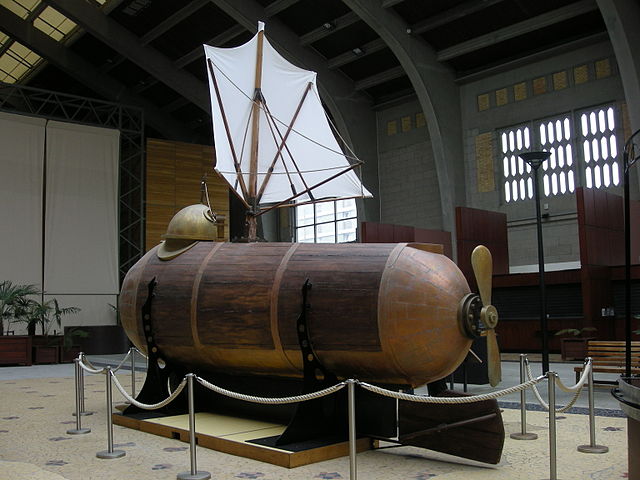
Others remembered his work. When Napoleon was defeated and exiled to St. Helena, there were allegedly plans to rescue him, by submarine!
One biographer claims Napoleon said if he hadn’t been the leader of France, he would have been a scientist on the scale of Galileo and Newton. Now, that sounds like the arrogant emperor England loathed!
July 5, 2022
A River Runs Through It: Turmoil on the Thames is here!
 The Ladies of Almack’s embark on a watery adventure this month: Turmoil on the Thames releases today!
 It’s the Fourth of June, the annual (if unofficial) celebration of the birthday of the King at Eton. Annabel is very much looking forward to attending, along with most of the fashionable portion of London: her elder son, William, will be rowing in the boat race, and picnics and fireworks festively conclude the day. But celebration nearly turns to lamentation until Annabel and Lord Quinceton (you knewhe had to be there) avert tragedy…and the Ladies are left wondering how it happened, and what might happen next…
It was fascinating to research the Fourth of June, which became one of THE events of the social season through the 19th century and is still celebrated to this day at Eton. It was also fun to start developing Annabel and Lord Quinceton’s relationship, and begin to set up circumstances and drop hints about later events in the series.
Have I wetted—ahem!—whetted your appetite?
Turmoil on the Thames can be purchased directly from my publisher, Book View Café, in both EPUB and MOBI formats as well as from all the usual online bookstore outlets. Print versions can be found at Barnes and Noble and Amazon.
Happy reading!
June 28, 2022
Blast from the Past: A Pleasing Silhouette
 [I originally posted this on June 28, 2013. Ironically, we are having just as cool and rainy a summer, even though I am now in Western Washington, and temperatures just recently shot up! Hope your summer weather is more moderate!]
 Has your summer started oddly? Ours has. Normally we are at a sunny 90 degrees F by now in Eastern Washington, but we’ve rarely topped 70 and it’s been raining! Now I’m told we’ll jump to the triple digits by Monday. That’s not really conducive to summer activities either. So what would a young lady do in the early nineteenth century to pass the time? She might have drawn a silhouette.
 There's something elegant about a silhouette, as if the person’s character shines through when details are kept simple. Creating a proper silhouette, an outline of a person’s head and perhaps shoulders, was both a pleasant evening activity for friends and family and a lucrative business for some talented artists. The very best silhouette makers could look at a person and cut directly on black paper to match features. Some silhouettes were incredibly detailed, showing curls within hairstyles and even eyelashes.
 For those more inclined to do it themselves, whether from limited funds or a spirit of adventure, silhouettes could be created at home. All that was needed was a piece of pale paper either tacked to the wall or affixed in a screen and a source of light such as a candle or fire. The subject sits between the light and the paper, and an enterprising friend or family member traces around the lines made by the shadow cast on the paper. Once the shape was cut from the paper, you could either put the white silhouette on black paper, or trace around it on black paper and put the transferred silhouette on white paper.
While silhouettes are becoming a lost art, you can still find artists at country fairs, popular shopping malls, and entertainment venues. This silhouette is of me when I was a baby.

This one is of my husband when he was a boy.

This is one of our youngest son, who is obviously a silhouette, er chip off the old block. [Update for 2022--Hard to believe he’ll be getting married in July!]

May you always create a pleasing silhouette!
June 21, 2022
Regency Fabrics, Part 35
Here’s another post in our ongoing series on Regency fabrics.
As I have in previous posts, I’ll be examining actual fabric samples glued into several earlier editions of Ackermann’s Repository, samples supplied by the manufacturers and published by Ackermann in order to boost the British cloth-making industry at a time when exporting British goods to Europe was almost impossible because of the Napoleonic war. I'll give you a close-up scan of each sample, the published description if available, and my own observations of the color, weight, condition, and similarity to present-day materials, to give you as close a picture as possible of what these fabrics are like.

Today’s four samples are from the November 1809 issue of Ackermann’s Repository—a recent acquisition! The overall condition of my copy is very good: the page has been trimmed a little close on the sides and is rather darkly toned but not otherwise damaged, and all four fabric samples are present and in good condition, if a little creased in places.
Here we go!
No. 1. A fret-work striped muslin, particularly adapted for gowns, robes, and pelisses. This article is confined to no absolute order of costume, but is equally adapted to the morning, or half dress;though perhaps it more immediately belongs to the former; yet we have seen the simple French frock, buttoned or laced up the back with biassed bosom and short sleeve, formed of this material; and with ornaments of variegated gems, it forms, at once, a dress unobtrusively neat and attractive. It is sold by Messrs. Waithman and Everington, No. 104, Fleet-street, at 4s. 3d. per yard.

My comments: Well, this is interesting. Examining the fabric (a very fine, sheer muslin, definitely designed to be made up with a lining) I thought it looked rather odd—the stripes have these little blobs of thread that are rather untidy and not very attractive. Then I carefully looked at the backside of the sample, and it suddenly made more sense: the stripes are much more regular and even (not to mention attractive.) Could it be that whoever glued in the samples put this one in backward?
No. 2. The Arabian Jubilee silk; the most rich and beautiful article which has ever been introduced in the line of full dress. We may fairly commend the taste and invention of the manufacturer of this most splendid article, which is at once both unique and elegant. We need say little to our fair correspondents by way of recommending it to their notice; its attraction is sufficiently striking to the eye of taste, and we venture to predict, that it will be a reigning favourite with the superior order of fashionables during the winter. It is sold by Mr. D. Hodges, No. 12, Henrietta-street, Covent-garden.

My comments: Ah, merchandising; Mr. Hodges was clearly trying to take advantage of George III’s Jubilee celebrations to sell merchandise. It is lovely stuff, though the scan is not doing it full justice—very fluid and shiny (it is silk, after all) in a warm corn-gold, and would make a beautiful evening dress.
No. 3. An imperial green shawl print, of the most novel introduction, and which is expected to rank high on the list of winter fashions, as there are considerable quantities preparing at the different manufactories. The pattern is strikingly delicate, and the colours agreeably contrasted; the warm glow of the bright yellow being a seasonable opposition to the cooler shade of the yet lively green. For the more humble order of home costume, morning wraps, or high gowns, this animated article is particularly adapted; and, we doubt not, will be purchased with avidity by females of taste. This print is also sold by Messrs. Waithman and Everington, No. 104, Fleet-street, at 4s. per yard.
 My comments: This is cheerful stuff! I like the print atop the twill-weave stripe, though I’m still trying to figure out if it’s supposed to be a floral or just an insouciant little doodle. There has been fading—the green on the reverse is much brighter and livelier. The body of the fabric is light and drape-y, but perfectly opaque.
No.4 is a chintz kerseymere for gentlemens’ waistcoats, and displays much appropriate taste and liveliness of invention. There is little need of remark on this article, except to point out the agreeable contrast which waistcoats of this kerseymere, will form to the dark shades of winter coats. It is sold by Messrs. Smith and Co. No. 2 Prince’s-street, Leicester-square, price 16s.

My comments: I’m not entirely sure where the “chintz” in the description comes in; this fabric is like a thick twill (hard to see in the image, but it’s definitely a twill) that has been brushed to a felt-like consistency, not polished and glazed like a twill. It is definitely suitable for a toasty-warm winter-season waistcoat, being quite sturdy and impervious to chill winds.
What do you think of this month’s fabrics? I wouldn't mind one in the Jubilee silk, myself...
June 14, 2022
Romancing the Rogue
 I’m having such fun delving back into my Fortune’s Brides world, and so are readers! This week, the third book in Fortune’s Brides: The Wedding Vow, launches, with a heroine who is young, but I hope, delightful. Here's a little about Never Romance a Rogue:
 No one has ever refused a request from Lady Belle Dryden. Her pretty face and winsome nature almost guarantee it, and the fact that she’s the youngest daughter of the Duke of Wey doesn’t hurt. So she’s certain when she plays matchmaker between her dearest friend, Miss Petunia Bateman, and the charming, mysterious Owen Canady, both will be only too happy to fall in love. After all, Belle feels herself falling for Owen already. A shame a duke’s daughter must marry someone more impressive.
Owen Canady is a gentleman by birth, a pauper by circumstance, and a con man by necessity. Life has taught him he can rely only on his wits and a fast horse to get by. But when he is blackmailed into ferreting out the secrets of the Duke of Wey at a house party at the duke’s lavish estate, he finds his resolve crumbling. Belle is everything that is right and good in the world. He cannot betray her.
As her father’s enemies grow more daring, Belle and Owen must work together to protect all they hold dear. When his own secrets are revealed, can Owen convince the lady who’s never heard no to say yes to him?
Hott Book Reviews gave it an A+. “Wow! I loved Never Romance a Rogue. I can’t wait until the next one!”
You can find it in print and ebook at fine online retailers:
Book Depository (free shipping worldwide)
June 7, 2022
A Picture’s Worth a Thousand…Insults?
The Ladies of Almack’s are back again with a sojourn into the art world with The Cursed Canvases.
 In this installment, .
 Researching this story was a lot of fun. Ackermann’s Repository always devoted many pages to reviews of several of the works in each year’s exhibition, and at times they could only be described as exquisitely supercilious (or, dare I say it, downright bitchy.) But this gave me a good handle for the type of subjects that were painted and how pictures were named, and I’m rather pleased with the result. Also, the relationship between Annabel and Lord Quinceton is beginning to reach an interesting place…
The Cursed Canvases can be purchased directly from the publisher, Book View Café, in both EPUB and MOBI formats as well as from all the usual online bookstore outlets. Print versions can be found at Barnes and Noble and Amazon.
Happy reading!
May 31, 2022
Guest Post: Ballooning and the Lunardi Craze, by Shelley Adina
 Nineteen Teen is delighted to welcome back Shelley Adina, author extraordinaire and Regina's co-author on the Regent's Devices series, for a discussion of ... balloon fashion. Yes, really!
Balloon flight at once intrigues and terrifies me. I’ve been up in a Zeppelin airship, but that was much more exciting than frightening. The technology probably gave me a false sense of security, with its cockpit, two pilots, and propellers galore. Going up in a balloon with only a fire to heat the air and a wicker basket between me and death makes me want to adhere most positively to the ground!
Balloon flight was not invented during the Regency, but in France by the Montgolfier brothers. They had been experimenting with ascents for some time, but achieved the first free-floating manned flight in 1783. As little as a year later, a positive craze for hot-air ballooning had spread to England, where in London “the daredevil aeronaut,” Vincenzo Lunardi, went aloft with a dog, a cat, and a pigeon in a cage. (It is not clear what purpose these companions were to serve.)

As often happens, novelty and massive, fascinated crowds combined to inspire a fashion craze. Balloons might become part of one’s gown, one image showing them on the sides like external panniers, in place of the usual drawn-up outer gown. The caption in French reads, “The coquettish physicist.” And the hats! In the coquettish physicist’s hair is fixed a base that looks like a fairground, the balloon floating up out of it.
 These mad embellishments were not restricted to women—-men wore clothes with decorative homages to the new fad. One drawing of a man wearing rigging similar to that on the top of a balloon says in French, “The man of balloons, or, the folly of the day,” A creative woman might embroider her gown’s fabric with balloons, or paint its cotton panels.

Like many fads, something that was meant to be highly visible but not very comfortable didn’t last long. The hat lasted the longest, but not the kind with actual balloons ascending from it. The Lunardi bonnet is seen in a painting dated 1782. This style lasted well into the Regency, and is fetchingly worn by Kate Winslet as Marianne Dashwood and Gemma Jones as Mrs Dashwood in Sense and Sensibility (1995). Want your own Lunardi bonnet? A very nice version is available on Etsy!
Resources:
https://www.janeausten.co.uk/british-ballooning/
May 24, 2022
Richard Trevithick: Getting Steamy in Cornwall
 In The Emperor’s Aeronaut, the character of Loveday Penhale gained some of her knowledge of steam engines from the great Richard Trevithick, a Cornwall native like her. While he doesn’t appear in the book, he was a real-life engineer whose works astonished everyone around him.
 As someone with two people with Attention Deficit Disorder in her household (and a profound love for both of them), I can recognize the traits in Richard. One of his biographers called him quick-tempered and impulsive. His teachers called him slow, obstinate, and very inattentive, but he excelled at math. Though it was said he had enthusiasm, his father considered him a loafer. Like father and maternal grandfather, he began working in the tin and copper mines in Cornwall when he was nineteen, but as an engineer, not a miner.
He was simply fascinated by steam power.
Steam engines were already being built when Richard entered the field, but they were low-pressure, often massive, and generally took their own sweet time getting anything done. Other inventors shied away from the potential danger of a high-pressure engine, but not Richard. He kept tinkering until around 1800, he developed the first high-pressure steam engine. He would go on to use it for railway locomotives, an iron-rolling mill, a paddle-wheel barge, steam carriages (yes, he had the first two in the world), steam dredgers, and threshing machine.
 He even had the idea for a “steam circus” in London and set up his Catch-Me-Who-Can, a locomotive that ran on a circular track. It was the first locomotive to haul fare-paying passengers, at a shilling a ride, but the soft ground proved incompatible with the engine’s weight, and he had to abandon the scheme.
 Though he married at age 26 and had six children, it was his love for inventing that drove him. In 1814, Peruvian silver mines ordered nine of his engines. By 1816, he was off he went to see the New World. Few knew what had happened to him. Sadly, when he returned to England in 1827, he had lost what fortune he’d found. He died in 1833 in Kent.
But his legacy inspired other engineers to continue advancing the steam engine, fueling the Industrial Revolution around the world.


