
Regina Scott's Blog, page 4
May 23, 2023
Retro Blast: Updated: Lover’s Eyes
 A version of this post was originally published in May 2011 asthe second part of a series called Picture Makes Perfect. But, at the moment,eyes feature large in my life. Supposedly, my retina is detaching, but thesurgeon can’t find the tear! So, my writing is severely restricted while wewait to see how things progress.
Eyes were also important in the nineteenth century if you couldn’tafford a formal portrait or wanted something to carry next to your heart toremind you of your one true love. Thus, the creation of Lover’s Eyes. Thissmall portrait showed only a portion of a person’s face. I imagine it didn’ttake too many settings with an artist, unlike a full-sized portrait. Much moreeconomical!
_-_Nationalmuseum_-_154464.tif.jpg) But sometimes it wasn’t cost or size that made theseattractive. Perhaps you couldn’t marry your love, or your dear husband had diedyoung on the battlefield. With the Lover’s Eye hidden in a locket, no one wouldknow about the painting but you. And even if someone accidentally saw thepicture, they would be hard pressed to prove who it portrayed.
But sometimes it wasn’t cost or size that made theseattractive. Perhaps you couldn’t marry your love, or your dear husband had diedyoung on the battlefield. With the Lover’s Eye hidden in a locket, no one wouldknow about the painting but you. And even if someone accidentally saw thepicture, they would be hard pressed to prove who it portrayed.Legend has it when the Prince of Wales was in love withMaria Fitzherbert and forbidden from legally marrying her without forfeitingthe crown, he commissioned a painting of his eye for her and her eye for him.This he could wear against his heart without anyone being the wiser. He musthave shown it about sufficiently, however, for Lover’s Eyes became all therage. Later people chose these tiny portraits to remember someone who had died.This one is supposedly of Princess Charlotte, who died in 1817, and includeshair bound into the locket.

Finally, here are a couple of eye miniatures of two writers you happento know. See if you can tell which iswhich.


I guess you could say the eyes have it. :-)


May 15, 2023
Retro Blast: The Peace of Amiens, or All Major Credit Cards Accepted
Tomorrow marks the 220th anniversary of the end of thePeace of Amiens, that strange interlude in the nearly twenty-five years of warbetween England and France. So I thought it might be interesting to revisitthis post from 2016 and see what it was all about...
* * *
 It’s 1802. Great Britain and France have been at warsince 1793, when the brand new French republic went on the warpath assurrounding European kingdoms, hoping to nip this republic idea in the bud,sent troops to help restore the Bourbon monarchy. They failed despite variousalliances and coalitions and, to everyone’s surprise, France started expandingits borders, thanks in no small part to a certain up-and-coming young Corsicanartillery officer.
By 1801 that artilleryofficer, one Napoleon Bonaparte, is First Consul of the French Republic.British Prime Minister William Pitt, a resolute foe of Napoleon, isforced out of office in February and a less hawkish PM takes his place.Austria, Russia, and the Kingdom of Naples had all sued for peace a fewyears before. And both France and England agree that some peace might benice for a change.
After much negotiating, wheeling, dealing, and making ofsecret clauses over the summer and into the fall of 1801 the two countriesreach a preliminary agreement at the end of September. In November the MarquisCornwallis (yes, the same one who surrendered at Yorktown) is sent to theFrench town of Amiens to negotiate the final terms with Napoleon’s brotherJoseph and Talleyrand. Though it takes months and is unsatisfactory in manyways to the British (they in particular are unhappy over the ambiguousdisposition of Malta) a final agreement is signed on March 25, 1802 and inOctober King George officially declares peace.
And Britain goes shopping.
Before you snort, "yeah, right," think aboutit: for much of the 18th century, France had been the center ofEuropean culture...and Paris had been its apotheosis. French fashions, Frenchart, French food, French manners, all had been admired and imitated; an upperclass young man’s education was not considered complete until he’d spent a yearor so wandering the Continent—especially France. But for the last ten years,Britain and France had been at war, which meant no visiting most places on thecontinent.
 Now the war was over thanks to the Peace of Amiens, and the Englishdescended on France to satisfy their craving for all things French.They flocked to the Palais Royal for expensivesouvenirs and to the modistes and milliners for Paris gowns. They orderedjewelry and sets of china, and went to the galleries to buy art. Artistsarrived in droves, not only from England but from all over Europe to visit theLouvre and see not only the latest art but also the Roman and Egyptian sculpturebrought back by Napoleon. They visited sidewalk cafes, strolled in the parcs(though Paris was, alas, looking rather shabby after the depredations of theRevolution and ten years of war.) Even scientists came, among them astronomerWilliam Herschel to visit the Paris Observatoire. And politicians came, bothfor all of the above reasons and, if they could, to catch a glimpse of theFirst Consul. Napoleon very obligingly received several of them, most notablyCharles James Fox (who took the occasion of this trip to France to formallypresent his heretofore secret wife, former courtesan Mrs. Armistead.) Andexpatriates took the opportunity to visit their homeland, from which they'dbeen cut off for so long.
Unfortunately, this amicable state of affairs did notlast long. The tensions and discontents created in the Treaty of Amiens wereits undoing, along with Napoleon's efforts in other arenas to exclude Britainas much as possible from European affairs. Britain again declared war in May1803, rather to France's and everyone else's surprise--in fact, over a thousandBritish tourists ended up imprisoned in France until 1814, when Napoleon wassent to Elba. I hope the shopping had been worth it!
May 9, 2023
Sharing a Love for History, One Meme at a Time
You have seen some of Marissa’s wonderful graphics for herThe Ladies of Almack’s Series. I am just not that talented. My skills are veryfocused in the realm of the written word. But my awesome author assistant,Isabella LaVey, had an idea (two of them, actually), and we’ve come up withsomething we hope is a little fun.
History is amazing.
Well, yes, of course it is. You knew that, or you probablywouldn’t have read our books or this blog. But there are so many fascinatingtidbits to ooh and aah over. Like these.
.png)
.png)

And then, there is the marvelous language of the Regencyperiod. Again, Marissa trumps me there with her Such Language! posts. But hereare a couple of contributions of my and Isabella's.


Finally, I would be remiss if I didn’t include this StarWars/Regency mash up, celebrating May the Fourth or Star Wars Day.

The words are mine, but the graphics are courtesy ofIsabella. She rocks. I thought she deserved to know it. And now you do too. Ifyou want to see more of her work, follow me on Instagram. Therewill be more this month and in the months to follow.
May 2, 2023
More Historical Comfort Reads
Afew years ago I posted about my favorite historical comfort reads—you know, thebooks you go back and re-read when you’re tired or ill or otherwise not feelingquite up to par and need a soothing old friend to keep you company. Now seemslike a good time to revisit the topic, so here are a few more of my favorites. I hope that readers will tell usabout some of their historical comfort reads in the comments—I’m always lookingfor new old friends! Please note that any links may be affiliate links.
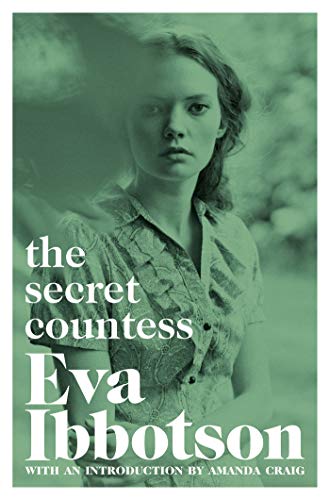
Eva Ibbotson
Yes, I know she’san author, not a book—a much-loved and recognized author of many delightfulstories for younger readers such as The Star of Kazan, Journey to the River Sea, The Secret of Platform 13, and many others. But did you know that she also wrote fiveadult romances? They’re all stand-alones, set at various points between shortlybefore WWI and around and during WWII. All share England as part of theirsettings, but several include substantial portions set in Austria (where theauthor grew up) and on the Amazon River. Written in the 1980s, they do possess thatera’s regrettable tendency to Big Misunderstandings (you know, where conflictscould be cleared up if people just talked to each other for ten minutes), butthe characters (including secondary ones) and settings and plots and just sowonderful that I forgive them for that. The Secret Countess may be my favoritebecause it has a denouement scene worthy of Georgette Heyer at her best; but Magic Flutes, A Company of Swans, A Song for Summer, and The Morning Gift are not farbehind. Part of what makes these special, I think, is that they’re slightlyautobiographical: as a girl, the author fled Austria before WWII with herfamily, so there’s a feeling of authenticity about the small details that isenthralling. Some people consider these young adult books; I disagree, but theycan be read by older teens.

Caroline Stevermer
Okay, yeah, she’s an author too. You reallyaren’t going to make me choose just one of her books, are you? If I had to,though, I’d go with A College of Magics, a marvelous young adult historicalfantasy about a young woman coming into her own as ruler of her country—and as a witch—set in a fictionalized pre-WWI Europe, with a few extra eastern Europeancountries along with the usual England, France, Spain, and so on. The era feelswell-depicted, especially the women’s college the protagonist attends and the briefvisits to Paris and on the Orient Express. One of my all-time favorite books, andwith an almost as wonderful sequel, A Scholar of Magics.

Connie Willis I’m an unashamed Connie Willis fangirl. She’swon more Hugo and Nebula Awards than just about anybody writing science fictiontoday…so why am I talking about her in a post about historical comfort reads?Because she’s written multiple time travel novels (the Oxford Historian series), and written them incrediblywell. Doomsday Book may be her masterpiece (about a time-traveling history gradstudent mistakenly sent back to England on the verge of the arrival of theBlack Death), but it’s To Say Nothing of the Dog that is indeed a comfort read:two historians sent back to study Coventry Cathedral before its destruction inthe Blitz get entangled in problems and time paradoxes as they bounce betweenthe 1940s, the 1860s, and beyond…and hilarity ensues. Just a delightful, funny bookwith a happy ending.
Doyou have any historical comfort reads you’d like to talk about?
April 25, 2023
Cinderella Meets Her Handsome Logger
 The third book in my Frontier Matches series, FrontierCinderella, launched April 17. I wasn’t sure who to match with the crownedprince of the loggers, Harry Yeager. If you’ve followed the series, and the FrontierBachelors series that preceded it, you may recall that Harry has courtedseveral ladies, and lost them all! For someone so sure of himself, and for afellow who is such a prime specimen, those losses had to go down hard.
And then Katie Jo McAllister walked onto the scene in HerFrontier Sweethearts. Shy, quiet, and used to making her own way in a man’sworld, Katie Jo has admired Harry much in the way we might admire a Renoirpainting—gorgeous to look at but far above what we could pay. And then somethingamazing happens.
Katie Jo McAllister never considered herself a prim andfussy sort of gal. Men are more likely to ask her help in chopping down a treethan taking a turn on the dancefloor. But when Katie Jo stands up with herfriend, Ciara O’Rourke, at her wedding, all gussied up, suddenly every man inmiles is angling for an introduction. Even the area’s most eligible bachelor,Harry Yeager, who has ignored her for months, comes calling. It’s enough togive even a strong gal a case of the vapors!
After being orphaned young and passed around amongrelatives, Harry Yeager is determined to start his own family. He has theclaim, the cabin, and the income to support a wife and children. In an areawith eight bachelors to every unmarried woman, finding the wife has provenproblematic. But the sweet-natured Katie Jo McAllister just might be theperfect bride to rule beside him in his little frontier kingdom.
When danger comes calling along with a host of suitors,Katie Jo finds herself turning to Harry for help. But can he see the heart ofthe woman beneath all her finery, a heart that beats for him alone?
You can find ebook and print at my own bookstore, fineonline retailers, and bookstores near you:
Amazon (affiliate link)
Bookshop (benefittinglocal bookstores)
Enjoy!
April 18, 2023
Sneak Peek Time!
Ah,spring! The birds are singing, my garden is sprouting…and after a quiet winter,the pile of pages that will be The Audacious Abduction, the ninth installmentin The Ladies of Almack’s series, is starting to grow on my desk.

So what is happening with Annabel and the Ladies now? Well...
Annabelis in Bath, recovering from the terrifying events in Brighton, when an unexpectedvisitor brings news of Quin, alive and well but practically a prisoner in hisown house. The Lady Patronesses launch a daring, successful rescue, but thecaptive isn’t necessarily freed. Nor is he the only captive that needs rescuing…
Idon’t have the release date yet—that’s in the works with Book View Café—but lookfor it some time this summer. These later books in the series are running a lotlonger than the earlier ones—there are more story threads to weave together andcharacters and their journeys to choreograph—so the time between releases islonger. I hope you’ll think the waits worth it.
Andhere’s the sneak peek part: read the first chapter now! You can download it from BookFunnel to your e-reader, or just hop over to my website to read itonline.
Enjoy!
April 11, 2023
Nineteenth Century Heroines: Making Sure the Ayes Have It
 I am always on the lookout for nineteenth century historynear me, which can sometimes be challenging in the Pacific Northwest,especially in the wilds where I live. That’s why discovering a house on theNational Register of Historic Places less than two miles away was such athrill, as was learning about the lady behind it.
Washington State had a rocky road to confirming the right ofwomen to vote. Seattle founding father Arthur Denny tried to convince theterritorial legislature in 1854, but the measure lost by a narrow margin. Thelawmakers rallied, however, and passed another measure some years later, onlyto have a territorial court shoot it down! Because “woman’s suffrage” was not specificallyincluded in the title of the law, the court reasoned, the male legislatorsmight not have realized what they were approving. Undaunted, they changed thetitle and passed the measure again. Women voted in Washington Territorybeginning in 1883. Unfortunately, another legal challenge upended the law, andfears that the federal government would find women voting so offensive it wouldnever give the territory statehood kept the idea out of the state constitutionin 1889. By the turn of the twentieth century, suffragists in Washington Statewere entirely disheartened.
Enter Emma Smith DeVoe. Born in Roseville, Illinois, in1848, she had supported woman’s suffrage since the day she heard Susan B.Anthony speak. She was only eight at the time. Since then, she’d campaigned forwomen’s rights in Dakota Territory (although women couldn’t vote there until1918), Idaho Territory (where she helped win the right in 1896), and OregonState (where the first measure lost, with women winning the vote in 1912). Shehad also helped with campaigns in another 25 territories and states. When shemoved to Tacoma with her husband in 1905, she promptly set to work oncampaigning in Washington.
 There were, apparently, several philosophies among thesuffragists. One group held that large rallies and sit-ins were the order ofthe day. Others, notably in England, went so far as to smash windows onabandoned buildings to draw attention to their cause. The ladylike Emma wascertain there was a more effective way. By being good-natured and cheerful, womenmight persuade their male counterparts one-on-one. Her goal was to have womenask every voter in the state to support the suffrage movement. She also sentout postcards and put up posters. She even published a cook book, with Votesfor Women on the back cover. When the National American Woman Suffrage Associationmet in Seattle in 1909, she organized a “Suffrage Special” train, with notable ladiesgiving speeches from the rear platform at stops along the way. That same year,Seattle hosted the Alaska-Yukon-Pacific Exposition, and she set up a SuffrageDay. That was when a group of suffragists climbed Mt. Rainier to raiseawareness of the cause.
In 1910, the all-male Washington State legislature voted bynearly two-thirds to extend the vote to women, 10 years before the nation wouldfollow suit. Emma had a little something to do with that too. For her work inthe state as well as at the national level, she was inducted into the NationalWomen’s Hall of Fame in 2000. She died in 1927, at the age of 79, in her lovelyhome near me.
 And if you’d like to read about a fictional Washington Statepioneer, you might want to grab an ebook copy of The Perfect Mail-OrderBride, on sale for the first time this week for only 99 cents.
When a beautiful mail-order bride jilts her groom on the wayto meet him, her plainer sister Ada Williamson decides to continue the journeyand tell him the truth. Yet one look at Thomas “Scout” Rankin, and the truthnever comes out. Thomas can buy anything he wants, including the perfectmail-order bride. But past betrayals left him wary, so he notices Ada is notwhat she claims. When a stranger tries to take advantage of Ada’s secret, andhis, can they discover the truth, about their enemy, about their pasts, andabout the love they both yearn to share?
Reading is My Superpower called it “swoony, sweet, and fullof heart.”
Available
Amazon (affiliate link)
April 3, 2023
What's the Point?
Ithink, at least in the case of this Evening Full Dress from July 1809’s LaBelle Assemblée, that the point is (or should I say are) quite apparent, despite the not-very-good quality ofmy print.

Here’sthe original description:
THEELVIRA DRESS. This dress is composed of yellow crape, with a train about half ayard in length; the front of the skirt forming a deep vandyke (to the point ofwhich is suspended a tassel), and is embroidered round the edge in two shadesof brown chenille; the sleeves are formed of several rows of plaits crossed onthe arm. To complete the whole of this elegant dress, there is worn with it ajacket of yellow satin, which is formed with three deep vandykes behind and twoin front; the bosom square, with three straps across the center, which arefastened with diamond brooches; the points of this jacket, front, back, andshoulder straps, are embroidered at the edges the same as the dress, which isworn over a slip of shite satin, likewise embroidered round the bottom, and thesleeves of which appear below the crape over it, and are finished at the bottomwith chenille embroidered in form of a vandyke, with the point turned upwards,the center filled up with a sprig.
.jpg)
Somany questions, the primary one being, who was Elvira? 😏 Also, the description aswritten doesn’t quite match the dress, as I see nothing of the straps fastenedwith diamond brooches on the bodice of the jacket mentioned in the text.
.jpg)
Andmissing from the text is a description of the accessories—fan, shoes, gloves, pearl jewelry,and headdress—as depicted…and surely that spectacular jeweled diadem andfeathers number deserves a few sentences!
_-_Google_Art_Project.jpg)
The description of the large triangular points as "vandykes", by the way, comes from the Flemish painter Anthony Van Dyke, who spent most of his career as the leading court painter of King Charles I. He painted a great many portraits of the royal family and nobility...and at the time, lace with deep, indented triangular tongues was highly fashionable, as can be seen in Van Dyke's portrait study of the king (via Wikimedia.)
Lookingat the fashion prints from around 1809-1810 in both La Belle Assemblée andAckermann’s Repository, it is clear that this was a marvelous time to be amodiste: there is such creativity and variability in styles, unlike, say, theearly 1820s which were really rather dull. What do you think?
March 28, 2023
Legging It Up on the Huddersfield Canal
 I love history. You probably noticed. So many fascinating stories, so many amazing personalities! I am currently reading about a daring female sea captain in Iceland in the late 1700s/early 1800s. She’ll feature in a future post. But something else mentioned in Sea History Today, the newsletter of the National Maritime Historical Society, caught my attention, and I simply had to write about it.
 By the early 1800s, England was crossed with a number of canals used to carry goods between towns. Like on the Erie Canal in the United States, narrow canal boats were towed by horses walking a path alongside. But as more people began to clamor for more goods, it wasn’t as easy as building a canal along the flat. Sometimes, the engineers had to go up over hills with locks and lifts. And sometimes they just went through those hills.
Such is the case of West Yorkshire’s Standedge Tunnel. Authorized in 1794, it officially opened in 1811 on the Huddersfield Canal. It burrows through the Pennine Hills and is said to be the longest, highest, and deepest canal tunnel in the UK. Narrow boats would approach the tunnel, and the horse would be unhooked and led up over the hill to meet them on the other side. So, with no motor, no room for oars in the low-roofed, narrow-sided tunnel, how did the boat make it through?

With the help of leggers.
Leggers were burly fellows who would lay down on the deck of the narrow boat and set their feet on the tunnel ceiling. Then they would “walk” along the ceiling, propelling the boat through the tunnel and out the other side. The Canal Company actually employed them for the purpose. The gate at one end of the tunnel pays tribute to them.
I imagine they were great fun at local assembly dances!
Canal and hillside copyright John Topping
Tunnel gate copyright Linden Milner
March 21, 2023
Such Language! Part 32

More wonderfully wordful wackiness, courtesy of the 1811 Dictionary of the Vulgar Tongue (a copy of which can be downloaded from Project Gutenberg so that you can embark on your own wordly wanderings. Enjoy!
Coker: A lie. (Henry told his tutor the most frightful coker about why he was unable to do his lessons yesterday: he claimed that all the ink in the schoolroom had been drunk by the giant octopus that lives in the ornamental lake.)
Sit upon thorns: To be uneasy, impatient, anxious for an event. (And now Henry is sitting on thorns waiting for his tutor to come up with a suitable punishment for both lying and shirking his schoolwork.)
Nocky Boy: A dull simple fellow. (I don’t suppose one can call Henry a nocky boy for coming up with such an elaborate story, but the temptation is there.)
Aground: Stuck fast, stopped, at a loss, ruined; like a boat or vessel aground. (Sir John may not be completely aground, but from what I hear the bailiffs are circling.)
One of the Faithful: A tailor who gives long credit. (My brother heard as much from Sir John’s boot-maker, who is not one of the faithful.)
Here and Thereian: One who has no settled place of residence. (However, being such a here-and-thereian has allowed Sir John to reduce expenses by going from house party to house party.)
She Napper: A woman thief-catcher.
This last selection from Mr. Grose’s dictionary stopped me cold, then set my mind a-teeming. The fact that there was a slang name for such a person makes one wonder if it wasn’t all that uncommon… Anyone smell a new series? 😊


