
Regina Scott's Blog, page 3
August 8, 2023
The Pleasures of Devices
 Devices and conveniences of various sorts are on my mind atthe moment. My washing machine of 33 years finally died, and I am told by ourmechanic that our car is terminal. My daughter-in-law is breaking in a newlaptop. My husband had to replace his cell phone. We live in a world ofconveniences. Our nineteenth century counterparts might be jealous.
Or not.
The Regency era saw the birth of the Industrial Revolution,but it would be some years before the new technological wonders appeared in thehomes of the middle and lower class. Here are a few things we might take forgranted today that they didn’t have:
Ovens. It is amazing to think, but ovensin homes were very high end in Regency England. Only a few wealthy houses hadthem. For the rest of us, you baked in the hearth or had a baker cookeverything from bread to your Christmas turkey. You picked up the food from thebaker and brought it home (and I can only wonder how warm it was by then!).
Sewing machines. I can sew basicpatterns, well enough to make myself pillow shams and clothing. Marissa is moreskilled. But while the first sewing machine was patented in England around 1790,it was never built, and the first widely available sewing machines wouldn’tarrive until the 1870s. Generally, a Regency lady sewed what she wanted by handherself or employed someone to do it for her.
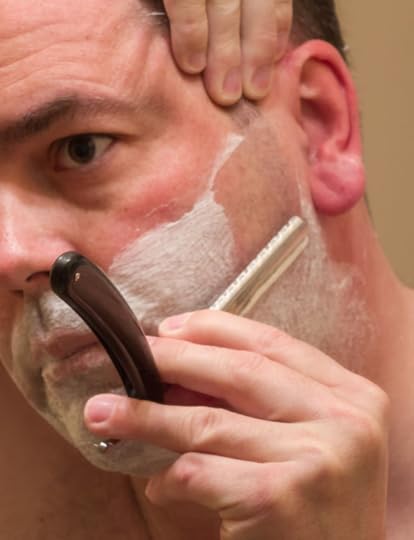
Shavers. My husband uses a disposablerazor, and my father used an electric one. Our Regency gentlemen had only astrap and a long wicked blade. Small wonder so many wore beards!
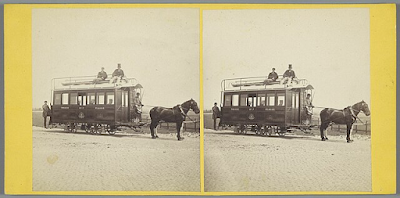
Public transportation. The more my cargrumbles, the more I eye our local bus. I’ve also used busses, trams, andtrains to get around my neck of the world. Londoners didn’t have the option ofpublic transportation until 1829, when horse-drawn omnibuses began trundling throughthe streets.
So, despite my current woes, I’m very thankful indeed! May all yourdevices be well behaved and useful!


August 1, 2023
Summer Cape-r
Another delightful offering from La Belle Assemblée…may I present a most delightful Morning Walking Dress, from the June 1810 edition?

No. 2.— Morning Walking Dress
A round dress of thick fine India muslin, made high in the neck, with long sleeves, which are trimmed at the wrists with a narrow edging of lace; a lace let in round the bottom of the dress between four rows of small tucks. A light sky-blue mantle, lined with pale buff, with elastic collar, which is formed with letting-in lace, and has the appearance of a full collar, but will, if required, by drawing over the head, form a very pretty and becoming bonnet; a cape of the same materials crosses the back, which is confined at the bottom of the waist, on the inside, with a pale blue or buff ribband, tied with a bow in the front; it is entirely trimmed round with [a] narrow edging of lace. A bonnet of straw, and pale-blue ribband, with plaiting of lace, worn underneath, tied under the chin; with a yellow rose in the front, and hair in ringlet curls, completes the dress. Gloves of pale-buff. Boots of the same colour, calashed and laced with pale blue.
.jpg)
Hmm, there’s a lot going on here. The dress itself seems straight-forward; it’s the mantle that is so noteworthy. I’m intrigued by the “elastic collar” that can be drawn up in a sort of hood: it sounds almost like an 18th century calash or calèche, a type of head covering with stiff ribs that could be folded down or drawn up over the fashionable high coiffures of the era. The crossed-over flaps of the cape are an unusual touch, I think—lending visual interest to the back rather than the front.
.jpg) The bonnet is appro-priately light and airy, a not-too-extreme poke style (though a bit more of a brim might have been welcome to prevent freckles when out walking…)
The bonnet is appro-priately light and airy, a not-too-extreme poke style (though a bit more of a brim might have been welcome to prevent freckles when out walking…) .jpg) Also of interest are the boots, described as “calashed.” I’m not sure how that term applies to boots—as we’ve seen, a calash describes millinery, not shoemaking. Any guesses out there? The blue shoelaces on the buff boots are a lot of fun, though.
Also of interest are the boots, described as “calashed.” I’m not sure how that term applies to boots—as we’ve seen, a calash describes millinery, not shoemaking. Any guesses out there? The blue shoelaces on the buff boots are a lot of fun, though.
I know that all faithful NineteenTeen readers will rush right out to their modistes to have this ensemble made for their own morning walks…right?
Well, maybe not this summer.
July 25, 2023
Time for an Adventure!
 Never Admire an Adventurer, the second book in myFortune’s Brides: Guarding Her Heart series, launched on July 17. It was funimagining all the ways a gentleman set on adventure would respond to a fakeengagement with a spirited heiress!
Kristof Tanner grew up dreaming of glorious adventures farbeyond the little kingdom of Batavaria. He’s followed his king and crown princeacross Europe to England, but he never expected his first position there to beguarding the daughter of a wealthy businessman, who doesn’t seem to have a carein the world. Still, it’s hard not to see adventure calling in Julia Hewett’swarm brown eyes.
Julia has been fretting under her father’s demands foryears. She won’t allow him to dictate a husband, especially when he insists noless than a duke will do. So, when her father refuses to listen to her pleas,she concocts the most unsuitable engagement she can imagine—to her bodyguard.If the charming Tanner plays along, they might both get what they want.
But it soon becomes apparent that someone is stalking Julia,intent on her downfall. Tanner and Julia must work together to uncover theculprit and save her reputation and his. In doing so, they may discover thatthe greatest adventure of all is falling in love.
The Huntress Reviews said, “Regina Scott pens some of the best Historical Romance thatI have read in recent years. BRAVA!”
I hopeyou agree! You can find the book at fine online retailers or order it from yourfavorite local bookstore, including mine:
Directly from me (ebookonly)
Amazon (affiliate link)
July 17, 2023
Retro Blast: The Royal Waterloo Bath
As much of the US is gasping through a heat wave, I hope those affected have access to somewhere cooling, though not perhaps this particular one, which originally appeared here in December 2009.
* * * * *
From the June 1819 edition of Ackermann's Repository, may I present to you, with mingled delight and horror...

THE ROYAL WATERLOO BATH "This very elegant floating bath is stationed near the north end of the Waterloo-bridge, and has recently been built and completed with entirely new and substantial materials, in a style of superior accommodation, at a very considerable expense: it contains a plunging bath, 24 feet long by 8 feet wide, and two private baths, 10 feet long by 8 feet wide. The depth may be regulated at pleasure by machinery, which raises or depresses the bottom as required, secured by cross timbers, and bound with iron. To each of the baths are attached small dressing rooms, commodiously fitted up, with proper persons to attend upon visitors. These baths are so constructed, that the water, being a running stream, is changed every two minutes. The advantage of bathing in a flowing stream is obvious, and gives a decided preference over a cold still bath, which is frequently dangerous from the violence of the shock. The terms of bathing, as our readers will see, are extremely moderate:--they are-- In the plunging-bath. . £0 1s. 0d.For the season. . . £1 11s. 6p.In the private baths . £0 1s. 6p.For the season. . . £2 2s. 0p. Constant attendance at Waterloo-bridge to convey visitors to and from the bath. Bathing is so essentially connected with health, that we cannot but congratulate the public on this new establishment. It is singular that so few of the kind should be known in London, while there is scarcely a street in the French metropolis that has not its cold, warm, vapour, Chinese, and Tuscan baths, with a variety of others, suiting the capricious tastes of the inhabitants. Yet how deficient they are in the most important article connected with bathing every body knows, while we have a noble river filled with the purest and most wholesome waters in the world. The want of baths in London has led to the incommodious and indecorous practice of public exposure in the Thames. All I can say is, eek! Or maybe just ick. Though the waters of the Thames might indeed have been pure and wholesome upriver, at this point it served as drainage for all the city...gulp! I applaud the recognition that bathing was associated with good health and understand the desire for cleanliness (and for getting the nudists off the banks of the river!) but do have to wonder if the writer of this article visited the baths in person. Unfortunately, no interior views were provided--it would have been interesting to see how the water depth controls worked.
 I don't think any young ladies of fashion would come here; I expect it was for the working class population of London who didn't have hip baths before the fireplaces in their bedrooms and legions of servants to carry up cans of hot water to fill them.
July 11, 2023
The Ups and Downs of Ballooning
 Balloon ascensions were an exciting part of the nineteenthcentury. Some daring individual would set up a balloon in a public space likeHyde Park, and crowds would gather to watch the intrepid adventurer take offand ascend into the skies. In most cases, the balloon would fly a shortdistance and come down in some field. In a few cases, the event was an attemptto set a record. For example, in 1785, Jean-Pierre Blanchard and John Jeffriesleft Dover in the first successful attempt to cross the Channel by balloon.
But sometimes, things did not go as planned.
I discovered the following 1895 graphic not too long ago. Itwas originally an uncut set of 10 cards showing the early history ofballooning. As you can see, the emphasis appears to be on disasters!

Starting from top left, we have Joseph Louis Gay-Lussac andJean-Baptise Biot, who ascended to 4,000 meters to conduct scientificexperiments on gas. They lived. So did the second fellow, André-Jacques Garnerin, who,despite the illustration, made the first successful parachute jump from aballoon in 1797. He owed much to the third fellow, Louis-Sebastien Lenormand,who had conceived the idea of a parachute and jumped from a building with hisumbrella-like contraption in 1783.
The fourth card on the top row has ideas for every steampunkauthor! These are purportedly utopian dreams of flight from the “last century.”Some very interesting flights of fancy! Next to it we have Commander Jean-MarieCoutelle at the Siege of Mainz in 1795, where he used a balloon for reconnaissance(and seems to have earned the wrath of the enemy in the process!).
The first card on the bottom row is a balloon commemoratingNapoleon’s achievements. Interesting that he is still revered nearly 80 yearsafter his ultimate defeat. I was both delighted and saddened to see my belovedSophie Blanchard featured on the next card. Of course the artist had to includethe queen of aeronauts. But perhaps they might have shown something besides herfiery death!
Next to her is Count Franceso Zambeccari, who flew the firstunoccupied balloon in England in 1783, but instead of commemorating thatachievement, the artist decided to cover his crash in the Adriatic in 1804. Anumber of balloons took off from the Vauxhall Pleasure Gardens, but the artist choseto depict the one from which Thomas Harris fell in 1824. Finally, we have therescue of Francois Arban by Italian fishers in 1846, after he too had crashedinto the Adriatic Sea.
Doesn’t exactly make you want to jump into the next balloon,doesn’t it?
June 20, 2023
Such Language! Part 33
 More wonderfully wordful wackiness, courtesy of the 1811 Dictionary of the Vulgar Tongue (a copy of which can be downloaded from Project Gutenberg so that you can embark on your own wordy wanderings.
Blowsabella: A woman whosehair is dishevelled, and hanging about her face; a slattern. (My brothercalled me Blowsabella when we returned from our walk on the shore this morning;tomorrow, I shall wear a bucket over my head when we take our walk and it willserve him right.)
Whapper: A large man orwoman. (Uncle Ambrose is quite the whapper, but has a heart to match.)
Fogram: An old fogram; afusty old fellow. (Unlike his brother, however, Uncle James is the veriestold fogram.)
Hog Grubber: A mean, stingyfellow. (Based on bonnets Aunt Alice wears, I suspect Uncle James is also a dreadfulhog grubber.)
Spiflicate: To confound,silence, or dumbfound. (Poor Mama was utterly spiflicated when Mr. and Mrs. Awfflecrashed her dinner party and told her they were certain she’d forgotten to sendthem an invitation.)
Inching: Encroaching. (Idon’t think I’ve met a more inching family than them.)
Glimflashy: Angry, or in apassion. (Cant.) (Papa was soglimflashy over their temerity that he told the butler to set a separate tablefor them in the corner of the dining room.)
Any new favorites here? I rather think 'spiflicate' should be more widely known and used, myself.
June 13, 2023
Three Things You Might Not Be Aware Of, and Maybe a Fourth
 I am very thankful my eye issue turned out to beself-healing, no need for surgery! Phew! While I couldn’t write for a while, Icould do some other things on the computer, which might amuse you.
First--I collected the rest of the Fortune’s Brides mainseries into duets. Engaging the Earl and the Viscount: Fortune’s Brides, theMiddle, includes Never Envy an Earl, in which a spy in hiding daresto fall in love with the earl protecting her. Its partner is Never Vie for aViscount, in which a perky socialite convinces her former love to take achance on teaching her the ins and outs of ballooning.
 Marrying the Knight and the Marquess: Fortune’s Brides,the End, features Never Kneel to a Knight, in which an etiquetteteacher tries to hide her secret love for the boxer-turned-knight she ishelping. Its partner is Never Marry a Marquess, in which a shy younglady joins a grieving marquess in a marriage of convenience to care for hisfrail baby daughter.
 You can find the links to these and all the Fortune’sBrides series on my website here.
Second—I brought out as a standalone novella a story I hadpublished some years ago but is still one on my favorites. (Shh! Don’t tell theothers!) In An Engagement of Convenience, Chaperone Kitty Chapworthisn’t about to believe a gentleman’s silken promises, until charming rakeQuentin Adair returns to her life. Ten years ago, Kitty was instrumental incausing the poor fellow to be exiled. When he requests her help to prevent hisfather’s ruin, she cannot refuse, even to pretending an engagement at a summerhouse party. Quentin has spent years becoming the man his father always hoped.He will protect him at all costs. But as danger threatens, Quentin finds thathis priorities have changed. Can a reformed rake convince the perfect chaperoneto overlook propriety for love?

Available for only 99cents at
Finally—I tried something different. For this summer, thecomplete Grace-by-the-Sea series is enrolled in Kindle Unlimited. Those of youwho are subscribed can read them for free. The stories in this six-book series areset in a little spa town on the Dorset coast during the time when Napoleon wasthreatening to invade. The quiet little Regency village of Grace-by-the-Seawelcomes everyone to visit its spa, partake of the waters, bathe in the cove,shop among the unique stores, and dance the night away at the assembly rooms.Just be careful to keep an eye on the horizon for adventure, and love. Find theset here.
 And now, back to work on writing something new! Look for NeverAdmire an Adventurer in July. You can preorder at
Happy reading!
June 6, 2023
The Children of George III: Sophia
 PrincessSophia Matilda, the twelfth child and fifth daughter of George III and Queen Charlotte,was born November 3, 1777 at Buckingham House in London, after a mere fifteenminutes of labor—after twelve children, the queen was clearly well-versed inchildbirth! She entered the family at a fraught time; Britain was at war withits American colonies, and walking on eggshells waiting for word on whether theFrench were about to join the war on the American side (which they did a fewmonths later, in March 1778.)
FloraFraser, author of Princesses, the excellent group biography of the daughters of George III, (Amazon affiliate link), posits that the three elder daughters (the PrincessRoyal, Augusta, and Elizabeth) and the three younger (Mary, Sophia, and Amelia)were almost more cousinly than sisterly. They generally lived in separatehouses in Windsor, and the elder group received much more attention from thequeen, who by the time of Sophia’s birth was simply overwhelmed by the demandsof her large family. As a result the younger girls, mostly left to nurses andgovernesses to raise, received a much more haphazard and superficial education.
Sophiareceived even less attention from her parents when, around her eleventhbirthday, the king suffered his first period of madness. But aside from that frighteningtime, she seems to have had a quiet, pleasant childhood. She was delicate andblonde, with her father’s somewhat protruding eyes (she remained child-like inappearance all her life) and despite her extreme nearsightedness was an avidreader and accomplished needlewoman, even if her handwriting was terrible.
In her teens, a bad case of chicken pox led to month of ill health, with frequent “fits”,difficulty swallowing, and low spirits. She was sent to the spa at TunbridgeWells and seemed to eventually recover, but this would be only the first episodeof poor health she would suffer, necessitating frequent visits to various spasand seaside towns for sea-bathing.
 Like all of her sisters, Sophia suffered from her parents’ unwillingness to allowthem to marry—a problem exacerbated by the Napoleonic Wars, which made findingappropriately royal husbands almost impossible, much to the princesses’ dismay.She did find a new friend, at age twenty, in the form of Miss Frances Garth, asub-governess to Princess Charlotte and niece of the king’s favorite equerry, ColonelThomas Garth…with whom Sophia had fallen in love. It was hardly surprising,considering the circumstances; nor was she the only one of the sisters to doso. What set Sophia’s experience apart was the fact that Colonel (hisknighthood came later) was more than thirty years her senior…and that in lateJuly or early August 1800 she bore him a son.
ColonelGarth eventually “adopted” the boy and was a fond parent—perhaps a little toofond, as Thomas Garth turned out to be a bit of a rotter, later on trying toblackmail the royal family and running away with a married woman. But the Colonelcontinued as the king’s favorite equerry, while for all intents, Sophia’s lifewas over. While her three of her sisters would eventually marry, she wouldremain a spinster all her life, condemned by her youthful mistake to live moreor less retired (though she hints in her correspondence to having tender feelingsfor an unnamed man at court.) General Garth’s very public embrace of his childeventually drove them apart, and Sophia dedicated herself to being a companionto her father before his final descent into illness…when she herself was notill. By 1812 she had become a semi-invalid, “nervous and weak”—the victim ofpsychosomatic illness, perhaps?
Theking’s permanent illness left her to devote herself to other members of herfamily. She was a favorite of Princess Charlotte, and was devastated by herdeath in 1817; the death of the queen the following year was a further blow,though their relationship had generally been a chilly one. But it was the king’sdeath in 1820 that was the hardest…yet it also set her free. She moved toLondon, taking a house near Kensington Palace (and eventually moving into thepalace itself), and actually began to venture out for walks and rides andinvite a few friends to visit in the evenings. And she became the friend of herbrother Edward’s widow, the Duchess of Kent, along with her tiny niece,Victoria…and of the Duchess’s comptroller, Sir John Conroy.
Forseveral years, the extended family lived a mostly peaceful life at Kensington;Sophia doted upon her niece, who returned her affection. We’ve seen theextraordinary influence Sir John exerted over the Duchess; he exerted the same overSophia, who was ever susceptible to a strong man—especially one who kept ThomasGarth, her now-grown illegitimate son, from importuning her for money. But SirJohn’s machinations set Victoria against not only him and her mother, butSophia as well. On becoming queen Victoria paid dutiful visits to her aunt, butthe old affection was gone.
Almosttotally blind by 1837 and forced to leave the dilapidated Kensington, Sophiastill had two sisters left. After Augusta’s death in 1840, Mary devoted herstill considerable energies to Sophia, and the children of her youngestbrother, the Duke of Cambridge, also visited frequently. But the last years ofher life were twilight ones, in all sense of the word: blind, mostly deaf, and crippled,she could do little but wind yarn and write illegible letters to her remainingfamily members. She passed away in May 1848.
May 29, 2023
The Regency Fiction Writers 2023 Virtual Conference is coming!

Regina and I thought you might like to know about this. Early Bird pricing ends on June 1st, so if you're interested, now's the time to sign up!
* * * * *
We have two amazing keynote speakers lined up for the conference, ladies who are legends in the Regency storytelling world: Julia Quinn, the NY Times bestselling author and creator of the Bridgerton series, and RFW member Cathy Maxwell, a multi-award winner and NY Times and USA Today bestselling author.
ScheduleDay 1, Thursday, July 13: Industry Workshops and the Business of Writing, with presenters Kathryn Leveque, Cathy Maxwell, Eloise James and Erica Ridley, and Sabrina Jeffries.
Day 2, Friday, July 14: Historical, Marketing, and Writing Craft Workshops, with presenters Cecelia Melton, Serita Stephens, Kate Bateman, T. Taylor, and keynote by Cathy Maxwell
Day 3, Saturday, July 15: More Historical, Marketing, and Writing Craft Workshops, with presenters Katie Stein, Jessica Hale, Merry Farmer, Anabelle Anders and Tammy Andresen, and keynote by Julia Quinn, followed by the RFW annual soiree with a presentation on Regency Dress and a Silent Auction.
RegistrationRegistration is as follows:
• Early Bird – Saturday, April 1st through Thursday, June 1st
• Regular – Friday, June 2nd through Friday, July 7th
There will be no late registrations.
Early Bird Registrants only: Do you have a question you’ve been dying to ask Julia Quinn? Maybe you’ve wondered how she came up with her character names? Or who her favorite actor was in the Bridgerton series on Netflix? Or how her story process has changed over time? Well, here’s your chance to ask! Register before the Early Bird deadline and you can submit your questions for the Julia Quinn Keynote Q&A!
Of course, we can’t guarantee to ask her every question that gets submitted, but we will do our best to give you a shout-out if we select your question for the Q&A. Just be sure to register before the Early Bird deadline, because we won’t be taking any questions after that
* * * * *
Want to know more? Then go to https://thebeaumonde.com/main/events/conference/ for details and sign-up instructions. Regina and I will see you there!
May 23, 2023
Retro Blast: Updated: Lover���s Eyes
 A version of this post was originally published in May 2011 asthe second part of a series called Picture Makes Perfect. But, at the moment,eyes feature large in my life. Supposedly, my retina is detaching, but thesurgeon can���t find the tear! So, my writing is severely restricted while wewait to see how things progress.
Eyes were also important in the nineteenth century if you couldn���tafford a formal portrait or wanted something to carry next to your heart toremind you of your one true love. Thus, the creation of Lover���s Eyes. Thissmall portrait showed only a portion of a person���s face. I imagine it didn���ttake too many settings with an artist, unlike a full-sized portrait. Much moreeconomical!
_-_Nationalmuseum_-_154464.tif.jpg) But sometimes it wasn���t cost or size that made theseattractive. Perhaps you couldn���t marry your love, or your dear husband had diedyoung on the battlefield. With the Lover���s Eye hidden in a locket, no one wouldknow about the painting but you. And even if someone accidentally saw thepicture, they would be hard pressed to prove who it portrayed.
But sometimes it wasn���t cost or size that made theseattractive. Perhaps you couldn���t marry your love, or your dear husband had diedyoung on the battlefield. With the Lover���s Eye hidden in a locket, no one wouldknow about the painting but you. And even if someone accidentally saw thepicture, they would be hard pressed to prove who it portrayed.Legend has it when the Prince of Wales was in love withMaria Fitzherbert and forbidden from legally marrying her without forfeitingthe crown, he commissioned a painting of his eye for her and her eye for him.This he could wear against his heart without anyone being the wiser. He musthave shown it about sufficiently, however, for Lover���s Eyes became all therage. Later people chose these tiny portraits to remember someone who had died.This one is supposedly of Princess Charlotte, who died in 1817, and includeshair bound into the locket.

Finally, here are a couple of eye miniatures of two writers you happento know. See if you can tell which iswhich.


I guess you could say the eyes have it. :-)


