Randy Susan Meyers's Blog, page 23
November 4, 2015
How Long Does it Take to Get Published?
Recently, a thread in an online writer’s community popped up, beginning with someone (who hadn’t begun querying) asking why folks sent query letters to so many agents.
Did they have that many “dream agents?
Why not send to just one or two top choices?
And, really, how long does it take?
Answers flew in—achingly honest and reminiscent of everyone’s distant and not-at-all-distant (often painful) publishing journeys. I thought back to how long it took me.
The answer? You got some time?
My published-too-young book: In my twenties, I co-wrote a nonfiction book (under my former—married—name, Randy Meyers Wolfson) Couples With Children. Co-author Virginia DeLuca and I, in our work with pregnant and post-partum women, saw that suddenly shaky marriages were of more concern than diapers. And we wanted to write. We bought How to Get Happily Published by Judith Applebaum, wrote a proposal and a sample chapter, sent it off and shortly thereafter had a contract. I won’t go into the many mistakes we made after that (the only thing we did right was selling the book) but this ‘easy’ sell offered (extraordinarily) undeserved confidence.
Soon after, I got divorced. Now I was a single mother and talking about marriage and  children seemed, um… embarrassing to say the least. And fiction was really my love. The nonfiction Couples With Children was left to languish.
In between raising kids, badly-chosen men, working in human services by day, and bartending by night, I co-wrote Novels 1 & 2 with Ginny: Two mysteries. Got an agent. We thought we had a series. Didn’t sell books.
Moving on, still submerged in bad men and fantasy, still not applying myself to learning the deeper tenets of writing fiction, and skating on sheer want, I wrote Novel 3, which should have been titled: The Book That Helped Me Pretend I Wasn’t Screwing Up, My Life By Mythologizing It.
No agent. No sale. No memory if I wrote a query. Probably not, because a friend insisted on sending it to his wife’s cousin-the-writer, who called it… execrable? Deplorable? Tripe? He didn’t soften the slam by deeming it poetic or lyrical. Because it wasn’t.
Got depressed.
Had a drink or ten.
Thank goodness I had that inappropriate guy to lean on!
Fast forward: Sent kids through college. Lost bad guy/s. Found good one. Got serious about writing. Embarked on my homemade MFA and wrote my trilogy:
Novel 4:
Dove in. Joined a writer’s group. Finished. Got an agent. As soon as she put it out for submission, I began writing:
Novel 5:
Showed it to said agent. She liked it so much that she replaced the now-limping and ten-times rejected # 4 (are you still with me) with newly minted # 5. And I began writing:
Novel 6:
Showed a bit to agent. She loved it. Said keep going! Meanwhile, she kept trotting out #5 to a few editors.
Then my agent turned more attention to representing a different genreand it seemed right for us to part ways. Leaving this agent was wrenching. The ‘bird in the hand’ theory pulled, but I felt a sweet spot with # 6, and felt that I needed the right person to represent it (aware many would find it dark.)
No hard feelings, a virtual handshake goodbye, and agent and I said goodbye.
Back out on the agent-hunting circuit, feeling like a confused divorcee. (Do I talk about the ex? Pretend it never happened?)
Six months later I signed with new (wonderful and current) agent. She read. She edited. I revised. She sold #6 to St. Martin’s Press (The Murderer’s Daughters) in 8 days.
How long did it take to sell my debut novel from when I began writing fiction?
20+ years
Six novels
Three agents
What I learned:
1) To take heart from positive words embedded in rejections and believe the good things they said about my writing. Believe when they said ‘the work just wasn’t for them.’ To take their criticisms seriously and pay attention to ideas generously passed on. (Well, not the one that said, “she was so over domestic violence.)
2) To believe that writing, like any craft, requires honing, and not to beat myself up over unsold books. They weren’t wasted time—they were my education. I doubt Georgia O’Keefe sold her first paintings. Or Grandma Moses, who I feared I might pass in ‘firsts.’
3) To surround myself with supportive writer friends and take heart from their success (even when I felt green and evil.)
4) To learn when to fold them.
5) To know when to hold on.
6) To realize there is no such thing as a pre-met ‘dream agent’ anymore than there is a pre-met ‘dream husband.’ The dream agent is the one who loves your book—because s/he’ll make your dreams come true. You’ll know them when you find them.
I held on through years of rejection, chanting the old joke:
How do you get to Carnegie Hall?
Practice, practice, practice.
Getting my craft to match my passion and thoughts took many years. I would never have said it back then, at my personal ground zero, but I’m happy that it worked out as it did. The Murderer’s Daughters was the right book for me to debut with. Had I sold any previous novel, I don’t think I would have ended up feeling as right as I did.
I think, like with a partner, when you have the right material, there’s a magic click, and you fall in love—whether it takes six books or sixteen years on one book.
Since then, I’ve published two more novels (The Comfort of Lies & Accidents of Marriage) and am about to deliver my fourth and then fifth—all with Atria/Simon & Schuster. Working with a dream agent and dream editors.
Maybe that’s how long it takes. As long as it takes to feel the click, and have someone else agree.
Ya gotta have heart. A little brains. And a little talent.


October 21, 2015
Why Did She Stay? How Come Nobody’s Asking Why He Did It?
(Originally posted September 2014)
And the blame continues.
Twitter & Facebook abound with it. Some claim with surety that they’d leave after the first minute a man touched them. Other wonder (with an air of superiority) why Janay Rice married Ray Rice in the first place (often accompanied with gold-digging, victim-blaming reasons.) Many question her ‘role’ in the situation—wondering why she stayed, sat next to him, tweeted support, etc, etc, etc.
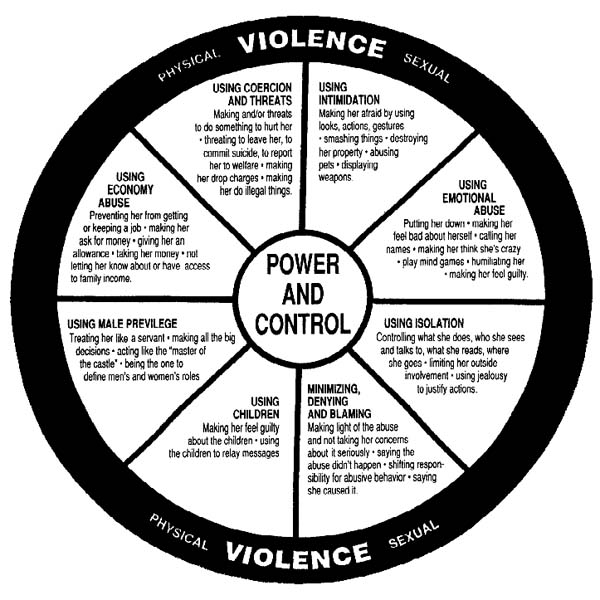
Everyone has an opinion about and questions about Janay Rice. Why, why, why. I pray someone is there for her, helping deflect the meanness and judgment. I worked in the field (working with batterers) for ten years. I could write pages of ‘why women stay’—explaining how women become trapped by violent men, but instead I provide the above link, and concentrate on the important question we should be asking:
Why did Ray Rice, this 218-pound professional athlete, pound on his wife, the mother of his child?
For years I sat in church basements listening to men speak about their violence towards woman. I worked in a Certified Batterer Intervention Program where men blamed their violence against women on everything from invisible buttons their unreasonable wives pressed, to whiskey and beer.
These men weren’t different from the bad boys to whom I’d once been drawn. I craved them before, but never again. My father tried to kill my mother—maybe that’s why I switched from dating these ‘bad boys’ to offering them education, and education that offered tools for change, but they had to choose to use them.
They fought the idea that they could control themselves. Thinking themselves victims of invisible buttons was more comfortable than admitting they chose violence to get their way. And what did they want? Why did cheeks get shattered and tender skin become black and blue?
Money, sex, too-cold food. When honest, they admitted they simply wanted her to shut the “f” up. They didn’t have the goal of breaking a bone. They had goals like hot suppers and sex and met them the quickest way they knew: fists and raised voices.
The curriculum included drawing triangles with chalk to help the men look at their belief system. During this lesson on the hierarchy of power, we’d use different ‘systems’ so they could identify the ways they classified people. Schools, corporations and prisons were just a few of the organizations we sliced and diced.
And family.
When asked to define the layers of family, the woman were on the bottom of the heap. Some men argued that the women rated a place above the male children, but they were always wedged under the husbands and fathers. Men who’d grown up in single mother households still stuck the father figure on top.
This doesn’t come from the air.
Honestly? I got shaky watching the video of Ray Rice beating on his wife. One of my novels, The Murderer’s Daughters, revolves around young girls witnessing their father murdering their mother. I worked with men who savagely beat (and some murdered) their partners. My father tried to kill my mother, and still I try to pretend that it’s not happening. If I attempt to live in this fantasy world, how deep do others bury it? How many of us try to pretend it’s not happening, that it can’t happen to us, and instead think of reasons why she stayed, why it happened to her, but could never happen to us.
But it’s not true. There’s an awful lot of woman-hating in the world, and it’s all too acceptable. And men who batter and kill their partners are usually self-pitying and see themselves as victims —victims with fists. For these men, it’s all too comfortable to step on someone else’s head to lift oneself up.
The men I worked with, after being arrested for hurting their wives, usually claimed good reason. “She pushed my buttons.” “She was being a bitch.” “She knows I hate it when she ... “
I’d ask them if they ever punched their boss, and they’d laugh as though I were crazy.
“Don’t you ever get mad at your boss?” I’d ask. “Don’t they push your buttons?”
“Of course, but I don’t hit them.”
“Why?” I’d want to know. “Do you love your boss more than you love your wife?”
Usually they’d open their mouth and sputter, not knowing what to say. That’s when we’d go back to the hierarchy of power.
It’s easier to step on the person on the bottom, and we’re still sadly in a world that places wives, girlfriends, daughters and mothers on the bottom rung for the crime of being female in this world.
There’s a lot left to teach our children, such as notions that equality can equal life, and bring authentic relationships. Hitting, yelling, pushing–these are all bad. It doesn’t make you big and manly. It makes you small and mean.
So why did Janay Rice stay?
It doesn’t matter one bit.
All that matters is why Ray Rice punched her, and why he chose the path of anger, violence, and meanness. How he can learn he has control. Whether he chooses to use it.
It’s on him.
October 7, 2015
Working With Batterers
 For ten years I co-led groups for violent men. I sat in a circle with a male co-leader and anywhere from 8 to 18 men who’d been violent with their wives, girlfriends, dates, sisters, or another woman in their lives.
Their violence ran the gamut from emotional abuse of the most devastating sort, to smacking, to slapping, to punching, pushing, prodding, to breaking bones to murder (thankfully not many.)
This was a Certified Boston Batterer Intervention Program. Most men were ordered into the program by the Massachusetts courts, some by the Department of Social Services, and a few were volunteers—or as we called them, wife and girlfriend-ordered.
We followed one of the state-approved educational curriculum (this was a psycho-educational model, not counseling)—in this case, the Duluth Model. The men were in the program for over 40 weeks. They ‘checked in’ with their behavior, they did homework, they did role-playing (where guess who acted the woman,) and they studied a series of topics in the quest to learn control.
We taught them that they didn’t have ‘buttons’ on their chest.
Him: She pushed my buttons! Me: Oh, really—where are they? I don’t want to accidentally push one.
We tried to teach them that they actually had plenty of control.
Me: So, how often do you hit your boss? Him: Whaddya crazy? I wouldn’t hit my boss. Me: Why? Doesn’t he make you mad? Him: Of course. But he’d fire me.
Their women couldn’t fire them. They could leave, but facing that, the men fell into Plan B:
I’ll kill myself if you leave!
You’ll never see the kids again—I’ll tell the court that you’re a drug addict.
I love you! Please give me another chance. You’re the only person in the world who understands me.
Other than the men we weeded out—the mentally ill and the truly unstable—the men were able to control themselves. Some didn’t believe it or they chose not to. Only they could choose a different way.
They fought this idea. Thinking themselves victims of invisible buttons was more comfortable than thinking themselves men who chose violence as a way to get what they wanted. And what did they want? Why did cheeks get shattered and tender skin become black and blue.
Money, sex, jealousy, children, television shows, cold food, in-laws: getting what they wanted.
The most oft-said reason when I asked what it was they wanted so very much?
Him: For her to shut the eff up. Me: Did you get what you wanted? Him: Naw. I got the cops.
It’s about intent. Most men didn’t have the goal of breaking a bone. They had the goal of a hot supper or a quiet minute or making love or . . . any of a hundred things. They reached for these things the quickest way they knew: with their fists or a raised voice.
It’s too much for me to pack this all into one post, so I’ll try to sum up with this:
What was it like to work with these men?
It was sad.
It was enraging.
At times, it was toxic to see the sheer hatred of women raw and out there.
It was never just about being drunk or high, but being drunk and high never helped.
It was about power, control, and a violence that seemed all-too-accessible.
It was about denial, and about how the shame these men felt could block their change. Because to change, they had to admit they’d done a hateful thing to people they loved.
People often ask if our program made a difference. For some it did. For others it didn’t. On the other hand, not being in the program meant there was almost no chance they’d examine their behavior.
On the best day of my almost-ten years, a woman walked in with a former client of mine. It was her husband. He’d started the program belligerent and angry. In denial.
When he began, his eyes told me how deeply he hated me.
Halfway through the program, this man (who’d grown up seeing his father abuse his mother) almost cried as he spoke of how he’d done the one thing he’d promised himself he’d never do.
He left the program wanting to work with young men in an anti-violence program.
That day, his wife came in carrying a home-baked cake and offering me and for the man with whom I co-led groups these words: Thank you for giving me back my husband.
That sums it up for me.
When people ask me if it worked, this is what I say:
It worked for that family.
September 17, 2015
Massachusetts Book Award!

The Massachusetts Center for the Book has chosen Accidents of Marriage as a “Must Read” book for 2015! It’s in wonderful company–you can see the full list for the fiction category here.
Along with the other books on the list, Accidents of Marriage is shortlisted for the Massachusetts Book Award, which recognizes “compelling works of Massachusetts fiction, nonfiction, poetry, and children’s/young adult literature” published within the past year. Winners in each category will be announced in October 2015.
August 4, 2015
Writers on Stage: 10 Tips for Readings in Public

The first time I read in public (a Grub Street open mike event at Johnny D’s in Somerville, Mass.), I sucked.
Years later (no more experienced) with my debut book launch looming, I had to do better. Pre-publication months were spent attending bookstore events with a notebook (and money*) in hand.
Many of the ‘rules’ below I learned from either the awful readings I attended or the great ones. My first lessons in how-to-not-bore-people-to-death came from listening to and watching Boston (and Grub Street) authors Steve Almond (enormously funny, edgy, and self-deprecating) and Jenna Blum (extraordinarily entertaining, honest, and generous.) Learning by watching was invaluable.
From those visits, from reading the terrific book Naked at the Podium, and from my strict sister, husband, and writer’s group (who listened to my first efforts) I came up with this list:
1. Shorten Your Reading.
Don’t fall in love with yourself. It is a rare author who can read from their book for more than 8-10 minutes without engendering a tune-out from the audience. If you think you’re the exception to that rule — that you are truly the gifted one — than I challenge you watch a videotape of yourself reading.
Sharp, focused, and specific is better than droning, descriptive and general. What’s that I hear? Your work is totally brilliant? Each word a gift to the audience’s ears?
Only to you and perhaps your mother.
I spent hours searching for the right passage to read, seeking a scene I could excerpt to have a beginning, middle and end. I write “excerpt” because that’s what I’ve learned to do. Hearing a passage aloud is different from reading. Audiences tune out at long description, and a host of other non-aural-friendly words (again, go forth and visit other author’s readings.) I hone and hone (telling the audience that this is a cut-to-the-bone version.)
Slicing away the frills, I can come up with a 5 – 7 minute (or less) read that has a narrative arc. (I did once have an audience member ask me if what I did was ‘legal’ — a question that tickles me to this day.)
2. Practice, practice, practice.
I cannot stress enough the difference this will make. Read aloud endlessly, until you are on automatic. This way you can spend your energy on delivery.
And practice in front of someone honest.
3. Start with an interesting presentation.
I spend over half of presentation talking about what I consider to be the interesting backstories of my book. You can’t convince your audience your book is great by saying it: “Hey, my book is so funny! So heart-warming! So literary!” Be funny, heart-warming, and/or literary.
(And for goodness’ sake, never read aloud your own reviews.)
4. It’s your job to do at least one of these:
Entertain.
Enlighten.
Excite.
Engage.
If you are incapable of any of the above, pick a relevant-to-your-book topic and do some research.
5. Be humble. No matter who heck you are.
I listened to a bestselling author who, after his reading, shared stories of his fame. Then he warned the audience that he had to leave very quickly, so please not to talk to him as he tried to leave.
I know there was a better way to present that information.
6. Pick out your reading passage well in advance.
Few writers entertain, enlighten, or excite while stumbling their way through unfamiliar territory. Leafing through your book, obviously letting the audience know you are seeking something to read, only says, “I didn’t care enough to prepare.”
7. Smile, for God’s sake!
If smiling is against your belief system, please find some other way to let the audience know you are happy to see them. They are your bread and butter — not vice-versa.
And please — don’t forget to look up. I always look for one person to be my ‘safe’ person; there’s always one kind face out there. Talk to them.
8. Don’t whine.
Don’t say any of the following:
“I hate readings!” (Then don’t subject us to it.
“This is the worst part of writing.” (Then stay home.)
“I’m exhausted!” (Then go to sleep.)
9. Be concise.
Do not ramble. Make your point once. Do not restate your points. (See how I just said thrice what I should have said once?)
Double your brevity when sharing the stage. Writers who step on the toes of other writer’s time — on panels, in bookstore dual readings, at events — embarrass themselves and enrage the other writers.
10. No drinking to excess
In my case, this means no drinking at all. Know your capacity. (I have none.) I have cringed — along with the rest of the audience — when subjected to an obviously drunk author’s pointless slurring.
11. (Bonus advice!) Coping with bad readings.
When you have a bad reading (we all have off nights) shrug it off. Don’t turn to the audience for sympathy. You can’t undo what’s been done.
I remember (ugh) my worst reading — I was hot, sweaty, and nervous. I was surrounded by two authors far more experienced, interesting, pretty, thin, funny, and entertaining than I could ever be.
Plus they had prettier jewelry and were better dressed.
And I hadn’t prepared properly for the audience.
It was like a bad date. I just wanted to go home.
This is when you have that overflowing glass of wine.
Conversely, when attending a reading of a fellow author who is off her game, only give advice and/or critique if invited. (And even then, judge the request. Rule of smart-thumb: when asked at a party “does this make me look fat,” the answer is always “no!”)
And there is a special place in hell for unsolicited advice. I still smart from the fellow writer who, in line at a bookstore book signing) that for personal reasons had been particularly nerve-wracking) in the guise of friendly help, leaned over the table to say (as 25 people stood behind him), “You sounded nervous! I thought you’d do better. You know, you should be less nervous when you speak! Were you okay?”
Not anymore, I wasn’t.
** Sidebar: When attending other writer’s readings it’s always noticed whether you do or do not buy books. And you can imagine which action invokes which feeling. My personal side caveat? At dual readings, I buy the other author’s books. Call it karma, call it good manners — either way, reach into your wallet. And when you tell yourself you ‘can’t afford it,’ please remain truthful and ask yourself these questions:
How many Starbucks or other over-priced coffees did I buy this month? How much wine or beer or other alcohol did I consume, and how much did it cost? Is my reputation with other authors worth as much as coffee or booze?
July 31, 2015
The Discomfort of Death

Yes, death is the last frontier. In my circles, even friends who talk about sex, politics, and that most forbidden of topics, paychecks, rarely talk about the nitty-gritty of death. That’s something we save for our own private hells or heavens.
This is the opening to MacKinnon’s novel, Tethered.:
I plunge my finger between the folds of the incision, then hook my forefinger deep into her neck. Unlike most of the bloodlines, which offer perfunctory resistance, the carotid artery doesn’t surrender itself willingly. Tethered between the heart and the head, the sinewy tube is often weighted with years of plaque, thickening its resolve to stay. More so now that rigor mortis has settled deep within the old woman.
Probably even those who, because of culture or religion, are comfortable with the notion of death — thinking it a walk into a better place — avoid the actual physical notions of our bodies decay after we take our last breath. What happens to our now soulless bodies? These secrets are reserved for those who work in this secret landscape.
July 1, 2015
Seeing Themes & Obsessions In Novels

“There have been two great accidents in my life. One was the trolley, and the other was Diego. Diego was by far the worst.”–Frida Kahlo
Writers often don’t recognize their own embedded themes until after writing “the end”–and sometimes not even then. True revelations are often handed to us by reviewers, book clubs, and Goodreads. Only by looking back do we recognize our sore spots and consistent curiosity.
After finishing book three, when it became time to write a “think piece” on why I wrote that particular book (the why–besides fascination–being something I never truly see until well after I’ve chased ideas to the final page) the link for my novels jumped out like specters I’d avoided too long. Embedded in my stories of accidents, domestic homicide, infidelity, and adoption were enormous chunks of loneliness; the loneliness we can face, even in the midst of a seemingly intact group of family and friends.
As a child, the problems my parents faced kept me from being embraced by a larger community or neighborhood, whether cultural, religious or social. Thus, I find myself looking at families where affiliations and beliefs may provide comfort, or may create isolation.
Nor, by my third book, could I deny that exploring unintended consequences of actions fascinated me . . . “But I never meant for that to happen . . .”
The ‘but’ can be anything from a child’s bruise which resulted from that basket of laundry you left by the stairs, to a house stripped of all valuables, because you didn’t lock the door . . .or it can be your spouse lying in the ICU, fighting for their life, because road rage overcame good judgment.
Every move we make creates ripples within our circle of friends and family:
Tenderness and kindness engender waves of confidence and love.
Rage evokes fear and damage–sometimes as small as hurt feelings, sometimes avoidance, sometimes tiptoeing, and sometimes love is ripped apart.
In the worst of times, lives are forever altered. In my third novel, Accidents of Marriage, for the damage he caused, the husband and father in my book might as well have used a fist instead of his cutting words; a gun, instead of a speeding car.
And then there is guilt. Another of my perseverations. Working with batterers for many years taught me that change only comes when we face the damage we’ve brought–but admitting we’ve brought harm, especially to people we love, takes courage. In my work I found that I am always exploring how far we’ll go to avoid admitting culpability:
Will we lie?
Will we pile hurt onto already broken people?
How brave can we be?
I write to find the answers to these questions. I believe all fiction–whether atmospheric literary novels, science fiction, or romance– authors reveal themselves in unintended ways and the more vulnerability we allow ourselves (and the more authors take the eyes of their husband, mother, best friend off the work-in-progress) the more authentic the work.
And when a writer swears that no piece of their authentic self is on the page, I wonder why.
June 25, 2015
Novels About Novelists

Does everyone have sub-genres within genres for which they hold an unusual fondness?
I can’t resist a good infidelity story (really, can anything beat Presumed Innocent by Scott Turow?) I can rarely refuse the intricacies of inter-racial love (Meeting of the Waters by Kim Mclarin,) or a memoir about substance abuse (Drinking: A Love Story by Caroline Knapp. I treasure reading about the layers of an unknown (to me) culture (A Fine Balance by Rohintin Mistry) or the heartbreak of emigrants navigating a new world (my current audio/car book is Shanghai Sisters by Lisa See,) but for a real roll in schadenfreude reading, I pick up a juicy novel about novelists.
Grub by Elise Blackwell: I ate up this Shakespearean ‘all’s well that ends well’ satire, described as a “a long overdue retelling of New Grub Street—George Gissing’s classic satire of the Victorian literary marketplace—Grub chronicles the triumphs and humiliations of a group of young novelists living in and around New York City.” This book reminds writers to watch the hubris and check literary-attitudes at the door; but it does it with tender love and great humor.
Breakable You by Brian Morton: All of Morton’s novels reveal the writer in his/her quirks, foibles, and often-unattractive hunger—though never callously. It’s hard for me to pick just one of this author’s books, but I found it most memorable for the story of just how far a writer might go to gain glory, and what it life might be as the wife, daughter, or friend of such a writer.
Read all of his books.
How I Became a Famous Novelist by Steve Hely: This broad satire of Pete Tarslow, a lost soul who sets out to write a novel to impress the woman who dumped him, somehow meets what seem like disparate goals by portraying a character who is a naïf attempting to be Machiavellian. Hely skewers self-importance with a broad gun. This is a fast and funny read. Treat yourself after the holidays: spend New Year’s Day reading this.
Misery by Stephen King: Page-whipping layered with psychological insight, this is a book that will not be put down. Publisher’s Weekly said: “a writer held hostage by his self-proclaimed “number-one fan, is unadulterated terrifying. Paul Sheldon, a writer of historical romances, is in a car accident; rescued by nurse Annie Wilkes, he slowly realizes that salvation can be worse than death.”
The Bestseller by Olivia Goldsmith: This fun and gobble-it-down tale for authors is described thusly by Publisher’s Weekly: “It’s is an old adage that books about publishing do not sell, because those likely to be most interested will beg, borrow or steal them rather than buy. In the case of the latest by Goldsmith (The First Wives Club) that would be a pity, because it is a highly entertaining tale with a good share of romance and drama, considerable humor and some cynical fun at the expense of the book business; there are many recognizable characters, and a number of real-life walk-ons. (There’s even an index so book people can look themselves up, but be warned: it is not what it seems.) Goldsmith’s busy plot which makes publishing seem as glamorous and crazy as fashion or the movies (settings for two of her previous books)? offers four women with novels being considered by high-powered New York publisher Davis & Dash. There is an elderly romance queen with a fading readership; a proud mother trying to get someone to read a magnum opus by her dead daughter; a cool young Englishwoman who has penned a quirkily charming book about a busload of American tourists in Tuscany; and a desperate young woman whose devious husband is trying to steal all the credit for her true-crime roman a clef. Throw in a corrupt publisher doctoring the books to try to make his own sales look bigger, a nymphomaniac and alcoholic editor-in-chief, a staunch young editor and her lesbian agent friend, and you have the makings of a spicy literary stew.”
Fun, huh? Can you see why I had to include almost the entire review? Sadly, the book is out of print (the author, Olivia Goldsmith died six years ago) but it’s well worth getting from the library or ordering second-hand.
June 21, 2015
My Father Bought Me Pretty Shoes
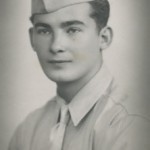
I dreaded Father’s Day as a child. Every year (during those far less aware days) we were asked to make a card for our father as a classroom project. My father died when I was nine, so from that day forward I made cards for my grandfather, embarrassed by my lack.
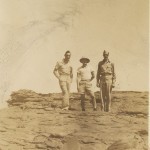
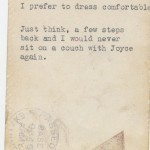
I don’t know much about my father. He served in World War II. In Africa. He was responsible for something to do with writing. In the photos he sent back to my mother he was often wearing a bathing suit and he typed messages on the back of them. As a fatherless child (who hadn’t yet uncovered any family secrets) I read the simple sentences on the back of those photographs as though they held the secrets of the universe; trying to know out who my father was through those eight or ten words. He compared the beaches of Africa to Coney Island. He wrote funny messages to my mother; in my mind, I pumped up those messages until they became sonnets.
Most of what I’ve written about my father has been unhappy snapshots based on memories I’ve inherited or been given. Once he tried to kill my mother. He drank to excess, and when he did, he became (according to my cousin who saw more than I did) quiet, sometimes angry, depressed or sullen. According to others, he took pills. Many of them and they were the cause of his death at 35.
I have heartbreakingly warm memories of my father, despite the family history. I don’t remember him high or drunk. When I cried, he told me to “stop the banana splits” and then bought me something special. (I don’t remember why I was crying. I know it was on a weekend I spent with him, my sister, and my grandparents. He and my mother were divorced.)
He played ragtime on the piano. He seemed to love me. He seemed sad. All the time.
After he died, no one ever mentioned him again. When I was old enough to be less afraid of upsetting my mother, I tried teasing bits information from her.
All she professed to remember was that she married him because he was handsome. And everyone was getting married. So I hold onto the love I feel for no reason I can truly remember, except that he once bought me pretty patent leather shoes with straps you could swing to the back.
When he fought in WW II he was so young—perhaps 21? He was handsome. He played the piano. He fought in World War II when he was barely in his twenties. And when I cried, he noticed.
June 19, 2015
Chris Cooper Reading Scene From “Accidents of Marriage” at Fundraiser
Last night, at a fundraiser for AccesSportAmerica, inspired by Madelyn Bronitsky, Oscar-winnng actor, Chris Cooper, read a scene from “Accidents of Marriage.” (Hosted by Bella Luna Restaurant in Jamaica Plain, with the sponsorship of Papercuts JP and Westwinds Bookshop.