Randy Susan Meyers's Blog, page 21
October 8, 2016
Not Our Shame

With every listen, the Trump sex assault tape sounds worse. Every syllable engenders feelings of being small and wretched and humiliated. I search for the genesis of these emotions, for the source of my desire to curl up into an invisible ball.
And the truths wash in:
The time my neighbor’s boyfriend covered my six-year-old crotch with his (fifty? sixty?) year-old fingers, inserting them through the fabric, while giving me a swim lesson in Coney Island. My shame, even now, floods back. My shame. My sister was with me. We were two little girls.
The time a well-suited man with a briefcase grabbed my denim-covered vagina as he passed me on a sunny Manhattan street. Madison Avenue. With the casualness of ordering a hot dog. I was seventeen. My shame, even now, floods back. My shame.
When I tell my husband, after we watch the sex assault tapes, about these incidents, (just two moments of so many) he is shocked. I’m dismayed that it’s a surprise, until I realize that, like women all over the world, I carried these dirty secrets as though it was my shame to carry.
I go to Facebook, ready to never hide men’s crimes again. I post one of my stories. The lesser of the evils (why?) about the man on Madison Avenue:
“When I grew up in NYC, being grabbed and groped made life miserable. Going on the subway meant avoiding hands. The worst was when I left Brooklyn and rode into Manhattan. Once, at 17, walking down the streets in a very expensive area, a businessman grabbed me just as Trump described. And the horror still stays with me to this day. It’s not locker room talk; it’s assault. This pic is me around this age.”
I put up my high school graduation picture.

Without me asking, friend upon friend began posting their stories.
I was 6, alone in the library, when a creep exposed himself to me. I didn’t know what I was seeing, didn’t even know what/how to tell. A few years later, my dad sat me down to warn me about such guys– little knowing it had already begun to happen.
The horror starts oh-so-achingly, horribly young:
I went through the same gauntlet of sexual harassment and assault going to junior high school and high school on the NYC subway every day. The first time I was groped, I was 11. This stuff ain’t just talk—it translates into what happens to girls and women every day, all the time.
The first time it happened to me was 11, walking my bike across a 4-lane street in suburban New York. Two boys ran up to me, groped me, and ran away.
I remember being groped by “nice boys ” from the neighborhood in the water at Revere beach . They thought it was fun. It was not. Today there would be at least some guidance on how to speak it. Then it was just shame.
7th grade, social studies with Mr. P (boy would I love to include his name!). I was wearing a white Swiss Dot blouse, small breast pocket. I never carried a purse then and had no other pockets, so my dollar for lunch was in there. Mr. P stops by my desk, his thigh pressing against me, I can barely breathe and cannot bring myself to look up. He leans down and says next to my ear while his finger is inches from my breast, “I can see you’re not poor!”. Middle of class, 25 students. It’s still so vivid, I even remember we were working on map reading using a key. I saw him many years later when I was 18. He gave me this lascivious look as he said hello. My words froze in my throat. This is the shame that happens.
I hated changing classes in junior high. We had lots of stairs in the school and it was hell for girls 6 times a day! Didn’t matter if you were wearing pants or skirts, and they got you front and back! Plus the talk that used to go on in study hall or lunchroom. Boys using words like c*+#t if you protested and p%ssy if they thought they were giving you a come on. Deplorable! Girls never said anything to teachers or administrators due to shame.
For many of us the assaults were also at home:
Knock on wood nothing like this has happened to me in public but I could list of a couple of things that trump has done (either that he’s bragged about or women said he did) that my mother’s boyfriend did to me at home, or that happened at school.
My worst memory at fifteen is vague – my mother’s boyfriend saying goodnight – I thought my mom was in the room – sticking his tongue in my mouth – finally – at around forty years old – I asked my mother about this: She said she didn’t date him much after that.  Awareness like your post is bringing life for young girls and women to the forefront. Thank you.
The power of standing up and saying no more is the strongest of weapon we have. A few writers on my thread said “use my name, like New York Times Bestselling authors Diane Chamberlain:
In my rather rough high school, as we left the cafeteria, there would be a tight bottleneck. Kids poured into the narrow hallway, body to body, and traffic slowed. There were certain boys who would “grab pussy from the rear” (don’t know how else to describe it!) while the girls were trapped and helpless in that bottleneck. It was common and repulsive. Complaining finally got teachers to stand guard in that hallway.
And M.J. Rose:
Yes, it happened to me on the subway. In a blackout on the train once a guy grabbed my breast and them my hand and stuck my hand on his dick. I have never taken the subway alone since I was 15.
The rape and assault culture follows us to college:

Berkely CA 1970
And to make it worse you were told not to dress “that way,” like it was your fault.
I was 19 and standing–almost hate say this among readers–in the hallowed stacks of my local library. A man squeezed behind me, put his hands between my legs, and swiped. I only saw his back as he swiftly retreated and of course I didn’t yell–I was in a library. Who could I tell? I didn’t even know what he looked like. Never told a soul till today.
I was in college, walking home to my dorm room in the afternoon, when a passing man reached out and grabbed my breast. I wasn’t physically hurt, so it was hard for me to explain to myself why I felt so shaken and violated.
We leave home, hopeful, then greeted by horror, getting schooled in rape-avoidance:
When I moved from California to go to school in Boston, I didn’t have a car and had to learn to ride the subway. A male friend told me that if someone groped me – and to be ready because they would – I should wait until the next stop, turn to the guy and scream at the top of my lungs, “GET YOUR FUCKING HANDS OFF ME”. He said chances were that the guy would run off the train. It worked. I had to grab a few by the balls, twist and tell them to go away. That worked. Getting past the age where I was a target worked too. What didn’t/hasn’t worked is trying to change attitudes (or something) so that neither men or women are harassed in that way. Sex is not a weapon. Using it as such is illegal but we need to do more.
My first day at Barnard College – riding the subway downtown. Carriage was packed. Next thing I knew this tall, ferocious looking man with a scar running across his face, had shoved his hand beneath my skirt, inside my underpants. I must admit I froze for a moment before finally pushing my way away.
And then, like a disease, we try—unsuccessfully— to avoid assaults as we enter adulthood. The assaults are our own bosses, neighbors, fellow passengers, and those passing by, ready to grab our dignity:

I was at the Nathan’s on 8th St in the Village when a guy grabbed me and stuck his tongue down my throat. It was horrifying. Still is.
I lived in New York in the early 80s and experienced the same thing. I’ll never forget walking through Greenwich Village on a beautiful fall day, feeling happy and good about the world, when some guy walked by and said “Nice tits. I’d like to suck ’em off your chest.” I felt as if I’d been slapped. I felt violated, humiliated, and suddenly self-conscious about what I was wearing (a sleeveless turtleneck, for God’s sake). It ruined my day and stayed with me forever. The idea that men do that now to my daughters makes me sick.
Happened to me on #7 train and I had a backpack and French horn with me and I couldn’t do anything. For years I thought it was my fault
I was groped and grabbed in NYC on an almost daily basis. I would always kick out and at least get the guy in the shins if not higher. I walked very fast and I’d just keep on walking. Puts you on edge and keeps you there. Makes life into a battleground.
After twenty, thirty, years, forty years and more, we remember. For so many of us it still hurts so badly that we can’t even specify the crime:

I remember fuming when Clarence Thomas’s actions toward Anita Hill were called “unwanted sexual advances.” He attacked her!
Remember it. Experienced it. Horrified that it is still an issue.
I know almost no women who don’t have these stories. For me, too, it was back in a time where it was seen as ‘harmless fun’, and making an issue if it was what was seen as odd. Starting with other boys, quickly including grown men, I remember feeling like I must be wrong for feeling like it WAS a big deal.
I remember I had a summer job in Manhattan . . . and was walking from the subway to the job...and this man who was dressed up like a business man . . . approached me and asked me to do some things to him . . . it was horrifying...just horrifying
And we had to ride the trains almost pretending to be blind to avoid all the men exposing themselves.
I’ve had a few similar experiences myself and they were mortifying, every one.
Doctors, lawyers, mothers, writers, teachers, retirees, journalists—all of us reduced to terrorized girls as we remember:
Unwanted attention from powerful men, needing these businesses deals, and that still is true today. All these stories are making me ill. Unfortunately I’ve had my share of these experiences as well and feel like vomiting now. I like the suggestion of when-i-got-grabbed, something like the take back the night movement years ago...take back the subway, the streets, our bodies, our lives.
The husband of a friend of mine grabbed me once in a pool, and I was filled with such shame. I did nothing, yet there I was: so embarrassed to tell anyone. It took weeks for me to find my voice and realize I did nothing wrong. Donald Trump’s behavior is indefensible, and it will resonate with many women.
I had boss who was coming back from lunch drunk with another guy and passed me and my friend while we were going to lunch. He grabbed my breasts at the corner of Longwood and Brookline Avenues and laughed and said he always wanted to do that.
Our words are a rage-filled mix of inchoate and knife-like precision”
Groped quite often during my banking days . . . The story of men and boys forcing their will on women and girls is as old as the hills, and absolutely ruinous every damn time. I am struggling between sadness and rage over all this. At 17, I had no idea that a girl could grow up without being subjected to the will or whims of men, that a girl could be treasured, protected, made strong by a wonderful relationship with a father. I really didn’t understand how to talk about what happened to me until I was 30 . . .
. . . And then there would be many, many, many hours of recovery work in private, and in a women’s group. I don’t think it’s an exaggeration to say that that saved my life — not because I ever felt I should end my life. I really never did. But because telling and listening was so incredibly powerful, and so anchored me in reality (the reality of the world and a comparative reality with others because I learned about their experiences too) I was given a new foundation to grow from, and 4-5 other women who said yes, and we believe you — every single week.
Men, their rights, and nothing more; women, their rights, and nothing less. Susan B. Anthony
The deficit that assault imposes on its targets is tremendous. But I made use of the anger I uncovered, and I made it serve me as an individual, and I have never doubted nor apologized for its power. Thank you for opening this difficult and all too common and devastating subject. Women supporting women can do almost anything, and I am proud to know you through this crazy FB network. Blessings of earth on each and every one of you reading or responding to this thread.
We speak up for the next generation:

It’s so creepy to be out with my daughter and see men older than me checking her out.
My daughter just said that this (Trump’s taped remarks) is what perpetuates rape culture. It’s sad that she’s aware of it at 17 but also a relief to know that she is able to defend herself and speak out against it. Maybe this generation is taking their professional opportunities for granted and working to eliminate systemic misogyny and discrimination.
My daughter is 21 and says that she can be dressed in the crappiest clothes, leggings and a XXL men’s button down shirt, hair in a pony tail, no makeup and she gets lewd comments or even just pick up lines. This happens at places like Home Depot and by men old enough to be her father!
I find myself grateful for the men who ‘liked’ the thread. This isn’t a war we fight alone. And it happens to men, too:
As an “out” gay boy in high school, I was assaulted in the locker room, groped repeatedly and told to “put out” because I was “a disgusting faggot.” I was once seized in a parking lot by a bunch of drunk jocks as I made my way home after a drama-class play and tied to a car fender, dragged about the parking lot before three of my drama classmates came flying out in my defense with props – yes, props – from the play to threaten the jocks. I was cat-called in my 20s for dressing like “a fairy” and in my 40s in my government job as a highly skilled grant writer, my male boss made lewd comments to me during supervision, insinuating I could “get ahead if I gave some head” and then, after I refused him on numerous occasions, citing I was married to my husband among other reasons, he proceeded to make my working life a living hell by increasing my workload, denying vacation requests, keeping me late, and generally making himself the center of my personal hell until he caused me to have a nervous breakdown. It’s not as common as it is with women, but it happens, and it’s horrifying for the person on the receiving end. You feel humiliated, disempowered and it makes you feel as if you’ve done something wrong, when in fact they are the ones taking advantage of a patriarchal system that favors men in power acting like slobs.
I thank writer Kim Bullock, summing this up with such strength.
This is me at sixteen, two years AFTER the first time a stranger thought it his right to grope me the manner Trump describes. The photo was taken maybe a month after the time I had three random men in ONE WEEK, all strangers, pinch, proposition or otherwise consider my body their personal plaything. I did or said nothing to invite such attention, not that it should matter, and I was about as covered up as I was in this photo, not that that should matter either.

Look closely. That is the face of a child who felt as though she had targets painted over all her private parts and a sign that said “go ahead” on her forehead. That is the face of a child who felt she had no voice, no power. She felt about two inches tall.
Why do I share this publicly? To lend my voice to all the other women also sharing their stories today. To stand up and say that I’ve had it with people excusing rape culture in this country. Trump represents rape culture. It wasn’t just locker- room talk and he’s not sorry at all. He believes that money and notoriety give him the right to behave that way and he’ll continue to do so if elected.
Please don’t send the message that treatment like I and millions of other women and young girls have endured is okay. It is not okay!
The time has come for all of us to speak up, If we flood social media with our stories, perhaps the men in our lives, many of whom are GOOD men, will not be so quick to dismiss “locker-room” talk. Shame keeps us silent, but we have nothing to be ashamed of.
This is not our shame
This is your shame, Mr. Trump, for assaulting women with your groping and grabbing, and your so-called-kisses, and your string of insults towards women for everything from menstruating, to breastfeeding, to eating, to going to the damn bathroom.
This is your shame, Billy Bush and every other person who becomes the wingman in assault.
This is our shame, America, if we allow this man anywhere near the White House.
It is on every decent man and woman in this country to say “No More.


October 7, 2016
Behind One Writer’s Group Curtain (at The Boston Book Festival)
At the Boston Book Festival on Saturday, October 15
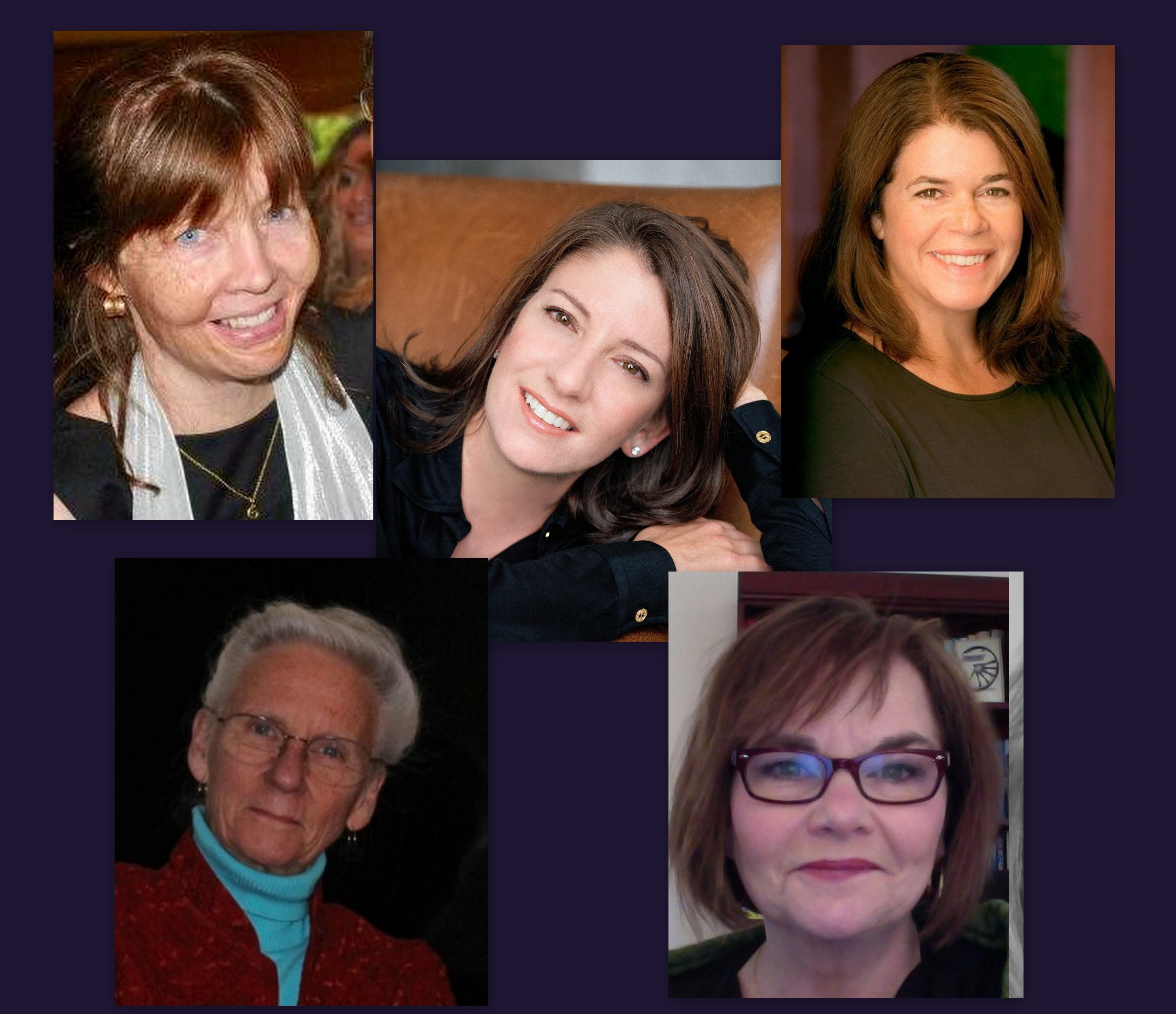
The initial spark of a novel and putting words to paper is a solitary thing—but even introverted authors need a band of brothers or sisters. Come hear the secrets of one writing community that has balanced isolation and creative collaboration for eight years—and has a lot to show for it! Between us (Nichole Bernier, Kathy Crowley, Juliette Fay, Randy Susan Meyers, and E. B. Moore ) we’ve twelve published books (with five more in the works), many published short stories and articles, a literary blog, awards and residencies, and (coming soon) a big bricks-and-mortar local bookstore. Pull up a chair and see what it’s like to be part of a rigorous yet supportive writing circle.

645 Boylston Street at the Old South Church. Noon. Boston Book Festival!

October 3, 2016
Likeability Laced With Betty Crocker Syndrome (Real Life & Fiction)
We shouldn’t judge the behavior of a perpetrator by their victim’s personality.
Nobody deserves abuse.
Nobody learns (not children, not adults) through terror.
Not in fiction.
Not in real life.
A few years ago, when speaking about my then-just-released novel Accidents of Marriage, a reporter mentioned how surprised she was by her negative reactions to the main character—how the character seemed to ‘provoke’ her husband and how the reporter sympathized with the husband’s anger. The next day, participating on a book festival panel, the moderator spoke of the husband in the book as a virtual out-of-control monster and his wife Maddy as a frightened woman battling emotional abuse.
That their were opposite reactions to my work pleased me. Making characters as nuanced on the page as we are in real life is a priority.Plus, just as an author’s belief system colors their work, readers bring their own experiences to their judgment and fascination with characters. (Similar to how each one of us found our favorite Beatle—mine was George—I’ve always been drawn to the quiet ones).
Never-the-less, there’s a troubling undertone I’ve noted in some reactions to novels about that examine whether a woman (or man) ‘deserves’ to live without verbal, emotional, or any other sort of abuse. In Accidents of Marriage (using multiple points of view: a wife, a husband, and their 14-year-old daughter) Maddy is married to Ben, a man with a trigger-temper; she never knows what will set it off. When he’s charming, he’s terrific: funny, smart, and capable. When he’s irate, he’s terrifying: raging, critical and blaming the world for his troubles.
Relationship interactions are never static in life or novels. Sometimes Maddy placates, working hard to keep her children unaware of the problems she and Ben face; other times she gives in to her frustration and answers back, giving in to her edginess. Plus, she’s a bit messy, a working mother with three children, who’s rarely (if ever) on top of the unending chores facing the family. When life becomes too much, she’ll nibble a Xanax. But none of that is equivalent with ‘deserving’ to be screamed at, raged at, or to be driven at speeds that petrify her. She certainly doesn’t deserve to end up in an accident that changes her entire life.
For years I worked with batterers, criminals, men ordered to a violence intervention program and the hardest nut to crack was convincing them of this: one’s violence, one’s temper, or one’s temperament, should never be contingent on another’s behavior. We must control ourselves. To whit, we scream at our spouses and children—rarely do we verbally attack our bosses no matter how much they enrage us. Why? Because a) our bossed have power over us, and b) we do have control—it’s all about whether we choose to use that skill or not. And yes, it takes work.
Which brings me to the likable character. There’s been a debate for a while in literature (especially when the author and/or main character is a woman) as to whether or not a book should be judged on the likeability of a character. This flies in the face of what I want in a book: to be fascinated by the men and women populating it, to root for them to change, and for them to get through their crucibles as unburned as possible.
And with the ‘bad guys’? I want them to own up to their deeds and pay for them.
In my novel Accidents of Marriage, the only innocents are the children. (And they have their extremely unlikable moments; is there a child that doesn’t?)
Which brings me to Betty Crocker.

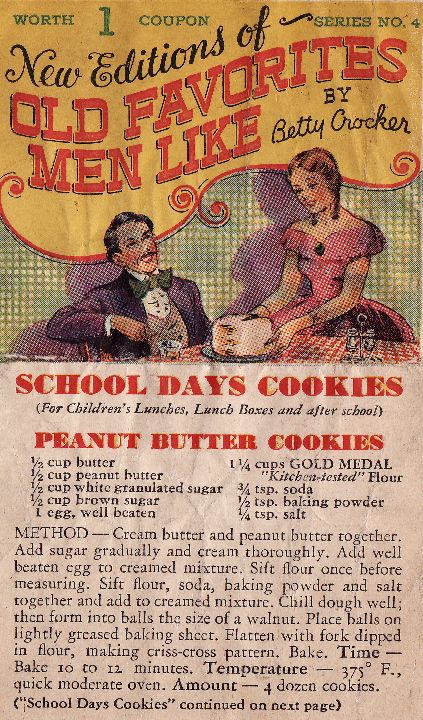
When I worked in domestic violence, we spoke about working against the Betty Crocker syndrome (Betty Crocker representing the impossible ‘perfect woman’,) and the overwhelming importance of teaching the public, the men we worked with, and those in the field, how we should never judge the behavior of a perpetrator by the personality of their victim. Nobody deserves to be abused. Nobody learns (not children, not adults) through terror.
Terror is the tool of the abuser. It’s how they off load their own defeat. It’s how they release their own negativity on those around them.
It’s never a tool for building family. Not in real life, not on the pages of a novel.
The very best way to comport oneself is too follow the moral code you’ve built for yourself and not allow it to be mutable based on other’s behavior.
It’s hard work to get there.
In real life.
And on the page. But that’s what I want in the novels I read and write: stories of imperfect men and flawed women taking the long hard journey.
So, I think I’m speaking on behalf of many authors: judge us on our lousy writing, our bad grammar, our lack of plot, our sloppy syntax, and our purple prose. But please don’t expect all us to feature Betty Crocker. Sometimes we really want to get inside the head of the Carmela Sopranos. The complicated women.
September 12, 2016
Writer Wars, Hierarchy & Can We Get Over Ourselves?
I’ve been mid-book since my addiction began at age four and I pray to have a TBR stack until the moment I die. On that heap I want it all: pounding plots, the wow of discovery, the comfort of recognition, and astounding characters. If I’m lucky, some will have all of the above. Whichever book I’m holding, I don’t want to be judged or lauded for it and I don’t want to shelve my books by race, class, or gender.
Tayari Jones, writing to fellow authors about the stratification of literature, said it very well: ‘other writers do not deserve your scorn.’ In the spirit of writer/reader heal thyself; I’m going to work on remembering those words. There’s room for all in the big tent of reading.
At about age ten, I began crafting my library checkouts, hoping I’d look smart. I’d balance my Nancy Drew with a biography of Abraham Lincoln so the librarian thought well of me. (It seems my self-esteem problem enacted early.)
There are times when writers (raising hand) all seem to be versions of that 10-year-0ld me.
Not a month ends, or so it seems, without the battle of literary fiction being weighed against commercial fiction, which might then spit on genre, often with writers feeding on their own. And women’s fiction? Who even knows what it is, right?

(above text from Accidents of Marriage)
Many writers and reviewers deny the claim that newspapers ignore women and non-white writers and unfairly categorize mainstream novels (a topic well-examined by Roxanne MtJoy and Michelle Dean) asserting that they’re simply reviewing superior fiction, which quickly devolves into another fight of literary fiction versus commercial work, which then becomes tainted with the construct of healthy peas and carrots books versus sinful bad-for-you ice cream reads.
Michelle Dean writes far better than I could on the danger of, as eloquently put by Nigerian writer Chimamanda Ngozi Adichie’s, “The Danger of A Single Story,” noting, “the silencing and devaluing of those voices has consequences, particularly when it tends to happen disproportionately to certain populations.
People ask me to categorize my work, but I can’t. The media has treated me well. I’ve been told I’m everything from commercial to women’s, to literary fiction. (And let’s not forget the all-new “upmarket fiction.”) Trust me, I know when I’m being complimented and when I’m being scorned.
I’ve read Franzen, Haigh, King, and Picoult. I turn to the right, look at my bookcase, and see Ann Patchett, EB Moore, Gail Caldwell, Lola Shoneyin, Julie Klam, Catherine McKenzie, Robin Black, Kim McLarin, Paul Theroux, Elizabeth McCracken, Renee Swindle, Ernessa Carter, People, Poets & Writers, Carleen Brice, Jenna Blum, Ann Bauer, M.J. Rose, Nichole Bernier, Juliette Fay, Charles Dickens, Larry McMurty, Vincent Lam, Liane Moriarty, Julie Wu, Alexander Smith, Bill Roorbach and Saira Shah. (They’re getting along very well, thanks for asking.)
It saddens me seeing writers buy into a class war. Lit looks down on commercial, who look down on genre, who eschew whatever’s lower on the literary food chain.
Some argue that commercial books find their audience, only literature needs reviewing—but how does that answer the male/white tipping of review scales? How does that take into account mid-list graveyards, marketing bonanzas and being hit by the pretty stick? It seems a specious and power-retaining argument. Independent films survive even as reviewers include commercial films in their wheelhouse.
In a time when black writers are shunted to an African-American section, when men are deemed artists and women crafters, when science fiction and thrillers are better covered than woman-identified historical fiction, and romance is relegated to the deepest closet of shame reads, then the commercial-lit divide becomes nastily entwined within a gender and racial writing divide. Coloring this is the character versus plot battle, well described by author Chris Abouzeid in his post, “The Decomposition of Language.”
“Of course, a skilled hand will always make a story more enjoyable. And if you can do it in a manner that’s never been done before, all power to you. But let’s not fool ourselves. There will be stories told in the clumsiest, most conformist, even trite manner imaginable that will endure longer than most of our beautiful sentences. There will be tales we’ve heard a hundred times before that will thrill us simply because the circumstances are different, or the characters are new, or the times have changed. Maybe language will be part of that difference. But if not, it doesn’t matter. In the decomposition of literary bodies, words are the first to go. What’s left is the enduring beauty of story.”
(Originally Published in 2015)
August 22, 2016
Art from Books — Books to Art

Books are a many splendored thing. If I could, I’d decorate my home with framed book covers (perhaps I will convince my husband . . . ) Already my home is decorated with books of every type—soothing me each way I turn. Now, I see books being made into art and these creations remind me of Kintsugi, described this way “a Japanese method for repairing broken ceramics with a special lacquer mixed with gold, silver, or platinum. The philosophy behind the technique is to recognize the history of the object and to visibly incorporate the repair into the new piece instead of disguising it. The process usually results in something more beautiful than the original,” on Colossal.
This sculpture by Paige Bradley below is an extraordinary example . . .
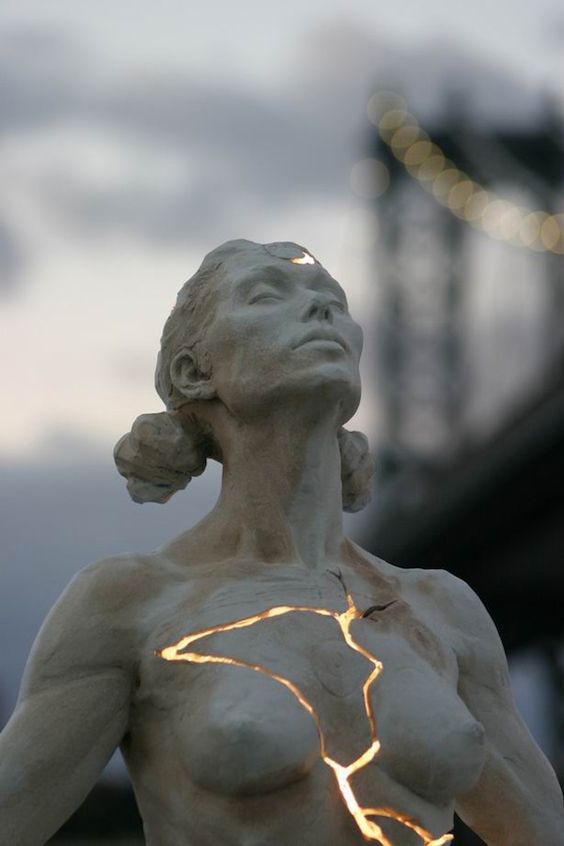
though I am equally entranced by smaller pieces, like the one below Bradley’s, which comes from The Broken Bowl Project on Etsy

As Kintsugi takes broken pottery and mends it into something beautiful, so book art takes unwanted pages and creates extraordinary things. Had I an artistic bone in my body, I’d invent Book Kintsugi. Please, artists, take heed!) Meanwhile, before I find a way to create golden book treasures, I spend my love on these images from my book art Pinterest Page.

Edinburgh’s Secret Sculptor

Magical Altered Book
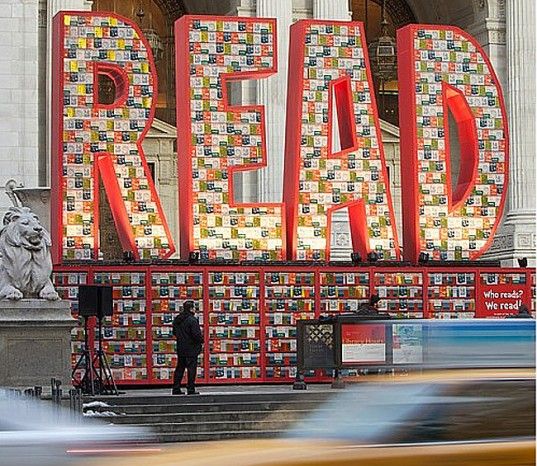
I love this temporary work of art. A sculpture made of 25,000 Dr. Seuss books for the New York Public Library was funded by Target. Then, all the books were donated to local schools and libraries
And of course, being who I am, my mother’s daughter . . . there is jewelry, like this beauty from PaperStatement on Etsy.

August 3, 2016
THE WIDOW OF WALL STREET

The Widow of Wall Street: A novel about the seemingly blind love of a wife for her husband as he conquers Wall Street, and her extraordinary, perhaps foolish, loyalty during his precipitous fall.
Phoebe sees the fire in Jake Pierce’s belly from the moment they meet as teenagers. As he creates a financial dynasty, she trusts him without hesitation—unaware his hunger for success hides a dark talent for deception.
When Phoebe learns—along with the rest of the world—that her husband’s triumphs are the result of an elaborate Ponzi scheme her world unravels. Lies underpin her life and marriage. As Jake’s crime is uncovered, the world obsesses about Phoebe. Did she know her gilded life was fabricated by fraud? Did she partner with her husband in hustling billions from pensioners, charities, and CEOs? Was she his accomplice in stealing from their friends and neighbors?
Debate rages as to whether love and loyalty blinded her to his crimes or if she chose to live in denial. While Jake is trapped in the web of his own deceit, Phoebe is faced with unbearable choice. Her children refuse to see her if she remains at their father’s side, but abandoning Jake, a man she’s known and loved since childhood, feels cruel and impossible.
From penthouse to prison, with tragic consequences rippling well beyond Wall Street, The Widow of Wall Street exposes a woman struggling to redefine her life and marriage as everything she thought she knew crumbles around her.
Pre-orders are being taken at Amazon, Indiebound, Amazon Canada, Indigo, Powells, Barnes & Noble & other online sources.
Advance reader copies will be out soon. If you mark The Widow of Wall Street ‘to read’ at Goodreads, you’ll be first to know when you can try for one of the copies Atria/Simon & Schuster will be giving away.
July 27, 2016
Protected: WOWS
This content is password protected. To view it please enter your password below:
Password:
July 11, 2016
Balancing Shrill, Skill and Shill

“It is better to remain silent and be thought a fool than to open one’s mouth and remove all doubt.” – Abraham Lincoln
Selling–the worst part of writing. Writing a book takes a certain set of skills: intense concentration, imagination, the ability to read the same 400 pages time after time, and the fortitude to take criticism (excuse me, ahem, critique) without weeping. You must learn to shut out all noise at a given moment and you must love solitude.
Getting your book in reader’s hands requires the opposite: Writing in 140 character sound bites, talking about oneself while sounding modest, balancing online ME ME ME without having REGO (readers eyes glaze over) or worse, RSOY (readers sick of you.)
Anyone who had read the hysterical, but frighteningly close to the truth, New Yorker piece on promotion knows how much falls on the writer these days. (Surprisingly few readers know this; at a recent book club, members were shocked to learn writers did their own promotion.) Even if one has great and supportive publicists (which I do) it’s usually on the writer to get that book read.
“You have to sell it one book at a time,” I was warned when my first book launched.
How in the world was I supposed to do that? In terror, I read every book I could find (thus buying their books), listened to experienced writers, attended forums on promotion, jumped from one online site to another, lurked in online forums, came out of the closet and wrote sad plaintive pleas on same forums: in short, I gave myself a cheap fast masters in SMB (selling my book.)
The problem is this: except for the most ego-driven or ego-protected among us, it’s an unnatural position for most writers. We like working in pajamas. We like watching sentences unfold as ideas unfurl. We don’t like shaking our booties.
But we must.
This is the uncomfortable truth. If you want to follow your fantasy of writing and publishing, then you gotta shake that booty. You must learn how to sell without appearing crazed—because nobody likes the snake oil man. You must swallow your pride and put it out there—Look, I wrote a book! Want to buy it? —without coming across as greedy.
None of us succeed all the time. During my promotion of The Murderer’s Daughters I got an email from the moderator of an online alumni group to which I belong. I’d sent out a group email inviting members to a reading I’d be giving in NYC, and received this squirm-inducing scold:
Usually I try not to use the XYZ Group for personal promotion.
Please refrain in the future.
Shame overcame me as my self-image went from energetic-information-sharer to self-promoting-hussy. I imagined all the whispers in the online hallways: Who does she think she is? God, enough, already. Will she ever shut up about that damn book?
But they said I have to! I whine.
Yeah. Shaddup, I imagine the answer.
But, I remind myself: this was my dream. Suck it up, self. So here’s my advice for writer-friends and my pleas to reader-friends:
Readers: Forgive us each day our daily shilling. It’s the only game in town these days. And if you have it in your hearts, and you like our books, please pass the word along. (I say this knowing that in April I’ll be reentering the arena of letting readers know about book 4. (The Widow of Wall Street. Available for preorder now!!!) See how I am (not so covertly) sneaking this in?
Barnes & Noble: link soon appearing!
Writers: Find a launch buddy or two. Or three. Someone with whom you can be as whiny and self-pitying as you need, someone who won’t judge you for it. BFF launch sisters and brothers. Make sure it’s someone you can truly root for and who will totally root for you. Know that sometimes she’ll be ahead of you. That’s okay—keep rooting. That’s what sisters do for each other.
June 28, 2016
Worshipping at the Library Alter
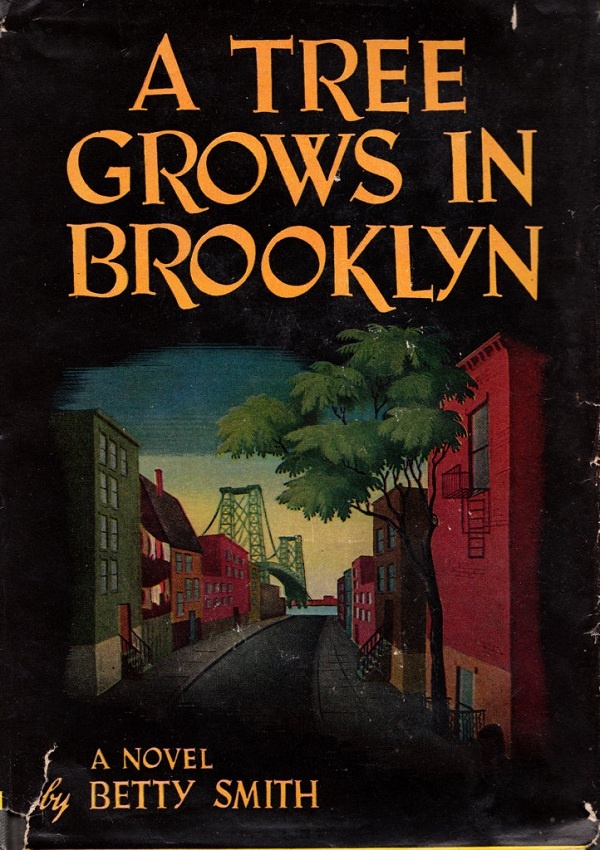
“The library was a little old shabby place. Francie thought it was beautiful. The feeling she had about it was as good as the feeling she had about church.” A Tree Grows in Brooklyn, by Betty Smith.
Some books etch themselves on your soul. I don’t remember how old I was when I first read A Tree Grows in Brooklyn. Perhaps eleven? (Francie’s age when the book begins.) How many times did I read it after that? Ten? Twenty? Enough so that every scene, every character indelibly marked me.
I never visited a church or synagogue while growing up in Brooklyn, but like Francie Nolan, I worshipped at the altar of the library. From Francie, the protagonist in coming-of-age novel, I learned that I wasn’t the only frightened, confused, and unhappy little girl in the world.
A Tree Grows In Brooklyn by Betty Smith was the only bible I ever owned, my personal talisman of hopefulness—perhaps because similar to bookish Francie (though in different times; published in 1943, the story opens in 1912.) I grew up confused by my always-working mother and missing my father. He, like Francie’s, ran from life by what we now call self-medicating (and what Francie’s mother and mine, called nothing, because who talked about it in Brooklyn?) And then he, like Francie’s escaped forever by dying as a young man.

Like Francie, I’d experienced the horror of old men preying on young girls, the joy of having an aunt I’d worshipped, and suffered in a school I hated. Each time I read Francie’s story I was struck anew by how the author knew so much and dared to write it.
That’s the beauty of books. They don’t just transport, they heal, teach, and soothe. On the loneliest of days, they ask no more than being opened. They promise you’re not alone and provide you with the hope of a way out. The best ones don’t guarantee the happiest ending in the world (for who has that?) but show that you have the possibility of enduring (and maybe even thriving) and becoming strong at the broken places.
Perhaps all insatiable readers become imprinted by a one special book at a vulnerable age, providing that reader with characters who forever become family of the heart. Because of brave Francie Nolan, I believed I could and would survive. She gave me faith in the future. Bless you, Betty Smith. You are forever my favorite author.
June 22, 2016
THE TAKING OF PELHAM ONE TWO THREE By John Godey: The Book
Before there was the movie, and the other movie, there was, The Book.
I liked the first movie.
I loved the second movie. Denzel Washington. John Travolta. Luis Guzman. What’s not to like?
But the book, ah, I loved the book.
“Steever stood on the southbound local platform of the Lexington Avenue line at Fifty-ninth Street and chewed his gum with a gentle motion of his heavy jaws, like a soft-mouthed retriever schooled to hold game firmly but without bruising it.”
When I slip my brittle yellowing copy (hardcover, circa 1973, bought second-hand, sometime in the eighties) off the shelf, I fondle it like a great memory. I read this book many many times. I read it for the:
Plot: Hijacking a New York subway train. Okay….
Pacing: “Is there any point to killing innocent people if it’s not necessary?”
. . . and for dialog:. “Nobody is innocent.”
For The New York State of Mind: “Cut a New Yorker open and you would discover convolutions in his brain, tracks in his nervous system, that were not present in any other urban citizenry anywhere.”
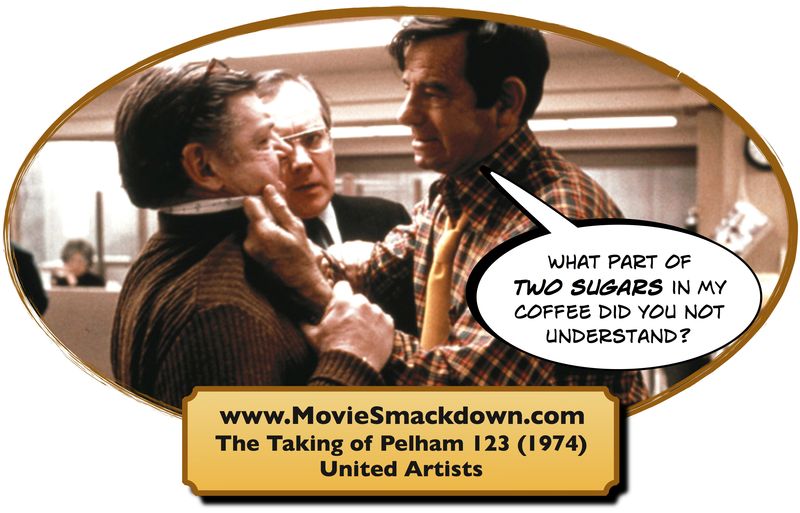
And for the A + multiples points of view. Even minor characters jump off the page; like the Mayor’s aide: “His Honor was lying on the face, his pajamas pulled down and his bare rump waving in the hair as the doctor profiled toward it with a hypodermic syringe. It was a shapely and practically hairless butt, and Lasalle thought; if mayors were elected on the beauty of their asses, His Honor could reign forever.”
I could go on. And I will.
Because, we should never forget.
First come the words.