Phil Simon's Blog, page 45
August 4, 2018
Lessons from Slack’s Origins
Like many professors, I teach software- and business development methods that Eric Ries espouses in The Lean Startup. His book touches on now-established concepts such as minimum viable products, closed feedback looks, and pivots. Up until very recently, YouTube served as my favorite example of a company changing its strategy and cashing out.
Not anymore. Now it’s Slack.
In the podcast below with NPR’s Guy Raz, Slack co-founder and current head honcho Stewart Butterfield explains the company’s beginnings and evolution—among other subjects. Here are some of the conversation’s highlights.
Understanding the Role of Luck
There’s no shortage of bogus founder mythologies today. (Hello Jack Dorsey.) This stems primarily from the fact that people love a good story. (Even when they are outright lies.) Luck is a core tenet of my belief system and something that I routinely stress to my students.
Butterfield reveals the messy details in building his companies. He describes how a bunch of smart cookies spent a great deal of time and money building a product that few people actually wanted to buy. Were it not for good fortune, we wouldn’t be talking about him and his company.
Killing Your Darlings
Butterfield isn’t shy about the difficulty he faced abandoning Glitch, Slack’s predecessor. I found his discussion of its leaky bucket particularly interesting.
Fun Fact
Not that long ago, slack.com primarily hosted cat photos. Click here if you don’t believe me.
Exhibiting Humanity
Founders of many über-successful companies these days are notoriously arrogant. (Hello Elon Musk.) Of course, exceptions abound. Netflix won’t hire brilliant jerks. Still, far too many have taken a page from the Steve Jobs’ playbook.
Throughout the conversation, Butterfield comes across as a genuinely humble guy. His refreshing thoughts on wealth and happiness coalesce with my own and give me hope about leadership. There’s a point at which he spoke about having to lay off a newly hired engineer with a three-month-old. The lesson here is successful leaders don’t need to act like narcissists and psychopaths. (Hello Elizabeth Holmes.)
Those who think that success stems exclusively from hard work are deluding themselves. As always, luck plays a critical role.
Using Agile Methods
Imagine if Slack had followed a Waterfall approach to software development. The company could have spent years and all of its investors’ funds on a fundamentally bad idea. Instead. Slack launched with minimal features and added more over time—something that it continues to do today.

Simon Says: The lessons from Slack’s origins are profound.
 There’s so much to unpack in the Slack story on so many levels. I can’t wait to integrate this into my classes next semester and beyond.
Feedback
What say you?
The post Lessons from Slack’s Origins appeared first on Phil Simon.


August 2, 2018
Thoughts on Facebook’s Stock Drop

Introduction
I recently did an interview with Blick, one of Switzerland’s largest media properties.(Click here to check it out.) I touched upon the Facebook’s historic stock plunge.
Here is the unedited version.
Is Facebook still the leader in social media?
Yes, it’s the largest social network in the history of the world. For context, more people use Facebook each month than belong to any religious group save for Christianity. Brass tacks: Mark Zuckerberg finally realized that he has created something that he cannot entirely control. That’s the lesson from his testifying in front of the U.S. Congress.
Why is Facebook not as popular anymore?
Make no mistake: Facebook is still very popular. Let’s not forget that its user growth slowed last quarter but it still grew.
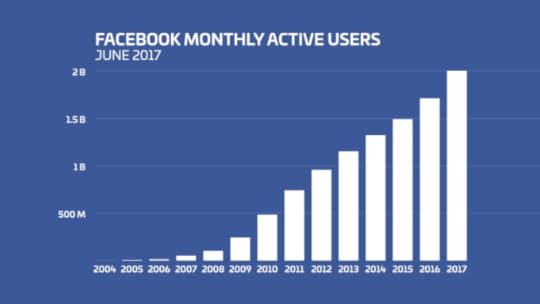
Source: TechCrunch
This isn’t easy to do when a company’s users exceed two billion. By way of comparison, Twitter stalled at about 325 million monthly active users (MAUs) and MySpace never approached even that number.
Give Zuck credit for wanting to stop fake news on the social network.
Facebook’s rate of user growth has been slowing for some time now. Zuck wants people to spend quality time on the site. That is a big shift from years past.
Investors are rightly concerned that people will spend less time on the social network. This means fewer ads served. This means less money. Remember that Facebook’s real customers aren’t its users; users are the product. Facebook’s true customers are advertisers. Users are just a means to an end.
Where did Facebook go wrong?
Facebook has turned a blind eye to years of privacy and security complaints. I addressed this issue back in The Age of the Platform. I’m hardly alone in this regard.
After many mea culpas, Zuck finally realized the power and reach of his company. Russian operatives weaponized his social network—as well as others.
With the Cambridge Analytica scandal, the company reached a tipping point. Give Zuck some credit, though, for wanting to stop fake news on the social network—even if that means a significant correction in the stock price.
What could Facebook have done better?
Facebook should have heeded the warnings of users, business leaders, and even some progressive politicians. Even if it had, though, the company’s scale and power is unprecedented. It was only a matter of time before something like this happened.
Who benefits from an unregulated Facebook?
Bad actors. We have seen how they can manipulate people’s behavior and spread fake news. Those opposed to democracy and who want to cause us harm stand to benefit.
Do you think the scandal will affect Facebook in the long-term?
Yes, to some extent. First let’s discuss Facebook’s market share. Along with Google, Facebook is part of a duopoly in digital advertising. Advertisers will flock to Facebook because there simply aren’t many alternatives. Twitter, Pinterest, and the like are rounding errors and niche products—at least for the time being.
Facebook lost about one million users due to the enactment of GDPR, but the reason for the stock’s drop appears to be pretty prosaic: investors’ long-term outlook has soured. Zuck is committed to making Facebook “safer.” This means more quality time on this site. What’s more, his nearly unprecedented voting power allows him to do just that irrespective of what John Q. Shareholder thinks.
As for its two-billion-plus users, where else are people realistically going to go? Like Amazon, Apple, and Google, Facebook benefits from massive network effects. I can’t imagine too many venture capitalists funding a new social network right now. Until and unless people leave in droves, Facebook will continue to be profitable—just maybe not as much as before.
The post Thoughts on Facebook’s Stock Drop appeared first on Phil Simon.
July 29, 2018
How to Successfully Introduce Slack in the Classroom
 As I end my summer session, I now have a year of using Slack in the classroom under my belt. The Slack experiment has been glorious and I have no intention of stopping anytime soon. In this post, I’ll offer some advice to intrigued professors about successfully introducing Slack into the classroom.
Do Some Digging
What if anything does the central IT department at your college or university say about collaboration tools such as Slack and its ilk? It’s an important question to ask. The answer falls into one of the following four buckets:
Explicitly approved
Explicitly outlawed
It depends
What’s Slack?
Five minutes of research can save professors five months of headaches. Let’s assume, though, that you don’t fall into the second bucket—i.e., no central technology gatekeeper at your school has put the kibosh on Slack.
Start at the Beginning of the Semester
On day one of class, tell your students that you will be using Slack throughout the entire course. That is, don’t try to introduce it midway in.
Better yet, include it on the syllabus as I do. I like to think of the syllabus as a contract among professors and students. Why wouldn’t professors use their syllabi to mention the primary means by which they’ll interact with their pupils over the course of the semester?
Emphasize the Benefits of Learning and Using Slack
Professors wear many hats—one of which is to prepare students for their post-academia lives. Sure, some students will immediately flock to graduate school. Odds are, though, their next steps will involve full-time employment.
Explain to students that organizations increasingly are adopting Slack and comparable tools. What’s more, Slack isn’t just a tool for Silicon Valley darlings such as Amazon, Apple, Facebook, and Google. Even old-school organizations in the media are embracing it.
No, a student with a 2.4 GPA and a record of cheating probably won’t land his or her dream job because of Slack. Consider two virtually identical students seeking employment in the same industry. All else being equal, I’ll bet on the one who regularly uses cutting-edge technologies and tools over the one who does not.
The students benefit here but so does the professor. Using any new tool requires a learning curve and Slack is no exception to this rule. Still, the squeeze is worth the juice. At any given point, I know that I need to search a specific Slack workspace—and only that Slack workspace—if I need to find something. I can’t imagine ferreting through my inbox and a host of other applications to find a key piece of information or an announcement.
Routinely Use Slack during Class
As I write here, I use Slack in the classroom in many ways. In my experience, younger students tend to quickly embrace new tools. Reinforcing Slack and using it creatively is only going to accelerate its momentum. In other words, walk the talk.
Stick to Your Guns
Some students will invariably ignore your instructions and send you e-mails. This happens to me in every class.
Consistency is particularly important.
Resist the urge to reply with your answer. I effectively move the “conversation” to my tool of choice: Slack. I smile when I get a slack notification from that same student. (In case you’re curious, this takes two seconds because I recorded a shortcut on my Mac with TextExpander.)
 As I write in Message Not Received, consistency is particularly important with any communications tool. I’ve heard of some professors giving their students their cell numbers. Toss in e-mail, private conversations, Slack, office hours, landlines, Twitter, and announcements in learning management systems. The potential for information overload is real.
I’ve heard plenty of “the dog ate my homework excuses”, but professors who rely upon too many communications channels may legitimately confuse their students. Pupils honestly may not receive a timely message. To this end, I disable announcements in Canvas.
Encourage Communication among Students in Slack
Whether it’s texting, Snap, WhatsApp, or some other newfangled tool, students these days have so shortage of communication tools at their disposal. I like to compliment students who post interesting tips, videos, or articles in Slack. As you’ll see below, I attempt to bring others into the discussion with a simple question and the @channel tag.
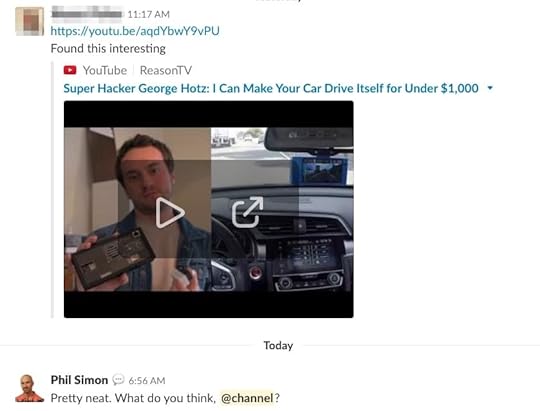
Simon Says: Successfully introducing Slack isn’t that hard.
This isn’t rocket surgery. Follow the advice in this post and you shouldn’t experience many problems in your Slack journey.
Feedback
What say you?
The post How to Successfully Introduce Slack in the Classroom appeared first on Phil Simon.
July 25, 2018
Why I Often Answer Analytics Students’ Questions with Questions

Introduction
I’ve written before about the parallels among poker, analytics, and Big Data. Brass tacks: To be successful at poker on a regular basis, one needs to constantly deal with incomplete information. The best players continually update assumptions based on new data. In other words, whether they know it or not, they embrace Bayes’ Theorem.
As I tell my analytics students, this is the very mind-set that they’ll need to exhibit in their careers if they want to be successful. Put bluntly, their bosses won’t consistently hold their hands for them.
As someone who comes from industry and has written a few books on related topics, I like to think that I know what many employers hiring analytics students want. In other words, I’m no anomaly in thinking this way. I’ve read plenty of job descriptions in my day. Plenty of hiring managers and analytics professionals echo the same general sentiment.
Consider the following quote from the PokerStars Business Intelligence Graduate Program (yeah, I didn’t know that this was a thing until recently either):
A strong CV with a relevant qualification is a great start, but what we’re really interested in is how our applicants go about finding and solving problems, and questioning their own conclusions. We want to know how people think.
Well said.
Emphasizing Critical Thinking in the Classroom
Over the course of the semester, many of my analytics students come to me looking for answers on their individual research projects. To be sure, this is understandable. This is the first time that most of them have undertaken an independent, data-driven, 40-page research project. For several reasons, though, I’ll often will answer their questions with questions of my own.
Students looking for simple, 10-step checklists will find themselves wanting.
First, I don’t do this to be coy. Although I’m relatively learned when it comes to data and analytics, there’s plenty that I haven’t seen—especially when students are free to pick whatever topic they like. (No one can possibly know everything in such a robust discipline.)
Second, let’s say that I do know “the answer” to a particular student query. As the quote above evinces, it is vital for them to learn how to think critically and question their findings.1 Students looking for simple, 10-step checklists to get A’s will find themselves wanting in my class and, I would argue, after they graduate.
Simon Says: Analytics students have to get comfortable with being uncomfortable.
It is imperative that analytics students learn how to think critically, ask and answer questions for themselves, and go where the data takes them. In their careers, they will have to deal with ambiguity and conflicting data. Routinely. Their choices and how well they handle the cognitive dissonance that they’ll invariably face will largely drive their success.
Feedback
What say you?
The post Why I Often Answer Analytics Students’ Questions with Questions appeared first on Phil Simon.
July 19, 2018
Does Uber treat its driver-partners fairly?

Introduction
Uber has been in damage control long before it axed its toxic CEO and appointed a new one. Case in point: its newest commercial with a “Going Forward” theme.
None of its recent moves seems to have stemmed the tide of driver complains. (Ahem, “driver-partners” in the company’s forced vernacular.) There’s a reason that sites such as The Rideshare Guy get plenty of traffic and private Facebook groups abound. Site founder Harry Campbell even wrote a book about what drivers really need to know about working for Uber and Lyft.
Disclaimer, I’m a Lyft fan and won’t use Uber on general principle. Uber’s new CEO and PR campaign aside, the company’s dozens of scandals and renegade culture have been inexcusable—even sickening—to anyone with a moral compass. (Its new HR head resigning is a fresh one.) Susan Fowler’s oft-read post was my last straw. At least it started the much-needed #MeToo movement, but I digress…
Brass tacks: Many Uber drivers feel like they’re getting the short end of the stick. Remember that Uber fare are not fixed à la those of traditional taxi companies. Rather, Uber charges customers and pays drivers varying rates. Factors in its vaunted algorithm include: time of the day, location, number of drivers in the area, traffic, etc. (I suspect that factors such as prior riding history, demographic information, gas prices, and others also determine price.) What’s more, the company hasn’t been entirely entirely transparent with its drivers. Lawsuits alleging fraud are on some courts’ dockets.
An Economist’s Dream
Uber is fascinating on a number of levels—not all of them positive. As I write in Analytics: The Agile Way, it’s an economist’s dream. The company’s controversial dynamic pricing allows it capture at least some of the consumer surplus (something that Airbnb is now doing as well):
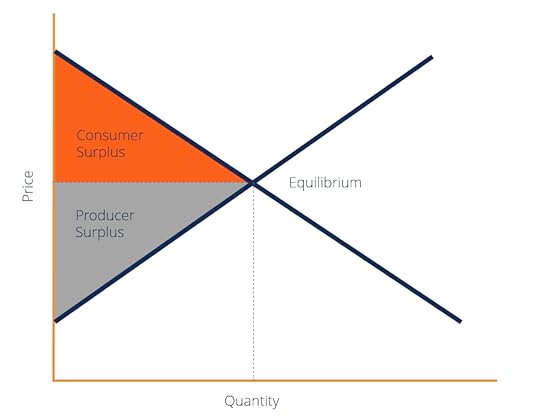
Uber is fascinating on a number of levels—not all of them positive.
This type of real-time data allows Uber to practice perfect price discrimination. To be fair, many industries and companies do the very same thing and we’re fine with it. For instance, movie theaters provide discounted tickets to senior citizens. Airlines alter their prices based on myriad factors. Many restaurants allow kids to eat for free.
I recently discussed Uber’s algorithm, trove of data, and pricing strategy with Fox10 Phoenix. (Full story is here.) Here’s a clip of our interview:
I appear at about 2:20 in the video.
Whether the company treats its drivers fairly is a matter of opinion. It doesn’t help matters, though, that Uber hoards its data from the very “partners” without whom it would cease to exist—at least in its current form. (Driverless cars aren’t ready for prime time yet.)
Simon Says: Uber is an unprecedented amalgam of amazing tech and data and zero ethics.
Without transparency, it’s only natural for Uber’s “driver-partners” to assume the worst. Ethics aside, though, Uber’s tech and data certainly qualify as innovative. The dataphile in me finds this fascinating.
Feedback
What say you?
The post Does Uber treat its driver-partners fairly? appeared first on Phil Simon.
July 18, 2018
Traits and Skills of Effective Professors
 I just reviewed my evaluations from last semester and updated the interactive data visualization here. It’s obvious to me that I’ve made quite a bit of progress as a professor. This begs the question: Why? In this post, I’ll describe some traits and skills that help make me an effective professor.
Public Speaking
When I accepted my position more than two years ago, I knew that my history of speaking in front of large groups of people would translate well in academia.
I wasn’t wrong.
To be sure, being an effective professor entails more than just speaking good well. If my students can’t understand their professors, then how can they learn from those at the lectern?
I look at the ability to speak well in public as a quintessential hygiene factor. That is, its presence doesn’t guarantee anything but its absence certainly does. In the publishing world, analogues such as book endorsements or covers come to mind. Put differently, speaking well is necessary but not sufficient for doing the job well.
Tact
Academia in general can be a fickle place and ASU is no exception to this rule. Agency Theory is alive and well, a lesson that I learned on a separate project that I managed for my department. The question isn’t if conflict or disagreements will occur. It’s when.
If my students can’t understand me, then how can they learn from me?
Fresh out of grad school, few of my friends and colleagues would have given me high marks here on the tact scale. Over the last twenty years, though, I have significantly improved in this regard. I look back at a few prickly situations over the past few years and know that my tact helped achieve the outcome that I desired—or al least averted a disaster.
Willingness to Change
This is a key tenet of my teaching philosophy. Although most of my in-class exercises achieve their desired outcomes, some did not. Case in point: an early effort in my analytics class to predict Twitter’s acquisition price. It turned out to work far better in my head than it did in front of 30 students. In that case, I decided to junk the exercise and replace it with a better one. In another instance, I listened to student feedback and routinely granted five minutes at the end of my capstone courses for brief group meetings.
Humility
I sometimes poke fun at myself in class. Sure, I take what I do seriously but don’t take myself too seriously. (As a longtime Rush fan, I am stealing from the band’s playbook. Rush is infamous for its sense of humor, especially on stage.)
What’s more, I’m not afraid to say “I don’t know” when that’s the case. I do the same thing during the Q&A session after my keynote talks. I can’t imagine having an opinion on everything and some student questions come from left field.
Finally, I’ll freely cop to mistakes. If I get a date or fact wrong, I’ll admit as much. A few times, I’ve misstated something but no one caught me. I then posted the correction in Slack. Facts matter more than ever.
Simon Says: Effective professors are self-aware.
By no means am I perfect but my evaluations and feedback are largely positive. Perhaps it all stems from being self-aware.
Feedback
What say you?
The post Traits and Skills of Effective Professors appeared first on Phil Simon.
Traits and Skills that Make for an Effective Professor
I just reviewed my evaluations from last semester and updated the interactive data visualization here. It’s obvious to me that I’ve made quite a bit of progress as a professor. This begs the question: Why? In this post, I’ll describe some traits and skills that help make me an effective professor.
Public Speaking
When I accepted my position more than two years ago, I knew that my history of speaking in front of large groups of people would translate well in academia.
I wasn’t wrong.
To be sure, being an effective professor entails more than just speaking good well. If my students can’t understand their professors, then how can they learn from those at the lectern?
I look at the ability to speak well in public as a quintessential hygiene factor. That is, its presence doesn’t guarantee anything but its absence certainly does. In the publishing world, analogues such as book endorsements or covers come to mind. Put differently, speaking well is necessary but not sufficient for doing the job well.
Tact
Academia in general can be a fickle place and ASU is no exception to this rule. Agency Theory is alive and well, a lesson that I learned on a separate project that I managed for my department. The question isn’t if conflict or disagreements will occur. It’s when.
If my students can’t understand me, then how can they learn from me?
Fresh out of grad school, few of my friends and colleagues would have given me high marks here on the tact scale. Over the last twenty years, though, I have significantly improved in this regard. I look back at a few prickly situations over the past few years and know that my tact helped achieve the outcome that I desired—or al least averted a disaster.
Willingness to Change
This is a key tenet of my teaching philosophy. Although most of my in-class exercises achieve their desired outcomes, some did not. Case in point: an early effort in my analytics class to predict Twitter’s acquisition price. It turned out to work far better in my head than it did in front of 30 students. In that case, I decided to junk the exercise and replace it with a better one. In another instance, I listened to student feedback and routinely granted five minutes at the end of my capstone courses for brief group meetings.
Humility
I sometimes poke fun at myself in class. Sure, I take what I do seriously but don’t take myself too seriously. (As a longtime Rush fan, I am stealing from the band’s playbook. Rush is infamous for its sense of humor, especially on stage.)
What’s more, I’m not afraid to say “I don’t know” when that’s the case. I do the same thing during the Q&A session after my keynote talks. I can’t imagine having an opinion on everything and some student questions come from left field.
Finally, I’ll freely cop to mistakes. If I get a date or fact wrong, I’ll admit as much. A few times, I’ve misstated something but no one caught me. I then posted the correction in Slack. Facts matter more than ever.
Simon Says: The effective professor is self-aware.
By no means am I perfect but my evaluations and feedback are largely positive. Perhaps it all stems from being self-aware.
Feedback
What say you?
The post Traits and Skills that Make for an Effective Professor appeared first on Phil Simon.
July 16, 2018
Why I Teach

Introduction
Every once in a while I write an existential or contemplative post. Eight years ago, I felt compelled to articulate why I write. Today I’ll cover why I teach. I’ll start with some personal reasons and then move into institutional ones.
Stability and Reduced Stress
The vast majority of writers and public speakers don’t realize anywhere near the success of Malcolm Gladwell. These exceptionally well paid folks represent the exception that proves the rule: Booking lucrative speaking gigs ain’t easy. The same holds true for book advances.
My professor salary is hardly exorbitant but it ensures that I’ll be able to live comfortably. ASU benefits far exceed those that I’d be able to obtain on my own. I don’t have to worry about selling books, landing new writing and speaking gigs, etc. When they do come along, I’m happy to oblige, but my livelihood doesn’t hinge upon landing them. Put different, in this increasingly chaotic world, a little stability is invaluable.
Flexibility
As long as I do my job, it doesn’t matter where and when I prepare.
During my consulting career, I’ve always struggled with the idea that I had to be glued to my seat for eight to ten hours per day. When I accepted my full-time professor gig two years ago, I was sure about two things. First, no one would be tracking my hours. As long as I did my job, it didn’t matter where and when I prepared. Second, I’d still be able to maintain my writing, speaking, and consulting practices—at least to a certain degree. I can continue to read books, hit the gym, play tennis, and live a balanced life.
Colleagues and Personal Interactions
My previous writer-speaker life was at times a bit solitary. Don’t get me wrong: I continue to enjoy working at home. Still, I wasn’t going to collide with anyone in the office. As much as I enjoy my downtime and privacy, sometimes it’s fun to grab lunch with a colleague or have an impromptu hallway conversation.
The Academic Environment
There’s just something fundamentally cool about surrounding yourself with (mostly) people who want to improve themselves. Rather than immediately dismiss my recommendations (as many of my consulting clients did over the years), most of my students listen to me. (For instance, I love how they have taken to Slack.) I feel a considerable amount of pride when they run with one of my ideas and expand upon it.
Students and the Two-Way Learning Street
I enjoy my interactions with almost everyone. This goes double for my best students. Being able to reach students, see progress, make them think critically, and solve problems gives me hope for the future at a time when I certainly need it.
Throughout my career, I have loved disseminating knowledge. Ideally, though learning should be a two-way street. I’m the first to say “I don’t know” when that’s the case. There’s so much to learn about technology, data, and analytics. I really enjoy it when a student shows me a new tool or tip in an existing one. (For instance, I didn’t know about Orange until a gifted student in my analytics class introduced me to it. Last semester, a student informed me that Excel for the Mac finally supported pivot charts—something that power users had long requested.) As I’ve said many times before, surrounding yourself with smart cookies makes you smarter.
The Challenge and the Rewards
Try getting 50 Millennials to pay attention to a lecture for 80 minutes—at 8:30 in the morning no less.
It’s not easy but rewarding things rarely are. I like to think that I thrive on challenges. Trying to reach to 21-year-olds surrounded by technology falls into that bucket. No professor reaches everyone, but I’ve accepted the challenge and I’m making progress. Case in point: my student evaluations have improved considerably since I started.
I can’t really describe how good and powerful it feels when a student offers genuinely positive feedback. A few have even sent me thank-you notes after the semester ended. These put a smile on my face.
Future Friendships and Professional Opportunities
I have no doubt that many of my students will go on to do great things. I stay in touch with a decent number of them. Whether it’s on a personal or professional level, I suspect that many of these relationships will benefit me down the road.
This is happening sooner rather than later. Last year I started 5marbles with some of my very best former students. It’s not that I want to quit academia; I just would love to work with these ridiculously talented rock stars again. I’d be shocked if other opportunities don’t come my way over the forthcoming years.
Simon Says: Why I teach isn’t all that complicated.
All in all, I enjoy the professor life. To paraphrase Walter White, “I like it. I am good at it.” It’s really that simple. This decision to become a professor changed my life for the better.
Sure, it’s still a job and if I were king, I’d made some changes. Nonetheless, the pros heavily outweigh the cons. I enjoy developing new in-class exercises, trying new tools, and recommending articles and sites to my students.
Feedback
What say you?
The post Why I Teach appeared first on Phil Simon.
July 11, 2018
Office Setup of a Tech-Savvy Professor
I get the whole minimalism movement. Really. Still, I just don’t see how a spartan office setup is possible for a tech-savvy professor. In this post, I’ll list and describe the tchotchkes that I use in the office and the classroom.
Note that I’m leaving out some personal devices such as my iPhone and iPad. All non-Apple affiliate links below go to each product’s Amazon page.
In the Office
If ASU didn’t allow me to use a Mac, I don’t know if I would have accepted the position.
It all starts with my 15″ MacBook Pro. I won’t provide all of the technical specs but my laptop hums with 16 GB of memory.
I’ve been a fan for a long time. I switched to a Mac in 2010 and only regret having waited that long. If ASU didn’t allow me to use a Mac, I don’t know if I would have accepted the position.
For years I’ve been a two-monitor guy. The increase in productivity isn’t two-fold; I find that it’s exponential. For me, 23″ (give or take) is the sweet spot. I’m a fan of the Dell SE2416HX 23.8″ Screen LED-Lit IPS Monitor.
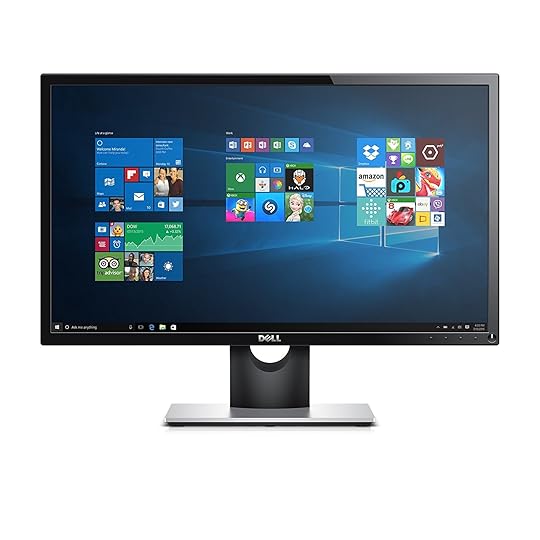
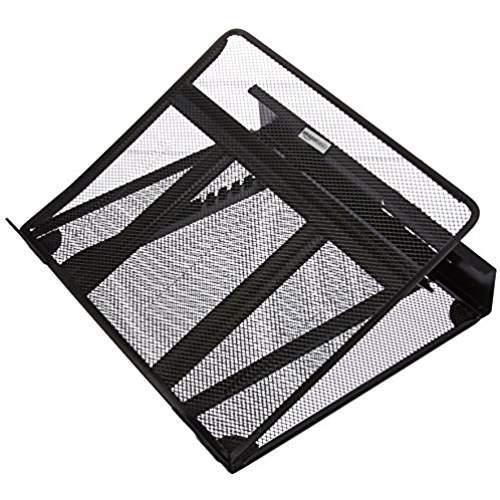
I can’t easily view my screens if I’m sitting too far away from them. Because of this, I love the AmazonBasics Ventilated Adjustable Laptop Stand. I can adjust my laptop to my preferred angle and still see what I’m typing and reading.
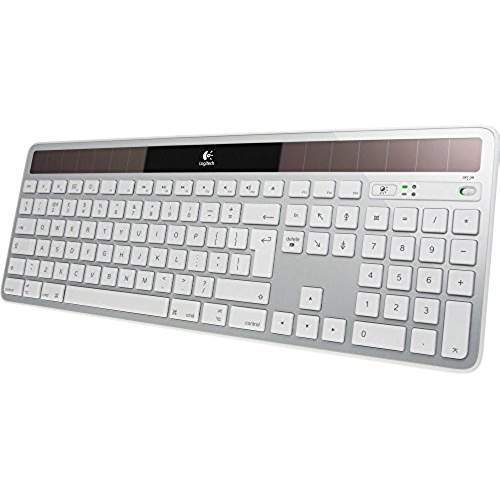
It’s just not healthy to hover over a computer all day. In my PC days, I used to use a Microsoft ergonomic keyboard. I haven’t found proper one for the Mac that works for me. As a placeholder, I use the Logitech Wireless Solar Keyboard K750.
I can’t imagine using a “normal” wired mouse these days. As you can see, my desk is cluttered enough. I find that this Anker AK-UBA 2.4G Wireless Vertical Ergonomic Optical Mouse minimizes any wrist pain.

It’s silly not to back up your data—and not just in one place. For physical storage, I use this Western Digital USB 3.0 2 TB external hard drive. Because ASU has purchased a Dropbox business license, I keep all of my files “in the cloud.” This way, I’m protected if something happens to my external hard drive (which is exactly what happened last month).

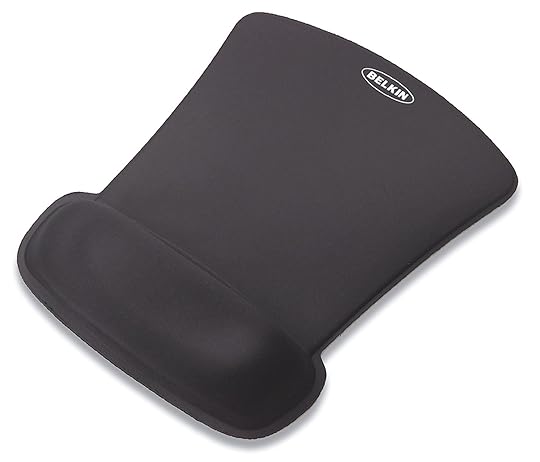
To provide additional wrist support, both at work and in the office I use the Belkin WaveRest Gel Mouse Pad. That extra 1.5″ or so of support really helps if I’m at my computer for more than a few hours.
There’s no way that I could get by with only a few USB ports. Because of this, I add a bunch more with the USB Hub 3.0 Splitter, LYFNLOVE 7-Port USB.

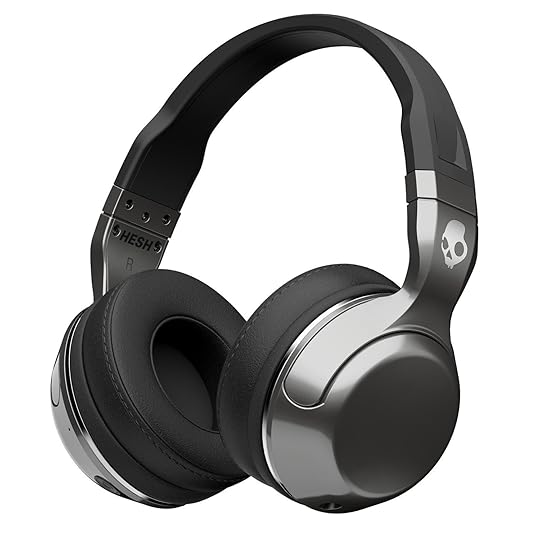
I’m always listening to music but I don’t want to disturb my colleagues. A while back I bought the Skullcandy Hesh 2 Bluetooth Wireless Over-Ear Headphones and I have no complaints.
In the Classroom
I’ll sprinkle in videos throughout the semester. I pause the video at key points to spark in-class discussion. (I just can’t dial up Jeff Bezos and have him give a guest lecture. A pre-recorded interview has to suffice.)
Some ASU classrooms sport desks with adjustable heights. Unfortunately, not all of them do. Because I keep my slides as spartan as possible, I often include some notes in PowerPoint presenter view. This means that I need the laptop as close to my eyes as possible. The lightweight and portable Filo Laptop Stand is nothing short of a godsend.

Although all ASU classrooms sport audio-visual systems, some are a little janky. In some cases, it’s just easier for me to use my computer’s native Bluetooth functionality. To this end, I’ll just bring my Beats Pill 2.0 Portable Speaker and turn it on.

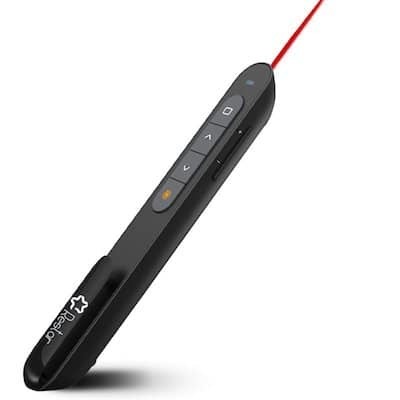
I use slides and like to walk around when I lecture. I can’t imagine being tied to the desk and advancing my slides manually. Because of this, I use this Wireless Laser Presenter. For some reason, the laser doesn’t work sometimes but it’s not a big problem for the most part.
When you put it all together, it looks something like this:
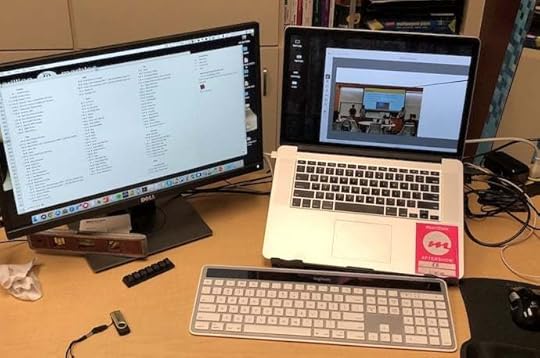
(In case you’re wondering, that’s a Marillion backstage pass sticker next to my Mac’s touchpad.)
Simon Says: This office setup works for me.
That covers everything. It might seem a bit elaborate, but collectively all of this gear helps me get quite a bit done in the office and in the classroom.
Feedback
What say you?
The post Office Setup of a Tech-Savvy Professor appeared first on Phil Simon.
July 9, 2018
Three Main Types of Capstone Project Problems

Photo courtesy of Gratisography
Introduction
My last post on ways to manage capstone projects got some nice traction. (The Chronicle linked to it.) Today I’ll return to the subject and discuss what to do when these projects don’t go according to plan. I’ll describe the major types of capstone project problems that I’ve seen on the 150 or so that I’ve indirectly supervised. I’ll also proffer some advice on what to do about them.
Before continuing, a few notes are in order. First, in this post, I’ll discuss the most common issues that I’ve faced. This won’t serve as a comprehensive list. Second, I’ll assume that these capstone project problems actually exist. That is, the students aren’t lying to me or misinterpreting the situation.
Finally, I like to think of myself as a servant leader on capstone projects. To that end, my approach is hands-off for for several reasons. There’s simply no way for a professor to employ a hands-on approach on every project. For instance, last semester, I was responsible for 32 different teams in my four capstone sections. Imagine if each team routinely needed 30 minutes of my time every week. Do the math. Beyond that, students should work independently and manage their relationships with their sponsors. It’s good experience for them.
Realize the Inevitability of Failure
Before starting, let me dispel the myth these projects will all go off without a hitch. Remember that capstone projects are supposed to ape what happens in the real world. As I write in Why New Systems Fail, 60 percent of traditional IT projects fail and that number has barely budged in the decade since that book’s publication. (I suspect that the numbers are similar with in the analytics realm but have yet to see a compelling study.) Put differently, those who expect perfection on any project—much less a slew of them—are bound to be disappointed.
The project sponsor substantively changes the project from its initial conception.
I’ve seen this happen a few times. The students sign up for X but the project turns out to be Y.
Example: With one week left in my system design course last summer, a sponsor requested that her team cease development in Microsoft Azure and commence development in Amazon Web Services (AWS). This is akin to changing the foundation of the house as the buyer is doing the walk-through.
It’s fair for students to feel frustrated when a sponsor is being unreasonable.
Now, in and of itself, change isn’t terrible. Students need to learn how to deal with it sooner rather than later. (Cue “Tom Sawyer.”) By the same token, not all change is created equal.
Solution
First, empathize with your students. Acknowledge that it’s fair for them to feel frustrated when a sponsor is being unreasonable. Assure them that you’ll play the role of bad cop.
Next, call with the sponsor immediately and ask why s/he has requested this change. (No, e-mail is not acceptable here.) There’s a good chance that the sponsor isn’t terribly technical or knowledgeable about data-related matters. In other words, the sponsor probably doesn’t know what s/he doesn’t know. Explain that this type of change simply won’t fly and why. Remind the sponsor of the form that s/he filled out prior to starting the semester. Politely offer the sponsor the opportunity to make such a change in a future semester on a separate project.
The project sponsor is routinely unavailable to students.
This is the most frequent issue I’ve encountered in my two years of teaching capstone courses. It’s particularly acute with sponsors who take on multiple teams.
Example: Students on a website project complained one semester that their sponsor hadn’t returned their e-mails for several weeks. As a result, they had no way of gathering feedback to see if they were going in the right direction. This hindered their progress on their project.
Solution
Advise students that white-collar workers receive an average of about 150 e-mails per day (PDF). Encourage them to pick up the phone. (I insist that all sponsors provide at least a work number before approving their projects.) Employ a similar tactic to the one above.
Like the previous scenario, this capstone project problem often calls for me to put on my student advocate hat. Failing a resolution, there’s always the nuclear option: Assume the role of the sponsor. Provide the students with my own user stories. This way the students will continue to make progress. Sure, the project sponsor might not be happy with me, but my primary obligation as a professor is to ensure that my students work on a meaningful project. It is not to placate a largely absent business owner or executive.
Students don’t pull their weight,
I advise students at the beginning of the semester that I expect them all to contribute to their projects. No, this doesn’t mean that I expect each person on a five-student team to do exactly 20 percent of the work. At the same time, though, those who routinely shirk their responsibilities make for a toxic group dynamic. I consider it a violation of the school’s academic-integrity policy.
Example: Last semester one of my students routinely missed team meetings, didn’t do his share of the work, and even missed group presentations—unbeknownst to them.
Solution
Try to nip this in the bud. Tell the “good” students that they should broach their concerns with the “bad” student in person. If that doesn’t work, remind the offending students that peer reviews constitute ten percent of the project grade.
If the slacker doesn’t alter his or her behavior, advise the remaining members that they’ll have the opportunity to evaluate their team members at the end of the semester. Also remind the others that the project is supposed to mimic real-world experiences. Unfortunately, this type of thing happens all of the time.
Simon Says: Follow this advice to solve capstone project problems.
To be sure, some problems on capstone projects are easier to solve than others. If you heed this advice, you may be able to prevent small ones from becoming much larger over the course of the semester.
Feedback
What say you?
The post Three Main Types of Capstone Project Problems appeared first on Phil Simon.