Peter M. Ball's Blog, page 29
August 14, 2019
RECENT READING: Pride, by Ibi Zaboi

My partner bought me a copy of Ibi Zaboi’s Pride: A Pride and Prejudice Remix for my birthday earlier this year, and she’s been waiting anxiously for me to read it and let her know what I thought. In a moment of rather unfortunate tijming, I spent my birthday in a hospital this year, sitting at my father’s bedside while it became apparent that he wasn’t getting any better.
He was gone twenty-four hours later, and I’d barely looked at any fiction in the months that followed. Anything I picked up was generally for the thesis, and the idea of reading for fun disappeared as dad’s death was followed by pet’s getting sick, my sister being ill, and other things that kicked the idea of “normal” into something unrecognisable.
Over the weekend, all that shifted a little. My partner started reading one of the books I’d given her, breaking her own reading drought after a tough couple of months, and we settled onto the couch for an evening of devouring the written word. I quickly breezed through the last chapters of the research book I was working through, and figured it was time to give Zaboi’s book a go.
It proved to be an exceptionally good choice, both as a gift and a book to pick up when you’re looking to get back into reading. I mean, I was in love from the very first line:
View this post on InstagramA post shared by Peter M Ball (@petermball) on Aug 11, 2019 at 12:53am PDT
You probably have a firm idea whether this book is for you after reading that, and you’re almost certainly going to be correct. If you’re up for a nuanced, Brooklyn-centred retelling of Pride and Prejudice that’s filtered through the experience of black and immigrant communities and issues of gentrification, then you should head out and pick up a copy. Zaboi is going to deliver on the promise of that opening line, and the book is an enormous amount of fun.
Pride is exactly the book I needed to get me into reading for joy again. It remixes some of the questions of class and privilege that are inherent in Austen’s work in intriguing ways, and finds enough ways to be it’s own thing without betraying the central premise.
Recommended.
PRIDE: A PRIDE & PREJUDICE REMIX: Amazon (AUS | UK | USA) | KOBO | BOOKTOPIA


August 13, 2019
The Four CDs Left In The Stereo When We Put It Away
When my partner first moved in and we struggled to find the space for everything in my tiny one-bedroom, the old 5-disc changer stereo got put away for a stretch.
Now, don’t get me wrong, I loved that stereo. Much as I enjoy being able to log onto Youtube and track down pretty much any musician I own, there is a part of me that will always be attached to physically owning the media that means a lot to me: Hardcopy books, DVDs of beloved movies and shows, CD and LPs of the music that really speaks to me.
Good art is an experience that changes your worldview, but the great art that you truly love is more than that. It’s presence in your space is a statement–this is me; these are the things I love. Online spaces offer the space to do something similar, but it’s never quite the same thing.
Earlier this week, I set up the stereo again because it fit into the new work space. I am, once more, able to listen to entire albums while I work instead of searching for playlists. I get the physical pleasure of stopping something and putting it away.
And it seems that I’d left a bunch of media in the CD player back when I packed it away, so I kicked off my first work day by listening through those four discs.
DISC ONE: THE BEST OF COAL CHAMBER, COAL CHAMBER
My partner–who is into metal on a level that I will never match–could well decide to rethink our cohabitations when I say this, but there is a part of me that will always have a soft spot for late nineties and early naughties Nu-Metal.
That said, I spent the first half of this disc wondering when Korn released a new album, and it wasn’t until I hit Loco that I actually remembered who Coal Chamber were, that I actually owned one of their CDs, and that they’d been successful enough to actually merit a Best Of CD.
I started off thinking this was totally not the best argument for buying things in physical media, since this is one of those albums that I would happily have skipped in an era when I could just listen to Loco on Youtube. Then I realised how much work I was getting done while it played in the background, simply because I wasn’t getting distracted by the lyrics or familiar singles.
DISC TWO: SLIPPERY WHEN WET, BON JOVI
It’s easy to forget just how good this album is. Largely because Bon Jovi spent the next twenty years moving towards ballads as their dominant singles, and Jovi himself started becoming increasingly twee in his music choices.
That said, the run of Let It Rock, You Give Love A Bad Name, Living on a Prayer, Love is a Social Disease, and Wanted: Dead or Alive makes for one of the best A-sides in classic rock history.
DISC THREE: APPETITE FOR DETRUCTION, GUNS ‘N’ ROSES
So apparently I was in the mood for a particular era of music when I loaded the CD player last. Or, possibly, I was looking at writing more Keith Murphy novellas, since they were basically written to an 80s Hair Metal and Hard rock soundtrack.
It’s kinda weird that this showed up, as my partner and I were having an in-depth conversation about Slash and his awesomeness over the weekend, largely prompted by the rise of rock biographies after the success of Motley Crue’s The Dirt. It led me to an important realisation: my ability to enjoy the bands I loved in my early teens is largely dependent on not learning anything about what was going on behind the scenes, as they’re invariably assholes when their 80s rock excesses are viewed up close.
That said, I still love the cover art for this one.
View this post on InstagramA post shared by Peter M Ball (@petermball) on Aug 11, 2019 at 6:40pm PDT
DISC FOUR: SHOUT AT THE DEVIL, MOTLEY CRUE
Right. Holy shit. That’s where that CD went.
Motley Crue were the second band my partner and I bonded over. The first was Van Halen. The third was the Darkness. But Crue were the band we bonded over hardest, and they’re one of the handful of places where our musical tastes intersect in a meaningful way. I attempt to load up the car with Crue albums every time we take a roadtrip, as it’s an easy choice we’re both going to be happy with, but had been unable to find my copy of this one for two years.
August 12, 2019
Gathering the Threads
Over the weekend I sat down and wrote a proper whiteboard for the coming week, logging all the things on my schedule day-by-day and breaking down specific goals into component tasks. It gets to live in front of my desk-top, one of the first things I see when I step out of the bedroom in the morning, and it’s the most in-control of my time I’ve felt in over a year.
I kicked off this process last week, dumping every project that had my attention or needed timelines monitored onto the board in tangled lump:
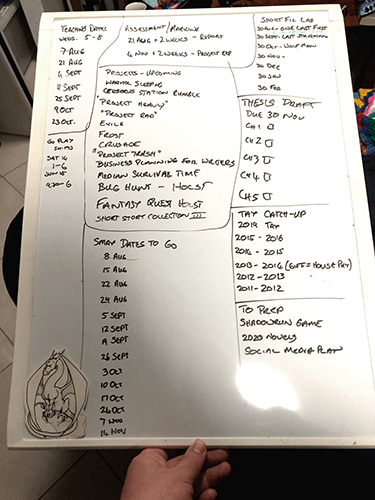
It’s a useful list for looking forward, but it tends to miss a bunch of the stuff that will get me from here to somewhere over there when I’m done with all that. Mostly, I put this board together to see how I’d go having the white board on the desk, blocking my access to the desktop (aka my “just here to fuck around” computer) and reminding me there’s a bit list of projects that need my attention.
It went okay, so this week I’ve gone back to a habit that served me real well in the past–a weekly project whiteboard that breaks down all the tasks and tracks my progress throughout the week. Here’s that particular board as it looked before I started working at the desk yesterday:
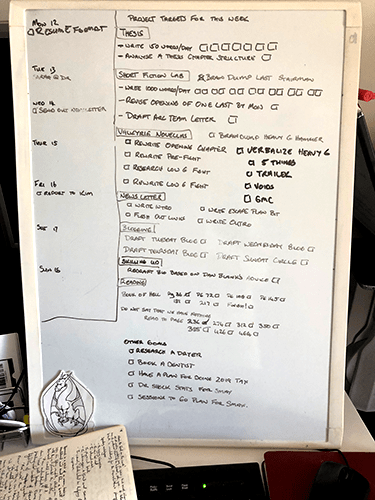
I’ve ticked a few things off since then, picking up speed on tasks that I’ve been putting off for ages. I’ve done my daily word count on the thesis for the first time in weeks, and cleared my fiction quota for the day. I’ve also surged ahead–this week’s blogging is now done, with the exception of the Sunday Circle, and a full draft of my weekly newsletter is finished up. This gives me more time to spend on other tasks, or a chance to clock up a bit of a lead.
Either way, I’m well ahead of where I expected to be on the tail end of a Monday, and I’m remembering just how useful it was to have a white board prominently displayed with all this on it.
At the same time, I’m also logging things that either need more detail than a single check-point, or should be added because they’ll fall off the radar. Story development needed a few extra steps beyond the brain dump section I’d listed under “Short Fiction Lab,” which is where there’s a longer section of it with regards to the novella I’m planning on getting back to next week. Brain dumping remains an important first step, but there’s an entire development process that follows drawing steps from Damon Suede’s Verbalize, helping me get a handle on the kind of story I’m planning on telling and how I might generate conflict.
The goal with these boards has always been separating out the doing of a thing from the process of making the decisions about how to do it. To put concrete steps behind vague goals, and hard edges on things that would otherwise involve making decision about how long to spend working on something.
It’s one of the reasons that reading finds their way on there, tracking the number of pages I need to read per day in order to finish two books a week. It’s a level of detail that some people find abhorrent, but for me, it’s a reminder that a) reading is important and good for my overall mental health; and b) I need to prioritise approximately 70 or 80 pages of reading time per day.
In this respect, the whiteboard is equal parts a statement of intent–this is where I’ll spend my time this week–and tool for ensuring that all the moving parts of writing and publishing work are getting the attention I want them to have.
August 11, 2019
SHORT FICTION LAB #4 Preorders Live
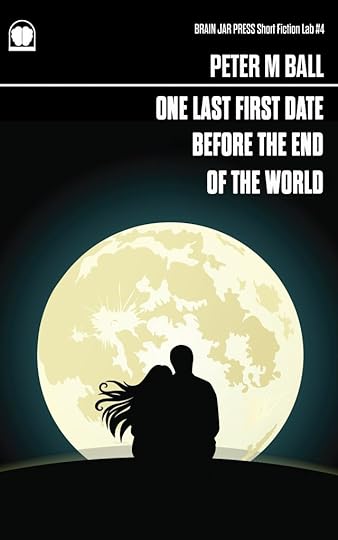
Preorders for One Last First Date Before The End of the World are now live on the usual retail sites, and its on sale at the shiny, dedicated fan price of .99 cents (US) for the next thirty days.
What do you do when your date tells you Ragnarök starts next Tuesday?
Logan expected his date with Stina Lorne to be a disaster, quickly ending after dinner when they acknowledged she was out of his league. Instead they went for a long drive, then a walk along a familiar beach. In fact, everything seems to be going better than Logan could have imagined when he asked her out last week.
Sure, his date is convinced she’s the descendant of Fenrir, demon wolf of Asgard. And yeah, she’s talking about the apocalypse kicking off in the near future. Logan’s not sure that matters, yeah? After all, nobody’s perfect, and even the best relationships take work.
One Last First Date Before The End Of The World is the fourth release in the Short Fiction Lab series from Brain Jar Press—home to stand-alone short story experiments in fantasy, science fiction, horror, and fabulist literature. This experiment has been filed under: mythic fantasy, first dates, the day before the apocalypse, and slipstream romance stories.
Pre-Order your story from Amazon, Kobo, or Apple Books to get it delivered automatically on August 31.
August 10, 2019
The Sunday Circle: What Are You Working On This Week?

The Sunday Circle is the weekly check-in where I ask the creative-types who follow this blog to weigh in about their goals, inspirations, and challenges for the coming week. The logic behind it can be found here. Want to be involved? It’s easy – just answer three questions in the comments or on your own blog (with a link in the comments here, so that everyone can find them).
After that, throw some thoughts around about other people’s projects, ask questions if you’re so inclined. Be supportive above all.
Then show up again next Sunday when the circle updates next, letting us know how you did on your weekly project and what you’ve got coming down the pipe in the coming week (if you’d like to part of the circle, without subscribing to the rest of the blog, you can sign-up for reminders via email here).
MY CHECK-IN
While the last seven days haven’t been the most productive in terms of word count, I’ve been setting up a new work space and actually have the space to do checkpoints in a lot of detail. The white-boards are in full flight again, complete with project lists (longer than I want), deadlines (shorter than I want), and stuff that needs tracking front and centre.
For the first time in a while, it means I’m really looking forward to what’s achievable in the coming week, and I’m going in with a plan and some of the complications mapped out in an advance.
What am I working on this week?
I’m hoping to get through the first act of Project Heavy by Friday, in addition to getting Short Fiction Lab #4 out to my advance reader team.
If I finish the Act One chapters early, I can switch my attention to the draft for the September Short Fiction Lab release for a stretch. If not, I’ll largely be focused on doing some pre-writing for this one.
What’s inspiring me this week?
Madeline Thein’s Do Not Say We Have Nothing is one of those books that I devour in small, occasional bites rather than trying to swallow it whole. It’s an intricate, beautifully-written book about the cultural revolution in China and the legacies there-of, with a focus on a family of musicians.
I’ll generally sit down and read a few scenes every week, when I’ve got the free bandwidth, and there will invariably be a little paragraph that takes my breath away. This week, that paragraph looked something like this:
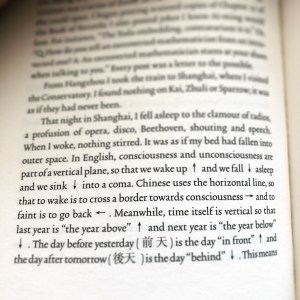
I’m only about halfway through, but it’s a glorious book. Highly recommended.
What action do I need to take?
The big challenge, now that everything is largely in place at the new desk location, is embedding work habits and getting to a point where I’m actively focusing on drafting. Right now it’s largely happening at the end of the day, after sorting and admin, and I need to try and move it forward.
One of the things I’m going to try and transforming my morning planning process into an evening thing–getting everything lined up at the tail end of the day when motivation starts to flag, then kicking off the new day with some in-depth thinking or writing instead.
August 9, 2019
Fuck Yoda.
I’ve spent a good chunk of the last week reading through Carol Dweck’s Mindset: The Psychology of Success. It’s an interesting book, presenting concepts that you’ve probably come across online in all manner of articles about praising effort instead of intelligence, or assuming character traits and intelligence are fixed rather than malleable.
Mostly, though, I spent the book thinking about Yoda.
You’re familiar with Yoda, right? Little green muppet guy from Star Wars with irregular sentence syntax? Owner of one of the most quotable lines from The Empire Strikes back. The one that goes:
Do or do not. There is no try.
Possibly one of the most iconic mentor figures in science fiction film, and beloved of nerd-types everywhere despite the prequels turning him into a pingpong ball?
Well, here’s the thing: it’s really hard to read Dweck’s book and start figuring that, really, Yoda is a bit shit as a Jedi educator. The whole idea that you succeed or you fail is largely antithetical to the way brains actually work and learn, the way people develop skills, and the way we keep ourselves fucking motivated to keep learning and progressing.
Admittedly, a long and growth-oriented struggle where you keep testing yourself against increasingly challenging tasks and attempting new strategies is significantly harder to film. It’s not a dynamic that lends itself to immediate conflict, and it doesn’t present the opportunity to lift an entire X-Wing out of a swamp and deliver a terrific visual.
But this is the ongoing challenge for narrative. There are things that are easy in storytelling, ideas that will always work because the conflict is immediate and easily accessible.
Fixed mindsets–do or do not, there is no try–make for an easy source of conflict and an easy source of triumph, but that doesn’t necessarily make them a healthy idea to lodge in the minds of your audience.
August 8, 2019
The Horrible Space Between…
Warren Ellis is going through a run where he posts content from his late, lamented Morning.Computer site to his shiny new WarrenEllis.ltd home. Which means I got a chance to revisit one of those posts where every writer I know feels incredibly seen:
…never ask anyone who’s just finished a book if they’re happy with it, because the answer is always IT’S AWFUL MY CAREER IS OVER GET AWAY FROM ME I WILL TEAR YOUR FUCKING HEART OUT AND EAT IT IN FRONT OF YOU. There’s a terrible space between the conclusion of the copy-editing and the release of the thing where you’re convinced that it’s a rotten piece of work and you’re going to be Found Out and everything is over. You start telling the wall — because you don’t know anybody any more, because you’ve been indoors for months destroying a laptop with your crap — that if you only had another six months, if you could just alter a couple of things, if you could just maybe take out and replace a plotline, and maybe the main plot, and all the characters, and change the title, and write a whole different book, then everything would be fine…
On Finishing A Book, WarrenEllis.ltd
Apropos of nothing, you should probably be reading WarrenEllis.ltd. You should almost certainly be subscribed to his newsletter. And, honestly, the only way I’m getting through the political chaos of the modern world is re-reading Transmetropolitan, which has started feeling terrifyingly contemporary and yet contains astonishing amounts of hope amid its bleak, post-human cyberpunk vision.
August 7, 2019
#15, Woo! Or, The Last Day to Pick Up Short Fiction Lab #3 on Sale
I may be an Australian writer, but my sales here in Australia are usually on the low side compared to other parts of the world. Which is why I was surprised when I logged on to Amazon.com.au this morning and saw the current rankings for A White Cross Beside a Lonely Road:
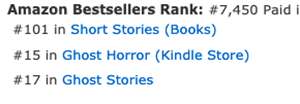
Of course, Amazon rankings are transitory and mysterious, unlikely to stick unless sales are consistent and other things come together in the dark depths of Bezos’ sales portal. In fact, I’ve slipped down a spot in the time it’s taken to write this blog post because the last sale was a few hours back. Still, look, here I am at number 16 and in some pretty good company on the Australian sites’ ghost story rankings.
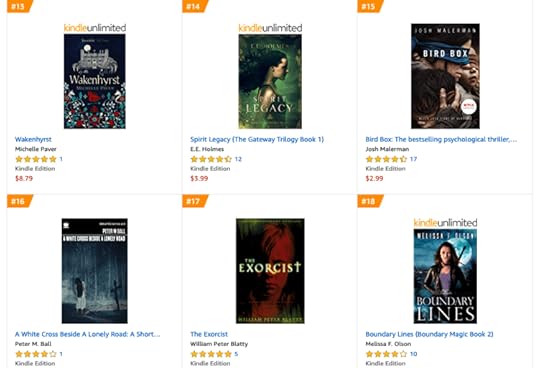
The ranks may be mysterious and transitory, but here’s a good rule of thumb in writing: if you wake up one morning and your short story is sitting in between Bird Box and The Exorcist on any kind of best-seller list, you take the ego boost and roll with it.
Then, of course, you move on to writing the next thing.
A White Cross Beside a Lonely Road is on sale until midnight tonight, after which it will go from the early bird fan pricing of .99 cents Us ($1.29 for Australians) to the normal $2.99 price tag for Short Fiction Lab releases.
If you’re up for helping me achieve a little local Ghost Story supremacy, and maybe tip it into the top ten, you could go pick up a copy on the cheap at the Australian Amazon Store some time before the sale ends.
August 6, 2019
Mystery and the Art of Author Events
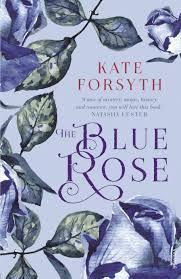
Last Friday I ventured out into the chilly Brisbane night to attend the In Conversation event with Kate Forsyth at the Brisbane Square Library.
There are certain writers that I’ll always make the effort to go see when they do events, because it’s basically a masterclass in how to manage the author/reader relationship. Kate Forsyth is in the top five authors on that list, and her events are always fantastic.
While lots of authors will try to tell you about the story they’ve just written, Kate builds up stories around the act of writing–she tells you the story of the research, of the inspiration, of her own journey as a writer.
Part of Kate’s bio mentions that she’s a verbal storyteller, as well as a novelist, and you can definitely see it as she talks about The Blue Rose. She builds intrigue into the discussion to pull you forward and get you interested in what happens next. Among the hooks that emerged through the first fifteen minutes of conversation were:
Despite its popularity as a symbol and icon in western culture, the Red Rose is native to China and only got imported in the seventeenth century. The man who reportedly brought the red rose to England, Gilbert Slater, may not have actually done so. The ship originally bringing the first sample over sank prior to reaching England, and his gardener’s diaries suggest the red rose wasn’t among their gardens.At the same time, England send a trade envoy to China in an attempt to redress the trade imbalance taking place–England imported silks and tea, but exported very little back. The envoy returned with two rose bushes…but there’s no indication of the second’s colour.
Virtually nothing is said about the book at this point, beyond Kate’s story growing from the little mysteries that opened up in the gaps between these facts, but there’s a lot of tension to be resolved here and the promise is that it can only be resolved by reading Kate’s novel (or, perhaps, going back to the non-fiction book that first sparked the idea and recreating her research journey, but whose got the time for that).
As the talk moved away from the initial inspiration and towards theme and content, the same principles were at work–look for the details, create tension that only story can resolve. for example, when Kate talked about the French Revolution which provides the backdrop for the novel, the talk quickly moved towards the way popular vision and real life differed.
Although she grounded her interest in a personal story about reading the Scarlet Pimpernel at a young age, it quickly moved to detail-oriented topics: the way guillotines needed to be moved, because the blood and death started attracting stray dogs and cats who fed upon the gore; about the life of nobility, and how they may have been as eager for change; about the notion of social change itself, and how that rapid social change differed from everything that came before it.
There was more. I mean, I walked away with four pages of notes form the talk, and I was only scribbling for about half the time Kate was speaking, but you can get the general gist from this. There’s an art to talking about your work, and a lot of writers don’t develop it.
If you ever get the chance to see Kate Forsyth speak–even if you’ve never read her fiction–I strongly recommend going for it. She’s one of the best you’re going to see, particularly in Australia.
August 5, 2019
Sixty People
Finished reading Dan Blank’s Be The Gateway last night. Immediately flagged it as a book to re-read and annotate when I’ve got a little more time up my sleeve, as it’s one of the more clear-headed tomes out there about art and being on the internet.
One of the more resonant moments: Blank is talking about working with artists/writers get down on having a small email list, or number of social media followers, and immediately contextualises it against his experience working as a young artist in the nineties:
Having had sixty people validate this work would have made a huge difference in my quest to stop dabbling and really try to share my work in a bigger way. Having a single person who encouraged me would have meant the world to me. Sixty would have made me double down on my art, instead of letting it languish.
In these years, I tried many other creative projects as well. I had a band, I became a photographer, and I wrote poetry. All if it is mixed in those same cardboard boxes up in the attic. Of course, these acts lead to me honing my skills, and meeting an amazing array of collaborators. These early failures made me appreciate the value of what it means to connect with a single person who appreciates your creative work, hence this very book that you are reading.
But still, I would have loved to have had sixty followers for this work. To look out onto an audience of sixty people who cared. To have had sixty people waiting for my next painting.
Blank, Dan. Be the Gateway: A Practical Guide to Sharing Your Creative Work and Engaging an Audience (p. 138).
In a world where quantity of engagement tends to drive all the conversations around social media and author platform, it’s good to have the reminder that those who read are people who have invested time and attention in what you do.