Peter M. Ball's Blog, page 30
August 3, 2019
The Sunday Circle: What Are You Working On This Week?

The Sunday Circle is the weekly check-in where I ask the creative-types who follow this blog to weigh in about their goals, inspirations, and challenges for the coming week. The logic behind it can be found here. Want to be involved? It’s easy – just answer three questions in the comments or on your own blog (with a link in the comments here, so that everyone can find them).
After that, throw some thoughts around about other people’s projects, ask questions if you’re so inclined. Be supportive above all.
Then show up again next Sunday when the circle updates next, letting us know how you did on your weekly project and what you’ve got coming down the pipe in the coming week (if you’d like to part of the circle, without subscribing to the rest of the blog, you can sign-up for reminders via email here).
MY CHECK-IN
What am I working on this week?
The re-setting of work habits continues here in Casa Del Brain Jar, where I am quietly chugging along on my thesis after a few weeks off and I’ve kicked off a novella draft that’s going by the name Project Heavy for the next stretch.
Project Heavy‘s a bit of an interesting one, as it’s very much a story where part of the fun is looking towards stock scenes and then figuring out the twist on them based on the setting. My scene notes for this week’s writing: “Save from mobsters!” and “Meet the family.”
I’m also working my way through the meta-data, sales copy, and cover design for the next Short Fiction Lab release, which I’m hoping to get up for pre-order before the week is out.
What’s inspiring me this week?
I went to an “In Conversation with Kate Forsyth” event at the Brisbane Library, talking about her new novel The Blue Rose, and as is traditional for Forsyth events I walked away with a head full of ideas and an itch to get writing.
To put it bluntly, Kate Forsyth is one of those writers who excels at transforming the research and writing journey of a book into a narrative of its own. When she dos an event, she’s doesn’t necessarily talk about the book–she talks about the journey of writing the book, and her own journey as a writer, and makes those just as reach, meaningful, and interesting as the book itself.
I spend a lot of time thinking about how to talk about stories at the moment. It’s such a big part of the job when you write–whether it’s speaking in front of people at events or writing blog posts about what you do–and yet its really rare to see somebody who does it incredibly well. Which really makes this inspiring on two levels–the first via the list of notes I’d taken down about books to read, techniques to try, and other details from the In Conversation, and then via the example Kate represents for how to do the business side of authoring.
What action do I need to take?
A review of the content we’ll be covering in tutorials this week. I’m back in the teaching groove at the moment, but in that strange space where I’m teaching a course that is both entirely new to me and just far enough outside my comfort zone that I don’t walk in entirely confident that I’ve talked about the issue at hand dozens of times before.
It’s been a while since I’ve been in that situation, and it means I’ve got to spend a little more time planning before each tutorial compared to my usual approach.


July 31, 2019
Release Day: A White Cross Beside a Lonely Road (Short Fiction Lab #3)
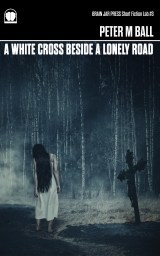
A ten-hour drive, a relationship on the rocks, and a ghost waiting for company on a lonely stretch of road.
The last thing Alex wants is a trip home with his boyfriend in tow, but when Brendan insists on coming there’s nothing for it but a ten hour drive and the dread of what might happen when they reach their destination.
There is nothing about the idea of being trapped in car with his lover that Alex is looking forward too, but a haunted stretch of lonely road is about to make him question everything he knows about his relationship and his life.
A White Cross Beside A Lonely Road is the third short story in the Short Fiction Lab series from Brain Jar Press—home to stand-alone short story experiments in fantasy, science fiction, horror, and fabulist literature. This experiment has been filed under: ghost stories, outback fantasy, supernatural encounters, and Australian weirdness.
The third Short Fiction Lab release is now out in the world, and available from the usual suspects via this handy Books2Read Link: books2read.com/u/47EM6E
The story will be on sale for .99 cents US until August 8th, so I’d encourage you to pick it up early.
This is very much a story built out of two writing workshops. I wrote the first draft back in 2007, while I was at Clarion South. At the time it was a relatively straightforward ghost story about isolated roads, relationships going wrong, and taking corners too fast. It worked okay, but it never really felt like it had something to say beyond “look, ghost! Spooky!”
Twelve years later I signed up for Neil Gaiman’s Masterclass online, and figured this would be a good story to use as a test-run for the exercises in his story development class. After twelve years of tinkering with what happened in the story and how it was told, I put my focus back on what it was actually about, which turned out to be less about ghosts and more about expectations, “adulting,” and being trapped between two worlds.
If you pick up the story and enjoy it, you could do me a huge favour by leaving some stars or a review on the platform of your choice.
And now I’m off to work on the next Short Fiction Lab #4, so I can get this series back on track.
July 30, 2019
InBox Blues
My inbox sits at 25 emails this morning, which is better than it was yesterday but still enough to make me twitchy. It’s a little reminder that my routines are off, and that we’ve been working at the edge of burnout here in Casa Del Brain Jar.
It’s also a reminder that I won’t bounce back automatically, just ’cause I want too. Getting back to writing will take effort, as will clearing email and getting back on top of all my other projects.
One of the downsides of working from home–particularly a small flat like ours–is the potential for the space you work and the space where you deal with the big things life throws your way bleeding into one another. The little distractions you embrace to cope with loss or distract yourself during periods of high stress linger around after the cause of those behaviours is gone.
The housework you let slide because you didn’t have the bandwidth is still there, needing to be done, as you try to kickstart your work brain and force it to wrangle a list of project that have been backing up.
Yesterday, I dealt with the deadlock by relocating and changing environments. Working from home wasn’t happening, so I buggered off to the local food court and did a quick 1,500 words before picking up some groceries.
Today, that’s unlikely to be an option for a handful of reasons, but starting is often the hardest part and I’ve cleared space on the writing desk that was used as a pig hospice for the last two moths. With luck, that will help things run smoother than they did yesterday
July 29, 2019
Vale Pepe, Best of Cavys
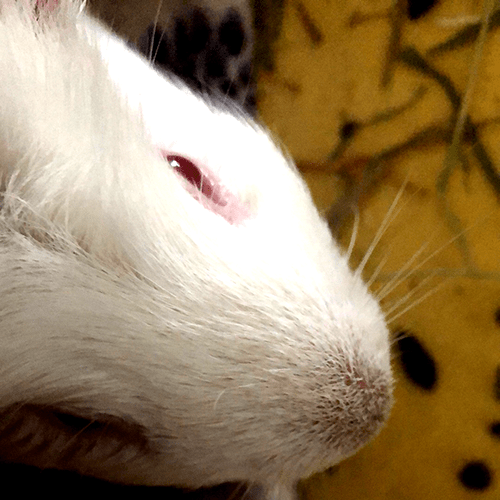
I didn’t really have pets as a kid. Not the kind who were around long enough that you remember them. My dad kept snakes for a time, and those terrified me. We had guinea pigs when I was three, and a budgie for a short while, but the phase where pets and my life intersected was largely done by the time I turned seven.
When my partner and I started living together, she brought her guinea pigs with her. They occupied a corner of the flat and interacted with one another, interrupted quiet writing days at home with demands for food and attention. They were a constant source of distraction and joy.
I told myself I wasn’t a pet person, but they suckered me in anyway. There were noses to boop and personalities to learn and a surprising amount of affection for a critter that only weighs a kilogram.
We lost Pepe, one of the pigs, last Friday. He’d gone in to the vets for an ear infection back at the start of June, and they’d noticed there were problems with his teeth. We tried to fix it, and then tried to fix the fix, and it gradually became apparent he wasn’t bouncing back the way we’d hoped. His pain kept getting worse, and so it was time to say goodbye.
And I was not a pet person. I hadn’t ever had to say goodbye to a sick pet before, especially not after two months of working to keep the little guy alive. I’d certainly never been around a pet for two straight years, getting to know their personality and love them, making them part of my life.
Pepe wasn’t the pig I expected to care for the most. My partner got her other pig right as we started dating, which meant I got to bond with him as a little tyke. Pepe was already heading into middle age when he moved in; he was quieter than the other pig, more gentle in his affection.
He won me over, in that first year. Partially it was the way he’d nuzzle your neck like a tiny vampire, or the joy he took when he’d jump in his hay tray and wait for fresh hay to get delivered right on top of him. His love of ear rubs, and the effort it took learning how to rub his ears the right way.
Partially it was just the fact that he was even-tempered and sweet, always polite about letting us know when the time for pats was over and it was time to go back to the cage.
Losing him caught me harder than I expected. I kind of fumble around the flat, trying to get work done and failing. Not really sure how to write around the big lump of grief that settled in. And I’m kinda okay with that at the moment, while I’m sorting through all the feelings and our lives are reconfiguring to fill the spaces filled by both him and the care he needed in his final weeks.
He was a good pig, and we loved him.
July 27, 2019
The Sunday Circle: What Are You Working On This Week?
The Sunday Circle is the weekly check-in where I ask the creative-types who follow this blog to weigh in about their goals, inspirations, and challenges for the coming week. The logic behind it can be found here. Want to be involved? It’s easy – just answer three questions in the comments or on your own blog (with a link in the comments here, so that everyone can find them).
After that, throw some thoughts around about other people’s projects, ask questions if you’re so inclined. Be supportive above all.
Then show up again next Sunday when the circle updates next, letting us know how you did on your weekly project and what you’ve got coming down the pipe in the coming week (if you’d like to part of the circle, without subscribing to the rest of the blog, you can sign-up for reminders via email here).
MY CHECK-IN
What am I working on this week?
We said goodbye to one of our guinea pigs on Friday, after six weeks of tending to the poor, sick little guy. The coming week is largely about finding a new groove–both work spaces in the flat and daily schedules are going to change as a result of Pepe going over the rainbow bridge, and I’ll be searching for a new equilibrium.
On the docket this week is working on covers and copy for the August Short Fiction Lab release, getting a September release together for the series, and kicking off a new novella draft (hereby dubbed Project G). I’ll be typing up the second draft of Exile as well, slotting in the new details in the first act.
What’s inspiring me this week?
I’ve been feeling a little directionless on the writing and publishing front lately–I’d set up some plans at the start of the year and they’ve been largely derailed by a series of life rolls that have been flowing in since March. This has meant I’m working, but I’m not getting the feeling that I’m building towards something. Fortunately, Warren Ellis put out a new instalment of his Comics Train blog series where he thinks through what he’d like comics publishing to be (or, at least, what he’d like to be doing in comics publishing).
It was good to go back and read this, as it informed a whole bunch of my thinking in the early half of the year. It did a really good job of snapping me back into the headspace and thinking about the long-term for a stretch, which almost immediately put me into the mindset to start thinking of logical next steps.
What action do I need to take?
I need to prep release announcements for Short Fiction Lab 3, and spend a few hours teaching myself old-school analogue proofing marks ahead of the coming semester where we’re working on line-editing for editors. It’s been nearly twenty years since I’ve done any line editing outside of track changes, and my skills are a little rusty on that front…
July 23, 2019
Pyramid Planning and Dan Blank’s “Be The Gateway”
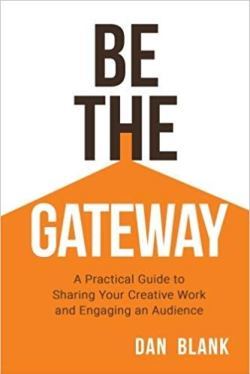
I’m reading Dan Blank’s Be The Gateway at the moment, a book about author platform and writing that is probably as close to my own philosophy that I’ve come across thus far. There’s a focus on identities and how they shape reaction to our work, and why “just telling good stories that entertain people” is frequently a failure to understand what you’re really offering readers.
What really caught me, reading through it this morning, was an exercise on judging the priorities in your life. In it, Blank advises getting a stack of index cards and writing down all the things that matter to you, whether it’s a single word (“Family”) or a long term goal (“Take better care of myself”).
Once you’ve got everything down, try and arrange all your cards into a pyramid: one things goes at the top, representing your highest priority. Two cards go underneath it, then, three, then four. It may take time to get the order down–Blank suggests you’ll usually start with a square and then refine as you go along–but the goal is getting some clarity over what you value and where the connections may lie.
It’s a great exercise for identity formulation, but right now I’m interested in how it can be used to get some clarity on a day-to-day level.
I usually have a list of fifteen projects or so I’m working on at any given time. A combination of writing stuff, book production, uni work, and personal projects around the house. Part of the struggle on any given day is figuring out when priorities have shifted, and how to balance them–particularly in weeks like this where getting a new release together frequently impacts on everything else due to the immediacy of the deadline.
With my next monthly check-in due next week, I think I’m going to create an index card for everything on the docket and pay attention to the ways my pyramid changes in response to certain days and events throughout the month.
BE THE GATEWAY: A PRACTICAL GUIDE TO SHARING YOUR CREATIVE WORK AND ENGAGING AN AUDIENCE, Dan Blank (Amazon)
July 22, 2019
Glee-full Thoughts
We recently started watching Glee for the first time here in Camp Brain Jar. It’s not a choice I expected to fall into, given my dislike of the musical as a format and my partner’s dislike of autotune, but I was lured in by some smart writing, some really sly dialogue in the opening episodes, and their ability to sidestep the thing that I dislike about musicals for the first half of a season (to whit: everyone verbalising internal states through song, rupturing my feeling of verisimilitude).
Also, Harry Shum Jr, who is the best part of the Shadowhunters TV series and criminally underused as a back-up dancer here.
Of course, now we’re in the second half of season one and the musical conventions are seeping through a lot more often. I’ve grumped through the last two episodes, which have been very music-heavy and very light on plot as they work to get the conflicts for the second half of the season in place.
It’s interesting, given my thesis topic, because we’re at the point where they spending goodwill they’ve earned without building up much to replace it.
Anyway.
I’m off to do another read-through and proof of A White Cross Beside A Lonely Road this morning, followed by an hour of feeding our poor, sick guinea pig critical care so he’ll keep his nutrients up.
The classic goth playlist is on high rotation and I’ve reeled across the lounge room to Bela Lugosi’s Dead to wake myself up.
With luck, the afternoon will be devoted to getting some word-count done on the thesis and creative project du jour.
July 21, 2019
Sometimes, Pragmatism Wins

I finished The Artists Way over the weekend. It did less of the stuff that really irritated me in the back half of the book–a tactic that only served to irritate me more when it did intrude. I don’t necessarily regret reading it–there’s plenty of useful points to noodle over–but I don’t know that it’s a book I’d ever recommend. The most useful part of it was comparing the spiritually tinged processes laid out with something like The Accidental Creative, which gives you a toolkit for much the same kind of focusing-in-on-process and refilling-of-the-well in a much more pragmatic (and, to my mind, sustainable) way.
I’m following Cameron’s book full of frothy writing-and-spirituality with Lilith Saintcrow’s collection of writing posts, The Quill and the Crow. It’s an interesting contrast–Saintcrow’s very much from the school of “So you want to be a writer? Have you tried, say, actually writing? This shit is work” school of advice, but it’s undercut by a genuflection towards the idea that the stories are an external force that show up when you create space for them. Process is just a way of inviting them in when they show up.
The Saintcrow is the more useful book for me at the moment, as the idea that I should just write and finish things is one I need reminding of when I get derailed by life events.
It’s a simple, pragmatic solution, but it’s just crazy enough to work.
July 20, 2019
The Sunday Circle: What Are You Working On This Week?
The Sunday Circle is the weekly check-in where I ask the creative-types who follow this blog to weigh in about their goals, inspirations, and challenges for the coming week. The logic behind it can be found here. Want to be involved? It’s easy – just answer three questions in the comments or on your own blog (with a link in the comments here, so that everyone can find them).
After that, throw some thoughts around about other people’s projects, ask questions if you’re so inclined. Be supportive above all.
Then show up again next Sunday when the circle updates next, letting us know how you did on your weekly project and what you’ve got coming down the pipe in the coming week (if you’d like to part of the circle, without subscribing to the rest of the blog, you can sign-up for reminders via email here).
MY CHECK-IN
What am I working on this week?
All the last-minute things that need to be finalised before A White Cross Beside A Lonely Road goes live on the 31st, which includes the final proofs, uploading advances and sending them out, updating the back matter with a list of Short Fiction Lab releases thus far, and a handful of other small stuff. Once that’s finalised, I’ll be kicking off work on the Short Fiction Lab release for August, which is drafted and awaiting some last minute tweaks, and seems likely to go out under a new title.
Around that, the usual mix of thesis writing and making slow progress on Project Rad and the Exile rewrite.
What’s inspiring me this week?
The bulk of my reading this week involved The Artists Way, which proved to be more irritating than inspiring. I did find myself fascinated by the 99% Invisible podcast on sand and its importance to the modern world, which is loaded full of unexpected realisations that subtly adjust the way you look at the world.
Since it also involves criminal cartels murdering one another over sand, it proves to be a great resource for story ideas on top of that.
What action do I need to take?
One of the thing that I noticed while prepping the pre-orders for the new release is the occasional pre-existing book that hasn’t been updated somewhere along the line (it was one of those jobs that got sidelined when my dad got sick earlier this year and I never got back to it).
It suggests I’m probably due an inventory audit, making sure the right versions of everything are in all the various stores and reviewing the backmatter in the current books to make sure it’s up-to-date.
July 18, 2019
A Solid Way Through, With Terrible Scenery
So I’m reading Julia Cameron’s The Artist Way for the first time this week, following close to two decades of people recommending it. I’d been resisting it for a long time because the first person to recommend it to me was a friend with rather undiscerning tastes when it came to self-help books, the kind of person who’d press books about becoming a millionaire into my hands then seem put out when I argued that it was basically a ponzi scheme wrapped up in woogy language and siphoning expertise from others like a vampire, while the writing engaging in rhetorical cheats on par with Who Moved My Cheese.
So I was primed not to like The Artists Way, despite the fact that it seemed to help an awful lot of people over the years. Right now, I’m about three chapters into the book, and I’ve thus far come to two conclusions: the first is that I really, really hate the book, even more than I assumed I would; the second is that it will probably do exactly what it advertises, in terms of getting people creating and working on projects after years of feeling stuck.
I hate it because Cameron deploys several of the rhetorical devices that I so loathe in self-help books. It’s not quite at the Cheese level of creating a parable and immediately showing someone being helped by the parable within the narrative, but it’s got a second chapter where the subtext is all about how following the Way will make you superhuman, while approaching it’s talk of God and woo-science ideology with anything like skepticism will ultimately make the Way’s failure all your fault.
And yet, I suspect it works for many people because it uses all the spirituality and fru-fru packaging of ideas to tackle a fundamentally useful thing: getting your attention away from the long-term results, and focusing in on a day-to-day process instead of fretting about what will happen once everything is done. The tools for doing this are solid, once you strip out the rhetoric that surrounds them, but there’s nothing particularly innovative about them. Personally, I’m unlikely to follow the Way with any seriousness (outside of expanding my daily dairy to three pages instead of two). My “I need to focus on process again” practice is pretty well set, and in case of emergency I’ll break out Jeff VanderMeer’s Wonderbook or Ursula LeGuin’s Steering the Craft and follow the exercises they lay out when I need some low-key, practicing-scales type stuff to get my fingers moving again and my brain focused on story.
But I’m not sure the innovation of the exercises matters to much in the Artists Way (although it may yet surprise me). It’s the rhetoric that’s selling this, setting it apart from similar books–the narrative of creative recovery and transforming your life is a hell of a lot sexier than promising to support a creative practice. If it’s the story you need to get back to work, there’s a lot of power in that.
It’s not a story that appeals to me much, though.
Interestingly, if you look hard at The Artists Way, you can see the echoes of AA’s twelve steps in the structure–to the point where I’ve downloaded a copy of the twelve steps to keep beside me check off as we reach each one as I go along. This could well the the thing that keeps me reading to the end–if nothing else, it’s a useful exercise for understanding the way narratives and psychology interact and a reminder that changing those personal narratives can have a big impact.