Jason S. DeRouchie's Blog, page 4
January 16, 2025
The Necessity of Jesus’s New Sacrificial Work: A Sermon on Hebrews 10:1–18
(Audio Download / PDF) DeRouchie gave this message on 12/22/24 at the Sovereign Joy Baptist Church plant in Liberty, MO.
*****
Merry Christmas. We’ve chosen to carry our study of Hebrews throughout Advent because the author clearly and repeatedly articulates that the purpose of Christ’s coming, the purpose of Christmas was to bring us to Easter and beyond. So, for example, Hebrews 2:8–9, declares, “At present, we do not yet see everything in subjection to him. But we see him who for a little while was made lower than the angels, namely Jesus, crowned with glory and honor because of the suffering of death, so that by the grace of God he might taste death for everyone.” In this verse we see fused both Christmas and Easter: In his advent Jesus became human, being made a little lower than the angels, so that he might taste death for us and through this to be crowned with glory and honor. In celebrating Christ’s coming, we celebrate with hope what he would accomplish. One of my prayers today is that God would let you leave here readied to celebrate Christmas with proper hope. To that end, pray with me….
Turn to Hebrews 10:1–18. Since chapter 8 the author has been arguing for the superiority of Christ’s new covenant priestly work, especially in relation to the patterns set in place by Moses. 8:6: “Christ has obtained a ministry that is as much more excellent than the old as the covenant he mediates is better, since it is enacted on better promises.” 9:11–12: “When Christ appeared as a high priest of the good things that have come, then through the greater and more perfect tent … he entered once for all into the holy places, not by means of the blood of goats and calves but by means of his own blood, thus securing an eternal redemption.”
The author is nearly ready to turn his book toward application. But first he seeks to press home the ineffectiveness of the whole old priestly system and to highlight the absolute necessity of Jesus’s new sacrificial work. Beginning in 10:1, follow along as I read….
The main idea of Hebrews 10:1–18 is this: The inability of the Law to mature worshipers necessitated Jesus’s new sacrificial work, which destroys the first order, sanctifies worshipers, addresses sins once for all, and secures his present and future supremacy. The passage has two parts, which will shape the two parts of my sermon: (1) The Need for Jesus’s Sacrificial Work (10:1–4); (2) The Nature of Jesus’s Sacrificial Work (10:5–18). As we walk through the passage, keep in mind that the purpose of Jesus’s coming at Christmas was the cross and through the cross his exaltation that you and I could be saved. The king was born to die that you and I might live.
The Need for Jesus’s Sacrificial Work (10:1–4)Our passage opens with the conjunction “for” that signals what follows provides an additional reason why Jesus needed to come as a better high priest. The ESV breaks up the syntax, but the main answer in verse 1 is this: “The Law … can never … make perfect those who draw near” (cf. 7:11, 19). We must remember that Hebrews was written at the start of the overlap of the ages where the new age, new creation, and new covenant had intruded upon the old age, old creation, and old covenant. Jesus had come at the fullness of time, at the climax of redemptive history, to fulfill what was promised, to give the substance of what was foreshadowed, and to realize what was only anticipated. Yet the systems of worship that were in place for centuries were not easily set aside, and many were questioning how Christians should relate to old covenant laws and temple worship. Why was Jesus’s coming necessary, and how did his saving work change the status quo? The author of Hebrews is going out of his way to clarify the weaknesses of the old order and the need for Jesus to bring something new.
10:1 says, “the Law … can never … make perfect those who draw near.” “Those drawing near” were the assembled covenant members of Israel who were seeking to enjoy God’s holy presence without dying (Exod 16:9; 34:32; Lev 9:5; Num 10:3–4; cf. Lev 10:3–4). “Continually … every year” these old covenant worshipers offered “the same sacrifices.” The annual cycle refers to the Day of Atonement, which marked the start of the Israelite new year and a fresh beginning in every covenant member’s relationship with God. On this one day a year, the high priest as representative of the people brought sacrificial substitutionary blood into the Holy of Holies, the divine throne-room, and by this and the other required duties symbolically displayed to God and the world that the defiling sins of the priests, people, and sanctuary had been temporarily addressed (Lev 16:21, 34).
Next, we learn that the various annual sacrifices were but a “shadow of good things to come instead of the true form of these realities.” There is a difference between a shadow and its substance. A shadow tells us something about the true form but is itself not that form; and once we follow the shadow to its reality, we no longer need to focus on the shadow. The sacrifices, priesthood, and temple of Moses’s day were merely “a copy and shadow of the heavenly things” (8:5), and these “heavenly things” were “the good things to come” (10:1).
Back in 9:11–12 we learned that these “good things … have come” “when Christ appeared as a high priest,” having “entered once for all into the holy places, not by means of the blood of goats and calves but by means of his own blood, thus securing an eternal redemption.” The “good things” to come, therefore, relate to the true cleansing of our consciences from sin (9:14, 22) and our true hope of eternal salvation in the presence of the living God (9:28)––things that were not possible through the old covenant rituals themselves. People in the old covenant like Moses and Rahab, Hanna and Jeremiah, could enjoy forgiveness and right standing with God but only because Jesus would ultimately come. The Law by itself “can never … make perfect those who draw near” (10:1).
This is why the author now adds in verses 2–4 proof of his claim. How do we know that the Law can’t perfect worshipers? Verse 2 says, “Would [the sacrifices] not have ceased to be offered, since the worshipers, having once been cleansed, would no longer have any consciousness of sins? But in these sacrifices there is a reminder of sins every year. For it is impossible for the blood of bulls and goats to take away sins.” In the old era, the continual cycle of sacrifices reminded both God and people that sin in all its forms was serious and that, ultimately, “it is impossible for blood of bulls and goats to take aways sins” (10:4). They needed a better substitute, a better sacrifice.
The Nature of Jesus’s Sacrificial Work (10:5–18)“Consequently….” With this inferential particle, the argument shifts from the need for Jesus’s sacrificial work to describe the nature of this work. The unit is divided into three parts related to Jesus’s saving work: its timing (10:5a–b), its announcement (10:5c–7), and its explanation (10:8–18).
The Timing of Jesus’s New Sacrificial Work: Advent (10:5a–b)We start with the timing. It relates to advent and Jesus’s incarnation, when the second person of the Trinity took on flesh and became human. Verse 5 says that redemptive history shifts and shadow gives rise to substance and the new order triumphs over the old “when Christ came into the world….”
In the days of Herod, king of Judea … the angel Gabriel was sent from God to … Nazareth, to a virgin betrothed to a man whose name was Joseph, of the house of David. And the virgins name was Mary. And he came to her and said, “Greetings, O favored one, the Lord is with you! … Behold, you will conceive in your womb and bear a son, and you shall call his name Jesus. He will be great and will be called the Son of the Most High. And the Lord God will give to him the throne of his father David, and he will reign over the house of Jacob forever, and of his kingdom there will be no end.” (Luke 1:5, 26–28, 30–33)
An angel of the Lord appeared to [Joseph] in a dream, saying, “Joseph, son of David, do not fear to take Mary as your wife, for that which is conceived in her is from the Holy spirit. She will bear a son, and you shall call his name Jesus, for he will save his people from their sins.” (Matt 1:20–21)
In those days a decree went out from Caesar Augustus that all the world should be registered…. And Joseph went up from … Nazareth, to Judea, to the city of David, which is called Bethlehem, because he was of the house and lineage of David, to be registered with Mary, his betrothed, who was with child. And while they were there, the time came for her to give birth. And she gave birth to her firstborn son and wrapped him in swaddling cloths and laid him in a manger, because there was no room for them in the inn. And in the same region there were shepherds out in the field, keeping watch over their flock by night. And an angel of the Lord appeared to them, … [and] said to them, “Fear not, for behold, I bring you good news of great joy that will be for all the people. For unto you is born this day in the city of David a Savior, who is Christ the Lord. And this will be a sign for you: you will find a baby wrapped in swaddling cloths and lying in a manger.” And suddenly there was with the angel a multitude of the heavenly host praising God and saying, “Glory to God in the highest, and on earth peace among those with whom he is pleased!” (Luke 2:1–14)
Thus, old gave rise to the new and all redemptive history reached its climax, never to be the same. It happened “when Christ came into the world (Heb 10:5).
The Announcement of Jesus’s New Sacrificial Work (10:5c–7)We now see Christ himself announce his new sacrificial work. He cites Psalm 40:6–8: “Sacrifices and offerings you have not desired, but a body have you prepared for me; in burnt offerings and sin offerings you have taken no pleasure. Then I said, ‘Behold, I have come to do your will, O God, as it is written of me in the scroll of the book.’” Jesus assumes that he is the actor or main voice in Psalm 40. He highlights how Yahweh, the God of Israel, took no pleasure in the sacrifices and offerings of the people. Here he does not tell us why, but other prophets highlight how it was because the offerings themselves were empty when not given with true repentance (e.g., Isa 1:10–17; 66:3–4; Mic 6:6–8). Jesus then says that he comes to fulfill God’s will, just as it is written “in the scroll of the book,” which likely refers to the Book of Moses, the Pentateuch (cf. John 5:46). Consider some of the predictions that Moses makes about Jesus and his saving work.
To the serpent God said, “I will put enmity between you and the woman, and between your offspring and her offspring; he shall bruise your head, and you shall bruise his heel” (Gen 3:15). Thus, a male descendant of Eve would strike a death blow to the serpent while being struck himself.
Later, God’s provision to Abraham of a ram to be sacrificed in place of Isaac resulted in both him and Moses recognizing how that event pointed to a future deliverance: “So Abraham called the name of that place, ‘The LORD will provide’; as it is said to this day, ‘On the mount of the LORD it shall be provided’” (22:14). Yahweh then immediately prophesies about the coming one: “And your offspring shall possess the gate of his enemies, and in your offspring shall all the nations of the earth be blessed” (22:17–18).
Next, Jacob declares, “The scepter shall not depart from Judah, nor the ruler’s staff from between his feet, until tribute comes to him; and to him shall be the obedience of the peoples” (49:10). Genesis then notes, “He has washed his garments in wine and his vesture in the blood of grapes,” suggesting that his victory comes at the cost of blood. As we move into Exodus, the Passover lamb highlights the need for a substitute sacrifice if the firstborn was to live, and all the tabernacle’s sacrifices for sin equally foreshadow the need for God to provide pardon. With just this short list we start to get a sense for what Jesus meant when he referred to doing God’s will as it was written “in the scroll of the book.”
Already in Hebrews similar things have been stated regarding God’s purpose for Jesus’s coming. 2:10: “It was fitting that [God], for whom and by whom all things exist, in bringing many sons to glory, should make the founder of their salvation perfect through suffering.” Or 2:14: “Since therefore the children [God would give Jesus] share in flesh and blood, [Jesus] himself likewise partook of the same things, that through death he might destroy the one who has the power of death, that is, the devil.” And 2:17: “[Jesus] had to be made like his brothers in every respect, so that he might become a merciful and faithful high priest in the service of God, to make propitiation for the sins of the people.” These are all purpose statements that clarify God’s will and that indicate what Jesus meant in Gethsemane when he declared, “Not my will, but yours, be done” (Luke 22:42).
The Explanation of Jesus’s New Sacrificial Work (10:8–18)The author now reflects on the significance of Jesus’s words, giving two explanations. First, Jesus’s one sacrifice destroys the first order and sanctifies worshipers. Look with me at verses 8–10. “When he said above, ‘You have neither desired nor taken pleasure in sacrifices and offerings and burnt offerings and sin offerings’ (these are offered according to the law), then he added, ‘Behold, I have come to do your will’ (10:8–9b). At this, the author adds, “He does away with the first in order to establish the second. And by that will we have been sanctified through the offering of the body of Jesus Christ once for all” (10:9c–10). When he refers to the first and second he’s talking about a shift in epoch’s from the age of sacrifices to the single sacrifice of Christ. The language is similar to 8:13, where the author said, “In speaking of a new covenant, he makes the first one obsolete.” Jesus fulfills his Father’s will by offering his own body as a sacrifice, and the author now says that through this, “we have been sanctified … once for all.” Here sanctification is treated as an accomplished fact with lasting results.
What was needed for worshipers like us to enter before the presence of the holy God was that we would ourselves be holy. Yet this was impossible due to the scars of sin. Within the old covenant, the only answer was to rely on God’s provision of an unblemished animal substitute. The animal’s symbolic perfection was counted as the worshiper’s, and the animal itself symbolically took on the worshiper’s sins and was slaughtered in his stead (cf. Lev 9:3–5). Yet in Hebrews 9:13 we learned that “the blood of goats and bulls” could only “sanctify for the purification of the flesh.” Indeed, as it said in 10:4, “It is impossible for the blood of bulls and goats to take aways sins.” The animal sacrifices could not effect inward, spiritual cleansing. An unblemished beast could not ultimately take the place of the need for a perfect human. And the slaying of an animal could not ultimately satisfy God’s wrath against human sin. So, as highlighted in 9:14, only “the blood of Christ, who through the eternal Spirit offered himself without blemish to God,” can “purify our conscience from dead works to serve the living God.” As one who was not only 100% God but also 100% man, Jesus’s perfections were able to be counted as ours, and he was able justly to bear God’s wrath against human sin. As such, the author now celebrates in 10:10 that “we have been sanctified,” and through this holiness we have access to God’s presence.
In saying that “we have been sanctified,” he declares that God views all who are in Christ as having become perfect; in his eyes we are fully mature (10:1, 14), having purified “our conscience from dead works to serve the living God” (9:14; cf. 10:2). If you are Christ’s, all your lusts and pride, your lies and anger, your prejudice and laziness have been punished and forgiven. The result is “no condemnation” (Rom 8:1). And this was God’s will––his purpose that he set forth in Christ before time began (Eph 1:9–10). Amazing grace! God willed that Jesus Christ would offer his body to make us holy before God.
Unlike old covenant sacrifices, which were continual, Jesus’s single sacrifice was “once for all” (Heb 10:10). 7:27 says, “[Jesus] has no need, like those high priests [of old], to offer sacrifices daily, first for his own sins and then for those of the people, since he did this once for all when he offered up himself.” And 9:12 says, “He entered once for all into the holy places, not by means of the blood of goats and calves but by means of his own blood, thus securing an eternal redemption.” So, the first way the author explains Jesus’s new sacrificial work is that Jesus’s one sacrifice destroys the first order and sanctifies worshipers.
Next, he tells us that Jesus’s one sacrifice addresses sins for all time and secures his present and future supremacy (10:11–18). Look first at 10:11–14:
And every priest stands daily at his service, offering repeatedly the same sacrifices, which can never take away sins. But when Christ had offered for all time a single sacrifice for sins, he sat down at the right hand of God, waiting from that time until his enemies should be made a footstool for his feet. For by a single offering he has perfected for all time those who are being sanctified.
The focus now is not on the annual Day of Atonement sacrifice but on the daily sacrifices that the priests would offer on behalf of themselves and the people. That the priests are standing adds to the sense that their work was never done (cf. Deut 18:5), and the reason was that, as in 10:4, these repeated sacrifices “can never take away sins” (10:11).
But things are different with Jesus, for “when this one had offered for all time a single sacrifice for sins, he sat down at the right hand of God” (10:12). That Jesus is sitting highlights the finished nature of what he accomplished. That he is at God’s right hand clarifies that Jesus succeeded in what he set out to do and is now reigning with the Majesty on High (cf. 1:3; 8:1–2). The contrasts here are many:
1. The old covenant had many priests, but Jesus operates alone, and the Greek stresses this at the beginning of verse 12 by saying “this one” had offered for all time a single sacrifice for sins.”
2. The many priests stand, whereas Jesus sits.
3. The old covenant priests offer many sacrifices, but Jesus offered himself.
4. They offer sacrifices repeatedly but he offers himself once for all time (cf. 9:25–28; 10:1–3, 10).
5. The priests’ sacrifices were not able to take away sins, but Jesus’s sacrifice perfects and sanctifies completely, thus securing our lasting access to God.
The author’s wording in verses 12–13 recalls Psalm 110 regarding Jesus as the promised king-priest. He sits at God’s right hand as he awaits the day when his enemies will be fully destroyed. Jesus’s present and future supremacy are sure. How do we know? Verses 14–18 tell us why.
Verse 14 initially states that we know Christ’s present and future victory is sure because “by a single offering he has perfected for all time those who are being sanctified.” Neither the old covenant priesthood (7:11), nor the law (7:19), nor the sacrifices (9:9; 10:1) were able to perfect or mature people in a way that allowed them to enjoy God’s presence. Yet Jesus’s single offering does just this. To say that Jesus perfects those who are sanctified means that in Christ God regards us as perfect, thus allowing us to have 24/7 access to his presence. As it says in 4:16, we can now “with confidence draw near to the throne of grace, that we may receive mercy and find grace to help in time of need.” Through this hope we draw near to God (7:19) with cleansed consciences (9:9, 13–14), certain that we will enjoy the promised eternal inheritance (9:15) among the saints (12:23; cf. 11:40).
Finally, in 10:15–18, the author now restates these truths by highlighting that they fulfill the predictions of Jer 31:31–33. Notice that in saying Jeremiah’s words come from the Holy Spirit, the author is recognizing that Jeremiah’s book is the very word of God.
And the Holy Spirit also bears witness to us; for after saying, “This is the covenant that I will make with them after those days, declares the Lord: I will put my laws on their hearts, and write them on their minds,” then he adds, “I will remember their sins and their lawless deeds no more.” Where there is forgiveness of these, there is no longer any offering for sin. (Heb 10:15–18)
10:3 said that the repeated sacrifices of the old covenant supplied an annual “reminder of sins.” But now verses 17–18 say that the single sacrifice of Christ provides a way for God to “remember their sins and their lawless deeds no more.” And “where there is forgiveness of these, there is no longer an offering for sin.” To say that God forgets our sins is a legal claim. It means not that he stops being all knowing but that he stops counting our sins against us and starts working for us.
In conclusion, friends, the inability of the Law to mature worshipers necessitated Jesus’s new sacrificial work, which destroys the first order, sanctifies worshipers, addresses sins once for all, and secures his present and future supremacy. Today, all the grace you need, all the help you want, all the hope you long for has been secured through Christ’s single sacrifice. To fulfill God’s will, Jesus came at Christmas and died and rose at Easter, thus securing our full redemption. He can fully sympathize with our weaknesses, for he was tempted as we are, yet without sin (4:15). Because of his victory, “he is able to save to the uttermost those who draw near to God through him, since he always lives to make intercession for them” (7:25). Even now, this moment, he is appearing “in the presence of God on our behalf” (9:24). So, whatever your need, whatever your cares, “with confidence draw near to throne of grace” for you will “receive mercy and find grace to help in time of need” (4:16). Thanks be to God for this indescribable gift. What a Christmas!
The post The Necessity of Jesus’s New Sacrificial Work: A Sermon on Hebrews 10:1–18 appeared first on Jason DeRouchie.


November 12, 2024
Pursing Maturity with God’s Help: A Sermon on Hebrews 5:11–6:12
(Audio Download / PDF) DeRouchie gave this message on 9/22/24 at the Sovereign Joy Baptist Church plant in Liberty, MO.
*****
As you find Hebrews 5 in your Bible, I wonder how zealous you are about Jesus and about pursuing his ways. Would your spouse or roommate or parent or sibling characterize your spiritual life as lazy and halfhearted or as passionate and intentional? My prayer in this sermon is that God would awaken new passion for his supremacy, new zeal for his glory, and new hunger for holiness. Our Sovereign Joy mission statement asserts that “we exist to glorify God … by making mature disciples.” This commitment to maturity should mark our lives as we turn from the lukewarm, lax, or lackadaisical ways of worldliness and embrace that fact that we are to grow into spiritual adulthood. The main point of the passage is this: Having turned from spiritual halfheartedness, Christians must pursue maturity with God’s help. Follow along as I read Hebrews 5:11–6:12…. Pray with me….
Having turned from spiritual halfheartedness, Christians must pursue maturity with God’s help. Our passage today has two parts, so if you are taking notes, here are the points: (1) the challenge to pursuing maturity: spiritual halfheartedness (5:11–14); (2) the call to pursue maturity with God’s help (6:1–12).
The Challenge to Pursuing Maturity: Spiritual Halfheartedness (5:11–14)The book of Hebrews majors on magnifying Jesus’s representative role as high priest on behalf of his people. Look at 5:9–10: “And being made perfect [or mature through his withstanding temptation and enduring suffering, Jesus] became the source of eternal salvation to all who obey him, being designated by God a high priest after the order of Melchizedek.”
But now we come to our passage this week. Beginning in verse 11, the author opens, “About this we have much to say, and it is hard to explain, since you have become dull of hearing.” Spiritual deafness…. You’ll recall that the book opened in 1:2 by stressing that “in these last days [God] has spoken to us by his Son.” Then in 2:1 the author urges, “We must pay much closer attention to what we have heard, lest we drift away from it.” He pleads with his audience in 3:7, “Today, if you hear his voice, do not harden your hearts.” Yet perhaps like some in this room, the original audience included those who had become sluggish or halfhearted in their hearing, and this was impacting their spiritual lives.
He now provides the rational for this claim. Verse 12: “For though by this time you ought to be teachers, you need someone to teach you again the basic principles of the oracles of God.” Every true believer in this room, whether man or woman, boy or girl, is expected to grow spiritually and to become one who can instruct others in the faith. There is a point at which you should no longer have to be taught what 6:1 calls “the elementary doctrine of Christ.” In the first church I pastored were many men and women who had been a part for over 30 years yet were still not mature enough in their Christianity to teach a Sunday School class or women’s Bible study. May it not be so in the community of Sovereign Joy. Mature disciples are disciple makers themselves, and this is my prayer for every member of this church. Indeed, this is God’s revealed will for every member of this church.
Yet there are some who, in the words of 5:12, “need milk, not solid food.” Or, as verse 13 says, they are “unskilled in the word of righteousness.” Righteousness is about right living as God defines it and about right order in God’s world wherein he is at the top. To be “unskilled in the word of righteousness,” then, would likely mean being ill-equipped to walk in a way that honors God.
Table saws and guns are tools for the trained, and when the game is on the line, the sports’ field is for only the strongest, most equipped players. As it says in verse 14, “Solid food is for the mature, for those who have their powers of discernment trained by constant practice to distinguish good from evil” (cf. 2:10; 5:9).
These initial four verses describe spiritual infants as those dull or halfhearted in hearing who need to be taught again and again the basics. “Don’t touch that wall socket.” “Come when Mommy says so.” “Don’t throw your food on the ground.” The spiritually immature are unskilled in right living, and they must be taught, taught, and taught again because they are unable to discern good from evil, right from wrong. The spiritually immature lack control in their parenting, lack ethics in the workplace, lack discipline in their school, and lack character on the sports field.
In contrast, the spiritually mature are eager to hear, able to teach others, skilled in what God’s word says and in how to live it out in practical ways. Why? The text says it’s because they have the awareness and ability to differentiate good and evil, having trained their spiritual senses through “constant practice.” They make schooling decisions for their children based first on the priorities God sets for their parenting. They consider job changes or moves asking what would bring God the most glory. They evaluate leisure and purchases with a mind to stewardship rather than entitlement. They vote in elections based on the values God prioritizes like life and justice and family. Spiritually mature people feed on deep truths and see them applying to everyday life.
However, the spiritually immature rarely even pause to consider whether their desires or actions are good or evil because their spiritual senses are dulled. Spiritual halfheartedness or laziness is a direct challenge to spiritual maturity.
The Call to Pursue Maturity with God’s Help (6:1–12)The Call Itself (6:1–2)“Therefore,” says 6:1, “let us leave the elementary doctrine of Christ and go on to maturity, not laying again a foundation of repentance from dead works and of faith toward God, and of instruction about washings, the laying on of hands, the resurrection of the dead and eternal judgment.” The author here draws an inference from his stated challenge to maturity. Against spiritual halfheartedness, let us grow up, leaving the elementary aspects of the faith to pursue maturity.
He then gives six features associated with “the elementary doctrine of Christ” that every Christian needs to grasp early and then build upon. But the sting comes in seeing that in both 5:12 and 6:1 the audience is “again” having to be taught “the basic principles of God” or “elementary doctrine of Christ.”
Foundational to all Christian teaching is the need for “repentance from dead works” and “faith toward God.” “Dead works” are likely works done in the flesh that lead to death, and 9:14 teaches that it is only “the blood of Christ” that can “purify our conscience from dead works to serve the living God” (cf. Eph 2:1, 4). To enjoy salvation from God’s wrath, people must repent from their sin and draw near to God through faith in Christ. To draw near through faith means to believe that God exists and that he rewards those who earnestly seek him (Heb 11:6) with forgiveness of sins (9:22; 10:17–18) and the fulfillment of all his promises, even salvation (2:3; 9:28) and rest (4:1, 10).
Matching this foundational doctrine is next “instruction about washings” and about “the laying on of hands” and about “the resurrection of the dead and eternal judgment” (6:2). First, the old covenant through Moses demanded “various washings” and purification rights, which 9:10 tells us where “regulations for the body imposed until the time of reformation.” Elementary to Christian doctrine is an understanding that we are a part of the new covenant, not the old, and this informs our ethics. The history of redemption has progressed, and Baptism is the only “washing” that new covenant saints need to practice.
Next, we have “the laying on of hands” (6:2). In the New Testament, hand imposition accompanies prayers (Matt 19:13, 15; Acts 6:6; 13:3; 28:8) in contexts of blessings (Matt 19:13, 15), healings (Mark 8:23; Luke 13:13; Acts 28:8), appointments to office (Acts 6:6; 13:3; 1 Tim 4:14; 2 Tim 1:6), and the bestowal of God’s Spirit (Acts 8:17; 9:17; 19:6). By laying our hands upon someone we operate as conduits of heaven and as agents of God’s presence, signifying God’s commitment to provide for and protect all who trust in him. Secondarily, we also display our own love in Christ for the one we pray for, and we symbolize that the person’s hopes and longings are ours.
Finally, we consider teaching about “the resurrection of the dead and eternal judgment” (Heb 6:2). To be a Christian you must “believe in your heart that God raised [Jesus] from the dead” (Rom 10:9; cf. Heb 13:20) in order that we might be freed from “fear of death” (2:15) and be raised to better life in heaven (11:35; 12:23). Hebrews 9:27–28 declares, “Just as it is appointed for man to die once, and after that comes judgment, so Christ, having been offered once to bear the sins of many, will appear a second time, not to deal with sin but to save those who are eagerly waiting for him.” Later, in 10:25–30 we also learn that on the final “Day” (10:25), “the Lord will judge his people” (10:30), supplying “eternal salvation” (5:9), but he will also “consume the adversaries” with “a fury of fire” that will never end (10:25–27; cf. 13:4).
These are six of Christianity’s foundational principles. Repentance and faith address our conversion, when we move from the kingdom of darkness to the kingdom of light. Various washings and laying on of hands relate to our public initiation––the time of our healing, the time of our baptism, or the time of our commission. Then our resurrection and final judgment are at the conclusion. It’s as if the foundational principles address the boundaries of our journey, the dates on the tomb stone, between the promise of rest at the beginning of new life and the rest itself at the end. But the call of the text is to consider the dash between the dates and to press into life’s journey. Having left Egypt and passed through the waters, we must now move ahead in obedience through the wilderness of life in route to the promised land. Thus, the author urges in 6:1, “Let us leave the elementary doctrine of Christ and go on to maturity.” We must grow up.
The Commitment to Pursue Maturity with God’s Help and the Need to Persevere (6:3–8)Having stated the call in 6:1–2, the author now in verses 3–8 commits to pursue maturity with God’s help and then warns his readers of the need to persevere. He says in 6:3, “And this we will do if God permits.” That is, we will pursue growth in holiness if the Holy One makes it possible. Jesus says, “I am the vine; you are the branches. Whoever abides in me and I in him, he it is that bears much fruit, for apart from me you can do nothing” (John 15:5; cf. 17:17; 1 Cor 15:10; Phil 2:12–13). In our book’s conclusion, the author blesses his audience, declaring, “May the God of peace … equip you with everything good that you may do his will, working in us that which is pleasing in his sight” (Heb 13:20–21). We can only pursue maturity with God’s help. We get the aid, and he gets the glory (cf. the passive in 6:1). God’s grace doesn’t make our pursuit of maturity unnecessary; God’s grace makes it possible. “If God permits….”
Now the author offers his reason for this qualification, and it relates to how God has structured reality. The author here switches perspective from what “you” ought to do (5:12) and what “we” will do (6:1–2) to what “those” and “they” can do. This shift makes what follows less an accusation and more a warning, and this warning includes a lot of parts that must be taken together. Look at verses 4–6. We will pursue our journey toward godliness, if God permits….
For it is impossible, in the case of those who have once been enlightened, who have tasted the heavenly gift, and have shared in the Holy Spirit, and have tasted the goodness of the word of God and the powers of the age to come, and then have fallen away, to restore them again to repentance, since they are crucifying once again the Son of God to their own harm and holding him up to contempt.
In Hebrews, it is “impossible for God to lie” (6:18), “impossible for the blood of bulls and goats to take away sins” (10:4), and “impossible to please [God]” without faith. Thus, the term “impossible” here means not just difficult but “beyond the bounds of possibility” within the universe as God has created it.
What is impossible is then clarified in verses 4–6. What is “impossible” is to “restore [certain types of people] again to repentance.” We get six qualifying phrases to describe those who cannot be restored––the initial five clarify what has already been done in the past and the last clarifies what is being done in the present. All six must be operative for the warning to stand.
As in 3:15–19, all the initial five qualifiers are worded in ways that recall the exodus generation’s experience of God’s greatness matched by their failed journey through the wilderness to the promised land. (1) Like Israel encountering the glory cloud (Exod 13:21; Neh 9:12), it’s “those who have once been enlightened” (Heb 6:4), with “the light of the knowledge of the glory of God in the face of Jesus Christ” overcoming their darkened hearts (2 Cor 4:6). (2) Like Israel enjoying manna in the wilderness (Exod 16:4), it’s “those who have tasted the heavenly gift” (Heb 6:4), having their pallets transformed in some measure to savor new graces and enjoy what they never used to enjoy. (3) Like Israel relating with the very presence of God at the mountain and through the tabernacle (Isa 63:10–14; Hag 2:5), it’s “those who have shared in the Holy Spirit,” even seeing some of the fruits of the Spirit evident in their lives (Heb 6:4; cf. Gal 5:22–23). (4) Like Israel receiving God’s word through Moses (Exod 20:1–17) and being motivated by promises of the coming land (6:4; 20:12; 32:13; 33:3), it’s those “who have tasted the goodness of the word of God and the powers of the age to come” (Heb 6:5). (5) Yet also like the exodus generation turning to the golden calf (Exod 32) and dying in the wilderness due to lack of faith (Num 14:11, 22–23; cf. Heb 3:17–18), it’s those who, after enjoying so many divine mercies, “have fallen away” (6:6).
The text describes those who initially receive God’s word with joy, endure for a while, but “when tribulation or persecution arises on account of the word, immediately they fall away” (Mark 4:16–17). Or perhaps it’s “those who hear the word, but the cares of the world and the deceitfulness of riches and the desires for other things enter in and choke the word, and it proves unfruitful” (4:18–19). Regardless, Hebrews 6:6 says, “It is impossible … to restore again [such apostates] to repentance, since [or while] they are crucifying once again the Son of God to their own harm and holding him up to contempt.” This last present qualifier is important to understand the author’s point. It is not just those who professed to be believers and then who fell away that can’t be restored. It those who professed to be believers and who fell away and who are presently rejecting Jesus as Savior who cannot be restored.
Those engaging in lust, in rage, in apathy, in greed cannot repent, for they are in those moments joining the Roman soldiers and Jewish leaders in crucifying God’s Son and treating him as guilty (cf. Acts 2:36). And the caution in this text is that God alone is the one who permits people to break free from sinning, and only those who have stopped sinning can repent and pursue maturity. So long as you are engaging in sin, it is “impossible” to repent, says the author. And people should never assume that God will permit you to stop your sinning. As in Romans 1 where God “gave [people] over” to impurity, to dishonorable passions, and to a debased mind (Rom 1:24, 26, 28), sin was not only worthy of judgment; sin was the judgment. So, take heed and guard yourself from sin.
Hebrews 10:26–27 says, “For if we go on sinning deliberately after receiving the knowledge of the truth, there no longer remains a sacrifice for sins, but a fearful expectation of judgment, and a fury of fire that will consume the adversaries.” So long as people are practicing sin, repentance is impossible, and where there is no repentance, there will be no saving mercy.
Verses 7–8 add, “For the land that has drunk the rain that often falls on it, and produces a crop useful to those for whose sake it is cultivated, receives a blessing from God. But if it bears thorns and thistles, it is worthless and near to being cursed, and its end is to be burned.” Some lives bear fruit, whereas other lives bear thorns and thistles. The former receive God’s covenantal “blessing,” whereas the latter get covenantal “curse.” I recall the wording of 3:12–14:
Take care, brothers, lest there be in any of you an evil, unbelieving heart, leading you to fall away from the living God. But exhort one another every day, as long as it is called “today,” that none of you may be hardened by the deceitfulness of sin. For we have come to share in Christ, if indeed we hold our original confidence firm to the end.
Persevering faith shows that we truly share in Christ. True Christians will heed the warning, stop sinning, and find God permitting them to repent and pursue maturity.
Confidence and Responsibility (6:9–12)The words have been heavy as the author has stressed more generally the need for perseverance. But in 6:9–12 he turns to address his audience directly, emphasizing both his confidence for their future and their responsibility. “Though we speak in this way, yet in your case, beloved, we feel sure of better things––things that belong to salvation” (6:9). At the end of chapter 5 the author stressed that some in the church were immature, but now he states that he believes God will permit his listeners to pursue maturity, turning from sin and embracing God.
“Better things … that belong to salvation” clearly associates the readers with Christ, who is “better” than angels (1:4) and supplies “better” access to God (7:19), a “better” covenant (7:22; 8:6), “better” sacrificial cleansing (9:23; 12:24), “better” inheritance” (10:34; 11:16), and “better” life after resurrection (11:35). As in 5:9, the “salvation,” therefore, relates to the eternal state and the end of life’s journey. The author feels sure his listeners will endure to the end.
Why? 6:10 says, “For God is not unjust so as to overlook your work and the love that you have shown for his name in serving the saints, as you still do.” Already fruitful growth rather than thorns and thistles have been displayed in their lives. Their demonstration of love for the sake of Christ’s name and the good of the saints in the presence of persecution suggests God will indeed permit their pursuit of maturity. Some of what the author refers to is captured in 10:32–34:
But recall the former days when, after you were enlightened, you endured a hard struggle with sufferings, sometimes being publicly exposed to reproach and affliction, and sometimes being partners with those so treated. For you had compassion on those in prison, and you joyfully accepted the plundering of your property, since you knew that you yourselves had a better possession and an abiding one.
I think of how the Ackmanns have stepped out in faith, leaving a long-time position at The Road to help lead this new work. I think of the Smith’s initiating the prayer walk around Liberty Square, and the Snider’s opening their home to the Eat, Read, and Be Merry evangelistic gatherings on Thursday nights. I think of the way so many have arrived early to help set up for worship gatherings, been quick to provide food for families with new babies, and interceded for one another through crises or pain. Such realities make me feel sure of better things for you.
Now in 6:11 the author adds his desire that each listener persist in showing “the same earnestness” that you have demonstrated in the past so as “to have the full assurance of hope until the end” (cf. 2 Pet 1:10). Sustained fruit through the seasons of life does not make us alive, but it does prove to us and others that we are alive. As noted in 3:14, “We have come to share in Christ, if indeed we hold our original confidence firm to the end.” By earnestly pursuing maturity, verse 12 says you will not be spiritually “sluggish,” which is the same Greek term rendered “dull” or “halfhearted” in 5:11.
So long as you remain on the journey, pursuing spiritual maturity by working and loving others for Christ’s sake, 6:12 says you will also be imitating “those who through faith and patience inherit the promises” (6:12). That is, you will not be like the wilderness generation that fell away and turned from God (4:11), but you will instead be like Christ, who “for the joy that was set before him endured the cross, despising the shame, and is seated at the right hand of the throne of God” (12:2). And you will also be like the great cloud of righteous witnesses throughout history who bore witness to Christ’s worth (12:1–3) and who have now joined “the spirits of the righteous made perfect” in heaven (12:23).
Brothers and sisters, having turned from spiritual halfheartedness, pursue maturity with God’s help. Do not allow an evil, unbelieving heart to rise that leads you to fall away from the living God, but exhort one another daily that none of you will be hardened by the deceitfulness of sin. Let us pray….
The post Pursing Maturity with God’s Help: A Sermon on Hebrews 5:11–6:12 appeared first on Jason DeRouchie.
October 8, 2024
God Has Spoken to Us in a Son: A Sermon on Hebrews 1:1–4
(Audio Download / PDF) DeRouchie gave this message on 9/22/24 at the Sovereign Joy Baptist Church plant in Liberty, MO.
*****
“Jesus Is Better.” This is the title we’ve given our new series in Hebrews. In this book, Jesus is better than angels (1:4), brings better salvation (6:9), is better than the patriarchs in his priesthood (7:7), supplies better hope (7:19), and is the guarantor and mediator of a better covenant (7:22; 8:6) that is enacted on better promises (8:6). Jesus provides a context for better sacrifices (9:23), secures a better possession (10:34), gives a better country (11:16), and supplies better life after resurrection (11:35). He creates a better setting for believers (11:40) and has a sacrifice whose sprinkled blood provides a better word––one of forgiveness and hope, not vengeance (12:24). Because Jesus is better than anything else, Christians should keep following him. Jesus is better, so persevere in your faith. This is the main idea of Hebrews, and we pray this book will help you savor the superiority of Christ and motivate you to endure in difficult days. As you turn in your Bible to Hebrews 1, please pray with me….
Have you ever heard God speak? A breathtaking reality is that the living God of the universe has spoken in history in ways humans can comprehend. Follow along with me as I read Hebrews 1:1–4 from the English Standard Version.
Long ago, at many times and in many ways, God spoke to our fathers by the prophets, but in these last days he has spoken to us by his Son.
I ask again, have you heard God speak?
In these last days he has spoken to us by his Son, whom he appointed the heir of all things, through whom also he created the world. He is the radiance of the glory of God and the exact imprint of his nature, and he upholds the universe by the word of his power. After making purification for sins, he sat down at the right hand of the Majesty on high, having become as much superior to angels as the name he has inherited is more excellent than theirs.
In the original, verses 1–4 shape a single sentence. To help us understand the flow, I have divided my sermon into two parts: (1) God climactically spoke to us in a Son (1a–2b) and (2) the identity of the Son in whom God spoke (2c–4).
God Climactically Spoke to Us in a Son (1a–2b)When did God speak to us? First, we’re told it was after speaking “long ago, at many times and in many ways … to our fathers by the prophets” (v. 1). “Long ago” takes us back before Jesus to the Old Testament era, in which God was speaking to “the fathers,” which here refers to the members of the old covenant. In Hebrews the Old Testament fathers are usually negative models for Christian perseverance. It was the “fathers” who tested God and saw his works for forty years in the wilderness (3:9); it was the “fathers” who broke the old covenant (8:9). Yet it is also a remnant from this group who “died in faith, not having received the things promised, but having seen them and greeted them from afar” (11:13).
Before God spoke to us, he spoke to these fathers “at many times and in many ways … by the prophets” (1:1). The ESV sees “the prophets” referring to God’s covenant enforcers who received God’s word through dreams, visions, and other means (Num 12:6; 1 Pet 1:10–11). The prophet Moses mediated the old covenant, and then prophets like David and Isaiah enforced the covenant in Israel’s history. But the phrase translated “by the prophets” may actually mean “in the Prophets”––that is, in the prophetic writings as shorthand for some or all of the Old Testament (cf. Matt 11:13).
What is most clear is that the era (long ago), recipients (the fathers), and agents (the prophets) of the earlier revelation are now superseded in the new revelation, which has a new era (in the last days), new recipients (to us), and a new agent (in a Son). The ESV views these two groupings of thoughts as contrasting, and at some level this is true. But the original treats the relationship more as progress with the earlier Old Testament revelation climaxing in the new revelation that comes in the one God regards as a Son. The Legacy Standard Bible captures this well: “God, having spoken long ago to the fathers in the prophets in many portions and in many ways, in these last days spoke to us in his Son.”
So, I ask again: When did God speak to us? Not only was it after he spoke to the fathers in the prophets; it was also in these last days. God created “in the beginning,” but the Old Testament prophets believed it was “in the last days” that God would right all wrongs. Thus, “in the last days,” a lion king from Judah would rise, overcome his enemies, and receive the obedience of the peoples (Gen 49:1, 8–10). It’s “in the last days” that God’s kingdom would be exalted and that God’s king would lead a new exodus and rise like a star from Jacob to defeat his foes (Num 24:7–8, 14, 17–19). “In the last days” a remnant will repent and seek and obey Yahweh and the new David, their king (Deut 4:30; Hos 3:5), even as God punishes the rebels (Deut 31:29). “In the last days” the nations will stream to God’s elevated presence to hear God’s law and enjoy his justice and peace (Isa 2:2–4). With these texts, building off the vision of the day of the Lord in Joel 2, Peter stressed that the outpouring of the Spirit at Pentecost was fulfilling what Joel declared would happen “in the last days” (Acts 2:17; cf. 1 Pet 1:20–21; Heb 9:26).
From the Bible’s perspective, we are even now living in the last days. Thus, the author calls them “these last days,” as if he’s participating in them. What was true when he penned the words some thirty years after Jesus’s resurrection remains true today. In Jesus, God has brought a decisive word, igniting a progressive shift in salvation history from anticipation to realization, from promise to fulfillment, from expectation to climax, all focused in Jesus. Yet we still await the last day, and this is why the author later declares, “Let us consider how to stir up one another to love and good works … as you see the Day drawing near” (Heb 10:24–25).
“In these last days [God] has spoken to us by his Son” (1:1). But what does it mean that the Father “has spoken to us by/in his Son”? It certainly points to Jesus’s teaching as recorded in the Gospels, but it also likely means all that God declares through Jesus’s saving actions and his resulting sovereignty. Here we mean Jesus’s life, death, resurrection, and exaltation, which others have interpreted for God’s people in words that can be understood and appropriated. We thus read about a message of great salvation that the Lord Jesus first declared and that others who heard bore witness (2:3). Moses testified to things that were to be spoken later, things now realized in Christ (3:5). Jesus’s blood purchased forgiveness and by this speaks a hopeful word (12:24–25), and Christian leaders now proclaim God’s word (13:7).
God spoke definitively and finally in One who is a Son. To stress that God spoke to us in one who is a Son is to highlight that he wasn’t speaking to us through something created or distinct from him. To speak through one who is a Son as opposed to a mere prophet or angel is to highlight the true divine nature and elevated priestly and royal status of this figure as mediator of a new covenant and heir to God’s kingdom.
The Identity of the Son in Whom God Spoke (1:2c–4)The Ultimate Inheritor and the Agent of Creation (1:2cd)The author now supplies a series of statements that clarify the identity of this “Son.” First, he is the ultimate inheritor and the agent of creation. He is the Son “whom [God] appointed the heir of all things, through whom also he created the world” (1:2cd).
To say that this Son will inherit all things recalls Psalm 2, which the author cites in Heb 1:5. After predicting how the nations will stand against Yahweh and his Messiah, God tells his newly established king, “You are my Son; today I have begotten you. Ask of me, and I will make the nations your heritage, and the ends of the earth your possession” (Ps 2:7–8; cf. Gen 17:4; 22:17–18; 26:3–4). Similarly, in Daniel 7, the Ancient of Days gives to one like a son of man “dominion and glory and a kingdom, that all peoples, nations, and languages should serve him; his dominion is an everlasting dominion which shall not pass away, and his kingdom one that shall not be destroyed” (Dan 7:14). There is not one inch on this planet or sub-atomic particle in the universe that God does not declare as “mine” and that the Son will not rightly claim as his own. This Son is the one the author of Hebrews now envisions––a royal Son who receives all his Father owns.
This Son is also the one “through whom … [God] created the world,” or more specifically––the “ages” (Heb 1:2d). This is the same term used in 9:26 that Christ “has appeared once for all at the end of the ages to put away sin by the sacrifice of himself.” The ages include not only the times but also all the events, players, powers, and perspectives that guided them. Thus, through the agency of his Son, God created all phases of history with its time and space and things visible and invisible. Speaking of Jesus as God’s Word, John says, “All things were made through him, and without him was not any thing made that was made” (John 1:1).
The implications of this are vast. In Isaiah Yahweh declares, “I form light and create darkness; I make well-being and create calamity; I am the LORD, who does all these things” (Isa 45:7; cf. Eccl 7:13–14; 11:5). Everything that has been and everything that will be is created by God through the Son. Every king and every kingdom, every life and every death, every seed sown and every wind blown––created through Jesus.
The Exalted Priest-King (1:3–4)Next, not only is God’s Son the ultimate possessor and agent of creation. He is also the exalted priest-king. While not fully clear in the ESV, verses 3–4 all work together with every statement in some way pointing to the principal clause, “He sat down at the right hand of the Majesty on high” at the end of verse 3. Thus, I translate, “[God] has spoken to us by his Son, … who, being the radiance of the glory of God and the exact imprint of his nature, and upholding the universe by the word of his power, after making purification for sins, sat down at the right hand of the Majesty on high.” The Son’s specific posture of sitting and his position at the Father’s right hand elevate his royal status, and his “making purification for sins” signals his priestly status. But we begin at the head of verse 3.
Here we get a series of clauses that clarify the basis, timing, and nature of the Son’s exaltation. First, the basis of his exaltation. Why is the Son to be elevated to the right of the Father? There are two reasons. First, “he is the radiance of the glory of God and the exact imprint of his nature” (1:3ab). The Father’s “glory” is the outward expression of his holiness––all that distinguishes him as God. To say that the Son is “the radiance of the glory” means that to see him is to see the Father in all his beauty (John 14:9; cf. Isa 33:17). You can’t separate the light of the sun from its source; they are one. Jesus is the effulgent manifestation of God to us. The very word that “was with God” and the word that “was God … became flesh and dwelt among us, and we have seen his glory, glory as of the only Son from the Father, full of grace and truth” (John 1:1, 14). The more you know Jesus, the more you know God. Indeed, only through Jesus do we know the Father––we receive “the light of the knowledge of the glory of God in the face of Christ” (2 Cor 4:6). In Jesus we learn what God loves and what God hates. We recognize true beauty and value. We recognize that in the Son alone is life and that to come to him is to never hunger and to believe in him is to never thirst.
Matching that Jesus is the radiance of God’s glory is that he is “the exact imprint of [God’s] nature.” This means that Jesus is so impressed by his Father, that all who see Jesus see a display of God’s greatness. This term for “nature” stresses the very essential or basic structure of a thing, so the Son perfectly represents the Father’s essence. Indeed, “in him all the fulness of God was pleased to dwell” (Col 1:19; cf. 1:15; 2 Cor 4:4; Phil 2:6). To see Jesus is to see what the Father is like, for this Son perfectly reflects, resembles, and represents his Father. Jesus is the very character of God himself, and this means that one cannot have a personal relationship with the true God yet deny Jesus (John 14:6).
The second reason God’s Son is now the exalted priest-king is because he is upholding “the universe by the word of his power” (Heb 1:3). More specifically, he is carrying all things––material and immaterial, visible and invisible––to their intended ends. This is a massive claim to purposeful sovereignty. It indicates that a dog does not bark and a dandelion does not lose its seeds apart from the Son’s sustaining, even guiding hand. Every experience you and I have takes place in a universe whose every moment and every movement are upheld “by the word of his power.” There are no maverick molecules. From the lost sock under the bed to the lint that collects in the dryer, all things are being carried along by his powerful word. Pandemics and presidents rise and fall within the Son’s purposeful sovereignty. Right now, Jesus is speaking, and because of this you and I are breathing. “For by him all things were created, in heaven and on earth, visible and invisible, whether thrones or dominions or rulers or authorities––all things were created through him and for him” (Col 1:16). The invisible “rulers and authorities” that Jesus disarmed and triumphed over at the cross (2:15) were created by him and for him (1:16), and through Jesus God is working “all things according to the counsel of his will” (Eph 1:11). Therefore, this Son is exalted over all.
Next, we learn of the timing of the Son’s exaltation: “After making purification for sins” (Heb 1:3d). What is sin? John Piper helpfully defines sin as
The glory of God not honored,
The holiness of God not reverenced,
The greatness of God not admired,
The power of God not praised,
The truth of God not sought,
The wisdom of God not esteemed,
The beauty of God not treasured,
The goodness of God not savored,
The faithfulness of God not trusted,
The commandments of God not obeyed,
The justice of God not respected,
The wrath of God not feared,
The grace of God not cherished,
The presence of God not prized,
The person of God not loved.1
That is sin. Sin is that deep seated reality in the heart of every human to prefer anything to God. And part of the Son carrying all things to their intended goal included his cleansing from sin all who are in him––removing sin’s penalty, freeing us from sin’s power, and one day delivering us from sin’s presence. As Paul says, Jesus “gave himself for us to redeem us from all lawlessness and to purify for himself a people for his own possession” (Tit 2:14). Or, as seen in Heb 9:14, “The blood of Jesus Christ, who through the eternal Spirit offered himself without blemish to God, [will] purify your conscience from dead works to serve the living God.”
Cleansing from sin is a priestly task, and within this book Jesus, the divine Son, operates as both high priest and sacrifice to make possible the new covenant relationship with God that we now enjoy. Hebrews 9:22 notes that “under the [old covenant] law almost everything is purified with blood, and without the shedding of blood there is no forgiveness of sins.” So, to make “purification for sins” means Jesus came so we might be forgiven of all the violations we have done against God. This was necessary because “the wages of sin is death” (Rom 6:23) and because “all have sinned” (3:23).
How did Jesus provide a way for our cleansing? We’re told “without the shedding of blood there is no forgiveness of sins” (9:22). Hence, Jesus willingly died in our place, receiving the punishment that was due us. As Yahweh promised through Isaiah regarding Jesus, “By his knowledge shall the righteous one, my servant, make many to be accounted righteous, and he shall bear their iniquities” (Isa 53:11; cf. 2 Cor 5:21). “Since, therefore, we have now been justified by [Jesus’s] blood, much more shall we be saved from the wrath of God” (Rom 5:8). If you are in Jesus, the anger of God is no longer against you, for it was poured out in full force against his Son. “There is therefore now no condemnation for those who are in Christ Jesus” (Rom 8:1; cf. 8:34).
“After making purification for sins, [the Son] sat down at the right hand of the Majesty on high” (Heb 1:3). To call God “the Majesty on high” is to highlight the Father’s elevated rank and rule in the heavenlies (cf. 8:1). And to place Jesus at his right hand shows that Christ’s exaltation in no way takes glory away from the Father. Throughout Scripture the right hand is both the instrument of strength (Exod 15:6; Pss 20:6; 44:3; 89:13; Isa 41:10; 48:13) and a place of honor (1 Kgs 2:19; Ps 80:17; Jer 22:24), and it is the dual themes of Christ’s atoning work and elevated placement at the right hand of God that stand at the heart of this book’s portrait of Jesus as exalted priest-king. He is better than all created things because he is guiding all things, is the source of all things, and now sits as the exalted priest-king next to the Father overseeing all things. To sit down means that he is no longer working, no longer fighting. He finished the task he came to do, being obedient to the point of death on a cross. Yet because he was himself unblemished and without sin, death could not hold him. “Therefore God has highly exalted him and bestowed on him the name that is above every name” (Phil 2:9).
But he will not remain seated forever, for Hebrews 9 tells us that “Christ, having been offered once to bear the sins of many, will appear a second time, not to deal with sin but to save those who are eagerly waiting for him” (Heb 9:28), those who are longing to be freed from the evils of this world. The announcement of the Son’s exaltation to the Father’s right hand is a direct allusion to Ps 110:1, which the author cites several times, the first of which is in Heb 1:13: “And to which of the angels has [God] ever said, ‘Sit at my right hand until I make your enemies a footstool for your feet?’” (cf. 8:1; 10:12–13; 12:2). Christ’s enthronement is hopeful, for he is, even now, “far above all rule and authority and power and dominion” (Eph 1:21). When your baby won’t stop crying and you are so weary and worn, remember that your Savior is powerfully present and will never leave you. When family tensions rise, and you long for wisdom, remember that the maker of the moon and the one who conducts the sparrows’ songs is now for you and not against you. Regardless of what happens in the next presidential election and despite the hardships that may come in this age to our church or to our homes, we can persevere, pursuing godliness and loving one another, because we know that our future is secure and that one day the One who is seated at the right hand of the Majesty on high will conquer and will make all things right (cf. Heb 10:12–13, 34; 11:13). Jesus is better, so we can persevere.
Our passage ends by noting that Christ’s exaltation implies that he is superior to the angels and has inherited a name better than theirs. Angelic heavenly beings have been evident in creation from Genesis 3 with the presence of the Serpent in the garden and the cherubim guarding the way to the tree of life. And since the beginning of history, humans have believed in the spirit world and have struggled to rightly distinguish the One who alone is worthy of worship and those lesser created beings who are merely his servants.
I didn’t highlight this when discussing verse 2, but most English translations add the possessive “his” in front of “Son,” whereas the original only says “a Son”––“God has spoken to us through a Son.” I think the reason may relate to why he now mentions Jesus’s superiority over the angels. Angels are at times referred to as “sons of God,” as when in Job we’re told that “the sons of God came to present themselves before the LORD” (Job 1:6). Now we learn in Heb 1:4 that Christ is superior to the angels. 2:2 then highlights that Old Testament revelation at times came through angels, so some may have been thinking that Jesus was just one more channel of God’s speech and not distinct. Then 2:9 actually notes that for a little while God made Jesus “lower than the angels.” So, it’s likely that some of the author’s intended readers were questioning whether Jesus was indeed superior to the other “sons of God.” When the author says that God spoke to us “by/in a Son,” he may be using the very language of his opponents, but then he goes on to indicate in the clauses that follow this particular Son is absolutely unique and better in every way. Indeed, he is the priestly-royal Son who is now elevated to the right hand of the majestic One.
To say that the Son has “inherited” a name more excellent than angels does not mean he wasn’t already “Son” before his exaltation. Indeed, it was this Son “through whom also [God] created the world” (1:2). To say that Jesus inherited the title “Son” highlights that as Messiah he came as heir of all things and that he was established as king only after his conquest of evil and destruction of sin’s power. Hence, it was after his resurrection that Jesus declared, “All authority in heaven and on earth has been given to me” (Matt 28:18; cf. Rom 1:5).
When you envision the throne room of heaven, picture the exalted Father with his Son at his right hand. And when you envision Jesus, picture one who has all authority, who is your advocate, and who has done all that is necessary to secure your future. Because Satan was himself a fallen angel and because Christ is superior to all angels, you never need to fear, for “he who is in you is greater than he who is in the world” (1 John 4:4).
Since therefore the children share in flesh and blood, [Jesus] himself likewise partook of the same things, that through death he might destroy the one who has the power of death, that is, the devil, and deliver all those who through fear of death were subject to lifelong slavery. For surely it is not angels that he helps, but he helps the offspring of Abraham. Therefore he had to be made like his brothers in every respect, so that he might become a merciful and faithful high priest in the service of God, to make propitiation for the sins of the people. For because he himself suffered when tempted, he is able to help those who are being tempted. (Heb 2:14–18)
ConclusionOn this day of September 22, 2024, as we launch official Sunday worship meetings associated with Sovereign Joy Baptist Church, we have no greater truth to cherish than that the living God has spoken to us in a Son who now sits enthroned at the right hand of the Majesty on high. He is the great priest king who by the sacrifice of himself purchased our pardon, provides us protection, and will place us in his presence forever. There is none greater, none higher, and nothing better than Christ. This morning, hear God’s word through this Son and find your heart hopeful. He is carrying you even now, speaking your very life into existence and counting you in his inheritance. He has mediated a new covenant that cannot fail; therefore, let us rest and hope in our all-sovereign Savior. God has spoken in a Son. May we listen and believe.
1 https://www.desiringgod.org/interview....The post God Has Spoken to Us in a Son: A Sermon on Hebrews 1:1–4 appeared first on Jason DeRouchie.
August 29, 2024
Sovereign Joy
by Jason DeRouchie, Tom Kelby, and Jack Yaeger
https://jasonderouchie.com/wp-content/uploads/2025/02/sovereign-joy-gear-talk.mp3 TranscriptJY: Welcome to GearTalk, a podcast on biblical theology. Today we have bad news. Our summer of stories is over. We also have very good news. Jason DeRouchie is back after a summer break, although when you hear what he did this summer, it won’t sound like much of a break. Today, Tom and Jason, talk about Sovereign Joy. It’s the name of a church plant Jason is involved with, but the name means a lot more than just that.
TK: Welcome to GearTalk. I’m Tom, and today we have not a special guest because he’s back where he belongs. Finally back—Jason DeRouchie. Good to hear your voice.
JD: Good to be back, Tom. Delightful summer—the Lord was very kind. So glad to be back with our listeners and with you.
TK: You weren’t that disconnected because you listened all summer, and these are your people who were speaking, weren’t they?
JD: Oh, that was sweet, Tom, to have the summer of stories. So many of my students that I’ve been investing in, many of them that are the closest to me at this time in my ministry, getting to share. And I benefited from each one. I think I learned something from every podcast. It was a joy to see them actively engaging in ministry of the Word, in sharing through this medium.
TK: Agreed. I can think of specific things right now that I really loved in each one. What else did you do? You were really looking to have some time this summer for projects, but also family and some other things. Can you give us a little window on your summer?
JD: Oh, God was kind in so many ways. I had some goals. There were a couple books that I had been working on for a while, just making abridgments to some big books that I had made, making some small books out of the big ones. I was able to complete two.
TK: People will like that.
JD: I was able to make two small books, finalize two small books that I really believe are going to serve a broader audience than some of my big books. First one is Enjoying Jesus’s Bible: The Old Testament for Christians and the second, A Short Guide to Understanding and Applying the Old Testament. It was a joy that God gave me the windows I needed and the blessing from the publishers to pursue these smaller projects.
And another element—family. I’ve become the legal guardian of my brother, and so it’s just a joy that my brother Edward, who is fifty, has come to live in our town. God didn’t give him a fully working body, and yet all the joy of the Lord that is in him and the blessing that he is to all of us. Though he has some mental disabilities, he is such a treasure made in the image of God and such a gift to our family. It was time for him to have a new context, and he is flourishing, and we praise the Lord for that.
One of the reasons he’s flourishing is because of the third big thing, and that is that God has really shown us himself birthing a new church—Sovereign Joy Baptist Church of Liberty, Missouri. Ed gets to be a part of that community, as does the rest of my family. Just a blessing to see God starting this. We’ve had four or five summer gatherings with potential folks who are praying about being part of our core team. We’re hoping to launch early this fall, gathering on Sundays and Wednesdays.
And I just have to say as a shepherd, one of the future elders of this flock, it’s just been a blessing to see my own heart rising as a pastor for them. They’re such precious people, and already individuals are pouring out their lives, investing in this work with their time, with resources, and with their own lives—just sharing their lives with one another. It’s been a great blessing to see Sovereign Joy Baptist Church becoming a reality with the help of the Lord. And we pray that it would honor him and truly have an impact in our region of Kansas City. So those are three biggies, Tom.
TK: Three biggies, and one of the people who was on our summer stories two times, he’s a big part of this, right?
JD: He sure is. Charles is a dear brother, a former student, and now our lead pastor at Sovereign Joy, having served for ten years as an associate pastor in a church here in Kansas City, The Road Church—they’re our sending church, and they are sending him so well and being such a support to our new little growing flock and the work that God is doing with Sovereign Joy.
So God has called Charles and his wife Deborah, their four boys, to be a part of this work and indeed to pilot this ship. And it’s been a treasure to have one of my former students, now one of my dear friends, to partner alongside of as fellow pastors and to be able to follow his lead in this new work that Christ is building.
TK: Before we get there, Jason, just want you to reflect for a second on the value it is for you as a professor who has the gifting and opportunity to write, to also be a big part of a local church. Why is that? Or how would you say that shapes your writings?
JD: Oh boy. Well, it shapes all of my ministry. I, as a professor, don’t see myself on the front lines. Pastors of local churches are on the front lines. I am support staff. And yet those that I am training are future leaders in Christ’s church, men and women of the Word, specifically men who will be shepherds, elders, deacons in God’s church, women who will be shaping Bible studies and serving children and other ladies.
And it’s such a privilege for me to be a professor. But being on—entering back into the front lines of ministry as a shepherd, it really reminds me why I’m doing what I’m doing. It nurtures humility because I’m seeing the need for dependence at every turn. Jesus is the only one who can build his church. The gates of hell will not prevail against his power, his strength, his name, and he’s the one who is greater who is in us than he who is in the world. And so I’m just being reminded weekly of my desperate need for God’s help. And that’s a good place to be for a professor, being reminded of that neediness.
And as was the case for my earlier years of ministry when I also served as a pastor, what it does is it just ever keeps the people that I’m wanting to serve in my writing—it keeps those faces right in front of me. I’m not just writing for an abstract “the church at large.” I’m writing for specific individuals that the people I love, the people that I’m shepherding would be able to receive from what I’m writing. And having names and stories and testimonies of God’s faithfulness and journeys through suffering, where a big God has proven himself faithful once again, is such a gift to a writer.
It’s letting what I do not be in the abstract, but these are real people with real needs. And I’m wanting to shepherd them. And so when I put my fingers to the keyboard, I pray that what I’m writing will have tangible applicability, that it will be clear and filled with the life-giving truths of the gospel, and that they’re truths that are not abstract but that are being lived out every day as I serve others and also as I simply operate as a church member. Before I’m a pastor, I’m a church member. I’m one with them, and just getting to worship in this community is such a gift.
Even the fact that it’s a church plant in our own actual neighborhood community, Liberty, Missouri, is such a joy to see God starting something fresh in a city that, even since we moved here five years ago, has exploded all the more in size—thousands of people moving to this area and not enough churches being planted. And we pray that this church with fresh pastors and a fresh flock would indeed have an impact in this region of Kansas City.
TK: So the plan today, Jason—we talked about a little bit—is just to talk a little bit about the church and the name and the model and the mission. The name “Sovereign Joy”—where did that come from? Sovereign Joy Baptist Church. What does it mean? How does this name reflect what you are hoping the church reflects?
JD: I love the name. I know that it’s part of my DNA. There’s no question that those that are familiar with the evangelical church broadly, and even my story, will see something in that name. It’s Charles’s story, too—Charles Ackman, the lead pastor. Both of us have our roots in what has classically been called Christian hedonism, this conviction that we glorify God most when he satisfies us most.
TK: Can you back up one second? Because most of us don’t use the word “hedonist” very often, or we don’t think of it positively at all, but you just used it.
JD: And historically that’s been a problem to some, but we’re talking about a Christian hedonism. Hedonism is about pleasure, pursuing pleasure. And yet this is a Christian hedonism, so it’s about pursuing pleasure in God.
So we have a God that does not tell us “stop seeking delight.” No, he made our souls to take pleasure. And yet so often—I mean for most of the world, most of the world is so quickly and too easily satisfied. They seek pleasure in money, in power, in prestige, in sex. They seek pleasure, ultimate pleasure, in things that ultimately do not satisfy the soul. The soul was made for God.
And by “sovereign joy,” we’re talking about two sides of a coin: both God’s joy as God and his joy in his people, and then also our joy ultimately in him. So our motto: “pursuing pleasure in God as his treasure.” And I want to unpack that a little bit today. But the idea that we are the treasured possession of the sovereign of the universe, that he has made his church his precious value above all other peoples on the planet, that he has set his affection in a special way on his bride like a husband does his wife—the ultimate husband of reality, the God who’s created all things has created a people for himself. And he takes pleasure in us ultimately through Jesus.
And to find this bridegroom is to find the one who is more valuable, more precious, more glorious than anything the world has to offer. To win an NBA or NFL championship is something to bring excitement for a moment, and then you’ve got a new season and then you’ve got to defend your crown, and most likely you’ll end up losing it. Someone who wins a gold medal in the Olympics—this has been a goal for their entire lives. Yet very few Olympians are over thirty-five years old, and they have all the rest of their life to live. If the Olympics are the end, what’s next?
TK: Right, right.
JD: Can it get any better? And God says yes, it can. In his presence is fullness of joy. At his right hand are pleasures forevermore. Oh, to know this God. And it’s the idea of Jesus’s words—well, I’m going to go there. But this idea of him just urging his people: “I am the bread of life. Whoever comes to me shall not hunger. Whoever believes in me shall never thirst.” He’s talking about a spiritual satisfaction.
To go to the right kind of cistern, not an empty cracked cistern that holds no water, but a living well that is never ending. And I’m not talking about a fake kind of happiness. I’m talking about a kind of satisfaction that even when all hell breaks loose and the darkness of suffering enters upon life, that you have a sure foundation, a deep-seated rest knowing that your God is still in control, that he is still for you in Jesus, and that one day the darkness will lift because our God is in control of all tomorrows, and he is for us 100 percent in Jesus—that’s the kind of deep-seated satisfaction I’m talking about.
So a God who loves us with an everlasting love, who through Jesus is 100 percent for us—all the power in heaven and earth working for his people so that we have a God who, if we confess our sins, he is faithful and justified—because of what Christ has done in paying our penalty. In satisfying God’s wrath now, he can pour his compassion our way. Steadfast love can be ours in full measure.
And that is the greatest affirmation that we could have on this planet. Even if the closest relatives to us, and even if our nearest friend betrays us, we have a God who says, “You are mine,” and we are able to say back to him, “I am yours. I am your treasure.” The whole body of Christ as the treasure of God—our motto “pursuing pleasure in God as his”—that’s what the church is. The treasure of God. We are his treasure, and he is ours.
So “Sovereign Joy” is going from those two directions: God’s joy in his people and our joy in him. He is our ultimate gain. And so we’re praying that we can see a people shaped who will learn to pursue their ultimate joy in God in times of plenty and in times of want, that their ultimate satisfaction comes in honoring him, in valuing what he values, in hating what he hates, in cherishing what he cherishes—that that is our ultimate delight. We glorify God most when he satisfies us most.
And so we want to make a satisfied people at Sovereign Joy Baptist Church—satisfied in all that God is for us in Jesus Christ. That’s our prayer. And I say that fully recognizing this is a deeply hard world. And yet it is this bedrock hope that we could have a God who is for us, a God who is not caught off guard by the deepest of afflictions in this world, who operates as the overseer of all things.
And when suffering comes, he’s still on the throne, and he is still for us. No purpose of his is being thwarted in this moment of weakness and challenge and pain. Not one ounce of this universe has been set free from his ultimate control. Because of that, if Satan is not thwarting his purpose in the midst of my deep, deep suffering, I have hope that when God says “enough,” it will be enough. When he says, “Let that light shine into the darkness,” the darkness will not overcome it.
He is ultimately sovereign and therefore ultimately happy in all of his purposes. Great joy is directed toward the people that he is saving for his glory. And Sovereign Joy is just one local manifestation of a global work that we’re excited to be a part of.
TK: Jason, do you feel like what you just talked about—that would have been your understanding of God in the church years back?
JD: Well, I know that it wasn’t my understanding of God in the church before 2005.
TK: What happened?
JD: Well, God brought us to a church, a community of people that had been influenced by God’s Word in such a way that they had been given through that word bedrock truth that readied them for suffering. And out of such a context of believing in such a big God, they found joy, and it motivated this church to be a church on mission to the neighborhoods and the nations. And where all of a sudden the missionaries were heroes not because their lives were great, but because they were modeling a surrender and an ultimate living hope to an inheritance that is imperishable, undefiled, and unfading.
And they saw the gospel as precious. And so to be a part of a church that was filled with senders and with goers that cherished the true gospel of Jesus Christ—that there is good news here, good news that satisfies even amidst the hardest contexts on the planet and the most difficult suffering scenarios one can imagine. To be a part of that community changed our lives.
And so in many respects, though I’ve been saved, I believe truly, since I was five years old, which takes me back to a forty-six-year walk with Jesus, even in that context, in so many ways for my wife and myself, and it’s in the testimony of all three of my older kids, it was in that setting of a local church that we were awakened to the pure gospel, the beauty of Christ, God’s heart for the nations, and the significance of recognizing the absolute bigness of God and the hope that that brings if that God is for us.
So I haven’t always embraced this kind of understanding of God and his church, but I’m so glad that the Lord has shown me himself and let us taste and see that he is good.
TK: The idea of sovereign joy, where you’d say—I actually, it’s a reality we’re talking about, not something that is just like a “it’s waiting for me in heaven” sort of thing. But right now, God is taking joy and pleasure in his people, and we are taking joy and pleasure in him right now, today, even in the midst of dark and broken world.
I feel like so often we are like engines that you give to a little kid—like where we live, you get snowmobiles or something for a child and they have governors on them that can’t go over a certain speed, so they always go really slow. And we almost feel like in our Christianity, we—it would be wrong to pursue pleasure, when in fact that’s what we were created for. We were created to see and enjoy God. And it’s almost like the governors get taken off as we—God, you made us for this. You made me to enjoy you and find satisfaction in you and in what you’re doing and in your people.
JD: And I just want to stress, this is not just like an abstract walking in the spiritual. This is absolutely tangible. If you have a God who creates the sunshine—I mean, we couldn’t operate without light. And everywhere we go, every taste we have, every experience, every ball thrown or kicked, every football game enjoyed, every race run, every book written, every song sung in the light—if we pause and let ourselves not just delight in the experience but recognize it was made possible because there’s light, I’m not walking in the dark. And that light is pervading every part of life, and Jesus is that light of life.
He’s upholding even our light by the word of his power. When things were created, there was only light, wasn’t yet the sun until Day 4, showing that even plants can be sustained by the ultimate light of God. He doesn’t need the sun and one day the sun will be no more and yet light will continue through the light of the Son and of the Father. The light of God is influencing everything, and so the call is to be able to delight in God when we enjoy a hot fudge sundae or enjoy our granddaughter or grandson—to let that moment of joy elevate one octave to the point of praise, recognizing that God is the great giver. And all that we have, we have received. Every breath itself is an opportunity to delight in God because he’s the one who is granting that we live or that we die. He’s in charge of it all, and so it’s in that context that we have countless opportunities with every breath of our day, with every morning seeing a new sunrise, with every walk with our spouse, delight in our kids, enjoying a Chipotle burrito—whatever it might be. We have opportunity to delight in the one we were created to delight in. Every gift becomes a means of moving us to the creator. And then when we experience the suffering, we have another opportunity to magnify the greatness of God as our helper. When we simply cry out and say “God, I need you”—in that moment, praise is happening. In that moment, we are doing what we were created to do, recognizing our need in his absolute sufficiency. He is glorified as the helper and we are the one who receive the help. So both in contexts of plenty and in deep contexts of want, the call is “find your satisfaction in the Lord.” And that’s our prayer—that we can be those kinds of people and see created increasingly. I pray that our church could be the kind of church where our lives were changed, that this church could be an outpost for that same type of life-transforming encounter with the living God, where people can taste and see that he is good at all times, even in the dark ones.
TK: I was going to ask you, Jason—I think for a lot of us, we might say, “I can see that, but I don’t live like that.” That I feel like I’m always finding some—I wish—I wish I was around the next bend, I wish something else had been changed, like whatever it might be—this situation needs to be changed in order for me to find joy, I need to get to this goal or when this happens then—” What would you say for, I think, lots of people that if we said “I find myself, even though I know and trust the Lord to some measure, always dissatisfied”? What’s your response to that?
JD: Oh, Tom, I would not be telling the truth if I too didn’t struggle to be satisfied in God. An illustration that I had given long ago—my wife picked up on it and she says it often now to our kids— “Don’t look at the kneecaps of the giants.” That’s what Israel was doing when they went into the promised land. Great bounty all around, the provision of God, the promise of victory, and all they could see was the kneecaps rather than stepping back—back out of the shadow and remember there is a greater sun—
TK: Hmm.
JD: That is casting this shadow, and he’s in charge. I think of Second Corinthians, chapter 3, verse 18, where now that God has given us eyes to see him—Satan would love for us to think we’re still blind, but we can’t see his glory—but it says, “We all with unveiled face, beholding the glory of the Lord, are being transformed into the same image from one degree of glory to the next.” The challenge for us is to step back and see the glory. If you were in an old shed, something often happens when you’re in a shed and it’s daylight outside: the door swings shut, and yet there’s a crack in that aluminum roof that’s all rusted through. And what you see is a beam of light. And we don’t notice the light—usually, we’re just walking around—unless it’s shooting itself in our eyes while we’re trying to drive. We don’t even think about the light, and yet it’s everywhere, making our very existence possible. But in a dark room all of a sudden that beam of light shooting through the shed roof, it’s like we’re reminded of the light, that there’s actually shape here, and if we could just let our eyes follow that beam of light up to its source more often, our hearts would be reminded God’s in charge. It’s not as dark as it feels and through Jesus, he is for me. Reminding ourselves of what is true can help us not fall prey to despondency. Reminding ourselves he is a treasure. And the world is selling me lies, and my soul will be most satisfied if I value what he values, say no to what he calls me to say no to, follow the timing that he has supplied. Reminding ourselves of what is true is like letting our eyes follow that beam of light in the tool shed up to its source, and just reveling in the reality and gift of light. Beholding the glory of the Lord, that’s the context where we are transformed more into his likeness. And it can happen both in times of plenty and in times of want.
I think of Paul at the end of Philippians where he simply lays out that he has learned this secret, as it were, in whatever situation to be content because in all things he knows God is the one who strengthens him. He remembers God. That’s his key. He remembers God as the ultimate supplier and is the ultimate source. When he has all the food that he needs, God is the great giver and it allows him to walk in joy in God, and when he finds himself in hunger, he remembers all supply will come from God and he will not give me greater temptation than I can handle. He has not left me. What he has said. He has not left me and he will carry me all the way to my gray hairs and to my dying breath. We remind ourselves of what is true. And in doing so, what are we doing? We’re following that beam of light up to its source. And if everything looks like light around us, we pause and remember he’s still the great giver, and there’s only one source and, “God, let me be grateful, grateful in the moments with these grandkids, grateful in the moments with a wife who is still with me, grateful in the job he supplied.” And when an early death comes through miscarriage, or when cancer strikes and spouse is gone and bed is empty, or when all of a sudden we’re let go from our job, the ultimate source of our sustaining joy has not changed at all.
TK: Hmm.
JD: And the great supplier who was carrying us when all was bright is still there to carry us all night. That’s the kind of bedrock truth we need to just be nurturing in our souls, and it comes through, I think, daily time in the Word, a community of faith to remind us how to pursue God faithfully and rightly. A community of faith, daily time in the Word—and what are we doing? We’re just calling ourselves keep looking up that beam of light, looking up to that beam of light, seeing the source and letting our delight in a green pepper pizza—which is one of my favorites—green pepper pizza, letting that delight go up one octave to the point of praise. And when I find myself so burdened by my own sinfulness, by my own continual struggles to live by my schedule, being in control rather than letting life be in control of me and the despondency that comes in my own soul in the midst of that type of challenge, I just need to pause and remind myself of what is true, remind myself that there will be fresh mercy at dawn, and that I have a God who is already 100% for me, and therefore all authority in heaven on earth is working on my behalf. And I can rest.
TK: That’s really helpful. And it’s reality. None of this is based on trite sayings or slogans. I did—some of you know, but I’ve done some long, long runs, some ultramarathon sort of things, and one year I did—I did a run with a guy, and I didn’t do it with him, we happened to run together for a little while. But he took out—he took out every 5 miles he took a new saying out and the same was something he’d written that was supposed to encourage him, but ultimately the sayings that he took out didn’t have any power to change anything in him.
TK: Hmm.
TK: And what we’re talking about here is something that is real and true and saying this actually is the light and it’s what we have as believers. To peel our eyes off the kneecaps, though, can be hard. And if you’re all alone, it’s extremely hard.
JD: And the face that’s above the kneecaps is scary, and the arms are strong, and the devil is a liar. And he’s seeking to steal, kill and destroy—steal our joy, kill our hope, destroy our lives, and yet greater is he who is in us than he who is in the world.
TK: Yeah. And we’re not talking about then a little saying when I—when I would get fearful of something that I would pull out of a little baggie like this man had and say, “OK, this is going to be my saying for the next mile”—like a little mantra of some sort. It’s something far deeper than—it’s saying no, this is what’s real and true. I have a God who is really for me and who has called me for his purposes and—and we’re going to hear this right next week, Jason. He has joy in his people. I am not constantly being looked at by him as something that he regrets, someone he regrets having in his family. But he takes delight.
JD: Amazing. He takes delight.
TK: Yeah.
TK: Yeah.
TK: Well, what are we going to do next week? We got a couple messages we’re going to listen to the next couple weeks. What’s the plan next week?
JD: Our hope is to take some weeks, Tom, to meditate on the purpose of the church, a theology of God’s church and do it from an angle of some of the teaching and thinking that I’ve been putting in along with my partner Charles on Sovereign Joy Baptist Church and what God has called us to do and to be. And so my hope is that you and I are going to be able to meditate on some of the big that applies to all while also hearing some of the distinctives of our own little church plant. But meditating on God’s love for his church and the church’s love for God—sovereign joy, the Sovereign’s joy in his people. And that is where his treasure and our joy or pleasure in him. So what we’ve got is I’m going to want to meditate a little bit on our mission statement as a church, I’m going to want to overview our six key strategies for fulfilling our mission. But within that, I’m going to let us listen to two 15-to-20 minute messages that I gave to our people this summer—one on God’s joy in his pursuit of shaping a people for himself and one on our pursuit of pleasure in God. And then you and I are going to get to reflect on those messages. That’s where we are heading—to just consider the love of God for his church and the church’s absolute security and satisfaction in the one who is making us who we are.
TK: I look forward to it, Jason. And again, welcome, welcome back. It is good to be with you.
JD: Delight to be with you, Tom.
TK: Alright, alright. Blessings all. Thanks for listening. Encourage—I would just say encourage your friends, believers, pastors to listen these next—these next weeks. I believe this will be a blessing and a help.
JY: Thank you for joining us for GearTalk. For resources related to biblical theology, visit handstotheplow.org or jasonderouchie.com.
The post Sovereign Joy appeared first on Jason DeRouchie.
August 23, 2024
Rejoicing in Rescue When Death is Gain (Philippians 1:18b–21)

(Audio Download / PDF) DeRouchie gave this message over the summer to a group prayerfully considering joining the new Sovereign Joy Baptist Church plant in Liberty, MO.
*****
Sovereign Joy Baptist Church exists to glorify God through the Word and Spirit by making mature disciples for the joy of all peoples in Jesus. Paul was a mature disciple filled with joy in all circumstances, and he wanted to see others “rejoice in the Lord always” (Phil 4:4). I want us to consider the nature of this joy as we look at Philippians 1:18b–21. Turn with me to Philippians 1 as I pray….
Acts 16 tells us how God birthed the church in Philippi. In a night vision, Paul saw a man of Macedonia urging him to come and help, and Paul concluded that God was calling him to preach the gospel to the Macedonians (Acts 16:9–10). Philippi was his first stop in this new district, and whereas he had seen a man calling in the vision, the initial convert was a wealthy and influential woman named Lydia (16:14–15). Next, was a former fortune-teller / slave girl, whom Paul, with the power of Christ, freed from her spirit of divination (16:16–18). This led to Paul and Silas being beaten with rods and imprisoned (16:23–24). Yet it was in that context––after some extended prayer, singing of hymns, an earthquake, and the prisoners not fleeing––that God saved Paul’s jailer and his whole family (16:25–33). Not only this, the magistrates had unjustly punished Paul as a Roman citizen without a trial, and this led to their public apology that drew attention to Paul’s gospel testimony and helped birth the church in Philippi.
A rich woman, a slave girl, and a jailer and his family were the founding members of the Philippian church, and they likely are among the recipients of this letter that Paul affirms for their “partnership in the gospel from the first day until now” (Phil 1:5). He also lets them know that the very power that once saved the jailer and his family is at work again: “I want you to know, brothers, that what has happened to me has really served to advance the gospel, so that it has become known throughout the whole imperial guard and to all the rest that my imprisonment is for Christ” (1:12–13). Not only this, Paul recognized that the very suffering he was enduring as a goer could also be endured by the Philippians as one of his sending partners. So he says in 1:29–30, “It has been granted to you that for the sake of Christ you should not only believe in him but also suffer for his sake, engaged in the same conflict that you saw I had and now hear that I still have.” Paul is convinced that God is sovereign; he’s the one who awakens saving faith and leads believers into suffering (cf. 2:12–13). And Paul writes to share with the Philippian church how to endure with joy.
Follow along as I read, beginning at the end of verse 18.
Yes, and I will rejoice, 19 for I know that through your prayers and the help of the Spirit of Jesus Christ this [imprisonment] will turn out for my deliverance, 20 as it is my eager expectation and hope that I will not be at all ashamed, but that with full courage now as always Christ will be honored in my body, whether by life or by death. 21 For to me to live is Christ, and to die is gain. (Phil 1:18b–21)
I want to consider three elements in this text: Paul’s Joy, Paul’s Knowledge, and Paul’s Hope.
Paul’s Joy and KnowledgeThe main idea of these verses is captured in the apostle’s promise and rationale: “I will rejoice. For I know that … this will turn out for my deliverance” (1:18–19). Paul’s declaration of joy is grounded in a certain knowledge; he would remain satisfied in Jesus through pain because his coming freedom is certain. But is Paul convinced simply that he would be physically released from prison?
We know that he expected this for he says in 1:25, “I know that I will remain and continue with you all, for your progress and joy in the faith” (cf. 2:23–24). Yet Paul is not presuming on his release, for his certainty of deliverance is in accordance with “my eager expectation and hope that … Christ will be honored in my body, whether by life or by death” (1:20). The apostle believes his salvation may come even by death.
While my ESV does not cross reference the book of Job (see the CSB note), the Greek clause rendered this will turn out for my deliverance repeats exactly the patriarch’s words from Job 13:16. These are the only two places this clause occurs in Scripture, so I think Paul is likely drawing on Job’s declaration of hope out of his suffering. Having endured deep loss and having unceasing pain with boils covering his body, Job declares of God:
Though he slay me, yet I will hope in him; I will surely defend my ways to his face. Indeed, this will turn out for my deliverance, for no godless person would dare come before him. (Job 13:15–16, NIV)
Job is certain of his future “deliverance” even if his sickness results in death with God slaying his body. This “deliverance” is, therefore, his eternal life and vindication in God’s presence in which is “fulness of joy” (Ps 16:11), and I propose this is what Paul has in mind in Philippians 1. May Sovereign Joy Baptist Church be a community that is filled with goers and senders who have this deep seated assurance––that because our citizenship is in heaven (Phil 3:20) and because Jesus’s faithfulness is certain (1:6) and because our future is, therefore, absolutely
secure (1:19), we can seek to spread and live out the gospel in the hardest places and at the hardest times with joy.
As a Christian, Paul has repeatedly been willing to suffer for Christ’s sake and for the ultimate joy of all peoples in Jesus Christ. Because, in Christ, he no longer fears death, he is passionately able to proclaim Jesus without reserve (cf. Heb. 2:14–15). Jesus told his disciples, “You will be delivered up even by parents and brothers and relatives and friends, and some of you they will put to death. You will be hated by all for my name’s sake. But not a hair of your head will perish. By your endurance you will gain your lives” (Luke 21:16–19). “Some of you they will put to death…. But not a hair of your head will perish.” Christians rest assured of future salvation as we are carried in the hands of our sovereign God.
Paul’s HopePaul had joy; Paul had knowledge; and Paul also had hope. Our sovereign God uses means to accomplish his ends, and he will only bring Paul’s deliverance through the saints’ intercession and the Spirit of Jesus’s presence. He will also only eternally save those whose lives are in accord with a certain pattern of life.
Paul says, “It is my eager expectation and hope that I will not be at all ashamed, but that with full courage now as always Christ will be honored in my body, whether by life or by death. For to me to live is Christ and to die is gain” (1:20–21). Paul’s passion is that Christ be honored. That is, the apostle hopes that what takes place in his body would display Jesus’s unmatched supremacy and magnify his unparalled worth. Paul wants this to happen in his body––not in some other-worldly or spiritual way but in his words, his gestures, his reactions, his thoughts. As he faces the Roman tribunal, “whether by life or by death” may he courageously make much of Jesus. This is his eager expectation and hope.
The word “For” at the head of verse 21 is significant for it signals that what follows clarifies why Paul believes Christ will be honored in these spheres. Let us briefly look at each, and as I do consider your own pattern.
Paul will magnify Christ in his life because to him “to live is Christ.” This seems to mean that we honor Jesus when he is at the center of your life’s solar system––when every thought and value, decision and deed is informed by who he is and what he wants. Jesus is the one who Paul says in Philippians 2 “made himself nothing, taking the form of a servant” and became “obedient to the point of death, even death on a cross. Therefore, God has highly exalted him and bestowed on him the name that is above every name” (2:7–9). You must, in turn, “Let your manner of life be worthy of the gospel of Christ” (1:27). Giving definition to this in chapter 3, Paul says, “Whatever gain I had, I counted as loss for the sake of Christ. Indeed, I count everything as loss because of the surpassing worth of knowing Christ Jesus my Lord” (3:7–8). Paul’s logic is this: By magnifying Christ we display his worth, and honoring him in this way gives us confidence that our future is secure. And when our future salvation is certain, we can commit to rejoice every day come what may. I will rejoice, Paul says, because I know that I will be delivered in accordance with my hope of honoring Christ in by body by living as if he is my all-consuming passion.
But not only this, Paul seeks that “now as always Christ will be honored in my body … by death, for to me … to die is gain.” When we truly believe that death is gain, Christ is magnified. Facing a sentence that could result in life or death, Paul says in 1:23: “I am hard pressed between the two. My desire is to depart and be with Christ, for that is far better.” To be with Jesus is far better than anything this world has to offer.
As I age and mature, I increasingly sense this truth, because the world is broken and hard. Yet most people in this world operate as if death is loss, not gain. In his parable of the soils, Jesus notes how easily “the cares of the world and the deceitfulness of riches and the desires for other things enter in and choke the word, and it proves unfruitful” (Mark 4:19). Yet Jesus called us not to “lay up … treasures on earth, where moth and rust destroy” but to “lay up … treasures in heaven” (Matt 6:19–20). Thus, Paul says at the end of this book, “I have learned in whatever situation I am to be content. I know how to be brought low, and I know how to abound. In any and every circumstance, I have learned the secret of facing plenty and hunger, abundance and need. I can do all things through him who strengthens me” (Phil 4:12–13). In valuing Christ above all else, Paul declares, “For his sake I have suffered the loss of all things and count them as rubbish, in order that I may gain Christ” (3:8). Every tent Paul made, every conversation he had, every journey he took he wanted to be related to his quest for gain––his quest for Christ. We often know what we value most when things of earth are taken away. Do your vehicles, your home, your wardrobe, your hobbies, your children testify that you have something more to live for than this life? Do you believe that “to die is gain” (1:21)?
You and I can rejoice today in a secure future if we are among those who believe “to live is Christ and to die is gain” and by this to honor Christ. “Not that I have already obtained this or am already perfect, but I press on to make it my own, because Christ Jesus has made me his own” (3:12). Suffering is hard, but there is strength within the sorrow and beauty in the tears. You and I can rejoice because we know that our future is secure even as we hope to honor Christ in our bodies. May God use Sovereign Joy to raise up goers and senders who retain such joy, such knowledge, and such hope.
You can view a PDF version of this article here.
The post Rejoicing in Rescue When Death is Gain (Philippians 1:18b–21) appeared first on Jason DeRouchie.
Rejoicing in Rescue When Death is Gain (Philippians1:18b–21)
SUMMER GATHERING 4: DeRouchie Message on Phil 1:18b–21
Sovereign Joy Baptist Church
REJOICING IN RESCUE WHEN DEATH IS GAIN (PHILIPPIANS 1:18b–21)Sovereign Joy Baptist Church exists to glorify God through the Word and Spirit by making mature disciples for the joy of all peoples in Jesus. Paul was a mature disciple filled with joy in all circumstances, and he wanted to see others “rejoice in the Lord always” (Phil 4:4). I want us to consider the nature of this joy as we look at Philippians 1:18b–21. Turn with me to Philippians 1 as I pray….
Acts 16 tells us how God birthed the church in Philippi. In a night vision, Paul saw a man of Macedonia urging him to come and help, and Paul concluded that God was calling him to preach the gospel to the Macedonians (Acts 16:9–10). Philippi was his first stop in this new district, and whereas he had seen a man calling in the vision, the initial convert was a wealthy and influential woman named Lydia (16:14–15). Next, was a former fortune-teller / slave girl, whom Paul, with the power of Christ, freed from her spirit of divination (16:16–18). This led to Paul and Silas being beaten with rods and imprisoned (16:23–24). Yet it was in that context––after some extended prayer, singing of hymns, an earthquake, and the prisoners not fleeing––that God saved Paul’s jailer and his whole family (16:25–33). Not only this, the magistrates had unjustly punished Paul as a Roman citizen without a trial, and this led to their public apology that drew attention to Paul’s gospel testimony and helped birth the church in Philippi.
A rich woman, a slave girl, and a jailer and his family were the founding members of the Philippian church, and they likely are among the recipients of this letter that Paul affirms for their “partnership in the gospel from the first day until now” (Phil 1:5). He also lets them know that the very power that once saved the jailer and his family is at work again: “I want you to know, brothers, that what has happened to me has really served to advance the gospel, so that it has become known throughout the whole imperial guard and to all the rest that my imprisonment is for Christ” (1:12–13). Not only this, Paul recognized that the very suffering he was enduring as a goer could also be endured by the Philippians as one of his sending partners. So he says in 1:29–30, “It has been granted to you that for the sake of Christ you should not only believe in him but also suffer for his sake, engaged in the same conflict that you saw I had and now hear that I still have.” Paul is convinced that God is sovereign; he’s the one who awakens saving faith and leads believers into suffering (cf. 2:12–13). And Paul writes to share with the Philippian church how to endure with joy.
Follow along as I read, beginning at the end of verse 18.
Yes, and I will rejoice, 19 for I know that through your prayers and the help of the Spirit of Jesus Christ this [imprisonment] will turn out for my deliverance, 20 as it is my eager expectation and hope that I will not be at all ashamed, but that with full courage now as always Christ will be honored in my body, whether by life or by death. 21 For to me to live is Christ, and to die is gain. (Phil 1:18b–21)
I want to consider three elements in this text: Paul’s Joy, Paul’s Knowledge, and Paul’s Hope.
Paul’s Joy and KnowledgeThe main idea of these verses is captured in the apostle’s promise and rationale: “I will rejoice. For I know that … this will turn out for my deliverance” (1:18–19). Paul’s declaration of joy is grounded in a certain knowledge; he would remain satisfied in Jesus through pain because his coming freedom is certain. But is Paul convinced simply that he would be physically released from prison?
We know that he expected this for he says in 1:25, “I know that I will remain and continue with you all, for your progress and joy in the faith” (cf. 2:23–24). Yet Paul is not presuming on his release, for his certainty of deliverance is in accordance with “my eager expectation and hope that … Christ will be honored in my body, whether by life or by death” (1:20). The apostle believes his salvation may come even by death.
While my ESV does not cross reference the book of Job (see the CSB note), the Greek clause rendered this will turn out for my deliverance repeats exactly the patriarch’s words from Job 13:16. These are the only two places this clause occurs in Scripture, so I think Paul is likely drawing on Job’s declaration of hope out of his suffering. Having endured deep loss and having unceasing pain with boils covering his body, Job declares of God:
Though he slay me, yet I will hope in him; I will surely defend my ways to his face. Indeed, this will turn out for my deliverance, for no godless person would dare come before him. (Job 13:15–16, NIV)
Job is certain of his future “deliverance” even if his sickness results in death with God slaying his body. This “deliverance” is, therefore, his eternal life and vindication in God’s presence in which is “fulness of joy” (Ps 16:11), and I propose this is what Paul has in mind in Philippians 1. May Sovereign Joy Baptist Church be a community that is filled with goers and senders who have this deep seated assurance––that because our citizenship is in heaven (Phil 3:20) and because Jesus’s faithfulness is certain (1:6) and because our future is, therefore, absolutely
secure (1:19), we can seek to spread and live out the gospel in the hardest places and at the hardest times with joy.
As a Christian, Paul has repeatedly been willing to suffer for Christ’s sake and for the ultimate joy of all peoples in Jesus Christ. Because, in Christ, he no longer fears death, he is passionately able to proclaim Jesus without reserve (cf. Heb. 2:14–15). Jesus told his disciples, “You will be delivered up even by parents and brothers and relatives and friends, and some of you they will put to death. You will be hated by all for my name’s sake. But not a hair of your head will perish. By your endurance you will gain your lives” (Luke 21:16–19). “Some of you they will put to death…. But not a hair of your head will perish.” Christians rest assured of future salvation as we are carried in the hands of our sovereign God.
Paul’s HopePaul had joy; Paul had knowledge; and Paul also had hope. Our sovereign God uses means to accomplish his ends, and he will only bring Paul’s deliverance through the saints’ intercession and the Spirit of Jesus’s presence. He will also only eternally save those whose lives are in accord with a certain pattern of life.
Paul says, “It is my eager expectation and hope that I will not be at all ashamed, but that with full courage now as always Christ will be honored in my body, whether by life or by death. For to me to live is Christ and to die is gain” (1:20–21). Paul’s passion is that Christ be honored. That is, the apostle hopes that what takes place in his body would display Jesus’s unmatched supremacy and magnify his unparalled worth. Paul wants this to happen in his body––not in some other-worldly or spiritual way but in his words, his gestures, his reactions, his thoughts. As he faces the Roman tribunal, “whether by life or by death” may he courageously make much of Jesus. This is his eager expectation and hope.
The word “For” at the head of verse 21 is significant for it signals that what follows clarifies why Paul believes Christ will be honored in these spheres. Let us briefly look at each, and as I do consider your own pattern.
Paul will magnify Christ in his life because to him “to live is Christ.” This seems to mean that we honor Jesus when he is at the center of your life’s solar system––when every thought and value, decision and deed is informed by who he is and what he wants. Jesus is the one who Paul says in Philippians 2 “made himself nothing, taking the form of a servant” and became “obedient to the point of death, even death on a cross. Therefore, God has highly exalted him and bestowed on him the name that is above every name” (2:7–9). You must, in turn, “Let your manner of life be worthy of the gospel of Christ” (1:27). Giving definition to this in chapter 3, Paul says, “Whatever gain I had, I counted as loss for the sake of Christ. Indeed, I count everything as loss because of the surpassing worth of knowing Christ Jesus my Lord” (3:7–8). Paul’s logic is this: By magnifying Christ we display his worth, and honoring him in this way gives us confidence that our future is secure. And when our future salvation is certain, we can commit to rejoice every day come what may. I will rejoice, Paul says, because I know that I will be delivered in accordance with my hope of honoring Christ in by body by living as if he is my all-consuming passion.
But not only this, Paul seeks that “now as always Christ will be honored in my body … by death, for to me … to die is gain.” When we truly believe that death is gain, Christ is magnified. Facing a sentence that could result in life or death, Paul says in 1:23: “I am hard pressed between the two. My desire is to depart and be with Christ, for that is far better.” To be with Jesus is far better than anything this world has to offer.
As I age and mature, I increasingly sense this truth, because the world is broken and hard. Yet most people in this world operate as if death is loss, not gain. In his parable of the soils, Jesus notes how easily “the cares of the world and the deceitfulness of riches and the desires for other things enter in and choke the word, and it proves unfruitful” (Mark 4:19). Yet Jesus called us not to “lay up … treasures on earth, where moth and rust destroy” but to “lay up … treasures in heaven” (Matt 6:19–20). Thus, Paul says at the end of this book, “I have learned in whatever situation I am to be content. I know how to be brought low, and I know how to abound. In any and every circumstance, I have learned the secret of facing plenty and hunger, abundance and need. I can do all things through him who strengthens me” (Phil 4:12–13). In valuing Christ above all else, Paul declares, “For his sake I have suffered the loss of all things and count them as rubbish, in order that I may gain Christ” (3:8). Every tent Paul made, every conversation he had, every journey he took he wanted to be related to his quest for gain––his quest for Christ. We often know what we value most when things of earth are taken away. Do your vehicles, your home, your wardrobe, your hobbies, your children testify that you have something more to live for than this life? Do you believe that “to die is gain” (1:21)?
You and I can rejoice today in a secure future if we are among those who believe “to live is Christ and to die is gain” and by this to honor Christ. “Not that I have already obtained this or am already perfect, but I press on to make it my own, because Christ Jesus has made me his own” (3:12). Suffering is hard, but there is strength within the sorrow and beauty in the tears. You and I can rejoice because we know that our future is secure even as we hope to honor Christ in our bodies. May God use Sovereign Joy to raise up goers and senders who retain such joy, such knowledge, and such hope.
You can view a PDF version of this article here.
The post Rejoicing in Rescue When Death is Gain (Philippians1:18b–21) appeared first on Jason DeRouchie.
August 7, 2024
When My Old Testament Became Christian
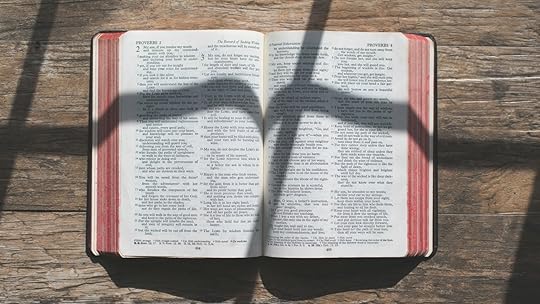
Jesus didn’t grow up studying the Gospel of John, 2 Corinthians, or Hebrews. Instead, books like Leviticus, Psalms, and Isaiah shaped our Savior’s mission and understanding of God and his ways. What we call the Old Testament was Jesus’s only Bible. He summarized it as “the Law and the Prophets,” which he saw as lastingly relevant for his followers: “I have not come to abolish them but to fulfill them” (Matthew 5:17). He also stressed that Moses’s instructions continue to matter today: “Whoever relaxes one of the least of these commandments and teaches others to do the same will be called least in the kingdom of heaven, but whoever does them and teaches them will be called great in the kingdom of heaven” (Matthew 5:19).
Later, when Paul took his three missionary journeys, Matthew’s Gospel did not yet exist, and there was no book of Revelation. Yet Christians still had authoritative sacred writings, for Paul could declare, “Whatever was written in former days was written for our instruction, that through endurance and through the encouragement of the Scriptures we might have hope” (Romans 15:4; see also 1 Corinthians 10:11). The same apostle could stress (with the Old Testament principally in view) that “all Scripture is . . . profitable for teaching, for reproof, for correction, and for training in righteousness,” and he could urge his pastoral apprentice, “Preach the word!” (2 Timothy 3:16; 4:2).
Awed and Asking New QuestionsThese ideas were new for me in the autumn of 1995, when my wife and I moved to New England and I began my MDiv at Gordon-Conwell Theological Seminary. Until that time, I knew the Old Testament declared the global problem of sin for which Christ was the saving solution. I also knew that the initial part of my Bible was filled with stories like the exodus (Exodus 14–15), David’s defeat of Goliath (1 Samuel 17), and Daniel’s deliverance from the lions’ den (Daniel 6) — all of which displayed God’s kindness and greatness.
Yet it was during that initial fall semester of seminary, sitting in Theology of the Pentateuch, that my heart first began to burn, awed by God’s glory and amazed at Scripture’s unity and story climaxing in Christ. Other classes — on biblical theology, Hebrew and Greek language, Old and New Testament exegesis, and the New Testament’s use of the Old — overwhelmed me with the perfections of divine beauty and with the purposes of God from Genesis to Revelation.
Yet I still had so many questions, especially related to how the biblical covenants progress and interrelate. What was the church to do with Old Testament laws and promises — especially those given to a different people under a different covenant? How does old-covenant Israel relate to the new-covenant church? Should Scripture’s teaching and progression lead me to become a Baptist or a Presbyterian? In salvation, how should we understand the doctrine of imputation, and how do justification and sanctification relate?
Such queries swirled in my head as I came to the end of my graduate studies. But what was still missing at this time was sustained, dependent reflection on the significance of Jesus Christ, whose person and work alone supply answers to these important questions. Another five years would pass before I would have a conversation that would reorient my life onto a new path.
Equipped to Magnify God’s MajestyIn 2000 I began my PhD at the Southern Baptist Theological Seminary, majoring in Old Testament Literature and minoring in both Old Testament Language and New Testament Theology, the latter because I always wanted to have a grasp of “the whole counsel of God” for the church (Acts 20:27). I went deep and far, growing much and ever maintaining my conviction that the Bible in its entirety is God’s written word.
As a minister, I wanted to study God’s word carefully, practice it rightly, and teach it faithfully — in that order (Ezra 7:10). I resolved that in my instruction, counseling, and writing I would join Paul in declaring, “We have renounced disgraceful, underhanded ways. We refuse to practice cunning or to tamper with God’s word, but by the open statement of the truth we would commend ourselves to everyone’s conscience in the sight of God” (2 Corinthians 4:2). Careful exegesis of Galatians 3 and whole-Bible theology made me a convictional Baptist, and I fell more in love with the wondrous glory of our holy, holy, holy God.
Along with my doctoral courses and teaching ministry as an associate pastor, John Piper’s Desiring God, Future Grace, Pleasures of God, and Brothers, We Are Not Professionals developed my doctrinal sensitivities and expanded my capacity for treasuring God in his matchless worth. They also shaped within me a rock-solid theology of suffering that prepared me for future ministry and for leading my family through life’s storms. Yet there was something — or someone — still missing from the center of my solar system. I still needed to see that “God, who said, ‘Let light shine out of darkness,’ has shone in our hearts to give the light of the knowledge of the glory of God in the face of Jesus Christ” (2 Corinthians 4:6). We fully and properly encounter God’s glory by looking at Jesus.
‘Very Little About Jesus’In the summer of 2005, my family of five moved to Minneapolis, Minnesota, so I could begin my first full-time teaching post as an Old Testament professor. Upon my request (and with some help from Tom Schreiner), John Piper agreed to have lunch with me. I shared with him and Justin Taylor, his assistant at the time, how much a passion for God’s glory had captured me and how eager I was to proclaim the beauties and bigness of God from the initial three-fourths of the Bible.
After listening for a while, Pastor John asked Justin if he had any reflections. Justin offered a single statement that shook me to the core and that God used to reorient my affections and set me on a path of discovery and awe that I am still journeying today. He said, “I hear a lot about God’s glory and very little about Jesus.”
Through Christ and for ChristIn the weeks and months that followed, I considered whether, as a Christian, my interpretive approach and ministry practice aligned with the truth that there were “mysteries” kept secret in the Old Testament that only the lens of Christ’s coming could disclose (Romans 16:25–26), thus making the apostolic witness necessary for properly grasping all that God wants us to gain from the Old Testament (Acts 2:42; Ephesians 2:20).
“Getting the Old Testament right demands that we keep Christ at the center.”
Stated differently, did I interpret and preach old-covenant materials in a way that embraced the twin realities that only spiritual people can read a spiritual book (1 Corinthians 2:13–14) and that only through Christ does God lift the veil, enabling those once spiritually blind to fully understand and apply the Old Testament’s significance (2 Corinthians 3:14–15)? Was I seeking a knowledge of God’s glory “in the face of Jesus” (2 Corinthians 4:6)?
Furthermore, did I rightly see that God designed the whole Old Testament to move us to magnify the Messiah, savoring Jesus as the climax of Old Testament history (Mark 1:15; Galatians 4:4), the focus of Old Testament prophecies (Matthew 11:13; Luke 16:16; Acts 3:18, 24), the Yes of every promise (2 Corinthians 1:20), and the end of old-covenant law (Romans 10:4; Galatians 3:24–26)? Indeed, God created all things (including the Old Testament) in the Son, through the Son, and for the Son (Colossians 1:16). The very Spirit that guided the Old Testament prophets ever seeks the Son’s glory (John 16:13–14; 1 Corinthians 12:3; 2 Corinthians 3:18).
Jesus stands as both the answer key and the hermeneutical algorithm for rightly interpreting the Old Testament (2 Corinthians 3:14). We must read the Old Testament through Christ and for Christ. It was at this time that I began to see the Old Testament for the Christian Scripture it is.
Behold the King in His BeautyOver the next many years, my family and I were active members at Bethlehem Baptist Church, feasting week by week on John Piper’s preaching ministry and enjoying the fellowship of saints who cherished Christ and God’s work in the world. In 2009 I became one of the founding professors of Bethlehem College and Seminary, and I continued to grow in my understanding of how the Testaments relate and how the Old Testament is, as my friend Jim Hamilton likes to say, “a messianic document written from a messianic perspective to instill messianic hope.”
After the early Christians met the resurrected Christ, they gained understanding into the true meaning of the Old Testament, seeing in it a message of the Messiah’s suffering and triumph and the universal mission he would spark (Luke 24:45–47; Acts 26:22–23). This is not a message forced upon the Old Testament from the outside. No! Through the Old Testament prophets, God promised the gospel of Jesus we now celebrate (Romans 1:1–3). Yet even in the promise, God maintained the “mystery . . . kept secret for long ages” — the mystery that is now being made known to all nations “through the prophetic writings” themselves (Romans 16:25–26)!
Whether a pastor or Bible-study leader, a stay-at-home mom or a businessman, if you are a Christian, the Old Testament is for you. Read Genesis considering how Abraham saw and rejoiced in Jesus’s day (John 8:56), even if from afar (Matthew 13:17; Hebrews 11:13). When reading of Israel’s wilderness journey or through Moses’s Deuteronomic sermons, be ever mindful that Moses wrote of Christ (John 1:45; 5:46–47). Look for how books like Judges, Esther, and Ecclesiastes bear witness about Jesus (John 5:39), and study Jeremiah, Habakkuk, and Malachi convinced with Peter that “all the prophets” spoke of Christ’s suffering, the church’s rise, and the forgiveness that all believers can enjoy through Jesus (Acts 3:18, 24; 10:43). As you do, you will increasingly “behold the king in his beauty” (Isaiah 33:17), and your life will never be the same (2 Corinthians 3:18).
Every Page ChristianAs many Old Testament texts make clear (for example, Deuteronomy 30:6, 8; Isaiah 29:18; 30:8; Jeremiah 30:2–3, 24; Daniel 12:9–10), God revealed to the prophets that “they were serving not themselves but you” as they carefully searched their Scriptures to discern more about the person of Christ, the time of his coming, and the glories that would follow (1 Peter 1:10–12).
Getting the Old Testament right demands that we keep Christ at the center (1 Corinthians 2:2; Colossians 1:28). We must account for how redemptive history progresses through the various covenants climaxing in Christ. A wrong view of Jesus’s person and work will lead to a wrong view of salvation, missions, Christian ethics, the appropriation of biblical promises, the roles of men and women, the church’s governance and makeup, the church’s relationship to Israel and the state, and so much more. But when Jesus is elevated as both the necessary light and lens, we are equipped with God’s help to answer such questions, ever delighting in all Christian Scripture — both the Old and New Testaments.
***
This article originally appeared on Desiring God.
The post When My Old Testament Became Christian appeared first on Jason DeRouchie.
June 24, 2024
The Gospel, Missions, and Sovereign Joy (Isaiah 53:10–11a)
by Jason DeRouchie
https://jasonderouchie.com/wp-content/uploads/2024/06/The-Gospel-Missions-and-Sovereign-Joy-DeRouchie.mp3 TranscriptAt these Sovereign Joy summer gatherings, Pastor Charles and I are considering foundational texts that shape the identity of Sovereign Joy Baptist Church. Tonight, I want to meditate on Isaiah 53:10–11, which helps us consider how Christ’s substitutionary sacrifice is related to making disciples of all nations. This good news and this mission to the many are central to who we are as a church. Find in your Bibles Isaiah 53, one of the Old Testament’s greatest depictions of the gospel for the many. As you turn, pray with me.
Lord, in these brief moments set aside to meditate on your Word, grant us light that we may see, humility that we may receive, and hunger that we may grow. I pray this through Jesus, our only Savior. Amen.
Isaiah 52:13–53:12 is the last of Isaiah’s four “servant” songs––poems that apply the title of God’s “servant” to the promised coming royal deliverer, whom we know as Jesus. In this last song, both God and his prophet clarify how ungodly sinners from many nations can be declared right with God through the victorious substitutionary sacrifice of the servant.
This whole chapter is focused on the mission of Messiah Jesus, whom Isaiah earlier names “Immanuel” (God with us, Isa 7:14) and “Everlasting Father” who will rule on David’s throne (9:6). He’s also one we’re told in 52:13 “shall be high and lifted up, and shall be exalted.” Picking up at the end of 53:9, Isaiah says:
He had done no violence, and there was no deceit in his mouth. Yet it was the will of the LORD to crush him; he has put him to grief; when his soul makes an offering for guilt, he shall see his offspring, he shall prolong his days; the will of the LORD shall prosper in his hand. Out of the anguish of his soul he shall see and be satisfied. (53:9–11)
Beginning in verse 10, note first the contrast signaled by “Yet.” This person, “marred beyond human semblance” (52:14), “committed no sin, neither was deceit found in his mouth” (1 Pet 2:22). Yet verse 10 declares, “It was the will of the LORD to crush him; he has put him to grief.” The contrast emphasizes that this man himself whom God would crush did not deserve to die, yet God purposed that he would serve as a substitutionary sacrifice––dying not for his own sin but bearing the just wrath of God on behalf of others. In the words of 53:5, “He was pierced for our transgressions; he was crushed [using the same word] for our iniquities; upon him was the chastisement that brough us peace, and with his wounds we are healed.”
But now consider the irony in verse 10. What is it that pleases God? What does he desire to do? My ESV reads, “Yet it was the will of the LORD to crush him; he has put him to grief.” Isaiah uses the term “crush” to speak of the way the powerful in Israel’s society oppressed the poor, even grinding their faces in the dust (Isa 3:15). He also compares the leaders in Egypt to pillars that will be crushed in Yahweh’s judgment (19:10). Finally, a crushed heart is one that is contrite, lowly, humble (57:15). Word-for-word the text here says, “Yahweh desired his crushing; he wounded.” Or, as the CSB translates, “Yet the LORD was pleased to crush him severely.” The death of Christ does not happen randomly, and the decisive agent in his death is not the wicked Romans or the seething, conniving Jewish leaders. In Peter’s words talking to God, “In this city there were gathered together against your holy servant Jesus, whom you anointed, both Herod and Pontius Pilate, along with the Gentiles and the peoples of Israel, to do whatever your hand and your plan had predestined to take place” (Acts 4:27–28). Earlier in Isaiah, using the same verb, God declared, “I do not delight in the blood of bulls, or of lambs, or of goats” (Isa 1:11). Now, we learn that there is a sacrifice in which he does delight––the crushing of his Son.
But this is not divine child abuse. No, this is the offering of a willing substitute to bear the wrath of God against sinners. And it was for a purpose––not simply to see the penalty of sin cancelled but the power of sin destroyed and a new people shaped for the sake of God’s name.
Look with me at what comes next: “When his soul makes an offering for guilt, he shall see his offspring; he shall prolong his days; the will of the LORD shall prosper in his hand” (Isa 53:10). God was pleased to send his Son as “a lamb that is led to the slaughter” (53:7) and as a substitutionary sacrificial “offering for guilt” (53:10), because of what would result. Three results are given, all of which imply the resurrection of this once-dead sacrifice. Looking initially at the second, the very one who is crushed under God’s hammer will “prolong his days,” a phrase that recalls the promise of Deut 17:20 that the king who is faithful would enjoy extended days over his kingdom. The third result: The very pleasure of God that brought the servant’s death will now move through that death and become something that will flourish in his hand. God’s purposes did not stop with the darkness of Friday’s cross but instead pushed through the rise of the Son on Sunday beyond to all that the resurrection would accomplish.
Yet now I want to focus on the first promised result. “If his soul becomes a guilt offering, bearing the sins of many, then he will see offspring.” Sight is a sense that only living people enjoy, so if operating as “an offering for guilt” requires the substitute’s death, seeing must require his resurrection. The messianic servant would die, but he would also rise to see offspring. Some 750 years before Jesus, God placed in his Word a conditional promise that would motivate the Messiah’s perfect obedience, even unto death, death on a cross. Because Jesus never married a physical bride, the “offspring” must be spiritual, and they would become his children because of his sacrificial, substitutionary work.
Who are these offspring? The surrounding context makes it clear. First, they are many nations, whom his atoning blood will sprinkle. Look back at 52:14–15. Comparing the exile of the nation of Israel to Jesus’s curse-bearing death, the text reads, “As many were astonished at you––his appearance was so marred, beyond human semblance, and his form beyond that of the children of mankind––so shall he sprinkle many nations.” This sprinkling likely recalls how sacrificial blood was sprinkled on the priests to declare their cleansing from sin and to consecrate them to their special office (Exod 29:21; Lev 8:30). Now, Christ’s substitutionary death will create a new set of priests from “many nations,” who will in turn mediate God’s presence to the world and stand as the primary pointers to God provision of the substitute for the salvation of souls. Second, the Messiah’s offspring are the many that the righteous servant will account righteous. Look at the second half of 53:11. God declares, “By his knowledge shall the righteous one, my servant, make many to be accounted righteous, and he shall bear their iniquities.” This is the great legal exchange that stands at the core of the gospel––our sins placed on Christ and his righteousness counted as ours. In Paul’s words, “As by the one man’s disobedience the many were made sinners, so by the one man’s obedience the many will be made righteous” (Rom 5:19; cf. 2 Cor 5:21). So who is the offspring? They are the many new priestly mediators from the nations whom God has accounted righteous through the victorious, substitutionary sacrifice of the righteous servant.
Now look back at the beginning of verse 11, which I believe includes the prophet’s final reflections before Yahweh again speaks about his servant. Isaiah comments, “Out of the anguish of his soul he shall see and be satisfied.” The translators of the NIV and CSB sensed the need for the servant to see something, so they follow a tradition of adding “light” into the text. But the word “light” is not in the standard Hebrew text. Instead, what we read is simply, “Out of the anguish of his soul he shall see, he shall be satisfied.” In context, what is it that the servant will see? The previous verse told us. “He shall see offspring.” And what will be the result? “He shall be satisfied.”
Isaiah 53:10–11 includes two amazing portraits of Sovereign Joy. First, it pleased the Lord to crush his Son. Why? Because there was an even greater pleasure that only the death of his Son made possible: “If his soul makes an offering for guilt, he shall see offspring, he shall be satisfied.” There was a joy that was set before Christ at the cross, and that joy was a people (Heb 12:2)––a great cloud of saints bearing witness to his worth (12:1) that you and I get to join when Jesus acts as “the founder and perfecter of our faith” (12:1). In Revelation John speaks of everyone whose name was “written before the foundation of the world in the book of life of the Lamb who was slain” (Rev 13:8). Before the foundation of the world, God purposed to crush his Son so that through his death he might save all whose names were written in the book of life. Your personal salvation joyfully motivated Christ to endure the cross. Because God was pleased to crush his Son, Christ is now pleased to save sinners like you and me. This hope stands at the core of Sovereign Joy Baptist Church. “Oh praise the One who paid my debt and raised this life up from the dead!”
The post The Gospel, Missions, and Sovereign Joy (Isaiah 53:10–11a) appeared first on Jason DeRouchie.
June 12, 2024
Four Reasons to Use the Biblical Languages
“Now Ezra had determined in his heart to study the law of the LORD, obey it, and teach its statutes and ordinances in Israel” (Ezra 7:10, HCSB).
While every believer must seek to know God, not everyone needs to know the biblical languages. Indeed, the Lord has graciously made his Word translatable so that those “from every tribe and language and people and nation” may hear of and believe in the Savior (Revelation 5:9; see Nehemiah 8:7–8; Acts 2:6). Furthermore, grasping the fundamentals of Hebrew and Greek neither ensures correct interpretation of Scripture nor removes all interpretive challenges. It does not automatically make one a good exegete of texts or an articulate, winsome proclaimer of God’s truth to a needy world. Linguistic skill also does not necessarily result in deeper levels of holiness or in greater knowledge of God. Why then do we need some in the church in every generation who can skillfully use the biblical languages?
Using the biblical languages exalts Jesus by affirming God’s wisdom in giving us his Word in a book (God’s Word as Foundation).In his wisdom and for the benefit of every generation of humankind, God chose to preserve and guard in a book his authoritative, clear, necessary, and sufficient Word. Jesus highlights the significance of this fact when he declares that he prophetically fulfills all Old Testament hopes: “Don’t assume that I came to destroy the Law or the Prophets. I did not come to destroy but to fulfill. For I assure you: Until heaven and earth pass away, not the smallest letter or one stroke of a letter will pass from the law until all is accomplished” (Matthew 5:17–18). The very details of the biblical text bear lasting significance and point to the person and work of Christ. As such, we align ourselves with God’s wisdom and participate in his passion to exalt his Son when we take the biblical languages seriously in the study of his Book.
Using the biblical languages gives us greater clarity that we have grasped the meaning of God’s Book (Study God’s Word).Knowing the biblical languages helps one observe more accurately and thoroughly, understand more clearly, evaluate more fairly, and interpret more confidently the inspired details of the biblical text. Without Hebrew and Greek, ministers are:
Forced to rely heavily on what others say in commentaries and the like without accurate comprehension or fair evaluation;Required to trust someone else’s translation;Left without help when translations differ (e.g., Deuteronomy 6:4; Proverbs 29:18; 1 Corinthians 7:36–38); andCompelled to miss numerous discourse features that are not easily conveyed through translation.Knowing the languages neither makes an interpreter always right nor sets all interpretive challenges aside. However, through the biblical languages major hindrances to understanding are removed and occasions for numerous mistakes are taken away. Furthermore, the languages enable interpreters to more accurately track an author’s flow-of-thought through which the Bible’s message is revealed.
Using the biblical languages can assist in developing Christian maturity that validates our witness in the world (Obey God’s Word).Scripture is clear that a true encounter with God’s Word will alter the way we live, shaping servants instead of kings and nurturing Christ-exalting humility rather than pride. Sadly, practicing the Word is too often forgotten, thus hindering the spread of the gospel in the world.
Now, because our knowing God and living for God develops only in the context of the Word and because Bible study is best done through the original languages, Hebrew and Greek can serve as instruments of God to develop holiness, which enhances the church’s mission. Original language exegesis can help clarify what feelings God wants us to have and what actions he wants us to take. With this, along with opening fresh doors of discovery into the biblical text, the arduous task of learning, keeping, and using the languages itself provides many opportunities for growth in character, discipline, boldness, and joy. Hypocrisy hinders Kingdom-expansion, but biblically grounded study accompanied by a virtuous life substantiates the gospel and promotes mission, leading to worship.
Using the biblical languages enables a fresh and bold expression and defense of the truth in preaching and teaching (Teach God’s Word).Saturated study of Scripture through the biblical languages provides a sustained opportunity for personal discovery, freshness, and insight, all of which can enhance one’s teaching. Moreover, the languages provide an unparalleled means for judging and defending biblical truth. The church needs earnest contenders for the faith, those who are able “to encourage with sound teaching and to refute those who contradict it” (Titus 1:9). The biblical languages sharpen one’s teaching and preaching to make it as pointed, accurate, and penetrating as possible. Preaching without original language exegesis is like wielding a blunt sword.
Synthesis:
For the Christian minister who is charged to proclaim God’s truth with accuracy and to preserve the gospel’s purity with integrity, the biblical languages help in one’s study, practice, and teaching of the Word. Properly using the languages opens doors of biblical discovery that would otherwise remain locked and provides interpreters with accountability that they would otherwise not have. The minister who knows Hebrew and Greek will not only feed himself but will also be able to gain a level of biblical discernment that will allow him to respond in an informed way to new translations, new theological perspectives, and other changing trends in church and culture. With the languages, the interpreter’s observations can be more accurate and thorough, understanding more clear, evaluation more fair, feelings more aligned with truth, application more wise and helpful, and expression more compelling.**
For more on this issue, see Jason S. DeRouchie, “The Profit of Employing the Biblical Languages: Scriptural and Historical Reflections,” Themelios 37.1 (2012): 32–50.
** For the pattern “observe > understand > evaluate > feel > apply > express,” see John Piper, Think: The Life of the Mind and the Love of God (Wheaton, IL: Crossway, 2010), 191–98.
*** This article originally appeared on B&H Academic’s blog.
The post Four Reasons to Use the Biblical Languages appeared first on Jason DeRouchie.
May 15, 2024
GearTalk Podcast
by Jason DeRouchie, Tom Kelby, and Jack Yaeger
https://jasonderouchie.com/wp-content/uploads/2024/04/7-Lethal-Self-Defense-Enhanced.mp3 TranscriptJY: Welcome to Gear Talk, a podcast on biblical theology. Today, we're beginning a new series, a month in the Servant Songs. Over these next weeks, we'll be looking at the four poems in Isaiah, describing Yahweh's Servant. Who is he? What does he do? Why does his life matter for me and for the world? As with our month in the Psalms, we've created an album cover for this month in the Servant Songs series. Be sure to go to our show notes and download the album cover. Tom and Jason refer to this album cover throughout this podcast. You'll also find other Jason Derouchie lecture notes on the Servant Songs.
TK: Welcome to Gear Talk, Jason, are you there?
JD: I am here. Good to be back.
TK: It is good to be back. I'm sitting here and I'm looking at a yellow album cover that Mark did and it says a month in the Servant Songs. We're not together, but Jason, you have the same thing up in front of you, right?
JD: I do and I love it.
Album Cover Overview: Four Pictures of the ServantTK: This is something if you—on the show notes, you can download a PDF and this is an album cover for what we're going to be covering for the next four podcast. So, Jason, why don't you let everybody know what's coming up?
JD: Alright, the Servant Songs. This is a specific set of poems in the book of Isaiah. Isaiah is the first Old Testament book to explicitly use the language of the gospel in association with the age of the Messiah. And within this book, there are three key titles that are associated with this future figure who will save not only some from Israel but save some from the world. And those three titles are associated with a king, a Servant, and an anointed conqueror. So, early in the book we get this vision of the king. We're going to talk about him a little bit today. And then as we move on in the book this royal figure becomes embodied in one called the Servant. And then at the end of the book, we read texts like Isaiah 61, which Jesus used to kick off his ministry when he said, “The Spirit of the Lord is upon me, and he has anointed me,”—that's that word—“Anointed me to bring good news to the poor” (Luke 4:18). So, this figure is an anointed or messianic—that's what the word “Messiah” means: the anointed one—he's a an anointed conqueror. So, three different images for the same person. And what we want to do over these next four episodes or so is focus specifically on this middle group, where a Servant person is mentioned. Now from Isaiah 40 to Isaiah 53 the Servant is all—shows up, that term shows up twenty different times, always in the singular, and then after Isaiah 53—think about what happens in Isaiah 53. That is where the Servant actually suffers on behalf of the many and saves a people that become his offspring—after Isaiah 53, from Isaiah 54 to Isaiah 66, the term Servant occurs a number—another eleven times, but always in the plural.
TK: So something changes.
JD: Something changes after this culminating work, that we see realized in the cross, the Servant person gives rise to a sea of servants who follow him and through whom he fulfills his mission. But what's intriguing here in Isaiah 40 to 53, which is going to be the focus of our next several episodes, the servant, when it occurs those twenty times, always in the singular, sometimes refers to a person and sometimes refers to a people. So we read, for example in Isaiah 41:8, “But you Israel, my servant Jacob, whom I have chosen the offspring of Abraham, my friend; you whom I took from the ends of the earth, and called from its farthest corners, saying to you, ‘You are my servant, I have chosen you and I have not cast you off” (Isa 41:8–9). Here in this context, talking about a redeemed people, it seems as though God is referring to a people as his servant. And what's intriguing is that in this whole section, usually the servant people is portrayed as sinful as rebellious, as in Isaiah 42:18 and following. We read this, “Hear, you deaf, and look, you blind, that you may see!” Now when it uses the word “you” both of those instances are in the plural: hear, all of you deaf, look, all of you blind that you may see. And then he says, “Who is blind but my servant, or deaf as my messenger whom I send? Who is blind as my dedicated one, or blind as the servant of the Lord? He sees many things, but does not observe them; his ears are open, but he does not hear” (Isa 42:19–20). And then it specifically says, “But this is a people plundered and looted; they are all of them trapped in holes and hidden in prisons” (Isa 42:22). That's the judgment of God against his servant, singular, his servant people. But that's not all that we hear about a Servant in this section. Beginning in Isaiah 42 and stretching all the way to Isaiah 53, there are four key poems that speak of a Servant who is not rebellious, who does exactly what God calls him to do. This Servant is none other than the one we know of as the Christ, and we want to spend these weeks celebrating this particular Servant as he is revealed in these four Servant Songs, and that brings us back to our cover.
TK: So we have this cover and if you can pull it up, it would be great either now. If you're driving, obviously you can't do it. But again, go to the show notes, pull up the PDF that Mark created. So, the cover is yellow and in our logo it says Gear. The six gears, remember, symbolize six different sections in the Bible: he Law, the Prophets, the Writings in the Old Testament, in the New Testament, we'd have the Gospels and Acts (history books) and then the Letters and then Revelation. So, six sections, and the second section in our gears, here is yellow, symbolizing the prophets, so this album cover is yellow, symbolizing Isaiah is in the section called the Prophets. Jason. What can you tell us about this section? What books are in this section in the Hebrew ordering of the of the Old Testament?
JD: So Jesus’s Bible had the Law, the Prophets and the Writings. And as you said, this is the middle section of Jesus's Old Testament. Here it breaks down into two parts. There's the history books that clarify what happened in the history of the covenant: this is Joshua, Judges, Samuel, Kings. In Jesus's Bible, these are called the Former Prophets. And then we move into the Latter Prophets that clarify why Israel's history went the way it did. So, we get figures like Isaiah in this unit, and he grows out of the prophetic voice in the Old Testament. And we are in our Gear Talk Biblical theology podcast just wanting to cover all six different parts of Scripture and showing how all of them like a sweet moving transmission are just working together so that in the Scriptures we have of a perfectly harmonized, beautiful message that God has given his church that magnifies his Son, that testifies to all that the Father is doing by the Son through the work of the Spirit.
TJ: I love it.
JD: These weeks, a month in these Servant Songs, and as I said, there's four of them and that's why on this album cover, we've got four different images. It begins down in this bottom left corner with a person in prison. And yet the doors are swung wide open and there's light intruding into that prison. And in all four of these pictures, the Servant is present, and he's depicted in all four different poems in different ways. And we tried to capture the place the Servant has in each of these poems by the lighter yellow as it pierces into the darker yellow. And so in this first image what we have is the Servant represented as light piercing into this prison. So Tom, tell me from the first Servant Song, why have we depicted it this way?
TK: Well, we were looking for an image that would capture, if you wanted to summarize it, what the Servant Song was saying and if we went to 42:6–7, and by the way, you can download this also. So we did this with our album cover for the Psalms as well Mark put a circle with the verse numbers on it. So 42:6–7, it says, “I am the Lord; I have called you in righteousness”—talking about the Servant, and as Jason said, the obedient Servant. “I will take you by the hand and keep you; I will give you as a covenant for the people, a light for the nations, to open the eyes that are blind, to bring out the prisoners from the dungeon, from the darkness, those who are—from the prison, those who sit in darkness.” So this is a part of this Servant Song that's meant to remind us of, oh that's what the message was of that Servant Song.
JD: And the Servant is that light piercing into the darkness of the prison in order to set a prisoner free. It's beautiful.
TK: Then if—the way Mark arranged this album cover—if you started at the bottom left and then you move to the right and up, there's an image of a man shooting a bow and he has a quiver strapped, strapped over his shoulder, and the man isn't actually the lighter color that Jason was talking about. Instead, it's the bow, and it's the quiver. So why do we do it that way, Jason?
JD: Well, because in Isaiah 49, the Servant person actually talks and he says that Yahweh, his God, “made my mouth like a sharp sword; in the shadow of his hand he hid me” (Isa 49:2). And then it says, “He made me a polished arrow; in his quiver he hid me” (Isa 49:2). So this Servant is like a an arrow that is ready to be shot from God's bow to fulfill the exact purpose that he is intended. And when God shoots his arrow of purpose, it always lands where it's supposed to land. It's a piercing mission that this Servant has. And so in this image of the archer, what's highlighted is both the quiver and the arrow, because that's the role the Servant is playing in at least one of the images within this poem.
TK: Something to notice as I'm looking at this album cover—just the way it progresses—one thing is that the two images on the right side, those Servant Songs are autobiographies, so it's the Servant speaking. The two on the left side are not the Servant speaking, he's being spoken about. So it's a way to kind of divide it and say, OK, the ones on the left, the man in prison, and then, we're going to get to it, there's a sheep being led. Those are speaking about the Servant. But the ones on the right, we're going to get the Servant’s own words in those ones.
JD: That's right, he is—it's just amazing that God revealed—he spoke to Isaiah, through Isaiah in such a way that Isaiah is not even present. In fact, the words we hear are the very words of Jesus Christ himself, as if he was present and talking 700 years before he even showed up on the scene. That's how it's presented. Very similar to how we described the voice of this suffering, triumphant ruler, when we walked through the Psalms in our month and the Psalms. So that autobiographical approach to the Servant matched by the biographical approach, we saw the same thing in the Psalms, where some Psalms were in first person, where the king, the royal figure is talking about himself. And other psalms it's other people talking about the king, praying for the king. So very similar pattern that we're seeing in the Servant Songs compared to what we already saw in the Book of Psalms.
TK: I would say one more thing as I'm looking at the album cover and as the movement starting at the prison. So, the Servant is not the prisoner in that one, but there's a movement where you can see more progressively in each one that the Servant in doing his job, is suffering. And it's not really pictured in the first one. It's spoken of in the second one. You can see it clearly, though, in the third image, where the Servant, the one who's lit up there, his beard is being pulled. So where do we get that, Jason?
JD: We get it straight out of Isaiah 50:6, where the Servant himself, speaking of himself says, “I gave my back to those who strike and my cheeks to those who pull out the beard, I hid not my face from disgrace, and from spitting.” And we really get an image—even Jesus, in the process of his passion, in the process of his suffering through the crucifixion, what he endured, it's not only Isaiah 53 that speaks this way it's already being anticipated in Isaiah 50. And even as we're going to see in Isaiah 49.
TK: It makes you, just again looking at the image of the prisoner with the open door—the cost to open the prison doors to set us free was tremendous.
JD: It was tremendous, and it would be tremendous if it was, but a man, but here we have the God man who came as God, lowering himself, humbling himself, taking the form and likeness of humans being, tempted in every way as we are, even obeying his Father to the point of death. This is a level of suffering endured by no other person in all the history of the world, because of the level of the cost. And it's because of this, I believe, that in a in six short hours of his suffering at the cross he could pay for the penalty for all those throughout all time. An eternal penalty that was due, he could pay it and satisfy God's wrath in that period because of the level to which he lowered himself and suffered as the God man.
TK: I'm thinking of Paul speaking in Thessalonians, and he was talking about persecutors who are stopping the gospel going forth and he said they hate all mankind. And that thought of the person pulling on Jesus's beard—there, the Servant’s beard—and just saying this is a person who is hating the one, the only one who can open the prison doors.
JD: That's right. It's really much even a recollection of Psalm 2, where you've got the nations raging, the peoples plotting in vain and to whom are they plotting against? It is Yahweh and his Anointed, the very one who came to save them is the one they are rejecting, stumbling over. It is intense suffering and it's depicted for us here 700 years before Jesus even arrives on the Earth. And so it is that God has fulfilled what the prophets proclaimed. What all the prophets proclaimed, that the Christ would suffer, Acts 3:18.
TK: So moving so those two again the arrow and the quiver and the Servant with his beard being pulled, those are autobiographical, then we move back to the left and now I'm looking, Jason, at a sheep being led and the sheep is lit up. And that one we're saying is biographical.
JD: It is, and here you've got the sheep being led, and there's even a man standing nearby with the knife. So this is intended to recall Isaiah 53:7 where it says of the Servant, “He was oppressed, and he was afflicted, yet he opened not his mouth; like a lamb that is led to the slaughter, and like a sheep that before its shearers is silent, so he opened not his mouth.” We don't attempt in the album cover to capture everything. What we're trying to do is get into each of these Servant Songs and capture a key element that depicts the role of the Servant. He is the light piercing into the darkness. He is the arrow ready for God to use as he will. He is the one who is oppressed and afflicted, even his beard is pulled out. He is the lamb that has led to the slaughter, for the salvation of sinners like you and like me.
TK: I want one thing before we move on, and what we're going to do in this next time is right now is just focus on the first Servant Song. But the logo, where it says Gear Talk, Biblical Theology, just looking at it, the person speaking on the left, he's—the one gear is lit up, the second gear from the prophets. It's almost like if I called you, Jason, and I said, Jason, I am thinking about Isaiah 42 and this Servant Song. And in his response, so the person responding, it would be like Jason being able to say, oh I could talk about the Servant from every single section of the scriptures.
JD: That's right. And I and I anticipate that in some way or another, we're going to do that in the next several episodes, just showing how really the whole Bible is interrelated. It progresses, it integrates, and it climaxes in Jesus and every single part is contributing to the purposes of God, what we call the whole counsel of God from Genesis to Revelation, from creation all the way to consummation. And these Servant Songs play a key part in that overall presentation of what God is doing in this world, in creation through redemption, through the work of his Servant, his anointed Servant King, by the power of the Spirit. What we're looking at this ultimate Trinitarian story, it is his story, and we're going to catch a glimpse of it in these Servant Songs in a beautiful way.
TK: All right. Well, Jason, Are you ready? Should we go to the first one?
Identity of the Servant: A Spirit-Anointed David, Bringing a New ExodusJD: Let's do it. So, we're in Isaiah 42 and specifically we're looking at Isaiah 42:1–9, but they have an overall context, and part of that context includes a vision of a new exodus. So even if we go to the previous chapter and we look at Isaiah 41:17–20, we read this, “When the poor and the needy seek water, and there is none, and their tongue is parched with thirst, I the Lord will answer … I will open up rivers on the bare heights, and fountains in the midst of the valleys. I'll make the wilderness a pool of water, and the dry land springs of water. I will put in the wilderness the cedar, the acacia, the myrtle, the olive. I will set in the desert the cypress, the plane and the pine together.” You have this image of restoration of new-creational transformation, and it really sets the context, then for this vision of what is laid out. God says, “Behold my servant, whom I uphold, my chosen one, in whom my soul delights; I have put my Spirit upon him; he will bring forth justice to the nations” (Isa 42:1). So, let's just start right there, Tom. Verse one and already we have a number of recollections that put us within the framework of this whole book. This isn't the first time that we've read about one upon whom the Spirit rests and who will bring justice to nations.
TK: I think this is a remarkable part of Isaiah as well as the—is the vision of a person. First of all, I wrote in my notes as I was reflecting on this, saying that I don't want to forget this, that the Servant Songs need to produce in us a love for the world. And a love for the nations, because it's an overriding theme here that the Servant came that, the Servant was sent, the arrow was shot for all the nations for the ends of the earth. But this is—Isaiah has been telling this story from the from the very beginning.
JD: That's right, you get the nations in Isaiah 2 gathering to this elevated Jerusalem. You get the promise of a virgin-born son whom is a child king in the line of David. In fact, he gets that title in Isaiah chapter 9, along with Wonderful Counselor, Mighty God, Everlasting Father, Prince of Peace, and the government is on his shoulders and his peace extends to the ends of the earth. It captures in all the nations. And then in Isaiah 11, it's this figure that we're told—this royal son that has the spirit of God resting upon him, and within the book up to this point, it's that figure who we're told comes from the stump of Jesse. He's like a shoot of Jesse. Jesse was David's father, and it's intriguing—in Isaiah 11, it doesn't say that it's from the stump of David. No, it's from the stump of Jesse, suggesting that the one that we're talking about is a new David. And that's exactly how he was portrayed in chapter 9.
TK: That's really helpful.
JD: The spirit of the Lord is resting upon him. He is like a movable temple and he is, I love this, he's—God himself says he is my Servant, whom I uphold, my chosen, in whom my soul delights. This is really an image of—it reminds me of God's words at Jesus’s baptism when he says this is my son, in whom I am well pleased.
TK: And the same context right there—the Spirit coming down and resting on him. That's the next thing it says. I have put my Spirit upon him.
JD: That's right. So, God is delighting in this son, and it really stands in contrast to just the previous chapter where it says of the idols that Israel so often followed, “You are nothing, and your work is less than nothing, an abomination is he who chooses you” (Isa 41:24). God is saying some strong words here as Israel chooses the idols. They are worth nothing. But when God chooses this one, this Servant, he delights in him. He puts his Spirit upon him, and he gives him this ministry of bringing justice to the nations.
The Manner of the Servant: Humble Justice, Gentle InstructionHe describes it in such a beautiful way. This justice image, he says, “He will not cry aloud or lift up his voice, or make it heard in the street” (Isa 42:2). His task is not self-advancing or assertive. He, it says then, “A bruised reed he will not break, and a faintly burning wick he will not quench; he will faithfully bring forth justice” (Isa 42:3). So, as he works for the sake of the nations in an unjust world, he is working for the weak. I just love the image: a bruised reed he will not break, a faintly burning wick he will not quench. You might feel like you're almost lost, like there's nothing left in you to keep going. Just the light from your candle is so dim. And yet, if you encounter Jesus, he's not one who will snuff you out. Indeed, it says, “He will not grow faint or be discouraged.” Now you can't see this in the Hebrew, but the language of growing faint is the same as a faintly burning wick and the language of growing discouraged, it's the exact same term for a bruised reed. So, he will not grow discouraged even as he works for those who are discouraged. He will not grow faint even as he works for those who are faint. It's such a beautiful comfort to us in a wearying, cursed world that we have a Servant-savior. He is serving God. And what that service looks like—what is his ministry? To come and give weak people like you and me and like those who are listening—if they will but turn to him, cry out for help, they will find a helper who will work justice and who will not grow faint or discouraged even as he works for those who need courage and who feel like they are faintly burning.
TK: I think this, for the church, is so encouraging because it says here that, verse one, he will bring forth justice to the nations, he is going to accomplish his task and right here it says that “He will not grow faint or be discouraged till he has established justice in the earth; and the coastlands wait for his law” (Isa 42:4). That if we're thinking that there should be a—almost like Elijah seems like he thought when he came back after Mount Carmel and went back to Mount Sinai and the Lord said to him, what are you doing here? If we have a thought it's not working, Lord, your methods don't work, your gospel doesn't work, this the Servant is not accomplishing what he said he was going to accomplish. Here, the promise is he will not grow faint or be discouraged till he has established justice in the earth. He's going to do it. He's doing it right.
JD: He is and it will be accomplished. That is our living hope here. Here it mentions the coast lands that is a picture of the most distant shores. So, we have exploded the bounds of the original promised land. And now we've gone global. And these coastlands are waiting for his law. In Isaiah 2 it mentioned how the nations, the peoples of the earth, in the latter days, would gather to a transformed mountain of God to a transformed temple, and it says they would go so that he might teach them his ways so that they might hear God's law, because out of Zion would go forth the law. And now what we're learning is that the way that it goes for: as the nations are gathered in, it's through the teaching of this Servant person. Think about Jesus, “All authority in heaven on earth has been given to me, so make disciples of the coastlands go out and make disciples of all nations” (Matt 28:18–19). And then he says, explaining what that discipleship would look like, part of it is “teaching them to obey all that I have commanded you” (Matt 28:20). So there it is, the instruction, the law that the coastlands are longing for in a lawless world. It's increasingly feeling that way: unjust, unlawful. Turn to Jesus and find the way, the only way of life and it's filled with true justice, where the wrath of God is satisfied and where our hope can be that all oppression and all injustice will ultimately be eradicated, because to him is the vengeance. And he will work it through his Servant.
TK: The picture—I'm looking again at the album cover here— the picture of mixing even the picture of the prisoner waiting to be released and it's almost like that picture—he's been in the dark so long he can barely open his eyes and imagine what it would be like out in the dark. But that thought of somebody gently leading a prisoner out into the light and saying you are free. Now go and be productive. So, this passage is quoted in Matthew chapter 12. And it's right after—so Matthew 12:9, Jesus enters a synagogue and it says there's a man there with a withered hand. And the people are watching, the leaders are watching because they don't want that man to be healed because they have their own set of rules. And Jesus does exactly what this passage is doing. He sets this man free and then it's going to go immediately after that, in verse 15, it's going to say, “Jesus, aware of this, withdrew from there, many followed him and he healed them all, ordered them not to make him known” (Matt 12:15–16). He's not, like Isaiah says, crying aloud in the street. “This was to fulfill what was spoken by the prophet Isaiah, ‘Behold my Servant, whom I've chosen, my beloved with whom my soul is well pleased. I will put my spirit upon him, and he will proclaim justice to the Gentiles. He will not quarrel or cry aloud, nor will anyone hear his voice in the streets. A bruised reed he will not break, a smoldering wick he will not quench” (Matt 12:18–20). And you get this picture of this man with a withered hand, and he's become almost a joke and something that the leaders are only using him as a pawn to, you know, make sure that their ways go forward. But Jesus saying, no I am the one to set you free.
JD: And he brings hope. He brings hope. That depiction in Matthew 12 is just awesome. It not only explicitly identifies the Servant of Isaiah 42 with the Christ it clarifies how Christ's—this promise for the Christ to work justice—it is holistic. He comes in and he heals a man with this disability. But it wasn't just a physical ailment. That disability had resulted in an entire life that had been filled with loss and oppression: all the games that he wasn't able to play as a child, the jobs that he was not able to accomplish as a man, all the ridicule that he had experienced, the ostracization, even within the context, just the fact that you have all these religious leaders, who indeed don't want him healed and Jesus displaying the heart of God, choosing Jesus for this purpose to be one in whom the broken can hope and find their entire lives transformed. It is such a gift and so truly hopeful for us.
TK: I think that's a good use of like the healing stories are not intended just to be like a one thing that sits by itself to say, wait a minute that's a sign he's the one in Isaiah, and we're supposed to go to Isaiah and read that and say, OK, this is my Lord. First it was explicitly made. But what was he saying to the people at that moment is—Matthew was saying that they should have been watching him do that. The leaders should have been saying, oh, this is the Servant he's bringing forth justice to the nations. He's doing it, but instead they rejected him right there.
JD: Yes, it's. It is striking.
The Reach of the Servant: The Distant IslandsTK: Well, Jason, let's move forward from this. This spot, verse four, can you take us the rest of it? So five through 9?
JD: Sure, after we see God declaring that the Servant will bring justice, Yahweh now confirms that this is his ministry. God actually declares, it says, “Thus says God, Yahweh.” And it elevates God right off the bat as the one “who created the heavens, who stretched them out, who gives breath to the people who were on it, who gives the spirit to those who walk in it.” I mean it clarifies right off the bat: if I'm the one choosing the Servant, and if I'm the one giving him the mission, I'm the Creator, so you can be confident—all authority that is needed for this mission to be accomplished is there. He has all power. There's nothing that can stop this ministry of the Servant from being fulfilled. And then it unpacks and clarifies what the nature of that ministry will be. God says, “I am Yahweh; I have called you in righteousness” (Isa 42:6). So out of God's passion for right order, he called and set apart the Servant on mission. He says, “I will take you”—and that's masculine, singular, he's now talking to the Servant—“I will take you by the hand and I will keep you.” So you have an echo of verse one where it says this is my Servant whom I uphold. God takes pleasure in this one. He will protect him until he fulfills his mission. So I will keep you.
And then it says, “I will give you as a covenant to the people, a light for the nations to open the eyes that are blind, to bring out the prisoners from the dungeon, from the prison those who sit in darkness. I am the Lord; that is my name; my glory I give to no other, nor my praise to carved idols. Behold the former things have come to pass, and new things I now declare; before they spring forth I tell you of them” (Isa 42:6–9). So, we often think of Jesus being the instrument who brings about the New Covenant, and that is true. But the new covenant that you and I are a part of, that makes up the Christian Church today—that covenant is only possible because it's not only that Jesus accomplished the covenant, he is the covenant. We have no participation in this relationship with God unless we are in Christ, who embodies the covenant. That's what God says. I will make you as a covenant for the people. But it's not only the people of Israel, his saving work is like a light piercing the darkness for the nations with a mission of opening blind eyes and setting prisoners free.
TK: Do you, Jason, do you think John the Baptist’s dad, for instance, do you think he had this passage in mind when he was speaking about the ministry his son would perform and thanking the Lord for what would happen based on John's birth?
JD: Absolutely. And Luke 1:68–69 and then 79. Yeah, Zachariah, he simply says, “Blessed be the Lord, the God of Israel; he's visited us and redeemed his people and raised up a horn of salvation for us in the house of his servant David.” He's talking about the coming of Jesus. And then he gives the mission of that one who is coming: “To give light to those who sit in darkness and in the shadow of death to guide our feet into the way of peace.” I absolutely think Zechariah has Isaiah 42:6–7 on his mind, and he sees it being fulfilled in the one that his son, John the Baptist would preempt and foretell and declare, “Behold the Lamb of God who takes away the sins of the world” (John 1:29). Jesus's ministry is an eye-opening, prisoner-freeing ministry and within the Gospels he does it both physically and spiritually. So often he heals the blind eyes and then, right after that he—this happens in John's gospel, he heals a man who is blind and then immediately after that he says, Do you see? And he's talking about spiritual sight. When he talks to John the Baptist in Luke 11. John says, are you the one? And Jesus—he recalls for John's followers, all kinds of ministry that he's doing that's directly growing out of—oh, is it Luke 11, or is it, no, it's in Matthew 11 where he recalls for John's followers all this ministry that directly grows out of what he is doing in Isaiah. I'm getting all mixed up where it's found it's not in Matthew 11.
TK: It's I'm not looking there right now. I've my Bible still, Isaiah, but it's all over. What you're talking about and you're thinking of the passage where John's John is questioning, and Jesus says go tell him all the things that are happening.
JD: And then he specifically says to John, “Blessed are those who are not offended by me” (Matt 11:6). And I think his point is John is still in prison and John is wondering, are you the one? You're supposed to set me free. And Jesus came, yes, setting captives free, and he came opening blind eyes. But he didn't set every captive free and he didn't open every blind eye. But one day he will, for all who are in him. And so blessed are those who, even in the midst of their suffering, hope in the one who has promised to do it completely. I think that was his point.
TK: Jason, can we—we're going to need to wrap up right here. Can you give a thought about—so we have verse 5 where it says, “Thus says God the Lord,” and then he defines himself, the things he does. Then he's going to talk about the Servant and then he ends talking about himself again. So verse eight, “I am the Lord, that is my name.” So kind of that, that package of the Lord talking about himself. Then saying this is what I'm doing with the Servant and then talking about himself again. As people who love God's word, maybe preaching, teaching, raising children—what do we do with that? Like, where does our focus go? What is God wanting us to focus upon?
JD: What's amazing to me is that in the ministry of the Servant, there is no glory that is being taken away from God. In the elevation of the Servant, God's glory is being defined. Indeed, what we read is when we move from darkness to light, what happens is we receive “the light of the knowledge of the glory of God in the face of Christ,” 2 Corinthians 4:6. That's what I see happening here. God is declaring, as I work through the Servant, know this, I am working for my glory and I will not give glory to any other. I am the one who will be exalted, and he is going to be exalted through the work of Jesus by the Spirit as John testifies. What the Spirit is doing is to bring glory to the Son, so God the father from Genesis to Revelation, is operating through his Son by the Spirit. All of redemptive history, the story of salvation from the point of the fall to the time of ultimate consummation is being worked by the father. The father is working it through the person of Jesus, by the power of the Spirit, and we see all those elements in this passage. We see the Spirit, we see the Son, and we see the Father all operating to the ultimate end of bringing God the greatest glory. So I think this is how it's always supposed to be. We need to end our parenting. We need to end our sermons. We need to be working for the glory of God in the face of Christ. And we do so by the power of the Spirit. Would you add anything else here in conclusion of today's podcast?
TK: I would say that in reading this, hopefully myself, hopefully you, Jason, hopefully anyone listening—we're not hearing it as a person like you would study something external to you, but I would be able to read this with thankfulness in my heart and realize I am that prisoner that he brought out and I have experienced his gentleness with me, repeatedly, and I will continue to experience that. And it gives me hope. This passage gives me hope for the days ahead because he is, we might grow weary, but the Servant is not growing faint. He, like you said, he's not a candle about to go out. He's not a weed that's about to break in half and fall over. He's going to finish his job.
JD: Yes, he is. And in the process, we will be helped. And the Helper will be glorified. We will be saved and the Savior will be magnified. God's working for his glory is matched by his working for us, and we magnify him most when he satisfies us most, we magnify his greatness. Working for his glorious ends when we receive all that he is supplying to us through his Servant savior
TK: Amen. Receive it and love it like reading this and saying I love his work.
JD: Amen.
JY: Thank you for joining us for Gear Talk. If you haven't done so already, go to our show notes and download the album cover and the lecture notes for our month in the Servant Songs series. Next week, Jason and Tom focus on the second Servant Song. Hope you can join us.
The post GearTalk Podcast appeared first on Jason DeRouchie.