Jason S. DeRouchie's Blog, page 13
June 3, 2018
A Good Savior

A Prayer of Praise
Lord Christ, we gather this day in great hope of your greatness and what your sovereignty can mean for the billions of souls living in darkness. From Chicago to Beijing, you are progressively reclaiming cities and farms, mansions to squatters’ shacks for the sake of your name. It is very difficult for a rich man to enter the kingdom of heaven, yet all things are possible with you. Those considering suicide, those living on the dark side can find hope because you are light, and the light has overcome the darkness. You give joy to the sad, a home to the outcast, bread to the hungry, and strength to the weary. You are a good Savior who satisfies believing sinners, and we celebrate the life and hope and help you give us. We are needy, and you are our supply.
There are husbands and wives in this room that need your help today. Anxieties over job loss, fears of an affair, concerns over kids, and so much more. So much in this cursed world breaks, but you, Lord Christ, are the fixer. You heal the sick and give strength to the weary. You came to mend broken hearts and broken marriages. You can make the selfish into servants, the proud into peace makers. You can ignite fire among ashes and bring heat into cold hearts. So overcome passivity and aggression with provision and protection. Overcome wandering eyes and wandering thoughts with purity and devotion. Help kings become servants and lords lead through humility and God-dependence. Heal marriages I pray.
There are singles in this room who need you to supply guidance and grace, purpose and power. They need courage to carry their cross, and they need direction to know where you would have them go. You are the way, and though your road is narrow and few are those that find it, your sheep hear your voice, you know them, and they follow. You are the good shepherd who takes care of your sheep, and you promise to lead us in paths of righteousness for your namesake. As these men and women seek you, let them find you. Give them hope and a future, for you are good and you are working good for them. Some are presently free, unencumbered by the cares of family. So give them courage to follow, give them boldness to go, give them a heart for the hurting and a willingness to say No to the world’s pleasures and Yes to the world’s needs. Make them givers and not takers, encouragers and not exploiters, healers and not hurters, servants and not kings. Give them the sword of the Spirit for battle, and equip them to use the hoe of your Spirit for working in your harvest field.
There are global partners in this room who have returned once again to this place they once called home. Though they know fewer people here than they once did, give them fresh relationships and new rope holders who can help carry the financial load and be faithful in prayer. Give the kids fresh friendships, and supply stability as they sojourn, and give their weary souls the refreshment they need. Give these missionaries fresh vision and provision, joy and connections. Feed them from your Word and through your people. Let your goodness and mercy that ever follows now overcome. Wash over these givers bringing needed cleansing and hope, life and joy. Yes, God, grant these missionaries joy in you, and may that joy supply fresh strength and courage to press on.
Greater are you, Lord Christ, than he who is in the world. You are all-powerful, all-wise, all-knowing, and your love for us, your people, is real. We praise you for saving sinners like us. We praise you for being a good Savior.
In the name of the Lord Jesus Christ we pray. Amen.
––Jason S. DeRouchie (6/3/2018) //PDF//


May 24, 2018
REVIEW: Kingdom through Covenant
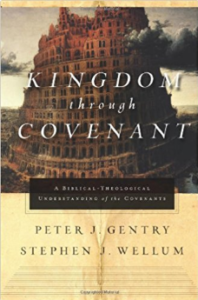
Gentry, Peter J., and Stephen J. Wellum. Kingdom through Covenant: A Biblical-Theological Understanding of the Covenants. Wheaton, IL: Crossway, 2012.
Peter Gentry and Steve Wellum have produced the most extensive study of the biblical covenants published in over a century, arguing for what they call Progressive Covenantalism, a middle-way between Dispensationalism and Covenant Theology. DeRouchie favorably but critically reviewed this book in the Bulletin of Biblical Research after using it as a text book in his 4th year MDiv biblical theology course. You can find a pdf of the review here, or you can read it below.
*****
Table of Contents:
Preface
List of Abbreviations
PART ONE: Prolegomena
1. The Importance of Covenants in Biblical and Systematic Theology
2. Covenants in Biblical-Theological Systems: Dispensational and Covenant Theology
3. Hermeneutical Issues in “Putting Together” the Covenants
PART TWO: Exposition of the Biblical Covenants
4. The Notion of Covenant in the Bible and in the Ancient Near East
5. The Covenant with Noah
6. The Covenant with Creation in Genesis 1–3
7. The Covenant with Abraham (I)
8. The Covenant with Abraham (II)
9. The Israelite (Mosaic) Covenant: Exodus
10. The Israelite (Mosaic) Covenant: Deuteronomy
11. The Davidic Covenant
12. The New Covenant: Introduction/Isaiah/Ezekiel
13. The New Covenant: Jeremiah
14. The New Covenant in Daniel’s Seventy Weeks
15. Speak the Truth in Love (Ephesians 4:15): Life in the New Covenant Community
PART THREE: Theological Integratioin
16. “Kingdom through Covenant”: A Biblical-Theological Summary
17. “Kingdom through Covenant”: Some Theological Implications
Appendix: Lexical Analysis of běrît (בְּרִית)
Bibliography for Parts 1 and 3
Bibliography for Part 2
General Index
Scripture Index
Publisher’s Description:
The disciplines of biblical and systematic theology join forces to investigate anew the biblical covenants and the implications of such a study for conclusions in systematic theology. By incorporating the latest research from the ancient Near East and examining implications of their work for Christology, ecclesiology, eschatology, and hermeneutics––biblical scholar Peter Gentry and systematic theologian Stephen Wellum present a thoughtful and viable alternative to both covenant theology and dispensationalism.
DeRouchie’s Review:
DeRouchie, Jason S. Review of Kingdom through Covenant: A Biblical-Theological Understanding of the Covenants, by Peter J. Gentry and Stephen J. Wellum. BBR 23.1 (2013): 110–13. /PDF/
This ambitious volume created through the partnership of an OT scholar and a systematic theologian attempts to synthesize in 17 chapters the nature, progress, and significance of the main redemptive-historical covenants in Scripture. Some points highlighted are (1) the progression and interrelationship of biblical covenants as the backbone of the biblical storyline, (2) the prophetic nature of typology as a key element in the development of God’s kingdom purposes, (3) the conditional yet binding (= unconditional) nature of all biblical covenants, (4) an Adamic creation covenant later confirmed through Noah, (5) a single covenant with Abraham, (6) the Mosaic covenant’s temporary nature, and (7) the climactic role of Christ’s new covenant work as the telos of all previous covenant promises and purposes. Points two and seven are especially important for two of the book’s theses: First, contrary to dispensational theology (DT), the land promises must be read both literally and typologically and be seen to find their ultimate fulfillment not in a geopolitical piece of real estate in this age but through Jesus in the new heavens and new earth. Second, contrary to classic covenant theology (CT), the physical genealogical principle that guides the makeup of the old covenant community finds its terminus in Jesus (not the church), thus highlighting that the new covenant community is shaped not by biology but by spiritual identification with Christ. The book, therefore, provides a biblical-theological argument for a middle way to understand redemptive history––a “progressive covenantalism” that is baptistic but non-dispensational and that highlights the culminating and superseding role of the new covenant work of Christ (p. 24). As such, the volume offers the broadest exegetical attempt to date arguing for a species of “new covenant theology.”
I required KTC as a textbook for a capstone MDiv biblical theology course, and my reading included mostly pleasure but some pain. Wellum’s three chapters of prolegomena are a great introduction to the topic of biblical theology and the question of the covenants, and they set the reader up for the feast of canonical, redemptive-historical exploration that follows. His concluding two chapters on theological integration aid the whole volume, summarizing Gentry’s work and offering some provocative, theologically insightful theses. Two that stand out are his very perceptive overview of the Bible’s land typology and his argument that the doctrine of particular redemption rightly understood requires baptistic ecclesiology, for the NT connects all Christ’s priestly, mediatorial work with the new covenant. All of Wellum’s chapters were thorough, focused, and clearly organized, and they framed the book well.
Gentry’s 12 chapters shape the book’s body and walk progressively and exegetically through the key OT covenant texts (supplemented with some NT texts). The chapters offer numerous exegetical gems and witness extensive and substantially convincing argumentation. Extremely insightful are the extended discussions of the imago Dei, the priestly royal sonship of Israel, and Jeremiah’s new covenant. Even more illuminating than these, however, is the overview of Isaiah’s new covenant vision, which delivers some of the most original theological insights in Gentry’s portion.
These positives affirmed, Gentry’s chapters as a whole are not well structured or unified and are at times unbalanced in presentation, such as when Gentry devotes 24 of 45 pages on the covenant with creation to a discussion of divine image bearing, or when he gives 11 of 39 pages on the Davidic covenant to the interpretation of Isa 55:3. While some attempts at synthesis have been made, the chapters in their present state still read too much like the independent essays they originally were. Each of the exegetical chapters would be aided by concluding reflections that clarify how the theological insights relate to the book’s principle thesis—a middle way between DT and CT.
A number of other issues should be mentioned. First, at times Gentry and Wellum were not in full agreement. One example is in their handling of Adam typology (pp. 226–28 vs. p. 606), but an even more glaring difference relates to their treatment of messianic expectation. In spite of Wellum’s strong stress on the progressive development of messianic hope in every covenant, stemming from Gen 3:15 and climaxing in Jesus (e.g., pp. 627–31, 636, 644, 650), Gentry addresses the entire covenant with creation without any reference to the protoeuangelion, gives only one page in his discussion of Gen 22:17b–18 to affirming the views of Collins, Alexander, and others that 3:15 anticipates a singular, male descendant, and then holds off highlighting messianic hope until the discussion of the Davidic and new covenants. I wish Gentry had done more in the body to exalt the portrait of Christ that is organic in the pentateuchal text and affirmed by the apostles and that Wellum himself suggested would be their practice (pp. 103–5).
Second, the authors helpfully identify and highlight an intentional and necessary tension in the progression of the biblical covenants between unconditional/unilateral promises and real bilateral conditions. Scripture’s cumulative result is a stress on how the covenant purposes of God are brought to fulfillment not only through a faithful covenant Father but also through a faithful covenant Son, whose active obedience meets all necessary conditions (pp. 643, 666, 705–6). This is beautiful! However, the authors fall prey to the same misinterpretation of many predecessors by wrongly treating extrabiblical royal grants as unconditional. Both grants and suzerain-vassal treaties were conditional for every generation; what made grants distinct is that they were perpetually binding, ensuring that the promised land or kingship would stay in the family, even if certain individuals forfeited their participation of the covenant blessing (so too, Weinfeld in 1970, Knoppers in 1996). An example is found in this excerpt from a grant of royal succession and land bestowed by Hattusili III of Hatti on Ulmi-Teshshup of Tarhuntassa (Beckman, Hittite Diplomatic Texts, 2nd ed., 109): “If any son or grandson of yours commits an offense, then the King of Hatti shall question him…. If he is deserving of death, he shall perish, but his household and land shall not be taken from him and given to the progeny of another.” The required obedience organic to grants does not alter the authors’ proper identification of both conditional and perpetual elements in the biblical covenants, but it does suggest that covenants like the Abrahamic and Davidic can still be viewed as grants while affirming their conditional features.
Third, vital to Gentry’s overall proposal is the distinction he sees in the phrases כרת ברית, “to cut a covenant,” and הקים ברית, “to confirm a covenant,” the former referring to covenant initiation and the latter to covenant fulfillment or upholding (p. 155). Along with literary contextual clues, Gentry uses this lexical distinction to argue that the Noahic covenant (Gen 6:18; 9:9, 11, 17) confirms a previously ratified covenant with creation in Gen 1–3 and that the Abrahamic covenant of Gen 17:7, 19, 21 upholds and develops the covenant ratified in ch. 15 and anticipated in 12:1–3 (so too Dumbrell, contra Williamson).
While I generally agree with the application of Gentry’s distinction, I believe his thesis must be tweaked, because Scripture treats as “cutting” acts not only covenant initiation (e.g., Gen 15:8; Exod 24:8; Deut 5:2–3) but also covenant reaffirmation (Exod 34:10) and renewal (Deut 28:69[29:1]; Josh 24:25; 2 Chr 34:31)––a point Gentry himself at least partially recognizes (see p. 161 with n. 40; pp. 380–82, 390 with n. 2). Moreover, Ezekiel applies both phrases to the new covenant (הקים = Ezek 16:60, 62; כרת = Ezek 34:25; 37:26; cf. Jer 31:31–33; 32:40; Isa 55:3), a fact that forces Gentry to qualify his earlier assertion that the phrases are “completely consistent” in their distinct usage (p. 155) to stating that they “normally” or “usually” follow this pattern (pp. 475). (Gentry has already attempted to respond to and update his view of Ezek 16, on-line: http:// thegospelcoalition.org/blogs/tgc/2012....) I propose that the consistent usage of both phrases can be maintained if one views כרת ברית as a more general category that includes both initiation and confirmation or renewal but הקים ברית as the more specific phrase that always denotes the upholding of a previously ratified covenant (so too, Milgrom). I further suggest that, in Ezek 16:60, 62, “my covenant” that Yahweh will “remember,” resulting in the establishment (הקים) of an “everlasting (new) covenant” that will include redeemed Gentiles, is not the Mosaic covenant (as originally argued by Gentry) but the Abrahamic (a point now affirmed by Gentry). This is suggested by the apparent allusion to Lev 26:42, where the phrase “I will remember my covenant” refers to the Abrahamic covenant and affirms God’s promise to Abraham in Gen 17:7 to confirm (הקים) his “everlasting covenant”––a covenant that will include Abraham’s fatherhood of a multitude of nations (17:4–6).
My final critical comments relate only to the need for consistency in the use of Hebrew, transliteration, and translation and for the inclusion of at least one chapter overviewing the NT teaching on the covenants. Many extended discussions are offered on key NT texts, but they are hidden in unexpected places, as in the commentary on Rom 11:13–27, Eph 2–3, and Rev 21 in the midst of the overview of Jeremiah’s new covenant prophecies (pp. 497–502). Furthermore, very little space is given to Hebrews, even though the warning passages are very important for the CT position against which the authors are arguing.
These issues noted, I find myself in substantial agreement with how Gentry and Wellum articulate the progressive development of God’s kingdom through covenant climaxing in Christ. I also appreciate their stress on the newness and superseding nature of the new covenant and yet the lasting value and necessity of the old covenant material, not simply for relaying the story of redemption but in capturing for believers an ethical portrait of the unchanging righteousness of God (pp. 512–13, 635). Their thesis is both clear and compelling, and I am confident that their faithful labors will produce healthy fruit in the church and academy for the glory of Jesus.
Jason S. DeRouchie
Bethlehem College & Seminary
May 5, 2018
Endorsement: AGAINST THE GODS
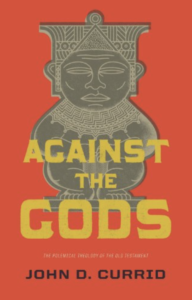
Currid, John D. Against the Gods: The Polemical Theology of the Old Testament. Wheaton, IL: Crossway, 2013. 150 pages.
Co-editor of Crossway’s new ESV Archaeology Study Bible , Dr. John Currid is Carl W. McMurray Professor of Old Testament at Reformed Theological Seminary. His book Against the Gods is an excellent example of solid, evangelical comparative study that identifies both the similarities and differences of biblical materials to other ancient Near Eastern texts and by this identifies how God often used the biblical authors to confront pagan worldviews and practices. His work stands against a prevailing voice among professing evangelicals that the Bible regularly simply borrowed thoughts and customs from their pagan neighbors with little discrimination. Below you will find my extended endorsement, the publisher’s description, and the Table of Contents.
My Endorsement:
The Old Testament addressed an ancient context that was filled with perspectives, powers, and practices sometimes like but often unlike those of our western world. A rising influential voice, even within evangelical circles, is asserting that the biblical worldview, while monotheistic, often parallels and at times pirates with minimal discrimination the pre-enlightened religious ideas and rituals of ancient Israel’s neighbors. In contrast, by affirming the Old Testament’s historical reliability and by showing the need to assess not only similarities but also differences with comparative ancient accounts, John Currid persuasively demonstrates in Against the Gods that the Bible’s tendency is not to appropriate but to dispute and repudiate pagan myths, ideas, identities, and customs by establishing the authentic, original historical event that had been vulgarized and distorted through polytheism, magic, violence, and paganism or by showing that what was myth in the ancient world had become real and factual in Israel’s time and history. Loaded with examples and clearly written commentary that respects the nature of God’s Word, this important introduction to Old Testament polemical theology provides a balanced corrective to many current comparative studies.
Publisher’s Description:
Did Moses borrow ideas from his cultural neighbors when he wrote the Pentateuch? Scholars disagree on the relationship between portions of the Old Testament and similar ancient Near Eastern accounts. Following in the footsteps of higher critics, some evangelical scholars now argue that Moses drew significantly from the worldview of his pagan contemporaries. Respected Old Testament scholar John Currid, however, pushes back against this trend by highlighting the highly polemical nature of Moses’ writings. From the Genesis creation account to the story of Israel’s exodus from Egypt, Currid shows how the biblical author’s continually emphasized the futility of paganism in contrast with the unparalleled worldview of the Hebrews. Currid’s penetrating analysis and thoughtful argumentation make this a ground-breaking resource for anyone interested in this ongoing discussion.
Table of Contents:
Prologue
A Brief History of Ancient Near Eastern Studies
The Nature of Polemical Thought and Writing
Genesis 1 and Other Ancient Near Eastern Creation Accounts
Ancient Near Eastern Flood Accounts and the Noahic Deluge of Genesis 6–9
Joseph, the Tale of the Two Brothers, and the Spurned Seductress Motiff
The Birth of the Deliverer
The Flights of Sinuhe and Moses
Who Is “I am that I am”? Exodus 3 and the Egyptian Book of the Heavenly Cow
The Rod of Moses
The Parting Waters of the Red Sea
Canaanite Motifs
General Index
Scripture Index
*****
For a similar helpful volume that identifies close connections between the ancient world and Scripture, see Jeffrey J. Niehaus, Ancient Near Eastern Themes in Biblical Theology (Grand Rapids: Kregel, 2008).
May 3, 2018
Endorsement: THE PSALMS
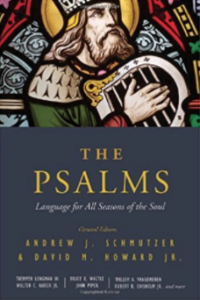
Schmutzer, Andrew J., and David M. Howard Jr. The Psalms: Language for All Seasons of the Soul (Chicago: Moody, 2013).
My Endorsement:
This book celebrates the lasting significance of the Psalms for the church and ably weaves together a number of theological, literary, and canonical themes in a way that both teaches and edifies. Through the centuries, in seasons of pain and pleasure, the Psalms have testified to the faithfulness of King Yahweh and his royal Son and given Christians a voice for lament and praise. Schmutzer and Howard have organized a remarkable cast of leading scholars and expositors to provide a snapshot of evangelical Psalms scholarship and proclamation at the beginning of the 21st century. The volume supplies an effective guide and model that should serve both student and preacher and assist the church in recovering this biblical hymnbook that still nurtures a life of worship in all seasons of the soul.
Publisher’s Description:
The Psalms: Language for All Seasons of the Soul brings together essays from eighteen Old Testament scholars discussing the latest in Psalms scholarship and applying exegetical insights to the life of faith.
These essays explore the full range of emotion expressed in the Psalms—from elation to distress—while weaving together observations from biblical scholarship and theology. The reader will gain valuable insights into how the Psalms speak to his or her soul.
The book is divided into five sections that:
Give an overview of Psalms studies in the 21st century
Discuss psalms of praise
Explore psalms of lament
Look at the big picture of the Psalter as a book
Present sermons on the Psalms that are models of evangelical engagement with the text.
A Select Bibliography for Psalms Study is included at the end of the book.
Table of Contents:
Part 1: Psalms Studies in the Twenty-First Century: Where We Have Been and Where We Are Going
1. Biblical Theology of the Psalms Today: A Personal Perspective––Bruce K. Waltke
2. Entering the Textual World of the Psalms: Literary Analysis––Willem A. VanGemeren
3. The Psalms and Faith/Tradition––C. Hassell Bullock
Part 2: Psalms of Praise: Expressing Our Joys
4. Psalm 46: Praise the Lord of Our Help––Fancis X. Kimmitt
5. Suppressing Myth: Yahweh and the Sea in the Praise Psalms––Robert B. Chishold Jr.
6. Psalm 91: Refuge, Protection, and Their Use in the New Testament––Andrew J. Schmutzer
Part 3: Psalms of Lament: Expressing Our Sorrows and Pain
7. “Severe Delight”: The Paradox of Praise in Confession of Sin––Michael E. Travers
8. The Laments of Lamentations Compared to the Psalter––Walter C. Kaiser Jr.
9. The “Thou” Sections of Laments: The Bold and Earnest Prayers of the Psalmists––Allen P. Ross
10. The Transformation of Pain into Praise in the Individual Lament Psalms––Daniel J. Estes
11. Psalm 54 (The Septuagint): He Who Saves from Discouragement and Tempest––Randal X. Gautheir
Part 4: Considering the Canon: The Psalter as a Book
12. Psalms 1 and 2: The Psalter’s Introduction––Robert L. Cole
13. Divine and Human Kingship as Organizing Motifs in the Psalter––David M. Howard Jr.
14. The Return of the King: Book V as a Witness to messianic Hope in the Psalter––Michael K. Snearly
15. From Weeping to Rejoicing: Psalm 150 as the Conclusion to the Psalter––Tremper Longman III
Part 5: Communicating the Psalms: Bringing the Psalms into the Present Day
16. Psalms 16, 23: Confidence in a Cup––Mark D. Futado
17. Psalm 84: How Lovely Is Thy Dwelling Place––David A. Ridder
18. Psalm 88: Praising God in the Bad Times––David M. Howard Jr.
19. Psalm 117: Everlasting Truth for the Joy of all Peoples––John Piper
A Select Bibliography for Psalms Study
Subject Index
Scripture Index
May 1, 2018
Review: WJK LIBRARY BUNDLE
DeRouchie, Jason S. Review of WJK Library Bundle: Old Testament Library Commentaries and Companion Volumes and New Testament Library Commentaries and Companion Volumes, by Accordance Bible Software. Themelios 43.1 (2018): 91–94.

WJK’s Library Bundle: Old Testament Library Commentaries and Companion Volumes and New Testament Library Commentaries and Companion Volumes. Accordance Bible Software. Altamonte Springs, FL: Oaktree Software, Inc., 2017. $1,726.
I recently reviewed WJK’s Library Bundle for Themelios 43.1 (2018): 91–94. You can download the review here or read it below.
*****
Accordance Bible Software has recently released in digital format the 68-volume Westminster John Knox Press Old and New Testament Library Bundle. This vast liberal and semi-technical to technical collection includes the entire Old Testament Library (OTL) Commentary (31 vols) with an additional set of classic commentaries (9 vols) and companion studies (9 vols) and the nearly complete New Testament Library (NTL) Commentary (15 vols, excluding Matthew, Romans, 1 Corinthians, and James) with additional companion studies (4 vols).
Since its origin in the 1960s, the Old Testament Library has become a standard in the field for liberal-critical scholarship, serving both the educated minister and the academic. It began as English translations from the critical German series Das Alte Testament Deutsch, and then it progressed with original English volumes until it covered every Old Testament book, along with a number of corollary topical studies. In 2002, the New Testament Library began, continuing the tradition of thoroughly researched liberal scholarship, and then a number of new and old related studies were added. Perhaps due to my bias or strengths, I think the quality of Old Testament volumes exceeds that of the New.
To varying degrees, all the commentaries in the series provide a fresh translation, critical portrayals of the historical world in which the books arose, attention to literary design, and a theologically perceptive exposition of the biblical text. Nevertheless, because the series bears no stated vision or set structure and includes an array of scholarly critical perspectives and interpretive approaches, the individual commentaries and studies vary greatly in quality, size, and emphases, whether addressing text criticism, grammar and syntax, historical context, literary features, structure, or theology. Some commentators shape their entire volumes around developed theories of hypothetical sources, whereas others focus almost exclusively on a book’s final form. Some writers saturate their reflections with historical-cultural backgrounds or socio-scientific research (e.g., anthropology, archaeology) but do little actual work in establishing a book’s overall thought-flow and message, whereas others wrestle deeply with literary features, discourse structure, theology, and inner-biblical connections. This disparity within the series, along with its critical bent, naturally makes it varied in its usefulness, especially for evangelical ministers.
This stated, many volumes in the Old Testament Library Commentary stand out for their benefit to evangelical interpreters. Brevard Childs’ Exodus volume (1974) includes a thorough history of interpretation and remains one of the most exegetically and theologically robust commentaries on the book, attempting to balance critical methods with a final form, canonical interpretation that stretches into the New Testament. Sara Japhet’s 1–2 Chronicles (1993) is exceptional in its careful exegetical analysis and sensitivity to Chronicles as history, usually with conservative conclusions. Adele Berlin’s study of Lamentations (2002), while never reaching into the New Testament, is among the best available in the way it establishes the book’s message by assessing it in light of other ancient Near Easter literature and by focusing on literary features like metaphor and themes like purity, mourning, repentance, and the Davidic covenant. Two other noteworthy volumes include Jon Levenson’s Esther (1997), which matches a careful reading of what he believes is a fiction work with a conscious eye toward intertextual connections both in and outside the Bible, and Childs’s Isaiah (2000), which is not as thorough as his Exodus but focuses on the history of interpretation and a canon-conscious final-form theological message. Where one would expect Childs to address the New Testament’s handling of Isaiah, he does, though often viewing it as a radical reinterpretation of the original meaning (e.g., Isa 53). While Gerhard von Rad’s Genesis (1973) is plagued by a hypothetical reconstruction of sources, it is still useful for its theological, redemptive-historical insights. Marvin Sweeney, while moderately critical, is usually both careful and conservative in his interpretation, and his 1 & 2 Kings (2007) does not disappoint in its attention to structure, theological agenda, and historical context. Both Richard Clifford on Proverbs (1999) and J. J. M. Roberts on Nahum, Habakkuk, and Zephaniah (1991) are also helpful due to their extensive treatment of text criticism, grammar/philology, and historical background.
In the New Testament Library Commentary, three volumes stand out most. M. Eugene Boring’s Mark (2006) helpfully focuses on the Gospel’s theological agenda including its intentional ending at 16:8, and it includes a number of useful excurses such as kingdom of God, Markan Christology, and the use of Scripture in the Gospel. Frank Matera’s moderately-critical 2 Corinthians (2003) interacts well with secondary literature, affirms Paul’s role as a gospel preacher, argues for the letter’s unity, and offers a manageable yet detailed theologically-rich exposition of the text; he fails, however, to see the Mosaic law as standing in the background to Paul’s discussion in chapter 3. Luke Timothy Johnson’s Hebrews (2006) interacts little with contemporary secondary literature but still offers an extended introduction and useful insights in the commentary from Greek grammar, Greco-Roman backgrounds, and the influence of Old Testament quotations and imagery on the author’s message.
Along with the contemporary commentaries, the WJK library includes nine classic Old Testament volumes that have now been replaced but that scholars still regularly reference. Strangely missing are Martin Noth’s Exodus (1962) and Leviticus (1965), but helpfully included are Gerhard von Rad’s Deuteronomy (1966), Claus Westermann’s Isaiah 40–66 (1969), and James Mays’s Amos (1969) and Micah (1976). With these, the series includes numerous supplemental volumes related to introduction, history, theology, and genre analysis. Most noteworthy in OTL are Rainer Albertz’s two-volume A History of Israelite Religion in the Old Testament Period (1994) and Walther Eichrodt’s two-volume Theology of the Old Testament (1961), both of which are still standards in the field in light of their careful and thoughtful analysis. In NTL one must mention Victor Furnish’s balanced and time-tested Theology and Ethics in Paul (2009, orig. 1968) and J. Louis Martyn’s provocative, paradigm-changing History and Theology in the Fourth Gospel, 3rd ed. (2003).
We should not downplay the significance of what Accordance has supplied in giving the WJK Library Bundle in a digital format. First, both the publisher and Amazon only allow you to purchase individual print volumes in the WJK Old and New Testament Libraries, which together take up a massive amount of shelf space and retail at $4,442.00. In contrast, Accordance lets you access this massive amount of content anywhere on Mac, Windows, iPad, and iPhone, and you can purchase individual volumes, smaller bundles (see above), just the 46 OTL and NTL commentaries, or all 68 volumes together, the whole of which is 38% of the cost of the print volumes ($1,726.00). Accordance is portable, flexible, and affordable. Second, Accordance is user-friendly, allowing you to search with lightning speed decades of scholarship and thousands of pages of careful study. A reference search takes you directly to the spot where a given commentary addresses your passage of interest. Using the English content search, I identified in less than five seconds all 631 instances where “Jesus Christ” occurs in the thirty-one commentary volumes in the OTL. I also found that the NTL commentaries only rarely cite major evangelical scholars. A bibliography search reveals that only the John volume cites one of D. A. Carson’s authored works, and an English content search notes that the commentary mentions him twenty-three times. Only three volumes include authored works by G. K. Beale, but only Revelation actually cites him in the body (ninety-five times). Only 1&2 Timothy and Titus cite an essay by Thomas R. Schreiner (two times), and not one volume mentions Douglas Moo. N. T. Wright gets broader acknowledgement, showing up in eight volumes around thirty-nine times. Clearly liberal-critical scholars are not too interested in evangelical perspectives. Because the Old and New Testament Libraries use transliteration rather than Hebrew and Greek characters (except in notes), one can’t as easily search for Hebrew or Greek content, but Accordance’s transliteration search does work nicely, not requiring detailed pointing. As such, I was able to type in “Kabod” for kābōd (= the Hebrew כָּבוֹד “heaviness; glory; honor”) and came up with fifty-two hits in OTL, many of which provided insightful reflection on specific Old Testament texts.
In conclusion, the WJK Old and New Testament Libraries supply a mixed quality of liberal-critical scholarship, which evangelicals can benefit from when engaged with discretion. Many of the commentaries and additional volumes are exegetically rigorous and theologically robust, and they can supply evangelical readers with fresh translations, extended bibliographies, and careful though critical analysis of the final form of the biblical text. This series will likely not be the first stop for evangelical conservatives, but biblical scholars and graduate students need to engage with these volumes, and Accordance Bible Software has now made this more portable, flexible, affordable, and usable.
Jason S. DeRouchie
Bethlehem College & Seminary
Minneapolis, Minnesota, USA