Jason S. DeRouchie's Blog, page 10
February 21, 2020
Jesus’s Only Bible: 7 Tips for Preaching the Old Testament

In a recent post on The Gospel Coalition, I joined Paul in charging pastors and teachers to preach the word (2 Timothy 4:2), which includes the Scriptures Paul would have been referring to in 2 Timothy 3:16––Jesus’s only Bible, the Old Testament. Along with this charge, I unpacked seven tips for preaching the Old Testament well.
Inside the article you will find these seven tips:
Approach the Old Testament as Christian Scripture that God wrote to instruct us.
Interpret the Old Testament with the same care you would the New Testament.
Treat properly the testamental nature of the Old Testament.
Remember the Old Testament is old.
Read the Old Testament through the light and lens of Christ.
Consider how to faithfully see and celebrate Christ in the Old Testament.
When preaching from the New Testament, take time to consider how the authors are using their Bibles, whether through Old Testament allusion or citation.
For the podcast that overviews this same material, look here.


February 20, 2020
The Location of the Red Sea Miracle: A Biblical Case for the Gulf of Aqaba
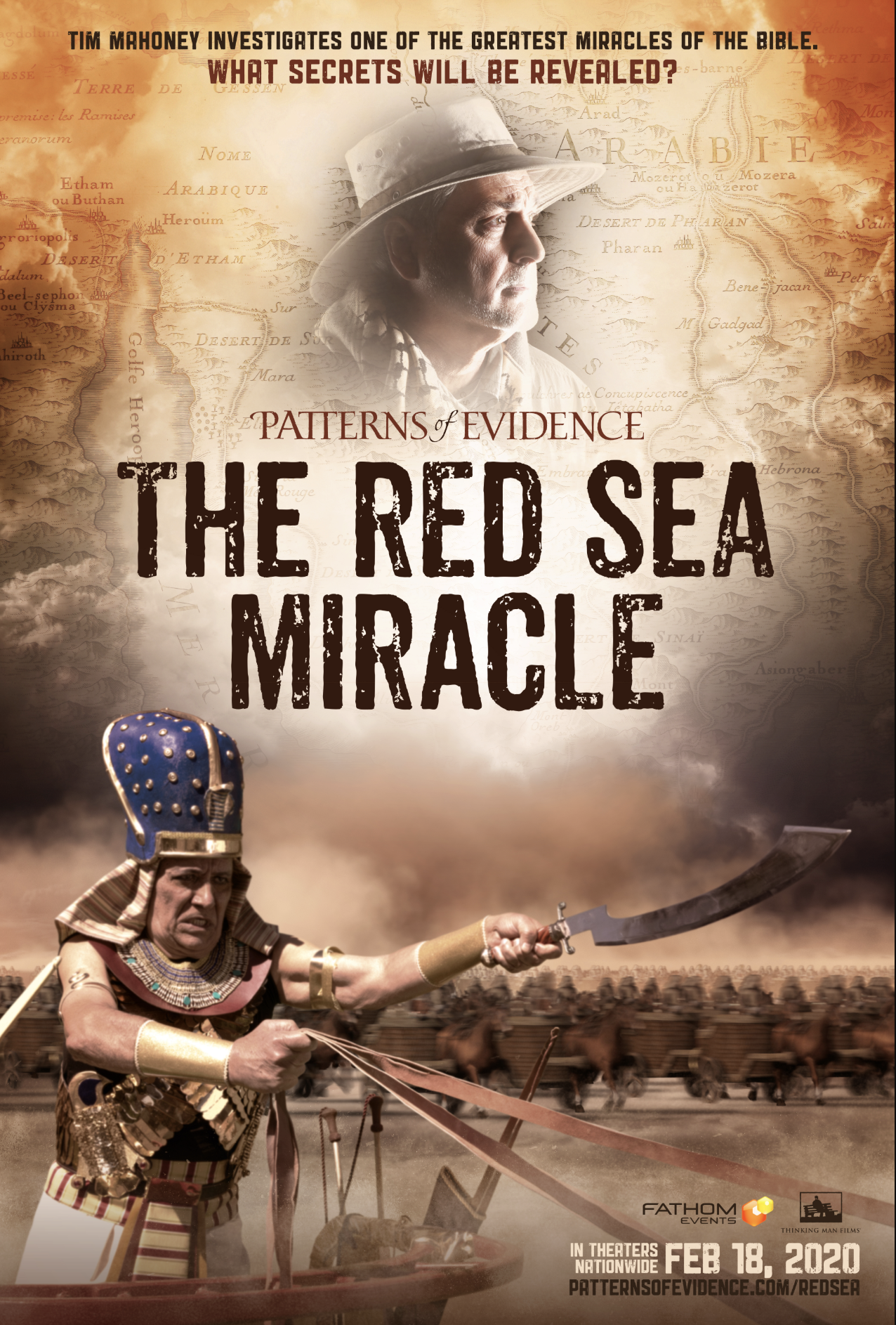

Earlier this week cinemas throughout the country showed “Patterns of Evidence: The Red Sea Miracle, Part 1.” As I noted in a previous post, after Christ’s saving of believing sinners from God’s just wrath, Yahweh’s delivering the nation of Israel from Egypts unjust oppression is the greatest saving event in the history of the world (Deuteronomy 4:32, 34–35). And it intentionally stands as a type for Jesus’s saving work (see Luke 9:31), as it both clarifies and predicts how the Lord would save his people from every future enemy. Thus, the second half of the prophetess Miriam’s song that Israel sung at the sea foretells that the surrounding nations were already trembling at God’s majestic display of saving power (Exodus 15:13–18). And the prophets speak of the greater deliverance from the curse as a second exodus that a Davidic ruler will lead on behalf of the world (e.g., Isaiah 11:10–12:6; Jeremiah 16:14–15; 23:5–8; Hosea 3:5).
The film distinguished three views on where Yahweh delivered Israel from Egypt’s grip and devastated the Egyptian empire by destroying its military might.
Option 1: The Egyptian Approach portrays the miracle on a smaller scale and places the decimation and crossing at one of the small lakes in the northeastern Nile Delta between the northern tip of the Gulf of Suez and the Mediterranean Sea. Scholars following this approach see the numbers of Israelites as much smaller than our English translations suggest, and they stress that the Hebrew Yam Suph means not “Red Sea” but “Reed Sea,” thus allowing for Yahweh to deliver through a smaller lake.
Option 2: The Hebrew Approach, instead, asserts that the Bible itself points both to a sea crossing further away from Egypt at a location that demands a miracle of unparalleled proportions. After leaving Egypt in haste and journeying across the Sinai Peninsula, Yahweh parted the waters at the Gulf of Aqaba, and then Israel journeyed on to a Mt. Sinai located not in the Sinai Peninsula but in Midian in the northeastern part of the Arabian Peninsula.
Option 3: A Mediating Approach long held but not addressed much in the movie affirms the greatness of the miracle of deliverance but places the sea crossing at the northern tip of the Gulf of Suez. While this was the predominant view of the last two thousand years, it was so most likely because early Greek geography did not even account for the Gulf of Aqaba.
In the rest of this post, I want to offer a biblical case for why I believe that the “Red Sea Miracle” truly happened at the Red Sea at the northern part of the Gulf of Aqaba and that Mt. Sinai is most likely in the region of Midian east of this Gulf.
Biblical Reasons for Placing Yam Suph at the Gulf of Aqaba and Mt. Sinai in Midian
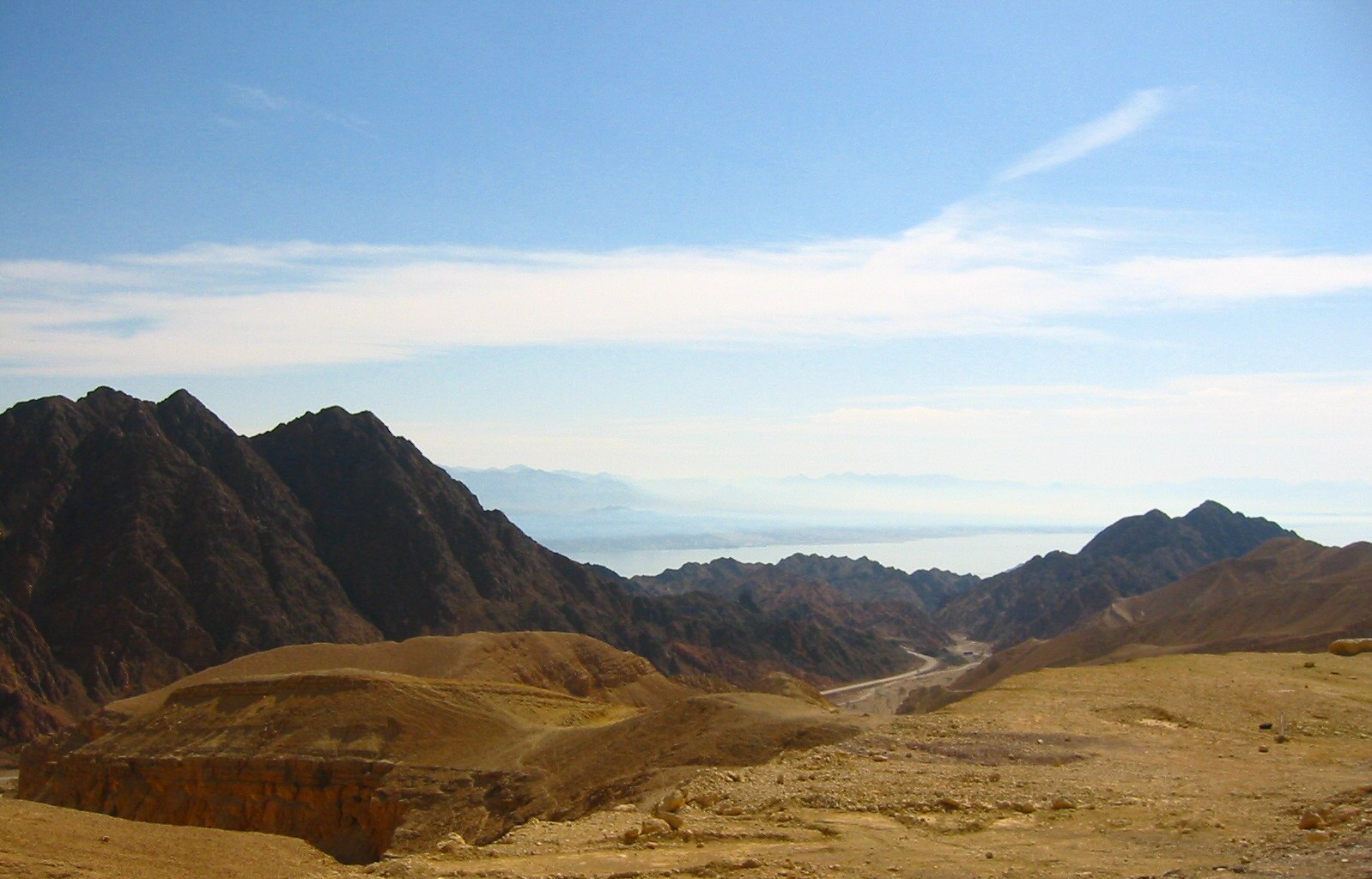 Ezion-geber in the Eilat (Elath) Mountains by the Gulf of Aqaba. Photo by Matt Floreen and taken from Todd Bolen, Pictorial Library of Bible Lands, Rev. Ed. (2012)
1. Yam Suph was a massive body of water east of Egypt.
Yam Suph, the Hebrew name commonly translated “Red Sea,” was east of Egypt and large enough both to collect all the locusts from the entire land (Exodus 10:14, 19) and to destroy the entire army of Egypt, the greatest world empire of the day (Exodus 14:27–28). These facts make a small border lake in the Nile Delta an unlikely candidate for the crossing, whereas either the Gulf of Suez or the Gulf of Aqaba would work.
2. The size of the miracle at Yam Suph must match the greatness of Yahweh’s name that he sought to exalt.
The miracle at Yam Suph has to be of unprecedented proportion, for Scripture testifies that the purpose for Yahweh’s delivering Israel from Egypt’s grip was to magnify his greatness to the ends of the earth. This is why Yahweh promised to save Israel (Exodus 6:7; 7:5), why he brought the plagues on Egypt (Exodus 8:10, 22; 9:14, 29; 10:2; 11:17), why he raised up Pharaoh and extended the process of bringing him to ruin (Exodus 9:16–17), and why he dried up the sea (Exodus 14:4, 17–18). As Joshua later declared as Israel was entering the Promised Land, “The LORD your God dried up the waters of the Jordan for you until you passed over, as the LORD your God did to the Red Sea, which he dried up for us until we passed over, so that all the peoples of the earth may know that the hand of the LORD is mighty, that you may fear the LORD your God forever” (Joshua 4:23–24). And Yahweh’s fame did spread, first to Israel (Exodus 14:31; 15:11–12) and then on to the neighboring nations (Exodus 15:13–18). This is clear immediately for Jethro in Midian (Exodus 18:1, 11), forty years later for the Canaanites in Jericho and Gibeon (Joshua 2:9–11; 9:9), centuries later among the Philistines (1 Samuel 4:7–8), in the eighth century to the prophet Isaiah (Isaiah 63:12), and a millennium later to both Daniel and Nehemiah (Daniel 9:15; Nehemiah 9:9–10). No salvation of such magnitude had ever happened in the history of the world (Deuteronomy 4:32, 34–35), and for this reason I believe Yam Suph cannot be a small lake but must be a great sea.
3. Scripture describes the parting of the waters at Yam Suph in ways that identify Yahweh’s hand divided a great sea and not a small lake.
At the blast of Yahweh’s nostrils “the waters piled up; the floods stood up in a heap; the deeps congealed in the heart of the sea” (Exodus 15:8). The waters themselves were for the Israelites like “a wall to them on their right hand and on their left” (Exodus 14:22), but the Egyptians “sunk in Yam Suph“; indeed, “the floods covered them; they went down into the depths like a stone…. They sank like lead in the mighty waters.” (Exodus 15:4–5, 10). “Then the channels of the sea were seen, and the foundations of the world were laid bare” (Ps 18:15 [16]). At the sight of Yahweh, “the deep trembled” (Psalm 77:16 [17]), and God’s path was through “great waters” (Psalm 77:19 [20]), through “the mighty waters” (Isaiah 43:16).
4. The miracle at Yam Suph must happen in the wilderness, far from Egypt.
Israel had three known camping spots en route to Yam Suph after leaving Raamses (Avaris): Succoth (Exod 12:37), Etham (“on the edge of the wilderness,” Exodus 13:20), and Pi-hahiroth (to which they turned and encamped in front of, “between Migdol [connected to the Hebrew term for “tower”] and the sea, in front of Baal-zephon,” Exodus 14:2). The fact that Etham was already “on the edge of the wilderness” (Exodus 13:20) identifies that Israel’s journey was outside the borders of the country and far from residential spheres. Furthermore, Pharaoh only journeyed after Israel once they had “fled” (Exodus 14:5), which suggests a full departure from the land, and Israel viewed their placement at the sea as being “in the wilderness” outside of Egypt (Exodus 14:11). It is difficult to reconcile any of these statements with a sea crossing anywhere near the Nile Delta.
5. The only clear body of water that the Bible identifies as Yam Suph is the Gulf of Aqaba.
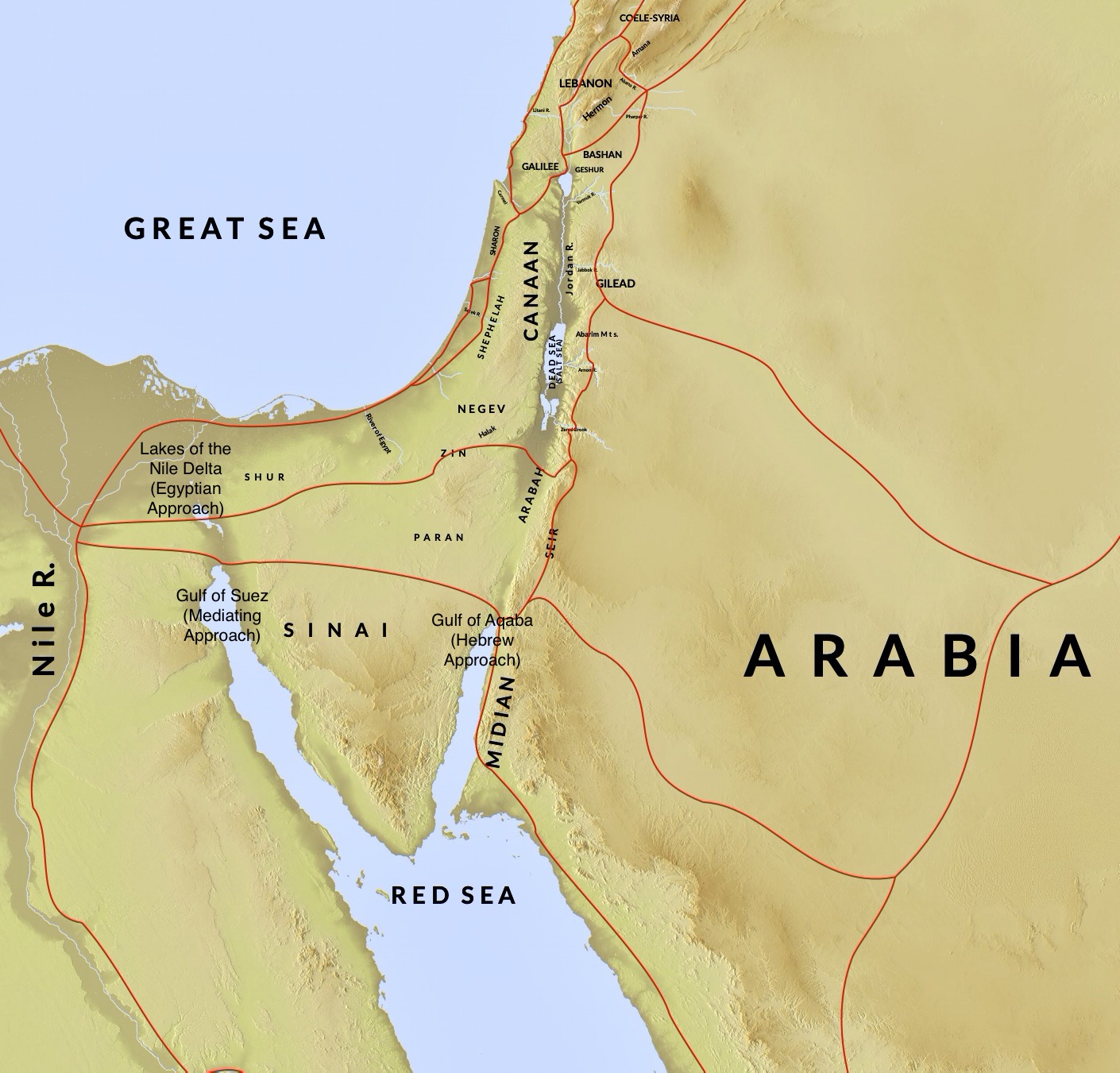
Yam Suph was the terminus of “the way of the wilderness,” upon which Israel journeyed from Egypt (Exodus 13:18). Yahweh did not lead them the northern route up the coast tagged “the way of the Philistines” (Exodus 3:17), nor did he lead them simply into the southern Negev. Instead, the road they journeyed went to Yam Suph, which Exodus itself identifies as the Gulf of Aqaba when describing the Promised Land’s borders:
And I will set your border from the Yam Suph [Israel’s southeast border] to the Sea of the Philistines [the bend of the Mediterranean Sea near Gaza, Israel’s southwest border], and from the wilderness [near the Negev, Israel’s southern border] to the Euphrates [Israel’s northern limit], for I will give the inhabitants of the land into your hand, and you shall drive them out before you. (Exodus 23:31)
In this overview, Yam Suph cannot be either Egypt’s Delta region or the Gulf of Suez but must be the Gulf of Aqaba. It was this site that served as the location of King Solomon’s southern fleet (1 Kings 9:26), and it was this site that was closely associated with Mount Sier and the area of Edom, which is east and southeast of Kadesh (Deuteronomy 2:1; Jeremiah 49:20–21).
6. Israel’s goal upon leaving Egypt was the mountain of God, which was most likely in Midian on the other side of the Gulf of Aqaba.
Moses was shepherding in the land of Midian when he went out into the wilderness and met Yahweh at Horeb, the mountain of God (Exodus 2:15; 3:1), and it was to this mountain that Yahweh was leading Israel (Exodus 3:12). We know that “it is eleven days’ journey from Horeb by the way of Mount Seir to Kadesh-barnea” (Deuteronomy 1:2). This statement identifies that the mountain must be quite a distance from Israel’s southern border, which is further affirmed by the fact that Elijah would later take forty days to travel from Beersheba (further north of Kadesh in the Negeb) to Horeb (1 Kings 19:3, 8). Furthermore, the statement in Deuteronomy also highlights that the path Israel would have taken from the mountain to the Promised Land’s southern border led out of the south to Mount Seir. Mount Seir is associated with highlands connected to southern Edom in the Arabah stretching south from the Dead Sea to the Gulf of Aqaba on the east side of the rift. Israel would follow Yahweh’s presence along this path from Horeb (Mount Sinai) through Mount Seir to Kadesh, which was part of the wilderness of Paran (Numbers 13:26): “The LORD came from Sinai and dawned from Seir upon us; he shone forth from Mount Paran; he came from the ten thousands of holy ones, with flaming fire at his right hand” (Deuteronomy 33:2).
Furthermore, the journey to God’s mountain included two stoppings at Yam Suph––the first linked to the miraculous sea crossing and the second connected with their journey from the sea to Horeb. We should not consider the two mentions of Yam Suph as different bodies of water (contra Hoffmeier) but as two different locations on the same body of water, so that Israel is journeying longways down a large sea en route to Horeb.
So the people of Israel set out from Rameses and camped at Succoth. 6 And they set out from Succoth and camped at Etham, which is on the edge of the wilderness. 7 And they set out from Etham and turned back to Pi-hahiroth, which is east of Baal-zephon, and they camped before Migdol. 8 And they set out from before Hahiroth and passed through the midst of the sea into the wilderness, and they went a three days’ journey in the wilderness of Etham and camped at Marah. 9 And they set out from Marah and came to Elim; at Elim there were twelve springs of water and seventy palm trees, and they camped there. 10 And they set out from Elim and camped by Yam Suph. 11 And they set out from Yam Suph and camped in the wilderness of Sin. 12 And they set out from the wilderness of Sin and camped at Dophkah. 13 And they set out from Dophkah and camped at Alush. 14 And they set out from Alush and camped at Rephidim, where there was no water for the people to drink. 15 And they set out from Rephidim and camped in the wilderness of Sinai. (Numbers 33:5–15)
That Israel arrived at Etham, turned to Pi-hahiroth, journeyed through the sea, and then set out “three days’ journey in the wilderness of Etham” suggests that they almost passed around the top of a great body of water, went back in order to journey through it, and then picked up around the spot where they had originally journeyed. In light of the fact that they will need to journey on “the way of Mount Seir” from Horeb, this suggests Yam Suph is the Gulf of Aqaba and that Horeb is in Midian of Arabia.
7. Paul identifies Mount Sinai with Arabia
Paul identifies that “Mount Sinai [is] in Arabia” (Galatians 4:25), which most likely meant either the Arabah of Edom (Arabia Petra) or what we consider the Arabian Peninsula (Arabia Felix), though he could have meant any area to the south including something in Egypt or the Sinai (cf. LXX Gen 45:10; 46:34).
Some Responses to Objections
1. Would not Egypt’s military fortifications have influenced Israel’s path of departure?
Pharaoh gave permission for Israel to leave the country (Exodus 12:31–32), and “the Egyptians were urgent with the people to send them out of the land in haste” (Exodus 12:33). Indeed, Israel left boldly with no reserve (Exodus 14:8). As such, in contrast to Hoffmeier, we should not think Israel needed to fear Egyptian military units at the front end of their journey. Indeed, it was only once Israel reached Pi-hahiroth that God tells Moses that he will harden Pharaoh’s heart and move him to pursue Israel (Exodus 14:2–4). Israel was “equipped for battle” (Exodus 13:18), but they were not anticipating any battle against the Egyptians. They were not allowed to go the northern route because war could have broken out against the Philistines, and the people might “change their minds when they see war and return to Egypt” (Exodus 13:17).
2. Does not the Hebrew Suph in the phrase Yam Suph require a marshy location rather than something like the Red Sea?
Scholars commonly associate the term suph [סוּף] in the Hebrew location Yam Suph [יָם סוּף] with the term “reed,” which they associate with papyrus, note that salt seas like the Red Sea have no papyrus, and conclude that the crossing more likely occurred at a small fresh-water lake in the Delta region. However, limiting the meaning of Hebrew suph to “papyrus” is too precise in light of the Hebrew usage. Outside its occurrences in the phrase Yam Suph, it appears in three contexts, which clarify that it does not mean papyrus and that it means any type of aquatic plant. We see it in Isaiah 19:6 alongside kaneh [קָנֶה] where it refers to a fresh-water plant, but in Jonah 2:6 it points to a plant found in the bottom of Mediterranean Sea (i.e., a salt-water plant). Most importantly, in Exodus 2:3, 5 it refers to a fresh water plant that held the basket holding Moses in place but is distinguished from the papyrus [גֹּמֶא] with which Moses’s mother made the basket (Exodus 2:3). Isaiah 18:2 uses the same term for papyrus boats, and Job 8:11 tells us that the particular plant grows in a marsh. The point here is that the term suph in Hebrew could point to either a fresh-water or salt-water area and should not be limited to papyrus that grows solely in fresh-water areas.
3. There were only three campsites before Israel arrived at Yam Suph and the second was “on the edge of the wilderness,” so how could the sea crossing happen so far from Egypt at the Gulf of Aqaba?
Both Exodus and Numbers (Exodus 12:37; 13:20; 14:1; Numbers 33:5–8) identify only three camping locations between Raamses and Yam Suph: Succoth, Etham (“on the edge of the wilderness”), and Pi-hahiroth (which was “between Migdol and the sea, in front of Baal-zephon”). There are then some seven more sites before they arrive at the mountain, three months after departing Egypt (Numbers 33:8–15 with Exodus 19:1). “The way of the wilderness toward Yam Suph” was likely a well-known travel route, but it was still through the wilderness. As such, the only reason to list specific camping sites was (1) if something important happened there or (2) if the campsite was in close proximity to a known location. The fact that only three sites are listed between Egypt and Yam Suph does not necessarily imply only three respite points.
4. How could such a large population have survived a journey of over 150 miles across the wilderness of the Sinai Peninsula?
At times they traveled day and night, so even with large crowds, they could have journeyed far in a short amount of time (Exodus 13:21–22), as when Jacob took all his family and flocks some 350 miles in ten days (Genesis 31:17–25). Furthermore, we know God supplied them ample water on their journey, whether by rain (Psalm 68:7–10 [8–11], springs (Exodus 15:22–27), or water from the rock (Exodus 17:1–7).
For an exceptional scholarly look at the location of the Red Sea miracle and of Horeb, the mountain of God, see pages 104–35 in Duane A. Garrett, A Commentary on Exodus, Kregel Exegetical Library (Grand Rapids: Kregel, 2014).
February 18, 2020
The Red Sea Miracle and the Wondrous Glory of Yahweh
Next to the saving work of Jesus, the greatest redemptive event in history was when Yahweh delivered Israel from Egyptian bondage––an entire nation set free from slavery to the greatest known power on earth. Just before the seventh plague, the Lord declared to Pharaoh,
This time I will send all my plagues on you yourself, and on your servants and your people, so that you may know that there is none like me in all the earth. For by now I could have put out my hand and struck you and your people with pestilence, and you would have been cut off from the earth. But for this purpose I have raised you up, to show you my power, so that my name may be proclaimed in all the earth! (Exodus 9:14–16)
When Israel experienced Yahweh saving power, they declared, “Who is like you, O LORD, among the gods? Who is like you, majestic in holiness, awesome in glorious deeds, doing wonders?” (Exodus 15:11). And as God purposed, so his name spread … immediately to Jethro in Midian (Exodus 18:11), then to Rahab in Jericho (Joshua 2:9–11) and to the Gibeonites within the Promised Land (Joshua 8:9). Centuries later the testimony was still ringing among the Philistines (1 Samuel 4:8), and a millennium later Nehemiah was still drawing attention to the amazing power of the living God displayed in this one saving event: “Thus you made a name for yourself, as it is to this day” (Nehemiah 9:9–10).
With allusions to the song at the Sea (esp. Exodus 15:1–2), Isaiah notes that those Yahweh redeems through his Spirit-empowered servant-King will once again sing a song of deliverance (Isaiah 12:1–6), which John tags “the song of Moses, the servant of God, and the song of the Lamb” (Revelation 15:3–4). The Red Sea Miracle is worth proclaiming, and the conclusions we draw about it must work to magnify the greatness and fame of the redeeming God. Indeed, with Jude we must remember “that Jesus, who saved a people out of the land of Egypt, afterward destroyed those who did not believe” (Jude 5). The Red Sea Miracle is a serious matter to God, and it should matter to us.
Today is the release of “The Red Sea Miracle, Part 1,” the third installment in the Patterns of Evidence series. The first in the series, “The Exodus,” was the best Bible-related documentary that I had ever seen, and you can read my take at these two links:
An Exceptional Documentary on the Exodus
A Relook at the Patterns of Evidence
I was surprised that Tim Mahoney from Thinking Man Films asked to interview me for this new movie. He asked me testify to the greatness of the God who displays himself in the exodus and to clarify the nature of the miracle as the Bible portrays it. This I did, but the six hour interview covered a lot more than I even expected.
The movie considers two major perspectives to the location of the sea crossing, which the film tags (1) the Egyptian approach and (2) the Hebrew approach.
Option 1: The Egyptian Approach. The majority of contemporary Egyptologists who affirm the historicity of the exodus argue that the sea crossing event was itself quite small in size and happened at one of the small lakes in the northeastern Nile Delta between the northern tip of the Gulf of Suez and the Mediterranean Sea. Scholars like Drs. James Hoffmeier and Barry Beitzel at Trinity Evangelical Divinity School hold this view and stress that the Hebrew Yam Suph means not “Red Sea” but “Reed Sea.”
Option 2: The Hebrew Approach. This view stresses that the Bible itself points both to a sea crossing further away from Egypt at a location demanding a great miracle. Scholars like Dr. Duane Garrett at The Southern Baptist Theological Seminary hold this view and place the Sea Crossing on the eastern side of the Sinai Peninsula at the Gulf of Aqaba.
Option 3: A Mediating Approach. Others like Dr. John Currid at Reformed Theological Seminary hold a mediating view, placing the crossing at the northern tip of the Gulf of Suez, but this proposal receives little engagement in the film.
Options 1 and 3 usually place Mount Sinai in the southern Sinai Peninsula, whereas option 2 posits its location in Midian in the northeastern part of the Arabian Peninsula.
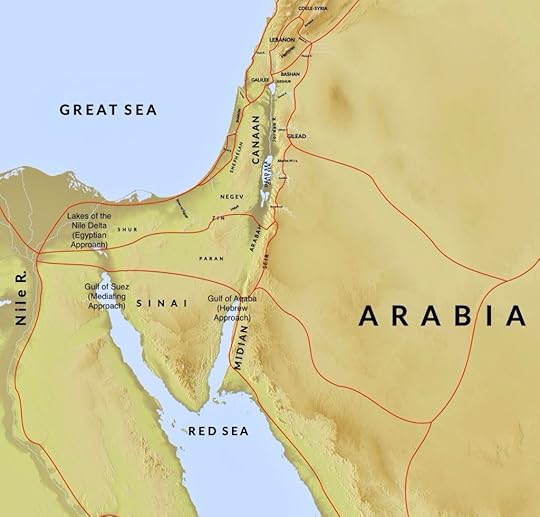
In my view, options 2 and 3 alone magnify the greatness of this miracle of salvation, and in a later post I will lay out a biblical case for why the Hebrew approach (option 2) best aligns with the biblical data. In the meantime, go see “Patterns of Evidence: The Red Sea Miracle, Part 1.” You will not be disappointed.
January 17, 2020
Indianapolis Seminary: The Old Testament Law and the Christian

We live in a world were most religions outside Christianity teach that we justify ourselves before God by our good deeds (legalism). Then there are professing believers who continue to assert that in light of Jesus’s justifying work on our behalf, calling others to pursue holiness is misguided; we need only to rest in saving grace (anti-nomianism [anti-law]). Finally, there is a strong contemporary voice warning Christians against the Old Testament altogether. Knowing that believers today are not part of the old covenant, how should new covenant saints relate to Mosaic Instruction?
I recently presented a symposium at Indianapolis Theological Seminary on the relationship between the Old Testament Law and the Christian. Check out both the lecture and the accompanying Q&A to see how (using Brian Rosner’s alliteration) God’s word calls us to repudiate the Mosaic law as covenant, replace it with the law of Christ, and then reappropriate the Mosaic teaching through the light and lens of Christ. None of Moses’s law directly binds believers today. Nevertheless, we should teach and do all his law, but only as it is recast through the way Jesus fulfills the law. We must use rigorous exegesis and theology to evaluate whether Jesus expands, maintains, transforms, or annuls each individual OT law.
Old Testament Law and the Christian: Lecture
http://jasonderouchie.com/wp-content/uploads/2020/01/The-Old-Testament-Law-and-the-Christian-with-Dr.-Jason-DeRouchie.mp3
Old Testament Law and the Christian: Q&A
http://jasonderouchie.com/wp-content/uploads/2020/01/The-Old-Testament-Law-and-the-Christian-with-Dr.-Jason-DeRouchie-QA.mp3
December 31, 2019
How Biblical Theology Helps Us See and Celebrate Christ in the Old Testament

If you follow this resource website, you know I often write about seeing Jesus in the Old Testament. I recently presented a paper at the annual meeting for the Evangelical Theological Society on this very topic, and I highlighted seven ways that the practice of biblical theology helps us to both see and celebrate Jesus from his Bible.
Biblical theology helps us see and celebrate Christ:
Through the Old Testament’s direct Messianic predictions.
Through the Old Testament’s salvation-historical story and trajectories.
By highlighting how the old and new ages, creations, and covenants are similar yet distinct.
By noting how Old Testament characters, events, and institutions clarify and anticipate his person and work.
As we revel in Yahweh’s identity and activity.
As we consider the ethical ideas found in Old Testament law and wisdom.
As we use the Old Testament to instruct or guide others in the law of love.
http://jasonderouchie.com/wp-content/uploads/2019/12/DeRo-Seeing-and-Savoring-the-Divine-in-All-of-Scripture-ETS-2019.mp3
November 27, 2019
Podcast: Tips for Preaching the Old Testament
On a recent episode of Preaching and Preachers, a podcast hosted by Midwestern Seminary President Jason K. Allen, I gave seven tips for preachers hoping to grow in preaching from Jesus’s Bible.
Here are the seven tips you will hear unpacked in the podcast:
Approach the Old Testament as Christian Scripture written for our instruction.
Interpret the Old Testament with the same care you would the new.
Treat properly the testamental nature of the Old Testament.
Remember that the Old Testament is old.
Read the Old Testament through the light and lens of Christ.
Consider how to faithfully see and celebrate Christ in the Old Testament.
Bonus: When preaching from the New Testament, take the time to consider how the authors are using their Bibles.
http://jasonderouchie.com/wp-content/uploads/2019/11/7-Tips-for-Preaching-the-OT-Jason-Allen-Podcast.mp3
November 18, 2019
Podcast: Biblical Theology and the Old Testament
I recently appeared on the Biblical Foundations Podcast with Andreas Köstenberger and Jimmy Roh. We discussed Biblical Theology and the Old Testament in a two part podcast.
Part One: How does the Old Testament relate to the New Testament? How do we read the Old Testament as Christians?
Part Two: How should interpreters approach the task of biblical theology and how should pastors preach from the Old Testament?
October 18, 2019
Proclaiming Christ from His Bible
 The only Bible Jesus had was what we call the Old Testament, and he said that it was about him. So how can we proclaim Christ faithfully from the Old Testament? In a recent article for Midwestern Magazine I outline five different ways:
Proclaim Christ through the Old Testament’s direct messianic predictions.
Proclaim Christ through the Old Testament’s salvation-historical story and trajectories.
Proclaim Christ by highlighting how the old and new ages, creations, and covenants are similar yet distinct.
Proclaim Christ by noting how Old Testament, characters, events, and institutions clarify and anticipate his person and work.
Proclaim Christ when you revel in Yahweh’s identity and activity.
September 7, 2019
Be Satisfied in the Lord Always (Ecclesiastes 11:7–12:1)

In a world scathed with darkness, light is powerful gift from God. The more extended your time in the night, the more you appreciate and hope for light. In a recent chapel message at Midwestern Baptist Theological Seminary I walk us through Ecclesiastes 11:7–12:1. The Preacher in Ecclesiastes is one who had tasted the bitterness of this world and the bigness and beauties of God and who supplies tangible help for those of us who know the Lord and yet who cannot fully grasp his ways in this crooked and confused world.
In the message I seek to challenge any hearer to let your heart be satisfied in the Lord today. Rejoice always, run wisely, remove your cares, and remember your Creator. And let the certainty that God has worked for you in Christ supply you all you need to persevere through the darkest of days unto the time when there will be no night.
The message follows this outline:
Introduction: The Beauty and Power of Light
The Need to Be Satisfied in the Lord Always (11:7–8)
Seeing Light is Sweet (11:7)
Why Seeing Light is Sweet (11:8)
How to Be Satisfied in the Lord Always (11:9–12:1)
Step 1: Rejoice Always (11:9ab)
Step 2: Run Wisely (11:9cd)
Step 3: Remove Your Cares (11:10)
Step 4: Remember Your Creator (12:1)
Conclusion
Join with me as we see the light of Christ in the book of Ecclesiastes.
http://jasonderouchie.com/wp-content/uploads/2019/09/MBTS-Chapel-9319.mp3
August 20, 2019
The Mystery Revealed: A Biblical Case for Christ-Centered Old Testament Interpreation
In the August 2019 issue of Themelios, I provide a biblical-theological foundation for reading the Old Testament in a Christ-centered way. I argue that Jesus himself provides both the light for enabling us to see and savor what is in the OT and the necessary lens that influences and guides us as we interpret.
This article overviews both Old and New Testament texts that identify how the primary audience receiving blessing and not condemnation from OT instruction would be Christians enjoying the benefits of Christ’s work on the cross. Jesus illumines the OT for Christian readers, and he helps to faithfully interpret the meaning of these texts as well. There is always an organic relationship between the OT human author’s understanding and the full divine-intended meaning, but often the light and lens and Christ clarifies, expands, and deepens that meaning, as the mystery is revealed. For us to grasp the full meaning of the OT’s history, laws, poems, and prophecies, we must read the OT through the light and lens of Christ.
Inside you will find:
New Testament Reflections on the Audience of Old Testament Instruction (227)
Old Testament Reflections on the Audience of Old Testament Instruction (228)
New Testament Reflections on the Rebels’ Inability to Understand the Old Testament (236)
New Testament Reflections on the Remnant’s Inability to Fully Understand the Old Testament (238)
New Testament Reflections on the Old Testament’s Mystery Revealed (239)
The Centrality of Christ for Interpreting the Old Testament (243)