
Bill Jensen's Blog, page 2
June 15, 2016
How to Deal with Managers Who Pile It On
MoreMoreMore, Now!

Managers who fail to prioritize and focus your workload are abdicating a
responsibility they have to you. Still, partnering with your manager
will reduce your workload. Complaining will not.
The following is adapted from my book, The Simplicity Survival Handbook.
Follow up interviews have shown that people who have followed the four
steps below have a success rate of 80%, and better, in dealing with
managers who pass on too much.
Before you talk with your boss about managing your workload:
Do your homework. Know exactly which work is extraneous, how many
goals are too many, and where you think your efforts need to be
focused. Some guidelines for doing your homework, and figuring out
what’s extraneous and what’s important:
• Nobody can focus on more that three to five goals at a time.
Of the umpteen goals your manager just announced, which three do
you believe will add the most value to the company, your customers,
your team, and you?
• All work requires tools, support, training, and resources. Itemize
your entire workload. Which projects are so under-supported that
they are doomed to fail? Which projects lack true sponsorship and
commitment from key players in the organization?
By answering those two questions, you’ve identified your extraneous
workload.
Research tip: Ask for copies of whatever communication, reports,
presentations your manager presents to his bosses. Even if he hasn’t
focused your to-do’s to a critical few, the odds are that his few
priorities are in those reports! And his few need to be your few.
When you meet with your manager, acknowledge the pressures s/he must
be under. A spoonful of sugar helps the medicine go down. Be empathetic
to how important all the goals must be, and how all the work must
get done at some point.
Ask: “Can we talk about which three things should be my top focus
for the next few [days, weeks or months]?” You can succeed!
The secret…
• Pick a short timeframe, and…
• Do not ask your manager to rethink goals or workload that have
been handed down to him/her
Something like… “Hey boss, I know we’re supposed to get these 4,321
things done within the next few months, and I’d never question the
wisdom of this list (…ahem…), but I’ve got some suggestions
for which three should be my priority for the next few weeks.
Of course, (…ahem…), I’ll keep the other 4,318 moving forward
while I focus on these three.”
Or, even better…
“These are the three things I’d recommend we focus on first. Make sense?
(Of course, your Pass-On-Too-Much manager will want to up your
three things to five or ten or twenty. On to Step 4…)
Keep shortening the timeframe (from months to weeks to, possibly,
days) until, as partners, you both agree: “These three.”
Don’t challenge the length of the entire list or your manager’s
inability to prioritize. Instead, just keep narrowing the timeframe…
“Boss, thanks for helping me see that there’s only 347 things that
have to get done this month. Now, can we talk about which to-do’s
need to be checked off by this Friday? …Only 47? Great!
Now, which three of those should I focus on first?”
Or, even better…
“Based on our long-term objective, I think these three things need
to be done first, as a foundation for everything else. Make sense?”
Most people avoid dealing with their manager’s inability to get
focused because they don’t know how to confront the problem
without confronting the person. By continually narrowing the
timeframe, you can get your manager to prioritize without going
toe-to-toe. It’s an indirect approach that some have called the
Nibble Method: taking small steps to get priorities set.
The upside is that you avoid confrontation. The downside: you’ll
have to continually go back for another nibble of focus. That’s
why some prefer a more direct method…
“Hey boss, I can’t do 47 things this week. I really need you to
help me prioritize this list.” …If that works for you, go for it!
Both approaches yield the same thing — less work, greater focus.
The only difference is where you spend your energy.
The post How to Deal with Managers Who Pile It On appeared first on Simpler Work.


June 8, 2016
Our Future is Disruptive Empathy
Anthony Onesto, Future Strong Hero, tells us how
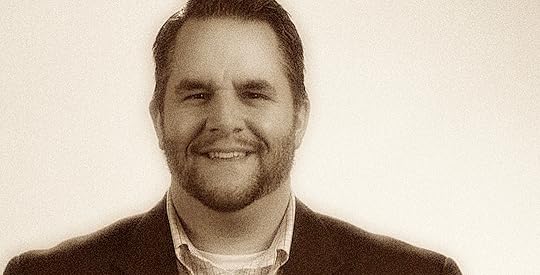
 Anthony Onesto, Future Strong Hero
Anthony Onesto Anthony Onesto is an HR futurist, an advisor to
startups, and Vice President for Razorfish, focused on global strategies
for both technology and data science practices
Future Strong Hero Series: Insights from top leaders,
change makers and thought leaders who are creating better,
bolder tomorrows.
• • • • • • • • • • •
How do you stay Future Strong? It may sound like a cliché, but it’s being
a people person. I care about people’s needs. I’m empathetic. That’s the
thread through everything I do. It’s the ability to always care, always
have empathy. Always have good intentions towards others, always put
good energy back in the universe. For me, that’s a great foundation.
The second part is to always look for new ways to do things differently.
Keep disrupting yourself, constantly. Get uncomfortable in everything
you do. The minute I start feeling comfortable, I spin myself out of
that situation. That’s why I do a lot of advising for startups.
The third part is to always be creative. Try all kinds of different
things. You may fail at a lot of them, but you’ll learn a lot, quickly.
Do lots of side projects. Things you know nothing about. That’s why
I just created a comic book.
I coach fourth grade basketball. It begins with truly caring about
each one of them, and it’s more about them learning than winning.
That’s a hard balance for someone like me who’s competitive,
but to me, winning is how many of those kids have gotten better
throughout the year. When I see them completely transformed,
that’s incredible. And teaching disruption at a fourth grade level
is helping them see that there’s always many ways to look at things,
and having them learn each other’s positions.
What are the tough choices today’s leaders need to make to be
Future Strong? Leaders need to figure out what innovation means to them.
Tom Fishburne recently illustrated that there are eight different kinds.
At Razorfish, our innovation service, Proto, trains leaders on transformational
ideas.
Often, when leaders ask for help in innovation, most want a hackathon —
they want an event. But true innovation needs to be built at the edge
of the organization. Most organization’s immune systems will attack
and destroy innovation. Leaders need to be aware of this because
they could quickly be Ubered or Airbnbed — where a disruptive
technology completely reinvents your industry. Like Google X was
built separate from the rest of the organization. Most organizations
are not prepared or willing to take risks completely separate from
an immediate return on quarterly earnings. They’re not developing
moonshots until it’s too late.
Leaders need to choose to be more comfortable with failure. Do you
have the grit to keep moving forward through a bunch of failures?
Leaders need to make more long-term bets, and be supported by their
boards and shareholders in doing so. And often, organizations like
Razorfish can help. Firms like ours can help develop the moonshots,
but they still need a strong leader sponsoring them and sticking
with them.
The biggest risk is in doing nothing.
Design thinking our way into a new employee/employer
relationship: About 40% of our jobs will be automated by 2025.
Not just manufacturing, white collar jobs too. Soft skills are going
to become even more important — the things machines can’t do.
The people with those soft skills will be tomorrow’s leaders.
For many years they weren’t. The connections between creativity,
innovation, empathy, and collaboration will increasingly become
more important. I don’t see a difference between people skills
and ops skills — they’re symbiotic.
We need to reinvent engagement within companies, and everything
associated with it. For decades, we’ve been doing annual
performance reviews knowing full well that they created no
increases in productivity, that cost a lot of money, and that
no one liked doing it.
We have to take a new approach to human resources and talent —
more like design thinking, where we design from the needs of the
people doing the work. We’ll design better experiences for
every employee.
At Razorfish, we reinvented our performance management without
HR people. We began with designers, UX experts. People who
provide solutions for our clients are now turning their microscope
inward, toward ourselves. We’re prototyping a new app that isn’t
ready for sharing yet, but we’re already implementing some of
the methodologies behind it.
If you want to be and stay Future Strong… Continue to reinvent
yourself, disrupt yourself. Do things that make you very
uncomfortable. Stop thinking outside the box. Burn then box!
Onesto Strongisms
• The Troika: Empathy, Disrupt Yourself, Creativity
• Build innovation at the edge of, or outside of, the organization
• Burn the box!
The post Our Future is Disruptive Empathy appeared first on Simpler Work.
May 12, 2016
Two Paths to Designing Your Best Life
Amazing insights from amazing coaches
I am blessed. Not only do I get to speak to and coach leaders around the world, I get to meet, hang with, and learn from the best of the best. Here are two
sets of my heroes and their latest books.
How to Hack Yourself
In this video, Vishen Lakhiani discusses Consciousness Engineering, a method
he designed for shifting human potential by teaching people how to adjust
the two pillars of yourself that ultimately MAKE you. The first pillar is your
Models of Reality. The second pillar is your Systems for Living.
The video covers a small portion of what’s in his new best-selling book,
The Code of The Extraordinary Mind. Get it now! I feel blessed to know
this man, the founder of Mind Valley.
The last time I was in Kuala Lumpur, where he is based, I spent the night with Vishen and his wife,
Kristina, at Mind Valley’s
Halloween party. What I love about Vishen is his
passion for life and his deep spirituality splashed with a healthy dose of fun! When last we met, he gave me a tour of their new
steampunk-theme addition to their offices, in addition to the superhero murals, statues and artifacts.
In this post, he shares that, although he was raised Hindu and Kristina was raised Orthodox and Lutheran, they’ve chosen to raise their son Hayden on
Star Wars spirituality.
If you want to learn more about Vishen’s Consciousness Engineering course,
sign up here.
How to Design the Life You Love
Ayse Birsel left Turkey to work and teach in New York, and is an award-winning product designer. Everything was going great — until it wasn’t. Her life and
career hit a wall. Going nowhere fast.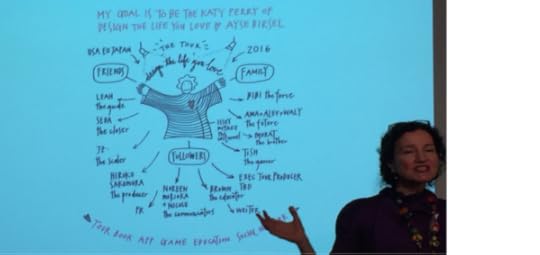
Like many of us, at first she experienced depression. They she decided she would tackle her life as if it was a design project. She created a huge poster for her bedroom wall that declared: “My goal is to be the Katy Perry of Design the Life You Love” — complete with a book, book tour, an app, a game, and more.
At first it was just a vision. Then it was realized. I attended a workshop launching her new book, Design the Life You Love.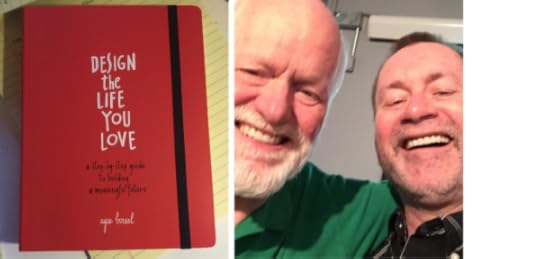
Helping her launch it was one of her mentors and mine, Marshall Goldsmith, who was recently named the #1 leadership thinker in the world. (While he graciously has written cover quotes for a couple of my books, we had never met face to face before Ayse’s book launch. Thus the selfie to the right.)
Beyond Ayse’s wonderful content and graphically great book is her background
in design thinking — which, at its core, is about working backward from the
needs of individuals… be they customers, employees, or, in this case… you.
Ayse helps the reader deconstruct their life into four quadrants — Emotion,
Physical, Intellect, Spirit — and then reconstruct your life as you would
like it to be… The life you love.
Design Your Life, Choose Your Path
Whether you choose the resources above (or…Shameless Plug: choose to write
a Legacy Letter from my book, What Is Your Life’s Work?), always remember:
You get to design your life. You get to choose your path.
No one else. You.
The post Two Paths to Designing Your Best Life appeared first on Simpler Work.
Breaking Silly Rules
A Must-Do in today’s highly-disruptive, constantly-changing world
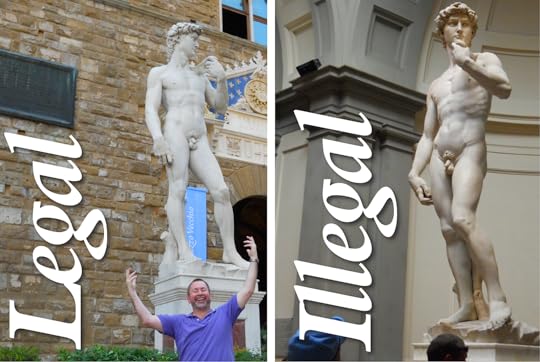
Through all my consulting assignments, I’ve observed what I (very
unscientifically) call the 80:20 Rule of Silly Rules.
About 20% of the rules we’re supposed to follow at work are seriously
necessary, for the safety and well-being of all involved. And about
80% of the rules were probably well-intentioned at some point,
but are now impractical, silly, or completely unnecessary.
Here’s a non-corporate example of what I mean: As you read this, I will be
on my third visit to Florence, Italy, and my second visit of Michelangelo’s
David.
I was an art major in college. That means I truly get the reason that
photographs of most art are no-no’s… Degradation is a real threat.
Paintings and fabrics must be protected. So I wouldn’t have dared to
sneak a photo when I saw The Last Supper in Milan, or ancient
scrolls in Guangzhou, China, or medieval tapestries in Sweden,
Scotland, or France.
But prohibiting photos of Michelangelo’s David? C’mon Italian government:
While it remains one of the world’s best-known statues, it also stood
outside in the Palazzo Vecchio, exposed to all of Florence’s weather for
almost 375 years, until it was replaced by a replica in 1910.
I will retract this post if an art curator tells me I’m way wrong,
but I’m pretty sure that marble that stood outside for centuries will not
by harmed by my cell-phone selfie of me and Dave. And prohibiting photos
for capitalistic reasons, so you can sell more post cards and posters…
Really?
It seemed to me to be an arbitrary and silly rule. One that turned me
and hundreds of others during my last visit, into on-the-sly law-breakers…
because, of course, we couldn’t leave without our photo of David’s butt
and more. (Left photo above taken with replica: legal. Photo on right: illegal.)
Back to the world of work…
If you’re a victim of Silly Corporate Rules: You must start ignoring,
breaking, or hacking workarounds on those silly rules. There’s too
much demand for speed and morebetterfaster results to keep being a silly
rule-follower. Hack away!
Basic rules for doing so…
1. Common sense. Does the rule defy your commonsensibilities? If so,
it’s ripe for ignoring it or for a workaround.
2. Permission v. Forgiveness. If the consequence is having to ask for
forgiveness, or looking bad, or being told to sit in the corner and think about
what you did — go ahead and hack a workaround. In the long-run, it’ll be
worth it!
The post Breaking Silly Rules appeared first on Simpler Work.
March 14, 2016
The Power of Grumpiness
How dissatisfaction can bring intense joy

I believe in the intense possibilities of amazing possibilities, opportunities
and abundance. Anything is possible! I truly believe that.
And yet, I’m often an outcast among many of my peers. Every time I raise
deep concerns about issues and wish to discuss wicked, intractable challenges…
I’m given the barest minimum of airtime — as we all do for oddball friends,
teammates and family members — and then it’s back to happy-talk, and
“let’s focus on the positive.”
I’ve always been comfortable with being different like that, but it wasn’t
until recently that I realized WHY I’m like that when so many others
are not.
It was when I read a Fast Company piece about a British designer,
Tom Dixon’s Creativity Secret? Perpetual Dissatisfaction, that I finally
figured it out….
It’s my design background and how I was taught to have empathy
for people’s struggles. Great design is about solving problems,
including putting yourself in the audience’s/user’s shoes and to
fully understand their challenges, needs and desires.
I realized this was my true calling while I was art directing at the New York Times, my first big job after college. While showing my portfolio around
New York, I had to come to terms with realizing the my inner artist’s
voice wasn’t as strong as so many of the amazingly talented people
I worked with. My passion was for exploring and understanding and
solving problems….and then going beyond those problems to helping
people dream bigger.
Says David Kelley, who founded and heads IDEO, the premier design
thinking firm: “Designers have a passion for doing something that fits
somebody’s needs, but that is not just a simple fix. The designer
has a dream that goes beyond what exists, rather than fixing what exists.” This empathy/dream combination is the essence behind the design thinking movement.
Want to harness dissatisfaction to create more joy? Here are a few tips
I’ve learned from a life of design thinking as well as being voted off the island
when everyone wanted to just do the happy-talk thing…
1. Practice Disciplined Empathy Constantly. Before taking on ANY project, walk a mile in the audience’s/user’s shoes. The most successful organizational change efforts I’ve ever done began with a version of Undercover Boss, where the senior team spent time doing frontline jobs.
2. Create the Space for Diverse Thinking, Dreamers, Disruptors, and
the Highly Discerning. Far too often, our quest for morebetterfaster
marginalizes these people because they want us to think differently. Ensure
they and their weird ideas always have the space to thrive.
3. Train Yourself in Design Thinking. A couple of freebie places to start:
IDEO U, D.School, and IBM Design Thinking.
The post The Power of Grumpiness appeared first on Simpler Work.
What Is Your State of Grace?
In business teams and in life
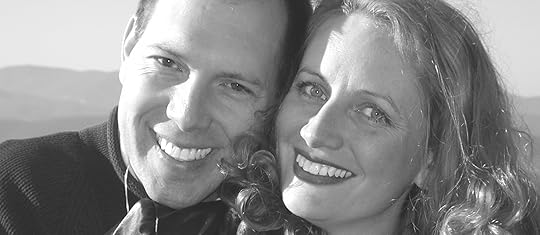
From an old stone cottage in the woods of Flat Rock, North Carolina, Maureen McCarthy and Zelle Nelson are making the world a better place — one business, one person at a time.
Have you ever had a relationship — business or personal — go sour? Maureen and Zelle have developed a new way to build, sustain and transition relationships with honor, grace, and respect… Not just during the amazing times, but
especially during times of conflict, disagreement or change.
Then it’s time for you to find and create your state of grace for that relationship!
Explore the Blueprint of We from Maureen and Zelle, and download free
templates for building your own Blueprint of We.
Rather than solely relying on legal contracts or corporate planning cycles
or boss-subordinate evaluations, a Blueprint of We anticipates the unavoidable
transitions and changes that ultimately take place in life, marriage, business,
or friendship. It begins with the agreed-upon premise that we ultimately want
to be at peace within ourselves and with the other person, even as we
address areas that aren’t so pretty to look at.
Each Blueprint contains 5 parts…
1. The Story of Us: A bulleted list of your teammates’ or partner’s
characteristics you most admire or appreciate.
2. Interaction Styles: How you prefer to communicate and
work things through.
3. Custom Design: Interactions and agreements unique to this
situation or relationship.
4. Questions for Peace and Possibility: Imagine and list the questions
a third-party would ask during situations of conflict. These become your
team’s or partnership’s go-to questions without having to go to others.
5. Short- and Long-Term Timeframes: Resolutions can be different when considering the different timeframes.
The Blueprint’s approach is especially necessary for the way most teams
are formed in today’s work environments — quick to form, quick to disband.
In those situations, knowing how to quickly get back to peace and possibilities
is the difference between success and disaster.
Find your State of Grace!
Check out this worthwhile tool.
The post What Is Your State of Grace? appeared first on Simpler Work.
January 5, 2016
It’s Time to Redesign Everything
David Houle, Future Strong Hero, tells us how
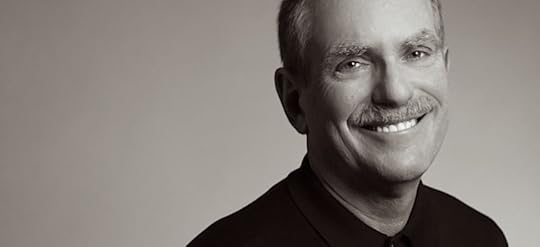
David Houle, Future Strong Hero
David Houle is a futurist, thinker and keynote speaker.
He is often called the “CEOs’ futurist”
Coauthor, Brand Shift: The Future of Brands and Marketing
Future Strong Hero Series: Insights from top leaders,
change makers and thought leaders who are creating better,
bolder tomorrows.
• • • • • • • • • • •
How do you stay Future Strong? I live slightly ahead of the curve. I’ve
always done things that people said I shouldn’t do or wouldn’t work. “Oh,
it’s stupid to backpack around the world. You should save your money and
buy a house.” Or, “You shouldn’t leave CBS to take a 50% paycut at
Nickelodeon.” Or, in the ‘90s: “Online courses will never work.” After
taking many of these kinds of risks, I gained an intuitive sense that
I was right about a lot of big things. When you learn how to trust
something you’re good at, you become even better.
In 2005, I realized the Information Age got its name in the 1970s, so I
came up with Shift Age, because I saw that we’d be going through a
shift of just about everything.
Most people in our culture and developing countries view specialists
as good. The problem with being a specialist is they get too stuck in
vertical silos. I have the luxury of being the most superficial
intellectual grazer you ever want to meet. Don’t give me a list of ten best
practices or examples — three is enough. I never read a book fully.
I scan dozens of publications and over 300 sources every week. I scan for
patterns and the larger dynamic.
My father was a professor at the University of Chicago, who coined the phrase
lifelong learning. He’s regarded as the father of adult education. One of his
most popular books is the Inquiring Mind, and that resonated with me as a
lifelong goal — to have an inquiring mind. When I went to college I majored
in art history. What I learned: If you ever want to get to the essence of
a culture, study its art. If you want to see the future, look at art. For example:
Cubism, Futurism, Expressionism and Dadaism of one hundred years ago
foretold the dissonance of the early 20th century. Andy Warhol in the ‘60s
forecasted the celebrity and brand culture we live in now.
The Three Future-Focused Forces: One way to look at everything in the
future: How it moves towards globalization. Second: The flow to the individual.
Individuals will continue to have more power than they’ve ever had, because
of the explosion of choice. Finally, the driver of all of it: The accelerating
electronic connectedness of the planet.
Those are the prevailing forces. What I have found to be the best metaphor
in corporate settings is looking at 2010 to 2020 as The Transformation Decade.
The dictionary defines transformation as: a change in nature, shape, character
and form. That became “Mr/Ms CEO, if you’re not completely changing the
nature, shape, character and form of your business during this decade, you
probably won’t have a business to change.”
We have entered the golden age of design. Everything on the planet, relative
to humanity, either has to be redesigned or designed. We have to redesign
cities, we have to redesign transportation, we have to redesign everything
handed to us from the 20th century. The 20th century was the left-brain
century — the century of science. The 21st century is the right-brain
century — when intuition, creativity, humanity will catch up and fully
integrate science into a more livable way of life.
Finding the Future: How I forecast is I look where resistance is. When a
culture is really resisting something, that means the status quo of thinking
is resisting something that is change-driven. That’s why I wrote books on
education and healthcare, because I saw so much resistance to inevitable changes.
When you look around and see resistance, you can find the inevitability of
what is being resisted. My newest book is This Spaceship Earth because
climate change is an overwhelming reality that a lot of people are still
resisting.
What do leaders need to do to build Future Strong companies?
2010 to 2020 is the collapse of legacy thinking. If you’re older than 30,
that means you spent the majority of your life in the 20th century where
your thoughts were formed. So if you haven’t double-checked your truisms
relative to the reality of 2016, you won’t see what’s coming. The biggest
questions leaders need to ask themselves: Are we trying to solve this
problem using legacy thinking? Or new thinking?
The first question a leader must be able to answer is: What is the vision
of this company for 2023? (Seven to eight years from now.) And then work
backward from that vision because in order to get to that vision, you need
to take certain steps in 2016, 2017, and so on. (What Google calls moonshot
thinking, akin to Kennedy’s vision of putting a man on the moon by the
end of the 1960s.)
Finally, if you are ready to make change, it must be collaborative and
ongoing within the organization. It cannot be autocratic. Sustainable
change can only be successful if everybody has co-authorship in it.
Houle Strongisms
• Embrace that you are living in the Shift Age and Transformation Decade
• Make it a lifelong goal to be an inquiring mind
• The biggest cries of resistance point to the biggest needs of redesigns
The post It’s Time to Redesign Everything appeared first on Simpler Work.
Be Willing to Change Your Mind
Patti Johnson, Future Strong Hero, tells us how

Patti Johnson, Future Strong Hero
CEO, PeopleResults, a change and organizational development firm
Author, Make Waves: Be the One to Start Change at Work and in Life
Future Strong Hero Series: Insights from top leaders, change
makers and thought leaders who are creating better, bolder
tomorrows.
• • • • • • • • • • •
How do you stay Future Strong? I’m a believer in possibilities. There are
two parts to that. First: You need to be able to see those possibilities, which
means being open to something different and believing in opportunities, even
when they might not be immediately apparent. Then second: Do something
with those opportunities. You can start small — the first small step might
turn out to be something really big! Just get started.
There’s not one path to being successful. Be yourself and it will work out.
Early in my career, at Anderson and Accenture, there were a lot more men
on the path that I wanted to be on than women. And initially, I felt like
I had to be something that I wasn’t. Over time, I realized: Not so much.
I needed to be more of who I was. The more you show up as who you really
are, the greater your chances of success. I didn’t have one big epiphany
— it was just over time realizing that it doesn’t pay to try to be
somebody that you’re not.
What do leaders need to do to build Future Strong companies?
You’ve got to be willing to change your mind. That’s something that’s
really hard for many leaders — they’ve been successful by having all
the answers. That style of leadership is very counter to a climate of
disruption. Being willing to reconsider one’s point of view is very
important in today’s environment.
All leaders need to be both short-term focused and long-term focused.
There are no easy steps into the longer-term. The ability to anticipate
and see where the shifts are going to happen is very important. And that’s
hard because most business plans are data-driven, but there’s no data
from the future. There’s only ambiguity and uncertainty. You have to
combine today’s data and with insights and leadership vision.
Johnson Strongisms
• Start small: Just get started!
• There is no one path — keep experimenting until you find yours
• Ensure that your vision drives long-term actions and success
The post Be Willing to Change Your Mind appeared first on Simpler Work.
January 4, 2016
Be Truly Present, Be Good to People
Ted Rubin, Future Strong Hero, tells us how
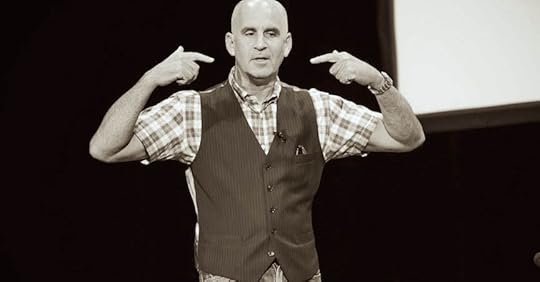
Ted Rubin, Future Strong Hero
Social Marketing Strategist, Acting CMO of Brand Innovators
Coauthor, Return on Relationship
Future Strong Hero Series: Insights from top leaders, change
makers and thought leaders who are creating better, bolder
tomorrows.
• • • • • • • • • • •
How do you stay Future Strong? Back in 1997, I was with working with
Seth Godin at Yoyodyne when he coined the term, Permission Marketing.
That’s where my focus — Return on Relationship — got started, and I
carried that into the social commerce explosion.
My advice to everyone is stop worrying about what’s next, and execute
on what’s now. I see too many people looking too far out into the future.
I am rarely the first guy on new platforms. It’s not because I’m just
waiting to see if they take hold. It’s because I’m very busy executing
in the current media. I’m very present.
For me being future strong is about being fully present in the now.
Who I am as a person is being very responsive. I need to get back to people.
The best way to leverage social is to engage people, to have conversations,
and the only way to do that is to be available for people. A lot of people
don’t think that interactivity can scale. I believe it can. To stay strong,
I interact with the people who really want to interact with me. Because
the extended trail of our interactions — through tweets, additional posts
and more — creates vicarious participation for lots of others who can see
or become part of our interacting. Ninety-eight percent of the people on
social media are vicariously participating, by watching other people have
conversations, and then feeling or being a part of that.
Another big part of who I am and what keeps me future strong is the concept
of Be Good to People. This is a movement started by Kris Wittenberg. I wear
her t-shirts, I have her stickers on all my stuff. We met because I started
the hashtag of #JustBeNice, and I preach this to companies. If you’re nice
to people, if you’re employees are nice to people, if you treat your vendors
well…it makes a very big difference in how you do business.
It’s All About Who You Decide to Be: A while ago, I went through a four-
year battle to keep my daughters in my life. It cost me everything I had.
I had to rebuild after that. When it ended, I had lost a lot of years of
my daughters lives and I was angry. And I woke up one morning and realized
I don’t want to be angry any more. I wanted to be happy. Children
automatically go to happy, but many adults do not. We go to angry, upset,
and lots more. So I just made a decision to change my mindset. So I now
do my best every day to live by this quote: Life is not about waiting
for the storm to pass, it’s about learning to dance in the rain. I do
for others without any expectation of anything in return. That’s at
the heart of Return on Relationship because, in the end, that will come
back to you, one way or another.
What do leaders need to do to build Future Strong companies?
The smarter companies are telling their employees: “Build your
personal brand… Make yourself better. Because the better you are,
the better we are as a company.” If you have one thousand employees,
and every one of them has one hundred or one thousand followers on
social channels — if those people like where they’re working, think
about the reach that you’re getting.
A network gives you reach, but a community gives you power. If you
build your employees into a community, the power you will get is
astronomical! This is the Age of Influence, where anyone can build
a brand, affect change, make a difference — without a big budget.
There is no line anymore between work and who you are as a human being.
Empathy is important. You need to better understand your employees.
We need leaders who are mentors and coaches vs. a boss. The boss mentality has to emerge from the hearts of your people and what’s happening.
Rubin Strongisms
• Be present… Fully
• Be good to people. All people. Always
• Be who you decide to be
The post Be Truly Present, Be Good to People appeared first on Simpler Work.
The Future Demands That We Think Differently
Yvette Montero Salvatico, Future Strong Hero, tells us how
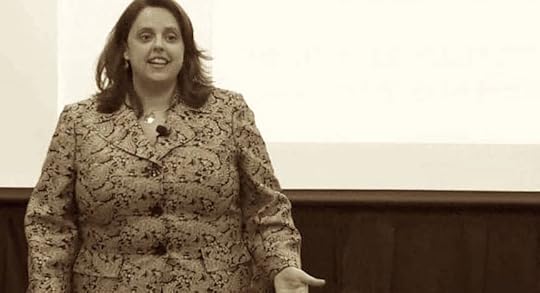
Yvette Montero Salvatico, Future Strong Hero
Futurist, Managing Director of Kedge, a global foresight, innovation, and strategy and design firm
Future Strong Hero Series: Insights from top leaders, change
makers and thought leaders who are creating better, bolder
tomorrows.
• • • • • • • • • • •
Today’s Decsions Impact Tomorrow: I spent thirteen years working with
the Walt Disney Company, and it wasn’t until the tail-end of my journey with
them that I discovered strategic foresight. I did a lot of strategic planning,
but I didn’t know that there was a field that was created to allow us to think
about the future differently. What I thought, and what it seemed like what
most leaders did, was you threw a bunch of numbers in Excel, you said a prayer,
you lit a candle, and then you went about your business. While there are
lots of tools and methodologies to strategic foresight, it’s really a mindset
shift.
Futurists help individuals and organizations plan for the future in a more
collaborative and purposeful way. Most organizations do it wrong by relegating
this thinking to the once-a-year AOP (Annual Operating Plan) or the Five Year
Plan. It’s almost always a finance-led effort to create a false sense of
security. There’s a column that says profits for the year 2020. Even though
they know that they numbers probably aren’t real, they feel a false sense of
security by doing it — a warm blankie.
Most people try to hide from the process, because, psychologically, our reaction to uncertainty is physical nausea.
What we help leaders understand is that the future is about the decisions and
actions you take today. The way we think about the future frames and informs
those choices. Everyone needs to think like a futurist, regardless of what
position they hold or what they do.
How do you stay Future Strong? Every decision we make creates the future. So what I try to do is be more mindful about the decisions I’m making and keep them in line with my aspirations. A lot of strategic foresight can be applied to you as an individual, but it’s not easy. Most of us allow short-term priorities to take control. If we realize that every decision we make today is creating the future, that can help us keep our eye on aspirational goals.
For example, while I was still at Disney, there was a well-worn career path for me to stay with the organization. There seemed to be very little doubt about where my future would go, continuing to work with brilliant and wonderful
people. But it wasn’t my path — it was determined mostly where Disney
wanted and needed me. Then there was this other path that wasn’t well-worn
or fully illuminated, but I could tell from a passion-perspective it ignited
something within me. I loved being an entrepreneur, and creating something
from scratch. While I loved Disney, I made the decision to travel a
different path — one that would fulfill me more. And, as it turned out,
I work more for Disney now than when I worked for them — because I now
work with more divisions across the entire organization.
What do leaders need to do to build Future Strong companies?
Recognizing that each individual leader and manager brings their own
perspectives, their own values, their own spirituality to every situation
is relevant and crucial. Too many leaders ignore that — which is crazy!
Because while organizational structure and organizational biases exist,
ultimately, with daily decision-making pushed so far down into the
organization, every individual is crucial to corporate strategies.
So never before has it been more critical to consider each individual’s
needs, skills and contributions. People are facing incredibly complex
environments, with unbelievable volatility, change and uncertainty,
and we’re not equipping them with the capability to deal with that.
So every decision, whether it’s big like talent and infrastructure,
or a one-day transactional decision, have huge ramifications and
ripple effects.
Top ten lists of trends are of limited usefulness. Somewhere along
the way, the word ‘trend’ became synonymous with the future. Top ten
lists are only really useful in sounding smart at a cocktail party. What we
really need to understand is the collision of those trends, and, ultimately,
the values underlying them.
The value shifts are what’s critical: If leaders understand what’s going
on with societal or consumer value shifts, then they could be prepared
for what’s next. Scare tactics (threats in the SWOT model), can create
powerful reactions, but if you want long-term benefits, you need to focus
on the opportunities. To leverage those opportunities, leaders need to
follow a certain sequence: Learn, Unlearn, Relearn.
We’re now at the leading edge of how employment is being redefined.
Differentiating between vendor vs. employee vs. contract worker is sort of
ridiculous and outmoded. It’s all one pool of knowledge, just leveraged
slightly differently. Maintaining these Industrial Age views just causes
problems down the road in dealing with openness. I can’t wait for when
organizations truly redefine their networks around values of openness,
knowledge and community.
The future is not about technology, it’s about people. About how they’ll
create new social structures and political systems and how they’ll create
things. Ultimately, our focus needs to be human-centric. Organizations
are made up of individuals. Those organizations that survive the next ten
to fifteen years will be the ones that figure that out. Many big brands
will not weather the coming storm because they can’t quite get their heads
wrapped around the coming changes.
Salvatico Strongisms
• Every decision you make creates your future
• Shifts in values are what to watch when thinking about the future
• It’s the people, stupid!
The post The Future Demands That We Think Differently appeared first on Simpler Work.


