
The Future Demands That We Think Differently
Yvette Montero Salvatico, Future Strong Hero, tells us how
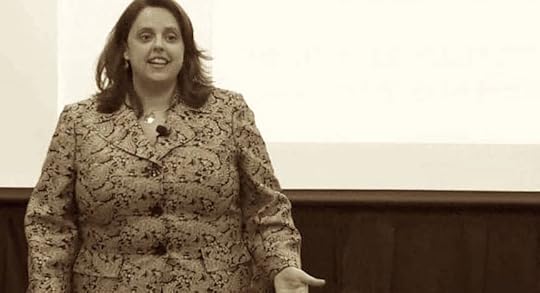
 Yvette Montero Salvatico, Future Strong Hero
Futurist, Managing Director of Kedge, a global foresight, innovation, and strategy and design firm
Future Strong Hero Series: Insights from top leaders, change
makers and thought leaders who are creating better, bolder
tomorrows.
• • • • • • • • • • •
Today’s Decsions Impact Tomorrow: I spent thirteen years working with
the Walt Disney Company, and it wasn’t until the tail-end of my journey with
them that I discovered strategic foresight. I did a lot of strategic planning,
but I didn’t know that there was a field that was created to allow us to think
about the future differently. What I thought, and what it seemed like what
most leaders did, was you threw a bunch of numbers in Excel, you said a prayer,
you lit a candle, and then you went about your business. While there are
lots of tools and methodologies to strategic foresight, it’s really a mindset
shift.
Futurists help individuals and organizations plan for the future in a more
collaborative and purposeful way. Most organizations do it wrong by relegating
this thinking to the once-a-year AOP (Annual Operating Plan) or the Five Year
Plan. It’s almost always a finance-led effort to create a false sense of
security. There’s a column that says profits for the year 2020. Even though
they know that they numbers probably aren’t real, they feel a false sense of
security by doing it — a warm blankie.
Most people try to hide from the process, because, psychologically, our reaction to uncertainty is physical nausea.
What we help leaders understand is that the future is about the decisions and
actions you take today. The way we think about the future frames and informs
those choices. Everyone needs to think like a futurist, regardless of what
position they hold or what they do.
How do you stay Future Strong? Every decision we make creates the future. So what I try to do is be more mindful about the decisions I’m making and keep them in line with my aspirations. A lot of strategic foresight can be applied to you as an individual, but it’s not easy. Most of us allow short-term priorities to take control. If we realize that every decision we make today is creating the future, that can help us keep our eye on aspirational goals.
For example, while I was still at Disney, there was a well-worn career path for me to stay with the organization. There seemed to be very little doubt about where my future would go, continuing to work with brilliant and wonderful
people. But it wasn’t my path — it was determined mostly where Disney
wanted and needed me. Then there was this other path that wasn’t well-worn
or fully illuminated, but I could tell from a passion-perspective it ignited
something within me. I loved being an entrepreneur, and creating something
from scratch. While I loved Disney, I made the decision to travel a
different path — one that would fulfill me more. And, as it turned out,
I work more for Disney now than when I worked for them — because I now
work with more divisions across the entire organization.
What do leaders need to do to build Future Strong companies?
Recognizing that each individual leader and manager brings their own
perspectives, their own values, their own spirituality to every situation
is relevant and crucial. Too many leaders ignore that — which is crazy!
Because while organizational structure and organizational biases exist,
ultimately, with daily decision-making pushed so far down into the
organization, every individual is crucial to corporate strategies.
So never before has it been more critical to consider each individual’s
needs, skills and contributions. People are facing incredibly complex
environments, with unbelievable volatility, change and uncertainty,
and we’re not equipping them with the capability to deal with that.
So every decision, whether it’s big like talent and infrastructure,
or a one-day transactional decision, have huge ramifications and
ripple effects.
Top ten lists of trends are of limited usefulness. Somewhere along
the way, the word ‘trend’ became synonymous with the future. Top ten
lists are only really useful in sounding smart at a cocktail party. What we
really need to understand is the collision of those trends, and, ultimately,
the values underlying them.
The value shifts are what’s critical: If leaders understand what’s going
on with societal or consumer value shifts, then they could be prepared
for what’s next. Scare tactics (threats in the SWOT model), can create
powerful reactions, but if you want long-term benefits, you need to focus
on the opportunities. To leverage those opportunities, leaders need to
follow a certain sequence: Learn, Unlearn, Relearn.
We’re now at the leading edge of how employment is being redefined.
Differentiating between vendor vs. employee vs. contract worker is sort of
ridiculous and outmoded. It’s all one pool of knowledge, just leveraged
slightly differently. Maintaining these Industrial Age views just causes
problems down the road in dealing with openness. I can’t wait for when
organizations truly redefine their networks around values of openness,
knowledge and community.
The future is not about technology, it’s about people. About how they’ll
create new social structures and political systems and how they’ll create
things. Ultimately, our focus needs to be human-centric. Organizations
are made up of individuals. Those organizations that survive the next ten
to fifteen years will be the ones that figure that out. Many big brands
will not weather the coming storm because they can’t quite get their heads
wrapped around the coming changes.
Salvatico Strongisms
• Every decision you make creates your future
• Shifts in values are what to watch when thinking about the future
• It’s the people, stupid!
The post The Future Demands That We Think Differently appeared first on Simpler Work.


